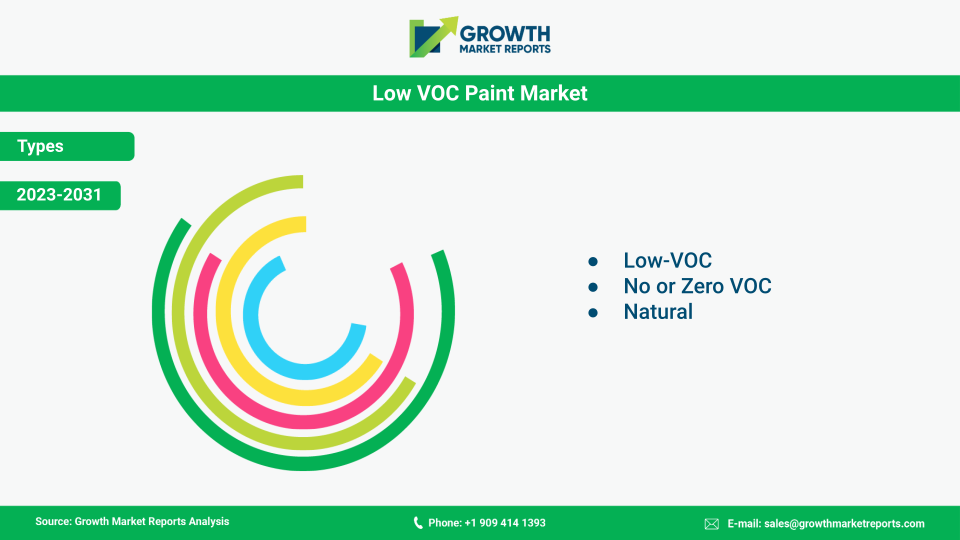
Segments - by Product Type (Water-Based, Solvent-Based, Powder, Others), by Application (Residential, Commercial, Industrial, Others), by Resin Type (Acrylic, Alkyd, Polyurethane, Epoxy, Others), by Distribution Channel (Online, Offline)
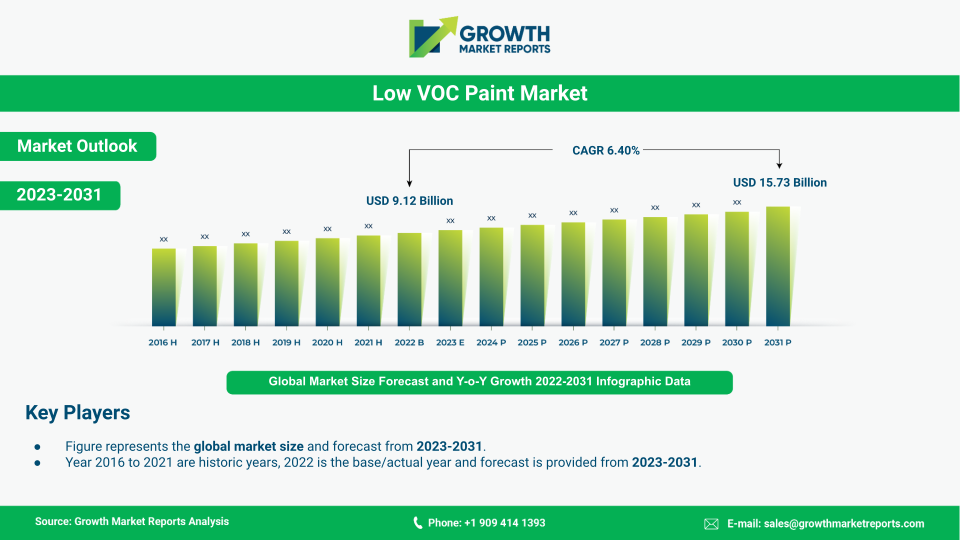
As per our latest research, the global Low VOC Paint market size reached USD 10.7 billion in 2024, reflecting a robust demand for environmentally friendly coatings across diverse sectors. The market is experiencing a strong compound annual growth rate (CAGR) of 6.2% from 2025 to 2033, driven by tightening environmental regulations and rising consumer awareness. By 2033, the Low VOC Paint market is forecasted to reach USD 18.4 billion, underscoring the sector’s rapid evolution and the increasing shift towards sustainable solutions in the global paint and coatings industry.
The primary growth factor propelling the Low VOC Paint market is the intensification of environmental regulations worldwide. Governments and regulatory bodies, particularly in North America and Europe, have enacted stringent limits on volatile organic compound (VOC) emissions due to their adverse health and environmental impacts. These regulations are compelling manufacturers to reformulate traditional paints and coatings, leading to a surge in demand for low VOC alternatives. Furthermore, the adoption of green building standards such as LEED and BREEAM is encouraging construction companies and architects to specify low VOC products, further driving market growth. This regulatory push is not only fostering innovation in paint formulations but also accelerating the transition towards sustainable construction and industrial practices.
Another significant driver is the heightened consumer awareness regarding indoor air quality and its impact on health. As consumers become more informed about the dangers associated with exposure to high VOC levels, particularly in residential and commercial spaces, there is a marked shift in preference towards low VOC paints. This trend is especially pronounced in urban areas where concerns about air pollution and sustainability are paramount. Manufacturers are responding by expanding their product portfolios and improving the performance characteristics of low VOC paints, such as durability, coverage, and color retention. The integration of advanced technologies and bio-based raw materials is further enhancing product appeal, making low VOC paints a preferred choice in both new construction and renovation projects.
The construction boom in emerging economies is also fueling the expansion of the Low VOC Paint market. Rapid urbanization, rising disposable incomes, and growing infrastructure investments in Asia Pacific and Latin America are creating substantial opportunities for low VOC paint manufacturers. These regions are witnessing an upsurge in residential, commercial, and industrial construction activities, where environmental compliance and sustainable building practices are increasingly prioritized. Additionally, multinational companies are establishing local manufacturing facilities and distribution networks to cater to the burgeoning demand, thereby strengthening their market presence and accelerating the adoption of low VOC products in these high-growth regions.
From a regional perspective, Asia Pacific stands out as the fastest-growing market for Low VOC Paint, accounting for a significant share of global consumption in 2024. The region’s growth is underpinned by robust construction activity, supportive government policies, and a rising focus on sustainability among developers and consumers. North America and Europe continue to lead in terms of technological advancements and regulatory enforcement, while Latin America and the Middle East & Africa are gradually catching up, driven by increasing awareness and infrastructure development. The regional diversity in market dynamics highlights the need for tailored strategies and localized product offerings to capture growth opportunities in different parts of the world.
The Low VOC Paint market is segmented by product type into water-based, solvent-based, powder, and other formulations, each catering to specific application requirements and regulatory standards. Water-based low VOC paints dominate the market, accounting for over 60% of the total revenue in 2024. Their popularity stems from minimal odor, ease of application, rapid drying times, and superior environmental credentials. Water-based paints are widely used in residential and commercial settings, where indoor air quality is a top priority. Leading manufacturers are continuously enhancing the performance attributes of water-based formulations, such as washability, stain resistance, and color vibrancy, to meet evolving consumer expectations and regulatory demands.
Solvent-based low VOC paints, while facing declining market share due to stricter VOC regulations, still retain relevance in industrial and specialized applications. These formulations offer excellent adhesion, durability, and resistance to harsh environmental conditions, making them suitable for infrastructure, automotive, and marine coatings. However, ongoing R&D efforts are focused on further reducing VOC content without compromising performance, as manufacturers strive to comply with global emission standards. The transition from traditional high-VOC solvent-based paints to low VOC alternatives is being facilitated by technological advancements and the availability of high-performance additives and resins.
Powder coatings represent a rapidly growing segment within the Low VOC Paint market, driven by their near-zero VOC emissions and superior finish quality. Powder coatings are extensively used in industrial applications, including appliances, automotive components, and metal furniture, where durability and environmental compliance are critical. The segment is witnessing increased adoption due to advancements in application technologies, such as electrostatic spraying and fluidized bed processes, which enhance efficiency and minimize waste. Additionally, powder coatings offer significant cost savings over the lifecycle of coated products, further bolstering their market appeal.
Other product types, such as bio-based and hybrid low VOC paints, are gaining traction as manufacturers explore alternative raw materials and innovative formulations. These products are designed to meet niche requirements, such as antimicrobial properties, enhanced UV resistance, or specialty finishes, catering to specific customer segments. The growing emphasis on sustainability and circular economy principles is encouraging the development of paints with renewable content and lower environmental footprints. As consumer preferences continue to evolve, the product type landscape of the Low VOC Paint market is expected to become increasingly diversified and technologically advanced.
| Attributes | Details |
| Report Title | Low VOC Paint Market Research Report 2033 |
| By Product Type | Water-Based, Solvent-Based, Powder, Others |
| By Application | Residential, Commercial, Industrial, Others |
| By Resin Type | Acrylic, Alkyd, Polyurethane, Epoxy, Others |
| By Distribution Channel | Online, Offline |
| Regions Covered | North America, Europe, APAC, Latin America, MEA |
| Base Year | 2024 |
| Historic Data | 2018-2023 |
| Forecast Period | 2025-2033 |
| Number of Pages | 289 |
| Number of Tables & Figures | 352 |
| Customization Available | Yes, the report can be customized as per your need. |
The Low VOC Paint market serves a broad spectrum of applications, including residential, commercial, industrial, and other specialized uses. Residential applications constitute the largest share of the market, driven by the rising demand for safer, healthier living environments. Homeowners and developers are increasingly specifying low VOC paints for interior and exterior surfaces to minimize exposure to harmful chemicals and improve indoor air quality. The trend is particularly strong in urban centers and regions with stringent building codes, where green certifications and energy-efficient construction are prioritized. Manufacturers are responding with a wide array of colors, finishes, and functional additives to cater to the diverse needs of the residential segment.
In the commercial sector, low VOC paints are extensively used in offices, retail spaces, educational institutions, and healthcare facilities. The emphasis on occupant health and regulatory compliance is driving the adoption of low VOC coatings in commercial construction and refurbishment projects. Architects and facility managers are increasingly opting for products that offer low emissions, fast curing times, and long-lasting protection, ensuring minimal disruption during application and maintenance. The commercial segment also benefits from the growing trend towards sustainable building certifications, which often mandate the use of low VOC materials as part of their criteria.
Industrial applications represent a significant growth area for the Low VOC Paint market, particularly in sectors such as automotive, aerospace, manufacturing, and infrastructure. Industrial users require coatings that deliver high performance in terms of corrosion resistance, chemical durability, and mechanical strength, while also meeting stringent environmental standards. The shift towards low VOC formulations in industrial settings is being facilitated by advancements in resin chemistry, pigment technology, and application methods. Companies are investing in R&D to develop products that balance environmental compliance with operational efficiency, enabling them to meet customer expectations and regulatory requirements.
Other applications, including specialty coatings for marine, rail, and energy sectors, are gradually incorporating low VOC technologies as part of broader sustainability initiatives. These niche segments often present unique challenges, such as extreme weather conditions or exposure to aggressive chemicals, necessitating tailored solutions. Manufacturers are collaborating with end-users to develop customized low VOC paints that deliver optimal performance in demanding environments. The ongoing diversification of application areas is expected to drive further innovation and market expansion in the coming years.
The Low VOC Paint market is segmented by resin type into acrylic, alkyd, polyurethane, epoxy, and others, each offering distinct performance characteristics and application suitability. Acrylic resins dominate the market, accounting for the largest share in 2024, owing to their excellent weatherability, color retention, and compatibility with water-based formulations. Acrylic-based low VOC paints are widely used in both architectural and industrial applications, providing a balance of performance, cost-effectiveness, and environmental compliance. Ongoing research is focused on enhancing the functional properties of acrylic resins, such as improved adhesion, flexibility, and resistance to microbial growth, to meet the evolving needs of end-users.
Alkyd resins, traditionally associated with solvent-based paints, are undergoing significant reformulation to reduce VOC content and improve environmental performance. Modern low VOC alkyd paints leverage advanced curing agents and renewable raw materials to deliver the desired gloss, hardness, and durability while minimizing emissions. These products are particularly popular in wood coatings, metal finishes, and protective applications, where their superior flow and leveling properties are highly valued. The transition towards low VOC alkyd technologies is being accelerated by regulatory mandates and increasing customer demand for sustainable alternatives.
Polyurethane resins are gaining traction in the Low VOC Paint market due to their exceptional abrasion resistance, chemical stability, and versatility. Polyurethane-based low VOC paints are extensively used in high-performance applications, such as flooring, automotive coatings, and industrial machinery, where durability and aesthetics are critical. Innovations in waterborne and high-solids polyurethane technologies are enabling manufacturers to deliver products that combine low emissions with superior mechanical properties. The growing adoption of polyurethane resins is expected to drive market growth, particularly in sectors requiring long-lasting, easy-to-maintain coatings.
Epoxy resins occupy a niche yet important segment within the Low VOC Paint market, offering unparalleled adhesion, chemical resistance, and structural integrity. Low VOC epoxy paints are widely used in industrial maintenance, marine, and infrastructure projects, where protection against harsh environments is paramount. Recent advancements in resin modification and curing agents are enabling the development of low VOC epoxy systems that meet the most demanding performance and regulatory standards. Other resin types, including siloxane, polyester, and bio-based resins, are also being explored to address specific application challenges and sustainability goals, contributing to the diversification of the market.
Distribution channels play a pivotal role in the growth and accessibility of the Low VOC Paint market. The market is primarily segmented into online and offline channels, each offering unique advantages and challenges. Offline channels, including specialty paint stores, hardware outlets, and home improvement centers, continue to dominate the market, accounting for approximately 75% of total sales in 2024. These channels offer customers the opportunity to physically inspect products, receive expert advice, and benefit from immediate availability. The strong presence of established retail networks and distributor partnerships ensures widespread reach and brand visibility, particularly in mature markets.
The online distribution channel is experiencing rapid growth, driven by the increasing digitization of retail and changing consumer purchasing behaviors. E-commerce platforms, brand-owned websites, and third-party marketplaces are making low VOC paints more accessible to a broader customer base, including DIY enthusiasts, professional contractors, and institutional buyers. Online channels offer the convenience of product comparison, detailed information, and doorstep delivery, enhancing the overall customer experience. Manufacturers are investing in digital marketing, virtual consultations, and interactive tools to engage customers and drive online sales growth.
The integration of omnichannel strategies is becoming increasingly important in the Low VOC Paint market, as manufacturers and retailers seek to provide a seamless and consistent customer journey across both online and offline touchpoints. Initiatives such as click-and-collect, virtual color visualization, and personalized recommendations are bridging the gap between digital and physical retail, driving higher engagement and conversion rates. The adoption of advanced supply chain technologies and inventory management systems is further optimizing distribution efficiency and responsiveness to market demand.
Regional variations in distribution preferences are also shaping the competitive landscape. In developed markets like North America and Europe, offline channels remain dominant due to established retail infrastructure and consumer trust, while online sales are gaining momentum among tech-savvy and younger demographics. In emerging markets, the rapid expansion of e-commerce and mobile connectivity is opening new avenues for market penetration, enabling manufacturers to reach previously underserved customer segments. The evolving dynamics of distribution channels are expected to play a critical role in shaping future growth and competition in the Low VOC Paint market.
The Low VOC Paint market presents significant opportunities for growth and innovation, particularly in the context of global sustainability initiatives and evolving consumer preferences. One of the most promising opportunities lies in the development of bio-based and renewable raw materials for paint formulations. As environmental concerns intensify and regulatory frameworks become more stringent, manufacturers that invest in green chemistry and circular economy principles are likely to gain a competitive edge. The integration of smart technologies, such as self-cleaning and air-purifying paints, offers additional avenues for differentiation and value creation. Furthermore, the expansion of green building standards and certification programs is expected to drive demand for low VOC products in both developed and emerging markets.
Another key opportunity lies in the customization and personalization of low VOC paint solutions to meet the diverse needs of end-users. As consumers become more discerning and project requirements become more complex, there is growing demand for tailored products that offer specific functional and aesthetic attributes. Manufacturers that leverage advanced formulation technologies, data analytics, and customer insights to develop targeted solutions are well-positioned to capture market share. The rise of e-commerce and digital engagement platforms is also enabling companies to reach new customer segments, enhance brand visibility, and streamline the purchasing process. Strategic partnerships, mergers, and acquisitions are further facilitating market entry and expansion, particularly in high-growth regions.
Despite the positive outlook, the Low VOC Paint market faces several restraining factors that could impede growth. The relatively higher cost of low VOC formulations compared to conventional paints remains a significant barrier, particularly in price-sensitive markets and segments. The need for ongoing R&D investment to achieve performance parity with traditional products adds to the cost burden for manufacturers. Additionally, the lack of standardized definitions and testing protocols for low VOC claims can create confusion among consumers and hinder market adoption. Addressing these challenges will require concerted efforts from industry stakeholders, regulatory bodies, and advocacy groups to promote transparency, innovation, and consumer education.
The regional analysis of the Low VOC Paint market reveals distinct trends and growth patterns across key geographies. Asia Pacific emerged as the largest regional market in 2024, accounting for approximately USD 4.2 billion of global sales. The region’s growth is driven by rapid urbanization, infrastructure development, and increasing environmental awareness in countries such as China, India, and Southeast Asia. Government initiatives to curb air pollution and promote sustainable construction are further boosting demand for low VOC paints. The Asia Pacific market is expected to maintain its leadership position through 2033, supported by a projected CAGR of 7.1% during the forecast period.
North America and Europe collectively accounted for around USD 4.8 billion in 2024, reflecting their established regulatory frameworks and mature construction industries. The United States, Canada, Germany, France, and the United Kingdom are leading adopters of low VOC technologies, driven by stringent emission standards and a strong culture of environmental stewardship. These regions are characterized by high levels of innovation, with manufacturers investing in advanced research and product development to meet evolving regulatory and customer requirements. The presence of well-developed distribution networks and growing consumer preference for green building materials further support market growth in these regions.
Latin America and the Middle East & Africa represent emerging markets for Low VOC Paint, with combined sales of approximately USD 1.7 billion in 2024. While these regions currently lag behind in terms of market size and regulatory enforcement, rising awareness of environmental and health issues is driving gradual adoption of low VOC products. Infrastructure investments, urban development projects, and international collaborations are expected to create new growth opportunities, particularly in major economies such as Brazil, Mexico, South Africa, and the United Arab Emirates. The regional outlook for the Low VOC Paint market remains positive, with increasing integration into global supply chains and growing emphasis on sustainability.
The Low VOC Paint market is characterized by intense competition, innovation, and a dynamic landscape of global and regional players. Leading companies are leveraging their extensive R&D capabilities, strong distribution networks, and brand equity to maintain market leadership and drive product differentiation. The competitive environment is further shaped by ongoing consolidation, with major players pursuing mergers, acquisitions, and strategic alliances to expand their market presence and enhance technological capabilities. The focus on sustainability, performance, and regulatory compliance is prompting manufacturers to invest in advanced formulation technologies, raw material sourcing, and process optimization.
Innovation is a key differentiator in the Low VOC Paint market, with companies racing to develop next-generation products that offer superior environmental and functional attributes. The integration of smart coatings, antimicrobial additives, and self-healing technologies is enabling manufacturers to address emerging customer needs and capture new market segments. Digital transformation is also reshaping the competitive landscape, with companies investing in e-commerce, digital marketing, and data analytics to enhance customer engagement and streamline operations. The ability to adapt to changing market dynamics, regulatory requirements, and consumer preferences is critical for sustained success in this highly competitive industry.
The market is witnessing an influx of new entrants and niche players, particularly in the bio-based and specialty coatings segments. These companies are capitalizing on unmet needs and emerging trends, bringing innovative products and business models to the market. At the same time, established players are expanding their product portfolios and geographic reach through targeted investments and collaborations. The competitive outlook for the Low VOC Paint market is expected to remain dynamic, with ongoing innovation, regulatory evolution, and shifting customer expectations driving continuous change.
Major companies operating in the Low VOC Paint market include Akzo Nobel N.V., PPG Industries, Inc., The Sherwin-Williams Company, BASF SE, Asian Paints Limited, Nippon Paint Holdings Co., Ltd., RPM International Inc., Kansai Paint Co., Ltd., Jotun Group, and Axalta Coating Systems. Akzo Nobel N.V. is recognized for its commitment to sustainability and innovation, offering a comprehensive range of low VOC paints for architectural and industrial applications. PPG Industries, Inc. and The Sherwin-Williams Company are leaders in North America, known for their extensive product portfolios, strong distribution networks, and focus on green building solutions. BASF SE and Asian Paints Limited are prominent players in Europe and Asia, respectively, with significant investments in R&D and market expansion. Nippon Paint Holdings Co., Ltd. and Kansai Paint Co., Ltd. are driving growth in the Asia Pacific region, leveraging their local expertise and global reach. RPM International Inc., Jotun Group, and Axalta Coating Systems are also key contributors to market innovation and competitiveness, offering specialized solutions for diverse end-use sectors.
The Low VOC Paint market has been segmented on the basis of
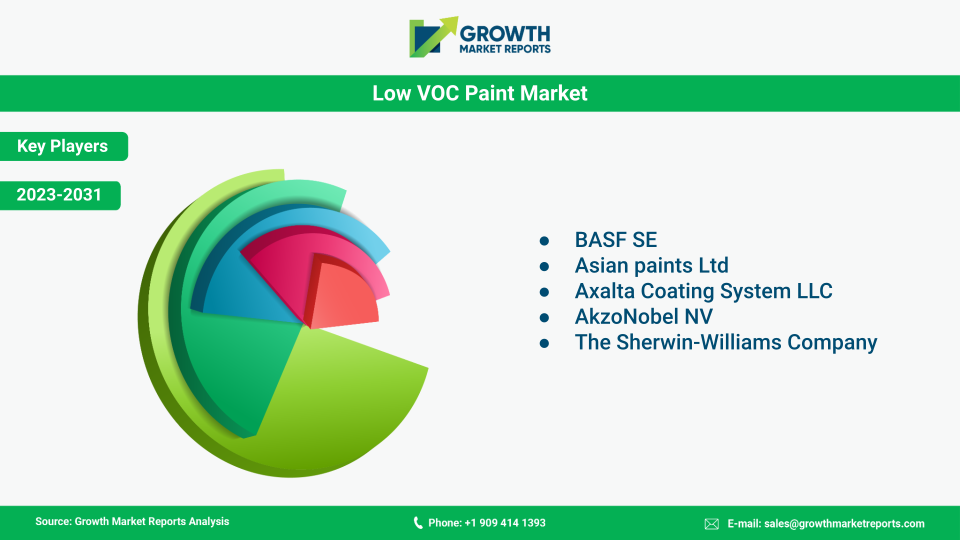
Some of the key players competing in the low VOC paint market include BASF SE; Asian paints Ltd; Axalta Coating System LLC; AkzoNobel NV; The Sherwin-Williams Company. These key players are constantly implementing several marketing strategies such as merger & acquisitions, capital investments, partnerships, and new product development to sustain industry position in the market.
Opportunities include the development of bio-based and renewable raw materials, smart and functional coatings, personalized product offerings, and expansion in emerging markets through digital and omnichannel strategies.
Key companies include Akzo Nobel N.V., PPG Industries, The Sherwin-Williams Company, BASF SE, Asian Paints Limited, Nippon Paint Holdings, RPM International, Axalta Coating Systems, Kansai Paint, and Jotun Group.
Challenges include higher costs compared to conventional paints, the need for ongoing R&D to match performance, and lack of standardized definitions and testing protocols for low VOC claims.
Approximately 75% of sales occur through offline channels like specialty stores and hardware outlets. However, online channels are rapidly growing, driven by e-commerce and digital engagement.
Acrylic, alkyd, polyurethane, and epoxy resins are the main types. Acrylic resins are most widely used due to their weatherability and compatibility with water-based formulations.
Residential applications lead the market, followed by commercial, industrial, and specialty uses such as marine and energy sectors. Demand is driven by the need for safer, healthier environments and regulatory compliance.
The market is segmented into water-based, solvent-based, powder, and other formulations. Water-based paints dominate the market due to their minimal odor and environmental benefits.
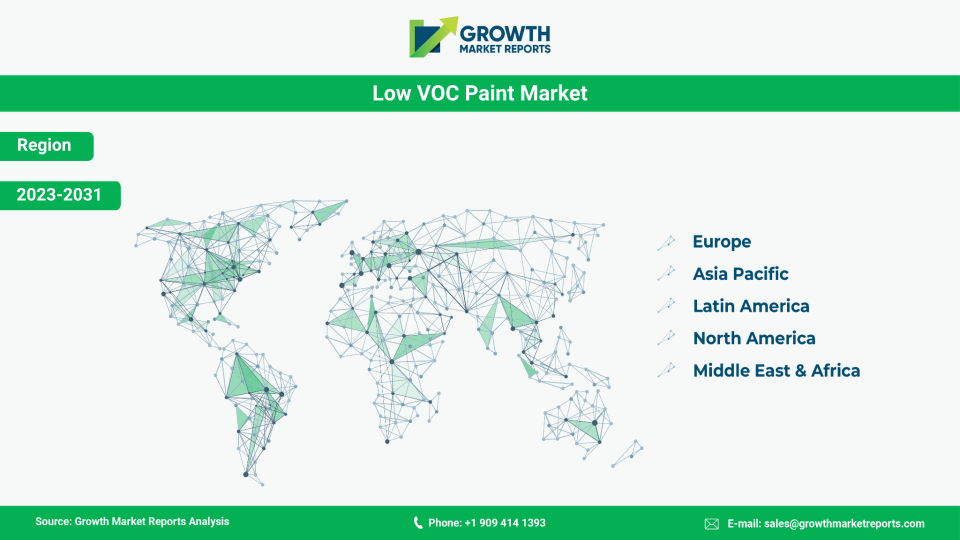
Asia Pacific is the fastest-growing and largest market, followed by North America and Europe, which lead in technological advancements and regulatory enforcement. Latin America and the Middle East & Africa are emerging markets with increasing adoption.
Key growth drivers include tightening environmental regulations, rising consumer awareness about indoor air quality, adoption of green building standards, and rapid urbanization in emerging economies.
The global Low VOC Paint market reached USD 10.7 billion in 2024 and is expected to grow at a CAGR of 6.2% from 2025 to 2033, reaching USD 18.4 billion by 2033.