Segments - by Product Type (Rolled Copper Foil, Electrolytic Copper Foil), by Thickness (Below 6μm, 6-10μm, Above 10μm), by Application (Consumer Electronics, Electric Vehicles, Energy Storage Systems, Industrial Equipment, Others), by End-User (Automotive, Electronics, Energy, Others)
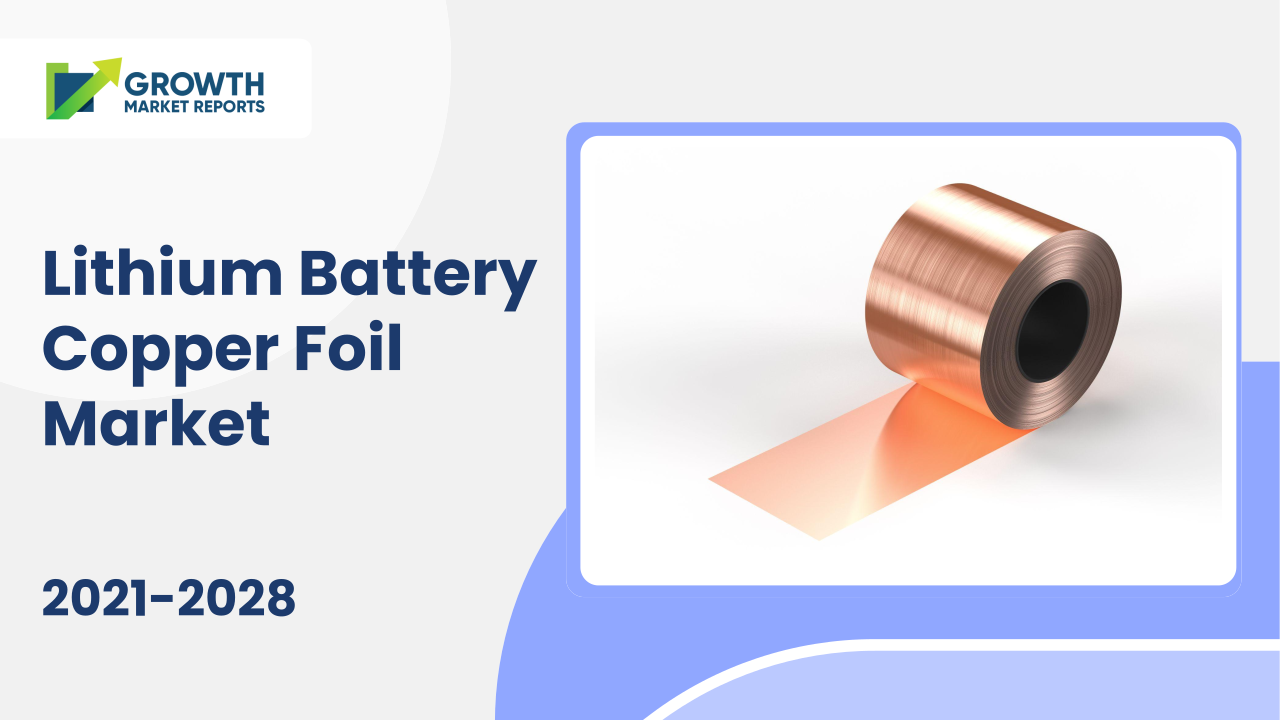
According to our latest research, the global lithium battery copper foil market size reached USD 4.8 billion in 2024, driven by robust demand across the energy storage and electric vehicle sectors. The market is exhibiting a strong compound annual growth rate (CAGR) of 12.2% and is projected to attain a value of USD 13.5 billion by 2033. This remarkable growth trajectory is primarily fueled by the rapid expansion of the electric vehicle market, increasing adoption of renewable energy solutions, and the ongoing technological advancements in battery manufacturing. As per the latest research, the lithium battery copper foil market is witnessing unprecedented momentum, underpinned by evolving consumer electronics trends and the global shift towards sustainable energy solutions.
One of the key growth factors propelling the lithium battery copper foil market is the exponential rise in electric vehicle (EV) production and sales worldwide. As automotive manufacturers intensify their focus on electrification to meet stringent emission regulations and cater to changing consumer preferences, the demand for high-performance lithium-ion batteries has surged. Copper foil serves as a critical anode current collector in these batteries, ensuring efficient conductivity and battery performance. The ongoing investments in EV infrastructure, coupled with government incentives and ambitious carbon neutrality targets, are further amplifying the need for advanced battery components, including copper foil. This trend is especially prominent in leading automotive markets such as China, Europe, and the United States, where the penetration of EVs is accelerating at an unprecedented pace.
Another significant driver of the lithium battery copper foil market is the expanding application of energy storage systems (ESS) in both grid and residential sectors. As the integration of renewable energy sources like solar and wind becomes more widespread, the necessity for reliable and efficient energy storage solutions has intensified. Copper foil, due to its excellent electrical conductivity and mechanical properties, is a preferred material in the manufacturing of high-capacity lithium-ion batteries used in ESS. The ongoing transition towards decentralized energy systems and the need for grid stability are prompting utilities and consumers alike to invest in advanced storage technologies. This, in turn, is fostering sustained demand for copper foil, with manufacturers ramping up production capacities to cater to the burgeoning energy storage market.
Technological advancements in battery manufacturing processes are also contributing significantly to the growth of the lithium battery copper foil market. Innovations in copper foil production, such as the development of ultra-thin and high-strength foils, have enabled battery manufacturers to enhance energy density, reduce battery weight, and improve overall performance. The emergence of next-generation lithium-ion batteries, including solid-state and high-capacity variants, is creating new opportunities for copper foil suppliers to differentiate their offerings. Furthermore, the increasing focus on sustainability and recyclability in battery materials is encouraging the adoption of advanced copper foil products that offer superior lifecycle performance and minimal environmental impact. These technological trends are expected to shape the competitive landscape of the market over the forecast period.
From a regional perspective, the Asia Pacific region continues to dominate the global lithium battery copper foil market, accounting for the largest share of both production and consumption. The presence of leading battery manufacturers, coupled with robust investments in electric vehicle and energy storage infrastructure, has established Asia Pacific as the epicenter of market activity. China, in particular, stands out as a major growth engine, driven by aggressive government policies, a vast consumer base, and a well-developed supply chain. Other regions, including North America and Europe, are also witnessing significant growth, fueled by expanding EV markets and increasing investments in renewable energy. The interplay of regional dynamics, supply chain resilience, and technological innovation will remain pivotal in shaping the future trajectory of the lithium battery copper foil market.
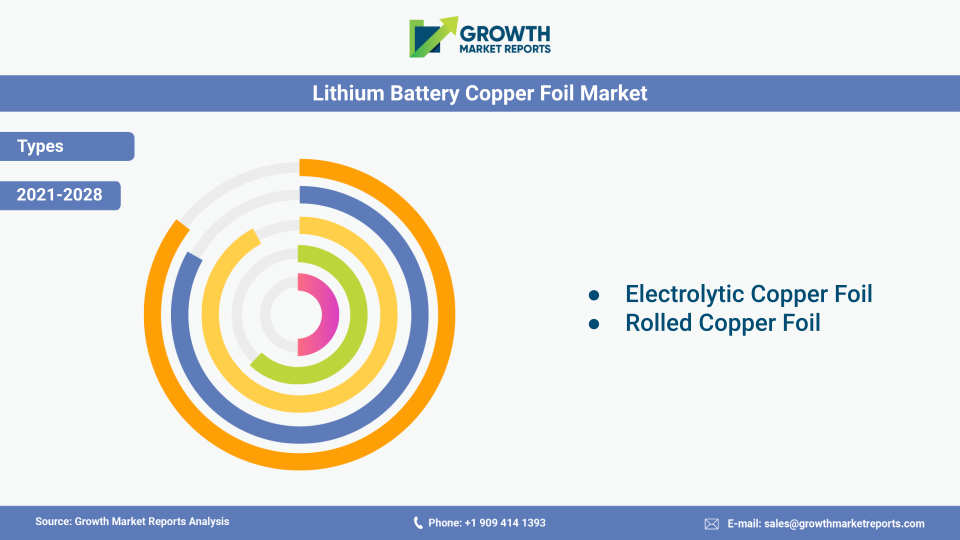
The lithium battery copper foil market is segmented by product type into rolled copper foil and electrolytic copper foil, each offering distinct advantages and catering to specific application requirements. Rolled copper foil is renowned for its superior mechanical properties, flexibility, and uniform thickness, making it an ideal choice for high-performance and flexible battery applications. Its production process involves rolling and annealing, which imparts excellent ductility and surface smoothness, essential for advanced lithium-ion batteries used in premium consumer electronics and cutting-edge electric vehicles. As manufacturers strive to enhance battery energy density and reduce form factors, the demand for rolled copper foil is expected to witness steady growth, particularly in markets prioritizing innovation and quality.
Electrolytic copper foil, on the other hand, dominates the market in terms of volume, owing to its cost-effectiveness and scalability. Produced through an electro-deposition process, this type of copper foil is widely used in mass-produced lithium-ion batteries, especially for mainstream electric vehicles and energy storage systems. Electrolytic copper foil offers excellent electrical conductivity and is available in a range of thicknesses, catering to diverse battery configurations. The ability to produce electrolytic copper foil in large quantities at competitive prices has positioned it as the preferred choice for battery manufacturers operating at scale. As the global demand for affordable and high-capacity batteries continues to rise, the electrolytic copper foil segment is projected to maintain its dominance in the market.
Technological advancements are blurring the lines between rolled and electrolytic copper foils, with manufacturers investing in process innovations to enhance the performance characteristics of both types. For instance, surface treatments and alloying techniques are being employed to improve adhesion, reduce resistance, and enhance the durability of copper foils. This has led to the emergence of hybrid copper foil products that combine the best attributes of both rolled and electrolytic variants, offering battery manufacturers greater flexibility in material selection. The ongoing research and development efforts in copper foil technology are expected to yield new product offerings that address the evolving needs of the lithium-ion battery industry.
Market dynamics within the product type segment are also influenced by end-user preferences and regional supply chain considerations. While rolled copper foil commands a premium in developed markets with a focus on high-end applications, electrolytic copper foil remains the material of choice in cost-sensitive and high-volume markets such as Asia Pacific. The interplay between product performance, cost efficiency, and supply chain resilience will continue to shape the competitive landscape of the copper foil market. Manufacturers are increasingly adopting a dual strategy, offering both rolled and electrolytic copper foil products to cater to a broad spectrum of customer requirements and capture a larger share of the market.
| Attributes | Details |
| Report Title | Lithium Battery Copper Foil Market Research Report 2033 |
| By Product Type | Rolled Copper Foil, Electrolytic Copper Foil |
| By Thickness | Below 6μm, 6-10μm, Above 10μm |
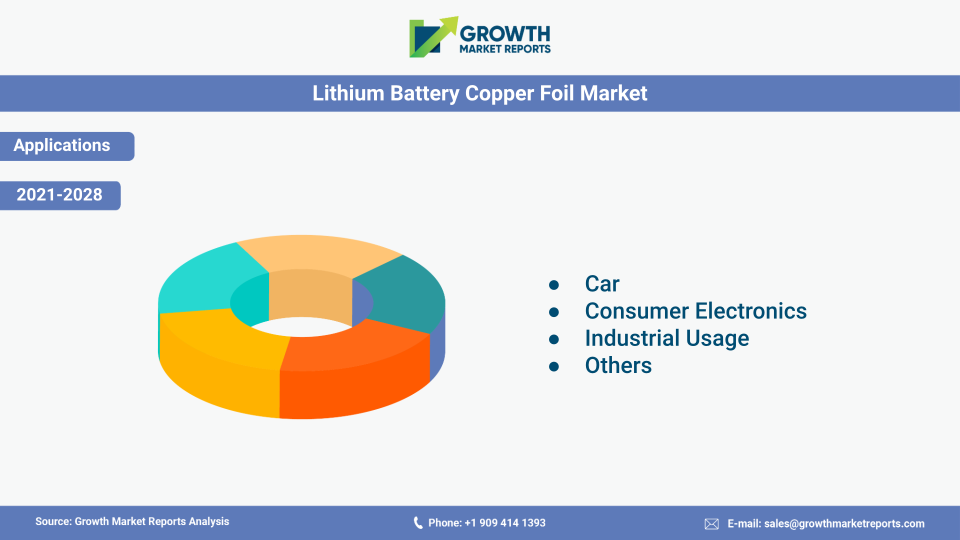
| By Application | Consumer Electronics, Electric Vehicles, Energy Storage Systems, Industrial Equipment, Others |
| By End-User | Automotive, Electronics, Energy, Others |
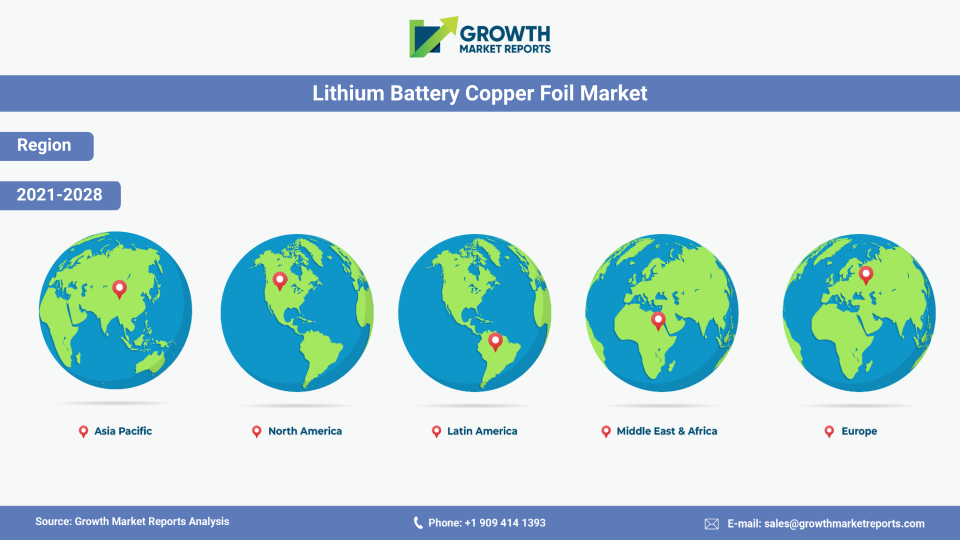
| Regions Covered | North America, Europe, APAC, Latin America, MEA |
| Base Year | 2024 |
| Historic Data | 2018-2023 |
| Forecast Period | 2025-2033 |
| Number of Pages | 289 |
| Number of Tables & Figures | 362 |
| Customization Available | Yes, the report can be customized as per your need. |
The thickness of copper foil is a critical parameter that directly impacts battery performance, cost, and manufacturability. The market is segmented into below 6μm, 6-10μm, and above 10μm thickness categories, each serving distinct application niches. Ultra-thin copper foils (below 6μm) are gaining traction in the premium segment of the lithium battery market, where maximizing energy density and minimizing battery weight are paramount. These foils enable the production of compact and lightweight batteries, ideal for high-end consumer electronics and next-generation electric vehicles. However, manufacturing ultra-thin copper foil requires advanced production technologies and stringent quality control, resulting in higher costs and limited availability.
The 6-10μm thickness segment represents the mainstream of the lithium battery copper foil market, striking a balance between performance and cost. Copper foils in this thickness range are widely used in conventional lithium-ion batteries, offering adequate mechanical strength, electrical conductivity, and manufacturability. The versatility of this segment makes it suitable for a broad range of applications, including electric vehicles, energy storage systems, and industrial equipment. As battery manufacturers seek to optimize performance without incurring excessive costs, the demand for copper foils in the 6-10μm range is expected to remain robust over the forecast period.
Copper foils with a thickness of above 10μm are primarily utilized in applications where mechanical durability and cost considerations outweigh the need for ultra-high energy density. These include industrial batteries, backup power systems, and certain energy storage solutions. While thicker copper foils offer enhanced resistance to mechanical stress and longer lifecycle performance, they are less suitable for compact and lightweight battery designs. However, advancements in battery chemistry and design are enabling the use of thicker copper foils in emerging applications, expanding their market potential beyond traditional segments.
The evolving requirements of the lithium-ion battery industry are driving continuous innovation in copper foil thickness optimization. Manufacturers are investing in precision rolling and electro-deposition technologies to produce foils with consistent thickness, superior surface quality, and minimal defects. The ability to offer customized thickness solutions tailored to specific battery designs is becoming a key differentiator in the market. As the push for higher energy density and miniaturization intensifies, the demand for ultra-thin and high-performance copper foils is expected to outpace other segments, reshaping the competitive dynamics of the market.
The application landscape of the lithium battery copper foil market is diverse, encompassing consumer electronics, electric vehicles, energy storage systems, industrial equipment, and other emerging uses. Among these, the electric vehicle segment stands out as the dominant application, accounting for the largest share of copper foil consumption. The rapid adoption of EVs globally, driven by environmental regulations, technological advancements, and changing consumer preferences, has created a massive demand for high-capacity lithium-ion batteries. Copper foil, as a key component of battery anodes, is indispensable in ensuring the performance and reliability of EV batteries. The ongoing electrification of transportation is expected to sustain the growth momentum of this segment well into the next decade.
Consumer electronics represent another significant application area for lithium battery copper foil, particularly in the production of smartphones, laptops, tablets, and wearable devices. The relentless pursuit of miniaturization, enhanced battery life, and faster charging capabilities in consumer electronics is driving the need for high-quality, ultra-thin copper foils. As leading electronics brands continue to innovate and introduce feature-rich devices, the demand for advanced battery materials, including copper foil, is expected to witness steady growth. The proliferation of connected devices and the emergence of the Internet of Things (IoT) are further expanding the application scope of copper foil in the consumer electronics sector.
Energy storage systems (ESS) are emerging as a high-growth segment within the lithium battery copper foil market, fueled by the global transition towards renewable energy and decentralized power generation. ESS applications require batteries with high energy density, long cycle life, and robust safety features, all of which are enabled by advanced copper foil materials. The increasing deployment of residential, commercial, and utility-scale energy storage solutions is creating new opportunities for copper foil manufacturers to cater to the evolving needs of the energy sector. As the integration of solar and wind energy accelerates, the role of copper foil in supporting grid stability and energy security is becoming increasingly critical.
Industrial equipment and other applications, such as backup power systems and medical devices, also contribute to the growing demand for lithium battery copper foil. These segments often require batteries with specialized performance characteristics, including high reliability, extended lifespan, and enhanced safety. Copper foil suppliers are responding to these requirements by developing customized products tailored to the unique needs of industrial and niche applications. The diversification of application areas is expected to mitigate market risks and provide a stable foundation for long-term growth.
The end-user landscape of the lithium battery copper foil market is segmented into automotive, electronics, energy, and others, each exhibiting distinct demand patterns and growth drivers. The automotive sector is the largest end-user, propelled by the global shift towards electric mobility and the increasing adoption of hybrid and plug-in hybrid vehicles. Automotive OEMs are investing heavily in battery technology to enhance vehicle performance, range, and safety, driving the demand for high-quality copper foil. The competitive dynamics within the automotive sector are fostering innovation and collaboration across the battery supply chain, with copper foil suppliers playing a pivotal role in enabling next-generation EVs.
The electronics sector represents a substantial end-user segment, encompassing a wide array of devices ranging from smartphones and laptops to wearables and smart home solutions. The relentless pace of innovation in electronics, coupled with the growing consumer demand for longer battery life and faster charging, is fueling the need for advanced lithium-ion batteries and, by extension, copper foil. Electronics manufacturers are increasingly prioritizing battery performance as a key differentiator, driving investments in high-quality copper foil materials that can deliver superior conductivity, durability, and safety.
The energy sector is witnessing robust growth as an end-user of lithium battery copper foil, driven by the rapid deployment of energy storage systems for grid stabilization, renewable integration, and backup power. Utilities, independent power producers, and commercial enterprises are investing in advanced battery solutions to enhance energy reliability, reduce carbon emissions, and support the transition to a low-carbon economy. Copper foil manufacturers are capitalizing on this trend by offering products that meet the stringent performance requirements of large-scale energy storage applications.
Other end-user segments, including industrial, medical, and aerospace, are also contributing to the expanding market for lithium battery copper foil. These sectors often require batteries with specialized attributes, such as high reliability, extended cycle life, and resistance to extreme operating conditions. Copper foil suppliers are leveraging their technical expertise to develop tailored solutions for these niche applications, further diversifying their customer base and revenue streams. The broadening end-user landscape is expected to provide resilience against market fluctuations and support sustained growth in the coming years.
The lithium battery copper foil market presents a plethora of opportunities for growth and innovation, particularly in the context of the global transition towards electrification and renewable energy. One of the most promising opportunities lies in the development of ultra-thin and high-strength copper foils, which can significantly enhance battery energy density, reduce weight, and improve overall performance. As battery manufacturers strive to meet the evolving demands of electric vehicles, consumer electronics, and energy storage systems, the ability to offer differentiated and high-performance copper foil products will be a key competitive advantage. Additionally, the increasing focus on sustainability and recyclability in battery materials presents an opportunity for copper foil suppliers to develop environmentally friendly and circular economy solutions, catering to the growing demand for green technologies.
Another major opportunity is the expansion of the lithium battery copper foil market into emerging economies and new application areas. Rapid urbanization, rising disposable incomes, and increasing access to electricity in developing regions are driving the adoption of electric vehicles and renewable energy solutions, creating new avenues for market growth. Furthermore, the proliferation of connected devices, smart appliances, and industrial automation is expanding the application scope of lithium-ion batteries and, by extension, copper foil. Strategic partnerships, capacity expansions, and investments in research and development are expected to unlock new growth opportunities for market participants, enabling them to capture a larger share of the expanding global market.
Despite the favorable growth outlook, the lithium battery copper foil market faces several threats and restraining factors that could impede its progress. One of the primary challenges is the volatility of raw material prices, particularly copper, which can significantly impact production costs and profit margins. Fluctuations in copper prices, driven by supply-demand imbalances, geopolitical tensions, and macroeconomic uncertainties, pose a risk to the stability of the copper foil supply chain. Additionally, the market is characterized by intense competition, with numerous players vying for market share and exerting downward pressure on prices. Regulatory challenges, technological disruptions, and the emergence of alternative materials also represent potential threats to the long-term growth of the market. To mitigate these risks, market participants must adopt robust risk management strategies, diversify their supply sources, and invest in continuous innovation.
The Asia Pacific region is the undisputed leader in the global lithium battery copper foil market, accounting for approximately 68% of total market revenue in 2024, equivalent to around USD 3.26 billion. This dominant position is underpinned by the presence of leading battery manufacturers, a well-developed supply chain, and robust demand from the electric vehicle and consumer electronics sectors. China, in particular, stands out as the epicenter of market activity, driven by aggressive government policies, large-scale investments in EV infrastructure, and a vast consumer base. Other key markets in the region, such as South Korea and Japan, are also contributing to the growth of the market, supported by technological innovation and export-oriented manufacturing. The Asia Pacific market is projected to maintain a strong CAGR of 13.3% over the forecast period, reinforcing its status as the primary growth engine for the global market.
North America represents the second-largest regional market, with a market size of approximately USD 700 million in 2024. The region's growth is driven by the rapid adoption of electric vehicles, increasing investments in renewable energy, and the presence of leading technology companies. The United States, in particular, is witnessing significant growth in battery manufacturing and energy storage deployments, supported by favorable government policies and a strong innovation ecosystem. While North America lags behind Asia Pacific in terms of market share, it is expected to register a healthy CAGR of 10.8% over the forecast period, driven by ongoing investments in clean energy and advanced manufacturing.
Europe is also emerging as a key player in the lithium battery copper foil market, with a market size of approximately USD 620 million in 2024. The region's growth is fueled by stringent emission regulations, ambitious carbon neutrality targets, and robust investments in electric vehicle infrastructure. Leading automotive manufacturers in Germany, France, and the United Kingdom are ramping up their EV production capacities, driving the demand for high-quality battery materials, including copper foil. The European market is expected to maintain a steady growth trajectory, supported by strong policy support and a growing focus on sustainability. Other regions, including Latin America and Middle East & Africa, are witnessing gradual growth, collectively accounting for less than 10% of the global market. These regions are expected to benefit from increasing investments in renewable energy and electrification, albeit at a slower pace compared to the major markets.
The competitive landscape of the lithium battery copper foil market is characterized by the presence of a mix of established players and emerging entrants, each vying for market share through product innovation, capacity expansions, and strategic partnerships. The market is moderately consolidated, with a handful of leading companies accounting for a significant share of global production. These players possess strong technical expertise, robust manufacturing capabilities, and extensive distribution networks, enabling them to cater to the diverse needs of battery manufacturers across regions and applications. Intense competition is driving continuous innovation in product development, process optimization, and supply chain management, with companies striving to differentiate themselves through quality, performance, and sustainability.
One of the key strategies adopted by leading players in the lithium battery copper foil market is investment in research and development to enhance product performance and address emerging customer requirements. Companies are focusing on the development of ultra-thin, high-strength, and environmentally friendly copper foils that offer superior energy density, durability, and recyclability. The ability to offer customized solutions tailored to specific battery designs and applications is becoming a critical success factor in the market. Strategic collaborations with battery manufacturers, automotive OEMs, and technology providers are also playing a pivotal role in driving innovation and accelerating the commercialization of next-generation copper foil products.
Capacity expansion and geographic diversification are other prominent strategies employed by market participants to strengthen their competitive position. Leading companies are investing in new manufacturing facilities and upgrading existing plants to meet the surging demand for copper foil, particularly in high-growth regions such as Asia Pacific and North America. The establishment of local production bases enables companies to reduce lead times, enhance supply chain resilience, and better serve the needs of regional customers. In addition, companies are exploring opportunities to expand their presence in emerging markets, where rapid urbanization and electrification are creating new avenues for growth.
Sustainability and environmental stewardship are emerging as key differentiators in the competitive landscape of the lithium battery copper foil market. Companies are increasingly adopting sustainable manufacturing practices, investing in recycling technologies, and developing eco-friendly products to align with the growing emphasis on green technologies and circular economy principles. Compliance with environmental regulations and the ability to offer low-carbon and recyclable copper foil products are expected to become important criteria for customer selection in the coming years.
Major players in the lithium battery copper foil market include Furukawa Electric Co., Ltd., Doosan Corporation, SKC Ltd., Jiangxi Copper Corporation, Chang Chun Group, Iljin Materials Co., Ltd., and Shenzhen Watson Electronics Co., Ltd.. Furukawa Electric is recognized for its advanced rolled copper foil products, catering to high-end battery applications in electric vehicles and consumer electronics. Doosan Corporation and SKC Ltd. are prominent suppliers of electrolytic copper foil, leveraging their large-scale production capabilities and extensive distribution networks. Jiangxi Copper Corporation is a leading player in the Chinese market, with a strong focus on innovation and capacity expansion. Iljin Materials and Chang Chun Group are known for their high-quality copper foil products and strategic collaborations with global battery manufacturers. Shenzhen Watson Electronics has established itself as a key supplier in the Asia Pacific region, offering a wide range of copper foil solutions for diverse applications. Collectively, these companies are shaping the evolution of the lithium battery copper foil market through continuous innovation, strategic investments, and a relentless focus on quality and sustainability.
The Lithium Battery Copper Foil market has been segmented on the basis of
Key players operating in the global lithium battery copper foil market include UACJ Foil Corporation, SKC, Avocet Steel, Magneto Special Anodes (Evoqua Water Technologies LLC), FURUKAWA ELECTRIC CO., LTD, Chang Chun Group, NAN YA PLASTICS CORPORATION, Tongling Nonferrous Metals Group Holding Co.,Ltd, ILJIN MATERIALS CO., Ltd, Nippon Denkai, Ltd., and Lingbao Huaxin Copper Foil Co., Ltd. These companies are considered as key manufacturers of lithium battery copper foils based on their revenue, research & development (R&D) activities, presence, and supply chain management system.
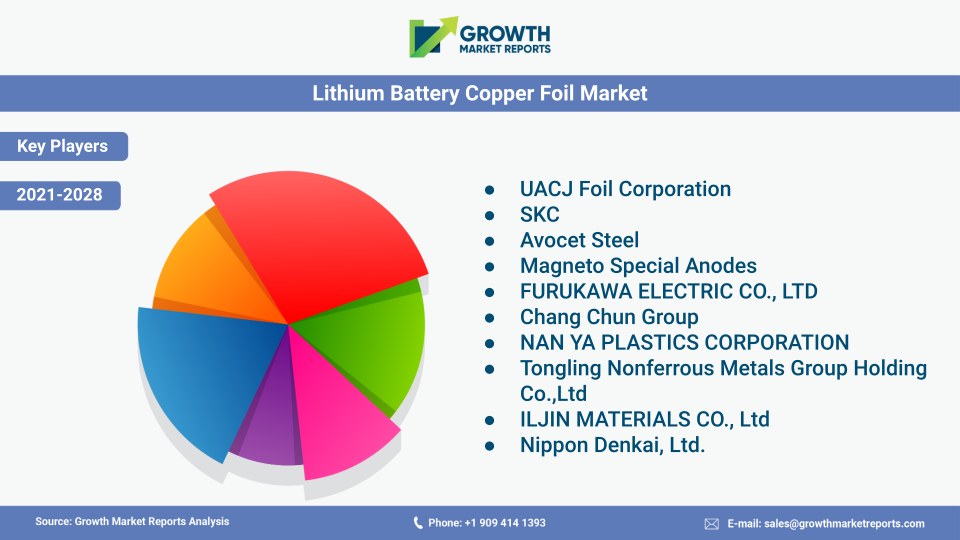
Major Manufactures include UACJ Foil Corporation, SKC, Avocet Steel, Magneto Special Anodes (Evoqua Water Technologies LLC), FURUKAWA ELECTRIC CO., LTD, Chang Chun Group, NAN YA PLASTICS CORPORATION, Tongling Nonferrous Metals Group Holding Co.,Ltd, ILJIN MATERIALS CO., Ltd, Nippon Denkai, Ltd., and Lingbao Huaxin Copper Foil Co., Ltd.
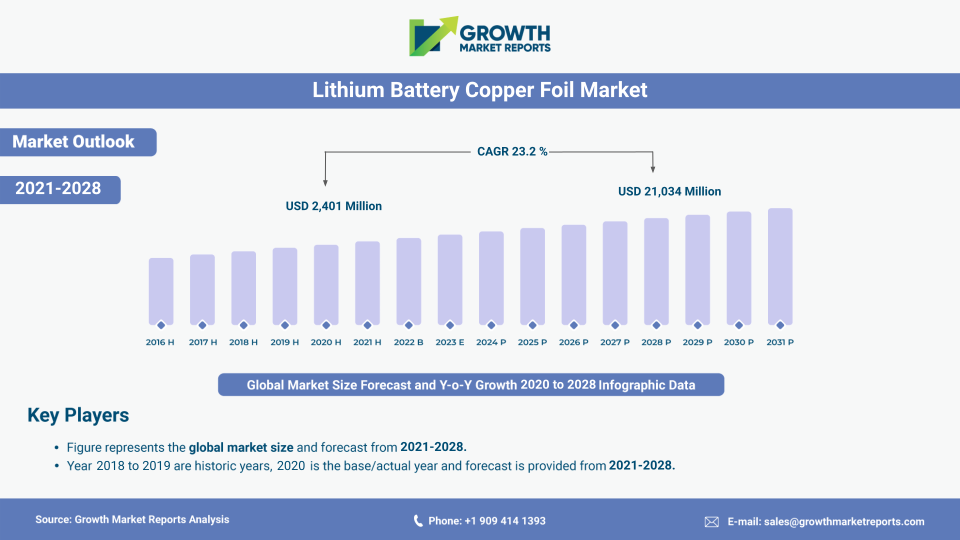
The base year considered for the global lithium battery copper foil market report is 2020. The complete analysis period is 2018 to 2028, wherein, 2018 & 2019 are the historic years, 2021 is an estimated year and the forecast is provided from 2021 to 2028.
The market is expected to witness growth with slow increase in terms of demand during 2020-2021 owing to the negative impact of COVID-19 pandemic on the global Lithium Battery Copper Foil market.
Electronics, Automobile, and others are few of the key end use industries driving the market growth.
The global Lithium Battery Copper Foil market is anticipated to grow significantly during forecast period due to rising demand for lithium battery copper foil in various industries, mainly in consumer electronics.
Increasing demand from end-use industries such as construction, transportation, and furniture. Demand for automobile plastics is boosted by the growing trend of lightweight materials. Plastic and aluminum are lightweight materials that assist automobiles to be light and fuel-efficient. Demand for structural adhesive products is expected to rise, due to increased adhesion requirements for materials such as steel, magnesium, and plastic.
In addition to market size (in USD Million) and Company Market Share (in % for base year 2020), other data such Macro-economic factors, Impact of key regulations on the market, technology trends, and COVID-19 Impact on the global lithium battery copper foil market is available in final report.
According to this Growth Market Reports, report, the market from global Lithium Battery Copper Foil market is likely to register a CAGR of 23.2% during period 2021-2028, with an anticipated valuation of USD 21,034 Mn by the end of the 2028.
Additional company profiles can be provided on request.