Liquid Fertilizer Market Research Report 2033

Liquid Fertilizer Market Research Report 2033

Segments - by Type (Nitrogen, Phosphorus, Potassium, Micronutrients, Others), by Application (Soil, Foliar, Fertigation), by Crop Type (Cereals & Grains, Fruits & Vegetables, Oilseeds & Pulses, Others), by Mode Of Application (Agricultural, Horticultural, Others)

https://growthmarketreports.com/Anuradha
Author : Anuradha B. More
https://growthmarketreports.com/Vaibhav
Fact-checked by : Vaibhav Chandola
https://growthmarketreports.com/Shruti
Editor : Shruti Bhat

Upcoming | Report ID :FB-2032 | 4.6 Rating | 20 Reviews | 266 Pages | Format : Docx PDF

Report Description


Liquid Fertilizer Market Outlook

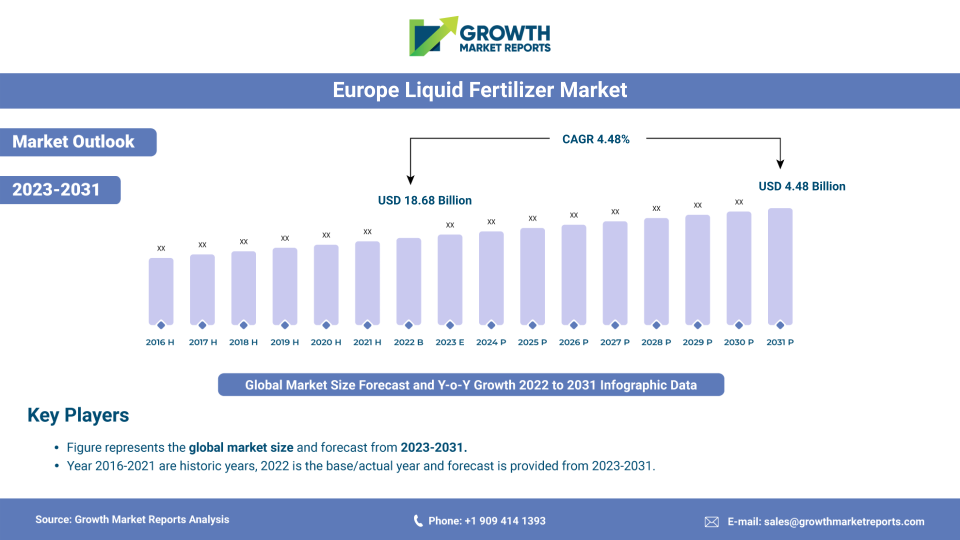
According to our latest research, the global liquid fertilizer market size stood at USD 14.8 billion in 2024, and is projected to reach USD 22.3 billion by 2033, expanding at a robust CAGR of 4.6% during the forecast period. The primary growth driver for the liquid fertilizer market is the increasing global demand for high-efficiency fertilizers that support sustainable agricultural practices and maximize crop yields. This market is witnessing a significant transformation due to evolving farming techniques, increasing awareness regarding soil health, and the pressing need for food security worldwide.

One of the main growth factors propelling the liquid fertilizer market is the rising adoption of advanced agricultural practices. As global populations continue to surge, there is mounting pressure on farmers to increase crop productivity per unit of land. Liquid fertilizers, with their rapid nutrient delivery and higher absorption rates, are increasingly favored over traditional granular fertilizers. Their compatibility with precision agriculture technologies, such as drip and sprinkler irrigation systems, further enhances their appeal. Additionally, the ease of application and ability to provide uniform nutrient distribution across large fields are compelling farmers to shift towards liquid fertilizers, especially in regions where mechanized farming is prevalent.

Another significant factor influencing the expansion of the liquid fertilizer market is the growing emphasis on sustainable and environmentally friendly farming solutions. Liquid fertilizers are known for their reduced nutrient runoff and leaching compared to their solid counterparts, thus minimizing environmental pollution. This aligns with the global trend of adopting eco-friendly agricultural inputs and complying with stringent government regulations concerning fertilizer usage. Furthermore, liquid fertilizers can be customized to address specific nutrient deficiencies in various crops and soil types, making them a preferred choice for precision farming and integrated nutrient management systems.

The market is also experiencing growth due to the increasing focus on specialty crops and horticulture. Farmers cultivating high-value crops such as fruits, vegetables, and ornamental plants are turning to liquid fertilizers for their ability to deliver micronutrients and secondary nutrients efficiently. This trend is particularly pronounced in emerging economies, where government initiatives and subsidies are promoting the use of high-efficiency fertilizers to boost agricultural output and export potential. The development of innovative formulations, such as slow-release and controlled-release liquid fertilizers, is further augmenting market growth by offering enhanced nutrient management solutions tailored to specific crop requirements.

Regionally, the Asia Pacific region dominates the liquid fertilizer market, accounting for the largest share in 2024, driven by the vast agricultural sector in countries like China and India. North America and Europe follow closely, supported by advanced farming practices and high awareness levels regarding sustainable agriculture. Latin America and the Middle East & Africa are also witnessing steady growth, fueled by increasing investments in modern agriculture and the adoption of efficient irrigation systems. Each region presents unique opportunities and challenges, but the overarching trend is the growing preference for liquid fertilizers due to their superior performance and alignment with modern agricultural needs.

Global Liquid Fertilizer Industry Outlook

Type Analysis

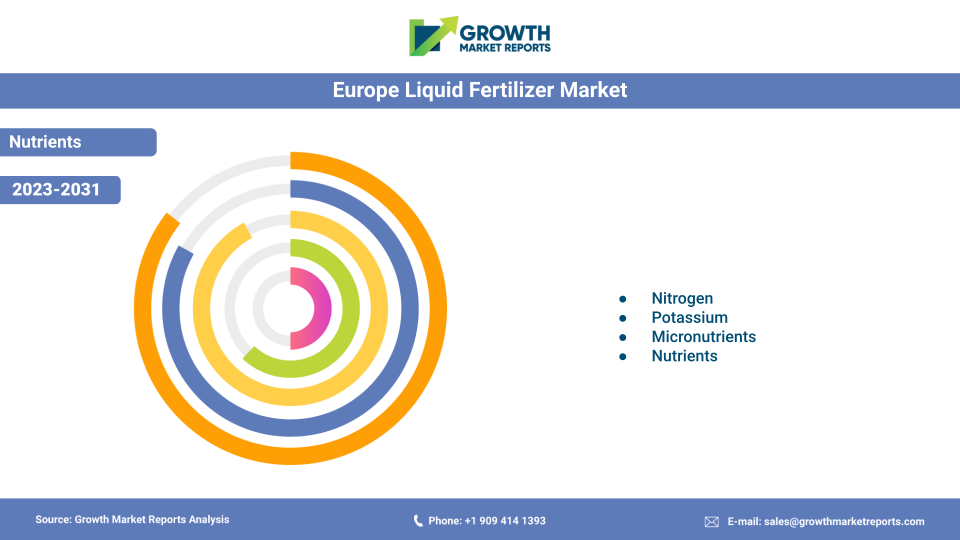
The liquid fertilizer market by type is segmented into Nitrogen, Phosphorus, Potassium, Micronutrients, and Others, with nitrogen-based liquid fertilizers holding the largest share in 2024. Nitrogen is a critical macronutrient required for plant growth and development, and its liquid formulations offer rapid uptake and immediate impact on crop health. The demand for nitrogen-based liquid fertilizers is particularly high in regions with intensive cereal and grain cultivation, as these crops require substantial nitrogen inputs. Moreover, technological advancements in the production of urea-ammonium nitrate (UAN) solutions have enhanced the efficiency and cost-effectiveness of nitrogen fertilizers, further driving their adoption.

Phosphorus and potassium-based liquid fertilizers are also witnessing notable growth, driven by their essential roles in root development, flowering, and fruiting. These fertilizers are increasingly used in specialty crop cultivation, such as fruits, vegetables, and horticultural crops, where balanced nutrient management is crucial for achieving high yields and quality produce. The development of innovative phosphorus and potassium formulations, such as chelated and polyphosphate-based products, is enabling farmers to address specific nutrient deficiencies and improve nutrient use efficiency in various soil types.

Micronutrient liquid fertilizers, though constituting a smaller market share, are gaining traction due to the rising awareness of the importance of secondary and trace elements in crop nutrition. Deficiencies of micronutrients like zinc, iron, manganese, and boron can significantly impact crop health and productivity. Liquid formulations of these micronutrients offer targeted and efficient delivery, making them ideal for foliar application and fertigation. The increasing focus on high-value crops and the need for balanced fertilization are expected to drive the growth of the micronutrient segment in the coming years.

The 'Others' category, which includes secondary nutrients such as calcium, magnesium, and sulfur, is also growing steadily. These nutrients are essential for specific crops and soil conditions, and their liquid formulations are preferred for their quick solubility and ease of application. The trend towards customized fertilizer blends tailored to the unique requirements of different crops and regions is further propelling the demand for a diverse range of liquid fertilizer types. Overall, the type segment is characterized by innovation and diversification, with manufacturers focusing on developing advanced formulations to meet the evolving needs of modern agriculture.

Report Scope

Attributes Details
Report Title Liquid Fertilizer Market Research Report 2033
By Type Nitrogen, Phosphorus, Potassium, Micronutrients, Others
By Application Soil, Foliar, Fertigation
By Crop Type Cereals & Grains, Fruits & Vegetables, Oilseeds & Pulses, Others
By Mode Of Application Agricultural, Horticultural, Others
Regions Covered North America, Europe, APAC, Latin America, MEA
Base Year 2024
Historic Data 2018-2023
Forecast Period 2025-2033
Number of Pages 266
Number of Tables & Figures 345
Customization Available Yes, the report can be customized as per your need.

Application Analysis

The application segment of the liquid fertilizer market is categorized into Soil, Foliar, and Fertigation methods. Soil application remains the most widely used method, accounting for the largest market share in 2024. This method involves the direct application of liquid fertilizers to the soil, ensuring that nutrients are readily available to plant roots. Soil application is particularly popular in large-scale cereal and grain farming, where uniform nutrient distribution and ease of mechanized application are critical. The development of advanced application equipment and techniques has further enhanced the efficiency and effectiveness of soil-applied liquid fertilizers.

Foliar application, where liquid fertilizers are sprayed directly onto plant leaves, is gaining popularity due to its rapid response and ability to correct nutrient deficiencies during critical growth stages. This method is especially beneficial for high-value crops such as fruits, vegetables, and ornamentals, where timely nutrient supplementation can significantly impact yield and quality. Foliar feeding is also preferred in situations where soil conditions limit nutrient uptake, such as in saline or alkaline soils. The increasing adoption of foliar application in precision agriculture and integrated pest management systems is expected to drive significant growth in this segment.

Fertigation, which involves the application of liquid fertilizers through irrigation systems, is emerging as a highly efficient and sustainable method of nutrient delivery. This technique allows for precise control over the timing and dosage of fertilizer application, reducing nutrient losses and environmental impact. Fertigation is particularly prevalent in regions with advanced irrigation infrastructure, such as North America, Europe, and parts of Asia Pacific. The integration of fertigation with automated and sensor-based irrigation systems is enabling farmers to optimize nutrient management and improve crop productivity while conserving water and minimizing labor costs.

Each application method offers unique advantages and is suited to specific crop types, soil conditions, and farming practices. The choice of application method is influenced by factors such as crop value, farm size, irrigation infrastructure, and environmental considerations. As the liquid fertilizer market continues to evolve, there is a growing trend towards the adoption of integrated and site-specific nutrient management strategies that combine multiple application methods for optimal results. The increasing availability of customized liquid fertilizer solutions and advanced application technologies is expected to further drive the growth and diversification of the application segment.

Crop Type Analysis

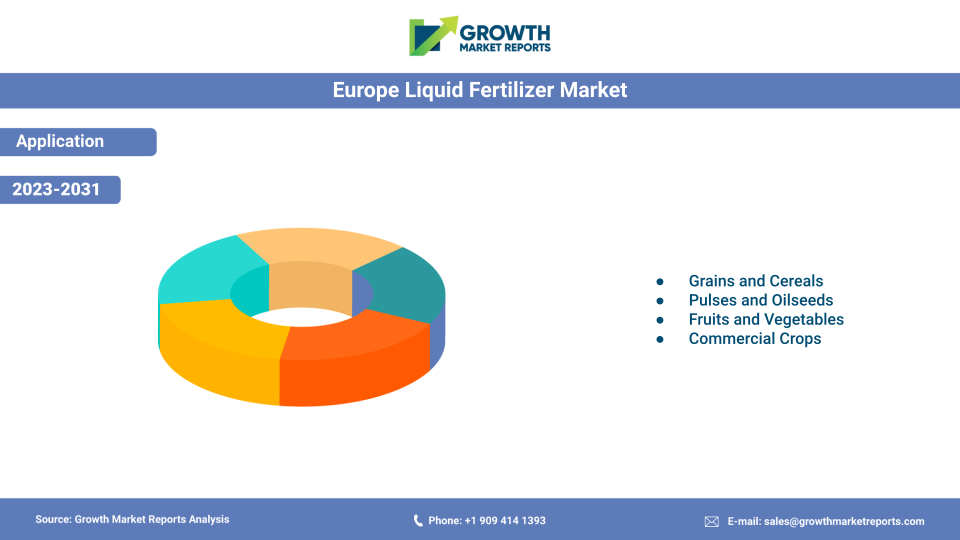
The crop type segment of the liquid fertilizer market is divided into Cereals & Grains, Fruits & Vegetables, Oilseeds & Pulses, and Others, with cereals and grains accounting for the largest share in 2024. The high demand for staple crops such as wheat, rice, and maize, coupled with the need to enhance productivity and meet global food security challenges, is driving the widespread adoption of liquid fertilizers in this segment. The rapid nutrient availability and high efficiency of liquid fertilizers make them ideal for large-scale cereal and grain production, where maximizing yield per hectare is a top priority.

Fruits and vegetables represent a rapidly growing segment, fueled by increasing consumer demand for fresh and high-quality produce. Liquid fertilizers are particularly well-suited for these crops, as they allow for precise nutrient management and timely supplementation during critical growth stages. The use of micronutrient-enriched and specialty liquid fertilizers is becoming increasingly common in fruit and vegetable cultivation, where balanced nutrition is essential for achieving optimal flavor, color, and shelf life. The expansion of greenhouse farming and protected cultivation systems is also contributing to the growth of this segment, as liquid fertilizers are easily integrated into controlled environment agriculture.

Oilseeds and pulses, including crops such as soybean, sunflower, and lentils, are also significant contributors to the liquid fertilizer market. These crops require specific nutrient management strategies to optimize oil content and protein levels, and liquid fertilizers offer the flexibility and precision needed to meet these requirements. The increasing adoption of sustainable and conservation agriculture practices, such as crop rotation and intercropping, is further driving the demand for liquid fertilizers in the oilseeds and pulses segment. Government support and incentives for pulse and oilseed cultivation in developing countries are expected to boost market growth in this segment over the forecast period.

The 'Others' category encompasses a wide range of crops, including forage crops, ornamental plants, and specialty crops such as herbs and spices. These crops often have unique nutrient requirements and are cultivated in diverse environments, making liquid fertilizers an attractive option for tailored and efficient nutrient management. The growing trend towards diversification in agriculture and the increasing focus on niche and high-value crops are expected to drive the expansion of the 'Others' segment. Overall, the crop type segment reflects the broad applicability and versatility of liquid fertilizers across different agricultural systems and crop categories.

Mode of Application Analysis

The mode of application segment in the liquid fertilizer market is categorized into Agricultural, Horticultural, and Others, with agricultural applications dominating the market in 2024. Large-scale field crop production, particularly cereals, grains, and oilseeds, relies heavily on liquid fertilizers for efficient and uniform nutrient delivery. The adoption of modern agricultural practices, such as precision farming and mechanized application, has further increased the use of liquid fertilizers in this segment. The ability to integrate liquid fertilizers with irrigation and crop protection systems is a key factor driving their popularity among commercial farmers and agribusinesses.

Horticultural applications, including fruit and vegetable cultivation, floriculture, and nursery production, represent a significant and rapidly growing segment of the liquid fertilizer market. Horticultural crops often require specialized nutrient management strategies to achieve high yields, quality, and marketability. Liquid fertilizers offer the flexibility to provide targeted and balanced nutrition, addressing the specific needs of different crops and growth stages. The increasing adoption of protected cultivation systems, such as greenhouses and shade nets, is further boosting the use of liquid fertilizers in horticulture, as these systems facilitate precise and efficient nutrient application.

The 'Others' segment includes a variety of non-traditional and emerging applications, such as turf management, landscaping, and urban agriculture. The growing trend towards sustainable landscaping and the increasing popularity of urban farming initiatives are creating new opportunities for the use of liquid fertilizers in these areas. Liquid fertilizers are valued for their ease of use, rapid results, and ability to support healthy plant growth in diverse environments. The development of specialized formulations for turf, ornamental plants, and hydroponic systems is expected to drive further growth in this segment.

Across all modes of application, the trend is towards the adoption of integrated nutrient management strategies that combine liquid fertilizers with other inputs and technologies for optimal results. The availability of advanced application equipment and precision delivery systems is enabling farmers and growers to maximize the benefits of liquid fertilizers while minimizing waste and environmental impact. As the liquid fertilizer market continues to evolve, the mode of application segment is expected to witness ongoing innovation and diversification, driven by changing agricultural practices and the need for sustainable and efficient nutrient management solutions.

Opportunities & Threats

The liquid fertilizer market presents a multitude of opportunities for growth and innovation, particularly in the areas of product development and technology integration. The increasing adoption of precision agriculture and digital farming solutions is creating new avenues for the use of liquid fertilizers, as these technologies enable farmers to apply nutrients with unprecedented accuracy and efficiency. The development of smart fertilizers, which incorporate sensors and controlled-release mechanisms, is expected to revolutionize nutrient management and drive significant market growth. Additionally, the expanding demand for organic and specialty liquid fertilizers, driven by consumer preferences for sustainable and residue-free produce, offers lucrative opportunities for manufacturers and suppliers to diversify their product portfolios and capture new market segments.

Another major opportunity lies in the expansion of liquid fertilizer applications beyond traditional agriculture. The rising popularity of urban farming, hydroponics, and vertical agriculture is creating new markets for liquid fertilizers, as these systems rely heavily on soluble and easily deliverable nutrient sources. The increasing investment in research and development, coupled with government support for sustainable agriculture initiatives, is expected to accelerate the adoption of liquid fertilizers in these emerging sectors. Furthermore, the growing focus on climate-resilient agriculture and the need to enhance soil health and productivity in the face of changing weather patterns present significant opportunities for the development of innovative liquid fertilizer solutions tailored to specific environmental and agronomic conditions.

Despite the numerous opportunities, the liquid fertilizer market faces several restraining factors that could impede its growth. One of the primary challenges is the high cost of liquid fertilizers compared to traditional granular formulations, which may limit their adoption among smallholder and resource-constrained farmers. Additionally, the lack of awareness and technical knowledge regarding the proper use and application of liquid fertilizers can lead to suboptimal results and reduced effectiveness. Environmental concerns related to the overuse and improper management of liquid fertilizers, such as nutrient runoff and water pollution, also pose significant challenges. Addressing these issues through education, training, and the development of cost-effective and environmentally friendly products will be critical to ensuring the long-term sustainability and growth of the liquid fertilizer market.

Regional Outlook

The Asia Pacific region is the undisputed leader in the global liquid fertilizer market, accounting for approximately 42% of the total market share in 2024, with a market size of USD 6.2 billion. This dominance is attributed to the vast agricultural landscapes of countries such as China, India, and Southeast Asian nations, where the demand for high-efficiency fertilizers is driven by the need to feed rapidly growing populations. Government initiatives promoting the use of advanced fertilizers and modern irrigation systems are further bolstering market growth in this region. The Asia Pacific liquid fertilizer market is projected to grow at a CAGR of 5.2% during the forecast period, outpacing other regions due to ongoing investments in agricultural modernization and infrastructure development.

North America holds the second-largest share of the liquid fertilizer market, with a market size of USD 3.7 billion in 2024. The region is characterized by highly mechanized and technologically advanced farming practices, which favor the adoption of liquid fertilizers for their efficiency and compatibility with precision agriculture systems. The United States and Canada are the primary contributors to market growth, with a strong focus on sustainable agriculture and environmental stewardship. The increasing cultivation of specialty crops and the expansion of protected agriculture are also driving demand for liquid fertilizers in North America. The market in this region is expected to maintain steady growth, supported by ongoing research and innovation in fertilizer technologies.

Europe, Latin America, and the Middle East & Africa collectively account for the remaining share of the global liquid fertilizer market, with Europe leading among these regions at USD 2.9 billion in 2024. European farmers are increasingly adopting liquid fertilizers in response to stringent environmental regulations and the need to improve nutrient use efficiency. Latin America, with a market size of USD 1.2 billion, is experiencing steady growth driven by the expansion of commercial agriculture and the adoption of modern irrigation techniques. The Middle East & Africa region, although smaller in market size at USD 0.8 billion, is witnessing increased investment in agricultural development and the use of liquid fertilizers to enhance productivity in arid and semi-arid environments. Each region presents unique opportunities and challenges, but the overall outlook for the global liquid fertilizer market remains highly positive, driven by the universal need for efficient and sustainable nutrient management.

Liquid Fertilizer Market Statistics

Competitor Outlook

The competitive landscape of the liquid fertilizer market is characterized by the presence of several global and regional players, each striving to enhance their market position through product innovation, strategic partnerships, and expansion into emerging markets. Leading companies are investing heavily in research and development to create advanced liquid fertilizer formulations that offer improved nutrient efficiency, environmental safety, and compatibility with modern application technologies. The market is also witnessing a trend towards consolidation, with major players acquiring smaller companies to strengthen their product portfolios and expand their geographical reach. Intense competition is driving continuous innovation, with companies focusing on developing customized solutions tailored to the specific needs of different crops, regions, and farming systems.

In addition to product innovation, companies are also prioritizing sustainability and environmental stewardship in their business strategies. The development of eco-friendly and bio-based liquid fertilizers is gaining momentum, as manufacturers seek to address growing consumer and regulatory demands for sustainable agricultural inputs. Strategic collaborations with research institutions, government agencies, and technology providers are enabling companies to leverage cutting-edge advancements in precision agriculture, digital farming, and controlled-release technologies. These partnerships are facilitating the development of integrated nutrient management solutions that combine liquid fertilizers with other crop inputs and management practices for optimal results.

The market is also witnessing significant activity in terms of marketing and distribution, with companies expanding their presence in high-growth regions through the establishment of local subsidiaries, distribution networks, and training centers. The focus on farmer education and capacity building is a key differentiator, as companies seek to build brand loyalty and drive adoption by demonstrating the benefits of liquid fertilizers through field trials, demonstrations, and technical support. The increasing use of digital platforms and e-commerce channels is also transforming the way liquid fertilizers are marketed and sold, enabling companies to reach a wider customer base and streamline their supply chains.

Major players in the global liquid fertilizer market include Nutrien Ltd., Yara International ASA, Israel Chemicals Ltd. (ICL), K+S Aktiengesellschaft, Haifa Group, and The Mosaic Company. Nutrien Ltd. is a global leader in crop nutrition, offering a comprehensive range of liquid and specialty fertilizers. Yara International ASA is renowned for its innovative liquid fertilizer solutions and strong focus on sustainability. Israel Chemicals Ltd. (ICL) is a key player in the development of advanced liquid fertilizer formulations for diverse agricultural applications. K+S Aktiengesellschaft and Haifa Group are recognized for their expertise in specialty and micronutrient liquid fertilizers, while The Mosaic Company is a major supplier of integrated nutrient management solutions. These companies are continuously investing in research, technology, and market expansion to maintain their competitive edge and capitalize on the growing demand for liquid fertilizers worldwide.

Overall, the liquid fertilizer market is highly dynamic and competitive, with companies leveraging innovation, sustainability, and customer engagement to drive growth and differentiation. The ongoing evolution of agricultural practices, coupled with the increasing emphasis on efficiency and environmental responsibility, is expected to shape the future of the market and create new opportunities for both established players and emerging entrants.

Key Players

  • Nutrien Ltd.
  • Yara International ASA
  • Israel Chemicals Ltd. (ICL)
  • K+S Aktiengesellschaft
  • The Mosaic Company
  • Haifa Group
  • EuroChem Group AG
  • Sociedad Química y Minera de Chile (SQM)
  • ICL Fertilizers
  • Agrium Inc.
  • Compo Expert GmbH
  • Plant Food Company, Inc.
  • FoxFarm Soil & Fertilizer Company
  • AgroLiquid
  • J.R. Simplot Company
  • Kugler Company
  • Agroliquid
  • Verdesian Life Sciences
  • Nufarm Limited
  • Wilbur-Ellis Company
Liquid Fertilizer Market Overview

Segments

The Liquid Fertilizer market has been segmented on the basis of

Type

  • Nitrogen
  • Phosphorus
  • Potassium
  • Micronutrients
  • Others

Application

  • Soil
  • Foliar
  • Fertigation

Crop Type

  • Cereals & Grains
  • Fruits & Vegetables
  • Oilseeds & Pulses
  • Others

Mode Of Application

  • Agricultural
  • Horticultural
  • Others

Competitive Landscape

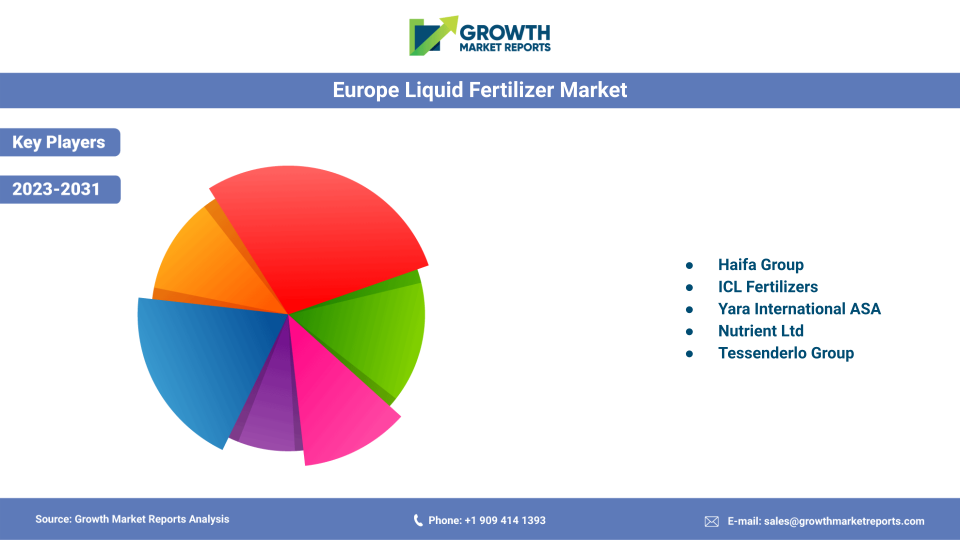
Key players competing in the Europe liquid fertilizer market are Haifa Group; ICL Fertilizers; Yara International ASA; Nutrient Ltd; Tessenderlo. Companies are introducing new product offering to increase their foothold and strengthen their position in the market.

Europe Liquid Fertilizer Market Key Players

Frequently Asked Questions

Yes, the Liquid Fertilizer Market Research Report 2033 offers customization options to meet specific business or research needs.

There is a growing emphasis on eco-friendly and bio-based liquid fertilizers to reduce nutrient runoff and environmental pollution, driven by stringent regulations and consumer demand for sustainable agriculture.

Key companies include Nutrien Ltd., Yara International ASA, Israel Chemicals Ltd. (ICL), K+S Aktiengesellschaft, Haifa Group, The Mosaic Company, EuroChem Group AG, and others.

Opportunities include the integration of precision agriculture, development of smart and specialty fertilizers, and expansion into urban and vertical farming. Challenges include higher costs compared to granular fertilizers, lack of awareness among small farmers, and environmental concerns related to misuse.

Cereals & grains are the largest consumers, but fruits & vegetables, oilseeds & pulses, and specialty crops also benefit significantly from liquid fertilizers due to their rapid nutrient availability and efficiency.

Liquid fertilizers can be applied via soil application, foliar spraying, and fertigation (through irrigation systems). Soil application is most common, but foliar and fertigation methods are gaining popularity for their efficiency.

The main types are Nitrogen, Phosphorus, Potassium, Micronutrients, and Others (including secondary nutrients like calcium, magnesium, and sulfur). Nitrogen-based liquid fertilizers hold the largest market share.

Asia Pacific leads the market, accounting for about 42% of the global share in 2024, followed by North America and Europe. Latin America and the Middle East & Africa are also experiencing steady growth.

Key growth drivers include increasing demand for high-efficiency fertilizers, adoption of advanced agricultural practices, focus on sustainable farming, and the need to maximize crop yields to ensure food security.

The global liquid fertilizer market was valued at USD 14.8 billion in 2024 and is projected to reach USD 22.3 billion by 2033, growing at a CAGR of 4.6% during the forecast period.

Table Of Content

Chapter 1 Executive Summary
Chapter 2 Assumptions and Acronyms Used
Chapter 3 Research Methodology
Chapter 4 Liquid Fertilizer Market Overview
   4.1 Introduction
      4.1.1 Market Taxonomy
      4.1.2 Market Definition
      4.1.3 Macro-Economic Factors Impacting the Market Growth
   4.2 Liquid Fertilizer Market Dynamics
      4.2.1 Market Drivers
      4.2.2 Market Restraints
      4.2.3 Market Opportunity
   4.3 Liquid Fertilizer Market - Supply Chain Analysis
      4.3.1 List of Key Suppliers
      4.3.2 List of Key Distributors
      4.3.3 List of Key Consumers
   4.4 Key Forces Shaping the Liquid Fertilizer Market
      4.4.1 Bargaining Power of Suppliers
      4.4.2 Bargaining Power of Buyers
      4.4.3 Threat of Substitution
      4.4.4 Threat of New Entrants
      4.4.5 Competitive Rivalry
   4.5 Global Liquid Fertilizer Market Size & Forecast, 2023-2032
      4.5.1 Liquid Fertilizer Market Size and Y-o-Y Growth
      4.5.2 Liquid Fertilizer Market Absolute $ Opportunity

Chapter 5 Global Liquid Fertilizer Market Analysis and Forecast By Type
   5.1 Introduction
      5.1.1 Key Market Trends & Growth Opportunities By Type
      5.1.2 Basis Point Share (BPS) Analysis By Type
      5.1.3 Absolute $ Opportunity Assessment By Type
   5.2 Liquid Fertilizer Market Size Forecast By Type
      5.2.1 Nitrogen
      5.2.2 Phosphorus
      5.2.3 Potassium
      5.2.4 Micronutrients
      5.2.5 Others
   5.3 Market Attractiveness Analysis By Type

Chapter 6 Global Liquid Fertilizer Market Analysis and Forecast By Application
   6.1 Introduction
      6.1.1 Key Market Trends & Growth Opportunities By Application
      6.1.2 Basis Point Share (BPS) Analysis By Application
      6.1.3 Absolute $ Opportunity Assessment By Application
   6.2 Liquid Fertilizer Market Size Forecast By Application
      6.2.1 Soil
      6.2.2 Foliar
      6.2.3 Fertigation
   6.3 Market Attractiveness Analysis By Application

Chapter 7 Global Liquid Fertilizer Market Analysis and Forecast By Crop Type
   7.1 Introduction
      7.1.1 Key Market Trends & Growth Opportunities By Crop Type
      7.1.2 Basis Point Share (BPS) Analysis By Crop Type
      7.1.3 Absolute $ Opportunity Assessment By Crop Type
   7.2 Liquid Fertilizer Market Size Forecast By Crop Type
      7.2.1 Cereals & Grains
      7.2.2 Fruits & Vegetables
      7.2.3 Oilseeds & Pulses
      7.2.4 Others
   7.3 Market Attractiveness Analysis By Crop Type

Chapter 8 Global Liquid Fertilizer Market Analysis and Forecast By Mode Of Application
   8.1 Introduction
      8.1.1 Key Market Trends & Growth Opportunities By Mode Of Application
      8.1.2 Basis Point Share (BPS) Analysis By Mode Of Application
      8.1.3 Absolute $ Opportunity Assessment By Mode Of Application
   8.2 Liquid Fertilizer Market Size Forecast By Mode Of Application
      8.2.1 Agricultural
      8.2.2 Horticultural
      8.2.3 Others
   8.3 Market Attractiveness Analysis By Mode Of Application

Chapter 9 Global Liquid Fertilizer Market Analysis and Forecast by Region
   9.1 Introduction
      9.1.1 Key Market Trends & Growth Opportunities By Region
      9.1.2 Basis Point Share (BPS) Analysis By Region
      9.1.3 Absolute $ Opportunity Assessment By Region
   9.2 Liquid Fertilizer Market Size Forecast By Region
      9.2.1 North America
      9.2.2 Europe
      9.2.3 Asia Pacific
      9.2.4 Latin America
      9.2.5 Middle East & Africa (MEA)
   9.3 Market Attractiveness Analysis By Region

Chapter 10 Coronavirus Disease (COVID-19) Impact 
   10.1 Introduction 
   10.2 Current & Future Impact Analysis 
   10.3 Economic Impact Analysis 
   10.4 Government Policies 
   10.5 Investment Scenario

Chapter 11 North America Liquid Fertilizer Analysis and Forecast
   11.1 Introduction
   11.2 North America Liquid Fertilizer Market Size Forecast by Country
      11.2.1 U.S.
      11.2.2 Canada
   11.3 Basis Point Share (BPS) Analysis by Country
   11.4 Absolute $ Opportunity Assessment by Country
   11.5 Market Attractiveness Analysis by Country
   11.6 North America Liquid Fertilizer Market Size Forecast By Type
      11.6.1 Nitrogen
      11.6.2 Phosphorus
      11.6.3 Potassium
      11.6.4 Micronutrients
      11.6.5 Others
   11.7 Basis Point Share (BPS) Analysis By Type 
   11.8 Absolute $ Opportunity Assessment By Type 
   11.9 Market Attractiveness Analysis By Type
   11.10 North America Liquid Fertilizer Market Size Forecast By Application
      11.10.1 Soil
      11.10.2 Foliar
      11.10.3 Fertigation
   11.11 Basis Point Share (BPS) Analysis By Application 
   11.12 Absolute $ Opportunity Assessment By Application 
   11.13 Market Attractiveness Analysis By Application
   11.14 North America Liquid Fertilizer Market Size Forecast By Crop Type
      11.14.1 Cereals & Grains
      11.14.2 Fruits & Vegetables
      11.14.3 Oilseeds & Pulses
      11.14.4 Others
   11.15 Basis Point Share (BPS) Analysis By Crop Type 
   11.16 Absolute $ Opportunity Assessment By Crop Type 
   11.17 Market Attractiveness Analysis By Crop Type
   11.18 North America Liquid Fertilizer Market Size Forecast By Mode Of Application
      11.18.1 Agricultural
      11.18.2 Horticultural
      11.18.3 Others
   11.19 Basis Point Share (BPS) Analysis By Mode Of Application 
   11.20 Absolute $ Opportunity Assessment By Mode Of Application 
   11.21 Market Attractiveness Analysis By Mode Of Application

Chapter 12 Europe Liquid Fertilizer Analysis and Forecast
   12.1 Introduction
   12.2 Europe Liquid Fertilizer Market Size Forecast by Country
      12.2.1 Germany
      12.2.2 France
      12.2.3 Italy
      12.2.4 U.K.
      12.2.5 Spain
      12.2.6 Russia
      12.2.7 Rest of Europe
   12.3 Basis Point Share (BPS) Analysis by Country
   12.4 Absolute $ Opportunity Assessment by Country
   12.5 Market Attractiveness Analysis by Country
   12.6 Europe Liquid Fertilizer Market Size Forecast By Type
      12.6.1 Nitrogen
      12.6.2 Phosphorus
      12.6.3 Potassium
      12.6.4 Micronutrients
      12.6.5 Others
   12.7 Basis Point Share (BPS) Analysis By Type 
   12.8 Absolute $ Opportunity Assessment By Type 
   12.9 Market Attractiveness Analysis By Type
   12.10 Europe Liquid Fertilizer Market Size Forecast By Application
      12.10.1 Soil
      12.10.2 Foliar
      12.10.3 Fertigation
   12.11 Basis Point Share (BPS) Analysis By Application 
   12.12 Absolute $ Opportunity Assessment By Application 
   12.13 Market Attractiveness Analysis By Application
   12.14 Europe Liquid Fertilizer Market Size Forecast By Crop Type
      12.14.1 Cereals & Grains
      12.14.2 Fruits & Vegetables
      12.14.3 Oilseeds & Pulses
      12.14.4 Others
   12.15 Basis Point Share (BPS) Analysis By Crop Type 
   12.16 Absolute $ Opportunity Assessment By Crop Type 
   12.17 Market Attractiveness Analysis By Crop Type
   12.18 Europe Liquid Fertilizer Market Size Forecast By Mode Of Application
      12.18.1 Agricultural
      12.18.2 Horticultural
      12.18.3 Others
   12.19 Basis Point Share (BPS) Analysis By Mode Of Application 
   12.20 Absolute $ Opportunity Assessment By Mode Of Application 
   12.21 Market Attractiveness Analysis By Mode Of Application

Chapter 13 Asia Pacific Liquid Fertilizer Analysis and Forecast
   13.1 Introduction
   13.2 Asia Pacific Liquid Fertilizer Market Size Forecast by Country
      13.2.1 China
      13.2.2 Japan
      13.2.3 South Korea
      13.2.4 India
      13.2.5 Australia
      13.2.6 South East Asia (SEA)
      13.2.7 Rest of Asia Pacific (APAC)
   13.3 Basis Point Share (BPS) Analysis by Country
   13.4 Absolute $ Opportunity Assessment by Country
   13.5 Market Attractiveness Analysis by Country
   13.6 Asia Pacific Liquid Fertilizer Market Size Forecast By Type
      13.6.1 Nitrogen
      13.6.2 Phosphorus
      13.6.3 Potassium
      13.6.4 Micronutrients
      13.6.5 Others
   13.7 Basis Point Share (BPS) Analysis By Type 
   13.8 Absolute $ Opportunity Assessment By Type 
   13.9 Market Attractiveness Analysis By Type
   13.10 Asia Pacific Liquid Fertilizer Market Size Forecast By Application
      13.10.1 Soil
      13.10.2 Foliar
      13.10.3 Fertigation
   13.11 Basis Point Share (BPS) Analysis By Application 
   13.12 Absolute $ Opportunity Assessment By Application 
   13.13 Market Attractiveness Analysis By Application
   13.14 Asia Pacific Liquid Fertilizer Market Size Forecast By Crop Type
      13.14.1 Cereals & Grains
      13.14.2 Fruits & Vegetables
      13.14.3 Oilseeds & Pulses
      13.14.4 Others
   13.15 Basis Point Share (BPS) Analysis By Crop Type 
   13.16 Absolute $ Opportunity Assessment By Crop Type 
   13.17 Market Attractiveness Analysis By Crop Type
   13.18 Asia Pacific Liquid Fertilizer Market Size Forecast By Mode Of Application
      13.18.1 Agricultural
      13.18.2 Horticultural
      13.18.3 Others
   13.19 Basis Point Share (BPS) Analysis By Mode Of Application 
   13.20 Absolute $ Opportunity Assessment By Mode Of Application 
   13.21 Market Attractiveness Analysis By Mode Of Application

Chapter 14 Latin America Liquid Fertilizer Analysis and Forecast
   14.1 Introduction
   14.2 Latin America Liquid Fertilizer Market Size Forecast by Country
      14.2.1 Brazil
      14.2.2 Mexico
      14.2.3 Rest of Latin America (LATAM)
   14.3 Basis Point Share (BPS) Analysis by Country
   14.4 Absolute $ Opportunity Assessment by Country
   14.5 Market Attractiveness Analysis by Country
   14.6 Latin America Liquid Fertilizer Market Size Forecast By Type
      14.6.1 Nitrogen
      14.6.2 Phosphorus
      14.6.3 Potassium
      14.6.4 Micronutrients
      14.6.5 Others
   14.7 Basis Point Share (BPS) Analysis By Type 
   14.8 Absolute $ Opportunity Assessment By Type 
   14.9 Market Attractiveness Analysis By Type
   14.10 Latin America Liquid Fertilizer Market Size Forecast By Application
      14.10.1 Soil
      14.10.2 Foliar
      14.10.3 Fertigation
   14.11 Basis Point Share (BPS) Analysis By Application 
   14.12 Absolute $ Opportunity Assessment By Application 
   14.13 Market Attractiveness Analysis By Application
   14.14 Latin America Liquid Fertilizer Market Size Forecast By Crop Type
      14.14.1 Cereals & Grains
      14.14.2 Fruits & Vegetables
      14.14.3 Oilseeds & Pulses
      14.14.4 Others
   14.15 Basis Point Share (BPS) Analysis By Crop Type 
   14.16 Absolute $ Opportunity Assessment By Crop Type 
   14.17 Market Attractiveness Analysis By Crop Type
   14.18 Latin America Liquid Fertilizer Market Size Forecast By Mode Of Application
      14.18.1 Agricultural
      14.18.2 Horticultural
      14.18.3 Others
   14.19 Basis Point Share (BPS) Analysis By Mode Of Application 
   14.20 Absolute $ Opportunity Assessment By Mode Of Application 
   14.21 Market Attractiveness Analysis By Mode Of Application

Chapter 15 Middle East & Africa (MEA) Liquid Fertilizer Analysis and Forecast
   15.1 Introduction
   15.2 Middle East & Africa (MEA) Liquid Fertilizer Market Size Forecast by Country
      15.2.1 Saudi Arabia
      15.2.2 South Africa
      15.2.3 UAE
      15.2.4 Rest of Middle East & Africa (MEA)
   15.3 Basis Point Share (BPS) Analysis by Country
   15.4 Absolute $ Opportunity Assessment by Country
   15.5 Market Attractiveness Analysis by Country
   15.6 Middle East & Africa (MEA) Liquid Fertilizer Market Size Forecast By Type
      15.6.1 Nitrogen
      15.6.2 Phosphorus
      15.6.3 Potassium
      15.6.4 Micronutrients
      15.6.5 Others
   15.7 Basis Point Share (BPS) Analysis By Type 
   15.8 Absolute $ Opportunity Assessment By Type 
   15.9 Market Attractiveness Analysis By Type
   15.10 Middle East & Africa (MEA) Liquid Fertilizer Market Size Forecast By Application
      15.10.1 Soil
      15.10.2 Foliar
      15.10.3 Fertigation
   15.11 Basis Point Share (BPS) Analysis By Application 
   15.12 Absolute $ Opportunity Assessment By Application 
   15.13 Market Attractiveness Analysis By Application
   15.14 Middle East & Africa (MEA) Liquid Fertilizer Market Size Forecast By Crop Type
      15.14.1 Cereals & Grains
      15.14.2 Fruits & Vegetables
      15.14.3 Oilseeds & Pulses
      15.14.4 Others
   15.15 Basis Point Share (BPS) Analysis By Crop Type 
   15.16 Absolute $ Opportunity Assessment By Crop Type 
   15.17 Market Attractiveness Analysis By Crop Type
   15.18 Middle East & Africa (MEA) Liquid Fertilizer Market Size Forecast By Mode Of Application
      15.18.1 Agricultural
      15.18.2 Horticultural
      15.18.3 Others
   15.19 Basis Point Share (BPS) Analysis By Mode Of Application 
   15.20 Absolute $ Opportunity Assessment By Mode Of Application 
   15.21 Market Attractiveness Analysis By Mode Of Application

Chapter 16 Competition Landscape 
   16.1 Liquid Fertilizer Market: Competitive Dashboard
   16.2 Global Liquid Fertilizer Market: Market Share Analysis, 2023
   16.3 Company Profiles (Details – Overview, Financials, Developments, Strategy) 
      16.3.1 Nutrien Ltd.
Yara International ASA
Israel Chemicals Ltd. (ICL)
K+S Aktiengesellschaft
The Mosaic Company
Haifa Group
EuroChem Group AG
Sociedad Química y Minera de Chile (SQM)
ICL Fertilizers
Agrium Inc.
Compo Expert GmbH
Plant Food Company, Inc.
FoxFarm Soil & Fertilizer Company
AgroLiquid
J.R. Simplot Company
Kugler Company
Agroliquid
Verdesian Life Sciences
Nufarm Limited
Wilbur-Ellis Company

Methodology

Our Clients

sinopec
The John Holland Group
Deloitte
General Electric
Siemens Healthcare
Pfizer
Honda Motor Co. Ltd.
Nestle SA