Liquid Crystal Polymer (LCP) Market Research Report 2033

Liquid Crystal Polymer (LCP) Market Research Report 2033

Segments - by Product Type (Thermotropic, Lyotropic), by Application (Electrical & Electronics, Automotive, Consumer Goods, Aerospace & Defense, Medical, Others), by Processing Method (Injection Molding, Extrusion, Blow Molding, Others), by End-User (Electronics, Automotive, Industrial, Healthcare, Others)

https://growthmarketreports.com/Raksha
Author : Raksha Sharma
https://growthmarketreports.com/Vaibhav
Fact-checked by : V. Chandola
https://growthmarketreports.com/Shruti
Editor : Shruti Bhat

Upcoming | Report ID :MC-1088 | 5.0 Rating | 11 Reviews | 261 Pages | Format : Docx PDF

Report Description


Liquid Crystal Polymer (LCP) Market Outlook

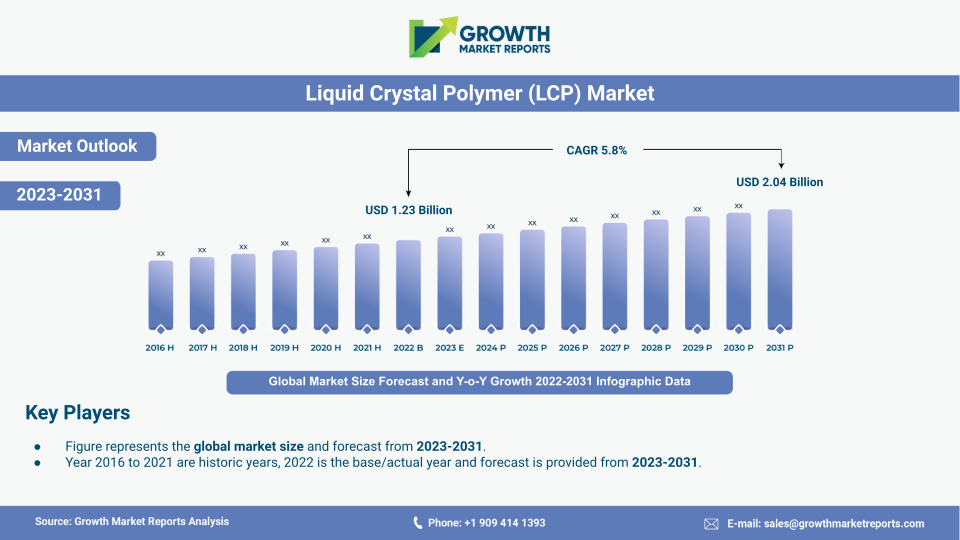
According to our latest research, the global Liquid Crystal Polymer (LCP) market size in 2024 is valued at USD 1.52 billion, with a robust growth trajectory supported by a CAGR of 8.3% during the forecast period from 2025 to 2033. By 2033, the market is anticipated to reach approximately USD 3.12 billion, reflecting the increasing demand for high-performance polymers across diverse applications. The primary growth driver for the LCP market is the rapid expansion of the electronics and automotive sectors, where the need for lightweight, durable, and high-thermal-resistance materials continues to rise.

The growth of the Liquid Crystal Polymer (LCP) market is significantly fueled by the evolving requirements in the electrical and electronics industry, which remains the largest consumer of LCPs globally. As miniaturization trends in electronic devices accelerate, manufacturers are increasingly seeking materials that offer superior dielectric properties, low moisture absorption, and excellent dimensional stability. LCPs have emerged as the material of choice for components such as connectors, flexible printed circuits, and microelectronic packaging. The increasing adoption of 5G technology and the proliferation of smart devices are further amplifying the demand for LCPs, as these applications require materials that can withstand higher frequencies and temperatures without compromising performance. Furthermore, the growing focus on sustainability and energy efficiency in electronics manufacturing is prompting companies to invest in advanced polymers like LCPs that contribute to lighter, more efficient end products.

Another critical growth driver for the Liquid Crystal Polymer market is the automotive industryÂ’s transition toward electric vehicles (EVs) and advanced driver-assistance systems (ADAS). As automakers strive to reduce vehicle weight and improve fuel efficiency, LCPs are being increasingly used as substitutes for metals and conventional plastics in under-the-hood applications, sensors, connectors, and battery components. The inherent chemical resistance and mechanical strength of LCPs make them suitable for harsh automotive environments, where thermal cycling and exposure to aggressive chemicals are common. Additionally, the shift toward autonomous vehicles and the integration of more sophisticated electronic systems in cars are creating new avenues for LCP application, further supporting market growth over the forecast period.

The medical and healthcare sector is also contributing to the expansion of the Liquid Crystal Polymer (LCP) market. LCPs are increasingly utilized in medical devices and equipment due to their biocompatibility, chemical inertness, and ability to withstand repeated sterilization cycles. Applications range from surgical instruments and dental tools to implantable devices and diagnostic equipment. The ongoing advancements in minimally invasive surgical techniques and the rising demand for high-performance, miniaturized medical devices are expected to drive further adoption of LCPs in this sector. Moreover, regulatory approvals and the need for reliable, safe materials in healthcare are pushing manufacturers to explore LCPs for next-generation medical technologies.

In the context of the automotive industry's shift towards electric vehicles and advanced driver-assistance systems, innovative materials like Pcl Liquid 100 are gaining attention. This particular liquid crystal polymer variant is known for its exceptional thermal stability and mechanical strength, making it an ideal candidate for under-the-hood applications and battery components. As the automotive sector continues to prioritize weight reduction and fuel efficiency, Pcl Liquid 100 offers a compelling alternative to traditional materials, providing the necessary durability and performance in harsh environments. Its chemical resistance further enhances its suitability for automotive applications, where exposure to aggressive substances is common. By integrating Pcl Liquid 100 into their designs, automakers can achieve significant improvements in vehicle efficiency and sustainability.

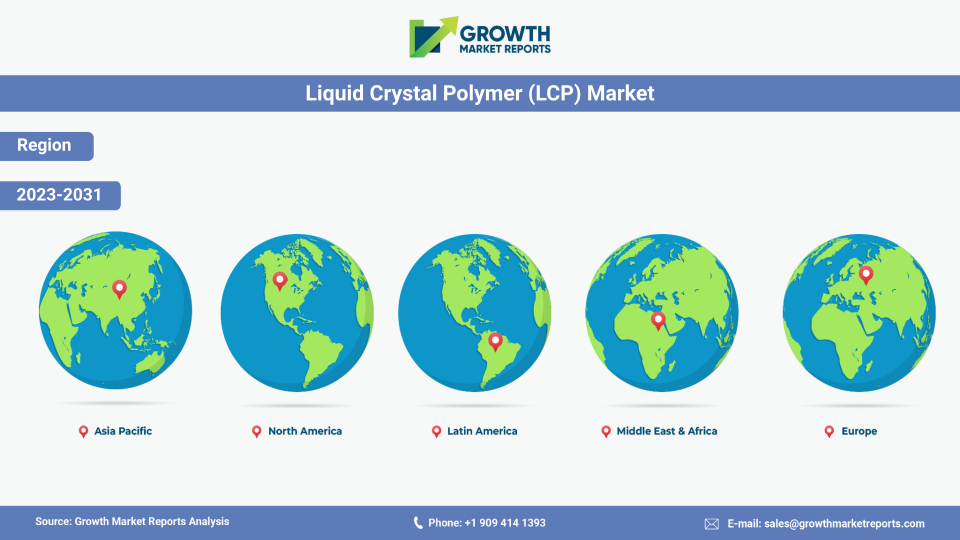
From a regional perspective, the Asia Pacific region dominates the global LCP market, accounting for the largest share in 2024. This dominance is attributed to the regionÂ’s robust electronics manufacturing ecosystem, particularly in countries such as China, Japan, South Korea, and Taiwan. The presence of leading electronics and automotive manufacturers, coupled with increasing investments in research and development, is bolstering the demand for LCPs in Asia Pacific. North America and Europe follow, driven by technological advancements and the growing adoption of high-performance polymers in automotive, aerospace, and healthcare industries. Meanwhile, regions like Latin America and the Middle East & Africa are witnessing gradual market penetration, supported by industrialization and the expansion of end-user industries.

Global Liquid Crystal Polymer (LCP) Industry Outlook

Product Type Analysis

The Liquid Crystal Polymer market is segmented by product type into Thermotropic and Lyotropic LCPs, each offering distinct advantages and catering to specific application requirements. Thermotropic LCPs, which form liquid crystalline phases upon heating, represent the majority share of the global market due to their superior processability and exceptional thermal and mechanical properties. These materials are widely used in injection molding processes, making them ideal for high-volume manufacturing of precision components in electronics, automotive, and consumer goods industries. The ability of thermotropic LCPs to maintain structural integrity at elevated temperatures and under demanding operational conditions has made them the preferred choice for manufacturers seeking reliability and performance.

Lyotropic LCPs, on the other hand, form liquid crystalline phases in the presence of a solvent, and are primarily used in the production of high-strength fibers and films. These materials are valued for their exceptional tensile strength, modulus, and chemical resistance, which make them suitable for niche applications such as advanced composites, protective clothing, and filtration membranes. Although lyotropic LCPs account for a smaller share of the market compared to thermotropic variants, their unique properties are driving their adoption in specialized sectors, including aerospace and defense, where performance requirements are extremely stringent.

The ongoing advancements in polymer chemistry and processing technologies are further expanding the application scope of both thermotropic and lyotropic LCPs. Innovations in polymerization techniques and the development of new copolymers are enabling manufacturers to tailor LCP properties to meet specific end-use requirements, such as improved flame retardancy, enhanced barrier properties, and greater flexibility. This trend is expected to create new growth opportunities for both product types, particularly as industries seek customized solutions to address evolving technological challenges.

Moreover, the increasing focus on sustainability and recyclability in the polymer industry is prompting research into eco-friendly LCP formulations and processing methods. Companies are investing in the development of bio-based LCPs and exploring recycling technologies to reduce the environmental impact of LCP production and disposal. As regulatory pressures mount and consumer awareness of environmental issues grows, the demand for sustainable LCP solutions is likely to rise, influencing the competitive landscape and product development strategies in the market.

Report Scope

Attributes Details
Report Title Liquid Crystal Polymer (LCP) Market Research Report 2033
By Product Type Thermotropic, Lyotropic
By Application Electrical & Electronics, Automotive, Consumer Goods, Aerospace & Defense, Medical, Others
By Processing Method Injection Molding, Extrusion, Blow Molding, Others
By End-User Electronics, Automotive, Industrial, Healthcare, Others
Regions Covered North America, Europe, APAC, Latin America, MEA
Base Year 2024
Historic Data 2018-2023
Forecast Period 2025-2033
Number of Pages 261
Number of Tables & Figures 358
Customization Available Yes, the report can be customized as per your need.

Application Analysis

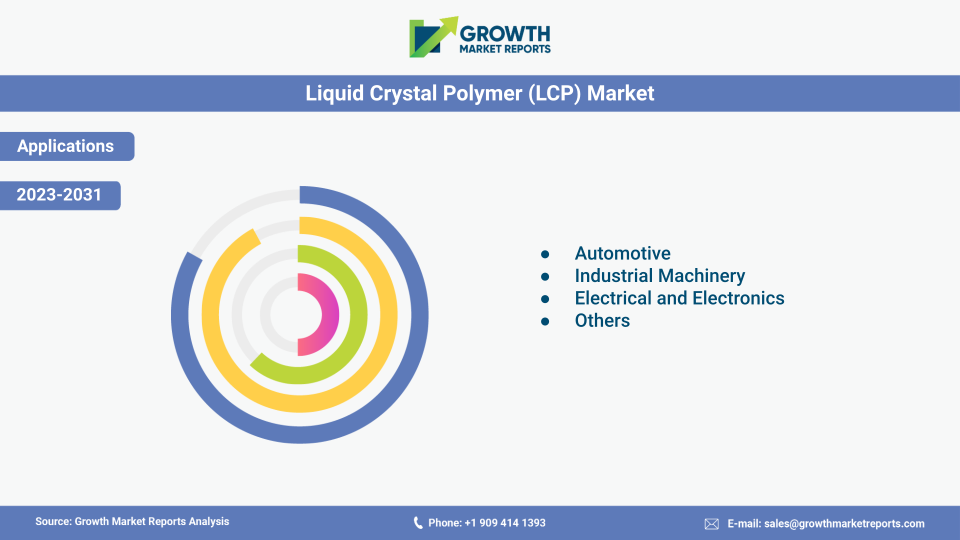
The application segment of the Liquid Crystal Polymer (LCP) market encompasses a diverse range of industries, including Electrical & Electronics, Automotive, Consumer Goods, Aerospace & Defense, Medical, and Others. The electrical and electronics sector remains the largest application area, accounting for a significant portion of global LCP consumption. LCPs are extensively used in the manufacture of connectors, sockets, switches, flexible printed circuits, and microelectronic packaging, where their outstanding dielectric properties, low moisture absorption, and high dimensional stability are critical. The relentless push for device miniaturization and the advent of high-frequency communication technologies such as 5G are driving the demand for LCPs in this sector, as they enable the production of smaller, more reliable, and higher-performing electronic components.

In the automotive industry, LCPs are gaining traction as lightweight alternatives to metals and conventional plastics in a variety of applications, including under-the-hood components, sensors, connectors, and battery modules. The shift toward electric vehicles and the integration of advanced electronics in modern cars are creating new opportunities for LCP adoption, as these materials offer superior thermal and chemical resistance, mechanical strength, and design flexibility. The automotive sectorÂ’s focus on fuel efficiency, emissions reduction, and vehicle safety is further propelling the use of LCPs in critical components that demand reliability under harsh operating conditions.

The consumer goods segment is another important application area for LCPs, particularly in the production of high-performance household appliances, sporting goods, and wearable devices. The ability of LCPs to deliver excellent mechanical properties, chemical resistance, and aesthetic appeal is driving their adoption in products that require durability, lightweight construction, and intricate designs. As consumer preferences shift toward smarter, more compact, and energy-efficient products, manufacturers are increasingly turning to LCPs to meet these evolving demands.

Aerospace and defense applications represent a growing market for LCPs, driven by the need for materials that can withstand extreme temperatures, mechanical stress, and exposure to aggressive chemicals. LCPs are used in the production of lightweight structural components, wiring systems, and protective equipment, where their high strength-to-weight ratio and resistance to environmental degradation are highly valued. In the medical sector, LCPs are employed in a range of devices and equipment, including surgical instruments, dental tools, implantable devices, and diagnostic equipment. The biocompatibility, chemical inertness, and sterilization resistance of LCPs make them ideal for use in demanding healthcare environments.

Processing Method Analysis

The processing method segment of the Liquid Crystal Polymer (LCP) market includes Injection Molding, Extrusion, Blow Molding, and Others, reflecting the versatility of LCPs in manufacturing processes. Injection molding is the most widely used processing method for LCPs, accounting for the largest share of the market. This technique enables the high-volume production of precision components with complex geometries, making it ideal for applications in electronics, automotive, and consumer goods. The excellent flow properties and low shrinkage of LCPs during injection molding contribute to the production of parts with tight tolerances and superior surface finishes, which are essential for high-performance end products.

Extrusion is another important processing method for LCPs, particularly in the manufacture of films, fibers, and tubing. The ability of LCPs to form continuous profiles with consistent properties makes extrusion a preferred choice for applications that require high strength, flexibility, and chemical resistance. LCP films and fibers produced through extrusion are used in flexible printed circuits, packaging materials, and specialized industrial applications, where their unique combination of mechanical and barrier properties is highly valued.

Blow molding, although less prevalent than injection molding and extrusion, is utilized for the production of hollow components and containers, particularly in the medical and consumer goods sectors. The suitability of LCPs for blow molding is attributed to their excellent melt strength and processability, which enable the creation of lightweight, durable, and chemically resistant products. As the demand for advanced packaging solutions and medical containers continues to grow, the adoption of LCPs in blow molding applications is expected to increase.

Other processing methods, such as compression molding and thermoforming, are employed for specialized applications that require unique material properties or complex part geometries. The ongoing development of new processing technologies and the optimization of existing methods are enabling manufacturers to expand the range of LCP applications and improve production efficiency. As industries continue to seek innovative solutions to address evolving performance requirements, the versatility of LCPs in various processing methods will remain a key driver of market growth.

End-User Analysis

The end-user segment of the Liquid Crystal Polymer (LCP) market is categorized into Electronics, Automotive, Industrial, Healthcare, and Others, reflecting the broad applicability of LCPs across diverse industries. The electronics sector is the largest end-user, driven by the relentless demand for high-performance materials in the manufacture of connectors, sockets, flexible circuits, and microelectronic packaging. The increasing complexity of electronic devices, coupled with the need for miniaturization and enhanced performance, is fueling the adoption of LCPs in this sector. The proliferation of 5G technology, IoT devices, and wearable electronics is further amplifying the demand for LCPs, as these applications require materials that can withstand high frequencies, temperatures, and mechanical stress.

The automotive industry represents a significant end-user of LCPs, particularly as the sector transitions toward electric and autonomous vehicles. LCPs are increasingly used in under-the-hood components, sensors, connectors, and battery modules, where their thermal stability, chemical resistance, and mechanical strength are critical. The push for lightweight materials to improve fuel efficiency and reduce emissions is driving the substitution of metals and conventional plastics with LCPs in various automotive applications. The integration of advanced electronic systems in vehicles is also creating new opportunities for LCP adoption, as automakers seek materials that can deliver reliability and performance in demanding environments.

Industrial applications of LCPs span a wide range of sectors, including machinery, equipment, and chemical processing. The superior mechanical properties, chemical resistance, and durability of LCPs make them suitable for use in components that are exposed to harsh operating conditions and require long service life. As industries continue to modernize and automate their operations, the demand for high-performance polymers like LCPs is expected to grow, particularly in applications that demand reliability and efficiency.

In the healthcare sector, LCPs are gaining traction due to their biocompatibility, chemical inertness, and ability to withstand repeated sterilization cycles. Applications range from surgical instruments and dental tools to implantable devices and diagnostic equipment. The ongoing advancements in medical technology and the increasing demand for minimally invasive procedures are driving the adoption of LCPs in healthcare, as manufacturers seek materials that can deliver safety, reliability, and performance in critical applications.

Opportunities & Threats

The Liquid Crystal Polymer (LCP) market presents a myriad of opportunities for growth, particularly as industries continue to innovate and seek high-performance materials for advanced applications. One of the most promising opportunities lies in the ongoing miniaturization of electronic devices and the development of next-generation communication technologies such as 5G and IoT. As the demand for smaller, lighter, and more efficient electronic components grows, LCPs are uniquely positioned to address these requirements due to their excellent dielectric properties, low moisture absorption, and thermal stability. The expansion of the electric vehicle market and the integration of advanced driver-assistance systems in automobiles are also creating new avenues for LCP adoption, as automakers seek materials that can deliver reliability and performance in challenging environments. Furthermore, the increasing focus on sustainability and the development of eco-friendly LCP formulations present significant growth opportunities, as regulatory pressures and consumer awareness drive the adoption of greener materials.

Another key opportunity for the LCP market is the growing demand for high-performance materials in the medical and healthcare sector. The advancements in minimally invasive surgical techniques, the proliferation of diagnostic equipment, and the need for reliable, biocompatible materials in medical devices are driving the adoption of LCPs in this sector. The ability of LCPs to withstand repeated sterilization cycles, their chemical inertness, and their suitability for use in implantable devices make them ideal for a wide range of medical applications. As healthcare technologies continue to evolve and the demand for high-performance materials increases, LCPs are expected to play a critical role in the development of next-generation medical devices and equipment.

Despite the numerous opportunities, the Liquid Crystal Polymer market faces several restraining factors that could impede its growth. One of the primary challenges is the high cost of LCPs compared to conventional polymers and metals, which can limit their adoption in cost-sensitive applications. Additionally, the complexity of LCP processing and the need for specialized equipment and expertise can pose barriers to entry for new players in the market. The limited availability of raw materials and the potential for supply chain disruptions also represent significant risks, particularly as global demand for LCPs continues to rise. Addressing these challenges will require ongoing investment in research and development, process optimization, and supply chain management to ensure the continued growth and competitiveness of the LCP market.

Regional Outlook

The Asia Pacific region leads the global Liquid Crystal Polymer (LCP) market, accounting for approximately 48% of the total market share in 2024, driven by the regionÂ’s robust electronics manufacturing industry and the presence of major automotive and consumer goods manufacturers. China, Japan, South Korea, and Taiwan are the primary contributors to market growth in Asia Pacific, supported by significant investments in research and development, advanced manufacturing capabilities, and a strong supply chain ecosystem. The rapid urbanization, industrialization, and increasing demand for high-performance materials in these countries are further bolstering the adoption of LCPs across various applications. The Asia Pacific LCP market is expected to maintain a strong CAGR of 9.1% during the forecast period, outpacing other regions and reinforcing its position as the global market leader.

North America holds the second-largest share of the Liquid Crystal Polymer market, with the United States being the key contributor to regional growth. The regionÂ’s advanced electronics, automotive, aerospace, and healthcare industries are driving the demand for high-performance polymers like LCPs. The increasing focus on technological innovation, the adoption of electric vehicles, and the integration of advanced electronic systems in various industries are fueling market expansion in North America. The presence of leading LCP manufacturers and a strong emphasis on research and development are further supporting market growth in the region. By 2033, the North American LCP market is projected to reach approximately USD 700 million, reflecting sustained demand from key end-user sectors.

Europe is another significant market for Liquid Crystal Polymers, driven by the regionÂ’s strong automotive, aerospace, and healthcare industries. Germany, France, and the United Kingdom are the primary markets within Europe, supported by advanced manufacturing capabilities and a focus on innovation and sustainability. The increasing adoption of LCPs in electric vehicles, medical devices, and industrial applications is contributing to market growth in the region. Meanwhile, Latin America and the Middle East & Africa are experiencing gradual market penetration, supported by industrialization, urbanization, and the expansion of end-user industries. Although these regions currently account for a smaller share of the global market, their growth potential is significant as investments in infrastructure and manufacturing capabilities continue to rise.

Liquid Crystal Polymer (LCP) Market Statistics

Competitor Outlook

The Liquid Crystal Polymer (LCP) market is characterized by a competitive landscape featuring both global giants and regional players, each vying for market share through technological innovation, product development, and strategic partnerships. The market is moderately consolidated, with a handful of major companies dominating the industry, particularly in the production and supply of high-performance thermotropic LCPs. These companies are investing heavily in research and development to enhance product properties, expand application areas, and address evolving industry requirements. The focus on sustainability, cost reduction, and process optimization is driving continuous innovation, as manufacturers seek to differentiate their offerings and capture new market opportunities.

Strategic collaborations, mergers and acquisitions, and joint ventures are common strategies employed by leading players to strengthen their market position, expand their geographic footprint, and access new technologies. Companies are also focusing on expanding their production capacities and establishing local manufacturing facilities to cater to the growing demand from key regions, particularly Asia Pacific. The ability to offer customized solutions, technical support, and value-added services is becoming increasingly important in attracting and retaining customers in this competitive market.

Intellectual property protection and regulatory compliance are critical factors influencing the competitive dynamics of the LCP market. Leading manufacturers are investing in the development of proprietary technologies and securing patents to maintain a competitive edge and prevent market entry by new players. Compliance with environmental regulations, safety standards, and industry certifications is also essential, particularly as customers and regulators place greater emphasis on sustainability and product safety.

Some of the major companies operating in the global Liquid Crystal Polymer market include Celanese Corporation, Polyplastics Co., Ltd., Solvay S.A., Sumitomo Chemical Company, Ltd., Toray Industries, Inc., and Shanghai PRET Composites Co., Ltd. Celanese Corporation is a global leader in the production of high-performance LCPs, offering a wide range of products for applications in electronics, automotive, and industrial sectors. Polyplastics Co., Ltd. is known for its advanced polymer technologies and strong presence in the Asia Pacific market. Solvay S.A. and Sumitomo Chemical Company, Ltd. are prominent players with a diverse product portfolio and a focus on innovation and sustainability. Toray Industries, Inc. is recognized for its expertise in polymer chemistry and its commitment to developing eco-friendly LCP solutions. Shanghai PRET Composites Co., Ltd. is a leading supplier of LCPs in China, catering to the growing demand from the electronics and automotive industries.

These companies are continuously investing in research and development to enhance the performance and sustainability of their LCP products, expand their application areas, and address emerging market trends. The ability to offer high-quality, reliable, and cost-effective solutions, coupled with strong customer relationships and technical support, will be key to maintaining a competitive advantage in the dynamic and rapidly evolving Liquid Crystal Polymer market.

Key Players

  • Celanese Corporation
  • Polyplastics Co., Ltd.
  • Solvay S.A.
  • Sumitomo Chemical Co., Ltd.
  • Toray Industries, Inc.
  • Mitsubishi Engineering-Plastics Corporation
  • Ueno Fine Chemicals Industry, Ltd.
  • Shanghai PRET Composites Co., Ltd.
  • Chang Chun Group
  • Entec Polymers
  • Shenzhen Wote Advanced Materials Co., Ltd.
  • SABIC
  • Daicel Corporation
  • Kuraray Co., Ltd.
  • RTP Company
  • Ensinger GmbH
  • Evonik Industries AG
  • BASF SE
  • LG Chem
  • Nippon Steel Chemical & Material Co., Ltd.
Liquid Crystal Polymer (LCP) Market Overview

Segments

The Liquid Crystal Polymer (LCP) market has been segmented on the basis of

Product Type

  • Thermotropic
  • Lyotropic

Application

  • Electrical & Electronics
  • Automotive
  • Consumer Goods
  • Aerospace & Defense
  • Medical
  • Others

Processing Method

  • Injection Molding
  • Extrusion
  • Blow Molding
  • Others

End-User

  • Electronics
  • Automotive
  • Industrial
  • Healthcare
  • Others

Competitive Landscape

Key players competing in the global liquid crystal polymer market include Toray Industries Inc.; Celanese Corporation; Sumitomo Chemical Co. Ltd.; Polyplastics Co. Ltd.; Solvay SA; Chang Chun Plastics Co. Ltd.; and Ueno Fine Chemicals Industry Ltd. Some of these players are focused on several market strategies such as mergers, acquisitions, partnerships, collaborations, capacity expansion, and product launches to enhance their market shares.
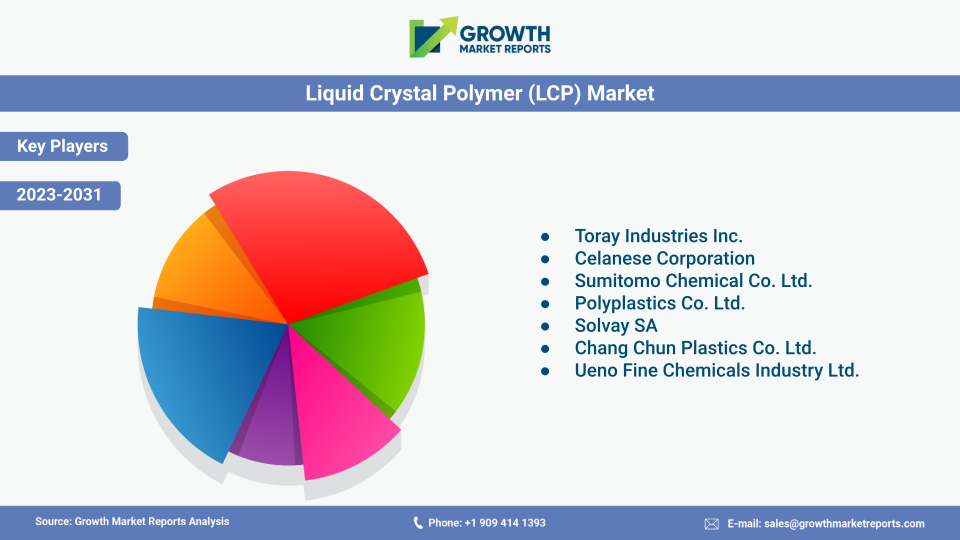

Liquid Crystal Polymer (LCP) Market Key Players

Frequently Asked Questions

There is a growing focus on developing eco-friendly and recyclable LCP formulations, with companies investing in bio-based LCPs and recycling technologies to meet regulatory and consumer demands for sustainability.

Key players include Celanese Corporation, Polyplastics Co., Ltd., Solvay S.A., Sumitomo Chemical Co., Ltd., Toray Industries, Inc., and Shanghai PRET Composites Co., Ltd., among others.

Major challenges include the high cost of LCPs compared to conventional materials, complexity in processing, need for specialized equipment, and potential supply chain disruptions.

In electronics, LCPs are used for connectors, sockets, switches, flexible printed circuits, and microelectronic packaging due to their excellent dielectric properties and dimensional stability.

The most common processing methods for LCPs are injection molding, extrusion, and blow molding. Injection molding is the most widely used due to its suitability for high-volume production of precision components.

The Asia Pacific region leads the global LCP market, accounting for the largest share in 2024, driven by robust electronics manufacturing and significant investments in research and development.

LCPs are mainly classified into Thermotropic and Lyotropic types. Thermotropic LCPs are widely used due to their superior processability and thermal properties, while Lyotropic LCPs are valued for their high tensile strength and are used in specialized applications.

The primary industries using LCPs are electrical & electronics, automotive, consumer goods, aerospace & defense, and medical sectors.

The main growth drivers are the expansion of the electronics and automotive sectors, increasing demand for lightweight and high-performance materials, the adoption of 5G technology, and the rise of electric vehicles and advanced driver-assistance systems (ADAS).

As of 2024, the global Liquid Crystal Polymer (LCP) market is valued at USD 1.52 billion and is projected to reach approximately USD 3.12 billion by 2033, growing at a CAGR of 8.3%.

Table Of Content

Chapter 1 Executive Summary
Chapter 2 Assumptions and Acronyms Used
Chapter 3 Research Methodology
Chapter 4 Liquid Crystal Polymer (LCP) Market Overview
   4.1 Introduction
      4.1.1 Market Taxonomy
      4.1.2 Market Definition
      4.1.3 Macro-Economic Factors Impacting the Market Growth
   4.2 Liquid Crystal Polymer (LCP) Market Dynamics
      4.2.1 Market Drivers
      4.2.2 Market Restraints
      4.2.3 Market Opportunity
   4.3 Liquid Crystal Polymer (LCP) Market - Supply Chain Analysis
      4.3.1 List of Key Suppliers
      4.3.2 List of Key Distributors
      4.3.3 List of Key Consumers
   4.4 Key Forces Shaping the Liquid Crystal Polymer (LCP) Market
      4.4.1 Bargaining Power of Suppliers
      4.4.2 Bargaining Power of Buyers
      4.4.3 Threat of Substitution
      4.4.4 Threat of New Entrants
      4.4.5 Competitive Rivalry
   4.5 Global Liquid Crystal Polymer (LCP) Market Size & Forecast, 2023-2032
      4.5.1 Liquid Crystal Polymer (LCP) Market Size and Y-o-Y Growth
      4.5.2 Liquid Crystal Polymer (LCP) Market Absolute $ Opportunity

Chapter 5 Global Liquid Crystal Polymer (LCP) Market Analysis and Forecast By Product Type
   5.1 Introduction
      5.1.1 Key Market Trends & Growth Opportunities By Product Type
      5.1.2 Basis Point Share (BPS) Analysis By Product Type
      5.1.3 Absolute $ Opportunity Assessment By Product Type
   5.2 Liquid Crystal Polymer (LCP) Market Size Forecast By Product Type
      5.2.1 Thermotropic
      5.2.2 Lyotropic
   5.3 Market Attractiveness Analysis By Product Type

Chapter 6 Global Liquid Crystal Polymer (LCP) Market Analysis and Forecast By Application
   6.1 Introduction
      6.1.1 Key Market Trends & Growth Opportunities By Application
      6.1.2 Basis Point Share (BPS) Analysis By Application
      6.1.3 Absolute $ Opportunity Assessment By Application
   6.2 Liquid Crystal Polymer (LCP) Market Size Forecast By Application
      6.2.1 Electrical & Electronics
      6.2.2 Automotive
      6.2.3 Consumer Goods
      6.2.4 Aerospace & Defense
      6.2.5 Medical
      6.2.6 Others
   6.3 Market Attractiveness Analysis By Application

Chapter 7 Global Liquid Crystal Polymer (LCP) Market Analysis and Forecast By Processing Method
   7.1 Introduction
      7.1.1 Key Market Trends & Growth Opportunities By Processing Method
      7.1.2 Basis Point Share (BPS) Analysis By Processing Method
      7.1.3 Absolute $ Opportunity Assessment By Processing Method
   7.2 Liquid Crystal Polymer (LCP) Market Size Forecast By Processing Method
      7.2.1 Injection Molding
      7.2.2 Extrusion
      7.2.3 Blow Molding
      7.2.4 Others
   7.3 Market Attractiveness Analysis By Processing Method

Chapter 8 Global Liquid Crystal Polymer (LCP) Market Analysis and Forecast By End-User
   8.1 Introduction
      8.1.1 Key Market Trends & Growth Opportunities By End-User
      8.1.2 Basis Point Share (BPS) Analysis By End-User
      8.1.3 Absolute $ Opportunity Assessment By End-User
   8.2 Liquid Crystal Polymer (LCP) Market Size Forecast By End-User
      8.2.1 Electronics
      8.2.2 Automotive
      8.2.3 Industrial
      8.2.4 Healthcare
      8.2.5 Others
   8.3 Market Attractiveness Analysis By End-User

Chapter 9 Global Liquid Crystal Polymer (LCP) Market Analysis and Forecast by Region
   9.1 Introduction
      9.1.1 Key Market Trends & Growth Opportunities By Region
      9.1.2 Basis Point Share (BPS) Analysis By Region
      9.1.3 Absolute $ Opportunity Assessment By Region
   9.2 Liquid Crystal Polymer (LCP) Market Size Forecast By Region
      9.2.1 North America
      9.2.2 Europe
      9.2.3 Asia Pacific
      9.2.4 Latin America
      9.2.5 Middle East & Africa (MEA)
   9.3 Market Attractiveness Analysis By Region

Chapter 10 Coronavirus Disease (COVID-19) Impact 
   10.1 Introduction 
   10.2 Current & Future Impact Analysis 
   10.3 Economic Impact Analysis 
   10.4 Government Policies 
   10.5 Investment Scenario

Chapter 11 North America Liquid Crystal Polymer (LCP) Analysis and Forecast
   11.1 Introduction
   11.2 North America Liquid Crystal Polymer (LCP) Market Size Forecast by Country
      11.2.1 U.S.
      11.2.2 Canada
   11.3 Basis Point Share (BPS) Analysis by Country
   11.4 Absolute $ Opportunity Assessment by Country
   11.5 Market Attractiveness Analysis by Country
   11.6 North America Liquid Crystal Polymer (LCP) Market Size Forecast By Product Type
      11.6.1 Thermotropic
      11.6.2 Lyotropic
   11.7 Basis Point Share (BPS) Analysis By Product Type 
   11.8 Absolute $ Opportunity Assessment By Product Type 
   11.9 Market Attractiveness Analysis By Product Type
   11.10 North America Liquid Crystal Polymer (LCP) Market Size Forecast By Application
      11.10.1 Electrical & Electronics
      11.10.2 Automotive
      11.10.3 Consumer Goods
      11.10.4 Aerospace & Defense
      11.10.5 Medical
      11.10.6 Others
   11.11 Basis Point Share (BPS) Analysis By Application 
   11.12 Absolute $ Opportunity Assessment By Application 
   11.13 Market Attractiveness Analysis By Application
   11.14 North America Liquid Crystal Polymer (LCP) Market Size Forecast By Processing Method
      11.14.1 Injection Molding
      11.14.2 Extrusion
      11.14.3 Blow Molding
      11.14.4 Others
   11.15 Basis Point Share (BPS) Analysis By Processing Method 
   11.16 Absolute $ Opportunity Assessment By Processing Method 
   11.17 Market Attractiveness Analysis By Processing Method
   11.18 North America Liquid Crystal Polymer (LCP) Market Size Forecast By End-User
      11.18.1 Electronics
      11.18.2 Automotive
      11.18.3 Industrial
      11.18.4 Healthcare
      11.18.5 Others
   11.19 Basis Point Share (BPS) Analysis By End-User 
   11.20 Absolute $ Opportunity Assessment By End-User 
   11.21 Market Attractiveness Analysis By End-User

Chapter 12 Europe Liquid Crystal Polymer (LCP) Analysis and Forecast
   12.1 Introduction
   12.2 Europe Liquid Crystal Polymer (LCP) Market Size Forecast by Country
      12.2.1 Germany
      12.2.2 France
      12.2.3 Italy
      12.2.4 U.K.
      12.2.5 Spain
      12.2.6 Russia
      12.2.7 Rest of Europe
   12.3 Basis Point Share (BPS) Analysis by Country
   12.4 Absolute $ Opportunity Assessment by Country
   12.5 Market Attractiveness Analysis by Country
   12.6 Europe Liquid Crystal Polymer (LCP) Market Size Forecast By Product Type
      12.6.1 Thermotropic
      12.6.2 Lyotropic
   12.7 Basis Point Share (BPS) Analysis By Product Type 
   12.8 Absolute $ Opportunity Assessment By Product Type 
   12.9 Market Attractiveness Analysis By Product Type
   12.10 Europe Liquid Crystal Polymer (LCP) Market Size Forecast By Application
      12.10.1 Electrical & Electronics
      12.10.2 Automotive
      12.10.3 Consumer Goods
      12.10.4 Aerospace & Defense
      12.10.5 Medical
      12.10.6 Others
   12.11 Basis Point Share (BPS) Analysis By Application 
   12.12 Absolute $ Opportunity Assessment By Application 
   12.13 Market Attractiveness Analysis By Application
   12.14 Europe Liquid Crystal Polymer (LCP) Market Size Forecast By Processing Method
      12.14.1 Injection Molding
      12.14.2 Extrusion
      12.14.3 Blow Molding
      12.14.4 Others
   12.15 Basis Point Share (BPS) Analysis By Processing Method 
   12.16 Absolute $ Opportunity Assessment By Processing Method 
   12.17 Market Attractiveness Analysis By Processing Method
   12.18 Europe Liquid Crystal Polymer (LCP) Market Size Forecast By End-User
      12.18.1 Electronics
      12.18.2 Automotive
      12.18.3 Industrial
      12.18.4 Healthcare
      12.18.5 Others
   12.19 Basis Point Share (BPS) Analysis By End-User 
   12.20 Absolute $ Opportunity Assessment By End-User 
   12.21 Market Attractiveness Analysis By End-User

Chapter 13 Asia Pacific Liquid Crystal Polymer (LCP) Analysis and Forecast
   13.1 Introduction
   13.2 Asia Pacific Liquid Crystal Polymer (LCP) Market Size Forecast by Country
      13.2.1 China
      13.2.2 Japan
      13.2.3 South Korea
      13.2.4 India
      13.2.5 Australia
      13.2.6 South East Asia (SEA)
      13.2.7 Rest of Asia Pacific (APAC)
   13.3 Basis Point Share (BPS) Analysis by Country
   13.4 Absolute $ Opportunity Assessment by Country
   13.5 Market Attractiveness Analysis by Country
   13.6 Asia Pacific Liquid Crystal Polymer (LCP) Market Size Forecast By Product Type
      13.6.1 Thermotropic
      13.6.2 Lyotropic
   13.7 Basis Point Share (BPS) Analysis By Product Type 
   13.8 Absolute $ Opportunity Assessment By Product Type 
   13.9 Market Attractiveness Analysis By Product Type
   13.10 Asia Pacific Liquid Crystal Polymer (LCP) Market Size Forecast By Application
      13.10.1 Electrical & Electronics
      13.10.2 Automotive
      13.10.3 Consumer Goods
      13.10.4 Aerospace & Defense
      13.10.5 Medical
      13.10.6 Others
   13.11 Basis Point Share (BPS) Analysis By Application 
   13.12 Absolute $ Opportunity Assessment By Application 
   13.13 Market Attractiveness Analysis By Application
   13.14 Asia Pacific Liquid Crystal Polymer (LCP) Market Size Forecast By Processing Method
      13.14.1 Injection Molding
      13.14.2 Extrusion
      13.14.3 Blow Molding
      13.14.4 Others
   13.15 Basis Point Share (BPS) Analysis By Processing Method 
   13.16 Absolute $ Opportunity Assessment By Processing Method 
   13.17 Market Attractiveness Analysis By Processing Method
   13.18 Asia Pacific Liquid Crystal Polymer (LCP) Market Size Forecast By End-User
      13.18.1 Electronics
      13.18.2 Automotive
      13.18.3 Industrial
      13.18.4 Healthcare
      13.18.5 Others
   13.19 Basis Point Share (BPS) Analysis By End-User 
   13.20 Absolute $ Opportunity Assessment By End-User 
   13.21 Market Attractiveness Analysis By End-User

Chapter 14 Latin America Liquid Crystal Polymer (LCP) Analysis and Forecast
   14.1 Introduction
   14.2 Latin America Liquid Crystal Polymer (LCP) Market Size Forecast by Country
      14.2.1 Brazil
      14.2.2 Mexico
      14.2.3 Rest of Latin America (LATAM)
   14.3 Basis Point Share (BPS) Analysis by Country
   14.4 Absolute $ Opportunity Assessment by Country
   14.5 Market Attractiveness Analysis by Country
   14.6 Latin America Liquid Crystal Polymer (LCP) Market Size Forecast By Product Type
      14.6.1 Thermotropic
      14.6.2 Lyotropic
   14.7 Basis Point Share (BPS) Analysis By Product Type 
   14.8 Absolute $ Opportunity Assessment By Product Type 
   14.9 Market Attractiveness Analysis By Product Type
   14.10 Latin America Liquid Crystal Polymer (LCP) Market Size Forecast By Application
      14.10.1 Electrical & Electronics
      14.10.2 Automotive
      14.10.3 Consumer Goods
      14.10.4 Aerospace & Defense
      14.10.5 Medical
      14.10.6 Others
   14.11 Basis Point Share (BPS) Analysis By Application 
   14.12 Absolute $ Opportunity Assessment By Application 
   14.13 Market Attractiveness Analysis By Application
   14.14 Latin America Liquid Crystal Polymer (LCP) Market Size Forecast By Processing Method
      14.14.1 Injection Molding
      14.14.2 Extrusion
      14.14.3 Blow Molding
      14.14.4 Others
   14.15 Basis Point Share (BPS) Analysis By Processing Method 
   14.16 Absolute $ Opportunity Assessment By Processing Method 
   14.17 Market Attractiveness Analysis By Processing Method
   14.18 Latin America Liquid Crystal Polymer (LCP) Market Size Forecast By End-User
      14.18.1 Electronics
      14.18.2 Automotive
      14.18.3 Industrial
      14.18.4 Healthcare
      14.18.5 Others
   14.19 Basis Point Share (BPS) Analysis By End-User 
   14.20 Absolute $ Opportunity Assessment By End-User 
   14.21 Market Attractiveness Analysis By End-User

Chapter 15 Middle East & Africa (MEA) Liquid Crystal Polymer (LCP) Analysis and Forecast
   15.1 Introduction
   15.2 Middle East & Africa (MEA) Liquid Crystal Polymer (LCP) Market Size Forecast by Country
      15.2.1 Saudi Arabia
      15.2.2 South Africa
      15.2.3 UAE
      15.2.4 Rest of Middle East & Africa (MEA)
   15.3 Basis Point Share (BPS) Analysis by Country
   15.4 Absolute $ Opportunity Assessment by Country
   15.5 Market Attractiveness Analysis by Country
   15.6 Middle East & Africa (MEA) Liquid Crystal Polymer (LCP) Market Size Forecast By Product Type
      15.6.1 Thermotropic
      15.6.2 Lyotropic
   15.7 Basis Point Share (BPS) Analysis By Product Type 
   15.8 Absolute $ Opportunity Assessment By Product Type 
   15.9 Market Attractiveness Analysis By Product Type
   15.10 Middle East & Africa (MEA) Liquid Crystal Polymer (LCP) Market Size Forecast By Application
      15.10.1 Electrical & Electronics
      15.10.2 Automotive
      15.10.3 Consumer Goods
      15.10.4 Aerospace & Defense
      15.10.5 Medical
      15.10.6 Others
   15.11 Basis Point Share (BPS) Analysis By Application 
   15.12 Absolute $ Opportunity Assessment By Application 
   15.13 Market Attractiveness Analysis By Application
   15.14 Middle East & Africa (MEA) Liquid Crystal Polymer (LCP) Market Size Forecast By Processing Method
      15.14.1 Injection Molding
      15.14.2 Extrusion
      15.14.3 Blow Molding
      15.14.4 Others
   15.15 Basis Point Share (BPS) Analysis By Processing Method 
   15.16 Absolute $ Opportunity Assessment By Processing Method 
   15.17 Market Attractiveness Analysis By Processing Method
   15.18 Middle East & Africa (MEA) Liquid Crystal Polymer (LCP) Market Size Forecast By End-User
      15.18.1 Electronics
      15.18.2 Automotive
      15.18.3 Industrial
      15.18.4 Healthcare
      15.18.5 Others
   15.19 Basis Point Share (BPS) Analysis By End-User 
   15.20 Absolute $ Opportunity Assessment By End-User 
   15.21 Market Attractiveness Analysis By End-User

Chapter 16 Competition Landscape 
   16.1 Liquid Crystal Polymer (LCP) Market: Competitive Dashboard
   16.2 Global Liquid Crystal Polymer (LCP) Market: Market Share Analysis, 2023
   16.3 Company Profiles (Details – Overview, Financials, Developments, Strategy) 
      16.3.1 Celanese Corporation
Polyplastics Co., Ltd.
Solvay S.A.
Sumitomo Chemical Co., Ltd.
Toray Industries, Inc.
Mitsubishi Engineering-Plastics Corporation
Ueno Fine Chemicals Industry, Ltd.
Shanghai PRET Composites Co., Ltd.
Chang Chun Group
Entec Polymers
Shenzhen Wote Advanced Materials Co., Ltd.
SABIC
Daicel Corporation
Kuraray Co., Ltd.
RTP Company
Ensinger GmbH
Evonik Industries AG
BASF SE
LG Chem
Nippon Steel Chemical & Material Co., Ltd.

Methodology

Our Clients

General Electric
Pfizer
Deloitte
General Mills
FedEx Logistics
Honda Motor Co. Ltd.
Nestle SA
Dassault Aviation