Lipstick Market Research Report 2033

Lipstick Market Research Report 2033

Segments - by Product Type (Matte, Gloss, Satin, Cream, Sheer, Liquid, Others), by Application (Daily Use, Professional Use, Others), by Distribution Channel (Supermarkets/Hypermarkets, Specialty Stores, Online Retail, Others), by End-User (Women, Men, Unisex)

https://growthmarketreports.com/Debadatta
Author : Debadatta Patel
https://growthmarketreports.com/Vaibhav
Fact-checked by : V. Chandola
https://growthmarketreports.com/Shruti
Editor : Shruti Bhat

Upcoming | Report ID :CG-2951 | 4.3 Rating | 27 Reviews | 299 Pages | Format : Docx PDF

Report Description


Lipstick Market Outlook

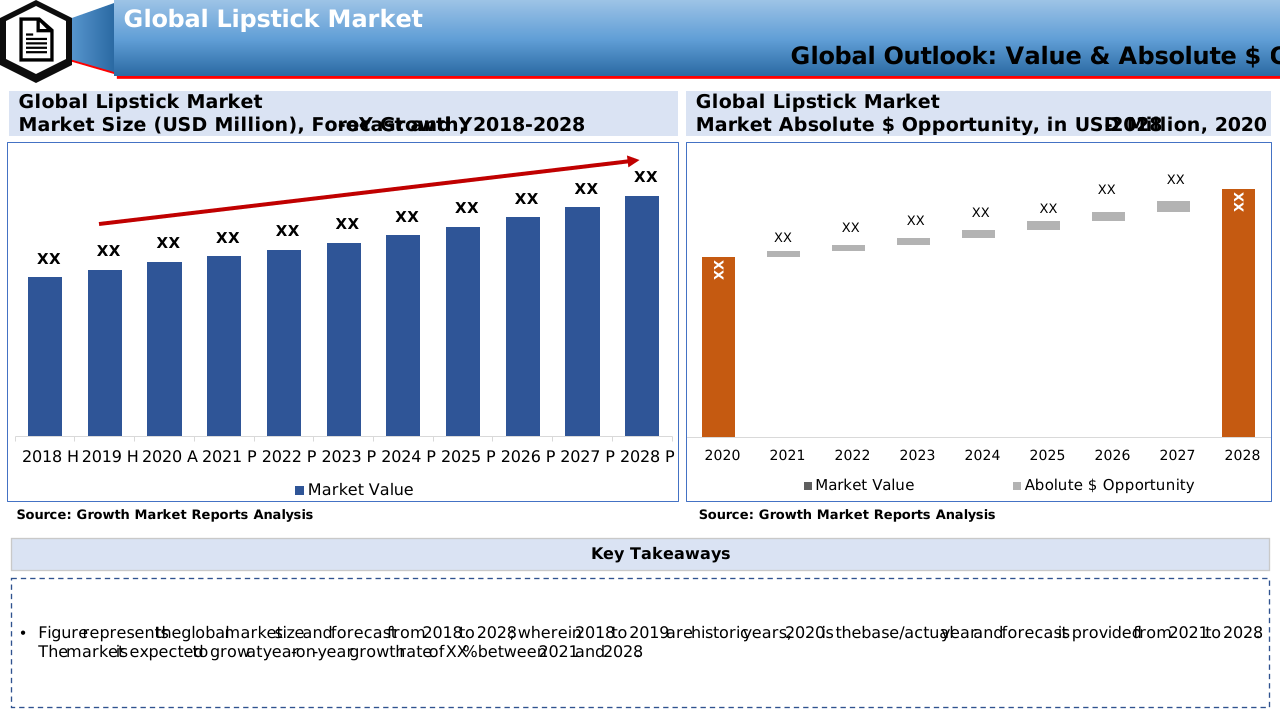
According to our latest research, the global lipstick market size reached USD 13.2 billion in 2024, reflecting robust consumer demand and innovative product launches across key regions. The market is projected to expand at a CAGR of 6.8% during the forecast period, reaching an estimated USD 24.1 billion by 2033. This growth is primarily driven by evolving beauty standards, increased disposable income, and the proliferation of e-commerce platforms, which have made a diverse array of lipstick products more accessible to consumers worldwide.

One of the most significant growth factors in the lipstick market is the continuous evolution of consumer preferences, particularly among younger demographics. Millennials and Generation Z are increasingly seeking products that align with their values, such as cruelty-free, vegan, and sustainable formulations. This shift has compelled manufacturers to innovate, introducing lipsticks with natural ingredients, eco-friendly packaging, and enhanced functional benefits like long-lasting wear and hydration. Social media influence, especially from beauty influencers and celebrities, has further accelerated the adoption of new trends, making lipstick not just a cosmetic product but a statement of personal style and identity. The rise of personalization, where brands offer customizable shades and finishes, has also contributed to the market’s dynamic growth.

Another critical driver is the expansion of distribution channels, particularly online retail. E-commerce has transformed the way consumers discover and purchase lipsticks, offering convenience, variety, and access to global brands. Online platforms enable brands to reach a broader audience, leverage data analytics for targeted marketing, and launch exclusive digital campaigns. This shift is complemented by the increasing presence of specialty stores and supermarkets/hypermarkets, which provide consumers with the opportunity to test products before purchase. The omnichannel approach adopted by leading brands ensures a seamless shopping experience, further boosting market penetration and sales volumes.

Technological advancements in product formulation and packaging have also played a pivotal role in propelling the lipstick market forward. Innovations such as transfer-proof, water-resistant, and smudge-free lipsticks cater to the modern consumer’s demand for high-performance cosmetics. Additionally, the integration of skincare benefits, such as SPF protection and moisturizing agents, has blurred the lines between makeup and skincare, appealing to health-conscious consumers. Brands are also leveraging augmented reality (AR) and artificial intelligence (AI) to enhance the virtual try-on experience, allowing customers to experiment with different shades and finishes from the comfort of their homes, thereby increasing engagement and conversion rates.

From a regional perspective, Asia Pacific continues to dominate the global lipstick market, accounting for the largest share in 2024. This dominance is attributed to a burgeoning middle class, increasing urbanization, and a cultural emphasis on personal grooming. North America and Europe also represent significant markets, driven by high per capita consumption, a strong presence of premium brands, and a well-established retail infrastructure. Meanwhile, Latin America and the Middle East & Africa are witnessing rapid growth, fueled by rising disposable incomes, changing beauty norms, and greater brand penetration. As consumer awareness and access to global beauty trends increase in these emerging markets, they are expected to contribute substantially to overall market expansion in the coming years.

Global Lipstick Industry Outlook

Product Type Analysis

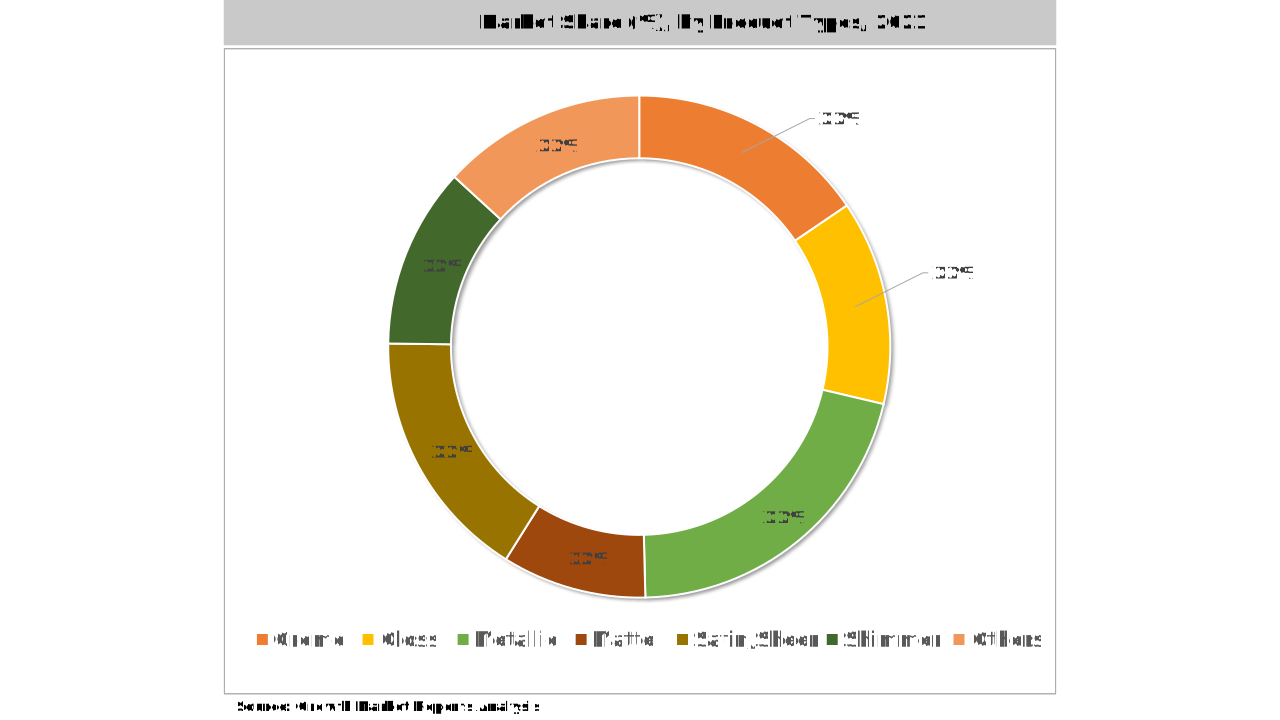
The lipstick market is segmented by product type into Matte, Gloss, Satin, Cream, Sheer, Liquid, and Others, each catering to distinct consumer preferences and usage occasions. Matte lipsticks have gained immense popularity over the past decade, particularly among younger consumers seeking a bold, long-lasting look. Matte formulations are prized for their intense pigmentation and non-shiny finish, making them suitable for both everyday wear and special occasions. Leading brands have responded by expanding their matte collections, incorporating nourishing ingredients to counteract the traditional drying effect associated with this finish. The demand for matte lipsticks is further driven by social media trends and celebrity endorsements, which have made certain shades and finishes viral sensations.

Gloss lipsticks, on the other hand, are favored for their high-shine, moisturizing properties, and ability to create a youthful, plump appearance. Gloss finishes are particularly popular among consumers seeking a fresh, natural look, and are often marketed as part of limited-edition collections or seasonal launches. The resurgence of 1990s and early 2000s beauty trends has also contributed to the renewed interest in gloss lipsticks. Brands are innovating within this segment by introducing non-sticky, long-lasting glosses enriched with vitamins and botanical oils, appealing to both younger and mature consumers alike.

Satin and cream lipsticks strike a balance between matte and gloss, offering a smooth, semi-lustrous finish that is comfortable to wear throughout the day. These formulations are particularly popular among professional users and consumers who prioritize both aesthetics and comfort. The versatility of satin and cream lipsticks makes them suitable for a wide range of skin tones and occasions, contributing to their enduring popularity. Brands are continuously updating their color palettes and packaging to keep pace with evolving consumer tastes, ensuring that these product types remain relevant in an increasingly competitive market.

Sheer and liquid lipsticks represent the more experimental end of the product spectrum, catering to consumers who enjoy layering, mixing, and customizing their looks. Sheer lipsticks offer a subtle wash of color and are often marketed as hybrid products with moisturizing or sun-protective benefits. Liquid lipsticks, meanwhile, are celebrated for their intense color payoff, lightweight texture, and precision application. This segment has seen significant innovation, with brands introducing transfer-proof, waterproof, and quick-drying formulas that address common consumer pain points. The "Others" category, which includes balms, tints, and hybrid products, is also expanding as brands seek to capture niche markets and address specific consumer needs.

Report Scope

Attributes Details
Report Title Lipstick Market Research Report 2033
By Product Type Matte, Gloss, Satin, Cream, Sheer, Liquid, Others
By Application Daily Use, Professional Use, Others
By Distribution Channel Supermarkets/Hypermarkets, Specialty Stores, Online Retail, Others
By End-User Women, Men, Unisex
Regions Covered North America, Europe, APAC, Latin America, MEA
Base Year 2024
Historic Data 2018-2023
Forecast Period 2025-2033
Number of Pages 299
Number of Tables & Figures 276
Customization Available Yes, the report can be customized as per your need.

Application Analysis

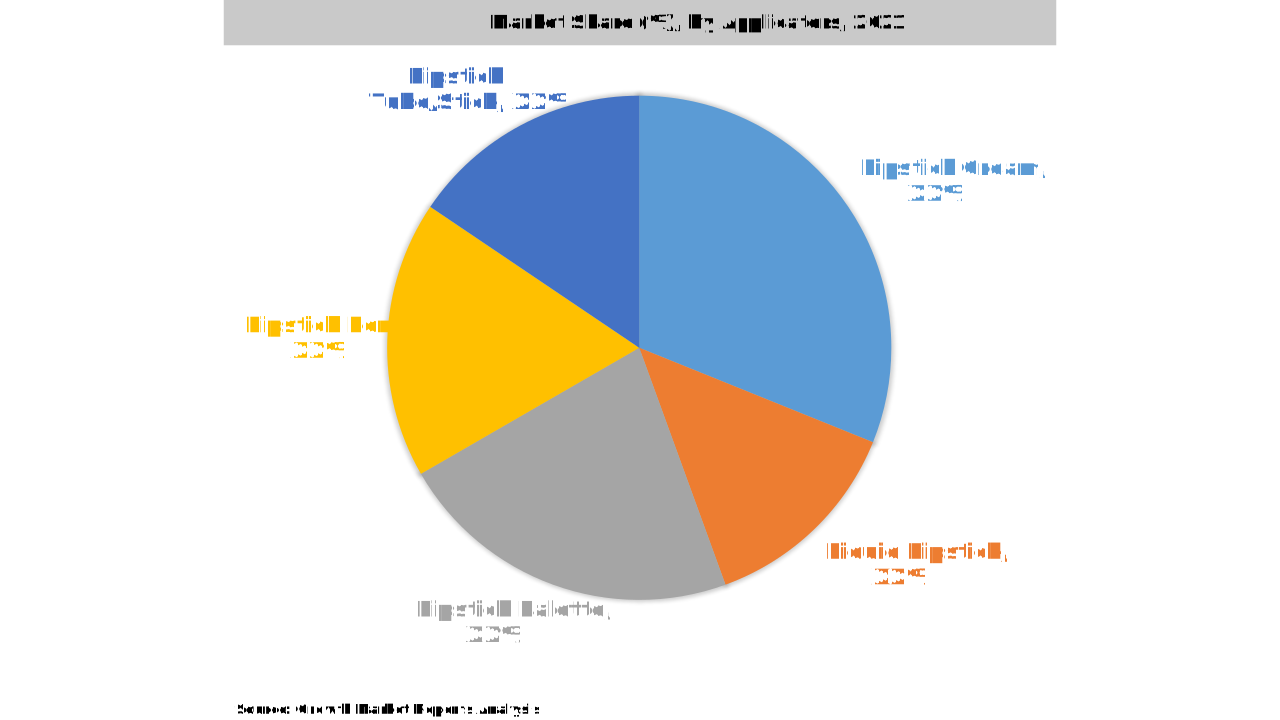
The application segment of the lipstick market is divided into Daily Use, Professional Use, and Others, reflecting the diverse ways in which consumers incorporate lipstick into their routines. Daily use dominates this segment, as lipstick is widely regarded as an essential part of everyday grooming for many individuals. Consumers seek products that are easy to apply, comfortable for extended wear, and available in a range of versatile shades suitable for work, school, and casual outings. Brands have responded by offering lightweight, hydrating formulations that provide a natural finish and can be reapplied throughout the day without causing dryness or irritation. The convenience of stick and crayon formats has further fueled the popularity of daily-use lipsticks.

Professional use encompasses lipsticks designed for makeup artists, performers, and individuals participating in special events such as weddings, photo shoots, and stage performances. This segment demands products with superior pigmentation, longevity, and resistance to smudging or fading under intense lighting or prolonged wear. Professional-grade lipsticks often feature advanced formulations, including high-impact color, transfer-proof technology, and skincare benefits to protect lips during extended use. Brands targeting this segment frequently collaborate with makeup artists and influencers to develop collections tailored to the unique needs of professionals, further elevating their market presence.

The Others category includes lipsticks used for specific purposes, such as theatrical makeup, cosplay, and experimental beauty looks. This segment is characterized by bold, unconventional shades and finishes, including metallics, neons, and holographics, which appeal to creative consumers and trendsetters. Limited-edition launches and collaborations with artists or pop culture franchises are common in this segment, generating buzz and attracting collectors. The growing popularity of festivals, themed parties, and social media challenges has also contributed to the expansion of this niche, as consumers seek unique products that allow them to express their individuality.

Across all application segments, the integration of skincare benefits and multifunctional properties has become a key trend. Consumers are increasingly seeking lipsticks that offer sun protection, hydration, and anti-aging benefits alongside color. This has led to the development of hybrid products that blur the lines between makeup and skincare, appealing to health-conscious buyers. Brands are also leveraging technology to enhance the application experience, with innovations such as precision applicators, magnetic closures, and ergonomic packaging designed to improve usability and portability.

Distribution Channel Analysis

The lipstick market is distributed through a variety of channels, including Supermarkets/Hypermarkets, Specialty Stores, Online Retail, and Others. Supermarkets and hypermarkets remain crucial for mass-market brands, offering consumers the convenience of one-stop shopping and the ability to compare products in person. These outlets are particularly popular in emerging markets, where organized retail infrastructure is expanding rapidly. In-store promotions, discounts, and exclusive launches are commonly used to drive foot traffic and boost sales in this channel. The visibility and accessibility of lipsticks in supermarkets and hypermarkets play a significant role in influencing impulse purchases and brand switching behavior.

Specialty stores, such as beauty boutiques and department store counters, cater to consumers seeking a curated selection of premium and niche brands. These stores provide personalized service, expert advice, and the opportunity to test products before purchase, making them a preferred destination for discerning buyers. Specialty stores often host exclusive events, loyalty programs, and collaborations with influencers, enhancing the overall shopping experience and fostering brand loyalty. The rise of multi-brand beauty retailers has further intensified competition in this channel, prompting brands to innovate in merchandising and customer engagement.

Online retail has emerged as the fastest-growing distribution channel in the lipstick market, driven by the proliferation of e-commerce platforms, mobile apps, and social media marketing. Online retail offers unparalleled convenience, a vast selection of products, and the ability to access global brands from anywhere in the world. Brands leverage digital platforms to launch exclusive products, conduct virtual try-on experiences, and engage directly with consumers through personalized recommendations and targeted advertising. The COVID-19 pandemic accelerated the shift toward online shopping, with many consumers continuing to prefer digital channels for beauty purchases even as physical stores have reopened.

The Others category includes direct sales, pop-up shops, and duty-free outlets, which serve as supplementary channels for reaching specific consumer segments. Direct sales, often facilitated through brand representatives or subscription services, offer a personalized approach and foster deeper customer relationships. Pop-up shops and experiential retail concepts allow brands to create buzz around new launches and engage with consumers in unique, immersive environments. Duty-free outlets cater to international travelers, providing access to exclusive products and promotions. The diversification of distribution channels enables brands to maximize market reach and adapt to changing consumer preferences and shopping behaviors.

End-User Analysis

The lipstick market is traditionally dominated by women as the primary end-users, but recent years have witnessed a significant shift toward greater inclusivity, with men and unisex segments gaining traction. Women continue to represent the largest share of the market, driven by cultural norms, fashion trends, and a wide array of product offerings tailored to different age groups, skin tones, and preferences. Brands invest heavily in marketing campaigns, celebrity endorsements, and collaborations with female influencers to maintain their appeal among this core demographic. The emphasis on diversity and representation has led to the development of broader shade ranges and formulations that cater to women of all backgrounds.

The men’s segment is experiencing rapid growth, fueled by changing attitudes toward male grooming and self-expression. Increasingly, men are embracing cosmetics, including lipsticks, as a means of enhancing their appearance and expressing their individuality. Brands are responding by launching dedicated product lines, featuring subtle shades, masculine packaging, and multifunctional benefits such as hydration and sun protection. The rise of male beauty influencers and celebrities who openly use and endorse lipstick products has helped normalize their use among men, breaking down traditional gender barriers and expanding the potential customer base.

The unisex segment reflects a broader trend toward gender-neutral beauty, with products designed to appeal to all consumers regardless of gender identity. This segment is characterized by minimalist packaging, inclusive marketing, and versatile shade ranges that suit a wide variety of skin tones. Brands are increasingly positioning their products as tools for self-expression, rather than adhering to traditional notions of femininity or masculinity. The growth of the unisex segment is particularly pronounced among younger consumers, who prioritize authenticity, diversity, and inclusivity in their purchasing decisions. This shift has prompted brands to rethink their approach to product development, marketing, and retail, fostering a more inclusive and equitable beauty industry.

Across all end-user segments, the demand for high-quality, ethically produced, and innovative lipstick products continues to grow. Consumers are increasingly seeking transparency regarding ingredient sourcing, manufacturing practices, and corporate social responsibility initiatives. Brands that prioritize sustainability, inclusivity, and authenticity are well-positioned to capture market share and build long-term loyalty among a diverse and evolving consumer base.

Opportunities & Threats

The lipstick market presents a myriad of opportunities for growth and innovation, particularly in the areas of product development and digital transformation. One of the most promising opportunities lies in the expansion of clean and sustainable beauty offerings, as consumers become more conscious of the environmental and ethical impact of their purchases. Brands that invest in biodegradable packaging, cruelty-free formulations, and transparent supply chains are likely to gain a competitive edge and attract environmentally minded consumers. Additionally, advances in technology, such as augmented reality (AR) and artificial intelligence (AI), offer new ways to engage consumers, personalize product recommendations, and enhance the online shopping experience. The integration of skincare benefits, such as SPF protection, anti-aging properties, and natural ingredients, further expands the market by appealing to health-conscious buyers seeking multifunctional products.

Emerging markets represent another significant opportunity for lipstick brands, as rising disposable incomes, urbanization, and exposure to global beauty trends drive increased demand for cosmetic products. Brands that tailor their offerings to local preferences, invest in localized marketing campaigns, and establish robust distribution networks are well-positioned to capitalize on this growth. The rise of social media and influencer marketing provides additional avenues for reaching new customers and building brand awareness. Collaborations with celebrities, artists, and pop culture icons can generate buzz, drive sales, and foster brand loyalty among diverse consumer segments. The growing acceptance of gender-neutral and men’s cosmetics further broadens the potential customer base, creating new opportunities for product innovation and market expansion.

Despite these opportunities, the lipstick market faces several restraining factors that could impact growth. Intense competition, both from established brands and new entrants, puts pressure on pricing, margins, and innovation. Counterfeit products and the proliferation of unregulated online marketplaces pose risks to brand reputation and consumer safety. Regulatory challenges, particularly related to ingredient safety and labeling requirements, can create barriers to entry and increase compliance costs. Additionally, economic uncertainties and fluctuations in consumer spending can impact demand for discretionary products such as cosmetics. Brands must remain agile, invest in research and development, and prioritize consumer trust to navigate these challenges and sustain long-term growth.

Regional Outlook

Asia Pacific remains the dominant force in the global lipstick market, accounting for approximately 38% of total revenue in 2024, or around USD 5.0 billion. The region’s growth is propelled by a burgeoning middle class, increasing urbanization, and a strong cultural emphasis on personal grooming and appearance. Countries such as China, India, Japan, and South Korea are leading the charge, with consumers embracing both international and domestic brands. The popularity of K-beauty and J-beauty trends has further fueled demand for innovative lipstick products, while the rapid expansion of e-commerce platforms has made global brands more accessible to a wider audience. Local brands are also gaining traction by offering products tailored to regional preferences and skin tones, further intensifying competition in the market.

North America represents the second-largest market, with a market size of approximately USD 3.2 billion in 2024. The region is characterized by high per capita consumption, a strong presence of premium and luxury brands, and a well-established retail infrastructure. The United States is the primary contributor, driven by a diverse consumer base, a thriving beauty influencer ecosystem, and a culture that values self-expression through cosmetics. The region is expected to grow at a CAGR of 5.9% during the forecast period, supported by ongoing product innovation, the rise of clean beauty, and the increasing adoption of digital technologies in marketing and retail. Canada and Mexico are also witnessing steady growth, fueled by rising disposable incomes and greater access to global beauty trends.

Europe is another key market, with a market size of USD 2.7 billion in 2024, driven by a rich tradition of luxury cosmetics, a strong emphasis on quality and safety, and a growing demand for sustainable and ethically produced products. The United Kingdom, France, Germany, and Italy are the leading contributors, with consumers showing a preference for both classic and trend-driven lipstick offerings. The region’s mature retail infrastructure, coupled with a high level of consumer awareness, supports robust demand for premium and niche brands. Latin America and the Middle East & Africa, while smaller in terms of market size, are experiencing rapid growth as consumers become more exposed to global beauty trends and increase their spending on personal care products. Brazil, Saudi Arabia, and South Africa are among the fastest-growing markets in these regions, offering significant opportunities for brands willing to invest in localized strategies and distribution networks.

Lipstick Market Statistics

Competitor Outlook

The global lipstick market is intensely competitive, characterized by the presence of both established multinational corporations and agile emerging brands. Leading players compete on the basis of product innovation, brand recognition, distribution reach, and marketing prowess. The market is marked by frequent product launches, limited-edition collaborations, and aggressive promotional campaigns aimed at capturing consumer attention and fostering brand loyalty. Established brands leverage their extensive research and development capabilities to introduce cutting-edge formulations, sustainable packaging, and inclusive shade ranges, while newer entrants focus on niche markets, clean beauty, and direct-to-consumer models. The proliferation of digital marketing and influencer partnerships has further leveled the playing field, enabling smaller brands to build loyal followings and disrupt traditional market dynamics.

Mergers, acquisitions, and strategic partnerships are common strategies employed by major players to expand their product portfolios, enter new markets, and strengthen their competitive positions. The rise of e-commerce has prompted brands to invest heavily in digital infrastructure, personalized marketing, and seamless omnichannel experiences. Companies are also increasingly prioritizing sustainability and corporate social responsibility, recognizing that consumers are demanding greater transparency and ethical practices from the brands they support. This has led to a wave of innovation in packaging, ingredient sourcing, and manufacturing processes, as brands seek to differentiate themselves in a crowded marketplace.

Key players in the lipstick market include L’Oréal Group, Estée Lauder Companies, Revlon Inc., Shiseido Company, Coty Inc., Unilever, Avon Products, Procter & Gamble, Chanel, and Christian Dior SE. These companies command significant market share through their extensive product offerings, global distribution networks, and strong brand equity. L’Oréal, for example, continues to lead with its diverse portfolio of brands catering to different market segments, from mass-market to luxury. Estée Lauder is renowned for its focus on premium products, innovation, and strategic partnerships with influencers and celebrities. Revlon and Coty maintain strong positions in both developed and emerging markets, leveraging their heritage and broad product ranges to appeal to a wide audience.

Emerging brands such as Fenty Beauty, Huda Beauty, and Kylie Cosmetics have disrupted the traditional market landscape by leveraging social media, influencer marketing, and direct-to-consumer sales models. These brands have built loyal followings by prioritizing inclusivity, innovation, and authenticity, setting new standards for product development and customer engagement. The success of these brands has prompted established players to accelerate their digital transformation efforts and adopt more agile, consumer-centric approaches. As the lipstick market continues to evolve, the ability to anticipate and respond to changing consumer preferences, invest in sustainable practices, and harness the power of digital technologies will be critical for maintaining a competitive edge.

Key Players

  • L'Oréal S.A.
  • Estée Lauder Companies Inc.
  • Revlon, Inc.
  • Coty Inc.
  • Shiseido Company, Limited
  • Avon Products, Inc.
  • Procter & Gamble Co. (CoverGirl)
  • Unilever (Lakmé)
  • Chanel S.A.
  • Christian Dior SE
  • Maybelline New York
  • MAC Cosmetics
  • Lancôme
  • Elizabeth Arden, Inc.
  • Kose Corporation
  • Amorepacific Corporation
  • Mary Kay Inc.
  • Clarins Group
  • Huda Beauty
  • NARS Cosmetics
Lipstick Market Overview

Segments

The Lipstick market has been segmented on the basis of

Product Type

  • Matte
  • Gloss
  • Satin
  • Cream
  • Sheer
  • Liquid
  • Others

Application

  • Daily Use
  • Professional Use
  • Others

Distribution Channel

  • Supermarkets/Hypermarkets
  • Specialty Stores
  • Online Retail
  • Others

End-User

  • Women
  • Men
  • Unisex

Competitive Landscape

Key players in the lipstick market are Shiseido Company, Limited, Oriflame Holding AG, Coty, Inc.; The Estée Lauder Companies Inc., Revlon, Inc., L'Oréal S.A., INGLOT Cosmetics, AmorePacific Corporation, Chanel S.A., Avon Products, Inc., and Christian Dior SE. These players are constantly engaged in several market development activities including collaborations, agreements, mergers & acquisitions, production capacity expansion, new product launches, and partnerships to increase their market share.
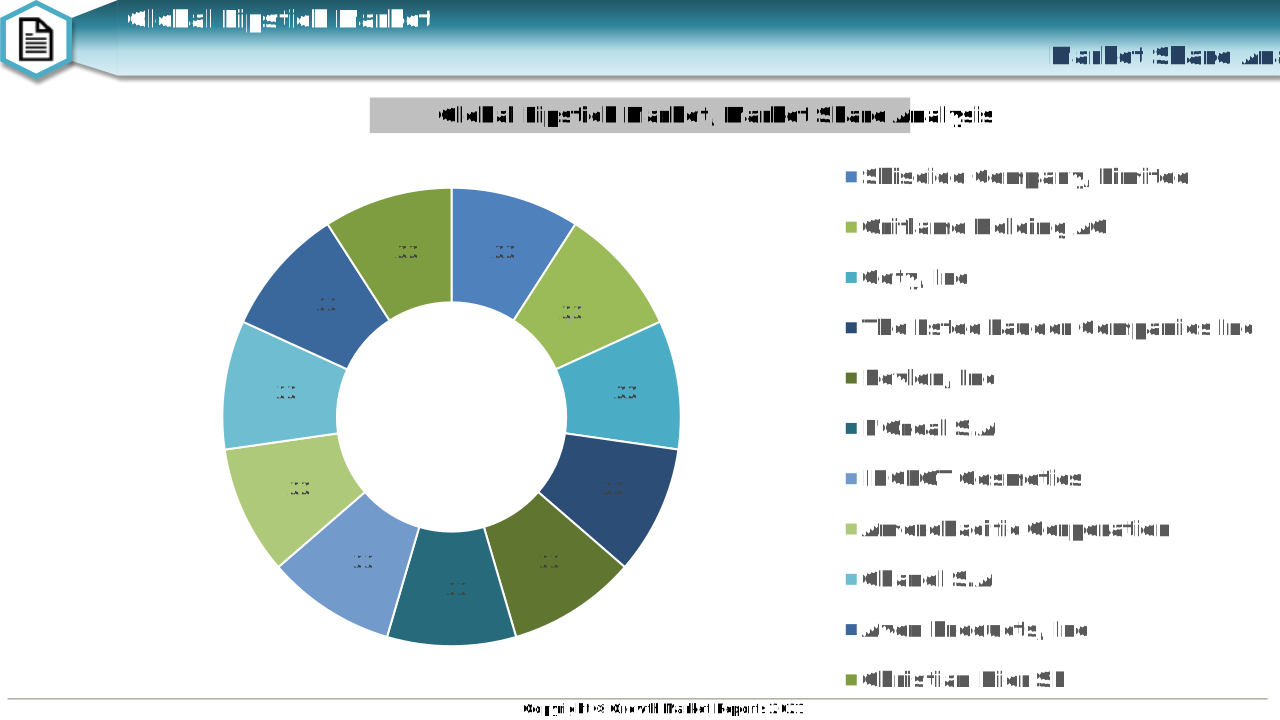

Lipstick Market By Key Players

Frequently Asked Questions

Opportunities include clean and sustainable beauty, digital transformation, and expansion in emerging markets. Challenges involve intense competition, counterfeit products, regulatory compliance, and economic uncertainties.

Major companies include L’Oréal Group, Estée Lauder Companies, Revlon, Coty, Shiseido, Avon, Procter & Gamble, Unilever, Chanel, Christian Dior, Maybelline, MAC, and emerging brands like Fenty Beauty and Huda Beauty.

Recent trends include the integration of skincare benefits (like SPF and hydration), use of natural ingredients, sustainable packaging, transfer-proof and water-resistant formulas, and AR/AI-powered virtual try-ons.

The market is becoming more inclusive, with brands launching products for women, men, and unisex consumers. There is a growing emphasis on diverse shade ranges, gender-neutral packaging, and inclusive marketing.

Asia Pacific leads the market, accounting for about 38% of global revenue in 2024, followed by North America and Europe. Latin America and the Middle East & Africa are experiencing rapid growth.

Lipsticks are sold through supermarkets/hypermarkets, specialty stores, online retail, and other channels. Online retail is the fastest-growing channel, driven by e-commerce, virtual try-ons, and digital marketing.

Popular product types include matte, gloss, satin, cream, sheer, and liquid lipsticks, each catering to different preferences and occasions. Matte lipsticks are especially favored for their bold, long-lasting finish.

Key growth drivers include evolving beauty standards, increased disposable income, the rise of e-commerce, demand for cruelty-free and sustainable products, and social media influence.

The lipstick market is expected to grow at a CAGR of 6.8% from 2025 to 2033, reaching an estimated USD 24.1 billion by 2033.

As of 2024, the global lipstick market size reached USD 13.2 billion, reflecting strong consumer demand and ongoing product innovation.

Table Of Content

Chapter 1 Executive Summary
Chapter 2 Assumptions and Acronyms Used
Chapter 3 Research Methodology
Chapter 4 Lipstick Market Overview
   4.1 Introduction
      4.1.1 Market Taxonomy
      4.1.2 Market Definition
      4.1.3 Macro-Economic Factors Impacting the Market Growth
   4.2 Lipstick Market Dynamics
      4.2.1 Market Drivers
      4.2.2 Market Restraints
      4.2.3 Market Opportunity
   4.3 Lipstick Market - Supply Chain Analysis
      4.3.1 List of Key Suppliers
      4.3.2 List of Key Distributors
      4.3.3 List of Key Consumers
   4.4 Key Forces Shaping the Lipstick Market
      4.4.1 Bargaining Power of Suppliers
      4.4.2 Bargaining Power of Buyers
      4.4.3 Threat of Substitution
      4.4.4 Threat of New Entrants
      4.4.5 Competitive Rivalry
   4.5 Global Lipstick Market Size & Forecast, 2023-2032
      4.5.1 Lipstick Market Size and Y-o-Y Growth
      4.5.2 Lipstick Market Absolute $ Opportunity

Chapter 5 Global Lipstick Market Analysis and Forecast By Product Type
   5.1 Introduction
      5.1.1 Key Market Trends & Growth Opportunities By Product Type
      5.1.2 Basis Point Share (BPS) Analysis By Product Type
      5.1.3 Absolute $ Opportunity Assessment By Product Type
   5.2 Lipstick Market Size Forecast By Product Type
      5.2.1 Matte
      5.2.2 Gloss
      5.2.3 Satin
      5.2.4 Cream
      5.2.5 Sheer
      5.2.6 Liquid
      5.2.7 Others
   5.3 Market Attractiveness Analysis By Product Type

Chapter 6 Global Lipstick Market Analysis and Forecast By Application
   6.1 Introduction
      6.1.1 Key Market Trends & Growth Opportunities By Application
      6.1.2 Basis Point Share (BPS) Analysis By Application
      6.1.3 Absolute $ Opportunity Assessment By Application
   6.2 Lipstick Market Size Forecast By Application
      6.2.1 Daily Use
      6.2.2 Professional Use
      6.2.3 Others
   6.3 Market Attractiveness Analysis By Application

Chapter 7 Global Lipstick Market Analysis and Forecast By Distribution Channel
   7.1 Introduction
      7.1.1 Key Market Trends & Growth Opportunities By Distribution Channel
      7.1.2 Basis Point Share (BPS) Analysis By Distribution Channel
      7.1.3 Absolute $ Opportunity Assessment By Distribution Channel
   7.2 Lipstick Market Size Forecast By Distribution Channel
      7.2.1 Supermarkets/Hypermarkets
      7.2.2 Specialty Stores
      7.2.3 Online Retail
      7.2.4 Others
   7.3 Market Attractiveness Analysis By Distribution Channel

Chapter 8 Global Lipstick Market Analysis and Forecast By End-User
   8.1 Introduction
      8.1.1 Key Market Trends & Growth Opportunities By End-User
      8.1.2 Basis Point Share (BPS) Analysis By End-User
      8.1.3 Absolute $ Opportunity Assessment By End-User
   8.2 Lipstick Market Size Forecast By End-User
      8.2.1 Women
      8.2.2 Men
      8.2.3 Unisex
   8.3 Market Attractiveness Analysis By End-User

Chapter 9 Global Lipstick Market Analysis and Forecast by Region
   9.1 Introduction
      9.1.1 Key Market Trends & Growth Opportunities By Region
      9.1.2 Basis Point Share (BPS) Analysis By Region
      9.1.3 Absolute $ Opportunity Assessment By Region
   9.2 Lipstick Market Size Forecast By Region
      9.2.1 North America
      9.2.2 Europe
      9.2.3 Asia Pacific
      9.2.4 Latin America
      9.2.5 Middle East & Africa (MEA)
   9.3 Market Attractiveness Analysis By Region

Chapter 10 Coronavirus Disease (COVID-19) Impact 
   10.1 Introduction 
   10.2 Current & Future Impact Analysis 
   10.3 Economic Impact Analysis 
   10.4 Government Policies 
   10.5 Investment Scenario

Chapter 11 North America Lipstick Analysis and Forecast
   11.1 Introduction
   11.2 North America Lipstick Market Size Forecast by Country
      11.2.1 U.S.
      11.2.2 Canada
   11.3 Basis Point Share (BPS) Analysis by Country
   11.4 Absolute $ Opportunity Assessment by Country
   11.5 Market Attractiveness Analysis by Country
   11.6 North America Lipstick Market Size Forecast By Product Type
      11.6.1 Matte
      11.6.2 Gloss
      11.6.3 Satin
      11.6.4 Cream
      11.6.5 Sheer
      11.6.6 Liquid
      11.6.7 Others
   11.7 Basis Point Share (BPS) Analysis By Product Type 
   11.8 Absolute $ Opportunity Assessment By Product Type 
   11.9 Market Attractiveness Analysis By Product Type
   11.10 North America Lipstick Market Size Forecast By Application
      11.10.1 Daily Use
      11.10.2 Professional Use
      11.10.3 Others
   11.11 Basis Point Share (BPS) Analysis By Application 
   11.12 Absolute $ Opportunity Assessment By Application 
   11.13 Market Attractiveness Analysis By Application
   11.14 North America Lipstick Market Size Forecast By Distribution Channel
      11.14.1 Supermarkets/Hypermarkets
      11.14.2 Specialty Stores
      11.14.3 Online Retail
      11.14.4 Others
   11.15 Basis Point Share (BPS) Analysis By Distribution Channel 
   11.16 Absolute $ Opportunity Assessment By Distribution Channel 
   11.17 Market Attractiveness Analysis By Distribution Channel
   11.18 North America Lipstick Market Size Forecast By End-User
      11.18.1 Women
      11.18.2 Men
      11.18.3 Unisex
   11.19 Basis Point Share (BPS) Analysis By End-User 
   11.20 Absolute $ Opportunity Assessment By End-User 
   11.21 Market Attractiveness Analysis By End-User

Chapter 12 Europe Lipstick Analysis and Forecast
   12.1 Introduction
   12.2 Europe Lipstick Market Size Forecast by Country
      12.2.1 Germany
      12.2.2 France
      12.2.3 Italy
      12.2.4 U.K.
      12.2.5 Spain
      12.2.6 Russia
      12.2.7 Rest of Europe
   12.3 Basis Point Share (BPS) Analysis by Country
   12.4 Absolute $ Opportunity Assessment by Country
   12.5 Market Attractiveness Analysis by Country
   12.6 Europe Lipstick Market Size Forecast By Product Type
      12.6.1 Matte
      12.6.2 Gloss
      12.6.3 Satin
      12.6.4 Cream
      12.6.5 Sheer
      12.6.6 Liquid
      12.6.7 Others
   12.7 Basis Point Share (BPS) Analysis By Product Type 
   12.8 Absolute $ Opportunity Assessment By Product Type 
   12.9 Market Attractiveness Analysis By Product Type
   12.10 Europe Lipstick Market Size Forecast By Application
      12.10.1 Daily Use
      12.10.2 Professional Use
      12.10.3 Others
   12.11 Basis Point Share (BPS) Analysis By Application 
   12.12 Absolute $ Opportunity Assessment By Application 
   12.13 Market Attractiveness Analysis By Application
   12.14 Europe Lipstick Market Size Forecast By Distribution Channel
      12.14.1 Supermarkets/Hypermarkets
      12.14.2 Specialty Stores
      12.14.3 Online Retail
      12.14.4 Others
   12.15 Basis Point Share (BPS) Analysis By Distribution Channel 
   12.16 Absolute $ Opportunity Assessment By Distribution Channel 
   12.17 Market Attractiveness Analysis By Distribution Channel
   12.18 Europe Lipstick Market Size Forecast By End-User
      12.18.1 Women
      12.18.2 Men
      12.18.3 Unisex
   12.19 Basis Point Share (BPS) Analysis By End-User 
   12.20 Absolute $ Opportunity Assessment By End-User 
   12.21 Market Attractiveness Analysis By End-User

Chapter 13 Asia Pacific Lipstick Analysis and Forecast
   13.1 Introduction
   13.2 Asia Pacific Lipstick Market Size Forecast by Country
      13.2.1 China
      13.2.2 Japan
      13.2.3 South Korea
      13.2.4 India
      13.2.5 Australia
      13.2.6 South East Asia (SEA)
      13.2.7 Rest of Asia Pacific (APAC)
   13.3 Basis Point Share (BPS) Analysis by Country
   13.4 Absolute $ Opportunity Assessment by Country
   13.5 Market Attractiveness Analysis by Country
   13.6 Asia Pacific Lipstick Market Size Forecast By Product Type
      13.6.1 Matte
      13.6.2 Gloss
      13.6.3 Satin
      13.6.4 Cream
      13.6.5 Sheer
      13.6.6 Liquid
      13.6.7 Others
   13.7 Basis Point Share (BPS) Analysis By Product Type 
   13.8 Absolute $ Opportunity Assessment By Product Type 
   13.9 Market Attractiveness Analysis By Product Type
   13.10 Asia Pacific Lipstick Market Size Forecast By Application
      13.10.1 Daily Use
      13.10.2 Professional Use
      13.10.3 Others
   13.11 Basis Point Share (BPS) Analysis By Application 
   13.12 Absolute $ Opportunity Assessment By Application 
   13.13 Market Attractiveness Analysis By Application
   13.14 Asia Pacific Lipstick Market Size Forecast By Distribution Channel
      13.14.1 Supermarkets/Hypermarkets
      13.14.2 Specialty Stores
      13.14.3 Online Retail
      13.14.4 Others
   13.15 Basis Point Share (BPS) Analysis By Distribution Channel 
   13.16 Absolute $ Opportunity Assessment By Distribution Channel 
   13.17 Market Attractiveness Analysis By Distribution Channel
   13.18 Asia Pacific Lipstick Market Size Forecast By End-User
      13.18.1 Women
      13.18.2 Men
      13.18.3 Unisex
   13.19 Basis Point Share (BPS) Analysis By End-User 
   13.20 Absolute $ Opportunity Assessment By End-User 
   13.21 Market Attractiveness Analysis By End-User

Chapter 14 Latin America Lipstick Analysis and Forecast
   14.1 Introduction
   14.2 Latin America Lipstick Market Size Forecast by Country
      14.2.1 Brazil
      14.2.2 Mexico
      14.2.3 Rest of Latin America (LATAM)
   14.3 Basis Point Share (BPS) Analysis by Country
   14.4 Absolute $ Opportunity Assessment by Country
   14.5 Market Attractiveness Analysis by Country
   14.6 Latin America Lipstick Market Size Forecast By Product Type
      14.6.1 Matte
      14.6.2 Gloss
      14.6.3 Satin
      14.6.4 Cream
      14.6.5 Sheer
      14.6.6 Liquid
      14.6.7 Others
   14.7 Basis Point Share (BPS) Analysis By Product Type 
   14.8 Absolute $ Opportunity Assessment By Product Type 
   14.9 Market Attractiveness Analysis By Product Type
   14.10 Latin America Lipstick Market Size Forecast By Application
      14.10.1 Daily Use
      14.10.2 Professional Use
      14.10.3 Others
   14.11 Basis Point Share (BPS) Analysis By Application 
   14.12 Absolute $ Opportunity Assessment By Application 
   14.13 Market Attractiveness Analysis By Application
   14.14 Latin America Lipstick Market Size Forecast By Distribution Channel
      14.14.1 Supermarkets/Hypermarkets
      14.14.2 Specialty Stores
      14.14.3 Online Retail
      14.14.4 Others
   14.15 Basis Point Share (BPS) Analysis By Distribution Channel 
   14.16 Absolute $ Opportunity Assessment By Distribution Channel 
   14.17 Market Attractiveness Analysis By Distribution Channel
   14.18 Latin America Lipstick Market Size Forecast By End-User
      14.18.1 Women
      14.18.2 Men
      14.18.3 Unisex
   14.19 Basis Point Share (BPS) Analysis By End-User 
   14.20 Absolute $ Opportunity Assessment By End-User 
   14.21 Market Attractiveness Analysis By End-User

Chapter 15 Middle East & Africa (MEA) Lipstick Analysis and Forecast
   15.1 Introduction
   15.2 Middle East & Africa (MEA) Lipstick Market Size Forecast by Country
      15.2.1 Saudi Arabia
      15.2.2 South Africa
      15.2.3 UAE
      15.2.4 Rest of Middle East & Africa (MEA)
   15.3 Basis Point Share (BPS) Analysis by Country
   15.4 Absolute $ Opportunity Assessment by Country
   15.5 Market Attractiveness Analysis by Country
   15.6 Middle East & Africa (MEA) Lipstick Market Size Forecast By Product Type
      15.6.1 Matte
      15.6.2 Gloss
      15.6.3 Satin
      15.6.4 Cream
      15.6.5 Sheer
      15.6.6 Liquid
      15.6.7 Others
   15.7 Basis Point Share (BPS) Analysis By Product Type 
   15.8 Absolute $ Opportunity Assessment By Product Type 
   15.9 Market Attractiveness Analysis By Product Type
   15.10 Middle East & Africa (MEA) Lipstick Market Size Forecast By Application
      15.10.1 Daily Use
      15.10.2 Professional Use
      15.10.3 Others
   15.11 Basis Point Share (BPS) Analysis By Application 
   15.12 Absolute $ Opportunity Assessment By Application 
   15.13 Market Attractiveness Analysis By Application
   15.14 Middle East & Africa (MEA) Lipstick Market Size Forecast By Distribution Channel
      15.14.1 Supermarkets/Hypermarkets
      15.14.2 Specialty Stores
      15.14.3 Online Retail
      15.14.4 Others
   15.15 Basis Point Share (BPS) Analysis By Distribution Channel 
   15.16 Absolute $ Opportunity Assessment By Distribution Channel 
   15.17 Market Attractiveness Analysis By Distribution Channel
   15.18 Middle East & Africa (MEA) Lipstick Market Size Forecast By End-User
      15.18.1 Women
      15.18.2 Men
      15.18.3 Unisex
   15.19 Basis Point Share (BPS) Analysis By End-User 
   15.20 Absolute $ Opportunity Assessment By End-User 
   15.21 Market Attractiveness Analysis By End-User

Chapter 16 Competition Landscape 
   16.1 Lipstick Market: Competitive Dashboard
   16.2 Global Lipstick Market: Market Share Analysis, 2023
   16.3 Company Profiles (Details – Overview, Financials, Developments, Strategy) 
      16.3.1 L'Oréal S.A.
Estée Lauder Companies Inc.
Revlon, Inc.
Coty Inc.
Shiseido Company, Limited
Avon Products, Inc.
Procter & Gamble Co. (CoverGirl)
Unilever (Lakmé)
Chanel S.A.
Christian Dior SE
Maybelline New York
MAC Cosmetics
Lancôme
Elizabeth Arden, Inc.
Kose Corporation
Amorepacific Corporation
Mary Kay Inc.
Clarins Group
Huda Beauty
NARS Cosmetics

Methodology

Our Clients

Siemens Healthcare
Microsoft
Honda Motor Co. Ltd.
sinopec
General Electric
General Mills
Dassault Aviation
Nestle SA