Li-Fi Market Research Report 2033

Segments - by Component (LEDs, Photodetectors, Microcontrollers, Others), by Application (Indoor Networking, Healthcare, Automotive, Retail, Education, Aviation, Others), by End-User (Residential, Commercial, Industrial, Others)

https://growthmarketreports.com/Raksha
Author : Raksha Sharma
https://growthmarketreports.com/Vaibhav
Fact-checked by : V. Chandola
https://growthmarketreports.com/Shruti
Editor : Shruti Bhat

Upcoming | Report ID :ICT-SE-2432 | 4.1 Rating | 80 Reviews | 300 Pages | Format : Docx PDF

Report Description


Li-Fi Market Outlook

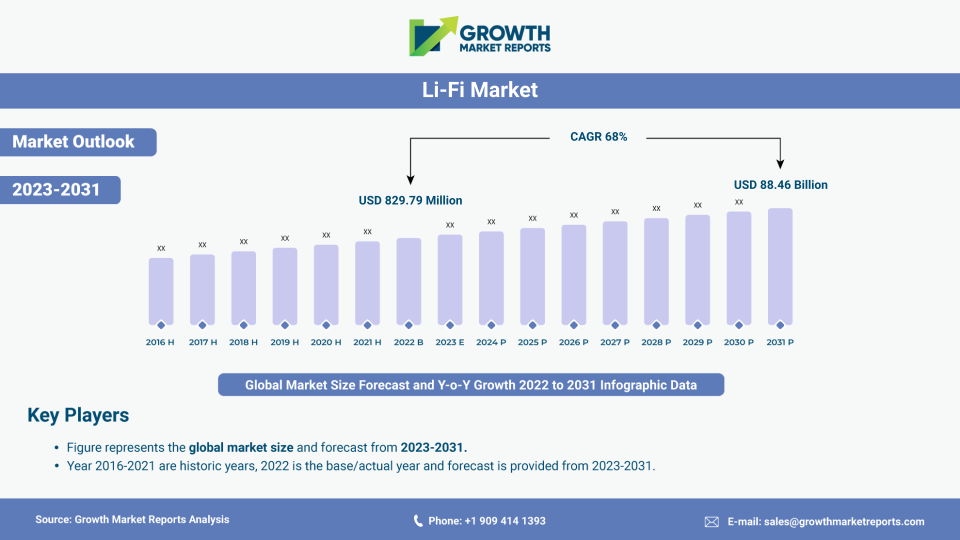
According to our latest research, the global Li-Fi market size in 2024 stands at USD 1.39 billion, with a robust compound annual growth rate (CAGR) of 41.2% projected from 2025 to 2033. This dynamic growth trajectory is expected to propel the market to an impressive USD 26.5 billion by 2033. The surge in demand for high-speed, secure, and interference-free wireless communication is a primary growth factor driving the expansion of the Li-Fi market globally. As per the latest research, the convergence of cutting-edge LED technology, increasing data consumption, and the pressing need for spectrum relief are shaping the future of the Li-Fi industry.

The exponential growth of the Li-Fi market is primarily fueled by the ever-increasing demand for wireless data transmission and the limitations of current radio-frequency (RF)-based technologies such as Wi-Fi. With the proliferation of connected devices, smart homes, and IoT applications, the RF spectrum is becoming increasingly congested. Li-Fi, leveraging the visible light spectrum, provides a much broader bandwidth, enabling faster and more reliable data transfer. The technology's capability to deliver gigabit speeds, coupled with its inherent security advantages—since light cannot penetrate walls—makes it particularly attractive for environments requiring high data integrity and minimal interference. The growing adoption of smart lighting systems in urban and industrial settings further accelerates the integration of Li-Fi technology, as modern LED infrastructures can be easily adapted for data transmission.

Another significant growth driver for the Li-Fi market is the increasing focus on digital transformation across various industry verticals. Enterprises and public institutions are actively seeking advanced networking solutions to support real-time data exchange, seamless connectivity, and enhanced user experiences. Li-Fi's ability to function in electromagnetic-sensitive environments such as hospitals, aircraft, and industrial plants gives it a distinct advantage over traditional wireless technologies. The healthcare sector, for instance, is rapidly embracing Li-Fi for secure and interference-free communication in operating rooms and intensive care units. Similarly, the aviation industry is exploring Li-Fi for in-flight connectivity and cabin management systems, where RF interference could compromise safety and performance. These sector-specific use cases are expected to significantly contribute to the overall expansion of the Li-Fi market.

Moreover, government initiatives and regulatory support for the adoption of energy-efficient technologies are bolstering the growth prospects of the Li-Fi market. Several countries are investing in smart city projects and digital infrastructure upgrades, where Li-Fi-enabled smart lighting solutions are being deployed to enhance connectivity, security, and energy management. The increasing awareness of the environmental benefits associated with LED-based Li-Fi systems—such as reduced energy consumption and carbon footprint—further strengthens the market outlook. Additionally, ongoing research and development activities, coupled with strategic collaborations between technology providers and industry stakeholders, are fostering innovation and driving down the cost of Li-Fi solutions, making them more accessible to a broader range of end-users.

In the aviation sector, the exploration of Advanced Cabin Li-Fi Access Point technology is gaining momentum. This innovative application of Li-Fi is set to revolutionize in-flight connectivity by providing passengers with high-speed internet access and seamless communication capabilities. By utilizing the visible light spectrum, Advanced Cabin Li-Fi Access Points offer a secure and interference-free alternative to traditional RF-based systems, ensuring that safety and performance are not compromised. As airlines strive to enhance passenger experience and operational efficiency, the integration of Li-Fi technology into cabin management systems is becoming increasingly attractive. This development not only promises to improve in-flight entertainment options but also supports real-time data exchange for crew operations, contributing to the overall growth of the Li-Fi market in the aviation industry.

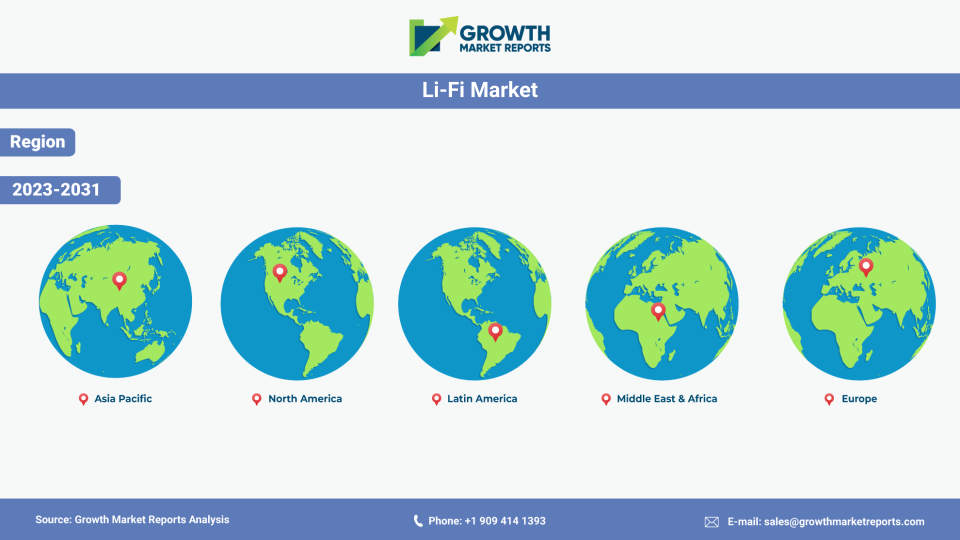
Regionally, Asia Pacific is emerging as the dominant force in the global Li-Fi market, driven by rapid urbanization, large-scale smart city initiatives, and significant investments in digital infrastructure. North America and Europe are also witnessing substantial growth, fueled by the presence of leading technology companies, advanced research institutions, and early adoption of innovative wireless communication technologies. The Middle East & Africa and Latin America are gradually catching up, supported by government-led digitalization programs and increasing awareness of the benefits of Li-Fi. As the market continues to evolve, regional dynamics will play a pivotal role in shaping the competitive landscape and determining the pace of adoption across various application segments.

Global Li-Fi Industry Outlook

Component Analysis

The component segment of the Li-Fi market is a critical determinant of the technology's performance, scalability, and cost-effectiveness. LEDs (Light Emitting Diodes) form the backbone of Li-Fi systems, serving as the primary source for transmitting data via modulated light signals. The advancement in LED technology, particularly the development of high-speed, energy-efficient, and cost-effective LEDs, has been instrumental in propelling the adoption of Li-Fi solutions. Modern LEDs are capable of switching at incredibly high frequencies, enabling gigabit data transmission rates that surpass conventional Wi-Fi speeds. The integration of smart LED lighting systems in commercial, industrial, and residential environments further enhances the feasibility of widespread Li-Fi deployment. As the demand for energy-efficient lighting continues to grow, the synergy between LED adoption and Li-Fi technology is expected to remain a key growth driver for this market segment.

Photodetectors represent another vital component in the Li-Fi ecosystem, responsible for receiving and converting modulated light signals back into electrical data. The performance of photodetectors directly influences the reliability, speed, and coverage of Li-Fi networks. Recent advancements in photodetector materials and design have significantly improved their sensitivity and response times, enabling seamless communication even in low-light conditions. Innovations such as avalanche photodiodes and CMOS-based photodetectors are enhancing the efficiency and scalability of Li-Fi systems. As the market matures, manufacturers are focusing on developing compact, cost-effective, and highly sensitive photodetectors that can be easily integrated into a wide range of devices, from smartphones to industrial sensors, thereby expanding the application scope of Li-Fi technology.

Microcontrollers play a crucial role in managing the modulation and demodulation processes in Li-Fi systems, ensuring efficient data encoding, transmission, and reception. The integration of advanced microcontrollers with high processing power and low energy consumption is enabling the development of intelligent Li-Fi solutions capable of supporting complex networking protocols and security features. These microcontrollers facilitate real-time data processing, error correction, and adaptive modulation schemes, enhancing the overall performance and reliability of Li-Fi networks. As the demand for smart, autonomous, and interconnected devices continues to rise, the role of microcontrollers in enabling seamless Li-Fi communication across diverse applications is becoming increasingly significant.

The concept of a Li-Fi Desk Dock Station is emerging as a transformative solution in modern workspaces. With the increasing demand for high-speed, secure, and reliable connectivity in office environments, Li-Fi Desk Dock Stations offer a unique advantage by leveraging light-based communication. These stations provide seamless data transfer and internet access directly through desk lamps or overhead lighting, eliminating the need for traditional cabling and reducing clutter. As businesses continue to embrace digital transformation and remote work trends, the adoption of Li-Fi Desk Dock Stations is expected to rise, offering employees enhanced connectivity and flexibility. This innovation not only supports productivity but also aligns with sustainability goals by utilizing energy-efficient LED lighting systems.

The "Others" category in the component segment encompasses a range of supporting hardware and software elements, including optical filters, lenses, amplifiers, and firmware solutions. These components are essential for optimizing the performance, coverage, and security of Li-Fi networks. For instance, optical filters and lenses help focus and direct the light signals, reducing interference and enhancing signal strength. Amplifiers boost the received signals for improved data integrity, while advanced firmware solutions enable remote management, diagnostics, and network optimization. As the Li-Fi market continues to evolve, the development of integrated, plug-and-play component solutions will be critical in reducing deployment complexity and accelerating market adoption across various end-user segments.

Report Scope

Attributes Details
Report Title Li-Fi Market Research Report 2033
By Component LEDs, Photodetectors, Microcontrollers, Others
By Application Indoor Networking, Healthcare, Automotive, Retail, Education, Aviation, Others
By End-User Residential, Commercial, Industrial, Others
Regions Covered North America, Europe, APAC, Latin America, MEA
Base Year 2024
Historic Data 2018-2023
Forecast Period 2025-2033
Number of Pages 300
Number of Tables & Figures 325
Customization Available Yes, the report can be customized as per your need.

Application Analysis

The application landscape of the Li-Fi market is diverse, encompassing a wide array of use cases across multiple industry verticals. Indoor networking is currently the largest application segment, driven by the need for high-speed, interference-free connectivity in environments such as offices, conference centers, and public venues. Li-Fi's ability to deliver gigabit speeds while avoiding RF interference makes it an ideal solution for dense indoor environments where traditional Wi-Fi networks often struggle with congestion and security concerns. The deployment of Li-Fi-enabled smart lighting systems in commercial buildings is transforming the way organizations manage connectivity, energy consumption, and security, creating new opportunities for innovation and efficiency.

The healthcare sector represents a rapidly growing application area for Li-Fi technology, owing to its inherent advantages in electromagnetic-sensitive environments. Hospitals, clinics, and medical research facilities are increasingly adopting Li-Fi for secure, high-speed data transmission in operating rooms, intensive care units, and diagnostic centers. Unlike Wi-Fi, Li-Fi does not emit electromagnetic interference, making it safe for use around sensitive medical equipment and devices. The technology is also being explored for patient monitoring, real-time data exchange, and telemedicine applications, where data integrity and security are paramount. As the healthcare industry continues to digitize its operations and embrace connected care solutions, the demand for Li-Fi-enabled networking infrastructure is expected to surge.

The automotive industry is another key application segment for Li-Fi technology, particularly in the context of connected and autonomous vehicles. Li-Fi's ability to provide ultra-fast, secure, and low-latency communication between vehicles, infrastructure, and pedestrians is driving its adoption in advanced driver-assistance systems (ADAS), in-car infotainment, and vehicle-to-everything (V2X) applications. Automotive manufacturers are actively collaborating with technology providers to integrate Li-Fi modules into headlights, taillights, and interior lighting systems, enabling seamless data exchange and enhancing road safety. As the automotive sector continues to innovate and evolve towards smart mobility, Li-Fi is poised to play a pivotal role in shaping the future of connected transportation.

Visible Light Positioning is emerging as a groundbreaking application within the Li-Fi ecosystem, offering precise indoor navigation and location-based services. By utilizing LED lighting infrastructure, Visible Light Positioning systems can accurately determine the position of devices within a given space, providing real-time location data without relying on GPS or RF signals. This technology is particularly beneficial in environments such as shopping malls, airports, and museums, where traditional positioning systems face limitations. The integration of Visible Light Positioning with Li-Fi technology enhances the user experience by enabling personalized content delivery, navigation assistance, and asset tracking. As the demand for smart building solutions and indoor navigation grows, Visible Light Positioning is poised to play a pivotal role in the expansion of the Li-Fi market.

Retail, education, and aviation are also witnessing increasing adoption of Li-Fi technology, driven by the need for secure, high-speed, and reliable wireless communication. In the retail sector, Li-Fi is being used to deliver personalized content, navigation assistance, and real-time promotions to shoppers via smart lighting systems. Educational institutions are leveraging Li-Fi to provide high-speed internet access in classrooms, libraries, and lecture halls, supporting digital learning and collaboration. The aviation industry is exploring Li-Fi for in-flight entertainment, cabin management, and secure communication between crew members. As the technology matures and becomes more cost-effective, the application scope of Li-Fi is expected to expand further, encompassing new use cases in logistics, defense, and smart city infrastructure.

End-User Analysis

The residential segment of the Li-Fi market is gaining traction as consumers seek faster, more secure, and interference-free wireless connectivity for their homes. The proliferation of smart home devices, streaming services, and remote work setups is driving the demand for high-speed internet solutions that can support multiple connected devices without performance degradation. Li-Fi-enabled smart lighting systems offer a compelling alternative to traditional Wi-Fi, providing gigabit speeds, enhanced security, and energy efficiency. Homeowners are increasingly adopting Li-Fi solutions for applications such as video streaming, online gaming, and home automation, contributing to the growth of the residential end-user segment.

The commercial segment represents the largest end-user category in the Li-Fi market, driven by the widespread adoption of smart building solutions, digital workplaces, and connected infrastructure. Enterprises are deploying Li-Fi-enabled lighting systems in offices, conference rooms, hotels, and shopping malls to provide high-speed, secure, and reliable wireless connectivity for employees, customers, and visitors. The technology's ability to deliver targeted content, support location-based services, and enhance network security makes it particularly attractive for commercial applications. As organizations continue to invest in digital transformation and smart office solutions, the demand for Li-Fi-enabled networking infrastructure is expected to remain strong.

Industrial end-users are increasingly turning to Li-Fi technology to address the unique connectivity challenges in manufacturing plants, warehouses, and industrial facilities. Traditional RF-based wireless networks often struggle with interference from heavy machinery and electromagnetic equipment, leading to connectivity issues and data loss. Li-Fi, operating in the visible light spectrum, offers a robust and interference-free solution for real-time data exchange, machine-to-machine communication, and industrial automation. The integration of Li-Fi with industrial IoT (IIoT) platforms is enabling smarter, more efficient, and safer manufacturing processes, driving the adoption of Li-Fi solutions in the industrial sector.

The "Others" category in the end-user segment includes government agencies, educational institutions, healthcare providers, and transportation authorities, among others. These organizations are leveraging Li-Fi technology to enhance connectivity, security, and operational efficiency in diverse environments such as schools, hospitals, airports, and public transportation systems. The ability to deliver high-speed, secure, and reliable wireless communication without RF interference is particularly valuable in mission-critical and high-density environments. As awareness of the benefits of Li-Fi continues to grow, the adoption of Li-Fi solutions among non-traditional end-users is expected to accelerate, contributing to the overall expansion of the market.

Opportunities & Threats

The Li-Fi market presents a multitude of opportunities for technology providers, system integrators, and end-users alike. One of the most significant opportunities lies in the integration of Li-Fi with emerging technologies such as 5G, IoT, and edge computing. By combining the strengths of Li-Fi and RF-based wireless networks, organizations can create hybrid networking solutions that offer unparalleled speed, reliability, and coverage. The ongoing development of smart cities and digital infrastructure projects worldwide is creating a fertile ground for large-scale Li-Fi deployments in public spaces, transportation systems, and government buildings. Additionally, the growing emphasis on sustainability and energy efficiency is driving demand for Li-Fi-enabled smart lighting solutions, which can significantly reduce energy consumption and carbon emissions compared to traditional wireless networks.

Another promising opportunity for the Li-Fi market lies in the development of new applications and business models across various industry verticals. For instance, the healthcare sector can leverage Li-Fi for secure patient data transmission, real-time remote monitoring, and telemedicine services. The automotive industry can utilize Li-Fi for vehicle-to-infrastructure communication, enhancing road safety and enabling autonomous driving. In the retail sector, Li-Fi can be used to deliver personalized content and promotions to shoppers based on their location within a store. As the technology matures and becomes more cost-effective, the application scope of Li-Fi is expected to expand further, creating new revenue streams and growth opportunities for market participants.

Despite the promising growth prospects, the Li-Fi market faces several restraining factors that could impede its widespread adoption. One of the primary challenges is the limited range and line-of-sight requirement of Li-Fi technology, which restricts its applicability in certain environments. Unlike RF-based wireless networks, Li-Fi signals cannot penetrate walls or obstacles, necessitating the installation of multiple access points to ensure seamless coverage. This can increase deployment complexity and costs, particularly in large or multi-room environments. Additionally, the lack of standardized protocols and interoperability among Li-Fi devices poses a challenge for seamless integration with existing networking infrastructure. Addressing these challenges through technological innovation, standardization, and cost optimization will be critical for unlocking the full potential of the Li-Fi market.

Regional Outlook

Asia Pacific stands out as the fastest-growing and largest regional market for Li-Fi, accounting for approximately 40% of the global market share in 2024, with a market value of USD 556 million. The region's rapid urbanization, burgeoning population, and extensive smart city initiatives are key drivers of Li-Fi adoption. Countries such as China, Japan, and South Korea are investing heavily in digital infrastructure and smart lighting solutions, creating a conducive environment for the deployment of Li-Fi technology. The presence of leading LED and semiconductor manufacturers in the region further accelerates the pace of innovation and commercialization. With a projected CAGR of 44.1% from 2025 to 2033, Asia Pacific is expected to maintain its dominance in the global Li-Fi market, driven by continued investments in smart cities, digital transformation, and energy-efficient technologies.

North America is another significant market for Li-Fi, with a market size of USD 417 million in 2024, representing approximately 30% of the global market. The region's advanced technological landscape, presence of leading Li-Fi technology providers, and early adoption of innovative wireless communication solutions are key factors fueling market growth. The United States and Canada are at the forefront of Li-Fi research and development, with several pilot projects and commercial deployments underway in sectors such as healthcare, education, and aviation. The region's focus on enhancing network security, supporting digital transformation, and reducing energy consumption is expected to drive further adoption of Li-Fi solutions in the coming years.

Europe holds a substantial share of the global Li-Fi market, with a market value of USD 278 million in 2024, accounting for approximately 20% of the total market. The region's strong emphasis on energy efficiency, sustainability, and digital innovation is driving the adoption of Li-Fi-enabled smart lighting solutions in commercial buildings, public spaces, and transportation systems. Countries such as Germany, the United Kingdom, and France are leading the way in Li-Fi research, standardization, and commercialization. The European Union's focus on promoting green technologies and digital infrastructure is expected to further accelerate the growth of the Li-Fi market in the region. Latin America and the Middle East & Africa, although currently accounting for a smaller share of the global market, are witnessing increasing adoption of Li-Fi technology, supported by government-led digitalization initiatives and growing awareness of the benefits of Li-Fi-enabled connectivity.

Li-Fi Market Statistics

Competitor Outlook

The global Li-Fi market is characterized by intense competition and rapid technological innovation, with numerous players vying for market share across various segments and regions. The competitive landscape is shaped by the presence of established technology providers, emerging startups, and research institutions, all striving to develop and commercialize advanced Li-Fi solutions. Key competitive factors include product innovation, performance, cost, scalability, and the ability to address diverse application requirements. Companies are investing heavily in research and development to enhance the speed, reliability, and security of their Li-Fi offerings, as well as to expand their application scope across new industry verticals. Strategic collaborations, partnerships, and mergers and acquisitions are common strategies employed by market participants to strengthen their market position and accelerate the commercialization of Li-Fi technology.

Product differentiation and customization are critical success factors in the Li-Fi market, as end-users increasingly demand tailored solutions that address their specific connectivity, security, and performance needs. Leading companies are focusing on developing integrated Li-Fi solutions that combine advanced LEDs, photodetectors, microcontrollers, and supporting hardware and software components. The ability to offer plug-and-play solutions that can be easily integrated with existing lighting and networking infrastructure is a key competitive advantage. Additionally, companies are leveraging their expertise in related technologies such as IoT, smart lighting, and wireless communication to create value-added offerings and capture new market opportunities.

The competitive landscape is also influenced by the level of standardization and interoperability among Li-Fi devices and systems. Industry consortia and standards organizations are working to develop common protocols and interfaces that enable seamless integration and interoperability across different vendors and platforms. Companies that actively participate in standardization efforts and offer interoperable solutions are well-positioned to capture a larger share of the market as adoption accelerates. Furthermore, the ability to provide comprehensive support services, including installation, maintenance, and technical support, is increasingly important for building long-term customer relationships and ensuring successful deployments.

Some of the major companies operating in the global Li-Fi market include Signify (formerly Philips Lighting), pureLiFi, Oledcomm, VLNComm, Lucibel, Panasonic Corporation, Acuity Brands, and LightBee. Signify is a global leader in lighting and smart lighting solutions, leveraging its expertise to develop advanced Li-Fi systems for commercial, industrial, and public sector applications. pureLiFi is a pioneer in Li-Fi technology, offering a range of hardware and software solutions for secure, high-speed wireless communication. Oledcomm specializes in Li-Fi solutions for education, healthcare, and transportation, with a strong focus on innovation and customization. VLNComm is known for its high-performance Li-Fi modules and systems, targeting enterprise and industrial markets. Lucibel is a key player in the European market, providing Li-Fi-enabled lighting solutions for offices, retail, and public spaces. Panasonic Corporation and Acuity Brands are leveraging their expertise in lighting and electronics to develop integrated Li-Fi solutions for smart buildings and connected infrastructure. LightBee focuses on Li-Fi solutions for automotive and industrial applications, driving innovation in connected transportation and manufacturing.

These companies are actively investing in research and development, expanding their product portfolios, and forming strategic alliances to strengthen their market position and capitalize on emerging opportunities. As the Li-Fi market continues to evolve, the competitive landscape is expected to become increasingly dynamic, with new entrants, technological breakthroughs, and shifting customer preferences shaping the future of the industry. Companies that can effectively navigate these challenges and deliver innovative, cost-effective, and scalable Li-Fi solutions will be well-positioned to lead the market and drive the next wave of wireless communication innovation.

Key Players

  • Signify (Philips Lighting)
  • pureLiFi
  • Oledcomm
  • VLNComm
  • Lucibel
  • LightBee
  • Velmenni
  • Fsona Networks
  • Acuity Brands
  • Panasonic Corporation
  • General Electric (GE) Lighting
  • Qualcomm Technologies
  • Firefly LiFi
  • LumEfficient
  • LightPointe Communications
  • Wipro Lighting
  • Fraunhofer HHI
  • IBSENtelecom
  • Zero1
  • Renesas Electronics Corporation
Li-Fi Market Overview

Segments

The Li-Fi market has been segmented on the basis of

Component

  • LEDs
  • Photodetectors
  • Microcontrollers
  • Others

Application

  • Indoor Networking
  • Healthcare
  • Automotive
  • Retail
  • Education
  • Aviation
  • Others

End-User

  • Residential
  • Commercial
  • Industrial
  • Others

Competitive Landscape

The major players in the Li Fi market include Lucibal SA, Oledcomm SAS, LVX System, PureLIFI Ltd, and Signify Holding BV. Companies are engaging in mergers, acquisitions and partnerships to expand their market share. In January 2020, Getac Technology incorporated pureLIFI-powered Li-Fi technology into rugged mobiles. Getac's Li-Fi Solutions is anticipated help the defense, public safety, automotive, energy, and manufacturing industries.
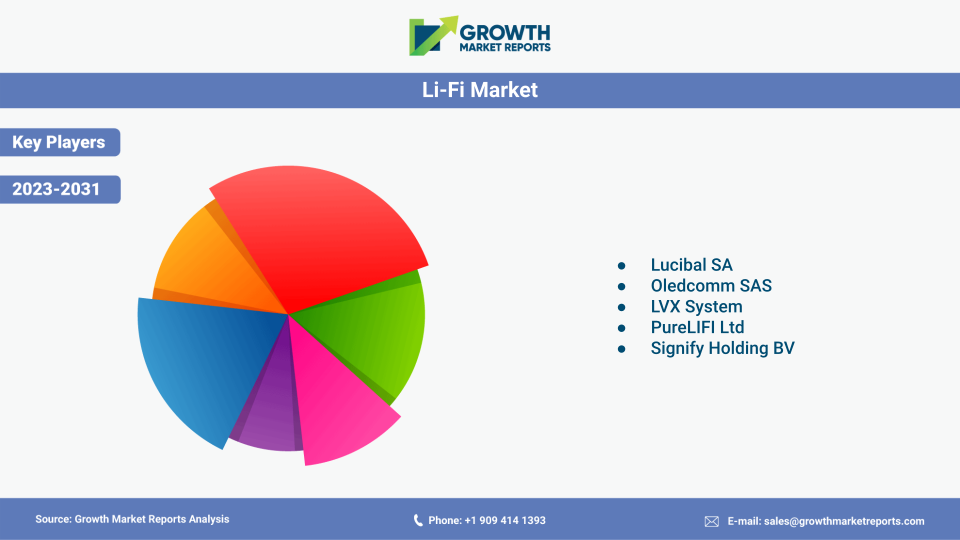

Global Li Fi Market Key Players

Frequently Asked Questions

Opportunities include integration with 5G, IoT, and edge computing, deployment in smart cities, new applications in telemedicine, autonomous vehicles, personalized retail experiences, and the development of hybrid networking solutions combining Li-Fi and RF technologies.

In healthcare, Li-Fi provides secure, high-speed, and interference-free communication in sensitive environments like operating rooms and ICUs. In automotive, Li-Fi enables ultra-fast, secure communication for advanced driver-assistance systems, in-car infotainment, and vehicle-to-everything (V2X) applications.

Key players include Signify (Philips Lighting), pureLiFi, Oledcomm, VLNComm, Lucibel, Panasonic Corporation, Acuity Brands, LightBee, Velmenni, Fsona Networks, General Electric (GE) Lighting, Qualcomm Technologies, Firefly LiFi, LumEfficient, LightPointe Communications, Wipro Lighting, Fraunhofer HHI, IBSENtelecom, Zero1, and Renesas Electronics Corporation.

Li-Fi's main challenges include limited range and line-of-sight requirements (light cannot penetrate walls), deployment complexity in large spaces, lack of standardization, and interoperability issues with existing networking infrastructure.

Li-Fi is used in indoor networking, healthcare (for interference-free communication), automotive (connected and autonomous vehicles), retail (personalized content delivery), education (high-speed internet in classrooms), aviation, and smart city infrastructure.

The main components of a Li-Fi system are LEDs (for data transmission), photodetectors (for receiving light signals), microcontrollers (for data processing), and supporting hardware/software such as optical filters, lenses, amplifiers, and firmware.

Asia Pacific is the fastest-growing and largest market for Li-Fi, followed by North America and Europe. Latin America and the Middle East & Africa are also witnessing growing adoption due to digitalization initiatives.

Key growth drivers include increasing demand for high-speed and secure wireless communication, limitations of RF-based technologies, proliferation of IoT and smart devices, adoption of smart lighting systems, and government initiatives promoting energy-efficient technologies.

The global Li-Fi market is expected to grow from USD 1.39 billion in 2024 to USD 26.5 billion by 2033, with a compound annual growth rate (CAGR) of 41.2% from 2025 to 2033.

Li-Fi (Light Fidelity) is a wireless communication technology that uses visible light from LEDs to transmit data, offering faster speeds, higher security, and less interference compared to traditional Wi-Fi, which relies on radio-frequency (RF) signals.

Table Of Content

Chapter 1 Executive Summary
Chapter 2 Assumptions and Acronyms Used
Chapter 3 Research Methodology
Chapter 4 Li-Fi Market Overview
   4.1 Introduction
      4.1.1 Market Taxonomy
      4.1.2 Market Definition
      4.1.3 Macro-Economic Factors Impacting the Market Growth
   4.2 Li-Fi Market Dynamics
      4.2.1 Market Drivers
      4.2.2 Market Restraints
      4.2.3 Market Opportunity
   4.3 Li-Fi Market - Supply Chain Analysis
      4.3.1 List of Key Suppliers
      4.3.2 List of Key Distributors
      4.3.3 List of Key Consumers
   4.4 Key Forces Shaping the Li-Fi Market
      4.4.1 Bargaining Power of Suppliers
      4.4.2 Bargaining Power of Buyers
      4.4.3 Threat of Substitution
      4.4.4 Threat of New Entrants
      4.4.5 Competitive Rivalry
   4.5 Global Li-Fi Market Size & Forecast, 2023-2032
      4.5.1 Li-Fi Market Size and Y-o-Y Growth
      4.5.2 Li-Fi Market Absolute $ Opportunity

Chapter 5 Global Li-Fi Market Analysis and Forecast By Component
   5.1 Introduction
      5.1.1 Key Market Trends & Growth Opportunities By Component
      5.1.2 Basis Point Share (BPS) Analysis By Component
      5.1.3 Absolute $ Opportunity Assessment By Component
   5.2 Li-Fi Market Size Forecast By Component
      5.2.1 LEDs
      5.2.2 Photodetectors
      5.2.3 Microcontrollers
      5.2.4 Others
   5.3 Market Attractiveness Analysis By Component

Chapter 6 Global Li-Fi Market Analysis and Forecast By Application
   6.1 Introduction
      6.1.1 Key Market Trends & Growth Opportunities By Application
      6.1.2 Basis Point Share (BPS) Analysis By Application
      6.1.3 Absolute $ Opportunity Assessment By Application
   6.2 Li-Fi Market Size Forecast By Application
      6.2.1 Indoor Networking
      6.2.2 Healthcare
      6.2.3 Automotive
      6.2.4 Retail
      6.2.5 Education
      6.2.6 Aviation
      6.2.7 Others
   6.3 Market Attractiveness Analysis By Application

Chapter 7 Global Li-Fi Market Analysis and Forecast By End-User
   7.1 Introduction
      7.1.1 Key Market Trends & Growth Opportunities By End-User
      7.1.2 Basis Point Share (BPS) Analysis By End-User
      7.1.3 Absolute $ Opportunity Assessment By End-User
   7.2 Li-Fi Market Size Forecast By End-User
      7.2.1 Residential
      7.2.2 Commercial
      7.2.3 Industrial
      7.2.4 Others
   7.3 Market Attractiveness Analysis By End-User

Chapter 8 Global Li-Fi Market Analysis and Forecast by Region
   8.1 Introduction
      8.1.1 Key Market Trends & Growth Opportunities By Region
      8.1.2 Basis Point Share (BPS) Analysis By Region
      8.1.3 Absolute $ Opportunity Assessment By Region
   8.2 Li-Fi Market Size Forecast By Region
      8.2.1 North America
      8.2.2 Europe
      8.2.3 Asia Pacific
      8.2.4 Latin America
      8.2.5 Middle East & Africa (MEA)
   8.3 Market Attractiveness Analysis By Region

Chapter 9 Coronavirus Disease (COVID-19) Impact 
   9.1 Introduction 
   9.2 Current & Future Impact Analysis 
   9.3 Economic Impact Analysis 
   9.4 Government Policies 
   9.5 Investment Scenario

Chapter 10 North America Li-Fi Analysis and Forecast
   10.1 Introduction
   10.2 North America Li-Fi Market Size Forecast by Country
      10.2.1 U.S.
      10.2.2 Canada
   10.3 Basis Point Share (BPS) Analysis by Country
   10.4 Absolute $ Opportunity Assessment by Country
   10.5 Market Attractiveness Analysis by Country
   10.6 North America Li-Fi Market Size Forecast By Component
      10.6.1 LEDs
      10.6.2 Photodetectors
      10.6.3 Microcontrollers
      10.6.4 Others
   10.7 Basis Point Share (BPS) Analysis By Component 
   10.8 Absolute $ Opportunity Assessment By Component 
   10.9 Market Attractiveness Analysis By Component
   10.10 North America Li-Fi Market Size Forecast By Application
      10.10.1 Indoor Networking
      10.10.2 Healthcare
      10.10.3 Automotive
      10.10.4 Retail
      10.10.5 Education
      10.10.6 Aviation
      10.10.7 Others
   10.11 Basis Point Share (BPS) Analysis By Application 
   10.12 Absolute $ Opportunity Assessment By Application 
   10.13 Market Attractiveness Analysis By Application
   10.14 North America Li-Fi Market Size Forecast By End-User
      10.14.1 Residential
      10.14.2 Commercial
      10.14.3 Industrial
      10.14.4 Others
   10.15 Basis Point Share (BPS) Analysis By End-User 
   10.16 Absolute $ Opportunity Assessment By End-User 
   10.17 Market Attractiveness Analysis By End-User

Chapter 11 Europe Li-Fi Analysis and Forecast
   11.1 Introduction
   11.2 Europe Li-Fi Market Size Forecast by Country
      11.2.1 Germany
      11.2.2 France
      11.2.3 Italy
      11.2.4 U.K.
      11.2.5 Spain
      11.2.6 Russia
      11.2.7 Rest of Europe
   11.3 Basis Point Share (BPS) Analysis by Country
   11.4 Absolute $ Opportunity Assessment by Country
   11.5 Market Attractiveness Analysis by Country
   11.6 Europe Li-Fi Market Size Forecast By Component
      11.6.1 LEDs
      11.6.2 Photodetectors
      11.6.3 Microcontrollers
      11.6.4 Others
   11.7 Basis Point Share (BPS) Analysis By Component 
   11.8 Absolute $ Opportunity Assessment By Component 
   11.9 Market Attractiveness Analysis By Component
   11.10 Europe Li-Fi Market Size Forecast By Application
      11.10.1 Indoor Networking
      11.10.2 Healthcare
      11.10.3 Automotive
      11.10.4 Retail
      11.10.5 Education
      11.10.6 Aviation
      11.10.7 Others
   11.11 Basis Point Share (BPS) Analysis By Application 
   11.12 Absolute $ Opportunity Assessment By Application 
   11.13 Market Attractiveness Analysis By Application
   11.14 Europe Li-Fi Market Size Forecast By End-User
      11.14.1 Residential
      11.14.2 Commercial
      11.14.3 Industrial
      11.14.4 Others
   11.15 Basis Point Share (BPS) Analysis By End-User 
   11.16 Absolute $ Opportunity Assessment By End-User 
   11.17 Market Attractiveness Analysis By End-User

Chapter 12 Asia Pacific Li-Fi Analysis and Forecast
   12.1 Introduction
   12.2 Asia Pacific Li-Fi Market Size Forecast by Country
      12.2.1 China
      12.2.2 Japan
      12.2.3 South Korea
      12.2.4 India
      12.2.5 Australia
      12.2.6 South East Asia (SEA)
      12.2.7 Rest of Asia Pacific (APAC)
   12.3 Basis Point Share (BPS) Analysis by Country
   12.4 Absolute $ Opportunity Assessment by Country
   12.5 Market Attractiveness Analysis by Country
   12.6 Asia Pacific Li-Fi Market Size Forecast By Component
      12.6.1 LEDs
      12.6.2 Photodetectors
      12.6.3 Microcontrollers
      12.6.4 Others
   12.7 Basis Point Share (BPS) Analysis By Component 
   12.8 Absolute $ Opportunity Assessment By Component 
   12.9 Market Attractiveness Analysis By Component
   12.10 Asia Pacific Li-Fi Market Size Forecast By Application
      12.10.1 Indoor Networking
      12.10.2 Healthcare
      12.10.3 Automotive
      12.10.4 Retail
      12.10.5 Education
      12.10.6 Aviation
      12.10.7 Others
   12.11 Basis Point Share (BPS) Analysis By Application 
   12.12 Absolute $ Opportunity Assessment By Application 
   12.13 Market Attractiveness Analysis By Application
   12.14 Asia Pacific Li-Fi Market Size Forecast By End-User
      12.14.1 Residential
      12.14.2 Commercial
      12.14.3 Industrial
      12.14.4 Others
   12.15 Basis Point Share (BPS) Analysis By End-User 
   12.16 Absolute $ Opportunity Assessment By End-User 
   12.17 Market Attractiveness Analysis By End-User

Chapter 13 Latin America Li-Fi Analysis and Forecast
   13.1 Introduction
   13.2 Latin America Li-Fi Market Size Forecast by Country
      13.2.1 Brazil
      13.2.2 Mexico
      13.2.3 Rest of Latin America (LATAM)
   13.3 Basis Point Share (BPS) Analysis by Country
   13.4 Absolute $ Opportunity Assessment by Country
   13.5 Market Attractiveness Analysis by Country
   13.6 Latin America Li-Fi Market Size Forecast By Component
      13.6.1 LEDs
      13.6.2 Photodetectors
      13.6.3 Microcontrollers
      13.6.4 Others
   13.7 Basis Point Share (BPS) Analysis By Component 
   13.8 Absolute $ Opportunity Assessment By Component 
   13.9 Market Attractiveness Analysis By Component
   13.10 Latin America Li-Fi Market Size Forecast By Application
      13.10.1 Indoor Networking
      13.10.2 Healthcare
      13.10.3 Automotive
      13.10.4 Retail
      13.10.5 Education
      13.10.6 Aviation
      13.10.7 Others
   13.11 Basis Point Share (BPS) Analysis By Application 
   13.12 Absolute $ Opportunity Assessment By Application 
   13.13 Market Attractiveness Analysis By Application
   13.14 Latin America Li-Fi Market Size Forecast By End-User
      13.14.1 Residential
      13.14.2 Commercial
      13.14.3 Industrial
      13.14.4 Others
   13.15 Basis Point Share (BPS) Analysis By End-User 
   13.16 Absolute $ Opportunity Assessment By End-User 
   13.17 Market Attractiveness Analysis By End-User

Chapter 14 Middle East & Africa (MEA) Li-Fi Analysis and Forecast
   14.1 Introduction
   14.2 Middle East & Africa (MEA) Li-Fi Market Size Forecast by Country
      14.2.1 Saudi Arabia
      14.2.2 South Africa
      14.2.3 UAE
      14.2.4 Rest of Middle East & Africa (MEA)
   14.3 Basis Point Share (BPS) Analysis by Country
   14.4 Absolute $ Opportunity Assessment by Country
   14.5 Market Attractiveness Analysis by Country
   14.6 Middle East & Africa (MEA) Li-Fi Market Size Forecast By Component
      14.6.1 LEDs
      14.6.2 Photodetectors
      14.6.3 Microcontrollers
      14.6.4 Others
   14.7 Basis Point Share (BPS) Analysis By Component 
   14.8 Absolute $ Opportunity Assessment By Component 
   14.9 Market Attractiveness Analysis By Component
   14.10 Middle East & Africa (MEA) Li-Fi Market Size Forecast By Application
      14.10.1 Indoor Networking
      14.10.2 Healthcare
      14.10.3 Automotive
      14.10.4 Retail
      14.10.5 Education
      14.10.6 Aviation
      14.10.7 Others
   14.11 Basis Point Share (BPS) Analysis By Application 
   14.12 Absolute $ Opportunity Assessment By Application 
   14.13 Market Attractiveness Analysis By Application
   14.14 Middle East & Africa (MEA) Li-Fi Market Size Forecast By End-User
      14.14.1 Residential
      14.14.2 Commercial
      14.14.3 Industrial
      14.14.4 Others
   14.15 Basis Point Share (BPS) Analysis By End-User 
   14.16 Absolute $ Opportunity Assessment By End-User 
   14.17 Market Attractiveness Analysis By End-User

Chapter 15 Competition Landscape 
   15.1 Li-Fi Market: Competitive Dashboard
   15.2 Global Li-Fi Market: Market Share Analysis, 2023
   15.3 Company Profiles (Details – Overview, Financials, Developments, Strategy) 
      15.3.1 Signify (Philips Lighting)
pureLiFi
Oledcomm
VLNComm
Lucibel
LightBee
Velmenni
Fsona Networks
Acuity Brands
Panasonic Corporation
General Electric (GE) Lighting
Qualcomm Technologies
Firefly LiFi
LumEfficient
LightPointe Communications
Wipro Lighting
Fraunhofer HHI
IBSENtelecom
Zero1
Renesas Electronics Corporation

Methodology

Our Clients

Deloitte
Dassault Aviation
General Mills
General Electric
FedEx Logistics
The John Holland Group
Microsoft
Honda Motor Co. Ltd.