Legal Cannabis Market Research Report 2033

Legal Cannabis Market Research Report 2033

Segments - by Product Type (Flower, Oil, Tinctures, Edibles, Topicals, Others), by Application (Medical, Recreational, Industrial Hemp, Others), by Compound (THC-dominant, CBD-dominant, Balanced THC & CBD), by Distribution Channel (Dispensaries, Online Stores, Pharmacies, Others)

https://growthmarketreports.com/Anuradha
Author : Anuradha B. More
https://growthmarketreports.com/Vaibhav
Fact-checked by : Vaibhav Chandola
https://growthmarketreports.com/Shruti
Editor : Shruti Bhat

Upcoming | Report ID :FB-2038 | 4.7 Rating | 45 Reviews | 270 Pages | Format : Docx PDF

Report Description


Legal Cannabis Market Outlook

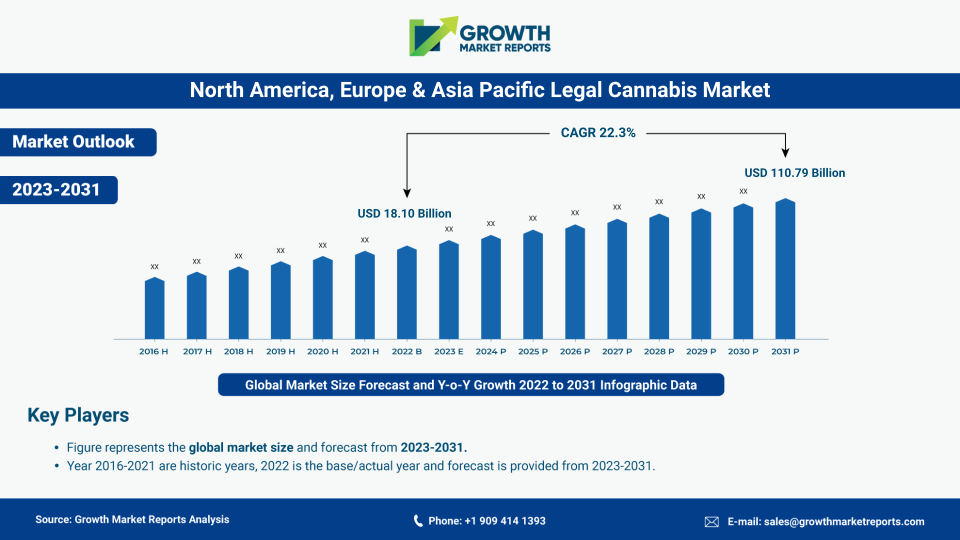
According to our latest research, the global legal cannabis market size reached USD 54.2 billion in 2024, reflecting robust expansion driven by regulatory reforms and rising consumer acceptance. The market is expected to achieve a compound annual growth rate (CAGR) of 18.5% from 2025 to 2033, reaching a projected value of USD 254.7 billion by the end of the forecast period. This impressive growth trajectory is primarily fueled by ongoing legalization efforts, increasing medical applications, and the proliferation of innovative cannabis-based products across diverse end-use industries.

One of the most significant growth factors in the legal cannabis market is the progressive shift in regulatory frameworks worldwide. Governments in North America, Europe, and parts of Latin America have increasingly recognized the medicinal and economic benefits of legalizing cannabis, both for medical and recreational use. This regulatory evolution has not only legitimized the industry but has also paved the way for large-scale investments, research, and product development. As more countries introduce comprehensive cannabis legislation, the market is expected to witness a surge in consumer demand, new business entrants, and a broader acceptance of cannabis-derived products across a wide range of applications.

Another key driver of the legal cannabis market is the rapid advancement in product innovation and diversification. Companies are leveraging advanced extraction technologies and formulation techniques to develop a variety of cannabis-based offerings, including edibles, topicals, oils, tinctures, and beverages, catering to the preferences of both medical and recreational consumers. The emergence of cannabidiol (CBD)-dominant products, which are non-psychoactive and offer numerous health benefits, has further broadened the market’s appeal. Additionally, the integration of cannabis into wellness, beauty, and nutraceutical sectors is fostering cross-industry collaborations, thereby expanding the total addressable market and enhancing the consumer experience.

The growing acceptance of medical cannabis as a legitimate therapeutic option is also contributing significantly to market growth. Increasing clinical evidence supporting the efficacy of cannabis in managing chronic pain, neurological disorders, cancer-related symptoms, and mental health conditions has encouraged both patients and healthcare professionals to adopt cannabis-based treatments. Furthermore, the establishment of structured distribution channels, such as dispensaries and pharmacies, has improved patient access and product safety, further accelerating market penetration. The ongoing destigmatization of cannabis use and the proliferation of educational campaigns are expected to sustain this positive momentum throughout the forecast period.

From a regional perspective, North America continues to dominate the legal cannabis market, accounting for the largest share in 2024, owing to widespread legalization in the United States and Canada. Europe is emerging as a key growth region, driven by increasing medical cannabis approvals and favorable regulatory changes in countries such as Germany, the United Kingdom, and Portugal. Meanwhile, Latin America and the Asia Pacific are witnessing gradual market development, with countries like Uruguay and Thailand taking pioneering steps in cannabis legalization. The Middle East & Africa region, while still nascent, is expected to show incremental growth as regulatory landscapes evolve and public awareness increases.

Global Legal Cannabis Industry Outlook

Product Type Analysis

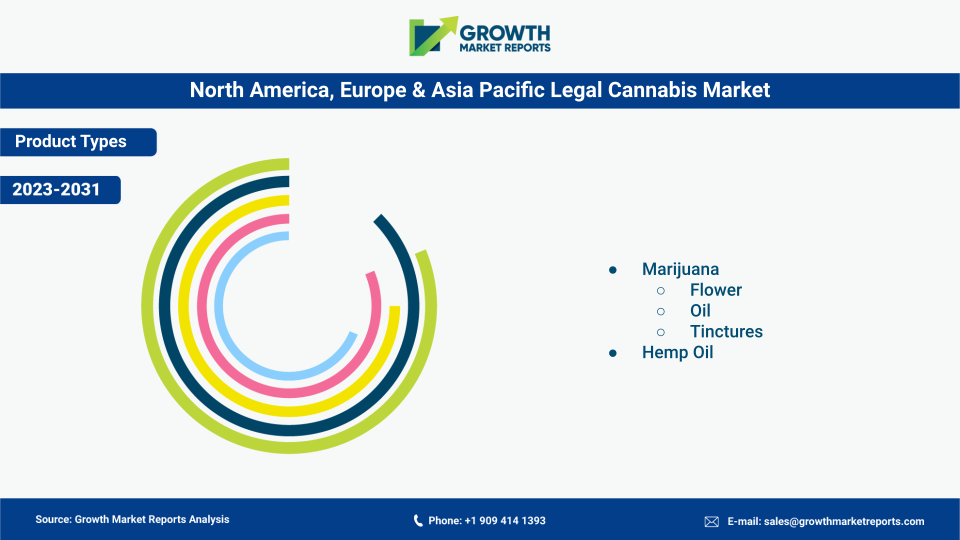
The legal cannabis market is segmented by product type into flower, oil, tinctures, edibles, topicals, and others. Among these, the flower segment continues to hold a prominent position, primarily due to its traditional use and established consumer base. Cannabis flower remains the most widely consumed product, especially in regions where recreational use is legalized. The familiarity and versatility of flower products, which can be smoked or vaporized, contribute to sustained demand among both new and experienced users. However, as regulatory frameworks evolve and consumer preferences shift, the market is witnessing a gradual transition toward alternative product forms that offer greater convenience, discretion, and targeted therapeutic benefits.

Cannabis oils and tinctures are gaining significant traction, particularly in the medical and wellness sectors. These products offer precise dosing, ease of administration, and a non-inhalable option, making them ideal for patients with chronic conditions or those new to cannabis. The increasing popularity of CBD oils, which are non-psychoactive and associated with a range of health benefits, has further fueled the growth of this segment. Tinctures, often available in various concentrations and flavors, are being adopted for their rapid onset of action and versatility in use, including sublingual administration and incorporation into food and beverages.

Edibles represent another rapidly expanding segment within the legal cannabis market. The development of a diverse array of cannabis-infused food and beverage products, such as gummies, chocolates, baked goods, and drinks, has attracted a broader demographic, including those averse to smoking or vaping. Edibles offer a discreet and enjoyable consumption method, with manufacturers focusing on improving taste, consistency, and accurate dosing. The introduction of low-dose and micro-dosed edibles has further democratized access, enabling consumers to tailor their cannabis experience to individual preferences and tolerance levels.

Topicals and other innovative product formats are also contributing to market growth, particularly in the personal care and wellness sectors. Cannabis-infused creams, balms, patches, and lotions are being utilized for localized relief of pain, inflammation, and skin conditions, without the psychoactive effects associated with inhalation or ingestion. The topicals segment is benefiting from the increasing integration of cannabis into beauty and skincare routines, as well as the rising demand for natural and plant-based therapeutic solutions. As research and development efforts continue, the product portfolio within the legal cannabis market is expected to diversify further, catering to a wide range of consumer needs and preferences.

Report Scope

Attributes Details
Report Title Legal Cannabis Market Research Report 2033
By Product Type Flower, Oil, Tinctures, Edibles, Topicals, Others
By Application Medical, Recreational, Industrial Hemp, Others
By Compound THC-dominant, CBD-dominant, Balanced THC & CBD
By Distribution Channel Dispensaries, Online Stores, Pharmacies, Others
Regions Covered North America, Europe, APAC, Latin America, MEA
Base Year 2024
Historic Data 2018-2023
Forecast Period 2025-2033
Number of Pages 270
Number of Tables & Figures 391
Customization Available Yes, the report can be customized as per your need.

Application Analysis

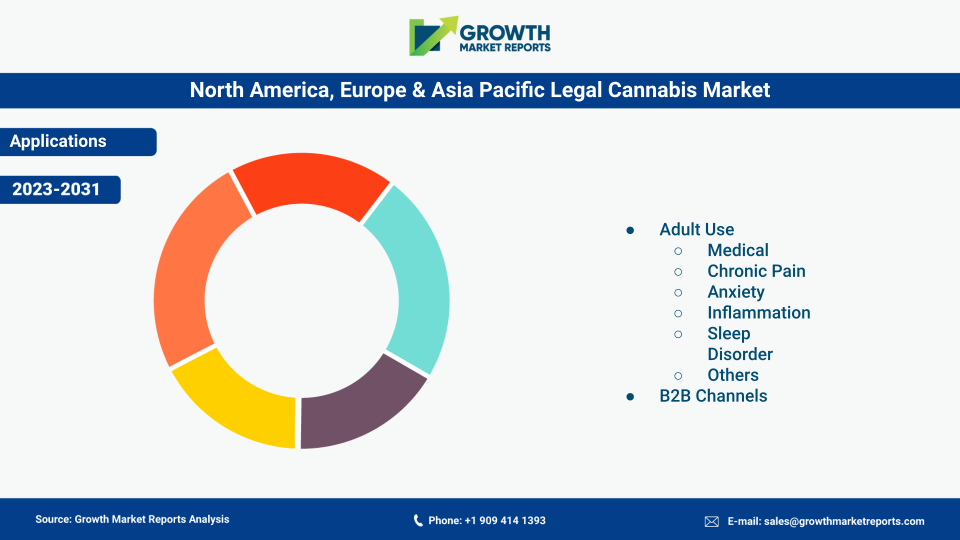
The application segment of the legal cannabis market encompasses medical, recreational, industrial hemp, and other uses. Medical cannabis remains a cornerstone of the market, driven by growing clinical evidence supporting its efficacy in treating various ailments, including chronic pain, epilepsy, multiple sclerosis, and cancer-related symptoms. Healthcare providers and patients are increasingly turning to cannabis-based therapies as viable alternatives or adjuncts to conventional pharmaceuticals. The expansion of medical cannabis programs, coupled with improved patient education and access, is expected to sustain robust growth in this segment over the forecast period. Additionally, ongoing research into new therapeutic indications and delivery methods is likely to further enhance the medical application landscape.

Recreational cannabis use constitutes a substantial and rapidly expanding segment, particularly in regions where legalization has been implemented. The relaxation of legal restrictions has led to increased consumer experimentation and normalization of cannabis use for leisure and social purposes. This has opened up new avenues for product innovation, branding, and retail experiences, with companies focusing on creating premium, differentiated offerings to capture market share. The recreational segment is also benefiting from the destigmatization of cannabis and the emergence of sophisticated marketing strategies targeting diverse age groups and lifestyles.

Industrial hemp, a non-psychoactive variety of cannabis, is gaining momentum as a sustainable raw material for a wide range of applications, including textiles, construction, food, beverages, and personal care products. The legalization of hemp cultivation and processing has unlocked significant economic opportunities, particularly in the context of the global push toward sustainable and eco-friendly materials. The versatility and low environmental impact of hemp make it an attractive option for manufacturers and consumers alike, driving growth in this segment. Furthermore, the development of novel hemp-derived cannabinoids and functional ingredients is expected to expand the industrial hemp application spectrum in the coming years.

Other emerging applications of legal cannabis include pet care, sports recovery, and wellness products, reflecting the growing integration of cannabis into daily routines and lifestyle choices. Companies are investing in research and development to explore new use cases and develop tailored formulations for specific consumer segments. The evolving regulatory landscape, coupled with increasing consumer awareness and acceptance, is likely to foster continued diversification and expansion of cannabis applications across multiple industries.

Compound Analysis

The legal cannabis market is segmented by compound into THC-dominant, CBD-dominant, and balanced THC & CBD products. THC-dominant products, known for their psychoactive effects, continue to command significant market share, especially in the recreational segment. These products appeal to consumers seeking the euphoric and mood-altering effects of cannabis, and are available in various forms, including flower, concentrates, edibles, and vapes. The potency and variety of THC-dominant offerings have expanded in recent years, with manufacturers focusing on strain-specific formulations and innovative delivery systems to cater to evolving consumer preferences.

CBD-dominant products have emerged as a major growth driver, particularly in the medical, wellness, and personal care sectors. Cannabidiol (CBD) is non-psychoactive and is associated with a range of therapeutic benefits, including anti-inflammatory, analgesic, anxiolytic, and neuroprotective effects. The increasing availability of high-quality, lab-tested CBD products has attracted a broad consumer base, from patients seeking alternative treatments to wellness enthusiasts looking for natural remedies. Regulatory clarity around CBD in various jurisdictions has further accelerated market growth, with companies investing in product development, branding, and distribution to capture this expanding segment.

Balanced THC & CBD products, which combine the therapeutic properties of both cannabinoids, are gaining popularity among consumers seeking a more nuanced and tailored cannabis experience. These products are often formulated to provide the benefits of both THC and CBD, while minimizing adverse effects such as anxiety or intoxication. Balanced formulations are being explored for a variety of medical indications, as well as for recreational use, where consumers are increasingly seeking functional and wellness-oriented cannabis experiences. The growing body of research on the synergistic effects of cannabinoids, known as the "entourage effect," is expected to drive further innovation and adoption in this segment.

The evolving preferences of consumers, coupled with advances in breeding, extraction, and formulation technologies, are enabling the development of a wide range of compound-specific products. Companies are focusing on creating differentiated offerings, such as minor cannabinoid formulations (CBG, CBN, etc.), terpene-enriched products, and custom blends, to cater to specific therapeutic needs and consumer lifestyles. As scientific understanding of the cannabis plant deepens, the compound segment is poised for continued growth and diversification, with significant implications for both medical and recreational markets.

Distribution Channel Analysis

Distribution channels play a crucial role in shaping the legal cannabis market, with dispensaries, online stores, pharmacies, and other outlets serving as primary points of sale. Dispensaries remain the dominant channel, particularly in regions with mature legal frameworks and established retail networks. These specialized outlets offer a wide range of cannabis products, expert guidance, and a regulated purchasing environment, ensuring product safety and compliance. The dispensary model has evolved to include sophisticated retail experiences, loyalty programs, and educational initiatives, enhancing customer engagement and trust.

Online stores are rapidly gaining market share, driven by the convenience of e-commerce and the expansion of digital infrastructure. The COVID-19 pandemic accelerated the shift toward online purchasing, with consumers increasingly opting for home delivery and click-and-collect services. Online platforms offer a broad selection of products, detailed information, and customer reviews, enabling informed decision-making and personalized recommendations. Regulatory developments allowing for online sales and delivery in certain jurisdictions have further boosted the growth of this channel, with companies investing in secure payment systems, age verification, and discreet packaging to meet consumer expectations.

Pharmacies are emerging as a key distribution channel for medical cannabis, particularly in regions with well-established healthcare systems and prescription-based access models. The involvement of pharmacies enhances product legitimacy, safety, and traceability, while facilitating integration with traditional healthcare services. Pharmacists play a critical role in patient education, dosing guidance, and monitoring of potential drug interactions, contributing to improved treatment outcomes and patient satisfaction. The expansion of pharmacy-based distribution is expected to drive further adoption of medical cannabis, particularly among older adults and patients with chronic conditions.

Other distribution channels, including wellness centers, supermarkets, and specialty retailers, are also contributing to market growth, particularly for non-psychoactive and wellness-oriented products. The diversification of retail outlets reflects the increasing mainstream acceptance of cannabis and the integration of cannabis-derived products into everyday consumer routines. Companies are exploring innovative retail formats, partnerships, and omnichannel strategies to maximize reach and capture emerging market opportunities. As regulatory frameworks continue to evolve, the distribution landscape is expected to become increasingly dynamic and competitive.

Opportunities & Threats

The legal cannabis market presents a wealth of opportunities for stakeholders across the value chain. One of the most promising areas is the ongoing expansion of legalization and regulatory reform, which is unlocking new markets and enabling cross-border trade. As more countries and states adopt progressive cannabis policies, companies have the opportunity to scale operations, diversify product portfolios, and enter untapped markets. Additionally, the growing acceptance of cannabis as a wellness and lifestyle product is driving innovation in product development, branding, and marketing, creating new avenues for growth and differentiation. The convergence of cannabis with other high-growth sectors, such as health and wellness, beauty, and functional foods, offers significant potential for cross-industry collaboration and value creation.

Technological advancements and research breakthroughs are also opening up new opportunities in the legal cannabis market. The development of novel extraction methods, precision dosing technologies, and minor cannabinoid formulations is enabling the creation of highly differentiated and targeted products. Advances in cultivation techniques, such as indoor farming, vertical agriculture, and genetic engineering, are improving yield, quality, and consistency, while reducing environmental impact. The increasing focus on sustainability and social responsibility is driving investment in eco-friendly packaging, ethical sourcing, and community engagement initiatives, enhancing brand reputation and consumer loyalty. As scientific understanding of the cannabis plant and its compounds deepens, new therapeutic indications and applications are likely to emerge, expanding the total addressable market.

Despite the numerous opportunities, the legal cannabis market faces several restraining factors that could impede growth. Regulatory uncertainty and inconsistency remain major challenges, with significant variations in legal status, product standards, and tax policies across jurisdictions. This fragmented landscape creates barriers to entry, increases compliance costs, and complicates cross-border operations. Additionally, lingering social stigma, limited access to banking and financial services, and concerns about product safety and quality pose ongoing risks to market development. Companies must navigate these challenges through proactive engagement with regulators, investment in education and advocacy, and the implementation of robust quality assurance and compliance systems.

Regional Outlook

North America continues to lead the global legal cannabis market, accounting for approximately USD 34.6 billion in 2024, driven by widespread legalization in the United States and Canada. The U.S. remains the single largest market, with ongoing state-level legalization and growing consumer acceptance fueling demand across both medical and recreational segments. Canada, as the first G7 nation to legalize recreational cannabis, has established a comprehensive regulatory framework and a thriving industry ecosystem. The region is characterized by intense competition, rapid product innovation, and a well-developed retail infrastructure, supporting sustained market growth and leadership.

Europe is emerging as a key growth region, with the legal cannabis market reaching USD 7.9 billion in 2024 and projected to expand at a CAGR of 21.7% through 2033. Countries such as Germany, the United Kingdom, and Portugal are at the forefront of medical cannabis adoption, supported by favorable regulatory changes, reimbursement policies, and increasing physician acceptance. The European market is distinguished by its focus on pharmaceutical-grade products, stringent quality standards, and integration with traditional healthcare systems. As more countries implement comprehensive cannabis legislation and harmonize regulations, Europe is expected to become a major driver of global market expansion.

Asia Pacific, Latin America, and the Middle East & Africa collectively accounted for USD 11.7 billion in 2024, with varying degrees of market maturity and regulatory progress. Latin America, led by Uruguay, Colombia, and Mexico, is pioneering cannabis legalization and export-oriented cultivation, leveraging favorable climates and cost advantages. The Asia Pacific region is witnessing gradual liberalization, with countries like Thailand and Australia taking initial steps toward medical and industrial cannabis development. The Middle East & Africa, while still nascent, is showing early signs of growth as regulatory frameworks evolve and public awareness increases. These regions present significant long-term opportunities, particularly as local production, investment, and consumer education initiatives gain momentum.

Legal Cannabis Market Statistics

Competitor Outlook

The legal cannabis market is characterized by a dynamic and highly competitive landscape, with a diverse array of players ranging from established multinationals to innovative startups. The market’s rapid growth and evolving regulatory environment have attracted significant investment, leading to increased consolidation, strategic partnerships, and cross-border expansion. Companies are competing on multiple fronts, including product quality, brand differentiation, distribution reach, and technological innovation. The ability to navigate complex regulatory landscapes, secure intellectual property, and build strong consumer trust is critical to long-term success in this industry.

Product innovation and diversification are key strategies employed by leading market players to capture emerging opportunities and address evolving consumer preferences. Companies are investing heavily in research and development to create differentiated offerings, such as minor cannabinoid formulations, terpene-enriched products, and functional edibles. Branding and marketing are also central to competitive positioning, with firms leveraging lifestyle-oriented messaging, celebrity endorsements, and targeted campaigns to build loyal customer bases. The integration of advanced cultivation, extraction, and manufacturing technologies is enabling companies to improve product consistency, safety, and scalability, further enhancing their competitive advantage.

Strategic collaborations and mergers and acquisitions are reshaping the competitive landscape, as companies seek to expand their geographic footprint, access new technologies, and strengthen their supply chains. Partnerships with pharmaceutical companies, wellness brands, and retail chains are facilitating market entry and accelerating product development. Vertical integration, from cultivation to retail, is becoming increasingly common, enabling companies to control quality, reduce costs, and respond more effectively to market trends. The influx of institutional investment and the entry of major consumer packaged goods (CPG) and pharmaceutical firms are expected to further intensify competition and drive industry maturation.

Some of the major companies operating in the legal cannabis market include Canopy Growth Corporation, Aurora Cannabis Inc., Tilray Brands Inc., Cronos Group Inc., GW Pharmaceuticals (a subsidiary of Jazz Pharmaceuticals), Aphria Inc. (now part of Tilray), Curaleaf Holdings Inc., Green Thumb Industries, Trulieve Cannabis Corp., and HEXO Corp. These companies are distinguished by their extensive product portfolios, global distribution networks, and strong research and development capabilities. Canopy Growth, for example, is known for its diversified product range and strategic partnerships with beverage and wellness companies. Aurora Cannabis has focused on expanding its medical cannabis footprint internationally, while Tilray has leveraged its expertise in both medical and recreational segments to drive growth.

In addition to these major players, a vibrant ecosystem of regional and niche companies is contributing to market dynamism and innovation. Firms specializing in specific product categories, such as edibles, topicals, or wellness products, are carving out unique market positions and attracting dedicated consumer followings. The competitive landscape is further enriched by the presence of ancillary service providers, including technology firms, packaging suppliers, and logistics companies, supporting the growth and professionalization of the industry. As the legal cannabis market continues to evolve, the interplay between global leaders, regional champions, and innovative startups is expected to drive ongoing transformation and value creation for all stakeholders.

Key Players

  • Canopy Growth Corporation
  • Aurora Cannabis Inc.
  • Tilray Brands, Inc.
  • Cronos Group Inc.
  • Aphria Inc.
  • GW Pharmaceuticals plc
  • Curaleaf Holdings, Inc.
  • Green Thumb Industries Inc.
  • Trulieve Cannabis Corp.
  • Cresco Labs Inc.
  • Acreage Holdings, Inc.
  • MedMen Enterprises Inc.
  • HEXO Corp.
  • Organigram Holdings Inc.
  • Charlotte's Web Holdings, Inc.
  • Sundial Growers Inc.
  • TerrAscend Corp.
  • Harvest Health & Recreation Inc.
  • Planet 13 Holdings Inc.
  • Columbia Care Inc.
Legal Cannabis Market Overview

Segments

The Legal Cannabis market has been segmented on the basis of

Product Type

  • Flower
  • Oil
  • Tinctures
  • Edibles
  • Topicals
  • Others

Application

  • Medical
  • Recreational
  • Industrial Hemp
  • Others

Compound

  • THC-dominant
  • CBD-dominant
  • Balanced THC & CBD

Distribution Channel

  • Dispensaries
  • Online Stores
  • Pharmacies
  • Others

Competitive Landscape

Key players competing in the North America, Europe & Asia Pacific legal cannabis market are Maricann Group, Inc.; Aphria, Inc.; ABcann Medicinals, Inc.; Canopy Growth Corporation; The Cronos Group; GW Pharmaceuticals, plc.; Tilray; Aurora Cannabis; Organigram Holding, Inc.; and Lexaria Bioscience Corp.
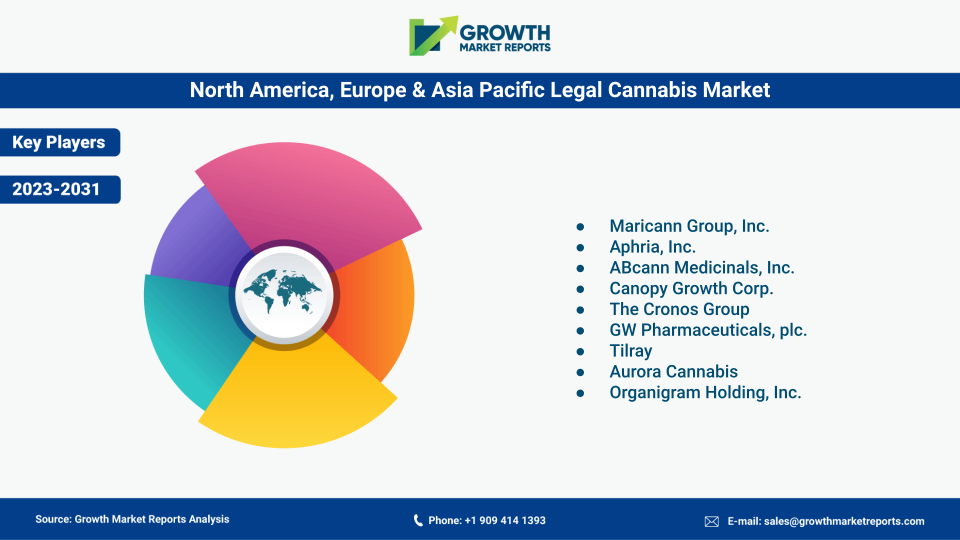

North America, Europe & Asia Pacific Legal Cannabis Market Key Players

Frequently Asked Questions

Major challenges include regulatory uncertainty, inconsistent product standards, social stigma, limited access to banking, and concerns about product safety and quality.

Key companies include Canopy Growth Corporation, Aurora Cannabis Inc., Tilray Brands Inc., Cronos Group Inc., GW Pharmaceuticals, Curaleaf Holdings Inc., Green Thumb Industries, Trulieve Cannabis Corp., HEXO Corp., and others.

Market growth is fueled by ongoing legalization, increasing medical applications, product innovation, rising consumer acceptance, and expanding distribution channels.

Legal cannabis is distributed through dispensaries, online stores, pharmacies, and other outlets such as wellness centers and specialty retailers. Dispensaries and online stores are the most prominent channels.

Legal cannabis products are categorized by compound into THC-dominant, CBD-dominant, and balanced THC & CBD. Each offers different effects and benefits for medical and recreational users.

Legal cannabis is used for medical, recreational, and industrial hemp applications, as well as emerging uses in pet care, sports recovery, and wellness products.

The market is segmented by product type into flower, oil, tinctures, edibles, topicals, and others. Flower remains the most widely consumed, but oils, tinctures, and edibles are rapidly gaining popularity.

North America dominates the legal cannabis market, with the United States and Canada accounting for the largest share. Europe is emerging as a key growth region, while Latin America, Asia Pacific, and the Middle East & Africa are experiencing gradual market development.

The legal cannabis market is expected to grow at a compound annual growth rate (CAGR) of 18.5% from 2025 to 2033, reaching an estimated USD 254.7 billion by the end of the forecast period.

As of 2024, the global legal cannabis market size reached USD 54.2 billion, driven by regulatory reforms and rising consumer acceptance.

Table Of Content

Chapter 1 Executive Summary
Chapter 2 Assumptions and Acronyms Used
Chapter 3 Research Methodology
Chapter 4 Legal Cannabis Market Overview
   4.1 Introduction
      4.1.1 Market Taxonomy
      4.1.2 Market Definition
      4.1.3 Macro-Economic Factors Impacting the Market Growth
   4.2 Legal Cannabis Market Dynamics
      4.2.1 Market Drivers
      4.2.2 Market Restraints
      4.2.3 Market Opportunity
   4.3 Legal Cannabis Market - Supply Chain Analysis
      4.3.1 List of Key Suppliers
      4.3.2 List of Key Distributors
      4.3.3 List of Key Consumers
   4.4 Key Forces Shaping the Legal Cannabis Market
      4.4.1 Bargaining Power of Suppliers
      4.4.2 Bargaining Power of Buyers
      4.4.3 Threat of Substitution
      4.4.4 Threat of New Entrants
      4.4.5 Competitive Rivalry
   4.5 Global Legal Cannabis Market Size & Forecast, 2023-2032
      4.5.1 Legal Cannabis Market Size and Y-o-Y Growth
      4.5.2 Legal Cannabis Market Absolute $ Opportunity

Chapter 5 Global Legal Cannabis Market Analysis and Forecast By Product Type
   5.1 Introduction
      5.1.1 Key Market Trends & Growth Opportunities By Product Type
      5.1.2 Basis Point Share (BPS) Analysis By Product Type
      5.1.3 Absolute $ Opportunity Assessment By Product Type
   5.2 Legal Cannabis Market Size Forecast By Product Type
      5.2.1 Flower
      5.2.2 Oil
      5.2.3 Tinctures
      5.2.4 Edibles
      5.2.5 Topicals
      5.2.6 Others
   5.3 Market Attractiveness Analysis By Product Type

Chapter 6 Global Legal Cannabis Market Analysis and Forecast By Application
   6.1 Introduction
      6.1.1 Key Market Trends & Growth Opportunities By Application
      6.1.2 Basis Point Share (BPS) Analysis By Application
      6.1.3 Absolute $ Opportunity Assessment By Application
   6.2 Legal Cannabis Market Size Forecast By Application
      6.2.1 Medical
      6.2.2 Recreational
      6.2.3 Industrial Hemp
      6.2.4 Others
   6.3 Market Attractiveness Analysis By Application

Chapter 7 Global Legal Cannabis Market Analysis and Forecast By Compound
   7.1 Introduction
      7.1.1 Key Market Trends & Growth Opportunities By Compound
      7.1.2 Basis Point Share (BPS) Analysis By Compound
      7.1.3 Absolute $ Opportunity Assessment By Compound
   7.2 Legal Cannabis Market Size Forecast By Compound
      7.2.1 THC-dominant
      7.2.2 CBD-dominant
      7.2.3 Balanced THC & CBD
   7.3 Market Attractiveness Analysis By Compound

Chapter 8 Global Legal Cannabis Market Analysis and Forecast By Distribution Channel
   8.1 Introduction
      8.1.1 Key Market Trends & Growth Opportunities By Distribution Channel
      8.1.2 Basis Point Share (BPS) Analysis By Distribution Channel
      8.1.3 Absolute $ Opportunity Assessment By Distribution Channel
   8.2 Legal Cannabis Market Size Forecast By Distribution Channel
      8.2.1 Dispensaries
      8.2.2 Online Stores
      8.2.3 Pharmacies
      8.2.4 Others
   8.3 Market Attractiveness Analysis By Distribution Channel

Chapter 9 Global Legal Cannabis Market Analysis and Forecast by Region
   9.1 Introduction
      9.1.1 Key Market Trends & Growth Opportunities By Region
      9.1.2 Basis Point Share (BPS) Analysis By Region
      9.1.3 Absolute $ Opportunity Assessment By Region
   9.2 Legal Cannabis Market Size Forecast By Region
      9.2.1 North America
      9.2.2 Europe
      9.2.3 Asia Pacific
      9.2.4 Latin America
      9.2.5 Middle East & Africa (MEA)
   9.3 Market Attractiveness Analysis By Region

Chapter 10 Coronavirus Disease (COVID-19) Impact 
   10.1 Introduction 
   10.2 Current & Future Impact Analysis 
   10.3 Economic Impact Analysis 
   10.4 Government Policies 
   10.5 Investment Scenario

Chapter 11 North America Legal Cannabis Analysis and Forecast
   11.1 Introduction
   11.2 North America Legal Cannabis Market Size Forecast by Country
      11.2.1 U.S.
      11.2.2 Canada
   11.3 Basis Point Share (BPS) Analysis by Country
   11.4 Absolute $ Opportunity Assessment by Country
   11.5 Market Attractiveness Analysis by Country
   11.6 North America Legal Cannabis Market Size Forecast By Product Type
      11.6.1 Flower
      11.6.2 Oil
      11.6.3 Tinctures
      11.6.4 Edibles
      11.6.5 Topicals
      11.6.6 Others
   11.7 Basis Point Share (BPS) Analysis By Product Type 
   11.8 Absolute $ Opportunity Assessment By Product Type 
   11.9 Market Attractiveness Analysis By Product Type
   11.10 North America Legal Cannabis Market Size Forecast By Application
      11.10.1 Medical
      11.10.2 Recreational
      11.10.3 Industrial Hemp
      11.10.4 Others
   11.11 Basis Point Share (BPS) Analysis By Application 
   11.12 Absolute $ Opportunity Assessment By Application 
   11.13 Market Attractiveness Analysis By Application
   11.14 North America Legal Cannabis Market Size Forecast By Compound
      11.14.1 THC-dominant
      11.14.2 CBD-dominant
      11.14.3 Balanced THC & CBD
   11.15 Basis Point Share (BPS) Analysis By Compound 
   11.16 Absolute $ Opportunity Assessment By Compound 
   11.17 Market Attractiveness Analysis By Compound
   11.18 North America Legal Cannabis Market Size Forecast By Distribution Channel
      11.18.1 Dispensaries
      11.18.2 Online Stores
      11.18.3 Pharmacies
      11.18.4 Others
   11.19 Basis Point Share (BPS) Analysis By Distribution Channel 
   11.20 Absolute $ Opportunity Assessment By Distribution Channel 
   11.21 Market Attractiveness Analysis By Distribution Channel

Chapter 12 Europe Legal Cannabis Analysis and Forecast
   12.1 Introduction
   12.2 Europe Legal Cannabis Market Size Forecast by Country
      12.2.1 Germany
      12.2.2 France
      12.2.3 Italy
      12.2.4 U.K.
      12.2.5 Spain
      12.2.6 Russia
      12.2.7 Rest of Europe
   12.3 Basis Point Share (BPS) Analysis by Country
   12.4 Absolute $ Opportunity Assessment by Country
   12.5 Market Attractiveness Analysis by Country
   12.6 Europe Legal Cannabis Market Size Forecast By Product Type
      12.6.1 Flower
      12.6.2 Oil
      12.6.3 Tinctures
      12.6.4 Edibles
      12.6.5 Topicals
      12.6.6 Others
   12.7 Basis Point Share (BPS) Analysis By Product Type 
   12.8 Absolute $ Opportunity Assessment By Product Type 
   12.9 Market Attractiveness Analysis By Product Type
   12.10 Europe Legal Cannabis Market Size Forecast By Application
      12.10.1 Medical
      12.10.2 Recreational
      12.10.3 Industrial Hemp
      12.10.4 Others
   12.11 Basis Point Share (BPS) Analysis By Application 
   12.12 Absolute $ Opportunity Assessment By Application 
   12.13 Market Attractiveness Analysis By Application
   12.14 Europe Legal Cannabis Market Size Forecast By Compound
      12.14.1 THC-dominant
      12.14.2 CBD-dominant
      12.14.3 Balanced THC & CBD
   12.15 Basis Point Share (BPS) Analysis By Compound 
   12.16 Absolute $ Opportunity Assessment By Compound 
   12.17 Market Attractiveness Analysis By Compound
   12.18 Europe Legal Cannabis Market Size Forecast By Distribution Channel
      12.18.1 Dispensaries
      12.18.2 Online Stores
      12.18.3 Pharmacies
      12.18.4 Others
   12.19 Basis Point Share (BPS) Analysis By Distribution Channel 
   12.20 Absolute $ Opportunity Assessment By Distribution Channel 
   12.21 Market Attractiveness Analysis By Distribution Channel

Chapter 13 Asia Pacific Legal Cannabis Analysis and Forecast
   13.1 Introduction
   13.2 Asia Pacific Legal Cannabis Market Size Forecast by Country
      13.2.1 China
      13.2.2 Japan
      13.2.3 South Korea
      13.2.4 India
      13.2.5 Australia
      13.2.6 South East Asia (SEA)
      13.2.7 Rest of Asia Pacific (APAC)
   13.3 Basis Point Share (BPS) Analysis by Country
   13.4 Absolute $ Opportunity Assessment by Country
   13.5 Market Attractiveness Analysis by Country
   13.6 Asia Pacific Legal Cannabis Market Size Forecast By Product Type
      13.6.1 Flower
      13.6.2 Oil
      13.6.3 Tinctures
      13.6.4 Edibles
      13.6.5 Topicals
      13.6.6 Others
   13.7 Basis Point Share (BPS) Analysis By Product Type 
   13.8 Absolute $ Opportunity Assessment By Product Type 
   13.9 Market Attractiveness Analysis By Product Type
   13.10 Asia Pacific Legal Cannabis Market Size Forecast By Application
      13.10.1 Medical
      13.10.2 Recreational
      13.10.3 Industrial Hemp
      13.10.4 Others
   13.11 Basis Point Share (BPS) Analysis By Application 
   13.12 Absolute $ Opportunity Assessment By Application 
   13.13 Market Attractiveness Analysis By Application
   13.14 Asia Pacific Legal Cannabis Market Size Forecast By Compound
      13.14.1 THC-dominant
      13.14.2 CBD-dominant
      13.14.3 Balanced THC & CBD
   13.15 Basis Point Share (BPS) Analysis By Compound 
   13.16 Absolute $ Opportunity Assessment By Compound 
   13.17 Market Attractiveness Analysis By Compound
   13.18 Asia Pacific Legal Cannabis Market Size Forecast By Distribution Channel
      13.18.1 Dispensaries
      13.18.2 Online Stores
      13.18.3 Pharmacies
      13.18.4 Others
   13.19 Basis Point Share (BPS) Analysis By Distribution Channel 
   13.20 Absolute $ Opportunity Assessment By Distribution Channel 
   13.21 Market Attractiveness Analysis By Distribution Channel

Chapter 14 Latin America Legal Cannabis Analysis and Forecast
   14.1 Introduction
   14.2 Latin America Legal Cannabis Market Size Forecast by Country
      14.2.1 Brazil
      14.2.2 Mexico
      14.2.3 Rest of Latin America (LATAM)
   14.3 Basis Point Share (BPS) Analysis by Country
   14.4 Absolute $ Opportunity Assessment by Country
   14.5 Market Attractiveness Analysis by Country
   14.6 Latin America Legal Cannabis Market Size Forecast By Product Type
      14.6.1 Flower
      14.6.2 Oil
      14.6.3 Tinctures
      14.6.4 Edibles
      14.6.5 Topicals
      14.6.6 Others
   14.7 Basis Point Share (BPS) Analysis By Product Type 
   14.8 Absolute $ Opportunity Assessment By Product Type 
   14.9 Market Attractiveness Analysis By Product Type
   14.10 Latin America Legal Cannabis Market Size Forecast By Application
      14.10.1 Medical
      14.10.2 Recreational
      14.10.3 Industrial Hemp
      14.10.4 Others
   14.11 Basis Point Share (BPS) Analysis By Application 
   14.12 Absolute $ Opportunity Assessment By Application 
   14.13 Market Attractiveness Analysis By Application
   14.14 Latin America Legal Cannabis Market Size Forecast By Compound
      14.14.1 THC-dominant
      14.14.2 CBD-dominant
      14.14.3 Balanced THC & CBD
   14.15 Basis Point Share (BPS) Analysis By Compound 
   14.16 Absolute $ Opportunity Assessment By Compound 
   14.17 Market Attractiveness Analysis By Compound
   14.18 Latin America Legal Cannabis Market Size Forecast By Distribution Channel
      14.18.1 Dispensaries
      14.18.2 Online Stores
      14.18.3 Pharmacies
      14.18.4 Others
   14.19 Basis Point Share (BPS) Analysis By Distribution Channel 
   14.20 Absolute $ Opportunity Assessment By Distribution Channel 
   14.21 Market Attractiveness Analysis By Distribution Channel

Chapter 15 Middle East & Africa (MEA) Legal Cannabis Analysis and Forecast
   15.1 Introduction
   15.2 Middle East & Africa (MEA) Legal Cannabis Market Size Forecast by Country
      15.2.1 Saudi Arabia
      15.2.2 South Africa
      15.2.3 UAE
      15.2.4 Rest of Middle East & Africa (MEA)
   15.3 Basis Point Share (BPS) Analysis by Country
   15.4 Absolute $ Opportunity Assessment by Country
   15.5 Market Attractiveness Analysis by Country
   15.6 Middle East & Africa (MEA) Legal Cannabis Market Size Forecast By Product Type
      15.6.1 Flower
      15.6.2 Oil
      15.6.3 Tinctures
      15.6.4 Edibles
      15.6.5 Topicals
      15.6.6 Others
   15.7 Basis Point Share (BPS) Analysis By Product Type 
   15.8 Absolute $ Opportunity Assessment By Product Type 
   15.9 Market Attractiveness Analysis By Product Type
   15.10 Middle East & Africa (MEA) Legal Cannabis Market Size Forecast By Application
      15.10.1 Medical
      15.10.2 Recreational
      15.10.3 Industrial Hemp
      15.10.4 Others
   15.11 Basis Point Share (BPS) Analysis By Application 
   15.12 Absolute $ Opportunity Assessment By Application 
   15.13 Market Attractiveness Analysis By Application
   15.14 Middle East & Africa (MEA) Legal Cannabis Market Size Forecast By Compound
      15.14.1 THC-dominant
      15.14.2 CBD-dominant
      15.14.3 Balanced THC & CBD
   15.15 Basis Point Share (BPS) Analysis By Compound 
   15.16 Absolute $ Opportunity Assessment By Compound 
   15.17 Market Attractiveness Analysis By Compound
   15.18 Middle East & Africa (MEA) Legal Cannabis Market Size Forecast By Distribution Channel
      15.18.1 Dispensaries
      15.18.2 Online Stores
      15.18.3 Pharmacies
      15.18.4 Others
   15.19 Basis Point Share (BPS) Analysis By Distribution Channel 
   15.20 Absolute $ Opportunity Assessment By Distribution Channel 
   15.21 Market Attractiveness Analysis By Distribution Channel

Chapter 16 Competition Landscape 
   16.1 Legal Cannabis Market: Competitive Dashboard
   16.2 Global Legal Cannabis Market: Market Share Analysis, 2023
   16.3 Company Profiles (Details – Overview, Financials, Developments, Strategy) 
      16.3.1 Canopy Growth Corporation
Aurora Cannabis Inc.
Tilray Brands, Inc.
Cronos Group Inc.
Aphria Inc.
GW Pharmaceuticals plc
Curaleaf Holdings, Inc.
Green Thumb Industries Inc.
Trulieve Cannabis Corp.
Cresco Labs Inc.
Acreage Holdings, Inc.
MedMen Enterprises Inc.
HEXO Corp.
Organigram Holdings Inc.
Charlotte's Web Holdings, Inc.
Sundial Growers Inc.
TerrAscend Corp.
Harvest Health & Recreation Inc.
Planet 13 Holdings Inc.
Columbia Care Inc.

Methodology

Our Clients

Nestle SA
Pfizer
Siemens Healthcare
Honda Motor Co. Ltd.
General Mills
sinopec
Microsoft
Dassault Aviation