Laryngeal Mask Market Report 2025-2034

Laryngeal Mask Market Report 2025-2034

Segments - by Product Type (Reusable Laryngeal Masks, Disposable Laryngeal Masks), by Material (Silicone, PVC, Others), by Age Group (Adult, Pediatric, Neonatal), by Application (Surgery, Emergency Medicine, Others), by End-User (Hospitals, Ambulatory Surgical Centers, Clinics, Others)

https://growthmarketreports.com/raksha
Author : Raksha Sharma
https://growthmarketreports.com/Vaibhav
Fact-checked by : V. Chandola
https://growthmarketreports.com/Shruti
Editor : Shruti Bhat

Last Updated : Jun, 2026 | Report ID :HC-4546 | 4.1 Rating | 10 Reviews | 294 Pages | Format : Docx PDF

Report Description

This report is updated with the latest market data and insights as of June 2026. Base year: 2025  |  Forecast period: 2026-2034


Laryngeal Mask Market Outlook

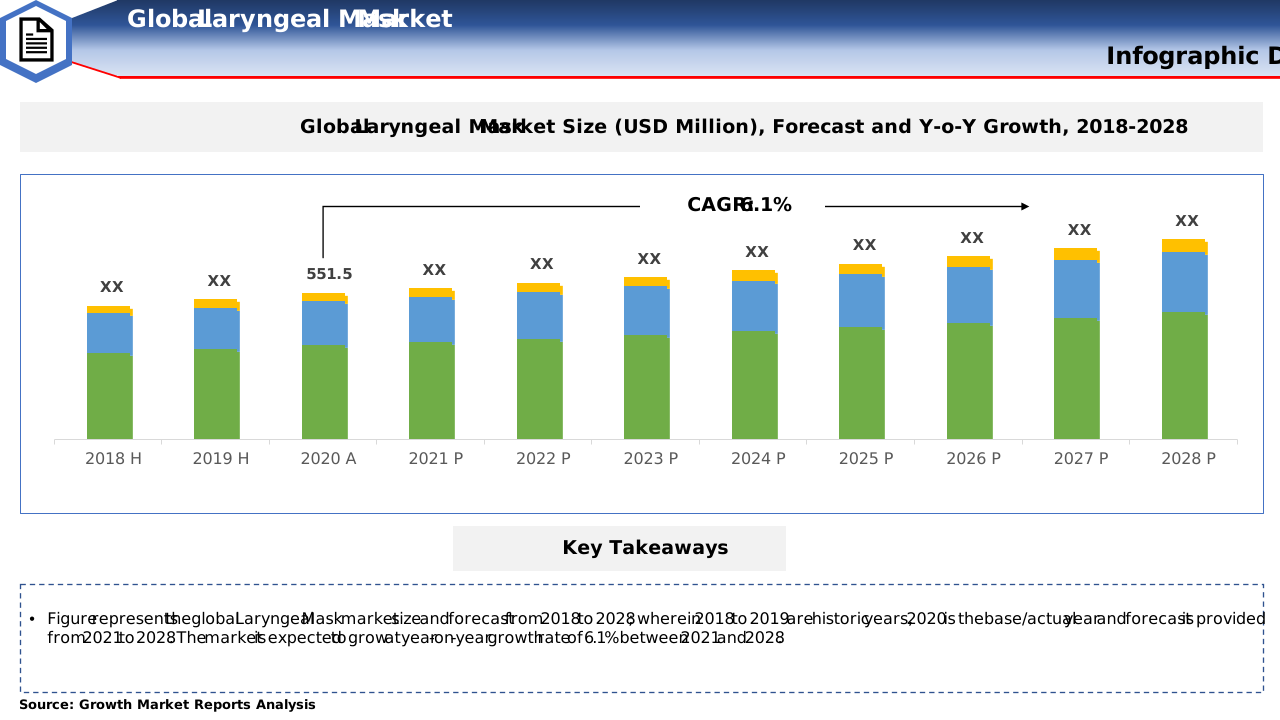
According to our latest research, the global laryngeal mask market size reached USD 1.40 billion in 2025, reflecting a robust compound annual growth rate (CAGR) of 6.3% projected across the 2026-2034 forecast period. The market is being propelled by a rising incidence of respiratory disorders, increasing surgical procedure volumes worldwide, and the growing adoption of minimally invasive airway management devices across both developed and emerging healthcare systems. By 2034, the laryngeal mask market is forecasted to achieve a value of USD 2.44 billion, underscoring the significant growth potential and expanding adoption across diverse healthcare settings globally. This trajectory is underpinned by technological advancements, enhanced clinician awareness, and the escalating need for safer and more efficient airway management solutions in surgical and emergency contexts.

Global Laryngeal Mask Market Size Forecast 2025-2034, USD Billion

One of the primary growth factors driving the global laryngeal mask market in 2025 is the escalating demand for effective airway management during surgical and emergency procedures. The increasing volume of surgeries, particularly those involving general anesthesia, necessitates reliable airway devices that minimize complications and enhance patient outcomes. Laryngeal masks have gained preference over traditional approaches due to their ease of use, reduced risk of airway trauma, and superior patient comfort compared with conventional endotracheal intubation. Additionally, the rising geriatric population, which is disproportionately affected by chronic respiratory conditions, further amplifies demand for advanced airway management solutions and continues to boost the laryngeal mask market through the forecast period.

Technological innovation remains a critical catalyst fueling market growth. Manufacturers are increasingly focusing on developing laryngeal masks with improved materials, ergonomic designs, and enhanced safety features. The ongoing expansion of single-use, disposable laryngeal masks has significantly reduced the risk of cross-contamination and healthcare-associated infections, a persistent concern across global healthcare settings. Advancements in material science, including the refinement of medical-grade silicone and PVC formulations, have further improved patient comfort and device performance. These innovations are broadening adoption and opening new avenues for use in complex surgical and emergency scenarios. Complementary devices such as the laryngoscope continue to be used alongside laryngeal masks, reinforcing the overall growth of the airway management segment.

The global laryngeal mask market is also benefiting from the increasing emphasis on cost-effective healthcare delivery and the growing adoption of minimally invasive procedures. Healthcare providers are seeking airway management solutions that offer rapid deployment, minimal training requirements, and reduced procedural costs. Laryngeal masks, with their versatility and suitability for a variety of clinical settings, align well with these objectives. The global shift toward outpatient surgeries and the rising number of ambulatory surgical centers are further contributing to market growth, as these facilities prioritize devices that streamline workflow and enhance patient safety.

Regionally, North America remains the dominant market for laryngeal masks, driven by advanced healthcare infrastructure, high surgical volumes, and strong adoption of innovative medical devices. However, the Asia Pacific region is poised for the fastest growth through 2034, supported by increasing healthcare investments, rising awareness of airway management best practices, and expanding healthcare access in emerging economies. Europe also holds a significant share, bolstered by favorable reimbursement policies and a well-established healthcare system. Latin America and the Middle East and Africa are gradually emerging as promising markets, with improving healthcare infrastructure and a growing focus on patient safety and infection control protocols.

Product Type Analysis

The laryngeal mask market by product type is segmented into reusable laryngeal masks and disposable laryngeal masks, each catering to distinct clinical and operational needs. Reusable laryngeal masks have traditionally been favored in hospital settings due to their cost-effectiveness over multiple uses and their robust construction, typically from high-grade silicone. These devices remain particularly popular in regions with constrained healthcare budgets, as their reusability helps manage costs associated with airway management. However, the rigorous sterilization protocols required and the ongoing risk of cross-contamination have prompted healthcare providers to reassess their use, especially in high-risk environments where infection control is a primary concern.

Laryngeal Mask Market Share by Product Type 2025

Disposable laryngeal masks now account for approximately 61.5% of the global market in 2025 and are gaining significant traction, especially in developed markets such as North America and Europe. The shift toward single-use devices is largely driven by the increasing emphasis on infection prevention and the need to comply with stringent regulatory guidelines regarding patient safety. Disposable laryngeal masks, often manufactured from medical-grade PVC or silicone, eliminate the risks associated with improper sterilization, ensuring a consistently high level of patient safety with each use. Their adoption is particularly pronounced in ambulatory surgical centers and emergency settings, where rapid turnover and infection control are paramount. These dynamics parallel trends observed in related product categories such as the CPAP mask segment, where single-use and easy-to-fit designs are similarly gaining market preference.

The growing preference for disposable laryngeal masks is further bolstered by manufacturing advancements that have made these devices more affordable without compromising performance or patient comfort. Manufacturers are focusing on developing cost-effective solutions that meet or exceed the safety standards of reusable counterparts. As a result, disposable laryngeal masks are increasingly being adopted across a wide range of clinical applications, from routine elective surgeries to urgent emergency airway management, contributing substantially to overall market growth in the 2025-2034 forecast period.

Despite the rising popularity of disposable laryngeal masks, reusable variants continue to hold a meaningful share, accounting for approximately 38.5% of the market in 2025. They remain the preferred choice in regions with limited healthcare budgets and in institutions with established, robust sterilization protocols. The ongoing balance between cost-effectiveness and infection control will continue to shape the competitive landscape by product type, with both segments expected to witness steady growth as healthcare providers optimize patient outcomes and operational efficiency.

Report Scope

Attributes Details
Report Title Laryngeal Mask Market Research Report 2034
By Product Type Reusable Laryngeal Masks, Disposable Laryngeal Masks
By Material Silicone, PVC, Others
By Age Group Adult, Pediatric, Neonatal
By Application Surgery, Emergency Medicine, Others
By End-User Hospitals, Ambulatory Surgical Centers, Clinics, Others
Regions Covered North America, Europe, APAC, Latin America, MEA
Base Year 2025
Historic Data 2019-2024
Forecast Period 2026-2034
Number of Pages 294
Number of Tables & Figures 313
Customization Available Yes, the report can be customized as per your need.

Material Analysis

The material composition of laryngeal masks plays a crucial role in determining their performance, patient comfort, and overall safety profile. Silicone-based laryngeal masks are widely regarded for their biocompatibility, flexibility, and durability, making them the material of choice for both reusable and high-quality disposable devices. Medical-grade silicone ensures a secure seal around the laryngeal inlet, minimizing the risk of air leakage and aspiration during anesthesia. Additionally, silicone masks are less likely to cause tissue irritation or allergic reactions, which is particularly important in pediatric and neonatal applications where patient safety is paramount. The continued refinement of silicone formulations by leading manufacturers is expected to sustain the dominance of this material segment through 2034.

PVC (polyvinyl chloride) laryngeal masks remain a popular option, especially in the disposable segment. PVC offers several advantages, including lower manufacturing costs and ease of mass production, which have contributed to the widespread adoption of disposable laryngeal masks in cost-sensitive markets across Asia Pacific, Latin America, and the Middle East and Africa. While PVC masks may not offer the same level of flexibility and inherent comfort as silicone counterparts, advances in material engineering have led to the development of softer, more pliable PVC compounds that enhance patient comfort without compromising safety or efficacy.

Beyond silicone and PVC, other materials such as polyurethane and hybrid polymers are being actively explored for their potential to improve device performance and patient outcomes. These alternative materials aim to combine the best attributes of silicone and PVC, balancing flexibility, biocompatibility, and cost-effectiveness, while addressing specific clinical challenges such as prolonged airway management or use in high-risk patient populations. Ongoing research and development in this area are expected to yield innovative laryngeal mask designs that further expand the market's scope through the 2026-2034 forecast window.

The choice of material is also increasingly influenced by regulatory requirements and environmental considerations. With growing awareness of medical waste and its environmental impact, manufacturers are focusing on developing eco-friendly materials and establishing recycling programs for disposable laryngeal masks. This trend is expected to gain momentum as healthcare providers and regulatory bodies intensify their focus on sustainability in medical device procurement and usage, shaping the future of the laryngeal mask market by material segment.

Age Group Analysis

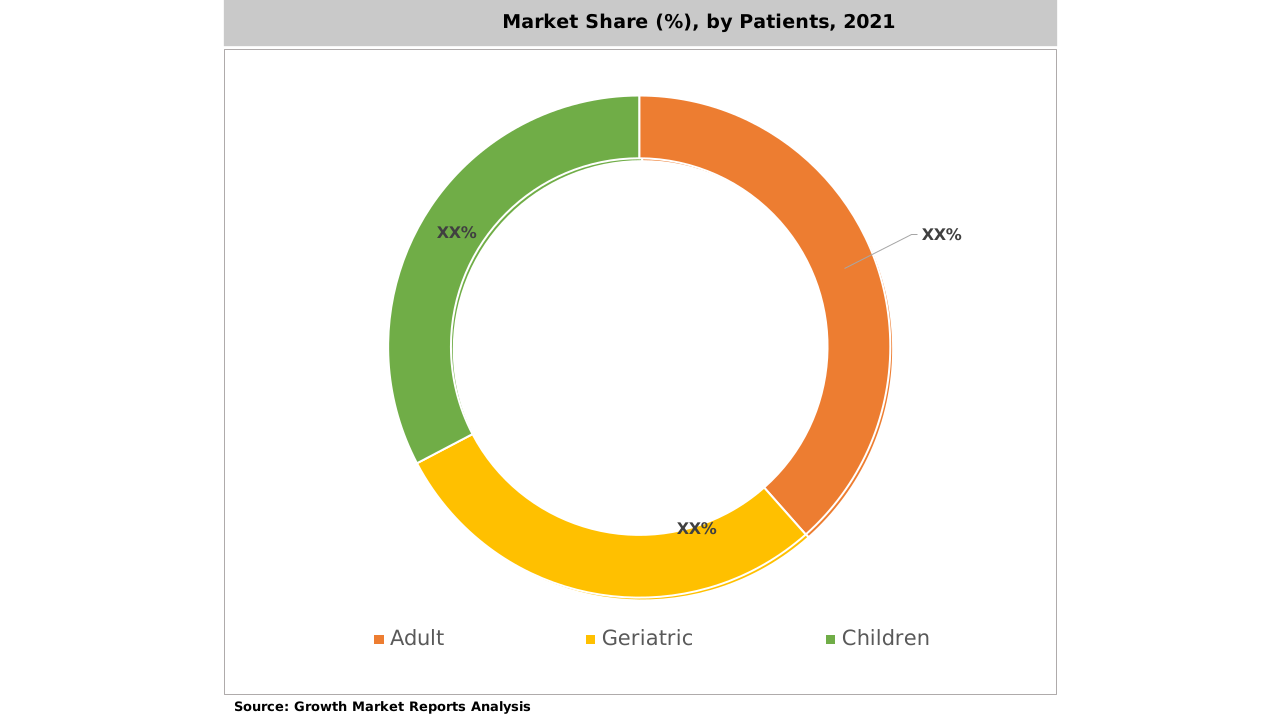
The laryngeal mask market by age group is segmented into adult, pediatric, and neonatal categories, each with specific design requirements and safety considerations. Adult laryngeal masks account for the largest share of the market, driven by the high volume of surgical procedures and airway management interventions performed in adult patients worldwide. These devices are engineered to accommodate a wide range of anatomical variations and are available in multiple sizes to ensure a secure fit and optimal airway patency during anesthesia and emergency care.

Pediatric laryngeal masks represent a significant and growing segment, reflecting the increasing number of pediatric surgeries and the rising need for specialized airway management solutions in children. Pediatric airway anatomy differs substantially from that of adults, necessitating the development of devices with smaller profiles, softer materials, and enhanced safety features to minimize airway trauma and ensure effective ventilation. Manufacturers are directing considerable research and development resources toward creating pediatric-specific laryngeal masks that offer superior performance and ease of use, an effort that complements broader advances in tools such as the laryngeal bronchial telescope used in pediatric diagnostic and therapeutic procedures.

The neonatal segment presents unique challenges, as neonates are particularly vulnerable to airway obstruction and respiratory complications. Neonatal laryngeal masks are designed with ultra-soft materials and precise sizing to ensure gentle insertion and minimal airway resistance. The increasing prevalence of premature births and congenital airway anomalies has heightened demand for neonatal airway management devices, prompting manufacturers to prioritize innovation and stringent quality assurance in this critical market segment throughout the forecast period.

The growing emphasis on patient safety and the need for age-appropriate airway management solutions are driving the expansion of the laryngeal mask market across all age groups. Healthcare providers are increasingly recognizing the importance of using specialized devices tailored to the anatomical and physiological needs of different patient populations, thereby enhancing clinical outcomes and reducing the risk of complications during airway management procedures.

Application Analysis

The application segment of the laryngeal mask market encompasses surgery, emergency medicine, and other clinical uses, each presenting unique requirements and growth opportunities. Surgical applications constitute the largest share of the market, as laryngeal masks are widely used for airway management during general anesthesia across a broad spectrum of surgical procedures. Their ability to provide a reliable and secure airway with minimal invasiveness makes them the preferred choice among anesthesiologists, particularly for short-to-medium-duration surgeries where endotracheal intubation may not be necessary or is clinically inadvisable.

In emergency medicine, laryngeal masks play a critical role in managing airway emergencies, including cardiac arrest, acute respiratory failure, and polytrauma cases. Their rapid deployment, straightforward insertion technique, and effectiveness in maintaining airway patency make them invaluable tools in both pre-hospital and emergency department settings. The increasing global focus on improving emergency care outcomes and strengthening first-responder capabilities is driving adoption of laryngeal masks in this high-growth application area.

Beyond surgery and emergency medicine, laryngeal masks are finding expanding applications across intensive care units, dental practices, and outpatient interventional settings. Their versatility and ease of use have made them a staple in many healthcare environments, utilized for both elective and non-elective airway management. These applications are further supported by advances in complementary diagnostic tools, including the laryngeal prosthesis segment, which addresses related airway restoration needs in post-surgical and chronic disease patients. The growing breadth of clinical applications is contributing to the overall diversification and resilience of the laryngeal mask market.

The increasing adoption of minimally invasive procedures and the global shift toward ambulatory and outpatient care are further boosting demand for laryngeal masks across all application segments. Healthcare providers are prioritizing airway management solutions that minimize patient discomfort, reduce procedural complexity, and support faster recovery, positioning laryngeal masks as essential devices in contemporary clinical practice through 2034.

End-User Analysis

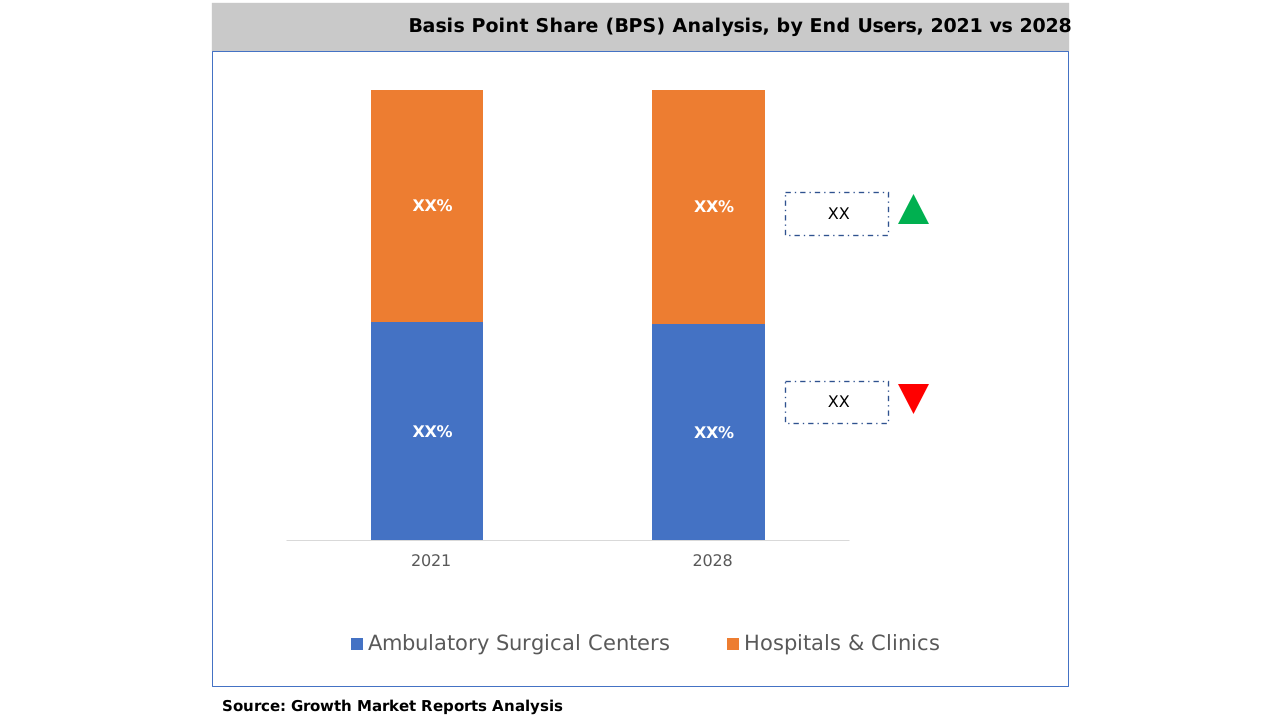
The laryngeal mask market by end-user is segmented into hospitals, ambulatory surgical centers, clinics, and other healthcare facilities, reflecting the diverse settings in which these devices are utilized. Hospitals represent the largest end-user segment, accounting for a substantial share of the market due to the high volume of surgical and emergency procedures performed in these settings. Hospitals require a broad range of airway management devices to cater to diverse patient populations and clinical scenarios, making them key drivers of demand for both reusable and disposable laryngeal masks throughout the 2025-2034 forecast period.

Ambulatory surgical centers (ASCs) are an increasingly important end-user category for laryngeal masks, driven by the sustained global trend toward outpatient surgeries and minimally invasive procedures. ASCs prioritize efficiency, rigorous infection control, and cost-effectiveness, making disposable laryngeal masks particularly attractive for these facilities. The continuing expansion of ASC networks, particularly across North America, Europe, and the Asia Pacific region, is expected to provide a strong and growing demand base for the laryngeal mask market throughout the forecast period.

Clinics, including dental and specialty clinics, also utilize laryngeal masks for a variety of procedures requiring airway management under sedation or general anesthesia. Adoption in these settings is driven by the ease of use, versatility, and patient safety benefits that laryngeal masks offer during minor surgical or diagnostic interventions. Clinics typically opt for single-use devices to streamline workflow and minimize cross-contamination risks, contributing to growth in the disposable segment.

Other healthcare facilities, including emergency medical services, military field hospitals, and long-term care centers, are increasingly incorporating laryngeal masks into their airway management protocols. The rapid deployment capability and broad clinical utility of laryngeal masks make them highly suitable for these diverse environments, further expanding their market reach across the end-user landscape through 2034.

Opportunities & Threats

The laryngeal mask market presents several compelling opportunities for growth and innovation through the 2026-2034 forecast period. One of the most significant opportunities lies in the development of advanced laryngeal masks tailored to specific clinical needs and patient populations. Manufacturers are investing in research and development to create devices with enhanced safety features, improved material profiles, and user-friendly designs that reduce the learning curve for clinicians. The growing emphasis on personalized medicine and patient-centered care is driving demand for laryngeal masks that combine superior performance, comfort, and ease of use. Additionally, the broader digitalization of healthcare and the expansion of simulation-based training platforms are creating new avenues for demonstrating device efficacy and accelerating clinician adoption.

Another key opportunity is the expansion into emerging markets, particularly across Asia Pacific, Latin America, and the Middle East and Africa. These regions are witnessing rapid improvements in healthcare infrastructure, rising per-capita healthcare expenditures, and increasing awareness of advanced airway management techniques. As healthcare access continues to expand and surgical volumes rise substantially in countries such as India, Brazil, Indonesia, and Saudi Arabia, the demand for laryngeal masks is expected to grow significantly. Companies that can navigate local regulatory requirements and tailor their product offerings to the unique cost and clinical needs of these markets are well-positioned to capture substantial market share throughout the forecast period.

Despite the promising growth prospects, the laryngeal mask market faces certain challenges that could temper its trajectory. One primary concern is the clinical risk of complications associated with laryngeal mask use, including aspiration, airway trauma, and inadequate ventilation in patients with certain anatomical or physiological conditions. While technological advancements have meaningfully reduced these risks, ongoing clinician training and education remain essential to ensure safe and effective device usage. Competitive pressure from alternative airway devices, including endotracheal tubes and other supraglottic airway options, also poses a challenge, particularly in high-acuity settings where endotracheal intubation may be preferred. Furthermore, navigating stringent and evolving regulatory approval processes across multiple jurisdictions adds complexity and cost to product development and market entry strategies.

Regional Outlook

North America continues to dominate the global laryngeal mask market, accounting for approximately USD 507 million in 2025, representing a 36.2% regional share. The region's leadership is attributed to its advanced healthcare infrastructure, high surgical volumes, and strong institutional adoption of innovative medical devices. The presence of major market players, supportive reimbursement frameworks, and a deep emphasis on patient safety have further bolstered adoption of laryngeal masks in the United States and Canada. North America is expected to maintain its leading position throughout the 2026-2034 forecast period, driven by ongoing technological advancements, increasing outpatient surgery volumes, and heightened clinician awareness of airway management best practices.

Laryngeal Mask Market Regional Share 2025

Europe holds the second-largest share of the laryngeal mask market, with a market size of approximately USD 405 million in 2025, representing a 28.9% regional share. The region benefits from a well-established healthcare system, robust regulatory frameworks, and widespread adoption of advanced airway management techniques. Countries including Germany, the United Kingdom, France, and the Netherlands are at the forefront of market growth, supported by high surgical volumes and a strong institutional emphasis on infection prevention. The European market is expected to grow at a steady CAGR of approximately 5.8% through 2034, driven by continued investments in healthcare quality and the increasing prevalence of chronic respiratory conditions across aging populations.

The Asia Pacific region is poised for the fastest growth in the laryngeal mask market, with a market size of approximately USD 309 million in 2025 and a projected CAGR of 8.0% through 2034. Rapid improvements in healthcare access, rising healthcare expenditures, and increasing awareness of advanced airway management solutions are fueling market expansion in China, India, Japan, South Korea, and Australia. The growing number of surgical procedures, expanding hospital networks, and rising demand for minimally invasive devices are expected to drive substantial growth throughout the forecast period. Latin America and the Middle East and Africa, with estimated market sizes of approximately USD 99 million and USD 80 million respectively in 2025, are gradually emerging as promising markets, supported by improving healthcare infrastructure, rising surgical capacity, and a growing institutional focus on patient safety and infection control best practices.

Competitor Outlook

The laryngeal mask market is characterized by a highly competitive landscape, with both global and regional players competing for market share through product innovation, strategic partnerships, and geographic expansion. Leading companies are focused on developing advanced laryngeal masks with enhanced safety features, improved material formulations, and user-friendly designs to meet the evolving needs of healthcare providers and patients in 2025 and beyond. Competitive intensity is further heightened by the increasing emphasis on infection prevention, regulatory compliance, and cost-effectiveness, prompting companies to differentiate through quality, clinical performance, and value-added services such as training programs and digital integration.

Strategic collaborations, licensing agreements, and mergers and acquisitions remain common strategies employed by market players to expand product portfolios and strengthen global market presence. Companies are also directing significant investment into research and development to create next-generation laryngeal masks that address specific clinical challenges and cater to diverse patient populations, from neonates to elderly adults. The growing focus on sustainability and environmental responsibility is prompting manufacturers to explore eco-friendly materials and establish take-back and recycling programs for disposable devices, further differentiating their offerings in an increasingly competitive marketplace.

The competitive landscape is also shaped by the presence of regionally focused players who cater to the unique needs of local markets and offer cost-effective solutions tailored to specific regulatory and clinical requirements. These companies leverage their deep understanding of local healthcare systems and patient populations to gain competitive advantages in emerging regions across Asia Pacific, Latin America, and the Middle East and Africa. The dynamic interplay between global innovators and regional specialists is expected to drive continued innovation, pricing competition, and market expansion throughout the 2026-2034 forecast period.

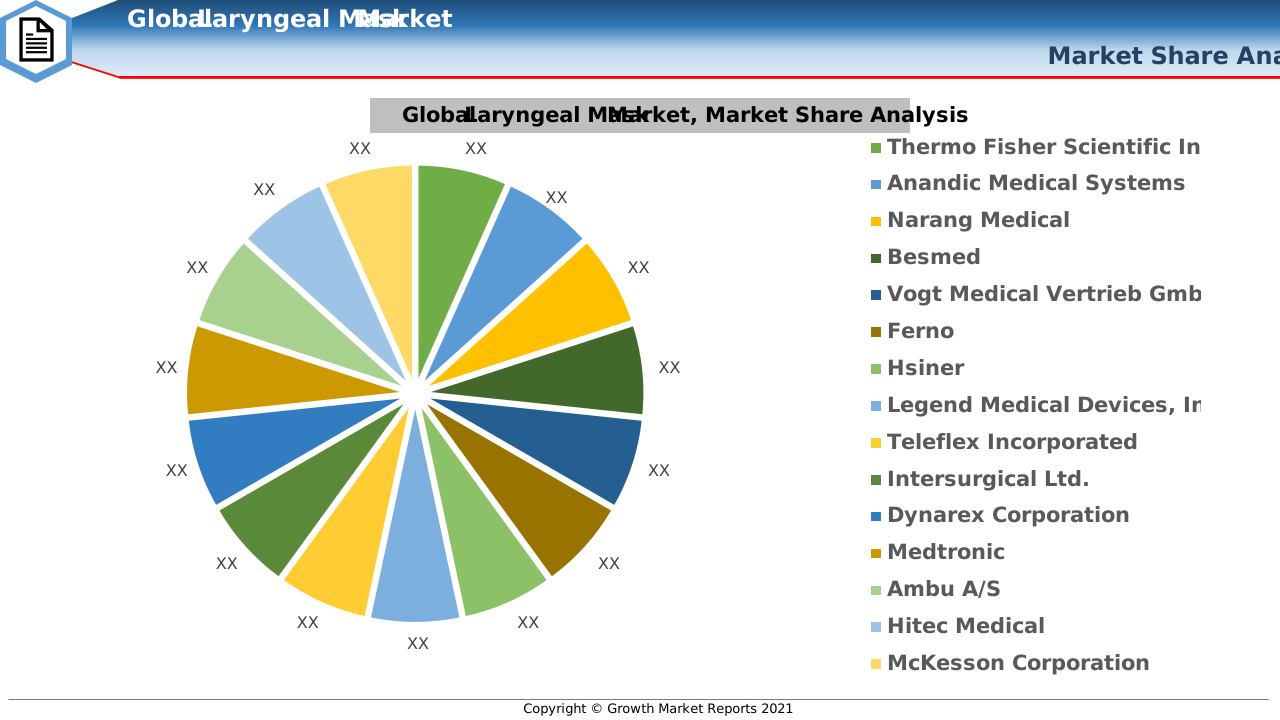
Major companies operating in the global laryngeal mask market include Teleflex Incorporated, Medtronic plc, Ambu A/S, Intersurgical Ltd., and Smiths Medical (ICU Medical, Inc.). Teleflex Incorporated is recognized for its broad portfolio of airway management devices, including the widely adopted LMA brand of laryngeal masks, and maintains a strong focus on clinical innovation and quality. Medtronic plc offers a comprehensive range of laryngeal masks featuring advanced safety designs and ergonomic construction. Ambu A/S is particularly noted for its commitment to infection prevention and the development of high-quality single-use laryngeal masks. Intersurgical Ltd. and Smiths Medical are also prominent global players, offering diverse laryngeal mask portfolios and leveraging extensive distribution networks to serve healthcare providers worldwide. Other notable competitors include Flexicare Medical Limited, Bactiguard AB, VBM Medizintechnik GmbH, Vyaire Medical, HUM GmbH, Mercury Medical, Shenzhen Besdata Technology Co., Ltd., and Henan Tuoren Medical Device Co., Ltd., each contributing to a dynamic and innovative competitive environment.

These companies are continuously investing in research and development, forging strategic partnerships, and pursuing geographic expansion to maintain their competitive positions and capitalize on emerging opportunities through 2034. Their collective focus on quality, clinical innovation, regulatory compliance, and customer-centric solutions is expected to drive the continued evolution of the laryngeal mask market and ensure sustained growth across all segments and regions in the years ahead.

Key Players

  • Teleflex Incorporated
  • Medtronic plc
  • Ambu A/S
  • Intersurgical Ltd.
  • Smiths Medical (ICU Medical, Inc.)
  • Vyaire Medical, Inc.
  • HUM GmbH
  • VBM Medizintechnik GmbH
  • Flexicare Medical Limited
  • Mercury Medical
  • Bactiguard AB
  • Shenzhen Besdata Technology Co., Ltd.
  • Henan Tuoren Medical Device Co., Ltd.
  • KindWell Medical
  • Medis Medical (UK) Ltd.
  • Surgical Holdings Ltd.
  • Legend Medical Devices, Inc.
  • Anesthesia Associates, Inc.

Segments

The Laryngeal Mask market has been segmented on the basis of

Product Type

  • Reusable Laryngeal Masks
  • Disposable Laryngeal Masks

Material

  • Silicone
  • PVC
  • Others

Age Group

  • Adult
  • Pediatric
  • Neonatal

Application

  • Surgery
  • Emergency Medicine
  • Others

End-User

  • Hospitals
  • Ambulatory Surgical Centers
  • Clinics
  • Others

Frequently Asked Questions

The global laryngeal mask market is led by Teleflex Incorporated, Medtronic plc, Ambu A/S, Intersurgical Ltd., and Smiths Medical (ICU Medical, Inc.). Other prominent players include Vyaire Medical, Flexicare Medical Limited, Bactiguard AB, VBM Medizintechnik GmbH, HUM GmbH, Mercury Medical, Shenzhen Besdata Technology Co., Ltd., and Henan Tuoren Medical Device Co., Ltd. These companies compete through product innovation, geographic expansion, strategic acquisitions, and a focus on infection prevention and regulatory compliance.

Key opportunities include the development of next-generation devices tailored to specific patient populations, expansion into high-growth emerging markets in Asia Pacific, Latin America, and the Middle East and Africa, and the growing adoption of eco-friendly materials and sustainable manufacturing practices. Primary challenges include the clinical risks associated with improper device use such as aspiration and airway trauma, competitive pressure from alternative airway management devices including endotracheal tubes and other supraglottic airway options, and the complexity of navigating stringent regulatory approval processes across multiple jurisdictions.

Hospitals are the largest end-user segment, accounting for the majority of laryngeal mask consumption due to their high surgical and emergency procedure volumes. Ambulatory surgical centers are a rapidly growing end-user category, driven by the global shift toward outpatient surgery and the preference for single-use devices that streamline workflow and infection control. Clinics, including dental and specialty practices, as well as emergency medical services and long-term care facilities, also represent important end-user groups.

Laryngeal masks are primarily used in surgical applications, where they provide reliable airway management during general anesthesia for a wide range of short-to-medium-duration procedures. They are also critically important in emergency medicine for rapid airway management during cardiac arrest, respiratory failure, and trauma cases. Additional applications include intensive care, dental procedures, diagnostic interventions, and outpatient clinical settings, reflecting the broad versatility of these devices across modern healthcare practice.

North America holds the largest share of the global laryngeal mask market, accounting for approximately 36.2% of total revenue in 2025, driven by advanced healthcare infrastructure and high surgical volumes. Europe follows with a 28.9% share, supported by robust regulatory frameworks and widespread adoption of advanced airway management practices. Asia Pacific is the fastest-growing region, projected to expand at a CAGR of approximately 8.0% through 2034, fueled by increasing healthcare investments and rising surgical activity in China, India, and Japan.

Silicone is the most widely used material in laryngeal masks due to its superior biocompatibility, flexibility, durability, and ability to form a secure seal around the laryngeal inlet. PVC is the second most common material, favored primarily for disposable devices because of its lower manufacturing cost and ease of mass production. Emerging materials such as polyurethane and hybrid polymers are also being explored to further improve comfort, performance, and environmental sustainability.

Reusable laryngeal masks, typically made from high-grade medical silicone, are designed for multiple uses after proper sterilization and offer long-term cost benefits, making them popular in budget-constrained settings. Disposable laryngeal masks, often manufactured from medical-grade PVC or silicone, are single-use devices that eliminate sterilization requirements, reduce cross-contamination risks, and align with stringent infection control protocols, making them preferred in high-turnover and ambulatory surgical settings.

The global laryngeal mask market is projected to reach approximately USD 2.18 billion by 2033, progressing toward a total estimated value of USD 2.44 billion by the end of 2034. This growth is underpinned by a forecast CAGR of 6.3% from 2026 to 2034, reflecting robust demand across all product types, age groups, and geographic regions.

The primary growth drivers include a rising incidence of respiratory disorders, increasing number of surgical procedures requiring general anesthesia, growing adoption of minimally invasive airway management techniques, and ongoing technological innovation in device design and materials. The expanding geriatric population and the global shift toward outpatient and ambulatory surgical care are also key contributors to market expansion through the 2026-2034 forecast period.

According to our latest research, the global laryngeal mask market reached USD 1.40 billion in 2025. This figure reflects sustained growth driven by increasing surgical volumes, rising demand for single-use airway management devices, and expanding healthcare infrastructure across both developed and emerging economies.

Table Of Content

Chapter 1 Executive Summary
Chapter 2 Assumptions and Acronyms Used
Chapter 3 Research Methodology
Chapter 4 Laryngeal Mask Market Overview
   4.1 Introduction
      4.1.1 Market Taxonomy
      4.1.2 Market Definition
      4.1.3 Macro-Economic Factors Impacting the Market Growth
   4.2 Laryngeal Mask Market Dynamics
      4.2.1 Market Drivers
      4.2.2 Market Restraints
      4.2.3 Market Opportunity
   4.3 Laryngeal Mask Market - Supply Chain Analysis
      4.3.1 List of Key Suppliers
      4.3.2 List of Key Distributors
      4.3.3 List of Key Consumers
   4.4 Key Forces Shaping the Laryngeal Mask Market
      4.4.1 Bargaining Power of Suppliers
      4.4.2 Bargaining Power of Buyers
      4.4.3 Threat of Substitution
      4.4.4 Threat of New Entrants
      4.4.5 Competitive Rivalry
   4.5 Global Laryngeal Mask Market Size & Forecast, 2023-2032
      4.5.1 Laryngeal Mask Market Size and Y-o-Y Growth
      4.5.2 Laryngeal Mask Market Absolute $ Opportunity

Chapter 5 Global Laryngeal Mask Market Analysis and Forecast By Product Type
   5.1 Introduction
      5.1.1 Key Market Trends & Growth Opportunities By Product Type
      5.1.2 Basis Point Share (BPS) Analysis By Product Type
      5.1.3 Absolute $ Opportunity Assessment By Product Type
   5.2 Laryngeal Mask Market Size Forecast By Product Type
      5.2.1 Reusable Laryngeal Masks
      5.2.2 Disposable Laryngeal Masks
   5.3 Market Attractiveness Analysis By Product Type

Chapter 6 Global Laryngeal Mask Market Analysis and Forecast By Material
   6.1 Introduction
      6.1.1 Key Market Trends & Growth Opportunities By Material
      6.1.2 Basis Point Share (BPS) Analysis By Material
      6.1.3 Absolute $ Opportunity Assessment By Material
   6.2 Laryngeal Mask Market Size Forecast By Material
      6.2.1 Silicone
      6.2.2 PVC
      6.2.3 Others
   6.3 Market Attractiveness Analysis By Material

Chapter 7 Global Laryngeal Mask Market Analysis and Forecast By Age Group
   7.1 Introduction
      7.1.1 Key Market Trends & Growth Opportunities By Age Group
      7.1.2 Basis Point Share (BPS) Analysis By Age Group
      7.1.3 Absolute $ Opportunity Assessment By Age Group
   7.2 Laryngeal Mask Market Size Forecast By Age Group
      7.2.1 Adult
      7.2.2 Pediatric
      7.2.3 Neonatal
   7.3 Market Attractiveness Analysis By Age Group

Chapter 8 Global Laryngeal Mask Market Analysis and Forecast By Application
   8.1 Introduction
      8.1.1 Key Market Trends & Growth Opportunities By Application
      8.1.2 Basis Point Share (BPS) Analysis By Application
      8.1.3 Absolute $ Opportunity Assessment By Application
   8.2 Laryngeal Mask Market Size Forecast By Application
      8.2.1 Surgery
      8.2.2 Emergency Medicine
      8.2.3 Others
   8.3 Market Attractiveness Analysis By Application

Chapter 9 Global Laryngeal Mask Market Analysis and Forecast By End-User
   9.1 Introduction
      9.1.1 Key Market Trends & Growth Opportunities By End-User
      9.1.2 Basis Point Share (BPS) Analysis By End-User
      9.1.3 Absolute $ Opportunity Assessment By End-User
   9.2 Laryngeal Mask Market Size Forecast By End-User
      9.2.1 Hospitals
      9.2.2 Ambulatory Surgical Centers
      9.2.3 Clinics
      9.2.4 Others
   9.3 Market Attractiveness Analysis By End-User

Chapter 10 Global Laryngeal Mask Market Analysis and Forecast by Region
   10.1 Introduction
      10.1.1 Key Market Trends & Growth Opportunities By Region
      10.1.2 Basis Point Share (BPS) Analysis By Region
      10.1.3 Absolute $ Opportunity Assessment By Region
   10.2 Laryngeal Mask Market Size Forecast By Region
      10.2.1 North America
      10.2.2 Europe
      10.2.3 Asia Pacific
      10.2.4 Latin America
      10.2.5 Middle East & Africa (MEA)
   10.3 Market Attractiveness Analysis By Region

Chapter 11 Coronavirus Disease (COVID-19) Impact 
   11.1 Introduction 
   11.2 Current & Future Impact Analysis 
   11.3 Economic Impact Analysis 
   11.4 Government Policies 
   11.5 Investment Scenario

Chapter 12 North America Laryngeal Mask Analysis and Forecast
   12.1 Introduction
   12.2 North America Laryngeal Mask Market Size Forecast by Country
      12.2.1 U.S.
      12.2.2 Canada
   12.3 Basis Point Share (BPS) Analysis by Country
   12.4 Absolute $ Opportunity Assessment by Country
   12.5 Market Attractiveness Analysis by Country
   12.6 North America Laryngeal Mask Market Size Forecast By Product Type
      12.6.1 Reusable Laryngeal Masks
      12.6.2 Disposable Laryngeal Masks
   12.7 Basis Point Share (BPS) Analysis By Product Type 
   12.8 Absolute $ Opportunity Assessment By Product Type 
   12.9 Market Attractiveness Analysis By Product Type
   12.10 North America Laryngeal Mask Market Size Forecast By Material
      12.10.1 Silicone
      12.10.2 PVC
      12.10.3 Others
   12.11 Basis Point Share (BPS) Analysis By Material 
   12.12 Absolute $ Opportunity Assessment By Material 
   12.13 Market Attractiveness Analysis By Material
   12.14 North America Laryngeal Mask Market Size Forecast By Age Group
      12.14.1 Adult
      12.14.2 Pediatric
      12.14.3 Neonatal
   12.15 Basis Point Share (BPS) Analysis By Age Group 
   12.16 Absolute $ Opportunity Assessment By Age Group 
   12.17 Market Attractiveness Analysis By Age Group
   12.18 North America Laryngeal Mask Market Size Forecast By Application
      12.18.1 Surgery
      12.18.2 Emergency Medicine
      12.18.3 Others
   12.19 Basis Point Share (BPS) Analysis By Application 
   12.20 Absolute $ Opportunity Assessment By Application 
   12.21 Market Attractiveness Analysis By Application
   12.22 North America Laryngeal Mask Market Size Forecast By End-User
      12.22.1 Hospitals
      12.22.2 Ambulatory Surgical Centers
      12.22.3 Clinics
      12.22.4 Others
   12.23 Basis Point Share (BPS) Analysis By End-User 
   12.24 Absolute $ Opportunity Assessment By End-User 
   12.25 Market Attractiveness Analysis By End-User

Chapter 13 Europe Laryngeal Mask Analysis and Forecast
   13.1 Introduction
   13.2 Europe Laryngeal Mask Market Size Forecast by Country
      13.2.1 Germany
      13.2.2 France
      13.2.3 Italy
      13.2.4 U.K.
      13.2.5 Spain
      13.2.6 Russia
      13.2.7 Rest of Europe
   13.3 Basis Point Share (BPS) Analysis by Country
   13.4 Absolute $ Opportunity Assessment by Country
   13.5 Market Attractiveness Analysis by Country
   13.6 Europe Laryngeal Mask Market Size Forecast By Product Type
      13.6.1 Reusable Laryngeal Masks
      13.6.2 Disposable Laryngeal Masks
   13.7 Basis Point Share (BPS) Analysis By Product Type 
   13.8 Absolute $ Opportunity Assessment By Product Type 
   13.9 Market Attractiveness Analysis By Product Type
   13.10 Europe Laryngeal Mask Market Size Forecast By Material
      13.10.1 Silicone
      13.10.2 PVC
      13.10.3 Others
   13.11 Basis Point Share (BPS) Analysis By Material 
   13.12 Absolute $ Opportunity Assessment By Material 
   13.13 Market Attractiveness Analysis By Material
   13.14 Europe Laryngeal Mask Market Size Forecast By Age Group
      13.14.1 Adult
      13.14.2 Pediatric
      13.14.3 Neonatal
   13.15 Basis Point Share (BPS) Analysis By Age Group 
   13.16 Absolute $ Opportunity Assessment By Age Group 
   13.17 Market Attractiveness Analysis By Age Group
   13.18 Europe Laryngeal Mask Market Size Forecast By Application
      13.18.1 Surgery
      13.18.2 Emergency Medicine
      13.18.3 Others
   13.19 Basis Point Share (BPS) Analysis By Application 
   13.20 Absolute $ Opportunity Assessment By Application 
   13.21 Market Attractiveness Analysis By Application
   13.22 Europe Laryngeal Mask Market Size Forecast By End-User
      13.22.1 Hospitals
      13.22.2 Ambulatory Surgical Centers
      13.22.3 Clinics
      13.22.4 Others
   13.23 Basis Point Share (BPS) Analysis By End-User 
   13.24 Absolute $ Opportunity Assessment By End-User 
   13.25 Market Attractiveness Analysis By End-User

Chapter 14 Asia Pacific Laryngeal Mask Analysis and Forecast
   14.1 Introduction
   14.2 Asia Pacific Laryngeal Mask Market Size Forecast by Country
      14.2.1 China
      14.2.2 Japan
      14.2.3 South Korea
      14.2.4 India
      14.2.5 Australia
      14.2.6 South East Asia (SEA)
      14.2.7 Rest of Asia Pacific (APAC)
   14.3 Basis Point Share (BPS) Analysis by Country
   14.4 Absolute $ Opportunity Assessment by Country
   14.5 Market Attractiveness Analysis by Country
   14.6 Asia Pacific Laryngeal Mask Market Size Forecast By Product Type
      14.6.1 Reusable Laryngeal Masks
      14.6.2 Disposable Laryngeal Masks
   14.7 Basis Point Share (BPS) Analysis By Product Type 
   14.8 Absolute $ Opportunity Assessment By Product Type 
   14.9 Market Attractiveness Analysis By Product Type
   14.10 Asia Pacific Laryngeal Mask Market Size Forecast By Material
      14.10.1 Silicone
      14.10.2 PVC
      14.10.3 Others
   14.11 Basis Point Share (BPS) Analysis By Material 
   14.12 Absolute $ Opportunity Assessment By Material 
   14.13 Market Attractiveness Analysis By Material
   14.14 Asia Pacific Laryngeal Mask Market Size Forecast By Age Group
      14.14.1 Adult
      14.14.2 Pediatric
      14.14.3 Neonatal
   14.15 Basis Point Share (BPS) Analysis By Age Group 
   14.16 Absolute $ Opportunity Assessment By Age Group 
   14.17 Market Attractiveness Analysis By Age Group
   14.18 Asia Pacific Laryngeal Mask Market Size Forecast By Application
      14.18.1 Surgery
      14.18.2 Emergency Medicine
      14.18.3 Others
   14.19 Basis Point Share (BPS) Analysis By Application 
   14.20 Absolute $ Opportunity Assessment By Application 
   14.21 Market Attractiveness Analysis By Application
   14.22 Asia Pacific Laryngeal Mask Market Size Forecast By End-User
      14.22.1 Hospitals
      14.22.2 Ambulatory Surgical Centers
      14.22.3 Clinics
      14.22.4 Others
   14.23 Basis Point Share (BPS) Analysis By End-User 
   14.24 Absolute $ Opportunity Assessment By End-User 
   14.25 Market Attractiveness Analysis By End-User

Chapter 15 Latin America Laryngeal Mask Analysis and Forecast
   15.1 Introduction
   15.2 Latin America Laryngeal Mask Market Size Forecast by Country
      15.2.1 Brazil
      15.2.2 Mexico
      15.2.3 Rest of Latin America (LATAM)
   15.3 Basis Point Share (BPS) Analysis by Country
   15.4 Absolute $ Opportunity Assessment by Country
   15.5 Market Attractiveness Analysis by Country
   15.6 Latin America Laryngeal Mask Market Size Forecast By Product Type
      15.6.1 Reusable Laryngeal Masks
      15.6.2 Disposable Laryngeal Masks
   15.7 Basis Point Share (BPS) Analysis By Product Type 
   15.8 Absolute $ Opportunity Assessment By Product Type 
   15.9 Market Attractiveness Analysis By Product Type
   15.10 Latin America Laryngeal Mask Market Size Forecast By Material
      15.10.1 Silicone
      15.10.2 PVC
      15.10.3 Others
   15.11 Basis Point Share (BPS) Analysis By Material 
   15.12 Absolute $ Opportunity Assessment By Material 
   15.13 Market Attractiveness Analysis By Material
   15.14 Latin America Laryngeal Mask Market Size Forecast By Age Group
      15.14.1 Adult
      15.14.2 Pediatric
      15.14.3 Neonatal
   15.15 Basis Point Share (BPS) Analysis By Age Group 
   15.16 Absolute $ Opportunity Assessment By Age Group 
   15.17 Market Attractiveness Analysis By Age Group
   15.18 Latin America Laryngeal Mask Market Size Forecast By Application
      15.18.1 Surgery
      15.18.2 Emergency Medicine
      15.18.3 Others
   15.19 Basis Point Share (BPS) Analysis By Application 
   15.20 Absolute $ Opportunity Assessment By Application 
   15.21 Market Attractiveness Analysis By Application
   15.22 Latin America Laryngeal Mask Market Size Forecast By End-User
      15.22.1 Hospitals
      15.22.2 Ambulatory Surgical Centers
      15.22.3 Clinics
      15.22.4 Others
   15.23 Basis Point Share (BPS) Analysis By End-User 
   15.24 Absolute $ Opportunity Assessment By End-User 
   15.25 Market Attractiveness Analysis By End-User

Chapter 16 Middle East & Africa (MEA) Laryngeal Mask Analysis and Forecast
   16.1 Introduction
   16.2 Middle East & Africa (MEA) Laryngeal Mask Market Size Forecast by Country
      16.2.1 Saudi Arabia
      16.2.2 South Africa
      16.2.3 UAE
      16.2.4 Rest of Middle East & Africa (MEA)
   16.3 Basis Point Share (BPS) Analysis by Country
   16.4 Absolute $ Opportunity Assessment by Country
   16.5 Market Attractiveness Analysis by Country
   16.6 Middle East & Africa (MEA) Laryngeal Mask Market Size Forecast By Product Type
      16.6.1 Reusable Laryngeal Masks
      16.6.2 Disposable Laryngeal Masks
   16.7 Basis Point Share (BPS) Analysis By Product Type 
   16.8 Absolute $ Opportunity Assessment By Product Type 
   16.9 Market Attractiveness Analysis By Product Type
   16.10 Middle East & Africa (MEA) Laryngeal Mask Market Size Forecast By Material
      16.10.1 Silicone
      16.10.2 PVC
      16.10.3 Others
   16.11 Basis Point Share (BPS) Analysis By Material 
   16.12 Absolute $ Opportunity Assessment By Material 
   16.13 Market Attractiveness Analysis By Material
   16.14 Middle East & Africa (MEA) Laryngeal Mask Market Size Forecast By Age Group
      16.14.1 Adult
      16.14.2 Pediatric
      16.14.3 Neonatal
   16.15 Basis Point Share (BPS) Analysis By Age Group 
   16.16 Absolute $ Opportunity Assessment By Age Group 
   16.17 Market Attractiveness Analysis By Age Group
   16.18 Middle East & Africa (MEA) Laryngeal Mask Market Size Forecast By Application
      16.18.1 Surgery
      16.18.2 Emergency Medicine
      16.18.3 Others
   16.19 Basis Point Share (BPS) Analysis By Application 
   16.20 Absolute $ Opportunity Assessment By Application 
   16.21 Market Attractiveness Analysis By Application
   16.22 Middle East & Africa (MEA) Laryngeal Mask Market Size Forecast By End-User
      16.22.1 Hospitals
      16.22.2 Ambulatory Surgical Centers
      16.22.3 Clinics
      16.22.4 Others
   16.23 Basis Point Share (BPS) Analysis By End-User 
   16.24 Absolute $ Opportunity Assessment By End-User 
   16.25 Market Attractiveness Analysis By End-User

Chapter 17 Competition Landscape 
   17.1 Laryngeal Mask Market: Competitive Dashboard
   17.2 Global Laryngeal Mask Market: Market Share Analysis, 2023
   17.3 Company Profiles (Details – Overview, Financials, Developments, Strategy) 
      17.3.1 Teleflex Incorporated
      17.3.2 Medtronic plc
      17.3.3 Ambu A/S
      17.3.4 Intersurgical Ltd.
      17.3.5 Smiths Medical (ICU Medical, Inc.)
      17.3.6 Vyaire Medical, Inc.
      17.3.7 HUM GmbH
      17.3.8 VBM Medizintechnik GmbH
      17.3.9 Flexicare Medical Limited
      17.3.10 Mercury Medical
      17.3.11 Bactiguard AB
      17.3.12 Shenzhen Besdata Technology Co., Ltd.
      17.3.13 Henan Tuoren Medical Device Co., Ltd.
      17.3.14 KindWell Medical
      17.3.15 Medis Medical (UK) Ltd.
      17.3.16 Surgical Holdings Ltd.
      17.3.17 Legend Medical Devices, Inc.
      17.3.18 Anesthesia Associates, Inc.

Methodology

Our Clients

Dassault Aviation
Microsoft
Deloitte
FedEx Logistics
Nestle SA
Pfizer
sinopec
The John Holland Group