Lamps Market Research Report 2034

Segments - by Product Type (Table Lamps, Floor Lamps, Desk Lamps, Wall Lamps, Pendant Lamps, Others), by Light Source (LED, Fluorescent, Incandescent, Halogen, Others), by Application (Residential, Commercial, Industrial, Others), by Distribution Channel (Online, Offline)

https://growthmarketreports.com/Debadatta
Author : Debadatta Patel
https://growthmarketreports.com/Vaibhav
Fact-checked by : V. Chandola
https://growthmarketreports.com/Shruti
Editor : Shruti Bhat

Last Updated : Jun, 2026 | Report ID :CG-2946 | 4.9 Rating | 95 Reviews | 262 Pages | Format : Docx PDF

Report Description

This report is updated with the latest market data and insights as of June 2026. Base year: 2025  |  Forecast period: 2026-2034


Lamps Market Outlook

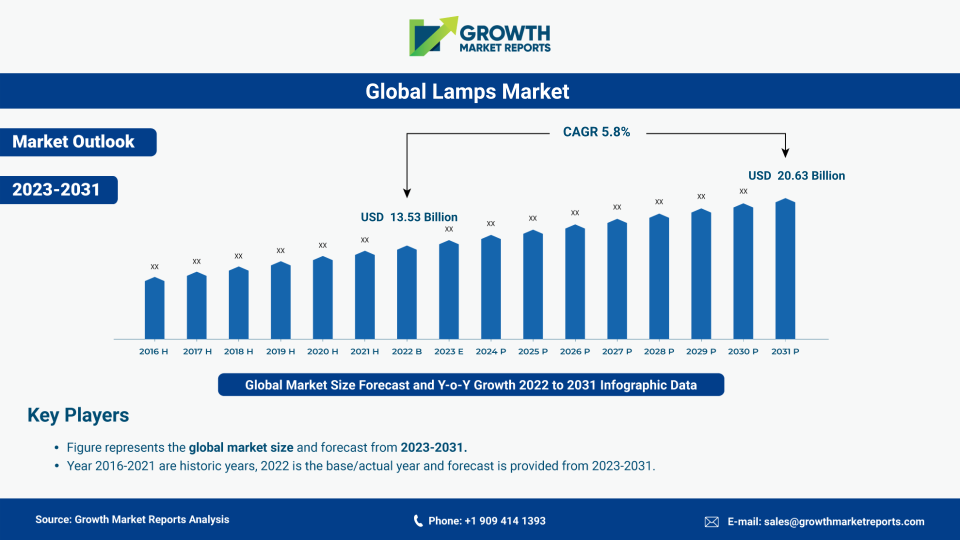
According to our latest research, the global lamps market size reached USD 54.5 billion in 2025, demonstrating a robust presence across both developed and emerging economies. The market is projected to grow at a CAGR of 5.1% during the forecast period, leading to an estimated value of USD 84.7 billion by 2034. This expansion is primarily driven by increasing urbanization, rapid technological advancements in lighting solutions, and the growing demand for energy-efficient lighting products worldwide. As per the latest research, the industry's growth trajectory is further supported by evolving consumer preferences, rising disposable incomes, and the ongoing global transition toward sustainable and intelligent lighting systems.

Global Lamps Market Size Forecast 2025-2034, USD Billion

One of the primary growth factors fueling the lamps market is the widespread adoption of energy-efficient lighting solutions, especially LED-based lamps. Governments across the globe are implementing stringent regulations and offering incentives to encourage the use of energy-saving lighting products, thus accelerating the replacement of traditional incandescent and fluorescent lamps. The growing awareness regarding energy conservation and the environmental impact of conventional lighting is pushing both residential and commercial consumers to opt for advanced, eco-friendly lamp options. Additionally, the integration of smart technologies, such as IoT-enabled lamps and automated lighting systems, is further enhancing the appeal and functionality of modern lamps, making them a preferred choice in contemporary settings.

Another significant driver is the expansion of the construction and real estate sectors, particularly in emerging economies. The surge in infrastructure development, coupled with rising urbanization rates, is generating substantial demand for both residential and commercial lighting fixtures and lamp solutions. Lamps are integral to interior design and ambiance creation, and their aesthetic appeal is increasingly being leveraged in hotels, offices, retail spaces, and homes. This trend is further amplified by the growing influence of interior designers and architects, who are emphasizing the use of innovative and decorative lamps to enhance the overall visual appeal of spaces. Furthermore, the proliferation of e-commerce platforms has made a diverse range of lamp products more accessible to consumers, thereby boosting market growth.

Technological advancements remain a cornerstone for market expansion, with ongoing innovations in lamp design, materials, and light sources. The shift toward smart and connected lighting solutions is revolutionizing the way consumers interact with lamps, offering features such as remote control, color tuning, and energy monitoring. Manufacturers are investing heavily in research and development to introduce lamps that not only provide superior illumination but also offer enhanced durability, energy efficiency, and customization options. The increasing consumer inclination toward smart homes and workplaces is expected to further drive the adoption of intelligent lamps, supporting sustained market growth over the forecast period from 2026 through 2034.

In recent years, LED-based table lamps have become a popular choice among consumers seeking energy-efficient and versatile lighting solutions. These lamps are not only known for their long lifespan and low energy consumption but also for their ability to provide high-quality illumination that enhances both functionality and aesthetics in various settings. The integration of LED technology in table lamps allows for a wide range of design possibilities, catering to diverse consumer preferences and interior styles. As more individuals and businesses prioritize sustainability and cost-effectiveness, the demand for this lamp category is expected to continue its upward trajectory, contributing significantly to the overall growth of the lamps market through 2034.

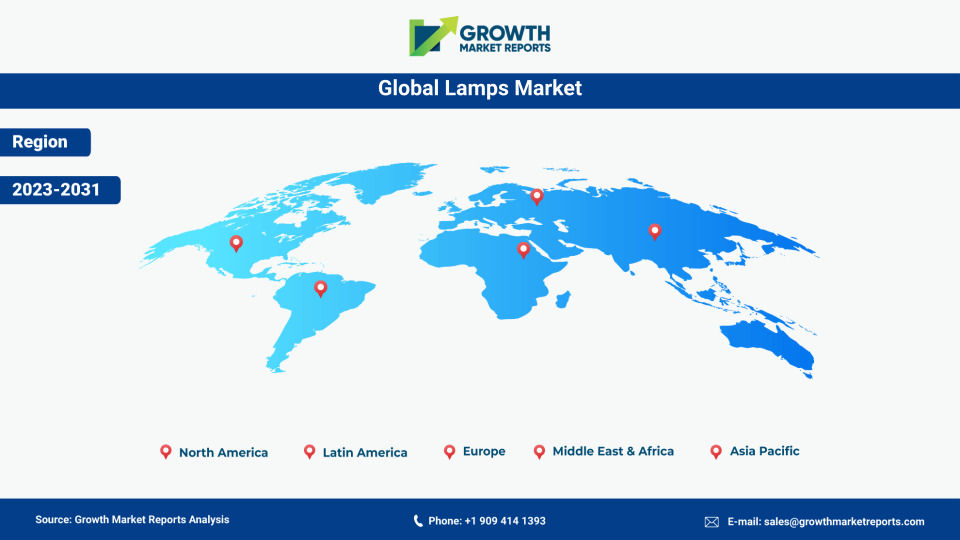
From a regional perspective, Asia Pacific continues to dominate the global lamps market, accounting for the largest revenue share in 2025. This dominance is attributed to rapid urbanization, significant infrastructure investments, and a burgeoning middle-class population with rising purchasing power. North America and Europe also represent substantial market shares, driven by early adoption of smart lighting technologies and strong regulatory frameworks promoting energy efficiency. Meanwhile, Latin America and the Middle East and Africa are emerging as promising markets, supported by improving economic conditions and increasing awareness of sustainable lighting solutions. The regional outlook remains optimistic, with all major regions expected to contribute positively to the overall market expansion through 2034.

Product Type Analysis

The lamps market is segmented by product type into table lamps, floor lamps, desk lamps, wall lamps, pendant lamps, and others. Table lamps remain a staple in residential settings due to their versatility, functional benefits, and decorative appeal. Their popularity is further bolstered by the wide variety of designs, materials, and finishes available, catering to diverse consumer preferences. Table lamps are increasingly being used not only for illumination but also as statement pieces in interior decor, driving their demand across both traditional and modern households. The rising influence of home decor trends and the growing penetration of e-commerce platforms have made it easier for consumers to access a broad range of table lamp options, further stimulating market growth in this segment. Table lamps hold the largest product type share at approximately 26.5% of the market in 2025.

Lamps Market Share by Product Type 2025

Floor lamps have carved a niche in both residential and commercial spaces, offering flexible lighting solutions that can be easily repositioned to suit varying needs. Their ability to provide ambient, task, or accent lighting makes them a popular choice for living rooms, bedrooms, offices, and hospitality settings. The demand for floor lamps is being driven by the growing trend of open-plan living spaces, where adaptable lighting solutions are preferred. Manufacturers are focusing on creating innovative floor lamp designs with integrated smart features, such as dimming capabilities and remote control, to cater to the evolving needs of tech-savvy consumers. This segment accounts for around 16.0% of the market in 2025 and is expected to witness steady growth, supported by ongoing product innovations and the increasing importance of mood lighting in contemporary interiors.

Desk lamps continue to be an essential product in the lamps market, particularly in the context of sustained remote work and hybrid working arrangements. The increasing adoption of ergonomic and task-oriented lighting solutions is driving the demand for desk lamps that offer adjustable brightness, color temperature control, and eye-care features. Educational institutions, corporate offices, and home offices are significant contributors to the growth of this segment, which holds approximately 19.5% of the total market share in 2025. Technological advancements, such as the integration of USB charging ports, wireless charging pads, and smart connectivity, are further enhancing the functionality and appeal of desk lamps. The segment is poised for sustained growth as consumers increasingly prioritize productivity and comfort in their workspaces.

Wall lamps and pendant lamps are gaining traction in both residential and commercial applications, owing to their space-saving designs and ability to enhance architectural aesthetics. Wall lamps are particularly favored in corridors, bedrooms, and bathrooms for their subtle and focused illumination, representing around 14.5% of market share in 2025. Pendant lamps and ceiling-mounted lighting styles are widely used in dining areas, kitchens, and commercial spaces for their decorative and functional benefits, accounting for approximately 13.5% of the market. The growing popularity of minimalist and contemporary interior design styles is fueling the demand for sleek and stylish wall and pendant lamps. Manufacturers are responding by offering customizable options in terms of size, color, and material, catering to the diverse needs of consumers. The "others" category, which includes specialty and outdoor lamps, holds the remaining 10.0% share and is witnessing growth driven by increasing demand for landscape and security lighting solutions.

Report Scope

Attributes Details
Report Title Lamps Market Research Report 2034
By Product Type Table Lamps, Floor Lamps, Desk Lamps, Wall Lamps, Pendant Lamps, Others
By Light Source LED, Fluorescent, Incandescent, Halogen, Others
By Application Residential, Commercial, Industrial, Others
By Distribution Channel Online, Offline
Regions Covered North America, Europe, APAC, Latin America, MEA
Base Year 2025
Historic Data 2019-2024
Forecast Period 2026-2034
Number of Pages 262
Number of Tables & Figures 389
Customization Available Yes, the report can be customized as per your need.

Light Source Analysis

The light source segment of the lamps market comprises LED, fluorescent, incandescent, halogen, and others. LED lamps have emerged as the dominant category, capturing the largest share of the market in 2025 due to their superior energy efficiency, long lifespan, and minimal environmental impact. The global push toward sustainability, coupled with government regulations banning inefficient lighting technologies across North America, Europe, and major Asia Pacific economies, has accelerated the shift from incandescent and fluorescent lamps to LED alternatives. Consumers and businesses alike are increasingly opting for LED lamps to reduce energy consumption and operational costs. The rapid advancements in LED technology, including improvements in color rendering, dimming capabilities, tunable white functionality, and smart integration, are further propelling the adoption of LED lamps across all major applications.

Fluorescent lamps, while once popular for their energy efficiency compared to incandescent bulbs, are gradually losing market share to LEDs. However, they continue to find applications in commercial and industrial settings, where their cost-effectiveness and ability to provide uniform lighting are valued. Some regions, particularly in developing countries, still rely on fluorescent lamps due to their affordability and availability. Nevertheless, the ongoing transition to more sustainable lighting solutions and the UN Minamata Convention's restrictions on mercury-containing products are expected to limit the growth potential of fluorescent lamps through 2034. Manufacturers are focusing on enhancing the performance of LED alternatives to facilitate a smooth transition for these legacy markets.

Incandescent lamps, known for their warm light and low initial cost, are witnessing a steady decline in demand owing to their high energy consumption and short lifespan. Stringent energy efficiency regulations in major markets have led to formal phase-outs of incandescent bulbs, further accelerating the adoption of alternative light sources. However, a niche market persists for incandescent lamps, particularly in decorative and specialty applications where their unique lighting characteristics are preferred. The segment is expected to continue its downward trajectory through 2034, with limited growth opportunities confined to specific heritage, theatrical, and specialty use cases.

Halogen lamps, offering better energy efficiency and longer life than traditional incandescent bulbs, occupy a modest share of the market. They are commonly used in task lighting, automotive, and display applications, where their bright and focused illumination is advantageous. The introduction of energy-efficient halogen variants has helped sustain demand in certain regions, but the overall market is shifting toward more advanced and sustainable lighting technologies. The "others" category includes emerging light sources such as organic light-emitting diodes (OLEDs) and micro-LED panels, which are gradually gaining traction in niche applications due to their unique properties, ultra-thin profiles, and design flexibility. The designer and architectural lighting segment is particularly receptive to OLED technology given its form-factor advantages.

Application Analysis

The application segment of the lamps market encompasses residential, commercial, industrial, and others. The residential segment remains the largest contributor to market revenue in 2025, driven by the continuous demand for decorative, functional, and energy-efficient lighting solutions in homes. The growing trend of home renovation and interior decoration, coupled with increasing consumer awareness of energy-saving benefits, is fueling the adoption of advanced lamp products. Smart lamps, which offer features such as remote control, color adjustment, and integration with home automation systems, are gaining popularity among tech-savvy homeowners. The residential segment is expected to maintain its dominance through 2034, supported by rising urbanization and the proliferation of smart home technologies globally.

The commercial segment is witnessing robust growth, propelled by the increasing emphasis on workplace productivity, employee well-being, and customer experience. Offices, retail stores, hotels, restaurants, and educational institutions are investing in modern lighting solutions to create visually appealing and energy-efficient environments. The adoption of smart and connected lamps is particularly pronounced in commercial settings, where centralized control, scheduling, and energy management are critical priorities. The shift toward green buildings and sustainable construction practices is further driving the demand for energy-efficient lamps in the commercial sector. Manufacturers are offering tailored solutions to meet the specific lighting requirements of various commercial applications, thereby expanding their market presence.

Industrial applications represent a significant growth opportunity for the lamps market, as manufacturing facilities, warehouses, and logistics centers prioritize efficient and reliable lighting solutions. The need for high-performance lamps that can withstand harsh operating conditions, provide consistent illumination, and reduce maintenance costs is driving innovation in this segment. LED lamps are increasingly being adopted in industrial settings due to their durability, energy efficiency, and ability to operate across extreme temperature ranges. The growing focus on workplace safety and regulatory compliance is also contributing to the demand for advanced industrial lighting solutions. The industrial segment is expected to witness steady growth through 2034, supported by ongoing industrialization and infrastructure development in emerging markets across Asia Pacific and Latin America.

The "others" application segment includes outdoor, landscape, and specialty lighting, which are gaining prominence in both residential and commercial contexts. The rising popularity of outdoor living spaces, coupled with increasing investments in public infrastructure and urban beautification projects, is driving the demand for outdoor lamps. Security and landscape lighting are becoming integral components of modern urban planning, further expanding the scope of the lamps market. Manufacturers are introducing innovative products with enhanced weather resistance, smart controls, and energy-saving features to cater to the diverse needs of outdoor and specialty lighting applications, including solar-powered and motion-activated solutions.

Distribution Channel Analysis

The distribution channel segment of the lamps market is divided into online and offline channels. Offline channels, including specialty lighting stores, supermarkets, hypermarkets, and home improvement centers, continue to account for a majority of lamp sales in 2025. These channels offer consumers the advantage of physically inspecting products, seeking expert advice, and experiencing immediate product availability. The strong presence of established retail networks, particularly in developed regions, continues to support the growth of offline sales. However, the offline segment is facing increasing competition from online platforms, prompting retailers to enhance their in-store experiences and offer value-added services such as installation, after-sales support, and personalized consultations.

The online distribution channel is experiencing rapid growth, driven by the increasing penetration of internet and smartphone users globally. E-commerce platforms offer a convenient and efficient way for consumers to browse, compare, and purchase a wide range of lamp products from the comfort of their homes. The availability of detailed product information, customer reviews, augmented reality visualization tools, and competitive pricing has made online shopping increasingly attractive across all consumer demographics. The acceleration of digital commerce since 2020 has permanently shifted a meaningful portion of lamp sales to online channels, and this trend is expected to continue through 2034. Manufacturers and retailers are investing in robust online platforms, digital marketing strategies, and last-mile logistics capabilities to capitalize on this growing channel.

The omni-channel approach, which integrates both online and offline channels, is gaining traction as consumers seek seamless shopping experiences across multiple touchpoints. Retailers are leveraging technology to offer services such as click-and-collect, virtual consultations, and augmented reality-based product visualization, enhancing customer engagement and satisfaction. The growing importance of personalized recommendations, loyalty programs, and flexible payment options is further shaping the evolution of distribution channels in the lamps market. The ability to cater to diverse consumer preferences and purchasing behaviors will be a key differentiator for market players through 2034.

The increasing globalization of the lamps market is also influencing distribution strategies, with manufacturers expanding their reach through international partnerships, franchising, and direct-to-consumer models. The rise of cross-border e-commerce is enabling consumers to access a broader selection of lamp products, driving competition and innovation in the market. As digital transformation continues to reshape the retail landscape, the distribution channel segment is expected to witness significant evolution, with online channels poised to capture a growing share of market revenue heading into the latter half of the forecast period.

Opportunities & Threats

The lamps market presents a multitude of opportunities for growth and innovation, particularly in the realm of smart and connected lighting solutions. The increasing adoption of IoT-enabled lamps, which offer advanced features such as remote control, scene automation, and real-time energy monitoring, is opening new avenues for market expansion. The integration of lamps with smart home and building automation systems is creating demand for products that offer enhanced convenience, customization, and energy efficiency. Manufacturers have the opportunity to differentiate themselves by developing innovative lamp designs, incorporating sustainable and recycled materials, and leveraging digital technologies to deliver unique value propositions to consumers. Additionally, the growing focus on human-centric lighting and wellness, which tailors light spectra and intensity to support circadian health, is an emerging high-value opportunity for premium product development.

Emerging markets represent a significant growth opportunity for the lamps market through 2034, as rapid urbanization, infrastructure development, and rising disposable incomes drive demand for modern lighting solutions. The increasing awareness of energy conservation and the financial benefits of advanced lighting technologies is prompting governments and businesses in these regions to invest in energy-efficient lamps. Strategic partnerships, localization of manufacturing, and targeted marketing initiatives can help companies tap into the vast potential of Asia Pacific, Latin America, and Africa. Furthermore, the trend toward personalized and customizable lighting solutions is creating opportunities for manufacturers to serve niche markets such as luxury residential, wellness-focused commercial spaces, and smart outdoor environments. The smart bedside lamp segment is one such niche that is gaining meaningful traction within the broader residential category.

Despite the positive outlook, the lamps market faces certain restraining factors that could hinder its growth. One of the primary challenges is intense price competition, particularly in the LED segment, which has led to margin pressures for manufacturers. The commoditization of basic lamp products has made it difficult for companies to differentiate solely on price, necessitating a focus on innovation, quality, and brand reputation. Additionally, the presence of counterfeit and substandard products in the market, especially in developing economies, poses risks to consumer safety and undermines the credibility of established brands. Regulatory compliance, particularly in terms of evolving energy efficiency standards, hazardous substance restrictions, and product labeling requirements, also presents ongoing challenges for market players, requiring continuous investment in research, development, and quality assurance systems.

Regional Outlook

The Asia Pacific region remains the largest market for lamps, accounting for approximately USD 21.5 billion in revenue in 2025, representing roughly 39.5% of global market share. This dominance is driven by rapid urbanization, significant investments in infrastructure, and a burgeoning middle-class population with increasing purchasing power. Countries such as China, India, and Japan are leading contributors to regional growth, supported by government initiatives promoting energy-efficient lighting and the widespread adoption of smart home and building technologies. The region is expected to maintain its leadership position, with a projected CAGR of 6.2% through 2034, outpacing other regions in terms of both volume and value growth. India, in particular, is emerging as a high-growth market as government programs accelerate LED adoption and urban housing construction expands.

Lamps Market Regional Share 2025

North America and Europe collectively represent a substantial share of the global lamps market, with revenues of approximately USD 13.9 billion and USD 11.4 billion respectively in 2025. The early adoption of smart lighting solutions, strong regulatory frameworks mandating energy efficiency, and high consumer awareness are key factors supporting market growth in these regions. The presence of leading manufacturers, robust distribution networks, and a focus on sustainability and innovation further contribute to the positive outlook. Both regions are expected to witness steady growth through 2034, driven by ongoing investments in smart infrastructure, building retrofit programs, and the proliferation of connected home and office environments. The European Union's Green Deal and associated energy performance directives are expected to be particularly influential in shaping regional demand patterns.

Latin America and the Middle East and Africa are emerging as promising markets for lamps, with revenues of approximately USD 4.1 billion and USD 3.5 billion respectively in 2025. Improving economic conditions, increasing urbanization, and growing awareness of the benefits of advanced lighting solutions are driving demand in these regions. Government initiatives aimed at promoting energy efficiency and sustainable urban development are further supporting market growth. While these regions currently account for a smaller combined share of roughly 14.0% of the global market, they offer significant long-term growth potential, particularly as infrastructure development accelerates and consumer purchasing power continues to improve. The regional outlook remains optimistic, with all major regions expected to contribute positively to the overall expansion of the global lamps market through 2034.

Competitor Outlook

The global lamps market is characterized by intense competition, with a mix of established multinational corporations and regional players vying for market share. The competitive landscape is shaped by continuous innovation, product differentiation, and the ability to respond to evolving consumer preferences and regulatory requirements. Leading companies are investing heavily in research and development to introduce advanced lighting solutions that offer superior energy efficiency, smart features, and enhanced durability. Strategic partnerships, mergers and acquisitions, and expansion into emerging markets are common strategies employed by market leaders to strengthen their competitive position and expand their global footprint.

Brand reputation, product quality, and after-sales service are key differentiators in the lamps market, influencing consumer purchasing decisions and fostering customer loyalty. Companies are increasingly focusing on sustainability, incorporating eco-friendly materials and low-carbon manufacturing processes to align with growing environmental concerns among consumers and institutional buyers. The ability to offer customizable and personalized lighting solutions is also becoming a critical success factor, as consumers seek products that reflect their individual tastes and requirements. Digital transformation is reshaping the competitive landscape, with companies leveraging e-commerce platforms, digital marketing, and data analytics to enhance customer engagement and drive sales across all geographies.

The market is witnessing the entry of new players, particularly in the smart lighting segment, where technological innovation and agility are key competitive advantages. Startups and tech-driven companies are introducing disruptive products and business models, challenging established players and driving industry-wide innovation. The increasing importance of intellectual property, regulatory compliance, and quality certifications is prompting companies to invest in robust quality management and compliance infrastructure. The competitive intensity is expected to remain high through 2034, with ongoing consolidation and the emergence of new business models, including lighting-as-a-service (LaaS), shaping the future of the global lamps industry.

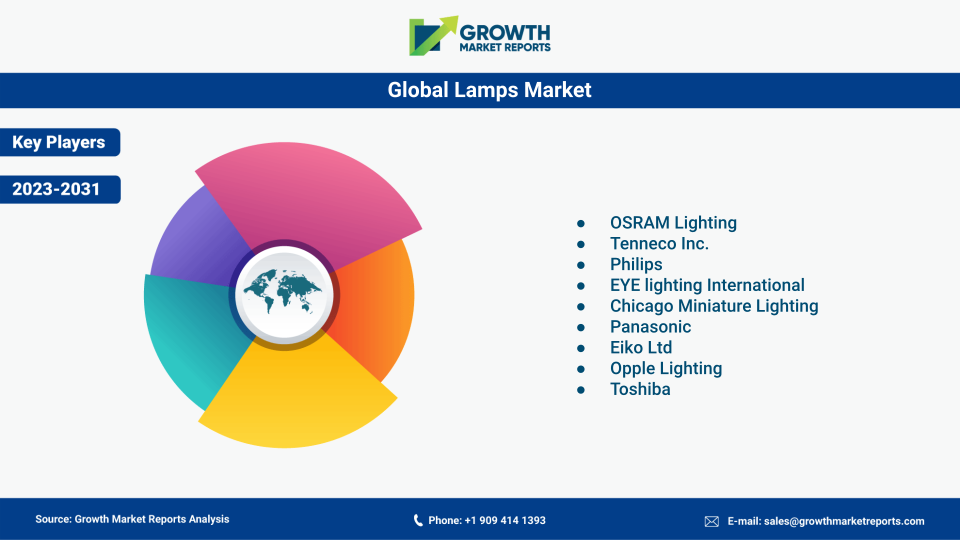
Major companies operating in the global lamps market include Signify (Philips Lighting), Osram Licht AG, Acuity Brands, GE Lighting (a Savant company), Cree Lighting, Panasonic Corporation, Eaton Corporation (Cooper Lighting Solutions), Hubbell Lighting, Lutron Electronics, Nichia Corporation, Havells India Ltd., Syska LED, Opple Lighting, Zumtobel Group, Fagerhult Group, Bajaj Electricals Ltd., Wipro Lighting, and TCP International Holdings. These industry leaders are renowned for their extensive product portfolios, strong distribution networks, and commitment to innovation and sustainability. Signify continues to lead in smart and connected lighting under the Philips Hue and Interact platforms. Osram Licht AG maintains deep expertise in specialty and automotive lighting, while Acuity Brands and Hubbell Lighting are prominent leaders in the North American commercial and industrial segments. Nichia Corporation remains a critical supplier of high-performance LED chips, underpinning product quality across the value chain.

Panasonic Corporation and Eaton Corporation have established strong footholds in the Asia Pacific and global markets, offering innovative lighting products for residential, commercial, and industrial applications. Havells India, Syska LED, Bajaj Electricals, and Wipro Lighting are driving growth across the rapidly expanding South Asian market, backed by large distribution networks and competitively priced product portfolios. Cree Lighting is recognized for its leadership in high-performance LED technology, while Lutron Electronics specializes in precision lighting controls and automation solutions for premium residential and commercial environments. These companies are continuously expanding their product offerings, investing in R&D, and pursuing strategic collaborations to enhance their market position through the 2026-2034 forecast horizon.

Key Players

  • Signify (Philips Lighting)
  • Acuity Brands
  • Osram Licht AG
  • GE Lighting (a Savant company)
  • Cree Lighting
  • Havells India Ltd.
  • Zumtobel Group
  • Eaton Corporation (Cooper Lighting Solutions)
  • Panasonic Corporation
  • Nichia Corporation
  • Hubbell Lighting
  • Syska LED
  • Opple Lighting
  • Fagerhult Group
  • Bajaj Electricals Ltd.
  • Lutron Electronics
  • Wipro Lighting
  • TCP International Holdings

Segments

The Lamps market has been segmented on the basis of

Product Type

  • Table Lamps
  • Floor Lamps
  • Desk Lamps
  • Wall Lamps
  • Pendant Lamps
  • Others

Light Source

  • LED
  • Fluorescent
  • Incandescent
  • Halogen
  • Others

Application

  • Residential
  • Commercial
  • Industrial
  • Others

Distribution Channel

  • Online
  • Offline

Frequently Asked Questions

Key trends in 2025 include the mainstreaming of human-centric lighting systems that adjust color temperature and intensity to support circadian rhythms, the rapid adoption of voice-activated and app-controlled smart lamps, and the use of sustainable and recycled materials in lamp construction. Minimalist and biophilic design aesthetics are gaining traction in both residential and commercial segments. Wireless charging integration in desk lamps, ultra-thin form factors enabled by OLED panels, and solar-powered outdoor lamps are also notable innovations reshaping the market landscape heading into 2034.

The global lamps market features a mix of multinational corporations and strong regional players. Leading companies include Signify (Philips Lighting), Osram Licht AG, Acuity Brands, GE Lighting (a Savant company), Cree Lighting, Panasonic Corporation, Eaton Corporation (Cooper Lighting Solutions), Hubbell Lighting, Lutron Electronics, Nichia Corporation, Havells India Ltd., Syska LED, Opple Lighting, Zumtobel Group, Fagerhult Group, Bajaj Electricals Ltd., Wipro Lighting, and TCP International Holdings. These companies compete on innovation, product quality, energy efficiency credentials, and distribution breadth.

Key opportunities include the rapid growth of smart and connected lighting, rising demand for human-centric and wellness-oriented lighting solutions, and untapped potential in emerging markets across Asia Pacific, Latin America, and Africa. The premiumization trend in decorative and designer lamps also offers high-margin growth avenues. Challenges include intense price competition in commoditized LED segments, margin compression, the prevalence of counterfeit products in developing markets, and ongoing compliance requirements tied to evolving energy efficiency and environmental regulations across key geographies.

Offline channels, including specialty lighting stores, hypermarkets, and home improvement centers, continue to account for the majority of lamp sales in 2025, valued for hands-on product evaluation and expert assistance. However, online channels are growing at a faster rate, fueled by expanding internet penetration, competitive pricing, and the convenience of doorstep delivery. E-commerce platforms now offer augmented reality visualization tools and detailed product reviews, enhancing the digital shopping experience. An omni-channel strategy integrating click-and-collect, virtual consultations, and loyalty programs is becoming the dominant approach among leading retailers and manufacturers.

Asia Pacific leads the global lamps market with approximately 39.5% revenue share in 2025, driven by China, India, and Japan. Rapid urbanization, government energy-efficiency mandates, and a growing middle class are key regional tailwinds. North America holds about 25.5% share, supported by smart lighting adoption and green building standards. Europe accounts for roughly 21.0%, led by stringent EU energy regulations and sustainability goals. Latin America and the Middle East & Africa are emerging growth regions, collectively representing 14.0% of the market with improving economic conditions and rising infrastructure investment.

Residential applications account for the largest revenue share of the lamps market, driven by home renovation trends, smart home adoption, and growing consumer investment in interior aesthetics. Commercial applications, including offices, retail, hospitality, and educational institutions, represent the fastest-growing segment as businesses prioritize energy efficiency and employee well-being. Industrial applications are also significant, with LED lamps increasingly deployed in manufacturing facilities, warehouses, and logistics centers for their durability and low maintenance requirements.

LED technology is the single most transformative force in the lamps market, commanding the dominant share of the light source segment in 2025. LEDs offer up to 80% energy savings compared to incandescent alternatives, along with lifespans exceeding 25,000 hours and declining manufacturing costs. Government phase-out programs for inefficient lighting in North America, Europe, and Asia Pacific are accelerating LED penetration. Additionally, advancements in smart LED systems, tunable white technology, and human-centric lighting are expanding the application scope of LED-based lamps across all end-user categories.

Table lamps hold the largest share at approximately 26.5% of the market in 2025, owing to their dual role as functional and decorative items in homes and offices. Desk lamps are the second most popular type at around 19.5%, driven by remote work and ergonomic lighting trends. Floor lamps follow at 16.0%, with wall lamps and pendant lamps also registering healthy demand in both residential and commercial settings.

Key growth drivers include the accelerating global shift toward energy-efficient LED lighting, stringent government regulations phasing out incandescent and fluorescent technologies, rapid urbanization in emerging economies, and the expanding construction and real estate sectors. The integration of smart and IoT-enabled lighting systems into homes and commercial buildings, combined with rising consumer awareness of sustainability, is further propelling market expansion through 2034.

The global lamps market reached USD 54.5 billion in 2025 and is projected to grow at a CAGR of 5.1% during the forecast period, reaching approximately USD 84.7 billion by 2034. This growth is underpinned by rising urbanization, widespread LED adoption, and increasing demand for smart and energy-efficient lighting products across residential, commercial, and industrial applications worldwide.

Table Of Content

Chapter 1 Executive Summary
Chapter 2 Assumptions and Acronyms Used
Chapter 3 Research Methodology
Chapter 4 Lamps Market Overview
   4.1 Introduction
      4.1.1 Market Taxonomy
      4.1.2 Market Definition
      4.1.3 Macro-Economic Factors Impacting the Market Growth
   4.2 Lamps Market Dynamics
      4.2.1 Market Drivers
      4.2.2 Market Restraints
      4.2.3 Market Opportunity
   4.3 Lamps Market - Supply Chain Analysis
      4.3.1 List of Key Suppliers
      4.3.2 List of Key Distributors
      4.3.3 List of Key Consumers
   4.4 Key Forces Shaping the Lamps Market
      4.4.1 Bargaining Power of Suppliers
      4.4.2 Bargaining Power of Buyers
      4.4.3 Threat of Substitution
      4.4.4 Threat of New Entrants
      4.4.5 Competitive Rivalry
   4.5 Global Lamps Market Size & Forecast, 2023-2032
      4.5.1 Lamps Market Size and Y-o-Y Growth
      4.5.2 Lamps Market Absolute $ Opportunity

Chapter 5 Global Lamps Market Analysis and Forecast By Product Type
   5.1 Introduction
      5.1.1 Key Market Trends & Growth Opportunities By Product Type
      5.1.2 Basis Point Share (BPS) Analysis By Product Type
      5.1.3 Absolute $ Opportunity Assessment By Product Type
   5.2 Lamps Market Size Forecast By Product Type
      5.2.1 Table Lamps
      5.2.2 Floor Lamps
      5.2.3 Desk Lamps
      5.2.4 Wall Lamps
      5.2.5 Pendant Lamps
      5.2.6 Others
   5.3 Market Attractiveness Analysis By Product Type

Chapter 6 Global Lamps Market Analysis and Forecast By Light Source
   6.1 Introduction
      6.1.1 Key Market Trends & Growth Opportunities By Light Source
      6.1.2 Basis Point Share (BPS) Analysis By Light Source
      6.1.3 Absolute $ Opportunity Assessment By Light Source
   6.2 Lamps Market Size Forecast By Light Source
      6.2.1 LED
      6.2.2 Fluorescent
      6.2.3 Incandescent
      6.2.4 Halogen
      6.2.5 Others
   6.3 Market Attractiveness Analysis By Light Source

Chapter 7 Global Lamps Market Analysis and Forecast By Application
   7.1 Introduction
      7.1.1 Key Market Trends & Growth Opportunities By Application
      7.1.2 Basis Point Share (BPS) Analysis By Application
      7.1.3 Absolute $ Opportunity Assessment By Application
   7.2 Lamps Market Size Forecast By Application
      7.2.1 Residential
      7.2.2 Commercial
      7.2.3 Industrial
      7.2.4 Others
   7.3 Market Attractiveness Analysis By Application

Chapter 8 Global Lamps Market Analysis and Forecast By Distribution Channel
   8.1 Introduction
      8.1.1 Key Market Trends & Growth Opportunities By Distribution Channel
      8.1.2 Basis Point Share (BPS) Analysis By Distribution Channel
      8.1.3 Absolute $ Opportunity Assessment By Distribution Channel
   8.2 Lamps Market Size Forecast By Distribution Channel
      8.2.1 Online
      8.2.2 Offline
   8.3 Market Attractiveness Analysis By Distribution Channel

Chapter 9 Global Lamps Market Analysis and Forecast by Region
   9.1 Introduction
      9.1.1 Key Market Trends & Growth Opportunities By Region
      9.1.2 Basis Point Share (BPS) Analysis By Region
      9.1.3 Absolute $ Opportunity Assessment By Region
   9.2 Lamps Market Size Forecast By Region
      9.2.1 North America
      9.2.2 Europe
      9.2.3 Asia Pacific
      9.2.4 Latin America
      9.2.5 Middle East & Africa (MEA)
   9.3 Market Attractiveness Analysis By Region

Chapter 10 Coronavirus Disease (COVID-19) Impact 
   10.1 Introduction 
   10.2 Current & Future Impact Analysis 
   10.3 Economic Impact Analysis 
   10.4 Government Policies 
   10.5 Investment Scenario

Chapter 11 North America Lamps Analysis and Forecast
   11.1 Introduction
   11.2 North America Lamps Market Size Forecast by Country
      11.2.1 U.S.
      11.2.2 Canada
   11.3 Basis Point Share (BPS) Analysis by Country
   11.4 Absolute $ Opportunity Assessment by Country
   11.5 Market Attractiveness Analysis by Country
   11.6 North America Lamps Market Size Forecast By Product Type
      11.6.1 Table Lamps
      11.6.2 Floor Lamps
      11.6.3 Desk Lamps
      11.6.4 Wall Lamps
      11.6.5 Pendant Lamps
      11.6.6 Others
   11.7 Basis Point Share (BPS) Analysis By Product Type 
   11.8 Absolute $ Opportunity Assessment By Product Type 
   11.9 Market Attractiveness Analysis By Product Type
   11.10 North America Lamps Market Size Forecast By Light Source
      11.10.1 LED
      11.10.2 Fluorescent
      11.10.3 Incandescent
      11.10.4 Halogen
      11.10.5 Others
   11.11 Basis Point Share (BPS) Analysis By Light Source 
   11.12 Absolute $ Opportunity Assessment By Light Source 
   11.13 Market Attractiveness Analysis By Light Source
   11.14 North America Lamps Market Size Forecast By Application
      11.14.1 Residential
      11.14.2 Commercial
      11.14.3 Industrial
      11.14.4 Others
   11.15 Basis Point Share (BPS) Analysis By Application 
   11.16 Absolute $ Opportunity Assessment By Application 
   11.17 Market Attractiveness Analysis By Application
   11.18 North America Lamps Market Size Forecast By Distribution Channel
      11.18.1 Online
      11.18.2 Offline
   11.19 Basis Point Share (BPS) Analysis By Distribution Channel 
   11.20 Absolute $ Opportunity Assessment By Distribution Channel 
   11.21 Market Attractiveness Analysis By Distribution Channel

Chapter 12 Europe Lamps Analysis and Forecast
   12.1 Introduction
   12.2 Europe Lamps Market Size Forecast by Country
      12.2.1 Germany
      12.2.2 France
      12.2.3 Italy
      12.2.4 U.K.
      12.2.5 Spain
      12.2.6 Russia
      12.2.7 Rest of Europe
   12.3 Basis Point Share (BPS) Analysis by Country
   12.4 Absolute $ Opportunity Assessment by Country
   12.5 Market Attractiveness Analysis by Country
   12.6 Europe Lamps Market Size Forecast By Product Type
      12.6.1 Table Lamps
      12.6.2 Floor Lamps
      12.6.3 Desk Lamps
      12.6.4 Wall Lamps
      12.6.5 Pendant Lamps
      12.6.6 Others
   12.7 Basis Point Share (BPS) Analysis By Product Type 
   12.8 Absolute $ Opportunity Assessment By Product Type 
   12.9 Market Attractiveness Analysis By Product Type
   12.10 Europe Lamps Market Size Forecast By Light Source
      12.10.1 LED
      12.10.2 Fluorescent
      12.10.3 Incandescent
      12.10.4 Halogen
      12.10.5 Others
   12.11 Basis Point Share (BPS) Analysis By Light Source 
   12.12 Absolute $ Opportunity Assessment By Light Source 
   12.13 Market Attractiveness Analysis By Light Source
   12.14 Europe Lamps Market Size Forecast By Application
      12.14.1 Residential
      12.14.2 Commercial
      12.14.3 Industrial
      12.14.4 Others
   12.15 Basis Point Share (BPS) Analysis By Application 
   12.16 Absolute $ Opportunity Assessment By Application 
   12.17 Market Attractiveness Analysis By Application
   12.18 Europe Lamps Market Size Forecast By Distribution Channel
      12.18.1 Online
      12.18.2 Offline
   12.19 Basis Point Share (BPS) Analysis By Distribution Channel 
   12.20 Absolute $ Opportunity Assessment By Distribution Channel 
   12.21 Market Attractiveness Analysis By Distribution Channel

Chapter 13 Asia Pacific Lamps Analysis and Forecast
   13.1 Introduction
   13.2 Asia Pacific Lamps Market Size Forecast by Country
      13.2.1 China
      13.2.2 Japan
      13.2.3 South Korea
      13.2.4 India
      13.2.5 Australia
      13.2.6 South East Asia (SEA)
      13.2.7 Rest of Asia Pacific (APAC)
   13.3 Basis Point Share (BPS) Analysis by Country
   13.4 Absolute $ Opportunity Assessment by Country
   13.5 Market Attractiveness Analysis by Country
   13.6 Asia Pacific Lamps Market Size Forecast By Product Type
      13.6.1 Table Lamps
      13.6.2 Floor Lamps
      13.6.3 Desk Lamps
      13.6.4 Wall Lamps
      13.6.5 Pendant Lamps
      13.6.6 Others
   13.7 Basis Point Share (BPS) Analysis By Product Type 
   13.8 Absolute $ Opportunity Assessment By Product Type 
   13.9 Market Attractiveness Analysis By Product Type
   13.10 Asia Pacific Lamps Market Size Forecast By Light Source
      13.10.1 LED
      13.10.2 Fluorescent
      13.10.3 Incandescent
      13.10.4 Halogen
      13.10.5 Others
   13.11 Basis Point Share (BPS) Analysis By Light Source 
   13.12 Absolute $ Opportunity Assessment By Light Source 
   13.13 Market Attractiveness Analysis By Light Source
   13.14 Asia Pacific Lamps Market Size Forecast By Application
      13.14.1 Residential
      13.14.2 Commercial
      13.14.3 Industrial
      13.14.4 Others
   13.15 Basis Point Share (BPS) Analysis By Application 
   13.16 Absolute $ Opportunity Assessment By Application 
   13.17 Market Attractiveness Analysis By Application
   13.18 Asia Pacific Lamps Market Size Forecast By Distribution Channel
      13.18.1 Online
      13.18.2 Offline
   13.19 Basis Point Share (BPS) Analysis By Distribution Channel 
   13.20 Absolute $ Opportunity Assessment By Distribution Channel 
   13.21 Market Attractiveness Analysis By Distribution Channel

Chapter 14 Latin America Lamps Analysis and Forecast
   14.1 Introduction
   14.2 Latin America Lamps Market Size Forecast by Country
      14.2.1 Brazil
      14.2.2 Mexico
      14.2.3 Rest of Latin America (LATAM)
   14.3 Basis Point Share (BPS) Analysis by Country
   14.4 Absolute $ Opportunity Assessment by Country
   14.5 Market Attractiveness Analysis by Country
   14.6 Latin America Lamps Market Size Forecast By Product Type
      14.6.1 Table Lamps
      14.6.2 Floor Lamps
      14.6.3 Desk Lamps
      14.6.4 Wall Lamps
      14.6.5 Pendant Lamps
      14.6.6 Others
   14.7 Basis Point Share (BPS) Analysis By Product Type 
   14.8 Absolute $ Opportunity Assessment By Product Type 
   14.9 Market Attractiveness Analysis By Product Type
   14.10 Latin America Lamps Market Size Forecast By Light Source
      14.10.1 LED
      14.10.2 Fluorescent
      14.10.3 Incandescent
      14.10.4 Halogen
      14.10.5 Others
   14.11 Basis Point Share (BPS) Analysis By Light Source 
   14.12 Absolute $ Opportunity Assessment By Light Source 
   14.13 Market Attractiveness Analysis By Light Source
   14.14 Latin America Lamps Market Size Forecast By Application
      14.14.1 Residential
      14.14.2 Commercial
      14.14.3 Industrial
      14.14.4 Others
   14.15 Basis Point Share (BPS) Analysis By Application 
   14.16 Absolute $ Opportunity Assessment By Application 
   14.17 Market Attractiveness Analysis By Application
   14.18 Latin America Lamps Market Size Forecast By Distribution Channel
      14.18.1 Online
      14.18.2 Offline
   14.19 Basis Point Share (BPS) Analysis By Distribution Channel 
   14.20 Absolute $ Opportunity Assessment By Distribution Channel 
   14.21 Market Attractiveness Analysis By Distribution Channel

Chapter 15 Middle East & Africa (MEA) Lamps Analysis and Forecast
   15.1 Introduction
   15.2 Middle East & Africa (MEA) Lamps Market Size Forecast by Country
      15.2.1 Saudi Arabia
      15.2.2 South Africa
      15.2.3 UAE
      15.2.4 Rest of Middle East & Africa (MEA)
   15.3 Basis Point Share (BPS) Analysis by Country
   15.4 Absolute $ Opportunity Assessment by Country
   15.5 Market Attractiveness Analysis by Country
   15.6 Middle East & Africa (MEA) Lamps Market Size Forecast By Product Type
      15.6.1 Table Lamps
      15.6.2 Floor Lamps
      15.6.3 Desk Lamps
      15.6.4 Wall Lamps
      15.6.5 Pendant Lamps
      15.6.6 Others
   15.7 Basis Point Share (BPS) Analysis By Product Type 
   15.8 Absolute $ Opportunity Assessment By Product Type 
   15.9 Market Attractiveness Analysis By Product Type
   15.10 Middle East & Africa (MEA) Lamps Market Size Forecast By Light Source
      15.10.1 LED
      15.10.2 Fluorescent
      15.10.3 Incandescent
      15.10.4 Halogen
      15.10.5 Others
   15.11 Basis Point Share (BPS) Analysis By Light Source 
   15.12 Absolute $ Opportunity Assessment By Light Source 
   15.13 Market Attractiveness Analysis By Light Source
   15.14 Middle East & Africa (MEA) Lamps Market Size Forecast By Application
      15.14.1 Residential
      15.14.2 Commercial
      15.14.3 Industrial
      15.14.4 Others
   15.15 Basis Point Share (BPS) Analysis By Application 
   15.16 Absolute $ Opportunity Assessment By Application 
   15.17 Market Attractiveness Analysis By Application
   15.18 Middle East & Africa (MEA) Lamps Market Size Forecast By Distribution Channel
      15.18.1 Online
      15.18.2 Offline
   15.19 Basis Point Share (BPS) Analysis By Distribution Channel 
   15.20 Absolute $ Opportunity Assessment By Distribution Channel 
   15.21 Market Attractiveness Analysis By Distribution Channel

Chapter 16 Competition Landscape 
   16.1 Lamps Market: Competitive Dashboard
   16.2 Global Lamps Market: Market Share Analysis, 2023
   16.3 Company Profiles (Details – Overview, Financials, Developments, Strategy) 
      16.3.1 Signify (Philips Lighting)
      16.3.2 Acuity Brands
      16.3.3 Osram Licht AG
      16.3.4 GE Lighting (a Savant company)
      16.3.5 Cree Lighting
      16.3.6 Havells India Ltd.
      16.3.7 Zumtobel Group
      16.3.8 Eaton Corporation (Cooper Lighting Solutions)
      16.3.9 Panasonic Corporation
      16.3.10 Nichia Corporation
      16.3.11 Hubbell Lighting
      16.3.12 Syska LED
      16.3.13 Opple Lighting
      16.3.14 Fagerhult Group
      16.3.15 Bajaj Electricals Ltd.
      16.3.16 Lutron Electronics
      16.3.17 Wipro Lighting
      16.3.18 TCP International Holdings

Methodology

Our Clients

Nestle SA
Pfizer
Dassault Aviation
Honda Motor Co. Ltd.
sinopec
FedEx Logistics
Siemens Healthcare
Microsoft