Segments - by Source (Natural, Synthetic), by Form (Liquid, Solid), by Application (Food & Beverages, Pharmaceuticals, Personal Care, Industrial, Chemicals, Others), by End-Use Industry (Food & Beverage, Pharmaceuticals, Cosmetics & Personal Care, Chemicals, Others)
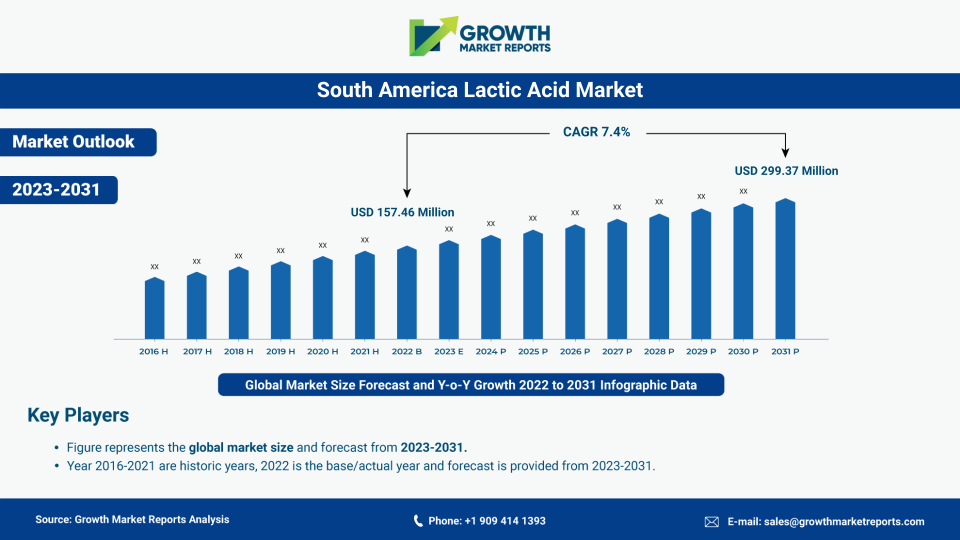
According to our latest research, the global lactic acid market size reached USD 3.1 billion in 2024, reflecting a robust demand trajectory across diverse end-use industries. The market is projected to grow at a CAGR of 8.2% from 2025 to 2033, resulting in a forecasted market size of USD 6.2 billion by 2033. This impressive expansion is driven by the increasing adoption of lactic acid in food preservation, biodegradable polymers, and personal care formulations, as well as the rising awareness of sustainable and bio-based products globally.
One of the primary growth factors propelling the lactic acid market is the surging demand for natural and organic food additives. As consumers become more health-conscious and regulatory bodies tighten restrictions on synthetic preservatives, manufacturers are increasingly turning to lactic acid as a safe and effective alternative. Lactic acid’s role as a pH regulator, flavor enhancer, and antimicrobial agent makes it indispensable in the production of dairy products, baked goods, and ready-to-eat meals. The clean label movement, which emphasizes transparency and natural ingredients, is further amplifying the adoption of lactic acid in the global food and beverage sector. This trend is particularly pronounced in North America and Europe, where consumer awareness and regulatory standards are exceptionally high.
Another significant driver is the rapid expansion of the bioplastics industry, particularly the production of polylactic acid (PLA), a biodegradable polymer derived from lactic acid. With mounting environmental concerns and stringent regulations on single-use plastics, industries are investing heavily in sustainable packaging solutions. PLA, due to its compostable nature and versatility, has emerged as a preferred material in packaging, agricultural films, and disposable tableware. The increasing investments in green technologies and the shift towards a circular economy are expected to sustain the upward momentum of the lactic acid market. Additionally, advancements in fermentation technologies and the development of cost-effective production processes are making lactic acid-based bioplastics more accessible and affordable for manufacturers worldwide.
The pharmaceutical and personal care industries are also contributing significantly to the growth of the lactic acid market. In pharmaceuticals, lactic acid is used as an excipient, pH regulator, and in the synthesis of biodegradable drug delivery systems. Its biocompatibility and non-toxic nature make it ideal for a range of medical and cosmetic applications, including moisturizers, exfoliants, and anti-aging products. The growing demand for safe, effective, and environmentally friendly ingredients in these industries is driving innovation and expanding the application scope of lactic acid. Furthermore, increasing investments in research and development, particularly in Asia Pacific and North America, are expected to unlock new opportunities for lactic acid utilization in high-value sectors.
Regionally, Asia Pacific dominates the lactic acid market, accounting for the largest revenue share in 2024. The region’s leadership is underpinned by rapid industrialization, a booming food processing sector, and the presence of major bioplastics manufacturers in countries like China, Japan, and India. North America and Europe also represent significant markets, driven by robust demand for bio-based products and stringent environmental regulations. Latin America and the Middle East & Africa are emerging markets, with increasing investments in food processing and sustainable packaging solutions. The global distribution of lactic acid production and consumption is expected to become more balanced over the forecast period, as developing regions ramp up their industrial capabilities and consumer awareness continues to rise.
The lactic acid market is segmented by source into natural and synthetic, each catering to distinct industry requirements and consumer preferences. Natural lactic acid, primarily derived from the fermentation of carbohydrates such as corn, sugarcane, and beets, is witnessing a surge in demand due to its eco-friendly profile and alignment with clean label trends. As consumers and regulatory agencies increasingly favor bio-based products, manufacturers are investing in advanced fermentation technologies to improve yield and reduce production costs. Natural lactic acid is especially prevalent in the food and beverage, pharmaceuticals, and personal care industries, where the emphasis on safety, sustainability, and traceability is paramount. The market for natural lactic acid is expected to outpace synthetic variants, driven by evolving consumer perceptions and stricter food safety regulations globally.
Synthetic lactic acid, produced through chemical synthesis, continues to hold relevance, particularly in industrial and chemical applications where cost efficiency and consistency are critical. Synthetic lactic acid offers advantages in terms of scalability and purity, making it suitable for large-scale industrial processes, including the production of solvents, plasticizers, and specialty chemicals. However, the market share of synthetic lactic acid is gradually declining in certain regions due to environmental concerns and the growing preference for renewable feedstocks. Nevertheless, ongoing innovations in chemical synthesis and the development of hybrid production methods are expected to sustain the demand for synthetic lactic acid in niche applications.
The competitive dynamics between natural and synthetic lactic acid are also shaped by regional factors and regulatory frameworks. In developed markets like North America and Europe, natural lactic acid is gaining prominence due to stringent regulations on synthetic additives and the increasing adoption of sustainable production practices. In contrast, emerging economies with less restrictive regulations and cost-sensitive industries continue to utilize synthetic lactic acid for various industrial applications. The interplay between these two sources is expected to evolve as global sustainability initiatives gain traction and technological advancements lower the production costs of bio-based lactic acid.
Manufacturers are increasingly adopting integrated production strategies to cater to the diverse needs of end-users. Companies are investing in flexible manufacturing facilities capable of producing both natural and synthetic lactic acid, thereby optimizing resource utilization and responding swiftly to market shifts. Strategic collaborations with agricultural suppliers and biotechnology firms are becoming common as companies seek to secure reliable feedstock sources and enhance their competitive positioning. The ongoing transition towards a bio-based economy is expected to further accelerate the adoption of natural lactic acid, while synthetic variants will continue to serve specialized industrial markets.
| Attributes | Details |
| Report Title | Lactic Acid Market Research Report 2033 |
| By Source | Natural, Synthetic |
| By Form | Liquid, Solid |
| By Application | Food & Beverages, Pharmaceuticals, Personal Care, Industrial, Chemicals, Others |
| By End-Use Industry | Food & Beverage, Pharmaceuticals, Cosmetics & Personal Care, Chemicals, Others |
| Regions Covered | North America, Europe, APAC, Latin America, MEA |
| Base Year | 2024 |
| Historic Data | 2018-2023 |
| Forecast Period | 2025-2033 |
| Number of Pages | 291 |
| Number of Tables & Figures | 257 |
| Customization Available | Yes, the report can be customized as per your need. |
The lactic acid market is categorized by form into liquid and solid, each offering distinct advantages and catering to specific end-use applications. Liquid lactic acid, characterized by its ease of handling and rapid solubility, dominates the market, particularly in the food and beverage, pharmaceuticals, and personal care sectors. Its liquid form allows for precise dosing, homogeneous mixing, and efficient processing, making it ideal for applications such as food preservation, flavor enhancement, and pH regulation. Liquid lactic acid is also favored in the production of syrups, beverages, and cosmetic formulations, where consistency and ease of incorporation are crucial. The growing demand for convenience foods and ready-to-use personal care products is expected to sustain the dominance of liquid lactic acid in the coming years.
Solid lactic acid, available in powder, granule, or pellet form, is increasingly gaining traction in industrial and chemical applications. The solid form offers advantages in terms of storage stability, ease of transportation, and extended shelf life. Solid lactic acid is commonly used in the manufacture of biodegradable plastics, pharmaceuticals, and specialty chemicals, where controlled release and high purity are essential. The rise of the bioplastics industry, particularly the production of polylactic acid (PLA), is driving the demand for solid lactic acid as a key raw material. Additionally, advancements in encapsulation and granulation technologies are expanding the application scope of solid lactic acid in high-value sectors.
The choice between liquid and solid lactic acid is often dictated by end-user requirements, production processes, and regulatory considerations. For instance, the food and beverage industry predominantly utilizes liquid lactic acid due to its ease of integration into liquid-based formulations, while the chemical and plastics industries prefer solid lactic acid for its stability and compatibility with high-temperature processes. Manufacturers are increasingly offering customized solutions, including tailored particle sizes and concentrations, to meet the specific needs of different industries.
The ongoing shift towards sustainable and bio-based products is influencing the development of new lactic acid formulations and delivery systems. Companies are investing in research and development to enhance the functional properties of both liquid and solid lactic acid, including improved solubility, stability, and bioavailability. The integration of advanced manufacturing technologies, such as spray drying and microencapsulation, is enabling the production of high-performance lactic acid products tailored to emerging market trends. As industries continue to prioritize efficiency, sustainability, and product quality, the demand for both liquid and solid lactic acid is expected to grow steadily over the forecast period.
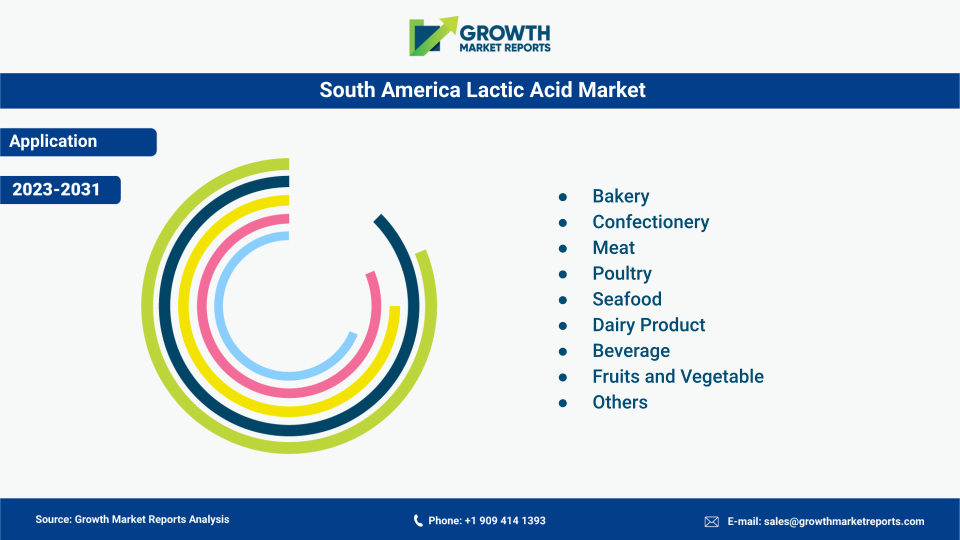
The application landscape of the lactic acid market is highly diversified, encompassing food and beverages, pharmaceuticals, personal care, industrial, chemicals, and other sectors. The food and beverage segment remains the largest application area, driven by the widespread use of lactic acid as a preservative, flavor enhancer, and acidulant. Lactic acid’s ability to inhibit microbial growth and extend shelf life makes it indispensable in the production of dairy products, baked goods, beverages, and ready-to-eat meals. The rising demand for natural and clean label ingredients is further boosting the adoption of lactic acid in this segment, particularly in developed markets such as North America and Europe.
In the pharmaceutical industry, lactic acid is utilized as an excipient, pH regulator, and in the synthesis of biodegradable drug delivery systems. Its biocompatibility and non-toxic nature make it ideal for a range of medical applications, including wound care, intravenous solutions, and controlled-release formulations. The growing emphasis on patient safety, efficacy, and sustainability is driving innovation in lactic acid-based pharmaceutical products. Additionally, the increasing prevalence of chronic diseases and the demand for advanced drug delivery systems are expected to fuel the growth of this segment over the forecast period.
The personal care and cosmetics sector is another significant application area for lactic acid, owing to its exfoliating, moisturizing, and anti-aging properties. Lactic acid is widely used in skincare products, including creams, lotions, serums, and peels, to enhance skin texture, reduce pigmentation, and promote cell turnover. The rising consumer preference for natural and organic personal care products is driving the demand for lactic acid as a safe and effective ingredient. Manufacturers are investing in research and development to formulate innovative lactic acid-based products that cater to diverse skin types and consumer needs.
Industrial and chemical applications of lactic acid are expanding rapidly, particularly in the production of biodegradable polymers, solvents, and specialty chemicals. The shift towards sustainable manufacturing practices and the increasing adoption of bio-based raw materials are driving the use of lactic acid in industrial processes. Polylactic acid (PLA), a biodegradable polymer derived from lactic acid, is gaining traction in packaging, textiles, and automotive components, offering a viable alternative to conventional plastics. The chemicals segment also utilizes lactic acid in the production of intermediates, plasticizers, and corrosion inhibitors, further diversifying its application portfolio.
The food and beverage industry is the largest end-use sector for the lactic acid market, accounting for a significant share of global consumption. The industry’s reliance on lactic acid as a preservative, flavor enhancer, and acidulant is driven by the need to ensure food safety, extend shelf life, and meet consumer preferences for natural ingredients. The growing demand for convenience foods, functional beverages, and dairy alternatives is further boosting the adoption of lactic acid in this sector. Manufacturers are leveraging advanced fermentation technologies and sustainable sourcing practices to enhance product quality and meet evolving regulatory standards.
The pharmaceutical industry is another major end-user of lactic acid, utilizing it in the formulation of drugs, medical devices, and drug delivery systems. Lactic acid’s biocompatibility, non-toxicity, and ability to facilitate controlled release make it an ideal excipient in various pharmaceutical applications. The increasing prevalence of chronic diseases, the aging population, and the demand for innovative drug delivery solutions are driving the growth of this segment. Pharmaceutical companies are investing in research and development to explore new therapeutic applications of lactic acid and expand its use in advanced medical technologies.
The cosmetics and personal care industry is witnessing robust growth in the use of lactic acid, driven by the rising demand for natural and effective skincare solutions. Lactic acid’s exfoliating, moisturizing, and anti-aging properties make it a popular ingredient in a wide range of personal care products. The shift towards clean beauty, transparency, and sustainability is prompting manufacturers to incorporate lactic acid into formulations that cater to diverse consumer needs. The industry is also exploring new applications of lactic acid in hair care, oral care, and sun protection products, further expanding its market potential.
The chemicals industry is leveraging lactic acid as a key raw material in the production of biodegradable polymers, solvents, and specialty chemicals. The transition towards sustainable manufacturing and the adoption of bio-based feedstocks are driving the use of lactic acid in chemical processes. Polylactic acid (PLA), in particular, is gaining prominence as a biodegradable alternative to conventional plastics, with applications in packaging, textiles, and automotive components. The chemicals industry is expected to remain a significant growth driver for the lactic acid market, supported by ongoing innovations in green chemistry and sustainable production practices.
The lactic acid market presents a multitude of opportunities, particularly in the context of sustainability and the circular economy. The rising demand for biodegradable polymers, especially polylactic acid (PLA), offers significant growth prospects for lactic acid producers. As governments and regulatory bodies worldwide implement stricter regulations on single-use plastics and promote sustainable packaging solutions, the adoption of lactic acid-based bioplastics is expected to accelerate. Additionally, advancements in fermentation technologies and the development of cost-effective production processes are enhancing the scalability and affordability of lactic acid, making it accessible to a broader range of industries. The expanding application scope of lactic acid in pharmaceuticals, personal care, and specialty chemicals further underscores its potential as a versatile and high-value ingredient.
Another key opportunity lies in the growing consumer preference for natural and organic products. The clean label movement and increasing awareness of health and wellness are driving the demand for lactic acid as a safe, effective, and sustainable ingredient in food, beverages, and personal care products. Manufacturers are responding by investing in research and development to create innovative lactic acid-based formulations that cater to evolving consumer preferences. Strategic collaborations with biotechnology firms, agricultural suppliers, and research institutions are enabling companies to enhance product quality, secure reliable feedstock sources, and expand their market reach. The ongoing transition towards a bio-based economy is expected to unlock new opportunities for lactic acid utilization in emerging sectors.
Despite these opportunities, the lactic acid market faces several restraining factors, most notably the volatility in raw material prices and supply chain disruptions. The production of natural lactic acid is heavily dependent on agricultural feedstocks such as corn, sugarcane, and beets, which are subject to fluctuations in availability, quality, and pricing. Adverse weather conditions, geopolitical tensions, and trade restrictions can impact the supply and cost of these feedstocks, posing challenges for manufacturers. Additionally, the market faces competition from alternative bio-based and synthetic acids, which may offer cost or performance advantages in certain applications. Addressing these challenges will require strategic investments in supply chain management, risk mitigation, and continuous innovation.
Asia Pacific leads the global lactic acid market, accounting for approximately 44% of total revenue in 2024, with a market size of around USD 1.36 billion. The region’s dominance is driven by rapid industrialization, a thriving food processing sector, and the presence of major bioplastics manufacturers in countries such as China, Japan, and India. The increasing adoption of sustainable packaging solutions, coupled with government initiatives to promote bio-based products, is fueling the growth of the lactic acid market in Asia Pacific. The region is expected to maintain its leadership position over the forecast period, supported by a projected CAGR of 9.1% from 2025 to 2033.
North America represents the second-largest regional market, with a market size of approximately USD 950 million in 2024. The region’s growth is underpinned by robust demand for natural and organic food additives, stringent environmental regulations, and a strong focus on sustainability across industries. The United States is the primary contributor to regional market growth, driven by the presence of leading lactic acid producers, advanced manufacturing capabilities, and a well-established food and beverage industry. The increasing adoption of biodegradable polymers and the expansion of the pharmaceutical and personal care sectors are expected to further boost the North American lactic acid market.
Europe holds a significant share of the global lactic acid market, with a market size of around USD 680 million in 2024. The region is characterized by high consumer awareness, stringent food safety regulations, and a strong emphasis on environmental sustainability. Countries such as Germany, France, and the United Kingdom are at the forefront of lactic acid adoption, particularly in the food and beverage, pharmaceuticals, and bioplastics sectors. The European market is expected to witness steady growth over the forecast period, supported by ongoing investments in research and development, sustainable manufacturing practices, and the expansion of application areas. Latin America and the Middle East & Africa are emerging markets, collectively accounting for the remainder of global lactic acid consumption, with increasing investments in food processing and sustainable packaging solutions.
The global lactic acid market is characterized by intense competition, with several multinational and regional players vying for market share. The competitive landscape is shaped by factors such as product quality, pricing, innovation, supply chain efficiency, and sustainability initiatives. Leading companies are investing heavily in research and development to enhance product performance, reduce production costs, and expand their application portfolios. Strategic collaborations, mergers and acquisitions, and capacity expansions are common strategies employed by market participants to strengthen their competitive positioning and capture emerging opportunities in high-growth regions.
Innovation is a key differentiator in the lactic acid market, with companies focusing on the development of advanced fermentation technologies, novel formulations, and value-added derivatives. The shift towards sustainable and bio-based products is prompting manufacturers to adopt green chemistry principles, optimize resource utilization, and minimize environmental impact. Companies are also exploring integrated production models, leveraging synergies across the value chain to enhance operational efficiency and respond swiftly to market dynamics. The ability to offer customized solutions tailored to specific industry requirements is emerging as a critical success factor in the competitive landscape.
Supply chain management and raw material sourcing are also pivotal in maintaining a competitive edge in the lactic acid market. Leading players are establishing long-term partnerships with agricultural suppliers, investing in feedstock diversification, and implementing robust risk mitigation strategies to ensure a stable supply of high-quality raw materials. The ongoing volatility in agricultural commodity prices and supply chain disruptions are prompting companies to adopt agile and resilient supply chain models. Additionally, compliance with regulatory standards and certifications is becoming increasingly important, particularly in the food, pharmaceutical, and personal care sectors.
Some of the major companies operating in the global lactic acid market include Corbion N.V., Cargill, Inc., Dow Inc., BASF SE, Galactic S.A., Henan Jindan Lactic Acid Technology Co., Ltd., and Musashino Chemical Laboratory, Ltd. Corbion N.V. is a leading player, renowned for its extensive portfolio of lactic acid and derivatives, advanced fermentation technologies, and strong commitment to sustainability. Cargill, Inc. is another key player, leveraging its global supply chain capabilities and expertise in agricultural sourcing to deliver high-quality lactic acid products to diverse industries. BASF SE and Dow Inc. are prominent in the production of lactic acid-based polymers and specialty chemicals, driving innovation in sustainable materials and green chemistry. Galactic S.A. and Henan Jindan Lactic Acid Technology Co., Ltd. are recognized for their strong regional presence and focus on expanding into high-growth markets in Asia Pacific and beyond.
These companies are continuously investing in capacity expansions, technological advancements, and strategic partnerships to strengthen their market positions and tap into emerging opportunities. The focus on sustainability, product innovation, and customer-centric solutions is expected to shape the future trajectory of the lactic acid market, enabling leading players to capture a larger share of the rapidly growing global demand. As the market evolves, the ability to adapt to changing consumer preferences, regulatory requirements, and technological advancements will be critical for sustained success in the lactic acid industry.
The Lactic Acid market has been segmented on the basis of
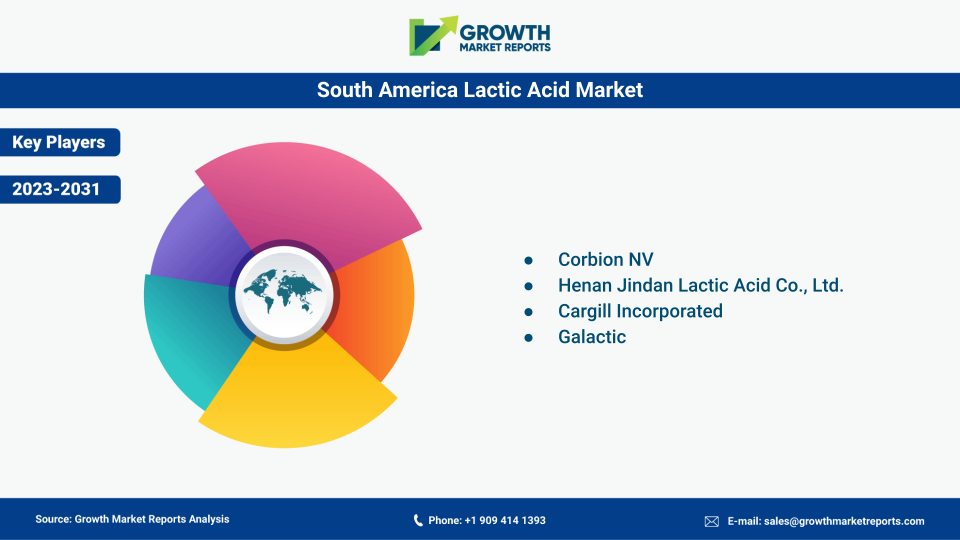
Key players competing in the South America lactic acid market include Corbion NV, Henan Jindan Lactic Acid Co., Ltd., Cargill Incorporated and Galactic.
Some of these players are using several market strategies such as mergers, acquisitions, partnerships, collaborations, capacity expansion, and product launches to enhance their market shares.
Sustainability is a major trend, driving the adoption of bio-based lactic acid, investments in green technologies, and the development of biodegradable plastics. Regulatory pressures and consumer demand for eco-friendly products are further accelerating this shift.
Opportunities include rising demand for biodegradable polymers (PLA), clean label products, and innovation in fermentation technologies. Threats include raw material price volatility, supply chain disruptions, and competition from alternative acids.
Key companies include Corbion N.V., Cargill, Inc., BASF SE, Dow Inc., Galactic S.A., Henan Jindan Lactic Acid Technology Co., Ltd., Musashino Chemical Laboratory, Ltd., and others.
Lactic acid is used in food and beverages (preservative, flavor enhancer), pharmaceuticals (excipient, pH regulator, drug delivery), personal care (exfoliant, moisturizer), industrial and chemical sectors (biodegradable polymers, solvents, specialty chemicals).
Lactic acid is available in liquid and solid forms. Liquid lactic acid dominates in food, beverage, pharmaceutical, and personal care sectors due to ease of handling and solubility, while solid lactic acid is preferred in industrial and chemical applications for its stability and storage benefits.
Asia Pacific leads the lactic acid market, accounting for about 44% of total revenue in 2024, followed by North America and Europe. Latin America and the Middle East & Africa are emerging markets with growing investments in food processing and sustainable packaging.
Natural lactic acid is produced via fermentation of carbohydrates like corn and sugarcane, favored for its eco-friendly and clean label profile. Synthetic lactic acid is chemically synthesized, offering cost efficiency and purity for industrial uses, but its market share is declining due to sustainability concerns.
Lactic acid is widely used as a preservative, flavor enhancer, and acidulant in dairy products, baked goods, beverages, and ready-to-eat meals. Its role as a pH regulator and antimicrobial agent helps extend shelf life and improve food safety.
Key growth drivers include increasing demand for natural and organic food additives, expansion of the bioplastics industry (especially polylactic acid or PLA), rising awareness of sustainable and bio-based products, and growing applications in pharmaceuticals and personal care.
The global lactic acid market reached USD 3.1 billion in 2024 and is expected to grow at a CAGR of 8.2% from 2025 to 2033, reaching approximately USD 6.2 billion by 2033.