Laboratory Chemicals Market Research Report 2033

Laboratory Chemicals Market Research Report 2033

Segments - by Product Type (Solvents, Acids, Bases, Salts, Reagents, Others), by Application (Clinical Diagnostics, Research & Development, Quality Control, Others), by End-User (Pharmaceutical & Biotechnology Companies, Academic & Research Institutes, Hospitals & Diagnostic Laboratories, Others)

https://growthmarketreports.com/Raksha
Author : Raksha Sharma
https://growthmarketreports.com/Vaibhav
Fact-checked by : V. Chandola
https://growthmarketreports.com/Shruti
Editor : Shruti Bhat

Upcoming | Report ID :MC-2161 | 4.0 Rating | 23 Reviews | 271 Pages | Format : Docx PDF

Report Description


Laboratory Chemicals Market Outlook

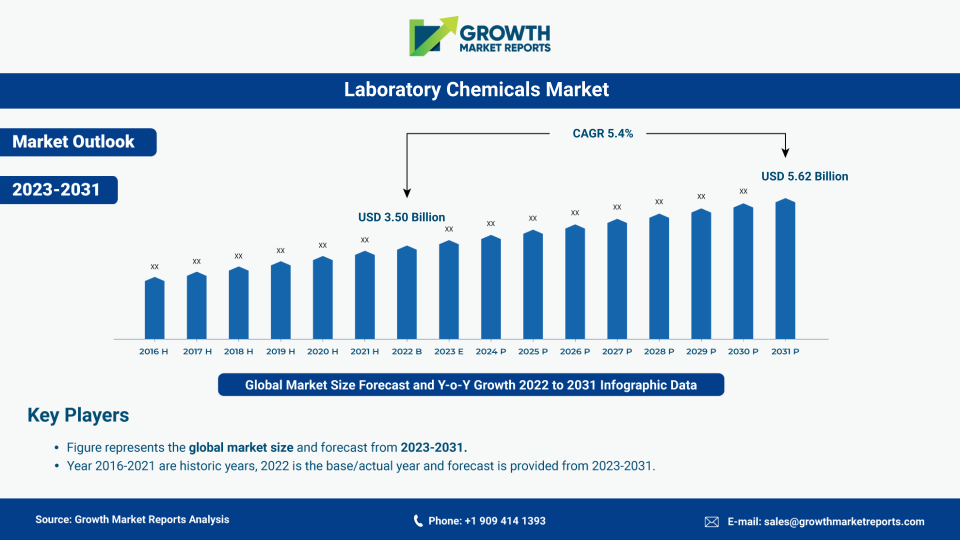
As per our latest research, the global laboratory chemicals market size stood at USD 32.6 billion in 2024, reflecting robust demand across diverse scientific and industrial sectors. The market is expected to expand at a CAGR of 6.2% from 2025 to 2033, driven by technological advancements and heightened research activities worldwide. By 2033, the laboratory chemicals market is forecasted to reach USD 56.1 billion. This sustained growth is primarily attributed to the increasing need for high-purity chemicals in research and diagnostics, as well as the expansion of pharmaceutical and biotechnology industries.

The ongoing surge in research and development activities across the pharmaceutical, biotechnology, and healthcare sectors is a significant growth driver for the laboratory chemicals market. With the global emphasis on drug discovery, vaccine development, and personalized medicine, laboratories are increasingly investing in high-quality chemicals to ensure accuracy and reproducibility in experiments. Furthermore, the rise of chronic diseases and the need for innovative therapeutic solutions have catalyzed investments in clinical trials and molecular research. This has led to a higher consumption of reagents, solvents, acids, and other laboratory chemicals, particularly in developed economies where research infrastructure is robust and funding is readily available. Academic institutions and contract research organizations are also playing a pivotal role, further fueling the demand for laboratory chemicals worldwide.

Another critical growth factor is the rapid technological advancements in analytical techniques and laboratory instrumentation. Modern laboratories now rely on sophisticated equipment that requires chemicals of exceptional purity and consistency. The integration of automation and digital technologies in laboratory workflows has further increased the demand for specialty chemicals that are compatible with advanced analytical instruments. This trend is especially pronounced in quality control and regulatory testing, where precision and compliance with international standards are paramount. As industries such as food and beverage, environmental testing, and materials science expand their quality assurance protocols, the consumption of laboratory chemicals is set to rise significantly over the forecast period.

Additionally, the globalization of supply chains and the expansion of life sciences companies into emerging markets have broadened the reach of laboratory chemicals. Companies are increasingly seeking reliable suppliers capable of delivering high-quality chemicals to diverse geographies. This has led to the establishment of strategic partnerships and distribution networks, enhancing market accessibility in regions such as Asia Pacific and Latin America. Moreover, regulatory harmonization and the adoption of Good Laboratory Practices (GLP) worldwide are compelling laboratories to upgrade their chemical inventories, further propelling market growth. The rising focus on environmental sustainability and green chemistry is also encouraging the development and adoption of eco-friendly laboratory chemicals, presenting new avenues for innovation and differentiation in the market.

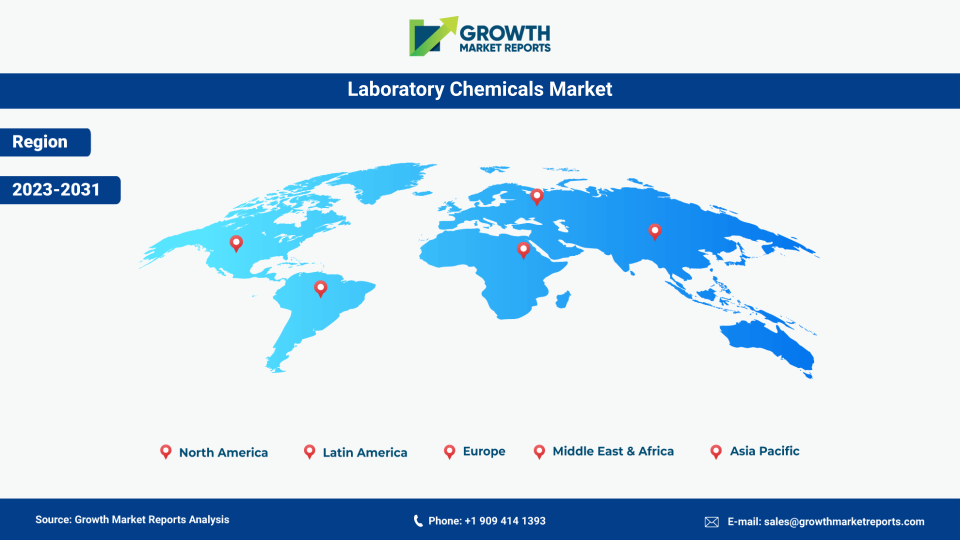
Regionally, North America continues to dominate the laboratory chemicals market, accounting for the largest share in 2024 due to its advanced healthcare infrastructure, significant R&D investments, and the presence of leading pharmaceutical and biotechnology companies. However, Asia Pacific is emerging as the fastest-growing region, driven by increasing government support for scientific research, rapid industrialization, and the expansion of academic and clinical laboratories. Europe remains a key contributor, benefiting from well-established research networks and stringent regulatory standards. Latin America and the Middle East & Africa are witnessing steady growth, supported by rising healthcare expenditures and efforts to modernize laboratory facilities. The regional outlook underscores the global nature of the laboratory chemicals market and highlights the importance of tailored strategies to address diverse regulatory, economic, and technological landscapes.

Global Laboratory Chemicals Industry Outlook

Product Type Analysis

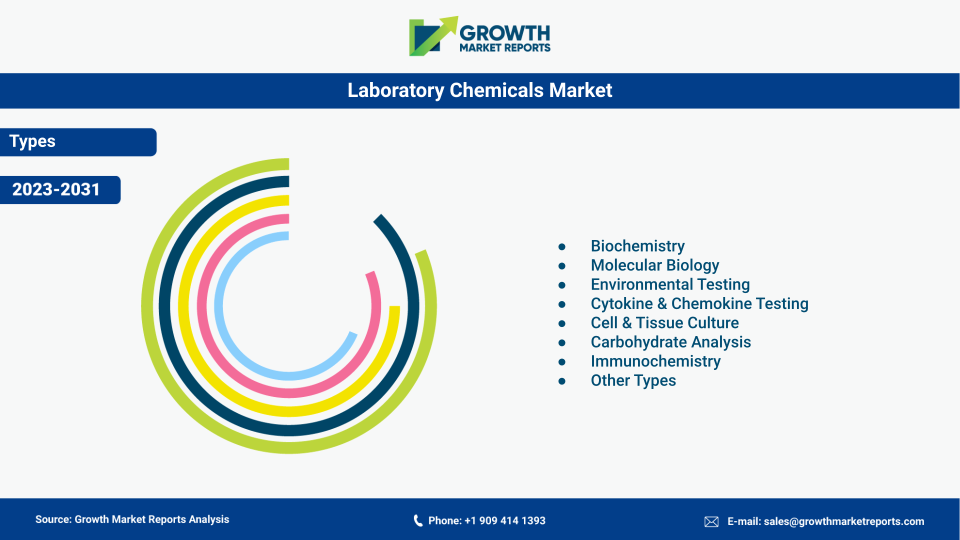
The product type segment of the laboratory chemicals market is highly diversified, encompassing solvents, acids, bases, salts, reagents, and other specialized chemicals. Solvents represent a substantial portion of market demand, owing to their widespread use in sample preparation, extraction, and purification processes across research and industrial laboratories. The increasing complexity of analytical procedures, particularly in chromatography and spectroscopy, necessitates the use of high-purity solvents to ensure accurate results. Leading manufacturers are investing in the development of ultra-pure and specialty solvents tailored to specific applications, which has contributed to the segment's sustained growth. Furthermore, the shift towards green solvents and environmentally friendly alternatives is gaining momentum, reflecting the broader industry focus on sustainability and regulatory compliance.

Acids and bases are fundamental to a vast array of laboratory protocols, ranging from titrations and buffer preparation to synthesis and quality control testing. The demand for these chemicals is closely linked to the expansion of the pharmaceutical and biotechnology sectors, where stringent quality standards require precise and reliable reagents. High-purity acids and bases are essential for minimizing contamination and ensuring reproducibility in sensitive analytical workflows. Market players are responding by offering customized formulations and packaging solutions that cater to the unique requirements of different laboratory environments. Additionally, the growing emphasis on laboratory safety and the adoption of automated dispensing systems are driving innovation in the handling and storage of acids and bases, further enhancing their market appeal.

Salts and reagents constitute another critical segment, with applications spanning molecular biology, cell culture, diagnostics, and chemical synthesis. The proliferation of genomics, proteomics, and cell-based research has led to a marked increase in the consumption of specialized salts and reagents, such as buffers, enzyme substrates, and staining agents. These chemicals are indispensable for maintaining physiological conditions, facilitating biochemical reactions, and enabling high-throughput screening in drug discovery and clinical diagnostics. The trend towards personalized medicine and advanced therapeutic modalities is expected to drive further growth in this segment, as laboratories seek innovative reagents that support cutting-edge research and diagnostic assays.

The others category includes a range of specialty chemicals, such as indicators, dyes, and calibration standards, which play vital roles in niche laboratory applications. The demand for these products is influenced by the evolving needs of research laboratories and the introduction of novel analytical techniques. As laboratories strive to enhance the sensitivity and specificity of their assays, the requirement for high-quality specialty chemicals is on the rise. Manufacturers are focusing on expanding their product portfolios and offering tailored solutions to address emerging trends, such as nanotechnology, environmental monitoring, and forensic analysis. This dynamic landscape underscores the importance of product innovation and customization in sustaining competitive advantage within the laboratory chemicals market.

Report Scope

Attributes Details
Report Title Laboratory Chemicals Market Research Report 2033
By Product Type Solvents, Acids, Bases, Salts, Reagents, Others
By Application Clinical Diagnostics, Research & Development, Quality Control, Others
By End-User Pharmaceutical & Biotechnology Companies, Academic & Research Institutes, Hospitals & Diagnostic Laboratories, Others
Regions Covered North America, Europe, APAC, Latin America, MEA
Base Year 2024
Historic Data 2018-2023
Forecast Period 2025-2033
Number of Pages 271
Number of Tables & Figures 278
Customization Available Yes, the report can be customized as per your need.

Application Analysis

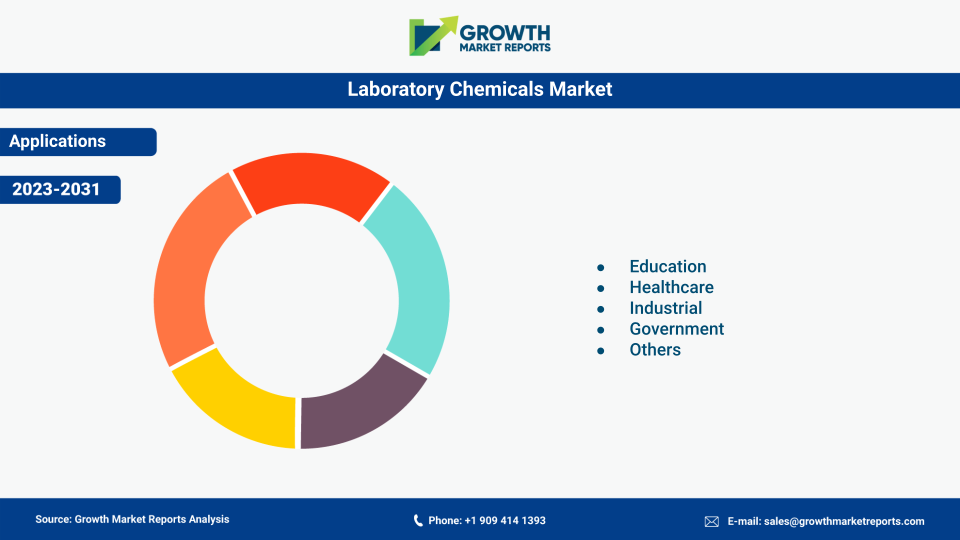
The application landscape of the laboratory chemicals market is broad and multifaceted, encompassing clinical diagnostics, research & development (R&D), quality control, and other specialized uses. Clinical diagnostics represents a significant application area, driven by the rising prevalence of chronic diseases, infectious outbreaks, and the growing adoption of advanced diagnostic technologies. Laboratory chemicals are essential for conducting a wide range of diagnostic assays, including immunoassays, molecular diagnostics, and clinical chemistry tests. The increasing focus on early disease detection and personalized healthcare is prompting laboratories to invest in high-quality reagents and standards, thereby fueling demand within this segment. Additionally, regulatory mandates for accuracy and traceability in clinical testing are reinforcing the importance of reliable laboratory chemicals in healthcare settings.

Research & development is another major application segment, encompassing academic, industrial, and government laboratories engaged in basic and applied research. The surge in R&D activities, particularly in drug discovery, biotechnology, and materials science, is a key driver of laboratory chemical consumption. Laboratories require a diverse array of chemicals for synthesis, analysis, and experimentation, with an emphasis on purity, consistency, and traceability. The increasing complexity of scientific inquiries, coupled with the advent of multidisciplinary research, is amplifying the need for specialized chemicals and reagents. Collaborations between academia, industry, and government agencies are further stimulating demand, as joint research initiatives seek to address global challenges in health, environment, and technology.

Quality control applications are integral to a wide range of industries, including pharmaceuticals, food and beverage, environmental testing, and manufacturing. Laboratory chemicals are used extensively in quality assurance protocols to verify product integrity, safety, and compliance with regulatory standards. The growing emphasis on consumer safety and product quality is prompting companies to invest in advanced analytical techniques and high-purity chemicals. Regulatory bodies worldwide are imposing stringent guidelines for quality control, necessitating the use of certified reference materials and validated reagents. This trend is particularly pronounced in the pharmaceutical and food industries, where the stakes for quality and safety are exceptionally high.

The others application segment includes specialized uses such as forensic analysis, environmental monitoring, and educational purposes. The increasing complexity of criminal investigations and the need for accurate environmental assessments are driving demand for niche laboratory chemicals tailored to these applications. Educational institutions also represent a steady source of demand, as they require a wide range of chemicals for teaching and training purposes. The diversification of application areas underscores the versatility of laboratory chemicals and their critical role in supporting scientific progress across disciplines.

End-User Analysis

The end-user landscape of the laboratory chemicals market is characterized by a diverse array of stakeholders, including pharmaceutical & biotechnology companies, academic & research institutes, hospitals & diagnostic laboratories, and other specialized users. Pharmaceutical and biotechnology companies represent the largest end-user segment, accounting for a significant share of global demand. These organizations rely on laboratory chemicals for drug discovery, development, and quality control, with a strong emphasis on regulatory compliance and process optimization. The increasing complexity of therapeutic modalities, such as biologics and gene therapies, is amplifying the need for high-quality, specialty chemicals that support advanced research and manufacturing processes.

Academic and research institutes form another critical end-user group, driving demand through their involvement in basic and applied research across scientific disciplines. Universities and public research organizations are at the forefront of innovation, conducting experiments that require a broad spectrum of laboratory chemicals. The expansion of research funding, particularly in emerging fields such as genomics, nanotechnology, and renewable energy, is bolstering demand within this segment. Collaborative research initiatives and partnerships with industry are further enhancing the role of academic institutions as key consumers of laboratory chemicals.

Hospitals and diagnostic laboratories are pivotal end-users, particularly in the context of clinical diagnostics and patient care. The growing prevalence of chronic diseases, infectious outbreaks, and the adoption of advanced diagnostic technologies are driving the need for reliable laboratory chemicals in healthcare settings. Hospitals and diagnostic labs require a consistent supply of reagents, standards, and quality control materials to support a wide range of diagnostic assays and ensure accurate patient outcomes. The increasing focus on personalized medicine and preventive healthcare is further amplifying demand within this segment.

The others category includes environmental testing laboratories, forensic labs, and industrial quality control facilities. These end-users rely on laboratory chemicals for specialized applications such as pollution monitoring, criminal investigations, and product testing. The diversification of end-user needs is prompting manufacturers to offer customized solutions and technical support, ensuring that laboratory chemicals meet the specific requirements of each application. This dynamic landscape highlights the importance of understanding end-user preferences and regulatory expectations in driving market success.

Opportunities & Threats

The laboratory chemicals market is poised for significant opportunities in the coming years, particularly as technological advancements and innovation reshape the research landscape. The advent of next-generation sequencing, high-throughput screening, and precision medicine is creating a robust demand for specialty chemicals that support these cutting-edge applications. Companies that invest in the development of novel reagents, green chemistry solutions, and digital integration are well-positioned to capitalize on emerging trends. Additionally, the expansion of research infrastructure in emerging markets, supported by government funding and international collaborations, presents lucrative opportunities for market players to broaden their global footprint. The increasing focus on sustainability and environmental stewardship is also opening avenues for the development of eco-friendly laboratory chemicals, catering to laboratories seeking to minimize their environmental impact and comply with evolving regulations.

Another area of opportunity lies in the customization of laboratory chemicals to meet the specific needs of diverse end-users. As research becomes increasingly multidisciplinary, laboratories are seeking tailored solutions that align with their unique protocols and workflows. Manufacturers that offer technical support, customized formulations, and flexible packaging options are likely to gain a competitive edge. The growing adoption of automation and digital technologies in laboratory settings is also driving demand for chemicals that are compatible with automated systems, enabling seamless integration and efficient workflows. Furthermore, the rise of contract research organizations (CROs) and contract manufacturing organizations (CMOs) is creating new channels for market expansion, as these entities require reliable and scalable chemical supplies to support their operations.

Despite the promising outlook, the laboratory chemicals market faces certain restrainers that could impede growth. Stringent regulatory requirements, particularly concerning the handling, transportation, and disposal of hazardous chemicals, pose significant challenges for manufacturers and end-users alike. Compliance with international standards such as REACH, OSHA, and GHS necessitates substantial investments in safety infrastructure, training, and documentation. Additionally, fluctuations in raw material prices and supply chain disruptions can impact the availability and cost of laboratory chemicals, particularly in regions with limited manufacturing capacity. The increasing scrutiny of chemical safety and environmental impact is also prompting laboratories to seek alternatives to traditional chemicals, which could affect demand for certain product categories. Addressing these challenges will require a proactive approach to regulatory compliance, supply chain management, and product innovation.

Regional Outlook

North America remains the dominant region in the global laboratory chemicals market, accounting for approximately 38% of the total market share in 2024, or around USD 12.4 billion. The region's leadership is underpinned by its advanced research infrastructure, significant investments in pharmaceutical and biotechnology R&D, and the presence of leading market players. The United States, in particular, is a hub for innovation, with numerous academic institutions, government agencies, and private companies driving demand for high-quality laboratory chemicals. Canada also contributes significantly, benefiting from robust government support for scientific research and a growing life sciences sector. The emphasis on regulatory compliance and quality assurance further reinforces North America's position as a key market for laboratory chemicals.

Asia Pacific is emerging as the fastest-growing region, with a projected CAGR of 7.8% from 2025 to 2033. The market size in Asia Pacific reached USD 8.5 billion in 2024, reflecting rapid industrialization, increasing healthcare expenditures, and expanding research capabilities. Countries such as China, India, Japan, and South Korea are leading the regional growth, supported by government initiatives to promote scientific research and innovation. The proliferation of academic and clinical laboratories, coupled with rising investments in biotechnology and pharmaceuticals, is driving demand for laboratory chemicals across the region. Additionally, the growing presence of multinational companies and the establishment of manufacturing facilities are enhancing market accessibility and competitiveness in Asia Pacific.

Europe holds a significant share of the global laboratory chemicals market, with a market size of USD 7.2 billion in 2024. The region benefits from a well-established research ecosystem, stringent regulatory standards, and a strong focus on quality and safety. Countries such as Germany, the United Kingdom, and France are at the forefront of scientific innovation, driving demand for high-purity chemicals and advanced reagents. The European Union's emphasis on environmental sustainability and green chemistry is also shaping market trends, with an increasing preference for eco-friendly laboratory chemicals. Latin America and the Middle East & Africa, while accounting for smaller shares, are experiencing steady growth due to rising healthcare investments, modernization of laboratory infrastructure, and increasing awareness of quality standards. Collectively, these regional dynamics underscore the global and multifaceted nature of the laboratory chemicals market.

Laboratory Chemicals Market Statistics

Competitor Outlook

The competitive landscape of the laboratory chemicals market is characterized by the presence of several established players, as well as a growing number of regional and niche manufacturers. The market is moderately consolidated, with leading companies leveraging their extensive product portfolios, global distribution networks, and technical expertise to maintain a competitive edge. Innovation remains a key differentiator, as companies invest in the development of high-purity, specialty, and eco-friendly chemicals to meet the evolving needs of research and industry. Strategic collaborations, mergers and acquisitions, and partnerships with academic institutions and research organizations are common strategies employed to enhance market presence and expand product offerings.

Major players in the laboratory chemicals market are also focusing on digital transformation and automation to streamline their operations and improve customer engagement. The integration of online ordering platforms, inventory management systems, and technical support services is enhancing the efficiency and responsiveness of market leaders. Additionally, companies are investing in sustainability initiatives, such as green chemistry and waste reduction, to align with regulatory requirements and customer preferences. The ability to offer customized solutions, technical support, and value-added services is increasingly important in differentiating products and building long-term customer relationships.

Emerging players and regional manufacturers are gaining traction by catering to the specific needs of local markets and offering competitive pricing. These companies often focus on niche applications, such as environmental testing, forensic analysis, and educational supplies, where flexibility and responsiveness are key advantages. The rise of contract research and manufacturing organizations is also creating new opportunities for collaboration and market expansion. However, competition is intensifying, as global players seek to strengthen their presence in high-growth regions through investments in local manufacturing, distribution, and R&D capabilities.

Some of the major companies operating in the laboratory chemicals market include Merck KGaA, Thermo Fisher Scientific Inc., Avantor, Inc., Honeywell International Inc., Lonza Group AG, GE Healthcare, BD (Becton, Dickinson and Company), Waters Corporation, Agilent Technologies, Inc., and Bio-Rad Laboratories, Inc.. Merck KGaA is renowned for its comprehensive range of laboratory chemicals and reagents, serving customers across pharmaceuticals, biotechnology, and academia. Thermo Fisher Scientific is a global leader in life sciences solutions, offering a vast portfolio of laboratory chemicals, analytical instruments, and technical services. Avantor, Inc. specializes in high-purity chemicals and materials for research, diagnostics, and production, with a strong focus on innovation and sustainability.

Honeywell International Inc. and Lonza Group AG are prominent players known for their expertise in specialty chemicals and life sciences solutions. GE Healthcare and BD provide a wide array of laboratory chemicals and consumables for clinical diagnostics and research applications, supported by robust distribution networks and technical support. Waters Corporation and Agilent Technologies are leading providers of analytical instruments and laboratory chemicals, catering to the needs of research, quality control, and regulatory testing. Bio-Rad Laboratories, Inc. is recognized for its innovative reagents and consumables for molecular biology, cell culture, and clinical diagnostics. Collectively, these companies are shaping the future of the laboratory chemicals market through their commitment to quality, innovation, and customer-centric solutions.

Key Players

  • Thermo Fisher Scientific
  • Merck KGaA
  • Avantor Inc.
  • Honeywell International Inc.
  • Agilent Technologies
  • PerkinElmer Inc.
  • GE Healthcare
  • Lonza Group
  • Bio-Rad Laboratories
  • Sigma-Aldrich (now part of Merck)
  • Fisher Scientific
  • Waters Corporation
  • Shimadzu Corporation
  • BD (Becton, Dickinson and Company)
  • Scharlab S.L.
  • Carolina Biological Supply Company
  • Loba Chemie
  • Central Drug House (CDH)
  • SRL (Sisco Research Laboratories)
  • Reagecon Diagnostics Ltd.
Laboratory Chemicals Market Overview

Segments

The Laboratory Chemicals market has been segmented on the basis of

Product Type

  • Solvents
  • Acids
  • Bases
  • Salts
  • Reagents
  • Others

Application

  • Clinical Diagnostics
  • Research & Development
  • Quality Control
  • Others

End-User

  • Pharmaceutical & Biotechnology Companies
  • Academic & Research Institutes
  • Hospitals & Diagnostic Laboratories
  • Others

Competitive Landscape

Key players competing in the laboratory chemicals market include UJIFILM Wako Chemicals; R & D Systems; Nova Chemica SRL; Mitsubishi Rayon Co. Ltd.; Merck KGaA; GE Healthcare; BiosYnth SRL; BD Bioscience; Carlo Erba Reagents SRL; Avantor Inc.; Beckman Coulter Inc.; ITW Reagents Division; Meridian Life science Inc.; Morphisto GmbH; PerkinElmer Inc.; and Sigma-Aldrich Corp.

Some of these players are using several market strategies such as product launches, capacity expansion, merger, acquisitions, collaborations, and partnerships to enhance their market shares and to generate revenue and raise their production line of the business in the coming years.
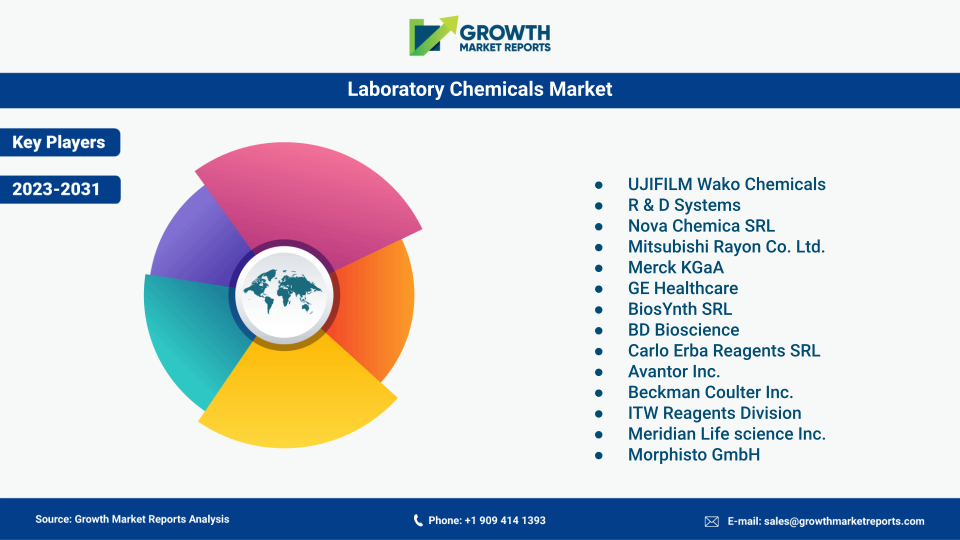

Laboratory Chemicals Market Key Players

Frequently Asked Questions

Sustainability is driving the development and adoption of eco-friendly and green laboratory chemicals, with manufacturers focusing on reducing environmental impact and complying with evolving regulations.

Leading companies include Merck KGaA, Thermo Fisher Scientific Inc., Avantor Inc., Honeywell International Inc., Agilent Technologies, PerkinElmer Inc., GE Healthcare, Lonza Group, Bio-Rad Laboratories, Sigma-Aldrich (Merck), Fisher Scientific, Waters Corporation, Shimadzu Corporation, BD (Becton, Dickinson and Company), and others.

Key challenges include stringent regulatory requirements for chemical handling and disposal, fluctuations in raw material prices, supply chain disruptions, and increasing scrutiny of chemical safety and environmental impact.

Major trends include the adoption of green chemistry and eco-friendly chemicals, customization of chemical solutions, integration with automation and digital technologies, and expansion into emerging markets. Opportunities also arise from next-generation sequencing, high-throughput screening, and precision medicine.

Major end-users include pharmaceutical and biotechnology companies, academic and research institutes, hospitals and diagnostic laboratories, as well as environmental testing and forensic labs.

Laboratory chemicals are primarily used in clinical diagnostics, research & development, quality control, and specialized applications like forensic analysis, environmental monitoring, and educational purposes.

The main product types include solvents, acids, bases, salts, reagents, and other specialty chemicals such as indicators, dyes, and calibration standards.

North America leads the market due to advanced research infrastructure and significant R&D investments, while Asia Pacific is the fastest-growing region, driven by rapid industrialization, government support for research, and expanding healthcare infrastructure.

Key growth drivers include increased research and development activities in pharmaceuticals and biotechnology, technological advancements in laboratory instrumentation, rising demand for high-purity chemicals, and the expansion of healthcare and life sciences sectors.

The global laboratory chemicals market was valued at USD 32.6 billion in 2024 and is projected to reach USD 56.1 billion by 2033, growing at a CAGR of 6.2% from 2025 to 2033.

Table Of Content

Chapter 1 Executive Summary
Chapter 2 Assumptions and Acronyms Used
Chapter 3 Research Methodology
Chapter 4 Laboratory Chemicals Market Overview
   4.1 Introduction
      4.1.1 Market Taxonomy
      4.1.2 Market Definition
      4.1.3 Macro-Economic Factors Impacting the Market Growth
   4.2 Laboratory Chemicals Market Dynamics
      4.2.1 Market Drivers
      4.2.2 Market Restraints
      4.2.3 Market Opportunity
   4.3 Laboratory Chemicals Market - Supply Chain Analysis
      4.3.1 List of Key Suppliers
      4.3.2 List of Key Distributors
      4.3.3 List of Key Consumers
   4.4 Key Forces Shaping the Laboratory Chemicals Market
      4.4.1 Bargaining Power of Suppliers
      4.4.2 Bargaining Power of Buyers
      4.4.3 Threat of Substitution
      4.4.4 Threat of New Entrants
      4.4.5 Competitive Rivalry
   4.5 Global Laboratory Chemicals Market Size & Forecast, 2023-2032
      4.5.1 Laboratory Chemicals Market Size and Y-o-Y Growth
      4.5.2 Laboratory Chemicals Market Absolute $ Opportunity

Chapter 5 Global Laboratory Chemicals Market Analysis and Forecast By Product Type
   5.1 Introduction
      5.1.1 Key Market Trends & Growth Opportunities By Product Type
      5.1.2 Basis Point Share (BPS) Analysis By Product Type
      5.1.3 Absolute $ Opportunity Assessment By Product Type
   5.2 Laboratory Chemicals Market Size Forecast By Product Type
      5.2.1 Solvents
      5.2.2 Acids
      5.2.3 Bases
      5.2.4 Salts
      5.2.5 Reagents
      5.2.6 Others
   5.3 Market Attractiveness Analysis By Product Type

Chapter 6 Global Laboratory Chemicals Market Analysis and Forecast By Application
   6.1 Introduction
      6.1.1 Key Market Trends & Growth Opportunities By Application
      6.1.2 Basis Point Share (BPS) Analysis By Application
      6.1.3 Absolute $ Opportunity Assessment By Application
   6.2 Laboratory Chemicals Market Size Forecast By Application
      6.2.1 Clinical Diagnostics
      6.2.2 Research & Development
      6.2.3 Quality Control
      6.2.4 Others
   6.3 Market Attractiveness Analysis By Application

Chapter 7 Global Laboratory Chemicals Market Analysis and Forecast By End-User
   7.1 Introduction
      7.1.1 Key Market Trends & Growth Opportunities By End-User
      7.1.2 Basis Point Share (BPS) Analysis By End-User
      7.1.3 Absolute $ Opportunity Assessment By End-User
   7.2 Laboratory Chemicals Market Size Forecast By End-User
      7.2.1 Pharmaceutical & Biotechnology Companies
      7.2.2 Academic & Research Institutes
      7.2.3 Hospitals & Diagnostic Laboratories
      7.2.4 Others
   7.3 Market Attractiveness Analysis By End-User

Chapter 8 Global Laboratory Chemicals Market Analysis and Forecast by Region
   8.1 Introduction
      8.1.1 Key Market Trends & Growth Opportunities By Region
      8.1.2 Basis Point Share (BPS) Analysis By Region
      8.1.3 Absolute $ Opportunity Assessment By Region
   8.2 Laboratory Chemicals Market Size Forecast By Region
      8.2.1 North America
      8.2.2 Europe
      8.2.3 Asia Pacific
      8.2.4 Latin America
      8.2.5 Middle East & Africa (MEA)
   8.3 Market Attractiveness Analysis By Region

Chapter 9 Coronavirus Disease (COVID-19) Impact 
   9.1 Introduction 
   9.2 Current & Future Impact Analysis 
   9.3 Economic Impact Analysis 
   9.4 Government Policies 
   9.5 Investment Scenario

Chapter 10 North America Laboratory Chemicals Analysis and Forecast
   10.1 Introduction
   10.2 North America Laboratory Chemicals Market Size Forecast by Country
      10.2.1 U.S.
      10.2.2 Canada
   10.3 Basis Point Share (BPS) Analysis by Country
   10.4 Absolute $ Opportunity Assessment by Country
   10.5 Market Attractiveness Analysis by Country
   10.6 North America Laboratory Chemicals Market Size Forecast By Product Type
      10.6.1 Solvents
      10.6.2 Acids
      10.6.3 Bases
      10.6.4 Salts
      10.6.5 Reagents
      10.6.6 Others
   10.7 Basis Point Share (BPS) Analysis By Product Type 
   10.8 Absolute $ Opportunity Assessment By Product Type 
   10.9 Market Attractiveness Analysis By Product Type
   10.10 North America Laboratory Chemicals Market Size Forecast By Application
      10.10.1 Clinical Diagnostics
      10.10.2 Research & Development
      10.10.3 Quality Control
      10.10.4 Others
   10.11 Basis Point Share (BPS) Analysis By Application 
   10.12 Absolute $ Opportunity Assessment By Application 
   10.13 Market Attractiveness Analysis By Application
   10.14 North America Laboratory Chemicals Market Size Forecast By End-User
      10.14.1 Pharmaceutical & Biotechnology Companies
      10.14.2 Academic & Research Institutes
      10.14.3 Hospitals & Diagnostic Laboratories
      10.14.4 Others
   10.15 Basis Point Share (BPS) Analysis By End-User 
   10.16 Absolute $ Opportunity Assessment By End-User 
   10.17 Market Attractiveness Analysis By End-User

Chapter 11 Europe Laboratory Chemicals Analysis and Forecast
   11.1 Introduction
   11.2 Europe Laboratory Chemicals Market Size Forecast by Country
      11.2.1 Germany
      11.2.2 France
      11.2.3 Italy
      11.2.4 U.K.
      11.2.5 Spain
      11.2.6 Russia
      11.2.7 Rest of Europe
   11.3 Basis Point Share (BPS) Analysis by Country
   11.4 Absolute $ Opportunity Assessment by Country
   11.5 Market Attractiveness Analysis by Country
   11.6 Europe Laboratory Chemicals Market Size Forecast By Product Type
      11.6.1 Solvents
      11.6.2 Acids
      11.6.3 Bases
      11.6.4 Salts
      11.6.5 Reagents
      11.6.6 Others
   11.7 Basis Point Share (BPS) Analysis By Product Type 
   11.8 Absolute $ Opportunity Assessment By Product Type 
   11.9 Market Attractiveness Analysis By Product Type
   11.10 Europe Laboratory Chemicals Market Size Forecast By Application
      11.10.1 Clinical Diagnostics
      11.10.2 Research & Development
      11.10.3 Quality Control
      11.10.4 Others
   11.11 Basis Point Share (BPS) Analysis By Application 
   11.12 Absolute $ Opportunity Assessment By Application 
   11.13 Market Attractiveness Analysis By Application
   11.14 Europe Laboratory Chemicals Market Size Forecast By End-User
      11.14.1 Pharmaceutical & Biotechnology Companies
      11.14.2 Academic & Research Institutes
      11.14.3 Hospitals & Diagnostic Laboratories
      11.14.4 Others
   11.15 Basis Point Share (BPS) Analysis By End-User 
   11.16 Absolute $ Opportunity Assessment By End-User 
   11.17 Market Attractiveness Analysis By End-User

Chapter 12 Asia Pacific Laboratory Chemicals Analysis and Forecast
   12.1 Introduction
   12.2 Asia Pacific Laboratory Chemicals Market Size Forecast by Country
      12.2.1 China
      12.2.2 Japan
      12.2.3 South Korea
      12.2.4 India
      12.2.5 Australia
      12.2.6 South East Asia (SEA)
      12.2.7 Rest of Asia Pacific (APAC)
   12.3 Basis Point Share (BPS) Analysis by Country
   12.4 Absolute $ Opportunity Assessment by Country
   12.5 Market Attractiveness Analysis by Country
   12.6 Asia Pacific Laboratory Chemicals Market Size Forecast By Product Type
      12.6.1 Solvents
      12.6.2 Acids
      12.6.3 Bases
      12.6.4 Salts
      12.6.5 Reagents
      12.6.6 Others
   12.7 Basis Point Share (BPS) Analysis By Product Type 
   12.8 Absolute $ Opportunity Assessment By Product Type 
   12.9 Market Attractiveness Analysis By Product Type
   12.10 Asia Pacific Laboratory Chemicals Market Size Forecast By Application
      12.10.1 Clinical Diagnostics
      12.10.2 Research & Development
      12.10.3 Quality Control
      12.10.4 Others
   12.11 Basis Point Share (BPS) Analysis By Application 
   12.12 Absolute $ Opportunity Assessment By Application 
   12.13 Market Attractiveness Analysis By Application
   12.14 Asia Pacific Laboratory Chemicals Market Size Forecast By End-User
      12.14.1 Pharmaceutical & Biotechnology Companies
      12.14.2 Academic & Research Institutes
      12.14.3 Hospitals & Diagnostic Laboratories
      12.14.4 Others
   12.15 Basis Point Share (BPS) Analysis By End-User 
   12.16 Absolute $ Opportunity Assessment By End-User 
   12.17 Market Attractiveness Analysis By End-User

Chapter 13 Latin America Laboratory Chemicals Analysis and Forecast
   13.1 Introduction
   13.2 Latin America Laboratory Chemicals Market Size Forecast by Country
      13.2.1 Brazil
      13.2.2 Mexico
      13.2.3 Rest of Latin America (LATAM)
   13.3 Basis Point Share (BPS) Analysis by Country
   13.4 Absolute $ Opportunity Assessment by Country
   13.5 Market Attractiveness Analysis by Country
   13.6 Latin America Laboratory Chemicals Market Size Forecast By Product Type
      13.6.1 Solvents
      13.6.2 Acids
      13.6.3 Bases
      13.6.4 Salts
      13.6.5 Reagents
      13.6.6 Others
   13.7 Basis Point Share (BPS) Analysis By Product Type 
   13.8 Absolute $ Opportunity Assessment By Product Type 
   13.9 Market Attractiveness Analysis By Product Type
   13.10 Latin America Laboratory Chemicals Market Size Forecast By Application
      13.10.1 Clinical Diagnostics
      13.10.2 Research & Development
      13.10.3 Quality Control
      13.10.4 Others
   13.11 Basis Point Share (BPS) Analysis By Application 
   13.12 Absolute $ Opportunity Assessment By Application 
   13.13 Market Attractiveness Analysis By Application
   13.14 Latin America Laboratory Chemicals Market Size Forecast By End-User
      13.14.1 Pharmaceutical & Biotechnology Companies
      13.14.2 Academic & Research Institutes
      13.14.3 Hospitals & Diagnostic Laboratories
      13.14.4 Others
   13.15 Basis Point Share (BPS) Analysis By End-User 
   13.16 Absolute $ Opportunity Assessment By End-User 
   13.17 Market Attractiveness Analysis By End-User

Chapter 14 Middle East & Africa (MEA) Laboratory Chemicals Analysis and Forecast
   14.1 Introduction
   14.2 Middle East & Africa (MEA) Laboratory Chemicals Market Size Forecast by Country
      14.2.1 Saudi Arabia
      14.2.2 South Africa
      14.2.3 UAE
      14.2.4 Rest of Middle East & Africa (MEA)
   14.3 Basis Point Share (BPS) Analysis by Country
   14.4 Absolute $ Opportunity Assessment by Country
   14.5 Market Attractiveness Analysis by Country
   14.6 Middle East & Africa (MEA) Laboratory Chemicals Market Size Forecast By Product Type
      14.6.1 Solvents
      14.6.2 Acids
      14.6.3 Bases
      14.6.4 Salts
      14.6.5 Reagents
      14.6.6 Others
   14.7 Basis Point Share (BPS) Analysis By Product Type 
   14.8 Absolute $ Opportunity Assessment By Product Type 
   14.9 Market Attractiveness Analysis By Product Type
   14.10 Middle East & Africa (MEA) Laboratory Chemicals Market Size Forecast By Application
      14.10.1 Clinical Diagnostics
      14.10.2 Research & Development
      14.10.3 Quality Control
      14.10.4 Others
   14.11 Basis Point Share (BPS) Analysis By Application 
   14.12 Absolute $ Opportunity Assessment By Application 
   14.13 Market Attractiveness Analysis By Application
   14.14 Middle East & Africa (MEA) Laboratory Chemicals Market Size Forecast By End-User
      14.14.1 Pharmaceutical & Biotechnology Companies
      14.14.2 Academic & Research Institutes
      14.14.3 Hospitals & Diagnostic Laboratories
      14.14.4 Others
   14.15 Basis Point Share (BPS) Analysis By End-User 
   14.16 Absolute $ Opportunity Assessment By End-User 
   14.17 Market Attractiveness Analysis By End-User

Chapter 15 Competition Landscape 
   15.1 Laboratory Chemicals Market: Competitive Dashboard
   15.2 Global Laboratory Chemicals Market: Market Share Analysis, 2023
   15.3 Company Profiles (Details – Overview, Financials, Developments, Strategy) 
      15.3.1 Thermo Fisher Scientific
Merck KGaA
Avantor Inc.
Honeywell International Inc.
Agilent Technologies
PerkinElmer Inc.
GE Healthcare
Lonza Group
Bio-Rad Laboratories
Sigma-Aldrich (now part of Merck)
Fisher Scientific
Waters Corporation
Shimadzu Corporation
BD (Becton, Dickinson and Company)
Scharlab S.L.
Carolina Biological Supply Company
Loba Chemie
Central Drug House (CDH)
SRL (Sisco Research Laboratories)
Reagecon Diagnostics Ltd.

Methodology

Our Clients

Microsoft
Honda Motor Co. Ltd.
Siemens Healthcare
The John Holland Group
Deloitte
Nestle SA
General Mills
Dassault Aviation