Kresoxim Methyl Market Research Report 2033

Kresoxim Methyl Market Research Report 2033

Segments - by Product Type (Technical Grade, Formulated Products), by Application (Cereals & Grains, Fruits & Vegetables, Oilseeds & Pulses, Others), by Formulation (Wettable Powder, Suspension Concentrate, Emulsifiable Concentrate, Others), by Distribution Channel (Direct Sales, Agrochemical Stores, Online Retail, Others)

https://growthmarketreports.com/Raksha
Author : Raksha Sharma
https://growthmarketreports.com/Vaibhav
Fact-checked by : V. Chandola
https://growthmarketreports.com/Shruti
Editor : Shruti Bhat

Upcoming | Report ID :MC-580 | 4.1 Rating | 40 Reviews | 287 Pages | Format : Docx PDF

Report Description


Kresoxim Methyl Market Outlook

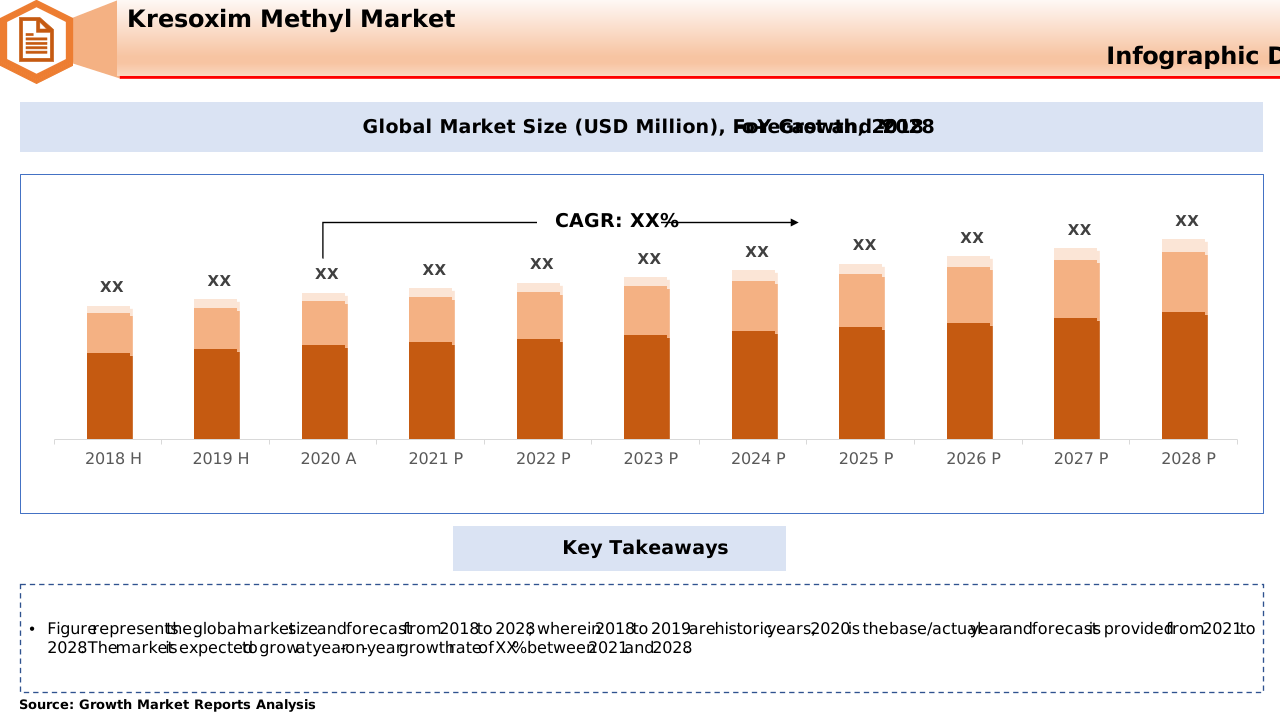
According to our latest research, the global Kresoxim Methyl market size reached USD 412 million in 2024, propelled by robust demand across key agricultural sectors. The market is currently expanding at a CAGR of 5.8% and is forecasted to achieve a value of USD 691 million by 2033. This growth trajectory is supported by rising awareness of crop protection, the need for higher agricultural yields, and evolving regulatory frameworks that encourage the adoption of advanced fungicides such as Kresoxim Methyl. As per our most recent analysis, the market's momentum is primarily driven by the increasing prevalence of fungal diseases in high-value crops and the subsequent need for effective control measures.

One of the most significant growth factors for the Kresoxim Methyl market is the intensification of agricultural practices worldwide. With the global population on a steady rise, there is mounting pressure on farmers and agribusinesses to maximize crop yields and minimize losses due to fungal infections. Kresoxim Methyl, a strobilurin fungicide, has proven efficacy against a broad spectrum of fungal pathogens, making it a preferred choice for both large-scale commercial farms and smaller agricultural operations. The product's systemic action, long residual activity, and compatibility with integrated pest management (IPM) systems further enhance its appeal, driving its adoption across diverse geographies and crop types.

Another crucial driver for the Kresoxim Methyl market is the increasing focus on food security and sustainable agriculture. Governments and international organizations are implementing policies to ensure stable food supplies, particularly in regions prone to crop failures due to fungal outbreaks. The use of Kresoxim Methyl not only supports higher crop productivity but also aligns with sustainability goals by reducing the need for multiple fungicide applications, thus lowering overall chemical usage. This dual benefit of productivity and sustainability is prompting both public and private sector investments in advanced crop protection solutions, further fueling market growth.

Technological advancements in formulation and delivery mechanisms are also shaping the Kresoxim Methyl market landscape. Manufacturers are investing in the development of innovative formulations such as water-dispersible granules, suspension concentrates, and microencapsulated products to enhance ease of application, safety, and environmental compatibility. These innovations are particularly significant in emerging markets where agricultural practices are transitioning from traditional to modern, mechanized methods. As a result, the market is witnessing increased penetration of Kresoxim Methyl products, supported by extensive distribution networks and farmer education initiatives.

From a regional perspective, Asia Pacific continues to dominate the global Kresoxim Methyl market, accounting for a major share of both production and consumption. The region's large agricultural base, coupled with favorable climatic conditions for fungal diseases, drives consistent demand for effective fungicides. North America and Europe also represent significant markets, benefiting from advanced farming infrastructure and stringent crop protection standards. Meanwhile, Latin America and the Middle East & Africa are emerging as high-growth regions, supported by expanding agricultural sectors and increasing adoption of modern crop protection technologies.

Global Kresoxim Methyl Industry Outlook

Product Type Analysis

The Kresoxim Methyl market is segmented by product type into Technical Grade and Formulated Products, each playing a distinct role in the supply chain and end-use applications. Technical grade Kresoxim Methyl serves as the primary raw material for various formulated products and is typically supplied to agrochemical manufacturers for further processing. The demand for technical grade is closely tied to the expansion of formulation facilities and the development of new crop protection solutions. As the market matures, manufacturers are focusing on enhancing the purity and consistency of technical grade Kresoxim Methyl to ensure optimal performance in downstream applications, which has resulted in significant investments in quality control and process optimization.

Formulated products, on the other hand, are directly marketed to end-users such as farmers, cooperatives, and agrochemical distributors. These products are available in various forms, including wettable powders, suspension concentrates, and emulsifiable concentrates, tailored to specific crop and regional requirements. The growth in formulated products is driven by the increasing preference for ready-to-use solutions that offer convenience, safety, and efficacy. Manufacturers are also responding to regulatory pressures by developing formulations with reduced environmental impact, improved biodegradability, and enhanced user safety profiles, thereby expanding their market reach.

The interplay between technical grade and formulated products is further influenced by global supply chain dynamics and regulatory frameworks. For instance, fluctuations in raw material prices, changes in import-export regulations, and the introduction of new safety standards can impact both segments. Companies are adopting integrated production models to mitigate supply chain risks and ensure a steady supply of high-quality Kresoxim Methyl, thereby maintaining their competitive edge in the market.

Innovation in product development remains a key differentiator in the product type segment. Leading players are investing in research and development to create next-generation Kresoxim Methyl formulations with enhanced efficacy, broader spectrum activity, and improved compatibility with other agrochemicals. These advancements are not only meeting the evolving needs of end-users but also helping manufacturers comply with increasingly stringent regulatory requirements. As a result, the product type segment is expected to witness sustained growth and diversification over the forecast period.

Report Scope

Attributes Details
Report Title Kresoxim Methyl Market Research Report 2033
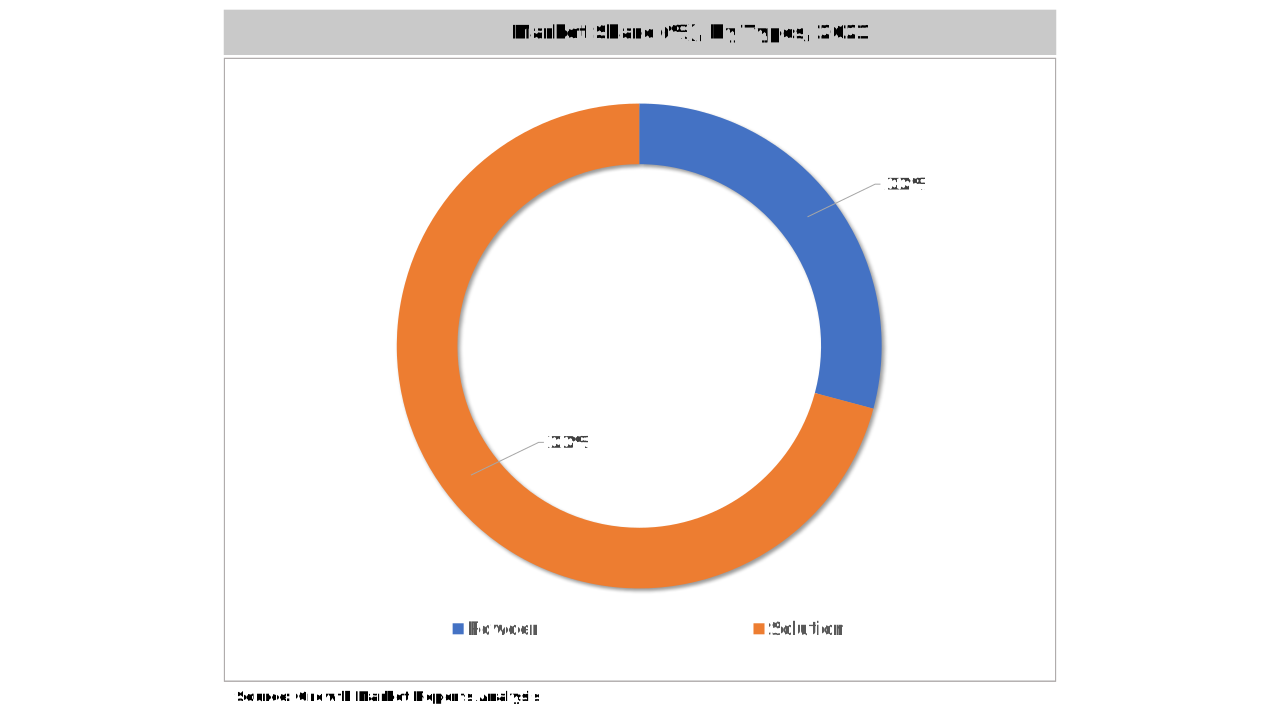
By Product Type Technical Grade, Formulated Products
By Application Cereals & Grains, Fruits & Vegetables, Oilseeds & Pulses, Others
By Formulation Wettable Powder, Suspension Concentrate, Emulsifiable Concentrate, Others
By Distribution Channel Direct Sales, Agrochemical Stores, Online Retail, Others
Regions Covered North America, Europe, APAC, Latin America, MEA
Base Year 2024
Historic Data 2018-2023
Forecast Period 2025-2033
Number of Pages 287
Number of Tables & Figures 371
Customization Available Yes, the report can be customized as per your need.

Application Analysis

The application segment of the Kresoxim Methyl market is categorized into Cereals & Grains, Fruits & Vegetables, Oilseeds & Pulses, and Others. Cereals and grains represent the largest application segment, accounting for a significant share of the global market. The widespread cultivation of crops such as wheat, rice, and maize, coupled with their susceptibility to fungal diseases like powdery mildew and rusts, drives robust demand for Kresoxim Methyl in this segment. The fungicide's ability to provide long-lasting protection and improve yield quality makes it an indispensable tool for cereal and grain farmers worldwide.

Fruits and vegetables constitute the second-largest application segment, benefiting from the rising consumer demand for high-quality, blemish-free produce. Fungal infections can lead to substantial post-harvest losses and reduced marketability of fruits and vegetables, prompting growers to adopt effective crop protection strategies. Kresoxim Methyl's broad-spectrum activity and compatibility with integrated pest management programs make it a preferred choice for this segment. Additionally, the trend toward organic and residue-free produce is driving the development of low-residue formulations, further expanding the market for Kresoxim Methyl in the fruits and vegetables category.

The oilseeds and pulses segment is experiencing steady growth, supported by increasing cultivation of crops such as soybeans, sunflower, and peas in both developed and emerging markets. These crops are particularly vulnerable to fungal pathogens that can significantly impact yield and quality. The adoption of Kresoxim Methyl in oilseeds and pulses is driven by its proven efficacy, ease of application, and compatibility with other crop protection products. Manufacturers are also focusing on developing crop-specific formulations to address the unique needs of this segment, thereby enhancing their product portfolios and market penetration.

The "Others" category encompasses a diverse range of crops, including ornamentals, turf, and specialty crops, which are gaining importance in the global agricultural landscape. The increasing commercialization of horticulture and landscaping, coupled with the need for disease-free plants, is driving demand for effective fungicides such as Kresoxim Methyl. This segment offers significant growth opportunities for manufacturers, particularly in regions with expanding urbanization and infrastructure development. Overall, the application segment is characterized by dynamic growth patterns, driven by evolving agricultural practices, crop diversification, and changing consumer preferences.

Formulation Analysis

The formulation segment of the Kresoxim Methyl market is divided into Wettable Powder, Suspension Concentrate, Emulsifiable Concentrate, and Others. Wettable powder formulations have traditionally dominated the market due to their ease of storage, long shelf life, and cost-effectiveness. These formulations are widely used in both large-scale and smallholder farming operations, particularly in developing regions where access to advanced application equipment may be limited. However, wettable powders can pose challenges in terms of dust generation and mixing, prompting manufacturers to explore alternative formulation technologies.

Suspension concentrates are gaining traction in the Kresoxim Methyl market, driven by their superior dispersion characteristics, reduced dust hazards, and enhanced user safety. These formulations are particularly popular in developed markets, where regulatory standards for occupational health and environmental safety are stringent. Suspension concentrates offer improved bioavailability and coverage, resulting in better disease control and higher crop yields. Manufacturers are investing in advanced formulation technologies to optimize particle size distribution, stability, and compatibility with other agrochemicals, thereby enhancing the performance and market appeal of suspension concentrates.

Emulsifiable concentrates represent another important segment, offering advantages such as rapid mixing, uniform application, and compatibility with a wide range of spray equipment. These formulations are particularly suited for crops and regions where rapid disease onset requires quick and effective intervention. The flexibility of emulsifiable concentrates in tank-mix applications with other pesticides and fertilizers further enhances their utility, making them a preferred choice for integrated crop management programs. Manufacturers are also developing low-odor and reduced-toxicity formulations to address user preferences and regulatory requirements.

The "Others" category includes innovative formulations such as water-dispersible granules, microencapsulated products, and controlled-release formulations. These advanced products are designed to address specific challenges such as drift reduction, improved rainfastness, and extended residual activity. The increasing emphasis on precision agriculture and sustainable farming practices is driving demand for these specialized formulations, particularly in high-value crop segments. Overall, the formulation segment is characterized by continuous innovation, driven by evolving user needs, regulatory trends, and technological advancements.

Distribution Channel Analysis

The distribution channel segment of the Kresoxim Methyl market comprises Direct Sales, Agrochemical Stores, Online Retail, and Others. Direct sales channels are favored by large-scale commercial farms and agribusinesses that require bulk quantities of Kresoxim Methyl and value personalized technical support. Manufacturers and distributors leverage direct sales to build long-term relationships with key customers, offer customized solutions, and provide timely product delivery. The direct sales model also enables manufacturers to gather valuable market feedback and insights, which inform product development and marketing strategies.

Agrochemical stores represent the most widespread distribution channel, particularly in developing regions where smallholder farmers rely on local retailers for crop protection products. These stores play a critical role in educating farmers about product usage, application techniques, and safety measures. Manufacturers collaborate with agrochemical retailers to conduct training programs, demonstrations, and promotional campaigns, thereby increasing product awareness and adoption. The agrochemical store channel is characterized by high transaction volumes, rapid inventory turnover, and strong local market knowledge.

Online retail is an emerging distribution channel in the Kresoxim Methyl market, driven by increasing internet penetration, digital literacy, and the adoption of e-commerce platforms in the agricultural sector. Online channels offer farmers the convenience of browsing, comparing, and purchasing products from the comfort of their homes or farms. Manufacturers and distributors are leveraging digital marketing, targeted promotions, and user-friendly interfaces to attract and retain online customers. The growth of online retail is also supported by the availability of logistics and delivery services that ensure timely and secure product delivery to remote locations.

The "Others" category includes cooperative societies, government procurement programs, and contract farming arrangements. These channels are particularly important in regions where agricultural inputs are subsidized or distributed through public-private partnerships. Cooperative societies enable smallholder farmers to pool resources, negotiate better terms, and access high-quality crop protection products at competitive prices. Government programs and contract farming arrangements provide a stable and predictable market for manufacturers, while also supporting agricultural development and food security initiatives. Overall, the distribution channel segment is evolving rapidly, driven by changing buyer preferences, technological advancements, and regulatory developments.

Opportunities & Threats

The Kresoxim Methyl market presents a wealth of opportunities for stakeholders across the value chain. One of the most promising opportunities lies in the development and commercialization of next-generation formulations that address emerging challenges such as resistance management, environmental sustainability, and regulatory compliance. Manufacturers that invest in research and innovation to create differentiated products with enhanced efficacy, safety, and user-friendliness are well-positioned to capture a larger share of the market. Additionally, the expansion of distribution networks, particularly in emerging markets, offers significant growth potential, as rising incomes, urbanization, and changing dietary patterns drive demand for high-quality agricultural produce and effective crop protection solutions.

Another key opportunity arises from the increasing integration of digital technologies and precision agriculture practices in the farming sector. The adoption of data-driven decision-making, remote sensing, and automated application systems enables farmers to optimize the use of fungicides such as Kresoxim Methyl, reduce wastage, and improve overall crop productivity. Manufacturers and distributors can leverage digital platforms to provide value-added services such as disease monitoring, application recommendations, and performance analytics, thereby strengthening customer relationships and loyalty. Furthermore, partnerships with research institutions, government agencies, and farmer organizations can facilitate the development and dissemination of best practices, enhancing the market's long-term sustainability and resilience.

Despite these opportunities, the Kresoxim Methyl market faces certain restraining factors that could impact its growth trajectory. One of the primary challenges is the increasing regulatory scrutiny of agrochemicals, driven by concerns over environmental impact, human health, and residue levels in food products. Stringent regulations and periodic reviews of active ingredients can result in product bans, usage restrictions, or the need for costly reformulations. Additionally, the emergence of fungicide resistance among target pathogens poses a significant threat to the long-term efficacy of Kresoxim Methyl and other strobilurin fungicides. Manufacturers must invest in resistance management strategies, stewardship programs, and the development of novel modes of action to mitigate these risks and ensure the continued relevance of their products in the market.

Regional Outlook

The Asia Pacific region holds the largest share of the global Kresoxim Methyl market, accounting for approximately 38% of total revenue in 2024, or about USD 156 million. This dominance is attributed to the region's vast agricultural landscape, diverse crop portfolio, and high incidence of fungal diseases. Countries such as China, India, and Japan are leading consumers of Kresoxim Methyl, supported by government initiatives to enhance crop productivity, improve food security, and promote sustainable farming practices. The market in Asia Pacific is expected to grow at a robust CAGR of 6.3% over the forecast period, driven by rising investment in agricultural infrastructure, expanding distribution networks, and increasing awareness of advanced crop protection solutions among farmers.

North America is the second-largest market, with a value of USD 94 million in 2024, representing 23% of the global market. The region benefits from a well-established agricultural sector, advanced research and development capabilities, and stringent regulatory standards for crop protection products. The adoption of Kresoxim Methyl is particularly high in the United States and Canada, where large-scale commercial farming and the cultivation of high-value crops drive demand for effective fungicides. The North American market is characterized by a strong focus on innovation, sustainability, and integrated pest management, which are expected to support steady growth over the forecast period.

Europe accounts for 19% of the global Kresoxim Methyl market, or approximately USD 78 million in 2024. The region's market dynamics are shaped by the European Union's stringent regulatory framework, which emphasizes environmental protection, food safety, and sustainable agriculture. Despite regulatory challenges, the demand for Kresoxim Methyl remains robust, particularly in countries with intensive cereal and vegetable cultivation such as France, Germany, and Spain. The European market is witnessing a gradual shift toward low-residue and eco-friendly formulations, driven by consumer preferences and policy directives. Meanwhile, Latin America and the Middle East & Africa collectively account for the remaining 20% of the global market, or about USD 84 million. These regions are experiencing rapid growth, supported by expanding agricultural activities, favorable climatic conditions, and increasing investment in crop protection technologies.

Kresoxim Methyl Market Statistics

Competitor Outlook

The competitive landscape of the Kresoxim Methyl market is characterized by the presence of both multinational agrochemical giants and regional players, each striving to expand their market share through product innovation, strategic partnerships, and operational excellence. Leading companies are investing heavily in research and development to create differentiated products that address evolving customer needs, regulatory requirements, and sustainability challenges. The market is also witnessing a trend toward consolidation, with mergers, acquisitions, and alliances enabling companies to enhance their product portfolios, geographic reach, and technological capabilities. This competitive intensity is fostering a culture of continuous improvement, with players focusing on quality, cost efficiency, and customer service as key differentiators.

Global market leaders are leveraging their extensive distribution networks, brand recognition, and technical expertise to maintain a strong foothold in both mature and emerging markets. These companies are also actively engaged in farmer education, stewardship programs, and collaborative research initiatives to promote the responsible use of Kresoxim Methyl and other crop protection products. At the same time, regional players are capitalizing on their deep understanding of local market dynamics, regulatory environments, and customer preferences to offer tailored solutions and build loyal customer bases. The interplay between global and regional competitors is driving innovation, price competition, and the adoption of best practices across the industry.

In addition to traditional marketing and sales strategies, companies are increasingly embracing digital transformation to enhance customer engagement, streamline operations, and optimize supply chain management. The use of data analytics, artificial intelligence, and cloud-based platforms is enabling manufacturers and distributors to better anticipate market trends, respond to customer needs, and improve decision-making. This digital shift is particularly evident in the areas of product development, demand forecasting, and customer support, where real-time information and insights are critical to maintaining a competitive edge.

Major companies operating in the global Kresoxim Methyl market include BASF SE, Syngenta AG, UPL Limited, Nufarm Limited, and Jiangsu Yangnong Chemical Group Co., Ltd. These industry leaders are known for their comprehensive product portfolios, global reach, and commitment to innovation. BASF SE, for example, has a strong focus on sustainable agriculture and invests heavily in the development of environmentally friendly crop protection solutions. Syngenta AG is recognized for its integrated approach to crop protection, combining chemical, biological, and digital technologies to deliver holistic solutions to farmers. UPL Limited leverages its extensive distribution network and local market expertise to serve diverse customer segments across the globe. Nufarm Limited and Jiangsu Yangnong Chemical Group Co., Ltd. are also prominent players, known for their competitive pricing, quality assurance, and customer-centric approach. Collectively, these companies are shaping the future of the Kresoxim Methyl market through their commitment to excellence, innovation, and sustainability.

Key Players

  • BASF SE
  • Syngenta AG
  • Bayer CropScience AG
  • FMC Corporation
  • Nufarm Limited
  • Sumitomo Chemical Co., Ltd.
  • UPL Limited
  • Adama Agricultural Solutions Ltd.
  • Jiangsu Flag Chemical Industry Co., Ltd.
  • Shandong Sino-Agri United Biotechnology Co., Ltd.
  • Jiangsu Yangnong Chemical Group Co., Ltd.
  • Zhejiang Heben Pesticide & Chemicals Co., Ltd.
  • Shandong Weifang Rainbow Chemical Co., Ltd.
  • Jiangsu Frey Agrochemicals Co., Ltd.
  • Meghmani Organics Limited
  • Coromandel International Limited
  • PI Industries Ltd.
  • Sharda Cropchem Limited
  • Agro Life Science Corporation
  • Indofil Industries Limited
Kresoxim Methyl Market Overview

Segments

The Kresoxim Methyl market has been segmented on the basis of

Product Type

  • Technical Grade
  • Formulated Products

Application

  • Cereals & Grains
  • Fruits & Vegetables
  • Oilseeds & Pulses
  • Others

Formulation

  • Wettable Powder
  • Suspension Concentrate
  • Emulsifiable Concentrate
  • Others

Distribution Channel

  • Direct Sales
  • Agrochemical Stores
  • Online Retail
  • Others

Competitive Landscape

Key companies in the global kresoxim methyl market include Bessen Chemical Ltd, Essence Group, BASF SE, Jingbo Agrochemicals Technology Co., Ltd, SinoHarvest Corp., Kenvos Biotech Co., Ltd., and Jigs Chemical. Technology launches, acquisitions, and R&D activities are key strategies adopted by players in the kresoxim methyl market.

In January 2019, Rallis India Ltd., a TATA Enterprise launched Zygant and Ayaan for Indian farmers. The new solution offered by Rallis India is expected to help the farming community for effective management of pests and rice stem borer. Government policies such as Make in India encouraged small scale and large scale industries to boost the production capacity.
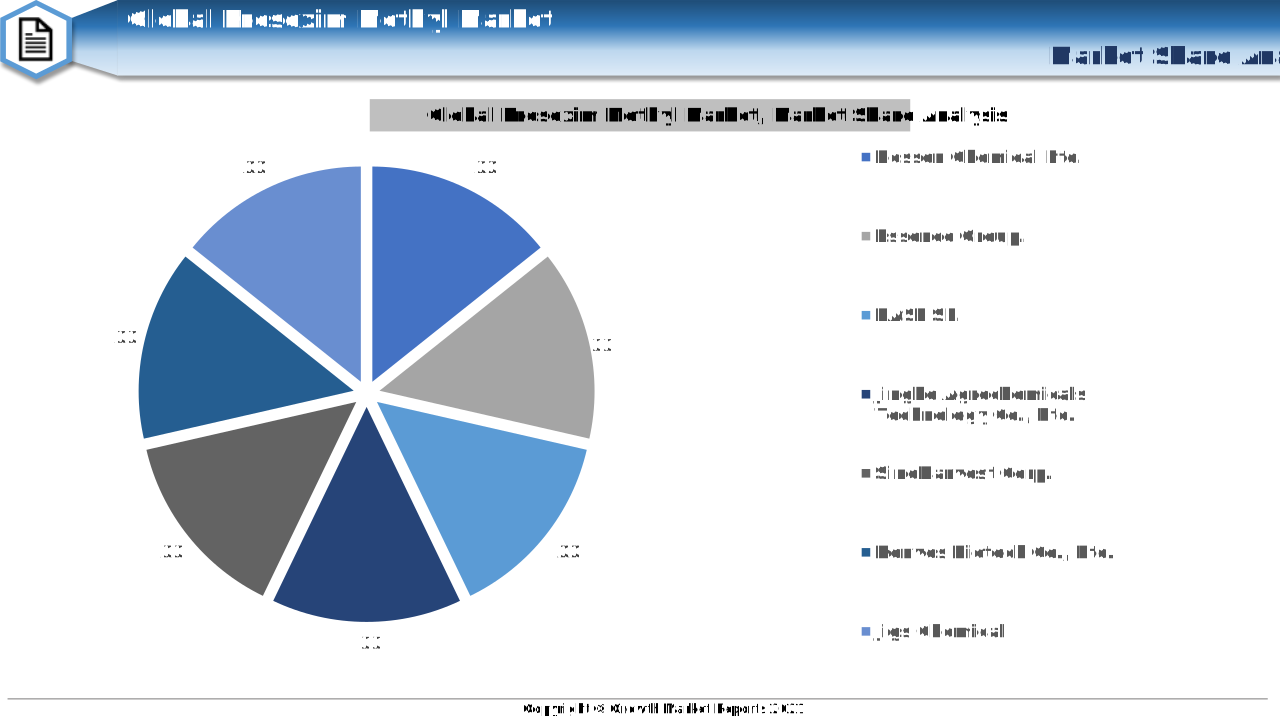

Global Kresoxim Methyl Market Key Players

Frequently Asked Questions

Opportunities include developing next-generation formulations for resistance management and sustainability, leveraging digital technologies for precision agriculture, and expanding distribution networks in emerging markets.

Major companies include BASF SE, Syngenta AG, UPL Limited, Nufarm Limited, Jiangsu Yangnong Chemical Group Co., Ltd., Bayer CropScience AG, FMC Corporation, and several others with strong global and regional presence.

The market faces challenges such as increasing regulatory scrutiny, concerns over environmental and human health impacts, the emergence of fungicide resistance, and the need for costly reformulations to meet new standards.

Key growth drivers include rising awareness of crop protection, the need for higher agricultural yields, intensification of farming practices, technological advancements in formulations, and supportive regulatory frameworks.

Kresoxim Methyl is distributed through Direct Sales, Agrochemical Stores, Online Retail, and other channels such as cooperative societies and government procurement programs.

Kresoxim Methyl is available in various formulations including Wettable Powder, Suspension Concentrate, Emulsifiable Concentrate, and innovative options like water-dispersible granules and microencapsulated products.

Kresoxim Methyl is primarily used in Cereals & Grains, Fruits & Vegetables, Oilseeds & Pulses, and other crops such as ornamentals and turf. Cereals & Grains represent the largest application segment due to their susceptibility to fungal diseases.

Asia Pacific leads the global Kresoxim Methyl market, accounting for about 38% of total revenue in 2024. North America and Europe are also significant markets, while Latin America and the Middle East & Africa are emerging as high-growth regions.

As of 2024, the global Kresoxim Methyl market size reached USD 412 million and is expected to grow at a CAGR of 5.8%, reaching approximately USD 691 million by 2033.

Kresoxim Methyl is a strobilurin fungicide widely used in agriculture to protect crops from a broad spectrum of fungal diseases. It is valued for its systemic action, long residual activity, and compatibility with integrated pest management systems, making it effective for both large-scale and smallholder farms.

Table Of Content

Chapter 1 Executive Summary
Chapter 2 Assumptions and Acronyms Used
Chapter 3 Research Methodology
Chapter 4 Kresoxim Methyl Market Overview
   4.1 Introduction
      4.1.1 Market Taxonomy
      4.1.2 Market Definition
      4.1.3 Macro-Economic Factors Impacting the Market Growth
   4.2 Kresoxim Methyl Market Dynamics
      4.2.1 Market Drivers
      4.2.2 Market Restraints
      4.2.3 Market Opportunity
   4.3 Kresoxim Methyl Market - Supply Chain Analysis
      4.3.1 List of Key Suppliers
      4.3.2 List of Key Distributors
      4.3.3 List of Key Consumers
   4.4 Key Forces Shaping the Kresoxim Methyl Market
      4.4.1 Bargaining Power of Suppliers
      4.4.2 Bargaining Power of Buyers
      4.4.3 Threat of Substitution
      4.4.4 Threat of New Entrants
      4.4.5 Competitive Rivalry
   4.5 Global Kresoxim Methyl Market Size & Forecast, 2023-2032
      4.5.1 Kresoxim Methyl Market Size and Y-o-Y Growth
      4.5.2 Kresoxim Methyl Market Absolute $ Opportunity

Chapter 5 Global Kresoxim Methyl Market Analysis and Forecast By Product Type
   5.1 Introduction
      5.1.1 Key Market Trends & Growth Opportunities By Product Type
      5.1.2 Basis Point Share (BPS) Analysis By Product Type
      5.1.3 Absolute $ Opportunity Assessment By Product Type
   5.2 Kresoxim Methyl Market Size Forecast By Product Type
      5.2.1 Technical Grade
      5.2.2 Formulated Products
   5.3 Market Attractiveness Analysis By Product Type

Chapter 6 Global Kresoxim Methyl Market Analysis and Forecast By Application
   6.1 Introduction
      6.1.1 Key Market Trends & Growth Opportunities By Application
      6.1.2 Basis Point Share (BPS) Analysis By Application
      6.1.3 Absolute $ Opportunity Assessment By Application
   6.2 Kresoxim Methyl Market Size Forecast By Application
      6.2.1 Cereals & Grains
      6.2.2 Fruits & Vegetables
      6.2.3 Oilseeds & Pulses
      6.2.4 Others
   6.3 Market Attractiveness Analysis By Application

Chapter 7 Global Kresoxim Methyl Market Analysis and Forecast By Formulation
   7.1 Introduction
      7.1.1 Key Market Trends & Growth Opportunities By Formulation
      7.1.2 Basis Point Share (BPS) Analysis By Formulation
      7.1.3 Absolute $ Opportunity Assessment By Formulation
   7.2 Kresoxim Methyl Market Size Forecast By Formulation
      7.2.1 Wettable Powder
      7.2.2 Suspension Concentrate
      7.2.3 Emulsifiable Concentrate
      7.2.4 Others
   7.3 Market Attractiveness Analysis By Formulation

Chapter 8 Global Kresoxim Methyl Market Analysis and Forecast By Distribution Channel
   8.1 Introduction
      8.1.1 Key Market Trends & Growth Opportunities By Distribution Channel
      8.1.2 Basis Point Share (BPS) Analysis By Distribution Channel
      8.1.3 Absolute $ Opportunity Assessment By Distribution Channel
   8.2 Kresoxim Methyl Market Size Forecast By Distribution Channel
      8.2.1 Direct Sales
      8.2.2 Agrochemical Stores
      8.2.3 Online Retail
      8.2.4 Others
   8.3 Market Attractiveness Analysis By Distribution Channel

Chapter 9 Global Kresoxim Methyl Market Analysis and Forecast by Region
   9.1 Introduction
      9.1.1 Key Market Trends & Growth Opportunities By Region
      9.1.2 Basis Point Share (BPS) Analysis By Region
      9.1.3 Absolute $ Opportunity Assessment By Region
   9.2 Kresoxim Methyl Market Size Forecast By Region
      9.2.1 North America
      9.2.2 Europe
      9.2.3 Asia Pacific
      9.2.4 Latin America
      9.2.5 Middle East & Africa (MEA)
   9.3 Market Attractiveness Analysis By Region

Chapter 10 Coronavirus Disease (COVID-19) Impact 
   10.1 Introduction 
   10.2 Current & Future Impact Analysis 
   10.3 Economic Impact Analysis 
   10.4 Government Policies 
   10.5 Investment Scenario

Chapter 11 North America Kresoxim Methyl Analysis and Forecast
   11.1 Introduction
   11.2 North America Kresoxim Methyl Market Size Forecast by Country
      11.2.1 U.S.
      11.2.2 Canada
   11.3 Basis Point Share (BPS) Analysis by Country
   11.4 Absolute $ Opportunity Assessment by Country
   11.5 Market Attractiveness Analysis by Country
   11.6 North America Kresoxim Methyl Market Size Forecast By Product Type
      11.6.1 Technical Grade
      11.6.2 Formulated Products
   11.7 Basis Point Share (BPS) Analysis By Product Type 
   11.8 Absolute $ Opportunity Assessment By Product Type 
   11.9 Market Attractiveness Analysis By Product Type
   11.10 North America Kresoxim Methyl Market Size Forecast By Application
      11.10.1 Cereals & Grains
      11.10.2 Fruits & Vegetables
      11.10.3 Oilseeds & Pulses
      11.10.4 Others
   11.11 Basis Point Share (BPS) Analysis By Application 
   11.12 Absolute $ Opportunity Assessment By Application 
   11.13 Market Attractiveness Analysis By Application
   11.14 North America Kresoxim Methyl Market Size Forecast By Formulation
      11.14.1 Wettable Powder
      11.14.2 Suspension Concentrate
      11.14.3 Emulsifiable Concentrate
      11.14.4 Others
   11.15 Basis Point Share (BPS) Analysis By Formulation 
   11.16 Absolute $ Opportunity Assessment By Formulation 
   11.17 Market Attractiveness Analysis By Formulation
   11.18 North America Kresoxim Methyl Market Size Forecast By Distribution Channel
      11.18.1 Direct Sales
      11.18.2 Agrochemical Stores
      11.18.3 Online Retail
      11.18.4 Others
   11.19 Basis Point Share (BPS) Analysis By Distribution Channel 
   11.20 Absolute $ Opportunity Assessment By Distribution Channel 
   11.21 Market Attractiveness Analysis By Distribution Channel

Chapter 12 Europe Kresoxim Methyl Analysis and Forecast
   12.1 Introduction
   12.2 Europe Kresoxim Methyl Market Size Forecast by Country
      12.2.1 Germany
      12.2.2 France
      12.2.3 Italy
      12.2.4 U.K.
      12.2.5 Spain
      12.2.6 Russia
      12.2.7 Rest of Europe
   12.3 Basis Point Share (BPS) Analysis by Country
   12.4 Absolute $ Opportunity Assessment by Country
   12.5 Market Attractiveness Analysis by Country
   12.6 Europe Kresoxim Methyl Market Size Forecast By Product Type
      12.6.1 Technical Grade
      12.6.2 Formulated Products
   12.7 Basis Point Share (BPS) Analysis By Product Type 
   12.8 Absolute $ Opportunity Assessment By Product Type 
   12.9 Market Attractiveness Analysis By Product Type
   12.10 Europe Kresoxim Methyl Market Size Forecast By Application
      12.10.1 Cereals & Grains
      12.10.2 Fruits & Vegetables
      12.10.3 Oilseeds & Pulses
      12.10.4 Others
   12.11 Basis Point Share (BPS) Analysis By Application 
   12.12 Absolute $ Opportunity Assessment By Application 
   12.13 Market Attractiveness Analysis By Application
   12.14 Europe Kresoxim Methyl Market Size Forecast By Formulation
      12.14.1 Wettable Powder
      12.14.2 Suspension Concentrate
      12.14.3 Emulsifiable Concentrate
      12.14.4 Others
   12.15 Basis Point Share (BPS) Analysis By Formulation 
   12.16 Absolute $ Opportunity Assessment By Formulation 
   12.17 Market Attractiveness Analysis By Formulation
   12.18 Europe Kresoxim Methyl Market Size Forecast By Distribution Channel
      12.18.1 Direct Sales
      12.18.2 Agrochemical Stores
      12.18.3 Online Retail
      12.18.4 Others
   12.19 Basis Point Share (BPS) Analysis By Distribution Channel 
   12.20 Absolute $ Opportunity Assessment By Distribution Channel 
   12.21 Market Attractiveness Analysis By Distribution Channel

Chapter 13 Asia Pacific Kresoxim Methyl Analysis and Forecast
   13.1 Introduction
   13.2 Asia Pacific Kresoxim Methyl Market Size Forecast by Country
      13.2.1 China
      13.2.2 Japan
      13.2.3 South Korea
      13.2.4 India
      13.2.5 Australia
      13.2.6 South East Asia (SEA)
      13.2.7 Rest of Asia Pacific (APAC)
   13.3 Basis Point Share (BPS) Analysis by Country
   13.4 Absolute $ Opportunity Assessment by Country
   13.5 Market Attractiveness Analysis by Country
   13.6 Asia Pacific Kresoxim Methyl Market Size Forecast By Product Type
      13.6.1 Technical Grade
      13.6.2 Formulated Products
   13.7 Basis Point Share (BPS) Analysis By Product Type 
   13.8 Absolute $ Opportunity Assessment By Product Type 
   13.9 Market Attractiveness Analysis By Product Type
   13.10 Asia Pacific Kresoxim Methyl Market Size Forecast By Application
      13.10.1 Cereals & Grains
      13.10.2 Fruits & Vegetables
      13.10.3 Oilseeds & Pulses
      13.10.4 Others
   13.11 Basis Point Share (BPS) Analysis By Application 
   13.12 Absolute $ Opportunity Assessment By Application 
   13.13 Market Attractiveness Analysis By Application
   13.14 Asia Pacific Kresoxim Methyl Market Size Forecast By Formulation
      13.14.1 Wettable Powder
      13.14.2 Suspension Concentrate
      13.14.3 Emulsifiable Concentrate
      13.14.4 Others
   13.15 Basis Point Share (BPS) Analysis By Formulation 
   13.16 Absolute $ Opportunity Assessment By Formulation 
   13.17 Market Attractiveness Analysis By Formulation
   13.18 Asia Pacific Kresoxim Methyl Market Size Forecast By Distribution Channel
      13.18.1 Direct Sales
      13.18.2 Agrochemical Stores
      13.18.3 Online Retail
      13.18.4 Others
   13.19 Basis Point Share (BPS) Analysis By Distribution Channel 
   13.20 Absolute $ Opportunity Assessment By Distribution Channel 
   13.21 Market Attractiveness Analysis By Distribution Channel

Chapter 14 Latin America Kresoxim Methyl Analysis and Forecast
   14.1 Introduction
   14.2 Latin America Kresoxim Methyl Market Size Forecast by Country
      14.2.1 Brazil
      14.2.2 Mexico
      14.2.3 Rest of Latin America (LATAM)
   14.3 Basis Point Share (BPS) Analysis by Country
   14.4 Absolute $ Opportunity Assessment by Country
   14.5 Market Attractiveness Analysis by Country
   14.6 Latin America Kresoxim Methyl Market Size Forecast By Product Type
      14.6.1 Technical Grade
      14.6.2 Formulated Products
   14.7 Basis Point Share (BPS) Analysis By Product Type 
   14.8 Absolute $ Opportunity Assessment By Product Type 
   14.9 Market Attractiveness Analysis By Product Type
   14.10 Latin America Kresoxim Methyl Market Size Forecast By Application
      14.10.1 Cereals & Grains
      14.10.2 Fruits & Vegetables
      14.10.3 Oilseeds & Pulses
      14.10.4 Others
   14.11 Basis Point Share (BPS) Analysis By Application 
   14.12 Absolute $ Opportunity Assessment By Application 
   14.13 Market Attractiveness Analysis By Application
   14.14 Latin America Kresoxim Methyl Market Size Forecast By Formulation
      14.14.1 Wettable Powder
      14.14.2 Suspension Concentrate
      14.14.3 Emulsifiable Concentrate
      14.14.4 Others
   14.15 Basis Point Share (BPS) Analysis By Formulation 
   14.16 Absolute $ Opportunity Assessment By Formulation 
   14.17 Market Attractiveness Analysis By Formulation
   14.18 Latin America Kresoxim Methyl Market Size Forecast By Distribution Channel
      14.18.1 Direct Sales
      14.18.2 Agrochemical Stores
      14.18.3 Online Retail
      14.18.4 Others
   14.19 Basis Point Share (BPS) Analysis By Distribution Channel 
   14.20 Absolute $ Opportunity Assessment By Distribution Channel 
   14.21 Market Attractiveness Analysis By Distribution Channel

Chapter 15 Middle East & Africa (MEA) Kresoxim Methyl Analysis and Forecast
   15.1 Introduction
   15.2 Middle East & Africa (MEA) Kresoxim Methyl Market Size Forecast by Country
      15.2.1 Saudi Arabia
      15.2.2 South Africa
      15.2.3 UAE
      15.2.4 Rest of Middle East & Africa (MEA)
   15.3 Basis Point Share (BPS) Analysis by Country
   15.4 Absolute $ Opportunity Assessment by Country
   15.5 Market Attractiveness Analysis by Country
   15.6 Middle East & Africa (MEA) Kresoxim Methyl Market Size Forecast By Product Type
      15.6.1 Technical Grade
      15.6.2 Formulated Products
   15.7 Basis Point Share (BPS) Analysis By Product Type 
   15.8 Absolute $ Opportunity Assessment By Product Type 
   15.9 Market Attractiveness Analysis By Product Type
   15.10 Middle East & Africa (MEA) Kresoxim Methyl Market Size Forecast By Application
      15.10.1 Cereals & Grains
      15.10.2 Fruits & Vegetables
      15.10.3 Oilseeds & Pulses
      15.10.4 Others
   15.11 Basis Point Share (BPS) Analysis By Application 
   15.12 Absolute $ Opportunity Assessment By Application 
   15.13 Market Attractiveness Analysis By Application
   15.14 Middle East & Africa (MEA) Kresoxim Methyl Market Size Forecast By Formulation
      15.14.1 Wettable Powder
      15.14.2 Suspension Concentrate
      15.14.3 Emulsifiable Concentrate
      15.14.4 Others
   15.15 Basis Point Share (BPS) Analysis By Formulation 
   15.16 Absolute $ Opportunity Assessment By Formulation 
   15.17 Market Attractiveness Analysis By Formulation
   15.18 Middle East & Africa (MEA) Kresoxim Methyl Market Size Forecast By Distribution Channel
      15.18.1 Direct Sales
      15.18.2 Agrochemical Stores
      15.18.3 Online Retail
      15.18.4 Others
   15.19 Basis Point Share (BPS) Analysis By Distribution Channel 
   15.20 Absolute $ Opportunity Assessment By Distribution Channel 
   15.21 Market Attractiveness Analysis By Distribution Channel

Chapter 16 Competition Landscape 
   16.1 Kresoxim Methyl Market: Competitive Dashboard
   16.2 Global Kresoxim Methyl Market: Market Share Analysis, 2023
   16.3 Company Profiles (Details – Overview, Financials, Developments, Strategy) 
      16.3.1 BASF SE
Syngenta AG
Bayer CropScience AG
FMC Corporation
Nufarm Limited
Sumitomo Chemical Co., Ltd.
UPL Limited
Adama Agricultural Solutions Ltd.
Jiangsu Flag Chemical Industry Co., Ltd.
Shandong Sino-Agri United Biotechnology Co., Ltd.
Jiangsu Yangnong Chemical Group Co., Ltd.
Zhejiang Heben Pesticide & Chemicals Co., Ltd.
Shandong Weifang Rainbow Chemical Co., Ltd.
Jiangsu Frey Agrochemicals Co., Ltd.
Meghmani Organics Limited
Coromandel International Limited
PI Industries Ltd.
Sharda Cropchem Limited
Agro Life Science Corporation
Indofil Industries Limited

Methodology

Our Clients

FedEx Logistics
Honda Motor Co. Ltd.
Siemens Healthcare
General Electric
Microsoft
Dassault Aviation
Pfizer
sinopec