Karaoke Market Research Report 2033

Karaoke Market Research Report 2033

Segments - by Product Type (Karaoke Machines, Microphones, Software & Apps, Accessories), by Application (Commercial, Household, Entertainment Venues, Others), by Distribution Channel (Online Stores, Specialty Stores, Supermarkets/Hypermarkets, Others), by End-User (Adults, Kids, Professional, Others)

https://growthmarketreports.com/Debadatta
Author : Debadatta Patel
https://growthmarketreports.com/Vaibhav
Fact-checked by : V. Chandola
https://growthmarketreports.com/Shruti
Editor : Shruti Bhat

Upcoming | Report ID :CG-4158 | 4.3 Rating | 97 Reviews | 278 Pages | Format : Docx PDF

Report Description


Karaoke Market Outlook

According to our latest research, the global karaoke market size was valued at USD 6.35 billion in 2024, reflecting a robust presence across multiple regions and segments. The market is anticipated to expand at a CAGR of 4.8% from 2025 to 2033, reaching an estimated USD 9.31 billion by 2033. This steady growth is primarily driven by the rising popularity of music-based entertainment, technological advancements in karaoke systems, and the growing influence of social media trends on consumer preferences. As per our comprehensive analysis, the karaoke market is witnessing a surge in demand, particularly from younger demographics and emerging economies, which is shaping the competitive landscape and fostering innovation across the value chain.

A key growth factor fueling the karaoke market is the increasing integration of advanced technologies such as wireless connectivity, mobile applications, and artificial intelligence into karaoke machines and software. Modern consumers are seeking seamless and interactive experiences, prompting manufacturers to develop products that offer real-time scoring, voice enhancement, and compatibility with popular streaming platforms. The proliferation of smartphones and high-speed internet access has further democratized karaoke, making it accessible to a broader audience through user-friendly apps and cloud-based song libraries. These innovations are not only enhancing user engagement but also expanding the marketÂ’s reach beyond traditional entertainment venues to households and casual gatherings.

Another significant growth driver is the rising trend of social gatherings and experiential entertainment, particularly in urban centers. Karaoke bars, lounges, and entertainment venues are experiencing increased footfall as consumers prioritize leisure activities that foster social interaction and community bonding. The post-pandemic recovery has also played a pivotal role, with people seeking out-of-home entertainment options to reconnect with friends and family. In addition, the popularity of themed karaoke nights, live competitions, and celebrity-hosted events is boosting demand for high-quality karaoke equipment and services. These factors, combined with aggressive marketing campaigns by leading brands, are contributing to the sustained expansion of the karaoke market globally.

The karaoke market is also benefitting from the growing influence of pop culture and the entertainment industry. The surge in music reality shows, viral singing challenges on social media, and the endorsement of karaoke products by celebrities have significantly raised awareness and acceptance of karaoke as a mainstream recreational activity. Furthermore, the increasing focus on wellness and stress relief has positioned karaoke as a fun and therapeutic pastime, appealing to diverse age groups and demographics. The market is witnessing a notable shift towards personalized experiences, with consumers seeking customizable playlists, multilingual song options, and features that cater to both amateurs and professionals. This evolving consumer landscape is prompting manufacturers and service providers to innovate continuously, thereby driving market growth.

Regionally, the Asia Pacific dominates the karaoke market, accounting for the largest revenue share in 2024, followed by North America and Europe. The regionÂ’s leadership is attributed to the deep-rooted karaoke culture in countries such as Japan, South Korea, and China, coupled with a high concentration of karaoke bars and entertainment venues. North America is emerging as a lucrative market, driven by the increasing adoption of karaoke in households and the rising popularity of music-based entertainment among millennials and Gen Z. Europe is witnessing steady growth, supported by the expanding hospitality sector and the integration of karaoke in pubs and clubs. The Middle East & Africa and Latin America are also showing promising potential, fueled by urbanization and changing consumer lifestyles.

One of the most popular venues for experiencing karaoke is the Karaoke Box, a concept that originated in Japan and has since spread globally. These private rooms offer an intimate and personalized karaoke experience, allowing groups to sing their favorite songs without the pressure of a public audience. The appeal of Karaoke Boxes lies in their ability to provide a customizable and immersive environment, complete with high-quality sound systems, mood lighting, and extensive song libraries. This trend is particularly popular among younger demographics and urban dwellers who seek unique and memorable social experiences. As the demand for private and themed entertainment continues to rise, Karaoke Boxes are expected to play a significant role in the growth of the karaoke market, attracting both casual singers and dedicated enthusiasts.

Global Karaoke  Industry Outlook

Product Type Analysis

The product type segment of the karaoke market encompasses karaoke machines, microphones, software & apps, and accessories, each contributing uniquely to the marketÂ’s overall growth trajectory. Karaoke machines remain the cornerstone of the industry, appealing to both commercial establishments and home users seeking an all-in-one entertainment solution. Recent advancements in machine design, such as compact form factors, wireless connectivity, and built-in displays, have broadened their appeal, particularly among urban consumers with limited space. Manufacturers are also focusing on integrating smart features like Bluetooth, Wi-Fi, and voice assistants, which enhance usability and allow seamless integration with digital music libraries. These innovations are not only improving the user experience but are also driving repeat purchases and upgrades, thereby supporting sustained revenue growth in this segment.

Microphones represent another critical product category, with demand driven by both professional and amateur users. The proliferation of wireless and Bluetooth-enabled microphones has revolutionized the karaoke experience, offering greater mobility and convenience. High-fidelity audio, noise cancellation, and ergonomic designs are now standard features, catering to discerning consumers who prioritize sound quality and comfort. The trend towards multi-microphone setups for group performances is further stimulating market growth, particularly in entertainment venues and family gatherings. Additionally, collaborations between microphone manufacturers and popular music artists are enhancing brand visibility and influencing purchasing decisions, especially among younger consumers.

The software & apps segment is experiencing exponential growth, propelled by the widespread adoption of smartphones and tablets. Mobile karaoke applications offer users access to vast song libraries, real-time scoring, and interactive features, making karaoke more accessible and engaging than ever before. Subscription-based models and in-app purchases are generating recurring revenue streams for developers, while partnerships with music streaming platforms are expanding content offerings. The integration of AI-powered voice analysis and personalized recommendations is further enhancing user engagement, positioning software & apps as a vital growth engine for the karaoke market. This segment is particularly popular among tech-savvy consumers and younger demographics who value convenience and customization.

Accessories, including speakers, amplifiers, stands, and lighting equipment, complement the core karaoke experience and contribute to the overall market value. As consumers seek to replicate professional-grade setups at home, demand for high-quality accessories is on the rise. Manufacturers are responding by offering bundled packages and modular solutions that cater to diverse needs and budgets. The growing trend of DIY karaoke parties and home studios is also boosting sales of accessories, as users look to enhance their audio-visual experience. This segment is expected to witness steady growth, driven by product innovation, expanding distribution channels, and increasing consumer awareness about the benefits of premium accessories.

Report Scope

Attributes Details
Report Title Karaoke Market Research Report 2033
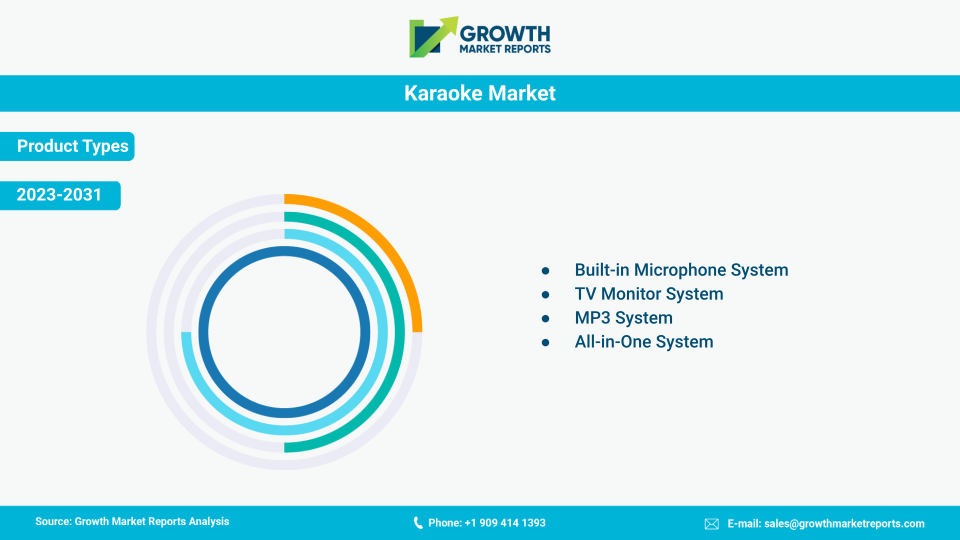
By Product Type Karaoke Machines, Microphones, Software & Apps, Accessories
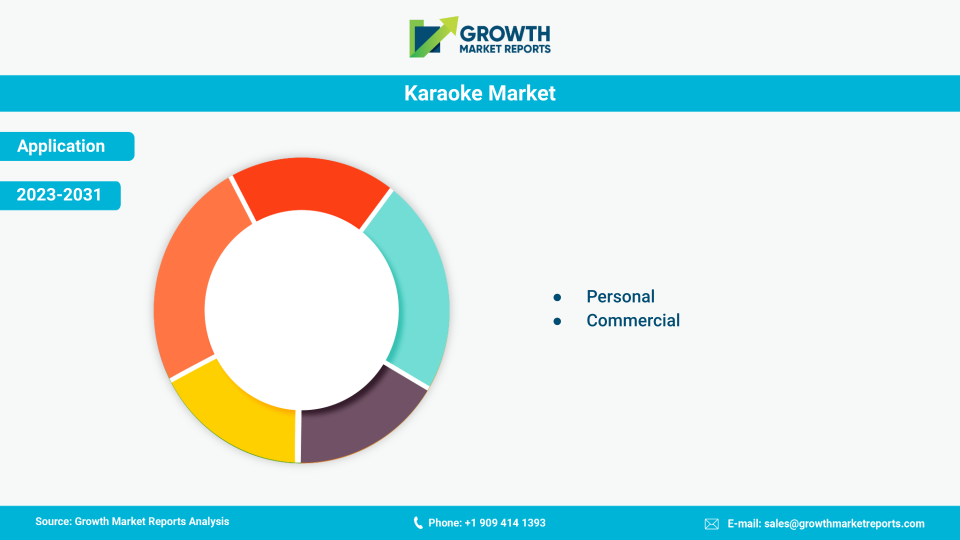
By Application Commercial, Household, Entertainment Venues, Others
By Distribution Channel Online Stores, Specialty Stores, Supermarkets/Hypermarkets, Others
By End-User Adults, Kids, Professional, Others
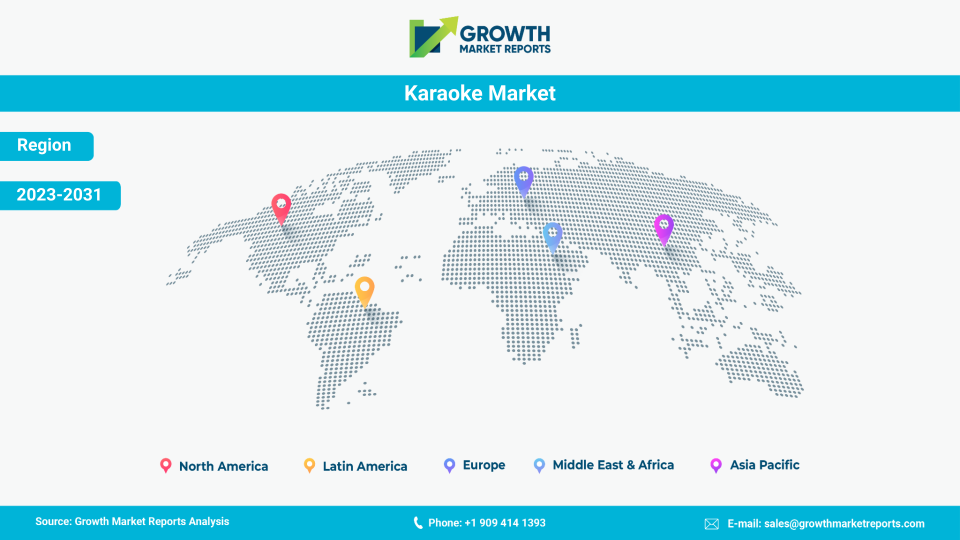
Regions Covered North America, Europe, APAC, Latin America, MEA
Base Year 2024
Historic Data 2018-2023
Forecast Period 2025-2033
Number of Pages 278
Number of Tables & Figures 388
Customization Available Yes, the report can be customized as per your need.

Application Analysis

The application segment of the karaoke market is broadly categorized into commercial, household, entertainment venues, and others, each serving distinct consumer needs and contributing to the marketÂ’s diversification. Commercial applications, including karaoke bars, lounges, and restaurants, represent a significant revenue generator, particularly in regions with a strong nightlife culture. These establishments invest heavily in state-of-the-art equipment and regularly update their song libraries to attract and retain customers. Themed nights, live competitions, and private room offerings are popular strategies employed by commercial operators to differentiate themselves and drive repeat business. The commercial segmentÂ’s growth is further supported by partnerships with beverage and hospitality brands, which leverage karaoke as a value-added service to enhance customer engagement.

Household applications have gained substantial traction in recent years, fueled by the increasing preference for home-based entertainment and the proliferation of affordable karaoke machines and apps. The COVID-19 pandemic accelerated this trend, as consumers sought safe and convenient ways to socialize and unwind at home. Family gatherings, parties, and celebrations are now frequently centered around karaoke, driving demand for user-friendly and compact systems. Manufacturers are capitalizing on this trend by offering plug-and-play devices, wireless microphones, and intuitive mobile apps that cater to users of all ages. The household segment is poised for continued growth, supported by rising disposable incomes and the growing influence of Western entertainment trends in emerging markets.

Entertainment venues, such as clubs, pubs, and event spaces, represent another vital application area for karaoke systems. These venues often require high-capacity, durable equipment capable of supporting large groups and extended usage. Advanced features like multi-language support, customizable playlists, and integration with professional sound systems are in high demand. The rise of experiential entertainment and the popularity of live music events are driving investments in premium karaoke setups, which enhance the overall customer experience and encourage longer stays. Entertainment venues are also leveraging digital marketing and social media to promote karaoke events, attract diverse audiences, and build brand loyalty.

The “others” category encompasses a range of non-traditional applications, including educational institutions, community centers, and corporate events. Schools and colleges are incorporating karaoke into music education and extracurricular activities, recognizing its potential to foster creativity and build confidence among students. Corporate clients are utilizing karaoke for team-building exercises and employee engagement programs, leveraging its ability to break down barriers and promote collaboration. Community centers and non-profit organizations are also adopting karaoke as a tool for social inclusion and cultural exchange. This diverse application landscape underscores the versatility of karaoke systems and highlights the market’s potential for further expansion into new and emerging segments.

The rise of home entertainment solutions has led to an increased interest in the Home Karaoke Amplifier, a crucial component for those looking to recreate a professional karaoke experience in the comfort of their own homes. These amplifiers are designed to enhance audio quality, providing clear and powerful sound that elevates the singing experience. With features such as Bluetooth connectivity, multiple input options, and adjustable sound settings, Home Karaoke Amplifiers cater to a wide range of user preferences and setups. As more consumers invest in home entertainment systems, the demand for high-performance amplifiers is expected to grow, driven by the desire for superior sound quality and immersive experiences. This trend is further supported by the growing popularity of DIY karaoke parties and the increasing availability of affordable, high-quality audio equipment.

Distribution Channel Analysis

The distribution channel segment of the karaoke market is segmented into online stores, specialty stores, supermarkets/hypermarkets, and others, each playing a pivotal role in shaping consumer access and purchasing behavior. Online stores have emerged as the dominant channel, driven by the convenience of home delivery, extensive product selection, and competitive pricing. E-commerce platforms such as Amazon, Alibaba, and regional players are witnessing robust sales of karaoke machines, microphones, and accessories, particularly during promotional events and festive seasons. The availability of detailed product information, customer reviews, and comparison tools is empowering consumers to make informed decisions, thereby boosting online sales. The COVID-19 pandemic further accelerated the shift towards online shopping, with many consumers preferring contactless purchasing options.

Specialty stores, including music shops and electronics retailers, continue to play a crucial role in the karaoke market, particularly for customers seeking expert advice and hands-on product demonstrations. These stores often offer a curated selection of high-quality products, personalized recommendations, and after-sales support, which are valued by discerning buyers. Specialty retailers also serve as important touchpoints for professional users and commercial clients, who require tailored solutions and technical assistance. The in-store experience is further enhanced by live demos, workshops, and promotional events, which foster brand loyalty and drive repeat business. Despite the rise of online channels, specialty stores are expected to maintain a strong presence, particularly in urban centers and established markets.

Supermarkets and hypermarkets are increasingly stocking karaoke products, capitalizing on their high footfall and broad customer base. These retail giants offer a one-stop shopping experience, enabling consumers to purchase karaoke machines, microphones, and accessories alongside other household goods. Point-of-sale promotions, bundled offers, and attractive discounts are commonly employed to stimulate impulse purchases and increase basket size. The supermarket/hypermarket channel is particularly effective in reaching price-sensitive consumers and families, who may be less familiar with specialized music equipment. As these retailers expand their electronics and entertainment sections, they are likely to capture a larger share of the karaoke market, especially in emerging economies.

The “others” category includes a diverse range of distribution channels, such as direct sales, rental services, and pop-up stores. Direct sales are popular among professional users and commercial clients, who require customized solutions and ongoing technical support. Rental services are gaining traction in the event management and hospitality sectors, offering flexible and cost-effective access to premium karaoke equipment for short-term use. Pop-up stores and temporary kiosks are increasingly being used to promote new product launches, conduct live demonstrations, and engage with potential customers in high-traffic locations. This multifaceted distribution landscape underscores the importance of channel diversification in reaching diverse customer segments and driving market growth.

End-User Analysis

The end-user segment of the karaoke market is categorized into adults, kids, professionals, and others, each with distinct preferences and usage patterns. Adults represent the largest end-user group, driven by the widespread popularity of karaoke as a social activity among working professionals, couples, and groups of friends. Karaoke nights at bars, lounges, and private parties are a common form of entertainment, fostering social interaction and relaxation. Manufacturers are catering to this segment by offering sophisticated machines and accessories with advanced features such as voice modulation, customizable playlists, and integration with popular music streaming services. The adult segment is also characterized by a willingness to invest in premium products that deliver superior sound quality and user experience.

Kids constitute a rapidly growing end-user segment, fueled by the increasing emphasis on music education and creative development. Parents and educators recognize the benefits of karaoke in enhancing language skills, building confidence, and fostering a love for music from an early age. The market is witnessing a surge in demand for kid-friendly karaoke machines and microphones, which feature colorful designs, simple controls, and built-in safety features. Educational apps and interactive games are also gaining popularity, providing a fun and engaging way for children to learn and perform. This segment is expected to witness robust growth, supported by rising disposable incomes, changing parenting trends, and the integration of karaoke into school curricula and extracurricular activities.

Professional users, including musicians, vocal coaches, and event organizers, represent a niche but highly lucrative segment of the karaoke market. These users demand high-performance equipment capable of delivering studio-quality sound, reliable connectivity, and advanced customization options. Professional-grade karaoke systems are commonly used in recording studios, live performances, and talent competitions, where precision and durability are paramount. Manufacturers are responding by offering modular systems, wireless microphones, and software with advanced editing and mixing capabilities. The professional segment is also driving innovation in areas such as AI-powered voice analysis, real-time feedback, and cloud-based collaboration, which are reshaping the future of karaoke technology.

The “others” category includes a diverse range of end-users, such as seniors, community groups, and individuals with special needs. Karaoke is increasingly being recognized as a therapeutic and inclusive activity, promoting mental well-being, socialization, and cultural exchange. Senior centers, rehabilitation facilities, and non-profit organizations are adopting karaoke as part of their recreational and wellness programs, leveraging its ability to foster engagement and improve quality of life. The growing awareness of the psychological and social benefits of karaoke is expected to drive further adoption across diverse end-user segments, highlighting the market’s potential for continued expansion and innovation.

Opportunities & Threats

The karaoke market presents numerous opportunities for growth and innovation, driven by evolving consumer preferences, technological advancements, and the expanding application landscape. One of the most promising opportunities lies in the integration of artificial intelligence and machine learning into karaoke systems and software. AI-powered features such as real-time voice analysis, personalized song recommendations, and interactive coaching are enhancing the user experience and attracting tech-savvy consumers. Additionally, the rise of cloud-based platforms and streaming services is enabling users to access vast song libraries, collaborate with friends remotely, and participate in global singing competitions. These developments are opening up new revenue streams for manufacturers and service providers, while also fostering greater user engagement and loyalty.

Another significant opportunity is the growing demand for personalized and immersive experiences, particularly among younger demographics and urban consumers. Customizable playlists, multilingual song options, and integration with social media platforms are becoming essential features, enabling users to share their performances, connect with like-minded individuals, and build online communities. The increasing popularity of themed karaoke events, live streaming, and virtual reality experiences is further expanding the marketÂ’s reach and appeal. Manufacturers and service providers who can anticipate and respond to these emerging trends are well-positioned to capture market share and drive long-term growth. Additionally, the expansion of karaoke into non-traditional segments such as education, wellness, and corporate training offers untapped potential for diversification and innovation.

Despite these opportunities, the karaoke market faces several restraining factors that could hinder its growth trajectory. One of the primary challenges is the prevalence of copyright and licensing issues, particularly in relation to digital content and online streaming. Securing the necessary rights to distribute and perform copyrighted songs can be complex and costly, posing barriers to entry for new players and limiting the availability of popular tracks. Additionally, the market is highly competitive, with a proliferation of low-cost, generic products that can undermine brand value and erode profit margins. Economic uncertainties, fluctuating consumer spending, and changing regulatory environments also present ongoing risks. Addressing these challenges will require proactive strategies, including investment in intellectual property management, brand differentiation, and compliance with evolving legal frameworks.

Regional Outlook

The Asia Pacific region remains the undisputed leader in the global karaoke market, accounting for approximately USD 3.15 billion in revenue in 2024. This dominance is rooted in the regionÂ’s vibrant karaoke culture, particularly in countries such as Japan, South Korea, and China, where karaoke is deeply ingrained in social and entertainment traditions. The proliferation of karaoke bars, private rooms, and entertainment complexes, coupled with a tech-savvy and music-loving population, is driving sustained demand for both commercial and household karaoke systems. The Asia Pacific market is expected to maintain a strong growth trajectory, with a projected CAGR of 5.2% through 2033, fueled by urbanization, rising disposable incomes, and ongoing innovation in product design and functionality.

North America represents the second-largest market for karaoke, with an estimated value of USD 1.47 billion in 2024. The regionÂ’s growth is driven by the increasing adoption of karaoke in households, the popularity of music-based entertainment among millennials and Gen Z, and the integration of karaoke into bars, clubs, and event venues. The United States, in particular, is witnessing a surge in demand for mobile karaoke apps, wireless microphones, and high-quality sound systems, reflecting the evolving preferences of tech-savvy consumers. The market is also benefitting from the influence of pop culture, celebrity endorsements, and the growing trend of experiential entertainment. North America is expected to achieve steady growth over the forecast period, supported by ongoing product innovation and expanding distribution channels.

Europe is another key market, with a value of USD 1.05 billion in 2024, characterized by a diverse and evolving entertainment landscape. The regionÂ’s growth is supported by the expanding hospitality sector, the integration of karaoke into pubs and clubs, and the increasing popularity of music-based recreational activities. Countries such as the United Kingdom, Germany, and France are leading the adoption of karaoke, driven by changing consumer lifestyles and the growing influence of global entertainment trends. The Middle East & Africa and Latin America, though smaller in size, are emerging as promising markets, with a combined value of USD 0.68 billion in 2024. These regions are benefitting from urbanization, rising disposable incomes, and the growing availability of affordable karaoke systems. As these markets continue to mature, they are expected to contribute significantly to the global karaoke marketÂ’s long-term growth and diversification.

Karaoke  Market Statistics

Competitor Outlook

The competitive landscape of the karaoke market is characterized by a mix of established global players, regional manufacturers, and innovative startups, all vying for market share through product differentiation, technological innovation, and strategic partnerships. Leading companies are investing heavily in research and development to introduce advanced features such as wireless connectivity, AI-powered voice analysis, and integration with popular streaming platforms. The market is also witnessing a trend towards vertical integration, with companies expanding their product portfolios to include complementary accessories, software, and services. Intense competition is driving continuous improvement in product quality, pricing strategies, and customer service, as companies seek to build brand loyalty and capture new customer segments.

Brand reputation and product reliability are critical success factors in the karaoke market, particularly among professional users and commercial clients who demand high-performance equipment and ongoing technical support. Leading companies are leveraging their global distribution networks, marketing expertise, and customer insights to maintain a competitive edge. Strategic collaborations with music labels, streaming platforms, and entertainment venues are enabling manufacturers to expand their content offerings, enhance user engagement, and tap into new revenue streams. In addition, the rise of e-commerce and digital marketing is leveling the playing field, allowing smaller players and niche brands to reach a global audience and compete effectively with established giants.

Innovation is a key differentiator in the karaoke market, with companies racing to develop products that offer superior sound quality, user-friendly interfaces, and immersive experiences. The integration of smart technologies, such as voice assistants, cloud-based song libraries, and real-time scoring, is transforming the karaoke experience and attracting tech-savvy consumers. Companies are also focusing on sustainability and eco-friendly design, responding to growing consumer awareness about environmental issues. The ability to anticipate and respond to emerging trends, such as virtual reality karaoke and live streaming, will be critical for companies seeking to maintain relevance and drive long-term growth in this dynamic market.

Major players in the global karaoke market include Yokee Music, Singing Machine Company, Platinum Karaoke, TJ Media, KaraFun, Onkyo Corporation, Daiichikosho Co. Ltd., Memorex, Ion Audio, and VocoPro. Yokee Music is renowned for its innovative karaoke apps, offering a vast library of songs and interactive features that appeal to both casual and serious users. Singing Machine Company is a market leader in karaoke machines and microphones, known for its high-quality products and extensive distribution network. Platinum Karaoke and TJ Media are dominant players in the Asia Pacific region, leveraging their deep understanding of local preferences and strong brand presence to maintain market leadership. KaraFun and Onkyo Corporation are recognized for their focus on software and premium audio solutions, catering to both household and professional users. Daiichikosho Co. Ltd. is a pioneer in the Japanese market, offering a comprehensive range of karaoke systems and services for commercial establishments. Memorex, Ion Audio, and VocoPro are also notable players, each contributing to the marketÂ’s diversity and innovation through their unique product offerings and strategic initiatives.

These companies are continuously expanding their product portfolios, investing in digital transformation, and exploring new business models to stay ahead in a rapidly evolving market. Partnerships with content providers, integration with smart home ecosystems, and the development of subscription-based services are among the strategies being employed to enhance customer value and drive recurring revenue. As the karaoke market continues to grow and diversify, the ability to innovate, adapt, and deliver exceptional user experiences will remain the key to sustained success and market leadership.

Key Players

  • Singing Machine Company, Inc.
  • Karaoke USA (VocoPro)
  • Yokee Music Ltd.
  • Singsation (ION Audio)
  • Karaoke Cloud
  • KaraFun
  • Platinum Karaoke
  • TJ Media Co., Ltd.
  • Acesonic
  • Onkyo Corporation
  • XING Inc.
  • Daiichikosho Co., Ltd.
  • Sound Choice
  • Sunfly Karaoke
  • Smule Inc.
  • Magic Sing (Enter-Tech Co., Ltd.)
  • Memorex
  • Electrohome
  • Pure Acoustics
  • BMB International Corporation
Karaoke  Market Overview

Segments

The Karaoke market has been segmented on the basis of

Product Type

  • Karaoke Machines
  • Microphones
  • Software & Apps
  • Accessories

Application

  • Commercial
  • Household
  • Entertainment Venues
  • Others

Distribution Channel

  • Online Stores
  • Specialty Stores
  • Supermarkets/Hypermarkets
  • Others

End-User

  • Adults
  • Kids
  • Professional
  • Others

Competitive Landscape

The global karaoke market is competitive with the presence of key players such as Daiichi Kosho Co., Ltd.; Red Karaoke; Pioneer Corporation; Smule, Inc.; The 3M Company; SingSnap karaoke; Circus World Display, Ltd.; Onkyo Corporation; Platinum Karaoke; inMusic Brands; Pure Acoustics, Inc.; U-Sing Mini Karaoke; Solo Karaoke; The Singing Machine Company, Inc.; and others, who use business strategies such as acquisitions, mergers, partnerships, collaborations, and product launches to dominate the market.

For example, in May 2022, The Signing Machine Company, Inc. launched new line of karaoke products to be available in Walmart stores across the US. In May 2021, California-based record company, Sybersound, launched Party Tyme Karaoke, a linear streaming channel, on SelectTV.
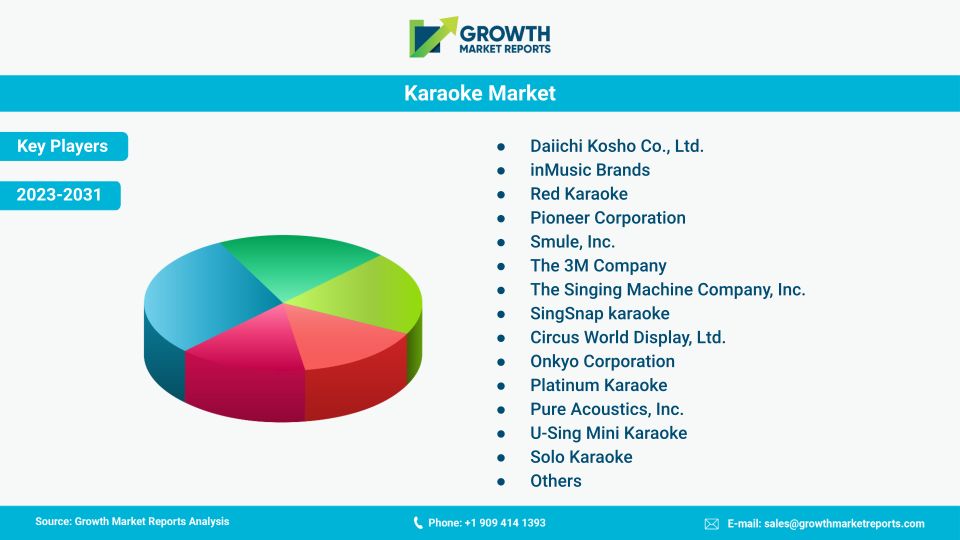

Karaoke Market Key Players

Frequently Asked Questions

Daiichi Kosho Co., Ltd.; Red Karaoke; Pioneer Corporation; Smuke, Inc.; The 3M Company; SingSnap karaoke; Circus World Display, Ltd.; and Onkyo Corporation are some of the key market players.

Asia Pacific dominates the global karaoke market.

Karaoke is derived from Japanese words Kara meaning empty or void and Oke meaning orchestra. It refers to a type of interactive entertainment, where people sing along to a recorded music.

Fixed systems and portable systems are two types of karaoke.

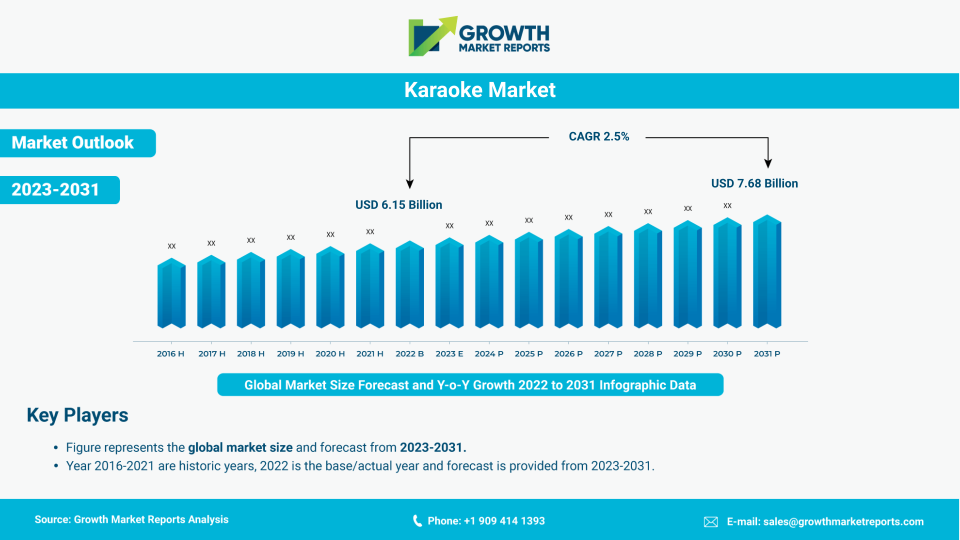
The global karaoke market size was valued at around USD 6.15 billion in 2022.

The global karaoke market is estimated to register CAGR of around 2.5% during the forecast period.

Table Of Content

Chapter 1 Executive Summary
Chapter 2 Assumptions and Acronyms Used
Chapter 3 Research Methodology
Chapter 4 Karaoke  Market Overview
   4.1 Introduction
      4.1.1 Market Taxonomy
      4.1.2 Market Definition
      4.1.3 Macro-Economic Factors Impacting the Market Growth
   4.2 Karaoke  Market Dynamics
      4.2.1 Market Drivers
      4.2.2 Market Restraints
      4.2.3 Market Opportunity
   4.3 Karaoke  Market - Supply Chain Analysis
      4.3.1 List of Key Suppliers
      4.3.2 List of Key Distributors
      4.3.3 List of Key Consumers
   4.4 Key Forces Shaping the Karaoke  Market
      4.4.1 Bargaining Power of Suppliers
      4.4.2 Bargaining Power of Buyers
      4.4.3 Threat of Substitution
      4.4.4 Threat of New Entrants
      4.4.5 Competitive Rivalry
   4.5 Global Karaoke  Market Size & Forecast, 2023-2032
      4.5.1 Karaoke  Market Size and Y-o-Y Growth
      4.5.2 Karaoke  Market Absolute $ Opportunity

Chapter 5 Global Karaoke  Market Analysis and Forecast By Product Type
   5.1 Introduction
      5.1.1 Key Market Trends & Growth Opportunities By Product Type
      5.1.2 Basis Point Share (BPS) Analysis By Product Type
      5.1.3 Absolute $ Opportunity Assessment By Product Type
   5.2 Karaoke  Market Size Forecast By Product Type
      5.2.1 Karaoke Machines
      5.2.2 Microphones
      5.2.3 Software & Apps
      5.2.4 Accessories
   5.3 Market Attractiveness Analysis By Product Type

Chapter 6 Global Karaoke  Market Analysis and Forecast By Application
   6.1 Introduction
      6.1.1 Key Market Trends & Growth Opportunities By Application
      6.1.2 Basis Point Share (BPS) Analysis By Application
      6.1.3 Absolute $ Opportunity Assessment By Application
   6.2 Karaoke  Market Size Forecast By Application
      6.2.1 Commercial
      6.2.2 Household
      6.2.3 Entertainment Venues
      6.2.4 Others
   6.3 Market Attractiveness Analysis By Application

Chapter 7 Global Karaoke  Market Analysis and Forecast By Distribution Channel
   7.1 Introduction
      7.1.1 Key Market Trends & Growth Opportunities By Distribution Channel
      7.1.2 Basis Point Share (BPS) Analysis By Distribution Channel
      7.1.3 Absolute $ Opportunity Assessment By Distribution Channel
   7.2 Karaoke  Market Size Forecast By Distribution Channel
      7.2.1 Online Stores
      7.2.2 Specialty Stores
      7.2.3 Supermarkets/Hypermarkets
      7.2.4 Others
   7.3 Market Attractiveness Analysis By Distribution Channel

Chapter 8 Global Karaoke  Market Analysis and Forecast By End-User
   8.1 Introduction
      8.1.1 Key Market Trends & Growth Opportunities By End-User
      8.1.2 Basis Point Share (BPS) Analysis By End-User
      8.1.3 Absolute $ Opportunity Assessment By End-User
   8.2 Karaoke  Market Size Forecast By End-User
      8.2.1 Adults
      8.2.2 Kids
      8.2.3 Professional
      8.2.4 Others
   8.3 Market Attractiveness Analysis By End-User

Chapter 9 Global Karaoke  Market Analysis and Forecast by Region
   9.1 Introduction
      9.1.1 Key Market Trends & Growth Opportunities By Region
      9.1.2 Basis Point Share (BPS) Analysis By Region
      9.1.3 Absolute $ Opportunity Assessment By Region
   9.2 Karaoke  Market Size Forecast By Region
      9.2.1 North America
      9.2.2 Europe
      9.2.3 Asia Pacific
      9.2.4 Latin America
      9.2.5 Middle East & Africa (MEA)
   9.3 Market Attractiveness Analysis By Region

Chapter 10 Coronavirus Disease (COVID-19) Impact 
   10.1 Introduction 
   10.2 Current & Future Impact Analysis 
   10.3 Economic Impact Analysis 
   10.4 Government Policies 
   10.5 Investment Scenario

Chapter 11 North America Karaoke  Analysis and Forecast
   11.1 Introduction
   11.2 North America Karaoke  Market Size Forecast by Country
      11.2.1 U.S.
      11.2.2 Canada
   11.3 Basis Point Share (BPS) Analysis by Country
   11.4 Absolute $ Opportunity Assessment by Country
   11.5 Market Attractiveness Analysis by Country
   11.6 North America Karaoke  Market Size Forecast By Product Type
      11.6.1 Karaoke Machines
      11.6.2 Microphones
      11.6.3 Software & Apps
      11.6.4 Accessories
   11.7 Basis Point Share (BPS) Analysis By Product Type 
   11.8 Absolute $ Opportunity Assessment By Product Type 
   11.9 Market Attractiveness Analysis By Product Type
   11.10 North America Karaoke  Market Size Forecast By Application
      11.10.1 Commercial
      11.10.2 Household
      11.10.3 Entertainment Venues
      11.10.4 Others
   11.11 Basis Point Share (BPS) Analysis By Application 
   11.12 Absolute $ Opportunity Assessment By Application 
   11.13 Market Attractiveness Analysis By Application
   11.14 North America Karaoke  Market Size Forecast By Distribution Channel
      11.14.1 Online Stores
      11.14.2 Specialty Stores
      11.14.3 Supermarkets/Hypermarkets
      11.14.4 Others
   11.15 Basis Point Share (BPS) Analysis By Distribution Channel 
   11.16 Absolute $ Opportunity Assessment By Distribution Channel 
   11.17 Market Attractiveness Analysis By Distribution Channel
   11.18 North America Karaoke  Market Size Forecast By End-User
      11.18.1 Adults
      11.18.2 Kids
      11.18.3 Professional
      11.18.4 Others
   11.19 Basis Point Share (BPS) Analysis By End-User 
   11.20 Absolute $ Opportunity Assessment By End-User 
   11.21 Market Attractiveness Analysis By End-User

Chapter 12 Europe Karaoke  Analysis and Forecast
   12.1 Introduction
   12.2 Europe Karaoke  Market Size Forecast by Country
      12.2.1 Germany
      12.2.2 France
      12.2.3 Italy
      12.2.4 U.K.
      12.2.5 Spain
      12.2.6 Russia
      12.2.7 Rest of Europe
   12.3 Basis Point Share (BPS) Analysis by Country
   12.4 Absolute $ Opportunity Assessment by Country
   12.5 Market Attractiveness Analysis by Country
   12.6 Europe Karaoke  Market Size Forecast By Product Type
      12.6.1 Karaoke Machines
      12.6.2 Microphones
      12.6.3 Software & Apps
      12.6.4 Accessories
   12.7 Basis Point Share (BPS) Analysis By Product Type 
   12.8 Absolute $ Opportunity Assessment By Product Type 
   12.9 Market Attractiveness Analysis By Product Type
   12.10 Europe Karaoke  Market Size Forecast By Application
      12.10.1 Commercial
      12.10.2 Household
      12.10.3 Entertainment Venues
      12.10.4 Others
   12.11 Basis Point Share (BPS) Analysis By Application 
   12.12 Absolute $ Opportunity Assessment By Application 
   12.13 Market Attractiveness Analysis By Application
   12.14 Europe Karaoke  Market Size Forecast By Distribution Channel
      12.14.1 Online Stores
      12.14.2 Specialty Stores
      12.14.3 Supermarkets/Hypermarkets
      12.14.4 Others
   12.15 Basis Point Share (BPS) Analysis By Distribution Channel 
   12.16 Absolute $ Opportunity Assessment By Distribution Channel 
   12.17 Market Attractiveness Analysis By Distribution Channel
   12.18 Europe Karaoke  Market Size Forecast By End-User
      12.18.1 Adults
      12.18.2 Kids
      12.18.3 Professional
      12.18.4 Others
   12.19 Basis Point Share (BPS) Analysis By End-User 
   12.20 Absolute $ Opportunity Assessment By End-User 
   12.21 Market Attractiveness Analysis By End-User

Chapter 13 Asia Pacific Karaoke  Analysis and Forecast
   13.1 Introduction
   13.2 Asia Pacific Karaoke  Market Size Forecast by Country
      13.2.1 China
      13.2.2 Japan
      13.2.3 South Korea
      13.2.4 India
      13.2.5 Australia
      13.2.6 South East Asia (SEA)
      13.2.7 Rest of Asia Pacific (APAC)
   13.3 Basis Point Share (BPS) Analysis by Country
   13.4 Absolute $ Opportunity Assessment by Country
   13.5 Market Attractiveness Analysis by Country
   13.6 Asia Pacific Karaoke  Market Size Forecast By Product Type
      13.6.1 Karaoke Machines
      13.6.2 Microphones
      13.6.3 Software & Apps
      13.6.4 Accessories
   13.7 Basis Point Share (BPS) Analysis By Product Type 
   13.8 Absolute $ Opportunity Assessment By Product Type 
   13.9 Market Attractiveness Analysis By Product Type
   13.10 Asia Pacific Karaoke  Market Size Forecast By Application
      13.10.1 Commercial
      13.10.2 Household
      13.10.3 Entertainment Venues
      13.10.4 Others
   13.11 Basis Point Share (BPS) Analysis By Application 
   13.12 Absolute $ Opportunity Assessment By Application 
   13.13 Market Attractiveness Analysis By Application
   13.14 Asia Pacific Karaoke  Market Size Forecast By Distribution Channel
      13.14.1 Online Stores
      13.14.2 Specialty Stores
      13.14.3 Supermarkets/Hypermarkets
      13.14.4 Others
   13.15 Basis Point Share (BPS) Analysis By Distribution Channel 
   13.16 Absolute $ Opportunity Assessment By Distribution Channel 
   13.17 Market Attractiveness Analysis By Distribution Channel
   13.18 Asia Pacific Karaoke  Market Size Forecast By End-User
      13.18.1 Adults
      13.18.2 Kids
      13.18.3 Professional
      13.18.4 Others
   13.19 Basis Point Share (BPS) Analysis By End-User 
   13.20 Absolute $ Opportunity Assessment By End-User 
   13.21 Market Attractiveness Analysis By End-User

Chapter 14 Latin America Karaoke  Analysis and Forecast
   14.1 Introduction
   14.2 Latin America Karaoke  Market Size Forecast by Country
      14.2.1 Brazil
      14.2.2 Mexico
      14.2.3 Rest of Latin America (LATAM)
   14.3 Basis Point Share (BPS) Analysis by Country
   14.4 Absolute $ Opportunity Assessment by Country
   14.5 Market Attractiveness Analysis by Country
   14.6 Latin America Karaoke  Market Size Forecast By Product Type
      14.6.1 Karaoke Machines
      14.6.2 Microphones
      14.6.3 Software & Apps
      14.6.4 Accessories
   14.7 Basis Point Share (BPS) Analysis By Product Type 
   14.8 Absolute $ Opportunity Assessment By Product Type 
   14.9 Market Attractiveness Analysis By Product Type
   14.10 Latin America Karaoke  Market Size Forecast By Application
      14.10.1 Commercial
      14.10.2 Household
      14.10.3 Entertainment Venues
      14.10.4 Others
   14.11 Basis Point Share (BPS) Analysis By Application 
   14.12 Absolute $ Opportunity Assessment By Application 
   14.13 Market Attractiveness Analysis By Application
   14.14 Latin America Karaoke  Market Size Forecast By Distribution Channel
      14.14.1 Online Stores
      14.14.2 Specialty Stores
      14.14.3 Supermarkets/Hypermarkets
      14.14.4 Others
   14.15 Basis Point Share (BPS) Analysis By Distribution Channel 
   14.16 Absolute $ Opportunity Assessment By Distribution Channel 
   14.17 Market Attractiveness Analysis By Distribution Channel
   14.18 Latin America Karaoke  Market Size Forecast By End-User
      14.18.1 Adults
      14.18.2 Kids
      14.18.3 Professional
      14.18.4 Others
   14.19 Basis Point Share (BPS) Analysis By End-User 
   14.20 Absolute $ Opportunity Assessment By End-User 
   14.21 Market Attractiveness Analysis By End-User

Chapter 15 Middle East & Africa (MEA) Karaoke  Analysis and Forecast
   15.1 Introduction
   15.2 Middle East & Africa (MEA) Karaoke  Market Size Forecast by Country
      15.2.1 Saudi Arabia
      15.2.2 South Africa
      15.2.3 UAE
      15.2.4 Rest of Middle East & Africa (MEA)
   15.3 Basis Point Share (BPS) Analysis by Country
   15.4 Absolute $ Opportunity Assessment by Country
   15.5 Market Attractiveness Analysis by Country
   15.6 Middle East & Africa (MEA) Karaoke  Market Size Forecast By Product Type
      15.6.1 Karaoke Machines
      15.6.2 Microphones
      15.6.3 Software & Apps
      15.6.4 Accessories
   15.7 Basis Point Share (BPS) Analysis By Product Type 
   15.8 Absolute $ Opportunity Assessment By Product Type 
   15.9 Market Attractiveness Analysis By Product Type
   15.10 Middle East & Africa (MEA) Karaoke  Market Size Forecast By Application
      15.10.1 Commercial
      15.10.2 Household
      15.10.3 Entertainment Venues
      15.10.4 Others
   15.11 Basis Point Share (BPS) Analysis By Application 
   15.12 Absolute $ Opportunity Assessment By Application 
   15.13 Market Attractiveness Analysis By Application
   15.14 Middle East & Africa (MEA) Karaoke  Market Size Forecast By Distribution Channel
      15.14.1 Online Stores
      15.14.2 Specialty Stores
      15.14.3 Supermarkets/Hypermarkets
      15.14.4 Others
   15.15 Basis Point Share (BPS) Analysis By Distribution Channel 
   15.16 Absolute $ Opportunity Assessment By Distribution Channel 
   15.17 Market Attractiveness Analysis By Distribution Channel
   15.18 Middle East & Africa (MEA) Karaoke  Market Size Forecast By End-User
      15.18.1 Adults
      15.18.2 Kids
      15.18.3 Professional
      15.18.4 Others
   15.19 Basis Point Share (BPS) Analysis By End-User 
   15.20 Absolute $ Opportunity Assessment By End-User 
   15.21 Market Attractiveness Analysis By End-User

Chapter 16 Competition Landscape 
   16.1 Karaoke  Market: Competitive Dashboard
   16.2 Global Karaoke  Market: Market Share Analysis, 2023
   16.3 Company Profiles (Details – Overview, Financials, Developments, Strategy) 
      16.3.1 Singing Machine Company, Inc.
Karaoke USA (VocoPro)
Yokee Music Ltd.
Singsation (ION Audio)
Karaoke Cloud
KaraFun
Platinum Karaoke
TJ Media Co., Ltd.
Acesonic
Onkyo Corporation
XING Inc.
Daiichikosho Co., Ltd.
Sound Choice
Sunfly Karaoke
Smule Inc.
Magic Sing (Enter-Tech Co., Ltd.)
Memorex
Electrohome
Pure Acoustics
BMB International Corporation

Methodology

Our Clients

General Electric
Pfizer
Microsoft
FedEx Logistics
sinopec
General Mills
The John Holland Group
Siemens Healthcare