Jaw Surgery Market Research Report 2033

Jaw Surgery Market Research Report 2033

Segments - by Procedure Type (Orthognathic Surgery, Maxillofacial Surgery, Mandibular Surgery, Others), by Indication (Malocclusion, Jaw Deformities, Trauma, Tumors, Others), by End-User (Hospitals, Specialty Clinics, Ambulatory Surgical Centers, Others)

https://growthmarketreports.com/raksha
Author : Raksha Sharma
https://growthmarketreports.com/Vaibhav
Fact-checked by : V. Chandola
https://growthmarketreports.com/Shruti
Editor : Shruti Bhat

Upcoming | Report ID :HC-3551 | 4.5 Rating | 49 Reviews | 282 Pages | Format : Docx PDF

Report Description


Jaw Surgery Market Outlook

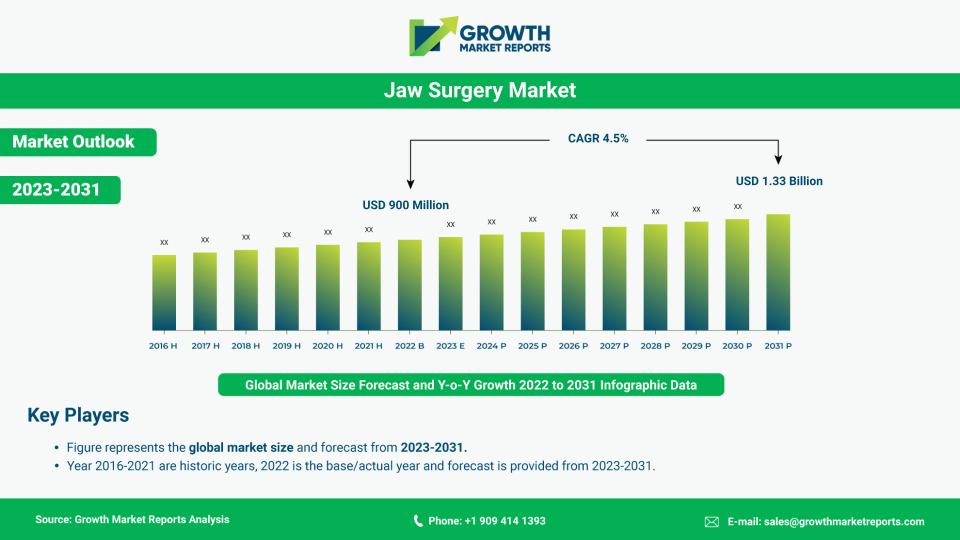
According to our latest research, the global jaw surgery market size reached USD 2.18 billion in 2024, reflecting robust expansion across various segments. The market is projected to grow at a CAGR of 7.2% from 2025 to 2033, with the total market value anticipated to reach USD 4.09 billion by 2033. This growth is underpinned by advancements in surgical techniques, increasing awareness about corrective jaw procedures, and a rising prevalence of jaw-related disorders worldwide. The jaw surgery market is witnessing significant momentum, driven by technological innovations, greater access to specialized care, and a growing focus on facial aesthetics.

One of the primary growth factors for the jaw surgery market is the increasing incidence of congenital jaw deformities and acquired conditions such as trauma and tumors. The prevalence of malocclusion and other dental abnormalities has surged due to genetic predispositions, lifestyle changes, and environmental factors. As a result, there is a heightened demand for corrective jaw surgeries, particularly orthognathic and maxillofacial procedures. Additionally, improvements in diagnostic imaging technologies, such as 3D CT scans and digital planning software, have enabled surgeons to achieve greater precision and predictability in surgical outcomes, further fueling market growth.

Another key driver of the jaw surgery market is the rising emphasis on facial aesthetics and functional rehabilitation. Increasing disposable incomes, especially in emerging economies, have led to higher consumer spending on cosmetic and reconstructive procedures. The societal shift toward improved self-image and confidence has resulted in more individuals seeking corrective jaw surgeries for both functional and aesthetic reasons. Moreover, advancements in minimally invasive surgical techniques and post-operative care protocols have reduced recovery times and complications, making these procedures more accessible and appealing to a broader patient base.

The jaw surgery market is also benefiting from the expanding network of specialized healthcare facilities and the growing expertise of oral and maxillofacial surgeons. The proliferation of specialty clinics and ambulatory surgical centers, coupled with the integration of multidisciplinary care teams, has enhanced the quality of patient care and surgical outcomes. Furthermore, supportive reimbursement policies and increasing healthcare investments by governments and private players are facilitating the adoption of advanced jaw surgery procedures. These favorable market dynamics are expected to sustain the upward trajectory of the jaw surgery market over the forecast period.

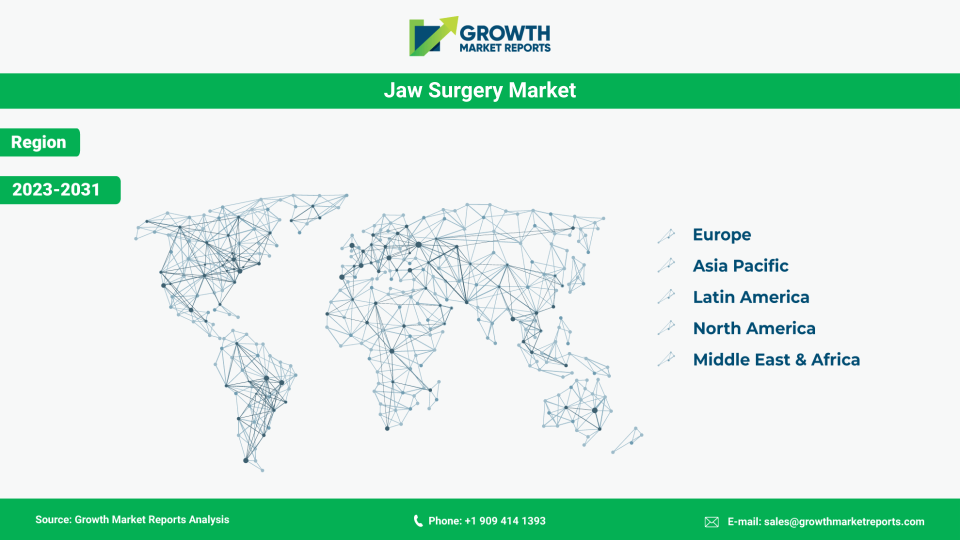
Regionally, the jaw surgery market is experiencing substantial growth in Asia Pacific, driven by large patient populations, increasing awareness, and rising healthcare expenditures. North America and Europe continue to dominate the market due to their well-established healthcare infrastructure and early adoption of innovative surgical technologies. Meanwhile, Latin America and the Middle East & Africa are emerging as promising markets, supported by improving access to specialized care and growing investments in healthcare infrastructure. The regional outlook for the jaw surgery market remains positive, with each geography presenting unique growth opportunities and challenges.

Global Jaw Surgery Industry Outlook

Procedure Type Analysis

The jaw surgery market by procedure type is segmented into orthognathic surgery, maxillofacial surgery, mandibular surgery, and others, each playing a distinct role in addressing various jaw-related conditions. Orthognathic surgery is one of the most widely performed procedures in this market, primarily aimed at correcting malocclusion and skeletal discrepancies that cannot be managed with orthodontic treatment alone. The demand for orthognathic surgery is increasing due to its ability to improve both functional and aesthetic outcomes, offering patients enhanced chewing, speaking, and facial symmetry. Technological advancements, such as computer-aided surgical planning and the use of custom-made implants, have further improved the precision and safety of these procedures, making them more attractive to both patients and surgeons.

Maxillofacial surgery encompasses a broader range of procedures, including the treatment of facial trauma, tumors, and congenital anomalies. This segment is witnessing robust growth, driven by the rising incidence of facial injuries resulting from road accidents, sports activities, and occupational hazards. The integration of advanced imaging and navigation systems has enabled maxillofacial surgeons to perform complex reconstructions with greater accuracy and reduced operative risks. Additionally, the increasing prevalence of head and neck cancers has necessitated the development of innovative surgical techniques for tumor resection and reconstruction, further expanding the scope of maxillofacial surgery in the global market.

Mandibular surgery is another critical segment, focusing on the correction of lower jaw deformities, fractures, and pathologies. Conditions such as mandibular prognathism, retrognathism, and asymmetry often require surgical intervention for optimal functional and aesthetic results. The growing awareness of the long-term health implications of untreated mandibular deformities, including temporomandibular joint disorders and obstructive sleep apnea, is driving the demand for mandibular surgery. Surgeons are increasingly adopting minimally invasive techniques and advanced fixation devices to enhance patient outcomes and reduce post-operative complications, contributing to the growth of this segment.

The "others" category in the procedure type segment includes adjunctive procedures such as genioplasty, alveolar bone grafting, and surgical interventions for rare jaw disorders. While these procedures represent a smaller share of the overall market, they are essential for addressing specific patient needs and improving comprehensive care. The growing trend of personalized medicine and the development of patient-specific surgical solutions are expected to drive innovation in this segment. Overall, the diverse range of procedure types in the jaw surgery market underscores the importance of specialized surgical expertise and multidisciplinary collaboration in delivering optimal patient outcomes.

Report Scope

Attributes Details
Report Title Jaw Surgery Market Research Report 2033
By Procedure Type Orthognathic Surgery, Maxillofacial Surgery, Mandibular Surgery, Others
By Indication Malocclusion, Jaw Deformities, Trauma, Tumors, Others
By End-User Hospitals, Specialty Clinics, Ambulatory Surgical Centers, Others
Regions Covered North America, Europe, APAC, Latin America, MEA
Base Year 2024
Historic Data 2018-2023
Forecast Period 2025-2033
Number of Pages 282
Number of Tables & Figures 348
Customization Available Yes, the report can be customized as per your need.

Indication Analysis

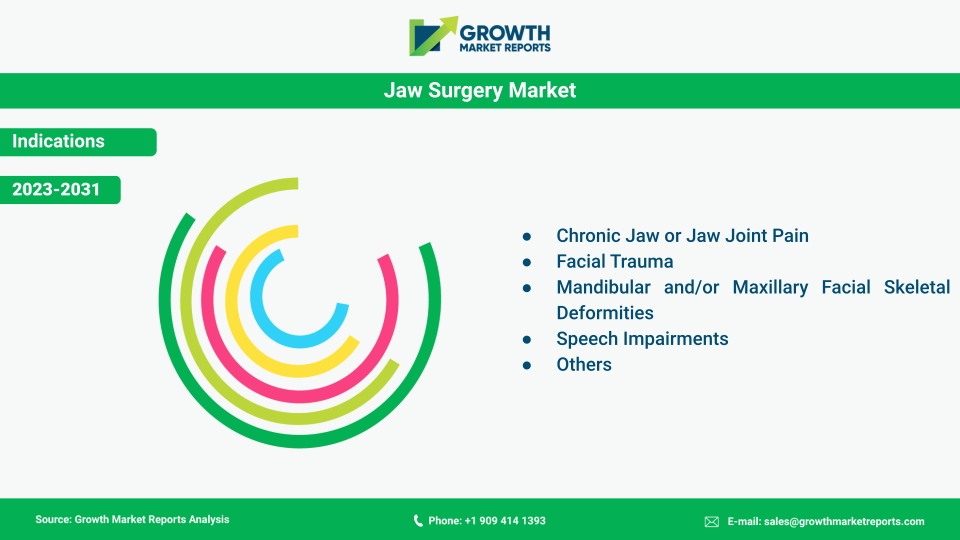
The jaw surgery market is segmented by indication into malocclusion, jaw deformities, trauma, tumors, and others, each representing unique clinical challenges and treatment pathways. Malocclusion remains the most common indication for jaw surgery, accounting for a significant share of surgical interventions worldwide. The rising prevalence of dental malocclusions, driven by genetic factors, environmental influences, and lifestyle changes, has led to increased demand for corrective jaw procedures. Orthognathic surgery is often the treatment of choice for severe malocclusion cases that cannot be managed through orthodontics alone, offering substantial improvements in bite function, speech, and facial aesthetics.

Jaw deformities, including congenital and developmental anomalies, constitute another major indication for jaw surgery. Conditions such as cleft lip and palate, craniofacial syndromes, and facial asymmetries require complex surgical interventions for both functional and cosmetic rehabilitation. Advances in craniofacial surgery and the use of 3D printing for custom implants have revolutionized the management of jaw deformities, enabling surgeons to achieve superior anatomical reconstruction and patient satisfaction. The growing focus on early intervention and multidisciplinary care has further improved the prognosis for patients with jaw deformities, driving segment growth.

Trauma is a significant driver of the jaw surgery market, particularly in regions with high rates of road accidents, violence, and sports injuries. Maxillofacial trauma often necessitates immediate surgical intervention to restore facial structure, function, and aesthetics. The increasing adoption of minimally invasive and endoscopic techniques has reduced surgical morbidity and improved recovery times for trauma patients. Additionally, the integration of trauma care protocols and specialized trauma centers has enhanced the quality of care and outcomes for individuals with jaw injuries, supporting the growth of this segment.

Tumors of the jaw, including benign and malignant neoplasms, represent a critical indication for jaw surgery. The rising incidence of head and neck cancers, coupled with advancements in surgical oncology, has led to the development of sophisticated techniques for tumor resection and reconstruction. The use of microvascular free tissue transfer and computer-assisted surgical planning has improved the precision and success rates of tumor-related jaw surgeries. Early diagnosis and advancements in adjuvant therapies are further contributing to better survival rates and functional outcomes for patients with jaw tumors.

The "others" category includes indications such as obstructive sleep apnea, temporomandibular joint disorders, and rare jaw pathologies. While these conditions are less prevalent, they often require specialized surgical expertise and multidisciplinary management. The increasing recognition of the impact of these disorders on overall health and quality of life is driving the adoption of surgical interventions. Continued research and innovation in the diagnosis and treatment of rare jaw conditions are expected to expand the scope of the jaw surgery market in the coming years.

End-User Analysis

The jaw surgery market by end-user is segmented into hospitals, specialty clinics, ambulatory surgical centers, and others, each playing a vital role in the delivery of surgical care. Hospitals remain the primary end-users of jaw surgery procedures, owing to their comprehensive infrastructure, multidisciplinary teams, and advanced surgical capabilities. Large hospitals and academic medical centers are particularly well-equipped to handle complex jaw surgeries, including trauma cases, tumor resections, and craniofacial reconstructions. The availability of intensive care units, advanced imaging facilities, and post-operative rehabilitation services further enhances the quality of care provided in hospital settings.

Specialty clinics are emerging as important contributors to the jaw surgery market, particularly in urban areas with high demand for elective and cosmetic procedures. These clinics often focus on orthognathic, maxillofacial, and dental surgeries, offering personalized care and shorter wait times compared to larger hospitals. The rise of dental and maxillofacial specialty clinics is driven by increasing patient awareness, greater accessibility, and advancements in minimally invasive techniques. Additionally, specialty clinics are often at the forefront of adopting new technologies, such as digital surgical planning and intraoperative navigation, further improving patient outcomes.

Ambulatory surgical centers (ASCs) are gaining traction as preferred settings for certain jaw surgery procedures, particularly those that are less complex and do not require prolonged hospitalization. The growth of ASCs is attributed to their cost-effectiveness, convenience, and focus on patient-centered care. ASCs offer streamlined surgical workflows, reduced infection risks, and faster recovery times, making them attractive options for both patients and healthcare providers. The increasing shift toward outpatient surgical care, supported by advancements in anesthesia and pain management, is expected to drive the adoption of jaw surgery procedures in ambulatory settings.

The "others" category includes private practices, dental offices, and research institutions involved in jaw surgery procedures and related research activities. While these settings represent a smaller share of the overall market, they play a crucial role in expanding access to specialized care, particularly in underserved regions. The growing trend of telemedicine and virtual consultations is also facilitating greater access to pre- and post-operative care, enhancing patient engagement and satisfaction. Overall, the diverse end-user landscape in the jaw surgery market underscores the importance of collaborative care models and continuous innovation in surgical delivery.

Opportunities & Threats

The jaw surgery market presents significant opportunities for growth, particularly through technological innovation and the expansion of minimally invasive surgical techniques. The integration of advanced imaging modalities, such as cone-beam computed tomography (CBCT) and 3D printing, is revolutionizing preoperative planning and intraoperative guidance, enabling surgeons to achieve greater precision and predictability in complex jaw surgeries. The development of patient-specific implants and custom surgical guides is further enhancing the safety and efficacy of procedures, reducing operative times and improving post-operative outcomes. These advancements are creating new opportunities for medical device manufacturers, technology providers, and healthcare institutions to expand their offerings and capture a larger share of the jaw surgery market.

Another major opportunity lies in the growing demand for cosmetic and reconstructive jaw surgeries, driven by increasing awareness of facial aesthetics and the psychological benefits of improved appearance. The rising prevalence of social media and digital platforms has heightened public interest in cosmetic procedures, prompting more individuals to seek corrective jaw surgeries for both functional and aesthetic reasons. The expansion of healthcare infrastructure in emerging markets, coupled with supportive government policies and increasing healthcare spending, is facilitating greater access to specialized surgical care. Strategic collaborations between healthcare providers, academic institutions, and industry players are further accelerating the adoption of innovative surgical techniques and expanding the reach of jaw surgery services globally.

Despite the positive outlook, the jaw surgery market faces certain restrainers that could impede growth. High procedure costs, limited insurance coverage, and the risk of surgical complications remain significant barriers to widespread adoption, particularly in low- and middle-income countries. Additionally, the shortage of skilled oral and maxillofacial surgeons in certain regions poses challenges to the timely and effective delivery of care. Stringent regulatory requirements and the lengthy approval process for new devices and technologies may also hinder market expansion. Addressing these challenges will require concerted efforts from stakeholders across the healthcare ecosystem to improve affordability, enhance training and education, and streamline regulatory pathways.

Regional Outlook

The regional dynamics of the jaw surgery market reveal distinct trends and growth patterns across key geographies. North America dominated the market in 2024, accounting for approximately USD 765 million of the global market size. The region’s leadership is attributed to its advanced healthcare infrastructure, high awareness levels, and early adoption of innovative surgical technologies. The presence of leading medical device manufacturers and academic research institutions further supports the development and dissemination of cutting-edge jaw surgery techniques. Favorable reimbursement policies and a strong focus on quality care have made North America a hub for both elective and reconstructive jaw surgeries, with the United States being the primary contributor to regional growth.

Europe is another significant market, generating revenues of around USD 612 million in 2024. The region’s growth is driven by robust public healthcare systems, a large pool of skilled surgeons, and increasing demand for cosmetic and reconstructive procedures. Countries such as Germany, France, and the United Kingdom are at the forefront of adopting minimally invasive surgical techniques and digital planning tools. The European jaw surgery market is expected to grow at a CAGR of 6.8% through 2033, supported by continuous investments in healthcare infrastructure and rising awareness about the benefits of corrective jaw surgeries. Collaborative research initiatives and cross-border partnerships are further enhancing the quality and accessibility of jaw surgery care across the region.

The Asia Pacific region is emerging as the fastest-growing market for jaw surgery, with a market size of USD 540 million in 2024 and a projected CAGR of 8.6% from 2025 to 2033. The rapid expansion is fueled by large patient populations, increasing disposable incomes, and growing investments in healthcare infrastructure. Countries such as China, India, and Japan are witnessing a surge in demand for both functional and aesthetic jaw surgeries, driven by rising awareness and improving access to specialized care. The proliferation of specialty clinics, government-led health initiatives, and the entry of international players are further accelerating market growth in the region. Meanwhile, Latin America and the Middle East & Africa are gradually gaining traction, supported by improving healthcare access and rising investments, though they collectively represent a smaller share of the global market.

Jaw Surgery Market Statistics

Competitor Outlook

The jaw surgery market is characterized by intense competition and rapid technological advancements, with both established players and emerging entrants vying for market share. Leading companies are investing heavily in research and development to introduce innovative devices, surgical instruments, and digital solutions that enhance the safety, precision, and efficiency of jaw surgery procedures. Strategic collaborations, mergers, and acquisitions are common strategies employed by market players to expand their product portfolios, strengthen their geographic presence, and gain access to new customer segments. The competitive landscape is further shaped by the growing emphasis on personalized medicine, minimally invasive techniques, and value-based care, prompting companies to continuously innovate and differentiate their offerings.

Key players in the jaw surgery market are also focusing on expanding their presence in high-growth regions such as Asia Pacific and Latin America, where rising healthcare expenditures and increasing patient awareness are creating new opportunities for market expansion. Partnerships with local distributors, investments in training and education programs, and the establishment of regional manufacturing facilities are some of the strategies being employed to strengthen market penetration and enhance customer engagement. Companies are also leveraging digital marketing and telemedicine platforms to reach a broader audience and provide remote consultations, further expanding their reach and influence in the market.

The competitive landscape is further enriched by the presence of academic institutions, research organizations, and specialty clinics that are actively involved in the development and dissemination of advanced jaw surgery techniques. Collaborative research initiatives and public-private partnerships are driving innovation and facilitating the adoption of best practices across the industry. The entry of new players, particularly in the field of digital health and 3D printing, is intensifying competition and fostering a culture of continuous improvement and technological advancement.

Some of the major companies operating in the jaw surgery market include Zimmer Biomet Holdings Inc., Stryker Corporation, DePuy Synthes (Johnson & Johnson), Medtronic plc, Arthrex Inc., B. Braun Melsungen AG, KLS Martin Group, and Integra LifeSciences Holdings Corporation. Zimmer Biomet and Stryker are recognized for their comprehensive portfolios of maxillofacial implants and surgical instruments, while DePuy Synthes is a leader in trauma and craniofacial solutions. Medtronic and Arthrex are known for their innovations in minimally invasive surgical devices and digital planning tools, catering to the evolving needs of surgeons and patients. KLS Martin Group and B. Braun offer a wide range of products for cranio-maxillofacial surgery, emphasizing quality, safety, and patient outcomes.

These companies are continuously expanding their product lines, investing in clinical research, and engaging in strategic partnerships to maintain their competitive edge. For instance, Stryker’s acquisition of smaller device companies has enabled it to broaden its maxillofacial product offerings and enter new markets. Zimmer Biomet’s focus on digital solutions and patient-specific implants has positioned it as a pioneer in personalized jaw surgery care. The ongoing commitment to innovation, quality, and customer support is expected to drive the continued success of these leading players in the global jaw surgery market.

Key Players

  • Johnson & Johnson (DePuy Synthes)
  • Stryker Corporation
  • Zimmer Biomet Holdings, Inc.
  • Medtronic plc
  • B. Braun Melsungen AG
  • KLS Martin Group
  • Integra LifeSciences Holdings Corporation
  • OsteoMed (A Colson Medical, Inc. Company)
  • Arthrex, Inc.
  • Acumed LLC
  • W. L. Gore & Associates, Inc.
  • TMJ Concepts
  • Synthes Holding AG
  • Medartis AG
  • G. Surgiwear Ltd.
  • Xilloc Medical B.V.
  • Matrix Surgical USA
  • Renishaw plc
  • 3D Systems Corporation
  • Materialise NV
Jaw Surgery Market Overview

Segments

The Jaw Surgery market has been segmented on the basis of

Procedure Type

  • Orthognathic Surgery
  • Maxillofacial Surgery
  • Mandibular Surgery
  • Others

Indication

  • Malocclusion
  • Jaw Deformities
  • Trauma
  • Tumors
  • Others

End-User

  • Hospitals
  • Specialty Clinics
  • Ambulatory Surgical Centers
  • Others

Competitive Landscape

Key players in the global jaw surgery market include Scanlan International; The Restful Jaw Company, LLC; Mayo Foundation for Medical Education and Research (MFMER); The Amato Centers for Facial Surgery; Integra LifeSciences Corporation; Millennium Surgical Corp.; Novo Surgical Inc.; HAAG-STREIT Group; and Sklar Surgical Instruments. These players have widely engaged in several market development activities including collaborations, agreements, mergers & acquisitions, production capacity expansion, new product launches, and partnerships to strengthen their geographical presence and expand their customer base globally.
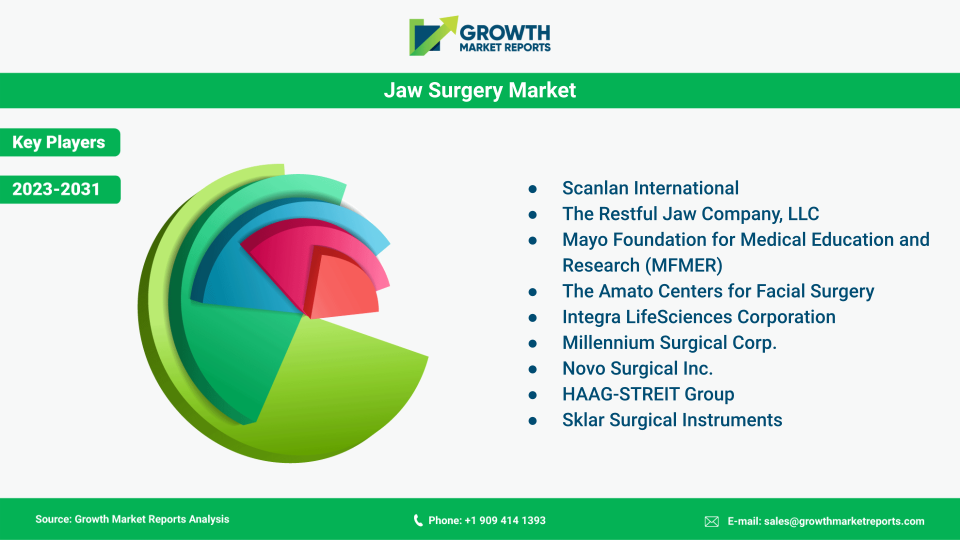

Jaw Surgery Market Key Players

Frequently Asked Questions

Hospitals are the primary end-users, followed by specialty clinics, ambulatory surgical centers, and other settings like private practices and research institutions.

Opportunities include the expansion of minimally invasive techniques, increased demand for cosmetic and reconstructive procedures, technological innovation, and growth in emerging markets.

Challenges include high procedure costs, limited insurance coverage, risk of surgical complications, shortage of skilled surgeons in some regions, and stringent regulatory requirements.

Major companies include Zimmer Biomet Holdings Inc., Stryker Corporation, DePuy Synthes (Johnson & Johnson), Medtronic plc, Arthrex Inc., B. Braun Melsungen AG, KLS Martin Group, and Integra LifeSciences Holdings Corporation.

Technologies such as 3D CT scans, digital planning software, computer-aided surgical planning, and 3D printing are enhancing surgical precision, reducing recovery times, and improving outcomes.

North America and Europe currently dominate the jaw surgery market, while Asia Pacific is the fastest-growing region due to large patient populations and rising healthcare investments.

Jaw surgery is most commonly indicated for malocclusion, jaw deformities, trauma, tumors, and conditions like obstructive sleep apnea and temporomandibular joint disorders.

The main types of jaw surgery are orthognathic surgery, maxillofacial surgery, mandibular surgery, and other adjunctive procedures such as genioplasty and alveolar bone grafting.

Key growth drivers include advancements in surgical techniques, increased awareness of corrective jaw procedures, rising prevalence of jaw-related disorders, and a growing focus on facial aesthetics.

As of 2024, the global jaw surgery market size reached USD 2.18 billion, with projections to grow to USD 4.09 billion by 2033.

Table Of Content

Chapter 1 Executive Summary
Chapter 2 Assumptions and Acronyms Used
Chapter 3 Research Methodology
Chapter 4 Jaw Surgery Market Overview
   4.1 Introduction
      4.1.1 Market Taxonomy
      4.1.2 Market Definition
      4.1.3 Macro-Economic Factors Impacting the Market Growth
   4.2 Jaw Surgery Market Dynamics
      4.2.1 Market Drivers
      4.2.2 Market Restraints
      4.2.3 Market Opportunity
   4.3 Jaw Surgery Market - Supply Chain Analysis
      4.3.1 List of Key Suppliers
      4.3.2 List of Key Distributors
      4.3.3 List of Key Consumers
   4.4 Key Forces Shaping the Jaw Surgery Market
      4.4.1 Bargaining Power of Suppliers
      4.4.2 Bargaining Power of Buyers
      4.4.3 Threat of Substitution
      4.4.4 Threat of New Entrants
      4.4.5 Competitive Rivalry
   4.5 Global Jaw Surgery Market Size & Forecast, 2023-2032
      4.5.1 Jaw Surgery Market Size and Y-o-Y Growth
      4.5.2 Jaw Surgery Market Absolute $ Opportunity

Chapter 5 Global Jaw Surgery Market Analysis and Forecast By Procedure Type
   5.1 Introduction
      5.1.1 Key Market Trends & Growth Opportunities By Procedure Type
      5.1.2 Basis Point Share (BPS) Analysis By Procedure Type
      5.1.3 Absolute $ Opportunity Assessment By Procedure Type
   5.2 Jaw Surgery Market Size Forecast By Procedure Type
      5.2.1 Orthognathic Surgery
      5.2.2 Maxillofacial Surgery
      5.2.3 Mandibular Surgery
      5.2.4 Others
   5.3 Market Attractiveness Analysis By Procedure Type

Chapter 6 Global Jaw Surgery Market Analysis and Forecast By Indication
   6.1 Introduction
      6.1.1 Key Market Trends & Growth Opportunities By Indication
      6.1.2 Basis Point Share (BPS) Analysis By Indication
      6.1.3 Absolute $ Opportunity Assessment By Indication
   6.2 Jaw Surgery Market Size Forecast By Indication
      6.2.1 Malocclusion
      6.2.2 Jaw Deformities
      6.2.3 Trauma
      6.2.4 Tumors
      6.2.5 Others
   6.3 Market Attractiveness Analysis By Indication

Chapter 7 Global Jaw Surgery Market Analysis and Forecast By End-User
   7.1 Introduction
      7.1.1 Key Market Trends & Growth Opportunities By End-User
      7.1.2 Basis Point Share (BPS) Analysis By End-User
      7.1.3 Absolute $ Opportunity Assessment By End-User
   7.2 Jaw Surgery Market Size Forecast By End-User
      7.2.1 Hospitals
      7.2.2 Specialty Clinics
      7.2.3 Ambulatory Surgical Centers
      7.2.4 Others
   7.3 Market Attractiveness Analysis By End-User

Chapter 8 Global Jaw Surgery Market Analysis and Forecast by Region
   8.1 Introduction
      8.1.1 Key Market Trends & Growth Opportunities By Region
      8.1.2 Basis Point Share (BPS) Analysis By Region
      8.1.3 Absolute $ Opportunity Assessment By Region
   8.2 Jaw Surgery Market Size Forecast By Region
      8.2.1 North America
      8.2.2 Europe
      8.2.3 Asia Pacific
      8.2.4 Latin America
      8.2.5 Middle East & Africa (MEA)
   8.3 Market Attractiveness Analysis By Region

Chapter 9 Coronavirus Disease (COVID-19) Impact 
   9.1 Introduction 
   9.2 Current & Future Impact Analysis 
   9.3 Economic Impact Analysis 
   9.4 Government Policies 
   9.5 Investment Scenario

Chapter 10 North America Jaw Surgery Analysis and Forecast
   10.1 Introduction
   10.2 North America Jaw Surgery Market Size Forecast by Country
      10.2.1 U.S.
      10.2.2 Canada
   10.3 Basis Point Share (BPS) Analysis by Country
   10.4 Absolute $ Opportunity Assessment by Country
   10.5 Market Attractiveness Analysis by Country
   10.6 North America Jaw Surgery Market Size Forecast By Procedure Type
      10.6.1 Orthognathic Surgery
      10.6.2 Maxillofacial Surgery
      10.6.3 Mandibular Surgery
      10.6.4 Others
   10.7 Basis Point Share (BPS) Analysis By Procedure Type 
   10.8 Absolute $ Opportunity Assessment By Procedure Type 
   10.9 Market Attractiveness Analysis By Procedure Type
   10.10 North America Jaw Surgery Market Size Forecast By Indication
      10.10.1 Malocclusion
      10.10.2 Jaw Deformities
      10.10.3 Trauma
      10.10.4 Tumors
      10.10.5 Others
   10.11 Basis Point Share (BPS) Analysis By Indication 
   10.12 Absolute $ Opportunity Assessment By Indication 
   10.13 Market Attractiveness Analysis By Indication
   10.14 North America Jaw Surgery Market Size Forecast By End-User
      10.14.1 Hospitals
      10.14.2 Specialty Clinics
      10.14.3 Ambulatory Surgical Centers
      10.14.4 Others
   10.15 Basis Point Share (BPS) Analysis By End-User 
   10.16 Absolute $ Opportunity Assessment By End-User 
   10.17 Market Attractiveness Analysis By End-User

Chapter 11 Europe Jaw Surgery Analysis and Forecast
   11.1 Introduction
   11.2 Europe Jaw Surgery Market Size Forecast by Country
      11.2.1 Germany
      11.2.2 France
      11.2.3 Italy
      11.2.4 U.K.
      11.2.5 Spain
      11.2.6 Russia
      11.2.7 Rest of Europe
   11.3 Basis Point Share (BPS) Analysis by Country
   11.4 Absolute $ Opportunity Assessment by Country
   11.5 Market Attractiveness Analysis by Country
   11.6 Europe Jaw Surgery Market Size Forecast By Procedure Type
      11.6.1 Orthognathic Surgery
      11.6.2 Maxillofacial Surgery
      11.6.3 Mandibular Surgery
      11.6.4 Others
   11.7 Basis Point Share (BPS) Analysis By Procedure Type 
   11.8 Absolute $ Opportunity Assessment By Procedure Type 
   11.9 Market Attractiveness Analysis By Procedure Type
   11.10 Europe Jaw Surgery Market Size Forecast By Indication
      11.10.1 Malocclusion
      11.10.2 Jaw Deformities
      11.10.3 Trauma
      11.10.4 Tumors
      11.10.5 Others
   11.11 Basis Point Share (BPS) Analysis By Indication 
   11.12 Absolute $ Opportunity Assessment By Indication 
   11.13 Market Attractiveness Analysis By Indication
   11.14 Europe Jaw Surgery Market Size Forecast By End-User
      11.14.1 Hospitals
      11.14.2 Specialty Clinics
      11.14.3 Ambulatory Surgical Centers
      11.14.4 Others
   11.15 Basis Point Share (BPS) Analysis By End-User 
   11.16 Absolute $ Opportunity Assessment By End-User 
   11.17 Market Attractiveness Analysis By End-User

Chapter 12 Asia Pacific Jaw Surgery Analysis and Forecast
   12.1 Introduction
   12.2 Asia Pacific Jaw Surgery Market Size Forecast by Country
      12.2.1 China
      12.2.2 Japan
      12.2.3 South Korea
      12.2.4 India
      12.2.5 Australia
      12.2.6 South East Asia (SEA)
      12.2.7 Rest of Asia Pacific (APAC)
   12.3 Basis Point Share (BPS) Analysis by Country
   12.4 Absolute $ Opportunity Assessment by Country
   12.5 Market Attractiveness Analysis by Country
   12.6 Asia Pacific Jaw Surgery Market Size Forecast By Procedure Type
      12.6.1 Orthognathic Surgery
      12.6.2 Maxillofacial Surgery
      12.6.3 Mandibular Surgery
      12.6.4 Others
   12.7 Basis Point Share (BPS) Analysis By Procedure Type 
   12.8 Absolute $ Opportunity Assessment By Procedure Type 
   12.9 Market Attractiveness Analysis By Procedure Type
   12.10 Asia Pacific Jaw Surgery Market Size Forecast By Indication
      12.10.1 Malocclusion
      12.10.2 Jaw Deformities
      12.10.3 Trauma
      12.10.4 Tumors
      12.10.5 Others
   12.11 Basis Point Share (BPS) Analysis By Indication 
   12.12 Absolute $ Opportunity Assessment By Indication 
   12.13 Market Attractiveness Analysis By Indication
   12.14 Asia Pacific Jaw Surgery Market Size Forecast By End-User
      12.14.1 Hospitals
      12.14.2 Specialty Clinics
      12.14.3 Ambulatory Surgical Centers
      12.14.4 Others
   12.15 Basis Point Share (BPS) Analysis By End-User 
   12.16 Absolute $ Opportunity Assessment By End-User 
   12.17 Market Attractiveness Analysis By End-User

Chapter 13 Latin America Jaw Surgery Analysis and Forecast
   13.1 Introduction
   13.2 Latin America Jaw Surgery Market Size Forecast by Country
      13.2.1 Brazil
      13.2.2 Mexico
      13.2.3 Rest of Latin America (LATAM)
   13.3 Basis Point Share (BPS) Analysis by Country
   13.4 Absolute $ Opportunity Assessment by Country
   13.5 Market Attractiveness Analysis by Country
   13.6 Latin America Jaw Surgery Market Size Forecast By Procedure Type
      13.6.1 Orthognathic Surgery
      13.6.2 Maxillofacial Surgery
      13.6.3 Mandibular Surgery
      13.6.4 Others
   13.7 Basis Point Share (BPS) Analysis By Procedure Type 
   13.8 Absolute $ Opportunity Assessment By Procedure Type 
   13.9 Market Attractiveness Analysis By Procedure Type
   13.10 Latin America Jaw Surgery Market Size Forecast By Indication
      13.10.1 Malocclusion
      13.10.2 Jaw Deformities
      13.10.3 Trauma
      13.10.4 Tumors
      13.10.5 Others
   13.11 Basis Point Share (BPS) Analysis By Indication 
   13.12 Absolute $ Opportunity Assessment By Indication 
   13.13 Market Attractiveness Analysis By Indication
   13.14 Latin America Jaw Surgery Market Size Forecast By End-User
      13.14.1 Hospitals
      13.14.2 Specialty Clinics
      13.14.3 Ambulatory Surgical Centers
      13.14.4 Others
   13.15 Basis Point Share (BPS) Analysis By End-User 
   13.16 Absolute $ Opportunity Assessment By End-User 
   13.17 Market Attractiveness Analysis By End-User

Chapter 14 Middle East & Africa (MEA) Jaw Surgery Analysis and Forecast
   14.1 Introduction
   14.2 Middle East & Africa (MEA) Jaw Surgery Market Size Forecast by Country
      14.2.1 Saudi Arabia
      14.2.2 South Africa
      14.2.3 UAE
      14.2.4 Rest of Middle East & Africa (MEA)
   14.3 Basis Point Share (BPS) Analysis by Country
   14.4 Absolute $ Opportunity Assessment by Country
   14.5 Market Attractiveness Analysis by Country
   14.6 Middle East & Africa (MEA) Jaw Surgery Market Size Forecast By Procedure Type
      14.6.1 Orthognathic Surgery
      14.6.2 Maxillofacial Surgery
      14.6.3 Mandibular Surgery
      14.6.4 Others
   14.7 Basis Point Share (BPS) Analysis By Procedure Type 
   14.8 Absolute $ Opportunity Assessment By Procedure Type 
   14.9 Market Attractiveness Analysis By Procedure Type
   14.10 Middle East & Africa (MEA) Jaw Surgery Market Size Forecast By Indication
      14.10.1 Malocclusion
      14.10.2 Jaw Deformities
      14.10.3 Trauma
      14.10.4 Tumors
      14.10.5 Others
   14.11 Basis Point Share (BPS) Analysis By Indication 
   14.12 Absolute $ Opportunity Assessment By Indication 
   14.13 Market Attractiveness Analysis By Indication
   14.14 Middle East & Africa (MEA) Jaw Surgery Market Size Forecast By End-User
      14.14.1 Hospitals
      14.14.2 Specialty Clinics
      14.14.3 Ambulatory Surgical Centers
      14.14.4 Others
   14.15 Basis Point Share (BPS) Analysis By End-User 
   14.16 Absolute $ Opportunity Assessment By End-User 
   14.17 Market Attractiveness Analysis By End-User

Chapter 15 Competition Landscape 
   15.1 Jaw Surgery Market: Competitive Dashboard
   15.2 Global Jaw Surgery Market: Market Share Analysis, 2023
   15.3 Company Profiles (Details – Overview, Financials, Developments, Strategy) 
      15.3.1 Johnson & Johnson (DePuy Synthes)
Stryker Corporation
Zimmer Biomet Holdings, Inc.
Medtronic plc
B. Braun Melsungen AG
KLS Martin Group
Integra LifeSciences Holdings Corporation
OsteoMed (A Colson Medical, Inc. Company)
Arthrex, Inc.
Acumed LLC
W. L. Gore & Associates, Inc.
TMJ Concepts
Synthes Holding AG
Medartis AG
G. Surgiwear Ltd.
Xilloc Medical B.V.
Matrix Surgical USA
Renishaw plc
3D Systems Corporation
Materialise NV

Methodology

Our Clients

General Mills
FedEx Logistics
Microsoft
Deloitte
sinopec
Dassault Aviation
Nestle SA
Siemens Healthcare