Segments - by Component (Hardware, Software, Services), by Application (Smart Manufacturing, Smart Healthcare, Smart Transportation, Smart Energy, Smart Retail, Smart Agriculture, Others), by Deployment Mode (On-Premises, Cloud), by Organization Size (Small and Medium Enterprises, Large Enterprises), by End-User (Industrial, Commercial, Residential, Government, Others)
According to our latest research, the global IoT Solutions and Services market size reached USD 324.6 billion in 2024, with a robust compound annual growth rate (CAGR) of 18.1% projected for the period 2025 to 2033. By 2033, the market is expected to soar to USD 1,379.4 billion, driven by rapid digital transformation across industries, increased adoption of smart devices, and the proliferation of connected infrastructure. The key growth factor underpinning this expansion is the escalating demand for real-time data analytics and automation, which are becoming critical for operational efficiency and competitive differentiation in the digital era.
A primary driver for the IoT Solutions and Services market is the exponential growth in connected devices and the increasing need for seamless machine-to-machine (M2M) communication. As organizations across sectors such as manufacturing, healthcare, transportation, and energy seek to leverage IoT for enhanced operational visibility and process automation, the demand for integrated IoT platforms and services is surging. The convergence of IoT with advanced technologies like artificial intelligence, machine learning, and edge computing is further amplifying the value proposition, enabling predictive maintenance, asset tracking, and intelligent decision-making. This integration is fostering a new wave of innovation, with businesses investing heavily in IoT to unlock efficiencies, reduce costs, and create new revenue streams.
Another significant growth factor is the increasing emphasis on smart infrastructure and urban development initiatives globally. Governments and private sectors are investing in smart cities, deploying IoT-enabled solutions for traffic management, energy optimization, public safety, and environmental monitoring. The rise of Industry 4.0 is also a pivotal force, as manufacturers embrace IoT to digitize supply chains, automate production lines, and monitor equipment health in real time. The healthcare sector, too, is witnessing a surge in IoT adoption for remote patient monitoring, asset tracking, and personalized care delivery. These trends are not only driving market expansion but are also catalyzing the development of new business models and service-oriented architectures.
The proliferation of cloud computing and advancements in network connectivity, such as 5G, are further accelerating the adoption of IoT solutions and services. Cloud-based IoT platforms provide scalability, flexibility, and cost-effectiveness, enabling organizations to deploy, manage, and analyze vast volumes of data generated by connected devices. The advent of 5G networks is enhancing the reliability and speed of IoT communications, making it feasible to connect more devices and support latency-sensitive applications. These technological advancements are reducing barriers to entry for small and medium enterprises (SMEs), democratizing access to IoT capabilities, and fostering a vibrant ecosystem of solution providers, system integrators, and platform vendors.
Regionally, Asia Pacific continues to dominate the IoT Solutions and Services market, accounting for the largest market share in 2024, followed by North America and Europe. The rapid pace of urbanization, large-scale smart city projects, and the presence of leading manufacturing hubs are key factors contributing to the region’s leadership. North America is characterized by early adoption of advanced technologies and a robust ecosystem of IoT vendors, while Europe benefits from strong regulatory support and a focus on sustainability. The Middle East & Africa and Latin America are emerging as high-growth markets, driven by investments in digital infrastructure and increasing adoption of IoT in sectors such as energy, agriculture, and logistics.
The IoT Solutions and Services market is segmented by component into hardware, software, and services, each playing a distinct role in the IoT value chain. Hardware encompasses sensors, actuators, gateways, and connectivity modules, serving as the foundation for capturing and transmitting data from physical assets. The hardware segment remains a substantial contributor to the overall market, as the proliferation of connected devices continues unabated. The demand for low-power, high-performance sensors and edge devices is particularly pronounced in industries such as manufacturing, healthcare, and transportation, where real-time monitoring and control are critical. As IoT deployments scale, the need for interoperable and secure hardware solutions is driving innovation and partnerships among device manufacturers and technology providers.
Software represents the intelligence layer of IoT ecosystems, encompassing platforms for device management, data analytics, application enablement, and security. The software segment is experiencing rapid growth, fueled by the increasing complexity of IoT deployments and the need for scalable, cloud-native platforms. IoT software solutions enable organizations to aggregate, process, and analyze data from diverse sources, transforming raw data into actionable insights. The integration of artificial intelligence and machine learning capabilities is enhancing the predictive and prescriptive analytics capabilities of IoT platforms, enabling advanced use cases such as anomaly detection, predictive maintenance, and autonomous operations. The emphasis on interoperability and open standards is also shaping the software landscape, as organizations seek to avoid vendor lock-in and ensure seamless integration with existing IT systems.
Services constitute a vital segment, encompassing consulting, integration, deployment, and managed services. As IoT projects become more complex and mission-critical, organizations are increasingly relying on specialized service providers for strategy development, solution design, implementation, and ongoing support. Managed IoT services are particularly in demand, as they enable organizations to outsource the monitoring, management, and optimization of their IoT infrastructure, allowing them to focus on core business activities. The services segment is also witnessing the emergence of new business models, such as IoT-as-a-Service and outcome-based contracts, which align the interests of service providers and customers and drive long-term value creation.
The interplay between hardware, software, and services is creating a dynamic and competitive landscape, with vendors increasingly offering integrated solutions that span the entire IoT stack. This trend is enabling end-users to accelerate time-to-value, reduce complexity, and ensure interoperability across heterogeneous environments. As the market matures, the emphasis is shifting from point solutions to end-to-end platforms that provide comprehensive functionality, security, and scalability. The ability to deliver holistic, vertically integrated solutions is becoming a key differentiator for IoT vendors, driving consolidation and strategic alliances across the value chain.
| Attributes | Details |
| Report Title | IoT Solutions and Services Market Research Report 2033 |
| By Component | Hardware, Software, Services |
| By Application | Smart Manufacturing, Smart Healthcare, Smart Transportation, Smart Energy, Smart Retail, Smart Agriculture, Others |
| By Deployment Mode | On-Premises, Cloud |
| By Organization Size | Small and Medium Enterprises, Large Enterprises |
| By End-User | Industrial, Commercial, Residential, Government, Others |
| Regions Covered | North America, Europe, APAC, Latin America, MEA |
| Base Year | 2024 |
| Historic Data | 2018-2023 |
| Forecast Period | 2025-2033 |
| Number of Pages | 286 |
| Number of Tables & Figures | 265 |
| Customization Available | Yes, the report can be customized as per your need. |
The application landscape of the IoT Solutions and Services market is vast and diverse, encompassing smart manufacturing, smart healthcare, smart transportation, smart energy, smart retail, smart agriculture, and other emerging domains. Smart manufacturing is one of the most prominent application areas, as manufacturers leverage IoT for real-time monitoring, predictive maintenance, asset tracking, and supply chain optimization. The adoption of IoT in manufacturing is driving the transition to Industry 4.0, enabling the creation of intelligent factories that are more agile, efficient, and resilient. The integration of IoT with robotics, automation, and digital twins is further enhancing operational visibility and enabling data-driven decision-making at scale.
Smart healthcare is another high-growth segment, with IoT solutions enabling remote patient monitoring, wearable health devices, asset management, and personalized care delivery. The COVID-19 pandemic has accelerated the adoption of IoT in healthcare, as providers seek to enhance patient outcomes, optimize resource utilization, and ensure continuity of care. IoT-enabled medical devices and platforms are facilitating real-time data collection, enabling early detection of health issues, and supporting telemedicine initiatives. The emphasis on data security and regulatory compliance is particularly pronounced in this segment, as healthcare organizations navigate complex privacy and interoperability requirements.
Smart transportation and smart energy are also witnessing significant IoT adoption. In transportation, IoT solutions are enabling fleet management, real-time tracking, predictive maintenance, and intelligent traffic management. These capabilities are improving safety, reducing operational costs, and enhancing the overall passenger experience. In the energy sector, IoT is facilitating smart grid management, energy consumption monitoring, and predictive maintenance of critical infrastructure. Utilities and energy providers are leveraging IoT to optimize asset performance, reduce downtime, and support the integration of renewable energy sources.
Smart retail and smart agriculture are emerging as important application areas, driven by the need for enhanced customer experiences and sustainable food production. In retail, IoT solutions are enabling inventory management, personalized marketing, and in-store analytics, helping retailers optimize operations and engage customers more effectively. In agriculture, IoT is supporting precision farming, livestock monitoring, and environmental sensing, enabling farmers to increase yields, reduce resource consumption, and improve sustainability. The ability to collect and analyze real-time data from diverse sources is transforming traditional business models and creating new opportunities for innovation across these sectors.
The deployment mode of IoT solutions and services is a critical consideration for organizations, with options spanning on-premises and cloud-based deployments. On-premises deployment remains prevalent in industries with stringent data security and compliance requirements, such as manufacturing, healthcare, and government. Organizations in these sectors often prefer to retain control over their IoT infrastructure and data, deploying solutions within their own data centers or private clouds. On-premises deployments offer greater customization, control, and integration with existing IT systems, but may involve higher upfront costs and longer implementation timelines.
Cloud-based deployment is gaining significant traction, driven by the need for scalability, flexibility, and cost-effectiveness. Cloud platforms enable organizations to rapidly deploy, manage, and scale IoT solutions without the need for extensive on-premises infrastructure. The ability to leverage cloud-native services, such as data analytics, machine learning, and security, is enabling organizations to accelerate innovation and respond more quickly to changing business requirements. Cloud deployment also facilitates remote management and monitoring, supporting distributed and global IoT deployments.
Hybrid deployment models are emerging as a popular choice, enabling organizations to balance the benefits of on-premises control with the scalability and agility of the cloud. Hybrid models allow organizations to process sensitive data locally while leveraging the cloud for analytics, storage, and application enablement. This approach is particularly relevant for industries with distributed operations, such as manufacturing, logistics, and energy, where a combination of edge and cloud computing is required to support real-time decision-making and operational resilience.
The choice of deployment mode is influenced by factors such as data sensitivity, regulatory requirements, scalability needs, and total cost of ownership. As the IoT market matures, vendors are offering flexible deployment options and managed services to address the diverse needs of organizations across industries. The ability to seamlessly integrate on-premises and cloud-based solutions is becoming a key differentiator, enabling organizations to future-proof their IoT investments and adapt to evolving business and regulatory landscapes.
The IoT Solutions and Services market is segmented by organization size into small and medium enterprises (SMEs) and large enterprises, each with distinct adoption patterns and requirements. Large enterprises have traditionally been the early adopters of IoT, leveraging their resources and technical capabilities to deploy complex, large-scale IoT solutions. These organizations are investing in end-to-end platforms, advanced analytics, and integration with enterprise systems to drive digital transformation and competitive advantage. Large enterprises are also more likely to pursue multi-site and global deployments, requiring scalable, secure, and interoperable IoT solutions.
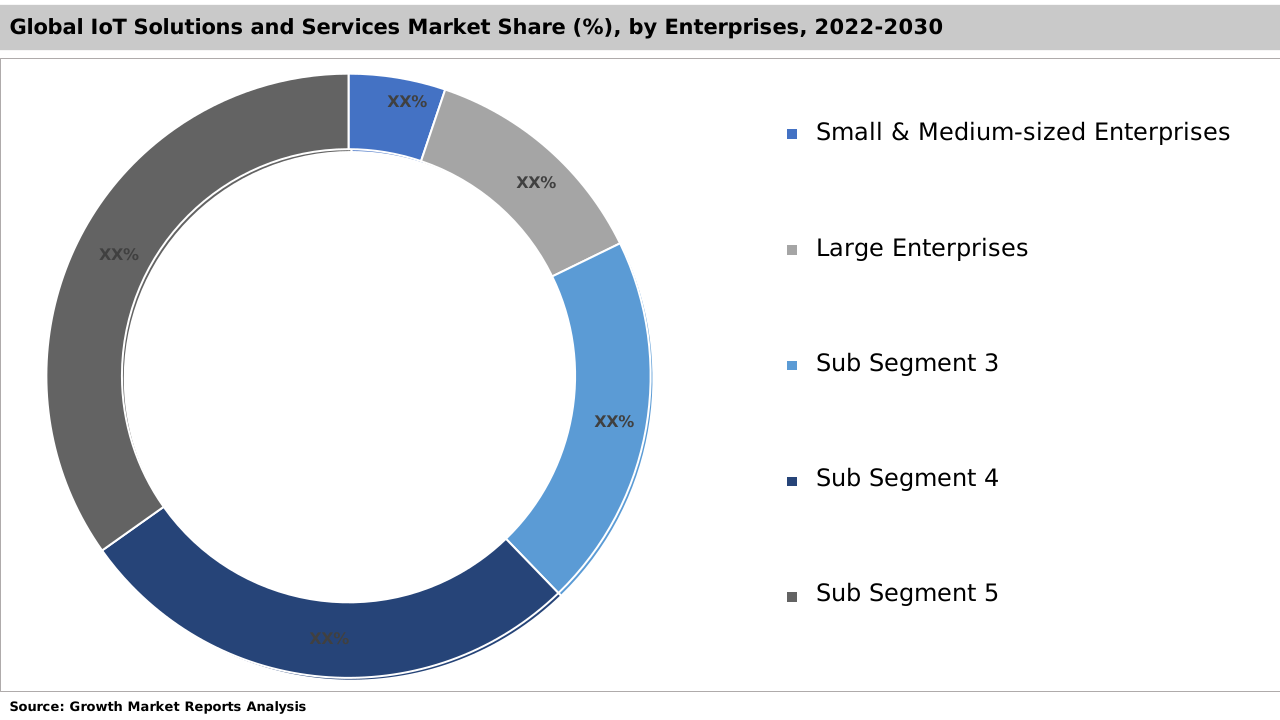
Small and medium enterprises (SMEs) are increasingly embracing IoT, driven by the democratization of technology and the availability of cost-effective, cloud-based solutions. SMEs are leveraging IoT to improve operational efficiency, enhance customer experiences, and create new revenue streams. The adoption of IoT among SMEs is being facilitated by the availability of plug-and-play solutions, managed services, and pay-as-you-go pricing models, which reduce the barriers to entry and minimize upfront investments. SMEs are particularly active in sectors such as retail, agriculture, and logistics, where IoT can deliver immediate and tangible benefits.
Despite the growing adoption of IoT among SMEs, challenges remain in terms of skills, integration, and security. Many SMEs lack the in-house expertise to design, implement, and manage IoT solutions, making them reliant on external service providers and system integrators. Security and data privacy are also key concerns, as SMEs often lack the resources to implement robust security measures and comply with regulatory requirements. Addressing these challenges requires a collaborative approach, with vendors, service providers, and industry associations working together to provide education, best practices, and tailored solutions for SMEs.
The growing adoption of IoT across organization sizes is contributing to the overall expansion and diversification of the market. As technology continues to evolve and become more accessible, the gap between large enterprises and SMEs is narrowing, with both segments poised to drive innovation and value creation in the IoT ecosystem. The ability to address the unique needs of different organization sizes is becoming a key success factor for IoT vendors and service providers, driving the development of modular, scalable, and easy-to-deploy solutions.
The IoT Solutions and Services market is segmented by end-user into industrial, commercial, residential, government, and others, reflecting the broad applicability of IoT across sectors. Industrial end-users represent the largest segment, driven by the adoption of IoT in manufacturing, energy, logistics, and utilities. Industrial organizations are leveraging IoT to optimize asset utilization, improve process efficiency, and enable predictive maintenance. The integration of IoT with automation, robotics, and advanced analytics is transforming traditional industrial operations, enabling the creation of smart factories and digital supply chains.
Commercial end-users include sectors such as retail, hospitality, healthcare, and transportation, where IoT is being used to enhance customer experiences, optimize operations, and improve safety and security. In retail, IoT is enabling inventory management, personalized marketing, and in-store analytics, while in healthcare, it is supporting remote monitoring, asset tracking, and patient engagement. The commercial segment is characterized by a high degree of innovation and experimentation, as organizations seek to differentiate themselves and respond to evolving customer expectations.
Residential end-users are increasingly adopting IoT solutions for home automation, security, energy management, and entertainment. The proliferation of smart home devices, such as thermostats, cameras, and voice assistants, is driving the growth of the residential segment. Consumers are seeking convenience, comfort, and energy savings, leading to increased demand for integrated and interoperable smart home solutions. The residential IoT market is also witnessing the emergence of new business models, such as subscription-based services and bundled offerings, which are making smart home technology more accessible and affordable.
Government end-users are playing a pivotal role in the adoption of IoT, particularly in the context of smart city initiatives, public safety, transportation, and environmental monitoring. Governments are investing in IoT to improve service delivery, enhance public safety, and promote sustainability. The deployment of IoT in public infrastructure is enabling real-time monitoring, predictive maintenance, and data-driven decision-making, leading to more efficient and responsive public services. The government segment is also characterized by a strong focus on security, privacy, and interoperability, as public sector organizations navigate complex regulatory and operational landscapes.
The IoT Solutions and Services market presents substantial opportunities for growth and innovation, particularly as organizations across industries accelerate their digital transformation journeys. One of the most promising opportunities lies in the convergence of IoT with emerging technologies such as artificial intelligence, machine learning, and blockchain. This convergence is enabling the development of intelligent, autonomous systems that can analyze vast volumes of data, detect patterns, and make real-time decisions. The integration of IoT with edge computing is also unlocking new use cases, such as real-time monitoring, predictive maintenance, and autonomous operations, particularly in industries with distributed operations and latency-sensitive applications. The growing emphasis on sustainability and resource optimization is driving the adoption of IoT in areas such as smart energy, agriculture, and environmental monitoring, creating new revenue streams and business models for solution providers.
Another significant opportunity is the expansion of IoT into underserved and emerging markets, particularly in regions such as Asia Pacific, Latin America, and the Middle East & Africa. These regions are witnessing rapid urbanization, infrastructure development, and increasing investments in digital technologies, creating a fertile environment for IoT adoption. The proliferation of affordable, cloud-based IoT solutions is reducing barriers to entry for small and medium enterprises and enabling the democratization of IoT capabilities. The rise of IoT-as-a-Service and outcome-based business models is also making it easier for organizations to adopt and scale IoT solutions, without the need for significant upfront investments. As the IoT ecosystem matures, there is a growing opportunity for vendors, service providers, and system integrators to collaborate and co-create solutions tailored to the unique needs of different industries and regions.
Despite the significant opportunities, the IoT Solutions and Services market faces several threats and challenges that could impede its growth. Security and privacy concerns remain paramount, as the proliferation of connected devices increases the attack surface and exposes organizations to new risks. The lack of standardized protocols and interoperability among devices and platforms is another major challenge, leading to fragmentation and complexity in IoT deployments. Regulatory compliance and data sovereignty issues are also becoming more pronounced, particularly in industries such as healthcare, finance, and government. Addressing these challenges requires a concerted effort from industry stakeholders, including the development of robust security frameworks, open standards, and best practices for data governance and privacy.
The Asia Pacific region leads the global IoT Solutions and Services market, accounting for approximately 38% of the global market size in 2024, translating to around USD 123.3 billion. This dominance is driven by the rapid pace of urbanization, large-scale investments in smart city projects, and the presence of leading manufacturing hubs in countries such as China, Japan, and South Korea. The region is characterized by strong government support for digital transformation, a vibrant ecosystem of technology providers, and increasing adoption of IoT across sectors such as manufacturing, transportation, and energy. The Asia Pacific market is projected to maintain a high growth trajectory, with a CAGR of 19.2% over the forecast period, reaching an estimated USD 621.5 billion by 2033.
North America is the second-largest market, with a market size of approximately USD 96.7 billion in 2024, representing 30% of the global market. The region is characterized by early adoption of advanced technologies, a robust ecosystem of IoT vendors, and strong regulatory support for innovation. Key growth drivers in North America include the increasing adoption of IoT in healthcare, smart manufacturing, and smart transportation, as well as the proliferation of cloud-based IoT platforms and 5G connectivity. The United States accounts for the majority of the regional market, driven by significant investments in research and development, a large base of technology companies, and a focus on data-driven decision-making.
Europe holds a significant share of the IoT Solutions and Services market, with a market size of around USD 77.9 billion in 2024, or 24% of the global market. The region benefits from strong regulatory frameworks, a focus on sustainability, and a high degree of digitalization across industries. European countries are at the forefront of smart city initiatives, energy management, and industrial automation, driving demand for IoT solutions and services. The Middle East & Africa and Latin America are emerging as high-growth markets, with a combined market size of approximately USD 26.7 billion in 2024, or 8% of the global market. These regions are witnessing increasing adoption of IoT in sectors such as energy, agriculture, and logistics, supported by investments in digital infrastructure and government-led initiatives.
The competitive landscape of the IoT Solutions and Services market is highly dynamic and fragmented, with a diverse mix of global technology giants, niche solution providers, and emerging startups vying for market share. Leading players are investing heavily in research and development, strategic partnerships, and mergers and acquisitions to strengthen their product portfolios, expand their geographic reach, and enhance their capabilities in areas such as analytics, security, and edge computing. The market is characterized by intense competition, rapid innovation, and a constant influx of new entrants, driving continuous evolution in solution offerings and business models. Vendors are increasingly focusing on delivering end-to-end, vertically integrated solutions that address the unique needs of specific industries and use cases, enabling customers to accelerate time-to-value and achieve measurable business outcomes.
A key trend in the competitive landscape is the convergence of IoT with other emerging technologies, such as artificial intelligence, machine learning, and blockchain. Leading IoT vendors are integrating these capabilities into their platforms to enable advanced analytics, automation, and secure data sharing. The ability to deliver scalable, interoperable, and secure solutions is becoming a critical differentiator, as organizations seek to future-proof their IoT investments and address evolving security and compliance requirements. Strategic alliances and ecosystem partnerships are also playing a vital role, enabling vendors to leverage complementary capabilities, accelerate innovation, and deliver comprehensive solutions to customers.
The services segment is witnessing the emergence of specialized providers offering consulting, integration, and managed services tailored to specific industries and use cases. These providers are playing a crucial role in helping organizations navigate the complexities of IoT deployments, from strategy development and solution design to implementation and ongoing support. The rise of IoT-as-a-Service and outcome-based business models is also reshaping the competitive landscape, enabling vendors to differentiate themselves through value-added services and long-term customer relationships.
Major companies operating in the IoT Solutions and Services market include Cisco Systems, Inc., IBM Corporation, Microsoft Corporation, Amazon Web Services, Inc., Siemens AG, Huawei Technologies Co., Ltd., SAP SE, Oracle Corporation, PTC Inc., and Bosch.IO GmbH. Cisco is a leader in IoT networking and security, offering a comprehensive portfolio of hardware, software, and services for industrial and enterprise IoT deployments. IBM and Microsoft are at the forefront of IoT analytics and cloud platforms, leveraging their expertise in artificial intelligence and machine learning to deliver advanced insights and automation capabilities. Amazon Web Services provides a scalable, cloud-native IoT platform that supports a wide range of use cases, from smart homes to industrial automation.
Siemens and Bosch.IO are leading players in the industrial IoT segment, offering end-to-end solutions for manufacturing, energy, and logistics. Huawei is a major player in the Asia Pacific region, providing IoT connectivity, cloud, and edge computing solutions for diverse industries. SAP and Oracle are leveraging their strengths in enterprise software and analytics to deliver integrated IoT solutions for business process optimization and digital transformation. PTC is known for its ThingWorx IoT platform, which enables rapid application development and integration with industrial systems. These companies are continuously innovating and expanding their offerings to address the evolving needs of customers and maintain their competitive edge in the rapidly growing IoT Solutions and Services market.
The IoT Solutions and Services market has been segmented on the basis of
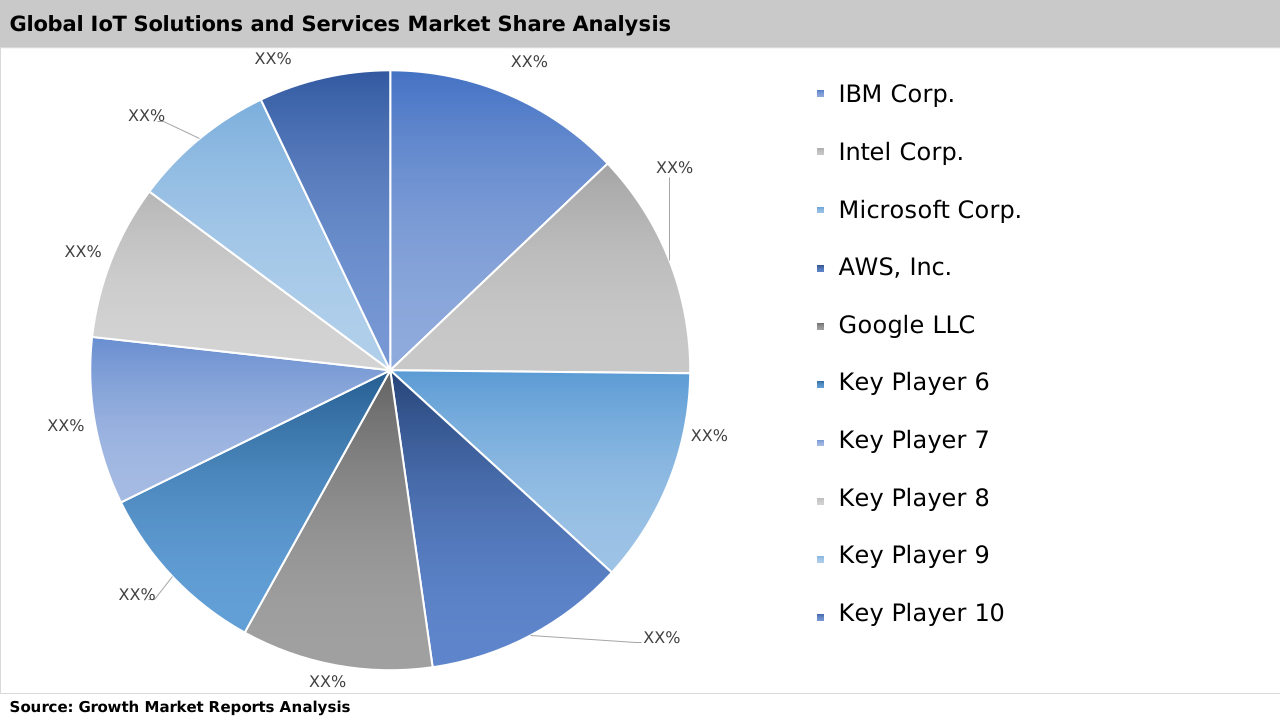
Key players competing in the global IoT solutions and services market are IBM Corp.; Intel Corp.; Microsoft Corp.; AWS, Inc.; Google LLC; Oracle Corp.; Siemens AG; Cisco Systems, Inc.; SAP SE; Qualcomm; Fujitsu Limited; PTC Inc.; GE Digital; Hitachi, Ltd.; Arm Limited; Software AG; Oxagile; Aeris.; HQ Software; Confidex; Samsara Inc.; ClearBlade; and Ayla Networks. Some of these players have adopted a series of business development strategies including merger and acquisition, entering into partnerships and collaboration, product launches, and innovative IoT solutions development to expand their consumer base and enhance their market share.
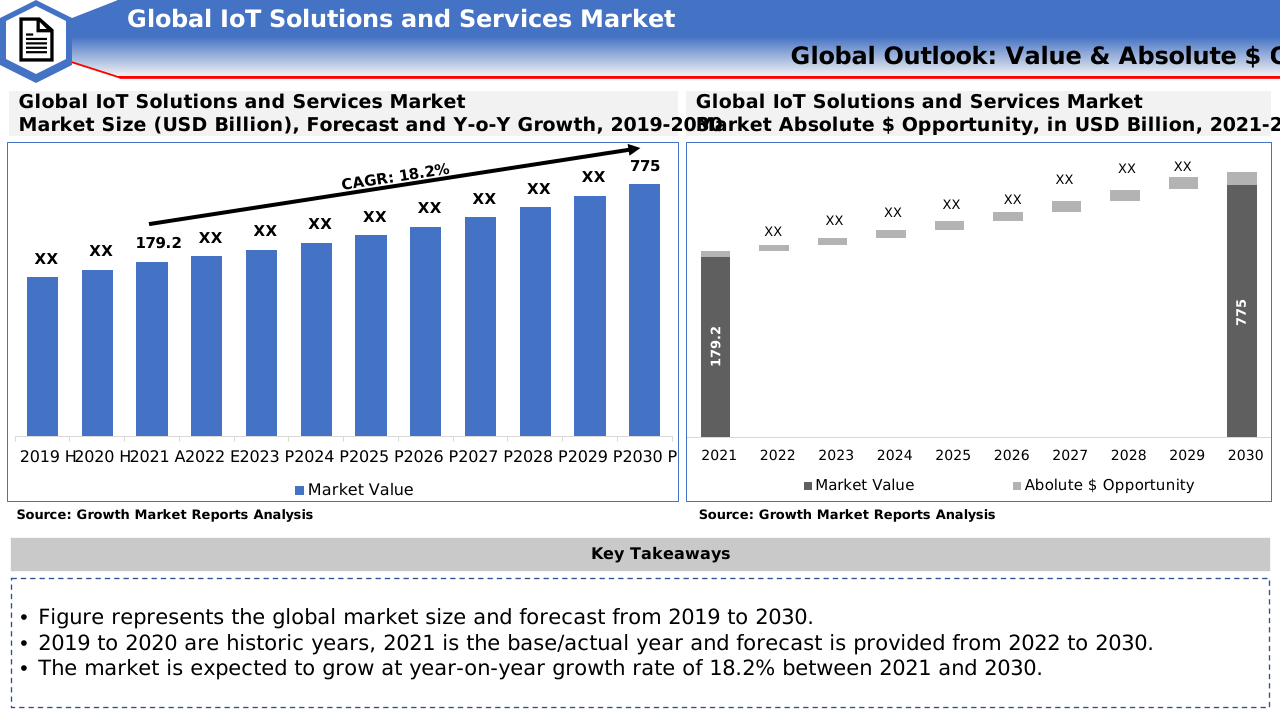
The global IoT solutions and services market size was valued at USD 179.2 billion in 2021 and is expected to surpass USD 775 billion by 2030.
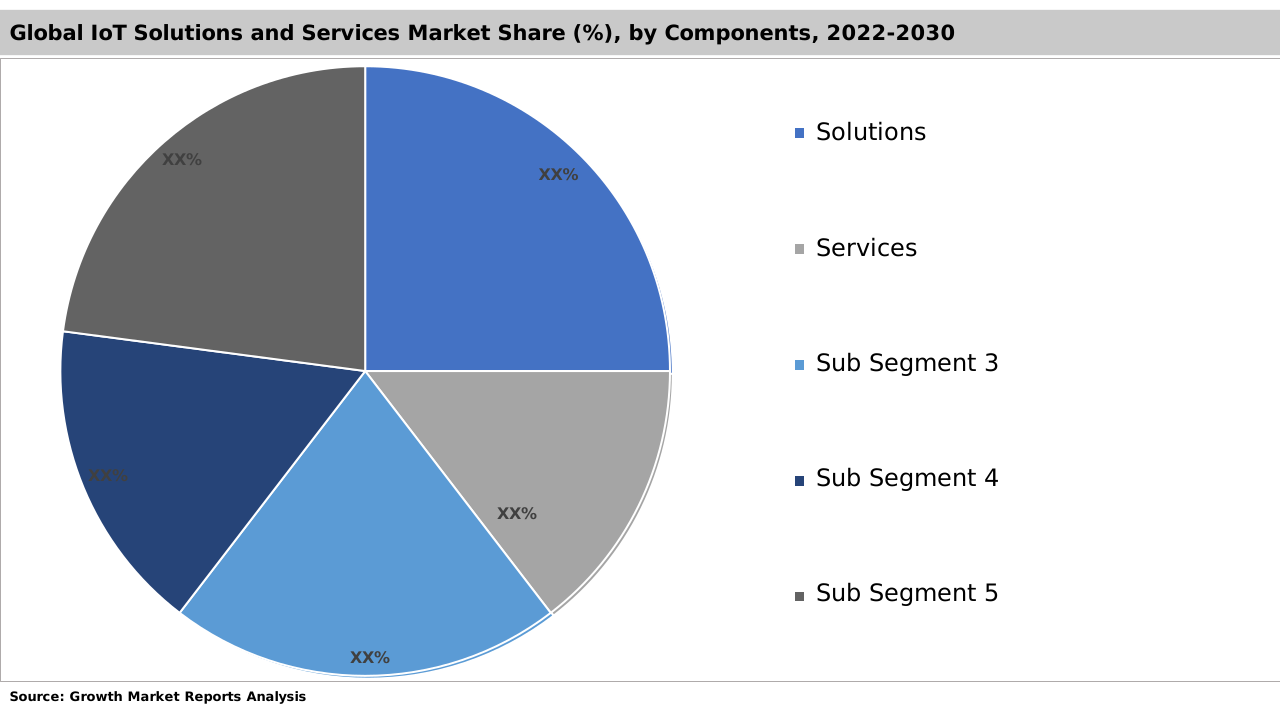
The solutions segment is expected to expand at a robust growth rate during the forecast period.
The key drivers of the market include the increasing deployment of IoT solutions for better data management and operations by business enterprises as well as the rising demand for automation process across industries.
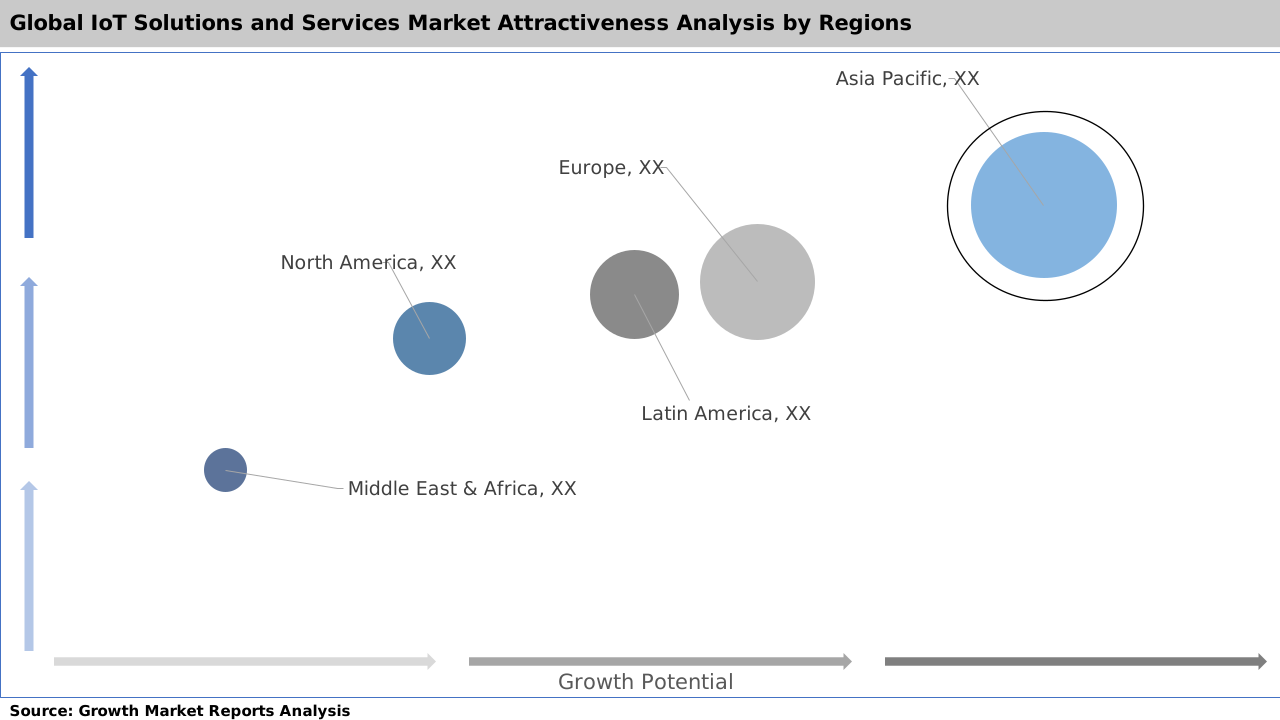
Asia Pacific constituted a major market share in 2021 and is expected to dominate the market during the projected period.
The key players of the market are IBM Corp.; Intel Corp.; Microsoft Corp.; AWS, Inc.; Google LLC; Oracle Corp.; Siemens AG; Cisco Systems, Inc.; SAP SE; Qualcomm; Fujitsu Limited; and PTC Inc.