Segments - by Type (Gamma Radiation, Electron Beam Radiation, X-ray Radiation), by Application (Medical Devices, Pharmaceuticals, Food & Beverages, Cosmetics, Others), by End-User (Hospitals & Clinics, Pharmaceutical Companies, Food Industry, Research Laboratories, Others)
According to our latest research, the global Ionizing Radiation Sterilization market size reached USD 4.1 billion in 2024, demonstrating robust momentum driven by expanding healthcare and pharmaceutical sectors. The market is projected to grow at a CAGR of 8.2% from 2025 to 2033, reaching a forecasted value of USD 7.8 billion by 2033. This growth is primarily attributed to the increasing demand for sterilized medical devices, heightened awareness of infection control, and the adoption of advanced sterilization techniques across diverse industries.
The primary growth factor fueling the Ionizing Radiation Sterilization market is the escalating demand for infection prevention in healthcare settings. Hospitals and clinics are under constant pressure to maintain sterile environments, especially in the wake of global pandemics and the rise of hospital-acquired infections. Ionizing radiation sterilization, which includes gamma, electron beam, and X-ray radiation, offers a highly effective and reliable solution for sterilizing complex medical devices, surgical instruments, and implantable products. The method’s ability to penetrate packaging and materials without leaving residues or altering product properties has made it the preferred choice for manufacturers seeking to meet stringent regulatory standards and ensure patient safety.
Another key driver for the Ionizing Radiation Sterilization market is the burgeoning pharmaceutical and biotechnology industries. With the continuous development of biologics, vaccines, and other sensitive pharmaceutical products, there is a critical need for sterilization methods that do not compromise product efficacy. Ionizing radiation sterilization is uniquely suited for these applications, as it can sterilize heat- and moisture-sensitive products without affecting their chemical composition. Additionally, the method’s scalability and compatibility with automated production lines have made it increasingly popular among pharmaceutical manufacturers aiming to optimize operational efficiency while maintaining high quality and safety standards.
The food and beverage sector is also emerging as a significant contributor to the growth of the Ionizing Radiation Sterilization market. As global supply chains expand and consumer awareness regarding food safety intensifies, manufacturers are turning to ionizing radiation to ensure the microbiological safety and extended shelf life of packaged foods. The technology’s ability to eliminate pathogens, molds, and spoilage organisms without altering taste, texture, or nutritional value is driving adoption across both developed and emerging markets. Regulatory approvals and growing consumer acceptance of irradiated food products further support the increasing application of ionizing radiation sterilization in this sector.
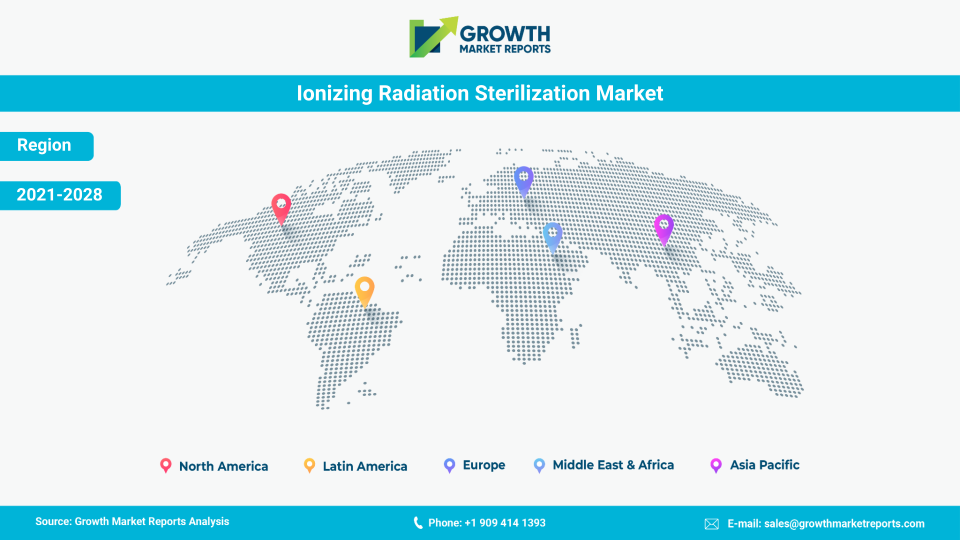
Regionally, North America dominates the Ionizing Radiation Sterilization market, owing to its advanced healthcare infrastructure, stringent regulatory landscape, and high adoption rates of innovative sterilization technologies. Europe follows closely, supported by robust pharmaceutical and food industries, while Asia Pacific is experiencing rapid growth due to increasing healthcare investments and expanding manufacturing capabilities. Latin America and the Middle East & Africa are also witnessing steady adoption, driven by improvements in healthcare access and food safety regulations. The regional outlook remains positive, with growth opportunities emerging from both established and developing economies.
The Type segment of the Ionizing Radiation Sterilization market is categorized into Gamma Radiation, Electron Beam Radiation, and X-ray Radiation, each presenting unique advantages and addressing specific industry requirements. Gamma radiation, which utilizes Cobalt-60 or Cesium-137 isotopes, has traditionally dominated the market due to its deep penetration capabilities and effectiveness in sterilizing bulk medical devices and pharmaceuticals. The method’s compatibility with a wide range of materials and packaging formats, coupled with its proven track record, has made it the gold standard for large-scale sterilization processes. However, the reliance on radioactive isotopes also poses challenges in terms of regulatory compliance, transportation, and waste management, prompting some end-users to explore alternative technologies.
Electron Beam (E-beam) radiation is gaining traction as a preferred method for applications requiring rapid sterilization and high throughput. E-beam technology employs accelerated electrons to deliver targeted doses of ionizing energy, allowing for precise control over the sterilization process. Its ability to operate at ambient temperatures and its non-radioactive nature make it particularly attractive for manufacturers seeking environmentally friendly and cost-effective solutions. E-beam sterilization is especially suitable for disposable medical devices, packaging materials, and certain pharmaceuticals where speed and flexibility are critical factors. The growing adoption of automated E-beam systems is further enhancing operational efficiency and reducing turnaround times for contract sterilization service providers.
X-ray radiation, the latest entrant in the ionizing radiation sterilization landscape, offers a compelling combination of deep penetration and non-radioactive operation. X-ray sterilization systems convert electrical energy into X-rays, providing a highly controlled and consistent sterilization process without the logistical complexities associated with radioactive sources. This technology is particularly well-suited for products with dense or irregular geometries, such as pre-filled syringes, implantable devices, and multi-layer packaging. Although the initial investment in X-ray systems can be higher compared to other modalities, ongoing advancements in system design and cost-efficiency are driving increased adoption, especially among pharmaceutical and high-value medical device manufacturers.
The competitive dynamics among these sterilization types are influenced by factors such as regulatory requirements, cost considerations, throughput capacity, and environmental impact. While gamma radiation continues to hold a significant share of the market, the shift towards E-beam and X-ray technologies is expected to accelerate in the coming years, driven by the need for sustainable, scalable, and compliant sterilization solutions. The interplay between these modalities is fostering innovation and prompting service providers and manufacturers to invest in multi-modality sterilization facilities capable of addressing diverse customer needs across the healthcare, pharmaceutical, and food industries.
| Attributes | Details |
| Report Title | Ionizing Radiation Sterilization Market Research Report 2033 |
| By Type | Gamma Radiation, Electron Beam Radiation, X-ray Radiation |
| By Application | Medical Devices, Pharmaceuticals, Food & Beverages, Cosmetics, Others |
| By End-User | Hospitals & Clinics, Pharmaceutical Companies, Food Industry, Research Laboratories, Others |
| Regions Covered | North America, Europe, APAC, Latin America, MEA |
| Base Year | 2024 |
| Historic Data | 2018-2023 |
| Forecast Period | 2025-2033 |
| Number of Pages | 262 |
| Number of Tables & Figures | 283 |
| Customization Available | Yes, the report can be customized as per your need. |
The Application segment of the Ionizing Radiation Sterilization market encompasses Medical Devices, Pharmaceuticals, Food & Beverages, Cosmetics, and Others, each representing distinct sterilization challenges and regulatory landscapes. Medical devices constitute the largest application segment, driven by the critical need for sterile surgical instruments, implants, and disposable products. Stringent regulatory standards imposed by agencies such as the U.S. FDA and the European Medicines Agency require manufacturers to adopt validated sterilization processes, with ionizing radiation standing out for its reliability, scalability, and ability to penetrate complex device configurations. The increasing prevalence of minimally invasive surgeries and the proliferation of single-use devices are further fueling demand in this segment.
Pharmaceuticals represent a rapidly expanding application area, particularly in the context of biologics, vaccines, and advanced drug delivery systems. The need to maintain the structural and functional integrity of sensitive pharmaceutical products has driven the adoption of ionizing radiation sterilization, which can achieve high sterility assurance levels without exposing products to heat or moisture. The method’s compatibility with pre-filled syringes, vials, and other packaging formats is especially valuable for manufacturers seeking to streamline production and distribution processes. The ongoing development of personalized medicine and cell and gene therapies is expected to further elevate the importance of ionizing radiation sterilization in the pharmaceutical sector.
The Food & Beverages segment is witnessing robust growth as manufacturers seek to enhance food safety, extend shelf life, and comply with international trade regulations. Ionizing radiation sterilization is increasingly being used to eliminate pathogens, insects, and spoilage organisms in a variety of food products, including spices, dried fruits, meat, and poultry. The technology’s ability to preserve sensory and nutritional qualities while ensuring microbiological safety is driving greater acceptance among food producers and consumers alike. Regulatory approvals for irradiated foods in key markets such as the United States, Europe, and Asia Pacific are further supporting the segment’s expansion.
Cosmetics and other consumer products are also benefiting from the adoption of ionizing radiation sterilization, particularly in the context of preservative-free formulations and products intended for sensitive populations. The method’s ability to achieve high levels of sterility without introducing chemical residues or allergens is highly valued by manufacturers seeking to differentiate their products in a competitive marketplace. As consumer preferences continue to shift towards natural and minimally processed products, ionizing radiation sterilization is poised to play an increasingly important role in ensuring product safety and quality across a diverse range of applications.
The End-User segment of the Ionizing Radiation Sterilization market comprises Hospitals & Clinics, Pharmaceutical Companies, Food Industry, Research Laboratories, and Others, each with unique requirements and adoption drivers. Hospitals and clinics represent a major end-user group, given their reliance on sterile instruments, surgical kits, and implantable devices to prevent healthcare-associated infections. The growing emphasis on infection control, coupled with the increasing complexity of medical procedures, has led to greater adoption of outsourced sterilization services and in-house irradiation facilities. The ability of ionizing radiation to deliver consistent, high-level sterilization across a wide range of materials and device configurations is a key factor driving demand in this segment.
Pharmaceutical companies are leveraging ionizing radiation sterilization to ensure the safety and efficacy of their products, particularly in the context of large-scale vaccine production, biologics manufacturing, and the development of innovative drug delivery systems. The method’s compatibility with sensitive formulations and its ability to support continuous production processes make it an indispensable tool for pharmaceutical manufacturers seeking to meet global regulatory requirements and maintain competitive advantage. The growing trend towards contract manufacturing and the outsourcing of sterilization services is further driving demand among pharmaceutical end-users.
The food industry is increasingly adopting ionizing radiation sterilization as part of integrated food safety and quality assurance programs. The technology’s ability to eliminate pathogens and extend product shelf life without compromising taste, texture, or nutritional value is particularly valuable in an era of globalized supply chains and heightened consumer expectations. Food processors, exporters, and retailers are investing in irradiation facilities and partnering with third-party service providers to ensure compliance with international food safety standards and to gain access to new markets.
Research laboratories and academic institutions represent a growing end-user segment, driven by the need for sterile laboratory equipment, consumables, and biological samples. The ability of ionizing radiation to achieve high sterility assurance levels without introducing chemical contaminants is critical in research settings where accuracy and reproducibility are paramount. The increasing focus on translational research, clinical trials, and the development of advanced therapies is expected to drive further adoption of ionizing radiation sterilization among research-oriented organizations.
The Ionizing Radiation Sterilization market presents significant opportunities for innovation and expansion, particularly in the context of emerging markets and evolving regulatory frameworks. The increasing prevalence of chronic diseases, the rising demand for sterile medical devices, and the expansion of the pharmaceutical and biotechnology industries are creating new avenues for market growth. Advances in sterilization technology, such as the development of more efficient and cost-effective E-beam and X-ray systems, are enabling service providers and manufacturers to address a broader range of applications and customer requirements. Additionally, the growing acceptance of irradiated food products and the harmonization of international standards are opening up new opportunities for market participants to expand their geographic footprint and diversify their product offerings.
Another promising opportunity lies in the integration of digital technologies and automation into sterilization processes. The adoption of Industry 4.0 principles, including real-time monitoring, data analytics, and remote system control, is enhancing the efficiency, traceability, and quality assurance of ionizing radiation sterilization operations. These advancements are enabling manufacturers to optimize resource utilization, reduce operational costs, and ensure compliance with increasingly stringent regulatory requirements. The continued investment in research and development, coupled with strategic partnerships and collaborations, is expected to drive further innovation and differentiation in the market, positioning ionizing radiation sterilization as a critical enabler of healthcare, pharmaceutical, and food safety initiatives worldwide.
Despite the numerous opportunities, the Ionizing Radiation Sterilization market faces certain restraining factors that could impact growth. One of the primary challenges is the high initial capital investment required for the installation and maintenance of irradiation facilities, particularly those utilizing advanced E-beam and X-ray technologies. Regulatory complexities associated with the handling and disposal of radioactive materials used in gamma radiation sterilization also pose significant hurdles for market participants. Additionally, concerns regarding public perception and acceptance of irradiated products, particularly in the food sector, may limit adoption in certain regions. Addressing these challenges will require ongoing education, transparent communication, and collaboration among industry stakeholders, regulatory authorities, and end-users.
North America remains the largest market for Ionizing Radiation Sterilization, accounting for approximately USD 1.7 billion in 2024, driven by its advanced healthcare infrastructure, established pharmaceutical industry, and high adoption rates of innovative sterilization technologies. The United States, in particular, is a global leader in the adoption of ionizing radiation sterilization, with a well-developed network of contract sterilization service providers and a strong regulatory framework supporting the use of irradiation in medical, pharmaceutical, and food applications. Canada also contributes significantly to regional growth, with increasing investments in healthcare and food safety initiatives.
Europe follows closely, with a market size of around USD 1.2 billion in 2024, supported by robust demand from the pharmaceutical, medical device, and food industries. Key markets such as Germany, France, and the United Kingdom are at the forefront of technology adoption, driven by stringent regulatory requirements and a strong focus on quality assurance. The region is also witnessing increased investment in research and development, particularly in the area of advanced sterilization technologies and the integration of automation and digitalization into sterilization processes. The European market is expected to grow at a steady pace, with a projected CAGR of 7.8% through 2033.
The Asia Pacific region is experiencing the fastest growth, with a market size of USD 0.8 billion in 2024 and a projected CAGR of 11.1% from 2025 to 2033. The region’s rapid expansion is driven by increasing healthcare investments, expanding manufacturing capabilities, and rising awareness of infection control and food safety. Countries such as China, India, Japan, and South Korea are leading the charge, with significant investments in hospital infrastructure, pharmaceutical production, and food processing. The growing presence of multinational sterilization service providers and the harmonization of regulatory standards are further supporting market growth in Asia Pacific. Latin America and the Middle East & Africa, while smaller in comparison, are also witnessing steady adoption, fueled by improvements in healthcare access, infrastructure development, and the implementation of food safety regulations.
The Ionizing Radiation Sterilization market is characterized by a dynamic and highly competitive landscape, with a mix of established global players and emerging regional service providers vying for market share. Leading companies are focused on expanding their geographic footprint, enhancing their service portfolios, and investing in advanced sterilization technologies to address the evolving needs of healthcare, pharmaceutical, and food industry customers. The competitive environment is further shaped by ongoing consolidation, strategic partnerships, and collaborations aimed at leveraging complementary strengths and capabilities. Innovation and differentiation are key competitive drivers, with market leaders investing heavily in research and development to introduce new products, improve process efficiency, and meet increasingly stringent regulatory requirements.
The market is also witnessing a growing trend towards vertical integration, with major sterilization service providers acquiring or partnering with medical device manufacturers, pharmaceutical companies, and food processors to offer end-to-end solutions. This approach enables companies to streamline supply chains, optimize resource utilization, and deliver greater value to customers through integrated sterilization, packaging, and logistics services. The rise of contract sterilization services is another notable trend, as healthcare providers and manufacturers seek to outsource non-core activities and focus on their core competencies. Contract service providers are responding by expanding their capacity, investing in multi-modality sterilization facilities, and adopting digital technologies to enhance transparency, traceability, and quality assurance.
In addition to established players, the market is seeing the emergence of innovative startups and niche providers specializing in advanced E-beam and X-ray sterilization technologies. These companies are leveraging cutting-edge science and engineering to develop more efficient, environmentally friendly, and cost-effective sterilization solutions. The entry of new players is intensifying competition and driving the adoption of best practices, ultimately benefiting end-users through greater choice, improved service quality, and enhanced value propositions. Regulatory compliance, customer trust, and the ability to adapt to changing market dynamics remain critical success factors for all participants in the ionizing radiation sterilization ecosystem.
Major companies operating in the Ionizing Radiation Sterilization market include Steris plc, Sotera Health (Sterigenics), Nordion (a Sotera Health Company), IBA Industrial, and Sterigenics International. Steris plc is a global leader in infection prevention and sterilization solutions, offering a comprehensive portfolio of gamma, E-beam, and X-ray sterilization services. Sotera Health, through its Sterigenics and Nordion divisions, provides a wide range of contract sterilization services and isotope supply solutions, serving customers across healthcare, pharmaceuticals, and food industries. IBA Industrial specializes in E-beam and X-ray sterilization systems, with a strong focus on innovation and sustainability. Other notable players include Scapa Healthcare, Reviss Services, and GrayStar Inc., each contributing to the market’s growth through specialized offerings and regional expertise. The competitive landscape is expected to remain dynamic, with ongoing investments in technology, capacity expansion, and strategic partnerships shaping the future of the Ionizing Radiation Sterilization market.
The Ionizing Radiation Sterilization market has been segmented on the basis of
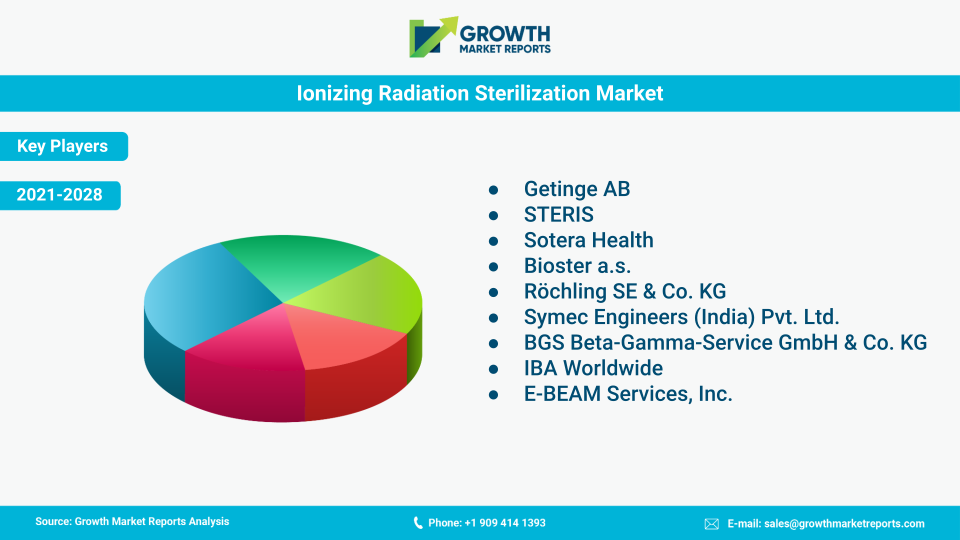
Key players in the Ionizing Radiation Sterilization market are Getinge AB, STERIS, Sotera Health, Bioster a.s., Röchling SE & Co. KG, Symec Engineers (India) Pvt. Ltd., BGS Beta-Gamma-Service GmbH & Co. KG, IBA Worldwide, E-BEAM Services, Inc., and among others.
The players are adopting key strategies such as product development, geographical expansion, mergers and acquisition and many other strategies to cater the increasing demand for Ionizing Radiation Sterilization.
For instance, Getinge AB acquired Quadralene, a global expert and manufacturer of decontamination products such as disinfectants and detergents for the dental and healthcare sector. The company acquired Quadralene in order to bring extra support and value to customers.
Additional company profiles can be provided on request.
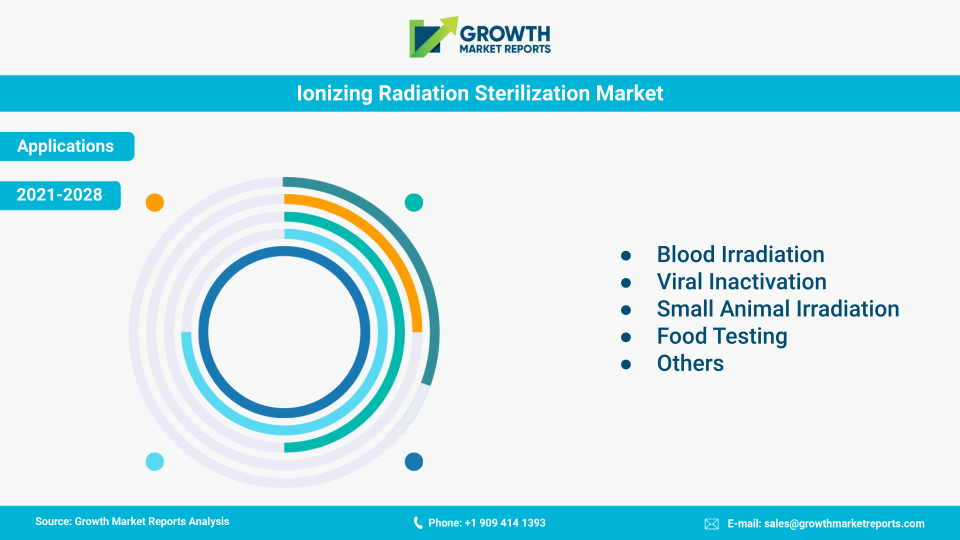
Yes, the report covers various Ionizing Radiation Sterilization market by end-user as Pharmaceutical Companies, Healthcare Facilities, Food Processing, and Others.
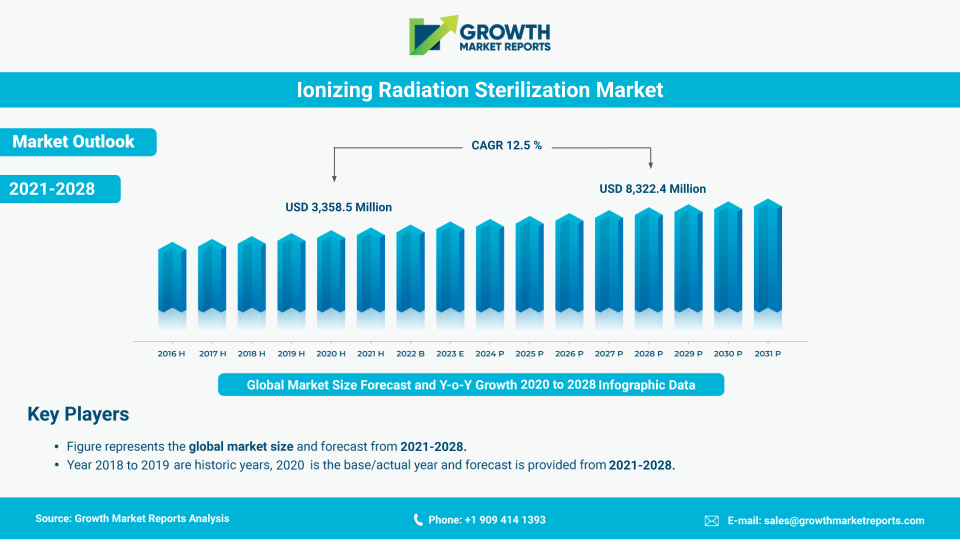
According to this Growth Market Reports, the market from Ionizing Radiation Sterilization market is likely to register a CAGR of 12.5% during period 2020-2027, with an anticipated valuation of USD 3,650.4 million by the end of the 2028.
In addition to market size (in USD Million) and Company Market Share (in % for base year 2019), other data such Macro-economic factors, COVID-19 Impact on the Ionizing Radiation Sterilization market is available in final report.
Factors such as competitive strength and market positioning are key areas considered while selecting top companies to be profiled.
The Ionizing Radiation Sterilization market is anticipated to grow significantly during forecast period due to rising incidences of house-acquired infections, increasing demand for high-quality medical devices, and rising need for irradiation process to reduce illnesses caused by foodborne diseases.
The demand for Ionizing Radiation Sterilization from Healthcare Facilities is driving the market growth.
The market is expected to witness moderate growth with increase in terms of demand during 2019-2020 owing to the positive impact of COVID-19 pandemic on the Ionizing Radiation Sterilization market.
The base year considered for the Ionizing Radiation Sterilization market report is 2020. The complete analysis period is 2018 to 2028, wherein, 2018 & 2019 are the historic years, and the forecast is provided from 2021 to 2028.
Major Manufactures include Getinge AB, STERIS, Sotera Health, Bioster a.s., Röchling SE & Co. KG, among others.