Internet Protocol Address Management Market Research Report 2033

Internet Protocol Address Management Market Research Report 2033

Segments - by Component (Software, Hardware, Services), by Deployment Mode (On-Premises, Cloud), by Application (Network Management, Security and Compliance, Virtualization and Cloud, Mobile Device Management, Others), by Organization Size (Small and Medium Enterprises, Large Enterprises), by End-User (IT and Telecom, BFSI, Healthcare, Government, Education, Energy and Utilities, Others)

https://growthmarketreports.com/Raksha
Author : Raksha Sharma
https://growthmarketreports.com/Vaibhav
Fact-checked by : V. Chandola
https://growthmarketreports.com/Shruti
Editor : Shruti Bhat

Upcoming | Report ID :ICT-SE-544 | 4.8 Rating | 40 Reviews | 260 Pages | Format : Docx PDF

Report Description


Internet Protocol Address Management Market Outlook

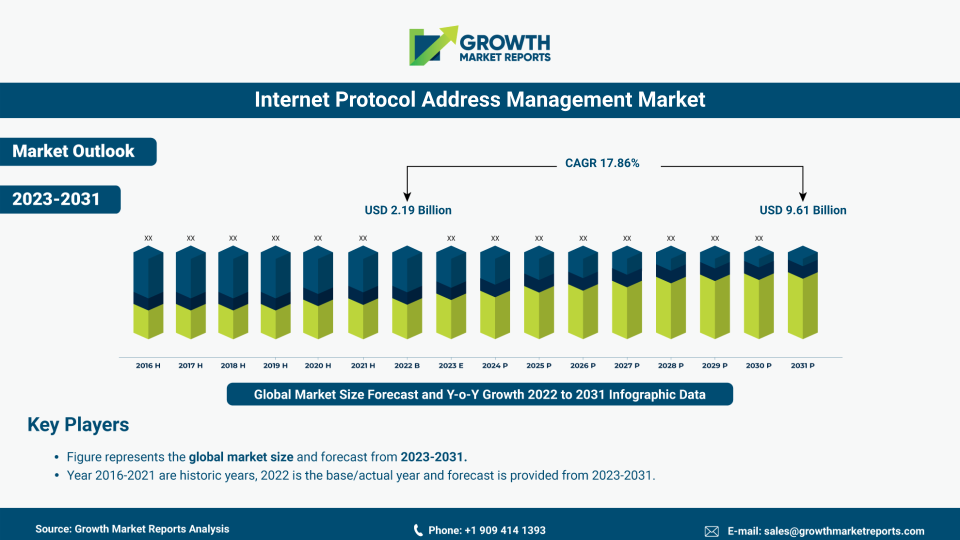
According to our latest research, the global Internet Protocol Address Management (IPAM) market size has reached USD 4.5 billion in 2024, reflecting robust adoption across diverse industries. The market is projected to expand at a CAGR of 12.1% from 2025 to 2033, culminating in a forecasted value of USD 12.6 billion by 2033. This remarkable growth trajectory is primarily fueled by the surging demand for efficient network management solutions, the exponential rise in connected devices, and the increasing complexity of modern enterprise networks. As organizations strive for enhanced security, scalability, and automation in their network infrastructure, the IPAM market is witnessing accelerated investments, particularly in cloud-based and integrated service offerings.

A significant growth factor driving the Internet Protocol Address Management market is the rapid proliferation of IoT devices and the continuous expansion of enterprise networks. With organizations increasingly embracing digital transformation, the number of endpoints requiring IP address allocation and management has soared. This surge in connected devices, ranging from sensors and mobile devices to cloud-based resources, necessitates robust IPAM solutions to prevent IP conflicts, ensure seamless connectivity, and support scalability. Enterprises are focusing on centralizing their IP address management processes to gain real-time visibility, automate routine tasks, and reduce manual errors, thereby improving overall network efficiency and reliability.

Another key driver propelling the IPAM market is the growing emphasis on network security and regulatory compliance. As cyber threats become more sophisticated and regulations such as GDPR, HIPAA, and PCI DSS tighten, organizations are compelled to adopt comprehensive IPAM solutions that offer advanced security features. Modern IPAM platforms enable granular tracking and auditing of IP address usage, facilitate rapid incident response, and help enforce security policies across distributed environments. The integration of IPAM with DNS and DHCP services further enhances the ability to detect unauthorized access, mitigate vulnerabilities, and maintain compliance with industry standards, making IPAM an indispensable component of enterprise security strategies.

The ongoing migration to cloud and hybrid IT environments is also catalyzing the evolution of the IPAM market. As businesses shift their workloads to public, private, and hybrid clouds, the complexity of managing IP addresses across disparate environments increases exponentially. Cloud-based IPAM solutions offer the agility, scalability, and centralized control necessary to support dynamic and elastic network architectures. These platforms facilitate seamless integration with virtualization technologies, automate IP provisioning, and enable real-time monitoring, which is critical for organizations seeking to optimize their cloud investments. The rise of remote work, mobile device management, and edge computing further amplifies the demand for flexible and scalable IPAM solutions that can adapt to rapidly changing network topologies.

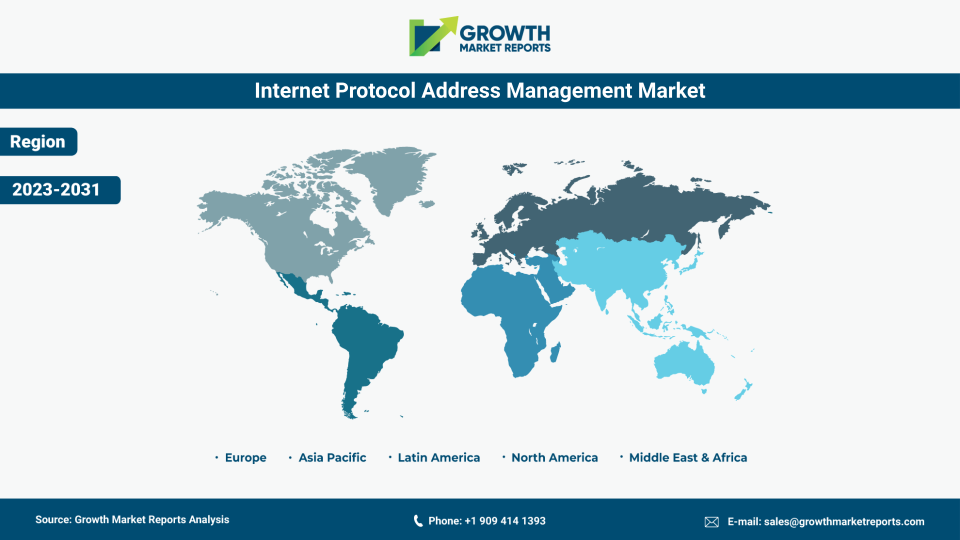
Regionally, North America continues to dominate the Internet Protocol Address Management market, accounting for the largest revenue share in 2024, driven by early technology adoption, substantial IT investments, and the presence of leading market players. Europe follows closely, with strong growth observed in sectors such as BFSI, healthcare, and government, where stringent regulatory frameworks necessitate advanced IPAM capabilities. The Asia Pacific region is emerging as a high-growth market, propelled by rapid digitalization, increasing cloud adoption, and expanding telecom infrastructure. As enterprises across Latin America and the Middle East & Africa begin to modernize their network management practices, these regions are expected to offer lucrative opportunities for IPAM vendors in the coming years.

Global Internet Protocol Address Management Industry Outlook

Component Analysis

The component segment of the Internet Protocol Address Management market is categorized into software, hardware, and services, each playing a pivotal role in shaping the market landscape. Software solutions constitute the core of IPAM offerings, providing organizations with centralized platforms to automate and manage IP address allocation, tracking, and reporting. These solutions are evolving rapidly, with vendors integrating advanced analytics, AI-driven automation, and robust security features to address the growing complexity of enterprise networks. The adoption of software-based IPAM is particularly high among large enterprises and cloud-centric businesses seeking to streamline network operations, enhance visibility, and ensure compliance with regulatory requirements.

Hardware components, though representing a smaller share compared to software, remain essential for on-premises deployments and environments with stringent security or latency requirements. These include dedicated appliances and network devices that support IPAM functionalities, often integrated with DNS and DHCP services. Organizations with legacy infrastructure or those operating in highly regulated sectors, such as government and defense, continue to prefer hardware-based IPAM solutions for their reliability, control, and data sovereignty. However, the market is witnessing a gradual shift toward software-defined and virtualized solutions, driven by the need for scalability, flexibility, and reduced total cost of ownership.

Services constitute a critical aspect of the IPAM market, encompassing consulting, implementation, integration, training, and support services. As IPAM solutions become more sophisticated and tailored to specific industry needs, the demand for professional services is on the rise. Organizations are increasingly seeking expert guidance to assess their network management requirements, design customized IPAM architectures, and ensure seamless integration with existing IT systems. Managed IPAM services are also gaining traction, particularly among small and medium enterprises (SMEs) that lack in-house expertise or resources to manage complex network environments. These services enable organizations to offload routine maintenance, monitoring, and troubleshooting tasks to specialized providers, thereby enhancing operational efficiency and reducing risk.

The interplay between software, hardware, and services is fostering the emergence of integrated IPAM solutions that offer end-to-end network visibility, automation, and security. Vendors are focusing on developing modular platforms that can be deployed in hybrid environments, support multi-vendor interoperability, and scale with organizational growth. The convergence of IPAM with other network management tools, such as network access control (NAC), security information and event management (SIEM), and cloud orchestration platforms, is further expanding the value proposition of IPAM solutions. As organizations prioritize agility, security, and cost-effectiveness, the component segment is expected to witness continued innovation and investment throughout the forecast period.

Report Scope

Attributes Details
Report Title Internet Protocol Address Management Market Research Report 2033
By Component Software, Hardware, Services
By Deployment Mode On-Premises, Cloud
By Application Network Management, Security and Compliance, Virtualization and Cloud, Mobile Device Management, Others
By Organization Size Small and Medium Enterprises, Large Enterprises
By End-User IT and Telecom, BFSI, Healthcare, Government, Education, Energy and Utilities, Others
Regions Covered North America, Europe, APAC, Latin America, MEA
Base Year 2024
Historic Data 2018-2023
Forecast Period 2025-2033
Number of Pages 260
Number of Tables & Figures 329
Customization Available Yes, the report can be customized as per your need.

Deployment Mode Analysis

Deployment mode is a critical consideration in the Internet Protocol Address Management market, with organizations choosing between on-premises and cloud-based solutions based on their unique operational, security, and compliance requirements. On-premises IPAM solutions have traditionally been favored by large enterprises and regulated industries that require direct control over their network infrastructure and sensitive data. These deployments offer enhanced security, customization, and integration capabilities, making them suitable for complex or legacy environments. However, on-premises solutions often entail higher upfront capital expenditure, ongoing maintenance costs, and the need for specialized IT expertise, which can limit their appeal to resource-constrained organizations.

Cloud-based IPAM solutions are rapidly gaining traction, driven by the growing adoption of cloud computing, virtualization, and distributed network architectures. These solutions offer unparalleled scalability, flexibility, and ease of deployment, enabling organizations to manage IP addresses across multiple locations, data centers, and cloud environments from a centralized interface. Cloud-based IPAM platforms are particularly attractive to SMEs, startups, and enterprises with dynamic or remote workforces, as they reduce the need for on-site infrastructure and provide seamless integration with other cloud services. The pay-as-you-go pricing models and automated updates further enhance the cost-effectiveness and agility of cloud-based deployments, making them the preferred choice for organizations seeking to future-proof their network management strategies.

Hybrid deployment models are also emerging as a viable option for organizations seeking to balance the benefits of on-premises control with the scalability and accessibility of the cloud. These models enable seamless integration between on-premises and cloud-based IPAM components, allowing organizations to manage IP addresses across diverse environments while maintaining compliance with data residency and security policies. Hybrid deployments are particularly relevant for enterprises undergoing digital transformation, mergers and acquisitions, or global expansion, as they provide the flexibility to adapt to changing business needs and regulatory landscapes.

The shift toward cloud and hybrid deployment modes is driving innovation in IPAM solution design, with vendors focusing on delivering API-driven, modular, and interoperable platforms that can support a wide range of deployment scenarios. The integration of IPAM with cloud orchestration tools, container management platforms, and software-defined networking (SDN) solutions is further enhancing the ability of organizations to automate and optimize their network operations. As the demand for remote work, edge computing, and IoT connectivity continues to rise, deployment mode will remain a key differentiator in the IPAM market, influencing vendor selection, pricing strategies, and customer adoption patterns.

Application Analysis

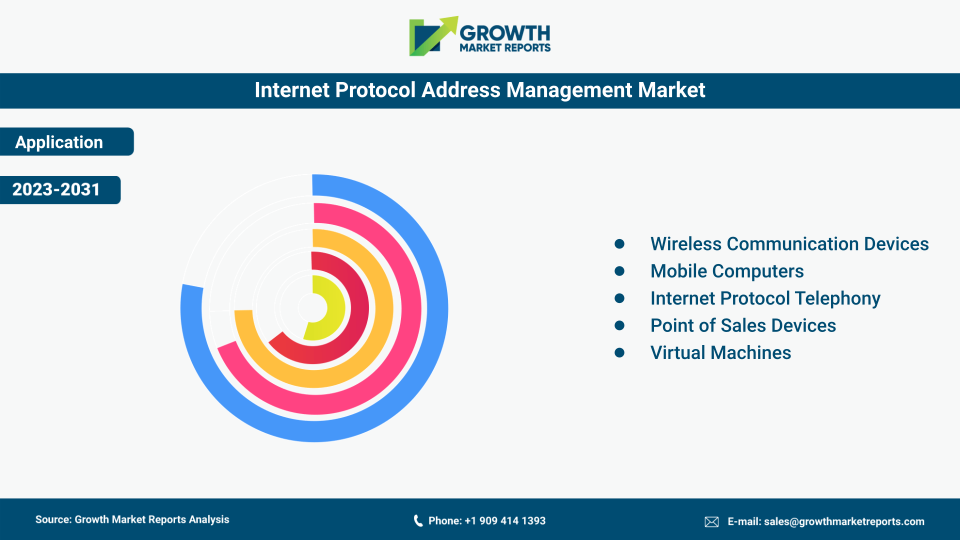
The application landscape within the Internet Protocol Address Management market is broad and multifaceted, encompassing network management, security and compliance, virtualization and cloud, mobile device management, and other specialized use cases. Network management remains the primary application, as organizations seek to automate IP address allocation, prevent conflicts, and ensure high availability of network resources. IPAM solutions provide centralized visibility and control over IP address spaces, enabling IT teams to streamline operations, reduce manual errors, and support the rapid scaling of network infrastructure. The integration of IPAM with DNS and DHCP services further enhances the ability to manage dynamic and distributed networks, making it an essential tool for modern enterprises.

Security and compliance represent a rapidly growing application area for IPAM solutions, driven by the increasing frequency and sophistication of cyber threats, as well as tightening regulatory requirements. Advanced IPAM platforms offer features such as real-time monitoring, audit trails, policy enforcement, and automated incident response, which are critical for detecting and mitigating unauthorized access, data breaches, and network vulnerabilities. Organizations in regulated industries, such as BFSI, healthcare, and government, are leveraging IPAM to maintain compliance with standards like GDPR, HIPAA, and PCI DSS, while improving their overall security posture.

Virtualization and cloud applications are transforming the IPAM market, as organizations migrate workloads to virtualized environments and adopt cloud-native architectures. IPAM solutions designed for these environments provide automated provisioning, de-provisioning, and management of IP addresses across virtual machines, containers, and cloud instances. This capability is essential for supporting agile development practices, such as DevOps and continuous integration/continuous deployment (CI/CD), as well as for optimizing resource utilization and minimizing operational overhead. The integration of IPAM with cloud orchestration and management platforms is enabling organizations to achieve greater agility, scalability, and cost efficiency in their network operations.

Mobile device management (MDM) is another important application segment, as enterprises grapple with the challenges of managing a growing fleet of smartphones, tablets, and other mobile endpoints. IPAM solutions enable centralized tracking and management of IP addresses assigned to mobile devices, ensuring secure connectivity, compliance with corporate policies, and support for bring-your-own-device (BYOD) initiatives. Other emerging applications include IoT device management, edge computing, and network access control, reflecting the expanding role of IPAM in enabling digital transformation and supporting next-generation network architectures.

Organization Size Analysis

The organization size segment of the Internet Protocol Address Management market is typically divided into small and medium enterprises (SMEs) and large enterprises, each with distinct requirements, adoption patterns, and investment priorities. Large enterprises represent the dominant market share, driven by their complex and geographically dispersed network infrastructures, stringent security and compliance mandates, and greater IT budgets. These organizations are early adopters of advanced IPAM solutions, leveraging automation, analytics, and integration capabilities to optimize network performance, reduce risk, and support business growth. Large enterprises often require customized IPAM architectures that can scale with their operations, integrate seamlessly with existing IT systems, and provide granular visibility and control over IP address management processes.

SMEs are increasingly recognizing the value of IPAM solutions in improving network efficiency, reducing operational costs, and supporting digital transformation initiatives. While their network environments may be less complex than those of large enterprises, SMEs face similar challenges related to IP address allocation, conflict prevention, and security. Cloud-based IPAM solutions are particularly attractive to SMEs, as they offer affordable, scalable, and easy-to-deploy options that do not require significant upfront investment or specialized IT expertise. The availability of managed services and subscription-based pricing models is further lowering the barriers to entry for SMEs, enabling them to access enterprise-grade IPAM capabilities and focus on their core business objectives.

The growing adoption of remote work, mobile devices, and IoT technologies is blurring the traditional boundaries between organization sizes, as both SMEs and large enterprises grapple with the need to manage increasingly distributed and dynamic network environments. IPAM vendors are responding by developing flexible, modular solutions that can be tailored to the specific needs and budgets of different customer segments. The ability to support multi-tenancy, role-based access control, and integration with third-party tools is becoming a key differentiator for IPAM platforms targeting organizations of all sizes.

As digital transformation accelerates across industries, the demand for IPAM solutions is expected to grow across both large enterprises and SMEs. Vendors that can offer scalable, user-friendly, and cost-effective solutions will be well positioned to capture market share, particularly as organizations seek to modernize their network management practices and support future growth.

End-User Analysis

The end-user segment of the Internet Protocol Address Management market is highly diverse, encompassing IT and telecom, BFSI, healthcare, government, education, energy and utilities, and other verticals. The IT and telecom sector leads in IPAM adoption, driven by the need to manage vast and dynamic IP address spaces, support high-availability network services, and enable seamless connectivity for millions of users and devices. Telecom operators, in particular, rely on advanced IPAM solutions to support the rollout of next-generation networks, such as 5G and fiber broadband, as well as to manage the proliferation of IoT devices and edge computing nodes.

The BFSI sector is another major end-user, with banks, insurance companies, and financial institutions leveraging IPAM to enhance network security, ensure regulatory compliance, and support digital banking initiatives. The sensitive nature of financial data and the need to maintain uninterrupted service availability make IPAM a critical component of network infrastructure in this sector. Healthcare organizations are similarly investing in IPAM solutions to manage the growing number of connected medical devices, support telemedicine services, and comply with stringent data protection regulations such as HIPAA.

Government agencies at all levels are adopting IPAM to modernize their network management practices, improve security, and support the delivery of digital public services. The education sector is also emerging as a key market, as schools, colleges, and universities expand their digital learning environments, deploy campus-wide Wi-Fi networks, and manage a diverse array of connected devices. In the energy and utilities sector, IPAM is being used to support smart grid initiatives, manage remote monitoring and control systems, and ensure the reliability of critical infrastructure.

Other end-users, including retail, manufacturing, transportation, and logistics, are increasingly recognizing the value of IPAM in supporting digital transformation, enhancing operational efficiency, and enabling new business models. As organizations across all sectors embrace cloud computing, IoT, and mobility, the need for robust and scalable IPAM solutions will continue to grow, driving innovation and competition in the market.

Opportunities & Threats

The Internet Protocol Address Management market presents a wide array of opportunities for vendors, enterprises, and service providers. One significant opportunity lies in the integration of IPAM solutions with emerging technologies such as artificial intelligence, machine learning, and automation. By leveraging AI-powered analytics, IPAM platforms can provide predictive insights, automate routine tasks, and proactively identify and resolve network issues before they impact business operations. This not only enhances network reliability and performance but also reduces the burden on IT teams, enabling them to focus on strategic initiatives. The growing adoption of multi-cloud and hybrid IT environments further expands the opportunity for IPAM vendors to offer solutions that provide unified visibility and control across disparate network domains.

Another promising opportunity is the expansion of managed IPAM services, particularly for SMEs and organizations with limited IT resources. As the complexity of network environments increases, many organizations are seeking to outsource the management of their IP address spaces to specialized service providers. Managed IPAM services offer the benefits of expert support, 24/7 monitoring, and rapid incident response, enabling organizations to reduce risk, improve uptime, and optimize network performance. Vendors that can offer scalable, cost-effective, and customizable managed services are well positioned to capture a growing share of the market, especially as digital transformation accelerates across industries.

Despite these opportunities, the IPAM market faces several restraining factors that could impact its growth. One of the primary challenges is the lack of awareness and understanding of the benefits of IPAM solutions among smaller organizations and in emerging markets. Many organizations continue to rely on manual or ad-hoc methods for IP address management, which can lead to inefficiencies, security vulnerabilities, and scalability issues. The perceived complexity and cost of implementing IPAM solutions can also be a barrier, particularly for SMEs with limited budgets or IT expertise. Vendors must invest in education, training, and simplified deployment models to overcome these challenges and expand their customer base.

Regional Outlook

The regional analysis of the Internet Protocol Address Management market reveals distinct adoption patterns and growth trajectories across key geographies. North America remains the largest market, accounting for approximately USD 1.7 billion in revenue in 2024, driven by widespread digital transformation, early adoption of advanced network management technologies, and the presence of leading IPAM vendors. The region is characterized by high IT spending, a mature regulatory environment, and strong demand from sectors such as IT and telecom, BFSI, and healthcare. The United States, in particular, is a major contributor to regional growth, with organizations investing heavily in cloud computing, cybersecurity, and automation.

Europe follows as the second-largest market, with a market size of around USD 1.1 billion in 2024. The region is witnessing robust growth in sectors such as BFSI, government, and healthcare, where regulatory compliance and data protection are top priorities. Countries such as the United Kingdom, Germany, and France are leading the adoption of IPAM solutions, supported by strong digital infrastructure and government initiatives to promote cybersecurity and digital innovation. The European market is expected to grow at a steady CAGR of 11.2% through 2033, driven by ongoing investments in cloud migration, IoT, and smart city projects.

The Asia Pacific region is emerging as the fastest-growing market, with a current market size of USD 900 million and a projected CAGR of 14.5% from 2025 to 2033. Rapid economic growth, expanding telecom infrastructure, and increasing digitalization are fueling demand for IPAM solutions in countries such as China, India, Japan, and South Korea. Enterprises in the region are investing in cloud-based and managed IPAM services to support business expansion, improve network security, and enable new digital services. Latin America and the Middle East & Africa, with market sizes of USD 500 million and USD 300 million respectively in 2024, are also witnessing increased adoption, driven by modernization initiatives and the growing importance of network reliability and security in critical infrastructure sectors.

Internet Protocol Address Management Market Statistics

Competitor Outlook

The Internet Protocol Address Management market is characterized by a highly competitive landscape, with a mix of established technology giants, specialized IPAM vendors, and emerging startups vying for market share. Leading players are focusing on product innovation, strategic partnerships, and mergers and acquisitions to expand their portfolios, enhance value propositions, and strengthen their global presence. The market is witnessing a trend toward the development of integrated platforms that combine IPAM, DNS, and DHCP functionalities, providing customers with unified solutions that simplify network management and improve operational efficiency.

Innovation is a key differentiator in the IPAM market, with vendors investing in artificial intelligence, machine learning, and automation to deliver advanced analytics, predictive insights, and automated remediation capabilities. The integration of IPAM with cloud orchestration, security, and network monitoring tools is enabling organizations to achieve greater agility, scalability, and resilience in their network operations. Vendors are also focusing on enhancing user experience, offering intuitive interfaces, self-service portals, and robust reporting features to meet the evolving needs of customers across different industries and organization sizes.

The competitive landscape is further shaped by the increasing demand for managed and cloud-based IPAM services, as organizations seek to reduce operational complexity and focus on core business activities. Vendors that can offer flexible deployment options, scalable pricing models, and comprehensive support services are well positioned to capture a larger share of the market. Strategic collaborations with cloud providers, telecom operators, and system integrators are also playing a crucial role in driving market expansion and customer acquisition.

Some of the major companies operating in the Internet Protocol Address Management market include Infoblox Inc., BlueCat Networks, EfficientIP, Men & Mice, BT Diamond IP, SolarWinds, Apteriks, and FusionLayer. Infoblox Inc. is recognized for its comprehensive DDI (DNS, DHCP, and IPAM) solutions, which are widely adopted by large enterprises and service providers. BlueCat Networks offers scalable, cloud-native IPAM platforms with advanced automation and security features, catering to organizations undergoing digital transformation. EfficientIP and Men & Mice are known for their modular, interoperable solutions that support hybrid and multi-cloud environments, while BT Diamond IP provides robust on-premises and virtualized IPAM appliances for regulated industries.

SolarWinds, a leader in IT management software, offers integrated IPAM tools as part of its broader network management suite, appealing to SMEs and large enterprises alike. Apteriks and FusionLayer are emerging players focusing on cloud-based and API-driven IPAM solutions, targeting organizations seeking agility, scalability, and ease of integration. These companies are investing in R&D, customer support, and global expansion to differentiate themselves in a crowded market and address the evolving needs of customers.

In summary, the Internet Protocol Address Management market is poised for significant growth, driven by technological advancements, increasing network complexity, and the imperative for security and compliance. Vendors that can deliver innovative, integrated, and customer-centric solutions will be best positioned to capitalize on the expanding market opportunities and maintain a competitive edge in the years ahead.

Key Players

  • Cisco Systems, Inc.
  • BlueCat Networks
  • Infoblox Inc.
  • EfficientIP
  • BT Diamond IP
  • SolarWinds Worldwide, LLC
  • Men & Mice
  • Apteriks
  • FusionLayer Inc.
  • A10 Networks, Inc.
  • TCPWave Inc.
  • Nokia Corporation
  • Akamai Technologies, Inc.
  • Hewlett Packard Enterprise (HPE)
  • Microsoft Corporation
  • ManageEngine (Zoho Corporation)
  • Alcatel-Lucent Enterprise
  • Incognito Software Systems Inc.
  • Nixu Corporation
  • Deutsche Telekom AG
Internet Protocol Address Management Market Overview

Segments

The Internet Protocol Address Management market has been segmented on the basis of

Component

  • Software
  • Hardware
  • Services

Deployment Mode

  • On-Premises
  • Cloud

Application

  • Network Management
  • Security and Compliance
  • Virtualization and Cloud
  • Mobile Device Management
  • Others

Organization Size

  • Small and Medium Enterprises
  • Large Enterprises

End-User

  • IT and Telecom
  • BFSI
  • Healthcare
  • Government
  • Education
  • Energy and Utilities
  • Others

Competitive Landscape

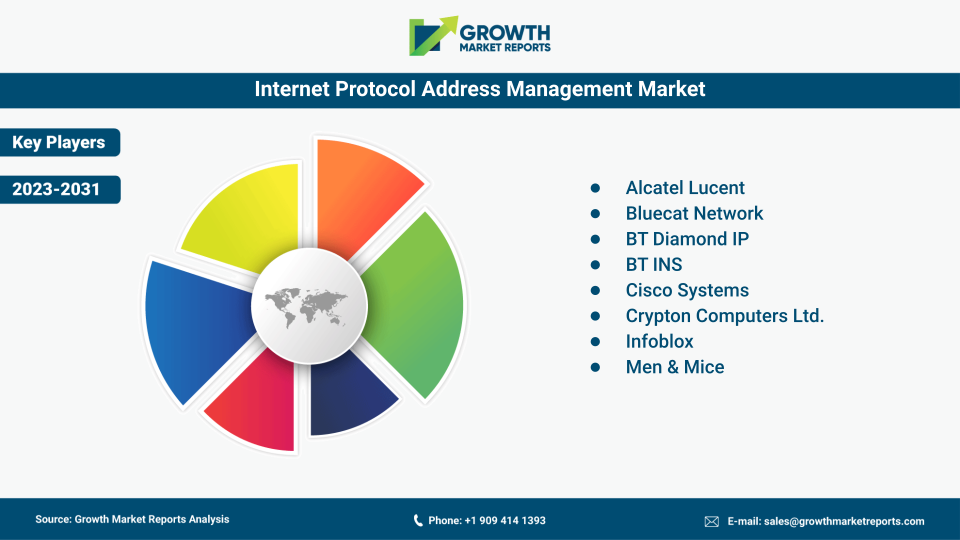
The major players of the market are Alcatel Lucent, Bluecat Network, BT Diamond IP, BT INS, Cisco Systems, Crypton Computers Ltd., Infoblox, and Men & Mice. Companies are focusing on partnerships, mergers, and acquisitions to expand their market share.

 Internet Protocol Address Management Market Key Players

Frequently Asked Questions

Challenges include lack of awareness among SMEs, perceived complexity, and cost of IPAM solutions. Opportunities lie in integrating IPAM with AI, automation, and cloud technologies, as well as expanding managed IPAM services for organizations with limited IT resources.

Key players include Infoblox Inc., BlueCat Networks, EfficientIP, Men & Mice, BT Diamond IP, SolarWinds, Apteriks, FusionLayer, Cisco Systems, A10 Networks, TCPWave, Nokia, Akamai Technologies, HPE, Microsoft, ManageEngine, Alcatel-Lucent Enterprise, Incognito Software Systems, Nixu Corporation, and Deutsche Telekom AG.

North America currently leads the IPAM market, followed by Europe. The Asia Pacific region is expected to experience the fastest growth due to rapid digitalization, expanding telecom infrastructure, and increasing cloud adoption.

The IPAM market is segmented into software, hardware, and services. Software solutions provide centralized management and automation, hardware supports on-premises deployments, and services include consulting, integration, and managed IPAM services.

Modern IPAM platforms offer advanced security features such as granular tracking, auditing of IP address usage, rapid incident response, and policy enforcement. This helps organizations detect unauthorized access, mitigate vulnerabilities, and comply with regulations like GDPR, HIPAA, and PCI DSS.

Major adopters include IT and telecom, BFSI (banking, financial services, and insurance), healthcare, government, education, and energy & utilities. These sectors require robust IPAM solutions to manage large, dynamic networks and comply with regulatory standards.

IPAM solutions can be deployed on-premises, in the cloud, or using hybrid models. On-premises deployments offer greater control and security, while cloud-based solutions provide scalability, flexibility, and centralized management. Hybrid deployments combine the benefits of both approaches.

Key growth drivers include the rapid proliferation of IoT devices, increasing network complexity, the need for efficient network management, rising security and compliance requirements, and the shift towards cloud and hybrid IT environments.

The global Internet Protocol Address Management (IPAM) market is expected to grow from USD 4.5 billion in 2024 to USD 12.6 billion by 2033, at a CAGR of 12.1% during the forecast period.

Internet Protocol Address Management (IPAM) refers to the administration of DNS, DHCP, and IP address spaces within a network. It is crucial for preventing IP conflicts, ensuring seamless connectivity, automating network management, and supporting scalability, especially as organizations adopt more connected devices and complex network architectures.

Table Of Content

Chapter 1 Executive Summary
Chapter 2 Assumptions and Acronyms Used
Chapter 3 Research Methodology
Chapter 4 Internet Protocol Address Management Market Overview
   4.1 Introduction
      4.1.1 Market Taxonomy
      4.1.2 Market Definition
      4.1.3 Macro-Economic Factors Impacting the Market Growth
   4.2 Internet Protocol Address Management Market Dynamics
      4.2.1 Market Drivers
      4.2.2 Market Restraints
      4.2.3 Market Opportunity
   4.3 Internet Protocol Address Management Market - Supply Chain Analysis
      4.3.1 List of Key Suppliers
      4.3.2 List of Key Distributors
      4.3.3 List of Key Consumers
   4.4 Key Forces Shaping the Internet Protocol Address Management Market
      4.4.1 Bargaining Power of Suppliers
      4.4.2 Bargaining Power of Buyers
      4.4.3 Threat of Substitution
      4.4.4 Threat of New Entrants
      4.4.5 Competitive Rivalry
   4.5 Global Internet Protocol Address Management Market Size & Forecast, 2023-2032
      4.5.1 Internet Protocol Address Management Market Size and Y-o-Y Growth
      4.5.2 Internet Protocol Address Management Market Absolute $ Opportunity

Chapter 5 Global Internet Protocol Address Management Market Analysis and Forecast By Component
   5.1 Introduction
      5.1.1 Key Market Trends & Growth Opportunities By Component
      5.1.2 Basis Point Share (BPS) Analysis By Component
      5.1.3 Absolute $ Opportunity Assessment By Component
   5.2 Internet Protocol Address Management Market Size Forecast By Component
      5.2.1 Software
      5.2.2 Hardware
      5.2.3 Services
   5.3 Market Attractiveness Analysis By Component

Chapter 6 Global Internet Protocol Address Management Market Analysis and Forecast By Deployment Mode
   6.1 Introduction
      6.1.1 Key Market Trends & Growth Opportunities By Deployment Mode
      6.1.2 Basis Point Share (BPS) Analysis By Deployment Mode
      6.1.3 Absolute $ Opportunity Assessment By Deployment Mode
   6.2 Internet Protocol Address Management Market Size Forecast By Deployment Mode
      6.2.1 On-Premises
      6.2.2 Cloud
   6.3 Market Attractiveness Analysis By Deployment Mode

Chapter 7 Global Internet Protocol Address Management Market Analysis and Forecast By Application
   7.1 Introduction
      7.1.1 Key Market Trends & Growth Opportunities By Application
      7.1.2 Basis Point Share (BPS) Analysis By Application
      7.1.3 Absolute $ Opportunity Assessment By Application
   7.2 Internet Protocol Address Management Market Size Forecast By Application
      7.2.1 Network Management
      7.2.2 Security and Compliance
      7.2.3 Virtualization and Cloud
      7.2.4 Mobile Device Management
      7.2.5 Others
   7.3 Market Attractiveness Analysis By Application

Chapter 8 Global Internet Protocol Address Management Market Analysis and Forecast By Organization Size
   8.1 Introduction
      8.1.1 Key Market Trends & Growth Opportunities By Organization Size
      8.1.2 Basis Point Share (BPS) Analysis By Organization Size
      8.1.3 Absolute $ Opportunity Assessment By Organization Size
   8.2 Internet Protocol Address Management Market Size Forecast By Organization Size
      8.2.1 Small and Medium Enterprises
      8.2.2 Large Enterprises
   8.3 Market Attractiveness Analysis By Organization Size

Chapter 9 Global Internet Protocol Address Management Market Analysis and Forecast By End-User
   9.1 Introduction
      9.1.1 Key Market Trends & Growth Opportunities By End-User
      9.1.2 Basis Point Share (BPS) Analysis By End-User
      9.1.3 Absolute $ Opportunity Assessment By End-User
   9.2 Internet Protocol Address Management Market Size Forecast By End-User
      9.2.1 IT and Telecom
      9.2.2 BFSI
      9.2.3 Healthcare
      9.2.4 Government
      9.2.5 Education
      9.2.6 Energy and Utilities
      9.2.7 Others
   9.3 Market Attractiveness Analysis By End-User

Chapter 10 Global Internet Protocol Address Management Market Analysis and Forecast by Region
   10.1 Introduction
      10.1.1 Key Market Trends & Growth Opportunities By Region
      10.1.2 Basis Point Share (BPS) Analysis By Region
      10.1.3 Absolute $ Opportunity Assessment By Region
   10.2 Internet Protocol Address Management Market Size Forecast By Region
      10.2.1 North America
      10.2.2 Europe
      10.2.3 Asia Pacific
      10.2.4 Latin America
      10.2.5 Middle East & Africa (MEA)
   10.3 Market Attractiveness Analysis By Region

Chapter 11 Coronavirus Disease (COVID-19) Impact 
   11.1 Introduction 
   11.2 Current & Future Impact Analysis 
   11.3 Economic Impact Analysis 
   11.4 Government Policies 
   11.5 Investment Scenario

Chapter 12 North America Internet Protocol Address Management Analysis and Forecast
   12.1 Introduction
   12.2 North America Internet Protocol Address Management Market Size Forecast by Country
      12.2.1 U.S.
      12.2.2 Canada
   12.3 Basis Point Share (BPS) Analysis by Country
   12.4 Absolute $ Opportunity Assessment by Country
   12.5 Market Attractiveness Analysis by Country
   12.6 North America Internet Protocol Address Management Market Size Forecast By Component
      12.6.1 Software
      12.6.2 Hardware
      12.6.3 Services
   12.7 Basis Point Share (BPS) Analysis By Component 
   12.8 Absolute $ Opportunity Assessment By Component 
   12.9 Market Attractiveness Analysis By Component
   12.10 North America Internet Protocol Address Management Market Size Forecast By Deployment Mode
      12.10.1 On-Premises
      12.10.2 Cloud
   12.11 Basis Point Share (BPS) Analysis By Deployment Mode 
   12.12 Absolute $ Opportunity Assessment By Deployment Mode 
   12.13 Market Attractiveness Analysis By Deployment Mode
   12.14 North America Internet Protocol Address Management Market Size Forecast By Application
      12.14.1 Network Management
      12.14.2 Security and Compliance
      12.14.3 Virtualization and Cloud
      12.14.4 Mobile Device Management
      12.14.5 Others
   12.15 Basis Point Share (BPS) Analysis By Application 
   12.16 Absolute $ Opportunity Assessment By Application 
   12.17 Market Attractiveness Analysis By Application
   12.18 North America Internet Protocol Address Management Market Size Forecast By Organization Size
      12.18.1 Small and Medium Enterprises
      12.18.2 Large Enterprises
   12.19 Basis Point Share (BPS) Analysis By Organization Size 
   12.20 Absolute $ Opportunity Assessment By Organization Size 
   12.21 Market Attractiveness Analysis By Organization Size
   12.22 North America Internet Protocol Address Management Market Size Forecast By End-User
      12.22.1 IT and Telecom
      12.22.2 BFSI
      12.22.3 Healthcare
      12.22.4 Government
      12.22.5 Education
      12.22.6 Energy and Utilities
      12.22.7 Others
   12.23 Basis Point Share (BPS) Analysis By End-User 
   12.24 Absolute $ Opportunity Assessment By End-User 
   12.25 Market Attractiveness Analysis By End-User

Chapter 13 Europe Internet Protocol Address Management Analysis and Forecast
   13.1 Introduction
   13.2 Europe Internet Protocol Address Management Market Size Forecast by Country
      13.2.1 Germany
      13.2.2 France
      13.2.3 Italy
      13.2.4 U.K.
      13.2.5 Spain
      13.2.6 Russia
      13.2.7 Rest of Europe
   13.3 Basis Point Share (BPS) Analysis by Country
   13.4 Absolute $ Opportunity Assessment by Country
   13.5 Market Attractiveness Analysis by Country
   13.6 Europe Internet Protocol Address Management Market Size Forecast By Component
      13.6.1 Software
      13.6.2 Hardware
      13.6.3 Services
   13.7 Basis Point Share (BPS) Analysis By Component 
   13.8 Absolute $ Opportunity Assessment By Component 
   13.9 Market Attractiveness Analysis By Component
   13.10 Europe Internet Protocol Address Management Market Size Forecast By Deployment Mode
      13.10.1 On-Premises
      13.10.2 Cloud
   13.11 Basis Point Share (BPS) Analysis By Deployment Mode 
   13.12 Absolute $ Opportunity Assessment By Deployment Mode 
   13.13 Market Attractiveness Analysis By Deployment Mode
   13.14 Europe Internet Protocol Address Management Market Size Forecast By Application
      13.14.1 Network Management
      13.14.2 Security and Compliance
      13.14.3 Virtualization and Cloud
      13.14.4 Mobile Device Management
      13.14.5 Others
   13.15 Basis Point Share (BPS) Analysis By Application 
   13.16 Absolute $ Opportunity Assessment By Application 
   13.17 Market Attractiveness Analysis By Application
   13.18 Europe Internet Protocol Address Management Market Size Forecast By Organization Size
      13.18.1 Small and Medium Enterprises
      13.18.2 Large Enterprises
   13.19 Basis Point Share (BPS) Analysis By Organization Size 
   13.20 Absolute $ Opportunity Assessment By Organization Size 
   13.21 Market Attractiveness Analysis By Organization Size
   13.22 Europe Internet Protocol Address Management Market Size Forecast By End-User
      13.22.1 IT and Telecom
      13.22.2 BFSI
      13.22.3 Healthcare
      13.22.4 Government
      13.22.5 Education
      13.22.6 Energy and Utilities
      13.22.7 Others
   13.23 Basis Point Share (BPS) Analysis By End-User 
   13.24 Absolute $ Opportunity Assessment By End-User 
   13.25 Market Attractiveness Analysis By End-User

Chapter 14 Asia Pacific Internet Protocol Address Management Analysis and Forecast
   14.1 Introduction
   14.2 Asia Pacific Internet Protocol Address Management Market Size Forecast by Country
      14.2.1 China
      14.2.2 Japan
      14.2.3 South Korea
      14.2.4 India
      14.2.5 Australia
      14.2.6 South East Asia (SEA)
      14.2.7 Rest of Asia Pacific (APAC)
   14.3 Basis Point Share (BPS) Analysis by Country
   14.4 Absolute $ Opportunity Assessment by Country
   14.5 Market Attractiveness Analysis by Country
   14.6 Asia Pacific Internet Protocol Address Management Market Size Forecast By Component
      14.6.1 Software
      14.6.2 Hardware
      14.6.3 Services
   14.7 Basis Point Share (BPS) Analysis By Component 
   14.8 Absolute $ Opportunity Assessment By Component 
   14.9 Market Attractiveness Analysis By Component
   14.10 Asia Pacific Internet Protocol Address Management Market Size Forecast By Deployment Mode
      14.10.1 On-Premises
      14.10.2 Cloud
   14.11 Basis Point Share (BPS) Analysis By Deployment Mode 
   14.12 Absolute $ Opportunity Assessment By Deployment Mode 
   14.13 Market Attractiveness Analysis By Deployment Mode
   14.14 Asia Pacific Internet Protocol Address Management Market Size Forecast By Application
      14.14.1 Network Management
      14.14.2 Security and Compliance
      14.14.3 Virtualization and Cloud
      14.14.4 Mobile Device Management
      14.14.5 Others
   14.15 Basis Point Share (BPS) Analysis By Application 
   14.16 Absolute $ Opportunity Assessment By Application 
   14.17 Market Attractiveness Analysis By Application
   14.18 Asia Pacific Internet Protocol Address Management Market Size Forecast By Organization Size
      14.18.1 Small and Medium Enterprises
      14.18.2 Large Enterprises
   14.19 Basis Point Share (BPS) Analysis By Organization Size 
   14.20 Absolute $ Opportunity Assessment By Organization Size 
   14.21 Market Attractiveness Analysis By Organization Size
   14.22 Asia Pacific Internet Protocol Address Management Market Size Forecast By End-User
      14.22.1 IT and Telecom
      14.22.2 BFSI
      14.22.3 Healthcare
      14.22.4 Government
      14.22.5 Education
      14.22.6 Energy and Utilities
      14.22.7 Others
   14.23 Basis Point Share (BPS) Analysis By End-User 
   14.24 Absolute $ Opportunity Assessment By End-User 
   14.25 Market Attractiveness Analysis By End-User

Chapter 15 Latin America Internet Protocol Address Management Analysis and Forecast
   15.1 Introduction
   15.2 Latin America Internet Protocol Address Management Market Size Forecast by Country
      15.2.1 Brazil
      15.2.2 Mexico
      15.2.3 Rest of Latin America (LATAM)
   15.3 Basis Point Share (BPS) Analysis by Country
   15.4 Absolute $ Opportunity Assessment by Country
   15.5 Market Attractiveness Analysis by Country
   15.6 Latin America Internet Protocol Address Management Market Size Forecast By Component
      15.6.1 Software
      15.6.2 Hardware
      15.6.3 Services
   15.7 Basis Point Share (BPS) Analysis By Component 
   15.8 Absolute $ Opportunity Assessment By Component 
   15.9 Market Attractiveness Analysis By Component
   15.10 Latin America Internet Protocol Address Management Market Size Forecast By Deployment Mode
      15.10.1 On-Premises
      15.10.2 Cloud
   15.11 Basis Point Share (BPS) Analysis By Deployment Mode 
   15.12 Absolute $ Opportunity Assessment By Deployment Mode 
   15.13 Market Attractiveness Analysis By Deployment Mode
   15.14 Latin America Internet Protocol Address Management Market Size Forecast By Application
      15.14.1 Network Management
      15.14.2 Security and Compliance
      15.14.3 Virtualization and Cloud
      15.14.4 Mobile Device Management
      15.14.5 Others
   15.15 Basis Point Share (BPS) Analysis By Application 
   15.16 Absolute $ Opportunity Assessment By Application 
   15.17 Market Attractiveness Analysis By Application
   15.18 Latin America Internet Protocol Address Management Market Size Forecast By Organization Size
      15.18.1 Small and Medium Enterprises
      15.18.2 Large Enterprises
   15.19 Basis Point Share (BPS) Analysis By Organization Size 
   15.20 Absolute $ Opportunity Assessment By Organization Size 
   15.21 Market Attractiveness Analysis By Organization Size
   15.22 Latin America Internet Protocol Address Management Market Size Forecast By End-User
      15.22.1 IT and Telecom
      15.22.2 BFSI
      15.22.3 Healthcare
      15.22.4 Government
      15.22.5 Education
      15.22.6 Energy and Utilities
      15.22.7 Others
   15.23 Basis Point Share (BPS) Analysis By End-User 
   15.24 Absolute $ Opportunity Assessment By End-User 
   15.25 Market Attractiveness Analysis By End-User

Chapter 16 Middle East & Africa (MEA) Internet Protocol Address Management Analysis and Forecast
   16.1 Introduction
   16.2 Middle East & Africa (MEA) Internet Protocol Address Management Market Size Forecast by Country
      16.2.1 Saudi Arabia
      16.2.2 South Africa
      16.2.3 UAE
      16.2.4 Rest of Middle East & Africa (MEA)
   16.3 Basis Point Share (BPS) Analysis by Country
   16.4 Absolute $ Opportunity Assessment by Country
   16.5 Market Attractiveness Analysis by Country
   16.6 Middle East & Africa (MEA) Internet Protocol Address Management Market Size Forecast By Component
      16.6.1 Software
      16.6.2 Hardware
      16.6.3 Services
   16.7 Basis Point Share (BPS) Analysis By Component 
   16.8 Absolute $ Opportunity Assessment By Component 
   16.9 Market Attractiveness Analysis By Component
   16.10 Middle East & Africa (MEA) Internet Protocol Address Management Market Size Forecast By Deployment Mode
      16.10.1 On-Premises
      16.10.2 Cloud
   16.11 Basis Point Share (BPS) Analysis By Deployment Mode 
   16.12 Absolute $ Opportunity Assessment By Deployment Mode 
   16.13 Market Attractiveness Analysis By Deployment Mode
   16.14 Middle East & Africa (MEA) Internet Protocol Address Management Market Size Forecast By Application
      16.14.1 Network Management
      16.14.2 Security and Compliance
      16.14.3 Virtualization and Cloud
      16.14.4 Mobile Device Management
      16.14.5 Others
   16.15 Basis Point Share (BPS) Analysis By Application 
   16.16 Absolute $ Opportunity Assessment By Application 
   16.17 Market Attractiveness Analysis By Application
   16.18 Middle East & Africa (MEA) Internet Protocol Address Management Market Size Forecast By Organization Size
      16.18.1 Small and Medium Enterprises
      16.18.2 Large Enterprises
   16.19 Basis Point Share (BPS) Analysis By Organization Size 
   16.20 Absolute $ Opportunity Assessment By Organization Size 
   16.21 Market Attractiveness Analysis By Organization Size
   16.22 Middle East & Africa (MEA) Internet Protocol Address Management Market Size Forecast By End-User
      16.22.1 IT and Telecom
      16.22.2 BFSI
      16.22.3 Healthcare
      16.22.4 Government
      16.22.5 Education
      16.22.6 Energy and Utilities
      16.22.7 Others
   16.23 Basis Point Share (BPS) Analysis By End-User 
   16.24 Absolute $ Opportunity Assessment By End-User 
   16.25 Market Attractiveness Analysis By End-User

Chapter 17 Competition Landscape 
   17.1 Internet Protocol Address Management Market: Competitive Dashboard
   17.2 Global Internet Protocol Address Management Market: Market Share Analysis, 2023
   17.3 Company Profiles (Details – Overview, Financials, Developments, Strategy) 
      17.3.1 Cisco Systems, Inc.
BlueCat Networks
Infoblox Inc.
EfficientIP
BT Diamond IP
SolarWinds Worldwide, LLC
Men & Mice
Apteriks
FusionLayer Inc.
A10 Networks, Inc.
TCPWave Inc.
Nokia Corporation
Akamai Technologies, Inc.
Hewlett Packard Enterprise (HPE)
Microsoft Corporation
ManageEngine (Zoho Corporation)
Alcatel-Lucent Enterprise
Incognito Software Systems Inc.
Nixu Corporation
Deutsche Telekom AG

Methodology

Our Clients

Siemens Healthcare
The John Holland Group
General Mills
Dassault Aviation
Microsoft
Deloitte
General Electric
sinopec