Intelligent Vending Machines Market Research Report 2033

Intelligent Vending Machines Market Research Report 2033

Segments - by Product Type (Beverage Vending Machines, Food Vending Machines, Combination Vending Machines, Others), by Technology (Cashless Systems, Telemetry Systems, Voice Recognition, Others), by Application (Retail, Corporate Offices, Educational Institutions, Healthcare Facilities, Transportation Hubs, Others), by End-User (Commercial, Industrial, Institutional, Others)

https://growthmarketreports.com/Debadatta
Author : Debadatta Patel
https://growthmarketreports.com/Vaibhav
Fact-checked by : V. Chandola
https://growthmarketreports.com/Shruti
Editor : Shruti Bhat

Upcoming | Report ID :CG-3272 | 4.1 Rating | 80 Reviews | 272 Pages | Format : Docx PDF

Report Description


Intelligent Vending Machines Market Outlook

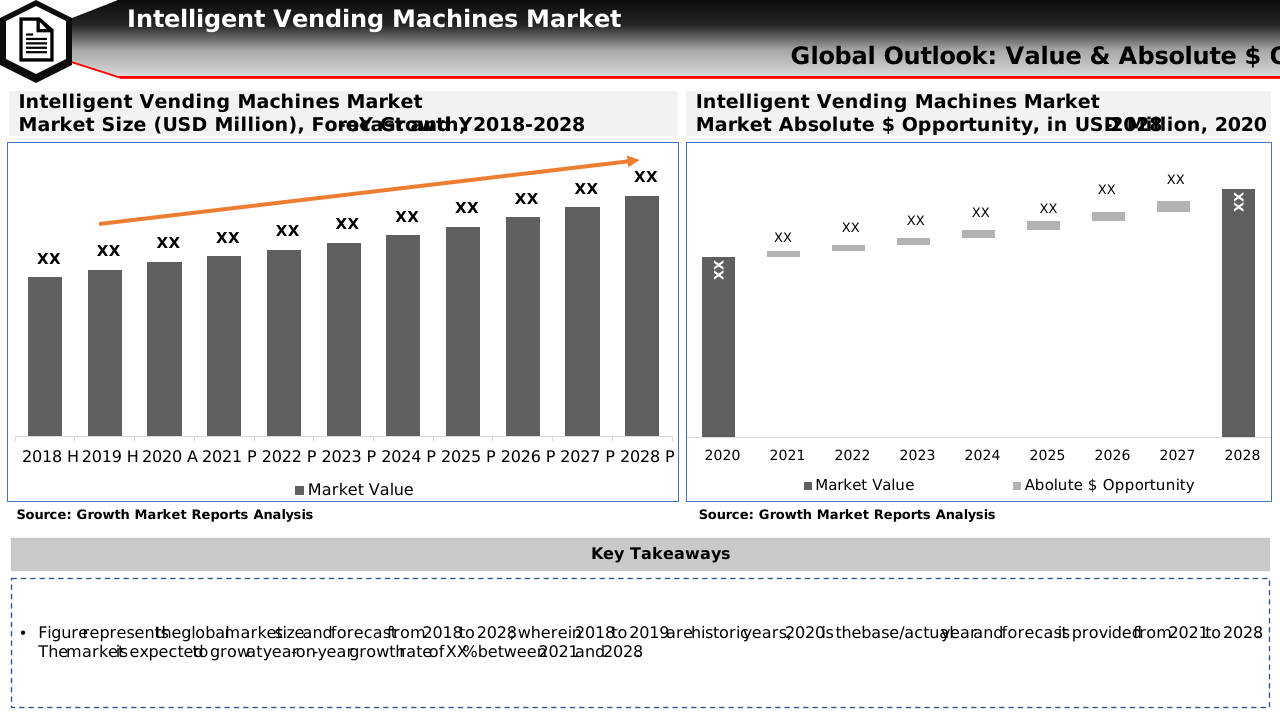
According to our latest research, the global intelligent vending machines market size reached USD 15.6 billion in 2024, driven by the rapid adoption of advanced technologies and the increasing demand for automated retail solutions. The market is expected to grow at a robust CAGR of 11.2% from 2025 to 2033, ultimately reaching a forecasted value of USD 40.2 billion by 2033. Key growth factors include the integration of IoT, AI-powered interfaces, and cashless payment systems, all of which are revolutionizing the vending industry and enhancing user experience.

The growth of the intelligent vending machines market is primarily fueled by the rising consumer preference for contactless and convenient purchasing experiences. This trend has been further accelerated by the global pandemic, which heightened awareness around hygiene and safety. Intelligent vending machines, equipped with touchless payment options and real-time inventory monitoring, address these concerns while providing instant access to a wide range of products. Retailers and facility managers are increasingly investing in these advanced machines to minimize human interaction, reduce operational costs, and ensure uninterrupted service, especially in high-traffic locations. The ability of these machines to offer personalized recommendations and loyalty programs through AI-driven analytics further enhances their appeal among tech-savvy consumers.

Another significant growth driver is the technological evolution in vending machine hardware and software. Integration of IoT-enabled telemetry systems, machine learning algorithms, and sophisticated sensors allows for remote monitoring, predictive maintenance, and dynamic pricing. These advancements have not only improved the operational efficiency of vending machines but have also enabled businesses to gather valuable consumer data, optimize inventory management, and reduce downtime. The adoption of smart vending solutions is also supported by the proliferation of mobile payment platforms and the increasing penetration of smartphones, making transactions seamless and secure. As a result, the intelligent vending machines market is witnessing widespread adoption across diverse sectors such as retail, corporate offices, educational institutions, and healthcare facilities.

Furthermore, the push towards digital transformation in the retail and service industries is acting as a catalyst for the expansion of the intelligent vending machines market. Companies are leveraging these machines as strategic touchpoints for brand engagement and customer interaction. The incorporation of interactive displays, voice recognition, and AI-powered chatbots not only improves user engagement but also enables targeted advertising and cross-selling opportunities. With the ability to operate 24/7 and provide data-driven insights, intelligent vending machines are becoming an integral part of omnichannel retail strategies. The flexibility to customize product offerings based on location-specific preferences and real-time analytics is empowering businesses to maximize revenue and enhance customer satisfaction.

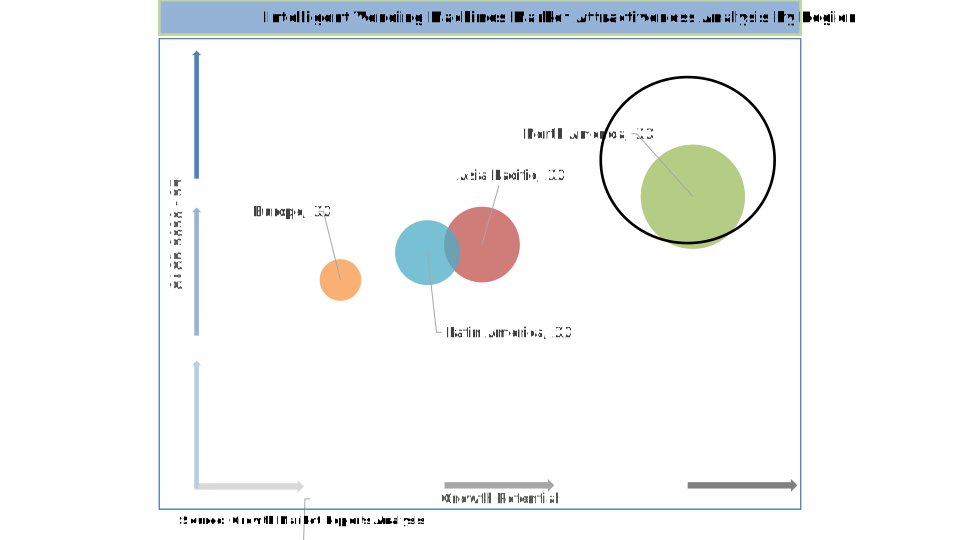
From a regional perspective, Asia Pacific holds the largest share in the global intelligent vending machines market, followed closely by North America and Europe. The rapid urbanization, increasing disposable incomes, and widespread adoption of smart technologies in countries like China, Japan, and South Korea are driving market growth in the Asia Pacific region. North America benefits from a mature retail infrastructure and high consumer acceptance of automated solutions, while Europe is witnessing significant investments in smart city initiatives and digital payment systems. Latin America and the Middle East & Africa are emerging as promising markets, supported by improving connectivity and growing awareness about the benefits of intelligent vending solutions.

Global Intelligent Vending Machines Industry Outlook

Product Type Analysis

The product type segment of the intelligent vending machines market is categorized into beverage vending machines, food vending machines, combination vending machines, and others. Beverage vending machines account for a significant share of the market, owing to their widespread presence in public spaces, transportation hubs, and corporate environments. These machines are increasingly being upgraded with intelligent features such as cashless payment options, real-time inventory tracking, and energy-efficient cooling systems. The demand for beverage vending machines is further driven by the introduction of healthier drink options and customizable beverage dispensers, which cater to evolving consumer preferences and dietary requirements.

Food vending machines have witnessed substantial growth in recent years, propelled by the rising demand for on-the-go snacks, fresh meals, and healthier food alternatives. Intelligent food vending machines are equipped with advanced refrigeration and heating mechanisms, ensuring product freshness and safety. The integration of AI-powered recommendation engines enables these machines to suggest personalized food options based on user preferences and purchase history. As workplaces, educational institutions, and healthcare facilities prioritize convenience and nutrition, the adoption of smart food vending solutions is expected to accelerate, contributing to the overall growth of the intelligent vending machines market.

Combination vending machines, which offer both food and beverage options, are gaining traction due to their versatility and ability to cater to a wider customer base. These machines are particularly popular in locations with high foot traffic, such as airports, shopping malls, and corporate campuses. The incorporation of modular designs and flexible storage configurations allows operators to easily adjust product assortments based on demand patterns and seasonal trends. Combination vending machines equipped with interactive touchscreens and digital advertising capabilities provide additional revenue streams through targeted promotions and cross-selling opportunities.

Other product types in the intelligent vending machines market include machines that dispense non-food items such as personal care products, electronics, and pharmaceuticals. These specialized vending solutions are increasingly being deployed in niche environments like hotels, gyms, hospitals, and transportation hubs. The ability to offer essential items round-the-clock, coupled with secure access controls and real-time inventory alerts, makes these machines an attractive proposition for both operators and consumers. As the scope of vending machine applications continues to expand, the market for intelligent vending solutions is expected to diversify further, encompassing a broader range of product categories and use cases.

Report Scope

Attributes Details
Report Title Intelligent Vending Machines Market Research Report 2033
By Product Type Beverage Vending Machines, Food Vending Machines, Combination Vending Machines, Others
By Technology Cashless Systems, Telemetry Systems, Voice Recognition, Others
By Application Retail, Corporate Offices, Educational Institutions, Healthcare Facilities, Transportation Hubs, Others
By End-User Commercial, Industrial, Institutional, Others
Regions Covered North America, Europe, APAC, Latin America, MEA
Base Year 2024
Historic Data 2018-2023
Forecast Period 2025-2033
Number of Pages 272
Number of Tables & Figures 301
Customization Available Yes, the report can be customized as per your need.

Technology Analysis

The technology segment of the intelligent vending machines market encompasses cashless systems, telemetry systems, voice recognition, and other advanced technologies. Cashless payment systems have emerged as a key enabler of market growth, driven by the increasing adoption of digital wallets, contactless cards, and mobile payment platforms. These systems not only enhance transaction speed and security but also cater to the preferences of modern consumers who seek convenience and flexibility in their purchasing experiences. The integration of NFC, QR code scanning, and biometric authentication further strengthens the appeal of cashless vending solutions, making them indispensable in today’s digital economy.

Telemetry systems play a crucial role in the efficient management and operation of intelligent vending machines. By leveraging IoT connectivity, these systems enable remote monitoring of machine status, inventory levels, and transaction data in real time. Operators can proactively address maintenance issues, optimize restocking schedules, and reduce operational costs through predictive analytics and automated alerts. Telemetry systems also facilitate dynamic pricing strategies and demand forecasting, allowing businesses to maximize revenue and minimize waste. The growing emphasis on data-driven decision-making is expected to drive the adoption of telemetry-enabled vending solutions across various end-user segments.

Voice recognition technology is increasingly being incorporated into intelligent vending machines to enhance user interaction and accessibility. By enabling hands-free operation, voice-activated vending machines cater to the needs of differently-abled individuals and promote hygiene by minimizing physical contact. Advanced voice recognition algorithms can understand multiple languages and dialects, making these machines suitable for deployment in diverse geographic regions. The integration of voice assistants and conversational AI further enriches the customer experience, enabling personalized recommendations, order customization, and real-time support.

Other emerging technologies in the intelligent vending machines market include facial recognition, augmented reality, and blockchain-based payment systems. Facial recognition technology enhances security and enables personalized user experiences, while augmented reality interfaces offer interactive product displays and immersive advertising opportunities. Blockchain integration ensures transparent and tamper-proof transactions, addressing concerns related to payment fraud and data privacy. As technology continues to evolve, the intelligent vending machines market is poised to benefit from ongoing innovations that improve operational efficiency, user engagement, and security.

Application Analysis

The application segment of the intelligent vending machines market covers retail, corporate offices, educational institutions, healthcare facilities, transportation hubs, and other environments. Retail remains the largest application area, with intelligent vending machines serving as convenient points of sale in shopping malls, supermarkets, and convenience stores. Retailers leverage these machines to extend their reach, reduce labor costs, and offer a seamless shopping experience to customers. The integration of digital signage and targeted promotions further enhances the value proposition of vending solutions in the retail sector, driving higher footfall and sales conversion rates.

Corporate offices are increasingly adopting intelligent vending machines to provide employees with easy access to snacks, beverages, and essential supplies. These machines support flexible work arrangements by offering 24/7 service and catering to diverse dietary preferences. The incorporation of cashless payment systems and loyalty programs encourages frequent usage, while real-time analytics enable facility managers to optimize product assortments and manage inventory efficiently. As organizations prioritize employee well-being and workplace convenience, the demand for smart vending solutions in corporate environments is expected to rise steadily.

Educational institutions, including schools, colleges, and universities, represent a significant application area for intelligent vending machines. These machines offer students and staff quick access to nutritious snacks and beverages, promoting healthy eating habits and reducing the reliance on traditional cafeterias. The ability to monitor consumption patterns and tailor product offerings based on student preferences enhances the effectiveness of vending solutions in educational settings. Additionally, the deployment of smart vending machines supports campus sustainability initiatives by minimizing food waste and energy consumption.

Healthcare facilities, such as hospitals and clinics, benefit from intelligent vending machines that provide patients, visitors, and staff with convenient access to food, beverages, and personal care products. The emphasis on hygiene, safety, and round-the-clock availability makes these machines an ideal solution for healthcare environments. Advanced features like contactless payment, temperature-controlled storage, and remote monitoring ensure compliance with health and safety regulations. As healthcare providers seek to enhance patient experience and operational efficiency, the adoption of intelligent vending solutions is expected to gain momentum in this sector.

Transportation hubs, including airports, train stations, and bus terminals, are high-traffic locations where intelligent vending machines play a vital role in meeting the needs of travelers. These machines offer a wide range of products, from snacks and beverages to travel essentials and electronics, ensuring convenience and accessibility around the clock. The integration of multilingual interfaces, digital wayfinding, and mobile payment options enhances the user experience for both domestic and international travelers. As global mobility increases and travel infrastructure expands, the deployment of intelligent vending machines in transportation hubs is set to grow significantly.

End-User Analysis

The end-user segment of the intelligent vending machines market is divided into commercial, industrial, institutional, and other categories. Commercial end-users, including retailers, hospitality providers, and entertainment venues, account for the largest share of the market. These businesses leverage intelligent vending machines to augment their service offerings, increase revenue per square foot, and deliver personalized experiences to customers. The integration of advanced technologies such as AI-driven analytics, digital advertising, and cashless payment systems enables commercial operators to stay ahead of consumer trends and maintain a competitive edge in the evolving retail landscape.

Industrial end-users, such as manufacturing facilities and warehouses, are increasingly adopting intelligent vending machines to streamline the distribution of tools, safety equipment, and consumables. These machines enhance inventory control, reduce shrinkage, and improve operational efficiency by providing employees with instant access to essential items. The use of RFID tagging, real-time monitoring, and automated replenishment systems ensures that critical supplies are always available, minimizing downtime and supporting lean manufacturing practices. As industrial automation continues to advance, the role of intelligent vending solutions in supporting workplace productivity and safety is expected to expand further.

Institutional end-users, including educational institutions, healthcare facilities, and government organizations, are embracing intelligent vending machines to meet the diverse needs of students, staff, patients, and visitors. These machines offer a convenient and cost-effective way to provide access to food, beverages, and essential supplies in settings where traditional retail outlets may be limited. The ability to customize product assortments, monitor usage patterns, and implement cashless payment solutions makes intelligent vending machines a valuable asset for institutional operators seeking to enhance service delivery and operational efficiency.

Other end-users in the intelligent vending machines market include niche segments such as transportation providers, fitness centers, and residential complexes. These environments benefit from the flexibility and scalability of intelligent vending solutions, which can be tailored to specific user needs and operational requirements. The deployment of smart vending machines in unconventional settings is expected to drive market diversification and open up new revenue opportunities for manufacturers and operators. As the adoption of intelligent vending solutions becomes more widespread, the market is poised for sustained growth across a broad spectrum of end-user categories.

Opportunities & Threats

The intelligent vending machines market presents significant opportunities for growth and innovation. One of the most promising opportunities lies in the integration of advanced technologies such as artificial intelligence, machine learning, and big data analytics. These technologies enable vending machines to deliver personalized product recommendations, optimize inventory management, and enhance customer engagement through targeted promotions and loyalty programs. The ability to gather and analyze real-time consumer data provides valuable insights into purchasing behavior, enabling operators to tailor offerings and maximize revenue. Furthermore, the expansion of cashless payment options and the proliferation of mobile wallets create new avenues for seamless and secure transactions, catering to the preferences of digitally savvy consumers.

Another key opportunity is the growing demand for healthy and sustainable product offerings in intelligent vending machines. Consumers are increasingly seeking nutritious snacks, organic beverages, and eco-friendly packaging, prompting manufacturers and operators to diversify their product assortments and adopt sustainable practices. The deployment of energy-efficient vending machines, coupled with the use of recyclable materials and waste reduction initiatives, aligns with global sustainability goals and enhances brand reputation. Additionally, the expansion of intelligent vending solutions into emerging markets, supported by improving connectivity and rising disposable incomes, offers significant growth potential for industry players looking to tap into new customer segments and geographic regions.

Despite the numerous opportunities, the intelligent vending machines market faces certain restraining factors that could impact its growth trajectory. One of the primary challenges is the high initial investment and maintenance costs associated with deploying advanced vending solutions. The integration of cutting-edge technologies, such as IoT sensors, AI algorithms, and cashless payment systems, requires substantial capital expenditure, which may deter small and medium-sized operators from adopting intelligent vending machines. Moreover, concerns related to data security, payment fraud, and system interoperability pose potential risks, necessitating robust cybersecurity measures and regulatory compliance. Addressing these challenges will be crucial for market participants to sustain long-term growth and competitiveness.

Regional Outlook

The regional distribution of the intelligent vending machines market highlights significant variations in adoption rates, consumer preferences, and technological readiness. Asia Pacific leads the market with a value of USD 5.8 billion in 2024, driven by rapid urbanization, increasing disposable incomes, and widespread acceptance of smart technologies in countries such as China, Japan, and South Korea. The region is expected to maintain its dominance throughout the forecast period, supported by government initiatives to promote digitalization, the proliferation of cashless payment systems, and the expansion of retail infrastructure. The CAGR for Asia Pacific is projected at 12.5% from 2025 to 2033, outpacing other regions and contributing significantly to global market growth.

North America holds the second-largest share of the intelligent vending machines market, with a market size of USD 4.2 billion in 2024. The region benefits from a mature retail ecosystem, high consumer acceptance of automated solutions, and a strong focus on technological innovation. The widespread adoption of cashless payment systems, coupled with the integration of AI and IoT technologies, has accelerated the deployment of intelligent vending machines across various sectors, including retail, corporate offices, and educational institutions. The United States remains the largest market within the region, accounting for the majority of installations and revenue generation. The market in North America is expected to grow steadily, driven by ongoing investments in smart infrastructure and digital transformation initiatives.

Europe represents a significant market for intelligent vending machines, with a value of USD 3.1 billion in 2024. The region is characterized by a strong emphasis on sustainability, digital payments, and smart city initiatives, which are driving the adoption of advanced vending solutions. Countries such as Germany, the United Kingdom, and France are at the forefront of market growth, supported by favorable regulatory frameworks and increasing consumer demand for convenient and contactless purchasing experiences. Latin America and the Middle East & Africa are emerging as promising markets, with a combined market value of USD 2.5 billion in 2024. These regions are witnessing increased investments in retail infrastructure, improving connectivity, and growing awareness about the benefits of intelligent vending solutions, paving the way for future expansion.

Intelligent Vending Machines Market Statistics

Competitor Outlook

The competitive landscape of the intelligent vending machines market is characterized by the presence of both established multinational corporations and innovative startups. Leading players are focusing on product innovation, strategic partnerships, and geographic expansion to strengthen their market position and capture new growth opportunities. The emphasis on integrating advanced technologies such as AI, IoT, and cloud-based analytics is driving differentiation and enabling companies to offer value-added solutions that cater to evolving customer needs. Mergers and acquisitions are also prevalent, as companies seek to enhance their technological capabilities, expand their product portfolios, and enter new markets.

Key competitors are investing heavily in research and development to introduce next-generation vending machines with enhanced features such as facial recognition, voice interaction, and real-time data analytics. These innovations are aimed at improving user engagement, operational efficiency, and security, thereby providing a competitive edge in the market. Companies are also leveraging digital marketing and omnichannel distribution strategies to increase brand visibility and reach a broader customer base. The ability to offer customized solutions and flexible deployment models is becoming increasingly important, as end-users seek vending machines that can be tailored to specific applications and environments.

The market is witnessing the entry of new players, particularly in the areas of software development, payment solutions, and data analytics. These companies are partnering with hardware manufacturers and operators to deliver integrated intelligent vending solutions that address the unique challenges and opportunities in different regions and industry verticals. The rise of cloud-based platforms and open APIs is facilitating interoperability and enabling seamless integration with existing enterprise systems, further enhancing the value proposition of intelligent vending machines. As competition intensifies, companies are prioritizing customer service, after-sales support, and continuous product upgrades to build long-term relationships and drive customer loyalty.

Some of the major companies operating in the intelligent vending machines market include Fuji Electric Co., Ltd., Crane Merchandising Systems, Royal Vendors, Inc., Seaga Manufacturing Inc., Sandenvendo America, Inc., Westomatic Vending Services Ltd., Azkoyen Group, and Jofemar Corporation. Fuji Electric is renowned for its technologically advanced vending machines and extensive global presence, while Crane Merchandising Systems is recognized for its innovation in cashless payment and telemetry solutions. Royal Vendors and Seaga Manufacturing focus on modular and customizable vending machines, catering to a wide range of applications and end-users. Sandenvendo America and Westomatic Vending Services are leaders in energy-efficient and sustainable vending solutions, while Azkoyen Group and Jofemar Corporation are known for their expertise in integrating cutting-edge technologies and delivering tailored solutions to clients across various industries.

These companies are continuously expanding their product offerings, investing in digital transformation, and exploring new business models to stay ahead in the competitive landscape. Strategic collaborations with technology providers, retailers, and payment solution companies are enabling them to deliver end-to-end intelligent vending solutions that address the diverse needs of customers worldwide. As the intelligent vending machines market continues to evolve, the ability to innovate, adapt to changing consumer preferences, and deliver superior value will be critical for sustained success and market leadership.

Key Players

  • Fuji Electric Co., Ltd.
  • Crane Co.
  • Azkoyen Group
  • Westomatic Vending Services Ltd.
  • Royal Vendors, Inc.
  • Seaga Manufacturing Inc.
  • Sanden Holdings Corporation
  • Bianchi Industry S.p.A.
  • Rhea Vendors Group S.p.A.
  • Jofemar Corporation
  • FAS International S.p.A.
  • Sielaff GmbH & Co. KG
  • Evoca Group
  • Aeguana
  • Vendekin Technologies Pvt Ltd.
  • American Vending Machines Inc.
  • Azkoyen Vending Systems
  • Cantaloupe Inc.
  • Glory Ltd.
  • N&W Global Vending S.p.A.
Intelligent Vending Machines Market Overview

Segments

The Intelligent Vending Machines market has been segmented on the basis of

Product Type

  • Beverage Vending Machines
  • Food Vending Machines
  • Combination Vending Machines
  • Others

Technology

  • Cashless Systems
  • Telemetry Systems
  • Voice Recognition
  • Others

Application

  • Retail
  • Corporate Offices
  • Educational Institutions
  • Healthcare Facilities
  • Transportation Hubs
  • Others

End-User

  • Commercial
  • Industrial
  • Institutional
  • Others

Competitive Landscape

Key players competing in the global intelligent vending machines market are Seaga India Pvt. Ltd.; Jofemar Corp.; Crane Co.; Advantech Co. Ltd.; Bianchi Vending Group S.p.A.; Azkoyen Group; FAS International S.p.A.; N&W Global Vending S.p.A.; Westomatic Vending Services Ltd.; Sanden Corp.; and Rhea Vendors Group S.p.A. As part of their efforts to expand their client base and acquire a competitive advantage over competitors, manufacturers operating in the market have adopted various strategic initiatives, such as partnerships, collaborations, and mergers & acquisitions. Moreover, companies are focusing on investment in R&D for development and launching of new products to maintain their competitive positions in the market.
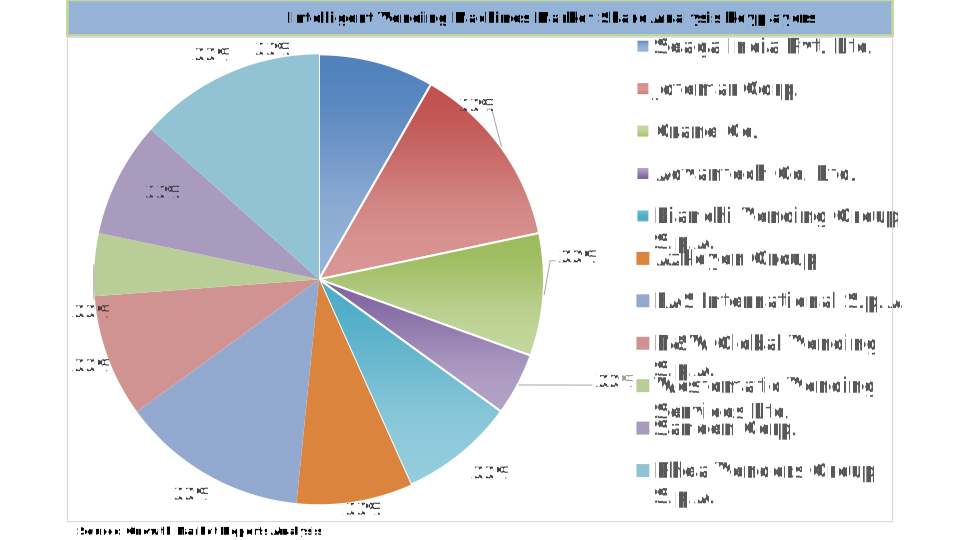
Intelligent Vending Machines Market keyplayers

For instance, in October 2015, Bianchi Vending Group S.p.A. took over Brasilia, who was the manufacturer of espresso machines, to increase the strength of their restaurant, hotel, and catering sector business that ensures the supply of catering companies, bars, restaurants, and hotels.

Frequently Asked Questions

Key challenges include high initial investment and maintenance costs, concerns over data security and payment fraud, and the need for system interoperability and regulatory compliance.

Major companies include Fuji Electric Co., Ltd., Crane Merchandising Systems, Royal Vendors, Inc., Seaga Manufacturing Inc., Sandenvendo America, Inc., Westomatic Vending Services Ltd., Azkoyen Group, and Jofemar Corporation.

Key trends include the shift towards contactless and cashless payments, demand for healthier and sustainable product offerings, integration of AI and machine learning, and expansion into emerging markets.

Businesses benefit from reduced operational costs, minimized human interaction, 24/7 service, personalized customer engagement, real-time analytics, and the ability to optimize product assortments based on consumer data.

Intelligent vending machines are widely used in retail, corporate offices, educational institutions, healthcare facilities, transportation hubs, and other environments to provide convenient, contactless access to products.

AI and IoT integration enable features like real-time inventory monitoring, predictive maintenance, dynamic pricing, personalized recommendations, and cashless payments, significantly enhancing operational efficiency and user experience.

The main product types include beverage vending machines, food vending machines, combination vending machines, and machines for non-food items such as personal care products, electronics, and pharmaceuticals.

Asia Pacific holds the largest share in the global intelligent vending machines market, followed by North America and Europe. Rapid urbanization and adoption of smart technologies in countries like China, Japan, and South Korea are key drivers in the Asia Pacific region.

The intelligent vending machines market is expected to grow at a CAGR of 11.2% from 2025 to 2033, reaching a forecasted value of USD 40.2 billion by 2033.

As of 2024, the global intelligent vending machines market size reached USD 15.6 billion, driven by rapid adoption of advanced technologies and increasing demand for automated retail solutions.

Table Of Content

Chapter 1 Executive Summary
Chapter 2 Assumptions and Acronyms Used
Chapter 3 Research Methodology
Chapter 4 Intelligent Vending Machines Market Overview
   4.1 Introduction
      4.1.1 Market Taxonomy
      4.1.2 Market Definition
      4.1.3 Macro-Economic Factors Impacting the Market Growth
   4.2 Intelligent Vending Machines Market Dynamics
      4.2.1 Market Drivers
      4.2.2 Market Restraints
      4.2.3 Market Opportunity
   4.3 Intelligent Vending Machines Market - Supply Chain Analysis
      4.3.1 List of Key Suppliers
      4.3.2 List of Key Distributors
      4.3.3 List of Key Consumers
   4.4 Key Forces Shaping the Intelligent Vending Machines Market
      4.4.1 Bargaining Power of Suppliers
      4.4.2 Bargaining Power of Buyers
      4.4.3 Threat of Substitution
      4.4.4 Threat of New Entrants
      4.4.5 Competitive Rivalry
   4.5 Global Intelligent Vending Machines Market Size & Forecast, 2023-2032
      4.5.1 Intelligent Vending Machines Market Size and Y-o-Y Growth
      4.5.2 Intelligent Vending Machines Market Absolute $ Opportunity

Chapter 5 Global Intelligent Vending Machines Market Analysis and Forecast By Product Type
   5.1 Introduction
      5.1.1 Key Market Trends & Growth Opportunities By Product Type
      5.1.2 Basis Point Share (BPS) Analysis By Product Type
      5.1.3 Absolute $ Opportunity Assessment By Product Type
   5.2 Intelligent Vending Machines Market Size Forecast By Product Type
      5.2.1 Beverage Vending Machines
      5.2.2 Food Vending Machines
      5.2.3 Combination Vending Machines
      5.2.4 Others
   5.3 Market Attractiveness Analysis By Product Type

Chapter 6 Global Intelligent Vending Machines Market Analysis and Forecast By Technology
   6.1 Introduction
      6.1.1 Key Market Trends & Growth Opportunities By Technology
      6.1.2 Basis Point Share (BPS) Analysis By Technology
      6.1.3 Absolute $ Opportunity Assessment By Technology
   6.2 Intelligent Vending Machines Market Size Forecast By Technology
      6.2.1 Cashless Systems
      6.2.2 Telemetry Systems
      6.2.3 Voice Recognition
      6.2.4 Others
   6.3 Market Attractiveness Analysis By Technology

Chapter 7 Global Intelligent Vending Machines Market Analysis and Forecast By Application
   7.1 Introduction
      7.1.1 Key Market Trends & Growth Opportunities By Application
      7.1.2 Basis Point Share (BPS) Analysis By Application
      7.1.3 Absolute $ Opportunity Assessment By Application
   7.2 Intelligent Vending Machines Market Size Forecast By Application
      7.2.1 Retail
      7.2.2 Corporate Offices
      7.2.3 Educational Institutions
      7.2.4 Healthcare Facilities
      7.2.5 Transportation Hubs
      7.2.6 Others
   7.3 Market Attractiveness Analysis By Application

Chapter 8 Global Intelligent Vending Machines Market Analysis and Forecast By End-User
   8.1 Introduction
      8.1.1 Key Market Trends & Growth Opportunities By End-User
      8.1.2 Basis Point Share (BPS) Analysis By End-User
      8.1.3 Absolute $ Opportunity Assessment By End-User
   8.2 Intelligent Vending Machines Market Size Forecast By End-User
      8.2.1 Commercial
      8.2.2 Industrial
      8.2.3 Institutional
      8.2.4 Others
   8.3 Market Attractiveness Analysis By End-User

Chapter 9 Global Intelligent Vending Machines Market Analysis and Forecast by Region
   9.1 Introduction
      9.1.1 Key Market Trends & Growth Opportunities By Region
      9.1.2 Basis Point Share (BPS) Analysis By Region
      9.1.3 Absolute $ Opportunity Assessment By Region
   9.2 Intelligent Vending Machines Market Size Forecast By Region
      9.2.1 North America
      9.2.2 Europe
      9.2.3 Asia Pacific
      9.2.4 Latin America
      9.2.5 Middle East & Africa (MEA)
   9.3 Market Attractiveness Analysis By Region

Chapter 10 Coronavirus Disease (COVID-19) Impact 
   10.1 Introduction 
   10.2 Current & Future Impact Analysis 
   10.3 Economic Impact Analysis 
   10.4 Government Policies 
   10.5 Investment Scenario

Chapter 11 North America Intelligent Vending Machines Analysis and Forecast
   11.1 Introduction
   11.2 North America Intelligent Vending Machines Market Size Forecast by Country
      11.2.1 U.S.
      11.2.2 Canada
   11.3 Basis Point Share (BPS) Analysis by Country
   11.4 Absolute $ Opportunity Assessment by Country
   11.5 Market Attractiveness Analysis by Country
   11.6 North America Intelligent Vending Machines Market Size Forecast By Product Type
      11.6.1 Beverage Vending Machines
      11.6.2 Food Vending Machines
      11.6.3 Combination Vending Machines
      11.6.4 Others
   11.7 Basis Point Share (BPS) Analysis By Product Type 
   11.8 Absolute $ Opportunity Assessment By Product Type 
   11.9 Market Attractiveness Analysis By Product Type
   11.10 North America Intelligent Vending Machines Market Size Forecast By Technology
      11.10.1 Cashless Systems
      11.10.2 Telemetry Systems
      11.10.3 Voice Recognition
      11.10.4 Others
   11.11 Basis Point Share (BPS) Analysis By Technology 
   11.12 Absolute $ Opportunity Assessment By Technology 
   11.13 Market Attractiveness Analysis By Technology
   11.14 North America Intelligent Vending Machines Market Size Forecast By Application
      11.14.1 Retail
      11.14.2 Corporate Offices
      11.14.3 Educational Institutions
      11.14.4 Healthcare Facilities
      11.14.5 Transportation Hubs
      11.14.6 Others
   11.15 Basis Point Share (BPS) Analysis By Application 
   11.16 Absolute $ Opportunity Assessment By Application 
   11.17 Market Attractiveness Analysis By Application
   11.18 North America Intelligent Vending Machines Market Size Forecast By End-User
      11.18.1 Commercial
      11.18.2 Industrial
      11.18.3 Institutional
      11.18.4 Others
   11.19 Basis Point Share (BPS) Analysis By End-User 
   11.20 Absolute $ Opportunity Assessment By End-User 
   11.21 Market Attractiveness Analysis By End-User

Chapter 12 Europe Intelligent Vending Machines Analysis and Forecast
   12.1 Introduction
   12.2 Europe Intelligent Vending Machines Market Size Forecast by Country
      12.2.1 Germany
      12.2.2 France
      12.2.3 Italy
      12.2.4 U.K.
      12.2.5 Spain
      12.2.6 Russia
      12.2.7 Rest of Europe
   12.3 Basis Point Share (BPS) Analysis by Country
   12.4 Absolute $ Opportunity Assessment by Country
   12.5 Market Attractiveness Analysis by Country
   12.6 Europe Intelligent Vending Machines Market Size Forecast By Product Type
      12.6.1 Beverage Vending Machines
      12.6.2 Food Vending Machines
      12.6.3 Combination Vending Machines
      12.6.4 Others
   12.7 Basis Point Share (BPS) Analysis By Product Type 
   12.8 Absolute $ Opportunity Assessment By Product Type 
   12.9 Market Attractiveness Analysis By Product Type
   12.10 Europe Intelligent Vending Machines Market Size Forecast By Technology
      12.10.1 Cashless Systems
      12.10.2 Telemetry Systems
      12.10.3 Voice Recognition
      12.10.4 Others
   12.11 Basis Point Share (BPS) Analysis By Technology 
   12.12 Absolute $ Opportunity Assessment By Technology 
   12.13 Market Attractiveness Analysis By Technology
   12.14 Europe Intelligent Vending Machines Market Size Forecast By Application
      12.14.1 Retail
      12.14.2 Corporate Offices
      12.14.3 Educational Institutions
      12.14.4 Healthcare Facilities
      12.14.5 Transportation Hubs
      12.14.6 Others
   12.15 Basis Point Share (BPS) Analysis By Application 
   12.16 Absolute $ Opportunity Assessment By Application 
   12.17 Market Attractiveness Analysis By Application
   12.18 Europe Intelligent Vending Machines Market Size Forecast By End-User
      12.18.1 Commercial
      12.18.2 Industrial
      12.18.3 Institutional
      12.18.4 Others
   12.19 Basis Point Share (BPS) Analysis By End-User 
   12.20 Absolute $ Opportunity Assessment By End-User 
   12.21 Market Attractiveness Analysis By End-User

Chapter 13 Asia Pacific Intelligent Vending Machines Analysis and Forecast
   13.1 Introduction
   13.2 Asia Pacific Intelligent Vending Machines Market Size Forecast by Country
      13.2.1 China
      13.2.2 Japan
      13.2.3 South Korea
      13.2.4 India
      13.2.5 Australia
      13.2.6 South East Asia (SEA)
      13.2.7 Rest of Asia Pacific (APAC)
   13.3 Basis Point Share (BPS) Analysis by Country
   13.4 Absolute $ Opportunity Assessment by Country
   13.5 Market Attractiveness Analysis by Country
   13.6 Asia Pacific Intelligent Vending Machines Market Size Forecast By Product Type
      13.6.1 Beverage Vending Machines
      13.6.2 Food Vending Machines
      13.6.3 Combination Vending Machines
      13.6.4 Others
   13.7 Basis Point Share (BPS) Analysis By Product Type 
   13.8 Absolute $ Opportunity Assessment By Product Type 
   13.9 Market Attractiveness Analysis By Product Type
   13.10 Asia Pacific Intelligent Vending Machines Market Size Forecast By Technology
      13.10.1 Cashless Systems
      13.10.2 Telemetry Systems
      13.10.3 Voice Recognition
      13.10.4 Others
   13.11 Basis Point Share (BPS) Analysis By Technology 
   13.12 Absolute $ Opportunity Assessment By Technology 
   13.13 Market Attractiveness Analysis By Technology
   13.14 Asia Pacific Intelligent Vending Machines Market Size Forecast By Application
      13.14.1 Retail
      13.14.2 Corporate Offices
      13.14.3 Educational Institutions
      13.14.4 Healthcare Facilities
      13.14.5 Transportation Hubs
      13.14.6 Others
   13.15 Basis Point Share (BPS) Analysis By Application 
   13.16 Absolute $ Opportunity Assessment By Application 
   13.17 Market Attractiveness Analysis By Application
   13.18 Asia Pacific Intelligent Vending Machines Market Size Forecast By End-User
      13.18.1 Commercial
      13.18.2 Industrial
      13.18.3 Institutional
      13.18.4 Others
   13.19 Basis Point Share (BPS) Analysis By End-User 
   13.20 Absolute $ Opportunity Assessment By End-User 
   13.21 Market Attractiveness Analysis By End-User

Chapter 14 Latin America Intelligent Vending Machines Analysis and Forecast
   14.1 Introduction
   14.2 Latin America Intelligent Vending Machines Market Size Forecast by Country
      14.2.1 Brazil
      14.2.2 Mexico
      14.2.3 Rest of Latin America (LATAM)
   14.3 Basis Point Share (BPS) Analysis by Country
   14.4 Absolute $ Opportunity Assessment by Country
   14.5 Market Attractiveness Analysis by Country
   14.6 Latin America Intelligent Vending Machines Market Size Forecast By Product Type
      14.6.1 Beverage Vending Machines
      14.6.2 Food Vending Machines
      14.6.3 Combination Vending Machines
      14.6.4 Others
   14.7 Basis Point Share (BPS) Analysis By Product Type 
   14.8 Absolute $ Opportunity Assessment By Product Type 
   14.9 Market Attractiveness Analysis By Product Type
   14.10 Latin America Intelligent Vending Machines Market Size Forecast By Technology
      14.10.1 Cashless Systems
      14.10.2 Telemetry Systems
      14.10.3 Voice Recognition
      14.10.4 Others
   14.11 Basis Point Share (BPS) Analysis By Technology 
   14.12 Absolute $ Opportunity Assessment By Technology 
   14.13 Market Attractiveness Analysis By Technology
   14.14 Latin America Intelligent Vending Machines Market Size Forecast By Application
      14.14.1 Retail
      14.14.2 Corporate Offices
      14.14.3 Educational Institutions
      14.14.4 Healthcare Facilities
      14.14.5 Transportation Hubs
      14.14.6 Others
   14.15 Basis Point Share (BPS) Analysis By Application 
   14.16 Absolute $ Opportunity Assessment By Application 
   14.17 Market Attractiveness Analysis By Application
   14.18 Latin America Intelligent Vending Machines Market Size Forecast By End-User
      14.18.1 Commercial
      14.18.2 Industrial
      14.18.3 Institutional
      14.18.4 Others
   14.19 Basis Point Share (BPS) Analysis By End-User 
   14.20 Absolute $ Opportunity Assessment By End-User 
   14.21 Market Attractiveness Analysis By End-User

Chapter 15 Middle East & Africa (MEA) Intelligent Vending Machines Analysis and Forecast
   15.1 Introduction
   15.2 Middle East & Africa (MEA) Intelligent Vending Machines Market Size Forecast by Country
      15.2.1 Saudi Arabia
      15.2.2 South Africa
      15.2.3 UAE
      15.2.4 Rest of Middle East & Africa (MEA)
   15.3 Basis Point Share (BPS) Analysis by Country
   15.4 Absolute $ Opportunity Assessment by Country
   15.5 Market Attractiveness Analysis by Country
   15.6 Middle East & Africa (MEA) Intelligent Vending Machines Market Size Forecast By Product Type
      15.6.1 Beverage Vending Machines
      15.6.2 Food Vending Machines
      15.6.3 Combination Vending Machines
      15.6.4 Others
   15.7 Basis Point Share (BPS) Analysis By Product Type 
   15.8 Absolute $ Opportunity Assessment By Product Type 
   15.9 Market Attractiveness Analysis By Product Type
   15.10 Middle East & Africa (MEA) Intelligent Vending Machines Market Size Forecast By Technology
      15.10.1 Cashless Systems
      15.10.2 Telemetry Systems
      15.10.3 Voice Recognition
      15.10.4 Others
   15.11 Basis Point Share (BPS) Analysis By Technology 
   15.12 Absolute $ Opportunity Assessment By Technology 
   15.13 Market Attractiveness Analysis By Technology
   15.14 Middle East & Africa (MEA) Intelligent Vending Machines Market Size Forecast By Application
      15.14.1 Retail
      15.14.2 Corporate Offices
      15.14.3 Educational Institutions
      15.14.4 Healthcare Facilities
      15.14.5 Transportation Hubs
      15.14.6 Others
   15.15 Basis Point Share (BPS) Analysis By Application 
   15.16 Absolute $ Opportunity Assessment By Application 
   15.17 Market Attractiveness Analysis By Application
   15.18 Middle East & Africa (MEA) Intelligent Vending Machines Market Size Forecast By End-User
      15.18.1 Commercial
      15.18.2 Industrial
      15.18.3 Institutional
      15.18.4 Others
   15.19 Basis Point Share (BPS) Analysis By End-User 
   15.20 Absolute $ Opportunity Assessment By End-User 
   15.21 Market Attractiveness Analysis By End-User

Chapter 16 Competition Landscape 
   16.1 Intelligent Vending Machines Market: Competitive Dashboard
   16.2 Global Intelligent Vending Machines Market: Market Share Analysis, 2023
   16.3 Company Profiles (Details – Overview, Financials, Developments, Strategy) 
      16.3.1 Fuji Electric Co., Ltd.
Crane Co.
Azkoyen Group
Westomatic Vending Services Ltd.
Royal Vendors, Inc.
Seaga Manufacturing Inc.
Sanden Holdings Corporation
Bianchi Industry S.p.A.
Rhea Vendors Group S.p.A.
Jofemar Corporation
FAS International S.p.A.
Sielaff GmbH & Co. KG
Evoca Group
Aeguana
Vendekin Technologies Pvt Ltd.
American Vending Machines Inc.
Azkoyen Vending Systems
Cantaloupe Inc.
Glory Ltd.
N&W Global Vending S.p.A.

Methodology

Our Clients

General Mills
Microsoft
The John Holland Group
Siemens Healthcare
FedEx Logistics
Pfizer
General Electric
Honda Motor Co. Ltd.