Intelligent Transportation Systems Market Research Report 2033

Intelligent Transportation Systems Market Research Report 2033

Segments - by Component (Hardware, Software, Services), by System Type (Advanced Traffic Management Systems, Advanced Traveler Information Systems, Advanced Transportation Pricing Systems, Advanced Public Transportation Systems, Cooperative Vehicle Systems, Others), by Application (Traffic Management, Road Safety and Security, Freight Management, Public Transport, Environment Protection, Parking Management, Others), by Mode Of Transport (Roadways, Railways, Airways, Maritime)

https://growthmarketreports.com/Raksha
Author : Raksha Sharma
https://growthmarketreports.com/Vaibhav
Fact-checked by : V. Chandola
https://growthmarketreports.com/Shruti
Editor : Shruti Bhat

Upcoming | Report ID :AL-1904 | 4.5 Rating | 43 Reviews | 274 Pages | Format : Docx PDF

Report Description


Intelligent Transportation Systems Market Outlook

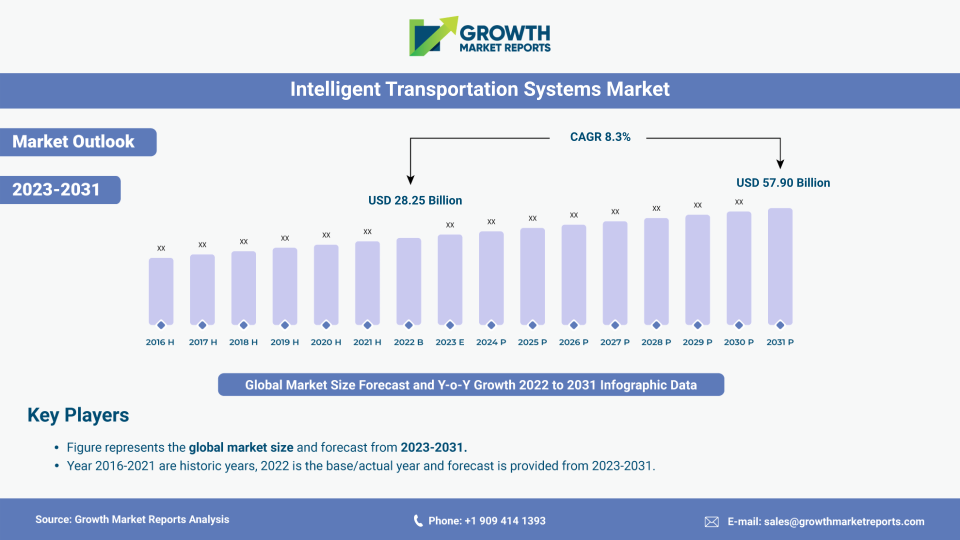
As per our latest research, the global Intelligent Transportation Systems (ITS) market size in 2024 stands at USD 48.3 billion, reflecting robust adoption across both developed and emerging economies. The market is forecasted to grow at a remarkable CAGR of 9.7% from 2025 to 2033, reaching a projected value of USD 110.6 billion by 2033. This substantial growth is primarily driven by increasing urbanization, the need for efficient traffic management, and rising investments in smart city initiatives worldwide. The convergence of advanced technologies such as IoT, AI, and big data analytics within transportation networks is further accelerating the adoption of ITS solutions globally.

One of the most significant growth factors fueling the Intelligent Transportation Systems market is the rapid urbanization coupled with the exponential rise in vehicle ownership. Urban areas are increasingly grappling with congestion, pollution, and road safety challenges, necessitating the deployment of advanced traffic management and road safety solutions. Governments worldwide are prioritizing investments in ITS to enhance mobility, reduce travel time, and lower emissions. The integration of real-time data analytics, connected vehicles, and adaptive traffic control systems is revolutionizing how cities manage transportation networks, thereby boosting market demand. Furthermore, the proliferation of smart city projects, especially in Asia Pacific and North America, has significantly heightened the need for intelligent transportation solutions that can seamlessly integrate with existing urban infrastructure.

Another critical growth driver for the Intelligent Transportation Systems market is the increasing focus on sustainability and environmental protection. With global concerns about climate change and the adverse effects of vehicular emissions, there is heightened emphasis on developing eco-friendly transportation systems. ITS enables optimized routing, dynamic traffic signal control, and real-time monitoring of vehicular emissions, all of which contribute to reduced fuel consumption and lower greenhouse gas emissions. Regulatory mandates in regions such as Europe and North America are pushing for cleaner, safer, and more efficient transportation systems, thereby accelerating the adoption of ITS technologies. The integration of electric vehicles (EVs) and the need for smart charging infrastructure further enhance the relevance and scope of ITS in contemporary transportation ecosystems.

Technological advancements represent another pivotal factor propelling the expansion of the Intelligent Transportation Systems market. The advent of 5G connectivity, artificial intelligence, machine learning, and the Internet of Things (IoT) has enabled the development of highly sophisticated ITS platforms. These technologies facilitate real-time communication between vehicles, infrastructure, and traffic management centers, leading to proactive decision-making and enhanced road safety. The growing adoption of autonomous and connected vehicles is also driving the demand for ITS, as these vehicles rely on advanced sensing, communication, and data analytics capabilities to operate safely and efficiently. As technology continues to evolve, ITS solutions are expected to become even more integral to the future of mobility.

From a regional perspective, Asia Pacific is emerging as the fastest-growing market for Intelligent Transportation Systems, driven by rapid urbanization, increasing government investments in smart infrastructure, and the presence of some of the world’s largest and most congested cities. North America and Europe continue to dominate in terms of market share, owing to early adoption of advanced transportation technologies, strong regulatory frameworks, and significant funding for research and development. Meanwhile, the Middle East & Africa and Latin America are witnessing steady growth, fueled by ongoing infrastructure modernization and the rising need for efficient public transport systems. The global market landscape is, therefore, characterized by diverse growth patterns and opportunities across different regions.

Global Intelligent Transportation Systems Industry Outlook

Component Analysis

The Component segment of the Intelligent Transportation Systems market is comprised of hardware, software, and services, each playing a pivotal role in the deployment and functionality of ITS solutions. Hardware includes sensors, cameras, traffic lights, and communication devices that form the backbone of data collection and transmission in ITS networks. The proliferation of advanced sensors and IoT devices has significantly enhanced the accuracy and reliability of real-time traffic monitoring, vehicle detection, and incident management. As cities and transportation agencies upgrade their infrastructure to support connected and autonomous vehicles, the demand for sophisticated hardware components is witnessing substantial growth.

Software forms the intelligence layer of ITS, providing the analytical and decision-making capabilities necessary for effective traffic and transportation management. ITS software encompasses a wide range of applications, including traffic management systems, traveler information platforms, and predictive analytics solutions. The increasing complexity of urban mobility patterns and the need for integrated, cross-modal transportation management have driven significant advancements in ITS software. Cloud-based platforms are gaining traction, enabling centralized control, scalability, and real-time data sharing across multiple stakeholders. As artificial intelligence and machine learning algorithms become more prevalent, software solutions are expected to deliver even greater value through predictive modeling and automated decision-making.

Services represent a critical component of the Intelligent Transportation Systems market, encompassing consulting, system integration, maintenance, and support. As ITS deployments become more complex and widespread, the need for specialized services has grown correspondingly. Consulting services assist government agencies and private sector operators in designing customized ITS solutions tailored to local needs and regulatory requirements. System integration services ensure seamless interoperability between diverse hardware and software components, while ongoing maintenance and support are essential for ensuring system reliability and performance. The shift towards managed services and outsourcing is also evident, as organizations seek to reduce operational costs and focus on core competencies.

The interplay between hardware, software, and services is fundamental to the success of ITS initiatives. Integrated solutions that combine robust hardware infrastructure with intelligent software and comprehensive support services are increasingly in demand. Vendors are focusing on offering end-to-end solutions that address the entire lifecycle of ITS deployments, from initial planning and design to ongoing operation and optimization. As the market continues to evolve, the component segment is expected to witness further innovation, driven by advancements in sensor technology, data analytics, and service delivery models.

Report Scope

Attributes Details
Report Title Intelligent Transportation Systems Market Research Report 2033
By Component Hardware, Software, Services
By System Type Advanced Traffic Management Systems, Advanced Traveler Information Systems, Advanced Transportation Pricing Systems, Advanced Public Transportation Systems, Cooperative Vehicle Systems, Others
By Application Traffic Management, Road Safety and Security, Freight Management, Public Transport, Environment Protection, Parking Management, Others
By Mode Of Transport Roadways, Railways, Airways, Maritime
Regions Covered North America, Europe, APAC, Latin America, MEA
Countries Covered North America (United States, Canada), Europe (Germany, France, Italy, United Kingdom, Spain, Russia, Rest of Europe), Asia Pacific (China, Japan, South Korea, India, Australia, South East Asia (SEA), Rest of Asia Pacific), Latin America (Mexico, Brazil, Rest of Latin America), Middle East & Africa (Saudi Arabia, South Africa, United Arab Emirates, Rest of Middle East & Africa)
Base Year 2024
Historic Data 2018-2023
Forecast Period 2025-2033
Number of Pages 274
Number of Tables & Figures 344
Customization Available Yes, the report can be customized as per your need.

System Type Analysis

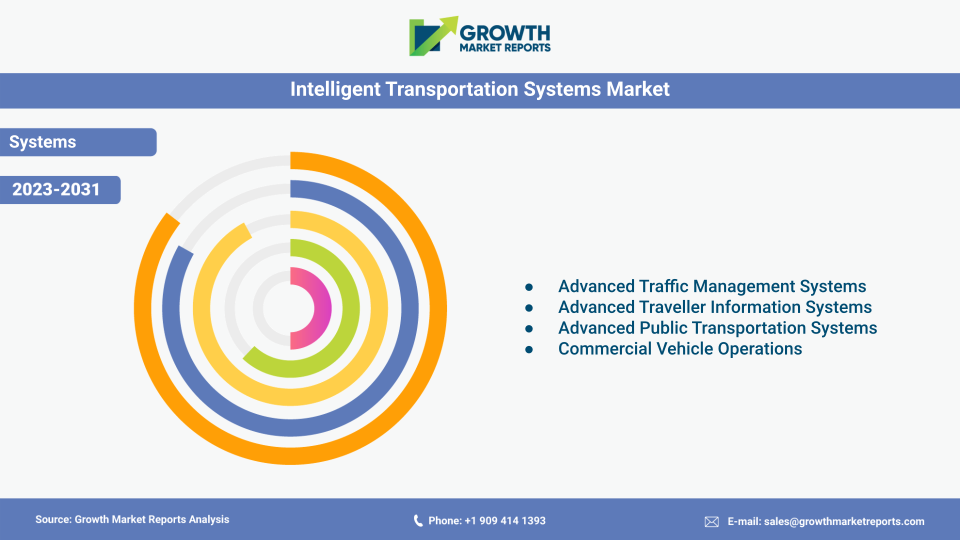
The System Type segment of the Intelligent Transportation Systems market encompasses a diverse array of solutions, including Advanced Traffic Management Systems (ATMS), Advanced Traveler Information Systems (ATIS), Advanced Transportation Pricing Systems (ATPS), Advanced Public Transportation Systems (APTS), Cooperative Vehicle Systems, and others. Advanced Traffic Management Systems are at the core of ITS, enabling real-time monitoring and control of traffic flows through adaptive signal control, incident detection, and congestion management. These systems leverage data from roadside sensors, cameras, and connected vehicles to optimize traffic movement, reduce delays, and enhance road safety.

Advanced Traveler Information Systems play a crucial role in empowering commuters with real-time information on traffic conditions, public transport schedules, and route alternatives. By leveraging mobile applications, variable message signs, and web-based platforms, ATIS enhances the overall travel experience and promotes the use of sustainable transportation modes. The growing penetration of smartphones and the increasing reliance on digital information channels have significantly boosted the adoption of ATIS solutions, particularly in urban areas with high commuter volumes.

Advanced Transportation Pricing Systems are gaining traction as cities seek innovative ways to manage congestion and promote efficient use of transportation infrastructure. These systems enable dynamic tolling, congestion pricing, and electronic fare collection, incentivizing travelers to shift travel times or modes and thereby reducing peak-hour congestion. The integration of electronic payment systems and smart cards has streamlined the implementation of pricing strategies, making them more user-friendly and effective. As urban populations continue to grow, the demand for advanced pricing systems is expected to rise, particularly in megacities grappling with chronic congestion.

Advanced Public Transportation Systems and Cooperative Vehicle Systems are transforming the landscape of urban mobility. APTS leverages ITS technologies to improve the efficiency, reliability, and accessibility of public transport services, including real-time vehicle tracking, automated fare collection, and passenger information systems. Cooperative Vehicle Systems facilitate communication between vehicles and infrastructure (V2I) and between vehicles (V2V), enabling enhanced safety features such as collision avoidance, lane departure warnings, and automated emergency braking. As the automotive industry moves towards connected and autonomous vehicles, cooperative systems are becoming increasingly integral to the ITS ecosystem.

Application Analysis

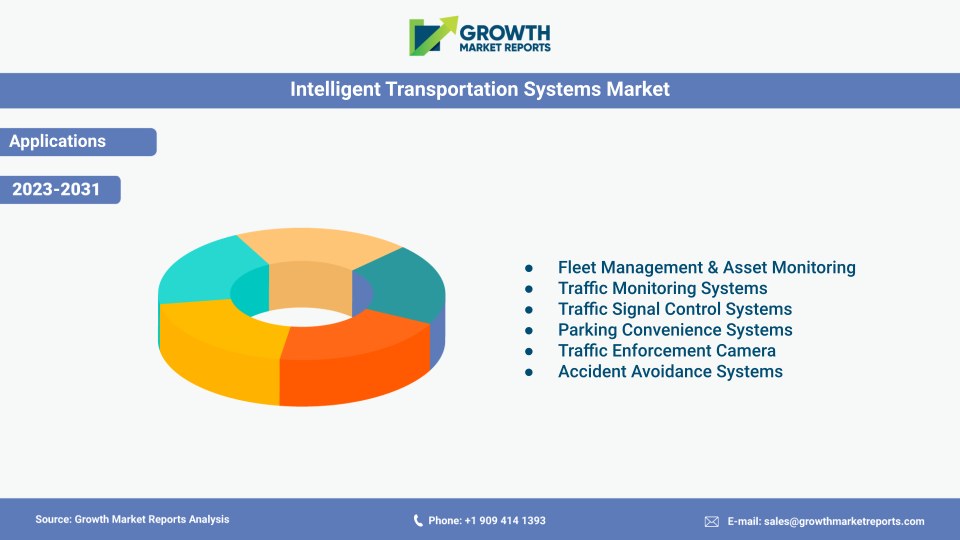
The Application segment of the Intelligent Transportation Systems market is broad, encompassing traffic management, road safety and security, freight management, public transport, environment protection, parking management, and others. Traffic management remains the largest application area, driven by the need to optimize traffic flows, reduce congestion, and improve travel time reliability. ITS solutions provide traffic operators with real-time data and analytics, enabling proactive interventions such as adaptive signal control, incident detection, and dynamic rerouting. The growing complexity of urban mobility patterns and the increasing number of vehicles on the road underscore the importance of advanced traffic management systems.

Road safety and security applications are gaining prominence as governments and transportation agencies strive to reduce accidents, fatalities, and injuries on the road. ITS technologies such as automated speed enforcement, red light cameras, and real-time hazard warnings are being deployed to enhance road safety. The integration of video analytics, AI, and machine learning has further improved the accuracy and effectiveness of safety interventions. In addition, ITS plays a crucial role in emergency response, enabling rapid detection and clearance of incidents, thereby minimizing the impact on traffic flow and reducing secondary accidents.

Freight management is another critical application area, particularly in regions with high volumes of commercial traffic and logistics activities. ITS solutions enable real-time tracking of freight vehicles, optimize delivery routes, and facilitate efficient loading and unloading operations. The growing importance of e-commerce and the need for just-in-time delivery have heightened the demand for intelligent freight management systems. By providing visibility and control over the entire supply chain, ITS helps logistics operators reduce costs, improve service levels, and enhance overall efficiency.

Public transport, environment protection, and parking management are also significant application areas within the Intelligent Transportation Systems market. ITS enables real-time passenger information, automated fare collection, and fleet management for public transport operators, enhancing service quality and reliability. Environmental protection applications include emission monitoring, eco-routing, and support for electric vehicle infrastructure, all aimed at reducing the environmental footprint of transportation. Parking management solutions leverage sensors, mobile applications, and dynamic pricing to optimize the use of parking spaces and reduce congestion caused by vehicles searching for parking. Collectively, these applications highlight the versatility and transformative potential of ITS across the transportation ecosystem.

Mode of Transport Analysis

The Mode of Transport segment in the Intelligent Transportation Systems market is categorized into roadways, railways, airways, and maritime, each presenting unique opportunities and challenges for ITS deployment. Roadways represent the largest and most mature segment, driven by the sheer volume of vehicles, the complexity of urban road networks, and the pressing need for traffic management and road safety solutions. ITS applications in roadways include adaptive traffic signals, incident detection, congestion pricing, and vehicle-to-infrastructure communication, all aimed at enhancing mobility, safety, and sustainability.

Railways are increasingly adopting ITS technologies to improve operational efficiency, safety, and passenger experience. Intelligent signaling systems, real-time train tracking, and predictive maintenance solutions are being deployed to optimize train schedules, reduce delays, and enhance safety. The integration of ITS with high-speed rail and urban transit systems is particularly notable in regions such as Europe and Asia Pacific, where rail plays a central role in public transportation. The growing emphasis on intermodal transportation and seamless connectivity between different modes is further driving the adoption of ITS in the railway sector.

Airways are leveraging ITS solutions to enhance air traffic management, airport operations, and passenger services. Advanced air traffic control systems, automated baggage handling, and real-time flight information platforms are improving the efficiency and safety of air travel. The integration of ITS with airport infrastructure enables better coordination between ground transportation, airside operations, and passenger services, resulting in a smoother travel experience. As air travel rebounds post-pandemic and airports face increasing passenger volumes, the demand for intelligent transportation solutions in the aviation sector is expected to grow.

Maritime transport is also benefiting from the adoption of ITS technologies, particularly in the areas of port management, vessel tracking, and cargo handling. Intelligent port management systems enable real-time monitoring of vessel movements, optimize berth allocation, and streamline cargo operations. The growing importance of global trade and the need for efficient, secure, and sustainable maritime transport are driving investments in ITS solutions for ports and shipping companies. As digitalization and automation continue to reshape the maritime industry, ITS is poised to play an increasingly important role in enhancing the efficiency and resilience of global supply chains.

Opportunities & Threats

The Intelligent Transportation Systems market presents a multitude of opportunities for stakeholders across the value chain. The ongoing global push for smart cities and sustainable urban mobility is creating significant demand for advanced ITS solutions. Governments and municipal authorities are increasingly investing in ITS as a means to address congestion, improve road safety, and reduce environmental impact. The integration of emerging technologies such as AI, IoT, and 5G is opening new avenues for innovation, enabling the development of highly sophisticated and scalable ITS platforms. The rise of connected and autonomous vehicles presents further opportunities, as these vehicles rely heavily on ITS infrastructure for safe and efficient operation. Additionally, the growing focus on multimodal transportation and seamless mobility is driving the need for integrated ITS solutions that can manage and optimize diverse transportation networks.

Another major opportunity lies in the expansion of ITS into emerging markets, where rapid urbanization and infrastructure development are creating new demand for intelligent transportation solutions. Countries in Asia Pacific, Latin America, and the Middle East are investing heavily in transportation modernization, presenting lucrative opportunities for ITS vendors and service providers. The proliferation of mobile devices and digital payment systems is also enabling innovative applications such as mobile ticketing, real-time traveler information, and dynamic pricing. Furthermore, the increasing emphasis on sustainability and environmental protection is driving the adoption of ITS solutions that promote eco-friendly transportation modes and reduce emissions. As regulatory frameworks evolve and public awareness grows, the market is expected to witness sustained growth and diversification.

Despite these opportunities, the Intelligent Transportation Systems market faces several restraining factors that could impede growth. High initial investment costs, complex integration requirements, and the need for ongoing maintenance and support can pose significant challenges, particularly for smaller municipalities and developing countries. Interoperability issues between different ITS components and legacy systems can hinder seamless deployment and operation. Data privacy and cybersecurity concerns are also becoming increasingly important, as ITS solutions rely on the collection and transmission of vast amounts of sensitive data. Addressing these challenges will require concerted efforts from industry stakeholders, governments, and technology providers to develop robust, secure, and cost-effective ITS solutions.

Regional Outlook

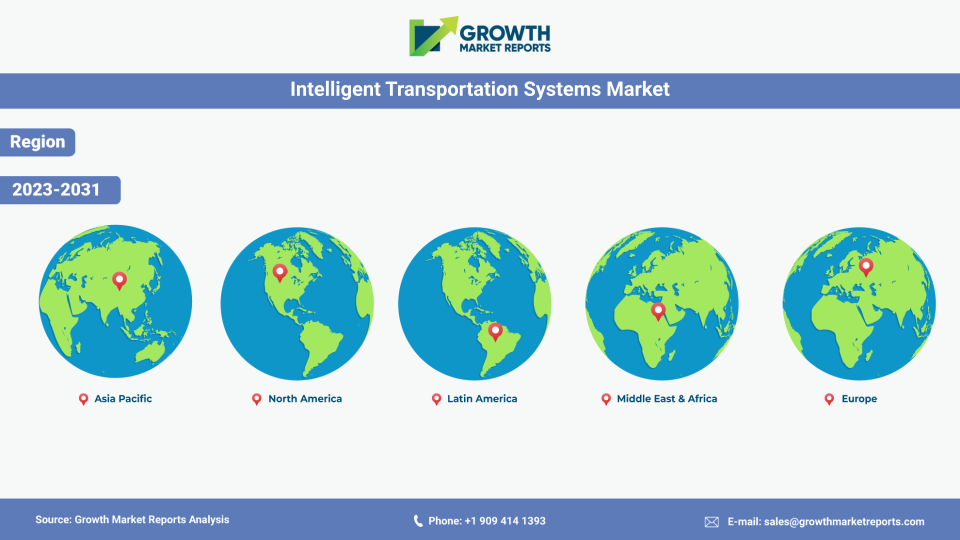
North America remains a dominant force in the Intelligent Transportation Systems market, accounting for approximately 32% of the global market share in 2024, with a market size of around USD 15.5 billion. The region benefits from early adoption of advanced transportation technologies, strong regulatory support, and significant investments in research and development. The United States and Canada are at the forefront of ITS deployment, with extensive networks of connected infrastructure, smart traffic management systems, and pilot projects for connected and autonomous vehicles. The presence of leading technology vendors and a robust ecosystem of public and private sector stakeholders further strengthens the region's position in the global market.

Asia Pacific is the fastest-growing region in the Intelligent Transportation Systems market, with a projected CAGR of 11.2% from 2025 to 2033. The region's market size reached USD 12.6 billion in 2024 and is expected to surpass USD 32.5 billion by 2033. Rapid urbanization, rising vehicle ownership, and government initiatives to modernize transportation infrastructure are driving the adoption of ITS across major economies such as China, India, Japan, and South Korea. Mega-cities in Asia Pacific face significant challenges related to congestion, pollution, and road safety, making ITS solutions essential for sustainable urban mobility. The region is also witnessing increased investments in smart city projects, public transport modernization, and digital payment systems, all of which are fueling market growth.

Europe holds a significant share of the Intelligent Transportation Systems market, with a market size of approximately USD 12.1 billion in 2024. The region is characterized by a strong regulatory framework, high levels of public transport usage, and a focus on sustainability and environmental protection. European countries are leaders in the deployment of advanced public transportation systems, congestion pricing, and emission monitoring solutions. The European Union's emphasis on integrated, multimodal transportation networks and cross-border interoperability is driving the adoption of ITS across the continent. Meanwhile, the Middle East & Africa and Latin America are emerging as promising markets, with increasing investments in infrastructure modernization and smart mobility solutions. These regions are expected to contribute steadily to the global market, reflecting diverse growth dynamics and opportunities.

Intelligent Transportation Systems Market Statistics

Competitor Outlook

The Intelligent Transportation Systems market is characterized by a highly competitive landscape, with a mix of established global players, regional specialists, and emerging technology startups. The market is marked by continuous innovation, strategic partnerships, and mergers and acquisitions aimed at expanding product portfolios and geographic reach. Leading companies are investing heavily in research and development to enhance the functionality, scalability, and interoperability of their ITS solutions. The integration of cutting-edge technologies such as AI, IoT, 5G, and cloud computing is a key differentiator, enabling vendors to offer more sophisticated and value-added solutions to customers. As the market evolves, competition is expected to intensify, particularly in high-growth regions such as Asia Pacific and the Middle East.

Collaboration between public and private sector stakeholders is a defining feature of the ITS market. Governments, transportation agencies, technology vendors, and service providers are working together to design, deploy, and operate integrated ITS solutions that address local mobility challenges. Public-private partnerships (PPPs) are increasingly common, enabling the sharing of risks, resources, and expertise. These collaborations are essential for the successful implementation of large-scale ITS projects, particularly in regions with complex regulatory environments and diverse stakeholder interests. The ability to deliver end-to-end solutions, from hardware and software to consulting and support services, is becoming a critical success factor for market participants.

The market is also witnessing the entry of non-traditional players, including automotive OEMs, telecommunications companies, and digital service providers. These entrants are leveraging their expertise in connectivity, data analytics, and mobility services to offer innovative ITS solutions. The convergence of transportation, technology, and telecommunications is blurring traditional industry boundaries, creating new opportunities and challenges for established players. As the market becomes more dynamic and competitive, companies will need to focus on differentiation, customer-centric innovation, and strategic partnerships to maintain and enhance their market position.

Major companies operating in the Intelligent Transportation Systems market include Siemens AG, Kapsch TrafficCom, Thales Group, Cubic Corporation, Iteris Inc., Q-Free ASA, TomTom NV, TransCore, Alstom SA, and Garmin Ltd. Siemens AG is a global leader in smart infrastructure and mobility solutions, offering a comprehensive portfolio of ITS products and services. Kapsch TrafficCom specializes in intelligent mobility solutions, including tolling, traffic management, and connected vehicle systems. Thales Group is renowned for its expertise in transportation security, signaling, and integrated ITS platforms. Cubic Corporation provides innovative solutions for public transportation, traffic management, and fare collection systems. Iteris Inc. focuses on advanced analytics, sensing, and information solutions for traffic management and road safety. These companies are at the forefront of technological innovation, shaping the future of intelligent transportation systems worldwide.

Key Players

  • Siemens AG
  • Thales Group
  • Kapsch TrafficCom
  • Cubic Corporation
  • Garmin Ltd.
  • TomTom NV
  • Iteris Inc.
  • TransCore (Roper Technologies)
  • Q-Free ASA
  • Econolite Group Inc.
  • Denso Corporation
  • Hitachi Ltd.
  • IBM Corporation
  • Alstom SA
  • Ricardo PLC
  • Xerox Corporation
  • Conduent Incorporated
  • FLIR Systems Inc.
  • Efkon GmbH
  • Atkins (SNC-Lavalin Group)
Intelligent Transportation Systems Market Overview

Segments

The Intelligent Transportation Systems market has been segmented on the basis of

Component

  • Hardware
  • Software
  • Services

System Type

  • Advanced Traffic Management Systems
  • Advanced Traveler Information Systems
  • Advanced Transportation Pricing Systems
  • Advanced Public Transportation Systems
  • Cooperative Vehicle Systems
  • Others

Application

  • Traffic Management
  • Road Safety and Security
  • Freight Management
  • Public Transport
  • Environment Protection
  • Parking Management
  • Others

Mode Of Transport

  • Roadways
  • Railways
  • Airways
  • Maritime

Competitive Landscape

Key players competing in the intelligent transportation systems market include DENSO Corporation, TomTom NV, TransCore, Kapsch TrafficCom AG, and Thales SA
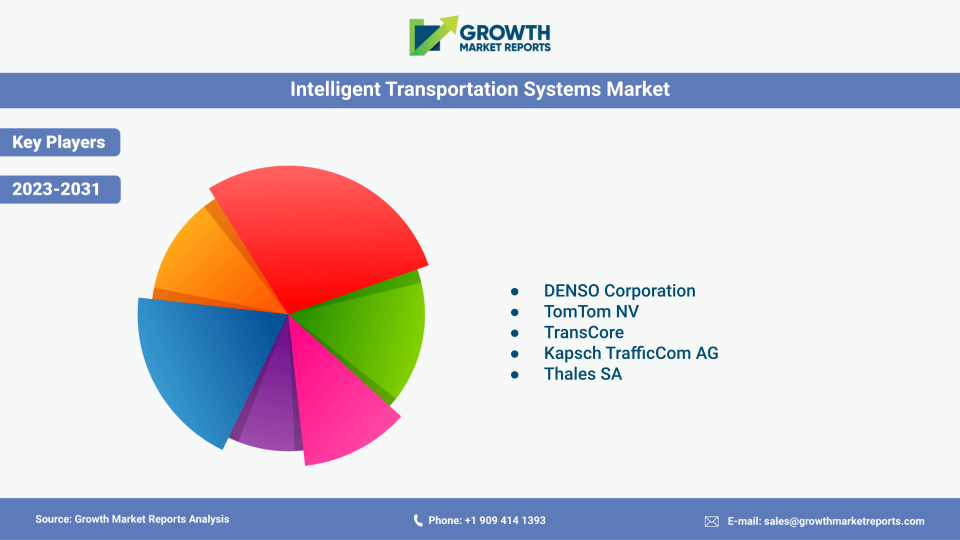

Intelligent Transportation Systems Market Key Players

Frequently Asked Questions

Key challenges include high initial investment costs, complex integration requirements, interoperability issues, and concerns over data privacy and cybersecurity.

Leading companies include Siemens AG, Kapsch TrafficCom, Thales Group, Cubic Corporation, Iteris Inc., Q-Free ASA, TomTom NV, TransCore, Alstom SA, and Garmin Ltd.

ITS helps reduce emissions and fuel consumption through optimized routing, dynamic traffic signal control, real-time emission monitoring, and support for electric vehicle infrastructure.

Major applications include traffic management, road safety and security, freight management, public transport, environmental protection, and parking management.

The ITS market includes Advanced Traffic Management Systems (ATMS), Advanced Traveler Information Systems (ATIS), Advanced Transportation Pricing Systems (ATPS), Advanced Public Transportation Systems (APTS), and Cooperative Vehicle Systems.

ITS solutions are built on three main components: hardware (sensors, cameras, traffic lights), software (traffic management, analytics, traveler information), and services (consulting, system integration, maintenance, and support).

North America and Europe currently dominate the ITS market in terms of market share, while Asia Pacific is the fastest-growing region due to rapid urbanization and government investments in smart infrastructure.

Key growth drivers include rapid urbanization, increased vehicle ownership, the need for efficient traffic management, rising investments in smart city initiatives, and the integration of advanced technologies like IoT, AI, and big data analytics.

The ITS market is expected to grow at a CAGR of 9.7% from 2025 to 2033, reaching USD 110.6 billion by 2033.

As of 2024, the global Intelligent Transportation Systems (ITS) market is valued at USD 48.3 billion.

Table Of Content

Chapter 1 Executive Summary
Chapter 2 Assumptions and Acronyms Used
Chapter 3 Research Methodology
Chapter 4 Intelligent Transportation Systems Market Overview
   4.1 Introduction
      4.1.1 Market Taxonomy
      4.1.2 Market Definition
      4.1.3 Macro-Economic Factors Impacting the Market Growth
   4.2 Intelligent Transportation Systems Market Dynamics
      4.2.1 Market Drivers
      4.2.2 Market Restraints
      4.2.3 Market Opportunity
   4.3 Intelligent Transportation Systems Market - Supply Chain Analysis
      4.3.1 List of Key Suppliers
      4.3.2 List of Key Distributors
      4.3.3 List of Key Consumers
   4.4 Key Forces Shaping the Intelligent Transportation Systems Market
      4.4.1 Bargaining Power of Suppliers
      4.4.2 Bargaining Power of Buyers
      4.4.3 Threat of Substitution
      4.4.4 Threat of New Entrants
      4.4.5 Competitive Rivalry
   4.5 Global Intelligent Transportation Systems Market Size & Forecast, 2023-2032
      4.5.1 Intelligent Transportation Systems Market Size and Y-o-Y Growth
      4.5.2 Intelligent Transportation Systems Market Absolute $ Opportunity

Chapter 5 Global Intelligent Transportation Systems Market Analysis and Forecast By Component
   5.1 Introduction
      5.1.1 Key Market Trends & Growth Opportunities By Component
      5.1.2 Basis Point Share (BPS) Analysis By Component
      5.1.3 Absolute $ Opportunity Assessment By Component
   5.2 Intelligent Transportation Systems Market Size Forecast By Component
      5.2.1 Hardware
      5.2.2 Software
      5.2.3 Services
   5.3 Market Attractiveness Analysis By Component

Chapter 6 Global Intelligent Transportation Systems Market Analysis and Forecast By System Type
   6.1 Introduction
      6.1.1 Key Market Trends & Growth Opportunities By System Type
      6.1.2 Basis Point Share (BPS) Analysis By System Type
      6.1.3 Absolute $ Opportunity Assessment By System Type
   6.2 Intelligent Transportation Systems Market Size Forecast By System Type
      6.2.1 Advanced Traffic Management Systems
      6.2.2 Advanced Traveler Information Systems
      6.2.3 Advanced Transportation Pricing Systems
      6.2.4 Advanced Public Transportation Systems
      6.2.5 Cooperative Vehicle Systems
      6.2.6 Others
   6.3 Market Attractiveness Analysis By System Type

Chapter 7 Global Intelligent Transportation Systems Market Analysis and Forecast By Application
   7.1 Introduction
      7.1.1 Key Market Trends & Growth Opportunities By Application
      7.1.2 Basis Point Share (BPS) Analysis By Application
      7.1.3 Absolute $ Opportunity Assessment By Application
   7.2 Intelligent Transportation Systems Market Size Forecast By Application
      7.2.1 Traffic Management
      7.2.2 Road Safety and Security
      7.2.3 Freight Management
      7.2.4 Public Transport
      7.2.5 Environment Protection
      7.2.6 Parking Management
      7.2.7 Others
   7.3 Market Attractiveness Analysis By Application

Chapter 8 Global Intelligent Transportation Systems Market Analysis and Forecast By Mode Of Transport
   8.1 Introduction
      8.1.1 Key Market Trends & Growth Opportunities By Mode Of Transport
      8.1.2 Basis Point Share (BPS) Analysis By Mode Of Transport
      8.1.3 Absolute $ Opportunity Assessment By Mode Of Transport
   8.2 Intelligent Transportation Systems Market Size Forecast By Mode Of Transport
      8.2.1 Roadways
      8.2.2 Railways
      8.2.3 Airways
      8.2.4 Maritime
   8.3 Market Attractiveness Analysis By Mode Of Transport

Chapter 9 Global Intelligent Transportation Systems Market Analysis and Forecast by Region
   9.1 Introduction
      9.1.1 Key Market Trends & Growth Opportunities By Region
      9.1.2 Basis Point Share (BPS) Analysis By Region
      9.1.3 Absolute $ Opportunity Assessment By Region
   9.2 Intelligent Transportation Systems Market Size Forecast By Region
      9.2.1 North America
      9.2.2 Europe
      9.2.3 Asia Pacific
      9.2.4 Latin America
      9.2.5 Middle East & Africa (MEA)
   9.3 Market Attractiveness Analysis By Region

Chapter 10 Coronavirus Disease (COVID-19) Impact 
   10.1 Introduction 
   10.2 Current & Future Impact Analysis 
   10.3 Economic Impact Analysis 
   10.4 Government Policies 
   10.5 Investment Scenario

Chapter 11 North America Intelligent Transportation Systems Analysis and Forecast
   11.1 Introduction
   11.2 North America Intelligent Transportation Systems Market Size Forecast by Country
      11.2.1 U.S.
      11.2.2 Canada
   11.3 Basis Point Share (BPS) Analysis by Country
   11.4 Absolute $ Opportunity Assessment by Country
   11.5 Market Attractiveness Analysis by Country
   11.6 North America Intelligent Transportation Systems Market Size Forecast By Component
      11.6.1 Hardware
      11.6.2 Software
      11.6.3 Services
   11.7 Basis Point Share (BPS) Analysis By Component 
   11.8 Absolute $ Opportunity Assessment By Component 
   11.9 Market Attractiveness Analysis By Component
   11.10 North America Intelligent Transportation Systems Market Size Forecast By System Type
      11.10.1 Advanced Traffic Management Systems
      11.10.2 Advanced Traveler Information Systems
      11.10.3 Advanced Transportation Pricing Systems
      11.10.4 Advanced Public Transportation Systems
      11.10.5 Cooperative Vehicle Systems
      11.10.6 Others
   11.11 Basis Point Share (BPS) Analysis By System Type 
   11.12 Absolute $ Opportunity Assessment By System Type 
   11.13 Market Attractiveness Analysis By System Type
   11.14 North America Intelligent Transportation Systems Market Size Forecast By Application
      11.14.1 Traffic Management
      11.14.2 Road Safety and Security
      11.14.3 Freight Management
      11.14.4 Public Transport
      11.14.5 Environment Protection
      11.14.6 Parking Management
      11.14.7 Others
   11.15 Basis Point Share (BPS) Analysis By Application 
   11.16 Absolute $ Opportunity Assessment By Application 
   11.17 Market Attractiveness Analysis By Application
   11.18 North America Intelligent Transportation Systems Market Size Forecast By Mode Of Transport
      11.18.1 Roadways
      11.18.2 Railways
      11.18.3 Airways
      11.18.4 Maritime
   11.19 Basis Point Share (BPS) Analysis By Mode Of Transport 
   11.20 Absolute $ Opportunity Assessment By Mode Of Transport 
   11.21 Market Attractiveness Analysis By Mode Of Transport

Chapter 12 Europe Intelligent Transportation Systems Analysis and Forecast
   12.1 Introduction
   12.2 Europe Intelligent Transportation Systems Market Size Forecast by Country
      12.2.1 Germany
      12.2.2 France
      12.2.3 Italy
      12.2.4 U.K.
      12.2.5 Spain
      12.2.6 Russia
      12.2.7 Rest of Europe
   12.3 Basis Point Share (BPS) Analysis by Country
   12.4 Absolute $ Opportunity Assessment by Country
   12.5 Market Attractiveness Analysis by Country
   12.6 Europe Intelligent Transportation Systems Market Size Forecast By Component
      12.6.1 Hardware
      12.6.2 Software
      12.6.3 Services
   12.7 Basis Point Share (BPS) Analysis By Component 
   12.8 Absolute $ Opportunity Assessment By Component 
   12.9 Market Attractiveness Analysis By Component
   12.10 Europe Intelligent Transportation Systems Market Size Forecast By System Type
      12.10.1 Advanced Traffic Management Systems
      12.10.2 Advanced Traveler Information Systems
      12.10.3 Advanced Transportation Pricing Systems
      12.10.4 Advanced Public Transportation Systems
      12.10.5 Cooperative Vehicle Systems
      12.10.6 Others
   12.11 Basis Point Share (BPS) Analysis By System Type 
   12.12 Absolute $ Opportunity Assessment By System Type 
   12.13 Market Attractiveness Analysis By System Type
   12.14 Europe Intelligent Transportation Systems Market Size Forecast By Application
      12.14.1 Traffic Management
      12.14.2 Road Safety and Security
      12.14.3 Freight Management
      12.14.4 Public Transport
      12.14.5 Environment Protection
      12.14.6 Parking Management
      12.14.7 Others
   12.15 Basis Point Share (BPS) Analysis By Application 
   12.16 Absolute $ Opportunity Assessment By Application 
   12.17 Market Attractiveness Analysis By Application
   12.18 Europe Intelligent Transportation Systems Market Size Forecast By Mode Of Transport
      12.18.1 Roadways
      12.18.2 Railways
      12.18.3 Airways
      12.18.4 Maritime
   12.19 Basis Point Share (BPS) Analysis By Mode Of Transport 
   12.20 Absolute $ Opportunity Assessment By Mode Of Transport 
   12.21 Market Attractiveness Analysis By Mode Of Transport

Chapter 13 Asia Pacific Intelligent Transportation Systems Analysis and Forecast
   13.1 Introduction
   13.2 Asia Pacific Intelligent Transportation Systems Market Size Forecast by Country
      13.2.1 China
      13.2.2 Japan
      13.2.3 South Korea
      13.2.4 India
      13.2.5 Australia
      13.2.6 South East Asia (SEA)
      13.2.7 Rest of Asia Pacific (APAC)
   13.3 Basis Point Share (BPS) Analysis by Country
   13.4 Absolute $ Opportunity Assessment by Country
   13.5 Market Attractiveness Analysis by Country
   13.6 Asia Pacific Intelligent Transportation Systems Market Size Forecast By Component
      13.6.1 Hardware
      13.6.2 Software
      13.6.3 Services
   13.7 Basis Point Share (BPS) Analysis By Component 
   13.8 Absolute $ Opportunity Assessment By Component 
   13.9 Market Attractiveness Analysis By Component
   13.10 Asia Pacific Intelligent Transportation Systems Market Size Forecast By System Type
      13.10.1 Advanced Traffic Management Systems
      13.10.2 Advanced Traveler Information Systems
      13.10.3 Advanced Transportation Pricing Systems
      13.10.4 Advanced Public Transportation Systems
      13.10.5 Cooperative Vehicle Systems
      13.10.6 Others
   13.11 Basis Point Share (BPS) Analysis By System Type 
   13.12 Absolute $ Opportunity Assessment By System Type 
   13.13 Market Attractiveness Analysis By System Type
   13.14 Asia Pacific Intelligent Transportation Systems Market Size Forecast By Application
      13.14.1 Traffic Management
      13.14.2 Road Safety and Security
      13.14.3 Freight Management
      13.14.4 Public Transport
      13.14.5 Environment Protection
      13.14.6 Parking Management
      13.14.7 Others
   13.15 Basis Point Share (BPS) Analysis By Application 
   13.16 Absolute $ Opportunity Assessment By Application 
   13.17 Market Attractiveness Analysis By Application
   13.18 Asia Pacific Intelligent Transportation Systems Market Size Forecast By Mode Of Transport
      13.18.1 Roadways
      13.18.2 Railways
      13.18.3 Airways
      13.18.4 Maritime
   13.19 Basis Point Share (BPS) Analysis By Mode Of Transport 
   13.20 Absolute $ Opportunity Assessment By Mode Of Transport 
   13.21 Market Attractiveness Analysis By Mode Of Transport

Chapter 14 Latin America Intelligent Transportation Systems Analysis and Forecast
   14.1 Introduction
   14.2 Latin America Intelligent Transportation Systems Market Size Forecast by Country
      14.2.1 Brazil
      14.2.2 Mexico
      14.2.3 Rest of Latin America (LATAM)
   14.3 Basis Point Share (BPS) Analysis by Country
   14.4 Absolute $ Opportunity Assessment by Country
   14.5 Market Attractiveness Analysis by Country
   14.6 Latin America Intelligent Transportation Systems Market Size Forecast By Component
      14.6.1 Hardware
      14.6.2 Software
      14.6.3 Services
   14.7 Basis Point Share (BPS) Analysis By Component 
   14.8 Absolute $ Opportunity Assessment By Component 
   14.9 Market Attractiveness Analysis By Component
   14.10 Latin America Intelligent Transportation Systems Market Size Forecast By System Type
      14.10.1 Advanced Traffic Management Systems
      14.10.2 Advanced Traveler Information Systems
      14.10.3 Advanced Transportation Pricing Systems
      14.10.4 Advanced Public Transportation Systems
      14.10.5 Cooperative Vehicle Systems
      14.10.6 Others
   14.11 Basis Point Share (BPS) Analysis By System Type 
   14.12 Absolute $ Opportunity Assessment By System Type 
   14.13 Market Attractiveness Analysis By System Type
   14.14 Latin America Intelligent Transportation Systems Market Size Forecast By Application
      14.14.1 Traffic Management
      14.14.2 Road Safety and Security
      14.14.3 Freight Management
      14.14.4 Public Transport
      14.14.5 Environment Protection
      14.14.6 Parking Management
      14.14.7 Others
   14.15 Basis Point Share (BPS) Analysis By Application 
   14.16 Absolute $ Opportunity Assessment By Application 
   14.17 Market Attractiveness Analysis By Application
   14.18 Latin America Intelligent Transportation Systems Market Size Forecast By Mode Of Transport
      14.18.1 Roadways
      14.18.2 Railways
      14.18.3 Airways
      14.18.4 Maritime
   14.19 Basis Point Share (BPS) Analysis By Mode Of Transport 
   14.20 Absolute $ Opportunity Assessment By Mode Of Transport 
   14.21 Market Attractiveness Analysis By Mode Of Transport

Chapter 15 Middle East & Africa (MEA) Intelligent Transportation Systems Analysis and Forecast
   15.1 Introduction
   15.2 Middle East & Africa (MEA) Intelligent Transportation Systems Market Size Forecast by Country
      15.2.1 Saudi Arabia
      15.2.2 South Africa
      15.2.3 UAE
      15.2.4 Rest of Middle East & Africa (MEA)
   15.3 Basis Point Share (BPS) Analysis by Country
   15.4 Absolute $ Opportunity Assessment by Country
   15.5 Market Attractiveness Analysis by Country
   15.6 Middle East & Africa (MEA) Intelligent Transportation Systems Market Size Forecast By Component
      15.6.1 Hardware
      15.6.2 Software
      15.6.3 Services
   15.7 Basis Point Share (BPS) Analysis By Component 
   15.8 Absolute $ Opportunity Assessment By Component 
   15.9 Market Attractiveness Analysis By Component
   15.10 Middle East & Africa (MEA) Intelligent Transportation Systems Market Size Forecast By System Type
      15.10.1 Advanced Traffic Management Systems
      15.10.2 Advanced Traveler Information Systems
      15.10.3 Advanced Transportation Pricing Systems
      15.10.4 Advanced Public Transportation Systems
      15.10.5 Cooperative Vehicle Systems
      15.10.6 Others
   15.11 Basis Point Share (BPS) Analysis By System Type 
   15.12 Absolute $ Opportunity Assessment By System Type 
   15.13 Market Attractiveness Analysis By System Type
   15.14 Middle East & Africa (MEA) Intelligent Transportation Systems Market Size Forecast By Application
      15.14.1 Traffic Management
      15.14.2 Road Safety and Security
      15.14.3 Freight Management
      15.14.4 Public Transport
      15.14.5 Environment Protection
      15.14.6 Parking Management
      15.14.7 Others
   15.15 Basis Point Share (BPS) Analysis By Application 
   15.16 Absolute $ Opportunity Assessment By Application 
   15.17 Market Attractiveness Analysis By Application
   15.18 Middle East & Africa (MEA) Intelligent Transportation Systems Market Size Forecast By Mode Of Transport
      15.18.1 Roadways
      15.18.2 Railways
      15.18.3 Airways
      15.18.4 Maritime
   15.19 Basis Point Share (BPS) Analysis By Mode Of Transport 
   15.20 Absolute $ Opportunity Assessment By Mode Of Transport 
   15.21 Market Attractiveness Analysis By Mode Of Transport

Chapter 16 Competition Landscape 
   16.1 Intelligent Transportation Systems Market: Competitive Dashboard
   16.2 Global Intelligent Transportation Systems Market: Market Share Analysis, 2023
   16.3 Company Profiles (Details – Overview, Financials, Developments, Strategy) 
      16.3.1 Siemens AG
Thales Group
Kapsch TrafficCom
Cubic Corporation
Garmin Ltd.
TomTom NV
Iteris Inc.
TransCore (Roper Technologies)
Q-Free ASA
Econolite Group Inc.
Denso Corporation
Hitachi Ltd.
IBM Corporation
Alstom SA
Ricardo PLC
Xerox Corporation
Conduent Incorporated
FLIR Systems Inc.
Efkon GmbH
Atkins (SNC-Lavalin Group)

Methodology

Our Clients

sinopec
The John Holland Group
General Mills
Nestle SA
General Electric
Microsoft
Dassault Aviation
Siemens Healthcare