Intelligent Motor Control Center Market Research Report 2033

Intelligent Motor Control Center Market Research Report 2033

Segments - by Component (Hardware, Software, Services), by Type (Low Voltage, Medium Voltage), by End-User Industry (Oil & Gas, Chemicals & Petrochemicals, Power Generation, Water & Wastewater, Mining & Metals, Food & Beverage, Cement & Manufacturing, Others), by Application (Pumps, Fans, Compressors, Conveyors, Others)

https://growthmarketreports.com/Raksha
Author : Raksha Sharma
https://growthmarketreports.com/Vaibhav
Fact-checked by : V. Chandola
https://growthmarketreports.com/Shruti
Editor : Shruti Bhat

Upcoming | Report ID :EP-3503 | 4.9 Rating | 37 Reviews | 283 Pages | Format : Docx PDF

Report Description


Intelligent Motor Control Center Market Outlook

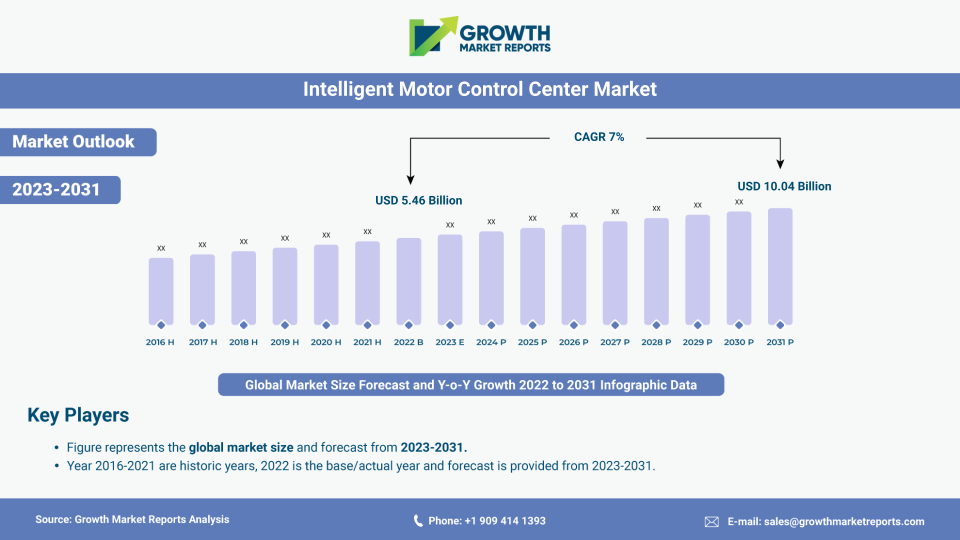
According to our latest research, the global Intelligent Motor Control Center (IMCC) market size in 2024 stands at USD 3.85 billion, reflecting a robust demand for advanced motor control solutions across key industries. The market is forecasted to reach USD 7.92 billion by 2033, expanding at a compelling CAGR of 8.3% during the 2025-2033 period. This growth is primarily driven by the rapid digital transformation of industrial automation processes, the rising need for energy efficiency, and the increasing adoption of Industry 4.0 technologies worldwide.

A significant growth factor for the Intelligent Motor Control Center market is the escalating demand for enhanced operational efficiency and real-time monitoring in industrial environments. As manufacturers strive to minimize downtime and optimize energy consumption, intelligent motor control centers are becoming a critical investment. These systems offer advanced functionalities such as predictive maintenance, remote diagnostics, and seamless integration with industrial IoT platforms. The ability to collect and analyze operational data in real time allows facilities to proactively address issues, reduce maintenance costs, and improve overall productivity. Moreover, the growing emphasis on reducing carbon footprints and adhering to stringent energy regulations is further propelling the adoption of intelligent solutions in motor control applications.

Another key driver is the accelerated adoption of automation and smart manufacturing practices, particularly in sectors such as oil & gas, chemicals, and power generation. The integration of intelligent motor control centers enables these industries to achieve higher levels of process reliability and safety. With the proliferation of connected devices and advancements in sensor technologies, IMCCs are now capable of facilitating seamless communication between various equipment and control systems. This not only enhances process visibility but also supports advanced analytics for better decision-making. The transition towards digitalized manufacturing environments, coupled with the need for scalable and flexible motor control solutions, is expected to sustain market growth in the coming years.

The increasing investments in infrastructure development and modernization of aging industrial facilities are also contributing to the expansion of the Intelligent Motor Control Center market. Emerging economies, especially in Asia Pacific and the Middle East, are witnessing large-scale industrialization, which is creating substantial demand for state-of-the-art motor control centers. Additionally, the trend towards electrification and the integration of renewable energy sources are necessitating advanced control and monitoring capabilities, further boosting the market. The availability of government incentives for energy-efficient technologies and the growing focus on industrial safety standards are reinforcing the marketÂ’s positive trajectory.

In the realm of intralogistics, Motor Control Centers for Intralogistics are playing an increasingly pivotal role. These centers are essential for managing the movement and storage of goods within warehouses and distribution centers. By integrating advanced motor control technologies, intralogistics operations can achieve higher efficiency and reliability. The ability to monitor and control motors that drive conveyors, automated storage and retrieval systems, and other material handling equipment in real-time ensures smooth and uninterrupted operations. As e-commerce and global supply chains continue to expand, the demand for sophisticated motor control solutions tailored to intralogistics is expected to rise significantly. This trend underscores the importance of investing in Motor Control Centers for Intralogistics to enhance operational capabilities and maintain a competitive edge in the fast-paced logistics industry.

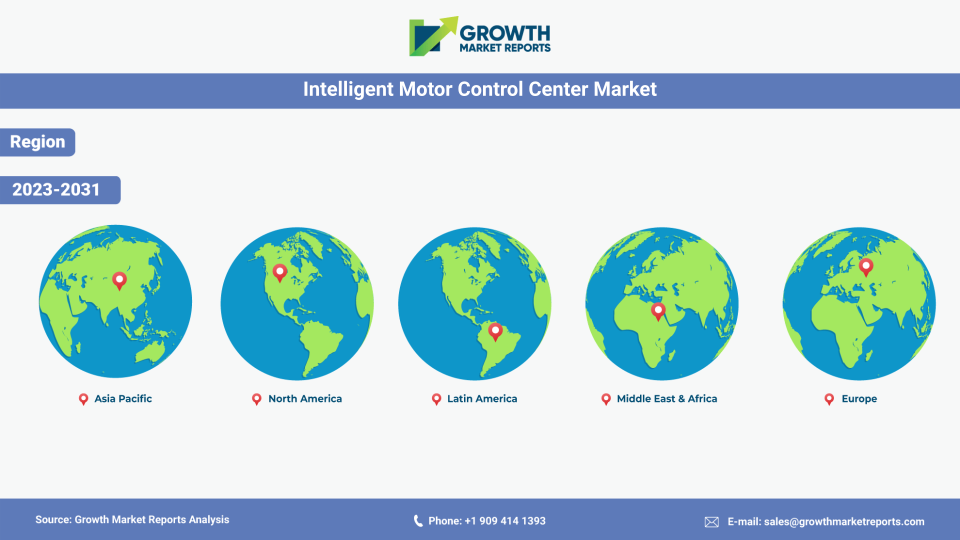
Regionally, Asia Pacific leads the market with a significant share, driven by rapid industrial growth, urbanization, and government initiatives promoting smart manufacturing. North America and Europe also hold substantial market shares owing to their mature industrial sectors and early adoption of advanced automation technologies. The Middle East & Africa and Latin America are emerging as promising regions due to increasing investments in oil & gas, mining, and infrastructure projects. The regional outlook for the Intelligent Motor Control Center market remains optimistic, with all major regions expected to witness steady growth throughout the forecast period.

Global Intelligent Motor Control Center Industry Outlook

Component Analysis

The Component segment in the Intelligent Motor Control Center market is broadly categorized into hardware, software, and services, each playing a pivotal role in the deployment and functionality of IMCCs. Hardware forms the backbone of intelligent MCCs, comprising circuit breakers, motor starters, overload relays, communication modules, and other essential devices. The demand for advanced hardware is being propelled by the need for reliable and high-performance components that can withstand harsh industrial environments while ensuring uninterrupted operations. The integration of smart sensors and communication interfaces within hardware components is further enhancing their capability to provide real-time data and advanced diagnostics, making them indispensable in modern industrial setups.

Software solutions are equally critical in the IMCC ecosystem, providing the intelligence required for analytics, control, and seamless integration with broader industrial automation platforms. Modern IMCC software offers features such as predictive maintenance, energy management, fault detection, and remote monitoring. The increasing adoption of cloud-based and edge computing solutions is enabling more sophisticated data analytics and decision-making capabilities. As industries continue to prioritize digital transformation, the demand for robust, scalable, and interoperable software solutions is expected to surge, driving significant growth within this segment.

Services, including installation, commissioning, maintenance, and technical support, are essential for ensuring the optimal performance and longevity of intelligent motor control centers. The complexity of integrating IMCCs with existing industrial infrastructure necessitates specialized expertise, which is fueling the growth of the services segment. Furthermore, as industries adopt predictive and preventive maintenance strategies, the need for ongoing support and periodic upgrades is becoming increasingly important. Service providers are also offering value-added services such as training, remote diagnostics, and system optimization, contributing to increased customer satisfaction and loyalty.

The synergy between hardware, software, and services is critical for delivering comprehensive and effective IMCC solutions. Manufacturers are increasingly focusing on offering integrated solutions that combine robust hardware, intelligent software, and responsive services to address the diverse needs of end-users. This integrated approach not only simplifies deployment and operation but also enhances the overall value proposition of IMCCs. As the market continues to evolve, the component segment is expected to witness sustained innovation and expansion, driven by technological advancements and changing customer requirements.

Report Scope

Attributes Details
Report Title Intelligent Motor Control Center Market Research Report 2033
By Component Hardware, Software, Services
By Type Low Voltage, Medium Voltage
By End-User Industry Oil & Gas, Chemicals & Petrochemicals, Power Generation, Water & Wastewater, Mining & Metals, Food & Beverage, Cement & Manufacturing, Others
By Application Pumps, Fans, Compressors, Conveyors, Others
Regions Covered North America, Europe, APAC, Latin America, MEA
Base Year 2024
Historic Data 2018-2023
Forecast Period 2025-2033
Number of Pages 283
Number of Tables & Figures 306
Customization Available Yes, the report can be customized as per your need.

Type Analysis

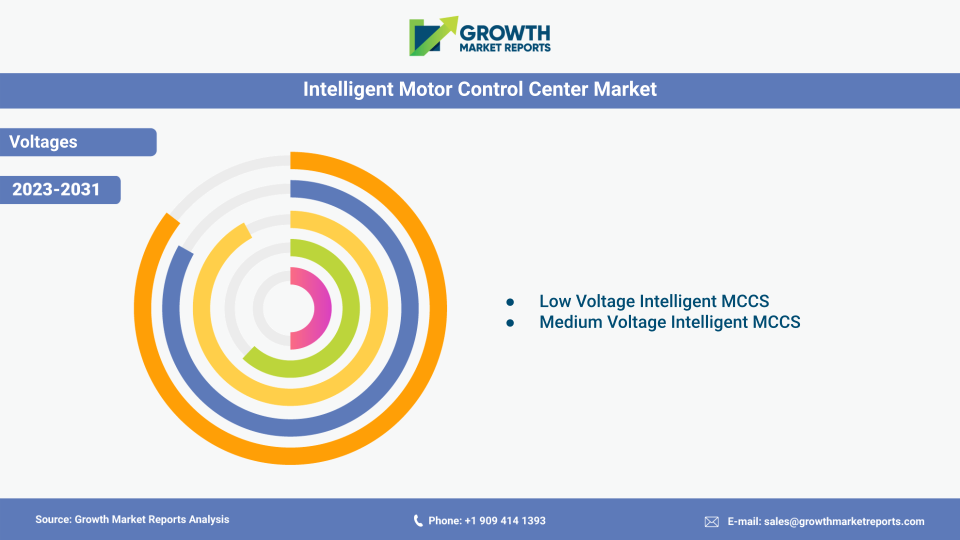
The Type segment of the Intelligent Motor Control Center market is divided into low voltage and medium voltage IMCCs, each catering to specific industrial applications and operational requirements. Low voltage IMCCs are widely used in industries where motors operate at voltages up to 1,000V, such as food & beverage, water & wastewater, and light manufacturing. These systems are favored for their cost-effectiveness, ease of installation, and suitability for a broad range of applications. The growing trend towards automation in small and medium enterprises is driving the adoption of low voltage IMCCs, as they offer advanced control capabilities without the complexity and cost associated with higher voltage systems.

Medium voltage IMCCs, on the other hand, are designed for applications requiring higher power and voltage levels, typically ranging from 1,000V to 38,000V. These systems are essential in heavy industries such as oil & gas, mining, power generation, and chemicals, where the demand for robust and reliable motor control solutions is paramount. Medium voltage IMCCs offer enhanced safety features, superior fault tolerance, and the ability to manage large motors and complex processes. The rising investments in infrastructure and energy projects, particularly in emerging economies, are fueling the demand for medium voltage IMCCs.

The choice between low and medium voltage IMCCs is influenced by several factors, including the scale of operations, specific industry requirements, and regulatory standards. While low voltage systems are preferred for their simplicity and cost advantages in less demanding environments, medium voltage IMCCs are indispensable for large-scale, mission-critical applications. The ongoing advancements in insulation materials, protection technologies, and communication protocols are further enhancing the performance and reliability of both types, expanding their potential use cases across industries.

Manufacturers are increasingly offering modular and customizable IMCC solutions to address the diverse needs of end-users. This flexibility allows organizations to scale their motor control infrastructure as their operational requirements evolve. The integration of digital technologies, such as real-time monitoring and predictive analytics, is blurring the lines between low and medium voltage systems, enabling more seamless interoperability and centralized control. As industries continue to prioritize safety, efficiency, and scalability, the demand for both low and medium voltage IMCCs is expected to remain strong throughout the forecast period.

End-User Industry Analysis

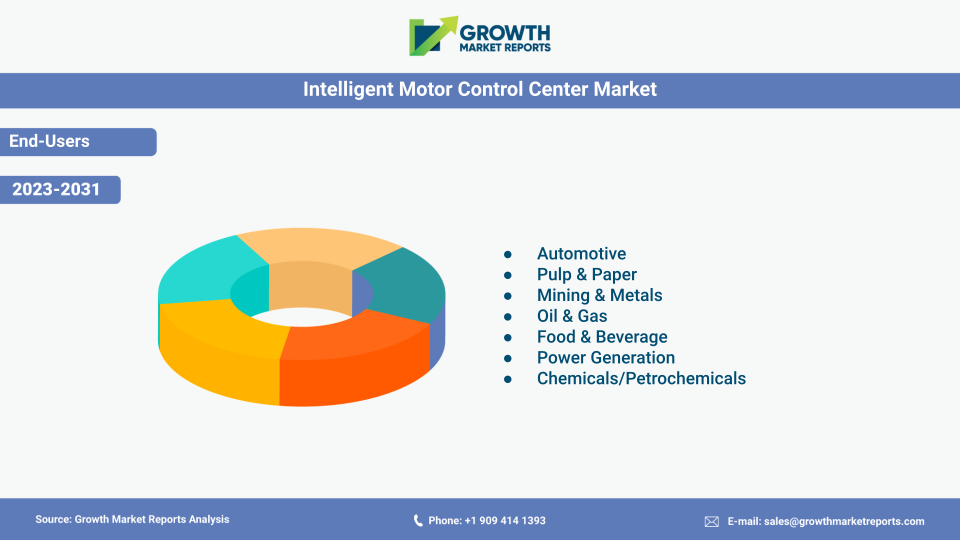
The End-User Industry segment of the Intelligent Motor Control Center market encompasses a wide array of sectors, each with unique operational challenges and requirements. The oil & gas industry is a major adopter of IMCCs, leveraging their advanced control and monitoring capabilities to ensure the safe and efficient operation of critical assets such as pumps, compressors, and conveyors. The ability to remotely monitor equipment health and predict maintenance needs is particularly valuable in this sector, where unplanned downtime can result in significant financial losses and safety risks. The ongoing investments in upstream and downstream projects are expected to drive sustained demand for IMCCs in oil & gas applications.

The chemicals and petrochemicals sector also represents a significant market for intelligent motor control centers. The stringent regulatory environment, coupled with the need for precise process control and safety, is prompting chemical manufacturers to invest in advanced motor control solutions. IMCCs enable real-time monitoring of motor performance, energy consumption, and process parameters, allowing operators to optimize production and maintain compliance with environmental and safety standards. The trend towards digitalization and automation in chemical plants is further accelerating the adoption of intelligent motor control centers.

Power generation is another key end-user industry, with IMCCs playing a vital role in the control and management of auxiliary systems such as cooling fans, pumps, and conveyors. The increasing integration of renewable energy sources and the modernization of aging power plants are creating new opportunities for IMCC deployment. These systems help power producers enhance operational reliability, minimize downtime, and achieve greater energy efficiency. The ability to integrate with grid management and energy storage systems is also becoming increasingly important as the energy landscape evolves.

Other notable end-user industries include water & wastewater, mining & metals, food & beverage, and cement & manufacturing. Each of these sectors faces unique operational challenges that can be addressed through intelligent motor control solutions. For instance, the water & wastewater industry relies on IMCCs to ensure the reliable operation of pumps and treatment systems, while the mining sector benefits from enhanced safety and productivity in harsh environments. The growing focus on sustainability, energy efficiency, and process optimization across all these industries is expected to drive continued growth in the adoption of intelligent motor control centers.

Application Analysis

The Application segment of the Intelligent Motor Control Center market is segmented into pumps, fans, compressors, conveyors, and others, reflecting the diverse range of industrial equipment that relies on advanced motor control solutions. Pumps represent a significant application area, particularly in industries such as oil & gas, water & wastewater, and chemicals. The ability to monitor pump performance in real time, detect anomalies, and optimize energy usage is critical for maintaining efficient and reliable operations. IMCCs enable predictive maintenance and remote diagnostics, helping organizations minimize downtime and extend the lifespan of their pumping systems.

Fans and compressors are also major beneficiaries of intelligent motor control technologies. In sectors such as power generation, HVAC, and manufacturing, the efficient operation of fans and compressors is essential for process control, energy management, and environmental compliance. IMCCs provide advanced features such as variable speed control, fault detection, and energy optimization, allowing operators to achieve significant cost savings and reduce their carbon footprint. The integration of IMCCs with building management systems and industrial automation platforms is further enhancing their value proposition in these applications.

Conveyors, widely used in industries such as mining, manufacturing, and food processing, require precise control and monitoring to ensure smooth and safe material handling. Intelligent motor control centers offer real-time visibility into conveyor performance, enabling operators to quickly identify and address issues such as belt misalignment, motor overloads, and blockages. The ability to automate conveyor operations and integrate them with broader process control systems is driving increased adoption of IMCCs in material handling applications.

Other applications, including mixers, crushers, and agitators, also benefit from the advanced control and monitoring capabilities offered by intelligent motor control centers. The versatility and scalability of IMCC solutions make them suitable for a wide range of industrial equipment and processes. As industries continue to embrace automation and digitalization, the demand for intelligent motor control solutions across various applications is expected to grow, supporting the overall expansion of the market.

Opportunities & Threats

The Intelligent Motor Control Center market presents numerous opportunities for growth and innovation, particularly as industries worldwide accelerate their digital transformation initiatives. The increasing adoption of Industry 4.0 technologies, such as IoT, AI, and machine learning, is creating new possibilities for predictive maintenance, energy optimization, and process automation. Manufacturers that can offer integrated, interoperable, and scalable IMCC solutions are well positioned to capture emerging opportunities in both developed and developing markets. The growing focus on sustainability and energy efficiency is also driving demand for advanced motor control solutions that can help organizations achieve their environmental goals while optimizing operational costs.

Another significant opportunity lies in the expansion of IMCC applications beyond traditional industries. Sectors such as data centers, commercial buildings, and renewable energy are increasingly recognizing the benefits of intelligent motor control solutions. The development of modular, plug-and-play IMCC systems is enabling easier deployment and integration, opening up new market segments. Additionally, the rise of smart cities and the increasing electrification of transportation and infrastructure are expected to create additional demand for advanced motor control centers. Companies that invest in R&D and collaborate with technology partners to develop innovative solutions will be well positioned to capitalize on these emerging trends.

Despite the positive outlook, the market faces certain restraining factors, most notably the high initial investment required for the deployment of intelligent motor control centers. The complexity of integrating IMCCs with legacy systems and existing industrial infrastructure can pose significant challenges, particularly for small and medium-sized enterprises with limited resources. Additionally, concerns related to cybersecurity and data privacy are becoming increasingly important as IMCCs become more connected and integrated with industrial networks. Addressing these challenges will be critical for market players seeking to expand their customer base and drive sustained growth.

Regional Outlook

The Asia Pacific region dominates the global Intelligent Motor Control Center market, accounting for approximately USD 1.45 billion in 2024. The regionÂ’s robust industrial growth, rapid urbanization, and strong government support for smart manufacturing initiatives are key factors driving market expansion. Countries such as China, India, Japan, and South Korea are leading the adoption of advanced automation and motor control solutions, particularly in sectors such as manufacturing, power generation, and chemicals. The Asia Pacific market is projected to grow at a CAGR of 9.2% through 2033, outpacing other regions and solidifying its position as the global leader in IMCC adoption.

North America is another significant market, with a 2024 market size of approximately USD 1.10 billion. The regionÂ’s mature industrial base, early adoption of digital technologies, and strong focus on energy efficiency are driving demand for intelligent motor control centers. The United States, in particular, is witnessing increased investments in the modernization of aging infrastructure and the integration of renewable energy sources, creating new opportunities for IMCC deployment. The presence of leading technology providers and a highly skilled workforce is further supporting market growth in North America.

Europe holds a substantial share of the global market, valued at around USD 0.90 billion in 2024. The regionÂ’s stringent regulatory environment, commitment to sustainability, and advanced manufacturing capabilities are key drivers of IMCC adoption. Germany, the United Kingdom, and France are among the leading countries in the European market, with significant investments in Industry 4.0 initiatives and smart factory projects. The Middle East & Africa and Latin America are emerging as promising regions, with combined market sizes of approximately USD 0.40 billion in 2024. These regions are benefiting from increased investments in oil & gas, mining, and infrastructure development, creating new opportunities for IMCC providers.

Intelligent Motor Control Center Market Statistics

Competitor Outlook

The competitive landscape of the Intelligent Motor Control Center market is characterized by the presence of several global and regional players, each striving to enhance their market share through product innovation, strategic partnerships, and geographic expansion. Leading companies are investing heavily in research and development to introduce advanced IMCC solutions with enhanced connectivity, analytics, and cybersecurity features. The focus on offering integrated solutions that combine hardware, software, and services is becoming increasingly important, as customers seek comprehensive and easy-to-deploy systems that can address their diverse operational needs.

Strategic collaborations and mergers & acquisitions are common strategies among market players aiming to strengthen their product portfolios and expand their global footprint. Companies are also focusing on developing modular and scalable IMCC solutions that can be easily customized to meet the specific requirements of different industries and applications. The ability to provide value-added services, such as remote monitoring, predictive maintenance, and technical support, is emerging as a key differentiator in the market. As competition intensifies, companies are also prioritizing customer engagement and after-sales support to build long-term relationships and enhance customer loyalty.

The market is witnessing the entry of new players, particularly in emerging regions, as demand for intelligent motor control solutions continues to grow. These new entrants are leveraging technological advancements and innovative business models to gain a foothold in the market. However, established players with strong brand recognition, extensive distribution networks, and a proven track record of delivering high-quality solutions continue to dominate the market. The ability to adapt to changing customer needs and technological trends will be critical for companies seeking to maintain their competitive edge.

Major companies operating in the global Intelligent Motor Control Center market include ABB Ltd., Schneider Electric SE, Siemens AG, Rockwell Automation Inc., Eaton Corporation plc, Mitsubishi Electric Corporation, Larsen & Toubro Limited, General Electric Company, WEG SA, and Fuji Electric Co., Ltd. These companies are at the forefront of innovation, offering a wide range of IMCC solutions tailored to the needs of various industries. ABB Ltd. and Siemens AG are recognized for their comprehensive product portfolios and global reach, while Schneider Electric SE and Rockwell Automation Inc. are known for their focus on digitalization and smart manufacturing solutions. Eaton Corporation plc and Mitsubishi Electric Corporation are leveraging their expertise in electrical engineering and automation to deliver robust and reliable IMCC systems.

Larsen & Toubro Limited and WEG SA have established strong positions in emerging markets, offering cost-effective and customizable solutions to meet the unique needs of local industries. General Electric Company and Fuji Electric Co., Ltd. are also key players, with a strong emphasis on research and development and a commitment to sustainability and energy efficiency. These companies are continuously investing in new technologies and expanding their service offerings to stay ahead in a rapidly evolving market. The competitive landscape is expected to remain dynamic, with ongoing innovation and strategic initiatives shaping the future of the Intelligent Motor Control Center market.

Key Players

  • ABB Ltd.
  • Schneider Electric SE
  • Siemens AG
  • Eaton Corporation plc
  • Rockwell Automation, Inc.
  • Mitsubishi Electric Corporation
  • General Electric Company
  • Larsen & Toubro Limited
  • Fuji Electric Co., Ltd.
  • Toshiba Corporation
  • WEG S.A.
  • Schneider Electric Infrastructure Limited
  • Rittal GmbH & Co. KG
  • Hyundai Electric & Energy Systems Co., Ltd.
  • Vidhyut Control India Pvt. Ltd.
  • TESCO Controls, Inc.
  • C&S Electric Limited
  • Bharat Heavy Electricals Limited (BHEL)
  • LSIS Co., Ltd.
  • NHP Electrical Engineering Products Pty Ltd.
Intelligent Motor Control Center Market Overview

Segments

The Intelligent Motor Control Center market has been segmented on the basis of

Component

  • Hardware
  • Software
  • Services

Type

  • Low Voltage
  • Medium Voltage

End-User Industry

  • Oil & Gas
  • Chemicals & Petrochemicals
  • Power Generation
  • Water & Wastewater
  • Mining & Metals
  • Food & Beverage
  • Cement & Manufacturing
  • Others

Application

  • Pumps
  • Fans
  • Compressors
  • Conveyors
  • Others

Competitive Landscape

Key players competing in the global intelligent motor control center market are Siemens AG; ABB Limited; General Electric Co.; Schneider Electric SE; and Eaton Corporation. Competitors are competing on a significant scale due to rapid transition from MCCs to IMCCs across the globe.
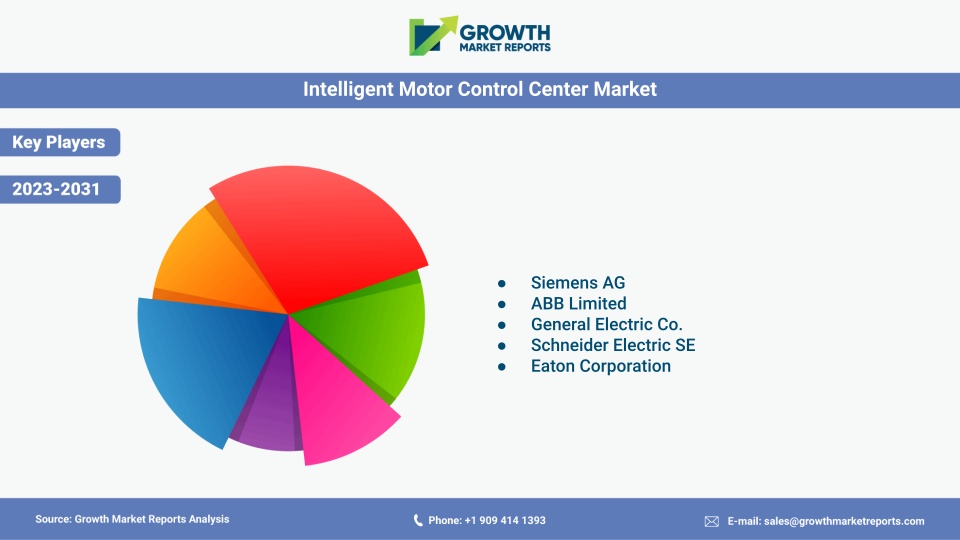

Intelligent Motor Control Center Market Key Players

Frequently Asked Questions

Challenges in the IMCC market include high initial investment costs, complexity of integrating with legacy systems, and concerns over cybersecurity and data privacy as systems become more connected and integrated with industrial networks.

Key players in the IMCC market include ABB Ltd., Schneider Electric SE, Siemens AG, Eaton Corporation plc, Rockwell Automation Inc., Mitsubishi Electric Corporation, General Electric Company, Larsen & Toubro Limited, Fuji Electric Co., Ltd., and WEG SA, among others.

Major trends include the adoption of Industry 4.0 technologies, integration with IoT and AI, focus on energy efficiency, and the development of modular, scalable solutions. Opportunities exist in expanding applications to data centers, commercial buildings, renewable energy, and smart cities.

IMCCs are widely used for controlling and monitoring pumps, fans, compressors, conveyors, and other industrial equipment. They enable predictive maintenance, energy optimization, and real-time diagnostics, supporting efficient and reliable operations across various industries.

Asia Pacific leads the IMCC market, driven by rapid industrialization and government support for smart manufacturing. North America and Europe also hold significant shares due to mature industrial sectors and early adoption of automation technologies. The Middle East & Africa and Latin America are emerging markets with growing investments in infrastructure.

Low voltage IMCCs are used for motors operating up to 1,000V and are common in industries like food & beverage and water & wastewater. Medium voltage IMCCs handle voltages from 1,000V to 38,000V and are essential for heavy industries such as oil & gas, mining, and power generation, offering enhanced safety and fault tolerance.

The main components of an IMCC are hardware (such as circuit breakers, motor starters, overload relays, and communication modules), software (for analytics, control, and integration), and services (including installation, commissioning, maintenance, and technical support).

Key industries driving the demand for IMCCs include oil & gas, chemicals & petrochemicals, power generation, water & wastewater, mining & metals, food & beverage, cement & manufacturing, among others. These sectors benefit from enhanced operational efficiency, safety, and energy optimization provided by IMCCs.

The global Intelligent Motor Control Center market size was valued at USD 3.85 billion in 2024 and is projected to reach USD 7.92 billion by 2033, growing at a CAGR of 8.3% from 2025 to 2033.

An Intelligent Motor Control Center (IMCC) is an advanced system used in industrial environments to control and monitor electric motors. It integrates hardware, software, and services to provide real-time data, predictive maintenance, remote diagnostics, and seamless integration with industrial IoT platforms, enhancing operational efficiency and energy management.

Table Of Content

Chapter 1 Executive Summary
Chapter 2 Assumptions and Acronyms Used
Chapter 3 Research Methodology
Chapter 4 Intelligent Motor Control Center Market Overview
   4.1 Introduction
      4.1.1 Market Taxonomy
      4.1.2 Market Definition
      4.1.3 Macro-Economic Factors Impacting the Market Growth
   4.2 Intelligent Motor Control Center Market Dynamics
      4.2.1 Market Drivers
      4.2.2 Market Restraints
      4.2.3 Market Opportunity
   4.3 Intelligent Motor Control Center Market - Supply Chain Analysis
      4.3.1 List of Key Suppliers
      4.3.2 List of Key Distributors
      4.3.3 List of Key Consumers
   4.4 Key Forces Shaping the Intelligent Motor Control Center Market
      4.4.1 Bargaining Power of Suppliers
      4.4.2 Bargaining Power of Buyers
      4.4.3 Threat of Substitution
      4.4.4 Threat of New Entrants
      4.4.5 Competitive Rivalry
   4.5 Global Intelligent Motor Control Center Market Size & Forecast, 2023-2032
      4.5.1 Intelligent Motor Control Center Market Size and Y-o-Y Growth
      4.5.2 Intelligent Motor Control Center Market Absolute $ Opportunity

Chapter 5 Global Intelligent Motor Control Center Market Analysis and Forecast By Component
   5.1 Introduction
      5.1.1 Key Market Trends & Growth Opportunities By Component
      5.1.2 Basis Point Share (BPS) Analysis By Component
      5.1.3 Absolute $ Opportunity Assessment By Component
   5.2 Intelligent Motor Control Center Market Size Forecast By Component
      5.2.1 Hardware
      5.2.2 Software
      5.2.3 Services
   5.3 Market Attractiveness Analysis By Component

Chapter 6 Global Intelligent Motor Control Center Market Analysis and Forecast By Type
   6.1 Introduction
      6.1.1 Key Market Trends & Growth Opportunities By Type
      6.1.2 Basis Point Share (BPS) Analysis By Type
      6.1.3 Absolute $ Opportunity Assessment By Type
   6.2 Intelligent Motor Control Center Market Size Forecast By Type
      6.2.1 Low Voltage
      6.2.2 Medium Voltage
   6.3 Market Attractiveness Analysis By Type

Chapter 7 Global Intelligent Motor Control Center Market Analysis and Forecast By End-User Industry
   7.1 Introduction
      7.1.1 Key Market Trends & Growth Opportunities By End-User Industry
      7.1.2 Basis Point Share (BPS) Analysis By End-User Industry
      7.1.3 Absolute $ Opportunity Assessment By End-User Industry
   7.2 Intelligent Motor Control Center Market Size Forecast By End-User Industry
      7.2.1 Oil & Gas
      7.2.2 Chemicals & Petrochemicals
      7.2.3 Power Generation
      7.2.4 Water & Wastewater
      7.2.5 Mining & Metals
      7.2.6 Food & Beverage
      7.2.7 Cement & Manufacturing
      7.2.8 Others
   7.3 Market Attractiveness Analysis By End-User Industry

Chapter 8 Global Intelligent Motor Control Center Market Analysis and Forecast By Application
   8.1 Introduction
      8.1.1 Key Market Trends & Growth Opportunities By Application
      8.1.2 Basis Point Share (BPS) Analysis By Application
      8.1.3 Absolute $ Opportunity Assessment By Application
   8.2 Intelligent Motor Control Center Market Size Forecast By Application
      8.2.1 Pumps
      8.2.2 Fans
      8.2.3 Compressors
      8.2.4 Conveyors
      8.2.5 Others
   8.3 Market Attractiveness Analysis By Application

Chapter 9 Global Intelligent Motor Control Center Market Analysis and Forecast by Region
   9.1 Introduction
      9.1.1 Key Market Trends & Growth Opportunities By Region
      9.1.2 Basis Point Share (BPS) Analysis By Region
      9.1.3 Absolute $ Opportunity Assessment By Region
   9.2 Intelligent Motor Control Center Market Size Forecast By Region
      9.2.1 North America
      9.2.2 Europe
      9.2.3 Asia Pacific
      9.2.4 Latin America
      9.2.5 Middle East & Africa (MEA)
   9.3 Market Attractiveness Analysis By Region

Chapter 10 Coronavirus Disease (COVID-19) Impact 
   10.1 Introduction 
   10.2 Current & Future Impact Analysis 
   10.3 Economic Impact Analysis 
   10.4 Government Policies 
   10.5 Investment Scenario

Chapter 11 North America Intelligent Motor Control Center Analysis and Forecast
   11.1 Introduction
   11.2 North America Intelligent Motor Control Center Market Size Forecast by Country
      11.2.1 U.S.
      11.2.2 Canada
   11.3 Basis Point Share (BPS) Analysis by Country
   11.4 Absolute $ Opportunity Assessment by Country
   11.5 Market Attractiveness Analysis by Country
   11.6 North America Intelligent Motor Control Center Market Size Forecast By Component
      11.6.1 Hardware
      11.6.2 Software
      11.6.3 Services
   11.7 Basis Point Share (BPS) Analysis By Component 
   11.8 Absolute $ Opportunity Assessment By Component 
   11.9 Market Attractiveness Analysis By Component
   11.10 North America Intelligent Motor Control Center Market Size Forecast By Type
      11.10.1 Low Voltage
      11.10.2 Medium Voltage
   11.11 Basis Point Share (BPS) Analysis By Type 
   11.12 Absolute $ Opportunity Assessment By Type 
   11.13 Market Attractiveness Analysis By Type
   11.14 North America Intelligent Motor Control Center Market Size Forecast By End-User Industry
      11.14.1 Oil & Gas
      11.14.2 Chemicals & Petrochemicals
      11.14.3 Power Generation
      11.14.4 Water & Wastewater
      11.14.5 Mining & Metals
      11.14.6 Food & Beverage
      11.14.7 Cement & Manufacturing
      11.14.8 Others
   11.15 Basis Point Share (BPS) Analysis By End-User Industry 
   11.16 Absolute $ Opportunity Assessment By End-User Industry 
   11.17 Market Attractiveness Analysis By End-User Industry
   11.18 North America Intelligent Motor Control Center Market Size Forecast By Application
      11.18.1 Pumps
      11.18.2 Fans
      11.18.3 Compressors
      11.18.4 Conveyors
      11.18.5 Others
   11.19 Basis Point Share (BPS) Analysis By Application 
   11.20 Absolute $ Opportunity Assessment By Application 
   11.21 Market Attractiveness Analysis By Application

Chapter 12 Europe Intelligent Motor Control Center Analysis and Forecast
   12.1 Introduction
   12.2 Europe Intelligent Motor Control Center Market Size Forecast by Country
      12.2.1 Germany
      12.2.2 France
      12.2.3 Italy
      12.2.4 U.K.
      12.2.5 Spain
      12.2.6 Russia
      12.2.7 Rest of Europe
   12.3 Basis Point Share (BPS) Analysis by Country
   12.4 Absolute $ Opportunity Assessment by Country
   12.5 Market Attractiveness Analysis by Country
   12.6 Europe Intelligent Motor Control Center Market Size Forecast By Component
      12.6.1 Hardware
      12.6.2 Software
      12.6.3 Services
   12.7 Basis Point Share (BPS) Analysis By Component 
   12.8 Absolute $ Opportunity Assessment By Component 
   12.9 Market Attractiveness Analysis By Component
   12.10 Europe Intelligent Motor Control Center Market Size Forecast By Type
      12.10.1 Low Voltage
      12.10.2 Medium Voltage
   12.11 Basis Point Share (BPS) Analysis By Type 
   12.12 Absolute $ Opportunity Assessment By Type 
   12.13 Market Attractiveness Analysis By Type
   12.14 Europe Intelligent Motor Control Center Market Size Forecast By End-User Industry
      12.14.1 Oil & Gas
      12.14.2 Chemicals & Petrochemicals
      12.14.3 Power Generation
      12.14.4 Water & Wastewater
      12.14.5 Mining & Metals
      12.14.6 Food & Beverage
      12.14.7 Cement & Manufacturing
      12.14.8 Others
   12.15 Basis Point Share (BPS) Analysis By End-User Industry 
   12.16 Absolute $ Opportunity Assessment By End-User Industry 
   12.17 Market Attractiveness Analysis By End-User Industry
   12.18 Europe Intelligent Motor Control Center Market Size Forecast By Application
      12.18.1 Pumps
      12.18.2 Fans
      12.18.3 Compressors
      12.18.4 Conveyors
      12.18.5 Others
   12.19 Basis Point Share (BPS) Analysis By Application 
   12.20 Absolute $ Opportunity Assessment By Application 
   12.21 Market Attractiveness Analysis By Application

Chapter 13 Asia Pacific Intelligent Motor Control Center Analysis and Forecast
   13.1 Introduction
   13.2 Asia Pacific Intelligent Motor Control Center Market Size Forecast by Country
      13.2.1 China
      13.2.2 Japan
      13.2.3 South Korea
      13.2.4 India
      13.2.5 Australia
      13.2.6 South East Asia (SEA)
      13.2.7 Rest of Asia Pacific (APAC)
   13.3 Basis Point Share (BPS) Analysis by Country
   13.4 Absolute $ Opportunity Assessment by Country
   13.5 Market Attractiveness Analysis by Country
   13.6 Asia Pacific Intelligent Motor Control Center Market Size Forecast By Component
      13.6.1 Hardware
      13.6.2 Software
      13.6.3 Services
   13.7 Basis Point Share (BPS) Analysis By Component 
   13.8 Absolute $ Opportunity Assessment By Component 
   13.9 Market Attractiveness Analysis By Component
   13.10 Asia Pacific Intelligent Motor Control Center Market Size Forecast By Type
      13.10.1 Low Voltage
      13.10.2 Medium Voltage
   13.11 Basis Point Share (BPS) Analysis By Type 
   13.12 Absolute $ Opportunity Assessment By Type 
   13.13 Market Attractiveness Analysis By Type
   13.14 Asia Pacific Intelligent Motor Control Center Market Size Forecast By End-User Industry
      13.14.1 Oil & Gas
      13.14.2 Chemicals & Petrochemicals
      13.14.3 Power Generation
      13.14.4 Water & Wastewater
      13.14.5 Mining & Metals
      13.14.6 Food & Beverage
      13.14.7 Cement & Manufacturing
      13.14.8 Others
   13.15 Basis Point Share (BPS) Analysis By End-User Industry 
   13.16 Absolute $ Opportunity Assessment By End-User Industry 
   13.17 Market Attractiveness Analysis By End-User Industry
   13.18 Asia Pacific Intelligent Motor Control Center Market Size Forecast By Application
      13.18.1 Pumps
      13.18.2 Fans
      13.18.3 Compressors
      13.18.4 Conveyors
      13.18.5 Others
   13.19 Basis Point Share (BPS) Analysis By Application 
   13.20 Absolute $ Opportunity Assessment By Application 
   13.21 Market Attractiveness Analysis By Application

Chapter 14 Latin America Intelligent Motor Control Center Analysis and Forecast
   14.1 Introduction
   14.2 Latin America Intelligent Motor Control Center Market Size Forecast by Country
      14.2.1 Brazil
      14.2.2 Mexico
      14.2.3 Rest of Latin America (LATAM)
   14.3 Basis Point Share (BPS) Analysis by Country
   14.4 Absolute $ Opportunity Assessment by Country
   14.5 Market Attractiveness Analysis by Country
   14.6 Latin America Intelligent Motor Control Center Market Size Forecast By Component
      14.6.1 Hardware
      14.6.2 Software
      14.6.3 Services
   14.7 Basis Point Share (BPS) Analysis By Component 
   14.8 Absolute $ Opportunity Assessment By Component 
   14.9 Market Attractiveness Analysis By Component
   14.10 Latin America Intelligent Motor Control Center Market Size Forecast By Type
      14.10.1 Low Voltage
      14.10.2 Medium Voltage
   14.11 Basis Point Share (BPS) Analysis By Type 
   14.12 Absolute $ Opportunity Assessment By Type 
   14.13 Market Attractiveness Analysis By Type
   14.14 Latin America Intelligent Motor Control Center Market Size Forecast By End-User Industry
      14.14.1 Oil & Gas
      14.14.2 Chemicals & Petrochemicals
      14.14.3 Power Generation
      14.14.4 Water & Wastewater
      14.14.5 Mining & Metals
      14.14.6 Food & Beverage
      14.14.7 Cement & Manufacturing
      14.14.8 Others
   14.15 Basis Point Share (BPS) Analysis By End-User Industry 
   14.16 Absolute $ Opportunity Assessment By End-User Industry 
   14.17 Market Attractiveness Analysis By End-User Industry
   14.18 Latin America Intelligent Motor Control Center Market Size Forecast By Application
      14.18.1 Pumps
      14.18.2 Fans
      14.18.3 Compressors
      14.18.4 Conveyors
      14.18.5 Others
   14.19 Basis Point Share (BPS) Analysis By Application 
   14.20 Absolute $ Opportunity Assessment By Application 
   14.21 Market Attractiveness Analysis By Application

Chapter 15 Middle East & Africa (MEA) Intelligent Motor Control Center Analysis and Forecast
   15.1 Introduction
   15.2 Middle East & Africa (MEA) Intelligent Motor Control Center Market Size Forecast by Country
      15.2.1 Saudi Arabia
      15.2.2 South Africa
      15.2.3 UAE
      15.2.4 Rest of Middle East & Africa (MEA)
   15.3 Basis Point Share (BPS) Analysis by Country
   15.4 Absolute $ Opportunity Assessment by Country
   15.5 Market Attractiveness Analysis by Country
   15.6 Middle East & Africa (MEA) Intelligent Motor Control Center Market Size Forecast By Component
      15.6.1 Hardware
      15.6.2 Software
      15.6.3 Services
   15.7 Basis Point Share (BPS) Analysis By Component 
   15.8 Absolute $ Opportunity Assessment By Component 
   15.9 Market Attractiveness Analysis By Component
   15.10 Middle East & Africa (MEA) Intelligent Motor Control Center Market Size Forecast By Type
      15.10.1 Low Voltage
      15.10.2 Medium Voltage
   15.11 Basis Point Share (BPS) Analysis By Type 
   15.12 Absolute $ Opportunity Assessment By Type 
   15.13 Market Attractiveness Analysis By Type
   15.14 Middle East & Africa (MEA) Intelligent Motor Control Center Market Size Forecast By End-User Industry
      15.14.1 Oil & Gas
      15.14.2 Chemicals & Petrochemicals
      15.14.3 Power Generation
      15.14.4 Water & Wastewater
      15.14.5 Mining & Metals
      15.14.6 Food & Beverage
      15.14.7 Cement & Manufacturing
      15.14.8 Others
   15.15 Basis Point Share (BPS) Analysis By End-User Industry 
   15.16 Absolute $ Opportunity Assessment By End-User Industry 
   15.17 Market Attractiveness Analysis By End-User Industry
   15.18 Middle East & Africa (MEA) Intelligent Motor Control Center Market Size Forecast By Application
      15.18.1 Pumps
      15.18.2 Fans
      15.18.3 Compressors
      15.18.4 Conveyors
      15.18.5 Others
   15.19 Basis Point Share (BPS) Analysis By Application 
   15.20 Absolute $ Opportunity Assessment By Application 
   15.21 Market Attractiveness Analysis By Application

Chapter 16 Competition Landscape 
   16.1 Intelligent Motor Control Center Market: Competitive Dashboard
   16.2 Global Intelligent Motor Control Center Market: Market Share Analysis, 2023
   16.3 Company Profiles (Details – Overview, Financials, Developments, Strategy) 
      16.3.1 ABB Ltd.
Schneider Electric SE
Siemens AG
Eaton Corporation plc
Rockwell Automation, Inc.
Mitsubishi Electric Corporation
General Electric Company
Larsen & Toubro Limited
Fuji Electric Co., Ltd.
Toshiba Corporation
WEG S.A.
Schneider Electric Infrastructure Limited
Rittal GmbH & Co. KG
Hyundai Electric & Energy Systems Co., Ltd.
Vidhyut Control India Pvt. Ltd.
TESCO Controls, Inc.
C&S Electric Limited
Bharat Heavy Electricals Limited (BHEL)
LSIS Co., Ltd.
NHP Electrical Engineering Products Pty Ltd.

Methodology

Our Clients

Siemens Healthcare
General Electric
Microsoft
Dassault Aviation
Pfizer
FedEx Logistics
Deloitte
sinopec