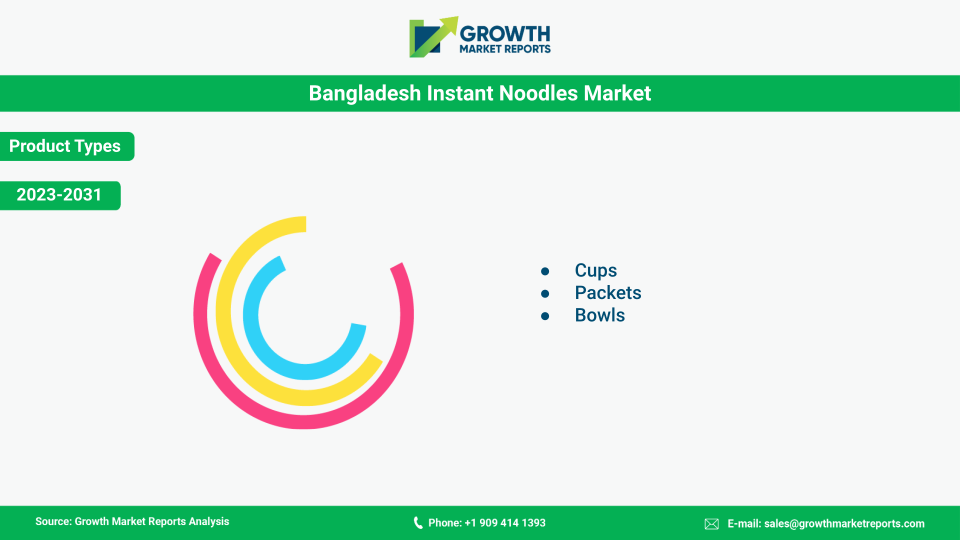
Segments - by Product Type (Fried Noodles, Non-fried Noodles), by Packaging Type (Cup/Bowl, Packet), by Flavor (Vegetarian, Non-Vegetarian, Others), by Distribution Channel (Supermarkets/Hypermarkets, Convenience Stores, Online Stores, Specialty Stores, Others)
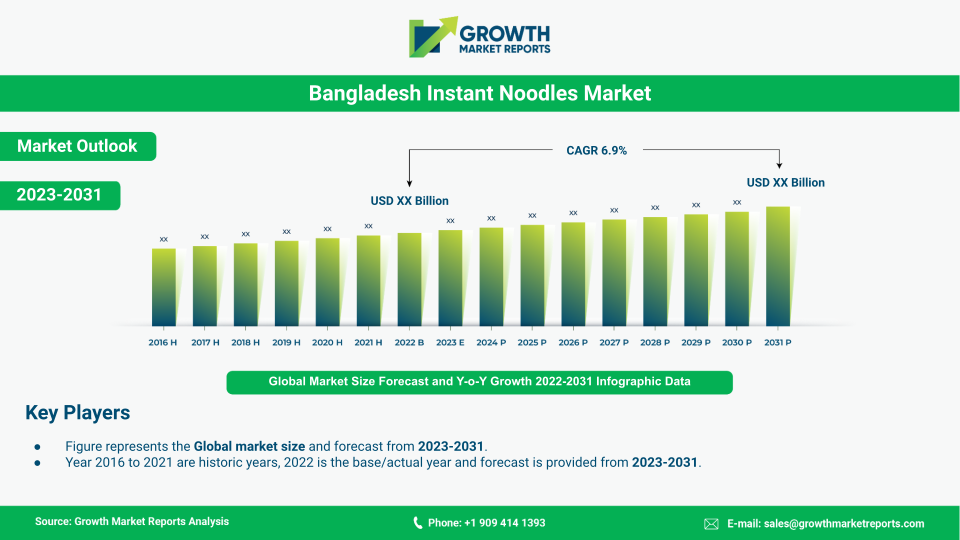
According to our latest research, the global instant noodles market size reached USD 59.5 billion in 2024, reflecting robust consumer demand and evolving consumption patterns worldwide. The market is poised for steady expansion, with a projected CAGR of 5.2% from 2025 to 2033. By the end of 2033, the instant noodles market is forecasted to attain a value of approximately USD 93.1 billion. This growth trajectory is primarily fueled by urbanization, the rising need for convenient food solutions, and ongoing product innovations that appeal to a diverse consumer base.
One of the most significant growth drivers in the instant noodles market is the escalating pace of urbanization and the accompanying lifestyle changes across both developed and emerging economies. As urban populations swell, consumers are increasingly seeking quick, affordable, and easy-to-prepare meal options that fit into their fast-paced routines. Instant noodles, with their minimal preparation time and wide range of flavors, address this need perfectly. Moreover, the expansion of working-class populations and dual-income households has led to a surge in demand for ready-to-eat foods, further boosting the market. This trend is particularly pronounced in Asia Pacific, where the culture of quick meals is deeply ingrained, but is also gaining traction in North America and Europe as consumers look for convenient food alternatives.
Another pivotal factor propelling the instant noodles market is the continuous wave of product innovation and diversification. Manufacturers are investing heavily in research and development to introduce new flavors, healthier formulations, and premium variants that cater to evolving consumer preferences. The emergence of non-fried noodles, gluten-free options, and noodles fortified with vitamins, minerals, and plant-based proteins is broadening the market’s appeal. Additionally, the incorporation of region-specific flavors and ingredients has enabled brands to localize their offerings, resonating with consumers' taste preferences in different geographies. This focus on innovation not only helps brands stand out in a crowded market but also attracts health-conscious and adventurous consumers who are willing to try new products.
The rapid expansion of organized retail channels and the proliferation of e-commerce platforms have also played a crucial role in accelerating instant noodles market growth. Supermarkets, hypermarkets, and convenience stores have expanded their shelf space for instant noodles, making the products more accessible to a broader audience. Furthermore, the rise of online grocery platforms has made it easier for consumers to explore and purchase a wide variety of instant noodle products from the comfort of their homes. This omnichannel approach to distribution has significantly enhanced product visibility and availability, supporting sustained market growth. The COVID-19 pandemic further amplified this trend, as consumers increasingly turned to online shopping and stockpiled convenient food items, a behavior that has persisted even as restrictions have eased.
From a regional perspective, Asia Pacific continues to dominate the instant noodles market, accounting for the largest share in both volume and value terms. Countries such as China, India, Indonesia, and Japan are the primary growth engines, driven by high per capita consumption and deep-rooted cultural acceptance of noodles as a staple food. However, North America and Europe are witnessing notable growth rates as well, fueled by changing dietary habits and the introduction of innovative products tailored to Western tastes. Latin America and the Middle East & Africa are emerging as promising markets, supported by rising disposable incomes and increasing urbanization. These regions are expected to register above-average CAGRs over the forecast period, contributing to the overall expansion of the global instant noodles market.
The instant noodles market is segmented by product type into fried noodles and non-fried noodles, each catering to distinct consumer preferences and dietary requirements. Fried noodles have traditionally dominated the market, owing to their rich flavor and familiar texture, which resonate well with consumers in Asia and other high-consumption regions. The frying process imparts a unique taste and longer shelf life, which has contributed to their widespread popularity. However, the health implications associated with fried foods, particularly concerns over trans fats and calorie content, have prompted a segment of consumers to seek healthier alternatives. As a result, the non-fried noodles segment has gained significant traction, especially among health-conscious individuals and in markets with stringent food regulations.
Non-fried noodles, often marketed as air-dried or baked varieties, are gaining momentum as manufacturers respond to the growing demand for healthier instant noodle options. These products typically contain lower fat content and are perceived as a better alternative for individuals seeking to reduce their intake of fried foods. The rise of non-fried noodles is particularly evident in developed markets such as North America and Europe, where consumers are increasingly attentive to nutritional labels and ingredient transparency. Moreover, the segment’s growth is being supported by innovations in flavor and texture, ensuring that non-fried noodles do not compromise on taste or eating experience.
In emerging markets, fried noodles continue to enjoy robust demand, driven by affordability, taste, and long-standing consumer habits. The convenience of preparation and the ability to store these products for extended periods make them a staple in households, especially in regions prone to food insecurity or where refrigeration is limited. Major brands are leveraging this demand by introducing new flavor variants and limited-edition offerings, further cementing the popularity of fried noodles. However, as awareness about health and wellness increases, even traditional markets are witnessing a gradual shift towards healthier alternatives.
Manufacturers are increasingly adopting a dual strategy, offering both fried and non-fried noodles to cater to a wider audience. This approach allows companies to capture different market segments and respond swiftly to changing consumer trends. The competitive landscape within the product type segment is characterized by continuous product development, aggressive marketing campaigns, and strategic pricing to maintain market share. Over the forecast period, it is expected that the non-fried noodles segment will outpace the growth of fried noodles, albeit from a smaller base, as health and wellness trends continue to shape consumer preferences globally.
| Attributes | Details |
| Report Title | Instant Noodles Market Research Report 2033 |
| By Product Type | Fried Noodles, Non-fried Noodles |
| By Packaging Type | Cup/Bowl, Packet |
| By Flavor | Vegetarian, Non-Vegetarian, Others |
| By Distribution Channel | Supermarkets/Hypermarkets, Convenience Stores, Online Stores, Specialty Stores, Others |
| Regions Covered | North America, Europe, APAC, Latin America, MEA |
| Base Year | 2024 |
| Historic Data | 2018-2023 |
| Forecast Period | 2025-2033 |
| Number of Pages | 299 |
| Number of Tables & Figures | 293 |
| Customization Available | Yes, the report can be customized as per your need. |
Packaging plays a pivotal role in the instant noodles market, influencing not only product freshness and shelf life but also consumer purchasing decisions and convenience. The market is broadly segmented into cup/bowl and packet packaging types, each with its unique advantages and target demographics. Packet noodles, traditionally the most popular format, are favored for their affordability, ease of storage, and versatility. They are particularly prevalent in markets where instant noodles are consumed as a staple meal rather than a snack, such as in many Asian countries. The lightweight nature and compact size of packet noodles make them ideal for bulk purchases and distribution through traditional retail channels.
Cup and bowl packaging has experienced remarkable growth in recent years, driven by the increasing demand for on-the-go meal solutions and enhanced convenience. These formats are particularly popular among urban consumers, students, and office workers who require quick and mess-free meal options. The integrated packaging, which often includes disposable cutlery and seasoning sachets, appeals to consumers seeking hassle-free consumption, especially in settings where access to kitchen facilities is limited. The cup/bowl segment has also benefited from premiumization trends, with brands introducing gourmet flavors, healthier ingredients, and eco-friendly packaging to attract discerning consumers.
The evolution of packaging technology has enabled manufacturers to improve product shelf life, maintain flavor integrity, and enhance the overall consumer experience. Innovations such as microwavable cups, biodegradable materials, and tamper-evident seals are becoming increasingly common, reflecting growing consumer awareness about sustainability and food safety. These advancements not only differentiate products on crowded retail shelves but also align with the values of environmentally conscious consumers, thereby expanding the market’s reach.
While packet noodles remain the dominant segment in terms of volume, the cup/bowl segment is expected to register a higher CAGR over the forecast period. The shift towards smaller households, increased mobility, and the rise of single-serve consumption occasions are all contributing to the sustained growth of cup and bowl noodles. Manufacturers are likely to continue investing in packaging innovation, leveraging it as a key differentiator and a means to capture incremental market share in both developed and emerging markets.
Flavor innovation is at the heart of the instant noodles market, with manufacturers constantly seeking to delight consumers with new and exciting taste profiles. The market is segmented into vegetarian, non-vegetarian, and other flavors, each catering to distinct consumer preferences and dietary restrictions. Vegetarian flavors, which include classic options such as masala, vegetable, and soy sauce, have traditionally dominated the market, particularly in countries with large vegetarian populations like India. These flavors are often perceived as healthier and are suitable for a wider audience, including those with dietary restrictions based on religion or lifestyle choices.
Non-vegetarian flavors, which encompass chicken, beef, seafood, and other meat-based variants, are immensely popular in regions where meat consumption is prevalent. These flavors are especially favored in Southeast Asia, North America, and certain parts of Europe, where consumers associate instant noodles with hearty, protein-rich meals. The segment has witnessed significant innovation, with brands experimenting with fusion flavors, spicy variants, and region-specific ingredients to cater to local palates. The popularity of non-vegetarian flavors is further bolstered by the growing trend of premiumization, with consumers willing to pay a premium for authentic and gourmet taste experiences.
The “others” segment includes a diverse array of specialty flavors, such as cheese, kimchi, truffle, and even plant-based meat alternatives. This segment is rapidly expanding, driven by the desire for novelty and the willingness of younger consumers to experiment with unconventional flavors. The rise of social media and food influencers has also played a role in popularizing limited-edition and exotic instant noodle flavors, creating viral trends that boost sales and brand visibility. Manufacturers are leveraging these trends by launching seasonal and region-specific flavors, often in collaboration with celebrity chefs or popular food brands.
Overall, flavor innovation remains a key growth lever for the instant noodles market. Companies are investing in consumer research and sensory testing to develop products that resonate with evolving taste preferences across different regions. The ability to offer a wide variety of flavors, while maintaining high standards of quality and consistency, is crucial for sustaining brand loyalty and driving repeat purchases. As the market continues to globalize, the interplay between traditional flavors and contemporary innovations will shape the competitive landscape and determine the long-term success of leading brands.
The distribution landscape for instant noodles is diverse and rapidly evolving, with multiple channels contributing to market expansion. The primary channels include supermarkets/hypermarkets, convenience stores, online stores, specialty stores, and others. Supermarkets and hypermarkets have traditionally been the dominant channel, offering a wide assortment of brands and flavors under one roof. These large-format stores are particularly popular in urban areas, where consumers value the convenience of one-stop shopping and the ability to compare products easily. Promotional activities, in-store displays, and bundled offers further enhance the visibility and sales of instant noodles in these outlets.
Convenience stores play a critical role in driving impulse purchases and catering to on-the-go consumption occasions. Their strategic locations in residential neighborhoods, transportation hubs, and educational institutions make them an ideal channel for instant noodle sales. Convenience stores are especially important in Asia Pacific, where they are an integral part of the retail ecosystem. The channel’s ability to offer single-serve packs and ready-to-eat cup/bowl noodles aligns perfectly with the needs of busy urban consumers and students.
The proliferation of online stores has revolutionized the way consumers purchase instant noodles, offering unparalleled convenience, variety, and access to global brands. E-commerce platforms enable consumers to explore a broader range of products, read reviews, and benefit from home delivery services. The COVID-19 pandemic accelerated the adoption of online grocery shopping, a trend that continues to shape consumer behavior post-pandemic. Online stores also serve as a valuable platform for launching new products, conducting market trials, and engaging with tech-savvy consumers through targeted digital marketing campaigns.
Specialty stores, which focus on ethnic foods, health foods, or gourmet products, are gaining importance as consumers become more discerning and seek out unique or premium instant noodle offerings. These stores often stock imported brands, organic noodles, and niche flavors that may not be readily available in mainstream retail outlets. The “others” category includes food service channels, vending machines, and institutional sales, which collectively contribute to market growth by expanding the reach of instant noodles beyond traditional retail settings. The dynamic interplay between these channels ensures that instant noodles remain accessible to a wide and diverse consumer base.
The instant noodles market presents a plethora of opportunities for growth and innovation over the forecast period. One of the most promising avenues is the increasing demand for healthier and functional food options. As consumers become more health-conscious, there is a growing appetite for instant noodles that offer nutritional benefits, such as added fiber, reduced sodium, and fortified vitamins and minerals. This trend is prompting manufacturers to invest in product reformulation, clean-label ingredients, and transparent labeling practices. The rise of plant-based diets and the popularity of vegan and vegetarian lifestyles also present significant opportunities for brands to develop and market alternative protein noodles and allergen-free products, thereby expanding their consumer base.
Another key opportunity lies in the untapped potential of emerging markets, particularly in Africa, Latin America, and parts of Southeast Asia. Rising disposable incomes, rapid urbanization, and the expansion of modern retail infrastructure are creating favorable conditions for market entry and growth. Companies that can effectively localize their products, adapt to regional taste preferences, and establish strong distribution networks stand to gain a competitive edge. Furthermore, the ongoing digital transformation of retail, coupled with advancements in logistics and supply chain management, is enabling brands to reach new consumer segments and streamline operations, ultimately driving profitability and market share.
Despite the positive outlook, the instant noodles market faces certain challenges that could restrain growth. One of the primary concerns is the increasing scrutiny of the health and safety profile of instant noodles, particularly with regard to sodium content, artificial additives, and the use of palm oil. Regulatory authorities in several countries are imposing stricter food safety standards and labeling requirements, which may increase compliance costs and limit the use of certain ingredients. Additionally, negative publicity related to product recalls or health scares can erode consumer trust and impact brand reputation. Manufacturers must proactively address these concerns by investing in quality assurance, transparent communication, and ongoing product innovation to mitigate potential risks.
The Asia Pacific region remains the undisputed leader in the global instant noodles market, accounting for over 70% of total market revenue in 2024, with a value exceeding USD 41.7 billion. China, Indonesia, India, Japan, and South Korea are the primary contributors, driven by high per capita consumption and the deep cultural integration of noodles into local cuisines. The region’s market is characterized by intense competition, frequent product launches, and a strong focus on flavor innovation. The Asia Pacific instant noodles market is expected to maintain a robust CAGR of 5.6% through 2033, supported by continued urbanization, rising disposable incomes, and the expansion of modern retail infrastructure.
In North America, the instant noodles market is experiencing steady growth, with a market size of approximately USD 6.3 billion in 2024. The region’s consumers are increasingly embracing instant noodles as a convenient meal and snack option, particularly among younger demographics and multicultural populations. The proliferation of Asian cuisine and the introduction of premium, health-oriented, and fusion flavors have contributed to the market’s appeal. North America is projected to witness a CAGR of 4.8% over the forecast period, with the United States and Canada leading the charge in terms of innovation and consumption.
Europe and Latin America are also emerging as attractive markets for instant noodles, with market sizes of USD 5.1 billion and USD 3.7 billion respectively in 2024. In Europe, demand is being driven by the growing popularity of Asian cuisine, the expansion of ethnic food retail channels, and the increasing adoption of convenient meal solutions. Latin America, on the other hand, is benefiting from rising urbanization and the growing influence of Asian food culture. The Middle East & Africa region, though currently smaller in size, is expected to register the fastest CAGR, driven by a young population, changing dietary habits, and the rapid development of modern trade channels. Collectively, these regions are expected to contribute significantly to the global market’s growth, albeit from a smaller base compared to Asia Pacific.
The competitive landscape of the instant noodles market is highly dynamic, characterized by the presence of several global giants as well as numerous regional and local players. Intense competition has led to a relentless focus on product innovation, flavor differentiation, and aggressive marketing strategies. Leading companies are leveraging their extensive distribution networks, brand equity, and economies of scale to maintain their market dominance. At the same time, smaller and niche players are carving out their own space by offering unique flavors, healthier formulations, and targeting specific consumer segments. The market also witnesses frequent collaborations, partnerships, and mergers and acquisitions as companies seek to expand their geographic footprint and product portfolios.
Innovation remains a key driver of competitiveness in the instant noodles market. Major players are investing heavily in research and development to introduce new flavors, healthier variants, and premium offerings that cater to evolving consumer preferences. The rise of health and wellness trends has prompted companies to reformulate their products, reduce sodium and fat content, and incorporate functional ingredients such as whole grains, plant-based proteins, and probiotics. Sustainability has also emerged as a critical differentiator, with brands adopting eco-friendly packaging, responsible sourcing practices, and transparent supply chains to appeal to environmentally conscious consumers.
The marketing and promotional landscape is equally vibrant, with companies deploying a mix of traditional advertising, digital campaigns, influencer partnerships, and in-store activations to engage consumers and build brand loyalty. Social media platforms play a crucial role in driving product awareness, generating buzz around new launches, and fostering a sense of community among noodle enthusiasts. Loyalty programs, limited-edition flavors, and interactive campaigns are commonly used tactics to drive repeat purchases and enhance customer retention.
Some of the leading companies in the global instant noodles market include Nissin Foods Holdings Co., Ltd., Toyo Suisan Kaisha, Ltd., Indofood Sukses Makmur Tbk, Nestlé S.A., Uni-President Enterprises Corporation, Samyang Foods Co., Ltd., Ottogi Co., Ltd., and Ajinomoto Co., Inc.. Nissin Foods, a pioneer in the industry, is renowned for its Cup Noodles brand and continues to lead in innovation and global market penetration. Indofood, with its Indomie brand, dominates the Southeast Asian and African markets, leveraging strong brand loyalty and extensive distribution. Nestlé, through its Maggi brand, holds a significant share in India and several other emerging markets, focusing on local flavors and health-oriented variants. Uni-President Enterprises and Samyang Foods are key players in East Asia, known for their diverse product portfolios and aggressive expansion strategies. These companies are continually adapting to changing market dynamics, consumer preferences, and regulatory environments to sustain their leadership positions and drive future growth in the instant noodles market.
The Instant Noodles market has been segmented on the basis of
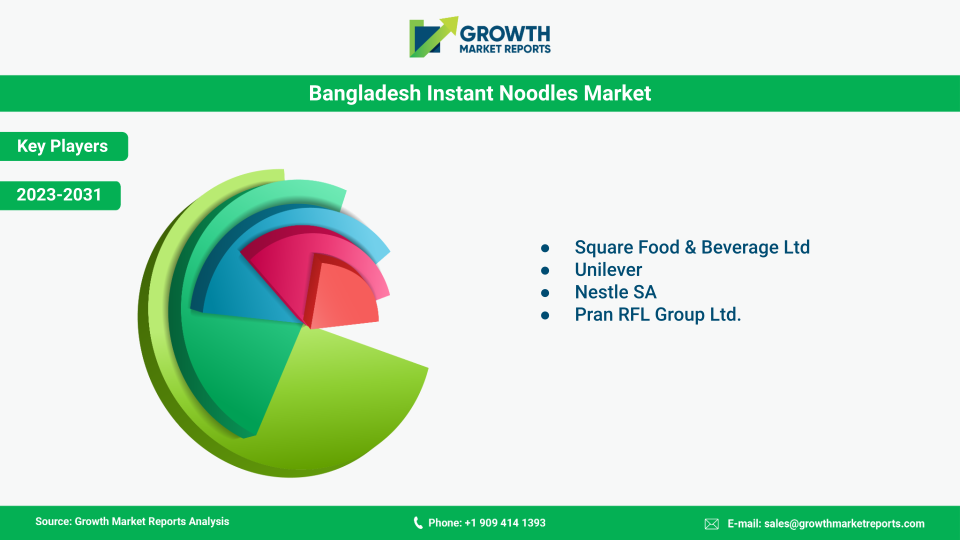
Key players competing in the instant noodles market include Square Food & Beverage Ltd; Unilever; Nestle SA; and Pran RFL Group Ltd.
Some of these players are using several market strategies including mergers, acquisitions, partnerships, collaborations, capacity expansion, and product launches to increase their market shares.
Opportunities include the demand for healthier and functional noodles, growth in emerging markets, and digital retail expansion. Challenges involve health concerns over sodium and additives, regulatory compliance, and maintaining consumer trust.
Key players include Nissin Foods Holdings Co. Ltd., Nestlé S.A., Indofood Sukses Makmur Tbk, Uni-President Enterprises Corporation, Samyang Foods Co. Ltd., Ottogi Co. Ltd., and Ajinomoto Co. Inc., among others.
Major trends include the development of healthier formulations (like non-fried and fortified noodles), premium and region-specific flavors, eco-friendly packaging, and the rise of online and omnichannel retail.
Key distribution channels include supermarkets/hypermarkets, convenience stores, online stores, specialty stores, and others such as food service and vending machines.
Flavors are segmented into vegetarian, non-vegetarian, and others. Vegetarian flavors are popular in countries with large vegetarian populations, while non-vegetarian and specialty flavors appeal to diverse and adventurous consumers.
Instant noodles are commonly packaged in packets and cup/bowl formats. Packets are favored for affordability and bulk purchases, while cup/bowl noodles cater to on-the-go consumers seeking convenience.
The market is segmented into fried noodles and non-fried noodles. Fried noodles are popular for their flavor and shelf life, while non-fried (air-dried or baked) noodles are gaining traction among health-conscious consumers.
Asia Pacific dominates the instant noodles market, accounting for over 70% of total market revenue in 2024, with China, India, Indonesia, Japan, and South Korea being the primary contributors.
The instant noodles market is expected to grow at a CAGR of 5.2% from 2025 to 2033, reaching approximately USD 93.1 billion by the end of 2033.
As of 2024, the global instant noodles market size reached USD 59.5 billion, reflecting strong consumer demand and evolving consumption patterns worldwide.