Infrastructure Asset Management Market Research Report 2033

Infrastructure Asset Management Market Research Report 2033

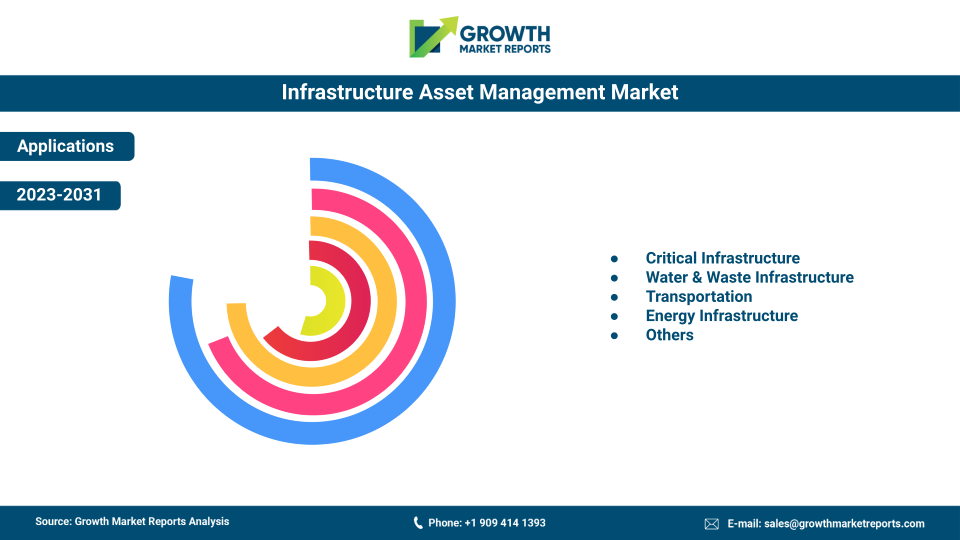
Segments - by Component (Software, Services), by Asset Type (Transportation, Energy, Water & Wastewater, Public Facilities, Others), by Application (Asset Inventory Management, Maintenance Management, Risk Management, Performance Management, Others), by Deployment Mode (On-Premises, Cloud), by End-User (Government, Utilities, Transportation, Energy & Power, Others)

https://growthmarketreports.com/Raksha
Author : Raksha Sharma
https://growthmarketreports.com/Vaibhav
Fact-checked by : V. Chandola
https://growthmarketreports.com/Shruti
Editor : Shruti Bhat

Upcoming | Report ID :ICT-SE-3028 | 4.5 Rating | 69 Reviews | 289 Pages | Format : Docx PDF

Report Description


Infrastructure Asset Management Market Outlook

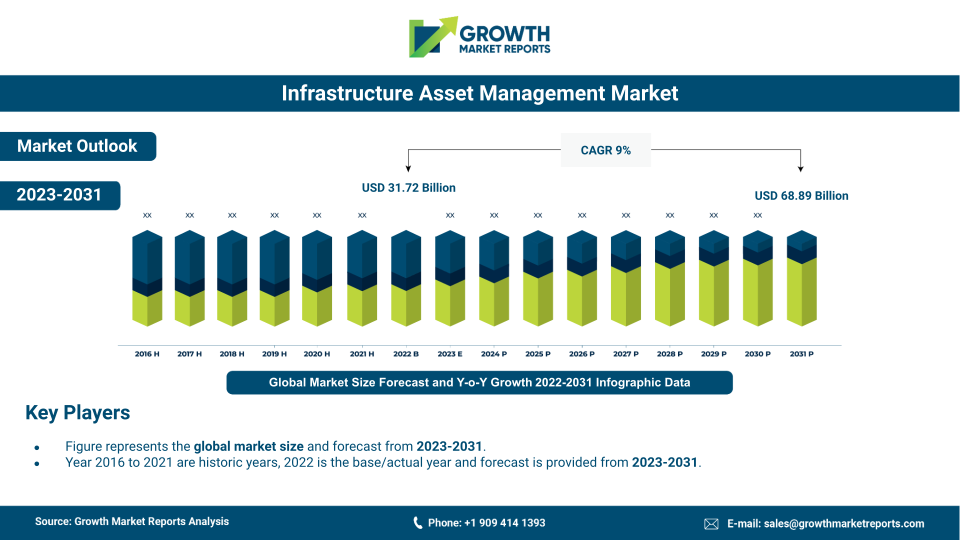
According to our latest research, the global infrastructure asset management market size reached USD 39.2 billion in 2024, reflecting robust growth propelled by increasing investments in smart infrastructure and digital transformation initiatives across sectors. The market is projected to grow at a CAGR of 10.1% during the forecast period, reaching an estimated USD 92.2 billion by 2033. This notable expansion is driven by the urgent need for efficient asset lifecycle management, aging infrastructure in developed nations, and the rapid urbanization witnessed in emerging economies. As per our comprehensive analysis, the marketÂ’s trajectory is underpinned by a convergence of technological advancements, regulatory mandates, and growing awareness of sustainability in infrastructure management.

One of the primary growth drivers for the infrastructure asset management market is the escalating demand for optimized asset utilization and lifecycle extension in both public and private sectors. Governments and enterprises are increasingly recognizing the value of comprehensive asset management solutions to maximize return on investment, reduce operational costs, and enhance service delivery. The proliferation of advanced technologies such as IoT, AI, and predictive analytics is revolutionizing how assets are monitored, maintained, and managed. These technologies enable real-time data collection and analysis, fostering data-driven decision-making and proactive maintenance strategies. The result is a significant reduction in unplanned downtime and asset failures, which translates to substantial cost savings and improved infrastructure reliability.

Another significant factor fueling market growth is the global trend towards smart city development and infrastructure modernization. Urban centers worldwide are investing heavily in upgrading transportation networks, utilities, and public facilities to accommodate growing populations and changing societal needs. This shift necessitates robust infrastructure asset management systems capable of handling complex, interconnected assets and ensuring seamless integration with legacy systems. Moreover, regulatory frameworks mandating compliance with safety, environmental, and operational standards are compelling organizations to adopt sophisticated asset management practices. These regulations not only ensure asset longevity but also promote transparency, accountability, and sustainability in infrastructure operations.

The increasing focus on sustainability and resilience is also shaping the infrastructure asset management market. Climate change, resource scarcity, and the need for disaster preparedness are prompting governments and businesses to prioritize sustainable asset management practices. By leveraging digital platforms and analytics, organizations can assess asset health, predict potential risks, and implement mitigation strategies, thereby enhancing infrastructure resilience against natural and man-made disruptions. Furthermore, the integration of ESG (Environmental, Social, and Governance) criteria into asset management processes is emerging as a key differentiator, driving long-term value creation and stakeholder confidence.

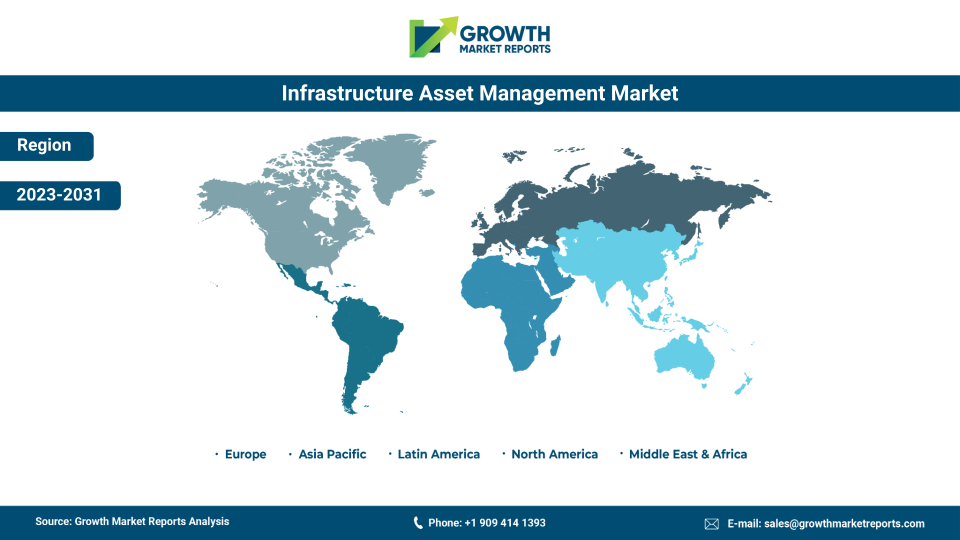
From a regional perspective, North America currently dominates the infrastructure asset management market, accounting for the largest revenue share in 2024, followed closely by Europe and Asia Pacific. The United States leads the charge with extensive investments in infrastructure renewal and technological innovation, while Europe benefits from stringent regulatory standards and sustainability initiatives. Meanwhile, Asia Pacific is witnessing the fastest growth, driven by rapid urbanization, industrialization, and government-led infrastructure development programs in countries such as China, India, and Southeast Asian nations. Latin America and the Middle East & Africa are also emerging as promising markets, supported by increasing infrastructure investments and digital transformation efforts.

Asset Integrity Management plays a crucial role in ensuring the safety and reliability of infrastructure assets, particularly in sectors where operational risks are high. This approach involves systematic processes and technologies designed to maintain the integrity of physical assets throughout their lifecycle. By implementing robust Asset Integrity Management practices, organizations can identify potential vulnerabilities, prevent failures, and extend asset lifespans. This not only enhances operational efficiency but also ensures compliance with regulatory standards and minimizes environmental impacts. As infrastructure networks become more complex, the integration of digital tools and analytics into Asset Integrity Management is becoming increasingly essential, enabling real-time monitoring and proactive maintenance strategies.

Global Infrastructure Asset Management Industry Outlook

Component Analysis

The infrastructure asset management market is segmented by component into software and services, each playing a pivotal role in shaping the industry landscape. Software solutions form the backbone of modern asset management systems, enabling organizations to digitize asset inventories, automate maintenance schedules, and generate actionable insights through advanced analytics. Leading software platforms offer functionalities such as asset tracking, condition monitoring, predictive maintenance, and lifecycle management, all of which contribute to enhanced operational efficiency and cost optimization. The transition from legacy systems to integrated software platforms is accelerating, as organizations seek to harness the power of big data, IoT, and AI for smarter asset management.

On the other hand, services encompass a broad spectrum of offerings, including consulting, implementation, training, support, and managed services. These services are critical for ensuring the successful deployment and ongoing performance of asset management solutions. Consulting services help organizations assess their asset management needs, develop strategic roadmaps, and align technology investments with business objectives. Implementation and integration services facilitate seamless adoption of new systems, while training and support ensure that personnel are equipped with the necessary skills to maximize solution value. Managed services, in particular, are gaining traction as organizations increasingly outsource asset management functions to specialized providers for cost savings and operational agility.

The interplay between software and services is creating a synergistic effect, driving innovation and value creation in the infrastructure asset management market. Software vendors are increasingly partnering with service providers to deliver end-to-end solutions tailored to specific industry requirements. This collaborative approach enables organizations to leverage best-in-class technologies and domain expertise, resulting in more effective asset management outcomes. Additionally, the rise of subscription-based and cloud-delivered software models is lowering barriers to entry and enabling organizations of all sizes to access advanced asset management capabilities without significant upfront investments.

The growing complexity of infrastructure assets and the need for continuous improvement are fueling demand for both software and services. As organizations strive to stay ahead of evolving regulatory requirements and technological advancements, they are turning to comprehensive solutions that combine robust software platforms with expert services. This trend is expected to continue throughout the forecast period, with both components playing indispensable roles in driving market growth and innovation.

Report Scope

Attributes Details
Report Title Infrastructure Asset Management Market Research Report 2033
By Component Software, Services
By Asset Type Transportation, Energy, Water & Wastewater, Public Facilities, Others
By Application Asset Inventory Management, Maintenance Management, Risk Management, Performance Management, Others
By Deployment Mode On-Premises, Cloud
By End-User Government, Utilities, Transportation, Energy & Power, Others
Regions Covered North America, Europe, APAC, Latin America, MEA
Base Year 2024
Historic Data 2018-2023
Forecast Period 2025-2033
Number of Pages 289
Number of Tables & Figures 360
Customization Available Yes, the report can be customized as per your need.

Asset Type Analysis

The infrastructure asset management market is further segmented by asset type, encompassing transportation, energy, water and wastewater, public facilities, and other critical infrastructure categories. Transportation assets, including roads, bridges, railways, and airports, represent a significant share of the market due to the sheer scale and complexity of these networks. Effective management of transportation assets is essential for ensuring safety, minimizing disruptions, and optimizing maintenance expenditures. Advanced asset management systems enable transportation agencies to monitor asset conditions, prioritize repairs, and allocate resources efficiently, thereby extending asset lifespans and improving service quality.

In the energy sector, asset management solutions are vital for managing power generation, transmission, and distribution infrastructure. The transition to renewable energy sources, coupled with aging grid infrastructure, is driving the adoption of sophisticated asset management practices. Utilities and energy providers are leveraging digital platforms to monitor asset health, predict failures, and optimize maintenance activities, resulting in enhanced reliability, reduced downtime, and lower operational costs. Furthermore, regulatory mandates for grid modernization and decarbonization are compelling industry players to invest in advanced asset management technologies.

Water and wastewater infrastructure also constitutes a major segment of the market, given the critical importance of reliable water supply and sanitation services. Asset management systems help utilities track the condition and performance of pipelines, treatment plants, and distribution networks, enabling proactive maintenance and timely upgrades. These systems are particularly valuable in addressing challenges such as aging infrastructure, water loss, and compliance with environmental regulations. By optimizing asset utilization and reducing operational risks, water utilities can enhance service delivery and safeguard public health.

Public facilities, including schools, hospitals, government buildings, and recreational spaces, are increasingly adopting asset management solutions to ensure safety, compliance, and cost-effective operations. These assets often serve large populations and must meet stringent standards for accessibility, energy efficiency, and sustainability. Asset management platforms provide facility managers with tools to monitor asset performance, schedule preventive maintenance, and manage capital improvement projects. The integration of IoT sensors and building management systems is further enhancing the visibility and control of public facility assets.

The “others” category encompasses a diverse array of infrastructure assets, such as telecommunication networks, ports, and industrial facilities. Each asset type presents unique management challenges and opportunities, underscoring the need for flexible and scalable asset management solutions. As infrastructure networks become more interconnected and complex, the ability to manage diverse asset portfolios through unified platforms is emerging as a key competitive advantage for organizations across sectors.

Application Analysis

Within the infrastructure asset management market, applications are segmented into asset inventory management, maintenance management, risk management, performance management, and others. Asset inventory management serves as the foundational application, enabling organizations to maintain comprehensive records of asset locations, specifications, conditions, and histories. Accurate asset inventories are essential for effective planning, budgeting, and regulatory compliance. Modern inventory management systems leverage GIS mapping, RFID tagging, and mobile data collection to provide real-time visibility and streamline asset tracking processes.

Sports Asset Management is emerging as a significant focus within the broader infrastructure asset management landscape, particularly as sports facilities and venues undergo modernization. This specialized area involves the strategic management of sports-related assets such as stadiums, arenas, and training facilities to optimize performance, safety, and fan experience. With the increasing demand for state-of-the-art sports infrastructure, effective Sports Asset Management practices are essential for ensuring the longevity and profitability of these assets. By leveraging advanced technologies and data analytics, sports organizations can enhance asset utilization, streamline maintenance processes, and deliver superior service to athletes and spectators alike. This approach not only supports operational excellence but also aligns with sustainability goals, as many sports venues are now prioritizing energy efficiency and environmental stewardship.

Maintenance management is another critical application, focused on optimizing the scheduling, execution, and documentation of maintenance activities. By implementing preventive and predictive maintenance strategies, organizations can minimize unplanned downtime, extend asset lifespans, and reduce maintenance costs. Advanced maintenance management systems integrate data from sensors, inspections, and historical records to generate actionable insights and automate work order generation. This proactive approach enables organizations to address potential issues before they escalate, ensuring the reliability and safety of infrastructure assets.

In the realm of risk management, asset management solutions help organizations identify, assess, and mitigate risks associated with asset failures, regulatory non-compliance, and external threats. By analyzing asset condition data, performance metrics, and environmental factors, organizations can prioritize risk mitigation efforts and allocate resources effectively. Risk management applications also support scenario planning and contingency response, enhancing organizational resilience in the face of disruptions such as natural disasters, cyberattacks, or equipment breakdowns.

Performance management applications enable organizations to monitor and optimize the operational efficiency of infrastructure assets. These systems track key performance indicators (KPIs), benchmark asset performance against industry standards, and support continuous improvement initiatives. By providing insights into asset utilization, energy consumption, and service levels, performance management tools empower organizations to make informed decisions that drive operational excellence and cost savings. The integration of AI and machine learning is further enhancing the predictive capabilities of performance management systems.

Other applications within the infrastructure asset management market include capital planning, compliance management, and sustainability reporting. These specialized applications address the evolving needs of organizations as they navigate complex regulatory environments, pursue sustainability goals, and plan for future growth. The ability to tailor asset management solutions to specific application requirements is a key differentiator in the market, enabling organizations to achieve strategic objectives and maximize asset value.

Deployment Mode Analysis

The deployment mode segment of the infrastructure asset management market is bifurcated into on-premises and cloud-based solutions, each offering distinct advantages and considerations. On-premises deployment remains popular among organizations with stringent data security, privacy, and regulatory requirements, particularly in government, defense, and critical infrastructure sectors. This deployment model provides organizations with full control over their asset management systems, enabling customization and integration with existing IT infrastructure. However, on-premises solutions often entail higher upfront costs, longer implementation timelines, and increased maintenance responsibilities.

In contrast, cloud-based deployment is gaining rapid traction across industries due to its scalability, flexibility, and cost-effectiveness. Cloud solutions enable organizations to access asset management platforms via the internet, eliminating the need for extensive hardware investments and IT resources. The subscription-based pricing model of cloud solutions lowers barriers to entry, making advanced asset management capabilities accessible to organizations of all sizes. Additionally, cloud deployment facilitates seamless updates, remote access, and integration with emerging technologies such as IoT and AI, driving innovation and agility in asset management practices.

The growing adoption of hybrid deployment models reflects the diverse needs and preferences of organizations in the infrastructure asset management market. Hybrid models combine the security and control of on-premises systems with the scalability and accessibility of cloud solutions, enabling organizations to balance operational requirements with budgetary constraints. This approach is particularly valuable for organizations managing geographically dispersed assets or operating in highly regulated environments.

The shift towards cloud-based deployment is expected to accelerate during the forecast period, driven by digital transformation initiatives, the proliferation of connected devices, and the increasing demand for real-time data analytics. Cloud-based asset management platforms offer unparalleled flexibility, enabling organizations to scale resources as needed, collaborate across locations, and respond rapidly to changing business needs. As cybersecurity measures and data protection standards continue to evolve, cloud deployment is becoming an increasingly attractive option for organizations seeking to future-proof their asset management strategies.

End-User Analysis

The infrastructure asset management market serves a diverse array of end-users, including government agencies, utilities, transportation authorities, energy and power companies, and other sectors. Government entities represent a significant portion of the market, driven by the need to manage vast portfolios of public assets, ensure regulatory compliance, and deliver essential services to citizens. Asset management solutions enable governments to optimize infrastructure investments, prioritize maintenance activities, and enhance transparency and accountability in public asset management. The integration of digital platforms and analytics is transforming traditional asset management practices, enabling data-driven decision-making and improved service delivery.

Utilities, encompassing water, wastewater, electricity, and gas providers, rely on asset management systems to ensure the reliability, safety, and efficiency of critical infrastructure. Utilities face unique challenges such as aging assets, regulatory mandates, and the transition to renewable energy sources. Asset management solutions provide utilities with tools to monitor asset health, schedule maintenance, and manage risk, enabling them to deliver uninterrupted services and meet evolving customer expectations. The adoption of smart grid technologies and IoT-enabled devices is further enhancing the capabilities of utility asset management systems.

Transportation authorities are major end-users of asset management solutions, tasked with maintaining extensive networks of roads, bridges, railways, and airports. Effective asset management is essential for ensuring the safety, reliability, and sustainability of transportation infrastructure. Advanced asset management platforms enable transportation agencies to monitor asset conditions, predict maintenance needs, and optimize resource allocation. The integration of GIS mapping, mobile data collection, and predictive analytics is transforming how transportation assets are managed, resulting in improved service quality and reduced operational costs.

The energy and power sector is also a key end-user, leveraging asset management solutions to manage generation, transmission, and distribution assets. The transition to decentralized and renewable energy sources, coupled with aging grid infrastructure, is driving the adoption of sophisticated asset management practices. Energy companies are investing in digital platforms to monitor asset performance, predict failures, and optimize maintenance activities, ensuring the reliability and resilience of energy supply. Regulatory requirements for grid modernization and sustainability are further accelerating the adoption of asset management solutions in the sector.

Other end-users include industrial facilities, telecommunication providers, and commercial enterprises, each with unique asset management needs and challenges. The ability to tailor asset management solutions to specific industry requirements is a key success factor in the market, enabling organizations to achieve operational excellence, regulatory compliance, and long-term value creation.

Opportunities & Threats

The infrastructure asset management market presents a wealth of opportunities for growth and innovation, driven by the ongoing digital transformation of infrastructure sectors worldwide. The integration of advanced technologies such as IoT, AI, machine learning, and big data analytics is revolutionizing asset management practices, enabling organizations to achieve unprecedented levels of efficiency, reliability, and sustainability. These technologies facilitate real-time data collection, predictive maintenance, and automated decision-making, empowering organizations to optimize asset performance and reduce operational costs. The growing adoption of cloud-based solutions and subscription-based models is also creating new revenue streams and expanding market access, particularly for small and medium-sized enterprises.

Another significant opportunity lies in the increasing focus on sustainability and resilience in infrastructure management. As governments and businesses prioritize climate adaptation, resource efficiency, and disaster preparedness, there is a growing demand for asset management solutions that support ESG compliance, risk mitigation, and long-term value creation. The integration of sustainability metrics, scenario planning, and lifecycle analysis into asset management platforms is enabling organizations to align infrastructure investments with broader societal and environmental goals. Furthermore, the emergence of smart cities and connected infrastructure ecosystems is opening up new avenues for innovation, collaboration, and value-added services in the market.

Despite these opportunities, the infrastructure asset management market faces several restraining factors that could impede growth. One of the primary challenges is the high upfront cost and complexity associated with implementing advanced asset management systems, particularly for organizations with limited resources or legacy infrastructure. The integration of new technologies with existing systems often requires significant investment in hardware, software, training, and change management. Additionally, concerns related to data security, privacy, and regulatory compliance can pose barriers to the adoption of cloud-based and IoT-enabled solutions. Addressing these challenges will require ongoing investment in cybersecurity, interoperability standards, and capacity building to ensure the successful deployment and long-term sustainability of asset management initiatives.

Regional Outlook

North America remains the leading region in the infrastructure asset management market, accounting for a market size of USD 13.9 billion in 2024. The regionÂ’s dominance is underpinned by substantial investments in infrastructure renewal, technological innovation, and regulatory compliance. The United States, in particular, is at the forefront of market growth, driven by federal and state-level initiatives to modernize transportation, energy, and public facilities. The widespread adoption of digital platforms, IoT devices, and predictive analytics is transforming asset management practices across sectors, enabling organizations to achieve operational excellence and cost savings.

Europe holds the second-largest share of the global market, with a market size of USD 11.3 billion in 2024. The regionÂ’s growth is fueled by stringent regulatory frameworks, sustainability initiatives, and the ongoing transition to smart infrastructure. Countries such as Germany, the United Kingdom, and France are investing heavily in digital transformation, grid modernization, and sustainable urban development. The European market is characterized by a strong focus on ESG compliance, risk management, and lifecycle optimization, driving the adoption of advanced asset management solutions across public and private sectors.

The Asia Pacific region is experiencing the fastest growth in the infrastructure asset management market, with a projected CAGR of 12.3% during the forecast period. The market size in Asia Pacific reached USD 8.7 billion in 2024, driven by rapid urbanization, industrialization, and government-led infrastructure development programs in countries such as China, India, Japan, and Southeast Asian nations. The regionÂ’s burgeoning population, expanding urban centers, and increasing demand for reliable utilities and transportation networks are creating significant opportunities for asset management solution providers. Latin America and the Middle East & Africa are also emerging as promising markets, with a combined market size of USD 5.3 billion in 2024, supported by infrastructure investments and digital transformation initiatives.

Infrastructure Asset Management Market Statistics

Competitor Outlook

The infrastructure asset management market is characterized by intense competition, with a diverse array of global and regional players vying for market share. The competitive landscape is shaped by continuous innovation, strategic partnerships, and mergers and acquisitions aimed at expanding product portfolios and geographic reach. Leading companies are investing heavily in research and development to enhance the functionality, scalability, and interoperability of their asset management solutions. The integration of advanced technologies such as IoT, AI, and predictive analytics is a key differentiator, enabling market leaders to deliver value-added services and maintain a competitive edge.

Strategic collaborations and alliances are becoming increasingly common as companies seek to address the evolving needs of infrastructure operators and end-users. Software vendors are partnering with system integrators, consulting firms, and managed service providers to deliver comprehensive, end-to-end solutions tailored to specific industry requirements. This collaborative approach enables organizations to leverage best-in-class technologies and domain expertise, resulting in more effective asset management outcomes. Additionally, the shift towards cloud-based and subscription-based models is fostering greater competition, as new entrants and niche players gain access to the market.

The competitive landscape is also shaped by the growing emphasis on sustainability, resilience, and regulatory compliance. Companies that can demonstrate expertise in ESG integration, risk management, and lifecycle optimization are well-positioned to capture market share and drive long-term growth. The ability to provide flexible, scalable, and customizable solutions is a key success factor, enabling providers to address the diverse needs of government agencies, utilities, transportation authorities, and other end-users. Ongoing investment in customer support, training, and capacity building is also critical for ensuring customer satisfaction and retention in this dynamic market.

Major players in the infrastructure asset management market include IBM Corporation, SAP SE, Oracle Corporation, Schneider Electric, Trimble Inc., Bentley Systems, Inc., Siemens AG, ABB Ltd., Hexagon AB, and Infor. IBM Corporation is renowned for its advanced AI-powered asset management platforms, offering comprehensive solutions for predictive maintenance, risk management, and performance optimization. SAP SE and Oracle Corporation are leading providers of integrated asset management software, leveraging their expertise in enterprise resource planning and data analytics. Schneider Electric and Siemens AG are at the forefront of smart infrastructure solutions, combining asset management with energy efficiency and sustainability initiatives. Trimble Inc. and Bentley Systems, Inc. specialize in infrastructure modeling, GIS integration, and lifecycle management, catering to the unique needs of transportation, utilities, and public facility operators. ABB Ltd., Hexagon AB, and Infor are also prominent players, offering a wide range of asset management solutions tailored to specific industry verticals and deployment models.

These companies are continuously expanding their product offerings, investing in R&D, and pursuing strategic acquisitions to strengthen their market positions. For example, Bentley SystemsÂ’ acquisition of Seequent has enhanced its capabilities in geospatial modeling and infrastructure analytics, while IBMÂ’s focus on AI and IoT integration is driving innovation in predictive asset management. The competitive landscape is expected to remain dynamic, with ongoing technological advancements, evolving customer needs, and increasing regulatory requirements shaping the future of the infrastructure asset management market.

Key Players

  • IBM Corporation
  • Siemens AG
  • Schneider Electric SE
  • Trimble Inc.
  • Oracle Corporation
  • SAP SE
  • Bentley Systems, Incorporated
  • Accruent LLC
  • AssetWorks LLC
  • Dude Solutions, Inc.
  • WSP Global Inc.
  • AECOM
  • Stantec Inc.
  • Arcadis NV
  • Fluor Corporation
  • Jacobs Engineering Group Inc.
  • Mott MacDonald Group Limited
  • Atkins (SNC-Lavalin Group Inc.)
  • Hexagon AB
  • Ramboll Group A/S
Infrastructure Asset Management Market Overview

Segments

The Infrastructure Asset Management market has been segmented on the basis of

Component

  • Software
  • Services

Asset Type

  • Transportation
  • Energy
  • Water & Wastewater
  • Public Facilities
  • Others

Application

  • Asset Inventory Management
  • Maintenance Management
  • Risk Management
  • Performance Management
  • Others

Deployment Mode

  • On-Premises
  • Cloud

End-User

  • Government
  • Utilities
  • Transportation
  • Energy & Power
  • Others

Competitive Landscape

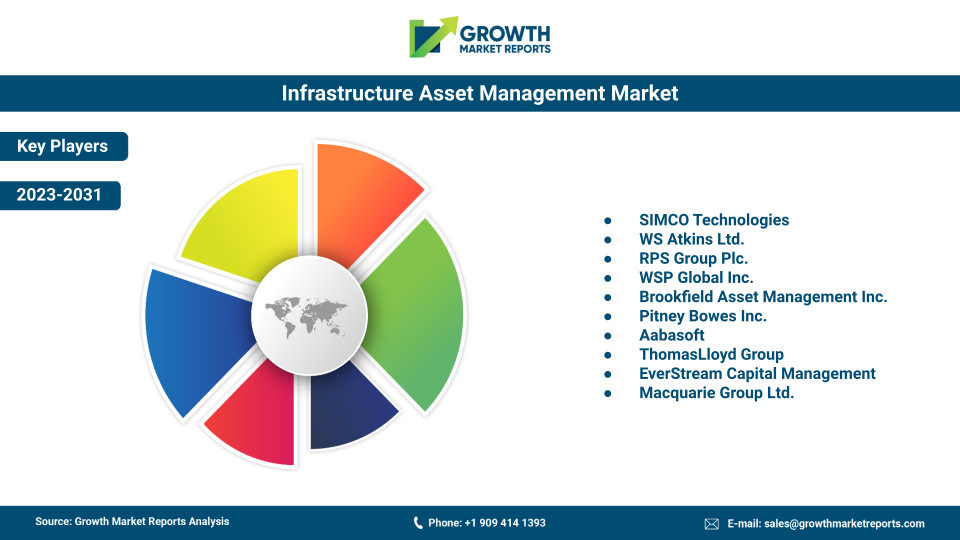
Key players competing in the global infrastructure asset management market are SIMCO Technologies; WS Atkins Ltd.; RPS Group Plc.; WSP Global Inc.; Brookfield Asset Management Inc.; Pitney Bowes Inc.; Aabasoft; ThomasLloyd Group; EverStream Capital Management; and Macquarie Group Ltd.

As part of their efforts to grow their client base and acquire a competitive advantage over competitors, manufacturers operating in the market are adopting various strategic initiatives such as partnerships, collaborations, mergers & acquisitions, and new product development.

For instance, In April 2019, WS Atkins Limited was offered a contract for implementation of flood risk management solutions for infrastructure of Texas government.

Infrastructure Asset Management Market Key Players

Frequently Asked Questions

Major players include IBM Corporation, Siemens AG, Schneider Electric SE, Trimble Inc., Oracle Corporation, SAP SE, Bentley Systems, Accruent LLC, AssetWorks LLC, Dude Solutions, WSP Global, AECOM, Stantec, Arcadis, Fluor Corporation, Jacobs Engineering, Mott MacDonald, Atkins (SNC-Lavalin), Hexagon AB, and Ramboll Group.

Opportunities include digital transformation, integration of IoT, AI, and big data, and a focus on sustainability and resilience. Challenges involve high upfront costs, integration complexity, and concerns over data security and regulatory compliance.

Primary end-users include government agencies, utilities (water, electricity, gas), transportation authorities, energy and power companies, industrial facilities, telecommunication providers, and commercial enterprises.

Solutions can be deployed on-premises or via the cloud. Cloud-based deployment is gaining popularity due to scalability, flexibility, and cost-effectiveness, while on-premises remains preferred for strict security and regulatory needs.

Key applications include asset inventory management, maintenance management, risk management, performance management, capital planning, compliance management, and sustainability reporting.

Asset types include transportation (roads, bridges, railways, airports), energy (power generation, transmission, distribution), water and wastewater, public facilities (schools, hospitals, government buildings), and others such as telecom networks and industrial facilities.

The market is segmented into software and services. Software includes asset tracking, condition monitoring, and predictive maintenance, while services cover consulting, implementation, training, support, and managed services.

North America currently dominates the market, followed by Europe and Asia Pacific. The Asia Pacific region is experiencing the fastest growth, driven by rapid urbanization and government-led infrastructure programs.

Key growth drivers include increasing investments in smart infrastructure, digital transformation, aging infrastructure in developed countries, rapid urbanization in emerging economies, and the adoption of advanced technologies like IoT, AI, and predictive analytics.

The global infrastructure asset management market reached USD 39.2 billion in 2024 and is projected to grow at a CAGR of 10.1%, reaching USD 92.2 billion by 2033.

Table Of Content

Chapter 1 Executive Summary
Chapter 2 Assumptions and Acronyms Used
Chapter 3 Research Methodology
Chapter 4 Infrastructure Asset Management Market Overview
   4.1 Introduction
      4.1.1 Market Taxonomy
      4.1.2 Market Definition
      4.1.3 Macro-Economic Factors Impacting the Market Growth
   4.2 Infrastructure Asset Management Market Dynamics
      4.2.1 Market Drivers
      4.2.2 Market Restraints
      4.2.3 Market Opportunity
   4.3 Infrastructure Asset Management Market - Supply Chain Analysis
      4.3.1 List of Key Suppliers
      4.3.2 List of Key Distributors
      4.3.3 List of Key Consumers
   4.4 Key Forces Shaping the Infrastructure Asset Management Market
      4.4.1 Bargaining Power of Suppliers
      4.4.2 Bargaining Power of Buyers
      4.4.3 Threat of Substitution
      4.4.4 Threat of New Entrants
      4.4.5 Competitive Rivalry
   4.5 Global Infrastructure Asset Management Market Size & Forecast, 2023-2032
      4.5.1 Infrastructure Asset Management Market Size and Y-o-Y Growth
      4.5.2 Infrastructure Asset Management Market Absolute $ Opportunity

Chapter 5 Global Infrastructure Asset Management Market Analysis and Forecast By Component
   5.1 Introduction
      5.1.1 Key Market Trends & Growth Opportunities By Component
      5.1.2 Basis Point Share (BPS) Analysis By Component
      5.1.3 Absolute $ Opportunity Assessment By Component
   5.2 Infrastructure Asset Management Market Size Forecast By Component
      5.2.1 Software
      5.2.2 Services
   5.3 Market Attractiveness Analysis By Component

Chapter 6 Global Infrastructure Asset Management Market Analysis and Forecast By Asset Type
   6.1 Introduction
      6.1.1 Key Market Trends & Growth Opportunities By Asset Type
      6.1.2 Basis Point Share (BPS) Analysis By Asset Type
      6.1.3 Absolute $ Opportunity Assessment By Asset Type
   6.2 Infrastructure Asset Management Market Size Forecast By Asset Type
      6.2.1 Transportation
      6.2.2 Energy
      6.2.3 Water & Wastewater
      6.2.4 Public Facilities
      6.2.5 Others
   6.3 Market Attractiveness Analysis By Asset Type

Chapter 7 Global Infrastructure Asset Management Market Analysis and Forecast By Application
   7.1 Introduction
      7.1.1 Key Market Trends & Growth Opportunities By Application
      7.1.2 Basis Point Share (BPS) Analysis By Application
      7.1.3 Absolute $ Opportunity Assessment By Application
   7.2 Infrastructure Asset Management Market Size Forecast By Application
      7.2.1 Asset Inventory Management
      7.2.2 Maintenance Management
      7.2.3 Risk Management
      7.2.4 Performance Management
      7.2.5 Others
   7.3 Market Attractiveness Analysis By Application

Chapter 8 Global Infrastructure Asset Management Market Analysis and Forecast By Deployment Mode
   8.1 Introduction
      8.1.1 Key Market Trends & Growth Opportunities By Deployment Mode
      8.1.2 Basis Point Share (BPS) Analysis By Deployment Mode
      8.1.3 Absolute $ Opportunity Assessment By Deployment Mode
   8.2 Infrastructure Asset Management Market Size Forecast By Deployment Mode
      8.2.1 On-Premises
      8.2.2 Cloud
   8.3 Market Attractiveness Analysis By Deployment Mode

Chapter 9 Global Infrastructure Asset Management Market Analysis and Forecast By End-User
   9.1 Introduction
      9.1.1 Key Market Trends & Growth Opportunities By End-User
      9.1.2 Basis Point Share (BPS) Analysis By End-User
      9.1.3 Absolute $ Opportunity Assessment By End-User
   9.2 Infrastructure Asset Management Market Size Forecast By End-User
      9.2.1 Government
      9.2.2 Utilities
      9.2.3 Transportation
      9.2.4 Energy & Power
      9.2.5 Others
   9.3 Market Attractiveness Analysis By End-User

Chapter 10 Global Infrastructure Asset Management Market Analysis and Forecast by Region
   10.1 Introduction
      10.1.1 Key Market Trends & Growth Opportunities By Region
      10.1.2 Basis Point Share (BPS) Analysis By Region
      10.1.3 Absolute $ Opportunity Assessment By Region
   10.2 Infrastructure Asset Management Market Size Forecast By Region
      10.2.1 North America
      10.2.2 Europe
      10.2.3 Asia Pacific
      10.2.4 Latin America
      10.2.5 Middle East & Africa (MEA)
   10.3 Market Attractiveness Analysis By Region

Chapter 11 Coronavirus Disease (COVID-19) Impact 
   11.1 Introduction 
   11.2 Current & Future Impact Analysis 
   11.3 Economic Impact Analysis 
   11.4 Government Policies 
   11.5 Investment Scenario

Chapter 12 North America Infrastructure Asset Management Analysis and Forecast
   12.1 Introduction
   12.2 North America Infrastructure Asset Management Market Size Forecast by Country
      12.2.1 U.S.
      12.2.2 Canada
   12.3 Basis Point Share (BPS) Analysis by Country
   12.4 Absolute $ Opportunity Assessment by Country
   12.5 Market Attractiveness Analysis by Country
   12.6 North America Infrastructure Asset Management Market Size Forecast By Component
      12.6.1 Software
      12.6.2 Services
   12.7 Basis Point Share (BPS) Analysis By Component 
   12.8 Absolute $ Opportunity Assessment By Component 
   12.9 Market Attractiveness Analysis By Component
   12.10 North America Infrastructure Asset Management Market Size Forecast By Asset Type
      12.10.1 Transportation
      12.10.2 Energy
      12.10.3 Water & Wastewater
      12.10.4 Public Facilities
      12.10.5 Others
   12.11 Basis Point Share (BPS) Analysis By Asset Type 
   12.12 Absolute $ Opportunity Assessment By Asset Type 
   12.13 Market Attractiveness Analysis By Asset Type
   12.14 North America Infrastructure Asset Management Market Size Forecast By Application
      12.14.1 Asset Inventory Management
      12.14.2 Maintenance Management
      12.14.3 Risk Management
      12.14.4 Performance Management
      12.14.5 Others
   12.15 Basis Point Share (BPS) Analysis By Application 
   12.16 Absolute $ Opportunity Assessment By Application 
   12.17 Market Attractiveness Analysis By Application
   12.18 North America Infrastructure Asset Management Market Size Forecast By Deployment Mode
      12.18.1 On-Premises
      12.18.2 Cloud
   12.19 Basis Point Share (BPS) Analysis By Deployment Mode 
   12.20 Absolute $ Opportunity Assessment By Deployment Mode 
   12.21 Market Attractiveness Analysis By Deployment Mode
   12.22 North America Infrastructure Asset Management Market Size Forecast By End-User
      12.22.1 Government
      12.22.2 Utilities
      12.22.3 Transportation
      12.22.4 Energy & Power
      12.22.5 Others
   12.23 Basis Point Share (BPS) Analysis By End-User 
   12.24 Absolute $ Opportunity Assessment By End-User 
   12.25 Market Attractiveness Analysis By End-User

Chapter 13 Europe Infrastructure Asset Management Analysis and Forecast
   13.1 Introduction
   13.2 Europe Infrastructure Asset Management Market Size Forecast by Country
      13.2.1 Germany
      13.2.2 France
      13.2.3 Italy
      13.2.4 U.K.
      13.2.5 Spain
      13.2.6 Russia
      13.2.7 Rest of Europe
   13.3 Basis Point Share (BPS) Analysis by Country
   13.4 Absolute $ Opportunity Assessment by Country
   13.5 Market Attractiveness Analysis by Country
   13.6 Europe Infrastructure Asset Management Market Size Forecast By Component
      13.6.1 Software
      13.6.2 Services
   13.7 Basis Point Share (BPS) Analysis By Component 
   13.8 Absolute $ Opportunity Assessment By Component 
   13.9 Market Attractiveness Analysis By Component
   13.10 Europe Infrastructure Asset Management Market Size Forecast By Asset Type
      13.10.1 Transportation
      13.10.2 Energy
      13.10.3 Water & Wastewater
      13.10.4 Public Facilities
      13.10.5 Others
   13.11 Basis Point Share (BPS) Analysis By Asset Type 
   13.12 Absolute $ Opportunity Assessment By Asset Type 
   13.13 Market Attractiveness Analysis By Asset Type
   13.14 Europe Infrastructure Asset Management Market Size Forecast By Application
      13.14.1 Asset Inventory Management
      13.14.2 Maintenance Management
      13.14.3 Risk Management
      13.14.4 Performance Management
      13.14.5 Others
   13.15 Basis Point Share (BPS) Analysis By Application 
   13.16 Absolute $ Opportunity Assessment By Application 
   13.17 Market Attractiveness Analysis By Application
   13.18 Europe Infrastructure Asset Management Market Size Forecast By Deployment Mode
      13.18.1 On-Premises
      13.18.2 Cloud
   13.19 Basis Point Share (BPS) Analysis By Deployment Mode 
   13.20 Absolute $ Opportunity Assessment By Deployment Mode 
   13.21 Market Attractiveness Analysis By Deployment Mode
   13.22 Europe Infrastructure Asset Management Market Size Forecast By End-User
      13.22.1 Government
      13.22.2 Utilities
      13.22.3 Transportation
      13.22.4 Energy & Power
      13.22.5 Others
   13.23 Basis Point Share (BPS) Analysis By End-User 
   13.24 Absolute $ Opportunity Assessment By End-User 
   13.25 Market Attractiveness Analysis By End-User

Chapter 14 Asia Pacific Infrastructure Asset Management Analysis and Forecast
   14.1 Introduction
   14.2 Asia Pacific Infrastructure Asset Management Market Size Forecast by Country
      14.2.1 China
      14.2.2 Japan
      14.2.3 South Korea
      14.2.4 India
      14.2.5 Australia
      14.2.6 South East Asia (SEA)
      14.2.7 Rest of Asia Pacific (APAC)
   14.3 Basis Point Share (BPS) Analysis by Country
   14.4 Absolute $ Opportunity Assessment by Country
   14.5 Market Attractiveness Analysis by Country
   14.6 Asia Pacific Infrastructure Asset Management Market Size Forecast By Component
      14.6.1 Software
      14.6.2 Services
   14.7 Basis Point Share (BPS) Analysis By Component 
   14.8 Absolute $ Opportunity Assessment By Component 
   14.9 Market Attractiveness Analysis By Component
   14.10 Asia Pacific Infrastructure Asset Management Market Size Forecast By Asset Type
      14.10.1 Transportation
      14.10.2 Energy
      14.10.3 Water & Wastewater
      14.10.4 Public Facilities
      14.10.5 Others
   14.11 Basis Point Share (BPS) Analysis By Asset Type 
   14.12 Absolute $ Opportunity Assessment By Asset Type 
   14.13 Market Attractiveness Analysis By Asset Type
   14.14 Asia Pacific Infrastructure Asset Management Market Size Forecast By Application
      14.14.1 Asset Inventory Management
      14.14.2 Maintenance Management
      14.14.3 Risk Management
      14.14.4 Performance Management
      14.14.5 Others
   14.15 Basis Point Share (BPS) Analysis By Application 
   14.16 Absolute $ Opportunity Assessment By Application 
   14.17 Market Attractiveness Analysis By Application
   14.18 Asia Pacific Infrastructure Asset Management Market Size Forecast By Deployment Mode
      14.18.1 On-Premises
      14.18.2 Cloud
   14.19 Basis Point Share (BPS) Analysis By Deployment Mode 
   14.20 Absolute $ Opportunity Assessment By Deployment Mode 
   14.21 Market Attractiveness Analysis By Deployment Mode
   14.22 Asia Pacific Infrastructure Asset Management Market Size Forecast By End-User
      14.22.1 Government
      14.22.2 Utilities
      14.22.3 Transportation
      14.22.4 Energy & Power
      14.22.5 Others
   14.23 Basis Point Share (BPS) Analysis By End-User 
   14.24 Absolute $ Opportunity Assessment By End-User 
   14.25 Market Attractiveness Analysis By End-User

Chapter 15 Latin America Infrastructure Asset Management Analysis and Forecast
   15.1 Introduction
   15.2 Latin America Infrastructure Asset Management Market Size Forecast by Country
      15.2.1 Brazil
      15.2.2 Mexico
      15.2.3 Rest of Latin America (LATAM)
   15.3 Basis Point Share (BPS) Analysis by Country
   15.4 Absolute $ Opportunity Assessment by Country
   15.5 Market Attractiveness Analysis by Country
   15.6 Latin America Infrastructure Asset Management Market Size Forecast By Component
      15.6.1 Software
      15.6.2 Services
   15.7 Basis Point Share (BPS) Analysis By Component 
   15.8 Absolute $ Opportunity Assessment By Component 
   15.9 Market Attractiveness Analysis By Component
   15.10 Latin America Infrastructure Asset Management Market Size Forecast By Asset Type
      15.10.1 Transportation
      15.10.2 Energy
      15.10.3 Water & Wastewater
      15.10.4 Public Facilities
      15.10.5 Others
   15.11 Basis Point Share (BPS) Analysis By Asset Type 
   15.12 Absolute $ Opportunity Assessment By Asset Type 
   15.13 Market Attractiveness Analysis By Asset Type
   15.14 Latin America Infrastructure Asset Management Market Size Forecast By Application
      15.14.1 Asset Inventory Management
      15.14.2 Maintenance Management
      15.14.3 Risk Management
      15.14.4 Performance Management
      15.14.5 Others
   15.15 Basis Point Share (BPS) Analysis By Application 
   15.16 Absolute $ Opportunity Assessment By Application 
   15.17 Market Attractiveness Analysis By Application
   15.18 Latin America Infrastructure Asset Management Market Size Forecast By Deployment Mode
      15.18.1 On-Premises
      15.18.2 Cloud
   15.19 Basis Point Share (BPS) Analysis By Deployment Mode 
   15.20 Absolute $ Opportunity Assessment By Deployment Mode 
   15.21 Market Attractiveness Analysis By Deployment Mode
   15.22 Latin America Infrastructure Asset Management Market Size Forecast By End-User
      15.22.1 Government
      15.22.2 Utilities
      15.22.3 Transportation
      15.22.4 Energy & Power
      15.22.5 Others
   15.23 Basis Point Share (BPS) Analysis By End-User 
   15.24 Absolute $ Opportunity Assessment By End-User 
   15.25 Market Attractiveness Analysis By End-User

Chapter 16 Middle East & Africa (MEA) Infrastructure Asset Management Analysis and Forecast
   16.1 Introduction
   16.2 Middle East & Africa (MEA) Infrastructure Asset Management Market Size Forecast by Country
      16.2.1 Saudi Arabia
      16.2.2 South Africa
      16.2.3 UAE
      16.2.4 Rest of Middle East & Africa (MEA)
   16.3 Basis Point Share (BPS) Analysis by Country
   16.4 Absolute $ Opportunity Assessment by Country
   16.5 Market Attractiveness Analysis by Country
   16.6 Middle East & Africa (MEA) Infrastructure Asset Management Market Size Forecast By Component
      16.6.1 Software
      16.6.2 Services
   16.7 Basis Point Share (BPS) Analysis By Component 
   16.8 Absolute $ Opportunity Assessment By Component 
   16.9 Market Attractiveness Analysis By Component
   16.10 Middle East & Africa (MEA) Infrastructure Asset Management Market Size Forecast By Asset Type
      16.10.1 Transportation
      16.10.2 Energy
      16.10.3 Water & Wastewater
      16.10.4 Public Facilities
      16.10.5 Others
   16.11 Basis Point Share (BPS) Analysis By Asset Type 
   16.12 Absolute $ Opportunity Assessment By Asset Type 
   16.13 Market Attractiveness Analysis By Asset Type
   16.14 Middle East & Africa (MEA) Infrastructure Asset Management Market Size Forecast By Application
      16.14.1 Asset Inventory Management
      16.14.2 Maintenance Management
      16.14.3 Risk Management
      16.14.4 Performance Management
      16.14.5 Others
   16.15 Basis Point Share (BPS) Analysis By Application 
   16.16 Absolute $ Opportunity Assessment By Application 
   16.17 Market Attractiveness Analysis By Application
   16.18 Middle East & Africa (MEA) Infrastructure Asset Management Market Size Forecast By Deployment Mode
      16.18.1 On-Premises
      16.18.2 Cloud
   16.19 Basis Point Share (BPS) Analysis By Deployment Mode 
   16.20 Absolute $ Opportunity Assessment By Deployment Mode 
   16.21 Market Attractiveness Analysis By Deployment Mode
   16.22 Middle East & Africa (MEA) Infrastructure Asset Management Market Size Forecast By End-User
      16.22.1 Government
      16.22.2 Utilities
      16.22.3 Transportation
      16.22.4 Energy & Power
      16.22.5 Others
   16.23 Basis Point Share (BPS) Analysis By End-User 
   16.24 Absolute $ Opportunity Assessment By End-User 
   16.25 Market Attractiveness Analysis By End-User

Chapter 17 Competition Landscape 
   17.1 Infrastructure Asset Management Market: Competitive Dashboard
   17.2 Global Infrastructure Asset Management Market: Market Share Analysis, 2023
   17.3 Company Profiles (Details – Overview, Financials, Developments, Strategy) 
      17.3.1 IBM Corporation
Siemens AG
Schneider Electric SE
Trimble Inc.
Oracle Corporation
SAP SE
Bentley Systems, Incorporated
Accruent LLC
AssetWorks LLC
Dude Solutions, Inc.
WSP Global Inc.
AECOM
Stantec Inc.
Arcadis NV
Fluor Corporation
Jacobs Engineering Group Inc.
Mott MacDonald Group Limited
Atkins (SNC-Lavalin Group Inc.)
Hexagon AB
Ramboll Group A/S

Methodology

Our Clients

Siemens Healthcare
sinopec
The John Holland Group
Deloitte
Nestle SA
Pfizer
FedEx Logistics
Dassault Aviation