Industrial Vending Machine Market Research Report 2033

Industrial Vending Machine Market Research Report 2033

Segments - by Product Type (Coil Vending Machines, Carousel Vending Machines, Locker Vending Machines, Others), by Offering (Hardware, Software, Services), by Application (MRO (Maintenance, Repair, Operations), PPE (Personal Protective Equipment), Office Supplies, Others), by End-User (Manufacturing, Aerospace, Automotive, Healthcare, Construction, Others), by Distribution Channel (Direct Sales, Distributors, Online Sales)

https://growthmarketreports.com/Raksha
Author : Raksha Sharma
https://growthmarketreports.com/Vaibhav
Fact-checked by : V. Chandola
https://growthmarketreports.com/Rucha
Editor : Rucha Phatak

Upcoming | Report ID :CM-345 | 4.6 Rating | 17 Reviews | 251 Pages | Format : Docx PDF

Report Description


Industrial Vending Machine Market Outlook

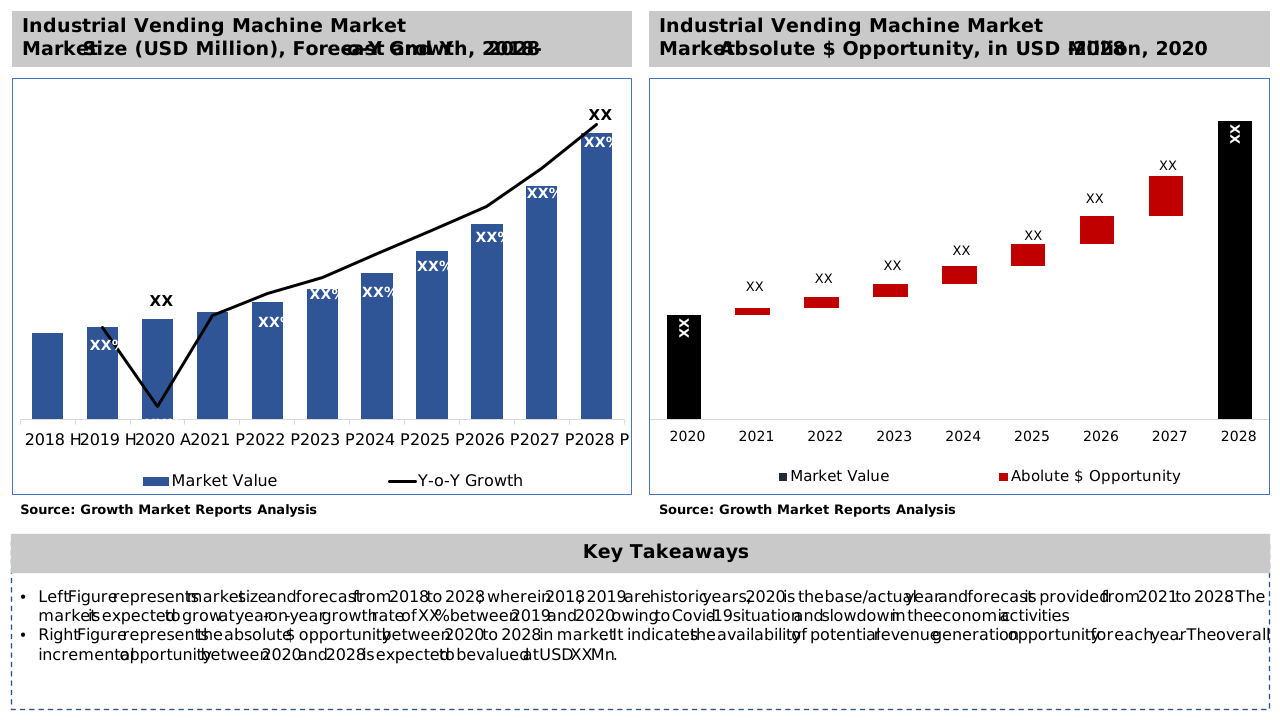
According to our latest research, the global industrial vending machine market size reached USD 2.39 billion in 2024, demonstrating strong momentum with a robust CAGR of 9.4% projected over the forecast period. By leveraging this growth rate, the market is anticipated to achieve a value of USD 5.47 billion by 2033. The surge in demand for automated inventory management and the pressing need for operational efficiency in industrial sectors are the primary drivers propelling this marketÂ’s expansion. As per our comprehensive analysis, the adoption of industrial vending machines is accelerating across diverse industries, underpinned by the increasing emphasis on cost reduction, waste minimization, and real-time inventory tracking.

The growth of the industrial vending machine market is significantly influenced by the growing focus on cost optimization and resource efficiency in manufacturing and related sectors. Organizations are increasingly realizing the value of deploying vending solutions to streamline inventory management for critical consumables, tools, and personal protective equipment (PPE). These systems not only reduce human error and pilferage but also provide actionable insights through advanced analytics, which further enhances productivity and minimizes downtime. The trend towards digital transformation and Industry 4.0 has also fueled the adoption of smart vending solutions, integrating IoT and cloud-based platforms to enable remote monitoring and predictive maintenance, thus driving sustained market growth.

Another important growth factor is the heightened emphasis on workplace safety and compliance with stringent regulatory standards, particularly in sectors such as aerospace, automotive, healthcare, and construction. The deployment of industrial vending machines ensures that essential safety supplies and PPE are always available to employees, thereby reducing the risk of workplace accidents and regulatory penalties. The ability of these machines to track usage patterns, manage stock levels in real time, and generate compliance reports has made them indispensable for companies aiming to foster a culture of safety and accountability. This has led to a marked increase in adoption across industries where compliance and traceability are mission-critical.

Technological advancements have played a pivotal role in shaping the industrial vending machine market landscape. The integration of RFID, biometric authentication, and cloud-based analytics has transformed traditional vending machines into intelligent, connected systems capable of supporting advanced inventory management strategies. These innovations have expanded the application scope of vending machines, enabling them to dispense a broader range of items, from MRO (Maintenance, Repair, and Operations) supplies to high-value tools and electronic components. The growing preference for automated, data-driven solutions among enterprises seeking to optimize supply chain operations is expected to further accelerate market growth over the coming years.

In this context, Tool Vending Systems have emerged as a pivotal innovation, offering a streamlined approach to managing tool inventories in various industrial settings. These systems are designed to dispense tools and equipment efficiently, ensuring that workers have immediate access to the necessary items while maintaining strict control over inventory levels. By automating the dispensing process, Tool Vending Systems significantly reduce the time spent on manual inventory checks and minimize the risk of tool misplacement or theft. This not only enhances operational efficiency but also contributes to cost savings by reducing tool replacement expenses. As industries continue to seek ways to optimize their operations, the adoption of Tool Vending Systems is expected to rise, further driving the growth of the industrial vending machine market.

Regionally, North America has emerged as the dominant market for industrial vending machines, driven by the presence of a mature manufacturing sector, high labor costs, and a strong focus on automation. Europe and Asia Pacific are also witnessing rapid adoption, fueled by increasing investments in industrial automation and the proliferation of SMEs seeking cost-effective inventory management solutions. While Latin America and the Middle East & Africa are relatively nascent markets, they are expected to register steady growth as industrialization and digitalization initiatives gain traction. Overall, the global industrial vending machine market is poised for significant expansion, supported by favorable macroeconomic trends and the relentless pursuit of operational excellence across industries.

Global Industrial Vending Machine Industry Outlook

Product Type Analysis

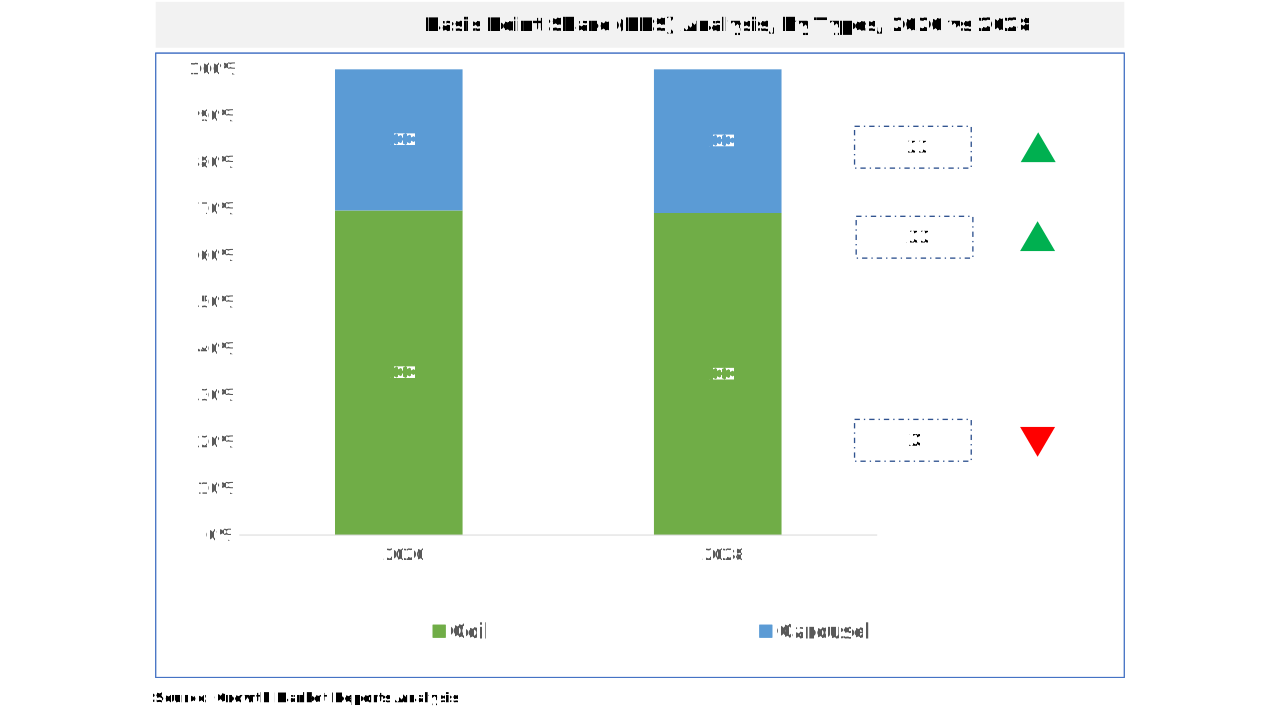
The industrial vending machine market, segmented by product type, encompasses coil vending machines, carousel vending machines, locker vending machines, and other specialized formats. Coil vending machines remain the most widely adopted due to their simplicity, versatility, and cost-effectiveness. These machines are particularly suited for dispensing small, high-turnover items such as fasteners, batteries, and hand tools, making them a staple in manufacturing and MRO environments. Their straightforward design facilitates easy restocking and maintenance, contributing to their widespread popularity. However, as industries increasingly demand solutions for managing a broader spectrum of inventory, the limitations of coil machines in handling larger or irregularly shaped items have become apparent, spurring the adoption of alternative formats.

Carousel vending machines offer a higher degree of flexibility and storage capacity compared to coil machines. Featuring rotating shelves or bins, these machines can accommodate a diverse range of items, including bulky or fragile components that would be unsuitable for coil dispensing. This makes them particularly valuable in industries such as aerospace and automotive, where the need to manage specialized parts and tools is paramount. The ability to configure carousel machines for customized inventory requirements has made them increasingly attractive to enterprises seeking to optimize storage space and streamline access to critical supplies. Their integration with advanced control systems and inventory tracking software further enhances their utility, supporting more sophisticated inventory management strategies.

Locker vending machines represent a rapidly growing segment within the industrial vending machine market, driven by the need to securely dispense high-value or sensitive items. These machines feature individual, electronically controlled lockers that provide secure access to tools, electronic devices, and PPE. The adoption of locker vending solutions has surged in sectors such as healthcare, construction, and electronics manufacturing, where accountability and loss prevention are top priorities. The ability to track user access and generate detailed usage reports has made locker vending machines an essential component of compliance and asset management programs. Moreover, the integration of biometric authentication and RFID technology has further enhanced the security and traceability of these systems.

The "Others" category in product type encompasses specialized vending machines designed to meet unique industry requirements. These may include refrigerated vending machines for temperature-sensitive items, automated tool cribs for managing large inventories, and hybrid systems that combine features of coil, carousel, and locker formats. The development of customized vending solutions has been driven by the increasing complexity of industrial operations and the need for tailored inventory management approaches. As companies continue to seek solutions that align with their specific operational needs, the demand for innovative and adaptable vending machine designs is expected to grow, contributing to the overall expansion of the market.

The evolution of product types within the industrial vending machine market reflects the broader trend towards automation and customization in industrial operations. As end-users become more sophisticated in their inventory management practices, the demand for advanced vending solutions capable of supporting diverse product categories and operational requirements will continue to rise. Manufacturers are responding by investing in research and development to create more versatile, user-friendly, and connected vending machines, ensuring that the market remains dynamic and responsive to changing industry needs.

Report Scope

Attributes Details
Report Title Industrial Vending Machine Market Research Report 2033
By Product Type Coil Vending Machines, Carousel Vending Machines, Locker Vending Machines, Others
By Offering Hardware, Software, Services
By Application MRO (Maintenance, Repair, Operations), PPE (Personal Protective Equipment), Office Supplies, Others
By End-User Manufacturing, Aerospace, Automotive, Healthcare, Construction, Others
By Distribution Channel Direct Sales, Distributors, Online Sales
Regions Covered North America, Europe, APAC, Latin America, MEA
Base Year 2024
Historic Data 2018-2023
Forecast Period 2025-2033
Number of Pages 251
Number of Tables & Figures 396
Customization Available Yes, the report can be customized as per your need.

Offering Analysis

The industrial vending machine market by offering is segmented into hardware, software, and services, each playing a critical role in delivering comprehensive inventory management solutions. Hardware remains the foundational component, encompassing the physical vending machines themselves, along with associated peripherals such as RFID readers, biometric scanners, and barcode printers. The ongoing evolution of hardware design has focused on enhancing durability, security, and modularity, enabling machines to withstand harsh industrial environments and support a wide range of inventory types. Innovations in hardware, such as touchscreen interfaces and wireless connectivity, have further improved user experience and operational efficiency, driving continued investment in this segment.

The software segment has emerged as a key differentiator in the industrial vending machine market, enabling advanced inventory management, real-time data analytics, and seamless integration with enterprise resource planning (ERP) systems. Modern vending machine software platforms offer a suite of features, including automated replenishment, usage tracking, and customizable reporting, empowering organizations to make data-driven decisions and optimize inventory levels. The shift towards cloud-based solutions has facilitated remote monitoring and centralized control of vending machine fleets, reducing administrative overhead and enhancing scalability. As enterprises increasingly prioritize digital transformation, the demand for robust, user-friendly software solutions is expected to drive significant growth in this segment.

Services represent a crucial component of the industrial vending machine value proposition, encompassing installation, maintenance, technical support, and training. As the complexity of vending solutions increases, organizations are seeking comprehensive service packages to ensure seamless deployment and ongoing reliability. Service providers offer a range of options, from basic maintenance contracts to fully managed inventory programs, allowing customers to tailor support levels to their specific needs. The growing emphasis on predictive maintenance and proactive support, enabled by IoT and remote diagnostics, has further elevated the importance of services in the overall market ecosystem. This trend is expected to continue as companies seek to maximize uptime and minimize total cost of ownership.

The interplay between hardware, software, and services is central to the success of industrial vending machine deployments. Leading vendors are increasingly adopting a solutions-oriented approach, bundling these offerings into integrated packages that address the full spectrum of customer requirements. This holistic approach not only enhances customer satisfaction but also creates opportunities for recurring revenue streams through software subscriptions and service contracts. As competition intensifies, the ability to deliver comprehensive, end-to-end solutions will be a key differentiator for market participants.

The ongoing convergence of hardware, software, and services is driving innovation and value creation in the industrial vending machine market. Companies that invest in developing integrated, scalable, and user-centric solutions will be well-positioned to capitalize on the growing demand for automated inventory management systems. As the market continues to evolve, the lines between these segments are expected to blur, giving rise to new business models and partnership opportunities that further accelerate market growth.

Application Analysis

The application landscape of the industrial vending machine market is diverse, with key segments including MRO (Maintenance, Repair, and Operations), PPE (Personal Protective Equipment), Office Supplies, and other specialized uses. MRO applications represent the largest share, as organizations strive to optimize the management of consumables, spare parts, and tools essential for maintaining equipment and minimizing downtime. Vending machines provide a controlled, automated solution for dispensing MRO items, ensuring that critical supplies are always available while reducing waste and unauthorized usage. The ability to track consumption patterns and automate reordering processes has made vending machines an indispensable tool for MRO managers seeking to enhance efficiency and reduce operational costs.

The use of industrial vending machines for PPE distribution has gained significant traction in recent years, particularly in light of heightened workplace safety regulations and the global focus on employee health. Automated dispensing of PPE such as gloves, masks, safety glasses, and protective clothing ensures that workers have timely access to essential safety gear, while also enabling organizations to monitor usage and enforce compliance. The integration of vending machines with access control systems allows companies to restrict PPE distribution to authorized personnel, further enhancing safety and accountability. This application segment is expected to witness continued growth as companies prioritize employee well-being and regulatory compliance.

Office supplies represent another important application for industrial vending machines, particularly in large manufacturing facilities, warehouses, and corporate campuses. Automated dispensing of items such as stationery, batteries, and IT accessories streamlines the supply chain and reduces administrative overhead. By providing employees with convenient, self-service access to office essentials, organizations can enhance productivity and reduce the burden on procurement teams. The ability to track usage and allocate costs to specific departments or projects also supports more accurate budgeting and resource allocation, making vending machines an attractive solution for office supply management.

Beyond these core applications, industrial vending machines are increasingly being deployed for specialized uses, including the distribution of electronic components, calibration tools, and even pharmaceuticals in healthcare settings. The flexibility and scalability of modern vending solutions enable organizations to tailor deployments to their unique operational requirements, expanding the potential use cases across a wide range of industries. As companies continue to seek innovative ways to manage inventory and improve operational efficiency, the application scope of industrial vending machines is expected to broaden further.

The diverse application landscape underscores the versatility and value proposition of industrial vending machines in supporting a wide range of operational needs. As organizations across industries continue to embrace automation and data-driven decision-making, the adoption of vending solutions for MRO, PPE, office supplies, and other applications is poised to accelerate, driving sustained market growth and innovation.

End-User Analysis

The industrial vending machine market serves a broad array of end-users, with the most prominent segments including manufacturing, aerospace, automotive, healthcare, construction, and others. The manufacturing sector accounts for the largest market share, driven by the continuous need for efficient management of tools, consumables, and safety equipment. Manufacturers leverage vending machines to reduce inventory shrinkage, improve traceability, and ensure the timely availability of critical supplies. The integration of vending solutions with production management systems enables real-time monitoring of inventory levels, supporting lean manufacturing initiatives and minimizing production disruptions. As manufacturers increasingly prioritize automation and operational excellence, the adoption of vending machines is expected to remain robust in this sector.

The aerospace and automotive industries are also significant end-users of industrial vending machines, owing to their complex supply chains and stringent quality standards. In these sectors, the ability to track and control the distribution of specialized parts, tools, and safety equipment is essential for maintaining compliance and ensuring product quality. Vending machines equipped with advanced authentication and reporting features enable organizations to enforce strict access controls and generate detailed audit trails, supporting regulatory compliance and quality assurance programs. The growing emphasis on digitalization and supply chain optimization in aerospace and automotive manufacturing is expected to drive continued investment in vending solutions.

The healthcare sector has emerged as a high-growth segment within the industrial vending machine market, driven by the need for secure and efficient distribution of medical supplies, pharmaceuticals, and PPE. Hospitals, clinics, and laboratories are increasingly adopting vending solutions to enhance inventory control, reduce pilferage, and ensure the availability of critical items at the point of care. The integration of vending machines with electronic health record (EHR) systems and inventory management platforms enables healthcare providers to automate replenishment, monitor usage, and maintain compliance with regulatory requirements. As the healthcare industry continues to evolve in response to changing patient needs and regulatory pressures, the demand for automated inventory management solutions is expected to grow.

The construction industry is another important end-user of industrial vending machines, particularly for the management of tools, PPE, and consumables on job sites. The mobile and often remote nature of construction projects presents unique challenges for inventory management, making vending solutions an attractive option for ensuring the availability and accountability of critical supplies. By providing real-time visibility into usage and inventory levels, vending machines help construction companies reduce losses, improve safety, and streamline procurement processes. The adoption of vending solutions is expected to increase as the construction industry embraces digitalization and seeks to improve project efficiency and safety outcomes.

Other end-users, including logistics, energy, and government agencies, are also recognizing the benefits of industrial vending machines for managing inventory and enhancing operational efficiency. As the range of supported applications and deployment models continues to expand, the market is expected to attract a growing and diverse customer base, further fueling growth and innovation across industries.

Distribution Channel Analysis

The distribution channel landscape for the industrial vending machine market is segmented into direct sales, distributors, and online sales, each offering distinct advantages and challenges. Direct sales channels are favored by large enterprises and organizations with complex inventory management needs, as they enable vendors to provide customized solutions and dedicated support. Through direct engagement, vendors can gain a deep understanding of customer requirements, offer tailored hardware and software configurations, and deliver comprehensive service packages. This approach fosters long-term relationships and enables vendors to capture higher margins, but it also requires significant investment in sales and support infrastructure.

Distributors play a critical role in expanding market reach and serving small and medium-sized enterprises (SMEs) that may lack the resources or expertise to engage directly with manufacturers. Distributors offer a broad portfolio of vending solutions, along with value-added services such as installation, training, and maintenance. By leveraging established networks and local market knowledge, distributors can effectively address the unique needs of diverse customer segments and facilitate rapid deployment of vending solutions. The distributor channel is particularly important in emerging markets, where access to direct sales representatives may be limited.

The online sales channel has gained significant traction in recent years, driven by the growing preference for digital procurement and the increasing availability of e-commerce platforms specializing in industrial equipment. Online sales channels offer customers the convenience of browsing, comparing, and purchasing vending solutions from a wide range of vendors, often with transparent pricing and detailed product specifications. The ability to access customer reviews, technical documentation, and remote support further enhances the appeal of online sales, particularly for SMEs and organizations with standardized requirements. As digital transformation continues to reshape industrial procurement, the online sales channel is expected to capture an increasing share of the market.

The interplay between direct sales, distributors, and online channels reflects the diverse needs and preferences of industrial vending machine customers. Leading vendors are adopting omni-channel strategies, integrating digital and physical sales channels to provide a seamless customer experience. This approach enables vendors to reach a broader audience, offer more flexible purchasing options, and respond more effectively to changing market dynamics. As competition intensifies and customer expectations evolve, the ability to deliver a consistent, high-quality experience across all distribution channels will be a key success factor for market participants.

The evolution of distribution channels in the industrial vending machine market underscores the importance of agility and customer-centricity in driving growth and market share. Vendors that invest in building robust, multi-channel sales and support networks will be well-positioned to capitalize on emerging opportunities and navigate the challenges of an increasingly dynamic and competitive market environment.

Opportunities & Threats

The industrial vending machine market presents a wealth of opportunities for innovation and growth, particularly as industries continue to embrace automation and digital transformation. The integration of advanced technologies such as IoT, artificial intelligence, and machine learning is enabling the development of intelligent vending solutions capable of predictive analytics, automated replenishment, and real-time monitoring. These capabilities not only enhance operational efficiency but also create new value-added services, such as inventory optimization consulting and remote diagnostics. The growing emphasis on sustainability and waste reduction is also driving demand for vending solutions that support circular economy initiatives, such as reusable packaging and asset tracking. As organizations seek to differentiate themselves through operational excellence and environmental stewardship, the market is poised for continued expansion.

Another significant opportunity lies in the expansion of industrial vending machine applications beyond traditional sectors. Emerging industries such as renewable energy, biotechnology, and e-commerce logistics are increasingly adopting automated inventory management solutions to support their unique operational requirements. The ability to customize vending solutions for specialized use cases, such as temperature-controlled storage or secure dispensing of hazardous materials, is opening new avenues for growth and differentiation. Additionally, the rise of Industry 4.0 and the proliferation of connected devices are creating opportunities for ecosystem partnerships and the development of integrated supply chain solutions. Vendors that invest in research and development, strategic partnerships, and customer education will be well-positioned to capture these emerging opportunities and drive long-term market growth.

Despite the positive outlook, the industrial vending machine market faces several restraining factors that could impact growth. High initial capital investment and the complexity of integrating vending solutions with existing IT and supply chain systems can pose significant barriers to adoption, particularly for small and medium-sized enterprises. Concerns around data security, system reliability, and user acceptance may also hinder deployment, especially in industries with stringent regulatory requirements. Additionally, the market is subject to competitive pressures from alternative inventory management solutions, such as mobile asset tracking and RFID-enabled storage systems. To overcome these challenges, vendors must focus on delivering compelling value propositions, robust security features, and flexible deployment models that address the diverse needs of potential customers.

Regional Outlook

The regional analysis of the industrial vending machine market reveals distinct patterns of adoption and growth across key geographies. North America leads the global market, accounting for approximately USD 960 million in 2024, driven by a mature manufacturing sector, high labor costs, and a strong emphasis on automation and operational efficiency. The United States, in particular, has witnessed widespread adoption of industrial vending solutions across manufacturing, aerospace, healthcare, and automotive sectors. The regionÂ’s advanced IT infrastructure and early adoption of Industry 4.0 technologies have further accelerated the integration of smart vending systems, supporting continued market expansion. North America is expected to maintain its leadership position, with a projected CAGR of 8.7% through 2033.

Europe represents the second-largest regional market, with a value of USD 670 million in 2024. The regionÂ’s focus on workplace safety, regulatory compliance, and sustainable manufacturing practices has driven robust demand for industrial vending machines, particularly in Germany, the United Kingdom, and France. The presence of a large number of SMEs and the increasing adoption of digital supply chain solutions have further contributed to market growth. EuropeÂ’s commitment to environmental sustainability and circular economy principles is also fostering the development of vending solutions that support waste reduction and resource efficiency. As the region continues to invest in industrial automation and digitalization, the industrial vending machine market is expected to register steady growth throughout the forecast period.

The Asia Pacific region is emerging as a high-growth market, valued at USD 490 million in 2024, driven by rapid industrialization, urbanization, and the proliferation of manufacturing facilities in countries such as China, India, and Japan. The regionÂ’s expanding middle class, rising labor costs, and increasing focus on workplace safety are fueling demand for automated inventory management solutions. Local manufacturers are embracing vending machines to enhance productivity, reduce operational costs, and comply with evolving regulatory requirements. The Asia Pacific market is projected to achieve the highest CAGR among all regions, reflecting the regionÂ’s growing appetite for advanced industrial automation technologies. As infrastructure and digital capabilities continue to improve, Asia Pacific is expected to play an increasingly important role in the global industrial vending machine market.

Industrial Vending Machine Market Statistics

Competitor Outlook

The competitive landscape of the industrial vending machine market is characterized by the presence of several established players, as well as a growing number of innovative entrants offering specialized solutions. Leading companies are focusing on product innovation, strategic partnerships, and geographic expansion to strengthen their market positions and capture emerging opportunities. The ability to deliver integrated, end-to-end solutions that combine hardware, software, and services is a key differentiator, enabling vendors to address the diverse and evolving needs of industrial customers. As competition intensifies, companies are also investing in research and development to enhance the functionality, connectivity, and user experience of their vending solutions.

Strategic alliances and collaborations are becoming increasingly important in the industrial vending machine market, as vendors seek to leverage complementary capabilities and access new customer segments. Partnerships with ERP and supply chain software providers, IoT technology companies, and logistics service providers are enabling the development of integrated solutions that deliver greater value to customers. Mergers and acquisitions are also shaping the competitive landscape, as larger players seek to expand their product portfolios, enter new markets, and accelerate innovation. The ability to adapt to changing customer requirements and industry trends will be critical for sustained success in this dynamic and rapidly evolving market.

Customer-centricity is emerging as a key theme in the competitive strategies of leading industrial vending machine vendors. Companies are increasingly offering flexible deployment models, customizable solutions, and comprehensive service packages to meet the unique needs of different industries and customer segments. The provision of value-added services, such as inventory optimization consulting, remote monitoring, and predictive maintenance, is helping vendors differentiate themselves and build long-term customer relationships. As customer expectations continue to evolve, the ability to deliver personalized, responsive, and high-quality support will be a critical success factor for market leaders.

Some of the major companies operating in the industrial vending machine market include Fastenal Company, AutoCrib Inc., SupplyPro Inc., Apex Industrial Technologies LLC, CribMaster (Stanley Black & Decker), IVM Inc., and SecuraStock LLC. Fastenal Company is a global leader in industrial supply distribution and vending solutions, known for its extensive product portfolio and innovative inventory management technologies. AutoCrib Inc. specializes in automated inventory control systems, offering a wide range of vending machines and software solutions tailored to industrial applications. SupplyPro Inc. is recognized for its flexible and scalable vending solutions, serving customers across manufacturing, aerospace, and automotive sectors.

Apex Industrial Technologies LLC is a prominent provider of automated dispensing systems, with a strong focus on cloud-based software and data analytics. CribMaster, a subsidiary of Stanley Black & Decker, offers comprehensive inventory management solutions that integrate vending machines, RFID technology, and advanced software platforms. IVM Inc. is known for its innovative approach to smart vending, delivering customized solutions for a wide range of industries. SecuraStock LLC specializes in secure, cloud-connected inventory management systems, with a focus on enhancing accountability and reducing operational costs. These companies are at the forefront of market innovation, continuously investing in new technologies and business models to address the evolving needs of industrial customers.

The industrial vending machine market is expected to remain highly competitive, with ongoing investments in technology, service delivery, and customer engagement driving differentiation and value creation. Companies that can effectively combine innovation, operational excellence, and customer-centricity will be well-positioned to capitalize on the significant growth opportunities in this dynamic and rapidly expanding market.

Key Players

  • Apex Industrial Technologies
  • AutoCrib Inc.
  • Fastenal Company
  • MSC Industrial Direct Co., Inc.
  • W.W. Grainger, Inc.
  • SupplyPro, Inc.
  • CribMaster (Stanley Black & Decker)
  • SecuraStock LLC
  • IVM, Inc.
  • Magazino GmbH
  • Silvent AB
  • Brady Corporation
  • Airgas, Inc.
  • Brammer Buck & Hickman
  • ORS Nasco, LLC
  • Snap-on Incorporated
  • Würth Group
  • Kyocera Corporation
  • Tork (Essity AB)
  • ToolBOSS (Kennametal Inc.)
Industrial Vending Machine Market Overview

Segments

The Industrial Vending Machine market has been segmented on the basis of

Product Type

  • Coil Vending Machines
  • Carousel Vending Machines
  • Locker Vending Machines
  • Others

Offering

  • Hardware
  • Software
  • Services

Application

  • MRO (Maintenance
  • Repair
  • Operations)
  • PPE (Personal Protective Equipment)
  • Office Supplies
  • Others

End-User

  • Manufacturing
  • Aerospace
  • Automotive
  • Healthcare
  • Construction
  • Others

Distribution Channel

  • Direct Sales
  • Distributors
  • Online Sales

Competitive Landscape

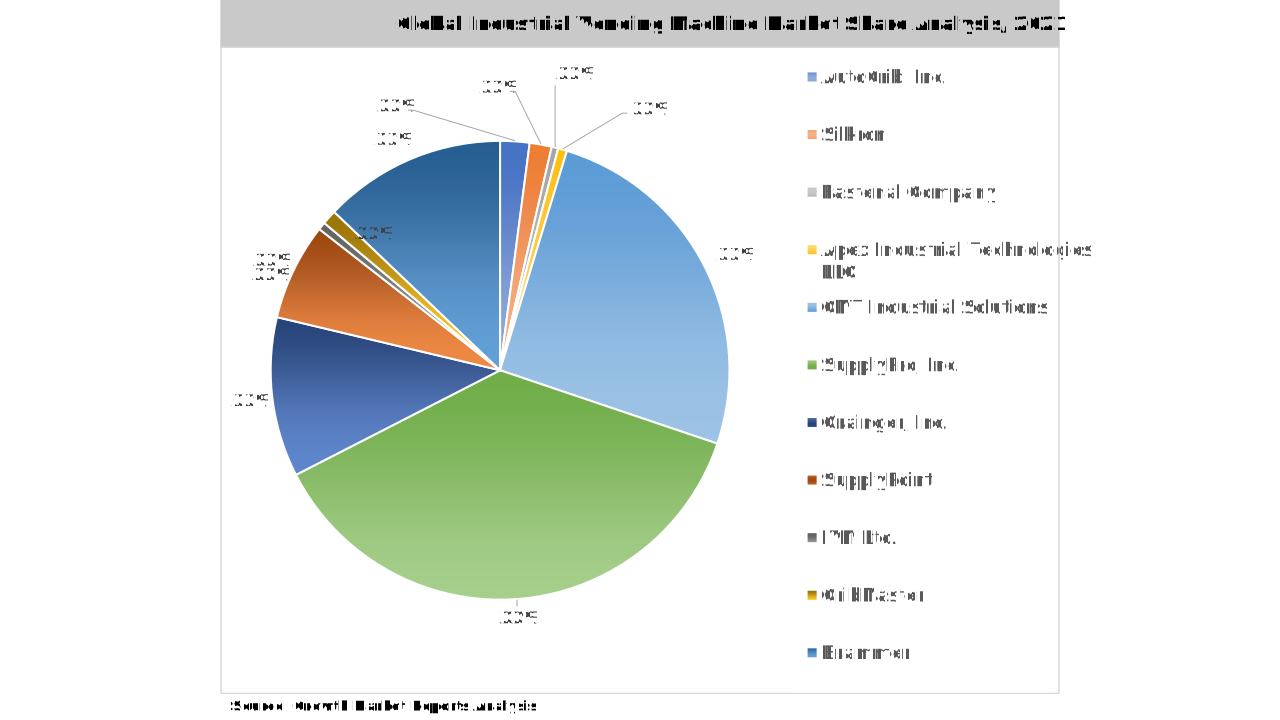
Key players in the global industrial vending machine market include AutoCrib, Inc., Silkron, Fastenal Company, Apex Industrial Technologies LLC, CMT Industrial Solutions, SupplyPro, Inc., Grainger, Inc., SupplyPoint, IVM Ltd., CribMaster, and Brammer. The market is highly competitive and entry for new players is difficult, as high investment is required for manufacturing. Small players in the market merge and collaborate with the major players to enter the industry.
 

Industrial Vending Machine Market Key Players

Frequently Asked Questions

Opportunities include integration of AI, IoT, and machine learning for smart inventory solutions and expansion into new industries. Challenges include high initial investment, integration complexity, data security concerns, and competition from alternative inventory management solutions.

Industrial vending machines are sold through direct sales, distributors, and online sales channels, with omni-channel strategies becoming increasingly popular.

Leading companies include Fastenal Company, AutoCrib Inc., SupplyPro Inc., Apex Industrial Technologies LLC, CribMaster (Stanley Black & Decker), IVM Inc., and SecuraStock LLC.

Key applications include dispensing MRO (Maintenance, Repair, Operations) supplies, PPE (Personal Protective Equipment), office supplies, and specialized items like electronic components and pharmaceuticals.

North America leads the market, followed by Europe and Asia Pacific. Rapid industrialization and automation are driving growth in Asia Pacific, while Latin America and MEA are emerging markets.

Technologies like IoT, RFID, biometric authentication, and cloud-based analytics are transforming vending machines into intelligent, connected systems for advanced inventory management and predictive maintenance.

The market offers coil vending machines, carousel vending machines, locker vending machines, and specialized formats like refrigerated or hybrid machines to suit various inventory needs.

Major adopters include manufacturing, aerospace, automotive, healthcare, and construction sectors, with growing use in logistics, energy, and government agencies.

Key growth drivers include increasing demand for automated inventory management, operational efficiency, cost reduction, waste minimization, and real-time inventory tracking across industrial sectors.

The global industrial vending machine market reached USD 2.39 billion in 2024 and is projected to grow at a CAGR of 9.4%, reaching USD 5.47 billion by 2033.

Table Of Content

Chapter 1 Executive Summary
Chapter 2 Assumptions and Acronyms Used
Chapter 3 Research Methodology
Chapter 4 Industrial Vending Machine Market Overview
   4.1 Introduction
      4.1.1 Market Taxonomy
      4.1.2 Market Definition
      4.1.3 Macro-Economic Factors Impacting the Market Growth
   4.2 Industrial Vending Machine Market Dynamics
      4.2.1 Market Drivers
      4.2.2 Market Restraints
      4.2.3 Market Opportunity
   4.3 Industrial Vending Machine Market - Supply Chain Analysis
      4.3.1 List of Key Suppliers
      4.3.2 List of Key Distributors
      4.3.3 List of Key Consumers
   4.4 Key Forces Shaping the Industrial Vending Machine Market
      4.4.1 Bargaining Power of Suppliers
      4.4.2 Bargaining Power of Buyers
      4.4.3 Threat of Substitution
      4.4.4 Threat of New Entrants
      4.4.5 Competitive Rivalry
   4.5 Global Industrial Vending Machine Market Size & Forecast, 2023-2032
      4.5.1 Industrial Vending Machine Market Size and Y-o-Y Growth
      4.5.2 Industrial Vending Machine Market Absolute $ Opportunity

Chapter 5 Global Industrial Vending Machine Market Analysis and Forecast By Product Type
   5.1 Introduction
      5.1.1 Key Market Trends & Growth Opportunities By Product Type
      5.1.2 Basis Point Share (BPS) Analysis By Product Type
      5.1.3 Absolute $ Opportunity Assessment By Product Type
   5.2 Industrial Vending Machine Market Size Forecast By Product Type
      5.2.1 Coil Vending Machines
      5.2.2 Carousel Vending Machines
      5.2.3 Locker Vending Machines
      5.2.4 Others
   5.3 Market Attractiveness Analysis By Product Type

Chapter 6 Global Industrial Vending Machine Market Analysis and Forecast By Offering
   6.1 Introduction
      6.1.1 Key Market Trends & Growth Opportunities By Offering
      6.1.2 Basis Point Share (BPS) Analysis By Offering
      6.1.3 Absolute $ Opportunity Assessment By Offering
   6.2 Industrial Vending Machine Market Size Forecast By Offering
      6.2.1 Hardware
      6.2.2 Software
      6.2.3 Services
   6.3 Market Attractiveness Analysis By Offering

Chapter 7 Global Industrial Vending Machine Market Analysis and Forecast By Application
   7.1 Introduction
      7.1.1 Key Market Trends & Growth Opportunities By Application
      7.1.2 Basis Point Share (BPS) Analysis By Application
      7.1.3 Absolute $ Opportunity Assessment By Application
   7.2 Industrial Vending Machine Market Size Forecast By Application
      7.2.1 MRO (Maintenance
      7.2.2 Repair
      7.2.3 Operations)
      7.2.4 PPE (Personal Protective Equipment)
      7.2.5 Office Supplies
      7.2.6 Others
   7.3 Market Attractiveness Analysis By Application

Chapter 8 Global Industrial Vending Machine Market Analysis and Forecast By End-User
   8.1 Introduction
      8.1.1 Key Market Trends & Growth Opportunities By End-User
      8.1.2 Basis Point Share (BPS) Analysis By End-User
      8.1.3 Absolute $ Opportunity Assessment By End-User
   8.2 Industrial Vending Machine Market Size Forecast By End-User
      8.2.1 Manufacturing
      8.2.2 Aerospace
      8.2.3 Automotive
      8.2.4 Healthcare
      8.2.5 Construction
      8.2.6 Others
   8.3 Market Attractiveness Analysis By End-User

Chapter 9 Global Industrial Vending Machine Market Analysis and Forecast By Distribution Channel
   9.1 Introduction
      9.1.1 Key Market Trends & Growth Opportunities By Distribution Channel
      9.1.2 Basis Point Share (BPS) Analysis By Distribution Channel
      9.1.3 Absolute $ Opportunity Assessment By Distribution Channel
   9.2 Industrial Vending Machine Market Size Forecast By Distribution Channel
      9.2.1 Direct Sales
      9.2.2 Distributors
      9.2.3 Online Sales
   9.3 Market Attractiveness Analysis By Distribution Channel

Chapter 10 Global Industrial Vending Machine Market Analysis and Forecast by Region
   10.1 Introduction
      10.1.1 Key Market Trends & Growth Opportunities By Region
      10.1.2 Basis Point Share (BPS) Analysis By Region
      10.1.3 Absolute $ Opportunity Assessment By Region
   10.2 Industrial Vending Machine Market Size Forecast By Region
      10.2.1 North America
      10.2.2 Europe
      10.2.3 Asia Pacific
      10.2.4 Latin America
      10.2.5 Middle East & Africa (MEA)
   10.3 Market Attractiveness Analysis By Region

Chapter 11 Coronavirus Disease (COVID-19) Impact 
   11.1 Introduction 
   11.2 Current & Future Impact Analysis 
   11.3 Economic Impact Analysis 
   11.4 Government Policies 
   11.5 Investment Scenario

Chapter 12 North America Industrial Vending Machine Analysis and Forecast
   12.1 Introduction
   12.2 North America Industrial Vending Machine Market Size Forecast by Country
      12.2.1 U.S.
      12.2.2 Canada
   12.3 Basis Point Share (BPS) Analysis by Country
   12.4 Absolute $ Opportunity Assessment by Country
   12.5 Market Attractiveness Analysis by Country
   12.6 North America Industrial Vending Machine Market Size Forecast By Product Type
      12.6.1 Coil Vending Machines
      12.6.2 Carousel Vending Machines
      12.6.3 Locker Vending Machines
      12.6.4 Others
   12.7 Basis Point Share (BPS) Analysis By Product Type 
   12.8 Absolute $ Opportunity Assessment By Product Type 
   12.9 Market Attractiveness Analysis By Product Type
   12.10 North America Industrial Vending Machine Market Size Forecast By Offering
      12.10.1 Hardware
      12.10.2 Software
      12.10.3 Services
   12.11 Basis Point Share (BPS) Analysis By Offering 
   12.12 Absolute $ Opportunity Assessment By Offering 
   12.13 Market Attractiveness Analysis By Offering
   12.14 North America Industrial Vending Machine Market Size Forecast By Application
      12.14.1 MRO (Maintenance
      12.14.2 Repair
      12.14.3 Operations)
      12.14.4 PPE (Personal Protective Equipment)
      12.14.5 Office Supplies
      12.14.6 Others
   12.15 Basis Point Share (BPS) Analysis By Application 
   12.16 Absolute $ Opportunity Assessment By Application 
   12.17 Market Attractiveness Analysis By Application
   12.18 North America Industrial Vending Machine Market Size Forecast By End-User
      12.18.1 Manufacturing
      12.18.2 Aerospace
      12.18.3 Automotive
      12.18.4 Healthcare
      12.18.5 Construction
      12.18.6 Others
   12.19 Basis Point Share (BPS) Analysis By End-User 
   12.20 Absolute $ Opportunity Assessment By End-User 
   12.21 Market Attractiveness Analysis By End-User
   12.22 North America Industrial Vending Machine Market Size Forecast By Distribution Channel
      12.22.1 Direct Sales
      12.22.2 Distributors
      12.22.3 Online Sales
   12.23 Basis Point Share (BPS) Analysis By Distribution Channel 
   12.24 Absolute $ Opportunity Assessment By Distribution Channel 
   12.25 Market Attractiveness Analysis By Distribution Channel

Chapter 13 Europe Industrial Vending Machine Analysis and Forecast
   13.1 Introduction
   13.2 Europe Industrial Vending Machine Market Size Forecast by Country
      13.2.1 Germany
      13.2.2 France
      13.2.3 Italy
      13.2.4 U.K.
      13.2.5 Spain
      13.2.6 Russia
      13.2.7 Rest of Europe
   13.3 Basis Point Share (BPS) Analysis by Country
   13.4 Absolute $ Opportunity Assessment by Country
   13.5 Market Attractiveness Analysis by Country
   13.6 Europe Industrial Vending Machine Market Size Forecast By Product Type
      13.6.1 Coil Vending Machines
      13.6.2 Carousel Vending Machines
      13.6.3 Locker Vending Machines
      13.6.4 Others
   13.7 Basis Point Share (BPS) Analysis By Product Type 
   13.8 Absolute $ Opportunity Assessment By Product Type 
   13.9 Market Attractiveness Analysis By Product Type
   13.10 Europe Industrial Vending Machine Market Size Forecast By Offering
      13.10.1 Hardware
      13.10.2 Software
      13.10.3 Services
   13.11 Basis Point Share (BPS) Analysis By Offering 
   13.12 Absolute $ Opportunity Assessment By Offering 
   13.13 Market Attractiveness Analysis By Offering
   13.14 Europe Industrial Vending Machine Market Size Forecast By Application
      13.14.1 MRO (Maintenance
      13.14.2 Repair
      13.14.3 Operations)
      13.14.4 PPE (Personal Protective Equipment)
      13.14.5 Office Supplies
      13.14.6 Others
   13.15 Basis Point Share (BPS) Analysis By Application 
   13.16 Absolute $ Opportunity Assessment By Application 
   13.17 Market Attractiveness Analysis By Application
   13.18 Europe Industrial Vending Machine Market Size Forecast By End-User
      13.18.1 Manufacturing
      13.18.2 Aerospace
      13.18.3 Automotive
      13.18.4 Healthcare
      13.18.5 Construction
      13.18.6 Others
   13.19 Basis Point Share (BPS) Analysis By End-User 
   13.20 Absolute $ Opportunity Assessment By End-User 
   13.21 Market Attractiveness Analysis By End-User
   13.22 Europe Industrial Vending Machine Market Size Forecast By Distribution Channel
      13.22.1 Direct Sales
      13.22.2 Distributors
      13.22.3 Online Sales
   13.23 Basis Point Share (BPS) Analysis By Distribution Channel 
   13.24 Absolute $ Opportunity Assessment By Distribution Channel 
   13.25 Market Attractiveness Analysis By Distribution Channel

Chapter 14 Asia Pacific Industrial Vending Machine Analysis and Forecast
   14.1 Introduction
   14.2 Asia Pacific Industrial Vending Machine Market Size Forecast by Country
      14.2.1 China
      14.2.2 Japan
      14.2.3 South Korea
      14.2.4 India
      14.2.5 Australia
      14.2.6 South East Asia (SEA)
      14.2.7 Rest of Asia Pacific (APAC)
   14.3 Basis Point Share (BPS) Analysis by Country
   14.4 Absolute $ Opportunity Assessment by Country
   14.5 Market Attractiveness Analysis by Country
   14.6 Asia Pacific Industrial Vending Machine Market Size Forecast By Product Type
      14.6.1 Coil Vending Machines
      14.6.2 Carousel Vending Machines
      14.6.3 Locker Vending Machines
      14.6.4 Others
   14.7 Basis Point Share (BPS) Analysis By Product Type 
   14.8 Absolute $ Opportunity Assessment By Product Type 
   14.9 Market Attractiveness Analysis By Product Type
   14.10 Asia Pacific Industrial Vending Machine Market Size Forecast By Offering
      14.10.1 Hardware
      14.10.2 Software
      14.10.3 Services
   14.11 Basis Point Share (BPS) Analysis By Offering 
   14.12 Absolute $ Opportunity Assessment By Offering 
   14.13 Market Attractiveness Analysis By Offering
   14.14 Asia Pacific Industrial Vending Machine Market Size Forecast By Application
      14.14.1 MRO (Maintenance
      14.14.2 Repair
      14.14.3 Operations)
      14.14.4 PPE (Personal Protective Equipment)
      14.14.5 Office Supplies
      14.14.6 Others
   14.15 Basis Point Share (BPS) Analysis By Application 
   14.16 Absolute $ Opportunity Assessment By Application 
   14.17 Market Attractiveness Analysis By Application
   14.18 Asia Pacific Industrial Vending Machine Market Size Forecast By End-User
      14.18.1 Manufacturing
      14.18.2 Aerospace
      14.18.3 Automotive
      14.18.4 Healthcare
      14.18.5 Construction
      14.18.6 Others
   14.19 Basis Point Share (BPS) Analysis By End-User 
   14.20 Absolute $ Opportunity Assessment By End-User 
   14.21 Market Attractiveness Analysis By End-User
   14.22 Asia Pacific Industrial Vending Machine Market Size Forecast By Distribution Channel
      14.22.1 Direct Sales
      14.22.2 Distributors
      14.22.3 Online Sales
   14.23 Basis Point Share (BPS) Analysis By Distribution Channel 
   14.24 Absolute $ Opportunity Assessment By Distribution Channel 
   14.25 Market Attractiveness Analysis By Distribution Channel

Chapter 15 Latin America Industrial Vending Machine Analysis and Forecast
   15.1 Introduction
   15.2 Latin America Industrial Vending Machine Market Size Forecast by Country
      15.2.1 Brazil
      15.2.2 Mexico
      15.2.3 Rest of Latin America (LATAM)
   15.3 Basis Point Share (BPS) Analysis by Country
   15.4 Absolute $ Opportunity Assessment by Country
   15.5 Market Attractiveness Analysis by Country
   15.6 Latin America Industrial Vending Machine Market Size Forecast By Product Type
      15.6.1 Coil Vending Machines
      15.6.2 Carousel Vending Machines
      15.6.3 Locker Vending Machines
      15.6.4 Others
   15.7 Basis Point Share (BPS) Analysis By Product Type 
   15.8 Absolute $ Opportunity Assessment By Product Type 
   15.9 Market Attractiveness Analysis By Product Type
   15.10 Latin America Industrial Vending Machine Market Size Forecast By Offering
      15.10.1 Hardware
      15.10.2 Software
      15.10.3 Services
   15.11 Basis Point Share (BPS) Analysis By Offering 
   15.12 Absolute $ Opportunity Assessment By Offering 
   15.13 Market Attractiveness Analysis By Offering
   15.14 Latin America Industrial Vending Machine Market Size Forecast By Application
      15.14.1 MRO (Maintenance
      15.14.2 Repair
      15.14.3 Operations)
      15.14.4 PPE (Personal Protective Equipment)
      15.14.5 Office Supplies
      15.14.6 Others
   15.15 Basis Point Share (BPS) Analysis By Application 
   15.16 Absolute $ Opportunity Assessment By Application 
   15.17 Market Attractiveness Analysis By Application
   15.18 Latin America Industrial Vending Machine Market Size Forecast By End-User
      15.18.1 Manufacturing
      15.18.2 Aerospace
      15.18.3 Automotive
      15.18.4 Healthcare
      15.18.5 Construction
      15.18.6 Others
   15.19 Basis Point Share (BPS) Analysis By End-User 
   15.20 Absolute $ Opportunity Assessment By End-User 
   15.21 Market Attractiveness Analysis By End-User
   15.22 Latin America Industrial Vending Machine Market Size Forecast By Distribution Channel
      15.22.1 Direct Sales
      15.22.2 Distributors
      15.22.3 Online Sales
   15.23 Basis Point Share (BPS) Analysis By Distribution Channel 
   15.24 Absolute $ Opportunity Assessment By Distribution Channel 
   15.25 Market Attractiveness Analysis By Distribution Channel

Chapter 16 Middle East & Africa (MEA) Industrial Vending Machine Analysis and Forecast
   16.1 Introduction
   16.2 Middle East & Africa (MEA) Industrial Vending Machine Market Size Forecast by Country
      16.2.1 Saudi Arabia
      16.2.2 South Africa
      16.2.3 UAE
      16.2.4 Rest of Middle East & Africa (MEA)
   16.3 Basis Point Share (BPS) Analysis by Country
   16.4 Absolute $ Opportunity Assessment by Country
   16.5 Market Attractiveness Analysis by Country
   16.6 Middle East & Africa (MEA) Industrial Vending Machine Market Size Forecast By Product Type
      16.6.1 Coil Vending Machines
      16.6.2 Carousel Vending Machines
      16.6.3 Locker Vending Machines
      16.6.4 Others
   16.7 Basis Point Share (BPS) Analysis By Product Type 
   16.8 Absolute $ Opportunity Assessment By Product Type 
   16.9 Market Attractiveness Analysis By Product Type
   16.10 Middle East & Africa (MEA) Industrial Vending Machine Market Size Forecast By Offering
      16.10.1 Hardware
      16.10.2 Software
      16.10.3 Services
   16.11 Basis Point Share (BPS) Analysis By Offering 
   16.12 Absolute $ Opportunity Assessment By Offering 
   16.13 Market Attractiveness Analysis By Offering
   16.14 Middle East & Africa (MEA) Industrial Vending Machine Market Size Forecast By Application
      16.14.1 MRO (Maintenance
      16.14.2 Repair
      16.14.3 Operations)
      16.14.4 PPE (Personal Protective Equipment)
      16.14.5 Office Supplies
      16.14.6 Others
   16.15 Basis Point Share (BPS) Analysis By Application 
   16.16 Absolute $ Opportunity Assessment By Application 
   16.17 Market Attractiveness Analysis By Application
   16.18 Middle East & Africa (MEA) Industrial Vending Machine Market Size Forecast By End-User
      16.18.1 Manufacturing
      16.18.2 Aerospace
      16.18.3 Automotive
      16.18.4 Healthcare
      16.18.5 Construction
      16.18.6 Others
   16.19 Basis Point Share (BPS) Analysis By End-User 
   16.20 Absolute $ Opportunity Assessment By End-User 
   16.21 Market Attractiveness Analysis By End-User
   16.22 Middle East & Africa (MEA) Industrial Vending Machine Market Size Forecast By Distribution Channel
      16.22.1 Direct Sales
      16.22.2 Distributors
      16.22.3 Online Sales
   16.23 Basis Point Share (BPS) Analysis By Distribution Channel 
   16.24 Absolute $ Opportunity Assessment By Distribution Channel 
   16.25 Market Attractiveness Analysis By Distribution Channel

Chapter 17 Competition Landscape 
   17.1 Industrial Vending Machine Market: Competitive Dashboard
   17.2 Global Industrial Vending Machine Market: Market Share Analysis, 2023
   17.3 Company Profiles (Details – Overview, Financials, Developments, Strategy) 
      17.3.1 Apex Industrial Technologies
AutoCrib Inc.
Fastenal Company
MSC Industrial Direct Co., Inc.
W.W. Grainger, Inc.
SupplyPro, Inc.
CribMaster (Stanley Black & Decker)
SecuraStock LLC
IVM, Inc.
Magazino GmbH
Silvent AB
Brady Corporation
Airgas, Inc.
Brammer Buck & Hickman
ORS Nasco, LLC
Snap-on Incorporated
Würth Group
Kyocera Corporation
Tork (Essity AB)
ToolBOSS (Kennametal Inc.)

Methodology

Our Clients

General Electric
FedEx Logistics
Siemens Healthcare
sinopec
Pfizer
Microsoft
Deloitte
Honda Motor Co. Ltd.