Industrial Packaging Market Research Report 2033

Industrial Packaging Market Research Report 2033

Segments - by Product Type (Rigid Packaging, Flexible Packaging, Bulk Containers, Drums, Sacks, Crates, Others), by Material (Plastic, Metal, Paper & Paperboard, Wood, Others), by Application (Food & Beverages, Chemicals & Pharmaceuticals, Building & Construction, Automotive, Oil & Lubricants, Others), by End-User (Manufacturing, Transportation & Logistics, Agriculture, Others)

https://growthmarketreports.com/Raksha
Author : Raksha Sharma
https://growthmarketreports.com/Vaibhav
Fact-checked by : V. Chandola
https://growthmarketreports.com/Shruti
Editor : Shruti Bhat

Upcoming | Report ID :MC-4785 | 5.0 Rating | 63 Reviews | 293 Pages | Format : Docx PDF

Report Description


Industrial Packaging Market Outlook

According to our latest research, the global industrial packaging market size reached USD 69.2 billion in 2024, demonstrating robust expansion across diverse end-use sectors. The market is advancing at a CAGR of 5.1% and is projected to attain USD 106.6 billion by 2033. This sustained growth is primarily attributed to the increasing demand for secure, efficient, and sustainable packaging solutions across manufacturing, transportation, and logistics industries. As per our comprehensive analysis, the market’s upward trajectory is being propelled by rapid industrialization, globalization of supply chains, and continuous innovations in packaging materials and designs.

One of the most significant growth drivers for the industrial packaging market is the escalating need for safe and efficient transportation of goods, especially in sectors such as chemicals, pharmaceuticals, food and beverages, and automotive. The expansion of global trade has heightened the importance of robust packaging solutions that can withstand harsh handling and environmental conditions. Additionally, the growth of e-commerce and the increasing complexity of supply chains have necessitated advanced packaging that ensures product integrity during long-distance transit. The integration of smart packaging technologies, such as RFID tags and IoT-enabled sensors, further enhances supply chain visibility and security, fueling demand for innovative industrial packaging products.

Another key growth factor is the rising emphasis on sustainability and environmental responsibility within the packaging industry. Regulatory pressures and consumer expectations are compelling manufacturers to adopt eco-friendly materials and recyclable packaging formats. This shift is particularly pronounced in the use of biodegradable plastics, recycled paperboard, and reusable containers, as companies strive to reduce their carbon footprint while maintaining product safety and quality. The adoption of circular economy principles has led to increased investment in sustainable packaging research and development, which is expected to significantly influence the market landscape in the coming years.

Technological advancements in packaging materials and manufacturing processes are also playing a pivotal role in market expansion. The development of high-performance plastics, lightweight metals, and composite materials has enabled the production of packaging that offers superior strength, barrier properties, and cost-efficiency. Automation and digitalization in packaging production lines have improved throughput, consistency, and customization capabilities, allowing manufacturers to cater to diverse industry requirements. These innovations not only enhance operational efficiency but also contribute to reducing waste and optimizing resource utilization, further bolstering market growth.

From a regional perspective, the Asia Pacific region stands out as the dominant market, accounting for the largest share of global industrial packaging revenues in 2024. This is driven by rapid industrialization, expanding manufacturing bases, and increasing exports from countries like China, India, and Southeast Asian nations. North America and Europe are also significant contributors, characterized by stringent regulations, advanced technological adoption, and a strong emphasis on sustainability. Meanwhile, Latin America and the Middle East & Africa are witnessing steady growth, fueled by infrastructure development and rising demand for packaged goods. Overall, regional dynamics are shaping the competitive landscape and influencing strategic investments in the global industrial packaging market.

Global Industrial Packaging Industry Outlook

Product Type Analysis

The industrial packaging market is segmented by product type into rigid packaging, flexible packaging, bulk containers, drums, sacks, crates, and others. Rigid packaging remains the most widely used segment due to its superior protective capabilities and structural integrity, making it ideal for transporting heavy or hazardous materials. Rigid packaging solutions, such as drums, crates, and intermediate bulk containers (IBCs), are extensively employed in chemical, pharmaceutical, and automotive industries where durability and safety are paramount. The demand for rigid packaging is further supported by regulatory requirements for the safe handling and storage of dangerous goods, especially in developed markets.

Flexible packaging is gaining significant traction, particularly in sectors where lightweight, space-saving, and cost-effective solutions are required. Flexible packaging formats such as sacks, pouches, and liners offer excellent versatility and adaptability for packaging powders, granules, and liquids. This segment is experiencing rapid growth in food and beverage, agriculture, and construction industries, owing to its ease of handling, reduced material usage, and lower transportation costs. The ability to customize flexible packaging for specific product requirements further enhances its appeal among end-users seeking efficiency and sustainability.

Bulk containers and drums are essential for the storage and transportation of large volumes of raw materials, chemicals, and industrial liquids. These packaging types are designed to withstand harsh handling, extreme temperatures, and corrosive environments, ensuring product safety during transit. The increasing export of chemicals and petroleum products from emerging economies is driving the demand for bulk packaging solutions that offer both capacity and compliance with international shipping standards. Innovations such as collapsible IBCs and composite drums are further expanding the application scope of this segment.

Sacks and crates continue to serve as fundamental packaging solutions in agriculture, construction, and logistics sectors. Sacks, made from materials like woven polypropylene and paper, are widely used for packaging grains, cement, and fertilizers, providing an economical and efficient means of bulk handling. Crates, on the other hand, offer robust protection for fragile or high-value goods, especially in the automotive and electronics industries. The development of reusable and stackable crates is contributing to cost savings and environmental benefits, aligning with the broader trend towards sustainable packaging.

The “others” category encompasses specialized packaging products such as pallets, bins, and custom-designed solutions tailored to specific industry needs. These products are increasingly being adopted in sectors with unique logistical challenges or regulatory requirements. The ability to offer customized, value-added solutions is emerging as a key differentiator for manufacturers in this highly competitive segment, enabling them to address the evolving demands of global supply chains.

Report Scope

Attributes Details
Report Title Industrial Packaging Market Research Report 2033
By Product Type Rigid Packaging, Flexible Packaging, Bulk Containers, Drums, Sacks, Crates, Others
By Material Plastic, Metal, Paper & Paperboard, Wood, Others
By Application Food & Beverages, Chemicals & Pharmaceuticals, Building & Construction, Automotive, Oil & Lubricants, Others
By End-User Manufacturing, Transportation & Logistics, Agriculture, Others
Regions Covered North America, Europe, APAC, Latin America, MEA
Base Year 2024
Historic Data 2018-2023
Forecast Period 2025-2033
Number of Pages 293
Number of Tables & Figures 343
Customization Available Yes, the report can be customized as per your need.

Material Analysis

The industrial packaging market is segmented by material into plastic, metal, paper & paperboard, wood, and others. Plastic remains the material of choice for a majority of industrial packaging applications due to its versatility, durability, and cost-effectiveness. High-density polyethylene (HDPE), polypropylene (PP), and polyethylene terephthalate (PET) are widely used to manufacture drums, containers, and flexible packaging. The lightweight nature of plastics reduces transportation costs, while their resistance to moisture, chemicals, and impact ensures product safety. However, growing environmental concerns and regulatory pressures are prompting manufacturers to invest in recyclable and biodegradable plastics to address sustainability challenges.

Metal packaging, including steel and aluminum drums, barrels, and cans, is favored in applications requiring superior strength, barrier properties, and resistance to extreme conditions. Metal packaging is especially prevalent in the chemical, oil, and lubricant industries, where it ensures the safe storage and transport of hazardous materials. The recyclability of metals adds an environmental advantage, supporting the circular economy initiatives of many end-users. Technological advancements in metal forming and coating processes have further enhanced the performance and longevity of metal packaging solutions.

Paper & paperboard materials are increasingly being adopted as sustainable alternatives to traditional packaging. Corrugated boxes, cartons, and sacks made from recycled paperboard offer excellent printability, customization, and recyclability, making them popular in food and beverage, agriculture, and logistics sectors. The shift towards eco-friendly packaging is driving innovation in paper-based materials, with manufacturers developing water-resistant and reinforced paperboard solutions to expand their application scope. The growing consumer preference for biodegradable and compostable packaging is expected to boost demand for paper and paperboard over the forecast period.

Wooden packaging, including pallets, crates, and boxes, continues to play a vital role in the transportation and storage of heavy and bulky goods. Wood offers natural strength, shock absorption, and reusability, making it a preferred choice for export shipments and industrial logistics. However, concerns regarding deforestation, pest control, and compliance with international phytosanitary regulations are influencing the adoption of alternative materials and the development of engineered wood products. The trend towards reusable and repairable wooden packaging is gaining momentum, supported by cost and environmental benefits.

The “others” category includes composite materials, textiles, and advanced polymers designed for specialized applications. These materials offer unique combinations of strength, flexibility, and barrier properties, enabling manufacturers to address complex packaging challenges. The integration of smart materials, such as anti-static, anti-corrosive, and temperature-sensitive polymers, is opening new avenues for innovation in industrial packaging. As industries continue to seek customized solutions that balance performance, cost, and sustainability, the demand for advanced and hybrid materials is expected to rise.

Application Analysis

The application landscape of the industrial packaging market is diverse, encompassing food & beverages, chemicals & pharmaceuticals, building & construction, automotive, oil & lubricants, and others. Food & beverages represent a significant segment, driven by the need for safe, hygienic, and tamper-proof packaging solutions that preserve product quality during storage and transportation. The global expansion of food exports and the proliferation of processed food products are fueling demand for packaging that offers extended shelf life, traceability, and compliance with food safety regulations. Innovations in barrier materials, active packaging, and temperature-controlled containers are transforming the food and beverage packaging segment.

Chemicals & pharmaceuticals constitute another major application area, where stringent safety and regulatory requirements necessitate the use of specialized packaging. Industrial packaging solutions for chemicals and pharmaceuticals must provide robust protection against contamination, leakage, and environmental hazards. The adoption of UN-certified drums, IBCs, and anti-static packaging materials is on the rise, particularly for the transport of hazardous and sensitive substances. The increasing focus on supply chain security and product authentication is driving the integration of smart packaging technologies in this segment.

The building & construction sector relies heavily on industrial packaging for the safe handling and delivery of bulk materials such as cement, aggregates, adhesives, and insulation products. Packaging solutions in this segment must withstand rough handling, moisture, and exposure to outdoor conditions. The use of heavy-duty sacks, pallets, and shrink-wrap films is widespread, enabling efficient logistics and reducing material wastage on construction sites. The growth of infrastructure development projects, particularly in emerging economies, is expected to boost demand for industrial packaging in this sector.

Automotive applications of industrial packaging include the transport of components, spare parts, and finished vehicles. Packaging solutions must provide cushioning, corrosion protection, and secure stacking to prevent damage during transit. The increasing complexity of automotive supply chains, coupled with the rise of electric vehicles and global parts sourcing, is driving demand for customized and reusable packaging systems. Innovations such as returnable crates, foam inserts, and RFID-enabled tracking are enhancing efficiency and reducing costs in automotive logistics.

Oil & lubricants require packaging that is resistant to chemicals, leakage, and extreme temperatures. Industrial drums, pails, and cans made from metal or high-performance plastics are commonly used for the storage and transport of oils, greases, and lubricants. The growth of the energy sector and the expansion of oil and gas exploration activities are contributing to the steady demand for specialized packaging in this segment. The “others” category includes applications in electronics, textiles, and consumer goods, where packaging requirements are driven by product sensitivity, regulatory compliance, and branding considerations.

End-User Analysis

The industrial packaging market is segmented by end-user into manufacturing, transportation & logistics, agriculture, and others. Manufacturing remains the largest end-user segment, accounting for a substantial share of the market in 2024. The need for efficient material handling, inventory management, and product protection drives the adoption of industrial packaging solutions in manufacturing facilities. Packaging plays a critical role in streamlining production processes, reducing waste, and ensuring compliance with quality and safety standards. The trend towards automation and lean manufacturing is further increasing the demand for standardized and modular packaging systems.

Transportation & logistics is another key end-user segment, where the safe and efficient movement of goods across complex supply chains is paramount. Industrial packaging solutions such as pallets, containers, and stretch films enable secure stacking, ease of handling, and protection against theft or damage. The rapid growth of e-commerce and global trade is intensifying the need for packaging that can withstand multiple handling cycles and diverse transportation modes. The integration of digital tracking and monitoring technologies is enhancing supply chain visibility and optimizing logistics operations.

Agriculture relies on industrial packaging for the storage, transport, and distribution of bulk commodities such as grains, seeds, fertilizers, and agrochemicals. Packaging solutions in this sector must offer protection against moisture, pests, and contamination, while also facilitating efficient loading and unloading. The adoption of large-capacity sacks, woven bags, and bulk bins is widespread, supporting the mechanization and modernization of agricultural supply chains. The growth of agribusiness and the increasing focus on food security are expected to drive demand for industrial packaging in this segment.

The “others” category includes sectors such as mining, electronics, and consumer goods, where specialized packaging solutions are required to address unique logistical and regulatory challenges. The ability to offer customized, industry-specific packaging is becoming a key differentiator for manufacturers, enabling them to capture niche market opportunities and enhance customer satisfaction. As industries continue to evolve and diversify, the demand for innovative and adaptable packaging solutions is expected to rise, further expanding the scope of the industrial packaging market.

Opportunities & Threats

The industrial packaging market is ripe with opportunities, driven by the growing emphasis on sustainability, technological innovation, and the globalization of supply chains. The increasing adoption of eco-friendly materials and circular economy principles is creating new avenues for growth, as companies seek to minimize environmental impact while maintaining product safety and performance. The development of smart packaging solutions, incorporating sensors, RFID tags, and real-time tracking, is transforming supply chain management and enhancing product traceability. These advancements are enabling manufacturers to offer value-added services, differentiate their offerings, and capture new market segments.

Another significant opportunity lies in the expansion of emerging markets, where rapid industrialization, urbanization, and infrastructure development are driving demand for advanced packaging solutions. Countries in Asia Pacific, Latin America, and the Middle East & Africa are witnessing increased investments in manufacturing, logistics, and export-oriented industries, fueling the need for robust and cost-effective packaging. Strategic partnerships, mergers and acquisitions, and investment in local production facilities are enabling global players to strengthen their presence and capitalize on these high-growth regions. The ongoing digital transformation of the packaging industry, including the adoption of automation, artificial intelligence, and data analytics, is further enhancing efficiency and customer responsiveness.

Despite these opportunities, the industrial packaging market faces several restraining factors, the most prominent being environmental concerns and regulatory pressures. The widespread use of plastics and non-recyclable materials has raised alarms about waste generation and pollution, prompting governments and industry bodies to implement stringent regulations on packaging materials, waste management, and recycling. Compliance with these regulations can increase costs and limit material choices for manufacturers, particularly in regions with strict environmental standards. Additionally, the volatility in raw material prices, supply chain disruptions, and increasing competition from low-cost producers pose ongoing challenges for market participants. Companies that can innovate and adapt to these evolving regulatory and market dynamics will be best positioned for long-term success.

Regional Outlook

The Asia Pacific region continues to dominate the global industrial packaging market, accounting for approximately 38% of the total market value in 2024, which translates to around USD 26.3 billion. The region’s leadership is fueled by rapid industrialization, expanding manufacturing capabilities, and a surge in exports, particularly from China, India, Japan, and Southeast Asian countries. The proliferation of large-scale infrastructure projects, coupled with the rise of e-commerce and retail sectors, is driving the demand for advanced packaging solutions. Asia Pacific is also experiencing the fastest growth, with a projected CAGR of 6.2% through 2033, as companies invest in automation, sustainability, and localized production to meet diverse industry requirements.

North America and Europe represent mature markets, collectively accounting for about 41% of global revenues in 2024, or approximately USD 28.4 billion. These regions are characterized by stringent regulatory frameworks, advanced technological adoption, and a strong focus on sustainability. The demand for recyclable, reusable, and smart packaging solutions is particularly high, driven by consumer awareness and corporate sustainability initiatives. The presence of leading packaging manufacturers, robust logistics infrastructure, and a well-established industrial base further support market stability and innovation. Growth in these regions is steady, with a focus on premiumization, product differentiation, and compliance with evolving environmental standards.

The Latin America and Middle East & Africa regions, while smaller in market share, are witnessing notable expansion, together contributing around 21% of the global market or USD 14.5 billion in 2024. Growth in these regions is propelled by infrastructure development, the expansion of manufacturing and agricultural activities, and rising demand for packaged goods. Governments are investing in modernization of supply chains and logistics networks, creating opportunities for packaging manufacturers to introduce innovative and cost-effective solutions. The increasing participation of multinational companies and local players is enhancing competition and driving market evolution in these emerging markets.

Industrial Packaging Market Statistics

Competitor Outlook

The industrial packaging market is highly competitive, characterized by the presence of numerous global and regional players vying for market share through innovation, product differentiation, and strategic collaborations. The leading companies are focusing on expanding their product portfolios, investing in research and development, and adopting sustainable practices to address evolving customer needs and regulatory requirements. Mergers and acquisitions, joint ventures, and partnerships are common strategies employed to strengthen market presence, access new technologies, and expand into high-growth regions. The competitive landscape is further shaped by the entry of new players, particularly in emerging markets, where cost competitiveness and localized solutions are key differentiators.

Innovation remains at the forefront of competitive strategy, with companies investing in advanced materials, automation, and digital technologies to enhance product performance and operational efficiency. The development of smart packaging solutions, incorporating IoT, RFID, and data analytics, is enabling manufacturers to offer value-added services such as real-time tracking, condition monitoring, and supply chain optimization. Sustainability is another critical area of focus, with leading players developing recyclable, biodegradable, and reusable packaging solutions to meet the growing demand for eco-friendly products. The ability to balance performance, cost, and environmental impact is becoming a decisive factor in gaining a competitive edge.

Customer-centricity is increasingly shaping the strategies of major industrial packaging companies, as end-users demand customized solutions tailored to specific industry and application requirements. Companies are leveraging advanced design and manufacturing capabilities to offer modular, scalable, and adaptable packaging systems that enhance operational flexibility and reduce total cost of ownership. The integration of digital tools for design, prototyping, and supply chain management is enabling faster response times, improved quality, and greater customer satisfaction. As industries continue to evolve and diversify, the ability to provide end-to-end packaging solutions and value-added services is becoming a key success factor.

Some of the major companies operating in the global industrial packaging market include Amcor plc, Mondi Group, Greif Inc., International Paper Company, Berry Global Inc., Mauser Group, Sonoco Products Company, Smurfit Kappa Group, Sealed Air Corporation, and DS Smith Plc. These companies are recognized for their extensive product portfolios, global reach, and commitment to innovation and sustainability. For instance, Amcor plc and Mondi Group are leading the way in sustainable packaging, investing heavily in recyclable and compostable materials. Greif Inc. and Mauser Group are renowned for their expertise in industrial drums and bulk containers, serving the chemical and oil industries. International Paper Company and Smurfit Kappa Group are major players in paper and corrugated packaging, leveraging their scale and expertise to meet diverse industry needs.

Berry Global Inc. and Sealed Air Corporation are at the forefront of flexible and protective packaging solutions, catering to a wide range of applications across food, pharmaceuticals, and logistics sectors. Sonoco Products Company and DS Smith Plc are distinguished by their focus on innovation, customer collaboration, and sustainability, offering customized solutions that address specific industry challenges. These companies are continuously investing in new technologies, expanding their global footprint, and forming strategic partnerships to maintain their leadership positions in the dynamic industrial packaging market. As the market continues to evolve, the ability to adapt to changing customer preferences, regulatory requirements, and technological advancements will be critical for sustained success.

Key Players

  • Amcor Plc
  • Mondi Group
  • International Paper Company
  • WestRock Company
  • Berry Global Inc.
  • Smurfit Kappa Group
  • Sonoco Products Company
  • Sealed Air Corporation
  • DS Smith Plc
  • Crown Holdings Inc.
  • Stora Enso Oyj
  • Huhtamaki Oyj
  • Greif Inc.
  • Bemis Company, Inc.
  • AptarGroup, Inc.
  • Ball Corporation
  • Owens-Illinois, Inc.
  • Packaging Corporation of America
  • Ardagh Group S.A.
  • Georgia-Pacific LLC
Industrial Packaging Market Overview

Segments

The Industrial Packaging market has been segmented on the basis of

Product Type

  • Rigid Packaging
  • Flexible Packaging
  • Bulk Containers
  • Drums
  • Sacks
  • Crates
  • Others

Material

  • Plastic
  • Metal
  • Paper & Paperboard
  • Wood
  • Others

Application

  • Food & Beverages
  • Chemicals & Pharmaceuticals
  • Building & Construction
  • Automotive
  • Oil & Lubricants
  • Others

End-User

  • Manufacturing
  • Transportation & Logistics
  • Agriculture
  • Others

Competitive Landscape

Key players competing in the global industrial packaging market are Amcor plc; AmeriGlobe L.L.C.; Bemis Manufacturing Company; Berry Global Inc.; BWAY Corporation (Mauser Packaging Solutions); Chem-Trainer Industries; Greif.; International Paper; Mondi; NEFAB GROUP; Orora Packaging Australia Pty Ltd; Schoeller Allibert; Sealed Air; Sigma Plastics Group; Snyder Industries; Sonoco Products Company; WestRock Company; and Wuxi Sifang Vacuum Equipment Co., Ltd.

Some of these players are using several market strategies such as acquisitions, mergers, collaborations, partnerships, capacity expansion, and product launches to enhance their market shares, generate revenue, and raise their production line. For instance,

  • On June 23, 2021, Sealed Air Corporation invested in a new equipment system to meet the accelerating demand for Automated Packaging Systems (APS). The investment is for expansion of capacity, “touchless” automation, and proprietary digital printing technologies.
  • In September 2020, EuroVeneta Fusti acquired by Mauser Packaging Solutions through Joint Venture NCG-Maider in Italy. This acquisition is anticipated to expand the company’s presence and its offering of steel drum packaging, plastic industrial packaging, and intermediate bulk container (IBC) services in the Italy-based market.
  • In September 2020, AirSpeed Ascent high-pressure air cushioning system introduced by Pregis, a leading manufacturer of protective packaging company. The system creates square pattern cushioning and providing superior protection to products.
  • On April 1st, 2020, a minority stake in Centurion Container LLC is acquired by Greif, a global leader in industrial packaging and services, to expand the reconditioning network of intermediate bulk container (IBC) in North America. The investment in Centurion Container LLC is anticipated to increase the company’s IBC and IBC reconditioning business.
  • In 2020, a new model of wet storage container range launched by Saeplast (a brand of Berry Global). The model designed for the handling of live shellfish, including oysters, mussels, and clams. The Saeplast DWS352 provides a complete system that enables the container to be used for harvesting on the water, shipping to the factory, cleaning and purifying of the materials, and subsequent storage.
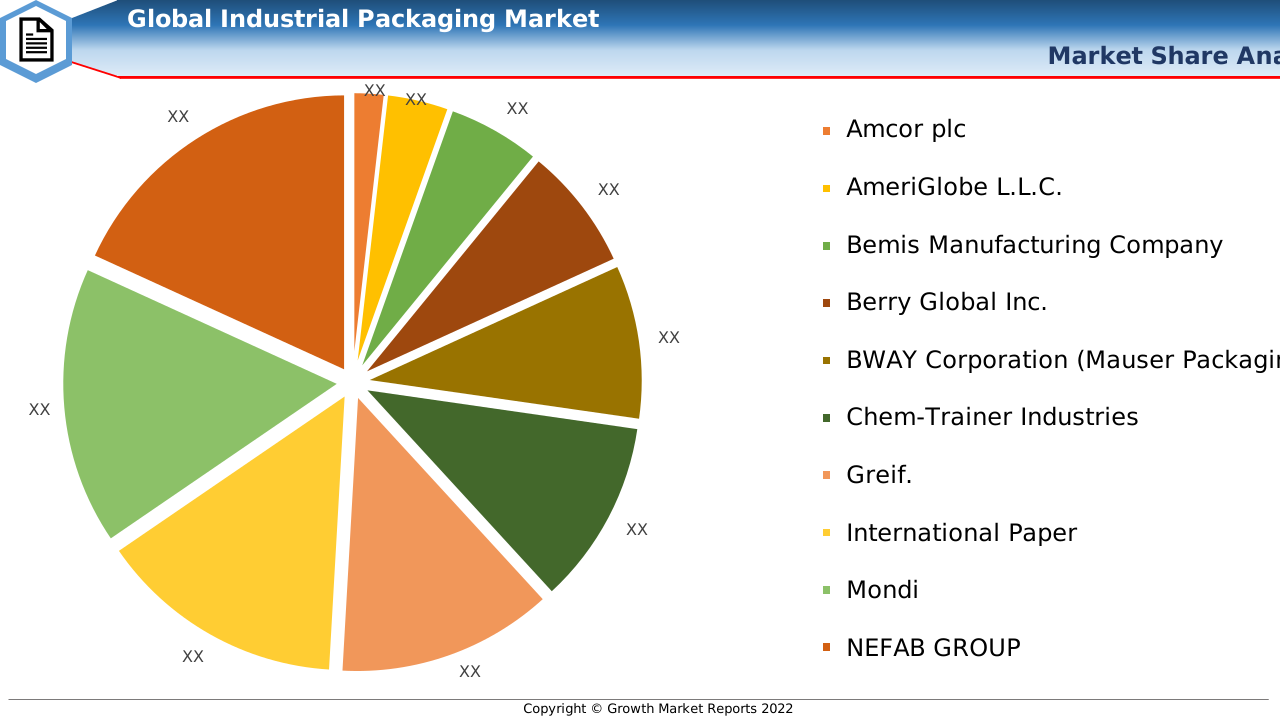

Global Industrial Packaging Market Key Players

Frequently Asked Questions

Amcor plc; AmeriGlobe L.L.C.; Bemis Manufacturing Company; Berry Global Inc.; BWAY Corporation (Mauser Packaging Solutions); Chem-Trainer Industries; Greif.; International Paper; Mondi; NEFAB GROUP; Orora Packaging Australia Pty Ltd; Schoeller Allibert; and Sealed Air are some key players competing in the global industrial packaging market.

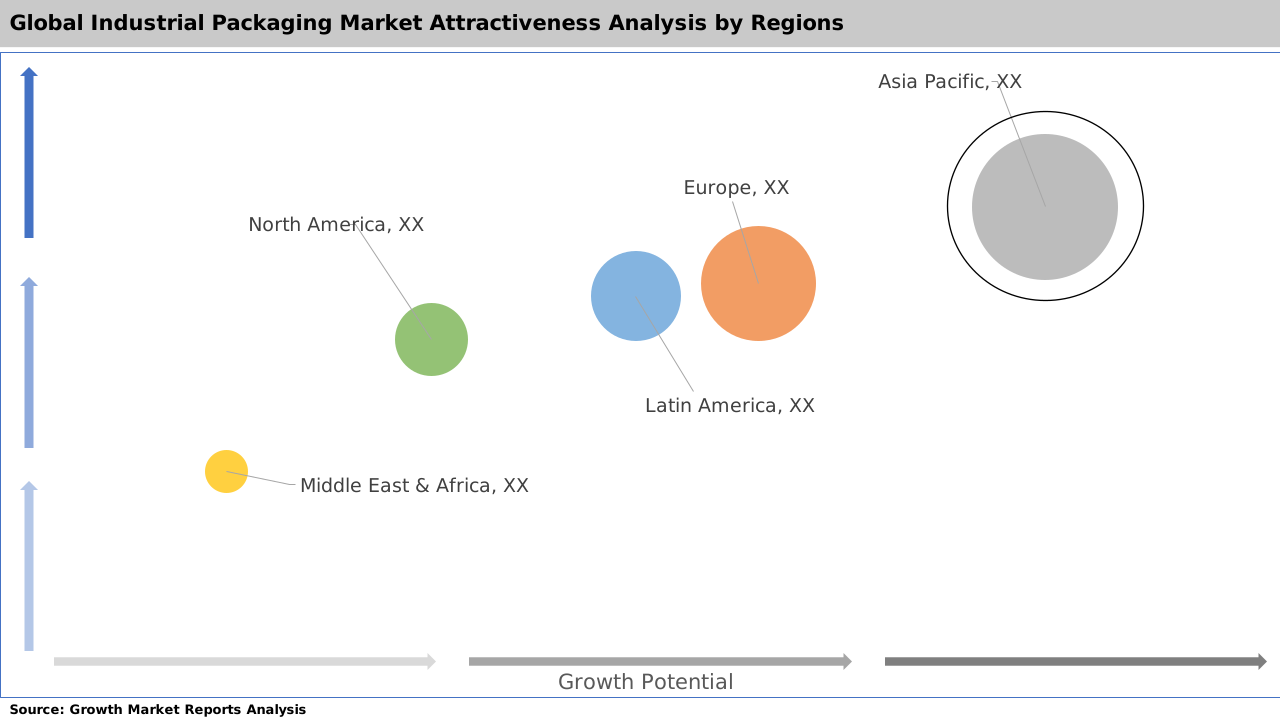
Asia Pacific is anticipated to dominate the global industrial packaging market during the forecast period.

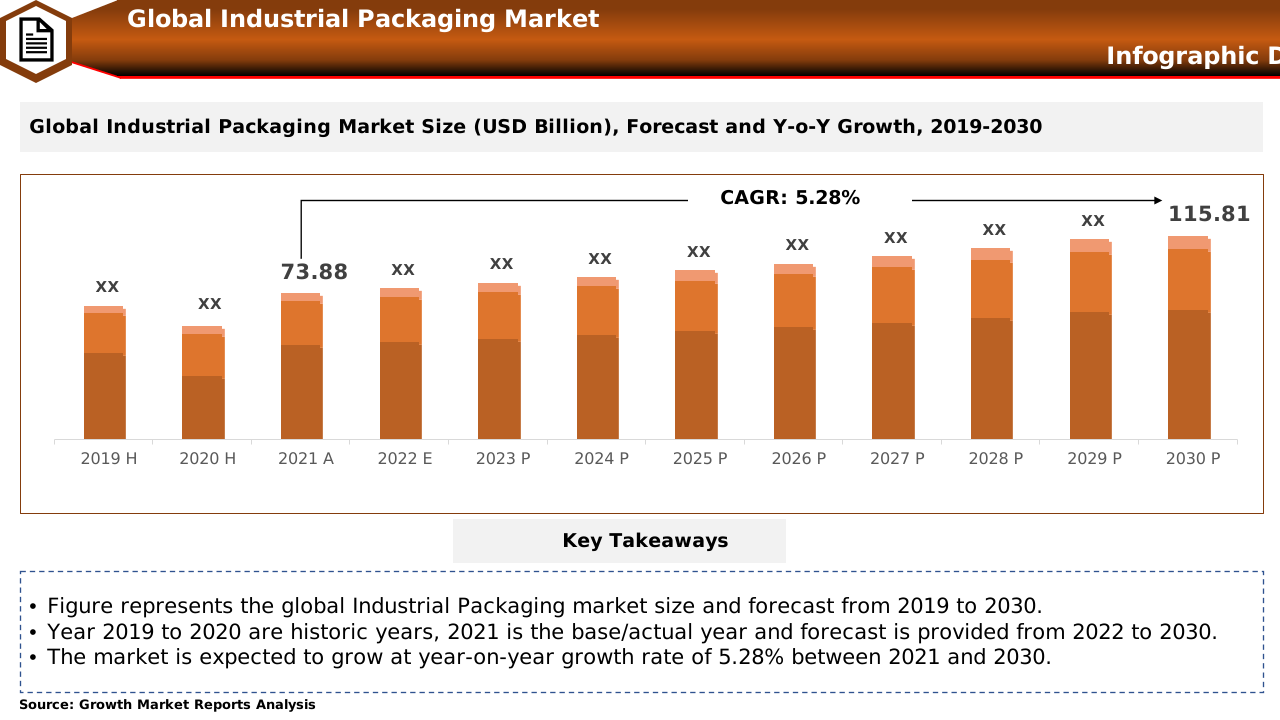
The global industrial packaging market size was around USD 73.88 billion in 2021.

The global industrial packaging market is projected to reach USD 115.81 billion by 2030.

Packaging type, material, product type, technology, and application are the segments provided in the global industrial packaging market report.

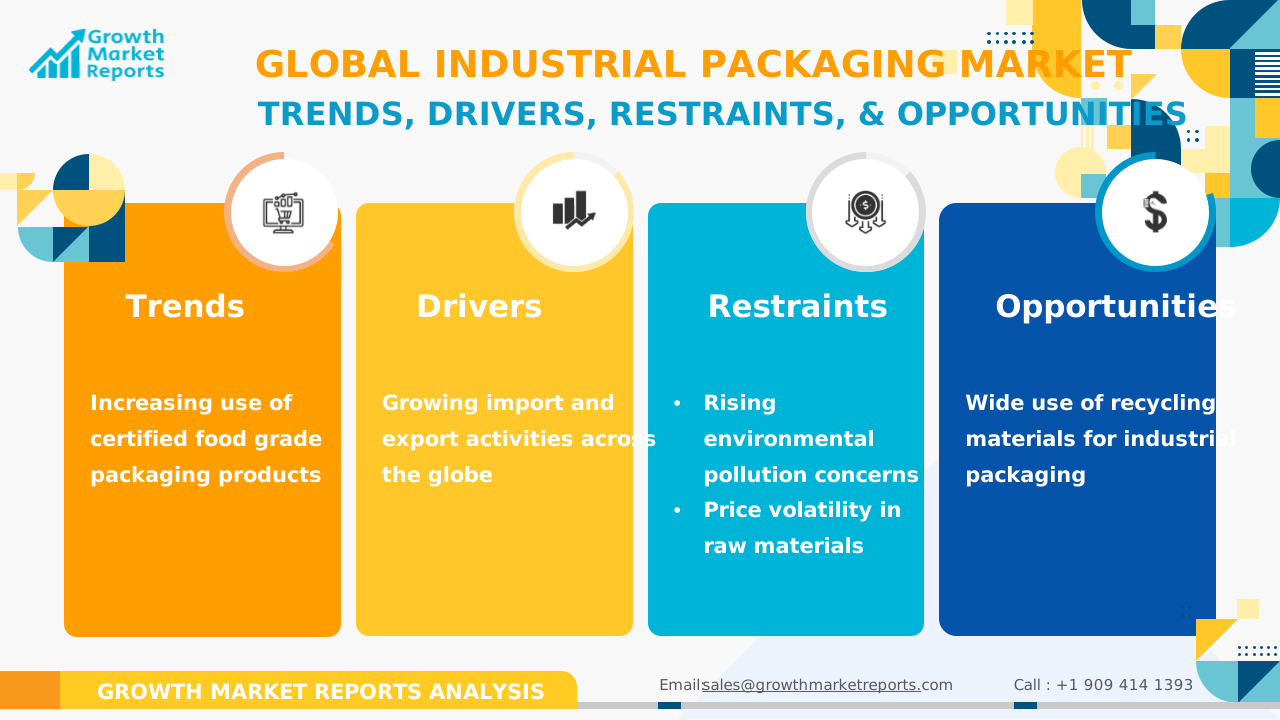
The global industrial packaging market is driven by growing import and export activities across the globe, increasing demand from chemical and construction industries, and rising demand from end-user industries requiring protective packaging.

The global industrial packaging market is anticipated to expand at a CAGR of 5.28% during the forecast period, 2022–2030.

Table Of Content

Chapter 1 Executive Summary
Chapter 2 Assumptions and Acronyms Used
Chapter 3 Research Methodology
Chapter 4 Industrial Packaging Market Overview
   4.1 Introduction
      4.1.1 Market Taxonomy
      4.1.2 Market Definition
      4.1.3 Macro-Economic Factors Impacting the Market Growth
   4.2 Industrial Packaging Market Dynamics
      4.2.1 Market Drivers
      4.2.2 Market Restraints
      4.2.3 Market Opportunity
   4.3 Industrial Packaging Market - Supply Chain Analysis
      4.3.1 List of Key Suppliers
      4.3.2 List of Key Distributors
      4.3.3 List of Key Consumers
   4.4 Key Forces Shaping the Industrial Packaging Market
      4.4.1 Bargaining Power of Suppliers
      4.4.2 Bargaining Power of Buyers
      4.4.3 Threat of Substitution
      4.4.4 Threat of New Entrants
      4.4.5 Competitive Rivalry
   4.5 Global Industrial Packaging Market Size & Forecast, 2023-2032
      4.5.1 Industrial Packaging Market Size and Y-o-Y Growth
      4.5.2 Industrial Packaging Market Absolute $ Opportunity

Chapter 5 Global Industrial Packaging Market Analysis and Forecast By Product Type
   5.1 Introduction
      5.1.1 Key Market Trends & Growth Opportunities By Product Type
      5.1.2 Basis Point Share (BPS) Analysis By Product Type
      5.1.3 Absolute $ Opportunity Assessment By Product Type
   5.2 Industrial Packaging Market Size Forecast By Product Type
      5.2.1 Rigid Packaging
      5.2.2 Flexible Packaging
      5.2.3 Bulk Containers
      5.2.4 Drums
      5.2.5 Sacks
      5.2.6 Crates
      5.2.7 Others
   5.3 Market Attractiveness Analysis By Product Type

Chapter 6 Global Industrial Packaging Market Analysis and Forecast By Material
   6.1 Introduction
      6.1.1 Key Market Trends & Growth Opportunities By Material
      6.1.2 Basis Point Share (BPS) Analysis By Material
      6.1.3 Absolute $ Opportunity Assessment By Material
   6.2 Industrial Packaging Market Size Forecast By Material
      6.2.1 Plastic
      6.2.2 Metal
      6.2.3 Paper & Paperboard
      6.2.4 Wood
      6.2.5 Others
   6.3 Market Attractiveness Analysis By Material

Chapter 7 Global Industrial Packaging Market Analysis and Forecast By Application
   7.1 Introduction
      7.1.1 Key Market Trends & Growth Opportunities By Application
      7.1.2 Basis Point Share (BPS) Analysis By Application
      7.1.3 Absolute $ Opportunity Assessment By Application
   7.2 Industrial Packaging Market Size Forecast By Application
      7.2.1 Food & Beverages
      7.2.2 Chemicals & Pharmaceuticals
      7.2.3 Building & Construction
      7.2.4 Automotive
      7.2.5 Oil & Lubricants
      7.2.6 Others
   7.3 Market Attractiveness Analysis By Application

Chapter 8 Global Industrial Packaging Market Analysis and Forecast By End-User
   8.1 Introduction
      8.1.1 Key Market Trends & Growth Opportunities By End-User
      8.1.2 Basis Point Share (BPS) Analysis By End-User
      8.1.3 Absolute $ Opportunity Assessment By End-User
   8.2 Industrial Packaging Market Size Forecast By End-User
      8.2.1 Manufacturing
      8.2.2 Transportation & Logistics
      8.2.3 Agriculture
      8.2.4 Others
   8.3 Market Attractiveness Analysis By End-User

Chapter 9 Global Industrial Packaging Market Analysis and Forecast by Region
   9.1 Introduction
      9.1.1 Key Market Trends & Growth Opportunities By Region
      9.1.2 Basis Point Share (BPS) Analysis By Region
      9.1.3 Absolute $ Opportunity Assessment By Region
   9.2 Industrial Packaging Market Size Forecast By Region
      9.2.1 North America
      9.2.2 Europe
      9.2.3 Asia Pacific
      9.2.4 Latin America
      9.2.5 Middle East & Africa (MEA)
   9.3 Market Attractiveness Analysis By Region

Chapter 10 Coronavirus Disease (COVID-19) Impact 
   10.1 Introduction 
   10.2 Current & Future Impact Analysis 
   10.3 Economic Impact Analysis 
   10.4 Government Policies 
   10.5 Investment Scenario

Chapter 11 North America Industrial Packaging Analysis and Forecast
   11.1 Introduction
   11.2 North America Industrial Packaging Market Size Forecast by Country
      11.2.1 U.S.
      11.2.2 Canada
   11.3 Basis Point Share (BPS) Analysis by Country
   11.4 Absolute $ Opportunity Assessment by Country
   11.5 Market Attractiveness Analysis by Country
   11.6 North America Industrial Packaging Market Size Forecast By Product Type
      11.6.1 Rigid Packaging
      11.6.2 Flexible Packaging
      11.6.3 Bulk Containers
      11.6.4 Drums
      11.6.5 Sacks
      11.6.6 Crates
      11.6.7 Others
   11.7 Basis Point Share (BPS) Analysis By Product Type 
   11.8 Absolute $ Opportunity Assessment By Product Type 
   11.9 Market Attractiveness Analysis By Product Type
   11.10 North America Industrial Packaging Market Size Forecast By Material
      11.10.1 Plastic
      11.10.2 Metal
      11.10.3 Paper & Paperboard
      11.10.4 Wood
      11.10.5 Others
   11.11 Basis Point Share (BPS) Analysis By Material 
   11.12 Absolute $ Opportunity Assessment By Material 
   11.13 Market Attractiveness Analysis By Material
   11.14 North America Industrial Packaging Market Size Forecast By Application
      11.14.1 Food & Beverages
      11.14.2 Chemicals & Pharmaceuticals
      11.14.3 Building & Construction
      11.14.4 Automotive
      11.14.5 Oil & Lubricants
      11.14.6 Others
   11.15 Basis Point Share (BPS) Analysis By Application 
   11.16 Absolute $ Opportunity Assessment By Application 
   11.17 Market Attractiveness Analysis By Application
   11.18 North America Industrial Packaging Market Size Forecast By End-User
      11.18.1 Manufacturing
      11.18.2 Transportation & Logistics
      11.18.3 Agriculture
      11.18.4 Others
   11.19 Basis Point Share (BPS) Analysis By End-User 
   11.20 Absolute $ Opportunity Assessment By End-User 
   11.21 Market Attractiveness Analysis By End-User

Chapter 12 Europe Industrial Packaging Analysis and Forecast
   12.1 Introduction
   12.2 Europe Industrial Packaging Market Size Forecast by Country
      12.2.1 Germany
      12.2.2 France
      12.2.3 Italy
      12.2.4 U.K.
      12.2.5 Spain
      12.2.6 Russia
      12.2.7 Rest of Europe
   12.3 Basis Point Share (BPS) Analysis by Country
   12.4 Absolute $ Opportunity Assessment by Country
   12.5 Market Attractiveness Analysis by Country
   12.6 Europe Industrial Packaging Market Size Forecast By Product Type
      12.6.1 Rigid Packaging
      12.6.2 Flexible Packaging
      12.6.3 Bulk Containers
      12.6.4 Drums
      12.6.5 Sacks
      12.6.6 Crates
      12.6.7 Others
   12.7 Basis Point Share (BPS) Analysis By Product Type 
   12.8 Absolute $ Opportunity Assessment By Product Type 
   12.9 Market Attractiveness Analysis By Product Type
   12.10 Europe Industrial Packaging Market Size Forecast By Material
      12.10.1 Plastic
      12.10.2 Metal
      12.10.3 Paper & Paperboard
      12.10.4 Wood
      12.10.5 Others
   12.11 Basis Point Share (BPS) Analysis By Material 
   12.12 Absolute $ Opportunity Assessment By Material 
   12.13 Market Attractiveness Analysis By Material
   12.14 Europe Industrial Packaging Market Size Forecast By Application
      12.14.1 Food & Beverages
      12.14.2 Chemicals & Pharmaceuticals
      12.14.3 Building & Construction
      12.14.4 Automotive
      12.14.5 Oil & Lubricants
      12.14.6 Others
   12.15 Basis Point Share (BPS) Analysis By Application 
   12.16 Absolute $ Opportunity Assessment By Application 
   12.17 Market Attractiveness Analysis By Application
   12.18 Europe Industrial Packaging Market Size Forecast By End-User
      12.18.1 Manufacturing
      12.18.2 Transportation & Logistics
      12.18.3 Agriculture
      12.18.4 Others
   12.19 Basis Point Share (BPS) Analysis By End-User 
   12.20 Absolute $ Opportunity Assessment By End-User 
   12.21 Market Attractiveness Analysis By End-User

Chapter 13 Asia Pacific Industrial Packaging Analysis and Forecast
   13.1 Introduction
   13.2 Asia Pacific Industrial Packaging Market Size Forecast by Country
      13.2.1 China
      13.2.2 Japan
      13.2.3 South Korea
      13.2.4 India
      13.2.5 Australia
      13.2.6 South East Asia (SEA)
      13.2.7 Rest of Asia Pacific (APAC)
   13.3 Basis Point Share (BPS) Analysis by Country
   13.4 Absolute $ Opportunity Assessment by Country
   13.5 Market Attractiveness Analysis by Country
   13.6 Asia Pacific Industrial Packaging Market Size Forecast By Product Type
      13.6.1 Rigid Packaging
      13.6.2 Flexible Packaging
      13.6.3 Bulk Containers
      13.6.4 Drums
      13.6.5 Sacks
      13.6.6 Crates
      13.6.7 Others
   13.7 Basis Point Share (BPS) Analysis By Product Type 
   13.8 Absolute $ Opportunity Assessment By Product Type 
   13.9 Market Attractiveness Analysis By Product Type
   13.10 Asia Pacific Industrial Packaging Market Size Forecast By Material
      13.10.1 Plastic
      13.10.2 Metal
      13.10.3 Paper & Paperboard
      13.10.4 Wood
      13.10.5 Others
   13.11 Basis Point Share (BPS) Analysis By Material 
   13.12 Absolute $ Opportunity Assessment By Material 
   13.13 Market Attractiveness Analysis By Material
   13.14 Asia Pacific Industrial Packaging Market Size Forecast By Application
      13.14.1 Food & Beverages
      13.14.2 Chemicals & Pharmaceuticals
      13.14.3 Building & Construction
      13.14.4 Automotive
      13.14.5 Oil & Lubricants
      13.14.6 Others
   13.15 Basis Point Share (BPS) Analysis By Application 
   13.16 Absolute $ Opportunity Assessment By Application 
   13.17 Market Attractiveness Analysis By Application
   13.18 Asia Pacific Industrial Packaging Market Size Forecast By End-User
      13.18.1 Manufacturing
      13.18.2 Transportation & Logistics
      13.18.3 Agriculture
      13.18.4 Others
   13.19 Basis Point Share (BPS) Analysis By End-User 
   13.20 Absolute $ Opportunity Assessment By End-User 
   13.21 Market Attractiveness Analysis By End-User

Chapter 14 Latin America Industrial Packaging Analysis and Forecast
   14.1 Introduction
   14.2 Latin America Industrial Packaging Market Size Forecast by Country
      14.2.1 Brazil
      14.2.2 Mexico
      14.2.3 Rest of Latin America (LATAM)
   14.3 Basis Point Share (BPS) Analysis by Country
   14.4 Absolute $ Opportunity Assessment by Country
   14.5 Market Attractiveness Analysis by Country
   14.6 Latin America Industrial Packaging Market Size Forecast By Product Type
      14.6.1 Rigid Packaging
      14.6.2 Flexible Packaging
      14.6.3 Bulk Containers
      14.6.4 Drums
      14.6.5 Sacks
      14.6.6 Crates
      14.6.7 Others
   14.7 Basis Point Share (BPS) Analysis By Product Type 
   14.8 Absolute $ Opportunity Assessment By Product Type 
   14.9 Market Attractiveness Analysis By Product Type
   14.10 Latin America Industrial Packaging Market Size Forecast By Material
      14.10.1 Plastic
      14.10.2 Metal
      14.10.3 Paper & Paperboard
      14.10.4 Wood
      14.10.5 Others
   14.11 Basis Point Share (BPS) Analysis By Material 
   14.12 Absolute $ Opportunity Assessment By Material 
   14.13 Market Attractiveness Analysis By Material
   14.14 Latin America Industrial Packaging Market Size Forecast By Application
      14.14.1 Food & Beverages
      14.14.2 Chemicals & Pharmaceuticals
      14.14.3 Building & Construction
      14.14.4 Automotive
      14.14.5 Oil & Lubricants
      14.14.6 Others
   14.15 Basis Point Share (BPS) Analysis By Application 
   14.16 Absolute $ Opportunity Assessment By Application 
   14.17 Market Attractiveness Analysis By Application
   14.18 Latin America Industrial Packaging Market Size Forecast By End-User
      14.18.1 Manufacturing
      14.18.2 Transportation & Logistics
      14.18.3 Agriculture
      14.18.4 Others
   14.19 Basis Point Share (BPS) Analysis By End-User 
   14.20 Absolute $ Opportunity Assessment By End-User 
   14.21 Market Attractiveness Analysis By End-User

Chapter 15 Middle East & Africa (MEA) Industrial Packaging Analysis and Forecast
   15.1 Introduction
   15.2 Middle East & Africa (MEA) Industrial Packaging Market Size Forecast by Country
      15.2.1 Saudi Arabia
      15.2.2 South Africa
      15.2.3 UAE
      15.2.4 Rest of Middle East & Africa (MEA)
   15.3 Basis Point Share (BPS) Analysis by Country
   15.4 Absolute $ Opportunity Assessment by Country
   15.5 Market Attractiveness Analysis by Country
   15.6 Middle East & Africa (MEA) Industrial Packaging Market Size Forecast By Product Type
      15.6.1 Rigid Packaging
      15.6.2 Flexible Packaging
      15.6.3 Bulk Containers
      15.6.4 Drums
      15.6.5 Sacks
      15.6.6 Crates
      15.6.7 Others
   15.7 Basis Point Share (BPS) Analysis By Product Type 
   15.8 Absolute $ Opportunity Assessment By Product Type 
   15.9 Market Attractiveness Analysis By Product Type
   15.10 Middle East & Africa (MEA) Industrial Packaging Market Size Forecast By Material
      15.10.1 Plastic
      15.10.2 Metal
      15.10.3 Paper & Paperboard
      15.10.4 Wood
      15.10.5 Others
   15.11 Basis Point Share (BPS) Analysis By Material 
   15.12 Absolute $ Opportunity Assessment By Material 
   15.13 Market Attractiveness Analysis By Material
   15.14 Middle East & Africa (MEA) Industrial Packaging Market Size Forecast By Application
      15.14.1 Food & Beverages
      15.14.2 Chemicals & Pharmaceuticals
      15.14.3 Building & Construction
      15.14.4 Automotive
      15.14.5 Oil & Lubricants
      15.14.6 Others
   15.15 Basis Point Share (BPS) Analysis By Application 
   15.16 Absolute $ Opportunity Assessment By Application 
   15.17 Market Attractiveness Analysis By Application
   15.18 Middle East & Africa (MEA) Industrial Packaging Market Size Forecast By End-User
      15.18.1 Manufacturing
      15.18.2 Transportation & Logistics
      15.18.3 Agriculture
      15.18.4 Others
   15.19 Basis Point Share (BPS) Analysis By End-User 
   15.20 Absolute $ Opportunity Assessment By End-User 
   15.21 Market Attractiveness Analysis By End-User

Chapter 16 Competition Landscape 
   16.1 Industrial Packaging Market: Competitive Dashboard
   16.2 Global Industrial Packaging Market: Market Share Analysis, 2023
   16.3 Company Profiles (Details – Overview, Financials, Developments, Strategy) 
      16.3.1 Amcor Plc
Mondi Group
International Paper Company
WestRock Company
Berry Global Inc.
Smurfit Kappa Group
Sonoco Products Company
Sealed Air Corporation
DS Smith Plc
Crown Holdings Inc.
Stora Enso Oyj
Huhtamaki Oyj
Greif Inc.
Bemis Company, Inc.
AptarGroup, Inc.
Ball Corporation
Owens-Illinois, Inc.
Packaging Corporation of America
Ardagh Group S.A.
Georgia-Pacific LLC

Methodology

Our Clients

Deloitte
The John Holland Group
FedEx Logistics
General Electric
Microsoft
Dassault Aviation
Siemens Healthcare
sinopec