Industrial Nitrogen Market Research Report 2033

Industrial Nitrogen Market Research Report 2033

Segments - by Form (Compressed Gas, Liquid Nitrogen), by Technology (Cryogenic Fractionation, Pressure Swing Adsorption, Membrane Separation), by Application (Food & Beverage, Chemical & Pharmaceutical, Metal Manufacturing & Fabrication, Electronics, Oil & Gas, Healthcare, Others), by End-User (Manufacturing, Healthcare, Food Processing, Electronics, Others)

https://growthmarketreports.com/Raksha
Author : Raksha Sharma
https://growthmarketreports.com/Vaibhav
Fact-checked by : V. Chandola
https://growthmarketreports.com/Shruti
Editor : Shruti Bhat

Upcoming | Report ID :MC-2915 | 4.4 Rating | 23 Reviews | 275 Pages | Format : Docx PDF

Report Description


Industrial Nitrogen Market Outlook

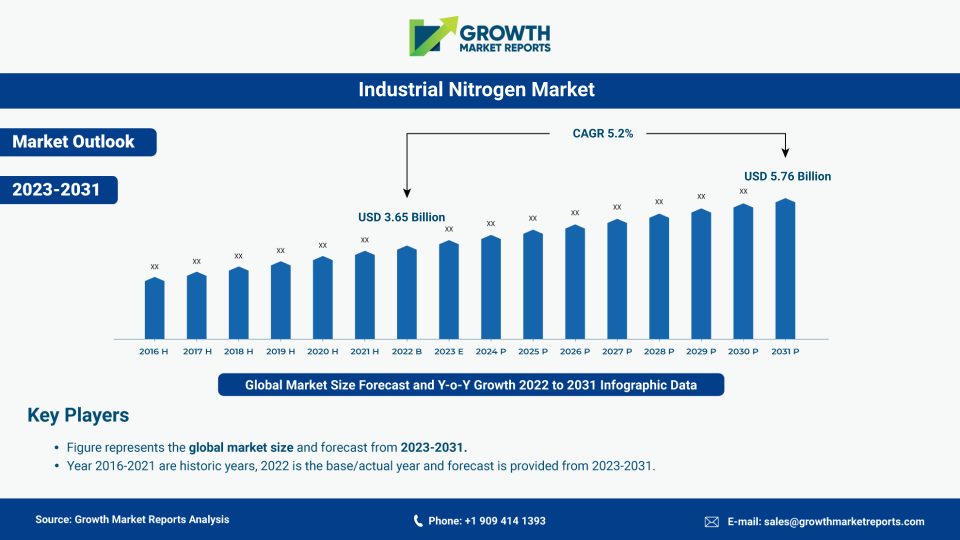
According to our latest research, the global industrial nitrogen market size reached USD 18.7 billion in 2024, with a robust compound annual growth rate (CAGR) of 5.3% projected from 2025 to 2033. By the end of the forecast period, the market is expected to achieve a valuation of USD 29.7 billion. This sustained growth is primarily driven by the expanding use of industrial nitrogen across a wide array of sectors including food and beverage, healthcare, electronics, chemical manufacturing, and metal fabrication, as well as the ongoing technological advancements in nitrogen production and distribution methods.

One of the primary growth factors for the industrial nitrogen market is the increasing demand for nitrogen in the food and beverage industry. Nitrogen is extensively used for food packaging, preservation, and freezing applications due to its inert properties, which help in inhibiting oxidation and spoilage, thereby extending the shelf life of perishable products. With the global rise in processed and packaged food consumption, particularly in emerging economies, the need for high-purity nitrogen has surged. Additionally, the growing trend toward convenience foods and ready-to-eat meals has further amplified the requirement for reliable nitrogen supply, supporting the steady expansion of the market.

The chemical and pharmaceutical industries represent another significant driver for the industrial nitrogen market. Nitrogen is indispensable for creating controlled atmospheres, blanketing, purging, and pressurization processes in chemical manufacturing, as well as for inerting and packaging operations in pharmaceuticals. The rapid expansion of these industries, especially in Asia Pacific and North America, is underpinned by increased investments in research and development, stringent safety regulations, and the need for high-quality, contamination-free production environments. Moreover, the rising demand for specialty chemicals and active pharmaceutical ingredients (APIs) has further propelled the adoption of advanced nitrogen generation and supply technologies.

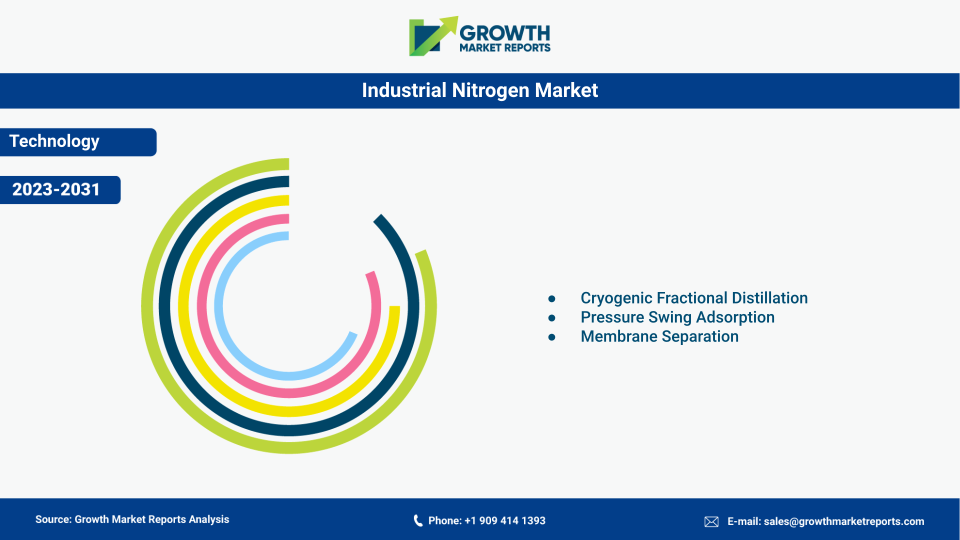
Technological advancements in nitrogen production methods, such as cryogenic fractionation, pressure swing adsorption (PSA), and membrane separation, have also played a crucial role in market growth. These innovations have enabled the efficient and cost-effective generation of high-purity nitrogen tailored to specific industrial applications. The integration of automation and digital monitoring systems in nitrogen plants has further enhanced operational efficiency, reliability, and safety. As industries increasingly prioritize sustainability and energy efficiency, the adoption of on-site nitrogen generation systems is expected to rise, reducing reliance on bulk nitrogen deliveries and minimizing environmental impact.

From a regional perspective, Asia Pacific continues to dominate the global industrial nitrogen market, accounting for the largest share in 2024. The region’s leadership is attributed to the rapid industrialization, expanding manufacturing base, and significant investments in infrastructure development across countries such as China, India, Japan, and South Korea. North America and Europe follow closely, driven by established chemical, healthcare, and electronics sectors, as well as stringent regulatory standards for product quality and safety. Meanwhile, the Middle East & Africa and Latin America are witnessing steady growth, supported by increasing investments in oil and gas, petrochemicals, and food processing industries.

Global Industrial Nitrogen Industry Outlook

Form Analysis

The industrial nitrogen market is segmented by form into compressed gas and liquid nitrogen, each catering to distinct application requirements across industries. Compressed nitrogen gas is widely used for inerting, purging, and pressurization processes, especially in chemical, pharmaceutical, and electronics manufacturing. Its ease of storage, transportation, and on-demand availability make it the preferred choice for facilities requiring continuous and controlled nitrogen supply. The adoption of compressed nitrogen is further supported by advancements in cylinder technologies and distribution networks, ensuring consistent quality and safety standards. As industries increasingly seek flexible and scalable gas solutions, the demand for compressed nitrogen is expected to maintain a steady upward trajectory.

Liquid nitrogen, on the other hand, finds extensive use in applications that require extremely low temperatures, such as cryopreservation, food freezing, and metal processing. The unique properties of liquid nitrogen allow for rapid cooling and preservation, making it indispensable in the healthcare, food processing, and electronics sectors. The growing popularity of cryogenic medical procedures, such as tissue and cell preservation, as well as the increasing adoption of cryogenic freezing in food processing, have significantly contributed to the rising demand for liquid nitrogen. Additionally, the use of liquid nitrogen in advanced manufacturing processes, such as 3D printing and electronics fabrication, is further driving market growth.

In terms of market share, compressed nitrogen gas currently holds a larger portion of the global industrial nitrogen market, owing to its versatility and widespread use in multiple industries. However, the liquid nitrogen segment is projected to witness faster growth during the forecast period, driven by the rising demand for cryogenic applications and advancements in storage and distribution technologies. The integration of automated liquid nitrogen delivery systems and improved safety protocols has enhanced the efficiency and reliability of liquid nitrogen supply, encouraging its adoption in both established and emerging markets.

The choice between compressed gas and liquid nitrogen is often dictated by the specific requirements of end-users, including purity levels, volume, and application type. While compressed gas is favored for its convenience and lower handling risks, liquid nitrogen is essential for processes that demand ultra-low temperatures and rapid cooling rates. As industries continue to innovate and diversify their product offerings, the need for customized nitrogen solutions in both forms is expected to grow, presenting new opportunities for market players to expand their product portfolios and enhance customer value.

Report Scope

Attributes Details
Report Title Industrial Nitrogen Market Research Report 2033
By Form Compressed Gas, Liquid Nitrogen
By Technology Cryogenic Fractionation, Pressure Swing Adsorption, Membrane Separation
By Application Food & Beverage, Chemical & Pharmaceutical, Metal Manufacturing & Fabrication, Electronics, Oil & Gas, Healthcare, Others
By End-User Manufacturing, Healthcare, Food Processing, Electronics, Others
Regions Covered North America, Europe, APAC, Latin America, MEA
Base Year 2024
Historic Data 2018-2023
Forecast Period 2025-2033
Number of Pages 275
Number of Tables & Figures 294
Customization Available Yes, the report can be customized as per your need.

Technology Analysis

The industrial nitrogen market is characterized by the use of advanced production technologies, primarily cryogenic fractionation, pressure swing adsorption (PSA), and membrane separation. Cryogenic fractionation remains the most widely adopted method, particularly for large-scale nitrogen production. This process involves the liquefaction and subsequent separation of air into its constituent gases at extremely low temperatures, resulting in high-purity nitrogen output. The reliability, scalability, and cost-effectiveness of cryogenic plants make them the preferred choice for industries with high-volume nitrogen requirements, such as petrochemicals, refineries, and steel manufacturing. Continuous investments in cryogenic infrastructure and automation have further enhanced the operational efficiency and safety of these plants.

Pressure swing adsorption (PSA) technology has gained significant traction in recent years, especially among small and medium enterprises seeking on-site nitrogen generation solutions. PSA systems utilize adsorbent materials to selectively remove oxygen and other impurities from compressed air, producing nitrogen with customizable purity levels. The flexibility, modularity, and quick start-up capabilities of PSA units make them ideal for decentralized operations, reducing the dependence on bulk nitrogen deliveries and associated logistics costs. The growing focus on sustainability and energy efficiency has also fueled the adoption of PSA technology, as it enables industries to generate nitrogen on demand while minimizing waste and environmental impact.

Membrane separation technology represents another innovative approach to nitrogen production, leveraging semi-permeable membranes to selectively separate nitrogen from compressed air. This method is particularly suited for applications requiring moderate purity levels and continuous nitrogen supply, such as food packaging, electronics assembly, and laboratory operations. The compact footprint, low maintenance requirements, and ease of integration with existing systems have made membrane separation an attractive option for industries with limited space and resources. As membrane materials and designs continue to evolve, the efficiency and cost-effectiveness of this technology are expected to improve, further expanding its adoption across various sectors.

The choice of nitrogen production technology is influenced by several factors, including required purity levels, production capacity, operational costs, and environmental considerations. While cryogenic fractionation remains dominant for high-volume and high-purity applications, PSA and membrane separation technologies are increasingly favored for their adaptability, lower capital investment, and reduced carbon footprint. The ongoing shift toward decentralized and on-site nitrogen generation, coupled with advancements in digital monitoring and automation, is expected to drive further innovation in nitrogen production technologies, enabling industries to achieve greater efficiency, flexibility, and sustainability.

Application Analysis

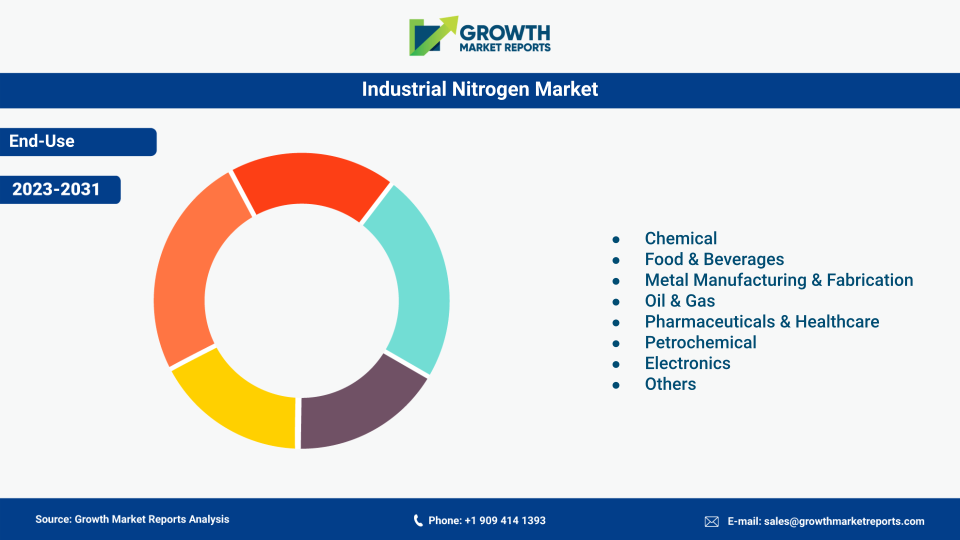
The industrial nitrogen market serves a diverse range of applications, with the food and beverage sector emerging as one of the largest and fastest-growing segments. Nitrogen is extensively used for modified atmosphere packaging (MAP), food freezing, and beverage dispensing, owing to its inert properties and ability to inhibit microbial growth and oxidation. The increasing consumer demand for fresh, minimally processed, and long-shelf-life food products has driven the adoption of nitrogen-based preservation and packaging techniques. Additionally, the expansion of the global cold chain logistics industry has further accelerated the use of liquid nitrogen for rapid freezing and transportation of perishable goods, ensuring food safety and quality throughout the supply chain.

The chemical and pharmaceutical industries represent another significant application area for industrial nitrogen. In chemical manufacturing, nitrogen is used for blanketing, purging, and pressurization processes to prevent unwanted reactions and ensure product purity. The pharmaceutical sector relies on high-purity nitrogen for inerting, packaging, and quality control operations, as well as for the production of active pharmaceutical ingredients (APIs) and sterile environments. The stringent regulatory standards governing product safety and quality in these industries have necessitated the use of advanced nitrogen generation and supply systems, driving continuous investment in technology and infrastructure.

Metal manufacturing and fabrication is another key application segment, where nitrogen is used for annealing, heat treatment, and laser cutting processes. The inert atmosphere provided by nitrogen helps prevent oxidation and improves the quality and consistency of metal products. The growing demand for high-performance metals and alloys in automotive, aerospace, construction, and electronics industries has fueled the adoption of nitrogen-based processes, supporting the overall growth of the industrial nitrogen market. Additionally, the increasing use of nitrogen in advanced manufacturing techniques, such as additive manufacturing and 3D printing, is expected to create new opportunities for market expansion.

Other notable application areas include the electronics and oil and gas industries. In electronics manufacturing, nitrogen is used for soldering, wave soldering, and component assembly, ensuring high-quality and reliable electronic products. The oil and gas sector utilizes nitrogen for enhanced oil recovery, pipeline purging, and pressure testing, benefiting from its non-reactive and non-flammable properties. The healthcare industry also relies on nitrogen for cryopreservation, medical gas supply, and laboratory applications, further contributing to the growing demand for industrial nitrogen across the globe.

End-User Analysis

The industrial nitrogen market is segmented by end-user into manufacturing, healthcare, food processing, electronics, and others, each with unique requirements and growth drivers. The manufacturing sector accounts for the largest share of the market, driven by the widespread use of nitrogen in metal processing, chemical production, and industrial automation. The increasing adoption of advanced manufacturing technologies, such as robotics and additive manufacturing, has further amplified the need for high-purity nitrogen to ensure process efficiency and product quality. The ongoing shift toward smart factories and Industry 4.0 initiatives is expected to drive further investment in nitrogen generation and supply systems, supporting the continued growth of the manufacturing segment.

The healthcare industry represents a rapidly growing end-user segment, fueled by the rising demand for medical gases, cryopreservation, and laboratory research. Nitrogen is essential for preserving biological samples, supporting surgical procedures, and maintaining sterile environments in hospitals and research facilities. The increasing prevalence of chronic diseases, advancements in medical technology, and the expansion of healthcare infrastructure in emerging markets have contributed to the rising consumption of industrial nitrogen in the healthcare sector. Additionally, the growing focus on personalized medicine and biopharmaceutical research is expected to create new opportunities for nitrogen suppliers and service providers.

Food processing is another major end-user of industrial nitrogen, with applications ranging from packaging and preservation to freezing and transportation. The global shift toward convenience foods, ready-to-eat meals, and online grocery delivery has driven the demand for nitrogen-based solutions that ensure product freshness, safety, and extended shelf life. The expansion of food processing facilities and cold chain logistics networks, particularly in Asia Pacific and Latin America, has further supported the growth of this segment. As consumers become increasingly health-conscious and demand higher quality food products, the need for advanced nitrogen applications in food processing is expected to rise.

The electronics industry also relies heavily on industrial nitrogen for manufacturing and assembly processes. Nitrogen is used to create controlled atmospheres during soldering, component assembly, and testing, ensuring the reliability and performance of electronic devices. The rapid growth of the global electronics market, driven by advancements in consumer electronics, telecommunications, and semiconductor manufacturing, has led to increased consumption of high-purity nitrogen. As the industry continues to innovate and develop new technologies, the demand for specialized nitrogen solutions is expected to grow, providing new opportunities for market players.

Opportunities & Threats

The industrial nitrogen market presents numerous opportunities for growth and innovation, particularly in the development of advanced nitrogen generation and supply technologies. The increasing adoption of on-site nitrogen generation systems, driven by the need for cost-effective, reliable, and sustainable gas supply, has opened new avenues for equipment manufacturers and service providers. The integration of digital monitoring, automation, and predictive maintenance technologies has enhanced the efficiency and safety of nitrogen plants, enabling industries to optimize their operations and reduce downtime. Additionally, the growing emphasis on environmental sustainability and energy efficiency has created opportunities for the development of eco-friendly nitrogen production methods, such as renewable energy-powered generation systems and low-emission processes.

Emerging markets, particularly in Asia Pacific, Latin America, and the Middle East & Africa, offer significant growth potential for the industrial nitrogen market. Rapid industrialization, infrastructure development, and expanding manufacturing bases in these regions have created strong demand for high-quality nitrogen supply. The increasing investments in food processing, healthcare, electronics, and oil and gas industries have further fueled the need for advanced nitrogen solutions. Market players that can tailor their products and services to meet the unique requirements of these regions, while ensuring compliance with local regulations and standards, are well-positioned to capitalize on these opportunities and expand their global footprint.

Despite the positive outlook, the industrial nitrogen market faces several challenges and restraining factors. Fluctuations in raw material prices, particularly for energy and feedstock, can impact the cost structure and profitability of nitrogen production. Additionally, the high capital investment required for setting up large-scale nitrogen plants and distribution networks may pose barriers to entry for new players. Stringent environmental regulations and safety standards governing nitrogen production, storage, and transportation also necessitate continuous investment in technology and compliance, increasing operational complexity. Market players must navigate these challenges by investing in innovation, optimizing their supply chains, and adopting best practices in safety and sustainability.

Regional Outlook

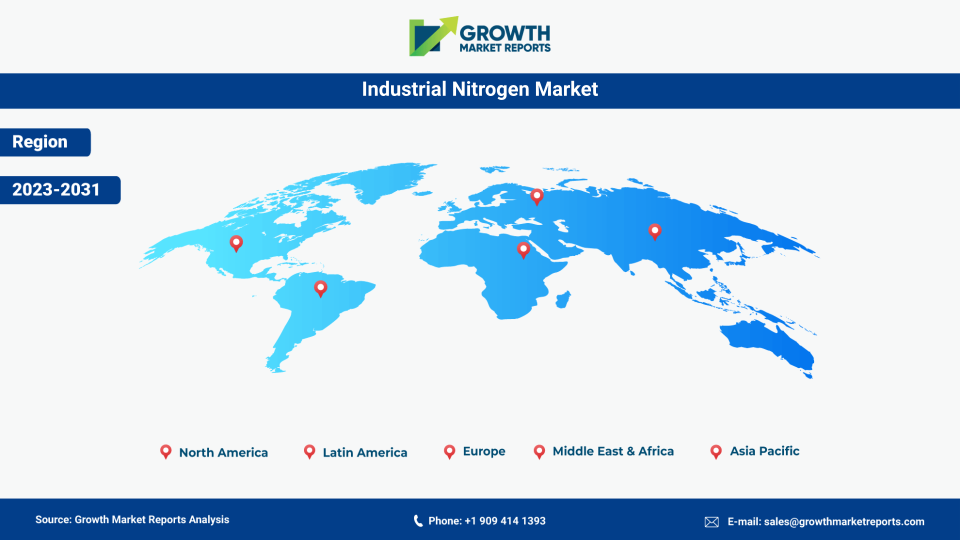
Asia Pacific remains the largest and fastest-growing region in the global industrial nitrogen market, accounting for approximately 42% of the total market value in 2024, or about USD 7.85 billion. The region’s dominance is driven by rapid industrialization, expanding manufacturing and healthcare sectors, and significant investments in infrastructure development across China, India, Japan, and South Korea. The increasing demand for nitrogen in food processing, electronics, and chemical manufacturing has further supported market growth. With a projected CAGR of 6.1% from 2025 to 2033, Asia Pacific is expected to maintain its leadership position, offering lucrative opportunities for market players seeking to expand their presence in high-growth markets.

North America holds the second-largest share of the industrial nitrogen market, valued at approximately USD 5.24 billion in 2024. The region’s mature industrial base, advanced healthcare infrastructure, and robust chemical and pharmaceutical sectors are key drivers of market growth. The increasing adoption of on-site nitrogen generation systems and advancements in nitrogen production technologies have further enhanced the efficiency and sustainability of gas supply in North America. The region is also characterized by stringent regulatory standards governing product quality, safety, and environmental compliance, necessitating continuous investment in technology and infrastructure.

Europe follows closely, with a market size of around USD 4.86 billion in 2024. The region’s strong presence in chemical manufacturing, food processing, and electronics industries, coupled with a focus on sustainability and innovation, has driven the adoption of advanced nitrogen solutions. The Middle East & Africa and Latin America, while representing smaller market shares, are witnessing steady growth supported by investments in oil and gas, petrochemicals, and food processing sectors. As these regions continue to develop their industrial bases and infrastructure, the demand for high-quality nitrogen supply is expected to rise, creating new opportunities for market expansion.

Industrial Nitrogen Market Statistics

Competitor Outlook

The industrial nitrogen market is characterized by intense competition among global and regional players, each striving to enhance their market share through technological innovation, strategic partnerships, and geographic expansion. The market landscape is dominated by a few large multinational corporations with extensive production capabilities, distribution networks, and comprehensive product portfolios. These companies leverage their scale, expertise, and financial resources to invest in research and development, driving continuous innovation in nitrogen generation, storage, and delivery technologies. The presence of well-established players ensures a high level of product quality, safety, and reliability, which is critical for industries operating in regulated environments.

In addition to the major players, the market also features a large number of regional and local companies that cater to specific industry segments and geographic markets. These companies often focus on providing customized nitrogen solutions, on-site generation systems, and value-added services tailored to the unique requirements of their customers. The increasing demand for decentralized and flexible nitrogen supply has created opportunities for smaller players to differentiate themselves through innovation, service excellence, and customer-centric approaches. As competition intensifies, companies are increasingly investing in digitalization, automation, and sustainability initiatives to enhance their operational efficiency and meet evolving customer expectations.

Strategic collaborations, mergers and acquisitions, and joint ventures have become common strategies among market players seeking to expand their product offerings, enter new markets, and strengthen their competitive positions. By leveraging complementary strengths and resources, companies can accelerate the development and commercialization of advanced nitrogen technologies, improve their supply chain resilience, and capture emerging growth opportunities. The ongoing consolidation in the market is expected to drive further innovation and efficiency, benefiting end-users through improved product quality, reliability, and cost-effectiveness.

Some of the major companies operating in the global industrial nitrogen market include Linde plc, Air Liquide S.A., Praxair, Inc. (now part of Linde plc), Air Products and Chemicals, Inc., Messer Group GmbH, Nitro Química, and Yara International ASA. Linde plc and Air Liquide S.A. are recognized for their extensive global presence, advanced technology portfolios, and commitment to sustainability. Air Products and Chemicals, Inc. is known for its innovative nitrogen generation and supply solutions, while Messer Group GmbH focuses on serving key industries in Europe and Asia. Nitro Química and Yara International ASA have established strong positions in Latin America and Europe, respectively, leveraging their expertise in specialty chemicals and industrial gases.

These companies are actively investing in research and development to enhance their product offerings, improve process efficiency, and reduce environmental impact. They are also expanding their production capacities, distribution networks, and service capabilities to meet the growing demand for industrial nitrogen across diverse industries and regions. As the market continues to evolve, the ability to innovate, adapt to changing customer needs, and operate sustainably will be key differentiators for success in the competitive industrial nitrogen market.

Key Players

  • Linde plc
  • Air Liquide S.A.
  • Praxair, Inc. (now part of Linde plc)
  • Air Products and Chemicals, Inc.
  • Messer Group GmbH
  • Taiyo Nippon Sanso Corporation
  • Nippon Gases
  • Gulf Cryo
  • SOL Group
  • SIAD Group
  • Universal Industrial Gases, Inc.
  • Southern Industrial Gas Sdn Bhd
  • Ellenbarrie Industrial Gases Ltd.
  • Cryotec Anlagenbau GmbH
  • Bhuruka Gases Limited
  • Yateem Oxygen
  • BASF SE
  • Coregas Pty Ltd
  • INOX Air Products Ltd.
  • Matheson Tri-Gas, Inc.
Industrial Nitrogen Market Overview

Segments

The Industrial Nitrogen market has been segmented on the basis of

Form

  • Compressed Gas
  • Liquid Nitrogen

Technology

  • Cryogenic Fractionation
  • Pressure Swing Adsorption
  • Membrane Separation

Application

  • Food & Beverage
  • Chemical & Pharmaceutical
  • Metal Manufacturing & Fabrication
  • Electronics
  • Oil & Gas
  • Healthcare
  • Others

End-User

  • Manufacturing
  • Healthcare
  • Food Processing
  • Electronics
  • Others

Competitive Landscape

Key players in the industrial nitrogen market include Air Products Inc, Aspen Air LLC, CanAir Nitrogen Inc, Chengdu Taiyu Industrial Gases Co Ltd, Ellenbarrie Industrial Gases, EPC Engineering & Technologies GmbH, Gulf Cryo, Industrial Gas Manufacturing, Merrer, NEXAIR, Praxair Technology, Inc, and Southern Industrial Gas Sdn Bhd. These players engage in mergers & acquisitions, collaborations, agreements, and partnerships to strengthen their geographical presence.
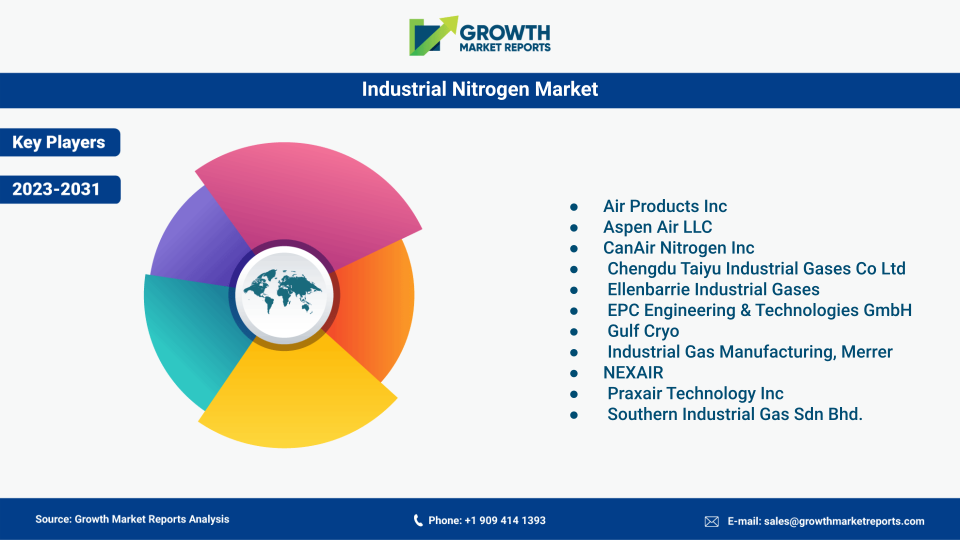
Industrial Nitrogen Market Key Players

Frequently Asked Questions

Liquid nitrogen is used in healthcare for cryopreservation and medical procedures, and in manufacturing for rapid cooling, metal processing, 3D printing, and electronics fabrication.

Key challenges include fluctuating raw material prices, high capital investment for production facilities, and stringent environmental and safety regulations.

Growth opportunities include the adoption of on-site nitrogen generation systems, advancements in production technologies, expansion in emerging markets, and the development of sustainable nitrogen solutions.

Major companies include Linde plc, Air Liquide S.A., Praxair, Inc. (now part of Linde plc), Air Products and Chemicals, Inc., Messer Group GmbH, Nitro Química, and Yara International ASA.

In the food and beverage industry, nitrogen is used for food packaging, preservation, freezing, and modified atmosphere packaging (MAP) to extend shelf life and maintain product quality.

Asia Pacific holds the largest share of the industrial nitrogen market, accounting for approximately 42% of the global market value in 2024.

The main nitrogen production technologies are cryogenic fractionation, pressure swing adsorption (PSA), and membrane separation.

Industrial nitrogen is primarily available in two forms: compressed gas and liquid nitrogen, each serving different industrial applications.

Key industries driving demand include food and beverage, healthcare, electronics, chemical manufacturing, metal fabrication, oil and gas, and pharmaceuticals.

The global industrial nitrogen market is expected to reach USD 29.7 billion by 2033, growing at a CAGR of 5.3% from 2025 to 2033.

Table Of Content

Chapter 1 Executive Summary
Chapter 2 Assumptions and Acronyms Used
Chapter 3 Research Methodology
Chapter 4 Industrial Nitrogen Market Overview
   4.1 Introduction
      4.1.1 Market Taxonomy
      4.1.2 Market Definition
      4.1.3 Macro-Economic Factors Impacting the Market Growth
   4.2 Industrial Nitrogen Market Dynamics
      4.2.1 Market Drivers
      4.2.2 Market Restraints
      4.2.3 Market Opportunity
   4.3 Industrial Nitrogen Market - Supply Chain Analysis
      4.3.1 List of Key Suppliers
      4.3.2 List of Key Distributors
      4.3.3 List of Key Consumers
   4.4 Key Forces Shaping the Industrial Nitrogen Market
      4.4.1 Bargaining Power of Suppliers
      4.4.2 Bargaining Power of Buyers
      4.4.3 Threat of Substitution
      4.4.4 Threat of New Entrants
      4.4.5 Competitive Rivalry
   4.5 Global Industrial Nitrogen Market Size & Forecast, 2023-2032
      4.5.1 Industrial Nitrogen Market Size and Y-o-Y Growth
      4.5.2 Industrial Nitrogen Market Absolute $ Opportunity

Chapter 5 Global Industrial Nitrogen Market Analysis and Forecast By Form
   5.1 Introduction
      5.1.1 Key Market Trends & Growth Opportunities By Form
      5.1.2 Basis Point Share (BPS) Analysis By Form
      5.1.3 Absolute $ Opportunity Assessment By Form
   5.2 Industrial Nitrogen Market Size Forecast By Form
      5.2.1 Compressed Gas
      5.2.2 Liquid Nitrogen
   5.3 Market Attractiveness Analysis By Form

Chapter 6 Global Industrial Nitrogen Market Analysis and Forecast By Technology
   6.1 Introduction
      6.1.1 Key Market Trends & Growth Opportunities By Technology
      6.1.2 Basis Point Share (BPS) Analysis By Technology
      6.1.3 Absolute $ Opportunity Assessment By Technology
   6.2 Industrial Nitrogen Market Size Forecast By Technology
      6.2.1 Cryogenic Fractionation
      6.2.2 Pressure Swing Adsorption
      6.2.3 Membrane Separation
   6.3 Market Attractiveness Analysis By Technology

Chapter 7 Global Industrial Nitrogen Market Analysis and Forecast By Application
   7.1 Introduction
      7.1.1 Key Market Trends & Growth Opportunities By Application
      7.1.2 Basis Point Share (BPS) Analysis By Application
      7.1.3 Absolute $ Opportunity Assessment By Application
   7.2 Industrial Nitrogen Market Size Forecast By Application
      7.2.1 Food & Beverage
      7.2.2 Chemical & Pharmaceutical
      7.2.3 Metal Manufacturing & Fabrication
      7.2.4 Electronics
      7.2.5 Oil & Gas
      7.2.6 Healthcare
      7.2.7 Others
   7.3 Market Attractiveness Analysis By Application

Chapter 8 Global Industrial Nitrogen Market Analysis and Forecast By End-User
   8.1 Introduction
      8.1.1 Key Market Trends & Growth Opportunities By End-User
      8.1.2 Basis Point Share (BPS) Analysis By End-User
      8.1.3 Absolute $ Opportunity Assessment By End-User
   8.2 Industrial Nitrogen Market Size Forecast By End-User
      8.2.1 Manufacturing
      8.2.2 Healthcare
      8.2.3 Food Processing
      8.2.4 Electronics
      8.2.5 Others
   8.3 Market Attractiveness Analysis By End-User

Chapter 9 Global Industrial Nitrogen Market Analysis and Forecast by Region
   9.1 Introduction
      9.1.1 Key Market Trends & Growth Opportunities By Region
      9.1.2 Basis Point Share (BPS) Analysis By Region
      9.1.3 Absolute $ Opportunity Assessment By Region
   9.2 Industrial Nitrogen Market Size Forecast By Region
      9.2.1 North America
      9.2.2 Europe
      9.2.3 Asia Pacific
      9.2.4 Latin America
      9.2.5 Middle East & Africa (MEA)
   9.3 Market Attractiveness Analysis By Region

Chapter 10 Coronavirus Disease (COVID-19) Impact 
   10.1 Introduction 
   10.2 Current & Future Impact Analysis 
   10.3 Economic Impact Analysis 
   10.4 Government Policies 
   10.5 Investment Scenario

Chapter 11 North America Industrial Nitrogen Analysis and Forecast
   11.1 Introduction
   11.2 North America Industrial Nitrogen Market Size Forecast by Country
      11.2.1 U.S.
      11.2.2 Canada
   11.3 Basis Point Share (BPS) Analysis by Country
   11.4 Absolute $ Opportunity Assessment by Country
   11.5 Market Attractiveness Analysis by Country
   11.6 North America Industrial Nitrogen Market Size Forecast By Form
      11.6.1 Compressed Gas
      11.6.2 Liquid Nitrogen
   11.7 Basis Point Share (BPS) Analysis By Form 
   11.8 Absolute $ Opportunity Assessment By Form 
   11.9 Market Attractiveness Analysis By Form
   11.10 North America Industrial Nitrogen Market Size Forecast By Technology
      11.10.1 Cryogenic Fractionation
      11.10.2 Pressure Swing Adsorption
      11.10.3 Membrane Separation
   11.11 Basis Point Share (BPS) Analysis By Technology 
   11.12 Absolute $ Opportunity Assessment By Technology 
   11.13 Market Attractiveness Analysis By Technology
   11.14 North America Industrial Nitrogen Market Size Forecast By Application
      11.14.1 Food & Beverage
      11.14.2 Chemical & Pharmaceutical
      11.14.3 Metal Manufacturing & Fabrication
      11.14.4 Electronics
      11.14.5 Oil & Gas
      11.14.6 Healthcare
      11.14.7 Others
   11.15 Basis Point Share (BPS) Analysis By Application 
   11.16 Absolute $ Opportunity Assessment By Application 
   11.17 Market Attractiveness Analysis By Application
   11.18 North America Industrial Nitrogen Market Size Forecast By End-User
      11.18.1 Manufacturing
      11.18.2 Healthcare
      11.18.3 Food Processing
      11.18.4 Electronics
      11.18.5 Others
   11.19 Basis Point Share (BPS) Analysis By End-User 
   11.20 Absolute $ Opportunity Assessment By End-User 
   11.21 Market Attractiveness Analysis By End-User

Chapter 12 Europe Industrial Nitrogen Analysis and Forecast
   12.1 Introduction
   12.2 Europe Industrial Nitrogen Market Size Forecast by Country
      12.2.1 Germany
      12.2.2 France
      12.2.3 Italy
      12.2.4 U.K.
      12.2.5 Spain
      12.2.6 Russia
      12.2.7 Rest of Europe
   12.3 Basis Point Share (BPS) Analysis by Country
   12.4 Absolute $ Opportunity Assessment by Country
   12.5 Market Attractiveness Analysis by Country
   12.6 Europe Industrial Nitrogen Market Size Forecast By Form
      12.6.1 Compressed Gas
      12.6.2 Liquid Nitrogen
   12.7 Basis Point Share (BPS) Analysis By Form 
   12.8 Absolute $ Opportunity Assessment By Form 
   12.9 Market Attractiveness Analysis By Form
   12.10 Europe Industrial Nitrogen Market Size Forecast By Technology
      12.10.1 Cryogenic Fractionation
      12.10.2 Pressure Swing Adsorption
      12.10.3 Membrane Separation
   12.11 Basis Point Share (BPS) Analysis By Technology 
   12.12 Absolute $ Opportunity Assessment By Technology 
   12.13 Market Attractiveness Analysis By Technology
   12.14 Europe Industrial Nitrogen Market Size Forecast By Application
      12.14.1 Food & Beverage
      12.14.2 Chemical & Pharmaceutical
      12.14.3 Metal Manufacturing & Fabrication
      12.14.4 Electronics
      12.14.5 Oil & Gas
      12.14.6 Healthcare
      12.14.7 Others
   12.15 Basis Point Share (BPS) Analysis By Application 
   12.16 Absolute $ Opportunity Assessment By Application 
   12.17 Market Attractiveness Analysis By Application
   12.18 Europe Industrial Nitrogen Market Size Forecast By End-User
      12.18.1 Manufacturing
      12.18.2 Healthcare
      12.18.3 Food Processing
      12.18.4 Electronics
      12.18.5 Others
   12.19 Basis Point Share (BPS) Analysis By End-User 
   12.20 Absolute $ Opportunity Assessment By End-User 
   12.21 Market Attractiveness Analysis By End-User

Chapter 13 Asia Pacific Industrial Nitrogen Analysis and Forecast
   13.1 Introduction
   13.2 Asia Pacific Industrial Nitrogen Market Size Forecast by Country
      13.2.1 China
      13.2.2 Japan
      13.2.3 South Korea
      13.2.4 India
      13.2.5 Australia
      13.2.6 South East Asia (SEA)
      13.2.7 Rest of Asia Pacific (APAC)
   13.3 Basis Point Share (BPS) Analysis by Country
   13.4 Absolute $ Opportunity Assessment by Country
   13.5 Market Attractiveness Analysis by Country
   13.6 Asia Pacific Industrial Nitrogen Market Size Forecast By Form
      13.6.1 Compressed Gas
      13.6.2 Liquid Nitrogen
   13.7 Basis Point Share (BPS) Analysis By Form 
   13.8 Absolute $ Opportunity Assessment By Form 
   13.9 Market Attractiveness Analysis By Form
   13.10 Asia Pacific Industrial Nitrogen Market Size Forecast By Technology
      13.10.1 Cryogenic Fractionation
      13.10.2 Pressure Swing Adsorption
      13.10.3 Membrane Separation
   13.11 Basis Point Share (BPS) Analysis By Technology 
   13.12 Absolute $ Opportunity Assessment By Technology 
   13.13 Market Attractiveness Analysis By Technology
   13.14 Asia Pacific Industrial Nitrogen Market Size Forecast By Application
      13.14.1 Food & Beverage
      13.14.2 Chemical & Pharmaceutical
      13.14.3 Metal Manufacturing & Fabrication
      13.14.4 Electronics
      13.14.5 Oil & Gas
      13.14.6 Healthcare
      13.14.7 Others
   13.15 Basis Point Share (BPS) Analysis By Application 
   13.16 Absolute $ Opportunity Assessment By Application 
   13.17 Market Attractiveness Analysis By Application
   13.18 Asia Pacific Industrial Nitrogen Market Size Forecast By End-User
      13.18.1 Manufacturing
      13.18.2 Healthcare
      13.18.3 Food Processing
      13.18.4 Electronics
      13.18.5 Others
   13.19 Basis Point Share (BPS) Analysis By End-User 
   13.20 Absolute $ Opportunity Assessment By End-User 
   13.21 Market Attractiveness Analysis By End-User

Chapter 14 Latin America Industrial Nitrogen Analysis and Forecast
   14.1 Introduction
   14.2 Latin America Industrial Nitrogen Market Size Forecast by Country
      14.2.1 Brazil
      14.2.2 Mexico
      14.2.3 Rest of Latin America (LATAM)
   14.3 Basis Point Share (BPS) Analysis by Country
   14.4 Absolute $ Opportunity Assessment by Country
   14.5 Market Attractiveness Analysis by Country
   14.6 Latin America Industrial Nitrogen Market Size Forecast By Form
      14.6.1 Compressed Gas
      14.6.2 Liquid Nitrogen
   14.7 Basis Point Share (BPS) Analysis By Form 
   14.8 Absolute $ Opportunity Assessment By Form 
   14.9 Market Attractiveness Analysis By Form
   14.10 Latin America Industrial Nitrogen Market Size Forecast By Technology
      14.10.1 Cryogenic Fractionation
      14.10.2 Pressure Swing Adsorption
      14.10.3 Membrane Separation
   14.11 Basis Point Share (BPS) Analysis By Technology 
   14.12 Absolute $ Opportunity Assessment By Technology 
   14.13 Market Attractiveness Analysis By Technology
   14.14 Latin America Industrial Nitrogen Market Size Forecast By Application
      14.14.1 Food & Beverage
      14.14.2 Chemical & Pharmaceutical
      14.14.3 Metal Manufacturing & Fabrication
      14.14.4 Electronics
      14.14.5 Oil & Gas
      14.14.6 Healthcare
      14.14.7 Others
   14.15 Basis Point Share (BPS) Analysis By Application 
   14.16 Absolute $ Opportunity Assessment By Application 
   14.17 Market Attractiveness Analysis By Application
   14.18 Latin America Industrial Nitrogen Market Size Forecast By End-User
      14.18.1 Manufacturing
      14.18.2 Healthcare
      14.18.3 Food Processing
      14.18.4 Electronics
      14.18.5 Others
   14.19 Basis Point Share (BPS) Analysis By End-User 
   14.20 Absolute $ Opportunity Assessment By End-User 
   14.21 Market Attractiveness Analysis By End-User

Chapter 15 Middle East & Africa (MEA) Industrial Nitrogen Analysis and Forecast
   15.1 Introduction
   15.2 Middle East & Africa (MEA) Industrial Nitrogen Market Size Forecast by Country
      15.2.1 Saudi Arabia
      15.2.2 South Africa
      15.2.3 UAE
      15.2.4 Rest of Middle East & Africa (MEA)
   15.3 Basis Point Share (BPS) Analysis by Country
   15.4 Absolute $ Opportunity Assessment by Country
   15.5 Market Attractiveness Analysis by Country
   15.6 Middle East & Africa (MEA) Industrial Nitrogen Market Size Forecast By Form
      15.6.1 Compressed Gas
      15.6.2 Liquid Nitrogen
   15.7 Basis Point Share (BPS) Analysis By Form 
   15.8 Absolute $ Opportunity Assessment By Form 
   15.9 Market Attractiveness Analysis By Form
   15.10 Middle East & Africa (MEA) Industrial Nitrogen Market Size Forecast By Technology
      15.10.1 Cryogenic Fractionation
      15.10.2 Pressure Swing Adsorption
      15.10.3 Membrane Separation
   15.11 Basis Point Share (BPS) Analysis By Technology 
   15.12 Absolute $ Opportunity Assessment By Technology 
   15.13 Market Attractiveness Analysis By Technology
   15.14 Middle East & Africa (MEA) Industrial Nitrogen Market Size Forecast By Application
      15.14.1 Food & Beverage
      15.14.2 Chemical & Pharmaceutical
      15.14.3 Metal Manufacturing & Fabrication
      15.14.4 Electronics
      15.14.5 Oil & Gas
      15.14.6 Healthcare
      15.14.7 Others
   15.15 Basis Point Share (BPS) Analysis By Application 
   15.16 Absolute $ Opportunity Assessment By Application 
   15.17 Market Attractiveness Analysis By Application
   15.18 Middle East & Africa (MEA) Industrial Nitrogen Market Size Forecast By End-User
      15.18.1 Manufacturing
      15.18.2 Healthcare
      15.18.3 Food Processing
      15.18.4 Electronics
      15.18.5 Others
   15.19 Basis Point Share (BPS) Analysis By End-User 
   15.20 Absolute $ Opportunity Assessment By End-User 
   15.21 Market Attractiveness Analysis By End-User

Chapter 16 Competition Landscape 
   16.1 Industrial Nitrogen Market: Competitive Dashboard
   16.2 Global Industrial Nitrogen Market: Market Share Analysis, 2023
   16.3 Company Profiles (Details – Overview, Financials, Developments, Strategy) 
      16.3.1 Linde plc
Air Liquide S.A.
Praxair, Inc. (now part of Linde plc)
Air Products and Chemicals, Inc.
Messer Group GmbH
Taiyo Nippon Sanso Corporation
Nippon Gases
Gulf Cryo
SOL Group
SIAD Group
Universal Industrial Gases, Inc.
Southern Industrial Gas Sdn Bhd
Ellenbarrie Industrial Gases Ltd.
Cryotec Anlagenbau GmbH
Bhuruka Gases Limited
Yateem Oxygen
BASF SE
Coregas Pty Ltd
INOX Air Products Ltd.
Matheson Tri-Gas, Inc.

Methodology

Our Clients

Pfizer
Honda Motor Co. Ltd.
Deloitte
The John Holland Group
FedEx Logistics
General Electric
Microsoft
Siemens Healthcare