Industrial Gloves Market Research Report 2033

Industrial Gloves Market Research Report 2033

Segments - by Product Type (Disposable Gloves, Reusable Gloves), by Material (Nitrile, Latex, Vinyl, Neoprene, Polyethylene, Others), by Application (Chemical, Automotive, Healthcare, Food & Beverage, Construction, Oil & Gas, Manufacturing, Others), by End-Use Industry (Pharmaceutical, Food Processing, Metal Fabrication, Cleanroom, Others), by Distribution Channel (Online, Offline)

https://growthmarketreports.com/Raksha
Author : Raksha Sharma
https://growthmarketreports.com/Vaibhav
Fact-checked by : V. Chandola
https://growthmarketreports.com/Shruti
Editor : Shruti Bhat

Upcoming | Report ID :EP-2863 | 4.4 Rating | 35 Reviews | 287 Pages | Format : Docx PDF

Report Description


Industrial Gloves Market Outlook

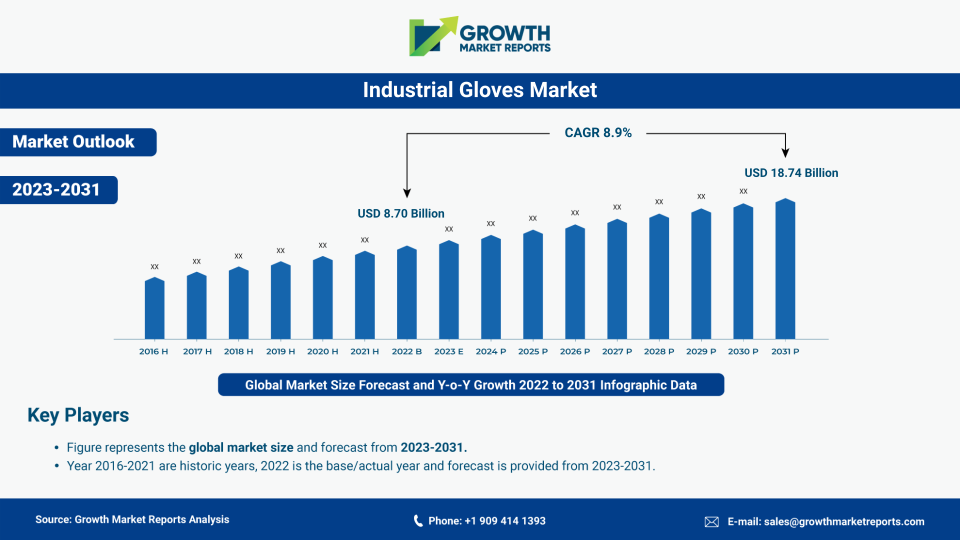
According to the latest research conducted in 2025, the global industrial gloves market size is valued at USD 10.8 billion in 2024, with a robust compound annual growth rate (CAGR) of 8.2% projected from 2025 to 2033. By 2033, the market is anticipated to reach a value of USD 21.1 billion, driven by stringent workplace safety regulations, increasing awareness about hand protection, and the rapid expansion of end-use industries such as healthcare, manufacturing, and food processing. This growth trajectory underscores the critical role industrial gloves play in ensuring worker safety and operational efficiency across diverse sectors worldwide.

One of the primary growth factors propelling the industrial gloves market is the escalating implementation of stringent occupational safety standards across both developed and emerging economies. Regulatory bodies such as OSHA, the European Agency for Safety and Health at Work, and various national agencies have mandated the use of personal protective equipment (PPE), including industrial gloves, in hazardous work environments. This regulatory push has compelled organizations to invest heavily in high-quality gloves to minimize workplace injuries and ensure compliance. In addition, the global rise in industrialization, especially in Asia Pacific and Latin America, has led to an increased workforce exposed to mechanical, chemical, and biological hazards, further fueling demand for advanced hand protection solutions.

Technological advancements in glove manufacturing have also played a pivotal role in market expansion. Manufacturers are increasingly focusing on developing gloves that offer enhanced durability, dexterity, and resistance to chemicals, punctures, and abrasions. The adoption of innovative materials such as nitrile, neoprene, and vinyl, as well as hybrid blends, has resulted in products that cater to specific industry requirements. Furthermore, the integration of smart technologies, such as cut-level indicators and antimicrobial coatings, has elevated product value and broadened the application scope. These innovations not only improve safety but also enhance comfort and productivity, making them highly attractive to industries with demanding operational environments.

Another significant driver is the surge in demand from the healthcare and food processing sectors. The COVID-19 pandemic has heightened awareness regarding hygiene and infection control, leading to a sustained increase in the use of disposable gloves in medical, laboratory, and food handling settings. The food and beverage industry, in particular, has witnessed a paradigm shift toward adopting rigorous hygiene protocols to prevent contamination and ensure consumer safety. This trend, coupled with the growing emphasis on sustainability and eco-friendly materials, is shaping the future landscape of the industrial gloves market, prompting manufacturers to innovate and diversify their product portfolios.

Industrial Nitrile Gloves have become increasingly significant in the industrial gloves market due to their superior chemical resistance and durability. These gloves are particularly favored in sectors such as healthcare and chemical processing, where protection against hazardous substances is paramount. Nitrile gloves provide a robust barrier against oils, acids, and other chemicals, making them an essential component of personal protective equipment in environments with high exposure risks. Their latex-free composition also makes them suitable for individuals with latex allergies, broadening their application across various industries. As manufacturers continue to innovate, the development of thinner yet equally protective nitrile gloves is enhancing user comfort without compromising safety.

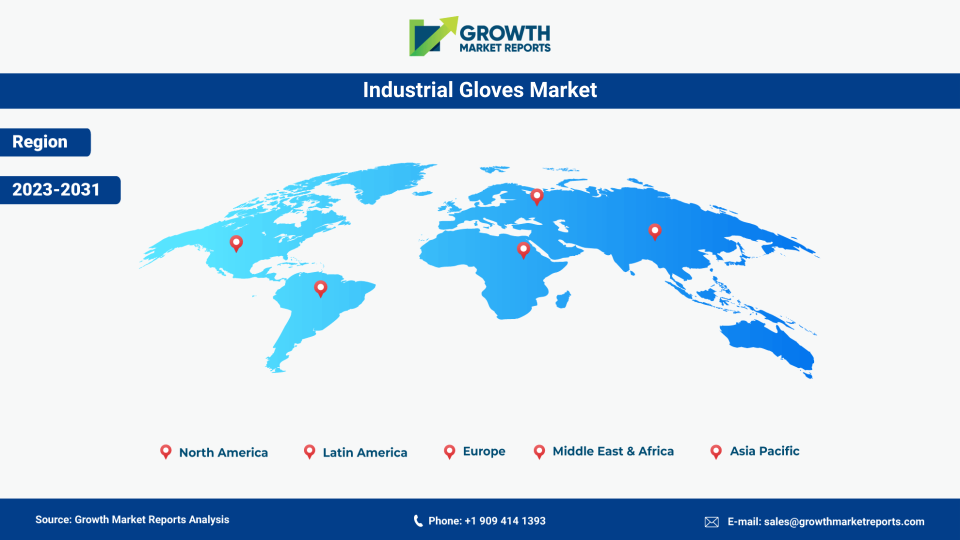
From a regional perspective, Asia Pacific dominates the global industrial gloves market, accounting for the largest share in 2024, followed by North America and Europe. The regionÂ’s leadership is attributed to rapid industrialization, a burgeoning manufacturing sector, and increasing government initiatives to enhance workplace safety standards. Countries such as China, India, and Japan are witnessing substantial investments in infrastructure and industrial projects, leading to heightened demand for industrial gloves. Meanwhile, North America and Europe continue to exhibit steady growth, driven by mature regulatory frameworks and the presence of leading market players. Latin America and the Middle East & Africa are emerging as lucrative markets, supported by expanding industrial bases and rising awareness of occupational health and safety.

Global Industrial Gloves Industry Outlook

Product Type Analysis

The industrial gloves market is segmented by product type into disposable gloves and reusable gloves, each serving distinct purposes across various industrial applications. Disposable gloves are primarily favored in environments where hygiene and contamination control are paramount, such as healthcare, food processing, and laboratories. These gloves are designed for single-use applications, offering convenience and reducing the risk of cross-contamination. The demand for disposable gloves surged during the COVID-19 pandemic and continues to remain elevated due to ongoing infection control measures. Manufacturers are focusing on developing advanced disposable gloves with improved tactile sensitivity and barrier protection, catering to the evolving needs of end-users.

Reusable gloves, on the other hand, are widely adopted in industries where durability, cost-effectiveness, and high resistance to mechanical hazards are essential. These gloves are constructed from robust materials such as nitrile, latex, neoprene, and polyurethane, offering extended service life and superior protection against abrasions, cuts, and chemical exposure. The automotive, construction, and manufacturing sectors are the primary consumers of reusable gloves, leveraging their ability to withstand harsh working conditions. As sustainability becomes a key consideration, manufacturers are also exploring eco-friendly materials and recycling initiatives to minimize environmental impact associated with glove disposal.

The ongoing innovation in product design has led to the introduction of hybrid gloves that combine the benefits of both disposable and reusable variants. These gloves offer enhanced comfort, flexibility, and protection, making them suitable for a wider range of applications. Additionally, the integration of ergonomic features, such as textured grips and anatomical designs, has improved user experience and reduced the risk of hand fatigue during prolonged use. The growing preference for multifunctional gloves is expected to drive further market growth, as industries seek versatile solutions that address multiple safety requirements.

Market trends also indicate a shift toward specialized gloves tailored for niche applications. For instance, anti-vibration gloves are gaining traction in industries where workers are exposed to repetitive motion and vibration-related injuries, such as construction and mining. Similarly, chemical-resistant gloves are being widely adopted in laboratories and chemical processing plants to safeguard against hazardous substances. The increasing demand for application-specific gloves underscores the importance of product differentiation and customization in the competitive industrial gloves market.

Report Scope

Attributes Details
Report Title Industrial Gloves Market Research Report 2033
By Product Type Disposable Gloves, Reusable Gloves
By Material Nitrile, Latex, Vinyl, Neoprene, Polyethylene, Others
By Application Chemical, Automotive, Healthcare, Food & Beverage, Construction, Oil & Gas, Manufacturing, Others
By End-Use Industry Pharmaceutical, Food Processing, Metal Fabrication, Cleanroom, Others
By Distribution Channel Online, Offline
Regions Covered North America, Europe, APAC, Latin America, MEA
Base Year 2024
Historic Data 2018-2023
Forecast Period 2025-2033
Number of Pages 287
Number of Tables & Figures 273
Customization Available Yes, the report can be customized as per your need.

Material Analysis

Material selection plays a critical role in determining the performance, comfort, and safety of industrial gloves. Nitrile gloves have emerged as the most popular choice due to their exceptional resistance to chemicals, punctures, and abrasions, making them ideal for use in healthcare, chemical processing, and automotive industries. Nitrile gloves are also latex-free, reducing the risk of allergic reactions and expanding their suitability for sensitive environments. The ongoing advancements in nitrile technology have resulted in thinner, more flexible gloves that do not compromise on protection, further enhancing their appeal among end-users.

Latex gloves continue to hold a significant share of the market, particularly in medical and laboratory settings where superior tactile sensitivity and comfort are required. Despite concerns regarding latex allergies, these gloves remain popular due to their natural elasticity, fit, and cost-effectiveness. Manufacturers are addressing allergy issues by developing low-protein and powder-free latex gloves, ensuring broader acceptance across industries. The versatility of latex gloves enables their use in a wide range of applications, from healthcare to food processing and janitorial services.

Vinyl gloves offer an economical alternative for applications where high levels of durability and chemical resistance are not critical. These gloves are widely used in the food and beverage industry, as well as in light-duty cleaning and handling tasks. Vinyl gloves are valued for their affordability, ease of use, and suitability for individuals with latex sensitivities. However, their limited stretch and lower barrier protection compared to nitrile and latex gloves have somewhat restricted their adoption in high-risk environments.

Other materials such as neoprene and polyethylene are gaining traction in specialized applications. Neoprene gloves provide excellent resistance to a wide range of chemicals, oils, and acids, making them suitable for chemical processing, laboratory work, and cleaning operations. Polyethylene gloves, on the other hand, are lightweight and cost-effective, commonly used in food handling and short-duration tasks. The continuous innovation in material science is expected to yield new blends and composites that offer a balanced combination of comfort, protection, and sustainability, aligning with the evolving needs of the industrial gloves market.

Application Analysis

The industrial gloves market serves a diverse array of applications, each with unique safety and performance requirements. In the chemical industry, gloves are indispensable for protecting workers from hazardous substances, corrosive chemicals, and potential burns. The stringent safety protocols in chemical processing plants necessitate the use of high-quality gloves with superior chemical resistance and impermeability. Manufacturers are responding to these demands by developing gloves with multi-layered construction and specialized coatings, ensuring optimal protection and compliance with regulatory standards.

The automotive sector is another major application area, where gloves are essential for safeguarding workers from mechanical injuries, cuts, and exposure to lubricants and solvents. Automotive manufacturing and maintenance operations involve handling sharp components, heavy machinery, and hazardous fluids, necessitating the use of durable and abrasion-resistant gloves. The adoption of ergonomically designed gloves with enhanced grip and flexibility has improved worker productivity and reduced the incidence of hand injuries, contributing to the overall growth of the industrial gloves market.

In the healthcare industry, gloves are a critical component of personal protective equipment, safeguarding healthcare professionals and patients from cross-contamination and infectious diseases. The demand for disposable gloves, particularly nitrile and latex variants, has witnessed exponential growth in recent years, driven by heightened hygiene standards and infection control measures. The healthcare sectorÂ’s focus on quality, comfort, and barrier protection continues to shape product development and innovation in the industrial gloves market.

The food and beverage industry relies heavily on gloves to maintain hygiene and prevent contamination during food handling, processing, and packaging. Regulatory bodies have imposed strict guidelines on glove use in food-related operations, emphasizing the importance of material safety, allergen control, and ease of disposal. The increasing adoption of powder-free and latex-free gloves in this sector reflects the growing awareness of food safety and consumer health. Additionally, gloves are widely used in construction, oil and gas, and general manufacturing industries, where they provide essential protection against physical, chemical, and thermal hazards, ensuring worker safety and operational efficiency.

End-Use Industry Analysis

The industrial gloves market is characterized by its extensive adoption across a range of end-use industries, each with distinct operational challenges and safety requirements. Pharmaceutical manufacturing is a significant end-user, where gloves are integral to maintaining sterile environments, preventing contamination, and ensuring product integrity. The industryÂ’s adherence to stringent regulatory standards, such as Good Manufacturing Practices (GMP), necessitates the use of high-quality disposable gloves made from materials that minimize particulate shedding and offer superior barrier protection.

The food processing industry represents another substantial segment, where gloves are used throughout the production chain to ensure hygiene, prevent cross-contamination, and comply with food safety regulations. The increasing consumer demand for safe and high-quality food products has prompted food processors to invest in advanced glove solutions that offer both comfort and protection. The trend toward automation and mechanization in food processing plants has also driven the need for gloves that provide enhanced grip, dexterity, and resistance to oils and fats.

In metal fabrication and heavy engineering sectors, gloves are essential for protecting workers from cuts, abrasions, heat, and chemical exposure. The use of specialized gloves with reinforced coatings and heat-resistant properties has become standard practice in welding, cutting, and assembly operations. These industries prioritize gloves that offer a balance between protection and dexterity, enabling workers to perform intricate tasks without compromising safety. The growing emphasis on reducing workplace injuries and improving worker welfare is expected to drive further adoption of high-performance gloves in these sectors.

The cleanroom industry, encompassing electronics, pharmaceuticals, and biotechnology, demands gloves that meet rigorous cleanliness and contamination control standards. Cleanroom gloves are manufactured using advanced processes to minimize particulate generation and ensure compatibility with sensitive environments. The increasing investment in semiconductor manufacturing and biotechnology research is fueling demand for cleanroom gloves, further expanding the industrial gloves market. Other end-use industries, such as oil and gas, construction, and janitorial services, also contribute to market growth by requiring specialized gloves tailored to their unique operational needs.

Distribution Channel Analysis

The distribution landscape of the industrial gloves market is bifurcated into online and offline channels, each playing a pivotal role in market penetration and customer outreach. The offline segment, comprising direct sales, distributors, and retail outlets, has traditionally dominated the market, offering customers the advantage of physical inspection, product demonstrations, and personalized service. Industrial buyers often prefer offline channels for bulk purchases, technical consultations, and after-sales support, especially in regions with established distribution networks and long-standing supplier relationships.

However, the online distribution channel is witnessing rapid growth, fueled by the digital transformation of procurement processes and the increasing adoption of e-commerce platforms. Online channels offer several advantages, including convenience, a wider product selection, competitive pricing, and the ability to compare specifications and reviews. The COVID-19 pandemic accelerated the shift toward online purchasing, as businesses sought contactless procurement solutions and streamlined supply chain operations. Leading manufacturers are investing in robust online platforms and digital marketing strategies to enhance their reach and cater to the evolving preferences of industrial buyers.

The integration of advanced technologies, such as artificial intelligence and data analytics, is further transforming the online distribution landscape. These technologies enable personalized product recommendations, inventory optimization, and real-time order tracking, enhancing the overall customer experience. Online channels are also facilitating the entry of new players and niche brands into the market, intensifying competition and driving innovation in product offerings and service delivery.

Despite the growing popularity of online channels, offline distribution remains crucial for industries that require customized solutions, technical support, and immediate product availability. The coexistence of online and offline channels is expected to persist, with manufacturers adopting an omnichannel approach to maximize market coverage and customer engagement. The ongoing evolution of distribution strategies will play a key role in shaping the future growth and competitiveness of the industrial gloves market.

Opportunities & Threats

The industrial gloves market presents significant opportunities for growth and innovation, particularly in the development of sustainable and eco-friendly glove solutions. As environmental concerns gain prominence, manufacturers are exploring biodegradable materials, recyclable packaging, and green manufacturing practices to reduce the ecological footprint of glove production and disposal. The rising demand for sustainable products from environmentally conscious customers and regulatory bodies is expected to drive the adoption of eco-friendly gloves across various industries. Additionally, the increasing focus on worker safety and well-being presents opportunities for the introduction of ergonomic and smart gloves equipped with sensors and monitoring capabilities, enabling real-time health and safety assessments.

Another major opportunity lies in the expansion of the industrial gloves market into emerging economies, where rapid industrialization, urbanization, and infrastructure development are creating new demand for protective equipment. Governments in Asia Pacific, Latin America, and the Middle East & Africa are implementing policies to enhance occupational safety standards, incentivizing businesses to invest in high-quality gloves and other PPE. The growing presence of multinational companies and the establishment of manufacturing hubs in these regions are further contributing to market growth. Strategic collaborations, mergers, and acquisitions among key players are expected to facilitate market entry and strengthen distribution networks, unlocking new avenues for revenue generation and market expansion.

Despite the positive outlook, the industrial gloves market faces certain restraints, including price volatility of raw materials and intense competition among manufacturers. Fluctuations in the prices of nitrile, latex, and other key materials can impact production costs and profit margins, posing challenges for manufacturers in maintaining competitive pricing. Additionally, the market is characterized by the presence of numerous local and international players, leading to price wars and downward pressure on margins. The proliferation of counterfeit and substandard products also poses a threat to market growth, as it undermines consumer confidence and compromises safety standards. Addressing these challenges will require continuous innovation, quality assurance, and effective supply chain management.

Regional Outlook

The Asia Pacific region leads the global industrial gloves market, accounting for a market value of USD 4.2 billion in 2024. This dominance is attributed to rapid industrialization, a burgeoning manufacturing sector, and increasing government initiatives to improve workplace safety standards. Countries such as China, India, Japan, and South Korea are witnessing substantial investments in infrastructure, automotive, electronics, and pharmaceuticals, all of which drive the demand for industrial gloves. The regionÂ’s market is expected to grow at a CAGR of 9.1% from 2025 to 2033, outpacing other regions due to the expanding industrial workforce and rising awareness about occupational health and safety.

North America holds the second-largest share in the global industrial gloves market, with a market value of USD 2.9 billion in 2024. The region benefits from a well-established regulatory framework, high safety standards, and the presence of leading market players. The United States and Canada are the primary contributors, driven by robust demand from healthcare, food processing, and manufacturing industries. The ongoing focus on technological innovation, product quality, and sustainability is expected to sustain market growth in North America, with a steady CAGR projected over the forecast period.

Europe follows closely, with a market size of USD 2.5 billion in 2024, supported by stringent occupational safety regulations and a strong emphasis on worker protection. Major economies such as Germany, the United Kingdom, France, and Italy are key contributors to regional growth. The region is characterized by high adoption rates of advanced glove technologies and a strong preference for sustainable products. Latin America and the Middle East & Africa are emerging as promising markets, with a combined market value of USD 1.2 billion in 2024. These regions are witnessing increased investments in industrial infrastructure, rising awareness of workplace safety, and growing demand for high-quality protective equipment, creating new opportunities for market expansion.

Industrial Gloves Market Statistics

Competitor Outlook

The industrial gloves market is highly competitive, characterized by the presence of numerous global and regional players vying for market share through product innovation, strategic partnerships, and mergers and acquisitions. Leading manufacturers are continuously investing in research and development to introduce advanced glove solutions that offer superior protection, comfort, and sustainability. The competitive landscape is further intensified by the entry of new players leveraging digital platforms and e-commerce channels to reach a broader customer base. Companies are also focusing on expanding their production capacities, optimizing supply chains, and enhancing customer service to gain a competitive edge in the market.

Innovation remains a key differentiator in the industrial gloves market, with manufacturers developing gloves tailored for specific applications and industries. The integration of smart technologies, such as sensors for monitoring hand movements and detecting hazardous substances, is gaining traction, enabling companies to offer value-added solutions that enhance worker safety and productivity. Additionally, the adoption of sustainable materials and eco-friendly manufacturing processes is becoming increasingly important, as customers and regulatory bodies demand greener alternatives. Companies that can successfully balance innovation, quality, and affordability are well-positioned to capitalize on emerging opportunities and strengthen their market presence.

Strategic collaborations and partnerships are also shaping the competitive dynamics of the industrial gloves market. Leading players are joining forces with raw material suppliers, distributors, and technology providers to enhance product development, streamline supply chains, and expand market reach. Mergers and acquisitions are being pursued to consolidate market positions, access new technologies, and enter untapped markets. The ability to adapt to changing market trends, regulatory requirements, and customer preferences will be crucial for companies seeking long-term success in this dynamic industry.

Major companies operating in the industrial gloves market include Ansell Limited, Top Glove Corporation Bhd, Honeywell International Inc., 3M Company, Kossan Rubber Industries Bhd, Hartalega Holdings Berhad, Supermax Corporation Berhad, Superior Glove Works Ltd., MCR Safety, and Semperit AG Holding. Ansell Limited is renowned for its extensive portfolio of industrial and medical gloves, leveraging advanced materials and technologies to deliver high-performance solutions. Top Glove Corporation Bhd, the worldÂ’s largest glove manufacturer, has a strong global presence and is known for its wide range of disposable and reusable gloves catering to various industries. Honeywell International Inc. and 3M Company are leaders in the PPE market, offering innovative glove solutions that emphasize safety, comfort, and durability.

Kossan Rubber Industries Bhd and Hartalega Holdings Berhad are prominent players in the nitrile and latex glove segments, focusing on quality, sustainability, and operational efficiency. Supermax Corporation Berhad has established itself as a key supplier of disposable gloves, with a strong emphasis on export markets. Superior Glove Works Ltd. and MCR Safety are recognized for their expertise in reusable and specialized gloves, catering to the needs of industries such as automotive, construction, and manufacturing. Semperit AG Holding is a major European player, offering a comprehensive range of industrial gloves with a focus on innovation and customer satisfaction. These companies are continuously enhancing their product offerings, expanding their global footprint, and adopting sustainable practices to maintain their competitive advantage in the evolving industrial gloves market.

Key Players

  • Ansell Limited
  • Top Glove Corporation Bhd
  • Honeywell International Inc.
  • 3M Company
  • Hartalega Holdings Berhad
  • Kossan Rubber Industries Bhd
  • Supermax Corporation Berhad
  • Semperit AG Holding
  • SHOWA Group
  • MCR Safety
  • Lakeland Industries, Inc.
  • Superior Glove Works Ltd.
  • Rubberex Corporation (M) Berhad
  • Kimberly-Clark Corporation
  • Cardinal Health, Inc.
  • MAPA Professional
  • Dipped Products PLC
  • Renco Corporation
  • Magid Glove & Safety Manufacturing Company LLC
  • Uvex Safety Group
Industrial Gloves Market Overview

Segments

The Industrial Gloves market has been segmented on the basis of

Product Type

  • Disposable Gloves
  • Reusable Gloves

Material

  • Nitrile
  • Latex
  • Vinyl
  • Neoprene
  • Polyethylene
  • Others

Application

  • Chemical
  • Automotive
  • Healthcare
  • Food & Beverage
  • Construction
  • Oil & Gas
  • Manufacturing
  • Others

End-Use Industry

  • Pharmaceutical
  • Food Processing
  • Metal Fabrication
  • Cleanroom
  • Others

Distribution Channel

  • Online
  • Offline

Competitive Landscape

Key player of the industrial gloves market are Ansell Limited, Careplus Group Berhad, Globus Group, Hartalega Holdings Bhd, Honeywell International Inc, Kossan Rubber Industries Bhd, Riverstone Holdings Limited, Semperit Ag Holding, Supermax Corporation Berhad, and Top Glove Corporation Bhd.
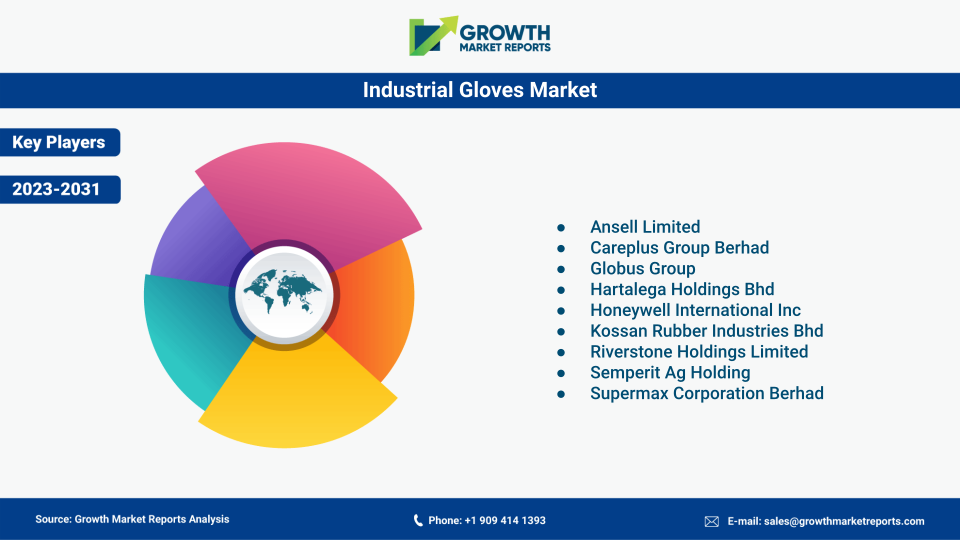

Global Industrial Gloves Market Key Players

Frequently Asked Questions

Challenges include price volatility of raw materials, intense competition, the proliferation of counterfeit and substandard products, and the need for continuous innovation and quality assurance.

Key players include Ansell Limited, Top Glove Corporation Bhd, Honeywell International Inc., 3M Company, Hartalega Holdings Berhad, Kossan Rubber Industries Bhd, Supermax Corporation Berhad, Semperit AG Holding, Superior Glove Works Ltd., and MCR Safety.

Industrial gloves are distributed through both online and offline channels. Offline includes direct sales, distributors, and retail outlets, while online channels are growing rapidly due to e-commerce and digital procurement.

Recent trends include the development of gloves with smart technologies (e.g., sensors, antimicrobial coatings), use of eco-friendly and biodegradable materials, ergonomic designs, and hybrid gloves combining disposable and reusable features.

Asia Pacific leads the market, followed by North America and Europe. Latin America and the Middle East & Africa are emerging as promising markets due to rapid industrialization and rising safety awareness.

Major end-use industries include healthcare, food processing, pharmaceutical manufacturing, automotive, construction, metal fabrication, cleanroom environments, oil & gas, and general manufacturing.

Common materials include nitrile (chemical and puncture resistance), latex (tactile sensitivity and comfort), vinyl (affordability and latex-free), neoprene (chemical resistance), and polyethylene (cost-effective for short tasks).

The market is segmented into disposable gloves and reusable gloves. Disposable gloves are favored for hygiene and contamination control, while reusable gloves are preferred for durability and resistance to mechanical hazards.

Key growth drivers include stringent workplace safety regulations, increasing awareness about hand protection, rapid industrialization, technological advancements in glove manufacturing, and rising demand from healthcare and food processing sectors.

The global industrial gloves market was valued at USD 10.8 billion in 2024 and is projected to reach USD 21.1 billion by 2033, growing at a CAGR of 8.2% from 2025 to 2033.

Table Of Content

Chapter 1 Executive Summary
Chapter 2 Assumptions and Acronyms Used
Chapter 3 Research Methodology
Chapter 4 Industrial Gloves Market Overview
   4.1 Introduction
      4.1.1 Market Taxonomy
      4.1.2 Market Definition
      4.1.3 Macro-Economic Factors Impacting the Market Growth
   4.2 Industrial Gloves Market Dynamics
      4.2.1 Market Drivers
      4.2.2 Market Restraints
      4.2.3 Market Opportunity
   4.3 Industrial Gloves Market - Supply Chain Analysis
      4.3.1 List of Key Suppliers
      4.3.2 List of Key Distributors
      4.3.3 List of Key Consumers
   4.4 Key Forces Shaping the Industrial Gloves Market
      4.4.1 Bargaining Power of Suppliers
      4.4.2 Bargaining Power of Buyers
      4.4.3 Threat of Substitution
      4.4.4 Threat of New Entrants
      4.4.5 Competitive Rivalry
   4.5 Global Industrial Gloves Market Size & Forecast, 2023-2032
      4.5.1 Industrial Gloves Market Size and Y-o-Y Growth
      4.5.2 Industrial Gloves Market Absolute $ Opportunity

Chapter 5 Global Industrial Gloves Market Analysis and Forecast By Product Type
   5.1 Introduction
      5.1.1 Key Market Trends & Growth Opportunities By Product Type
      5.1.2 Basis Point Share (BPS) Analysis By Product Type
      5.1.3 Absolute $ Opportunity Assessment By Product Type
   5.2 Industrial Gloves Market Size Forecast By Product Type
      5.2.1 Disposable Gloves
      5.2.2 Reusable Gloves
   5.3 Market Attractiveness Analysis By Product Type

Chapter 6 Global Industrial Gloves Market Analysis and Forecast By Material
   6.1 Introduction
      6.1.1 Key Market Trends & Growth Opportunities By Material
      6.1.2 Basis Point Share (BPS) Analysis By Material
      6.1.3 Absolute $ Opportunity Assessment By Material
   6.2 Industrial Gloves Market Size Forecast By Material
      6.2.1 Nitrile
      6.2.2 Latex
      6.2.3 Vinyl
      6.2.4 Neoprene
      6.2.5 Polyethylene
      6.2.6 Others
   6.3 Market Attractiveness Analysis By Material

Chapter 7 Global Industrial Gloves Market Analysis and Forecast By Application
   7.1 Introduction
      7.1.1 Key Market Trends & Growth Opportunities By Application
      7.1.2 Basis Point Share (BPS) Analysis By Application
      7.1.3 Absolute $ Opportunity Assessment By Application
   7.2 Industrial Gloves Market Size Forecast By Application
      7.2.1 Chemical
      7.2.2 Automotive
      7.2.3 Healthcare
      7.2.4 Food & Beverage
      7.2.5 Construction
      7.2.6 Oil & Gas
      7.2.7 Manufacturing
      7.2.8 Others
   7.3 Market Attractiveness Analysis By Application

Chapter 8 Global Industrial Gloves Market Analysis and Forecast By End-Use Industry
   8.1 Introduction
      8.1.1 Key Market Trends & Growth Opportunities By End-Use Industry
      8.1.2 Basis Point Share (BPS) Analysis By End-Use Industry
      8.1.3 Absolute $ Opportunity Assessment By End-Use Industry
   8.2 Industrial Gloves Market Size Forecast By End-Use Industry
      8.2.1 Pharmaceutical
      8.2.2 Food Processing
      8.2.3 Metal Fabrication
      8.2.4 Cleanroom
      8.2.5 Others
   8.3 Market Attractiveness Analysis By End-Use Industry

Chapter 9 Global Industrial Gloves Market Analysis and Forecast By Distribution Channel
   9.1 Introduction
      9.1.1 Key Market Trends & Growth Opportunities By Distribution Channel
      9.1.2 Basis Point Share (BPS) Analysis By Distribution Channel
      9.1.3 Absolute $ Opportunity Assessment By Distribution Channel
   9.2 Industrial Gloves Market Size Forecast By Distribution Channel
      9.2.1 Online
      9.2.2 Offline
   9.3 Market Attractiveness Analysis By Distribution Channel

Chapter 10 Global Industrial Gloves Market Analysis and Forecast by Region
   10.1 Introduction
      10.1.1 Key Market Trends & Growth Opportunities By Region
      10.1.2 Basis Point Share (BPS) Analysis By Region
      10.1.3 Absolute $ Opportunity Assessment By Region
   10.2 Industrial Gloves Market Size Forecast By Region
      10.2.1 North America
      10.2.2 Europe
      10.2.3 Asia Pacific
      10.2.4 Latin America
      10.2.5 Middle East & Africa (MEA)
   10.3 Market Attractiveness Analysis By Region

Chapter 11 Coronavirus Disease (COVID-19) Impact 
   11.1 Introduction 
   11.2 Current & Future Impact Analysis 
   11.3 Economic Impact Analysis 
   11.4 Government Policies 
   11.5 Investment Scenario

Chapter 12 North America Industrial Gloves Analysis and Forecast
   12.1 Introduction
   12.2 North America Industrial Gloves Market Size Forecast by Country
      12.2.1 U.S.
      12.2.2 Canada
   12.3 Basis Point Share (BPS) Analysis by Country
   12.4 Absolute $ Opportunity Assessment by Country
   12.5 Market Attractiveness Analysis by Country
   12.6 North America Industrial Gloves Market Size Forecast By Product Type
      12.6.1 Disposable Gloves
      12.6.2 Reusable Gloves
   12.7 Basis Point Share (BPS) Analysis By Product Type 
   12.8 Absolute $ Opportunity Assessment By Product Type 
   12.9 Market Attractiveness Analysis By Product Type
   12.10 North America Industrial Gloves Market Size Forecast By Material
      12.10.1 Nitrile
      12.10.2 Latex
      12.10.3 Vinyl
      12.10.4 Neoprene
      12.10.5 Polyethylene
      12.10.6 Others
   12.11 Basis Point Share (BPS) Analysis By Material 
   12.12 Absolute $ Opportunity Assessment By Material 
   12.13 Market Attractiveness Analysis By Material
   12.14 North America Industrial Gloves Market Size Forecast By Application
      12.14.1 Chemical
      12.14.2 Automotive
      12.14.3 Healthcare
      12.14.4 Food & Beverage
      12.14.5 Construction
      12.14.6 Oil & Gas
      12.14.7 Manufacturing
      12.14.8 Others
   12.15 Basis Point Share (BPS) Analysis By Application 
   12.16 Absolute $ Opportunity Assessment By Application 
   12.17 Market Attractiveness Analysis By Application
   12.18 North America Industrial Gloves Market Size Forecast By End-Use Industry
      12.18.1 Pharmaceutical
      12.18.2 Food Processing
      12.18.3 Metal Fabrication
      12.18.4 Cleanroom
      12.18.5 Others
   12.19 Basis Point Share (BPS) Analysis By End-Use Industry 
   12.20 Absolute $ Opportunity Assessment By End-Use Industry 
   12.21 Market Attractiveness Analysis By End-Use Industry
   12.22 North America Industrial Gloves Market Size Forecast By Distribution Channel
      12.22.1 Online
      12.22.2 Offline
   12.23 Basis Point Share (BPS) Analysis By Distribution Channel 
   12.24 Absolute $ Opportunity Assessment By Distribution Channel 
   12.25 Market Attractiveness Analysis By Distribution Channel

Chapter 13 Europe Industrial Gloves Analysis and Forecast
   13.1 Introduction
   13.2 Europe Industrial Gloves Market Size Forecast by Country
      13.2.1 Germany
      13.2.2 France
      13.2.3 Italy
      13.2.4 U.K.
      13.2.5 Spain
      13.2.6 Russia
      13.2.7 Rest of Europe
   13.3 Basis Point Share (BPS) Analysis by Country
   13.4 Absolute $ Opportunity Assessment by Country
   13.5 Market Attractiveness Analysis by Country
   13.6 Europe Industrial Gloves Market Size Forecast By Product Type
      13.6.1 Disposable Gloves
      13.6.2 Reusable Gloves
   13.7 Basis Point Share (BPS) Analysis By Product Type 
   13.8 Absolute $ Opportunity Assessment By Product Type 
   13.9 Market Attractiveness Analysis By Product Type
   13.10 Europe Industrial Gloves Market Size Forecast By Material
      13.10.1 Nitrile
      13.10.2 Latex
      13.10.3 Vinyl
      13.10.4 Neoprene
      13.10.5 Polyethylene
      13.10.6 Others
   13.11 Basis Point Share (BPS) Analysis By Material 
   13.12 Absolute $ Opportunity Assessment By Material 
   13.13 Market Attractiveness Analysis By Material
   13.14 Europe Industrial Gloves Market Size Forecast By Application
      13.14.1 Chemical
      13.14.2 Automotive
      13.14.3 Healthcare
      13.14.4 Food & Beverage
      13.14.5 Construction
      13.14.6 Oil & Gas
      13.14.7 Manufacturing
      13.14.8 Others
   13.15 Basis Point Share (BPS) Analysis By Application 
   13.16 Absolute $ Opportunity Assessment By Application 
   13.17 Market Attractiveness Analysis By Application
   13.18 Europe Industrial Gloves Market Size Forecast By End-Use Industry
      13.18.1 Pharmaceutical
      13.18.2 Food Processing
      13.18.3 Metal Fabrication
      13.18.4 Cleanroom
      13.18.5 Others
   13.19 Basis Point Share (BPS) Analysis By End-Use Industry 
   13.20 Absolute $ Opportunity Assessment By End-Use Industry 
   13.21 Market Attractiveness Analysis By End-Use Industry
   13.22 Europe Industrial Gloves Market Size Forecast By Distribution Channel
      13.22.1 Online
      13.22.2 Offline
   13.23 Basis Point Share (BPS) Analysis By Distribution Channel 
   13.24 Absolute $ Opportunity Assessment By Distribution Channel 
   13.25 Market Attractiveness Analysis By Distribution Channel

Chapter 14 Asia Pacific Industrial Gloves Analysis and Forecast
   14.1 Introduction
   14.2 Asia Pacific Industrial Gloves Market Size Forecast by Country
      14.2.1 China
      14.2.2 Japan
      14.2.3 South Korea
      14.2.4 India
      14.2.5 Australia
      14.2.6 South East Asia (SEA)
      14.2.7 Rest of Asia Pacific (APAC)
   14.3 Basis Point Share (BPS) Analysis by Country
   14.4 Absolute $ Opportunity Assessment by Country
   14.5 Market Attractiveness Analysis by Country
   14.6 Asia Pacific Industrial Gloves Market Size Forecast By Product Type
      14.6.1 Disposable Gloves
      14.6.2 Reusable Gloves
   14.7 Basis Point Share (BPS) Analysis By Product Type 
   14.8 Absolute $ Opportunity Assessment By Product Type 
   14.9 Market Attractiveness Analysis By Product Type
   14.10 Asia Pacific Industrial Gloves Market Size Forecast By Material
      14.10.1 Nitrile
      14.10.2 Latex
      14.10.3 Vinyl
      14.10.4 Neoprene
      14.10.5 Polyethylene
      14.10.6 Others
   14.11 Basis Point Share (BPS) Analysis By Material 
   14.12 Absolute $ Opportunity Assessment By Material 
   14.13 Market Attractiveness Analysis By Material
   14.14 Asia Pacific Industrial Gloves Market Size Forecast By Application
      14.14.1 Chemical
      14.14.2 Automotive
      14.14.3 Healthcare
      14.14.4 Food & Beverage
      14.14.5 Construction
      14.14.6 Oil & Gas
      14.14.7 Manufacturing
      14.14.8 Others
   14.15 Basis Point Share (BPS) Analysis By Application 
   14.16 Absolute $ Opportunity Assessment By Application 
   14.17 Market Attractiveness Analysis By Application
   14.18 Asia Pacific Industrial Gloves Market Size Forecast By End-Use Industry
      14.18.1 Pharmaceutical
      14.18.2 Food Processing
      14.18.3 Metal Fabrication
      14.18.4 Cleanroom
      14.18.5 Others
   14.19 Basis Point Share (BPS) Analysis By End-Use Industry 
   14.20 Absolute $ Opportunity Assessment By End-Use Industry 
   14.21 Market Attractiveness Analysis By End-Use Industry
   14.22 Asia Pacific Industrial Gloves Market Size Forecast By Distribution Channel
      14.22.1 Online
      14.22.2 Offline
   14.23 Basis Point Share (BPS) Analysis By Distribution Channel 
   14.24 Absolute $ Opportunity Assessment By Distribution Channel 
   14.25 Market Attractiveness Analysis By Distribution Channel

Chapter 15 Latin America Industrial Gloves Analysis and Forecast
   15.1 Introduction
   15.2 Latin America Industrial Gloves Market Size Forecast by Country
      15.2.1 Brazil
      15.2.2 Mexico
      15.2.3 Rest of Latin America (LATAM)
   15.3 Basis Point Share (BPS) Analysis by Country
   15.4 Absolute $ Opportunity Assessment by Country
   15.5 Market Attractiveness Analysis by Country
   15.6 Latin America Industrial Gloves Market Size Forecast By Product Type
      15.6.1 Disposable Gloves
      15.6.2 Reusable Gloves
   15.7 Basis Point Share (BPS) Analysis By Product Type 
   15.8 Absolute $ Opportunity Assessment By Product Type 
   15.9 Market Attractiveness Analysis By Product Type
   15.10 Latin America Industrial Gloves Market Size Forecast By Material
      15.10.1 Nitrile
      15.10.2 Latex
      15.10.3 Vinyl
      15.10.4 Neoprene
      15.10.5 Polyethylene
      15.10.6 Others
   15.11 Basis Point Share (BPS) Analysis By Material 
   15.12 Absolute $ Opportunity Assessment By Material 
   15.13 Market Attractiveness Analysis By Material
   15.14 Latin America Industrial Gloves Market Size Forecast By Application
      15.14.1 Chemical
      15.14.2 Automotive
      15.14.3 Healthcare
      15.14.4 Food & Beverage
      15.14.5 Construction
      15.14.6 Oil & Gas
      15.14.7 Manufacturing
      15.14.8 Others
   15.15 Basis Point Share (BPS) Analysis By Application 
   15.16 Absolute $ Opportunity Assessment By Application 
   15.17 Market Attractiveness Analysis By Application
   15.18 Latin America Industrial Gloves Market Size Forecast By End-Use Industry
      15.18.1 Pharmaceutical
      15.18.2 Food Processing
      15.18.3 Metal Fabrication
      15.18.4 Cleanroom
      15.18.5 Others
   15.19 Basis Point Share (BPS) Analysis By End-Use Industry 
   15.20 Absolute $ Opportunity Assessment By End-Use Industry 
   15.21 Market Attractiveness Analysis By End-Use Industry
   15.22 Latin America Industrial Gloves Market Size Forecast By Distribution Channel
      15.22.1 Online
      15.22.2 Offline
   15.23 Basis Point Share (BPS) Analysis By Distribution Channel 
   15.24 Absolute $ Opportunity Assessment By Distribution Channel 
   15.25 Market Attractiveness Analysis By Distribution Channel

Chapter 16 Middle East & Africa (MEA) Industrial Gloves Analysis and Forecast
   16.1 Introduction
   16.2 Middle East & Africa (MEA) Industrial Gloves Market Size Forecast by Country
      16.2.1 Saudi Arabia
      16.2.2 South Africa
      16.2.3 UAE
      16.2.4 Rest of Middle East & Africa (MEA)
   16.3 Basis Point Share (BPS) Analysis by Country
   16.4 Absolute $ Opportunity Assessment by Country
   16.5 Market Attractiveness Analysis by Country
   16.6 Middle East & Africa (MEA) Industrial Gloves Market Size Forecast By Product Type
      16.6.1 Disposable Gloves
      16.6.2 Reusable Gloves
   16.7 Basis Point Share (BPS) Analysis By Product Type 
   16.8 Absolute $ Opportunity Assessment By Product Type 
   16.9 Market Attractiveness Analysis By Product Type
   16.10 Middle East & Africa (MEA) Industrial Gloves Market Size Forecast By Material
      16.10.1 Nitrile
      16.10.2 Latex
      16.10.3 Vinyl
      16.10.4 Neoprene
      16.10.5 Polyethylene
      16.10.6 Others
   16.11 Basis Point Share (BPS) Analysis By Material 
   16.12 Absolute $ Opportunity Assessment By Material 
   16.13 Market Attractiveness Analysis By Material
   16.14 Middle East & Africa (MEA) Industrial Gloves Market Size Forecast By Application
      16.14.1 Chemical
      16.14.2 Automotive
      16.14.3 Healthcare
      16.14.4 Food & Beverage
      16.14.5 Construction
      16.14.6 Oil & Gas
      16.14.7 Manufacturing
      16.14.8 Others
   16.15 Basis Point Share (BPS) Analysis By Application 
   16.16 Absolute $ Opportunity Assessment By Application 
   16.17 Market Attractiveness Analysis By Application
   16.18 Middle East & Africa (MEA) Industrial Gloves Market Size Forecast By End-Use Industry
      16.18.1 Pharmaceutical
      16.18.2 Food Processing
      16.18.3 Metal Fabrication
      16.18.4 Cleanroom
      16.18.5 Others
   16.19 Basis Point Share (BPS) Analysis By End-Use Industry 
   16.20 Absolute $ Opportunity Assessment By End-Use Industry 
   16.21 Market Attractiveness Analysis By End-Use Industry
   16.22 Middle East & Africa (MEA) Industrial Gloves Market Size Forecast By Distribution Channel
      16.22.1 Online
      16.22.2 Offline
   16.23 Basis Point Share (BPS) Analysis By Distribution Channel 
   16.24 Absolute $ Opportunity Assessment By Distribution Channel 
   16.25 Market Attractiveness Analysis By Distribution Channel

Chapter 17 Competition Landscape 
   17.1 Industrial Gloves Market: Competitive Dashboard
   17.2 Global Industrial Gloves Market: Market Share Analysis, 2023
   17.3 Company Profiles (Details – Overview, Financials, Developments, Strategy) 
      17.3.1 Ansell Limited
Top Glove Corporation Bhd
Honeywell International Inc.
3M Company
Hartalega Holdings Berhad
Kossan Rubber Industries Bhd
Supermax Corporation Berhad
Semperit AG Holding
SHOWA Group
MCR Safety
Lakeland Industries, Inc.
Superior Glove Works Ltd.
Rubberex Corporation (M) Berhad
Kimberly-Clark Corporation
Cardinal Health, Inc.
MAPA Professional
Dipped Products PLC
Renco Corporation
Magid Glove & Safety Manufacturing Company LLC
Uvex Safety Group

Methodology

Our Clients

Siemens Healthcare
General Mills
Pfizer
Dassault Aviation
General Electric
Microsoft
Honda Motor Co. Ltd.
Deloitte