Industrial Display Market Research Report 2033

Industrial Display Market Research Report 2033

Segments - by Product Type (Panel-Mount Monitors, Open-Frame Monitors, Rugged Displays, Touchscreen Displays, Others), by Technology (LCD, LED, OLED, Others), by Panel Size (Up to 14”, 14–21”, 21–40”, Above 40”), by Application (HMI, Remote Monitoring, Interactive Display, Others), by End-User (Manufacturing, Energy & Power, Oil & Gas, Transportation, Healthcare, Others)

https://growthmarketreports.com/Raksha
Author : Raksha Sharma
https://growthmarketreports.com/Vaibhav
Fact-checked by : V. Chandola
https://growthmarketreports.com/Shruti
Editor : Shruti Bhat

Upcoming | Report ID :ICT-SE-286 | 4.4 Rating | 62 Reviews | 287 Pages | Format : Docx PDF

Report Description


Industrial Display Market Outlook

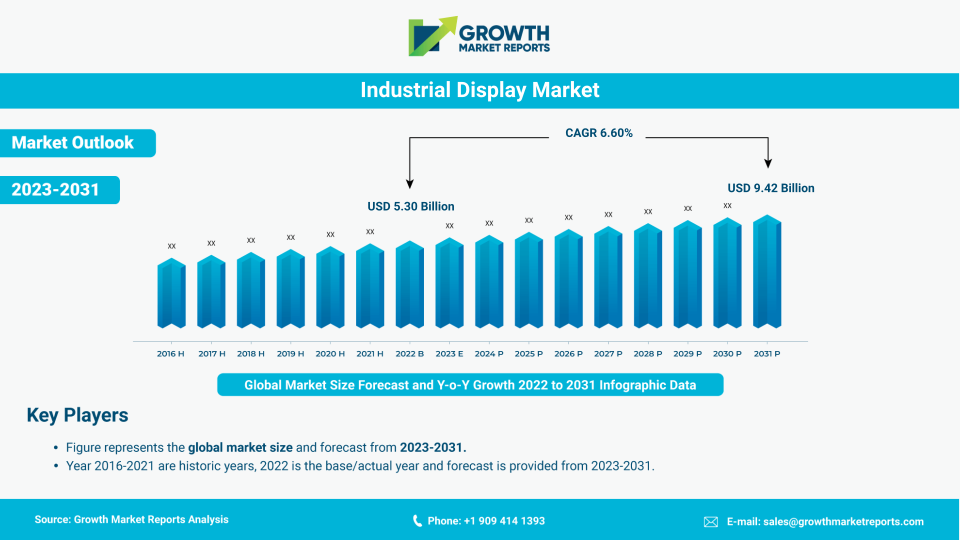
According to our latest research, the global industrial display market size in 2024 stands at USD 6.8 billion, with a robust growth trajectory expected over the coming years. The market is forecasted to reach USD 12.7 billion by 2033, expanding at a compelling CAGR of 7.2% from 2025 to 2033. This growth is primarily driven by increasing demand for advanced human-machine interfaces (HMI), the proliferation of automation across manufacturing and process industries, and the rapid adoption of ruggedized display solutions suitable for harsh industrial environments.

A significant growth factor for the industrial display market is the accelerating pace of industrial automation and digital transformation initiatives across multiple end-user sectors. As industries strive for greater operational efficiency, safety, and real-time monitoring, the adoption of sophisticated industrial display solutions becomes indispensable. These displays play a pivotal role in visualizing critical process data, providing intuitive interfaces for operators, and supporting predictive maintenance through real-time analytics. The integration of IoT and AI technologies into industrial operations further amplifies the need for high-performance displays capable of handling complex data visualization and interactive control, fueling market expansion.

Another key driver is the rising demand for rugged and reliable display systems that can withstand challenging industrial environments. Industrial displays are often exposed to extreme temperatures, humidity, dust, vibrations, and electromagnetic interference. Consequently, manufacturers are innovating to provide robust, durable, and long-lasting display solutions that maintain high performance under adverse conditions. The growing deployment of advanced display technologies, such as sunlight-readable screens and IP-rated enclosures, is enabling industries such as oil & gas, energy & power, and transportation to enhance operational continuity and reduce downtime, further propelling market growth.

Additionally, as the industrial sector embraces Industry 4.0, there is a marked shift towards interactive and touchscreen displays that facilitate seamless human-machine interaction. These interfaces empower operators to make informed decisions quickly, streamline workflows, and enhance productivity. The rising investments in smart factories, coupled with the need for real-time remote monitoring and control, are driving the adoption of large-format, high-resolution industrial displays. Furthermore, the ongoing trend of integrating digital displays into legacy systems to modernize operations is contributing to the sustained growth of the industrial display market worldwide.

In the realm of industrial display solutions, the Rugged HMI Display stands out as a pivotal innovation tailored for the most demanding environments. These displays are engineered to endure the harshest conditions, including extreme temperatures, dust, and moisture, making them ideal for sectors such as oil & gas, mining, and outdoor industrial applications. The Rugged HMI Display not only ensures durability but also enhances operational efficiency by providing clear and reliable interfaces for human-machine interaction. As industries continue to push the boundaries of automation and digitalization, the demand for such robust display solutions is expected to grow, further driving advancements in display technology and design.

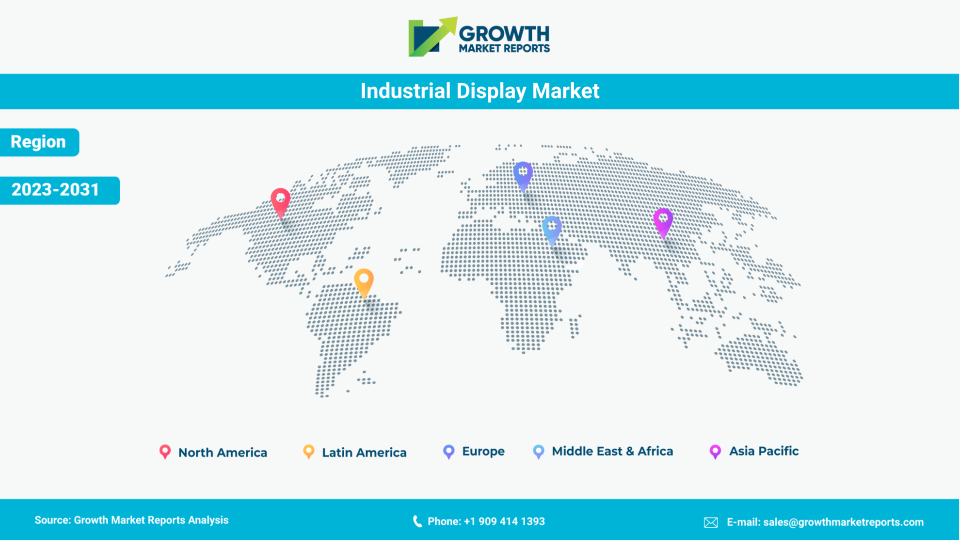
From a regional perspective, Asia Pacific dominates the global industrial display market, accounting for the largest revenue share in 2024, followed by North America and Europe. The rapid industrialization across China, India, Japan, and Southeast Asian countries, along with substantial investments in automation and infrastructure development, underpins Asia Pacific's leadership. Meanwhile, North America and Europe continue to witness steady demand, supported by technological advancements, a strong manufacturing base, and the presence of leading industrial display manufacturers. Emerging markets in Latin America and the Middle East & Africa are also experiencing increased adoption, driven by infrastructure modernization and the expansion of industrial sectors.

Global Industrial Display Industry Outlook

Product Type Analysis

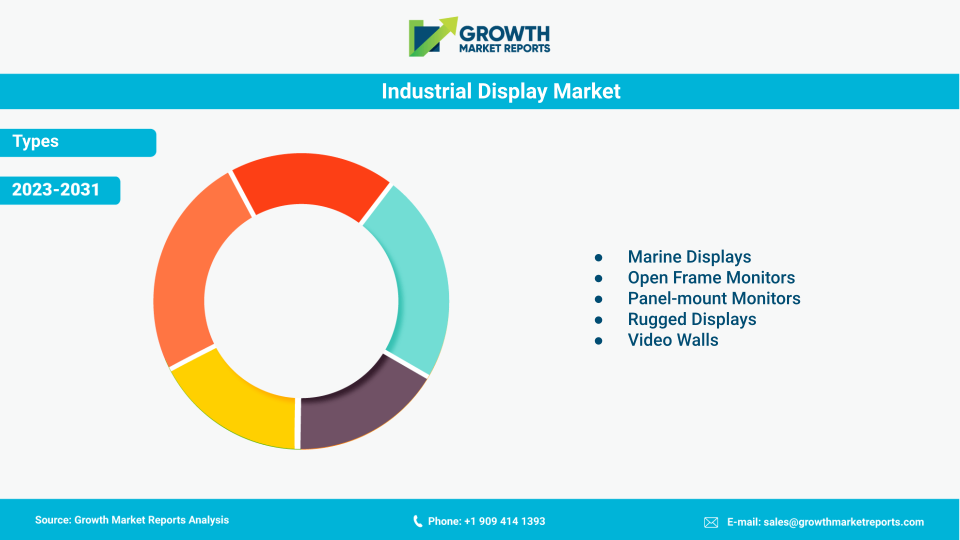
The industrial display market by product type is segmented into panel-mount monitors, open-frame monitors, rugged displays, touchscreen displays, and others. Panel-mount monitors have traditionally held a significant share due to their versatility and ease of integration into control panels, machinery, and operator stations. These displays are widely used in manufacturing plants, process industries, and utilities where reliable, clear visualization is essential for monitoring and controlling processes. The demand for panel-mount monitors is expected to remain strong, supported by ongoing upgrades in industrial automation systems and the replacement of legacy display units with modern, energy-efficient alternatives.

Open-frame monitors are gaining traction, particularly in custom-built industrial equipment and kiosks where flexibility in design and integration is crucial. These monitors offer manufacturers the freedom to tailor the display solution to specific requirements, making them ideal for applications in transportation, medical devices, and industrial automation. The growth of open-frame monitors is further bolstered by the trend towards modular and scalable automation solutions, enabling industries to adapt quickly to changing operational needs and technological advancements.

Rugged displays are specifically engineered to operate in extreme and hazardous environments, such as oil & gas fields, mining sites, and outdoor industrial installations. These displays feature enhanced protection against shocks, vibrations, moisture, and electromagnetic interference, ensuring reliable performance in mission-critical applications. The increasing emphasis on worker safety, asset protection, and operational continuity in hazardous industries is driving the adoption of rugged displays. Manufacturers are also introducing innovations such as sunlight-readable screens, advanced touch technologies, and improved durability, which are expected to further expand the market for rugged displays in the coming years.

Touchscreen displays have witnessed exponential growth as industries prioritize intuitive, user-friendly interfaces for operator interaction. The proliferation of capacitive and resistive touch technologies has enabled the development of responsive, multi-touch industrial displays that support complex operations and data visualization. Touchscreen displays are increasingly deployed in HMIs, control rooms, and remote monitoring stations, where quick access to process information and real-time control are critical. The ongoing shift towards smart manufacturing and digitalization is expected to sustain the strong growth trajectory of touchscreen displays, making them one of the fastest-growing product segments in the industrial display market.

The "others" segment encompasses specialized industrial display products such as digital signage, portable displays, and custom-built solutions for niche applications. While this segment represents a smaller share of the overall market, it is characterized by high-value, customized solutions tailored to unique industrial requirements. The demand for specialized displays is expected to grow as industries seek to enhance operational visibility, improve communication, and support emerging use cases in the context of Industry 4.0 and smart infrastructure development.

Report Scope

Attributes Details
Report Title Industrial Display Market Research Report 2033
By Product Type Panel-Mount Monitors, Open-Frame Monitors, Rugged Displays, Touchscreen Displays, Others
By Technology LCD, LED, OLED, Others
By Panel Size Up to 14”, 14–21”, 21–40”, Above 40”
By Application HMI, Remote Monitoring, Interactive Display, Others
By End-User Manufacturing, Energy & Power, Oil & Gas, Transportation, Healthcare, Others
Regions Covered North America, Europe, APAC, Latin America, MEA
Base Year 2024
Historic Data 2018-2023
Forecast Period 2025-2033
Number of Pages 287
Number of Tables & Figures 380
Customization Available Yes, the report can be customized as per your need.

Technology Analysis

The industrial display market by technology is segmented into LCD, LED, OLED, and others. LCD technology continues to dominate the market, accounting for the largest share in 2024. LCD displays are widely adopted due to their cost-effectiveness, energy efficiency, and ability to deliver high-resolution images across a range of panel sizes. The versatility of LCD technology makes it suitable for diverse industrial applications, from small operator panels to large-format control room displays. Continuous advancements in LCD technology, such as improved brightness, contrast ratios, and durability, are further reinforcing its position as the preferred choice for industrial display solutions.

LED displays are gaining popularity, particularly in applications that require high brightness, vibrant colors, and superior visibility under challenging lighting conditions. The adoption of LED technology is being driven by its long operational life, low power consumption, and robustness against environmental factors. LED displays are increasingly used in transportation hubs, outdoor industrial installations, and large-scale visualization systems where visibility and reliability are paramount. The ongoing transition from traditional backlit displays to direct-view LED solutions is expected to accelerate, supported by declining costs and technological advancements in mini-LED and micro-LED displays.

OLED technology is emerging as a promising segment within the industrial display market, offering advantages such as flexible form factors, high contrast ratios, and wide viewing angles. OLED displays are being explored for applications that demand exceptional image quality, lightweight construction, and innovative design possibilities. While OLED adoption in industrial settings is currently limited by higher costs and concerns over long-term durability, ongoing research and development are expected to address these challenges. As OLED technology matures and becomes more cost-competitive, it is poised to capture a growing share of the industrial display market, particularly in high-end and specialized applications.

The "others" segment includes display technologies such as plasma, e-paper, and projection-based systems. While these technologies occupy a niche within the industrial display market, they offer unique benefits for specific use cases. For instance, e-paper displays are valued for their ultra-low power consumption and readability in direct sunlight, making them suitable for outdoor signage and remote monitoring applications. Projection-based systems are used in large-scale visualization and simulation environments where immersive experiences are required. The continued evolution of display technologies is expected to drive innovation and diversification in the industrial display market, enabling new applications and enhancing user experiences.

Overall, the technology landscape in the industrial display market is characterized by rapid innovation, with manufacturers investing in research and development to deliver displays that meet the evolving demands of industrial users. The convergence of display technologies with IoT, AI, and edge computing is expected to unlock new opportunities for intelligent, connected, and adaptive industrial display solutions in the years ahead.

Panel Size Analysis

The industrial display market by panel size is segmented into up to 14”, 14–21”, 21–40”, and above 40”. Displays up to 14 inches are commonly used in compact operator panels, portable devices, and control interfaces where space constraints and mobility are critical considerations. These small-format displays are favored in applications such as handheld diagnostic tools, portable HMIs, and embedded systems. The demand for up to 14” displays is driven by the need for compact, lightweight, and energy-efficient solutions that can be easily integrated into a wide range of industrial equipment and machinery.

The 14–21 inch segment represents a significant share of the industrial display market, catering to standard control panels, workstations, and monitoring systems. Displays in this size range offer an optimal balance between screen real estate and ergonomic usability, making them ideal for applications that require detailed visualization and interactive control. The proliferation of automation in manufacturing, energy, and transportation sectors is fueling the adoption of 14–21” displays, as operators seek to enhance process visibility, streamline workflows, and improve situational awareness.

21–40 inch displays are increasingly deployed in control rooms, command centers, and large-scale visualization environments where multiple data streams and complex process information need to be monitored simultaneously. These large-format displays support high-resolution imaging, multi-window visualization, and collaborative decision-making, making them indispensable in mission-critical industrial operations. The growing emphasis on centralized monitoring, predictive maintenance, and real-time analytics is driving the demand for 21–40” displays, particularly in sectors such as oil & gas, energy & power, and transportation.

Displays above 40 inches represent the high end of the industrial display market, catering to specialized applications such as video walls, digital signage, and immersive visualization systems. These extra-large displays are used in environments where maximum visibility, impact, and collaboration are required, such as control centers, training facilities, and public information systems. The adoption of above 40” displays is supported by advancements in display technologies, declining panel costs, and the increasing need for comprehensive situational awareness in complex industrial operations.

The panel size landscape in the industrial display market is evolving in response to changing user preferences, technological advancements, and application requirements. Manufacturers are focusing on offering a broad portfolio of display sizes to address the diverse needs of industrial users, from compact handheld devices to expansive video wall installations. The trend towards modular, scalable, and customizable display solutions is expected to continue, enabling industries to optimize their visualization capabilities and drive operational excellence.

Application Analysis

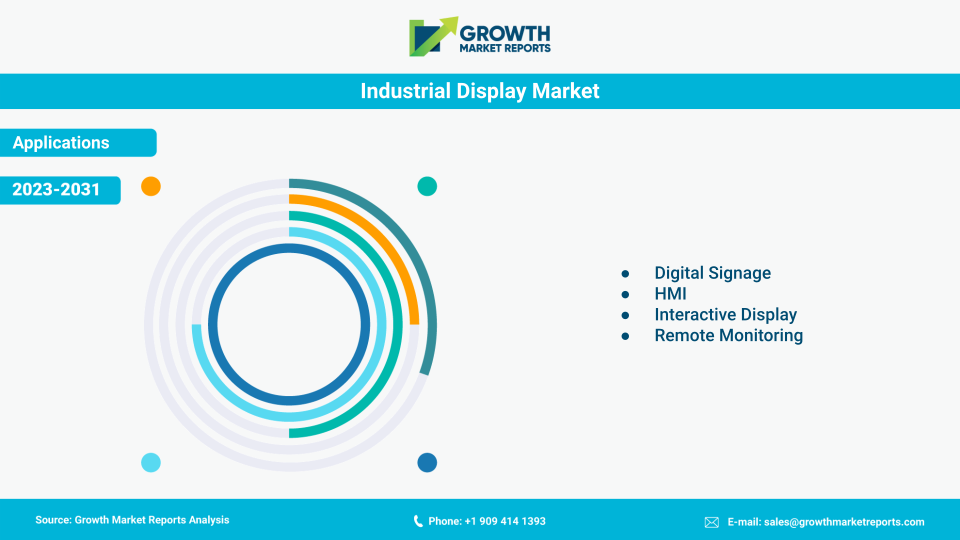
The industrial display market by application is segmented into HMI, remote monitoring, interactive display, and others. Human-machine interface (HMI) applications account for the largest share of the market, as industrial displays serve as the primary interface between operators and automated systems. HMIs facilitate real-time process control, data visualization, and alarm management, enabling operators to monitor and manage complex industrial processes with ease. The increasing adoption of advanced HMIs, featuring touchscreens, multi-language support, and customizable interfaces, is driving the demand for high-performance industrial displays across manufacturing, energy, and process industries.

Remote monitoring is another rapidly growing application segment, fueled by the need for real-time visibility and control over distributed assets and operations. Industrial displays play a critical role in remote monitoring systems, providing operators with instant access to process data, alarms, and diagnostics from centralized or remote locations. The proliferation of IoT-enabled sensors, wireless connectivity, and cloud-based platforms is enabling industries to implement remote monitoring solutions that enhance operational efficiency, reduce response times, and minimize downtime. As industries increasingly adopt remote and decentralized operational models, the demand for reliable, high-resolution industrial displays for remote monitoring is expected to surge.

Interactive displays are gaining prominence in industrial environments, supporting applications such as training, simulation, collaborative decision-making, and operator guidance. These displays enable users to interact with process data, visualize complex workflows, and access contextual information through intuitive touch and gesture controls. The integration of interactive displays with augmented reality (AR) and virtual reality (VR) technologies is opening new possibilities for immersive training, maintenance, and troubleshooting in industrial settings. The growing emphasis on workforce empowerment, knowledge transfer, and skills development is driving the adoption of interactive display solutions across diverse industrial sectors.

The "others" application segment includes specialized uses such as digital signage, public information systems, and custom visualization solutions tailored to unique industrial requirements. While this segment represents a smaller share of the overall market, it is characterized by high-value, bespoke solutions that address specific operational challenges and communication needs. The demand for specialized industrial displays is expected to grow as industries seek to enhance operational transparency, improve communication, and support emerging use cases in the context of smart infrastructure and Industry 4.0.

Overall, the application landscape in the industrial display market is expanding in response to evolving industry requirements, technological advancements, and the growing emphasis on digital transformation. Industrial displays are increasingly viewed as strategic assets that enable organizations to optimize operations, enhance safety, and drive innovation in a rapidly changing industrial landscape.

End-User Analysis

The industrial display market by end-user is segmented into manufacturing, energy & power, oil & gas, transportation, healthcare, and others. Manufacturing remains the dominant end-user segment, accounting for the largest share of the market in 2024. The widespread adoption of automation, robotics, and digitalization in manufacturing plants is driving the demand for advanced industrial display solutions that support process control, quality management, and predictive maintenance. As manufacturers strive to achieve higher productivity, operational efficiency, and flexibility, the role of industrial displays in enabling seamless human-machine interaction and real-time decision-making becomes increasingly critical.

The energy & power sector is another significant end-user of industrial displays, utilizing them for monitoring and controlling power generation, transmission, and distribution systems. Industrial displays are deployed in control rooms, substations, and field installations to provide operators with real-time visibility into grid performance, equipment status, and fault diagnostics. The growing focus on grid modernization, renewable energy integration, and smart grid initiatives is driving the adoption of advanced display solutions that support centralized and remote monitoring, situational awareness, and rapid response to operational events.

Oil & gas industries rely heavily on ruggedized industrial displays for monitoring drilling operations, pipeline management, and safety systems in challenging environments. These displays are designed to withstand extreme temperatures, vibrations, and exposure to hazardous substances, ensuring reliable performance in mission-critical applications. The increasing emphasis on safety, asset integrity, and operational continuity in the oil & gas sector is fueling the demand for robust industrial display solutions that enable real-time monitoring, alarm management, and data visualization in remote and hazardous locations.

The transportation sector is witnessing a surge in the adoption of industrial displays for applications such as traffic management, railway signaling, airport operations, and fleet monitoring. Industrial displays are used to provide operators with real-time information on vehicle status, route planning, and incident management, enhancing operational efficiency and safety. The ongoing investments in smart transportation infrastructure, intelligent traffic systems, and autonomous vehicles are expected to drive the demand for advanced industrial display solutions in the transportation sector.

The healthcare segment represents a growing opportunity for the industrial display market, as hospitals and medical facilities increasingly deploy ruggedized, high-resolution displays for patient monitoring, diagnostics, and medical imaging. Industrial-grade displays are valued for their reliability, durability, and ability to deliver accurate, high-quality images in demanding clinical environments. The ongoing digital transformation of healthcare, coupled with the need for real-time data visualization and remote monitoring, is expected to fuel the adoption of industrial display solutions in the healthcare sector.

The "others" end-user segment includes sectors such as mining, aerospace, defense, and public safety, where industrial displays are used for specialized applications such as command and control, simulation, and emergency response. While these sectors represent a smaller share of the overall market, they offer significant growth potential for customized, high-performance industrial display solutions that address unique operational challenges and requirements.

Opportunities & Threats

The industrial display market presents a wealth of opportunities for growth and innovation, driven by the ongoing digital transformation of industrial sectors worldwide. One of the most promising opportunities lies in the integration of advanced technologies such as AI, IoT, and edge computing with industrial display solutions. By enabling intelligent data visualization, predictive analytics, and real-time decision support, these technologies are transforming industrial displays into strategic assets that drive operational excellence. The rise of smart factories, digital twins, and connected ecosystems is expected to create new demand for high-performance, interactive, and adaptive display solutions that support complex industrial workflows and enhance situational awareness.

Another key opportunity is the expansion of industrial display applications into emerging markets and new verticals. As developing economies invest in infrastructure modernization, automation, and smart city initiatives, the demand for industrial display solutions is expected to surge. Sectors such as healthcare, transportation, and public safety are increasingly adopting industrial-grade displays for critical applications, creating new avenues for market growth. Additionally, the trend towards customization and modularity is enabling manufacturers to offer tailored display solutions that address specific customer requirements, further expanding the addressable market and driving innovation in product design and functionality.

Despite the positive outlook, the industrial display market faces several restrainers that could impact growth. One of the primary challenges is the high initial cost of advanced industrial display solutions, particularly those incorporating cutting-edge technologies such as OLED, multi-touch, and ruggedized designs. The need for specialized installation, maintenance, and integration with legacy systems can also increase the total cost of ownership, potentially limiting adoption among cost-sensitive end-users. Furthermore, the rapid pace of technological change and the risk of obsolescence pose challenges for both manufacturers and users, necessitating ongoing investment in research, development, and training to stay competitive in a dynamic market environment.

Regional Outlook

Asia Pacific stands out as the largest and fastest-growing region in the global industrial display market, accounting for approximately USD 2.8 billion in revenue in 2024. The region's dominance is underpinned by rapid industrialization, significant investments in automation and infrastructure, and the presence of leading display manufacturers in countries such as China, Japan, South Korea, and India. The Asia Pacific industrial display market is projected to grow at a CAGR of 8.1% from 2025 to 2033, driven by expanding manufacturing sectors, government initiatives to promote smart factories, and the increasing adoption of digital technologies across diverse industries.

North America holds the second-largest share of the industrial display market, with revenues estimated at USD 1.9 billion in 2024. The region benefits from a strong manufacturing base, advanced technological infrastructure, and a high level of automation across industries such as energy, oil & gas, and transportation. The United States and Canada are at the forefront of adopting innovative display technologies, supported by robust R&D activities and the presence of major industry players. The North American market is expected to witness steady growth over the forecast period, driven by ongoing investments in digital transformation, smart infrastructure, and industrial modernization.

Europe represents a mature market for industrial displays, with revenues reaching USD 1.5 billion in 2024. The region's growth is supported by a strong focus on industrial automation, stringent safety regulations, and the widespread adoption of advanced manufacturing technologies. Countries such as Germany, the United Kingdom, and France are leading the way in implementing Industry 4.0 initiatives and integrating digital display solutions into manufacturing and process industries. The European market is expected to maintain moderate growth, driven by the need for operational efficiency, workforce empowerment, and compliance with evolving industry standards.

Industrial Display Market Statistics

Competitor Outlook

The global industrial display market is characterized by intense competition, with a mix of established multinational corporations and innovative regional players vying for market share. The competitive landscape is shaped by ongoing technological advancements, product innovation, and strategic collaborations aimed at addressing the evolving needs of industrial users. Leading companies are investing heavily in research and development to introduce next-generation display solutions that offer superior performance, durability, and integration capabilities. The focus on expanding product portfolios, enhancing customization options, and improving after-sales support is enabling market leaders to differentiate themselves and strengthen customer loyalty in a dynamic market environment.

Mergers, acquisitions, and partnerships are common strategies employed by key players to expand their geographic presence, access new customer segments, and leverage complementary technologies. The trend towards vertical integration, where companies control multiple stages of the value chain from component manufacturing to system integration, is enabling market leaders to achieve greater operational efficiencies and offer end-to-end solutions. At the same time, the emergence of niche players specializing in customized, high-performance industrial displays is fostering innovation and driving competition in specific market segments and applications.

The competitive landscape is also influenced by the growing emphasis on sustainability, energy efficiency, and environmental compliance. Manufacturers are increasingly focused on developing eco-friendly display solutions that minimize power consumption, reduce waste, and comply with global environmental standards. The adoption of green manufacturing practices and the use of recyclable materials are becoming important differentiators for companies seeking to enhance their brand reputation and meet the expectations of environmentally conscious customers.

Some of the major companies operating in the industrial display market include Siemens AG, Advantech Co., Ltd., Panasonic Corporation, LG Display Co., Ltd., Samsung Electronics Co., Ltd., Planar Systems, Inc., Pepperl+Fuchs AG, Winmate Inc., and Hope Industrial Systems, Inc. Siemens AG is renowned for its comprehensive portfolio of industrial automation and display solutions, catering to a wide range of end-user industries. Advantech Co., Ltd. is a leading provider of industrial computing and display solutions, known for its innovative products and strong global presence. Panasonic Corporation and LG Display Co., Ltd. are prominent players in display technology, offering advanced LCD, LED, and OLED solutions for industrial applications.

Samsung Electronics Co., Ltd. is a global leader in display technology, with a strong focus on delivering high-performance, durable, and energy-efficient industrial displays. Planar Systems, Inc. specializes in large-format and video wall display solutions for control rooms and mission-critical environments. Pepperl+Fuchs AG and Winmate Inc. are recognized for their expertise in ruggedized, industrial-grade display solutions tailored to challenging environments and specialized applications. Hope Industrial Systems, Inc. is known for its robust, reliable, and customizable industrial displays designed to meet the unique requirements of manufacturing and process industries.

These companies are continuously innovating to enhance the performance, reliability, and user experience of their industrial display solutions. By leveraging advanced technologies, expanding their product offerings, and strengthening customer relationships, leading players are well-positioned to capitalize on the growing opportunities in the global industrial display market and maintain their competitive edge in the years ahead.

Key Players

  • Samsung Electronics Co., Ltd.
  • LG Display Co., Ltd.
  • Panasonic Corporation
  • Siemens AG
  • Schneider Electric SE
  • Mitsubishi Electric Corporation
  • Advantech Co., Ltd.
  • Rockwell Automation, Inc.
  • Honeywell International Inc.
  • Emerson Electric Co.
  • Sharp Corporation
  • Planar Systems, Inc.
  • BOE Technology Group Co., Ltd.
  • AU Optronics Corp.
  • Barco NV
  • Leyard Optoelectronic Co., Ltd.
  • Delta Electronics, Inc.
  • Winmate Inc.
  • Kontron AG
  • Japan Display Inc.
Industrial Display Market Overview

Segments

The Industrial Display market has been segmented on the basis of

Product Type

  • Panel-Mount Monitors
  • Open-Frame Monitors
  • Rugged Displays
  • Touchscreen Displays
  • Others

Technology

  • LCD
  • LED
  • OLED
  • Others

Panel Size

  • Up to 14”
  • 14–21”
  • 21–40”
  • Above 40”

Application

  • HMI
  • Remote Monitoring
  • Interactive Display
  • Others

End-User

  • Manufacturing
  • Energy & Power
  • Oil & Gas
  • Transportation
  • Healthcare
  • Others

Competitive Landscape

Major players competing in the global industrial display market include Advantech Co., Ltd., Samsung Display, WinMate, Inc., LG Display Co., Ltd., and Japan Display, Inc.

Some of these businesses are involved in adopting numerous market strategies such as merger, acquisition, collaboration, partnership, product launch, R&D activities, and capacity expansion to increase market share and global presence.

Recently, Advantech Co. Ltd. a major global embedded solutions provider has launched its latest compact display solution, the IDP-3100 series. This bezel-less touch display having advanced features such as an IP65 rated front can be adopted in a wide range of industries including retail, industrial, and automation, applications. This device is expected to support a backlight lifetime of 50,000 hours and offer outstanding display performance within a solid modern design.
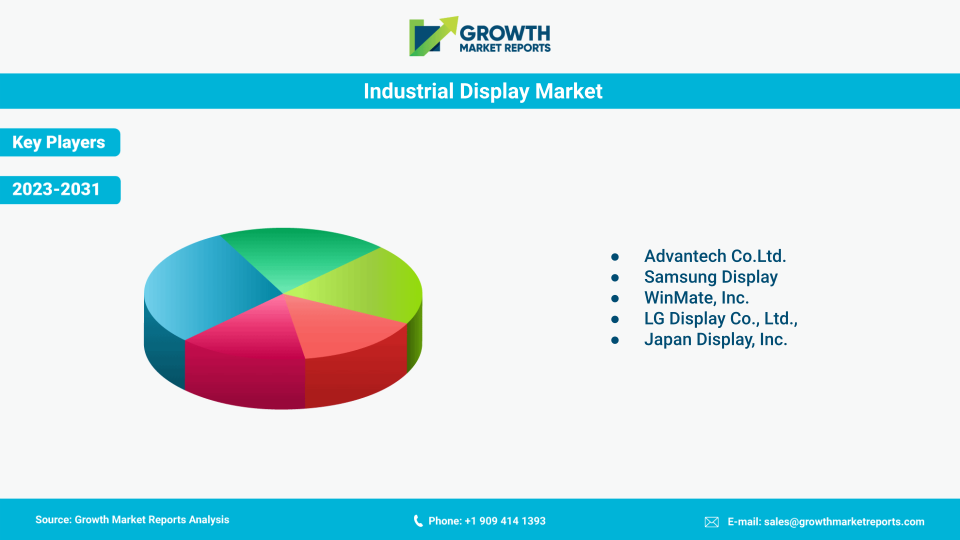
 

Industrial Display Market Key Players

Frequently Asked Questions

Panel sizes are segmented into up to 14”, 14–21”, 21–40”, and above 40”. Smaller displays are used in portable and compact devices, while larger displays serve control rooms, video walls, and immersive visualization environments.

Major companies include Siemens AG, Advantech Co., Ltd., Panasonic Corporation, LG Display Co., Ltd., Samsung Electronics Co., Ltd., Planar Systems, Inc., Pepperl+Fuchs AG, Winmate Inc., and Hope Industrial Systems, Inc.

Opportunities include integration with AI, IoT, and edge computing, expansion into emerging markets, and demand for customized solutions. Challenges include high initial costs, integration with legacy systems, and rapid technological change leading to potential obsolescence.

Key end-users include manufacturing, energy & power, oil & gas, transportation, healthcare, mining, aerospace, defense, and public safety sectors.

Industrial displays are used in human-machine interfaces (HMI), remote monitoring, interactive displays for training and simulation, digital signage, and custom visualization solutions.

LCD technology is the most widely used, followed by LED and emerging OLED displays. Other technologies include plasma, e-paper, and projection-based systems for niche applications.

The main product types are panel-mount monitors, open-frame monitors, rugged displays, touchscreen displays, and specialized displays such as digital signage and portable solutions.

Asia Pacific dominates the industrial display market, followed by North America and Europe. Rapid industrialization, automation investments, and infrastructure development in countries like China, India, and Japan underpin Asia Pacific's leadership.

Major growth drivers include increasing demand for advanced human-machine interfaces (HMI), widespread industrial automation, adoption of ruggedized display solutions for harsh environments, and integration of IoT and AI technologies for real-time data visualization.

As of 2024, the global industrial display market size is USD 6.8 billion and is projected to reach USD 12.7 billion by 2033, growing at a CAGR of 7.2% from 2025 to 2033.

Table Of Content

Chapter 1 Executive Summary
Chapter 2 Assumptions and Acronyms Used
Chapter 3 Research Methodology
Chapter 4 Industrial Display Market Overview
   4.1 Introduction
      4.1.1 Market Taxonomy
      4.1.2 Market Definition
      4.1.3 Macro-Economic Factors Impacting the Market Growth
   4.2 Industrial Display Market Dynamics
      4.2.1 Market Drivers
      4.2.2 Market Restraints
      4.2.3 Market Opportunity
   4.3 Industrial Display Market - Supply Chain Analysis
      4.3.1 List of Key Suppliers
      4.3.2 List of Key Distributors
      4.3.3 List of Key Consumers
   4.4 Key Forces Shaping the Industrial Display Market
      4.4.1 Bargaining Power of Suppliers
      4.4.2 Bargaining Power of Buyers
      4.4.3 Threat of Substitution
      4.4.4 Threat of New Entrants
      4.4.5 Competitive Rivalry
   4.5 Global Industrial Display Market Size & Forecast, 2023-2032
      4.5.1 Industrial Display Market Size and Y-o-Y Growth
      4.5.2 Industrial Display Market Absolute $ Opportunity

Chapter 5 Global Industrial Display Market Analysis and Forecast By Product Type
   5.1 Introduction
      5.1.1 Key Market Trends & Growth Opportunities By Product Type
      5.1.2 Basis Point Share (BPS) Analysis By Product Type
      5.1.3 Absolute $ Opportunity Assessment By Product Type
   5.2 Industrial Display Market Size Forecast By Product Type
      5.2.1 Panel-Mount Monitors
      5.2.2 Open-Frame Monitors
      5.2.3 Rugged Displays
      5.2.4 Touchscreen Displays
      5.2.5 Others
   5.3 Market Attractiveness Analysis By Product Type

Chapter 6 Global Industrial Display Market Analysis and Forecast By Technology
   6.1 Introduction
      6.1.1 Key Market Trends & Growth Opportunities By Technology
      6.1.2 Basis Point Share (BPS) Analysis By Technology
      6.1.3 Absolute $ Opportunity Assessment By Technology
   6.2 Industrial Display Market Size Forecast By Technology
      6.2.1 LCD
      6.2.2 LED
      6.2.3 OLED
      6.2.4 Others
   6.3 Market Attractiveness Analysis By Technology

Chapter 7 Global Industrial Display Market Analysis and Forecast By Panel Size
   7.1 Introduction
      7.1.1 Key Market Trends & Growth Opportunities By Panel Size
      7.1.2 Basis Point Share (BPS) Analysis By Panel Size
      7.1.3 Absolute $ Opportunity Assessment By Panel Size
   7.2 Industrial Display Market Size Forecast By Panel Size
      7.2.1 Up to 14”
      7.2.2 14–21”
      7.2.3 21–40”
      7.2.4 Above 40”
   7.3 Market Attractiveness Analysis By Panel Size

Chapter 8 Global Industrial Display Market Analysis and Forecast By Application
   8.1 Introduction
      8.1.1 Key Market Trends & Growth Opportunities By Application
      8.1.2 Basis Point Share (BPS) Analysis By Application
      8.1.3 Absolute $ Opportunity Assessment By Application
   8.2 Industrial Display Market Size Forecast By Application
      8.2.1 HMI
      8.2.2 Remote Monitoring
      8.2.3 Interactive Display
      8.2.4 Others
   8.3 Market Attractiveness Analysis By Application

Chapter 9 Global Industrial Display Market Analysis and Forecast By End-User
   9.1 Introduction
      9.1.1 Key Market Trends & Growth Opportunities By End-User
      9.1.2 Basis Point Share (BPS) Analysis By End-User
      9.1.3 Absolute $ Opportunity Assessment By End-User
   9.2 Industrial Display Market Size Forecast By End-User
      9.2.1 Manufacturing
      9.2.2 Energy & Power
      9.2.3 Oil & Gas
      9.2.4 Transportation
      9.2.5 Healthcare
      9.2.6 Others
   9.3 Market Attractiveness Analysis By End-User

Chapter 10 Global Industrial Display Market Analysis and Forecast by Region
   10.1 Introduction
      10.1.1 Key Market Trends & Growth Opportunities By Region
      10.1.2 Basis Point Share (BPS) Analysis By Region
      10.1.3 Absolute $ Opportunity Assessment By Region
   10.2 Industrial Display Market Size Forecast By Region
      10.2.1 North America
      10.2.2 Europe
      10.2.3 Asia Pacific
      10.2.4 Latin America
      10.2.5 Middle East & Africa (MEA)
   10.3 Market Attractiveness Analysis By Region

Chapter 11 Coronavirus Disease (COVID-19) Impact 
   11.1 Introduction 
   11.2 Current & Future Impact Analysis 
   11.3 Economic Impact Analysis 
   11.4 Government Policies 
   11.5 Investment Scenario

Chapter 12 North America Industrial Display Analysis and Forecast
   12.1 Introduction
   12.2 North America Industrial Display Market Size Forecast by Country
      12.2.1 U.S.
      12.2.2 Canada
   12.3 Basis Point Share (BPS) Analysis by Country
   12.4 Absolute $ Opportunity Assessment by Country
   12.5 Market Attractiveness Analysis by Country
   12.6 North America Industrial Display Market Size Forecast By Product Type
      12.6.1 Panel-Mount Monitors
      12.6.2 Open-Frame Monitors
      12.6.3 Rugged Displays
      12.6.4 Touchscreen Displays
      12.6.5 Others
   12.7 Basis Point Share (BPS) Analysis By Product Type 
   12.8 Absolute $ Opportunity Assessment By Product Type 
   12.9 Market Attractiveness Analysis By Product Type
   12.10 North America Industrial Display Market Size Forecast By Technology
      12.10.1 LCD
      12.10.2 LED
      12.10.3 OLED
      12.10.4 Others
   12.11 Basis Point Share (BPS) Analysis By Technology 
   12.12 Absolute $ Opportunity Assessment By Technology 
   12.13 Market Attractiveness Analysis By Technology
   12.14 North America Industrial Display Market Size Forecast By Panel Size
      12.14.1 Up to 14”
      12.14.2 14–21”
      12.14.3 21–40”
      12.14.4 Above 40”
   12.15 Basis Point Share (BPS) Analysis By Panel Size 
   12.16 Absolute $ Opportunity Assessment By Panel Size 
   12.17 Market Attractiveness Analysis By Panel Size
   12.18 North America Industrial Display Market Size Forecast By Application
      12.18.1 HMI
      12.18.2 Remote Monitoring
      12.18.3 Interactive Display
      12.18.4 Others
   12.19 Basis Point Share (BPS) Analysis By Application 
   12.20 Absolute $ Opportunity Assessment By Application 
   12.21 Market Attractiveness Analysis By Application
   12.22 North America Industrial Display Market Size Forecast By End-User
      12.22.1 Manufacturing
      12.22.2 Energy & Power
      12.22.3 Oil & Gas
      12.22.4 Transportation
      12.22.5 Healthcare
      12.22.6 Others
   12.23 Basis Point Share (BPS) Analysis By End-User 
   12.24 Absolute $ Opportunity Assessment By End-User 
   12.25 Market Attractiveness Analysis By End-User

Chapter 13 Europe Industrial Display Analysis and Forecast
   13.1 Introduction
   13.2 Europe Industrial Display Market Size Forecast by Country
      13.2.1 Germany
      13.2.2 France
      13.2.3 Italy
      13.2.4 U.K.
      13.2.5 Spain
      13.2.6 Russia
      13.2.7 Rest of Europe
   13.3 Basis Point Share (BPS) Analysis by Country
   13.4 Absolute $ Opportunity Assessment by Country
   13.5 Market Attractiveness Analysis by Country
   13.6 Europe Industrial Display Market Size Forecast By Product Type
      13.6.1 Panel-Mount Monitors
      13.6.2 Open-Frame Monitors
      13.6.3 Rugged Displays
      13.6.4 Touchscreen Displays
      13.6.5 Others
   13.7 Basis Point Share (BPS) Analysis By Product Type 
   13.8 Absolute $ Opportunity Assessment By Product Type 
   13.9 Market Attractiveness Analysis By Product Type
   13.10 Europe Industrial Display Market Size Forecast By Technology
      13.10.1 LCD
      13.10.2 LED
      13.10.3 OLED
      13.10.4 Others
   13.11 Basis Point Share (BPS) Analysis By Technology 
   13.12 Absolute $ Opportunity Assessment By Technology 
   13.13 Market Attractiveness Analysis By Technology
   13.14 Europe Industrial Display Market Size Forecast By Panel Size
      13.14.1 Up to 14”
      13.14.2 14–21”
      13.14.3 21–40”
      13.14.4 Above 40”
   13.15 Basis Point Share (BPS) Analysis By Panel Size 
   13.16 Absolute $ Opportunity Assessment By Panel Size 
   13.17 Market Attractiveness Analysis By Panel Size
   13.18 Europe Industrial Display Market Size Forecast By Application
      13.18.1 HMI
      13.18.2 Remote Monitoring
      13.18.3 Interactive Display
      13.18.4 Others
   13.19 Basis Point Share (BPS) Analysis By Application 
   13.20 Absolute $ Opportunity Assessment By Application 
   13.21 Market Attractiveness Analysis By Application
   13.22 Europe Industrial Display Market Size Forecast By End-User
      13.22.1 Manufacturing
      13.22.2 Energy & Power
      13.22.3 Oil & Gas
      13.22.4 Transportation
      13.22.5 Healthcare
      13.22.6 Others
   13.23 Basis Point Share (BPS) Analysis By End-User 
   13.24 Absolute $ Opportunity Assessment By End-User 
   13.25 Market Attractiveness Analysis By End-User

Chapter 14 Asia Pacific Industrial Display Analysis and Forecast
   14.1 Introduction
   14.2 Asia Pacific Industrial Display Market Size Forecast by Country
      14.2.1 China
      14.2.2 Japan
      14.2.3 South Korea
      14.2.4 India
      14.2.5 Australia
      14.2.6 South East Asia (SEA)
      14.2.7 Rest of Asia Pacific (APAC)
   14.3 Basis Point Share (BPS) Analysis by Country
   14.4 Absolute $ Opportunity Assessment by Country
   14.5 Market Attractiveness Analysis by Country
   14.6 Asia Pacific Industrial Display Market Size Forecast By Product Type
      14.6.1 Panel-Mount Monitors
      14.6.2 Open-Frame Monitors
      14.6.3 Rugged Displays
      14.6.4 Touchscreen Displays
      14.6.5 Others
   14.7 Basis Point Share (BPS) Analysis By Product Type 
   14.8 Absolute $ Opportunity Assessment By Product Type 
   14.9 Market Attractiveness Analysis By Product Type
   14.10 Asia Pacific Industrial Display Market Size Forecast By Technology
      14.10.1 LCD
      14.10.2 LED
      14.10.3 OLED
      14.10.4 Others
   14.11 Basis Point Share (BPS) Analysis By Technology 
   14.12 Absolute $ Opportunity Assessment By Technology 
   14.13 Market Attractiveness Analysis By Technology
   14.14 Asia Pacific Industrial Display Market Size Forecast By Panel Size
      14.14.1 Up to 14”
      14.14.2 14–21”
      14.14.3 21–40”
      14.14.4 Above 40”
   14.15 Basis Point Share (BPS) Analysis By Panel Size 
   14.16 Absolute $ Opportunity Assessment By Panel Size 
   14.17 Market Attractiveness Analysis By Panel Size
   14.18 Asia Pacific Industrial Display Market Size Forecast By Application
      14.18.1 HMI
      14.18.2 Remote Monitoring
      14.18.3 Interactive Display
      14.18.4 Others
   14.19 Basis Point Share (BPS) Analysis By Application 
   14.20 Absolute $ Opportunity Assessment By Application 
   14.21 Market Attractiveness Analysis By Application
   14.22 Asia Pacific Industrial Display Market Size Forecast By End-User
      14.22.1 Manufacturing
      14.22.2 Energy & Power
      14.22.3 Oil & Gas
      14.22.4 Transportation
      14.22.5 Healthcare
      14.22.6 Others
   14.23 Basis Point Share (BPS) Analysis By End-User 
   14.24 Absolute $ Opportunity Assessment By End-User 
   14.25 Market Attractiveness Analysis By End-User

Chapter 15 Latin America Industrial Display Analysis and Forecast
   15.1 Introduction
   15.2 Latin America Industrial Display Market Size Forecast by Country
      15.2.1 Brazil
      15.2.2 Mexico
      15.2.3 Rest of Latin America (LATAM)
   15.3 Basis Point Share (BPS) Analysis by Country
   15.4 Absolute $ Opportunity Assessment by Country
   15.5 Market Attractiveness Analysis by Country
   15.6 Latin America Industrial Display Market Size Forecast By Product Type
      15.6.1 Panel-Mount Monitors
      15.6.2 Open-Frame Monitors
      15.6.3 Rugged Displays
      15.6.4 Touchscreen Displays
      15.6.5 Others
   15.7 Basis Point Share (BPS) Analysis By Product Type 
   15.8 Absolute $ Opportunity Assessment By Product Type 
   15.9 Market Attractiveness Analysis By Product Type
   15.10 Latin America Industrial Display Market Size Forecast By Technology
      15.10.1 LCD
      15.10.2 LED
      15.10.3 OLED
      15.10.4 Others
   15.11 Basis Point Share (BPS) Analysis By Technology 
   15.12 Absolute $ Opportunity Assessment By Technology 
   15.13 Market Attractiveness Analysis By Technology
   15.14 Latin America Industrial Display Market Size Forecast By Panel Size
      15.14.1 Up to 14”
      15.14.2 14–21”
      15.14.3 21–40”
      15.14.4 Above 40”
   15.15 Basis Point Share (BPS) Analysis By Panel Size 
   15.16 Absolute $ Opportunity Assessment By Panel Size 
   15.17 Market Attractiveness Analysis By Panel Size
   15.18 Latin America Industrial Display Market Size Forecast By Application
      15.18.1 HMI
      15.18.2 Remote Monitoring
      15.18.3 Interactive Display
      15.18.4 Others
   15.19 Basis Point Share (BPS) Analysis By Application 
   15.20 Absolute $ Opportunity Assessment By Application 
   15.21 Market Attractiveness Analysis By Application
   15.22 Latin America Industrial Display Market Size Forecast By End-User
      15.22.1 Manufacturing
      15.22.2 Energy & Power
      15.22.3 Oil & Gas
      15.22.4 Transportation
      15.22.5 Healthcare
      15.22.6 Others
   15.23 Basis Point Share (BPS) Analysis By End-User 
   15.24 Absolute $ Opportunity Assessment By End-User 
   15.25 Market Attractiveness Analysis By End-User

Chapter 16 Middle East & Africa (MEA) Industrial Display Analysis and Forecast
   16.1 Introduction
   16.2 Middle East & Africa (MEA) Industrial Display Market Size Forecast by Country
      16.2.1 Saudi Arabia
      16.2.2 South Africa
      16.2.3 UAE
      16.2.4 Rest of Middle East & Africa (MEA)
   16.3 Basis Point Share (BPS) Analysis by Country
   16.4 Absolute $ Opportunity Assessment by Country
   16.5 Market Attractiveness Analysis by Country
   16.6 Middle East & Africa (MEA) Industrial Display Market Size Forecast By Product Type
      16.6.1 Panel-Mount Monitors
      16.6.2 Open-Frame Monitors
      16.6.3 Rugged Displays
      16.6.4 Touchscreen Displays
      16.6.5 Others
   16.7 Basis Point Share (BPS) Analysis By Product Type 
   16.8 Absolute $ Opportunity Assessment By Product Type 
   16.9 Market Attractiveness Analysis By Product Type
   16.10 Middle East & Africa (MEA) Industrial Display Market Size Forecast By Technology
      16.10.1 LCD
      16.10.2 LED
      16.10.3 OLED
      16.10.4 Others
   16.11 Basis Point Share (BPS) Analysis By Technology 
   16.12 Absolute $ Opportunity Assessment By Technology 
   16.13 Market Attractiveness Analysis By Technology
   16.14 Middle East & Africa (MEA) Industrial Display Market Size Forecast By Panel Size
      16.14.1 Up to 14”
      16.14.2 14–21”
      16.14.3 21–40”
      16.14.4 Above 40”
   16.15 Basis Point Share (BPS) Analysis By Panel Size 
   16.16 Absolute $ Opportunity Assessment By Panel Size 
   16.17 Market Attractiveness Analysis By Panel Size
   16.18 Middle East & Africa (MEA) Industrial Display Market Size Forecast By Application
      16.18.1 HMI
      16.18.2 Remote Monitoring
      16.18.3 Interactive Display
      16.18.4 Others
   16.19 Basis Point Share (BPS) Analysis By Application 
   16.20 Absolute $ Opportunity Assessment By Application 
   16.21 Market Attractiveness Analysis By Application
   16.22 Middle East & Africa (MEA) Industrial Display Market Size Forecast By End-User
      16.22.1 Manufacturing
      16.22.2 Energy & Power
      16.22.3 Oil & Gas
      16.22.4 Transportation
      16.22.5 Healthcare
      16.22.6 Others
   16.23 Basis Point Share (BPS) Analysis By End-User 
   16.24 Absolute $ Opportunity Assessment By End-User 
   16.25 Market Attractiveness Analysis By End-User

Chapter 17 Competition Landscape 
   17.1 Industrial Display Market: Competitive Dashboard
   17.2 Global Industrial Display Market: Market Share Analysis, 2023
   17.3 Company Profiles (Details – Overview, Financials, Developments, Strategy) 
      17.3.1 Samsung Electronics Co., Ltd.
LG Display Co., Ltd.
Panasonic Corporation
Siemens AG
Schneider Electric SE
Mitsubishi Electric Corporation
Advantech Co., Ltd.
Rockwell Automation, Inc.
Honeywell International Inc.
Emerson Electric Co.
Sharp Corporation
Planar Systems, Inc.
BOE Technology Group Co., Ltd.
AU Optronics Corp.
Barco NV
Leyard Optoelectronic Co., Ltd.
Delta Electronics, Inc.
Winmate Inc.
Kontron AG
Japan Display Inc.

Methodology

Our Clients

sinopec
Siemens Healthcare
The John Holland Group
Microsoft
FedEx Logistics
Deloitte
General Mills
Dassault Aviation