Segments - by Type (Fixed Inductors, Variable Inductors, Coupled Inductors, Multilayer Inductors, Power Inductors, Others), by Core Type (Air Core, Ferrite Core, Iron Core, Others), by Application (Automotive, Consumer Electronics, Industrial, Telecommunication, Power Generation, Military & Defense, Healthcare, Others), by End-User (OEMs, Aftermarket)
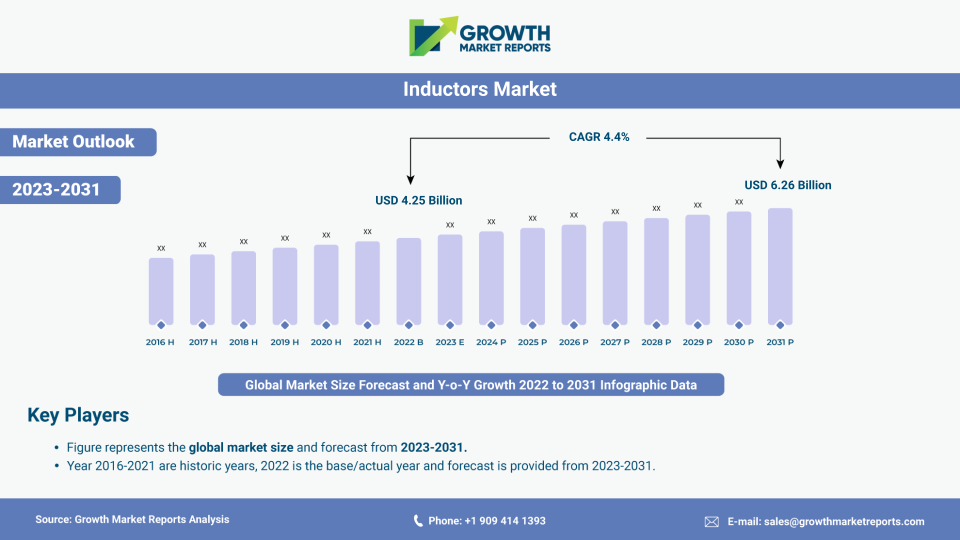
According to our latest research, the global inductors market size reached USD 6.9 billion in 2024, reflecting robust demand across key end-use industries. The market is projected to expand at a CAGR of 6.2% from 2025 to 2033, with the total value forecasted to reach USD 11.9 billion by 2033. This steady growth is primarily driven by the increasing adoption of advanced electronic devices and the proliferation of electric vehicles, which require efficient energy management and high-performance electronic components.
A significant growth factor for the inductors market is the rapid evolution of consumer electronics, including smartphones, tablets, and wearable devices. As consumers demand more compact, energy-efficient, and high-performing gadgets, manufacturers are integrating advanced inductors to optimize power management and signal processing. The trend toward miniaturization and the integration of multiple functionalities into single devices has further spurred the demand for multilayer and power inductors, which offer high efficiency in smaller footprints. Additionally, the increasing penetration of 5G technology and the Internet of Things (IoT) is boosting the need for reliable and high-frequency inductors, as these technologies require components that can handle higher data rates and improved signal integrity.
Another crucial driver is the expansion of the automotive industry, particularly with the shift toward electric and hybrid vehicles. Inductors are essential in automotive electronics, including powertrains, infotainment systems, and advanced driver-assistance systems (ADAS). The growing emphasis on vehicle electrification and the integration of sophisticated safety features have significantly increased the demand for power inductors and coupled inductors. Furthermore, government initiatives promoting green mobility and stricter emission regulations are encouraging automakers to adopt energy-efficient components, thereby positively impacting the inductors market. The automotive sector's increasing reliance on electronic control units and battery management systems further underscores the importance of inductors for efficient energy transfer and noise suppression.
Industrial automation and the transition toward smart manufacturing are also fueling the growth of the inductors market. As industries embrace Industry 4.0 and digital transformation, there is a rising need for robust electronic components that can ensure stable performance in harsh environments. Inductors play a pivotal role in industrial automation systems, motor drives, and power supplies, where they help mitigate electrical noise and ensure reliable operation. The surge in renewable energy installations, such as solar and wind power, has also contributed to the market's expansion, as inductors are critical for energy conversion and storage systems. The combined impact of these factors is creating lucrative opportunities for market participants, with continuous innovation in materials and design further enhancing the performance and application scope of inductors.
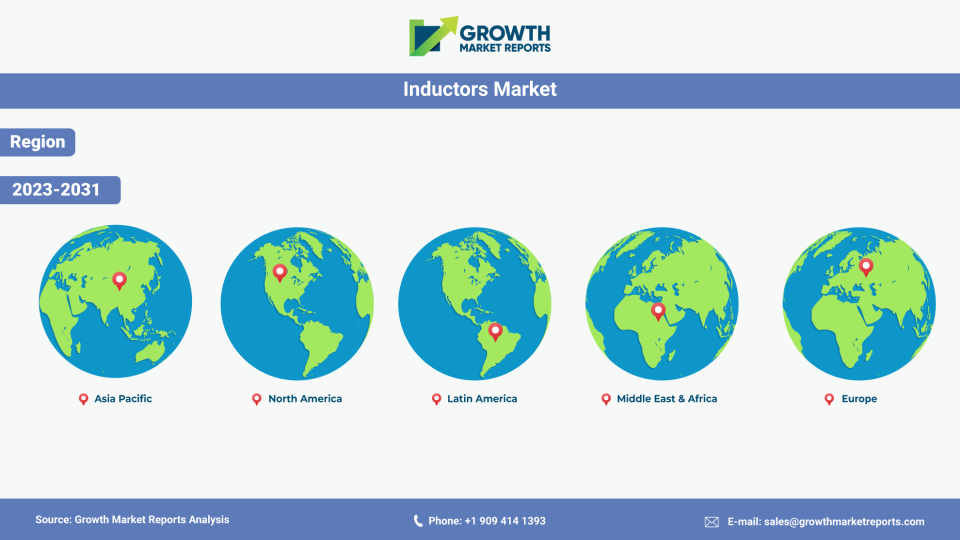
From a regional perspective, Asia Pacific dominates the global inductors market, accounting for the largest share in 2024, followed by North America and Europe. The region's leadership is attributed to the presence of major electronics manufacturing hubs in countries like China, Japan, South Korea, and Taiwan. Rapid industrialization, expanding automotive production, and the proliferation of consumer electronics are key contributors to the region's growth. North America and Europe also exhibit significant demand, driven by technological advancements, strong automotive sectors, and growing investments in renewable energy. Meanwhile, emerging markets in Latin America and the Middle East & Africa are witnessing gradual growth, supported by infrastructure development and the adoption of advanced electronic systems in various industries.
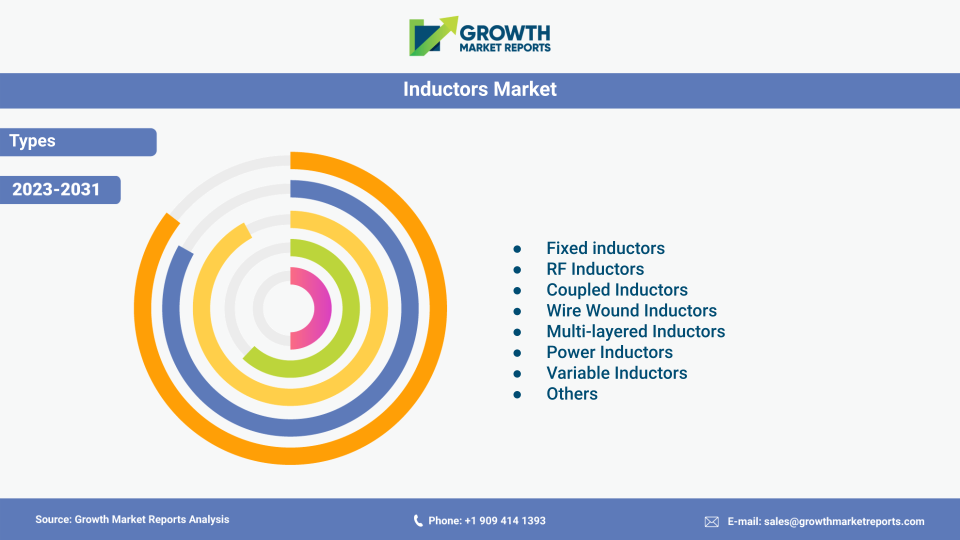
The type segment of the inductors market encompasses various categories such as fixed inductors, variable inductors, coupled inductors, multilayer inductors, power inductors, and others. Fixed inductors represent the most widely used type, owing to their simplicity, reliability, and cost-effectiveness. These inductors are extensively utilized in power supplies, filters, and RF circuits, where stable inductance values are required. The demand for fixed inductors is particularly strong in consumer electronics and automotive applications, where consistency and durability are paramount. Manufacturers are continually innovating to enhance the performance characteristics of fixed inductors, including higher current handling, reduced size, and improved thermal stability.
Variable inductors, though a smaller segment, play a vital role in applications requiring tunable inductance, such as radio frequency circuits and oscillators. These inductors are favored in specialized applications where precise adjustments are necessary to achieve optimal performance. The market for variable inductors is supported by the growth of telecommunications infrastructure and the increasing complexity of wireless communication systems. With the advent of 5G and next-generation wireless technologies, the need for tunable components is expected to rise, thereby boosting the demand for variable inductors in the coming years.
Coupled inductors, including transformers and chokes, are essential in power management and signal isolation applications. Their ability to transfer energy efficiently between circuits makes them indispensable in power supplies, converters, and inverters. The growing adoption of renewable energy systems and electric vehicles has significantly increased the demand for coupled inductors, as these applications require efficient energy transfer and voltage regulation. Manufacturers are focusing on developing coupled inductors with enhanced magnetic coupling and reduced core losses to meet the evolving needs of the market.
Multilayer and power inductors are gaining traction due to their superior performance in high-frequency and high-current applications. Multilayer inductors, in particular, are favored in compact electronic devices, where space constraints and high performance are critical. Power inductors, on the other hand, are essential in automotive and industrial applications, where they handle large currents and provide efficient energy storage. The continuous advancement in materials and manufacturing techniques is enabling the development of inductors with higher efficiency, lower losses, and improved reliability, thus expanding their application scope across various industries.
| Attributes | Details |
| Report Title | Inductors Market Research Report 2033 |
| By Type | Fixed Inductors, Variable Inductors, Coupled Inductors, Multilayer Inductors, Power Inductors, Others |
| By Core Type | Air Core, Ferrite Core, Iron Core, Others |
| By Application | Automotive, Consumer Electronics, Industrial, Telecommunication, Power Generation, Military & Defense, Healthcare, Others |
| By End-User | OEMs, Aftermarket |
| Regions Covered | North America, Europe, APAC, Latin America, MEA |
| Base Year | 2024 |
| Historic Data | 2018-2023 |
| Forecast Period | 2025-2033 |
| Number of Pages | 262 |
| Number of Tables & Figures | 317 |
| Customization Available | Yes, the report can be customized as per your need. |
The core type segment of the inductors market is categorized into air core, ferrite core, iron core, and others, each offering distinct advantages and catering to specific applications. Air core inductors are widely used in high-frequency applications, such as RF circuits and wireless communication systems, due to their low core losses and stable inductance over a wide frequency range. Although air core inductors have lower inductance values compared to their magnetic core counterparts, they are preferred in applications where minimal signal distortion and high linearity are required. The increasing deployment of 5G networks and the expansion of wireless communication infrastructure are driving the demand for air core inductors.
Ferrite core inductors are the most commonly used type, particularly in power electronics and filtering applications. Ferrite materials offer high magnetic permeability and low core losses, making them ideal for high-frequency and high-current applications. The widespread adoption of ferrite core inductors in consumer electronics, automotive, and industrial sectors is attributed to their excellent performance, compact size, and cost-effectiveness. Manufacturers are continually innovating in ferrite materials to enhance energy efficiency, reduce electromagnetic interference, and improve thermal stability, thereby meeting the stringent requirements of modern electronic systems.
Iron core inductors are primarily used in applications requiring high inductance and current handling capabilities, such as power supplies, transformers, and industrial equipment. Iron core materials provide higher saturation flux density and better energy storage compared to ferrite cores, making them suitable for heavy-duty applications. However, iron core inductors tend to have higher core losses, which can limit their use in high-frequency circuits. Despite this, ongoing research and development efforts are focused on improving the performance of iron core inductors through advanced material compositions and innovative core designs.
Other core types, including powdered iron and amorphous cores, are also gaining popularity in specialized applications. Powdered iron cores offer a balance between performance and cost, making them suitable for a wide range of power electronics applications. Amorphous cores, on the other hand, provide ultra-low core losses and high efficiency, making them ideal for high-performance power conversion systems. The continuous evolution of core materials and manufacturing processes is enabling the development of inductors with enhanced performance characteristics, thereby expanding their adoption across diverse industries.
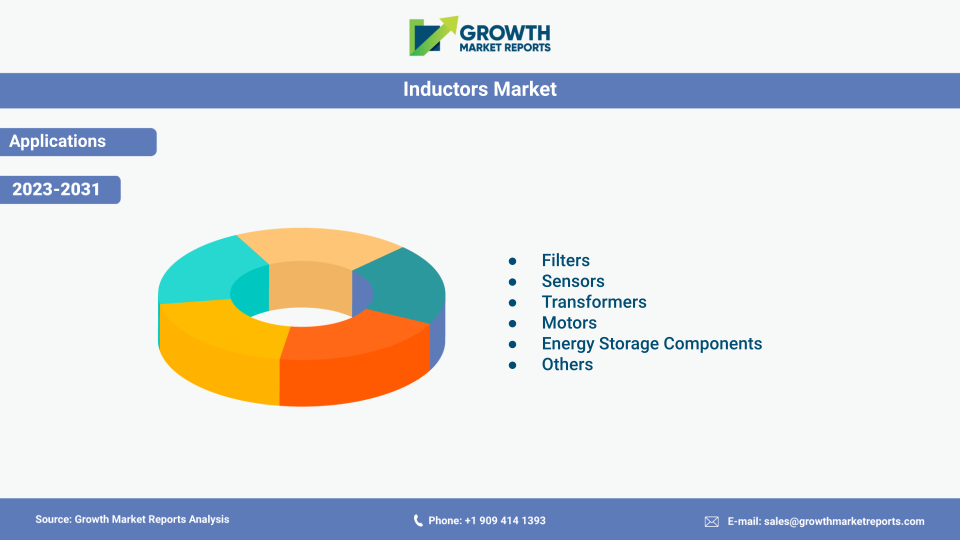
The application segment of the inductors market is highly diversified, encompassing automotive, consumer electronics, industrial, telecommunication, power generation, military and defense, healthcare, and others. The automotive sector is a major contributor to market growth, driven by the increasing electrification of vehicles and the integration of advanced electronic systems. Inductors are essential components in electric powertrains, battery management systems, infotainment units, and safety features such as ADAS. The shift toward electric and hybrid vehicles, coupled with stringent emission regulations, is further accelerating the adoption of high-performance inductors in the automotive industry.
Consumer electronics represent another significant application area, with inductors playing a crucial role in power management, signal processing, and electromagnetic interference suppression. The proliferation of smartphones, tablets, laptops, and wearable devices has created a substantial demand for compact, energy-efficient inductors. As manufacturers strive to deliver more powerful and feature-rich devices, the need for advanced inductors with higher efficiency and smaller form factors continues to grow. The ongoing transition to 5G technology and the expansion of IoT ecosystems are further boosting the demand for inductors in consumer electronics.
In the industrial sector, inductors are widely used in automation systems, motor drives, power supplies, and control equipment. The adoption of Industry 4.0 and smart manufacturing practices is driving the need for reliable and high-performance electronic components that can operate in demanding environments. Inductors help ensure stable performance, mitigate electrical noise, and enhance energy efficiency in industrial applications. The increasing focus on energy conservation and the integration of renewable energy sources in industrial operations are also contributing to the growing demand for inductors.
Telecommunication and power generation are other key application areas for inductors. In telecommunications, inductors are used in signal processing, filtering, and power regulation in base stations, routers, and networking equipment. The rollout of 5G networks and the expansion of broadband infrastructure are creating new opportunities for inductor manufacturers. In power generation, inductors are essential in energy conversion, storage, and distribution systems, particularly in renewable energy installations such as solar and wind power. The military and defense sector also relies on inductors for communication systems, radar, and electronic warfare, where reliability and performance are critical. The healthcare sector, though a smaller segment, is witnessing increasing adoption of inductors in medical devices and diagnostic equipment, driven by the growing demand for advanced healthcare solutions.
The end-user segment of the inductors market is primarily divided into OEMs (Original Equipment Manufacturers) and the aftermarket. OEMs constitute the largest share of the market, as they are responsible for the integration of inductors into a wide range of electronic products across various industries. The demand from OEMs is driven by the need for high-quality, reliable, and customized inductors that meet specific application requirements. OEMs in the automotive, consumer electronics, and industrial sectors are particularly significant consumers of inductors, as they require components that can deliver optimal performance and durability in diverse operating conditions.
The aftermarket segment, while smaller in comparison, plays a crucial role in the replacement and maintenance of inductors in existing equipment and systems. The demand in this segment is primarily driven by the need for replacement parts in automotive, industrial, and telecommunication applications. As electronic systems become more complex and integrated, the importance of high-quality aftermarket inductors is increasing, particularly in sectors where equipment reliability and uptime are critical. The growing trend of equipment refurbishment and the extension of product lifecycles are also contributing to the steady growth of the aftermarket segment.
OEMs are increasingly seeking partnerships with inductor manufacturers to co-develop customized solutions that address specific technical challenges and performance requirements. This trend is particularly evident in the automotive and consumer electronics sectors, where rapid technological advancements and evolving consumer preferences necessitate continuous innovation. Collaborative efforts between OEMs and component suppliers are resulting in the development of inductors with enhanced energy efficiency, reduced size, and improved thermal management, thereby supporting the growth of the inductors market.
The aftermarket segment is also witnessing innovation, with manufacturers offering advanced replacement solutions that provide improved performance and compatibility with existing systems. The increasing availability of online distribution channels and e-commerce platforms is making it easier for end-users to access a wide range of aftermarket inductors, thereby supporting market growth. As the installed base of electronic equipment continues to expand, the demand for aftermarket inductors is expected to remain robust, particularly in regions with mature industrial and automotive sectors.
One of the most promising opportunities in the inductors market lies in the ongoing digital transformation across industries and the rapid adoption of advanced technologies such as 5G, IoT, and electric mobility. The deployment of 5G networks and the proliferation of connected devices are creating unprecedented demand for high-frequency, high-efficiency inductors that can support faster data transmission and improved signal integrity. Similarly, the transition to electric and hybrid vehicles is driving the need for power inductors that can handle higher currents and provide efficient energy management. Manufacturers that invest in research and development to create innovative, high-performance inductors stand to benefit from these emerging trends and capture new market opportunities.
Another significant opportunity is the growing focus on renewable energy and the integration of smart grid technologies. As governments and industries worldwide prioritize sustainability and energy efficiency, the demand for inductors in solar, wind, and energy storage systems is expected to surge. Inductors play a critical role in energy conversion, filtering, and storage applications, enabling the efficient operation of renewable energy systems. The increasing adoption of smart manufacturing and automation in industrial sectors is also creating new avenues for market growth, as inductors are essential components in power supplies, motor drives, and control systems. Companies that can offer customized solutions and advanced materials to meet the evolving needs of these sectors are well-positioned to capitalize on these opportunities.
Despite the positive outlook, the inductors market faces certain challenges that could restrain growth. One of the primary threats is the volatility in raw material prices, particularly for core materials such as ferrite, iron, and rare earth metals. Fluctuations in material costs can impact the profitability of manufacturers and lead to price instability in the market. Additionally, the increasing complexity of electronic systems and the demand for miniaturization are placing pressure on manufacturers to develop inductors with higher performance in smaller form factors, which can be technologically challenging and require significant investment in research and development. The presence of counterfeit and low-quality products in the market also poses a threat to established manufacturers, as it can undermine consumer trust and impact market growth.
Asia Pacific continues to dominate the global inductors market, accounting for the largest share in 2024 with a market size of approximately USD 3.7 billion. The region's leadership is driven by the presence of major electronics manufacturing hubs in China, Japan, South Korea, and Taiwan, which are home to some of the world's leading consumer electronics, automotive, and industrial equipment manufacturers. The rapid pace of industrialization, expanding automotive production, and the proliferation of advanced electronic devices are key factors contributing to the region's growth. The Asia Pacific market is expected to maintain a strong CAGR of 6.8% through 2033, supported by ongoing investments in technology and infrastructure development.
North America holds the second-largest share of the inductors market, with a market size of around USD 1.6 billion in 2024. The region's growth is driven by technological advancements, a strong automotive sector, and significant investments in renewable energy and telecommunications infrastructure. The United States, in particular, is a major contributor to market growth, owing to its leadership in innovation and the presence of leading technology companies. The increasing adoption of electric vehicles, smart manufacturing, and IoT solutions is expected to drive continued demand for inductors in North America over the forecast period.
Europe accounts for a market size of approximately USD 1.1 billion in 2024, with steady growth anticipated through 2033. The region's market is supported by a strong automotive industry, a focus on renewable energy, and the adoption of advanced manufacturing technologies. Germany, France, and the United Kingdom are key contributors to the European market, driven by their leadership in automotive engineering and industrial automation. Latin America and the Middle East & Africa represent smaller but growing segments of the global market, with a combined market size of around USD 0.5 billion in 2024. These regions are witnessing gradual growth, supported by infrastructure development and the increasing adoption of advanced electronic systems in various industries.
The inductors market is characterized by intense competition, with a mix of established global players and regional manufacturers vying for market share. The competitive landscape is shaped by continuous innovation, technological advancements, and the ability to offer customized solutions tailored to specific industry needs. Leading companies are investing heavily in research and development to develop inductors with enhanced performance, reduced size, and improved energy efficiency. Strategic partnerships, mergers and acquisitions, and collaborations with OEMs are common strategies employed by market participants to expand their product portfolios and strengthen their market presence.
Product differentiation and quality are key factors influencing the competitive dynamics of the market. Companies that can offer high-reliability inductors with superior performance characteristics are better positioned to capture market share, particularly in high-growth segments such as automotive, consumer electronics, and industrial automation. The ability to provide value-added services, such as technical support, design assistance, and rapid prototyping, is also becoming increasingly important as customers seek comprehensive solutions that address their unique requirements. The presence of counterfeit and low-quality products in the market presents a challenge for established manufacturers, who must continually invest in quality assurance and brand protection to maintain their reputation and customer trust.
Geographic expansion is another key strategy adopted by leading players to tap into emerging markets and capitalize on growth opportunities. Companies are establishing manufacturing facilities and distribution networks in high-growth regions such as Asia Pacific and Latin America to better serve local customers and respond to changing market dynamics. The increasing focus on sustainability and environmental responsibility is also driving companies to develop eco-friendly inductors and adopt sustainable manufacturing practices, in line with global trends toward green electronics and energy efficiency.
Major companies operating in the inductors market include TDK Corporation, Murata Manufacturing Co., Ltd., Vishay Intertechnology, Inc., Panasonic Corporation, Taiyo Yuden Co., Ltd., Coilcraft, Inc., Delta Electronics, Inc., AVX Corporation (Kyocera Group), Sumida Corporation, and Pulse Electronics (Yageo Corporation). TDK Corporation and Murata Manufacturing are recognized for their extensive product portfolios and technological leadership in multilayer and power inductors. Vishay Intertechnology and Panasonic Corporation are known for their high-quality fixed and variable inductors, catering to a wide range of applications. Taiyo Yuden and Coilcraft have established strong reputations in high-frequency and miniaturized inductors, serving the needs of advanced consumer electronics and telecommunications markets.
Delta Electronics and Sumida Corporation are prominent players in the automotive and industrial sectors, offering robust solutions for power management and energy conversion. AVX Corporation and Pulse Electronics have a strong presence in the telecommunications and industrial automation markets, providing innovative inductor solutions for signal processing and power regulation. These companies are at the forefront of industry innovation, continually investing in research and development to address evolving customer needs and stay ahead of the competition. The combined expertise and global reach of these leading manufacturers ensure that the inductors market remains dynamic and responsive to the changing demands of the global electronics industry.
The Inductors market has been segmented on the basis of
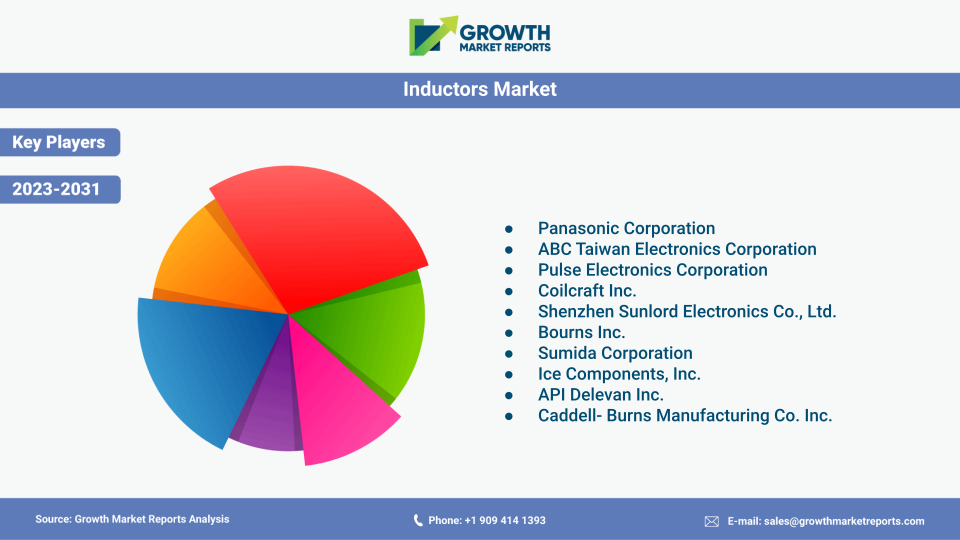
Key players competing in the inductor market include Panasonic Corporation, ABC Taiwan Electronics Corporation, Pulse Electronics Corporation, Coilcraft, Inc., Shenzhen Sunlord Electronics Co., Ltd., Bourns, Inc., Sumida Corporation., Ice Components, Inc., API Delevan, Inc., Caddell- Burns Manufacturing Co., Inc., Datatronic Distribution, Inc., Houston Transformer Company, and AVX Corporation, TDK Corporation, Murata Manufacturing Co., Ltd., Vishay Intertechnology Inc., Taiyo Yuden Co., Ltd., Chilisin Electronics Corp., and Delta Electronics, Inc.
The market is segmented into OEMs (Original Equipment Manufacturers), which hold the largest share, and the aftermarket, which focuses on replacement and maintenance of inductors in existing equipment.
Opportunities include growth from 5G, IoT, electric vehicles, and renewable energy. Challenges include raw material price volatility, technological complexity for miniaturization, and the threat of counterfeit products.
Inductors are used in automotive electronics such as powertrains, infotainment systems, ADAS, battery management systems, and electric powertrains, supporting vehicle electrification and advanced safety features.
Major companies include TDK Corporation, Murata Manufacturing Co., Ltd., Taiyo Yuden Co., Ltd., Vishay Intertechnology, Inc., Coilcraft, Inc., Panasonic Corporation, Delta Electronics, Inc., AVX Corporation (Kyocera Group), Sumida Corporation, and Pulse Electronics (Yageo Corporation).
Asia Pacific leads the global inductors market, followed by North America and Europe. Latin America and the Middle East & Africa are emerging markets with gradual growth.
Key trends include miniaturization of electronic devices, adoption of 5G and IoT, electric vehicle proliferation, renewable energy growth, and the shift toward Industry 4.0 and smart manufacturing.
Inductors use air core, ferrite core, iron core, and other materials. Air core inductors are used in high-frequency applications, ferrite core inductors are common in power electronics, and iron core inductors are used for high inductance and current handling in industrial equipment.
The main types of inductors are fixed inductors, variable inductors, coupled inductors, multilayer inductors, and power inductors.
Key industries driving demand for inductors include consumer electronics, automotive (especially electric and hybrid vehicles), industrial automation, telecommunications, power generation, military & defense, and healthcare.
The global inductors market reached USD 6.9 billion in 2024 and is projected to grow at a CAGR of 6.2% from 2025 to 2033, reaching USD 11.9 billion by 2033.