Segments - by Product Type (Instruments, Consumables, Software), by Test Type (Antibody Tests, Viral Load Tests, CD4 Tests, Early Infant Diagnosis, Others), by End User (Hospitals, Diagnostic Laboratories, Academic and Research Institutes, Home Care Settings, Others)
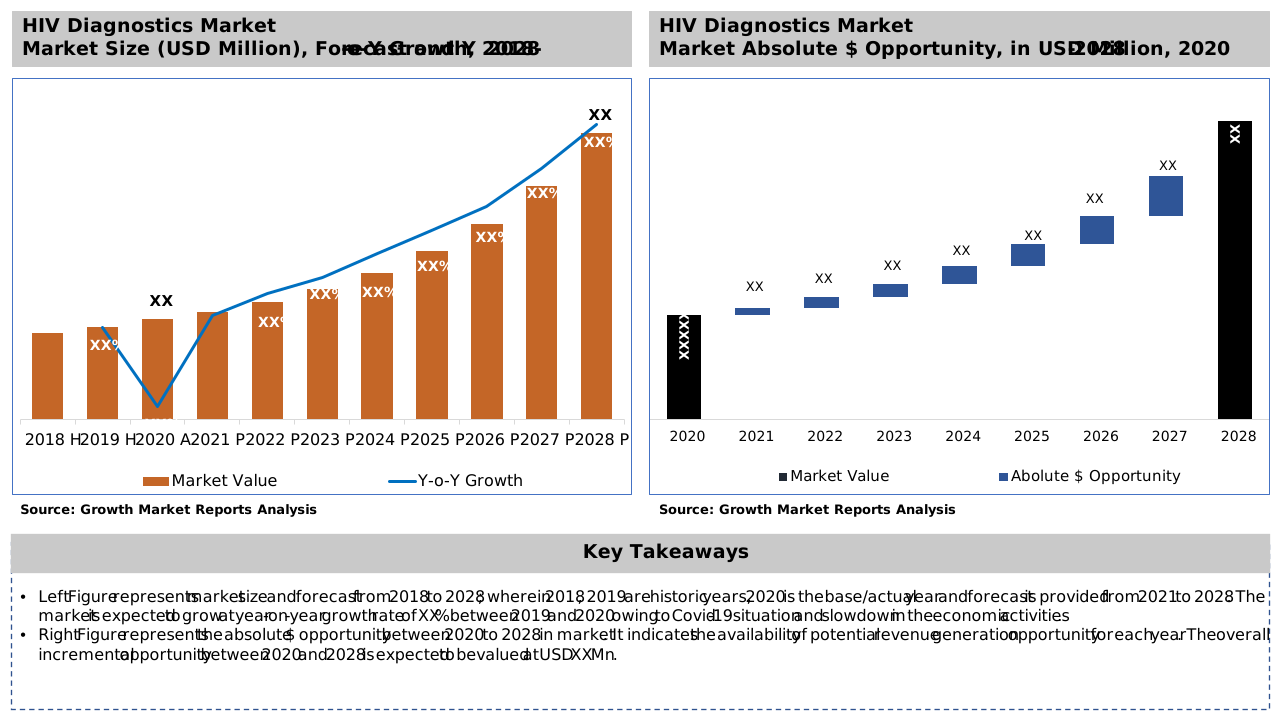
According to our latest research, the global HIV Diagnostics market size in 2024 reached USD 5.4 billion, reflecting robust momentum driven by technological advancements and increased awareness of early HIV detection. The market is expected to grow at a CAGR of 7.2% from 2025 to 2033, projecting a value of approximately USD 10.1 billion by the end of 2033. This sustained growth trajectory is primarily attributed to the rising prevalence of HIV infections worldwide, coupled with substantial investments in healthcare infrastructure and the development of innovative diagnostic solutions. As per our latest research, the expansion of point-of-care testing and government-led initiatives for early detection are significantly propelling the HIV Diagnostics market forward.
The growth of the HIV Diagnostics market is fundamentally driven by the alarming increase in the global HIV burden. According to recent data from UNAIDS, there are over 38 million people living with HIV globally, with a significant proportion remaining undiagnosed. This epidemiological trend has intensified the demand for advanced diagnostic solutions that can facilitate early detection and prompt intervention. Additionally, the growing awareness campaigns by both governmental and non-governmental organizations have played a pivotal role in encouraging voluntary testing, which in turn has augmented the adoption of HIV diagnostic tests across various healthcare settings. The continuous rise in testing rates, especially in emerging economies, underscores the critical importance of accessible and reliable diagnostics in curbing the spread of the virus.
Another key growth driver for the HIV Diagnostics market is the rapid technological innovation witnessed in diagnostic methodologies. The advent of highly sensitive and specific molecular assays, such as nucleic acid amplification tests (NAATs), has revolutionized the landscape by enabling the detection of HIV at its earliest stages. Furthermore, the integration of digital health technologies and the development of portable, user-friendly point-of-care devices have expanded the reach of diagnostic services to remote and underserved populations. These advancements not only enhance the accuracy and speed of diagnosis but also reduce the stigma associated with traditional testing methods, thereby fostering greater acceptance and utilization of HIV diagnostics on a global scale.
The HIV Diagnostics market is also benefiting from favorable policy frameworks and increased funding for HIV/AIDS programs. Governments across the globe, particularly in high-burden regions, are prioritizing the expansion of diagnostic infrastructure as part of their national HIV response strategies. International organizations, such as the World Health Organization (WHO) and the Global Fund, are providing substantial financial and technical support to strengthen laboratory capacities and ensure the availability of high-quality diagnostic tools. These concerted efforts are not only improving access to testing but also driving the adoption of innovative products, thereby creating a conducive environment for market growth. The emphasis on achieving the UNAIDS 95-95-95 targets by 2030 is further accelerating investments in the development and deployment of next-generation HIV diagnostics.
Regionally, North America continues to hold a dominant position in the HIV Diagnostics market, accounting for a significant share due to its advanced healthcare infrastructure and high testing rates. However, the Asia Pacific region is emerging as a key growth engine, driven by increasing HIV prevalence, rising healthcare expenditure, and expanding government initiatives aimed at early detection and treatment. Europe also remains a vital market, supported by robust public health programs and strong regulatory frameworks. Meanwhile, Latin America and the Middle East & Africa are witnessing steady growth, fueled by international aid and efforts to improve healthcare access. The regional dynamics of the HIV Diagnostics market are shaped by a complex interplay of epidemiological trends, healthcare policies, and socio-economic factors.
The Product Type segment of the HIV Diagnostics market is categorized into instruments, consumables, and software, each playing a crucial role in the overall diagnostic process. Instruments, such as automated analyzers and point-of-care devices, have witnessed significant advancements in recent years, resulting in improved accuracy, efficiency, and user-friendliness. The growing preference for compact and portable instruments, especially in resource-limited settings, has further fueled demand in this segment. These instruments are increasingly equipped with advanced features, including multiplexing capabilities and connectivity options, enabling seamless integration with laboratory information systems and facilitating real-time data sharing. The rising adoption of such sophisticated instruments is expected to drive substantial growth in this segment over the forecast period.
Consumables constitute the largest share of the Product Type segment, owing to their recurring nature and indispensable role in the diagnostic workflow. This category includes reagents, assay kits, test strips, and other disposable items required for conducting HIV tests. The increasing frequency of HIV testing, coupled with the expansion of screening programs, has led to a surge in demand for high-quality consumables. Manufacturers are focusing on developing innovative consumables that offer enhanced sensitivity, specificity, and ease of use, thereby ensuring reliable results and minimizing the risk of false positives or negatives. The trend towards multiplex assays, which allow simultaneous detection of multiple pathogens, is also gaining traction, further boosting the growth of the consumables segment.
Software solutions are becoming increasingly integral to the HIV Diagnostics market, as they enable efficient data management, result interpretation, and workflow automation. Advanced diagnostic software platforms are designed to streamline laboratory operations, reduce manual errors, and facilitate compliance with regulatory standards. The integration of artificial intelligence (AI) and machine learning algorithms is transforming the way diagnostic data is analyzed, enabling faster and more accurate identification of HIV infections. Additionally, cloud-based software solutions are gaining popularity, as they offer scalability, remote access, and enhanced security features. The growing emphasis on digital health and the need for interoperable systems are expected to drive significant growth in the software segment in the coming years.
The interplay between instruments, consumables, and software is creating a synergistic effect, resulting in more comprehensive and efficient diagnostic solutions. Manufacturers are increasingly offering bundled products that combine hardware, consumables, and software to provide end-to-end solutions for HIV testing. This integrated approach not only simplifies procurement and maintenance for healthcare providers but also ensures optimal performance and reliability. As the demand for rapid, accurate, and user-friendly diagnostics continues to rise, the Product Type segment is poised for sustained growth, with innovation and technological advancement serving as key differentiators in the competitive landscape.
| Attributes | Details |
| Report Title | HIV Diagnostics Market Research Report 2033 |
| By Product Type | Instruments, Consumables, Software |
| By Test Type | Antibody Tests, Viral Load Tests, CD4 Tests, Early Infant Diagnosis, Others |
| By End User | Hospitals, Diagnostic Laboratories, Academic and Research Institutes, Home Care Settings, Others |
| Regions Covered | North America, Europe, APAC, Latin America, MEA |
| Base Year | 2024 |
| Historic Data | 2018-2023 |
| Forecast Period | 2025-2033 |
| Number of Pages | 281 |
| Number of Tables & Figures | 381 |
| Customization Available | Yes, the report can be customized as per your need. |
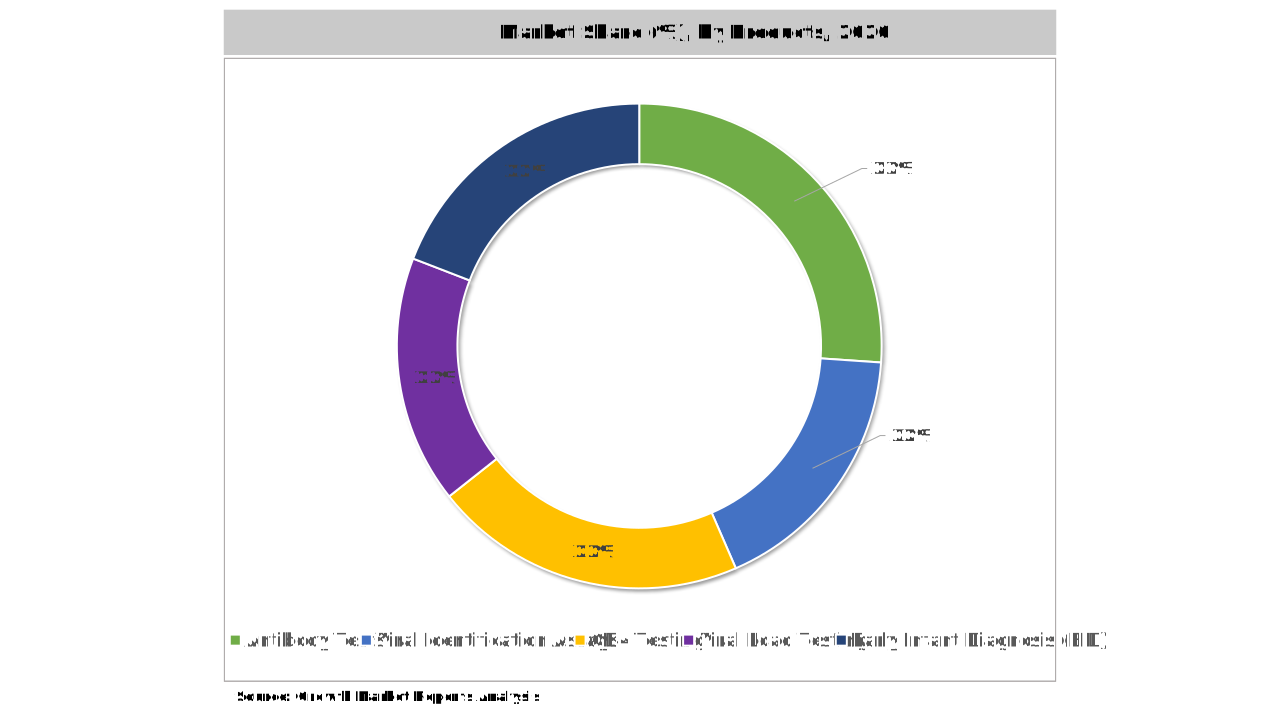
The Test Type segment in the HIV Diagnostics market encompasses antibody tests, viral load tests, CD4 tests, early infant diagnosis, and other specialized assays. Antibody tests remain the most widely used method for initial HIV screening, owing to their high sensitivity, specificity, and cost-effectiveness. These tests, which include enzyme-linked immunosorbent assays (ELISAs) and rapid diagnostic tests (RDTs), are routinely employed in both clinical and community settings. The increasing availability of rapid antibody tests, which deliver results within minutes, has significantly improved access to HIV diagnostics, particularly in low-resource environments. The ongoing development of fourth-generation tests, capable of detecting both HIV antibodies and p24 antigen, is further enhancing the accuracy and early detection capabilities of this segment.
Viral load tests are critical for monitoring disease progression and evaluating the effectiveness of antiretroviral therapy (ART) in individuals living with HIV. These molecular assays quantify the amount of HIV RNA in a patient's blood, providing valuable information for treatment decisions and prognosis. The growing emphasis on achieving and maintaining viral suppression, as outlined in global HIV treatment guidelines, has led to increased adoption of viral load testing. Technological advancements, such as real-time polymerase chain reaction (PCR) and digital PCR, have improved the sensitivity, speed, and scalability of these tests. The expansion of decentralized testing platforms and the introduction of affordable viral load assays are expected to drive further growth in this segment.
CD4 tests play a vital role in assessing the immune status of HIV-infected individuals and guiding treatment initiation. These tests measure the number of CD4 T-cells, a key indicator of immune function, and are essential for determining the stage of HIV infection and monitoring response to therapy. Despite the growing preference for viral load testing, CD4 tests remain indispensable in many resource-limited settings, where access to advanced molecular diagnostics may be limited. The development of point-of-care CD4 testing devices has improved the accessibility and timeliness of these tests, enabling prompt clinical decision-making and better patient outcomes. The continued demand for CD4 tests, particularly in high-burden regions, underscores their enduring relevance in the HIV Diagnostics market.
Early infant diagnosis (EID) is a specialized segment focused on detecting HIV infection in newborns and infants, who are at high risk of mother-to-child transmission. Conventional antibody tests are not suitable for this population, as maternal antibodies may persist for several months after birth. Therefore, nucleic acid-based assays, such as PCR, are employed to detect HIV genetic material in infants as early as six weeks of age. The expansion of EID programs, supported by international organizations and governments, has significantly improved the survival and health outcomes of HIV-exposed infants. Innovations in sample collection, such as dried blood spot (DBS) testing, are further enhancing the reach and efficiency of EID services, particularly in remote and underserved areas.
Other test types, including genotypic and phenotypic resistance assays, play a crucial role in guiding personalized treatment strategies and managing drug resistance. As the HIV epidemic evolves and new challenges emerge, the demand for comprehensive and specialized diagnostic solutions is expected to grow. The Test Type segment is characterized by continuous innovation, driven by the need for faster, more accurate, and accessible tests that can address the diverse needs of patients and healthcare providers worldwide.
The End User segment of the HIV Diagnostics market is segmented into hospitals, diagnostic laboratories, academic and research institutes, home care settings, and others. Hospitals represent the largest end-user category, owing to their central role in providing comprehensive HIV care, including diagnosis, treatment, and monitoring. The presence of advanced laboratory infrastructure, skilled personnel, and integrated care pathways enables hospitals to offer a wide range of diagnostic services. The increasing adoption of automated and high-throughput testing platforms in hospital laboratories has improved the efficiency and accuracy of HIV diagnostics, supporting better patient management and outcomes. Hospitals also serve as key centers for training, research, and the implementation of national HIV testing guidelines.
Diagnostic laboratories, both standalone and networked, play a pivotal role in the HIV Diagnostics market by offering specialized testing services to healthcare providers and public health programs. These laboratories are equipped with state-of-the-art technologies and adhere to stringent quality control standards, ensuring the reliability and consistency of test results. The trend towards laboratory consolidation and the emergence of large diagnostic service providers have led to increased standardization and scalability in HIV testing. Additionally, the growing demand for outsourced laboratory services, driven by cost considerations and the need for rapid turnaround times, is fueling the expansion of this segment. Diagnostic laboratories are also at the forefront of adopting new diagnostic modalities, such as molecular assays and multiplex platforms.
Academic and research institutes constitute a significant end-user segment, as they are actively involved in the development, validation, and evaluation of novel HIV diagnostic technologies. These institutions collaborate with industry partners, government agencies, and non-profit organizations to conduct clinical trials, operational research, and capacity-building initiatives. The emphasis on translational research and the integration of cutting-edge scientific discoveries into clinical practice are driving innovation in the HIV Diagnostics market. Academic and research institutes also play a crucial role in training the next generation of healthcare professionals and advancing the understanding of HIV pathogenesis and epidemiology.
Home care settings are an emerging segment in the HIV Diagnostics market, reflecting the growing demand for convenient, confidential, and accessible testing options. The introduction of self-testing kits and portable point-of-care devices has empowered individuals to take control of their health and facilitate early diagnosis. Home-based testing is particularly valuable for populations that face barriers to accessing traditional healthcare services, such as stigma, discrimination, or geographic isolation. The increasing acceptance of self-testing, supported by regulatory approvals and public health campaigns, is expected to drive significant growth in this segment. However, ensuring the accuracy, reliability, and proper use of home-based diagnostics remains a key challenge that must be addressed through education and quality assurance measures.
Other end users, including community health centers, non-governmental organizations (NGOs), and mobile clinics, play a vital role in expanding the reach of HIV diagnostics to underserved populations. These entities often operate in partnership with governments and international agencies to implement targeted testing campaigns and provide essential services in high-prevalence areas. The diversity of end users in the HIV Diagnostics market highlights the need for tailored solutions that can address the unique requirements and challenges of each setting, from advanced hospital laboratories to remote community outreach programs.
The HIV Diagnostics market is replete with opportunities driven by ongoing technological innovation and the evolving landscape of global healthcare delivery. One of the most promising opportunities lies in the expansion of point-of-care and self-testing solutions, which have the potential to dramatically increase testing coverage and early diagnosis rates. The integration of digital health technologies, such as mobile apps and telemedicine platforms, can further enhance the accessibility and convenience of HIV diagnostics, particularly in remote and underserved regions. Additionally, the growing emphasis on personalized medicine and the development of multiplex assays capable of detecting multiple infections in a single test present new avenues for market growth. Strategic collaborations between industry players, research institutions, and public health organizations are expected to accelerate the development and commercialization of innovative diagnostic products, creating a dynamic and competitive market environment.
Another significant opportunity in the HIV Diagnostics market is the increasing focus on emerging markets, where the burden of HIV remains high and access to diagnostic services is often limited. Governments and international agencies are investing heavily in strengthening healthcare infrastructure, expanding laboratory networks, and scaling up testing programs. The adoption of affordable, easy-to-use diagnostic solutions tailored to the needs of low- and middle-income countries can unlock substantial growth potential. Furthermore, the implementation of universal health coverage and the integration of HIV testing into routine healthcare services are expected to drive sustained demand for diagnostics. The ongoing efforts to achieve the UNAIDS 95-95-95 targets, which aim to diagnose 95% of all people living with HIV, provide antiretroviral therapy to 95% of those diagnosed, and achieve viral suppression in 95% of those treated, are creating a strong impetus for innovation and investment in the HIV Diagnostics market.
Despite the numerous opportunities, the HIV Diagnostics market faces several restraining factors that could hinder its growth. One of the primary challenges is the persistent stigma and discrimination associated with HIV testing, which continues to discourage individuals from seeking diagnosis and care. In many regions, social, cultural, and legal barriers undermine public health efforts and limit the effectiveness of testing campaigns. Additionally, the high cost of advanced diagnostic technologies and the lack of skilled personnel in resource-limited settings pose significant obstacles to widespread adoption. Regulatory hurdles, reimbursement issues, and the need for continuous training and quality assurance further complicate the market landscape. Addressing these challenges requires a coordinated and multi-faceted approach, involving policy reform, community engagement, and sustained investment in capacity-building and education.
North America holds the largest share of the global HIV Diagnostics market, with a market value of approximately USD 1.9 billion in 2024. The region's dominance is underpinned by its advanced healthcare infrastructure, high testing rates, and strong government support for HIV/AIDS programs. The United States, in particular, has implemented comprehensive screening and prevention initiatives, supported by substantial funding from federal and state agencies. The presence of leading diagnostic companies and research institutions further strengthens the region's position as a hub for innovation and technological advancement. The North American market is expected to maintain steady growth over the forecast period, driven by ongoing investments in research and development and the adoption of next-generation diagnostic solutions.
Europe is another key market, accounting for an estimated USD 1.2 billion in 2024, supported by robust public health systems and well-established regulatory frameworks. Countries such as Germany, France, and the United Kingdom have implemented national HIV testing strategies, emphasizing early diagnosis and linkage to care. The region's focus on harm reduction, prevention, and integrated care models has contributed to high testing coverage and improved health outcomes for people living with HIV. The European market is projected to grow at a CAGR of 6.8% from 2025 to 2033, fueled by ongoing innovation, increased funding for research, and the expansion of community-based testing initiatives. The emphasis on addressing the needs of key populations, such as migrants and men who have sex with men (MSM), is expected to drive further market growth.
The Asia Pacific region is emerging as a major growth engine for the HIV Diagnostics market, with a market size of USD 1.1 billion in 2024 and a projected CAGR of 8.2% through 2033. The region's growth is driven by rising HIV prevalence, expanding healthcare infrastructure, and increasing government commitment to HIV/AIDS control. Countries such as India, China, and Thailand are scaling up testing programs and investing in the development of affordable diagnostic solutions. The Asia Pacific market presents significant opportunities for manufacturers and service providers, particularly in the areas of point-of-care testing and home-based diagnostics. The growing adoption of digital health technologies and the integration of HIV testing into primary care services are expected to further accelerate market growth in the region. Meanwhile, Latin America and the Middle East & Africa collectively contribute approximately USD 1.2 billion to the global market, with growth driven by international aid, increased awareness, and efforts to improve healthcare access in high-burden areas.
The HIV Diagnostics market is characterized by intense competition, with a diverse array of global and regional players vying for market share through innovation, strategic partnerships, and portfolio expansion. The competitive landscape is shaped by the continuous introduction of advanced diagnostic technologies, such as molecular assays, multiplex platforms, and digital health solutions. Leading companies are investing heavily in research and development to enhance the sensitivity, specificity, and usability of their products, while also seeking to reduce costs and improve accessibility. The trend towards integrated diagnostic solutions, which combine instruments, consumables, and software, is gaining traction as healthcare providers seek comprehensive and efficient testing options. Mergers and acquisitions, collaborations with academic and research institutions, and licensing agreements are common strategies employed by market participants to strengthen their competitive position and expand their geographic reach.
Innovation is a key differentiator in the HIV Diagnostics market, with companies focusing on the development of next-generation products that address unmet clinical needs and emerging challenges. The shift towards point-of-care and home-based testing has prompted manufacturers to design portable, user-friendly devices that deliver rapid and accurate results. Digital health technologies, including cloud-based data management systems and AI-powered diagnostic algorithms, are transforming the way HIV testing is conducted and monitored. Companies are also investing in the development of multiplex assays capable of detecting multiple infections simultaneously, reflecting the growing demand for comprehensive diagnostic solutions. Regulatory compliance, quality assurance, and customer support are critical factors influencing purchasing decisions and long-term customer relationships.
The market is also witnessing increased collaboration between industry players and public health organizations, aimed at expanding access to diagnostics in resource-limited settings. Partnerships with governments, non-governmental organizations, and international agencies are enabling companies to participate in large-scale screening programs and contribute to global HIV control efforts. These collaborations often involve the customization of diagnostic products to meet the specific needs of target populations, as well as the provision of training, technical support, and capacity-building initiatives. The ability to adapt to changing market dynamics and respond to evolving customer requirements is essential for sustained success in the highly competitive HIV Diagnostics market.
Major companies operating in the HIV Diagnostics market include Abbott Laboratories, F. Hoffmann-La Roche AG, Siemens Healthineers, Bio-Rad Laboratories, Danaher Corporation (Beckman Coulter), Hologic, Inc., OraSure Technologies, Inc., Thermo Fisher Scientific, Inc., and Chembio Diagnostics, Inc. These companies are recognized for their strong product portfolios, extensive distribution networks, and commitment to innovation. Abbott Laboratories, for instance, offers a comprehensive range of HIV diagnostic solutions, including molecular assays and rapid tests, and is actively involved in global health initiatives. F. Hoffmann-La Roche AG is a leader in molecular diagnostics, with a focus on high-throughput viral load testing and digital health integration. Siemens Healthineers and Bio-Rad Laboratories are known for their advanced laboratory instruments and assay kits, while Hologic, Inc. specializes in nucleic acid-based diagnostics for early detection and monitoring.
OraSure Technologies, Inc. has pioneered the development of oral fluid-based rapid HIV tests, enabling non-invasive and convenient self-testing. Thermo Fisher Scientific, Inc. and Chembio Diagnostics, Inc. are also prominent players, offering a wide range of diagnostic products and services tailored to the needs of diverse end users. These companies are continually investing in research and development, regulatory compliance, and market expansion to maintain their competitive edge. The presence of several emerging players and regional companies further intensifies competition, fostering a dynamic and innovative market environment that is well-positioned to address the evolving needs of the global HIV epidemic.
The HIV Diagnostics market has been segmented on the basis of
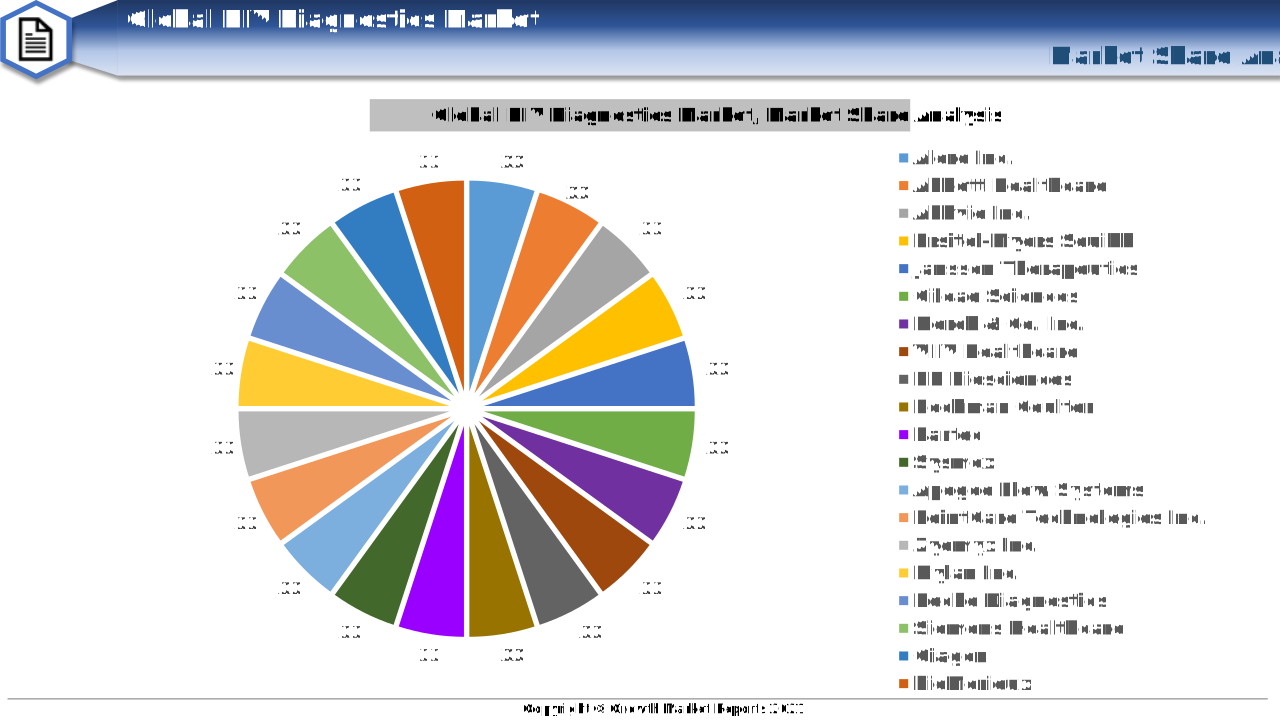
Key players competing in the global HIV diagnostics market include Alere Inc., Abbott Healthcare, Abbvie Inc., Brsitol-Myers Squibb, Janssen Therapeutics, Gilead Sciences, Merck & Co. Inc., VIIV Healthcare, BD Biosciences, Beckman Coulter, Partec, Sysmex, Apogee Flow Systems, PointCare Technologies Inc., Zyomyx Inc., Mylan Inc., Roche Diagnostics, Siemens Healthcare, Qiagen, and bioMerieux.
Key players of the market are majorly focuses on clinical R&D of viral load testing, CD4, and p24antigen tests for reducing the complexity and rising accessibility of testing facilities. Major market players are increasingly adopting several business strategies such as mergers, acquisitions, partnerships, collaborations, capacity expansion, and product launches to enhance their market shares.
Challenges include stigma and discrimination associated with HIV testing, high costs of advanced diagnostics, lack of skilled personnel in some regions, and regulatory and reimbursement hurdles.
Major players include Abbott Laboratories, F. Hoffmann-La Roche AG, Siemens Healthineers, Bio-Rad Laboratories, Danaher Corporation, Hologic, Inc., OraSure Technologies, Thermo Fisher Scientific, and Chembio Diagnostics.
Opportunities include the expansion of point-of-care and self-testing solutions, integration of digital health technologies, growth in emerging markets, and development of multiplex assays for comprehensive diagnostics.
Primary end users include hospitals, diagnostic laboratories, academic and research institutes, home care settings, and community health organizations.
Test types include antibody tests, viral load tests, CD4 tests, early infant diagnosis (EID), and specialized assays like genotypic and phenotypic resistance tests.
The market is segmented into instruments (such as automated analyzers and point-of-care devices), consumables (reagents, assay kits, test strips), and software solutions for data management and workflow automation.
North America holds the largest share due to advanced healthcare infrastructure and high testing rates, while Asia Pacific is emerging as a key growth region driven by rising HIV prevalence and expanding healthcare initiatives.
Key growth drivers include the rising prevalence of HIV infections, technological innovations in diagnostic solutions, increased healthcare investments, and government-led initiatives for early detection.
The HIV Diagnostics market is expected to grow at a CAGR of 7.2% from 2025 to 2033, reaching approximately USD 10.1 billion by the end of 2033.
As of 2024, the global HIV Diagnostics market size reached USD 5.4 billion, driven by technological advancements and increased awareness of early HIV detection.