Segments - by Voltage Type (Up to 220 kV, 221–660 kV, Above 660 kV), by Installation (Overhead, Underground, Submarine), by End-User (Utilities, Industrial, Renewable Energy, Infrastructure, Others), by Material (Copper, Aluminum, Others)
This report is updated with the latest market data and insights as of June 2026. Base year: 2025 | Forecast period: 2026-2034
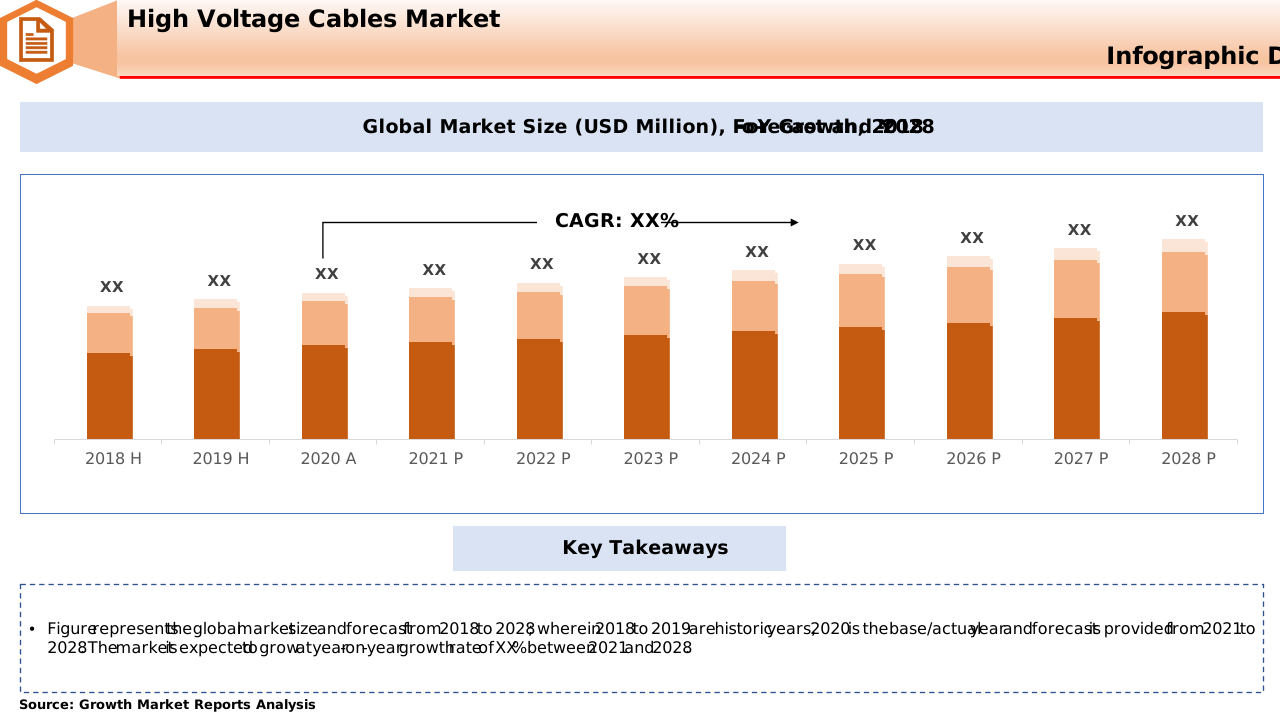
According to our latest research, the global high voltage cables market size reached USD 44.2 billion in 2025 and is projected to grow at a robust CAGR of 6.8% during the forecast period 2026-2034, reaching approximately USD 79.8 billion by 2034. This market is witnessing powerful momentum, driven by the accelerated expansion of power transmission and distribution networks, rising investments in renewable energy infrastructure, and deepening urbanization worldwide. As per our analysis, the growing demand for reliable electricity supply and grid modernization initiatives remain central growth factors for the high voltage cables industry, with 2025 marking a pivotal inflection point as global energy transition commitments translate into large-scale capital deployment.
One of the primary growth drivers for the high voltage cables market is the global surge in large-scale infrastructure projects and grid expansion programs. Governments and private sector players are investing heavily in upgrading aging power transmission networks to enhance efficiency and minimize power losses. The integration of renewable energy sources such as wind and solar into national grids has necessitated the deployment of advanced high voltage cables capable of transmitting electricity over long distances with minimal losses. This trend is particularly evident in regions where renewable energy adoption is accelerating rapidly, including Europe, Asia Pacific, and North America. The rapid pace of industrialization and urbanization in emerging economies is simultaneously generating substantial demand for new power infrastructure, further fueling market growth across all voltage segments. Technologies enabling high-voltage direct current transmission are increasingly central to these long-distance grid expansion efforts.
Technological advancements in cable materials and manufacturing processes have also contributed significantly to market expansion. Innovations such as cross-linked polyethylene (XLPE) insulation and improved conductor materials including high-purity copper and advanced aluminum alloys have enhanced the performance, safety, and lifespan of high voltage cables. These advancements have enabled deployment in challenging environments, including submarine and underground installations, supporting the development of offshore wind farms and intercontinental power links. The increasing focus on sustainability and energy efficiency is also driving the adoption of environmentally friendly materials and recyclable cable designs, aligning with global decarbonization goals that have intensified markedly since 2024.
Another pivotal factor propelling the high voltage cables market is the growing emphasis on grid reliability and resilience. With the rising frequency of extreme weather events and growing cybersecurity concerns, utilities and governments are prioritizing investments in robust transmission infrastructure to ensure uninterrupted power supply. High voltage cables play a critical role in strengthening grid interconnections and enabling load balancing across regions, thereby enhancing the overall stability of power networks. The electrification of transportation and the proliferation of data centers are additional factors contributing to sustained demand for high voltage cables, as these sectors require reliable and high-capacity power transmission solutions. Complementary products such as cable joints, terminations, and other accessories are also seeing parallel demand growth as network complexity increases.
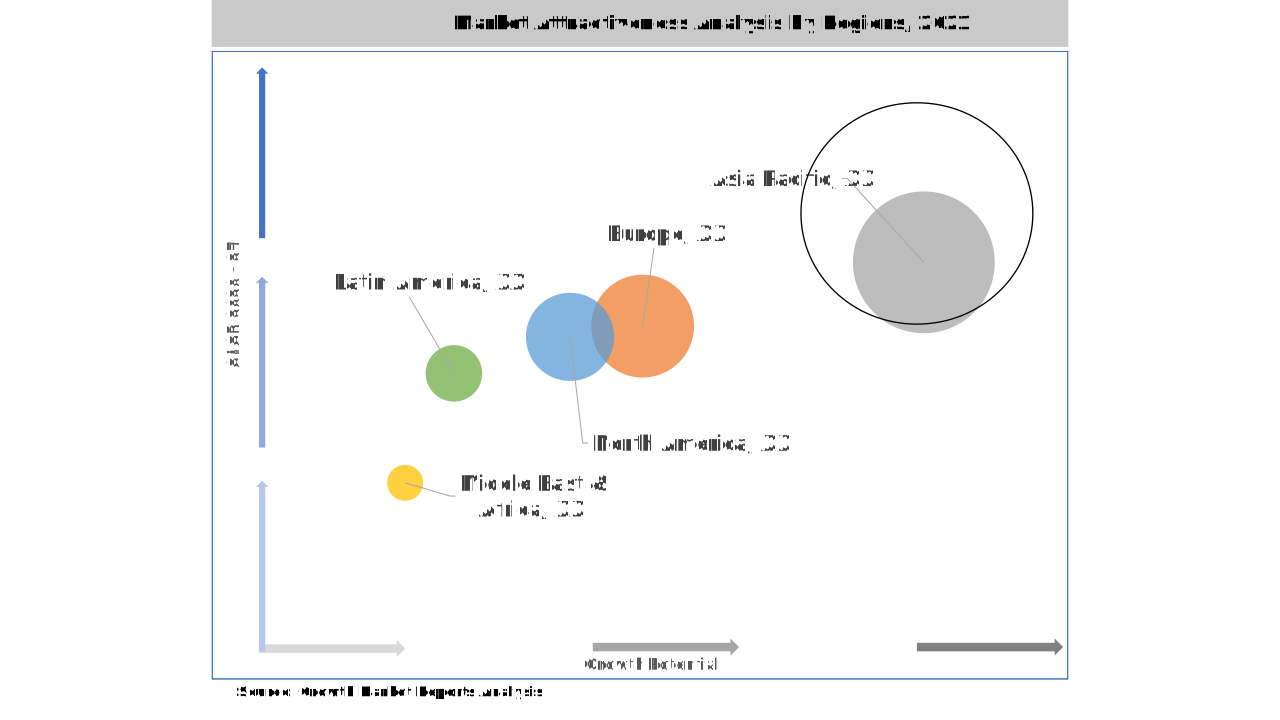
Regionally, Asia Pacific continues to dominate the high voltage cables market, accounting for the largest share in 2025 at approximately 40.5% of global revenue, followed by Europe at around 26.8% and North America at around 20.7%. The rapid expansion of power infrastructure in China, India, and Southeast Asian countries, coupled with ambitious renewable energy targets, is driving significant investments in high voltage transmission projects. Europe is witnessing strong growth due to cross-border interconnection projects and the integration of offshore wind power into continental grids. North America is experiencing steady demand, supported by grid modernization initiatives and the replacement of aging transmission assets. The Middle East & Africa and Latin America are emerging as promising markets, fueled by infrastructure development and efforts to improve electrification rates and energy security.
The voltage type segment of the high voltage cables market is broadly categorized into three sub-segments: up to 220 kV, 221-660 kV, and above 660 kV. Cables rated up to 220 kV are primarily used for regional power distribution and medium-range transmission, making them a staple in urban and semi-urban grids. These cables are favored for their cost-effectiveness and relative ease of installation, particularly in developing regions where infrastructure upgrades are ongoing. The demand for up to 220 kV cables is being buoyed by the expansion of city grids, rural electrification programs, and the development of new residential and commercial zones. In 2025, this segment accounts for approximately 48.5% of global market revenue, reflecting the ongoing need for reliable medium-voltage transmission solutions across diverse geographies.
The 221-660 kV segment serves as the backbone for high-capacity, long-distance power transmission, connecting generation sites with urban centers and industrial hubs. These cables are vital for supporting the integration of renewable energy sources such as large-scale wind and solar farms into the main grid. The growing emphasis on reducing transmission losses and enhancing grid stability has led to increased investments in this voltage range, particularly in regions with sprawling geographical landscapes such as North America, China, and India. Technological improvements in insulation and conductor materials have enabled the safe and efficient operation of these cables under demanding conditions, further driving their adoption and positioning this segment at approximately 34.2% of global revenue in 2025.
Cables rated above 660 kV represent the cutting edge of high voltage transmission technology, designed for ultra-long-distance and ultra-high-capacity applications. These cables are essential for interconnecting national grids, enabling cross-border electricity trade, and supporting mega-scale renewable energy projects. The deployment of above 660 kV cables is gaining significant traction in countries with ambitious grid expansion plans, most notably China, which is developing extensive ultra-high voltage (UHV) transmission corridors to transport power from remote renewable energy sites to densely populated eastern regions. This segment represents approximately 17.3% of global revenue in 2025 and is expected to witness the fastest growth rate through 2034, driven by the need for efficient bulk power transmission solutions and the expansion of international power interconnections.
The voltage type segmentation underscores the diverse requirements of modern power transmission networks, with each sub-segment catering to specific operational and infrastructural needs. Market participants are increasingly focusing on developing flexible and scalable cable solutions that address the evolving demands of utilities, industrial users, and infrastructure developers. The interplay between voltage type, installation environment, and end-user application is shaping the competitive dynamics of the market, prompting manufacturers to invest in research and development to enhance product performance and reliability across all voltage categories.
| Attributes | Details |
| Report Title | High Voltage Cables Market Research Report 2034 |
| By Voltage Type | Up to 220 kV, 221-660 kV, Above 660 kV |
| By Installation | Overhead, Underground, Submarine |
| By End-User | Utilities, Industrial, Renewable Energy, Infrastructure, Others |
| By Material | Copper, Aluminum, Others |
| Regions Covered | North America, Europe, APAC, Latin America, MEA |
| Base Year | 2025 |
| Historic Data | 2019-2024 |
| Forecast Period | 2026-2034 |
| Number of Pages | 252 |
| Number of Tables & Figures | 261 |
| Customization Available | Yes, the report can be customized as per your need. |
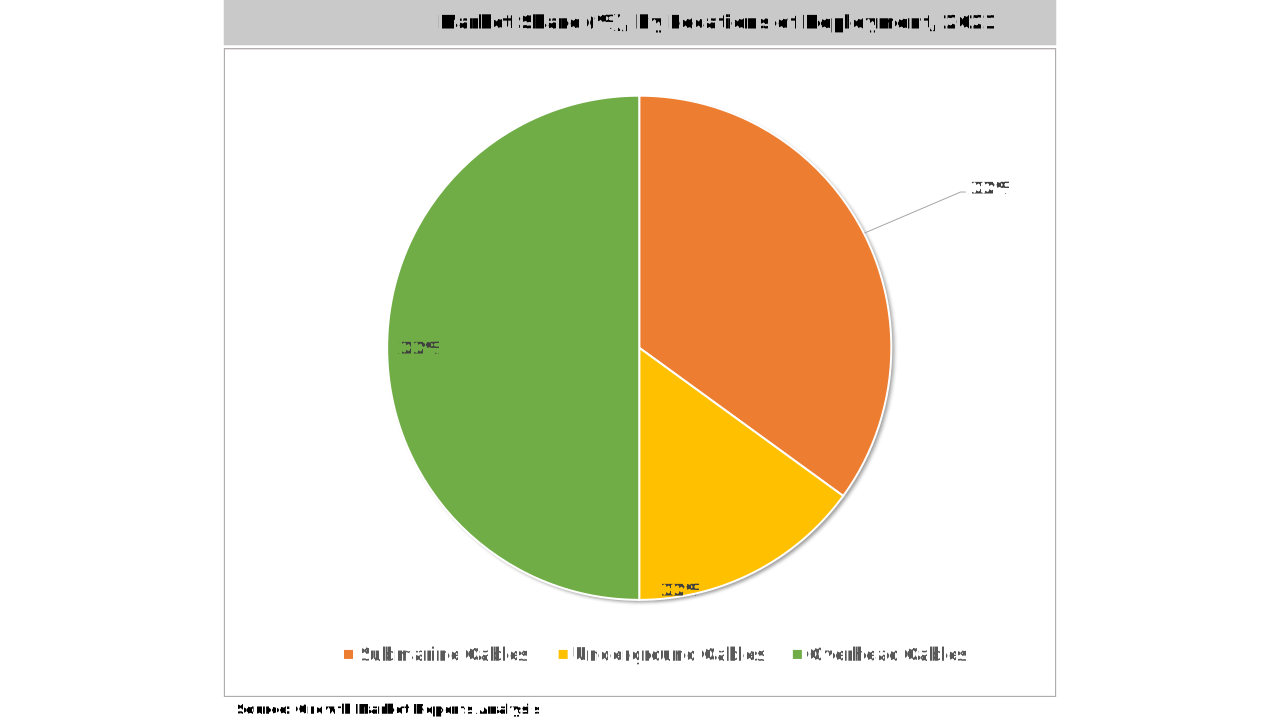
The installation segment of the high voltage cables market is categorized into overhead, underground, and submarine installations, each serving distinct application scenarios. Overhead high voltage cables remain the most widely deployed installation type globally in 2025, owing to their cost-effectiveness, ease of maintenance, and suitability for long-distance power transmission across varied terrains. These cables are commonly used in both urban and rural areas to connect generation sites with substations and end-users. The continued expansion of national grid networks, especially in developing economies across Asia, Africa, and Latin America, is sustaining robust demand for overhead installations. However, growing concerns over visual impact, land use, and vulnerability to extreme weather events are prompting utilities to explore alternative installation methods in densely populated or environmentally sensitive regions.
Underground high voltage cables are increasingly being adopted in urban environments, where space constraints, aesthetic considerations, and the need for enhanced safety drive the preference for below-ground installations. These cables offer significant advantages including reduced exposure to weather-related disruptions, lower electromagnetic interference, and minimal impact on the surrounding landscape. The growing trend of urbanization and the development of smart cities are fueling investments in underground cable networks, particularly in Europe, North America, and East Asia. Technological advancements in cable insulation, jointing techniques, and installation equipment have improved the reliability and cost-effectiveness of underground installations, making them a viable option for both new projects and the replacement of aging overhead lines in congested urban corridors.
Submarine high voltage cables represent a specialized and rapidly expanding segment, catering to the transmission of electricity across bodies of water, such as between islands, across major rivers, or for offshore wind farm connections to shore. The increasing deployment of offshore renewable energy projects, particularly in the North Sea, Baltic Sea, and Asia Pacific waters, has driven significant growth in the submarine cable market through 2025. These cables are engineered to withstand harsh marine environments, with robust insulation and armoring to ensure long-term operational reliability. Submarine installations are also critical for cross-border interconnections, enabling electricity trade and enhancing grid stability across regions. While the installation and maintenance costs for submarine cables are higher than other types, their strategic importance in supporting the energy transition and grid integration is driving sustained investment from both public and private stakeholders.
The choice of installation method is influenced by a range of factors including geographical conditions, project scale, regulatory requirements, and lifecycle cost considerations. Market participants are increasingly offering integrated solutions that combine multiple installation types to optimize grid performance and resilience. The ongoing shift towards underground and submarine installations, driven by urbanization, environmental concerns, and the expansion of offshore renewables, is reshaping the competitive landscape of the high voltage cables market and creating opportunities for specialized contractors and technology providers.
The end-user segment of the high voltage cables market encompasses utilities, industrial, renewable energy, infrastructure, and others, each characterized by distinct demand drivers and operational requirements. Utilities represent the largest end-user segment, accounting for the majority of high voltage cable deployments worldwide in 2025. The ongoing modernization of transmission and distribution networks, coupled with efforts to enhance grid reliability and accommodate rapidly growing electricity demand, is driving sustained investments by utilities in high voltage cable infrastructure. The integration of distributed energy resources, battery energy storage systems, and the need for flexible grid management solutions are further bolstering demand from this segment globally.
The industrial sector is another key end-user of high voltage cables, with applications spanning mining, oil and gas, chemicals, manufacturing, and transportation. Industrial users require high-capacity and reliable power transmission solutions to support energy-intensive operations and ensure uninterrupted production. The expansion of industrial zones, the electrification of industrial processes, and the rapid adoption of automation and robotics technologies are generating significant demand for advanced high voltage cable solutions in 2025. Additionally, the growing focus on energy efficiency and sustainability is prompting industrial players to invest in modern transmission infrastructure that minimizes losses and supports renewable energy integration at the site level.
Renewable energy developers are emerging as the fastest-growing end-user segment, driven by the global transition towards clean energy sources that has accelerated sharply since the early 2020s. The proliferation of large-scale wind and solar farms, both onshore and offshore, necessitates the deployment of high voltage cables capable of transmitting electricity over long distances to grid connection points. Submarine and underground cables are particularly critical for offshore wind projects, enabling the efficient transfer of power from remote sites to urban load centers. Government incentives, long-term power purchase agreements, and ambitious national decarbonization targets are expected to sustain strong growth in this segment through 2034.
Infrastructure projects including transportation systems, smart cities, and commercial developments also contribute substantially to the demand for high voltage cables. The electrification of railways, expansion of metro networks, and development of hyperscale data centers require robust power transmission solutions to support reliable and high-capacity operations. The accelerating adoption of electric vehicles and the rapid rollout of public and commercial charging infrastructure are additional factors driving demand from the infrastructure segment. The "others" category includes specialized applications such as defense installations, marine platforms, and research facilities, which require customized high voltage cable solutions to meet specific operational and safety requirements.
The material segment of the high voltage cables market includes copper, aluminum, and others, each offering unique advantages in terms of conductivity, durability, and cost profile. Copper remains the preferred material for high voltage cables in 2025, owing to its superior electrical conductivity, mechanical strength, and resistance to corrosion. Copper cables are widely used in both overhead and underground installations, particularly in applications where high performance and long-term reliability are paramount. The ongoing trend of grid modernization and replacement of aging infrastructure are supporting sustained demand for copper-based high voltage cables. However, periodic price volatility in copper commodity markets continues to influence procurement strategies across the value chain.
Aluminum is increasingly being adopted as a cost-effective alternative to copper, particularly in overhead transmission applications across emerging markets and regions with extensive grid expansion programs. Aluminum cables offer several advantages including lower weight, ease of handling, and reduced installation costs. Technological advancements in alloy formulations and cable design have addressed historical concerns related to conductivity and mechanical durability, making aluminum a widely viable option for high voltage transmission in 2025. The growing emphasis on cost optimization and the need to extend grid coverage into remote and rural areas are driving increased adoption of aluminum cables, particularly across Asia, Africa, and Latin America.
The "others" category includes materials such as steel-reinforced composite conductors, fiber optic integrated cables, and advanced composite materials used in specialized high voltage cable applications. Steel-reinforced cables are commonly deployed in environments requiring enhanced mechanical strength and resistance to environmental stress, including high-altitude and high-wind locations. Fiber optic cables integrated with high voltage conductors enable real-time monitoring of cable performance, temperature, and strain, supporting the development of intelligent smart grid solutions. The increasing focus on sustainability and recyclability is also driving innovation in cable materials, with manufacturers exploring bio-based polymers, halogen-free compounds, and other eco-friendly alternatives to traditional materials to meet evolving regulatory requirements.
Material selection is a critical consideration in high voltage cable design, influencing performance, lifespan, and total cost of ownership. Market participants are investing in research and development to enhance material properties, improve manufacturing efficiency, and reduce environmental impact across the production lifecycle. The ongoing shift towards lightweight, high-performance, and sustainable materials is expected to shape the future trajectory of the high voltage cables market, enabling the deployment of next-generation transmission solutions that meet the evolving needs of utilities, industrial users, and infrastructure developers through 2034.
The high voltage cables market is poised to benefit from a multitude of opportunities over the 2026-2034 forecast period. The accelerating global transition to renewable energy presents a significant growth avenue, as countries invest in large-scale wind and solar projects requiring advanced transmission solutions capable of handling variable generation profiles. The electrification of transportation, including electric vehicles, high-speed rail, and urban transit systems, is expected to create substantial demand for high voltage cables, particularly in urban and intercity corridors. Additionally, the development of smart grids, digital substations, and grid-scale energy storage systems will drive the adoption of intelligent cable solutions capable of supporting real-time monitoring and dynamic grid management. The increasing focus on sustainability and circular economy principles is also opening opportunities for manufacturers to develop eco-friendly and recyclable cable products that command premium positioning among forward-looking utilities and project developers.
Another major opportunity lies in the expansion of cross-border interconnection projects and the development of ultra-high voltage transmission corridors across continents. These initiatives are critical for enhancing regional energy security, enabling electricity trade, and supporting the integration of diverse and geographically dispersed energy sources. The deployment of submarine and underground cables for intercontinental power links, particularly across Europe, the Middle East, and Asia Pacific, is expected to drive significant market growth through the forecast period. Advancements in cable monitoring and diagnostics technologies are enabling proactive maintenance and reducing operational risks, thereby enhancing the overall value proposition of high voltage cable investments. Strategic collaborations between utilities, technology providers, equipment manufacturers, and policymakers will be instrumental in unlocking these opportunities and driving sustained market expansion.
Despite the promising outlook, the high voltage cables market faces several restraining factors that could impede growth. The high capital costs associated with cable manufacturing, installation, and maintenance remain a significant challenge, particularly for submarine and underground projects where specialized vessels and equipment are required. Fluctuations in raw material prices, especially copper and aluminum, can impact profit margins and affect project feasibility assessments. Additionally, regulatory hurdles, permitting delays, and environmental impact concerns can slow down project execution timelines, particularly in regions with stringent land use and environmental review regulations. The complexity of integrating new transmission infrastructure with existing grid assets and the ongoing shortage of skilled labor for specialized cable installation also pose operational challenges for market participants. Addressing these restraining factors will require coordinated efforts across the value chain, encompassing innovation in materials and installation methods, improved project management frameworks, and more streamlined regulatory processes.
Asia Pacific continues to lead the global high voltage cables market, accounting for approximately 40.5% of global revenue in 2025, with a market value estimated at USD 17.9 billion. The region's dominance is underpinned by rapid industrialization, urbanization, and substantial investments in power infrastructure across China, India, Japan, South Korea, and Southeast Asia. China remains at the forefront of ultra-high voltage transmission projects, connecting remote renewable energy sources in the west with high-demand urban centers along the eastern seaboard. India is witnessing robust growth driven by rural electrification programs, renewable energy capacity additions, and ambitious national grid modernization targets. The region is expected to maintain its leading position through the forecast period, supported by a projected CAGR of approximately 7.5% from 2026 to 2034, outpacing other regions in both capacity additions and technological adoption.
Europe represents the second-largest regional market, with a value of approximately USD 11.8 billion in 2025, driven by the integration of renewable energy sources, cross-border interconnection projects, and the rapid development of offshore wind farms across the North Sea, Baltic Sea, and Atlantic. Countries including Germany, the United Kingdom, the Netherlands, Denmark, and France are investing heavily in submarine and underground high voltage cables to support the transition to a low-carbon energy system. The European Union's REPowerEU initiative and the broader Green Deal framework are providing strong policy tailwinds, sustaining demand for advanced cable solutions. The region is also characterized by a high level of regulatory alignment and intergovernmental collaboration, facilitating the development of transnational transmission infrastructure and cross-border power trading mechanisms.
North America follows as the third-largest market, with an estimated value of approximately USD 9.1 billion in 2025, supported by ongoing grid modernization efforts, the replacement of aging transmission assets, and the integration of distributed energy resources and utility-scale renewables. The United States and Canada are investing in both overhead and underground cable networks to enhance grid reliability and accommodate growing electricity demand from data centers, electric vehicles, and expanding industrial operations. The region is also witnessing increased activity in offshore wind development, particularly along the US East Coast and Gulf of Mexico, driving growing demand for submarine cable solutions. The Middle East & Africa and Latin America collectively represent approximately USD 5.3 billion in 2025, fueled by infrastructure development, electrification initiatives, and expanding renewable energy capacity. These regions are expected to experience steady and improving growth over the forecast period, supported by favorable policy frameworks and increasing international investment flows.
The global high voltage cables market is characterized by intense competition, with a diverse mix of multinational corporations, regional champions, and specialized manufacturers vying for market share in 2025. The competitive landscape is shaped by factors such as technological innovation, product quality, pricing strategies, manufacturing scale, and the ability to deliver turnkey solutions tailored to customer requirements. Leading companies are investing heavily in research and development to enhance cable performance, reliability, and environmental sustainability. Strategic partnerships, mergers and acquisitions, capacity expansions, and geographic diversification are common strategies employed by market participants to strengthen their positions and access new growth opportunities across emerging and developed markets alike.
Innovation is a key differentiator in the high voltage cables market, with companies focusing on the development of advanced insulation materials, high-capacity conductors, and smart cable systems equipped with real-time monitoring and diagnostic capabilities. The integration of digital technologies such as fiber optics, IoT sensors, and AI-driven analytics is enabling the development of intelligent cable networks that support predictive maintenance and dynamic grid optimization. Manufacturers are also prioritizing sustainability, with initiatives aimed at reducing the environmental footprint of cable production, enhancing end-of-life recyclability, and complying with increasingly stringent regulatory standards across key markets. The ability to offer end-to-end solutions, including design, engineering, installation, testing, and long-term maintenance services, is increasingly valued by customers seeking reliable and cost-effective transmission infrastructure partners.
Prysmian Group, headquartered in Milan, Italy, is the world's largest cable manufacturer, offering a comprehensive portfolio of high voltage, submarine, and specialty cables for utilities, industrial, and renewable energy applications. The company is known for its technological leadership, extensive global manufacturing footprint spanning over 50 countries, and deep commitment to sustainability and circular economy principles. Nexans S.A., based in Paris, France, is a leading provider of energy and data transmission solutions, with a strong focus on innovation and digitalization of its product and service portfolio. The company maintains a significant presence across Europe, North America, and Asia Pacific, serving a diverse customer base across multiple end-user segments including offshore wind, grid operators, and industrial clients.
NKT A/S, based in Denmark, specializes in the design and manufacturing of high voltage and submarine cables, with a strong track record supporting offshore wind projects, national grid upgrades, and cross-border interconnections across Northern Europe. Sumitomo Electric Industries, headquartered in Osaka, Japan, is renowned for its expertise in high voltage and extra-high voltage cable technologies, serving both the Japanese domestic market and a growing international customer base. Hitachi Energy, LS Cable & System, Furukawa Electric, ZTT Group, TBEA Co., Elsewedy Electric, KEI Industries, Southwire Company, Taihan Electric Wire, Riyadh Cables Group, Tratos Ltd., Condumex, and Viscas Corporation each contribute meaningfully to the dynamic and competitive nature of the global high voltage cables market, collectively serving customers across all major regions and application segments.
In summary, the high voltage cables market is set for robust and sustained growth through 2034, driven by the global energy transition, infrastructure modernization, technological innovation, and the electrification of transportation and industry. Market participants that can offer advanced, sustainable, and integrated cable solutions while managing raw material costs and navigating complex regulatory environments will be well positioned to capitalize on the substantial opportunities ahead.
The High Voltage Cables market has been segmented on the basis of
Technology innovation is profoundly reshaping the high voltage cables market in 2025 and beyond. Advances in cross-linked polyethylene (XLPE) insulation have improved cable performance and extended operational lifespans. High-purity copper and advanced aluminum alloy conductors reduce transmission losses. The integration of fiber optic sensors and IoT-enabled monitoring systems supports real-time diagnostics and predictive maintenance. Development of high-voltage direct current (HVDC) cable systems is enabling ultra-long-distance and submarine power transmission with minimal losses. Manufacturers are also innovating in eco-friendly, recyclable cable materials and circular economy manufacturing processes to align with global sustainability mandates.
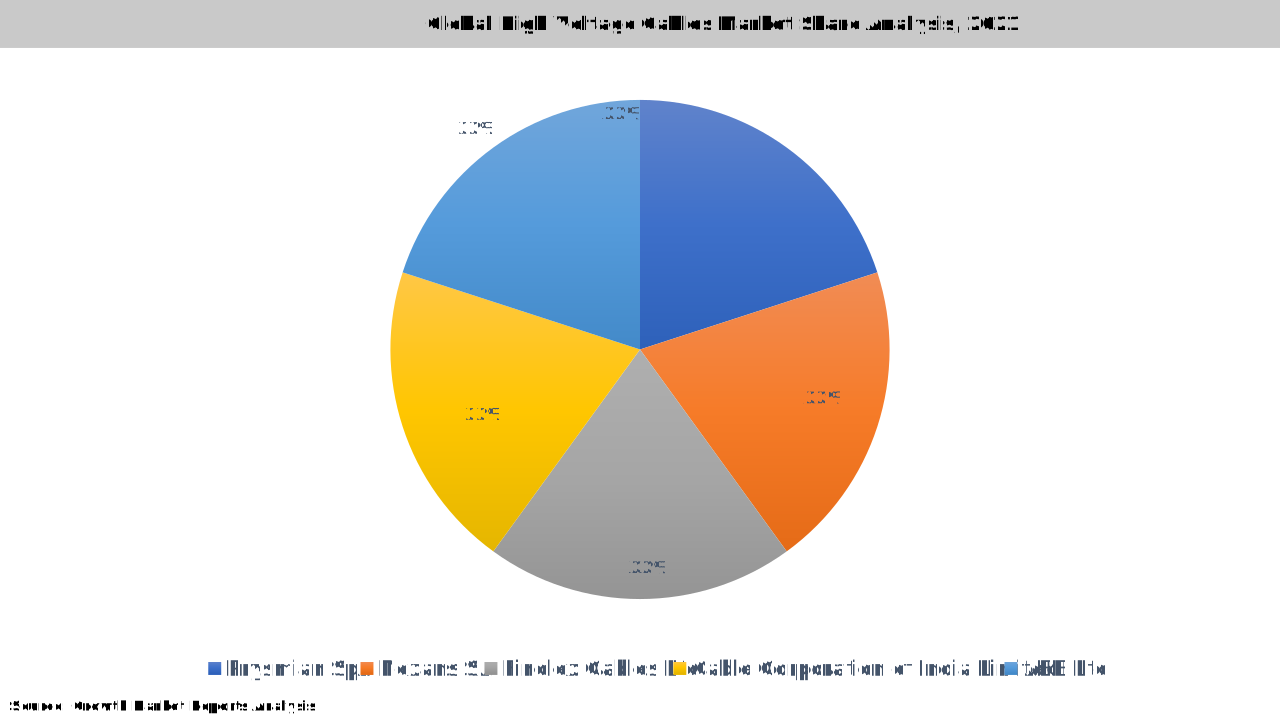
The global high voltage cables market is led by Prysmian Group, the world's largest cable manufacturer, followed by Nexans S.A., NKT A/S, Sumitomo Electric Industries, LS Cable & System, and ABB Ltd. Other significant competitors include Hitachi Energy, Furukawa Electric, ZTT Group, TBEA Co., Elsewedy Electric, KEI Industries, Southwire Company, Taihan Electric Wire, Riyadh Cables Group, Tratos Ltd., Condumex, and Viscas Corporation. These companies compete on technology innovation, product quality, geographic reach, and the ability to deliver integrated end-to-end cable solutions.
Key opportunities include the global energy transition driving offshore wind and solar grid connections, expansion of ultra-high voltage corridors in China and emerging markets, cross-border interconnection projects in Europe and the Middle East, electrification of transportation, and the rise of smart grid and digital cable monitoring solutions. Manufacturers that develop sustainable, recyclable cable products are well positioned for growth. Major challenges include high capital costs for submarine and underground projects, volatility in copper and aluminum raw material prices, complex regulatory and permitting processes, and the technical difficulty of integrating new transmission assets with legacy grid infrastructure.
Copper is the dominant conductor material, prized for its superior electrical conductivity, mechanical strength, and corrosion resistance, and it remains the preferred choice for underground and submarine applications. Aluminum is widely adopted for overhead transmission due to its lower weight and cost, with improvements in alloy technology enhancing its suitability for high voltage applications. The "others" category includes steel-reinforced composite conductors, fiber-optic integrated cables for smart grid monitoring, and emerging advanced composite and eco-friendly materials gaining traction as sustainability requirements intensify.
Utilities constitute the largest end-user segment, driving demand through grid modernization and network expansion programs. Industrial users, including mining, oil and gas, chemicals, and manufacturing sectors, represent the second major segment requiring reliable high-capacity power. Renewable energy developers are the fastest-growing end-user group, deploying cables for onshore and offshore wind and solar projects. Infrastructure projects such as railways, metro networks, data centers, and electric vehicle charging networks also generate significant and growing demand for high voltage cable solutions.
High voltage cables are deployed via three primary installation methods. Overhead installations remain the most prevalent globally due to their cost-effectiveness and suitability for long-distance transmission across varied terrains. Underground installations are growing rapidly in urban and suburban environments, favored for safety, aesthetic, and reliability considerations. Submarine installations are a high-growth specialty segment, critical for offshore wind farm connections, island interconnections, and cross-border undersea power links, particularly in Europe and Asia Pacific.
High voltage cables are broadly segmented into three voltage rating categories. Cables rated up to 220 kV are used for regional distribution and medium-range transmission, holding approximately 48.5% of the 2025 market. The 221-660 kV segment, representing around 34.2% share, serves as the backbone for long-distance, high-capacity transmission linking generation sites to load centers. Cables rated above 660 kV represent around 17.3% of the market and are used for ultra-high voltage (UHV) and extra-high voltage (EHV) corridors, with the fastest projected growth through 2034.
Asia Pacific dominates the global market with approximately 40.5% share in 2025, led by China, India, Japan, and Southeast Asian nations investing heavily in transmission infrastructure. Europe holds the second position at around 26.8% share, driven by offshore wind expansion and cross-border interconnection projects. North America accounts for roughly 20.7% share, supported by grid modernization and offshore wind development along the US East Coast. The Middle East & Africa and Latin America are emerging growth regions with increasing electrification and infrastructure investment.
The primary drivers include rapid expansion of power transmission and distribution networks, large-scale renewable energy investments (particularly wind and solar), urbanization in emerging economies, electrification of transportation, and government-mandated grid modernization programs. The global push for decarbonization and energy security is also compelling utilities and developers to deploy advanced high voltage cable infrastructure at an unprecedented pace in 2025 and beyond.
According to our latest research, the global high voltage cables market reached USD 44.2 billion in 2025 and is projected to grow at a CAGR of 6.8% during the forecast period 2026-2034, reaching approximately USD 79.8 billion by 2034. This growth is underpinned by accelerating grid modernization, renewable energy integration, and rising electricity demand across both developed and emerging economies.