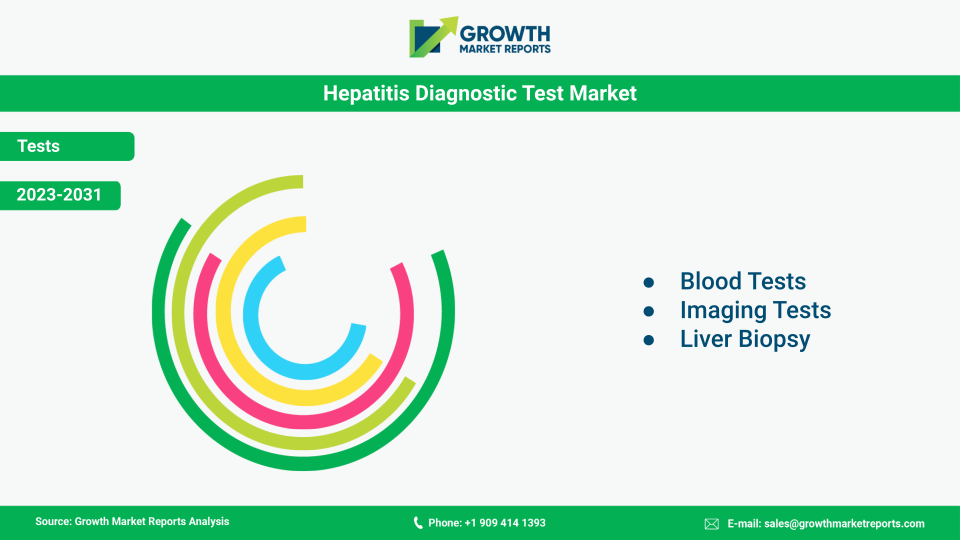
Segments - by Product Type (ELISA Test, Rapid Diagnostic Test, PCR Test, Immunoassay, Others), by Disease Type (Hepatitis A, Hepatitis B, Hepatitis C, Hepatitis D, Hepatitis E), by End User (Hospitals, Diagnostic Laboratories, Blood Banks, Others)
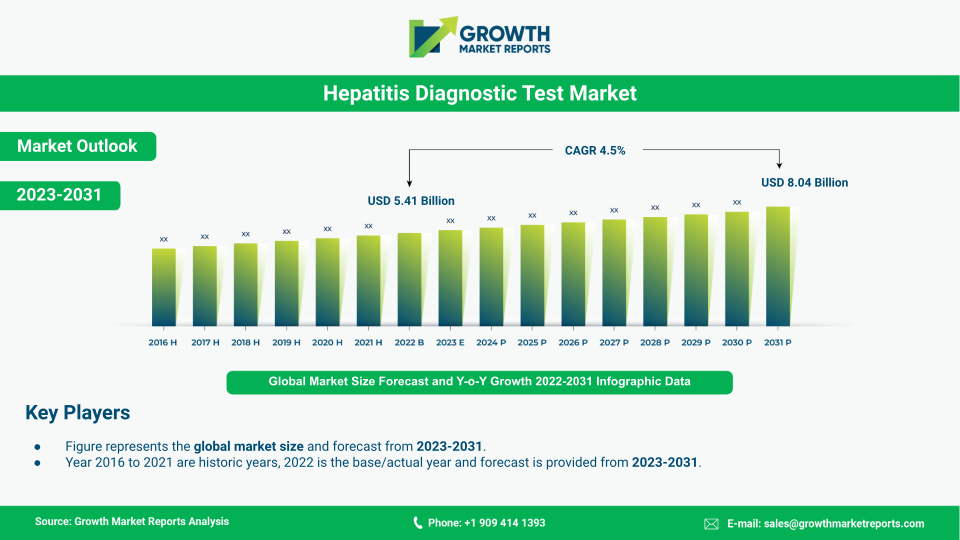
According to our latest research, the global Hepatitis Diagnostic Test market size reached USD 4.82 billion in 2024, reflecting the growing demand for effective diagnostic solutions amid rising hepatitis incidence worldwide. The market is projected to expand at a robust CAGR of 6.3% during the forecast period, reaching a value of approximately USD 8.29 billion by 2033. This growth is primarily driven by the increasing prevalence of hepatitis infections, advancements in diagnostic technologies, and the global emphasis on early detection and prevention strategies.
The Hepatitis Diagnostic Test market is experiencing significant growth due to the escalating global burden of viral hepatitis. According to the World Health Organization, hepatitis B and C together cause over 1.4 million deaths annually, making them a leading cause of chronic liver disease and liver cancer. This alarming statistic has prompted governments and health organizations to prioritize hepatitis screening and early diagnosis, which is fueling the demand for advanced diagnostic tests. Additionally, the growing awareness campaigns, vaccination programs, and international collaborations to eliminate hepatitis as a public health threat are further boosting the adoption of hepatitis diagnostic tests across both developed and developing regions.
Technological advancements in diagnostic modalities are another critical growth driver for the Hepatitis Diagnostic Test market. The integration of molecular diagnostics, such as PCR and next-generation sequencing, with traditional methods like ELISA and rapid diagnostic tests, has significantly improved the sensitivity, specificity, and turnaround time of hepatitis detection. These innovations enable healthcare professionals to identify infections at an earlier stage, monitor disease progression, and tailor patient management accordingly. The emergence of point-of-care testing devices and automation in diagnostic laboratories has also enhanced the accessibility and efficiency of hepatitis screening, especially in low-resource settings, thereby contributing to market expansion.
The increasing investments by public and private entities in the healthcare infrastructure, coupled with the rising adoption of preventive healthcare measures, are further propelling the Hepatitis Diagnostic Test market. Many countries have introduced national hepatitis screening programs, especially targeting high-risk populations such as pregnant women, blood donors, healthcare workers, and intravenous drug users. The growing partnerships between diagnostic companies and healthcare providers for the development of cost-effective and user-friendly diagnostic kits are also facilitating market penetration. Furthermore, the introduction of reimbursement policies for hepatitis testing and treatment in several regions is expected to drive the market growth during the forecast period.
In the realm of hepatitis diagnostics, HBV Genotyping has emerged as a pivotal tool for tailoring treatment strategies and improving patient outcomes. By identifying specific genotypes of the hepatitis B virus, healthcare providers can better understand the virus's behavior, predict disease progression, and select the most effective antiviral therapies. This personalized approach not only enhances the efficacy of treatment regimens but also minimizes the risk of drug resistance, a common challenge in managing chronic hepatitis B infections. As the understanding of HBV genotypes expands, it is expected to play an increasingly crucial role in the development of targeted therapies and the optimization of public health interventions aimed at controlling the spread of hepatitis B.
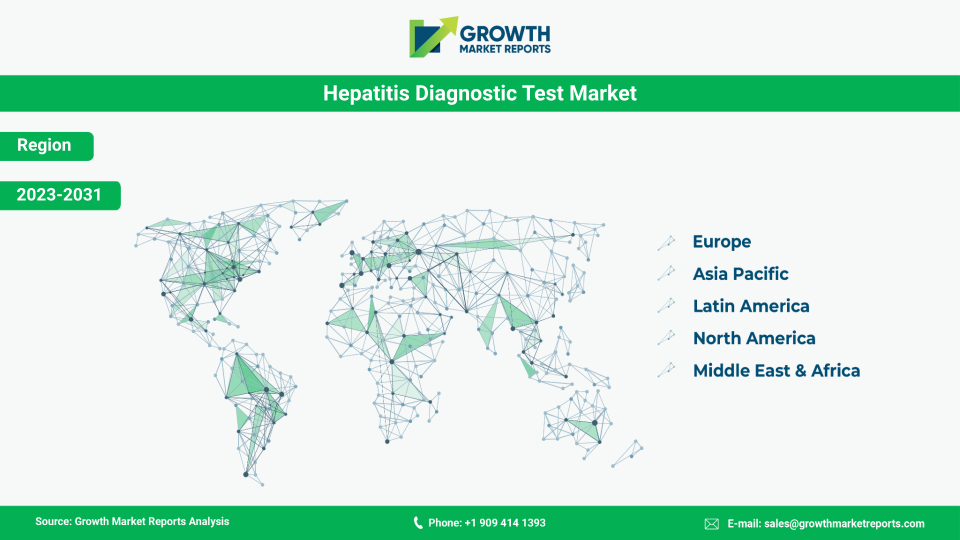
Regionally, North America currently dominates the global Hepatitis Diagnostic Test market due to its well-established healthcare infrastructure, high awareness levels, and supportive government initiatives. However, the Asia Pacific region is anticipated to witness the fastest growth over the next decade, owing to the large patient pool, increasing healthcare expenditure, and rising incidence of hepatitis infections. Europe remains a significant market, driven by robust screening programs and technological advancements. Meanwhile, Latin America and the Middle East & Africa are emerging as lucrative markets, supported by improving healthcare access and growing investments in disease prevention.
The product type segment in the Hepatitis Diagnostic Test market encompasses a wide array of diagnostic tools, including ELISA tests, rapid diagnostic tests, PCR tests, immunoassays, and other emerging technologies. ELISA (enzyme-linked immunosorbent assay) tests have long been considered the gold standard for hepatitis screening due to their high sensitivity, specificity, and scalability. These tests are extensively used in hospitals, diagnostic laboratories, and blood banks for the routine detection of hepatitis antigens and antibodies. The growing adoption of automated ELISA platforms has further improved workflow efficiency, reduced human error, and enabled high-throughput screening, thereby driving segment growth.
Rapid diagnostic tests (RDTs) have gained significant traction in recent years, especially in resource-limited settings and remote areas where access to advanced laboratory infrastructure is limited. These tests offer the advantages of speed, simplicity, and portability, delivering results within minutes and facilitating immediate clinical decision-making. The increasing focus on point-of-care testing and decentralized healthcare delivery models has fueled the demand for RDTs, particularly for hepatitis B and C screening among high-risk populations. Moreover, the development of multiplex rapid tests capable of detecting multiple hepatitis viruses in a single assay is expected to further boost this segment.
PCR (polymerase chain reaction) tests represent the most advanced segment within the Hepatitis Diagnostic Test market. PCR-based assays enable the direct detection and quantification of viral nucleic acids, allowing for early diagnosis, genotyping, and monitoring of viral load in hepatitis patients. The rising prevalence of chronic hepatitis infections, coupled with the increasing need for precise disease characterization and treatment monitoring, has accelerated the adoption of PCR tests in clinical practice. The ongoing advancements in real-time PCR, digital PCR, and next-generation sequencing technologies are expected to enhance the accuracy, speed, and cost-effectiveness of hepatitis diagnostics, further propelling segment growth.
Immunoassays, including chemiluminescent and fluorescence-based assays, are also witnessing growing adoption in the Hepatitis Diagnostic Test market. These assays offer high throughput, automation, and the ability to detect multiple markers simultaneously, making them ideal for large-scale screening programs and epidemiological studies. The increasing investments in research and development for the discovery of novel biomarkers and the integration of artificial intelligence and machine learning in immunoassay platforms are anticipated to drive significant innovation in this segment. Other product types, such as biosensors, microfluidics, and lab-on-a-chip devices, are gradually gaining momentum and are expected to offer new growth opportunities in the coming years.
| Attributes | Details |
| Report Title | Hepatitis Diagnostic Test Market Research Report 2033 |
| By Product Type | ELISA Test, Rapid Diagnostic Test, PCR Test, Immunoassay, Others |
| By Disease Type | Hepatitis A, Hepatitis B, Hepatitis C, Hepatitis D, Hepatitis E |
| By End User | Hospitals, Diagnostic Laboratories, Blood Banks, Others |
| Regions Covered | North America, Europe, APAC, Latin America, MEA |
| Base Year | 2024 |
| Historic Data | 2018-2023 |
| Forecast Period | 2025-2033 |
| Number of Pages | 290 |
| Number of Tables & Figures | 297 |
| Customization Available | Yes, the report can be customized as per your need. |
The disease type segment of the Hepatitis Diagnostic Test market is categorized into hepatitis A, B, C, D, and E, each presenting unique diagnostic challenges and epidemiological patterns. Hepatitis B and C collectively account for the majority of the market share due to their high global prevalence, chronic disease potential, and significant contribution to liver-related morbidity and mortality. The increasing implementation of universal hepatitis B vaccination programs and routine screening of blood donors has led to a substantial rise in demand for hepatitis B diagnostic tests. Similarly, the growing emphasis on the early detection and treatment of hepatitis C, especially with the advent of direct-acting antivirals, has spurred the adoption of advanced testing modalities for hepatitis C virus (HCV) RNA and genotype analysis.
Hepatitis A, although usually self-limiting and associated with lower mortality rates, remains a public health concern in regions with inadequate sanitation and water quality. The rising incidence of hepatitis A outbreaks, particularly in low- and middle-income countries, has driven the demand for rapid and cost-effective diagnostic solutions. The availability of point-of-care tests for hepatitis A virus (HAV) antibodies has enabled timely outbreak management and improved disease surveillance. Hepatitis D and E, while less common, are increasingly being recognized due to improved diagnostic capabilities and heightened awareness among healthcare professionals. The co-infection of hepatitis D with hepatitis B, in particular, poses significant diagnostic and therapeutic challenges, necessitating the development of specialized testing protocols.
The growing focus on comprehensive hepatitis screening programs that encompass all major hepatitis viruses is expected to drive the demand for multiplex diagnostic assays. These tests enable simultaneous detection and differentiation of multiple hepatitis viruses, thereby improving diagnostic accuracy and reducing the burden on healthcare systems. The integration of molecular and serological testing methods, along with the use of advanced bioinformatics tools for data interpretation, is anticipated to enhance the overall efficiency and effectiveness of hepatitis diagnostics. Furthermore, the increasing investments in research and development for the identification of novel viral markers and the development of next-generation diagnostic platforms are expected to shape the future landscape of the Hepatitis Diagnostic Test market.
The disease type segment is also influenced by regional variations in hepatitis epidemiology, vaccination coverage, and healthcare infrastructure. For instance, hepatitis B and C are more prevalent in the Asia Pacific and Africa regions, while hepatitis A and E are commonly reported in areas with poor sanitation and hygiene. The implementation of region-specific screening guidelines and public health interventions is expected to drive the adoption of tailored diagnostic solutions for different hepatitis types. The increasing collaboration between international health organizations, governments, and diagnostic companies to address the global hepatitis burden is anticipated to further accelerate market growth.
The end user segment in the Hepatitis Diagnostic Test market is broadly classified into hospitals, diagnostic laboratories, blood banks, and others, each playing a crucial role in the hepatitis care continuum. Hospitals remain the largest end user segment, driven by the high volume of inpatient and outpatient hepatitis testing, comprehensive diagnostic capabilities, and the integration of advanced laboratory infrastructure. The increasing incidence of hepatitis-related hospitalizations, the growing emphasis on early diagnosis and treatment initiation, and the availability of multidisciplinary care teams have contributed to the dominance of hospitals in the market.
Diagnostic laboratories represent a significant share of the Hepatitis Diagnostic Test market, owing to their expertise in high-throughput testing, automation, and advanced molecular diagnostics. The rising demand for specialized hepatitis testing, including viral load quantification, genotyping, and resistance testing, has propelled the adoption of sophisticated diagnostic platforms in laboratory settings. The trend toward laboratory consolidation, the expansion of reference laboratory networks, and the growing focus on quality assurance and accreditation are expected to further enhance the role of diagnostic laboratories in hepatitis diagnosis and management.
Blood banks constitute a vital end user segment, given the critical need for safe blood transfusion and the prevention of transfusion-transmitted hepatitis infections. The implementation of stringent blood screening protocols, the increasing adoption of nucleic acid testing (NAT), and the growing awareness of blood safety among healthcare providers and the general public have driven the demand for hepatitis diagnostic tests in blood banks. The rising incidence of hepatitis infections among blood donors, especially in high-prevalence regions, has underscored the importance of robust screening programs and the continuous improvement of diagnostic technologies in blood banking.
Other end users, including public health agencies, research institutions, non-governmental organizations, and community health centers, are increasingly adopting hepatitis diagnostic tests for surveillance, epidemiological studies, and outreach programs. The growing focus on decentralized testing, the expansion of mobile health units, and the integration of digital health solutions are expected to drive the adoption of hepatitis diagnostics beyond traditional healthcare settings. The development of user-friendly, portable, and cost-effective diagnostic devices tailored for use in challenging environments is anticipated to open new avenues for market growth in the coming years.
The Hepatitis Diagnostic Test market is poised for significant opportunities, particularly with the ongoing advancements in diagnostic technologies and the increasing emphasis on preventive healthcare. The integration of artificial intelligence, machine learning, and data analytics in diagnostic platforms offers the potential to enhance test accuracy, automate result interpretation, and enable personalized patient management. The growing adoption of telemedicine and digital health solutions, coupled with the development of home-based and point-of-care testing devices, is expected to improve access to hepatitis diagnostics, especially in underserved and remote areas. Furthermore, the rising investments in research and development for the discovery of novel biomarkers and the expansion of public-private partnerships for hepatitis elimination initiatives present substantial growth prospects for market players.
Another significant opportunity lies in the expansion of hepatitis screening programs targeting high-risk populations, such as pregnant women, intravenous drug users, healthcare workers, and individuals with chronic liver disease. The implementation of universal screening guidelines, the inclusion of hepatitis testing in routine health check-ups, and the integration of diagnostic services with vaccination and treatment programs are expected to drive market penetration. The increasing focus on early detection, disease surveillance, and epidemiological research is anticipated to create new revenue streams for diagnostic companies. Moreover, the growing demand for multiplex diagnostic assays capable of detecting multiple hepatitis viruses in a single test is likely to spur innovation and differentiation in the market.
Despite the positive outlook, the Hepatitis Diagnostic Test market faces several restraining factors. The high cost of advanced diagnostic tests, limited reimbursement coverage in certain regions, and the lack of awareness among patients and healthcare providers continue to pose challenges to market growth. In low- and middle-income countries, inadequate healthcare infrastructure, insufficient laboratory capacity, and the scarcity of trained personnel hinder the widespread adoption of hepatitis diagnostics. Additionally, the stigma associated with hepatitis infections and the reluctance of individuals to undergo testing may impede the effectiveness of screening programs. Addressing these barriers through policy interventions, education, and capacity-building initiatives will be crucial for unlocking the full potential of the market.
North America remains the largest regional market, accounting for approximately 36% of the global Hepatitis Diagnostic Test market in 2024, with a market value of around USD 1.74 billion. The region's dominance can be attributed to its well-established healthcare infrastructure, high awareness levels, and the presence of leading diagnostic companies. The implementation of comprehensive hepatitis screening programs, the availability of advanced diagnostic technologies, and the strong focus on research and development have further strengthened North America's position in the global market. The United States, in particular, has witnessed significant investments in hepatitis elimination initiatives, driving the adoption of innovative diagnostic solutions.
Europe holds a significant share of the Hepatitis Diagnostic Test market, valued at approximately USD 1.21 billion in 2024. The region benefits from robust public health policies, universal healthcare coverage, and the widespread implementation of hepatitis vaccination and screening programs. Countries such as Germany, the United Kingdom, and France have been at the forefront of adopting advanced diagnostic platforms and integrating hepatitis testing into routine healthcare services. The increasing focus on early detection, the rising prevalence of hepatitis C among aging populations, and the growing investments in research and innovation are expected to drive steady market growth in Europe, with a projected CAGR of 5.8% during the forecast period.
The Asia Pacific region is anticipated to witness the fastest growth in the Hepatitis Diagnostic Test market, with a market value of USD 1.03 billion in 2024 and a projected CAGR of 8.1% from 2025 to 2033. The region's rapid expansion is fueled by the large patient pool, increasing healthcare expenditure, and the rising incidence of hepatitis infections, particularly in countries such as China, India, and Japan. The growing awareness of hepatitis prevention, the expansion of healthcare infrastructure, and the increasing adoption of point-of-care testing devices are expected to drive significant market growth in Asia Pacific. Meanwhile, Latin America and the Middle East & Africa collectively accounted for USD 0.84 billion in 2024, with both regions showing promising growth potential due to improving healthcare access, rising investments in disease prevention, and the growing emphasis on public health initiatives.
The Hepatitis Diagnostic Test market is characterized by intense competition, with a mix of global diagnostic giants, regional players, and innovative startups vying for market share. The competitive landscape is shaped by continuous technological advancements, product differentiation, strategic partnerships, and mergers and acquisitions. Leading companies are investing heavily in research and development to launch next-generation diagnostic platforms that offer higher sensitivity, specificity, and automation. The integration of artificial intelligence, data analytics, and digital health solutions is emerging as a key differentiator, enabling companies to deliver value-added services and improve patient outcomes.
Strategic collaborations between diagnostic companies, healthcare providers, academic institutions, and government agencies are playing a crucial role in driving innovation and market expansion. These partnerships facilitate the development and commercialization of novel diagnostic assays, the implementation of large-scale screening programs, and the expansion of distribution networks in emerging markets. The increasing focus on public-private partnerships for hepatitis elimination initiatives, the establishment of regional manufacturing facilities, and the localization of diagnostic solutions are further intensifying competition in the market.
The market is also witnessing a growing trend toward consolidation, with major players acquiring smaller companies to expand their product portfolios, enhance their technological capabilities, and strengthen their global presence. The entry of new players, particularly in the point-of-care and home-based testing segments, is adding to the competitive intensity and driving innovation. Companies are increasingly focusing on customer-centric strategies, such as offering comprehensive training, technical support, and after-sales services, to differentiate themselves in the market.
Some of the major companies operating in the Hepatitis Diagnostic Test market include Abbott Laboratories, F. Hoffmann-La Roche Ltd, Siemens Healthineers, Bio-Rad Laboratories, Danaher Corporation (Beckman Coulter), Ortho Clinical Diagnostics, Hologic Inc., Qiagen N.V., Grifols S.A., and DiaSorin S.p.A. These companies are at the forefront of innovation, offering a wide range of hepatitis diagnostic solutions, including ELISA tests, PCR assays, rapid diagnostic tests, and immunoassays. Abbott Laboratories, for instance, is known for its extensive portfolio of hepatitis B and C diagnostic tests and its focus on point-of-care solutions. Roche has established itself as a leader in molecular diagnostics, with a strong emphasis on hepatitis viral load testing and genotyping. Siemens Healthineers and Bio-Rad Laboratories are recognized for their advanced immunoassay platforms and automation capabilities, catering to the needs of large diagnostic laboratories and hospitals.
Danaher Corporation, through its Beckman Coulter division, offers a comprehensive range of serological and molecular hepatitis diagnostic tests, with a strong focus on automation and workflow efficiency. Ortho Clinical Diagnostics and Hologic Inc. have made significant strides in the development of high-throughput immunoassay and molecular testing platforms, respectively. Qiagen N.V. is renowned for its expertise in nucleic acid extraction and molecular diagnostics, while Grifols S.A. specializes in blood bank screening solutions. DiaSorin S.p.A. is a key player in the immunodiagnostics segment, offering innovative hepatitis testing solutions for both clinical and research applications. Collectively, these companies are driving the evolution of the Hepatitis Diagnostic Test market through continuous innovation, strategic partnerships, and a commitment to improving global health outcomes.
The Hepatitis Diagnostic Test market has been segmented on the basis of
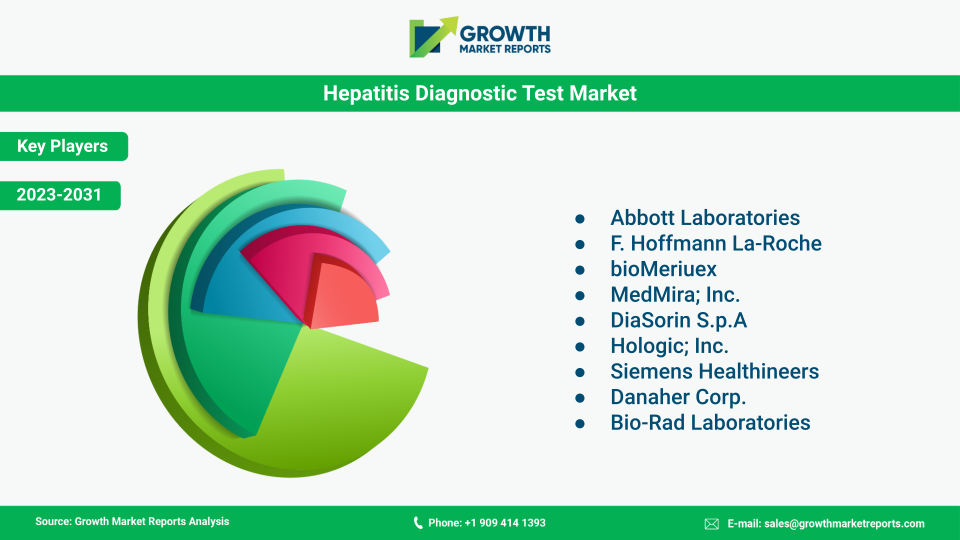
Key players competing in the global hepatitis diagnostic test market include Abbott Laboratories; F. Hoffmann La-Roche; bioMeriuex; MedMira; Inc.; DiaSorin S.p.A; Hologic; Inc.; Siemens Healthineers; Danaher Corporation; and Bio-Rad Laboratories.
Some of these key players are consistently engaged in to adopt several market strategies including product launches, acquisitions, collaborations, and capacity expansion to enhance their market position.
Yes, the report offers customization options to meet specific research or business needs.
Challenges include high costs of advanced tests, limited reimbursement in some regions, lack of awareness, inadequate healthcare infrastructure in low- and middle-income countries, and social stigma associated with hepatitis.
Advancements include the integration of molecular diagnostics (like PCR and next-generation sequencing), automation, point-of-care testing devices, and the use of artificial intelligence and machine learning in diagnostic platforms.
Hospitals, diagnostic laboratories, and blood banks are the primary end users, with additional adoption by public health agencies, research institutions, and community health centers.
Major companies include Abbott Laboratories, F. Hoffmann-La Roche Ltd, Siemens Healthineers, Bio-Rad Laboratories, Danaher Corporation (Beckman Coulter), Qiagen N.V., Grifols S.A., DiaSorin S.p.A., and others.
Hepatitis B and C account for the majority of diagnostic test usage due to their high prevalence and potential for chronic disease, but tests are also available for hepatitis A, D, and E.
Common types include ELISA tests, rapid diagnostic tests (RDTs), PCR tests, immunoassays, and emerging technologies such as biosensors and lab-on-a-chip devices.
The Asia Pacific region is anticipated to witness the fastest growth due to a large patient pool, increasing healthcare expenditure, and a rising incidence of hepatitis infections.
Key growth drivers include the rising prevalence of hepatitis infections, advancements in diagnostic technologies, increased awareness and screening programs, and greater investments in healthcare infrastructure.
As of 2024, the global Hepatitis Diagnostic Test market size is estimated at USD 4.82 billion, with projections to reach approximately USD 8.29 billion by 2033.