Helium Market Research Report 2033

Helium Market Research Report 2033

Segments - by Phase (Gas, Liquid), by Application (Cryogenics, Welding, Leak Detection, Pressurizing and Purging, Controlled Atmosphere, MRI, Lifting and Balloons, Electronics and Semiconductors, Others), by End-User (Healthcare, Aerospace and Defense, Electronics, Industrial, Welding and Metal Fabrication, Others), by Distribution Channel (Direct, Indirect)

https://growthmarketreports.com/Raksha
Author : Raksha Sharma
https://growthmarketreports.com/Vaibhav
Fact-checked by : V. Chandola
https://growthmarketreports.com/Shruti
Editor : Shruti Bhat

Upcoming | Report ID :MC-2856 | 4.6 Rating | 55 Reviews | 258 Pages | Format : Docx PDF

Report Description


Helium Market Outlook

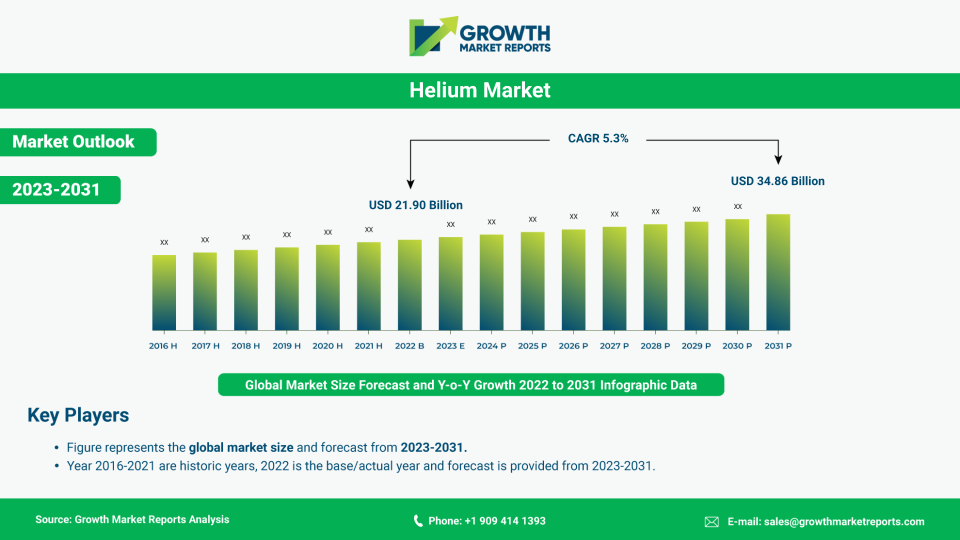
According to our latest research, the global helium market size reached USD 6.2 billion in 2024, demonstrating robust momentum propelled by rising demand across healthcare, electronics, and aerospace sectors. The industry is projected to expand at a CAGR of 5.1% from 2025 to 2033, culminating in a forecasted market value of USD 9.6 billion by the end of 2033. This growth is primarily driven by the increasing utilization of helium in advanced medical imaging, semiconductor manufacturing, and scientific research, as well as the persistent need for helium in space exploration and industrial processes.

One of the principal growth factors for the helium market is its indispensable role in cryogenics, particularly in magnetic resonance imaging (MRI) systems. Helium’s unique properties, such as its extremely low boiling point and chemical inertness, make it the coolant of choice for superconducting magnets in MRI scanners. As the global healthcare infrastructure expands and the prevalence of chronic diseases rises, the demand for advanced diagnostic equipment is surging, consequently boosting helium consumption. Moreover, the ongoing technological advancements in imaging modalities and the increasing adoption of MRI in emerging economies are expected to further stimulate helium demand in the healthcare sector, reinforcing its critical position in the market.

The electronics and semiconductor industry represents another significant driver for the helium market. Helium is widely used as a protective atmosphere in the manufacturing of semiconductors, fiber optics, and LCD panels, where its inertness prevents contamination and ensures high-quality production. The proliferation of consumer electronics, the advent of 5G technology, and the expansion of data centers are fueling semiconductor manufacturing, thereby escalating helium requirements. Additionally, helium’s role in leak detection and controlled atmospheres during the fabrication of microelectronic components is vital for maintaining product reliability and performance. As the digital transformation accelerates across industries, helium’s strategic importance in electronics manufacturing is expected to intensify, driving sustained market growth.

Furthermore, the aerospace and defense sectors are contributing significantly to the expansion of the helium market. Helium is essential for pressurizing and purging rocket fuel tanks, providing lift for weather and research balloons, and supporting various scientific missions. The resurgence of space exploration initiatives, both governmental and private, is generating substantial demand for high-purity helium. Moreover, helium’s application in welding processes, particularly in the fabrication of critical aerospace components, underscores its relevance in this sector. The global emphasis on technological superiority in defense and the growing number of satellite launches are likely to reinforce helium’s pivotal role in aerospace, further propelling market growth throughout the forecast period.

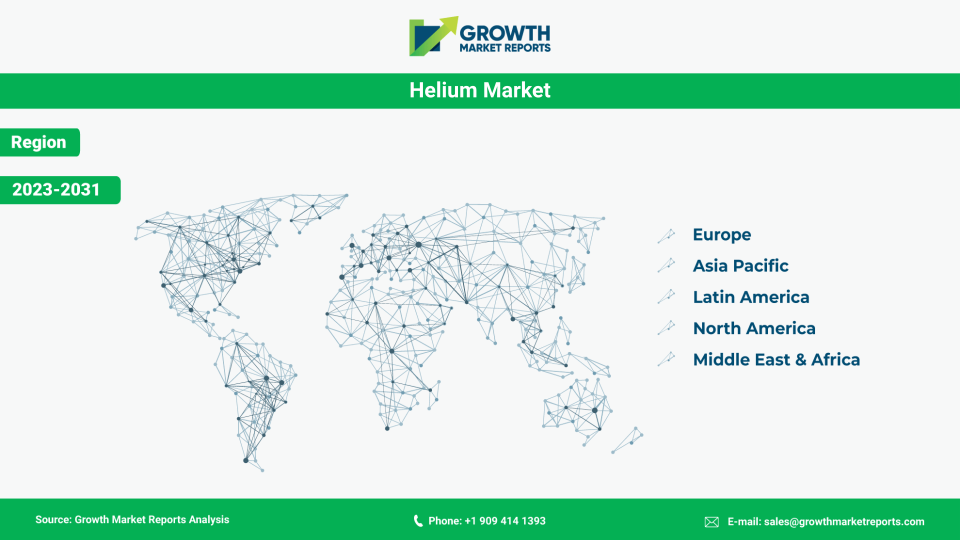
Regionally, the Asia Pacific region is poised to dominate the helium market during the forecast period, driven by rapid industrialization, expanding healthcare infrastructure, and the burgeoning electronics manufacturing sector. North America remains a key market due to its established healthcare and aerospace industries, as well as significant helium production capabilities. Europe is also witnessing steady growth, supported by advancements in scientific research and medical technology. Meanwhile, Latin America and the Middle East & Africa are emerging as promising markets, fueled by increasing investments in healthcare and industrial development. The global helium market’s regional dynamics are shaped by a combination of resource availability, technological adoption, and end-user industry expansion, ensuring a diversified growth trajectory across geographies.

Global Helium Industry Outlook

Phase Analysis

The helium market is segmented by phase into gas and liquid forms, each catering to distinct industry requirements. Gaseous helium dominates the market due to its widespread use in industries such as welding, leak detection, and controlled atmospheres. Its inert nature and low density make it ideal for applications where chemical reactivity must be minimized, such as in protective gas environments and pressurization systems. The flexibility of gaseous helium in transportation and storage further enhances its appeal, especially for end-users requiring smaller quantities or on-site usage. The demand for gaseous helium is also bolstered by its use in lifting applications, such as balloons and airships, where its non-flammable and lightweight properties provide a safer alternative to hydrogen.

Liquid helium, while representing a smaller market share compared to its gaseous counterpart, plays a critical role in cryogenic applications. Its ultra-low boiling point of 4.2 Kelvin makes it indispensable for cooling superconducting magnets, particularly in MRI machines and scientific research facilities. The healthcare sector is the primary consumer of liquid helium, with MRI systems alone accounting for a substantial proportion of the demand. Additionally, liquid helium is used in particle accelerators, nuclear magnetic resonance (NMR) spectroscopy, and other advanced research applications, where maintaining extremely low temperatures is essential for equipment performance and experimental integrity. The complexity of handling and transporting liquid helium, due to its cryogenic nature, necessitates specialized infrastructure and logistics, which can impact its availability and cost.

The interplay between gaseous and liquid helium markets is influenced by technological advancements and evolving end-user requirements. Innovations in MRI technology, such as the development of zero boil-off systems and alternative cooling methods, are gradually optimizing helium usage and reducing wastage. However, the irreplaceable role of liquid helium in certain high-precision scientific instruments ensures its continued relevance. Meanwhile, the adaptability of gaseous helium for industrial applications, combined with ongoing research into helium recycling and recovery, is expected to sustain its demand across diverse sectors. The balance between these two phases is crucial for meeting the varied needs of the global helium market and ensuring efficient resource utilization.

Supply chain dynamics also play a significant role in shaping the phase-wise distribution of helium. The extraction, purification, and liquefaction processes require substantial investment and technical expertise, particularly for liquid helium. Market participants are increasingly focusing on optimizing production efficiency and developing advanced storage solutions to mitigate losses during transportation. The emergence of new helium sources, such as natural gas fields in Africa and Russia, is expected to enhance supply stability and support the growth of both gaseous and liquid helium markets. As demand patterns evolve and new applications emerge, manufacturers and suppliers are strategically aligning their operations to cater to the specific requirements of each phase, ensuring sustained market expansion.

Report Scope

Attributes Details
Report Title Helium Market Research Report 2033
By Phase Gas, Liquid
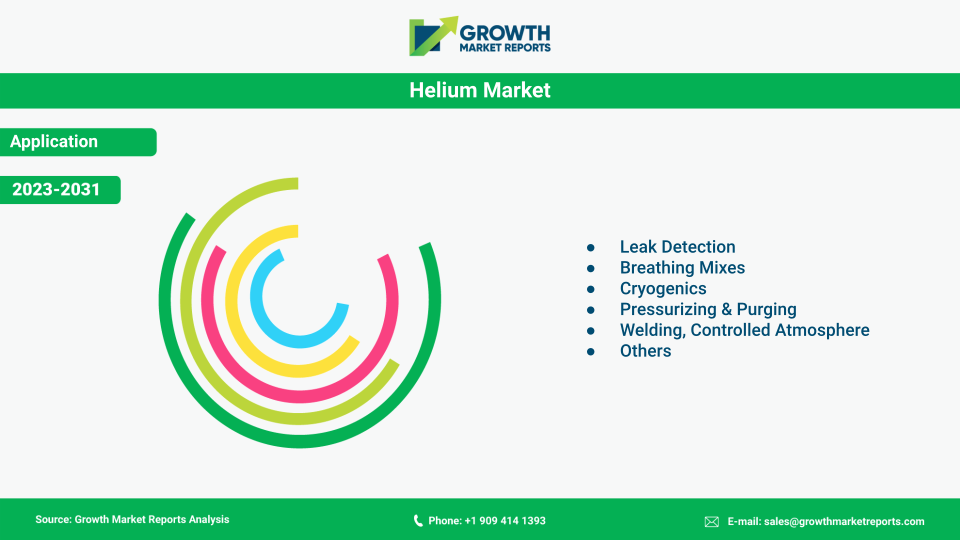
By Application Cryogenics, Welding, Leak Detection, Pressurizing and Purging, Controlled Atmosphere, MRI, Lifting and Balloons, Electronics and Semiconductors, Others
By End-User Healthcare, Aerospace and Defense, Electronics, Industrial, Welding and Metal Fabrication, Others
By Distribution Channel Direct, Indirect
Regions Covered North America, Europe, APAC, Latin America, MEA
Base Year 2024
Historic Data 2018-2023
Forecast Period 2025-2033
Number of Pages 258
Number of Tables & Figures 296
Customization Available Yes, the report can be customized as per your need.

Application Analysis

The helium market’s application landscape is diverse, encompassing cryogenics, welding, leak detection, pressurizing and purging, controlled atmospheres, MRI, lifting and balloons, electronics and semiconductors, and several other specialized uses. Among these, cryogenics stands out as the largest application segment, driven primarily by the healthcare industry’s reliance on MRI systems and scientific research institutions’ need for ultra-low temperature environments. Helium’s unique thermodynamic properties make it irreplaceable in these applications, where precision cooling is critical for equipment functionality and experimental accuracy. The growing prevalence of chronic illnesses and the expansion of healthcare infrastructure in emerging economies are further amplifying the demand for cryogenic helium.

Welding and metal fabrication represent another significant application area, where helium serves as a shielding gas in arc welding processes. Its inertness prevents oxidation and contamination, ensuring high-quality welds in critical industries such as aerospace, automotive, and shipbuilding. The increasing adoption of advanced manufacturing techniques and the emphasis on lightweight, high-strength materials are driving helium consumption in welding applications. Leak detection is also a prominent use case, particularly in the automotive, aerospace, and energy sectors, where helium’s small atomic size enables the identification of minute leaks in complex systems. The growing focus on safety, quality assurance, and regulatory compliance is expected to sustain helium demand in these technical applications.

Pressurizing and purging, along with controlled atmosphere applications, further expand helium’s industrial utility. In the aerospace sector, helium is used to pressurize rocket fuel tanks and purge systems to prevent contamination. Its role in maintaining controlled atmospheres during the manufacturing of semiconductors, fiber optics, and other high-tech components is equally critical, as it ensures process integrity and product reliability. The electronics and semiconductor industry, in particular, is witnessing robust growth, fueled by the proliferation of consumer electronics, the rise of smart devices, and the expansion of data centers. Helium’s importance in this sector is underscored by its ability to support high-precision manufacturing and stringent quality standards.

Other notable applications include lifting and balloons, where helium’s low density and non-flammable nature make it the gas of choice for airships, weather balloons, and entertainment balloons. While this segment represents a smaller share of the overall market, it remains significant in scientific research, meteorology, and leisure industries. Additionally, helium finds use in niche areas such as deep-sea diving, where it is blended with oxygen to create breathing mixtures that prevent nitrogen narcosis. As new technologies emerge and industry requirements evolve, the application spectrum of helium is expected to broaden, creating new growth avenues and reinforcing its strategic importance across sectors.

End-User Analysis

The helium market is characterized by a broad end-user base, with key segments including healthcare, aerospace and defense, electronics, industrial, welding and metal fabrication, and others. Healthcare remains the dominant end-user, accounting for a significant portion of global helium consumption due to the widespread use of MRI systems and other medical imaging technologies. The expansion of healthcare infrastructure, particularly in developing regions, and the increasing adoption of advanced diagnostic equipment are driving sustained demand for helium in this sector. Furthermore, ongoing investments in medical research and the development of new imaging modalities are expected to reinforce helium’s critical role in healthcare.

Aerospace and defense represent another vital end-user segment, leveraging helium’s unique properties for a range of applications. In aerospace, helium is essential for pressurizing rocket fuel tanks, providing lift for balloons and airships, and supporting various scientific and exploratory missions. The resurgence of space exploration initiatives, both governmental and private, is generating substantial demand for high-purity helium. In defense, helium is used in surveillance balloons, missile guidance systems, and as a coolant in advanced weaponry. The strategic importance of helium in maintaining technological superiority and ensuring mission success underscores its value in this sector, driving continued market growth.

The electronics industry is a significant consumer of helium, particularly in the manufacturing of semiconductors, fiber optics, and LCD panels. Helium’s inertness and ability to create controlled atmospheres are crucial for ensuring product quality and reliability. The rapid expansion of the electronics sector, fueled by the proliferation of smart devices, the advent of 5G technology, and the growth of data centers, is amplifying helium demand. Additionally, ongoing advancements in semiconductor fabrication techniques and the increasing complexity of electronic components are expected to sustain helium’s relevance in this industry.

Industrial applications, including welding and metal fabrication, also contribute significantly to helium consumption. Helium is used as a shielding gas in arc welding processes, where its inertness prevents oxidation and ensures high-quality welds. The adoption of advanced manufacturing techniques and the emphasis on lightweight, high-strength materials are driving helium usage in industrial settings. Other end-users, such as the energy sector, scientific research institutions, and deep-sea diving operations, further diversify the market landscape. As industries continue to innovate and expand, the end-user spectrum for helium is expected to broaden, creating new opportunities for market growth and development.

Distribution Channel Analysis

The helium market is segmented by distribution channel into direct and indirect channels, each serving distinct customer bases and industry requirements. Direct distribution channels involve the sale of helium from producers to end-users without intermediaries, offering greater control over product quality, pricing, and delivery schedules. This channel is preferred by large-scale consumers such as hospitals, research institutions, and major industrial players, who require consistent supply and stringent quality standards. Direct distribution enables suppliers to build long-term relationships with key customers, tailor solutions to specific needs, and provide value-added services such as on-site storage and equipment maintenance.

Indirect distribution channels, on the other hand, involve the sale of helium through distributors, agents, or third-party vendors. This approach is more prevalent among smaller end-users and in regions where direct access to producers is limited. Indirect channels offer greater market reach and flexibility, enabling suppliers to penetrate diverse markets and cater to a broader customer base. Distributors play a crucial role in aggregating demand, managing logistics, and providing technical support to end-users. The growth of e-commerce and digital platforms is also facilitating the expansion of indirect distribution, allowing customers to source helium more efficiently and cost-effectively.

The choice of distribution channel is influenced by several factors, including end-user requirements, supply chain complexity, and regional market dynamics. Large-scale consumers with specialized needs often prefer direct channels to ensure product consistency and timely delivery. In contrast, smaller customers and those located in remote areas may rely on indirect channels for convenience and accessibility. The increasing adoption of just-in-time inventory management and the growing emphasis on supply chain resilience are shaping distribution strategies across the industry. Suppliers are investing in advanced logistics solutions, automated storage systems, and digital platforms to enhance distribution efficiency and customer satisfaction.

As the helium market continues to evolve, the interplay between direct and indirect distribution channels is expected to intensify. Market participants are exploring hybrid models that combine the strengths of both approaches, enabling them to serve a diverse customer base while optimizing operational efficiency. Strategic partnerships with distributors, investments in digital infrastructure, and the development of customized service offerings are key trends shaping the future of helium distribution. As end-user requirements become more sophisticated and market competition intensifies, the ability to deliver high-quality helium through efficient and reliable channels will be a critical differentiator for industry players.

Opportunities & Threats

The helium market presents a multitude of opportunities driven by technological innovation, expanding end-user industries, and the discovery of new reserves. One of the most promising opportunities lies in the development of advanced helium recovery and recycling technologies. As helium is a finite resource with limited natural reserves, efficient recycling from MRI systems, semiconductor manufacturing, and other industrial processes can significantly enhance supply security and reduce costs. The growing emphasis on sustainability and resource conservation is encouraging investments in helium recycling infrastructure, creating new business models and revenue streams for market participants. Additionally, the exploration and commercialization of new helium sources, particularly in Africa and Russia, are expected to diversify supply and mitigate the risks associated with geopolitical instability and resource concentration.

The expanding application spectrum of helium in emerging technologies also presents significant growth opportunities. The rise of quantum computing, advanced medical imaging, and next-generation electronics is creating new demand streams for high-purity helium. The proliferation of data centers, the adoption of 5G technology, and the growth of electric vehicles are further amplifying helium’s relevance in the digital economy. Moreover, the resurgence of space exploration and the increasing number of satellite launches are generating substantial demand for helium in the aerospace sector. As industries continue to innovate and evolve, the ability to develop customized helium solutions for specialized applications will be a key driver of market differentiation and growth.

Despite the favorable outlook, the helium market faces certain restrainers and threats that could impact its growth trajectory. The most significant challenge is the finite nature of helium reserves and the concentration of production in a few countries, which exposes the market to supply disruptions and price volatility. Geopolitical tensions, regulatory changes, and production outages can lead to supply shortages and sharp price increases, affecting end-user industries and market stability. Additionally, the high cost and complexity of helium extraction, purification, and transportation pose barriers to entry for new players and limit market flexibility. Addressing these challenges will require coordinated efforts by industry stakeholders, governments, and research institutions to enhance supply security, promote recycling, and develop alternative technologies.

Regional Outlook

The Asia Pacific region is projected to be the largest and fastest-growing market for helium, accounting for approximately 35% of the global market in 2024, equivalent to around USD 2.2 billion. This growth is driven by rapid industrialization, expanding healthcare infrastructure, and the booming electronics manufacturing sector in countries such as China, Japan, South Korea, and India. The region’s robust demand for semiconductors, coupled with significant investments in medical technology and scientific research, is fueling helium consumption. Furthermore, the increasing adoption of advanced manufacturing techniques and the proliferation of data centers are expected to sustain the region’s growth momentum, with a projected CAGR of 6.2% through 2033.

North America remains a key market for helium, representing approximately 30% of the global market, or USD 1.86 billion in 2024. The region benefits from established helium production capabilities, particularly in the United States, which is one of the world’s leading helium producers. The presence of advanced healthcare infrastructure, a mature aerospace industry, and a strong focus on scientific research are driving helium demand in North America. Additionally, the region’s emphasis on technological innovation and sustainability is encouraging investments in helium recycling and recovery, further enhancing supply security and market resilience. The development of new helium sources and the expansion of distribution networks are expected to support continued growth in North America.

Europe accounts for approximately 20% of the global helium market, valued at USD 1.24 billion in 2024. The region’s growth is supported by advancements in medical technology, scientific research, and industrial manufacturing. Countries such as Germany, the United Kingdom, and France are leading consumers of helium, driven by their robust healthcare systems and strong emphasis on innovation. The increasing adoption of MRI systems, the growth of the electronics sector, and the expansion of aerospace activities are key factors propelling helium demand in Europe. Meanwhile, Latin America and the Middle East & Africa collectively account for the remaining 15% of the market, or USD 930 million, with growth driven by rising investments in healthcare, industrial development, and infrastructure projects. These regions are emerging as promising markets for helium, offering new opportunities for market participants and contributing to the global market’s diversified growth trajectory.

Helium Market Statistics

Competitor Outlook

The global helium market is characterized by a consolidated competitive landscape, with a few major players dominating production and distribution. These companies possess significant technical expertise, extensive distribution networks, and strong relationships with key end-users, enabling them to maintain a competitive edge. The market is marked by high entry barriers due to the capital-intensive nature of helium extraction, purification, and transportation, as well as the limited availability of natural reserves. As a result, established players are able to leverage economies of scale, invest in advanced technologies, and secure long-term supply agreements with major customers. The competitive dynamics are further shaped by strategic alliances, mergers and acquisitions, and investments in research and development.

Innovation and sustainability are emerging as key differentiators in the helium market, with leading companies focusing on the development of advanced recovery and recycling technologies. As supply security becomes increasingly critical, market participants are investing in the exploration and commercialization of new helium sources, particularly in regions with untapped reserves. The ability to offer customized solutions, value-added services, and integrated supply chain management is also becoming a crucial factor for success. Companies are expanding their geographic footprint, enhancing their logistics capabilities, and building strong partnerships with distributors and end-users to capture new growth opportunities and mitigate supply risks.

The competitive landscape is also influenced by regulatory developments, environmental considerations, and evolving customer requirements. Companies are adopting best practices in environmental management, investing in energy-efficient technologies, and promoting the responsible use of helium resources. The increasing emphasis on sustainability and resource conservation is encouraging the adoption of recycling and recovery solutions, creating new business models and revenue streams. Market participants are also leveraging digital technologies to enhance operational efficiency, improve customer engagement, and optimize supply chain performance. As competition intensifies, the ability to innovate, adapt, and deliver high-quality products and services will be critical for maintaining market leadership.

Major companies operating in the global helium market include Air Liquide, Linde plc, Messer Group, Air Products and Chemicals Inc., and Praxair Inc. (now part of Linde plc). Air Liquide is a global leader in gases, technologies, and services for industry and health, with a strong presence in the helium market through its extensive production and distribution network. Linde plc, formed by the merger of Linde AG and Praxair, is one of the world’s largest industrial gas companies, offering a comprehensive range of helium solutions for healthcare, electronics, aerospace, and industrial applications. Messer Group is a leading supplier of industrial gases in Europe, with a growing footprint in the global helium market. Air Products and Chemicals Inc. is renowned for its innovative gas solutions and strong focus on sustainability, while Praxair Inc. has a long-standing reputation for reliability and technical expertise.

These companies are actively investing in research and development, expanding their production capacities, and exploring new sources of helium to enhance supply security and meet growing demand. Strategic collaborations with research institutions, government agencies, and industry partners are enabling them to drive innovation, develop advanced recycling technologies, and promote the responsible use of helium resources. By leveraging their technical expertise, global reach, and customer-centric approach, these market leaders are well-positioned to capitalize on emerging opportunities and navigate the challenges of a rapidly evolving market landscape. As the helium market continues to grow and diversify, the ability to deliver reliable, high-quality, and sustainable solutions will be paramount for long-term success.

Key Players

  • Air Liquide
  • Linde plc
  • Praxair, Inc.
  • Air Products and Chemicals, Inc.
  • Gazprom
  • ExxonMobil Corporation
  • Messer Group GmbH
  • Iwatani Corporation
  • Matheson Tri-Gas, Inc.
  • Gulf Cryo
  • Taiyo Nippon Sanso Corporation
  • RasGas Company Limited
  • QatarGas Operating Company Limited
  • Buzwair Industrial Gases Factories
  • PGNiG (Polskie Górnictwo Naftowe i Gazownictwo)
  • Weil Group Resources, LLC
  • Royal Dutch Shell plc
  • BP plc
  • TotalEnergies SE
  • Siberian Gas Processing Plant (Gazprom subsidiary)
Helium Market Overview

Segments

The Helium market has been segmented on the basis of

Phase

  • Gas
  • Liquid

Application

  • Cryogenics
  • Welding
  • Leak Detection
  • Pressurizing and Purging
  • Controlled Atmosphere
  • MRI
  • Lifting and Balloons
  • Electronics and Semiconductors
  • Others

End-User

  • Healthcare
  • Aerospace and Defense
  • Electronics
  • Industrial
  • Welding and Metal Fabrication
  • Others

Distribution Channel

  • Direct
  • Indirect

Competitive Landscape

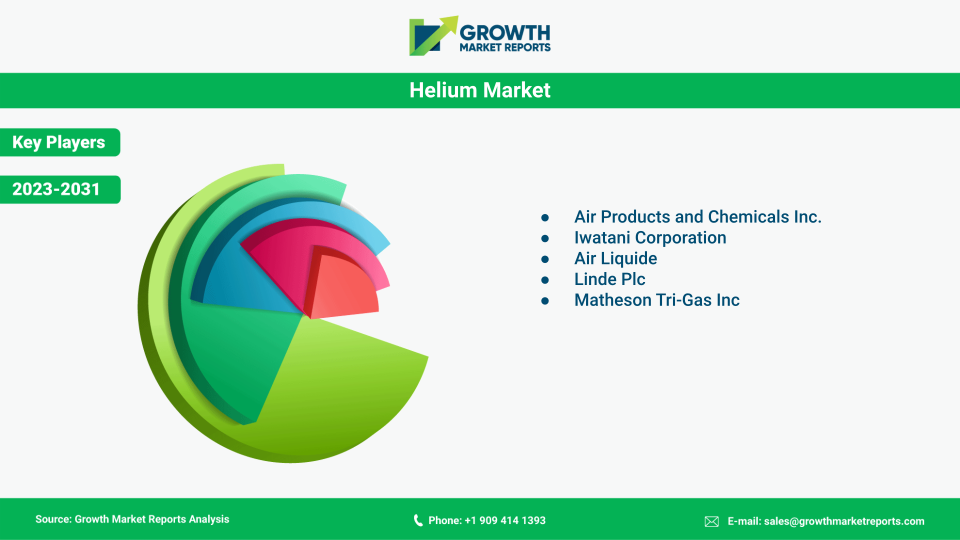
Key players competing in the helium market include Air Products and Chemicals Inc.; Iwatani Corporation; Air Liquide; Linde Plc; Matheson Tri-Gas Inc. Some of these players are using several market strategies such as mergers, acquisitions, partnerships, collaborations, capacity expansion, and product launches to enhance their market shares. For instance, 

  • In March 2019,  Linde AG’s gas in North America as well as Linde and Praxair's commercial activity in South America acquired by Messer.

Helium Market Key Players

Frequently Asked Questions

Opportunities include the development of advanced helium recovery and recycling technologies, exploration of new reserves (especially in Africa and Russia), and expanding applications in quantum computing, advanced electronics, and space exploration.

Key companies include Air Liquide, Linde plc, Praxair Inc. (now part of Linde), Air Products and Chemicals Inc., Messer Group, Gazprom, ExxonMobil, and several others.

Major challenges include the finite nature of helium reserves, supply concentration in a few countries, potential supply disruptions, price volatility, and the high cost and complexity of extraction and transportation.

Asia Pacific is the largest and fastest-growing region, followed by North America and Europe. Latin America and the Middle East & Africa are emerging markets with increasing helium demand.

Gaseous helium is widely used in welding, leak detection, and as a lifting gas for balloons, while liquid helium is critical for cryogenic applications such as cooling MRI machines and scientific research equipment.

Helium is used as a protective atmosphere in semiconductor manufacturing, fiber optics, and LCD panels, as well as in leak detection and controlled atmospheres to ensure high product quality and reliability.

Helium is primarily used as a coolant in MRI systems due to its extremely low boiling point and chemical inertness, which are essential for the operation of superconducting magnets.

The largest end-users of helium are healthcare (mainly for MRI and medical imaging), aerospace and defense, electronics, industrial sectors, and welding and metal fabrication.

Key growth drivers include rising demand in healthcare (especially MRI systems), electronics and semiconductor manufacturing, aerospace and defense applications, and ongoing technological advancements in these sectors.

The global helium market reached USD 6.2 billion in 2024 and is projected to grow at a CAGR of 5.1% from 2025 to 2033, reaching USD 9.6 billion by 2033.

Table Of Content

Chapter 1 Executive Summary
Chapter 2 Assumptions and Acronyms Used
Chapter 3 Research Methodology
Chapter 4 Helium Market Overview
   4.1 Introduction
      4.1.1 Market Taxonomy
      4.1.2 Market Definition
      4.1.3 Macro-Economic Factors Impacting the Market Growth
   4.2 Helium Market Dynamics
      4.2.1 Market Drivers
      4.2.2 Market Restraints
      4.2.3 Market Opportunity
   4.3 Helium Market - Supply Chain Analysis
      4.3.1 List of Key Suppliers
      4.3.2 List of Key Distributors
      4.3.3 List of Key Consumers
   4.4 Key Forces Shaping the Helium Market
      4.4.1 Bargaining Power of Suppliers
      4.4.2 Bargaining Power of Buyers
      4.4.3 Threat of Substitution
      4.4.4 Threat of New Entrants
      4.4.5 Competitive Rivalry
   4.5 Global Helium Market Size & Forecast, 2023-2032
      4.5.1 Helium Market Size and Y-o-Y Growth
      4.5.2 Helium Market Absolute $ Opportunity

Chapter 5 Global Helium Market Analysis and Forecast By Phase
   5.1 Introduction
      5.1.1 Key Market Trends & Growth Opportunities By Phase
      5.1.2 Basis Point Share (BPS) Analysis By Phase
      5.1.3 Absolute $ Opportunity Assessment By Phase
   5.2 Helium Market Size Forecast By Phase
      5.2.1 Gas
      5.2.2 Liquid
   5.3 Market Attractiveness Analysis By Phase

Chapter 6 Global Helium Market Analysis and Forecast By Application
   6.1 Introduction
      6.1.1 Key Market Trends & Growth Opportunities By Application
      6.1.2 Basis Point Share (BPS) Analysis By Application
      6.1.3 Absolute $ Opportunity Assessment By Application
   6.2 Helium Market Size Forecast By Application
      6.2.1 Cryogenics
      6.2.2 Welding
      6.2.3 Leak Detection
      6.2.4 Pressurizing and Purging
      6.2.5 Controlled Atmosphere
      6.2.6 MRI
      6.2.7 Lifting and Balloons
      6.2.8 Electronics and Semiconductors
      6.2.9 Others
   6.3 Market Attractiveness Analysis By Application

Chapter 7 Global Helium Market Analysis and Forecast By End-User
   7.1 Introduction
      7.1.1 Key Market Trends & Growth Opportunities By End-User
      7.1.2 Basis Point Share (BPS) Analysis By End-User
      7.1.3 Absolute $ Opportunity Assessment By End-User
   7.2 Helium Market Size Forecast By End-User
      7.2.1 Healthcare
      7.2.2 Aerospace and Defense
      7.2.3 Electronics
      7.2.4 Industrial
      7.2.5 Welding and Metal Fabrication
      7.2.6 Others
   7.3 Market Attractiveness Analysis By End-User

Chapter 8 Global Helium Market Analysis and Forecast By Distribution Channel
   8.1 Introduction
      8.1.1 Key Market Trends & Growth Opportunities By Distribution Channel
      8.1.2 Basis Point Share (BPS) Analysis By Distribution Channel
      8.1.3 Absolute $ Opportunity Assessment By Distribution Channel
   8.2 Helium Market Size Forecast By Distribution Channel
      8.2.1 Direct
      8.2.2 Indirect
   8.3 Market Attractiveness Analysis By Distribution Channel

Chapter 9 Global Helium Market Analysis and Forecast by Region
   9.1 Introduction
      9.1.1 Key Market Trends & Growth Opportunities By Region
      9.1.2 Basis Point Share (BPS) Analysis By Region
      9.1.3 Absolute $ Opportunity Assessment By Region
   9.2 Helium Market Size Forecast By Region
      9.2.1 North America
      9.2.2 Europe
      9.2.3 Asia Pacific
      9.2.4 Latin America
      9.2.5 Middle East & Africa (MEA)
   9.3 Market Attractiveness Analysis By Region

Chapter 10 Coronavirus Disease (COVID-19) Impact 
   10.1 Introduction 
   10.2 Current & Future Impact Analysis 
   10.3 Economic Impact Analysis 
   10.4 Government Policies 
   10.5 Investment Scenario

Chapter 11 North America Helium Analysis and Forecast
   11.1 Introduction
   11.2 North America Helium Market Size Forecast by Country
      11.2.1 U.S.
      11.2.2 Canada
   11.3 Basis Point Share (BPS) Analysis by Country
   11.4 Absolute $ Opportunity Assessment by Country
   11.5 Market Attractiveness Analysis by Country
   11.6 North America Helium Market Size Forecast By Phase
      11.6.1 Gas
      11.6.2 Liquid
   11.7 Basis Point Share (BPS) Analysis By Phase 
   11.8 Absolute $ Opportunity Assessment By Phase 
   11.9 Market Attractiveness Analysis By Phase
   11.10 North America Helium Market Size Forecast By Application
      11.10.1 Cryogenics
      11.10.2 Welding
      11.10.3 Leak Detection
      11.10.4 Pressurizing and Purging
      11.10.5 Controlled Atmosphere
      11.10.6 MRI
      11.10.7 Lifting and Balloons
      11.10.8 Electronics and Semiconductors
      11.10.9 Others
   11.11 Basis Point Share (BPS) Analysis By Application 
   11.12 Absolute $ Opportunity Assessment By Application 
   11.13 Market Attractiveness Analysis By Application
   11.14 North America Helium Market Size Forecast By End-User
      11.14.1 Healthcare
      11.14.2 Aerospace and Defense
      11.14.3 Electronics
      11.14.4 Industrial
      11.14.5 Welding and Metal Fabrication
      11.14.6 Others
   11.15 Basis Point Share (BPS) Analysis By End-User 
   11.16 Absolute $ Opportunity Assessment By End-User 
   11.17 Market Attractiveness Analysis By End-User
   11.18 North America Helium Market Size Forecast By Distribution Channel
      11.18.1 Direct
      11.18.2 Indirect
   11.19 Basis Point Share (BPS) Analysis By Distribution Channel 
   11.20 Absolute $ Opportunity Assessment By Distribution Channel 
   11.21 Market Attractiveness Analysis By Distribution Channel

Chapter 12 Europe Helium Analysis and Forecast
   12.1 Introduction
   12.2 Europe Helium Market Size Forecast by Country
      12.2.1 Germany
      12.2.2 France
      12.2.3 Italy
      12.2.4 U.K.
      12.2.5 Spain
      12.2.6 Russia
      12.2.7 Rest of Europe
   12.3 Basis Point Share (BPS) Analysis by Country
   12.4 Absolute $ Opportunity Assessment by Country
   12.5 Market Attractiveness Analysis by Country
   12.6 Europe Helium Market Size Forecast By Phase
      12.6.1 Gas
      12.6.2 Liquid
   12.7 Basis Point Share (BPS) Analysis By Phase 
   12.8 Absolute $ Opportunity Assessment By Phase 
   12.9 Market Attractiveness Analysis By Phase
   12.10 Europe Helium Market Size Forecast By Application
      12.10.1 Cryogenics
      12.10.2 Welding
      12.10.3 Leak Detection
      12.10.4 Pressurizing and Purging
      12.10.5 Controlled Atmosphere
      12.10.6 MRI
      12.10.7 Lifting and Balloons
      12.10.8 Electronics and Semiconductors
      12.10.9 Others
   12.11 Basis Point Share (BPS) Analysis By Application 
   12.12 Absolute $ Opportunity Assessment By Application 
   12.13 Market Attractiveness Analysis By Application
   12.14 Europe Helium Market Size Forecast By End-User
      12.14.1 Healthcare
      12.14.2 Aerospace and Defense
      12.14.3 Electronics
      12.14.4 Industrial
      12.14.5 Welding and Metal Fabrication
      12.14.6 Others
   12.15 Basis Point Share (BPS) Analysis By End-User 
   12.16 Absolute $ Opportunity Assessment By End-User 
   12.17 Market Attractiveness Analysis By End-User
   12.18 Europe Helium Market Size Forecast By Distribution Channel
      12.18.1 Direct
      12.18.2 Indirect
   12.19 Basis Point Share (BPS) Analysis By Distribution Channel 
   12.20 Absolute $ Opportunity Assessment By Distribution Channel 
   12.21 Market Attractiveness Analysis By Distribution Channel

Chapter 13 Asia Pacific Helium Analysis and Forecast
   13.1 Introduction
   13.2 Asia Pacific Helium Market Size Forecast by Country
      13.2.1 China
      13.2.2 Japan
      13.2.3 South Korea
      13.2.4 India
      13.2.5 Australia
      13.2.6 South East Asia (SEA)
      13.2.7 Rest of Asia Pacific (APAC)
   13.3 Basis Point Share (BPS) Analysis by Country
   13.4 Absolute $ Opportunity Assessment by Country
   13.5 Market Attractiveness Analysis by Country
   13.6 Asia Pacific Helium Market Size Forecast By Phase
      13.6.1 Gas
      13.6.2 Liquid
   13.7 Basis Point Share (BPS) Analysis By Phase 
   13.8 Absolute $ Opportunity Assessment By Phase 
   13.9 Market Attractiveness Analysis By Phase
   13.10 Asia Pacific Helium Market Size Forecast By Application
      13.10.1 Cryogenics
      13.10.2 Welding
      13.10.3 Leak Detection
      13.10.4 Pressurizing and Purging
      13.10.5 Controlled Atmosphere
      13.10.6 MRI
      13.10.7 Lifting and Balloons
      13.10.8 Electronics and Semiconductors
      13.10.9 Others
   13.11 Basis Point Share (BPS) Analysis By Application 
   13.12 Absolute $ Opportunity Assessment By Application 
   13.13 Market Attractiveness Analysis By Application
   13.14 Asia Pacific Helium Market Size Forecast By End-User
      13.14.1 Healthcare
      13.14.2 Aerospace and Defense
      13.14.3 Electronics
      13.14.4 Industrial
      13.14.5 Welding and Metal Fabrication
      13.14.6 Others
   13.15 Basis Point Share (BPS) Analysis By End-User 
   13.16 Absolute $ Opportunity Assessment By End-User 
   13.17 Market Attractiveness Analysis By End-User
   13.18 Asia Pacific Helium Market Size Forecast By Distribution Channel
      13.18.1 Direct
      13.18.2 Indirect
   13.19 Basis Point Share (BPS) Analysis By Distribution Channel 
   13.20 Absolute $ Opportunity Assessment By Distribution Channel 
   13.21 Market Attractiveness Analysis By Distribution Channel

Chapter 14 Latin America Helium Analysis and Forecast
   14.1 Introduction
   14.2 Latin America Helium Market Size Forecast by Country
      14.2.1 Brazil
      14.2.2 Mexico
      14.2.3 Rest of Latin America (LATAM)
   14.3 Basis Point Share (BPS) Analysis by Country
   14.4 Absolute $ Opportunity Assessment by Country
   14.5 Market Attractiveness Analysis by Country
   14.6 Latin America Helium Market Size Forecast By Phase
      14.6.1 Gas
      14.6.2 Liquid
   14.7 Basis Point Share (BPS) Analysis By Phase 
   14.8 Absolute $ Opportunity Assessment By Phase 
   14.9 Market Attractiveness Analysis By Phase
   14.10 Latin America Helium Market Size Forecast By Application
      14.10.1 Cryogenics
      14.10.2 Welding
      14.10.3 Leak Detection
      14.10.4 Pressurizing and Purging
      14.10.5 Controlled Atmosphere
      14.10.6 MRI
      14.10.7 Lifting and Balloons
      14.10.8 Electronics and Semiconductors
      14.10.9 Others
   14.11 Basis Point Share (BPS) Analysis By Application 
   14.12 Absolute $ Opportunity Assessment By Application 
   14.13 Market Attractiveness Analysis By Application
   14.14 Latin America Helium Market Size Forecast By End-User
      14.14.1 Healthcare
      14.14.2 Aerospace and Defense
      14.14.3 Electronics
      14.14.4 Industrial
      14.14.5 Welding and Metal Fabrication
      14.14.6 Others
   14.15 Basis Point Share (BPS) Analysis By End-User 
   14.16 Absolute $ Opportunity Assessment By End-User 
   14.17 Market Attractiveness Analysis By End-User
   14.18 Latin America Helium Market Size Forecast By Distribution Channel
      14.18.1 Direct
      14.18.2 Indirect
   14.19 Basis Point Share (BPS) Analysis By Distribution Channel 
   14.20 Absolute $ Opportunity Assessment By Distribution Channel 
   14.21 Market Attractiveness Analysis By Distribution Channel

Chapter 15 Middle East & Africa (MEA) Helium Analysis and Forecast
   15.1 Introduction
   15.2 Middle East & Africa (MEA) Helium Market Size Forecast by Country
      15.2.1 Saudi Arabia
      15.2.2 South Africa
      15.2.3 UAE
      15.2.4 Rest of Middle East & Africa (MEA)
   15.3 Basis Point Share (BPS) Analysis by Country
   15.4 Absolute $ Opportunity Assessment by Country
   15.5 Market Attractiveness Analysis by Country
   15.6 Middle East & Africa (MEA) Helium Market Size Forecast By Phase
      15.6.1 Gas
      15.6.2 Liquid
   15.7 Basis Point Share (BPS) Analysis By Phase 
   15.8 Absolute $ Opportunity Assessment By Phase 
   15.9 Market Attractiveness Analysis By Phase
   15.10 Middle East & Africa (MEA) Helium Market Size Forecast By Application
      15.10.1 Cryogenics
      15.10.2 Welding
      15.10.3 Leak Detection
      15.10.4 Pressurizing and Purging
      15.10.5 Controlled Atmosphere
      15.10.6 MRI
      15.10.7 Lifting and Balloons
      15.10.8 Electronics and Semiconductors
      15.10.9 Others
   15.11 Basis Point Share (BPS) Analysis By Application 
   15.12 Absolute $ Opportunity Assessment By Application 
   15.13 Market Attractiveness Analysis By Application
   15.14 Middle East & Africa (MEA) Helium Market Size Forecast By End-User
      15.14.1 Healthcare
      15.14.2 Aerospace and Defense
      15.14.3 Electronics
      15.14.4 Industrial
      15.14.5 Welding and Metal Fabrication
      15.14.6 Others
   15.15 Basis Point Share (BPS) Analysis By End-User 
   15.16 Absolute $ Opportunity Assessment By End-User 
   15.17 Market Attractiveness Analysis By End-User
   15.18 Middle East & Africa (MEA) Helium Market Size Forecast By Distribution Channel
      15.18.1 Direct
      15.18.2 Indirect
   15.19 Basis Point Share (BPS) Analysis By Distribution Channel 
   15.20 Absolute $ Opportunity Assessment By Distribution Channel 
   15.21 Market Attractiveness Analysis By Distribution Channel

Chapter 16 Competition Landscape 
   16.1 Helium Market: Competitive Dashboard
   16.2 Global Helium Market: Market Share Analysis, 2023
   16.3 Company Profiles (Details – Overview, Financials, Developments, Strategy) 
      16.3.1 Air Liquide
Linde plc
Praxair, Inc.
Air Products and Chemicals, Inc.
Gazprom
ExxonMobil Corporation
Messer Group GmbH
Iwatani Corporation
Matheson Tri-Gas, Inc.
Gulf Cryo
Taiyo Nippon Sanso Corporation
RasGas Company Limited
QatarGas Operating Company Limited
Buzwair Industrial Gases Factories
PGNiG (Polskie Górnictwo Naftowe i Gazownictwo)
Weil Group Resources, LLC
Royal Dutch Shell plc
BP plc
TotalEnergies SE
Siberian Gas Processing Plant (Gazprom subsidiary)

Methodology

Our Clients

Nestle SA
General Electric
The John Holland Group
Siemens Healthcare
Honda Motor Co. Ltd.
FedEx Logistics
Deloitte
Microsoft