Head Mounted Display Market Research Report 2033

Head Mounted Display Market Research Report 2033

Segments - by Product Type (Head-Mounted, Eyewear), by Technology (Augmented Reality, Virtual Reality, Mixed Reality), by Application (Gaming, Healthcare, Defense, Industrial, Media and Entertainment, Education, Others), by Component (Hardware, Software), by End-User (Consumer, Commercial, Enterprise, Others)

https://growthmarketreports.com/Raksha
Author : Raksha Sharma
https://growthmarketreports.com/Vaibhav
Fact-checked by : V. Chandola
https://growthmarketreports.com/Shruti
Editor : Shruti Bhat

Upcoming | Report ID :ICT-SE-324 | 4.9 Rating | 84 Reviews | 285 Pages | Format : Docx PDF

Report Description


Head Mounted Display Market Outlook

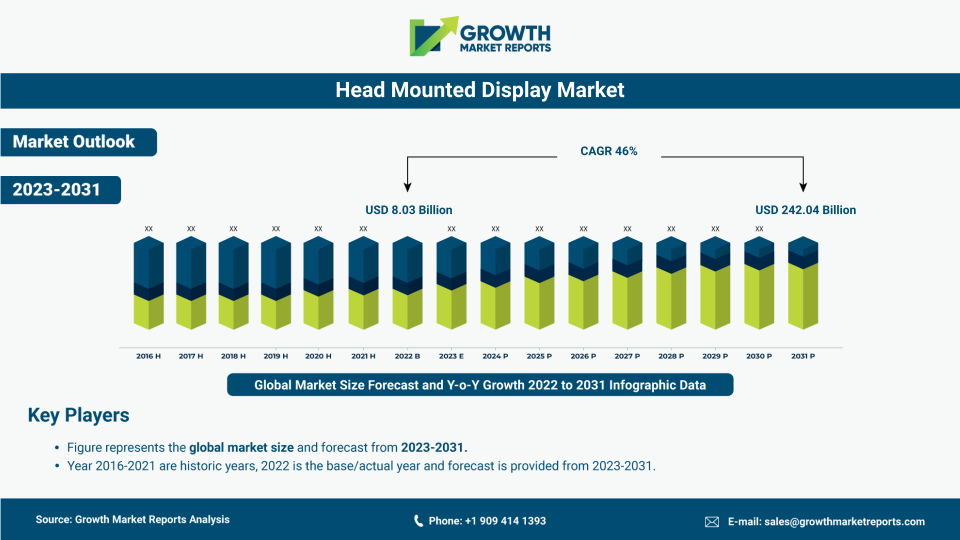
According to our latest research, the global head mounted display (HMD) market size reached USD 8.6 billion in 2024, exhibiting robust growth driven by surging demand across gaming, healthcare, and defense sectors. The market is anticipated to grow at a CAGR of 28.7% during the forecast period, with the total market value expected to reach USD 85.2 billion by 2033. This remarkable expansion is propelled by technological advancements, increasing adoption in enterprise and commercial applications, and the proliferation of immersive experiences in both consumer and professional environments.

The primary growth driver for the head mounted display market is the escalating adoption of HMDs in the gaming and entertainment industries. With the rise of virtual reality (VR) and augmented reality (AR) content, consumers are increasingly seeking immersive, interactive experiences. Gaming companies are leveraging HMDs to deliver next-generation experiences, while streaming services and media companies are incorporating AR/VR elements to engage audiences. The rapid advancement in display technologies, such as high-resolution OLED and microLED screens, has significantly enhanced visual quality and reduced latency, making HMDs more appealing to both casual and professional users. Additionally, the integration of spatial audio, haptic feedback, and wireless connectivity is further elevating the user experience, driving widespread adoption across various segments.

Another significant factor fueling market growth is the expanding application of HMDs in healthcare and medical training. Surgeons and medical professionals are utilizing AR and VR-based HMDs for simulation, training, and even live surgeries, enabling enhanced precision and safety. The pandemic accelerated the adoption of remote healthcare solutions, with HMDs playing a vital role in telemedicine, rehabilitation, and therapy. Leading healthcare institutions are investing in HMD technology to facilitate virtual consultations, remote diagnostics, and patient education, thereby streamlining workflows and improving outcomes. The ability of HMDs to visualize complex anatomical structures in three dimensions is revolutionizing medical education and procedural planning, further boosting demand in the healthcare sector.

The defense and industrial sectors are also contributing significantly to the growth of the head mounted display market. Defense organizations are increasingly deploying HMDs for simulation, training, and battlefield situational awareness, leveraging AR overlays for real-time data visualization. In industrial settings, HMDs are being used for remote assistance, assembly line management, and quality control, reducing error rates and enhancing productivity. The integration of HMDs with IoT devices and AI-powered analytics is enabling real-time monitoring and predictive maintenance, further expanding their utility in manufacturing and logistics. As industries continue to embrace digital transformation, the adoption of HMDs is expected to accelerate, creating new opportunities for market players.

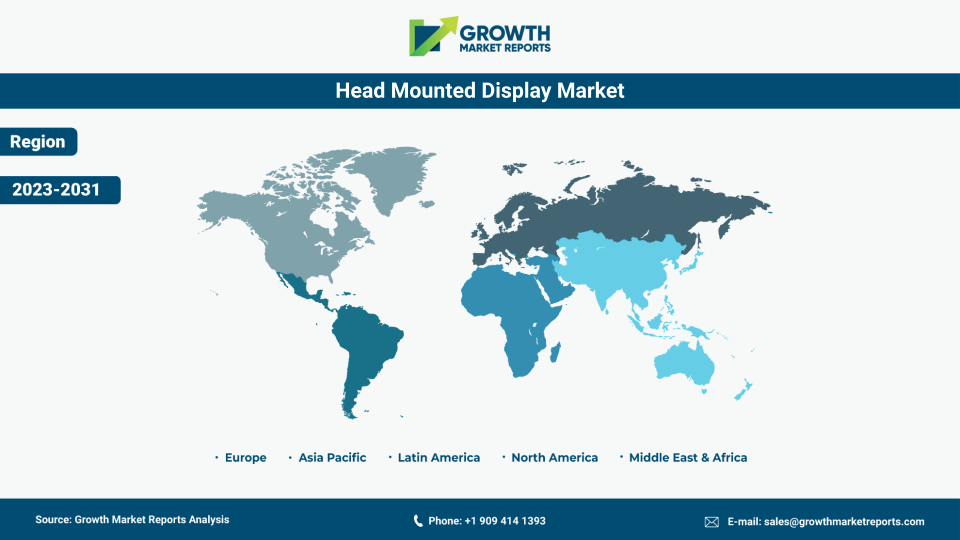
From a regional perspective, North America currently dominates the head mounted display market, accounting for the largest share in 2024, followed by Asia Pacific and Europe. The presence of major technology companies, high consumer spending on advanced electronics, and significant investments in AR/VR research and development are key factors driving the North American market. Meanwhile, Asia Pacific is witnessing the fastest growth, fueled by the rapid expansion of the gaming industry, increasing adoption of HMDs in education and healthcare, and government initiatives supporting digital innovation. Europe is also experiencing steady growth, particularly in enterprise and commercial applications, as businesses invest in immersive technologies to enhance customer engagement and operational efficiency.

Global Head Mounted Display Industry Outlook

Product Type Analysis

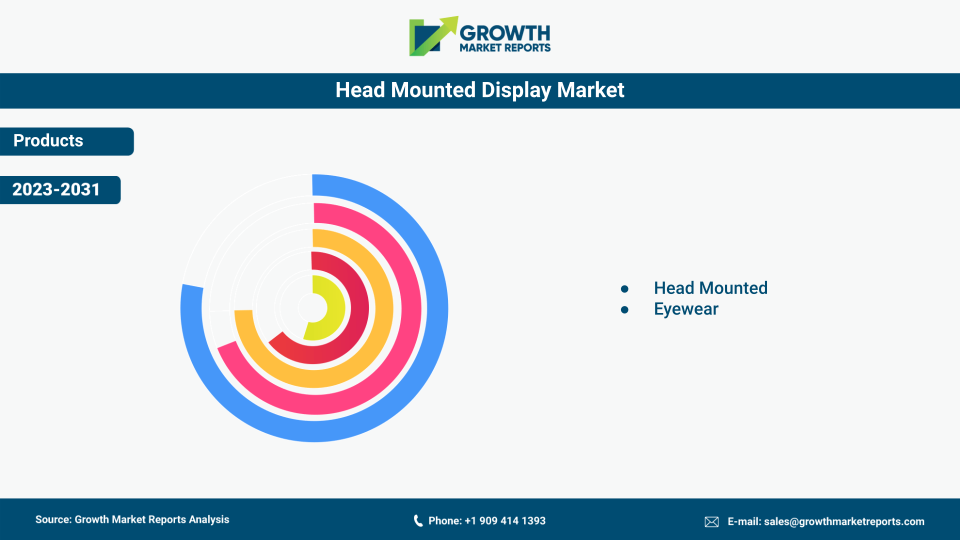
The head mounted display market is segmented by product type into head-mounted and eyewear categories, each catering to distinct user needs and applications. Head-mounted HMDs, which include devices such as VR headsets and AR helmets, are primarily designed for immersive experiences, making them highly popular in gaming, simulation, and training environments. These devices often feature advanced tracking systems, high-resolution displays, and integrated sensors to deliver realistic and interactive experiences. The demand for head-mounted HMDs is particularly strong in the gaming and defense sectors, where users require full immersion and hands-free operation. The continuous improvement in ergonomics and reduction in device weight are enhancing user comfort, further propelling adoption in professional and consumer markets.

Eyewear-type HMDs, often referred to as smart glasses, are gaining traction in commercial, industrial, and enterprise applications. These lightweight, often unobtrusive devices are designed for augmented reality experiences, overlaying digital information onto the user’s real-world view. Eyewear HMDs are increasingly being used in logistics, field service, and healthcare for applications such as remote assistance, data visualization, and workflow management. Their ability to provide real-time information without obstructing the user’s field of vision makes them ideal for on-the-go professionals. The integration of AI-driven features, voice recognition, and wireless connectivity is enhancing the functionality of eyewear HMDs, making them indispensable tools in modern workplaces.

The head-mounted segment continues to dominate the market in terms of revenue, owing to its widespread adoption in entertainment, defense, and simulation applications. However, the eyewear segment is expected to witness the highest growth rate during the forecast period, driven by increasing enterprise adoption and the proliferation of AR-based applications. Companies are investing heavily in the development of lightweight, stylish, and energy-efficient smart glasses to cater to the evolving needs of business users. The convergence of AR and AI technologies is expected to further expand the capabilities of eyewear HMDs, enabling new use cases in areas such as remote collaboration, training, and customer engagement.

Both product types are benefiting from advancements in display technology, battery life, and connectivity. The emergence of 5G networks is enabling seamless streaming of high-definition content and real-time data synchronization, enhancing the performance of both head-mounted and eyewear HMDs. Manufacturers are also focusing on improving device durability and environmental resistance to cater to industrial and outdoor applications. As the market matures, we expect to see a blurring of lines between head-mounted and eyewear HMDs, with hybrid devices offering the best of both worlds in terms of immersion, comfort, and functionality.

Report Scope

Attributes Details
Report Title Head Mounted Display Market Research Report 2033
By Product Type Head-Mounted, Eyewear
By Technology Augmented Reality, Virtual Reality, Mixed Reality
By Application Gaming, Healthcare, Defense, Industrial, Media and Entertainment, Education, Others
By Component Hardware, Software
By End-User Consumer, Commercial, Enterprise, Others
Regions Covered North America, Europe, APAC, Latin America, MEA
Base Year 2024
Historic Data 2018-2023
Forecast Period 2025-2033
Number of Pages 285
Number of Tables & Figures 299
Customization Available Yes, the report can be customized as per your need.

Technology Analysis

Within the head mounted display market, technology segmentation plays a pivotal role in shaping product development and adoption trends. The three primary technologies—augmented reality (AR), virtual reality (VR), and mixed reality (MR)—each offer unique capabilities and address different user needs. VR technology, which immerses users in a fully digital environment, remains the cornerstone of the gaming and simulation segments. High-fidelity VR headsets are widely used in entertainment, training, and therapeutic applications, offering unparalleled immersion and interactivity. Recent advancements in VR optics, motion tracking, and haptic feedback have significantly enhanced the realism and user experience, driving continued growth in this segment.

AR technology, on the other hand, overlays digital information onto the real world, enabling users to interact with both physical and virtual elements simultaneously. AR-based HMDs are finding increasing adoption in enterprise, healthcare, and industrial settings, where real-time data visualization and hands-free operation are critical. Applications such as remote maintenance, surgical navigation, and logistics management are leveraging AR HMDs to improve efficiency and accuracy. The development of lightweight, see-through displays and advanced sensors is making AR HMDs more practical and user-friendly, expanding their appeal beyond niche professional applications to broader commercial and consumer use cases.

Mixed reality (MR) represents the convergence of AR and VR, allowing users to interact with digital objects anchored in the real world. MR HMDs combine the immersive qualities of VR with the contextual awareness of AR, enabling new levels of interactivity and collaboration. The adoption of MR technology is accelerating in fields such as education, design, and manufacturing, where users can manipulate virtual objects within their physical environment. Leading technology companies are investing in MR platforms that support multi-user collaboration, spatial mapping, and gesture recognition, unlocking new possibilities for remote teamwork and creative workflows.

The technology landscape is further enriched by ongoing research into advanced optics, display miniaturization, and low-latency wireless communication. The integration of AI and machine learning algorithms is enabling smarter, context-aware HMDs that can adapt to user preferences and environmental conditions. As these technologies mature, we expect to see a proliferation of hybrid HMDs that seamlessly transition between AR, VR, and MR modes, offering users greater flexibility and a wider range of applications. The rapid pace of innovation in this segment is set to drive sustained growth and diversification in the head mounted display market over the coming years.

Application Analysis

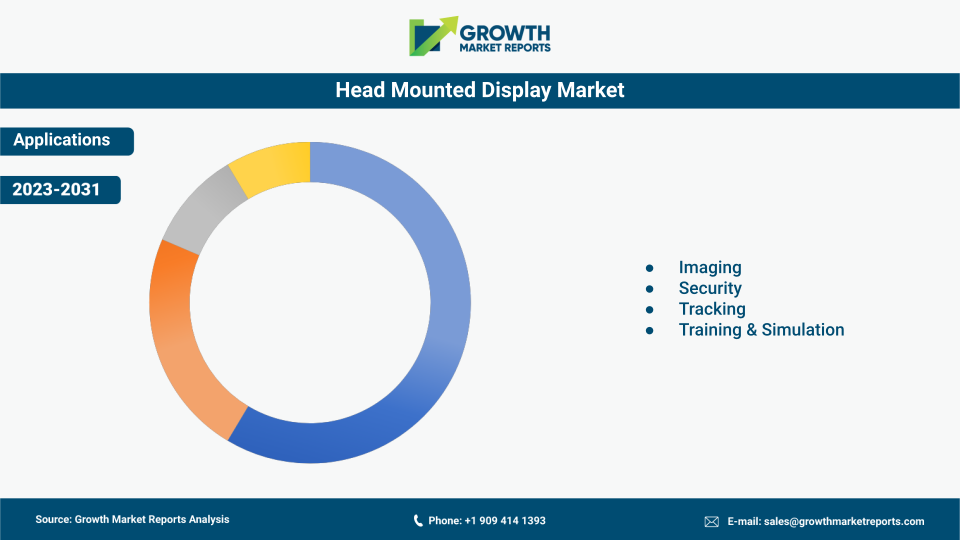
The head mounted display market is characterized by a diverse range of applications, each contributing to overall market growth in unique ways. The gaming segment remains the largest and most dynamic application area, with HMDs delivering immersive VR and AR experiences that redefine interactive entertainment. The proliferation of high-quality VR games, social VR platforms, and e-sports tournaments is driving sustained demand for advanced HMDs among gamers and content creators. Game developers are leveraging the capabilities of HMDs to create rich, interactive worlds that foster deeper engagement and social interaction, further fueling market expansion.

In healthcare, HMDs are revolutionizing medical training, surgical planning, and patient care. AR and VR HMDs enable medical professionals to visualize complex anatomical structures, simulate procedures, and collaborate remotely with colleagues. Hospitals and research institutions are adopting HMDs for telemedicine, rehabilitation, and mental health therapy, leveraging their ability to create controlled, immersive environments for patient treatment. The use of HMDs in medical education is enhancing learning outcomes and reducing training costs, making them valuable tools for both students and experienced practitioners.

The defense and industrial sectors are leveraging HMDs for simulation, training, and operational support. In defense, HMDs are used for pilot training, battlefield visualization, and mission planning, providing soldiers with real-time situational awareness and hands-free access to critical data. Industrial applications include remote maintenance, assembly line management, and quality assurance, where HMDs enable workers to access instructions, schematics, and performance metrics without interrupting their workflow. The integration of HMDs with IoT devices and AI-driven analytics is enhancing operational efficiency, reducing downtime, and improving safety across various industries.

Other notable applications include media and entertainment, education, and commercial use. In media and entertainment, HMDs are enabling new forms of storytelling, live event experiences, and interactive advertising. Educational institutions are adopting HMDs to create immersive learning environments, facilitate virtual field trips, and enhance student engagement. Commercial applications span retail, real estate, and tourism, where HMDs are used for virtual product demonstrations, property tours, and destination previews. The versatility of HMDs across these diverse applications underscores their transformative potential and broad market appeal.

Component Analysis

The head mounted display market is segmented by component into hardware and software, each playing a critical role in delivering seamless and immersive user experiences. The hardware segment, which includes displays, sensors, processors, and batteries, accounts for the largest share of market revenue. Continuous advancements in display technology, such as higher resolution, wider field of view, and improved color accuracy, are enhancing the visual quality of HMDs. The integration of advanced sensors, including gyroscopes, accelerometers, and eye-tracking modules, is enabling more precise motion tracking and interaction, further elevating the user experience.

Software is equally important in unlocking the full potential of HMD hardware. Operating systems, application platforms, and development tools are essential for creating, managing, and distributing AR/VR content. Leading HMD manufacturers are investing in proprietary software ecosystems that support a wide range of applications, from gaming and simulation to enterprise productivity and healthcare. The availability of robust software development kits (SDKs) and application programming interfaces (APIs) is fostering innovation and enabling third-party developers to create compelling content and solutions for HMD platforms.

The convergence of hardware and software is driving the evolution of smart, adaptive HMDs that can deliver personalized experiences based on user preferences and environmental context. AI-powered features, such as voice recognition, gesture control, and real-time translation, are being integrated into both hardware and software layers to enhance usability and accessibility. Cloud-based services are enabling seamless content streaming, data synchronization, and remote device management, further expanding the capabilities of HMDs in enterprise and consumer settings.

As the market matures, we expect to see increased collaboration between hardware manufacturers, software developers, and content creators to deliver integrated, end-to-end solutions that address specific industry needs. The ongoing miniaturization of components, improvements in battery life, and reduction in manufacturing costs are making HMDs more affordable and accessible to a wider audience. The interplay between hardware and software innovation will continue to be a key driver of growth and differentiation in the head mounted display market.

End-User Analysis

The head mounted display market serves a diverse array of end-users, including consumers, commercial enterprises, and industry professionals. The consumer segment, which encompasses gaming enthusiasts, early adopters, and tech-savvy individuals, remains the largest market for HMDs. The appeal of immersive gaming, interactive entertainment, and social VR experiences is driving robust demand for high-performance HMDs among consumers. Manufacturers are focusing on delivering lightweight, ergonomic, and aesthetically pleasing devices that cater to the preferences of this segment, while also expanding content libraries to attract new users.

Commercial and enterprise end-users are increasingly recognizing the value of HMDs in enhancing productivity, training, and customer engagement. Businesses in sectors such as retail, real estate, tourism, and education are adopting HMDs for virtual product demonstrations, property tours, and immersive learning experiences. The ability of HMDs to deliver personalized, interactive content is enabling companies to differentiate their offerings and improve customer satisfaction. In the enterprise segment, HMDs are being used for remote collaboration, workflow management, and data visualization, streamlining operations and reducing costs.

Industrial end-users, including manufacturing, logistics, and field service organizations, are leveraging HMDs to improve operational efficiency, safety, and quality control. Workers can access real-time instructions, schematics, and performance metrics through HMDs, enabling hands-free operation and reducing the risk of errors. The integration of HMDs with IoT devices and enterprise resource planning (ERP) systems is facilitating predictive maintenance, inventory management, and process optimization. As industries continue to embrace digital transformation, the adoption of HMDs is expected to accelerate, creating new opportunities for market growth.

Other end-users, such as government agencies, defense organizations, and healthcare providers, are adopting HMDs for specialized applications, including simulation, training, and telemedicine. The flexibility and versatility of HMDs make them suitable for a wide range of use cases, from battlefield visualization to remote patient care. As the technology continues to evolve, we anticipate further diversification of end-user segments and the emergence of new applications that leverage the unique capabilities of HMDs.

Opportunities & Threats

The head mounted display market presents significant opportunities for growth and innovation, driven by the convergence of AR, VR, and AI technologies. The increasing adoption of HMDs in education and training is creating new avenues for market expansion, as institutions seek to enhance learning outcomes and reduce costs through immersive experiences. The rise of remote work and virtual collaboration is fueling demand for HMDs in enterprise settings, enabling teams to interact and share information in real-time, regardless of location. The proliferation of 5G networks and cloud-based services is further enhancing the performance and accessibility of HMDs, opening up new possibilities for content delivery and device management.

Another major opportunity lies in the integration of HMDs with emerging technologies such as IoT, edge computing, and blockchain. These integrations are enabling new use cases in areas such as smart manufacturing, supply chain management, and secure data sharing. The growing focus on user privacy and data security is driving innovation in HMD design and software architecture, creating opportunities for companies that can deliver secure, reliable, and user-friendly solutions. As industries continue to embrace digital transformation, the demand for specialized HMDs tailored to specific industry needs is expected to rise, providing a fertile ground for market players to differentiate themselves and capture new market share.

Despite these opportunities, the head mounted display market faces several restraining factors and threats. High device costs, limited content availability, and concerns about user comfort and safety are significant barriers to widespread adoption, particularly in price-sensitive markets. The complexity of integrating HMDs with existing IT infrastructure and workflows can also pose challenges for enterprise and industrial users. Additionally, issues related to motion sickness, visual fatigue, and privacy concerns may hinder user acceptance and retention. Addressing these challenges will require ongoing investment in research and development, user education, and cross-industry collaboration to ensure that HMDs deliver meaningful value to users across all segments.

Regional Outlook

Regionally, the head mounted display market is led by North America, which accounted for approximately USD 3.5 billion of the global market in 2024. The region’s dominance is attributed to the presence of major technology companies, high consumer spending, and strong investments in AR/VR research and development. The United States, in particular, is a hotbed of innovation, with leading players such as Microsoft, Google, and Meta driving advancements in HMD technology. The region’s robust ecosystem of content creators, developers, and hardware manufacturers is fostering a vibrant market for both consumer and enterprise HMDs.

Asia Pacific is emerging as the fastest-growing region in the head mounted display market, with a projected CAGR of 32.1% during the forecast period. The region’s growth is fueled by the rapid expansion of the gaming industry, increasing adoption of HMDs in education and healthcare, and supportive government policies promoting digital innovation. Countries such as China, Japan, and South Korea are at the forefront of AR/VR adoption, with local companies investing heavily in research, development, and commercialization of HMD technologies. The rising middle class and growing consumer interest in immersive experiences are further driving demand for HMDs across the region. In 2024, Asia Pacific accounted for an estimated USD 2.2 billion of the global market.

Europe continues to experience steady growth in the head mounted display market, with a market size of approximately USD 1.7 billion in 2024. The region’s focus on digital transformation, innovation in enterprise applications, and increasing adoption of HMDs in healthcare and education are key drivers of market expansion. European companies are investing in the development of specialized HMD solutions for industrial, medical, and commercial use, leveraging the region’s strong engineering and research capabilities. The presence of leading automotive, aerospace, and manufacturing companies is also contributing to the uptake of HMDs for training, simulation, and operational support.

Head Mounted Display Market Statistics

Competitor Outlook

The head mounted display market is characterized by intense competition and rapid innovation, with a mix of established technology giants and emerging startups vying for market share. Companies are investing heavily in research and development to enhance product performance, reduce device size and weight, and improve user comfort. Strategic partnerships, mergers and acquisitions, and collaborations with content creators are common strategies employed to expand product portfolios and reach new customer segments. The competitive landscape is further shaped by the entry of new players, particularly in the AR and MR segments, where technological barriers to entry are lower.

Product differentiation is a key focus area for market participants, with companies seeking to offer unique features such as advanced optics, eye tracking, spatial audio, and AI-driven personalization. The ability to deliver seamless integration with existing enterprise systems, robust security features, and comprehensive software ecosystems is becoming increasingly important, particularly in the commercial and industrial segments. Companies are also exploring new business models, such as subscription-based content delivery and device-as-a-service offerings, to create recurring revenue streams and enhance customer loyalty.

The rapid pace of technological advancement presents both opportunities and challenges for market players. Companies must balance the need for innovation with the imperative to deliver reliable, user-friendly, and cost-effective solutions. The emergence of open-source platforms and industry standards is fostering interoperability and lowering barriers to adoption, but also intensifying competition and price pressures. As the market continues to evolve, companies that can anticipate and respond to changing customer needs, regulatory requirements, and technological trends will be best positioned to succeed.

Some of the major companies operating in the head mounted display market include Microsoft Corporation, Sony Corporation, Google LLC, Meta Platforms Inc. (formerly Facebook), HTC Corporation, Samsung Electronics Co. Ltd., Lenovo Group Limited, Magic Leap, Inc., Vuzix Corporation, and Epson Corporation. Microsoft is a leading player in the enterprise and defense segments, with its HoloLens mixed reality headset widely adopted in industrial, healthcare, and military applications. Sony and HTC are recognized for their high-performance VR headsets, catering primarily to the gaming and entertainment markets. Google and Meta are investing in both AR and VR platforms, with a focus on consumer and social applications.

Magic Leap and Vuzix are notable for their innovations in AR eyewear, targeting enterprise, industrial, and healthcare users. Samsung and Lenovo are leveraging their strengths in hardware manufacturing and consumer electronics to offer a range of HMD products across different price points and use cases. Epson is distinguished by its focus on industrial and commercial AR solutions, providing specialized HMDs for logistics, manufacturing, and field service applications. These companies are continuously expanding their product portfolios, forming strategic partnerships, and investing in ecosystem development to maintain their competitive edge in the rapidly evolving head mounted display market.

Key Players

  • Sony Corporation
  • Samsung Electronics Co., Ltd.
  • Microsoft Corporation
  • Google LLC
  • HTC Corporation
  • Oculus VR (Meta Platforms, Inc.)
  • Vuzix Corporation
  • Magic Leap, Inc.
  • Seiko Epson Corporation
  • Lenovo Group Limited
  • LG Electronics Inc.
  • Pimax Technology (Shanghai) Co., Ltd.
  • HP Inc.
  • Panasonic Corporation
  • Toshiba Corporation
  • RealWear, Inc.
  • Kopin Corporation, Inc.
  • DAQRI LLC
  • Xiaomi Corporation
  • Varjo Technologies Oy
Head Mounted Display Market Overview

Segments

The Head Mounted Display market has been segmented on the basis of

Product Type

  • Head-Mounted
  • Eyewear

Technology

  • Augmented Reality
  • Virtual Reality
  • Mixed Reality

Application

  • Gaming
  • Healthcare
  • Defense
  • Industrial
  • Media and Entertainment
  • Education
  • Others

Component

  • Hardware
  • Software

End-User

  • Consumer
  • Commercial
  • Enterprise
  • Others

Competitive Landscape

The key players of the market are BAE Systems, Google Inc., Imagine Corporation, Seiko, Rockwell Collins, Epson, Vuzix, and Sony Corporation.

Companies are engaging in product launches and partnerships to expand their market share. For instance, BAE Systems is working on the development of high performing AR glasses. The company is striving to combine revolutionary display capability and personal equipment technologies to create a high- performance system, within a low- profile design.
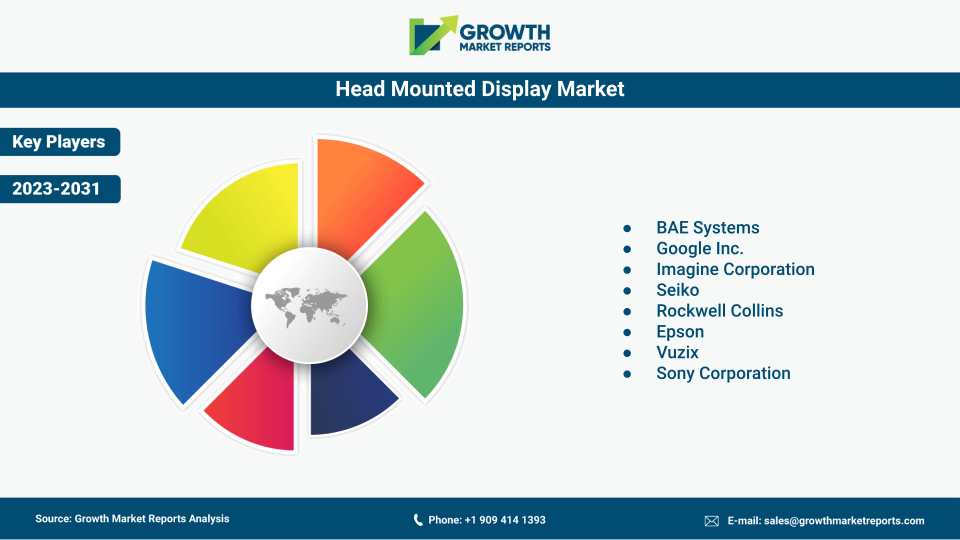

Global Head Mounted Display Market Key Players

Frequently Asked Questions

The eyewear segment, or smart glasses, is expected to witness the highest growth rate due to increasing enterprise adoption, AR-based applications, and advancements in lightweight, AI-driven features.

In healthcare, HMDs are used for medical training, surgical planning, telemedicine, rehabilitation, therapy, and patient education, enabling enhanced visualization and remote collaboration.

Leading companies include Microsoft, Sony, Google, Meta Platforms (Oculus), HTC, Samsung, Lenovo, Magic Leap, Vuzix, and Epson, among others.

Opportunities include growth in education, remote work, integration with IoT and AI, and 5G connectivity. Challenges involve high device costs, limited content, user comfort, motion sickness, and privacy concerns.

North America leads the market, followed by Asia Pacific and Europe. North America benefits from major tech companies and high consumer spending, while Asia Pacific is the fastest-growing region due to gaming industry expansion and digital innovation policies.

VR immerses users in digital environments, AR overlays digital information onto the real world, and MR combines both, allowing interaction with digital objects anchored in physical space. Each technology serves unique applications across gaming, healthcare, industry, and education.

The market is segmented into head-mounted HMDs (such as VR headsets and AR helmets) and eyewear-type HMDs (smart glasses), each serving different user needs and applications.

Key industries driving HMD adoption include gaming and entertainment, healthcare and medical training, defense, industrial manufacturing, and enterprise/commercial applications.

The head mounted display market is expected to grow at a CAGR of 28.7% from 2025 to 2033, reaching a total market value of USD 85.2 billion by 2033.

As of 2024, the global head mounted display (HMD) market size reached USD 8.6 billion, driven by robust demand in gaming, healthcare, and defense sectors.

Table Of Content

Chapter 1 Executive Summary
Chapter 2 Assumptions and Acronyms Used
Chapter 3 Research Methodology
Chapter 4 Head Mounted Display Market Overview
   4.1 Introduction
      4.1.1 Market Taxonomy
      4.1.2 Market Definition
      4.1.3 Macro-Economic Factors Impacting the Market Growth
   4.2 Head Mounted Display Market Dynamics
      4.2.1 Market Drivers
      4.2.2 Market Restraints
      4.2.3 Market Opportunity
   4.3 Head Mounted Display Market - Supply Chain Analysis
      4.3.1 List of Key Suppliers
      4.3.2 List of Key Distributors
      4.3.3 List of Key Consumers
   4.4 Key Forces Shaping the Head Mounted Display Market
      4.4.1 Bargaining Power of Suppliers
      4.4.2 Bargaining Power of Buyers
      4.4.3 Threat of Substitution
      4.4.4 Threat of New Entrants
      4.4.5 Competitive Rivalry
   4.5 Global Head Mounted Display Market Size & Forecast, 2023-2032
      4.5.1 Head Mounted Display Market Size and Y-o-Y Growth
      4.5.2 Head Mounted Display Market Absolute $ Opportunity

Chapter 5 Global Head Mounted Display Market Analysis and Forecast By Product Type
   5.1 Introduction
      5.1.1 Key Market Trends & Growth Opportunities By Product Type
      5.1.2 Basis Point Share (BPS) Analysis By Product Type
      5.1.3 Absolute $ Opportunity Assessment By Product Type
   5.2 Head Mounted Display Market Size Forecast By Product Type
      5.2.1 Head-Mounted
      5.2.2 Eyewear
   5.3 Market Attractiveness Analysis By Product Type

Chapter 6 Global Head Mounted Display Market Analysis and Forecast By Technology
   6.1 Introduction
      6.1.1 Key Market Trends & Growth Opportunities By Technology
      6.1.2 Basis Point Share (BPS) Analysis By Technology
      6.1.3 Absolute $ Opportunity Assessment By Technology
   6.2 Head Mounted Display Market Size Forecast By Technology
      6.2.1 Augmented Reality
      6.2.2 Virtual Reality
      6.2.3 Mixed Reality
   6.3 Market Attractiveness Analysis By Technology

Chapter 7 Global Head Mounted Display Market Analysis and Forecast By Application
   7.1 Introduction
      7.1.1 Key Market Trends & Growth Opportunities By Application
      7.1.2 Basis Point Share (BPS) Analysis By Application
      7.1.3 Absolute $ Opportunity Assessment By Application
   7.2 Head Mounted Display Market Size Forecast By Application
      7.2.1 Gaming
      7.2.2 Healthcare
      7.2.3 Defense
      7.2.4 Industrial
      7.2.5 Media and Entertainment
      7.2.6 Education
      7.2.7 Others
   7.3 Market Attractiveness Analysis By Application

Chapter 8 Global Head Mounted Display Market Analysis and Forecast By Component
   8.1 Introduction
      8.1.1 Key Market Trends & Growth Opportunities By Component
      8.1.2 Basis Point Share (BPS) Analysis By Component
      8.1.3 Absolute $ Opportunity Assessment By Component
   8.2 Head Mounted Display Market Size Forecast By Component
      8.2.1 Hardware
      8.2.2 Software
   8.3 Market Attractiveness Analysis By Component

Chapter 9 Global Head Mounted Display Market Analysis and Forecast By End-User
   9.1 Introduction
      9.1.1 Key Market Trends & Growth Opportunities By End-User
      9.1.2 Basis Point Share (BPS) Analysis By End-User
      9.1.3 Absolute $ Opportunity Assessment By End-User
   9.2 Head Mounted Display Market Size Forecast By End-User
      9.2.1 Consumer
      9.2.2 Commercial
      9.2.3 Enterprise
      9.2.4 Others
   9.3 Market Attractiveness Analysis By End-User

Chapter 10 Global Head Mounted Display Market Analysis and Forecast by Region
   10.1 Introduction
      10.1.1 Key Market Trends & Growth Opportunities By Region
      10.1.2 Basis Point Share (BPS) Analysis By Region
      10.1.3 Absolute $ Opportunity Assessment By Region
   10.2 Head Mounted Display Market Size Forecast By Region
      10.2.1 North America
      10.2.2 Europe
      10.2.3 Asia Pacific
      10.2.4 Latin America
      10.2.5 Middle East & Africa (MEA)
   10.3 Market Attractiveness Analysis By Region

Chapter 11 Coronavirus Disease (COVID-19) Impact 
   11.1 Introduction 
   11.2 Current & Future Impact Analysis 
   11.3 Economic Impact Analysis 
   11.4 Government Policies 
   11.5 Investment Scenario

Chapter 12 North America Head Mounted Display Analysis and Forecast
   12.1 Introduction
   12.2 North America Head Mounted Display Market Size Forecast by Country
      12.2.1 U.S.
      12.2.2 Canada
   12.3 Basis Point Share (BPS) Analysis by Country
   12.4 Absolute $ Opportunity Assessment by Country
   12.5 Market Attractiveness Analysis by Country
   12.6 North America Head Mounted Display Market Size Forecast By Product Type
      12.6.1 Head-Mounted
      12.6.2 Eyewear
   12.7 Basis Point Share (BPS) Analysis By Product Type 
   12.8 Absolute $ Opportunity Assessment By Product Type 
   12.9 Market Attractiveness Analysis By Product Type
   12.10 North America Head Mounted Display Market Size Forecast By Technology
      12.10.1 Augmented Reality
      12.10.2 Virtual Reality
      12.10.3 Mixed Reality
   12.11 Basis Point Share (BPS) Analysis By Technology 
   12.12 Absolute $ Opportunity Assessment By Technology 
   12.13 Market Attractiveness Analysis By Technology
   12.14 North America Head Mounted Display Market Size Forecast By Application
      12.14.1 Gaming
      12.14.2 Healthcare
      12.14.3 Defense
      12.14.4 Industrial
      12.14.5 Media and Entertainment
      12.14.6 Education
      12.14.7 Others
   12.15 Basis Point Share (BPS) Analysis By Application 
   12.16 Absolute $ Opportunity Assessment By Application 
   12.17 Market Attractiveness Analysis By Application
   12.18 North America Head Mounted Display Market Size Forecast By Component
      12.18.1 Hardware
      12.18.2 Software
   12.19 Basis Point Share (BPS) Analysis By Component 
   12.20 Absolute $ Opportunity Assessment By Component 
   12.21 Market Attractiveness Analysis By Component
   12.22 North America Head Mounted Display Market Size Forecast By End-User
      12.22.1 Consumer
      12.22.2 Commercial
      12.22.3 Enterprise
      12.22.4 Others
   12.23 Basis Point Share (BPS) Analysis By End-User 
   12.24 Absolute $ Opportunity Assessment By End-User 
   12.25 Market Attractiveness Analysis By End-User

Chapter 13 Europe Head Mounted Display Analysis and Forecast
   13.1 Introduction
   13.2 Europe Head Mounted Display Market Size Forecast by Country
      13.2.1 Germany
      13.2.2 France
      13.2.3 Italy
      13.2.4 U.K.
      13.2.5 Spain
      13.2.6 Russia
      13.2.7 Rest of Europe
   13.3 Basis Point Share (BPS) Analysis by Country
   13.4 Absolute $ Opportunity Assessment by Country
   13.5 Market Attractiveness Analysis by Country
   13.6 Europe Head Mounted Display Market Size Forecast By Product Type
      13.6.1 Head-Mounted
      13.6.2 Eyewear
   13.7 Basis Point Share (BPS) Analysis By Product Type 
   13.8 Absolute $ Opportunity Assessment By Product Type 
   13.9 Market Attractiveness Analysis By Product Type
   13.10 Europe Head Mounted Display Market Size Forecast By Technology
      13.10.1 Augmented Reality
      13.10.2 Virtual Reality
      13.10.3 Mixed Reality
   13.11 Basis Point Share (BPS) Analysis By Technology 
   13.12 Absolute $ Opportunity Assessment By Technology 
   13.13 Market Attractiveness Analysis By Technology
   13.14 Europe Head Mounted Display Market Size Forecast By Application
      13.14.1 Gaming
      13.14.2 Healthcare
      13.14.3 Defense
      13.14.4 Industrial
      13.14.5 Media and Entertainment
      13.14.6 Education
      13.14.7 Others
   13.15 Basis Point Share (BPS) Analysis By Application 
   13.16 Absolute $ Opportunity Assessment By Application 
   13.17 Market Attractiveness Analysis By Application
   13.18 Europe Head Mounted Display Market Size Forecast By Component
      13.18.1 Hardware
      13.18.2 Software
   13.19 Basis Point Share (BPS) Analysis By Component 
   13.20 Absolute $ Opportunity Assessment By Component 
   13.21 Market Attractiveness Analysis By Component
   13.22 Europe Head Mounted Display Market Size Forecast By End-User
      13.22.1 Consumer
      13.22.2 Commercial
      13.22.3 Enterprise
      13.22.4 Others
   13.23 Basis Point Share (BPS) Analysis By End-User 
   13.24 Absolute $ Opportunity Assessment By End-User 
   13.25 Market Attractiveness Analysis By End-User

Chapter 14 Asia Pacific Head Mounted Display Analysis and Forecast
   14.1 Introduction
   14.2 Asia Pacific Head Mounted Display Market Size Forecast by Country
      14.2.1 China
      14.2.2 Japan
      14.2.3 South Korea
      14.2.4 India
      14.2.5 Australia
      14.2.6 South East Asia (SEA)
      14.2.7 Rest of Asia Pacific (APAC)
   14.3 Basis Point Share (BPS) Analysis by Country
   14.4 Absolute $ Opportunity Assessment by Country
   14.5 Market Attractiveness Analysis by Country
   14.6 Asia Pacific Head Mounted Display Market Size Forecast By Product Type
      14.6.1 Head-Mounted
      14.6.2 Eyewear
   14.7 Basis Point Share (BPS) Analysis By Product Type 
   14.8 Absolute $ Opportunity Assessment By Product Type 
   14.9 Market Attractiveness Analysis By Product Type
   14.10 Asia Pacific Head Mounted Display Market Size Forecast By Technology
      14.10.1 Augmented Reality
      14.10.2 Virtual Reality
      14.10.3 Mixed Reality
   14.11 Basis Point Share (BPS) Analysis By Technology 
   14.12 Absolute $ Opportunity Assessment By Technology 
   14.13 Market Attractiveness Analysis By Technology
   14.14 Asia Pacific Head Mounted Display Market Size Forecast By Application
      14.14.1 Gaming
      14.14.2 Healthcare
      14.14.3 Defense
      14.14.4 Industrial
      14.14.5 Media and Entertainment
      14.14.6 Education
      14.14.7 Others
   14.15 Basis Point Share (BPS) Analysis By Application 
   14.16 Absolute $ Opportunity Assessment By Application 
   14.17 Market Attractiveness Analysis By Application
   14.18 Asia Pacific Head Mounted Display Market Size Forecast By Component
      14.18.1 Hardware
      14.18.2 Software
   14.19 Basis Point Share (BPS) Analysis By Component 
   14.20 Absolute $ Opportunity Assessment By Component 
   14.21 Market Attractiveness Analysis By Component
   14.22 Asia Pacific Head Mounted Display Market Size Forecast By End-User
      14.22.1 Consumer
      14.22.2 Commercial
      14.22.3 Enterprise
      14.22.4 Others
   14.23 Basis Point Share (BPS) Analysis By End-User 
   14.24 Absolute $ Opportunity Assessment By End-User 
   14.25 Market Attractiveness Analysis By End-User

Chapter 15 Latin America Head Mounted Display Analysis and Forecast
   15.1 Introduction
   15.2 Latin America Head Mounted Display Market Size Forecast by Country
      15.2.1 Brazil
      15.2.2 Mexico
      15.2.3 Rest of Latin America (LATAM)
   15.3 Basis Point Share (BPS) Analysis by Country
   15.4 Absolute $ Opportunity Assessment by Country
   15.5 Market Attractiveness Analysis by Country
   15.6 Latin America Head Mounted Display Market Size Forecast By Product Type
      15.6.1 Head-Mounted
      15.6.2 Eyewear
   15.7 Basis Point Share (BPS) Analysis By Product Type 
   15.8 Absolute $ Opportunity Assessment By Product Type 
   15.9 Market Attractiveness Analysis By Product Type
   15.10 Latin America Head Mounted Display Market Size Forecast By Technology
      15.10.1 Augmented Reality
      15.10.2 Virtual Reality
      15.10.3 Mixed Reality
   15.11 Basis Point Share (BPS) Analysis By Technology 
   15.12 Absolute $ Opportunity Assessment By Technology 
   15.13 Market Attractiveness Analysis By Technology
   15.14 Latin America Head Mounted Display Market Size Forecast By Application
      15.14.1 Gaming
      15.14.2 Healthcare
      15.14.3 Defense
      15.14.4 Industrial
      15.14.5 Media and Entertainment
      15.14.6 Education
      15.14.7 Others
   15.15 Basis Point Share (BPS) Analysis By Application 
   15.16 Absolute $ Opportunity Assessment By Application 
   15.17 Market Attractiveness Analysis By Application
   15.18 Latin America Head Mounted Display Market Size Forecast By Component
      15.18.1 Hardware
      15.18.2 Software
   15.19 Basis Point Share (BPS) Analysis By Component 
   15.20 Absolute $ Opportunity Assessment By Component 
   15.21 Market Attractiveness Analysis By Component
   15.22 Latin America Head Mounted Display Market Size Forecast By End-User
      15.22.1 Consumer
      15.22.2 Commercial
      15.22.3 Enterprise
      15.22.4 Others
   15.23 Basis Point Share (BPS) Analysis By End-User 
   15.24 Absolute $ Opportunity Assessment By End-User 
   15.25 Market Attractiveness Analysis By End-User

Chapter 16 Middle East & Africa (MEA) Head Mounted Display Analysis and Forecast
   16.1 Introduction
   16.2 Middle East & Africa (MEA) Head Mounted Display Market Size Forecast by Country
      16.2.1 Saudi Arabia
      16.2.2 South Africa
      16.2.3 UAE
      16.2.4 Rest of Middle East & Africa (MEA)
   16.3 Basis Point Share (BPS) Analysis by Country
   16.4 Absolute $ Opportunity Assessment by Country
   16.5 Market Attractiveness Analysis by Country
   16.6 Middle East & Africa (MEA) Head Mounted Display Market Size Forecast By Product Type
      16.6.1 Head-Mounted
      16.6.2 Eyewear
   16.7 Basis Point Share (BPS) Analysis By Product Type 
   16.8 Absolute $ Opportunity Assessment By Product Type 
   16.9 Market Attractiveness Analysis By Product Type
   16.10 Middle East & Africa (MEA) Head Mounted Display Market Size Forecast By Technology
      16.10.1 Augmented Reality
      16.10.2 Virtual Reality
      16.10.3 Mixed Reality
   16.11 Basis Point Share (BPS) Analysis By Technology 
   16.12 Absolute $ Opportunity Assessment By Technology 
   16.13 Market Attractiveness Analysis By Technology
   16.14 Middle East & Africa (MEA) Head Mounted Display Market Size Forecast By Application
      16.14.1 Gaming
      16.14.2 Healthcare
      16.14.3 Defense
      16.14.4 Industrial
      16.14.5 Media and Entertainment
      16.14.6 Education
      16.14.7 Others
   16.15 Basis Point Share (BPS) Analysis By Application 
   16.16 Absolute $ Opportunity Assessment By Application 
   16.17 Market Attractiveness Analysis By Application
   16.18 Middle East & Africa (MEA) Head Mounted Display Market Size Forecast By Component
      16.18.1 Hardware
      16.18.2 Software
   16.19 Basis Point Share (BPS) Analysis By Component 
   16.20 Absolute $ Opportunity Assessment By Component 
   16.21 Market Attractiveness Analysis By Component
   16.22 Middle East & Africa (MEA) Head Mounted Display Market Size Forecast By End-User
      16.22.1 Consumer
      16.22.2 Commercial
      16.22.3 Enterprise
      16.22.4 Others
   16.23 Basis Point Share (BPS) Analysis By End-User 
   16.24 Absolute $ Opportunity Assessment By End-User 
   16.25 Market Attractiveness Analysis By End-User

Chapter 17 Competition Landscape 
   17.1 Head Mounted Display Market: Competitive Dashboard
   17.2 Global Head Mounted Display Market: Market Share Analysis, 2023
   17.3 Company Profiles (Details – Overview, Financials, Developments, Strategy) 
      17.3.1 Sony Corporation
Samsung Electronics Co., Ltd.
Microsoft Corporation
Google LLC
HTC Corporation
Oculus VR (Meta Platforms, Inc.)
Vuzix Corporation
Magic Leap, Inc.
Seiko Epson Corporation
Lenovo Group Limited
LG Electronics Inc.
Pimax Technology (Shanghai) Co., Ltd.
HP Inc.
Panasonic Corporation
Toshiba Corporation
RealWear, Inc.
Kopin Corporation, Inc.
DAQRI LLC
Xiaomi Corporation
Varjo Technologies Oy

Methodology

Our Clients

Honda Motor Co. Ltd.
Pfizer
Microsoft
General Electric
Nestle SA
Dassault Aviation
Siemens Healthcare
Deloitte