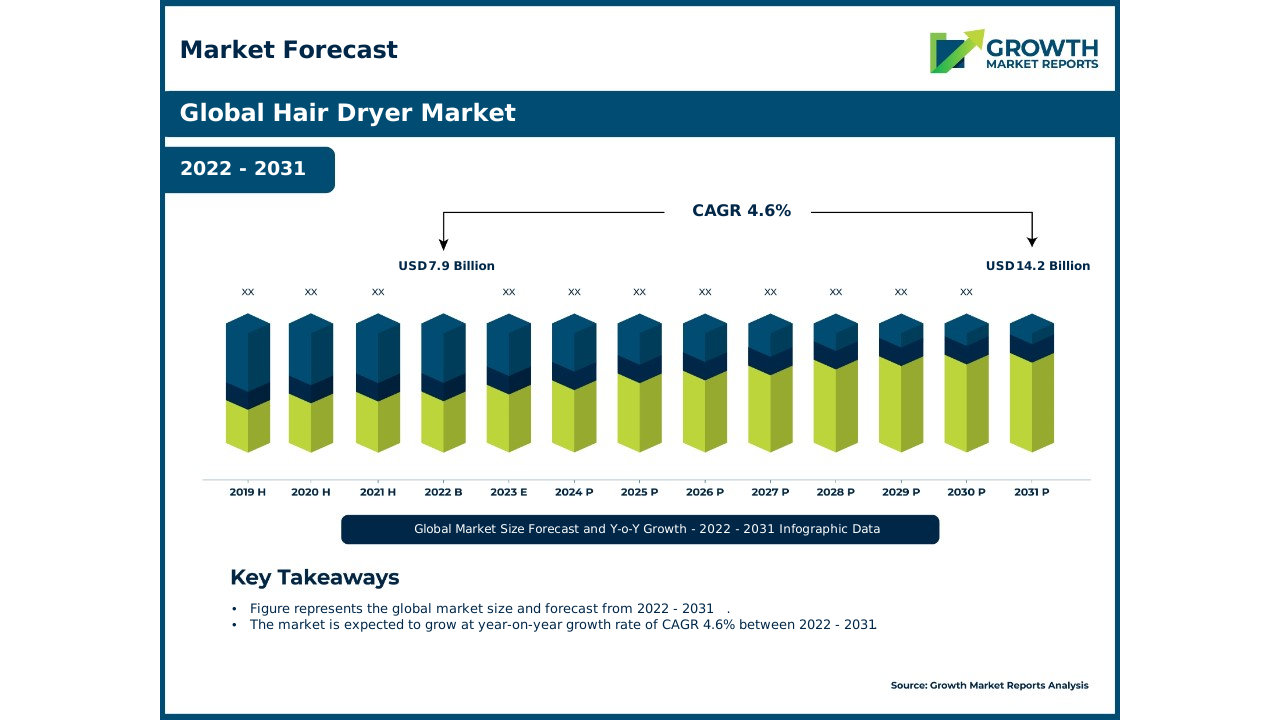
The global hair dryer market size was USD 7.9 Bn in 2022 and is likely to reach USD 14.2 Bn by 2031, expanding at a CAGR of 4.6% during 2023–2031. The market growth is attributed to the rising number of individuals purchasing personal grooming products.
Hair dryers, also known as blow dryers, are electromechanical devices generally designed to dry wet hair. The devices are also used in hair styling, especially in beauty parlors. This product blows hot or cold air over damp hair to wipe out the water from the hair allowing it to dry quickly.
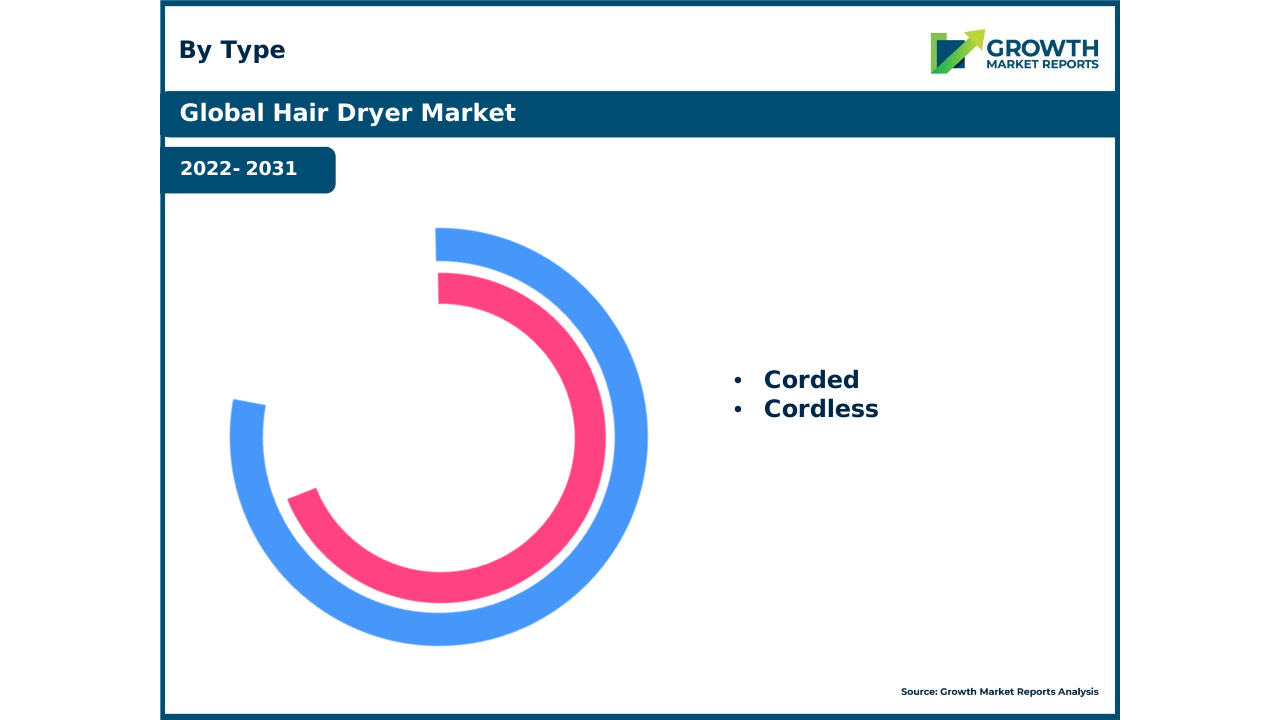
Hair dryer can also enhance hair shape by speeding up and managing the production of transient hydrogen bonds inside each hair. This device is commonly used to groom hair instantly, reducing the time consumed in drying the hair naturally. There are two types of hair dryers available in the market; corded and cordless.
Manufacturers in the market are focusing on introducing hair dryers with various innovations to meet consumers' needs. Many smart dryers are equipped with various advanced features such as multi-speed and heat settings that help consumers to save time in drying hair.
The key manufacturers from the hair-dryer industry are also promoting their brands on social media and other online platforms to attract customers through the attributes of the products. Celebrity endorsements are also one of the major reasons to target customers and drive product demand in the market.
COVID-19 Impact on Hair Dryer Market
The market report finds that the COVID-19 pandemic has negatively affected the global hair dryer market growth. Several governments around the world-imposed emergency lockdowns during COVID-19 to curb the virus infection, due to this, beauty parlors and salons were forced to shut down for a long time. This resulted in decreasing sales of the product due to a sharp decline in the demand for hair dryers.
The demand for hair styling products also declined due to people staying home and the lack of social gatherings and events. Additionally, visiting a parlor or salon was risky as the chances of the virus spreading were quite high.
Hair Dryer Market Dynamics
The research report presents a complete market overview by providing detailed information about the current market trends, existing drivers, growth opportunities and potentials, and emerging challenges. The global hair dryer market report has up-to-date insights about market scenarios that can shape the overall market performance and condition during the forecast period, 2023 to 2031.
What are the Trends in Hair Dryer Market?
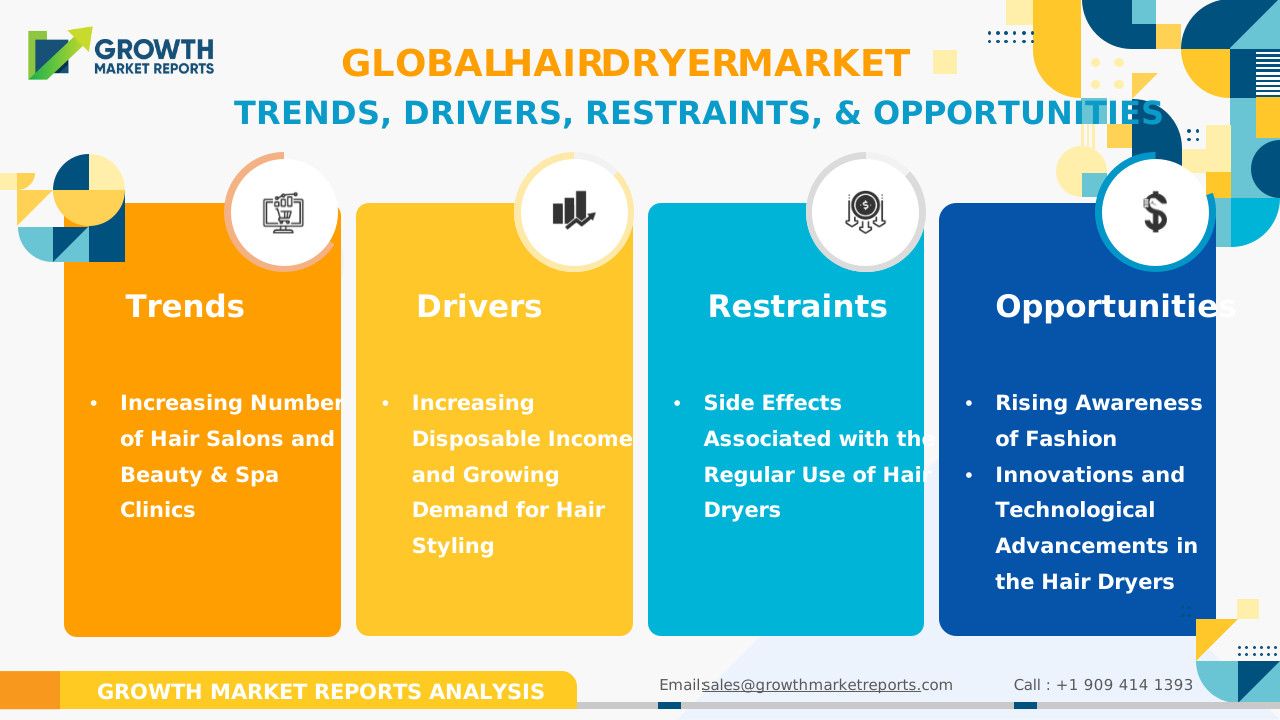
Increasing Number of Hair Salons and Beauty & Spa Clinics
The increasing number of hair salons and beauty & spa clinics is one of the major trends fueling the demand for hair dryers. The trend of stylizing hair to enhance the look among the youth population is expected to increase the demand for electronic hair dryers from salons and other grooming centers during the forecast period.
The growing awareness about personal grooming and fashion across the world is resulting in a high number of people taking services of hair salons, beauty, and spa clinics to groom their hair. The evolving hairstyle trends among consumers especially women are increasing the demand for hair dryers. The commercial end-user is expected to dominate the market of hair dryers during the forecast period.
What are the Drivers of Hair Dryer Market?
Increasing Disposable Income and Growing Demand for Hair Styling
One of the major factors that drive the hair dryer market is the increasing urbanization and the rise in disposable income. The prominent manufacturers in the market are designing cost-efficient electric hair care products to meet the demand of customers.
The primary factor for growth in the hair dryer market is the increase in fashion awareness among the people and the new evolution in the fashion industry. As disposable income is increasing in emerging economies of the world, people are now adopting the modern lifestyle, which triggers the expansion and growth of the hair dryer market.
What Restraints Hair Dryer Market?
Side Effects Associated with the Regular Use of Hair Dryers
The disadvantages associated with the regular use of hair dryers are likely to hamper the market growth. Haircare products, particularly hair dryers are efficient for maintaining hair, but it causes damage to hair if used regularly hindering the sales of hair dryers in the market. It affects the hair texture by reducing the quality of the hair, resulting the hair breakage often.
The dryer residues that are left on the scalp bring in issues if they are not cleaned adequately, and impact negatively on the hair of a person. Often the use of a hair dryer not only damage hair but also causes hair loss in some cases.
What are the Opportunities in Hair Dryer Market?
Rising Awareness of Fashion
Increase in fashion awareness among the people and the new evolution in the fashion industry present significant growth opportunities for the hair dryer market. The influence of western nations over fashion trends is quite strong in the emerging countries of the Asia-Pacific, Latin America, and Middle-East & Africa.
The growing fashion awareness creates several opportunities for market growth and increases the sales of the product. This also allows the prominent players in the hair dryer industry to grow their business and product offerings in the coming years.
Innovations and Technological Advancements in the Hair Dryers
Technology is playing a major role in advancing the experience of customers by making innovations in hair dryers. The next-generation smart hair dryers are leading the market by minimizing hair damage and controlling airspeed.
Manufacturers are bringing transformations in hair dryers by adding proximity sensors to optimize the heat amount that enables the customers to get shiny and healthy hair results. Technological advancement and innovations are creating ample opportunities for the hair dryer industry and are termed to expand the market growth in the coming years.
Scope of Hair Dryer Market Report
The global hair dryer market research report includes an assessment of the market trends, market segments, and regional markets. Overview and dynamics have also been included in the report.
|
Attributes
|
Details
|
|
Report Title
|
Hair Dryer Market - Global Industry Analysis, Growth, Share, Size, Trends, and Forecast
|
|
Base Year
|
2022
|
|
Historic Data
|
2020–2021
|
|
Forecast Period
|
2023–2031
|
|
Segmentation
|
Type (Corded and Cordless), Product (Handheld Hair Dryer and Hooded Hair Dryer), Application (Professional and Individual), Distribution Channel (Offline and Online), and Price Range (Less than US$ 50, US$ 50 – US$ 100, and More than US$ 100).
|
|
Regional Scope
|
Asia Pacific, North America, Latin America, Europe, and Middle East & Africa
|
|
Report Coverage
|
Company Share, Market Analysis and Size, Competitive Landscape, Growth Factors, Market Trends, and Revenue Forecast
|
|
Key Players Covered in the Report
|
Conair corporation; Panasonic; Dyson; Sharp Corporation; Tescom Electronics Private Limited; Drybar LLC; Revlon; Koninklijke Philips N.V.; Spectrum Brands, Inc.; Ghd Hair (Jemella Ltd); Harry Josh® Pro Tools; Braun GmbH (A brand of Procter & Gamble); Helen of Troy; Ikonic (A brand of SSIZ INTERNATIONAL); Groupe SEB; and Beauty Elite Group
|
Hair Dryer Market Segment Insights
Based on type, the market is segmented into corded and cordless. The corded segment accounted for a significant market share in terms of revenue. High consumer preference boosts the market of corded hair dryers. This type of hair dryer has a steady energy supply owing to direct supply current, which makes them preferable among consumers.
The cordless segment is also anticipated to witness a healthy growth rate during the forecast period. Cordless hair dryers are more convenient to use as they can be used outdoors and while traveling. It does not require power outlets as they are battery-powered. These factors have increased their demand across the globe.
Based on the product, the market is segmented into handheld hair dryer and hooded hair dryer. The handheld hair dryer segment is expected to grow at a fast rate during the projection period. Increasing fashion trends and awareness of personal grooming among individuals are growing the demand for hand-held hair dryers globally. Hand-held hair dryers are quite easy to use and are in high demand by consumers.
Hand-held hair dryers are commonly used in bathrooms near sinks, bathtubs, and lavatories. There is considerable market growth of hand-held hair dryers due to the attraction for personal grooming in emerging countries such as India and China due to the adoption of western culture.
The hooded hair dryer segment is also expected to grow at a substantial rate, as there is an increase in the number of hair salons, beauty spas, and clinics. As hooded hair dryers are innovative and practical pieces of equipment that are highly used by professional end-users.
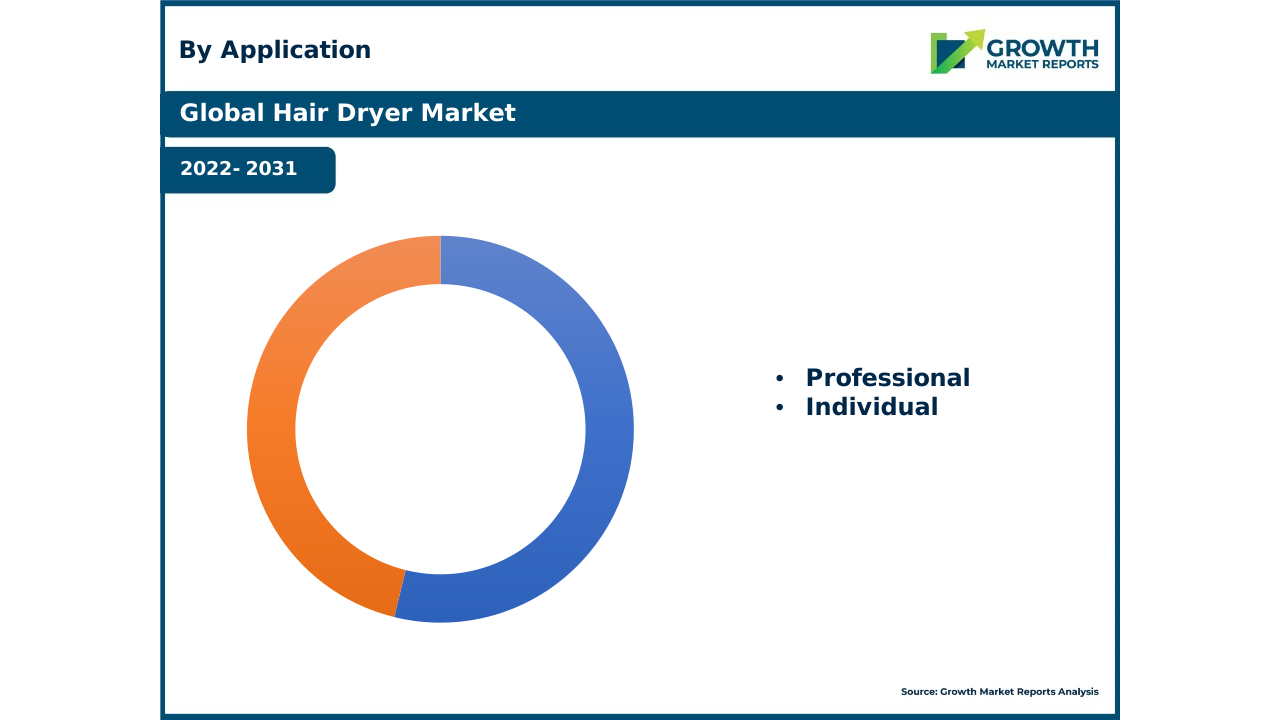
Based on application, the hair dryer market is bifurcated into professional and individual. The professional segment is anticipated to expand at a significant rate during the forecast period generating a profitable revenue share in the global hair dryer market. Leading manufacturers such as Conair Corp., Dyson Ltd., Koninklijke Philips N.V., and TESCOM Co. are focusing on the introduction of innovative products to cater to the demand for professional hair stylists and salons.
The individual segment is projected to witness a substantial growth rate, owing to the increasing product demand for self-grooming and household beauty appliances among consumers in developed countries and mostly in urban households. Rising sales of hair dryers for personal use are due to growing urbanization in emerging economies across the globe.
Based on the distribution channel, the market is segmented into online and offline. The online segment is expected to account for a large share of the market owing to increasing consumer preference for online shopping. Online platforms are influencing consumers to shop for home electronic devices from e-commerce platforms such as Flipkart, Walmart, and Amazon.
The rising number of smartphones and Internet users in developing countries such as India, China, Brazil, Indonesia, and Vietnam, is expected to spur the segment growth. Furthermore, leading manufacturers are focusing on the launch of exclusive online portals and websites to increase their product visibility, which is likely to further boost the online segment growth in the market.
The offline segment is anticipated to grow at a rapid pace during the projection period, owing to increasing product availability and growing product visibility in retail stores. Manufacturers are focusing on introducing their products in multi-brand retail stores.
On the basis of the price range, the global hair dryer market is categorized into less than USD 50, USD 50 – USD 100, and more than USD 100. The increase in the demand for hair dryers is boosting the market in emerging countries due to which the manufacturers are designing cost-efficient hair dryers that range up to USD 50. As there is a potential rise in individuals using hair dryers for the self-grooming price range of USD 50 is more prevalent in the market.
The USD 50 – USD 100 segment is also expected to grow rapidly in the coming years. New innovative smart hair dryers are slightly at a high range. Spending power is increasing in the major economies, such as North America and Europe, which are likely to shift their interest toward these hair dryers.
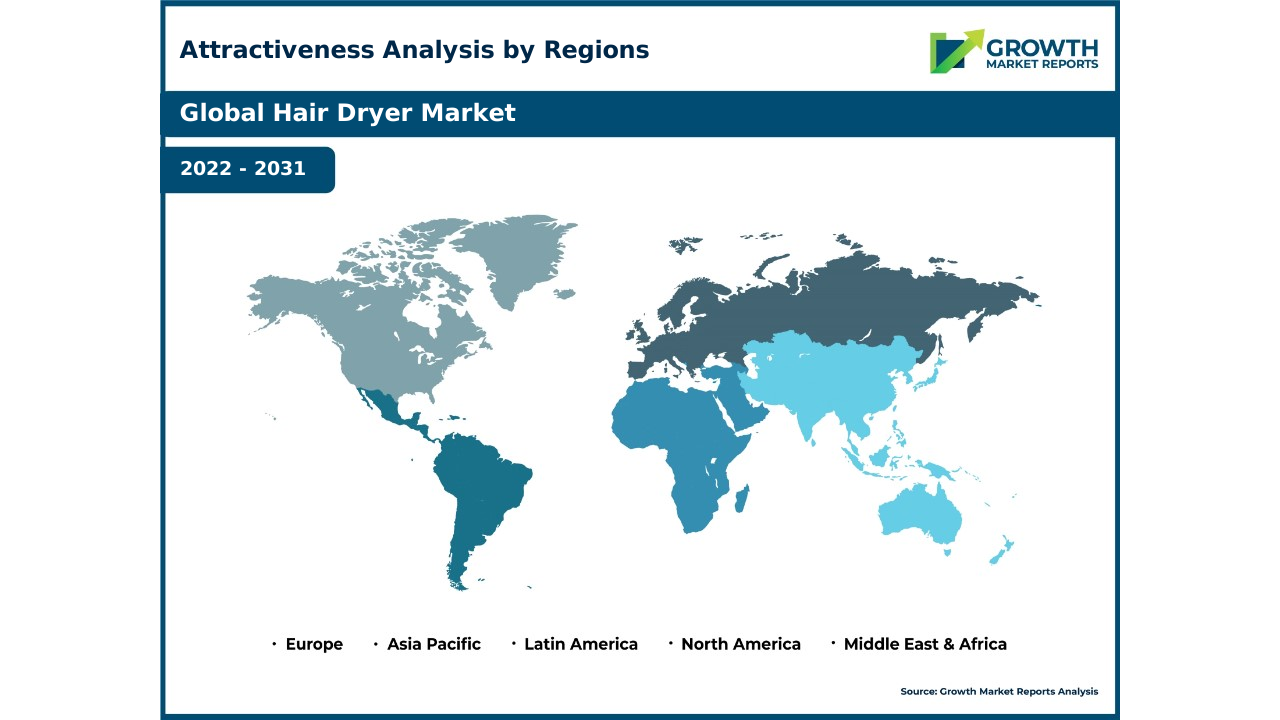
In terms of region, the hair dryer market is classified into Asia Pacific, North America, Latin America, Europe, and Middle East & Africa. North America is anticipated to dominate the market during the forecast period. The growth of the market in the region is owing to the increasing tendency to buy high-end personal grooming products.
The presence of a large consumer base and continuous product innovation by major players is also a factor that drives the market in North America. North America has a large number of consumers, who are consciously involved in personal grooming and self-care. In addition, higher disposable income is also an important aspect that drives the hair dryer market in North America compared to the other regions.
The market in Asia Pacific is expected to grow at a healthy rate owing to increasing disposable income in major economies of the region such as India and China. The introduction of advanced technology and a boost in the manufacturing industry are further propelling the growth of the market in the region.
Electronic industry in China is growing at a fast pace which gives potential rise to innovative electronic devices including hair dryers in the country. The E-commerce sector is expanding rapidly in the Asia Pacific region improving the lifestyle of individuals and boosting the hair dryer market development.
Segments
The global hair dryer market has been segmented on the basis of
Type
Product
- Handheld Hair Dryer
- Hooded Hair Dryer
Application
Distribution Channel
Price Range
- Less than US$ 50
- US$ 50 - US$ 100
- More than US$ 100
Region
- Asia Pacific
- North America
- Latin America
- Europe
- Middle East & Africa
Key Players
- Conair corporation
- Panasonic
- Dyson
- Sharp Corporation
- Tescom Electronics Private Limited
- Drybar LLC
- Revlon
- Koninklijke Philips N.V.
- Spectrum Brands, Inc.
- Ghd Hair (Jemella Ltd)
- Harry Josh® Pro Tools
- Braun GmbH (A brand of Procter & Gamble)
- Helen of Troy
- Ikonic (A brand of SSIZ INTERNATIONAL)
- Groupe SEB
- Beauty Elite Group
Competitive Landscape
The competitive landscape of the global hair dryer market report provides in-depth insights into the growth strategies and development initiatives implemented by the key players in the market.
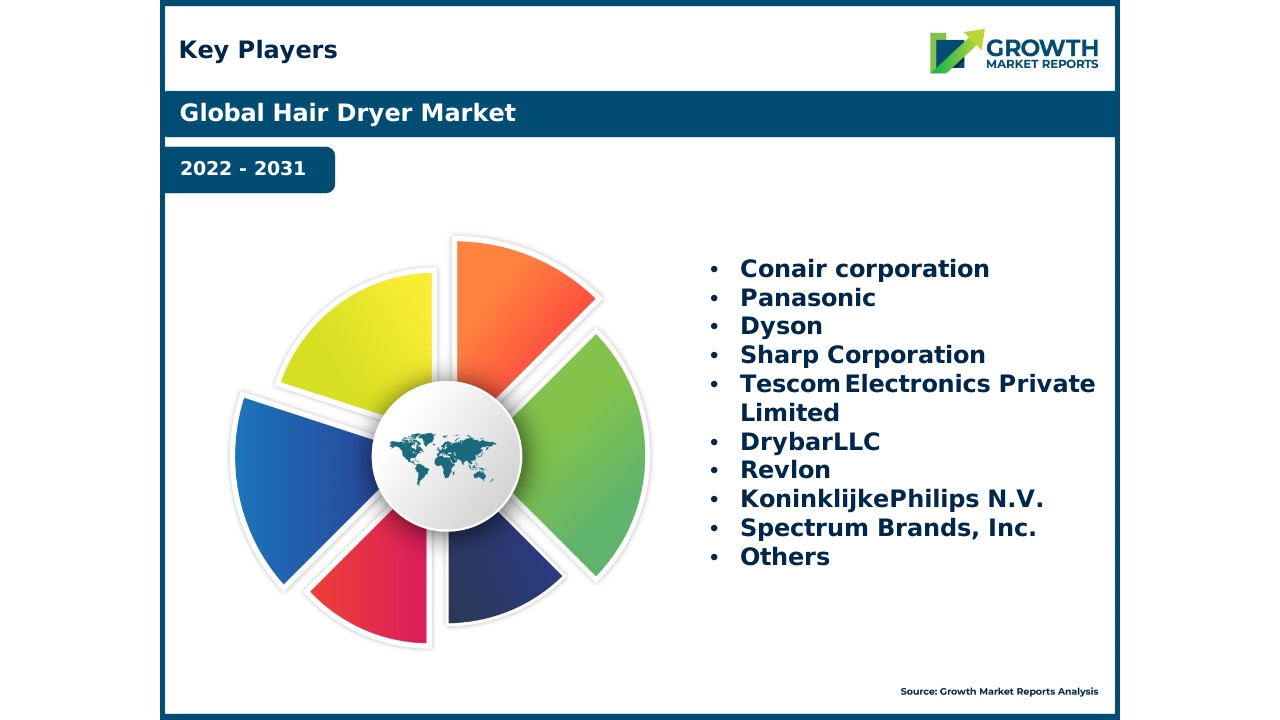
Key players competing in the global hair dryer market are Conair corporation; Panasonic; Dyson; Sharp Corporation; Tescom Electronics Private Limited; Drybar LLC; Revlon; Koninklijke Philips N.V.; Spectrum Brands, Inc.; Ghd Hair (Jemella Ltd); Harry Josh® Pro Tools; Braun GmbH (A brand of Procter & Gamble); Helen of Troy; Ikonic (A brand of SSIZ INTERNATIONAL); Groupe SEB; and Beauty Elite Group
Some of these major companies adopted various business development strategies including mergers, acquisitions, partnerships, collaboration, product launches, and production capacity expansion to expand their consumer base and enhance their market share.
- On August 01, 2022, Japan-based company, Panasonic launched a new hair styling tool; nanoe Travel Hair Dryer (EH-NA2C-W). The product aimed to provide salon-quality heat styling with features such as being compact, and easy to carry during traveling. It require less storage space and the design allows for a comfortable fit in hand. Additionally, it has features including light-touch and smooth-sliding switches that helps in adjusting the setting of airflow.
- On August 26, 2020, Netherlands-based company, Koninklijke Philips N.V. launched a Hair Dryer and Straightener Prestige sensing that adapts to hair’s temperature and characteristics to offer personalized heat protection, styling, and unique care.
- In May 2022, Singapore-based company, Dyson introduced the next-generation hair dryer, Dyson Airwrap, which works as a multi-styler apart from just drying the hair. It includes enhanced Coanda airflow and is fully customizable according to the different hair types.
- On January 11, 2021, North America-based Panasonic Corporation introduced the new Panasonic nanoe Hair Dryer (EH-NA67-W). Patent nanoe technology that decreases the damage caused by everyday brushing was used in the hair dryer.










 Request For Customization
 Enquiry Before Buying
 Speak With Analyst