Hair Care Market Research Report 2033

Hair Care Market Research Report 2033

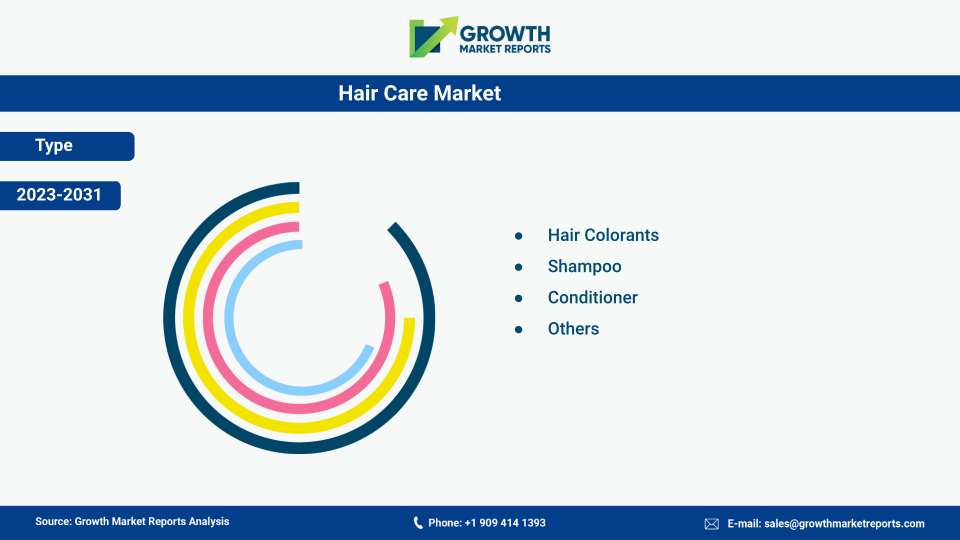
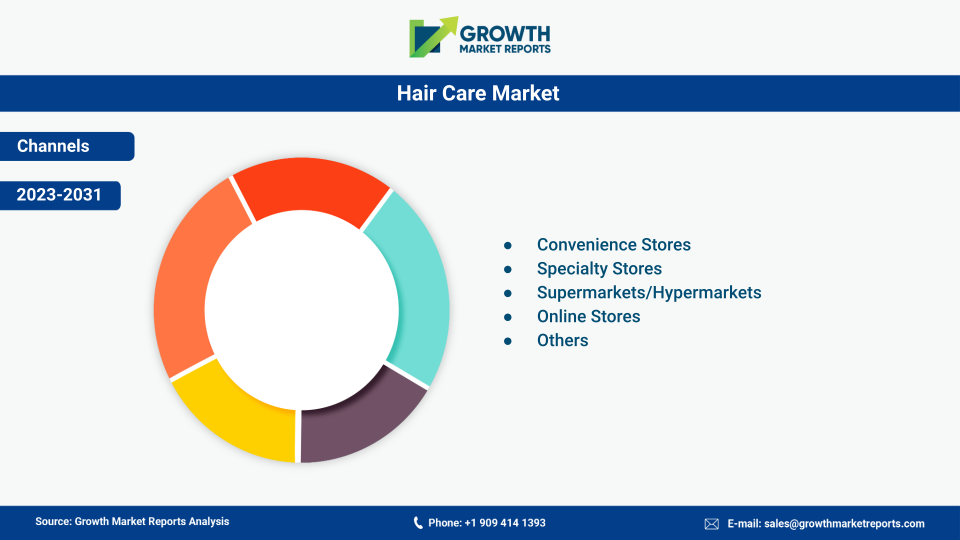
Segments - by Product Type (Shampoo, Conditioner, Hair Oil, Hair Color, Hair Styling Products, Others), by Distribution Channel (Supermarkets/Hypermarkets, Specialty Stores, Online Stores, Pharmacies/Drug Stores, Others), by End User (Men, Women, Children)

https://growthmarketreports.com/Debadatta
Author : Debadatta Patel
https://growthmarketreports.com/Vaibhav
Fact-checked by : V. Chandola
https://growthmarketreports.com/Shruti
Editor : Shruti Bhat

Upcoming | Report ID :CG-3188 | 4.1 Rating | 43 Reviews | 294 Pages | Format : Docx PDF

Report Description


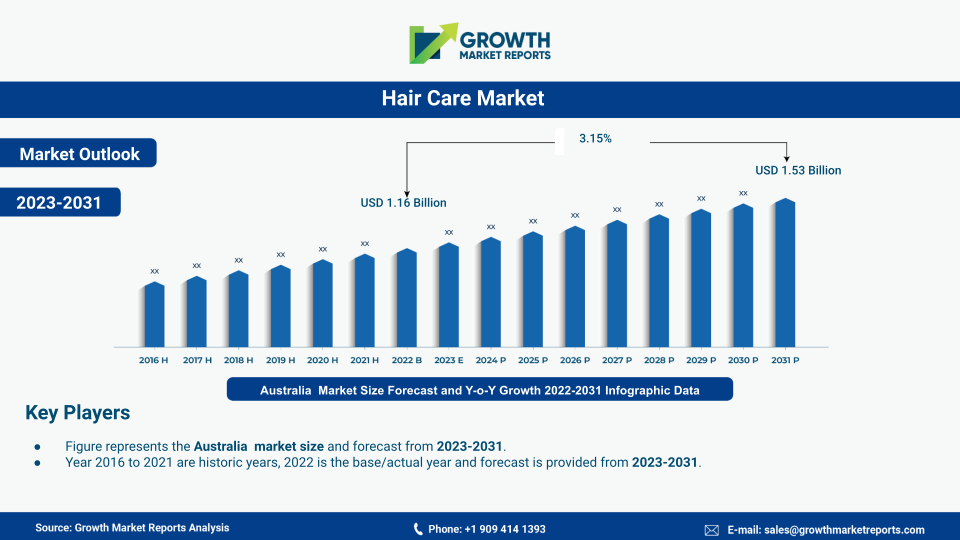
Hair Care Market Outlook

According to our latest research, the global hair care market size in 2024 stands at USD 94.8 billion, with robust consumer demand and evolving product innovation as significant growth drivers. The market is experiencing a steady expansion, registering a CAGR of 6.2% during the forecast period. By 2033, the hair care market is projected to reach an impressive USD 162.1 billion, propelled by the rising awareness of personal grooming, increased disposable income, and the growing influence of digital platforms. As per our latest research, the marketÂ’s upward trajectory is anchored by the continuous introduction of advanced formulas, natural ingredients, and targeted solutions that address diverse hair concerns globally.

One of the primary growth factors fueling the hair care market is the heightened consumer focus on health and wellness, which has significantly influenced purchasing decisions. Consumers are increasingly seeking products that offer not only aesthetic benefits but also contribute to the overall health of their scalp and hair. The demand for sulfate-free, paraben-free, and organic hair care solutions is surging, as individuals become more conscious of the long-term effects of harsh chemicals. This trend is further reinforced by the proliferation of social media influencers and beauty bloggers, who educate their audiences about the importance of using safe and effective hair care products. As a result, manufacturers are investing heavily in research and development to formulate products that cater to these evolving preferences, thereby driving sustained market growth.

Another critical growth driver is the diversification of product portfolios to cater to a wide range of hair types, textures, and concerns. The global hair care market is witnessing a surge in specialized products designed for curly, wavy, and textured hair, as well as solutions that address specific issues such as hair thinning, dandruff, and color protection. The increasing multicultural population in major markets like North America and Europe has prompted brands to develop inclusive product lines that resonate with diverse consumer bases. Furthermore, the rise in professional salon services and at-home hair treatments has expanded the market, as consumers seek salon-quality results from their personal care routines. This diversification has enabled brands to capture new market segments and foster brand loyalty among consumers.

Technological advancements and digital transformation are also playing a pivotal role in shaping the hair care market landscape. The integration of artificial intelligence and data analytics has enabled brands to offer personalized product recommendations, enhancing the consumer experience. E-commerce platforms and direct-to-consumer channels have revolutionized the way hair care products are marketed and distributed, providing consumers with convenient access to a wide array of options. Virtual try-on tools, augmented reality, and interactive marketing campaigns have further elevated consumer engagement, translating into higher sales and market penetration. These technological innovations are expected to continue driving market expansion, as brands leverage digital platforms to reach a broader audience and deliver tailored solutions.

In recent years, the emphasis on Hair Care has transcended beyond mere aesthetics, becoming a crucial aspect of personal wellness. Consumers are increasingly aware of the impact that hair care products have not only on their appearance but also on their overall health. This shift in perception has led to a surge in demand for products that are not only effective but also safe and environmentally friendly. As a result, brands are focusing on transparency and sustainability, offering formulations that are free from harmful chemicals and are eco-friendly. This trend is not just a passing phase but a significant movement towards holistic well-being, where Hair Care plays a pivotal role in enhancing self-esteem and confidence.

Regionally, the Asia Pacific market remains at the forefront of global hair care consumption, underpinned by a large and youthful population, increasing urbanization, and rising disposable incomes. Countries such as China, India, and Japan exhibit a strong affinity for hair care products, driven by cultural emphasis on hair health and beauty. North America and Europe follow closely, with mature markets characterized by high product penetration and a preference for premium and organic offerings. The Middle East & Africa and Latin America are emerging as promising markets, with growing awareness of personal grooming and a shift towards modern retail formats. Regional trends and preferences continue to shape product development and marketing strategies, ensuring that global brands remain responsive to local consumer needs.

Global Hair Care Industry Outlook

Product Type Analysis

The product type segment is a cornerstone of the hair care market, encompassing a diverse range of offerings such as shampoo, conditioner, hair oil, hair color, hair styling products, and other specialized solutions. Shampoo remains the largest sub-segment, accounting for a substantial share of market revenue due to its essential role in daily hair hygiene routines. The demand for shampoos formulated with natural ingredients, anti-dandruff properties, and scalp care benefits is on the rise, as consumers prioritize both cleanliness and hair health. Innovations such as micellar shampoos, co-washes, and dry shampoos are gaining traction, catering to specific hair types and lifestyles. These advancements have enabled brands to differentiate their products and capture a broader consumer base.

The evolution of Hair Care products has been significantly influenced by technological advancements and consumer demand for personalized solutions. With the integration of artificial intelligence and machine learning, brands are now able to offer customized Hair Care regimens tailored to individual needs. This personalization extends to addressing specific hair concerns such as dryness, damage, and scalp health. By leveraging data analytics, companies can provide recommendations that align with the unique hair types and preferences of consumers, thereby enhancing the effectiveness of Hair Care routines. This technological integration not only elevates the consumer experience but also sets a new standard for innovation in the Hair Care industry.

Conditioners have witnessed significant growth, driven by increasing consumer awareness of the importance of hair nourishment and protection. Modern conditioners are formulated with advanced ingredients such as keratin, argan oil, and plant-based proteins, offering targeted solutions for damage repair, moisture retention, and frizz control. The popularity of leave-in conditioners and deep conditioning treatments is also on the rise, as consumers seek convenient and effective ways to maintain hair health between washes. This sub-segment is further bolstered by the trend towards multi-step hair care routines, inspired by the influence of beauty regimes from regions like South Korea and Japan.

Hair oils represent a traditional yet rapidly modernizing segment, especially in regions like Asia Pacific and the Middle East, where oiling is an integral part of hair care culture. Contemporary hair oils are formulated to be lightweight, non-greasy, and enriched with vitamins and botanical extracts, appealing to both traditional users and younger consumers seeking quick absorption and minimal residue. The integration of essential oils and natural actives has enhanced the appeal of this segment, while targeted marketing campaigns highlight the benefits of regular oiling for scalp health, hair growth, and shine.

The cultural significance of Hair Care cannot be understated, particularly in regions like Asia Pacific, where traditional practices are deeply intertwined with modern innovations. In these regions, Hair Care is not just about maintaining appearance but is also a reflection of cultural heritage and identity. The use of natural ingredients and age-old techniques continues to influence contemporary Hair Care products, creating a unique blend of tradition and innovation. This cultural integration is evident in the growing popularity of herbal shampoos and oils that promise not only beauty but also a connection to one's roots. As global awareness of diverse Hair Care practices increases, there is a growing appreciation for the rich tapestry of traditions that shape the industry.

Hair color and hair styling products are experiencing robust growth, driven by evolving fashion trends and the desire for self-expression. The hair color segment is witnessing increased adoption among younger demographics, with a preference for ammonia-free, long-lasting, and vibrant shades. Temporary and semi-permanent hair colors are gaining popularity, as consumers experiment with different looks without long-term commitment. Hair styling products, including gels, sprays, serums, and mousses, are in high demand due to the rise in at-home styling and the influence of social media trends. Brands are focusing on developing products that offer strong hold, flexible styling, and added hair care benefits, catering to the dynamic needs of modern consumers.

The “others” category, which includes hair masks, serums, and scalp treatments, is emerging as a high-potential segment, driven by the growing trend of holistic hair care. Consumers are increasingly incorporating intensive treatments into their routines to address specific concerns such as hair thinning, breakage, and scalp sensitivity. The availability of targeted solutions, combined with educational marketing efforts, has contributed to the expansion of this segment. As consumer preferences continue to evolve, the product type segment is expected to witness ongoing innovation and diversification, ensuring sustained growth in the global hair care market.

Report Scope

Attributes Details
Report Title Hair Care Market Research Report 2033
By Product Type Shampoo, Conditioner, Hair Oil, Hair Color, Hair Styling Products, Others
By Distribution Channel Supermarkets/Hypermarkets, Specialty Stores, Online Stores, Pharmacies/Drug Stores, Others
By End User Men, Women, Children
Regions Covered North America, Europe, APAC, Latin America, MEA
Base Year 2024
Historic Data 2018-2023
Forecast Period 2025-2033
Number of Pages 294
Number of Tables & Figures 393
Customization Available Yes, the report can be customized as per your need.

Distribution Channel Analysis

The distribution channel segment plays a pivotal role in shaping the accessibility and reach of hair care products worldwide. Supermarkets and hypermarkets dominate the landscape, accounting for a significant portion of global sales due to their extensive product assortments, competitive pricing, and convenient shopping experiences. These retail giants offer consumers the opportunity to compare multiple brands and product variants in a single location, driving impulse purchases and brand switching. The prominence of private label hair care products in these outlets further intensifies competition, compelling established brands to innovate and differentiate their offerings.

Specialty stores, including beauty and personal care boutiques, have carved a niche in the hair care market by offering curated selections and personalized recommendations. These stores often emphasize premium and niche brands, catering to consumers seeking unique formulations, organic ingredients, and professional-grade solutions. The in-store experience, characterized by knowledgeable staff and product demonstrations, enhances consumer engagement and fosters brand loyalty. Specialty stores have also become hubs for emerging brands and indie labels, providing a platform for innovation and differentiation in a crowded marketplace.

The rise of online stores has revolutionized the distribution landscape, offering unparalleled convenience, product variety, and access to global brands. E-commerce platforms such as Amazon, Alibaba, and dedicated beauty websites have witnessed exponential growth, particularly in the wake of the COVID-19 pandemic. Consumers increasingly prefer online channels for their ability to read reviews, access detailed product information, and benefit from personalized recommendations. Subscription models, direct-to-consumer brands, and influencer-driven marketing have further accelerated the shift towards digital purchasing, making online stores a critical growth driver for the hair care market.

Pharmacies and drug stores remain vital distribution channels, particularly for medicated and therapeutic hair care products. These outlets are trusted sources for consumers seeking dermatologist-recommended solutions for issues such as dandruff, hair loss, and scalp conditions. The presence of trained pharmacists and the availability of over-the-counter and prescription products enhance the credibility of this channel. Additionally, pharmacies often collaborate with leading hair care brands to launch exclusive products and promotions, further strengthening their position in the market.

The “others” category, encompassing salons, spas, and direct sales, continues to play a significant role in the distribution of professional and specialized hair care products. Salons and spas offer consumers access to expert advice, customized treatments, and premium products that are often not available through traditional retail channels. Direct sales, including home-based consultants and social selling platforms, have gained traction in emerging markets, providing personalized service and fostering community engagement. As consumer preferences evolve and technology advances, the distribution channel segment is expected to witness further diversification and innovation, ensuring that hair care products remain accessible to a global audience.

End User Analysis

The end user segment of the hair care market is broadly categorized into men, women, and children, each presenting unique needs and preferences that shape product development and marketing strategies. Women constitute the largest end user segment, accounting for a significant share of market revenue. The demand for hair care products among women is driven by a desire for healthy, shiny, and manageable hair, as well as a willingness to experiment with new styles, colors, and treatments. Brands are responding by offering tailored solutions that address specific concerns such as frizz, split ends, color protection, and hair loss. The influence of beauty trends, celebrity endorsements, and social media has further amplified the demand for innovative and high-performance products in this segment.

Men are emerging as a high-growth end user segment, fueled by changing attitudes towards personal grooming and self-care. The stigma surrounding male grooming is rapidly diminishing, with men increasingly seeking products that cater to their unique hair care needs, such as scalp health, thinning hair, and styling versatility. The introduction of specialized product lines, including anti-dandruff shampoos, hair thickening treatments, and beard care solutions, has resonated with male consumers. Marketing campaigns that emphasize simplicity, effectiveness, and masculine branding have been particularly successful in capturing this demographic, driving significant growth in the menÂ’s segment.

The childrenÂ’s hair care segment, though smaller in comparison, represents a niche but rapidly expanding market. Parents are becoming more discerning about the products they use on their children, prioritizing safety, gentleness, and hypoallergenic formulations. The demand for tear-free shampoos, detangling sprays, and natural ingredients is on the rise, as concerns about harsh chemicals and allergens gain prominence. Brands are increasingly launching dedicated product lines for children, featuring playful packaging, mild fragrances, and dermatologist-tested formulations. Educational campaigns and pediatric endorsements further bolster consumer confidence in these products.

Cross-segment trends such as the demand for natural and organic ingredients, sustainability, and personalized solutions are influencing all end user categories. Brands are leveraging advanced research and consumer insights to develop products that cater to the evolving needs of each demographic. The rise of unisex and family-friendly products is also gaining momentum, offering convenience and value for households with diverse hair care requirements. As the end user landscape continues to evolve, brands that prioritize inclusivity, safety, and efficacy are well-positioned to capture a larger share of the global hair care market.

Furthermore, the growing influence of digital platforms and e-commerce is transforming the way end users discover, purchase, and engage with hair care products. Personalized marketing, virtual consultations, and interactive content are enhancing the consumer experience, fostering brand loyalty and repeat purchases. As brands continue to innovate and adapt to changing consumer preferences, the end user segment is expected to remain a key driver of growth and differentiation in the global hair care market.

Opportunities & Threats

The hair care market presents a multitude of opportunities for both established players and new entrants, driven by shifting consumer preferences and technological advancements. One of the most promising opportunities lies in the growing demand for natural, organic, and clean-label products. Consumers are increasingly scrutinizing ingredient lists and seeking products that are free from harmful chemicals, sulfates, and parabens. This shift towards clean beauty has opened avenues for brands to innovate with plant-based formulations, sustainable packaging, and eco-friendly production processes. Companies that can effectively communicate their commitment to sustainability and transparency are likely to gain a competitive edge and capture the loyalty of environmentally conscious consumers.

Another significant opportunity is the potential for digital transformation and personalized hair care solutions. Advances in artificial intelligence, big data, and machine learning are enabling brands to offer tailored product recommendations based on individual hair types, concerns, and preferences. Virtual consultations, augmented reality try-on tools, and interactive e-commerce platforms are enhancing the consumer journey, providing a seamless and engaging shopping experience. The rise of direct-to-consumer models and subscription services further allows brands to build direct relationships with customers, gather valuable data, and deliver customized solutions. As technology continues to evolve, brands that invest in digital innovation and personalization are poised to drive higher engagement and long-term growth.

Despite these opportunities, the hair care market faces several restraining factors that could impact its growth trajectory. One of the primary challenges is the intense competition and market saturation, particularly in mature regions such as North America and Europe. The proliferation of new brands and private label products has led to price wars and margin pressures, making it difficult for smaller players to establish a foothold. Additionally, the prevalence of counterfeit and substandard products in certain markets poses risks to consumer safety and brand reputation. Regulatory compliance, evolving safety standards, and supply chain disruptions further add to the complexity of operating in the global hair care market. Companies must navigate these challenges by focusing on quality, innovation, and brand differentiation to sustain their competitive advantage.

Regional Outlook

Asia Pacific remains the dominant region in the global hair care market, accounting for approximately USD 38.5 billion in revenue in 2024. The regionÂ’s growth is underpinned by a large and youthful population, increasing urbanization, and rising disposable incomes. Countries such as China, India, and Japan are at the forefront of hair care consumption, driven by cultural emphasis on hair health and beauty. The demand for traditional products such as hair oils and herbal shampoos coexists with a growing appetite for modern, innovative solutions. The Asia Pacific market is expected to register a robust CAGR of 7.1% during the forecast period, outpacing other regions and solidifying its position as a global growth engine.

North America follows as the second-largest market, with a value of USD 25.3 billion in 2024. The region is characterized by high product penetration, a preference for premium and organic offerings, and a strong culture of personal grooming. The United States leads the market, supported by a well-established retail infrastructure, advanced product formulations, and a high level of consumer awareness. The trend towards clean beauty, sustainability, and inclusivity is particularly pronounced in this region, driving innovation and product diversification. Canada and Mexico are also contributing to regional growth, with increasing demand for specialized and multicultural hair care solutions.

Europe accounts for approximately USD 18.7 billion of the global hair care market in 2024, with key markets including Germany, the United Kingdom, France, and Italy. The region is known for its sophisticated consumers, who prioritize quality, efficacy, and ethical considerations in their purchasing decisions. The demand for natural and organic products, as well as cruelty-free and vegan formulations, is on the rise. The presence of leading global and regional brands, coupled with a strong salon and professional hair care sector, ensures steady market growth. Meanwhile, Latin America and the Middle East & Africa, with market sizes of USD 7.2 billion and USD 5.1 billion respectively, are emerging as high-potential regions, driven by increasing urbanization, rising disposable incomes, and growing awareness of personal care. These regions offer significant opportunities for expansion, particularly as modern retail formats and e-commerce platforms gain traction.

Hair Care Market Statistics

Competitor Outlook

The global hair care market is highly competitive, characterized by the presence of multinational corporations, regional players, and an increasing number of niche and indie brands. The competitive landscape is shaped by continuous innovation, aggressive marketing strategies, and a relentless focus on product differentiation. Leading companies invest heavily in research and development to introduce advanced formulations, sustainable packaging, and personalized solutions that cater to diverse consumer needs. The ability to anticipate and respond to emerging trends, such as the demand for clean beauty, inclusivity, and digital engagement, is a critical success factor in this dynamic market.

Strategic partnerships, mergers and acquisitions, and collaborations with influencers and celebrities are common tactics employed by major players to strengthen their market position and expand their reach. For instance, partnerships with professional salons and beauty experts enable brands to offer exclusive products and services, enhancing their credibility and consumer trust. Digital transformation is also a key focus area, with brands leveraging e-commerce platforms, social media, and data analytics to engage with consumers, gather insights, and drive sales. The rise of direct-to-consumer models has further intensified competition, as emerging brands challenge established players with innovative offerings and disruptive marketing campaigns.

Despite the intense competition, the market offers ample opportunities for differentiation and growth. Brands that prioritize sustainability, transparency, and consumer education are well-positioned to capture the loyalty of discerning consumers. The ability to offer personalized solutions, backed by scientific research and clinical validation, is increasingly valued in the market. Furthermore, the expansion into emerging markets, where hair care routines are deeply rooted in cultural traditions, presents significant growth potential for both global and regional players. Companies that can effectively navigate regulatory requirements, supply chain complexities, and evolving consumer preferences will be best equipped to thrive in the competitive hair care landscape.

Some of the major companies operating in the global hair care market include L'Oréal Group, Procter & Gamble (P&G), Unilever, Henkel AG & Co. KGaA, Kao Corporation, Shiseido Company, Johnson & Johnson, Revlon, Inc., Amway Corporation, and Coty Inc. L'Oréal Group leads with a comprehensive portfolio of brands spanning all segments, from mass-market to luxury. Procter & Gamble, with iconic brands like Pantene and Head & Shoulders, maintains a strong global presence through continuous innovation and effective marketing. Unilever’s portfolio, including Dove and TRESemmé, emphasizes sustainability and inclusivity, resonating with a broad consumer base. Henkel and Kao Corporation are recognized for their technological expertise and focus on professional hair care solutions, while Shiseido and Johnson & Johnson leverage their skincare heritage to offer advanced hair care formulations.

Revlon and Coty Inc. are prominent players in the hair color and styling segments, known for their trendsetting products and collaborations with fashion icons. Amway Corporation differentiates itself through direct selling and a focus on natural ingredients, appealing to health-conscious consumers. These companies are continuously expanding their product portfolios, investing in digital transformation, and entering new markets to sustain their competitive advantage. The emergence of indie brands and digital-native companies is further intensifying competition, driving the need for agility, innovation, and consumer-centric strategies. As the global hair care market continues to evolve, companies that prioritize quality, sustainability, and personalized solutions will remain at the forefront of industry growth and innovation.

Key Players

  • Procter & Gamble (P&G)
  • Unilever
  • L'Oréal Group
  • Henkel AG & Co. KGaA
  • Johnson & Johnson
  • Kao Corporation
  • Shiseido Company, Limited
  • Coty Inc.
  • Amway Corporation
  • Revlon Inc.
  • Estée Lauder Companies Inc.
  • Beiersdorf AG
  • Church & Dwight Co., Inc.
  • Oriflame Cosmetics AG
  • Mary Kay Inc.
  • Avon Products, Inc.
  • Moroccanoil
  • Aveda Corporation
  • Wella Company
  • Mandom Corporation
Hair Care Market Overview

Segments

The Hair Care market has been segmented on the basis of

Product Type

  • Shampoo
  • Conditioner
  • Hair Oil
  • Hair Color
  • Hair Styling Products
  • Others

Distribution Channel

  • Supermarkets/Hypermarkets
  • Specialty Stores
  • Online Stores
  • Pharmacies/Drug Stores
  • Others

End User

  • Men
  • Women
  • Children

Competitive Landscape

Key players competing in the Australia hair care market include L'Oréal SA; Johnson & Johnson Services Inc.; Procter & Gamble Co.; Unilever Plc.; Henkel AG & Co. KGaA.

Some of these players are coming up with several market strategies including mergers, acquisitions, partnerships, collaborations, capacity expansion, and product launches to increase their market shares. For Instance,

In April 2019 Kérastase, L'Oreal's hair care brand, debuted hair care products under the Blond Absolu collection. Kérastase released its first-ever collection aimed just at blonde hair, including UV treatment for bleached hair.
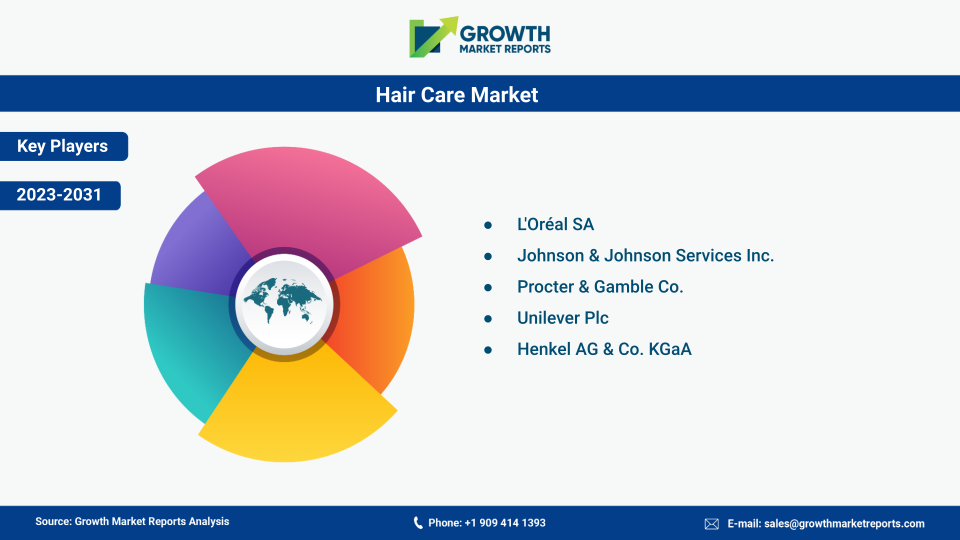

Hair Care Market Keyplayers

Frequently Asked Questions

Top players include L'Oréal Group, Procter & Gamble (P&G), Unilever, Henkel AG & Co. KGaA, Kao Corporation, Shiseido Company, Johnson & Johnson, Revlon, Amway Corporation, and Coty Inc.

Major trends include the use of natural and organic ingredients, sulfate- and paraben-free formulations, personalized solutions, sustainable packaging, and products targeting specific hair types and concerns.

The main end users are women, men, and children, each with unique needs. Women represent the largest segment, but men and children are rapidly growing markets.

Hair care products are primarily distributed through supermarkets/hypermarkets, specialty stores, online stores, pharmacies/drug stores, salons, and direct sales.

Asia Pacific leads the market, followed by North America and Europe. Emerging markets in Latin America and the Middle East & Africa are also experiencing rapid growth.

Digital platforms, e-commerce, and technologies like AI and AR are revolutionizing product marketing, distribution, and personalization, making it easier for consumers to access tailored hair care solutions.

Popular product types include shampoo, conditioner, hair oil, hair color, hair styling products, and specialized treatments such as hair masks and serums.

Key growth drivers include rising awareness of personal grooming, increased disposable income, demand for natural and organic products, digital transformation, and product innovation targeting diverse hair concerns.

The hair care market is expected to grow at a CAGR of 6.2% from 2024 to 2033, reaching approximately USD 162.1 billion by 2033.

The global hair care market size in 2024 is estimated at USD 94.8 billion, driven by strong consumer demand and ongoing product innovation.

Table Of Content

Chapter 1 Executive Summary
Chapter 2 Assumptions and Acronyms Used
Chapter 3 Research Methodology
Chapter 4 Hair Care Market Overview
   4.1 Introduction
      4.1.1 Market Taxonomy
      4.1.2 Market Definition
      4.1.3 Macro-Economic Factors Impacting the Market Growth
   4.2 Hair Care Market Dynamics
      4.2.1 Market Drivers
      4.2.2 Market Restraints
      4.2.3 Market Opportunity
   4.3 Hair Care Market - Supply Chain Analysis
      4.3.1 List of Key Suppliers
      4.3.2 List of Key Distributors
      4.3.3 List of Key Consumers
   4.4 Key Forces Shaping the Hair Care Market
      4.4.1 Bargaining Power of Suppliers
      4.4.2 Bargaining Power of Buyers
      4.4.3 Threat of Substitution
      4.4.4 Threat of New Entrants
      4.4.5 Competitive Rivalry
   4.5 Global Hair Care Market Size & Forecast, 2023-2032
      4.5.1 Hair Care Market Size and Y-o-Y Growth
      4.5.2 Hair Care Market Absolute $ Opportunity

Chapter 5 Global Hair Care Market Analysis and Forecast By Product Type
   5.1 Introduction
      5.1.1 Key Market Trends & Growth Opportunities By Product Type
      5.1.2 Basis Point Share (BPS) Analysis By Product Type
      5.1.3 Absolute $ Opportunity Assessment By Product Type
   5.2 Hair Care Market Size Forecast By Product Type
      5.2.1 Shampoo
      5.2.2 Conditioner
      5.2.3 Hair Oil
      5.2.4 Hair Color
      5.2.5 Hair Styling Products
      5.2.6 Others
   5.3 Market Attractiveness Analysis By Product Type

Chapter 6 Global Hair Care Market Analysis and Forecast By Distribution Channel
   6.1 Introduction
      6.1.1 Key Market Trends & Growth Opportunities By Distribution Channel
      6.1.2 Basis Point Share (BPS) Analysis By Distribution Channel
      6.1.3 Absolute $ Opportunity Assessment By Distribution Channel
   6.2 Hair Care Market Size Forecast By Distribution Channel
      6.2.1 Supermarkets/Hypermarkets
      6.2.2 Specialty Stores
      6.2.3 Online Stores
      6.2.4 Pharmacies/Drug Stores
      6.2.5 Others
   6.3 Market Attractiveness Analysis By Distribution Channel

Chapter 7 Global Hair Care Market Analysis and Forecast By End User
   7.1 Introduction
      7.1.1 Key Market Trends & Growth Opportunities By End User
      7.1.2 Basis Point Share (BPS) Analysis By End User
      7.1.3 Absolute $ Opportunity Assessment By End User
   7.2 Hair Care Market Size Forecast By End User
      7.2.1 Men
      7.2.2 Women
      7.2.3 Children
   7.3 Market Attractiveness Analysis By End User

Chapter 8 Global Hair Care Market Analysis and Forecast by Region
   8.1 Introduction
      8.1.1 Key Market Trends & Growth Opportunities By Region
      8.1.2 Basis Point Share (BPS) Analysis By Region
      8.1.3 Absolute $ Opportunity Assessment By Region
   8.2 Hair Care Market Size Forecast By Region
      8.2.1 North America
      8.2.2 Europe
      8.2.3 Asia Pacific
      8.2.4 Latin America
      8.2.5 Middle East & Africa (MEA)
   8.3 Market Attractiveness Analysis By Region

Chapter 9 Coronavirus Disease (COVID-19) Impact 
   9.1 Introduction 
   9.2 Current & Future Impact Analysis 
   9.3 Economic Impact Analysis 
   9.4 Government Policies 
   9.5 Investment Scenario

Chapter 10 North America Hair Care Analysis and Forecast
   10.1 Introduction
   10.2 North America Hair Care Market Size Forecast by Country
      10.2.1 U.S.
      10.2.2 Canada
   10.3 Basis Point Share (BPS) Analysis by Country
   10.4 Absolute $ Opportunity Assessment by Country
   10.5 Market Attractiveness Analysis by Country
   10.6 North America Hair Care Market Size Forecast By Product Type
      10.6.1 Shampoo
      10.6.2 Conditioner
      10.6.3 Hair Oil
      10.6.4 Hair Color
      10.6.5 Hair Styling Products
      10.6.6 Others
   10.7 Basis Point Share (BPS) Analysis By Product Type 
   10.8 Absolute $ Opportunity Assessment By Product Type 
   10.9 Market Attractiveness Analysis By Product Type
   10.10 North America Hair Care Market Size Forecast By Distribution Channel
      10.10.1 Supermarkets/Hypermarkets
      10.10.2 Specialty Stores
      10.10.3 Online Stores
      10.10.4 Pharmacies/Drug Stores
      10.10.5 Others
   10.11 Basis Point Share (BPS) Analysis By Distribution Channel 
   10.12 Absolute $ Opportunity Assessment By Distribution Channel 
   10.13 Market Attractiveness Analysis By Distribution Channel
   10.14 North America Hair Care Market Size Forecast By End User
      10.14.1 Men
      10.14.2 Women
      10.14.3 Children
   10.15 Basis Point Share (BPS) Analysis By End User 
   10.16 Absolute $ Opportunity Assessment By End User 
   10.17 Market Attractiveness Analysis By End User

Chapter 11 Europe Hair Care Analysis and Forecast
   11.1 Introduction
   11.2 Europe Hair Care Market Size Forecast by Country
      11.2.1 Germany
      11.2.2 France
      11.2.3 Italy
      11.2.4 U.K.
      11.2.5 Spain
      11.2.6 Russia
      11.2.7 Rest of Europe
   11.3 Basis Point Share (BPS) Analysis by Country
   11.4 Absolute $ Opportunity Assessment by Country
   11.5 Market Attractiveness Analysis by Country
   11.6 Europe Hair Care Market Size Forecast By Product Type
      11.6.1 Shampoo
      11.6.2 Conditioner
      11.6.3 Hair Oil
      11.6.4 Hair Color
      11.6.5 Hair Styling Products
      11.6.6 Others
   11.7 Basis Point Share (BPS) Analysis By Product Type 
   11.8 Absolute $ Opportunity Assessment By Product Type 
   11.9 Market Attractiveness Analysis By Product Type
   11.10 Europe Hair Care Market Size Forecast By Distribution Channel
      11.10.1 Supermarkets/Hypermarkets
      11.10.2 Specialty Stores
      11.10.3 Online Stores
      11.10.4 Pharmacies/Drug Stores
      11.10.5 Others
   11.11 Basis Point Share (BPS) Analysis By Distribution Channel 
   11.12 Absolute $ Opportunity Assessment By Distribution Channel 
   11.13 Market Attractiveness Analysis By Distribution Channel
   11.14 Europe Hair Care Market Size Forecast By End User
      11.14.1 Men
      11.14.2 Women
      11.14.3 Children
   11.15 Basis Point Share (BPS) Analysis By End User 
   11.16 Absolute $ Opportunity Assessment By End User 
   11.17 Market Attractiveness Analysis By End User

Chapter 12 Asia Pacific Hair Care Analysis and Forecast
   12.1 Introduction
   12.2 Asia Pacific Hair Care Market Size Forecast by Country
      12.2.1 China
      12.2.2 Japan
      12.2.3 South Korea
      12.2.4 India
      12.2.5 Australia
      12.2.6 South East Asia (SEA)
      12.2.7 Rest of Asia Pacific (APAC)
   12.3 Basis Point Share (BPS) Analysis by Country
   12.4 Absolute $ Opportunity Assessment by Country
   12.5 Market Attractiveness Analysis by Country
   12.6 Asia Pacific Hair Care Market Size Forecast By Product Type
      12.6.1 Shampoo
      12.6.2 Conditioner
      12.6.3 Hair Oil
      12.6.4 Hair Color
      12.6.5 Hair Styling Products
      12.6.6 Others
   12.7 Basis Point Share (BPS) Analysis By Product Type 
   12.8 Absolute $ Opportunity Assessment By Product Type 
   12.9 Market Attractiveness Analysis By Product Type
   12.10 Asia Pacific Hair Care Market Size Forecast By Distribution Channel
      12.10.1 Supermarkets/Hypermarkets
      12.10.2 Specialty Stores
      12.10.3 Online Stores
      12.10.4 Pharmacies/Drug Stores
      12.10.5 Others
   12.11 Basis Point Share (BPS) Analysis By Distribution Channel 
   12.12 Absolute $ Opportunity Assessment By Distribution Channel 
   12.13 Market Attractiveness Analysis By Distribution Channel
   12.14 Asia Pacific Hair Care Market Size Forecast By End User
      12.14.1 Men
      12.14.2 Women
      12.14.3 Children
   12.15 Basis Point Share (BPS) Analysis By End User 
   12.16 Absolute $ Opportunity Assessment By End User 
   12.17 Market Attractiveness Analysis By End User

Chapter 13 Latin America Hair Care Analysis and Forecast
   13.1 Introduction
   13.2 Latin America Hair Care Market Size Forecast by Country
      13.2.1 Brazil
      13.2.2 Mexico
      13.2.3 Rest of Latin America (LATAM)
   13.3 Basis Point Share (BPS) Analysis by Country
   13.4 Absolute $ Opportunity Assessment by Country
   13.5 Market Attractiveness Analysis by Country
   13.6 Latin America Hair Care Market Size Forecast By Product Type
      13.6.1 Shampoo
      13.6.2 Conditioner
      13.6.3 Hair Oil
      13.6.4 Hair Color
      13.6.5 Hair Styling Products
      13.6.6 Others
   13.7 Basis Point Share (BPS) Analysis By Product Type 
   13.8 Absolute $ Opportunity Assessment By Product Type 
   13.9 Market Attractiveness Analysis By Product Type
   13.10 Latin America Hair Care Market Size Forecast By Distribution Channel
      13.10.1 Supermarkets/Hypermarkets
      13.10.2 Specialty Stores
      13.10.3 Online Stores
      13.10.4 Pharmacies/Drug Stores
      13.10.5 Others
   13.11 Basis Point Share (BPS) Analysis By Distribution Channel 
   13.12 Absolute $ Opportunity Assessment By Distribution Channel 
   13.13 Market Attractiveness Analysis By Distribution Channel
   13.14 Latin America Hair Care Market Size Forecast By End User
      13.14.1 Men
      13.14.2 Women
      13.14.3 Children
   13.15 Basis Point Share (BPS) Analysis By End User 
   13.16 Absolute $ Opportunity Assessment By End User 
   13.17 Market Attractiveness Analysis By End User

Chapter 14 Middle East & Africa (MEA) Hair Care Analysis and Forecast
   14.1 Introduction
   14.2 Middle East & Africa (MEA) Hair Care Market Size Forecast by Country
      14.2.1 Saudi Arabia
      14.2.2 South Africa
      14.2.3 UAE
      14.2.4 Rest of Middle East & Africa (MEA)
   14.3 Basis Point Share (BPS) Analysis by Country
   14.4 Absolute $ Opportunity Assessment by Country
   14.5 Market Attractiveness Analysis by Country
   14.6 Middle East & Africa (MEA) Hair Care Market Size Forecast By Product Type
      14.6.1 Shampoo
      14.6.2 Conditioner
      14.6.3 Hair Oil
      14.6.4 Hair Color
      14.6.5 Hair Styling Products
      14.6.6 Others
   14.7 Basis Point Share (BPS) Analysis By Product Type 
   14.8 Absolute $ Opportunity Assessment By Product Type 
   14.9 Market Attractiveness Analysis By Product Type
   14.10 Middle East & Africa (MEA) Hair Care Market Size Forecast By Distribution Channel
      14.10.1 Supermarkets/Hypermarkets
      14.10.2 Specialty Stores
      14.10.3 Online Stores
      14.10.4 Pharmacies/Drug Stores
      14.10.5 Others
   14.11 Basis Point Share (BPS) Analysis By Distribution Channel 
   14.12 Absolute $ Opportunity Assessment By Distribution Channel 
   14.13 Market Attractiveness Analysis By Distribution Channel
   14.14 Middle East & Africa (MEA) Hair Care Market Size Forecast By End User
      14.14.1 Men
      14.14.2 Women
      14.14.3 Children
   14.15 Basis Point Share (BPS) Analysis By End User 
   14.16 Absolute $ Opportunity Assessment By End User 
   14.17 Market Attractiveness Analysis By End User

Chapter 15 Competition Landscape 
   15.1 Hair Care Market: Competitive Dashboard
   15.2 Global Hair Care Market: Market Share Analysis, 2023
   15.3 Company Profiles (Details – Overview, Financials, Developments, Strategy) 
      15.3.1 Procter & Gamble (P&G)
Unilever
L'Oréal Group
Henkel AG & Co. KGaA
Johnson & Johnson
Kao Corporation
Shiseido Company, Limited
Coty Inc.
Amway Corporation
Revlon Inc.
Estée Lauder Companies Inc.
Beiersdorf AG
Church & Dwight Co., Inc.
Oriflame Cosmetics AG
Mary Kay Inc.
Avon Products, Inc.
Moroccanoil
Aveda Corporation
Wella Company
Mandom Corporation

Methodology

Our Clients

Deloitte
The John Holland Group
Honda Motor Co. Ltd.
Dassault Aviation
Nestle SA
sinopec
Siemens Healthcare
General Electric