Guard Tour System Market Research Report 2033

Guard Tour System Market Research Report 2033

Segments - by Component (Hardware, Software, Services), by Type (Online Guard Tour System, Offline Guard Tour System), by Application (Security Guard Monitoring, Patrol Management, Asset Tracking, Others), by End-User (Commercial Buildings, Industrial Facilities, Residential, Government & Public Sector, Others)

https://growthmarketreports.com/Raksha
Author : Raksha Sharma
https://growthmarketreports.com/Vaibhav
Fact-checked by : V. Chandola
https://growthmarketreports.com/Shruti
Editor : Shruti Bhat

Upcoming | Report ID :ICT-SE-19 | 4.5 Rating | 89 Reviews | 297 Pages | Format : Docx PDF

Report Description


Guard Tour System Market Outlook

According to our latest research, the global guard tour system market size stood at USD 284.7 million in 2024, reflecting a robust expansion driven by the increasing demand for advanced security solutions across industries. The market is projected to grow at a CAGR of 8.9% from 2025 to 2033, reaching a forecasted value of USD 606.8 million by 2033. This growth is primarily fueled by heightened security concerns, the integration of IoT technologies, and the rising adoption of cloud-based surveillance and monitoring systems worldwide. As organizations seek to enhance their security operations and ensure compliance with stringent regulations, the deployment of guard tour systems is becoming an essential component of modern security infrastructure.

One of the primary growth factors for the guard tour system market is the increasing emphasis on real-time monitoring and automated reporting within security operations. Organizations across sectors such as commercial, industrial, and government are recognizing the need for efficient and tamper-proof patrol management solutions. The integration of advanced technologies like RFID, NFC, GPS, and mobile connectivity has significantly improved the accuracy and reliability of guard tour systems, enabling security managers to monitor patrol routes, verify guard presence, and generate detailed incident reports in real time. This digital transformation not only enhances transparency and accountability but also streamlines administrative processes, reducing the risk of human error and ensuring compliance with industry standards.

Another significant driver of market growth is the rapid expansion of smart infrastructure and urbanization. As cities grow and commercial complexes multiply, the demand for scalable and flexible security solutions intensifies. Guard tour systems are increasingly being adopted in commercial buildings, industrial facilities, and residential communities to safeguard assets, monitor personnel movement, and deter unauthorized access. The proliferation of IoT-enabled devices and cloud-based platforms has further enabled remote monitoring and centralized control, allowing security teams to respond swiftly to incidents and maintain a proactive security posture. This trend is especially pronounced in developed economies, where investments in smart city projects and critical infrastructure protection are accelerating the adoption of advanced guard tour technologies.

The rising awareness of workplace safety regulations and the need to ensure compliance with local and international standards are also propelling the growth of the guard tour system market. Regulatory bodies in various regions are mandating stringent security protocols for commercial and industrial establishments, necessitating the implementation of reliable patrol management systems. Guard tour solutions not only help organizations demonstrate compliance through automated audit trails and activity logs but also provide valuable insights for optimizing security operations. As a result, businesses are increasingly investing in comprehensive guard tour systems that offer seamless integration with existing security infrastructure, robust data analytics, and customizable reporting capabilities.

In the realm of modern security solutions, Remote Guarding Platforms are emerging as a transformative force, offering enhanced surveillance capabilities without the need for on-site personnel. These platforms leverage advanced technologies such as AI-driven analytics, high-definition video feeds, and real-time alerts to monitor and respond to security incidents from a central location. By integrating with existing guard tour systems, remote guarding platforms provide an additional layer of security, enabling organizations to maintain vigilance over expansive areas and multiple sites simultaneously. This approach not only reduces the need for physical patrols but also allows for more efficient allocation of security resources, ensuring that personnel can focus on areas requiring immediate attention. As the demand for comprehensive and cost-effective security solutions grows, the adoption of remote guarding platforms is set to rise, offering organizations a scalable and flexible approach to safeguarding their assets and personnel.

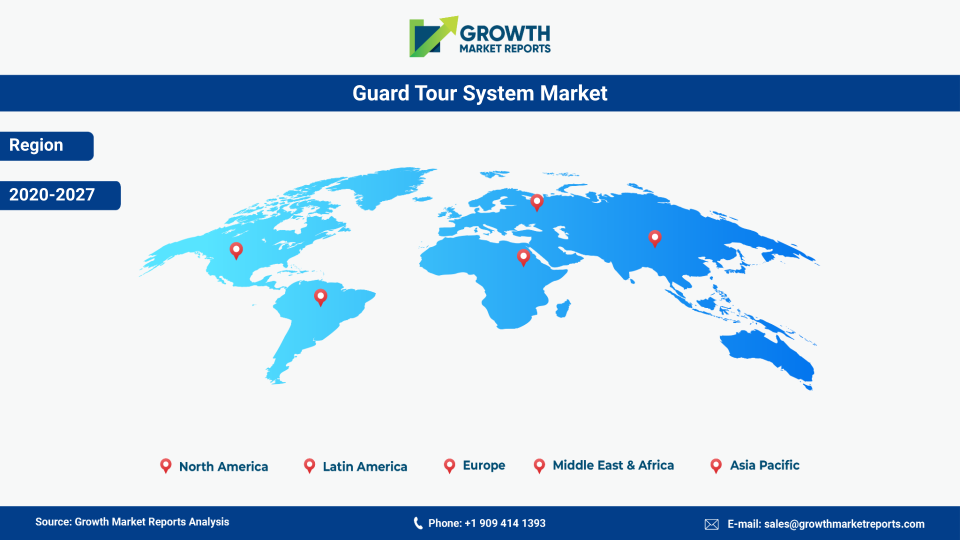
Regionally, North America continues to dominate the guard tour system market, accounting for the largest revenue share in 2024, followed closely by Europe and the Asia Pacific. The presence of leading technology providers, early adoption of innovative security solutions, and stringent regulatory frameworks have contributed to the regionÂ’s leadership position. Meanwhile, the Asia Pacific region is experiencing the fastest growth, driven by rapid urbanization, infrastructure development, and rising security concerns in emerging economies such as China, India, and Southeast Asia. Latin America and the Middle East & Africa are also witnessing increased adoption of guard tour systems, albeit at a slower pace, as organizations in these regions gradually modernize their security operations.

Global Guard Tour System Industry Outlook

Component Analysis

The component segment of the guard tour system market is categorized into hardware, software, and services, each playing a pivotal role in the overall functionality and efficiency of patrol management solutions. Hardware components, such as RFID tags, handheld readers, checkpoints, and mobile devices, form the backbone of guard tour systems, enabling the physical tracking and verification of security personnel during patrols. The demand for robust and tamper-resistant hardware is on the rise, as organizations seek to minimize the risk of vandalism and ensure uninterrupted operation in diverse environmental conditions. Manufacturers are focusing on the development of ruggedized devices with enhanced battery life, wireless connectivity, and real-time data transmission capabilities to cater to the evolving needs of end users.

Software solutions are equally critical, providing the intelligence and automation required for effective guard tour management. Modern guard tour software platforms offer a range of features, including route planning, incident reporting, real-time notifications, analytics dashboards, and seamless integration with access control and video surveillance systems. The shift towards cloud-based software is particularly notable, as it allows organizations to centralize data management, enable remote monitoring, and scale their security operations without significant upfront investment in IT infrastructure. Furthermore, the adoption of AI and machine learning algorithms is enhancing the predictive capabilities of guard tour software, enabling proactive risk assessment and resource optimization.

Services constitute the third major component, encompassing system installation, training, maintenance, and technical support. As guard tour systems become more sophisticated, the need for specialized services to ensure seamless deployment and ongoing performance is increasing. Service providers are offering comprehensive packages that include system customization, integration with legacy security infrastructure, and 24/7 support to address technical issues promptly. The growing trend of managed security services is also influencing the market, with organizations outsourcing their patrol management operations to third-party vendors for greater efficiency and cost savings.

The interplay between hardware, software, and services is shaping the competitive landscape of the guard tour system market. Vendors are increasingly offering integrated solutions that combine state-of-the-art devices with user-friendly software and reliable support services, delivering end-to-end value to customers. As organizations prioritize scalability, interoperability, and ease of use, the demand for modular and customizable guard tour systems is expected to rise, driving innovation across all component segments.

In summary, the component analysis highlights the critical role of hardware, software, and services in driving the adoption and effectiveness of guard tour systems. Continuous advancements in device technology, cloud computing, and service delivery are enabling organizations to implement robust and future-proof patrol management solutions that address the evolving challenges of modern security operations.

Report Scope

Attributes Details
Report Title Guard Tour System Market Research Report 2033
By Component Hardware, Software, Services
By Type Online Guard Tour System, Offline Guard Tour System
By Application Security Guard Monitoring, Patrol Management, Asset Tracking, Others
By End-User Commercial Buildings, Industrial Facilities, Residential, Government & Public Sector, Others
Regions Covered North America, Europe, APAC, Latin America, MEA
Base Year 2024
Historic Data 2018-2023
Forecast Period 2025-2033
Number of Pages 297
Number of Tables & Figures 365
Customization Available Yes, the report can be customized as per your need.

Type Analysis

The type segment of the guard tour system market is divided into online and offline guard tour systems, each catering to distinct operational requirements and technological preferences. Online guard tour systems leverage real-time connectivity, typically through cloud-based platforms and wireless networks, to provide instant updates on guard activities, incident alerts, and route deviations. These systems are particularly popular among large enterprises and organizations with multiple sites, as they enable centralized monitoring and quick response to security breaches. The adoption of online guard tour systems is being propelled by the increasing availability of high-speed internet, the proliferation of mobile devices, and the growing emphasis on real-time data analytics in security management.

Offline guard tour systems, on the other hand, operate independently of continuous internet connectivity, storing patrol data locally on handheld devices or checkpoints. This data is later uploaded to a central server for analysis and reporting. Offline systems are favored in environments where network connectivity is unreliable or where data security concerns necessitate limited external communication. While offline systems offer greater autonomy and are less susceptible to cyber threats, they may lack the immediacy and scalability of their online counterparts. Nevertheless, advancements in data synchronization and encryption technologies are bridging the gap between online and offline systems, enabling organizations to choose solutions that best align with their operational needs and risk profiles.

The choice between online and offline guard tour systems is influenced by several factors, including the size and complexity of the security operation, the level of integration required with other security systems, and the regulatory environment. Organizations with dispersed operations or high-value assets often prefer online systems for their ability to provide comprehensive oversight and rapid incident response. Conversely, smaller enterprises or those operating in remote locations may opt for offline systems due to their simplicity, cost-effectiveness, and resilience against network outages.

Vendors in the guard tour system market are responding to these diverse requirements by offering hybrid solutions that combine the strengths of both online and offline systems. Such solutions allow security teams to operate seamlessly in both connected and disconnected environments, ensuring continuous data capture and operational continuity. The trend towards hybridization is expected to gain momentum as organizations seek greater flexibility and robustness in their patrol management strategies.

In conclusion, the type analysis underscores the importance of adaptability and technological innovation in the guard tour system market. Whether online, offline, or hybrid, the choice of system type must be aligned with the organizationÂ’s security objectives, infrastructure capabilities, and risk management framework. As the market evolves, the demand for versatile and future-ready guard tour systems is set to drive further advancements in connectivity, data management, and system interoperability.

Application Analysis

The application segment of the guard tour system market encompasses security guard monitoring, patrol management, asset tracking, and other specialized use cases. Security guard monitoring remains the cornerstone application, enabling organizations to verify guard presence, monitor patrol routes, and ensure compliance with predefined schedules. The ability to generate automated reports and real-time alerts enhances accountability and helps identify performance gaps, contributing to overall operational efficiency. As security threats become more sophisticated, organizations are increasingly relying on guard tour systems to implement proactive monitoring strategies and deter potential breaches.

Patrol management is another critical application, focusing on the optimization of guard routes, task assignments, and incident response protocols. Advanced guard tour systems offer features such as dynamic route planning, geofencing, and automated task allocation, enabling security teams to cover larger areas with fewer resources. The integration of GPS and mobile technologies allows for precise tracking of guard movements, ensuring that all critical checkpoints are covered and that deviations are promptly addressed. This level of automation not only reduces the administrative burden on security managers but also enhances the overall effectiveness of patrol operations.

Asset tracking is gaining prominence as organizations seek to protect valuable equipment, inventory, and infrastructure from theft or damage. Guard tour systems equipped with RFID, NFC, or barcode scanning capabilities enable real-time tracking of assets during patrols, providing an additional layer of security and accountability. The ability to link asset data with patrol records facilitates comprehensive audits and helps organizations identify vulnerabilities in their asset protection strategies. This application is particularly relevant in industries such as manufacturing, logistics, and healthcare, where asset integrity is critical to operational continuity.

Beyond these core applications, guard tour systems are being deployed for a variety of specialized use cases, including fire safety inspections, maintenance scheduling, and compliance audits. The flexibility of modern guard tour platforms allows organizations to customize workflows, integrate with third-party systems, and generate actionable insights from patrol data. As regulatory requirements become more stringent and organizations strive for operational excellence, the scope of guard tour system applications is expected to expand, driving further market growth.

In summary, the application analysis highlights the versatility and value proposition of guard tour systems across a wide range of security and operational contexts. By enabling real-time monitoring, efficient patrol management, and comprehensive asset tracking, these systems are helping organizations enhance security, reduce risks, and achieve regulatory compliance in an increasingly complex threat landscape.

End-User Analysis

The end-user segment of the guard tour system market is broadly classified into commercial buildings, industrial facilities, residential, government and public sector, and others. Commercial buildings, including office complexes, shopping malls, and hotels, represent a significant share of the market, driven by the need to safeguard occupants, assets, and intellectual property. The adoption of guard tour systems in this segment is fueled by the growing emphasis on tenant safety, liability management, and compliance with building security regulations. Advanced patrol management solutions enable facility managers to monitor guard activities, respond to incidents in real time, and maintain detailed records for audit purposes.

Industrial facilities, such as manufacturing plants, warehouses, and energy installations, also constitute a major end-user group. The complexity and scale of these environments necessitate robust security protocols to protect critical infrastructure, prevent unauthorized access, and ensure the safety of personnel. Guard tour systems equipped with ruggedized hardware and advanced analytics are particularly well-suited for industrial applications, enabling real-time monitoring of perimeter patrols, equipment inspections, and safety checks. The integration of guard tour systems with other industrial control and monitoring platforms further enhances situational awareness and incident response capabilities.

The residential segment is witnessing growing adoption of guard tour systems, particularly in gated communities, apartment complexes, and high-rise buildings. As urban populations expand and concerns over property crime increase, homeownersÂ’ associations and property managers are investing in patrol management solutions to enhance resident safety and deter criminal activity. The availability of user-friendly mobile applications and cloud-based platforms is making it easier for residential communities to implement and manage guard tour systems without the need for extensive technical expertise.

Government and public sector organizations, including municipalities, educational institutions, and transportation hubs, are increasingly deploying guard tour systems to ensure public safety and comply with regulatory mandates. The ability to monitor security personnel across multiple locations, generate automated compliance reports, and respond rapidly to emergencies is critical in these environments. Guard tour systems are also being used to support public health and safety initiatives, such as fire inspections and emergency preparedness drills, further expanding their utility in the public sector.

Other end users, including healthcare facilities, data centers, and entertainment venues, are recognizing the value of guard tour systems in protecting sensitive assets and ensuring operational continuity. The flexibility and scalability of modern patrol management solutions make them suitable for a wide range of environments, from small businesses to large-scale enterprises. As awareness of the benefits of guard tour systems continues to grow, adoption across diverse end-user segments is expected to accelerate, driving sustained market expansion.

Opportunities & Threats

The guard tour system market presents numerous opportunities for growth and innovation, particularly in the areas of technology integration and service delivery. The increasing adoption of IoT, artificial intelligence, and big data analytics is enabling the development of smarter and more responsive patrol management solutions. Vendors have the opportunity to differentiate themselves by offering advanced features such as predictive analytics, automated incident detection, and seamless integration with other security systems. The shift towards cloud-based platforms and mobile applications is also opening up new avenues for service delivery, allowing organizations to scale their security operations and access real-time insights from anywhere. As organizations continue to prioritize security and operational efficiency, the demand for comprehensive and customizable guard tour systems is expected to rise, creating significant opportunities for market players.

Another key opportunity lies in the expansion of the guard tour system market into emerging economies, where rapid urbanization, infrastructure development, and rising security concerns are driving demand for advanced security solutions. Governments and private sector organizations in regions such as Asia Pacific, Latin America, and the Middle East & Africa are investing heavily in smart city projects, transportation networks, and critical infrastructure protection. Vendors that can offer cost-effective, scalable, and easy-to-deploy guard tour systems are well-positioned to capitalize on these growth opportunities. Strategic partnerships with local system integrators, security service providers, and government agencies can further enhance market penetration and brand visibility in these high-growth regions.

Despite the positive outlook, the guard tour system market faces several restraining factors that could impact its growth trajectory. One of the primary challenges is the high initial cost of deploying advanced guard tour systems, particularly for small and medium-sized enterprises with limited budgets. The need for specialized hardware, software licenses, and ongoing maintenance can be a significant barrier to adoption, especially in price-sensitive markets. Additionally, concerns over data privacy, cybersecurity, and system interoperability may deter some organizations from investing in cloud-based or connected patrol management solutions. Vendors must address these challenges by offering flexible pricing models, robust data protection measures, and seamless integration capabilities to ensure widespread adoption and long-term customer satisfaction.

Regional Outlook

North America remains the largest regional market for guard tour systems, accounting for approximately USD 102.7 million in revenue in 2024. The regionÂ’s dominance is underpinned by the early adoption of advanced security technologies, a strong regulatory framework, and the presence of leading technology providers. The United States, in particular, is a major contributor to market growth, with widespread implementation of guard tour systems in commercial buildings, industrial facilities, and government institutions. The regionÂ’s focus on innovation and continuous improvement in security protocols is expected to sustain its leadership position over the forecast period.

Europe represents the second-largest market, with a value of USD 79.4 million in 2024. The region is characterized by stringent security regulations, high standards for workplace safety, and a strong emphasis on compliance and auditability. Countries such as the United Kingdom, Germany, and France are at the forefront of guard tour system adoption, driven by investments in critical infrastructure protection, smart city initiatives, and public safety programs. The European market is expected to grow at a steady CAGR of 8.1% from 2025 to 2033, supported by ongoing digital transformation and the increasing integration of IoT and AI technologies in security operations.

The Asia Pacific region is experiencing the fastest growth in the guard tour system market, with revenues reaching USD 62.3 million in 2024. Rapid urbanization, infrastructure development, and rising security concerns in emerging economies such as China, India, and Southeast Asia are fueling demand for advanced patrol management solutions. Government initiatives to enhance public safety, coupled with growing private sector investments in commercial and industrial security, are driving market expansion in the region. As organizations in Asia Pacific continue to modernize their security operations and embrace digital technologies, the region is expected to achieve the highest CAGR among all regions, positioning it as a key growth engine for the global guard tour system market.

Guard Tour System Market Statistics

Competitor Outlook

The competitive landscape of the guard tour system market is characterized by a mix of established technology providers, niche players, and emerging startups, all vying for market share through innovation, strategic partnerships, and customer-centric solutions. Leading vendors are focusing on the development of integrated guard tour platforms that combine advanced hardware, intuitive software, and comprehensive support services to deliver end-to-end value to customers. The ability to offer scalable, customizable, and interoperable solutions is becoming a key differentiator, as organizations seek to future-proof their security infrastructure and adapt to evolving threat landscapes.

Market leaders are also investing heavily in research and development to incorporate cutting-edge technologies such as artificial intelligence, machine learning, IoT, and cloud computing into their guard tour systems. These advancements are enabling the creation of smarter, more responsive patrol management solutions that provide real-time insights, predictive analytics, and automated incident detection. The focus on user experience is driving the adoption of mobile applications, cloud-based dashboards, and seamless integration with other security systems, enhancing the overall effectiveness and efficiency of guard tour operations.

In addition to technological innovation, strategic partnerships and acquisitions are playing a significant role in shaping the competitive dynamics of the guard tour system market. Vendors are collaborating with system integrators, security service providers, and technology partners to expand their product portfolios, enhance market reach, and deliver comprehensive security solutions. The trend towards managed security services is also influencing the competitive landscape, with vendors offering end-to-end patrol management solutions as a service to meet the evolving needs of customers.

Some of the major companies operating in the guard tour system market include Deggy Corporation, GCS (Guard Control Systems), Trackforce Valiant, Detex Corporation, JWM Hi-Tech Development Co., Ltd., and G4S plc. Deggy Corporation is renowned for its durable and easy-to-use guard tour hardware, while GCS offers a range of software-based patrol management solutions tailored to diverse industry needs. Trackforce Valiant specializes in cloud-based workforce management platforms, integrating guard tour functionality with broader security and compliance features. Detex Corporation is recognized for its robust mechanical and electronic guard tour checkpoints, catering to both commercial and industrial clients. JWM Hi-Tech Development Co., Ltd. is a leading provider of RFID and GPS-based guard tour systems, with a strong presence in the Asia Pacific region. G4S plc, one of the worldÂ’s largest security firms, offers comprehensive guard tour services as part of its integrated security solutions portfolio.

These companies are continuously innovating to address the evolving demands of the market, focusing on enhancing system interoperability, user experience, and data security. By leveraging their expertise, global presence, and technological capabilities, leading vendors are well-positioned to capitalize on the growing demand for advanced guard tour systems worldwide. As the market continues to evolve, competition is expected to intensify, driving further investment in research, product development, and customer engagement to maintain a competitive edge.

Key Players

  • GCS
  • Deggy
  • Trackforce Valiant
  • Detex
  • JWM Hi-Tech Development Co., Ltd.
  • ZKTeco
  • Gallagher Security
  • Vanguard Wireless
  • ProxiGuard
  • Landwell
  • Morse Watchmans
  • NFC Group
  • SAMSUNG SDS
  • Genetec
  • Rosslare Security
  • Eagle Eye Networks
  • GuardTek
  • PTI Security Systems
  • Blue Mobile Systems
  • Terracom S.A.
Guard Tour System Market Overview

Segments

The Guard Tour System market has been segmented on the basis of

Component

  • Hardware
  • Software
  • Services

Type

  • Online Guard Tour System
  • Offline Guard Tour System

Application

  • Security Guard Monitoring
  • Patrol Management
  • Asset Tracking
  • Others

End-User

  • Commercial Buildings
  • Industrial Facilities
  • Residential
  • Government & Public Sector
  • Others

Competitive Landscape

Key players in the global guard tour systems market include Oysta Technology, TimeKeeping Systems Inc. and others. They are considered as key manufacturers in the market based on their different varieties of product availability, regional presence, superior supply chain management system, and high demand for the products.

The players are adopting key strategies such as acquisition, and geographical expansion where potential opportunity for the Guard Tour System is added in the company’s capacity. For instance,

  • In July, 2020, Gallinet Ltd released PeopleHours Version. This helped the company increase services in peopleHours Version.
  •  In June, 2018, Gallinet Ltd launched a version of PeopleHours. This new version of PeopleHourshas has features and performance improvements to the application. This action of the company helps them to increase services in peopleHours Version.
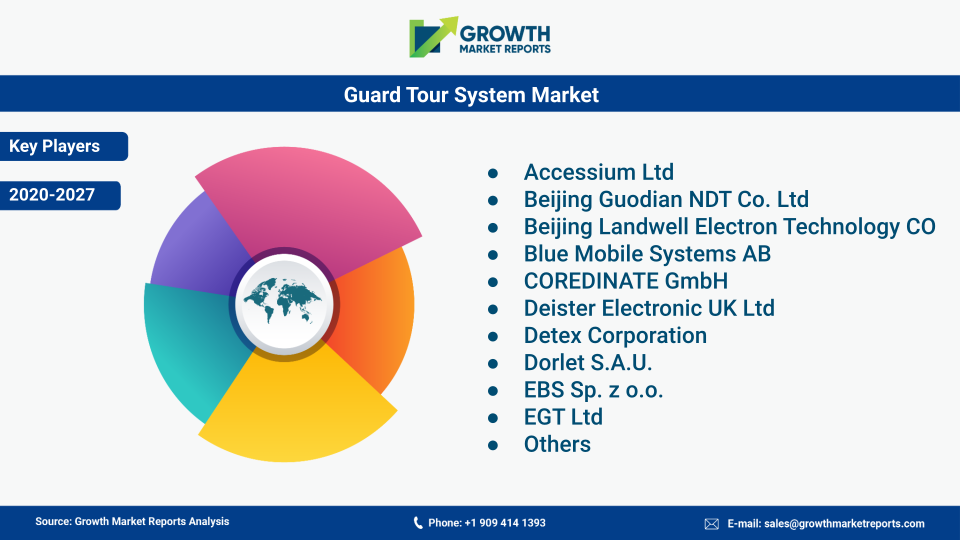

Guard Tour System Market Key Players

Frequently Asked Questions

Additional company profiles can be provided on request.

Yes, the report covers supply chain of products including customers and distribtors.

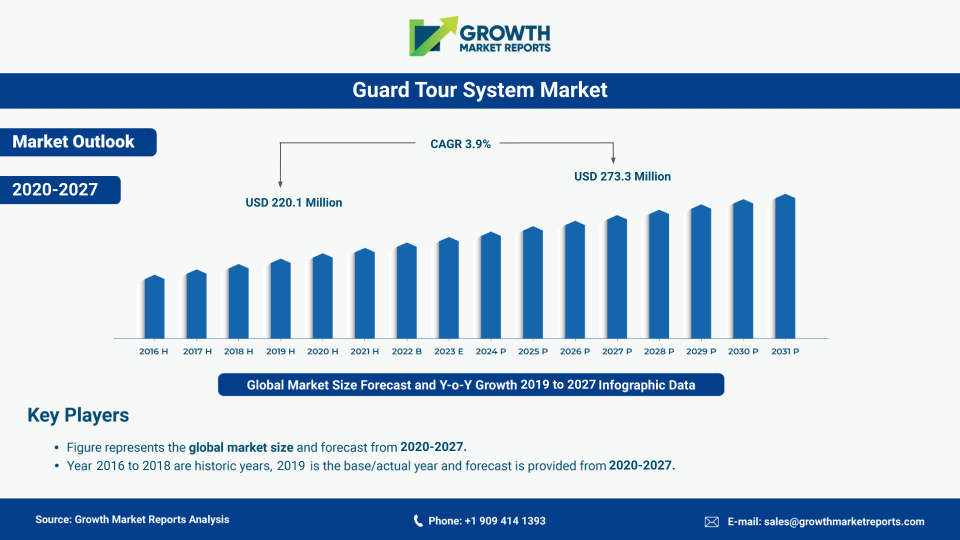
According to this Growth Market Reports report, the market from Guard Tour System is likely to register a CAGR of 3.9% during forecast period 2020-2027, with an anticipated valuation of US$ 273.3 million by the end of the 2027.

In addition to market size (in USD Million) and Company Market Share (in % for base year 2019), other data such as Pricing analysis for year 2017 to 2027 (estimated pricing analysis) is provided, Extensive Pipeline Analysis (2015 to 2019), Impact of key regulation for Guard Tour System Market is available in final report.

The market is driven by factors such as increasing crime rate in the cities, increased services by the security companies, rising breaches in the real estate centers, and increasing adoption of new technologies such as RFID, real time screening is expected to drive the market growth during forecast period.

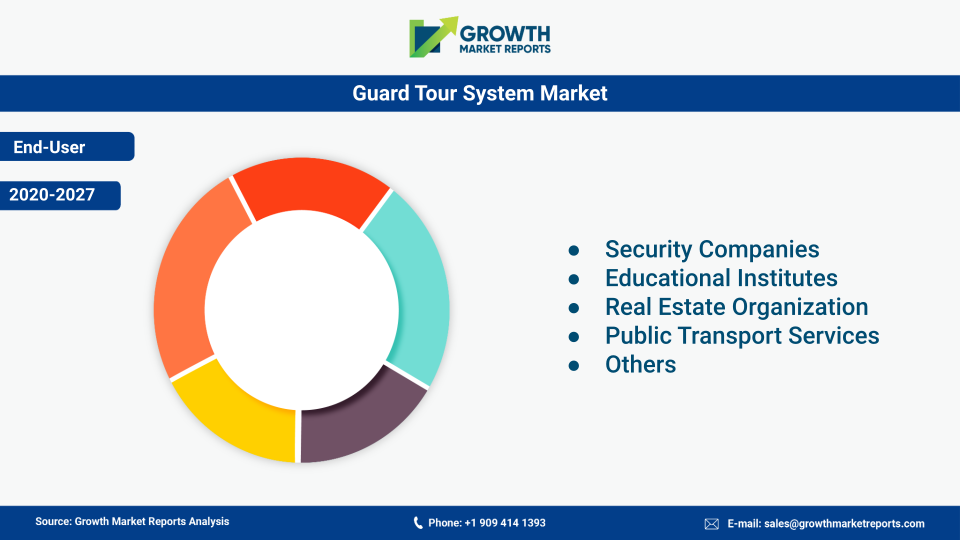
security companies are the key end-user that are driving the Guard Tour System Market.

Factors such as competitive strength and market positioning are key areas considered while selecting top companies to be profiled.

The market is expected to witness increment of over -2.6% between 2019 and 2020 owing to the huge impact of COVID-19 pandemic on the Guard Tour System Market. The ongoing research of Guard Tour System for COVID-19 string is expected to decline the production Guard Tour System product.

The base year considered for the global Guard Tour System Market report is 2019. The complete analysis period is 2017 to 2027, wherein, 2017 & 2018 are the historic years and the forecast is provided from 2021 to 2027.

Major Manufactures include, Oysta Technology, TimeKeeping Systems Inc. and others.

Table Of Content

Chapter 1 Executive Summary
Chapter 2 Assumptions and Acronyms Used
Chapter 3 Research Methodology
Chapter 4 Guard Tour System Market Overview
   4.1 Introduction
      4.1.1 Market Taxonomy
      4.1.2 Market Definition
      4.1.3 Macro-Economic Factors Impacting the Market Growth
   4.2 Guard Tour System Market Dynamics
      4.2.1 Market Drivers
      4.2.2 Market Restraints
      4.2.3 Market Opportunity
   4.3 Guard Tour System Market - Supply Chain Analysis
      4.3.1 List of Key Suppliers
      4.3.2 List of Key Distributors
      4.3.3 List of Key Consumers
   4.4 Key Forces Shaping the Guard Tour System Market
      4.4.1 Bargaining Power of Suppliers
      4.4.2 Bargaining Power of Buyers
      4.4.3 Threat of Substitution
      4.4.4 Threat of New Entrants
      4.4.5 Competitive Rivalry
   4.5 Global Guard Tour System Market Size & Forecast, 2023-2032
      4.5.1 Guard Tour System Market Size and Y-o-Y Growth
      4.5.2 Guard Tour System Market Absolute $ Opportunity

Chapter 5 Global Guard Tour System Market Analysis and Forecast By Component
   5.1 Introduction
      5.1.1 Key Market Trends & Growth Opportunities By Component
      5.1.2 Basis Point Share (BPS) Analysis By Component
      5.1.3 Absolute $ Opportunity Assessment By Component
   5.2 Guard Tour System Market Size Forecast By Component
      5.2.1 Hardware
      5.2.2 Software
      5.2.3 Services
   5.3 Market Attractiveness Analysis By Component

Chapter 6 Global Guard Tour System Market Analysis and Forecast By Type
   6.1 Introduction
      6.1.1 Key Market Trends & Growth Opportunities By Type
      6.1.2 Basis Point Share (BPS) Analysis By Type
      6.1.3 Absolute $ Opportunity Assessment By Type
   6.2 Guard Tour System Market Size Forecast By Type
      6.2.1 Online Guard Tour System
      6.2.2 Offline Guard Tour System
   6.3 Market Attractiveness Analysis By Type

Chapter 7 Global Guard Tour System Market Analysis and Forecast By Application
   7.1 Introduction
      7.1.1 Key Market Trends & Growth Opportunities By Application
      7.1.2 Basis Point Share (BPS) Analysis By Application
      7.1.3 Absolute $ Opportunity Assessment By Application
   7.2 Guard Tour System Market Size Forecast By Application
      7.2.1 Security Guard Monitoring
      7.2.2 Patrol Management
      7.2.3 Asset Tracking
      7.2.4 Others
   7.3 Market Attractiveness Analysis By Application

Chapter 8 Global Guard Tour System Market Analysis and Forecast By End-User
   8.1 Introduction
      8.1.1 Key Market Trends & Growth Opportunities By End-User
      8.1.2 Basis Point Share (BPS) Analysis By End-User
      8.1.3 Absolute $ Opportunity Assessment By End-User
   8.2 Guard Tour System Market Size Forecast By End-User
      8.2.1 Commercial Buildings
      8.2.2 Industrial Facilities
      8.2.3 Residential
      8.2.4 Government & Public Sector
      8.2.5 Others
   8.3 Market Attractiveness Analysis By End-User

Chapter 9 Global Guard Tour System Market Analysis and Forecast by Region
   9.1 Introduction
      9.1.1 Key Market Trends & Growth Opportunities By Region
      9.1.2 Basis Point Share (BPS) Analysis By Region
      9.1.3 Absolute $ Opportunity Assessment By Region
   9.2 Guard Tour System Market Size Forecast By Region
      9.2.1 North America
      9.2.2 Europe
      9.2.3 Asia Pacific
      9.2.4 Latin America
      9.2.5 Middle East & Africa (MEA)
   9.3 Market Attractiveness Analysis By Region

Chapter 10 Coronavirus Disease (COVID-19) Impact 
   10.1 Introduction 
   10.2 Current & Future Impact Analysis 
   10.3 Economic Impact Analysis 
   10.4 Government Policies 
   10.5 Investment Scenario

Chapter 11 North America Guard Tour System Analysis and Forecast
   11.1 Introduction
   11.2 North America Guard Tour System Market Size Forecast by Country
      11.2.1 U.S.
      11.2.2 Canada
   11.3 Basis Point Share (BPS) Analysis by Country
   11.4 Absolute $ Opportunity Assessment by Country
   11.5 Market Attractiveness Analysis by Country
   11.6 North America Guard Tour System Market Size Forecast By Component
      11.6.1 Hardware
      11.6.2 Software
      11.6.3 Services
   11.7 Basis Point Share (BPS) Analysis By Component 
   11.8 Absolute $ Opportunity Assessment By Component 
   11.9 Market Attractiveness Analysis By Component
   11.10 North America Guard Tour System Market Size Forecast By Type
      11.10.1 Online Guard Tour System
      11.10.2 Offline Guard Tour System
   11.11 Basis Point Share (BPS) Analysis By Type 
   11.12 Absolute $ Opportunity Assessment By Type 
   11.13 Market Attractiveness Analysis By Type
   11.14 North America Guard Tour System Market Size Forecast By Application
      11.14.1 Security Guard Monitoring
      11.14.2 Patrol Management
      11.14.3 Asset Tracking
      11.14.4 Others
   11.15 Basis Point Share (BPS) Analysis By Application 
   11.16 Absolute $ Opportunity Assessment By Application 
   11.17 Market Attractiveness Analysis By Application
   11.18 North America Guard Tour System Market Size Forecast By End-User
      11.18.1 Commercial Buildings
      11.18.2 Industrial Facilities
      11.18.3 Residential
      11.18.4 Government & Public Sector
      11.18.5 Others
   11.19 Basis Point Share (BPS) Analysis By End-User 
   11.20 Absolute $ Opportunity Assessment By End-User 
   11.21 Market Attractiveness Analysis By End-User

Chapter 12 Europe Guard Tour System Analysis and Forecast
   12.1 Introduction
   12.2 Europe Guard Tour System Market Size Forecast by Country
      12.2.1 Germany
      12.2.2 France
      12.2.3 Italy
      12.2.4 U.K.
      12.2.5 Spain
      12.2.6 Russia
      12.2.7 Rest of Europe
   12.3 Basis Point Share (BPS) Analysis by Country
   12.4 Absolute $ Opportunity Assessment by Country
   12.5 Market Attractiveness Analysis by Country
   12.6 Europe Guard Tour System Market Size Forecast By Component
      12.6.1 Hardware
      12.6.2 Software
      12.6.3 Services
   12.7 Basis Point Share (BPS) Analysis By Component 
   12.8 Absolute $ Opportunity Assessment By Component 
   12.9 Market Attractiveness Analysis By Component
   12.10 Europe Guard Tour System Market Size Forecast By Type
      12.10.1 Online Guard Tour System
      12.10.2 Offline Guard Tour System
   12.11 Basis Point Share (BPS) Analysis By Type 
   12.12 Absolute $ Opportunity Assessment By Type 
   12.13 Market Attractiveness Analysis By Type
   12.14 Europe Guard Tour System Market Size Forecast By Application
      12.14.1 Security Guard Monitoring
      12.14.2 Patrol Management
      12.14.3 Asset Tracking
      12.14.4 Others
   12.15 Basis Point Share (BPS) Analysis By Application 
   12.16 Absolute $ Opportunity Assessment By Application 
   12.17 Market Attractiveness Analysis By Application
   12.18 Europe Guard Tour System Market Size Forecast By End-User
      12.18.1 Commercial Buildings
      12.18.2 Industrial Facilities
      12.18.3 Residential
      12.18.4 Government & Public Sector
      12.18.5 Others
   12.19 Basis Point Share (BPS) Analysis By End-User 
   12.20 Absolute $ Opportunity Assessment By End-User 
   12.21 Market Attractiveness Analysis By End-User

Chapter 13 Asia Pacific Guard Tour System Analysis and Forecast
   13.1 Introduction
   13.2 Asia Pacific Guard Tour System Market Size Forecast by Country
      13.2.1 China
      13.2.2 Japan
      13.2.3 South Korea
      13.2.4 India
      13.2.5 Australia
      13.2.6 South East Asia (SEA)
      13.2.7 Rest of Asia Pacific (APAC)
   13.3 Basis Point Share (BPS) Analysis by Country
   13.4 Absolute $ Opportunity Assessment by Country
   13.5 Market Attractiveness Analysis by Country
   13.6 Asia Pacific Guard Tour System Market Size Forecast By Component
      13.6.1 Hardware
      13.6.2 Software
      13.6.3 Services
   13.7 Basis Point Share (BPS) Analysis By Component 
   13.8 Absolute $ Opportunity Assessment By Component 
   13.9 Market Attractiveness Analysis By Component
   13.10 Asia Pacific Guard Tour System Market Size Forecast By Type
      13.10.1 Online Guard Tour System
      13.10.2 Offline Guard Tour System
   13.11 Basis Point Share (BPS) Analysis By Type 
   13.12 Absolute $ Opportunity Assessment By Type 
   13.13 Market Attractiveness Analysis By Type
   13.14 Asia Pacific Guard Tour System Market Size Forecast By Application
      13.14.1 Security Guard Monitoring
      13.14.2 Patrol Management
      13.14.3 Asset Tracking
      13.14.4 Others
   13.15 Basis Point Share (BPS) Analysis By Application 
   13.16 Absolute $ Opportunity Assessment By Application 
   13.17 Market Attractiveness Analysis By Application
   13.18 Asia Pacific Guard Tour System Market Size Forecast By End-User
      13.18.1 Commercial Buildings
      13.18.2 Industrial Facilities
      13.18.3 Residential
      13.18.4 Government & Public Sector
      13.18.5 Others
   13.19 Basis Point Share (BPS) Analysis By End-User 
   13.20 Absolute $ Opportunity Assessment By End-User 
   13.21 Market Attractiveness Analysis By End-User

Chapter 14 Latin America Guard Tour System Analysis and Forecast
   14.1 Introduction
   14.2 Latin America Guard Tour System Market Size Forecast by Country
      14.2.1 Brazil
      14.2.2 Mexico
      14.2.3 Rest of Latin America (LATAM)
   14.3 Basis Point Share (BPS) Analysis by Country
   14.4 Absolute $ Opportunity Assessment by Country
   14.5 Market Attractiveness Analysis by Country
   14.6 Latin America Guard Tour System Market Size Forecast By Component
      14.6.1 Hardware
      14.6.2 Software
      14.6.3 Services
   14.7 Basis Point Share (BPS) Analysis By Component 
   14.8 Absolute $ Opportunity Assessment By Component 
   14.9 Market Attractiveness Analysis By Component
   14.10 Latin America Guard Tour System Market Size Forecast By Type
      14.10.1 Online Guard Tour System
      14.10.2 Offline Guard Tour System
   14.11 Basis Point Share (BPS) Analysis By Type 
   14.12 Absolute $ Opportunity Assessment By Type 
   14.13 Market Attractiveness Analysis By Type
   14.14 Latin America Guard Tour System Market Size Forecast By Application
      14.14.1 Security Guard Monitoring
      14.14.2 Patrol Management
      14.14.3 Asset Tracking
      14.14.4 Others
   14.15 Basis Point Share (BPS) Analysis By Application 
   14.16 Absolute $ Opportunity Assessment By Application 
   14.17 Market Attractiveness Analysis By Application
   14.18 Latin America Guard Tour System Market Size Forecast By End-User
      14.18.1 Commercial Buildings
      14.18.2 Industrial Facilities
      14.18.3 Residential
      14.18.4 Government & Public Sector
      14.18.5 Others
   14.19 Basis Point Share (BPS) Analysis By End-User 
   14.20 Absolute $ Opportunity Assessment By End-User 
   14.21 Market Attractiveness Analysis By End-User

Chapter 15 Middle East & Africa (MEA) Guard Tour System Analysis and Forecast
   15.1 Introduction
   15.2 Middle East & Africa (MEA) Guard Tour System Market Size Forecast by Country
      15.2.1 Saudi Arabia
      15.2.2 South Africa
      15.2.3 UAE
      15.2.4 Rest of Middle East & Africa (MEA)
   15.3 Basis Point Share (BPS) Analysis by Country
   15.4 Absolute $ Opportunity Assessment by Country
   15.5 Market Attractiveness Analysis by Country
   15.6 Middle East & Africa (MEA) Guard Tour System Market Size Forecast By Component
      15.6.1 Hardware
      15.6.2 Software
      15.6.3 Services
   15.7 Basis Point Share (BPS) Analysis By Component 
   15.8 Absolute $ Opportunity Assessment By Component 
   15.9 Market Attractiveness Analysis By Component
   15.10 Middle East & Africa (MEA) Guard Tour System Market Size Forecast By Type
      15.10.1 Online Guard Tour System
      15.10.2 Offline Guard Tour System
   15.11 Basis Point Share (BPS) Analysis By Type 
   15.12 Absolute $ Opportunity Assessment By Type 
   15.13 Market Attractiveness Analysis By Type
   15.14 Middle East & Africa (MEA) Guard Tour System Market Size Forecast By Application
      15.14.1 Security Guard Monitoring
      15.14.2 Patrol Management
      15.14.3 Asset Tracking
      15.14.4 Others
   15.15 Basis Point Share (BPS) Analysis By Application 
   15.16 Absolute $ Opportunity Assessment By Application 
   15.17 Market Attractiveness Analysis By Application
   15.18 Middle East & Africa (MEA) Guard Tour System Market Size Forecast By End-User
      15.18.1 Commercial Buildings
      15.18.2 Industrial Facilities
      15.18.3 Residential
      15.18.4 Government & Public Sector
      15.18.5 Others
   15.19 Basis Point Share (BPS) Analysis By End-User 
   15.20 Absolute $ Opportunity Assessment By End-User 
   15.21 Market Attractiveness Analysis By End-User

Chapter 16 Competition Landscape 
   16.1 Guard Tour System Market: Competitive Dashboard
   16.2 Global Guard Tour System Market: Market Share Analysis, 2023
   16.3 Company Profiles (Details – Overview, Financials, Developments, Strategy) 
      16.3.1 GCS
Deggy
Trackforce Valiant
Detex
JWM Hi-Tech Development Co., Ltd.
ZKTeco
Gallagher Security
Vanguard Wireless
ProxiGuard
Landwell
Morse Watchmans
NFC Group
SAMSUNG SDS
Genetec
Rosslare Security
Eagle Eye Networks
GuardTek
PTI Security Systems
Blue Mobile Systems
Terracom S.A.

Methodology

Our Clients

Nestle SA
General Mills
Honda Motor Co. Ltd.
FedEx Logistics
sinopec
The John Holland Group
Dassault Aviation
General Electric