Guanidine Market Research Report 2033

Guanidine Market Research Report 2033

Segments - by Product Type (Industrial Grade, Pharmaceutical Grade, Others), by Application (Pharmaceuticals, Agrochemicals, Textiles, Plastics, Water Treatment, Others), by End-Use Industry (Chemical, Pharmaceutical, Agriculture, Textile, Others)

https://growthmarketreports.com/Raksha
Author : Raksha Sharma
https://growthmarketreports.com/Vaibhav
Fact-checked by : V. Chandola
https://growthmarketreports.com/Shruti
Editor : Shruti Bhat

Upcoming | Report ID :MC-4938 | 4.5 Rating | 25 Reviews | 293 Pages | Format : Docx PDF

Report Description


Guanidine Market Outlook

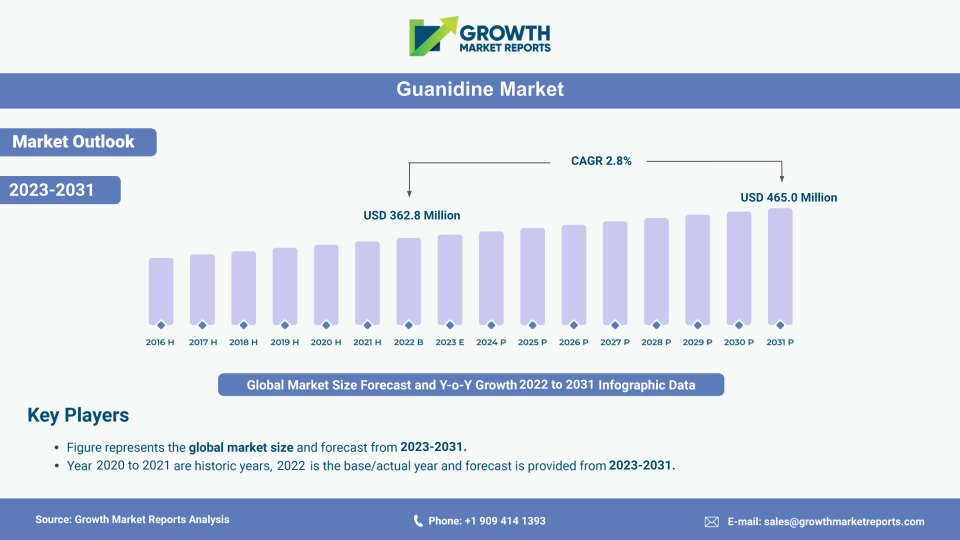
According to our latest research, the global guanidine market size reached USD 427 million in 2024, reflecting robust demand across diverse industries. The market is projected to expand at a CAGR of 5.2% from 2025 to 2033, with the market size forecasted to attain USD 673 million by 2033. The main growth driver for the guanidine market is the increasing utilization of guanidine derivatives in pharmaceuticals and agrochemicals, coupled with the rising demand for water treatment chemicals and advancements in textile processing. As per the latest research, the market's upward trajectory is underpinned by innovations in manufacturing processes and the growing emphasis on sustainable and high-performance chemicals across end-use industries.

The guanidine market is experiencing significant growth due to the expanding pharmaceutical sector, where guanidine and its derivatives are integral to the synthesis of various drugs, including anti-diabetic and anti-viral medications. The growing prevalence of chronic diseases and the surge in research and development activities are fueling the demand for high-purity guanidine compounds. Furthermore, the pharmaceutical industry's focus on innovative drug formulations and the increasing adoption of specialty chemicals are driving market expansion. The robust pipeline of new drugs and the global emphasis on healthcare improvement are expected to further propel the demand for guanidine, especially in developed markets where regulatory standards necessitate the use of high-quality intermediates.

Another key growth factor is the rising application of guanidine in agrochemicals, particularly as a precursor in the production of pesticides and fertilizers. The need to enhance crop yield and protect against pests has led to a surge in agrochemical consumption, especially in emerging economies with large agricultural sectors. Guanidine-based products offer effective pest control and improved nutrient delivery, which aligns with the global trend toward sustainable agriculture. Additionally, advancements in chemical synthesis and the development of eco-friendly agrochemicals are providing new opportunities for market players. As governments worldwide implement stricter regulations on traditional agrochemicals, the demand for innovative and less toxic alternatives, such as guanidine derivatives, is expected to rise steadily.

The guanidine market is also benefiting from its increasing use in water treatment, textiles, and plastics. In water treatment, guanidine compounds are used as disinfectants and biocides due to their effectiveness in eliminating pathogens and improving water quality. The textile industry utilizes guanidine derivatives for dye fixation and as flame retardants, catering to the growing demand for high-performance and safety-enhanced fabrics. In the plastics sector, guanidine is employed as a catalyst and stabilizer, supporting the production of advanced polymer materials. The confluence of these applications, coupled with technological advancements in chemical processing, is fostering a favorable environment for the sustained growth of the guanidine market.

Guanfacine, a medication primarily used to treat attention deficit hyperactivity disorder (ADHD) and hypertension, is an example of how guanidine derivatives are making significant inroads into the pharmaceutical industry. This compound, derived from guanidine, highlights the versatility and importance of guanidine-based chemicals in developing effective therapeutic agents. The increasing prevalence of ADHD and the demand for non-stimulant medications are driving the research and development of guanfacine and similar compounds. As the pharmaceutical industry continues to innovate, the role of guanidine derivatives in creating new, effective treatments underscores the growing significance of this market segment.

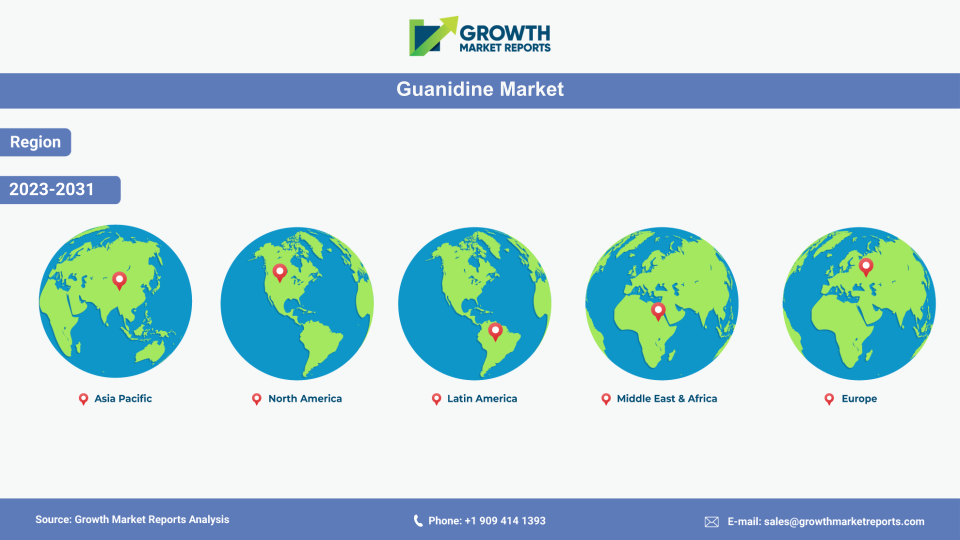
From a regional perspective, the Asia Pacific region dominates the global guanidine market, driven by rapid industrialization, robust growth in pharmaceuticals and agrochemicals, and increasing investments in water treatment infrastructure. China and India, in particular, have emerged as key producers and consumers of guanidine, supported by large-scale manufacturing capabilities and expanding end-use industries. North America and Europe are also significant markets, characterized by stringent regulatory frameworks and a strong focus on research and development. Meanwhile, Latin America and the Middle East & Africa are witnessing steady growth, fueled by agricultural expansion and infrastructure development. The regional outlook remains positive, with Asia Pacific expected to maintain its leading position throughout the forecast period.

Global Guanidine Industry Outlook

Product Type Analysis

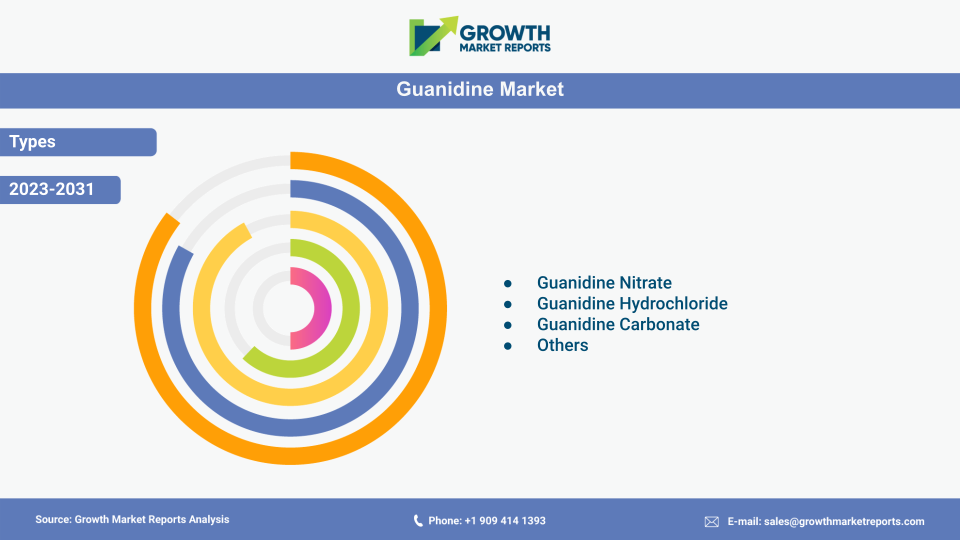
The guanidine market is segmented by product type into industrial grade, pharmaceutical grade, and others, each serving distinct applications and exhibiting unique growth dynamics. Industrial grade guanidine holds the largest market share, primarily due to its extensive use in agrochemicals, water treatment, and textiles. Industrial grade guanidine is favored for its cost-effectiveness and versatility, making it suitable for large-scale industrial processes. The demand for this segment is further bolstered by the expansion of manufacturing facilities in emerging economies and the rising adoption of guanidine-based chemicals in environmental and industrial applications. As industries seek more efficient and sustainable chemical solutions, the industrial grade segment is poised for steady growth.

Pharmaceutical grade guanidine represents a rapidly growing segment, driven by the increasing demand for high-purity chemicals in drug synthesis and formulation. The stringent regulatory requirements for pharmaceutical manufacturing necessitate the use of guanidine with minimal impurities, ensuring product safety and efficacy. This has led to significant investments in advanced purification technologies and quality control measures. Pharmaceutical grade guanidine is widely used in the production of anti-viral, anti-diabetic, and other therapeutic agents, reflecting the broader trend toward specialty chemicals in the healthcare sector. The rising incidence of chronic diseases and the ongoing development of novel pharmaceuticals are expected to further accelerate the growth of this segment.

The "others" segment encompasses specialty grades of guanidine tailored for niche applications, such as electronics, personal care, and laboratory reagents. Although this segment accounts for a smaller share of the overall market, it is characterized by high value addition and innovation. Specialty guanidine products are often customized to meet specific performance requirements, such as enhanced stability or reactivity. The demand for these products is driven by advancements in material science and the growing need for high-performance chemicals in cutting-edge industries. As research and development activities intensify, the "others" segment is expected to witness incremental growth, supported by the emergence of new application areas.

Across all product types, the guanidine market is witnessing a shift toward sustainable and environmentally friendly production methods. Manufacturers are increasingly adopting green chemistry principles and investing in cleaner technologies to reduce the environmental impact of guanidine synthesis. This trend is particularly pronounced in regions with stringent environmental regulations, such as Europe and North America. The emphasis on sustainability is not only enhancing the market appeal of guanidine products but also driving innovation in product development and process optimization. As end-users prioritize eco-friendly solutions, the demand for sustainably produced guanidine is expected to rise across all product segments.

In summary, the product type segmentation of the guanidine market highlights the diverse applications and growth drivers across industrial, pharmaceutical, and specialty grades. The ongoing advancements in production technologies, coupled with the rising demand for high-purity and sustainable chemicals, are shaping the competitive landscape and fostering long-term market growth. Market participants are focusing on product differentiation and quality enhancement to capture emerging opportunities and address evolving customer needs.

Report Scope

Attributes Details
Report Title Guanidine Market Research Report 2033
By Product Type Industrial Grade, Pharmaceutical Grade, Others
By Application Pharmaceuticals, Agrochemicals, Textiles, Plastics, Water Treatment, Others
By End-Use Industry Chemical, Pharmaceutical, Agriculture, Textile, Others
Regions Covered North America, Europe, APAC, Latin America, MEA
Base Year 2024
Historic Data 2018-2023
Forecast Period 2025-2033
Number of Pages 293
Number of Tables & Figures 273
Customization Available Yes, the report can be customized as per your need.

Application Analysis

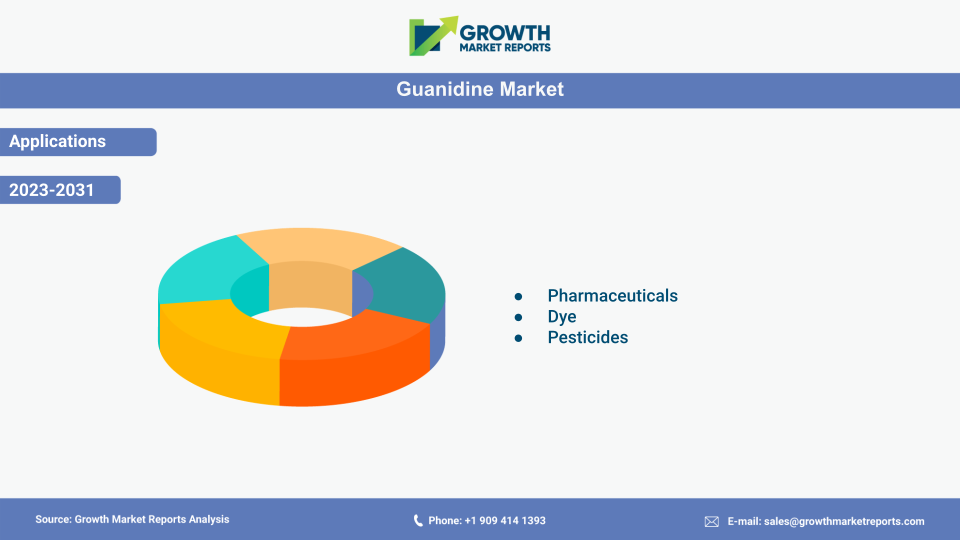
The application segment of the guanidine market is broad, encompassing pharmaceuticals, agrochemicals, textiles, plastics, water treatment, and others. Pharmaceuticals constitute the largest application area, accounting for a significant share of global guanidine consumption. The compound's role as a key intermediate in the synthesis of various drugs, including anti-viral, anti-diabetic, and anti-hypertensive agents, underscores its critical importance in the pharmaceutical industry. The growing focus on healthcare innovation, coupled with the rising demand for effective therapeutic agents, is driving the expansion of this segment. Pharmaceutical manufacturers are increasingly seeking high-purity guanidine to meet stringent regulatory standards and ensure product safety, further boosting market growth.

Agrochemicals represent another major application segment, with guanidine being used in the formulation of pesticides, herbicides, and fertilizers. The global push toward sustainable agriculture and the need to enhance crop productivity are key factors fueling demand for guanidine-based agrochemicals. As traditional agrochemicals face regulatory scrutiny and environmental concerns, guanidine derivatives offer a safer and more effective alternative. The adoption of integrated pest management practices and the development of bio-based agrochemicals are also contributing to the growth of this segment. Emerging economies, with their large agricultural sectors, are particularly active in adopting guanidine-based solutions to improve crop yield and quality.

In the textile industry, guanidine derivatives are widely used for dye fixation, flame retardancy, and antimicrobial treatments. The demand for high-performance and safety-enhanced textiles is rising, driven by consumer preferences for durable and functional fabrics. Guanidine-based chemicals offer superior performance characteristics, such as improved color fastness and resistance to microbial growth. The increasing adoption of technical textiles in sectors like healthcare, automotive, and construction is further expanding the application scope of guanidine in this industry. Additionally, the shift toward sustainable textile processing methods is encouraging the use of eco-friendly guanidine derivatives.

Plastics and water treatment are also significant application areas, with guanidine serving as a catalyst, stabilizer, and biocide. In plastics manufacturing, guanidine is used to enhance polymer properties and improve processing efficiency. The demand for advanced polymer materials in automotive, electronics, and packaging industries is supporting the growth of this segment. In water treatment, guanidine compounds are valued for their effectiveness in controlling microbial contamination and improving water quality. The increasing need for safe and clean water, particularly in urban and industrial settings, is driving the adoption of guanidine-based water treatment chemicals.

The "others" application segment includes electronics, personal care, and laboratory reagents, where guanidine is used in specialized formulations. Although this segment is relatively smaller, it is characterized by high growth potential due to ongoing research and the emergence of new application areas. The versatility of guanidine and its derivatives allows for customization to meet specific performance requirements, making it a valuable component in innovative product development. As technological advancements continue to reshape various industries, the application landscape for guanidine is expected to broaden, creating new opportunities for market participants.

End-Use Industry Analysis

The guanidine market is segmented by end-use industry into chemical, pharmaceutical, agriculture, textile, and others, each reflecting distinct demand dynamics and growth prospects. The chemical industry is a major consumer of guanidine, utilizing it as a building block for the synthesis of a wide range of specialty chemicals and intermediates. The expansion of the chemical sector, particularly in Asia Pacific, is driving the demand for guanidine as manufacturers seek versatile and cost-effective raw materials. The growing emphasis on sustainable and high-performance chemicals is also encouraging the adoption of guanidine in various chemical processes, supporting the overall growth of this segment.

The pharmaceutical industry is another key end-user, leveraging guanidine for the production of active pharmaceutical ingredients (APIs) and drug intermediates. The increasing prevalence of chronic diseases, coupled with the rising demand for innovative therapeutics, is fueling the need for high-purity guanidine. Pharmaceutical companies are investing in advanced synthesis and purification technologies to meet regulatory requirements and ensure product quality. The trend toward personalized medicine and the development of novel drug delivery systems are further expanding the application scope of guanidine in the pharmaceutical sector. As healthcare spending continues to rise globally, the pharmaceutical end-use segment is expected to maintain robust growth.

In the agriculture industry, guanidine is primarily used in the formulation of agrochemicals, such as pesticides and fertilizers. The need to improve crop yield and protect against pests is driving the adoption of guanidine-based solutions, especially in regions with large agricultural sectors. The shift toward sustainable farming practices and the development of bio-based agrochemicals are also contributing to the growth of this segment. As governments implement stricter regulations on traditional agrochemicals, the demand for safer and more effective alternatives, such as guanidine derivatives, is expected to increase.

The textile industry utilizes guanidine derivatives for dye fixation, flame retardancy, and antimicrobial treatments, catering to the growing demand for high-performance and functional textiles. The increasing use of technical textiles in healthcare, automotive, and construction sectors is driving the demand for guanidine-based chemicals. Additionally, the focus on sustainable textile processing methods is encouraging the adoption of eco-friendly guanidine derivatives. The textile end-use segment is expected to witness steady growth, supported by ongoing innovations in fabric technology and the rising demand for durable and safety-enhanced textiles.

The "others" end-use industry segment includes electronics, personal care, and laboratory applications, where guanidine is used in specialized formulations. Although this segment accounts for a smaller share of the overall market, it is characterized by high value addition and growth potential. The versatility of guanidine allows for customization to meet specific industry requirements, making it a valuable component in cutting-edge applications. As research and development activities intensify across various industries, the demand for guanidine in niche end-use segments is expected to grow, creating new opportunities for market participants.

Opportunities & Threats

The guanidine market presents several compelling opportunities for growth, driven by the increasing demand for high-performance chemicals in pharmaceuticals, agrochemicals, and water treatment. The ongoing expansion of the pharmaceutical sector, particularly in emerging economies, is creating new avenues for market players to supply high-purity guanidine for drug synthesis and formulation. The trend toward sustainable agriculture and the adoption of eco-friendly agrochemicals are also opening up opportunities for guanidine-based products. Furthermore, advancements in chemical synthesis and purification technologies are enabling manufacturers to produce guanidine with enhanced quality and efficiency, supporting market expansion. The growing focus on environmental sustainability and the development of green chemistry solutions are expected to further boost the demand for guanidine across various applications.

Another significant opportunity lies in the increasing use of guanidine in water treatment and textile applications. The rising need for safe and clean water, driven by urbanization and industrialization, is fueling the demand for effective water treatment chemicals. Guanidine-based biocides and disinfectants offer superior performance in controlling microbial contamination, making them a preferred choice for water treatment facilities. In the textile industry, the demand for high-performance and safety-enhanced fabrics is driving the adoption of guanidine derivatives for dye fixation and flame retardancy. The shift toward sustainable textile processing methods and the development of innovative fabric technologies are expected to create new growth opportunities for guanidine market participants.

Despite the positive growth outlook, the guanidine market faces certain restraining factors, primarily related to regulatory and environmental concerns. The production and use of guanidine are subject to stringent regulations in many regions, particularly in North America and Europe, due to its potential environmental and health impacts. Compliance with these regulations requires significant investments in advanced manufacturing and waste management technologies, which can increase production costs and limit market entry for smaller players. Additionally, the volatility in raw material prices and the availability of substitutes in some applications pose challenges to market growth. Addressing these challenges will require ongoing innovation, strategic investments, and collaboration among industry stakeholders to ensure sustainable and compliant market development.

Regional Outlook

The Asia Pacific region leads the global guanidine market, accounting for approximately 47% of the total market value in 2024, which translates to about USD 201 million. This dominance is primarily driven by rapid industrialization, robust growth in the pharmaceutical and agrochemical sectors, and significant investments in water treatment infrastructure. China and India are the major contributors to regional growth, leveraging their large-scale manufacturing capabilities and expanding end-use industries. The region's favorable regulatory environment, coupled with the availability of raw materials and skilled labor, is attracting investments from global market players. The Asia Pacific guanidine market is expected to maintain a strong growth trajectory, with a projected CAGR of 6.1% through 2033, outpacing other regions.

North America is the second-largest market, with a market size of around USD 98 million in 2024. The region's growth is underpinned by the presence of a well-established pharmaceutical industry, strict regulatory standards, and a strong focus on research and development. The demand for high-purity guanidine in drug synthesis and the adoption of innovative chemical processes are driving market expansion in North America. The United States is the primary contributor, supported by a robust healthcare sector and ongoing investments in chemical manufacturing. The region is also witnessing increased adoption of guanidine in water treatment and textile applications, reflecting the broader trend toward sustainable and high-performance chemicals.

Europe holds a significant share of the global guanidine market, valued at approximately USD 81 million in 2024. The region is characterized by stringent environmental regulations and a strong emphasis on sustainability, driving the demand for eco-friendly guanidine products. Germany, France, and the United Kingdom are key markets, supported by advanced manufacturing capabilities and a focus on innovation. The adoption of guanidine in pharmaceuticals, agrochemicals, and specialty chemicals is supporting steady market growth in Europe. Meanwhile, Latin America and the Middle East & Africa are emerging as promising markets, with a combined market size of around USD 47 million in 2024. These regions are benefiting from agricultural expansion, infrastructure development, and increasing investments in water treatment. Although their market shares are currently smaller, the growth potential in these regions remains strong, supported by favorable demographics and economic development.

Guanidine Market Statistics

Competitor Outlook

The global guanidine market is characterized by a moderately consolidated competitive landscape, with a mix of large multinational corporations and regional players vying for market share. Leading companies are focusing on expanding their production capacities, enhancing product quality, and investing in research and development to maintain a competitive edge. Strategic partnerships, mergers, and acquisitions are common strategies employed by key players to strengthen their market position and diversify their product portfolios. The emphasis on sustainability and regulatory compliance is prompting companies to adopt advanced manufacturing technologies and green chemistry solutions, further intensifying competition in the market.

Innovation remains a key differentiator in the guanidine market, with companies investing in the development of high-purity and specialty guanidine products to cater to evolving customer needs. The growing demand for guanidine in pharmaceuticals, agrochemicals, and water treatment is encouraging market players to explore new application areas and expand their global footprint. Regional players are leveraging their proximity to raw material sources and end-use industries to offer cost-effective solutions and establish strong distribution networks. The competitive landscape is also influenced by the entry of new players, particularly in emerging markets, where local manufacturers are capitalizing on rising demand and favorable regulatory environments.

The market is witnessing increased collaboration between manufacturers, research institutions, and end-users to drive innovation and address industry challenges. Joint ventures and technology licensing agreements are enabling companies to access advanced production technologies and accelerate product development. The focus on customer-centric solutions and value-added services is also shaping the competitive dynamics, with companies offering customized products and technical support to differentiate themselves in the market. As the guanidine market continues to evolve, the ability to adapt to changing customer requirements and regulatory standards will be crucial for sustained success.

Major companies operating in the global guanidine market include AlzChem Group AG, Vihita Chem Pvt. Ltd., SKW Piesteritz GmbH, GFS Chemicals, Inc., Shanghai Xingpu Chemical Co., Ltd., Hangzhou Xiangshun Chemical Products Co., Ltd., and Hengyang Jianheng Industry Development Co., Ltd. AlzChem Group AG is a leading producer of guanidine and its derivatives, with a strong focus on innovation and sustainability. Vihita Chem Pvt. Ltd. is known for its high-quality guanidine products and extensive distribution network, catering to customers across pharmaceuticals, agrochemicals, and specialty chemicals. SKW Piesteritz GmbH specializes in the production of industrial-grade guanidine, serving a wide range of industrial applications.

GFS Chemicals, Inc. is a prominent supplier of specialty guanidine products for laboratory and research applications, emphasizing product purity and quality assurance. Shanghai Xingpu Chemical Co., Ltd. and Hangzhou Xiangshun Chemical Products Co., Ltd. are key players in the Asia Pacific region, leveraging their manufacturing capabilities and market expertise to supply guanidine to diverse end-use industries. Hengyang Jianheng Industry Development Co., Ltd. focuses on the production of guanidine derivatives for agrochemical and pharmaceutical applications, with a strong commitment to environmental sustainability and regulatory compliance.

These companies are actively investing in capacity expansion, product innovation, and sustainability initiatives to strengthen their market position and capitalize on emerging opportunities. The competitive landscape is expected to remain dynamic, with ongoing consolidation, technological advancements, and the entry of new players shaping the future of the guanidine market. As customer preferences and regulatory requirements continue to evolve, market participants will need to remain agile and responsive to maintain a competitive edge and drive long-term growth.

Key Players

  • BASF SE
  • Evonik Industries AG
  • Vihita Chem Pvt. Ltd.
  • AlzChem Group AG
  • Taj Pharmaceuticals Limited
  • Soneas Chemicals Ltd.
  • Nanjing Chemical Material Corp.
  • Saanvi Corp
  • Sancai Industry Co., Ltd.
  • Henan Tianfu Chemical Co., Ltd.
  • Shanghai Sunwise Chemical Co., Ltd.
  • Hangzhou Meite Industry Co., Ltd.
  • Jiangsu Yuanyang Pharmaceutical Co., Ltd.
  • Gihi Chemicals Co., Limited
  • Hunan Zhuzhou Chemical Industry Group Co., Ltd.
  • Shandong Efirm Biochemistry and Environmental Protection Co., Ltd.
  • Spectrum Chemical Manufacturing Corp.
  • Tokyo Chemical Industry Co., Ltd. (TCI)
  • Merck KGaA
  • Thermo Fisher Scientific Inc.
Guanidine Market Overview

Segments

The Guanidine market has been segmented on the basis of

Product Type

  • Industrial Grade
  • Pharmaceutical Grade
  • Others

Application

  • Pharmaceuticals
  • Agrochemicals
  • Textiles
  • Plastics
  • Water Treatment
  • Others

End-Use Industry

  • Chemical
  • Pharmaceutical
  • Agriculture
  • Textile
  • Others

Competitive Landscape

Key players operating in the global guanidine market include Key players operating in the Global Guanidine market include Borealis AG, Vihita Chem Private Limited., Sanwa Chemical CO. Ltd., Alzchem Group AG, Merck KGaA, Thermo Fisher Scientific Inc., MP BIOMEDICALS., Shizuishan Pengsheng Chemical Co., Ltd, NIPPON CARBIDE INDUSTRIES CO.,INC., and Suvchem. These companies are considered as key developers of guanidine market, based on their revenue, research & development (R&D) activities, presence, and supply chain management system. These companies are considered as key manufacturers of guanidine based on their revenue, research & development (R&D) activities, presence, and value chain management system. Market Players are pursuing key strategies such as acquisitions, collaborations, and geographic expansion where a potential opportunity arises for the guanidine market.
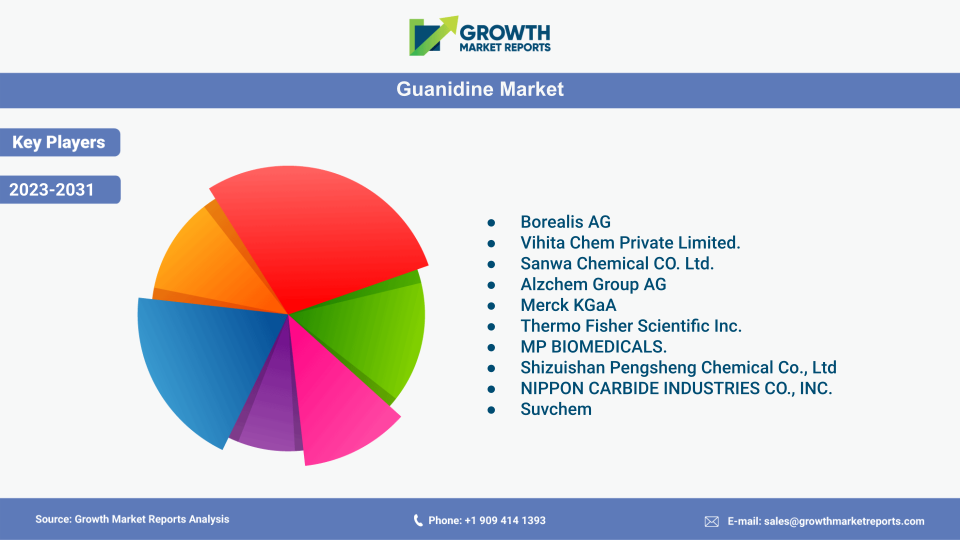

Guanidine Market Key Players

Frequently Asked Questions

Additional company profiles can be provided on request.

According to this Growth Market Reports report, the Guanidine market is likely to register a CAGR of 2.9% during forecast period 2018-2028, with an anticipated valuation of USD 428.8 million by the end of the 2028.

In addition to market size (in US$ Million), Company Market Share (in % for base year 2020), impact of key regulations and technological landscape.

Factors such as competitive strength and market positioning are key areas considered while selecting top companies to be profiled.

Growing demand for guanidine in pharmaceutical industry for the production of drugs is expected to drive the market growth during forecast period.

The market is expected to experience positive impact in 2019 and 2020 owing to the COVID 19 pandemic impact on the Guanidine market.

Pesticide segment is the major application of guanidine.

The base year considered for the global guanidine market report is 2020. The complete analysis period is 2018 to 2028, wherein, 2019 and 2020 are the historic years, and the forecast is provided from 2021 to 2028.

Factors such as R&D Industry, Demand, Production & Supply, Industrialization, and Government regulation are analyzed in the final report.

Major Manufacturers include, Borealis AG, Alzchem Group AG, Merck KGaA, Thermo Fisher Scientific Inc., and NIPPON CARBIDE INDUSTRIES CO., INC.

Table Of Content

Chapter 1 Executive Summary
Chapter 2 Assumptions and Acronyms Used
Chapter 3 Research Methodology
Chapter 4 Guanidine Market Overview
   4.1 Introduction
      4.1.1 Market Taxonomy
      4.1.2 Market Definition
      4.1.3 Macro-Economic Factors Impacting the Market Growth
   4.2 Guanidine Market Dynamics
      4.2.1 Market Drivers
      4.2.2 Market Restraints
      4.2.3 Market Opportunity
   4.3 Guanidine Market - Supply Chain Analysis
      4.3.1 List of Key Suppliers
      4.3.2 List of Key Distributors
      4.3.3 List of Key Consumers
   4.4 Key Forces Shaping the Guanidine Market
      4.4.1 Bargaining Power of Suppliers
      4.4.2 Bargaining Power of Buyers
      4.4.3 Threat of Substitution
      4.4.4 Threat of New Entrants
      4.4.5 Competitive Rivalry
   4.5 Global Guanidine Market Size & Forecast, 2023-2032
      4.5.1 Guanidine Market Size and Y-o-Y Growth
      4.5.2 Guanidine Market Absolute $ Opportunity

Chapter 5 Global Guanidine Market Analysis and Forecast By Product Type
   5.1 Introduction
      5.1.1 Key Market Trends & Growth Opportunities By Product Type
      5.1.2 Basis Point Share (BPS) Analysis By Product Type
      5.1.3 Absolute $ Opportunity Assessment By Product Type
   5.2 Guanidine Market Size Forecast By Product Type
      5.2.1 Industrial Grade
      5.2.2 Pharmaceutical Grade
      5.2.3 Others
   5.3 Market Attractiveness Analysis By Product Type

Chapter 6 Global Guanidine Market Analysis and Forecast By Application
   6.1 Introduction
      6.1.1 Key Market Trends & Growth Opportunities By Application
      6.1.2 Basis Point Share (BPS) Analysis By Application
      6.1.3 Absolute $ Opportunity Assessment By Application
   6.2 Guanidine Market Size Forecast By Application
      6.2.1 Pharmaceuticals
      6.2.2 Agrochemicals
      6.2.3 Textiles
      6.2.4 Plastics
      6.2.5 Water Treatment
      6.2.6 Others
   6.3 Market Attractiveness Analysis By Application

Chapter 7 Global Guanidine Market Analysis and Forecast By End-Use Industry
   7.1 Introduction
      7.1.1 Key Market Trends & Growth Opportunities By End-Use Industry
      7.1.2 Basis Point Share (BPS) Analysis By End-Use Industry
      7.1.3 Absolute $ Opportunity Assessment By End-Use Industry
   7.2 Guanidine Market Size Forecast By End-Use Industry
      7.2.1 Chemical
      7.2.2 Pharmaceutical
      7.2.3 Agriculture
      7.2.4 Textile
      7.2.5 Others
   7.3 Market Attractiveness Analysis By End-Use Industry

Chapter 8 Global Guanidine Market Analysis and Forecast by Region
   8.1 Introduction
      8.1.1 Key Market Trends & Growth Opportunities By Region
      8.1.2 Basis Point Share (BPS) Analysis By Region
      8.1.3 Absolute $ Opportunity Assessment By Region
   8.2 Guanidine Market Size Forecast By Region
      8.2.1 North America
      8.2.2 Europe
      8.2.3 Asia Pacific
      8.2.4 Latin America
      8.2.5 Middle East & Africa (MEA)
   8.3 Market Attractiveness Analysis By Region

Chapter 9 Coronavirus Disease (COVID-19) Impact 
   9.1 Introduction 
   9.2 Current & Future Impact Analysis 
   9.3 Economic Impact Analysis 
   9.4 Government Policies 
   9.5 Investment Scenario

Chapter 10 North America Guanidine Analysis and Forecast
   10.1 Introduction
   10.2 North America Guanidine Market Size Forecast by Country
      10.2.1 U.S.
      10.2.2 Canada
   10.3 Basis Point Share (BPS) Analysis by Country
   10.4 Absolute $ Opportunity Assessment by Country
   10.5 Market Attractiveness Analysis by Country
   10.6 North America Guanidine Market Size Forecast By Product Type
      10.6.1 Industrial Grade
      10.6.2 Pharmaceutical Grade
      10.6.3 Others
   10.7 Basis Point Share (BPS) Analysis By Product Type 
   10.8 Absolute $ Opportunity Assessment By Product Type 
   10.9 Market Attractiveness Analysis By Product Type
   10.10 North America Guanidine Market Size Forecast By Application
      10.10.1 Pharmaceuticals
      10.10.2 Agrochemicals
      10.10.3 Textiles
      10.10.4 Plastics
      10.10.5 Water Treatment
      10.10.6 Others
   10.11 Basis Point Share (BPS) Analysis By Application 
   10.12 Absolute $ Opportunity Assessment By Application 
   10.13 Market Attractiveness Analysis By Application
   10.14 North America Guanidine Market Size Forecast By End-Use Industry
      10.14.1 Chemical
      10.14.2 Pharmaceutical
      10.14.3 Agriculture
      10.14.4 Textile
      10.14.5 Others
   10.15 Basis Point Share (BPS) Analysis By End-Use Industry 
   10.16 Absolute $ Opportunity Assessment By End-Use Industry 
   10.17 Market Attractiveness Analysis By End-Use Industry

Chapter 11 Europe Guanidine Analysis and Forecast
   11.1 Introduction
   11.2 Europe Guanidine Market Size Forecast by Country
      11.2.1 Germany
      11.2.2 France
      11.2.3 Italy
      11.2.4 U.K.
      11.2.5 Spain
      11.2.6 Russia
      11.2.7 Rest of Europe
   11.3 Basis Point Share (BPS) Analysis by Country
   11.4 Absolute $ Opportunity Assessment by Country
   11.5 Market Attractiveness Analysis by Country
   11.6 Europe Guanidine Market Size Forecast By Product Type
      11.6.1 Industrial Grade
      11.6.2 Pharmaceutical Grade
      11.6.3 Others
   11.7 Basis Point Share (BPS) Analysis By Product Type 
   11.8 Absolute $ Opportunity Assessment By Product Type 
   11.9 Market Attractiveness Analysis By Product Type
   11.10 Europe Guanidine Market Size Forecast By Application
      11.10.1 Pharmaceuticals
      11.10.2 Agrochemicals
      11.10.3 Textiles
      11.10.4 Plastics
      11.10.5 Water Treatment
      11.10.6 Others
   11.11 Basis Point Share (BPS) Analysis By Application 
   11.12 Absolute $ Opportunity Assessment By Application 
   11.13 Market Attractiveness Analysis By Application
   11.14 Europe Guanidine Market Size Forecast By End-Use Industry
      11.14.1 Chemical
      11.14.2 Pharmaceutical
      11.14.3 Agriculture
      11.14.4 Textile
      11.14.5 Others
   11.15 Basis Point Share (BPS) Analysis By End-Use Industry 
   11.16 Absolute $ Opportunity Assessment By End-Use Industry 
   11.17 Market Attractiveness Analysis By End-Use Industry

Chapter 12 Asia Pacific Guanidine Analysis and Forecast
   12.1 Introduction
   12.2 Asia Pacific Guanidine Market Size Forecast by Country
      12.2.1 China
      12.2.2 Japan
      12.2.3 South Korea
      12.2.4 India
      12.2.5 Australia
      12.2.6 South East Asia (SEA)
      12.2.7 Rest of Asia Pacific (APAC)
   12.3 Basis Point Share (BPS) Analysis by Country
   12.4 Absolute $ Opportunity Assessment by Country
   12.5 Market Attractiveness Analysis by Country
   12.6 Asia Pacific Guanidine Market Size Forecast By Product Type
      12.6.1 Industrial Grade
      12.6.2 Pharmaceutical Grade
      12.6.3 Others
   12.7 Basis Point Share (BPS) Analysis By Product Type 
   12.8 Absolute $ Opportunity Assessment By Product Type 
   12.9 Market Attractiveness Analysis By Product Type
   12.10 Asia Pacific Guanidine Market Size Forecast By Application
      12.10.1 Pharmaceuticals
      12.10.2 Agrochemicals
      12.10.3 Textiles
      12.10.4 Plastics
      12.10.5 Water Treatment
      12.10.6 Others
   12.11 Basis Point Share (BPS) Analysis By Application 
   12.12 Absolute $ Opportunity Assessment By Application 
   12.13 Market Attractiveness Analysis By Application
   12.14 Asia Pacific Guanidine Market Size Forecast By End-Use Industry
      12.14.1 Chemical
      12.14.2 Pharmaceutical
      12.14.3 Agriculture
      12.14.4 Textile
      12.14.5 Others
   12.15 Basis Point Share (BPS) Analysis By End-Use Industry 
   12.16 Absolute $ Opportunity Assessment By End-Use Industry 
   12.17 Market Attractiveness Analysis By End-Use Industry

Chapter 13 Latin America Guanidine Analysis and Forecast
   13.1 Introduction
   13.2 Latin America Guanidine Market Size Forecast by Country
      13.2.1 Brazil
      13.2.2 Mexico
      13.2.3 Rest of Latin America (LATAM)
   13.3 Basis Point Share (BPS) Analysis by Country
   13.4 Absolute $ Opportunity Assessment by Country
   13.5 Market Attractiveness Analysis by Country
   13.6 Latin America Guanidine Market Size Forecast By Product Type
      13.6.1 Industrial Grade
      13.6.2 Pharmaceutical Grade
      13.6.3 Others
   13.7 Basis Point Share (BPS) Analysis By Product Type 
   13.8 Absolute $ Opportunity Assessment By Product Type 
   13.9 Market Attractiveness Analysis By Product Type
   13.10 Latin America Guanidine Market Size Forecast By Application
      13.10.1 Pharmaceuticals
      13.10.2 Agrochemicals
      13.10.3 Textiles
      13.10.4 Plastics
      13.10.5 Water Treatment
      13.10.6 Others
   13.11 Basis Point Share (BPS) Analysis By Application 
   13.12 Absolute $ Opportunity Assessment By Application 
   13.13 Market Attractiveness Analysis By Application
   13.14 Latin America Guanidine Market Size Forecast By End-Use Industry
      13.14.1 Chemical
      13.14.2 Pharmaceutical
      13.14.3 Agriculture
      13.14.4 Textile
      13.14.5 Others
   13.15 Basis Point Share (BPS) Analysis By End-Use Industry 
   13.16 Absolute $ Opportunity Assessment By End-Use Industry 
   13.17 Market Attractiveness Analysis By End-Use Industry

Chapter 14 Middle East & Africa (MEA) Guanidine Analysis and Forecast
   14.1 Introduction
   14.2 Middle East & Africa (MEA) Guanidine Market Size Forecast by Country
      14.2.1 Saudi Arabia
      14.2.2 South Africa
      14.2.3 UAE
      14.2.4 Rest of Middle East & Africa (MEA)
   14.3 Basis Point Share (BPS) Analysis by Country
   14.4 Absolute $ Opportunity Assessment by Country
   14.5 Market Attractiveness Analysis by Country
   14.6 Middle East & Africa (MEA) Guanidine Market Size Forecast By Product Type
      14.6.1 Industrial Grade
      14.6.2 Pharmaceutical Grade
      14.6.3 Others
   14.7 Basis Point Share (BPS) Analysis By Product Type 
   14.8 Absolute $ Opportunity Assessment By Product Type 
   14.9 Market Attractiveness Analysis By Product Type
   14.10 Middle East & Africa (MEA) Guanidine Market Size Forecast By Application
      14.10.1 Pharmaceuticals
      14.10.2 Agrochemicals
      14.10.3 Textiles
      14.10.4 Plastics
      14.10.5 Water Treatment
      14.10.6 Others
   14.11 Basis Point Share (BPS) Analysis By Application 
   14.12 Absolute $ Opportunity Assessment By Application 
   14.13 Market Attractiveness Analysis By Application
   14.14 Middle East & Africa (MEA) Guanidine Market Size Forecast By End-Use Industry
      14.14.1 Chemical
      14.14.2 Pharmaceutical
      14.14.3 Agriculture
      14.14.4 Textile
      14.14.5 Others
   14.15 Basis Point Share (BPS) Analysis By End-Use Industry 
   14.16 Absolute $ Opportunity Assessment By End-Use Industry 
   14.17 Market Attractiveness Analysis By End-Use Industry

Chapter 15 Competition Landscape 
   15.1 Guanidine Market: Competitive Dashboard
   15.2 Global Guanidine Market: Market Share Analysis, 2023
   15.3 Company Profiles (Details – Overview, Financials, Developments, Strategy) 
      15.3.1 BASF SE
Evonik Industries AG
Vihita Chem Pvt. Ltd.
AlzChem Group AG
Taj Pharmaceuticals Limited
Soneas Chemicals Ltd.
Nanjing Chemical Material Corp.
Saanvi Corp
Sancai Industry Co., Ltd.
Henan Tianfu Chemical Co., Ltd.
Shanghai Sunwise Chemical Co., Ltd.
Hangzhou Meite Industry Co., Ltd.
Jiangsu Yuanyang Pharmaceutical Co., Ltd.
Gihi Chemicals Co., Limited
Hunan Zhuzhou Chemical Industry Group Co., Ltd.
Shandong Efirm Biochemistry and Environmental Protection Co., Ltd.
Spectrum Chemical Manufacturing Corp.
Tokyo Chemical Industry Co., Ltd. (TCI)
Merck KGaA
Thermo Fisher Scientific Inc.

Methodology

Our Clients

FedEx Logistics
Dassault Aviation
sinopec
Microsoft
General Electric
The John Holland Group
Nestle SA
Siemens Healthcare