Ground Power Unit (GPU) Market Research Report 2033

Ground Power Unit (GPU) Market Research Report 2033

Segments - by Product Type (Mobile GPU, Fixed GPU, Towable GPU), by Power Rating (Up to 60 kVA, 60–180 kVA, Above 180 kVA), by Application (Civil Airports, Military Airports, Business Aviation, Others), by End-User (Commercial, Military, General Aviation)

https://growthmarketreports.com/Raksha
Author : Raksha Sharma
https://growthmarketreports.com/Vaibhav
Fact-checked by : V. Chandola
https://growthmarketreports.com/Shruti
Editor : Shruti Bhat

Upcoming | Report ID :AD-4965 | 5.0 Rating | 35 Reviews | 254 Pages | Format : Docx PDF

Report Description


Ground Power Unit (GPU) Market Outlook

According to our latest research, the global Ground Power Unit (GPU) market size reached USD 675 million in 2024, reflecting the increasing demand for efficient aircraft ground support systems worldwide. The market is projected to grow at a robust CAGR of 5.8% during the forecast period, reaching a value of USD 1,128 million by 2033. This remarkable growth can be attributed to the rapid expansion of airport infrastructure, escalating air traffic, and the rising adoption of advanced, eco-friendly ground power solutions across both commercial and military aviation sectors. As per our latest research, the market continues to witness significant investments in technological innovations and sustainability initiatives, further propelling its upward trajectory.

The primary growth driver for the Ground Power Unit (GPU) market is the global surge in air travel and the subsequent expansion of airport infrastructure. As commercial aviation recovers and surpasses pre-pandemic levels, airports around the world are investing heavily in modernizing their ground support equipment to improve operational efficiency and reduce turnaround times. The increasing number of flights, coupled with the need for reliable and uninterrupted power supply to aircraft on the ground, has led to a heightened demand for both fixed and mobile GPUs. Furthermore, the trend towards larger and more technologically advanced aircraft necessitates higher-capacity power units, spurring further growth in the market. This demand is not limited to commercial airports; military and business aviation segments are also upgrading their ground support systems to accommodate next-generation aircraft, driving the overall expansion of the GPU market.

Another significant factor fueling market growth is the global emphasis on sustainability and environmental regulations. Airlines and airport authorities are under increasing pressure to reduce their carbon footprint and comply with stringent emission norms. As a result, there is a marked shift towards electric and hybrid GPUs, which offer lower emissions and reduced operational costs compared to traditional diesel-powered units. Governments and regulatory bodies in regions such as Europe and North America are offering incentives for the adoption of green ground support equipment, further accelerating the transition towards eco-friendly GPUs. This shift not only addresses environmental concerns but also aligns with the broader industry goal of achieving net-zero emissions by 2050, positioning the GPU market at the forefront of aviation sustainability initiatives.

Technological advancements and digital integration are also playing a pivotal role in shaping the future of the Ground Power Unit (GPU) market. The incorporation of IoT, remote monitoring, and predictive maintenance capabilities in modern GPUs is enhancing their reliability, efficiency, and lifespan. These innovations enable real-time data collection and analysis, allowing ground operators to optimize power usage, minimize downtime, and reduce maintenance costs. Additionally, the development of modular and scalable GPU systems is enabling airports and airlines to tailor their ground support solutions to specific operational requirements, further boosting the adoption of advanced GPUs across diverse aviation segments. As the aviation industry continues to embrace digital transformation, the demand for smart, connected, and high-performance ground power units is expected to rise steadily.

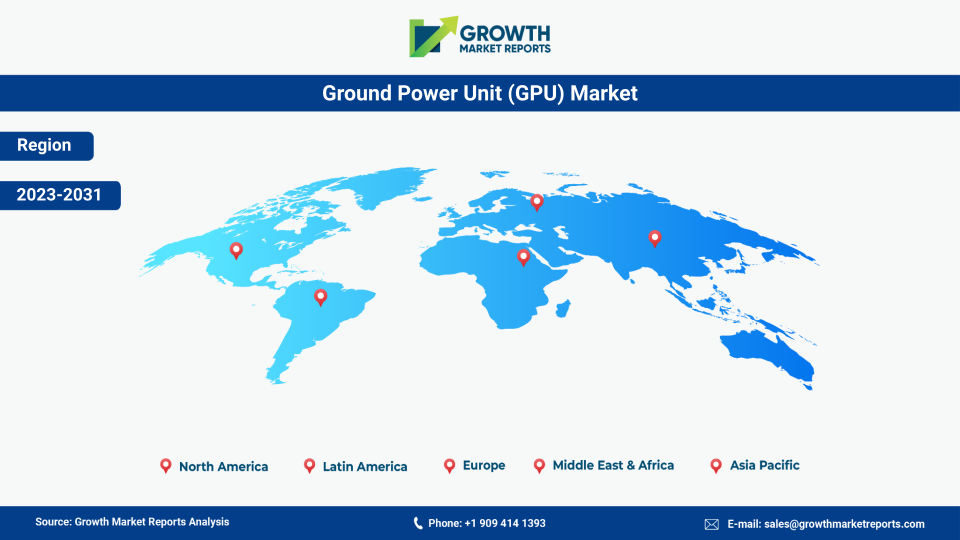
From a regional perspective, Asia Pacific is emerging as the fastest-growing market for Ground Power Units, driven by rapid urbanization, increasing air passenger traffic, and substantial investments in airport infrastructure development. Countries such as China, India, and Southeast Asian nations are witnessing a boom in both commercial and military aviation, resulting in a significant uptick in demand for advanced ground support equipment. North America and Europe, while mature markets, continue to invest in upgrading their existing airport facilities with state-of-the-art GPUs, particularly in response to evolving environmental regulations and the need for enhanced operational efficiency. The Middle East & Africa and Latin America are also experiencing steady growth, fueled by the expansion of airport networks and the rising prominence of regional airlines. Overall, the global GPU market is characterized by dynamic regional trends, with each geography contributing uniquely to the sectorÂ’s growth and innovation.

Ground Power Units are essential components in the aviation industry, providing necessary power to aircraft while they are on the ground. These units ensure that aircraft systems remain operational without relying on onboard power, which is crucial during maintenance and pre-flight checks. The versatility of Ground Power Units allows them to be used across various types of aircraft, from commercial airliners to military jets. Their importance is further highlighted by the growing emphasis on reducing turnaround times at airports, as they enable efficient power supply without the need for engine operation. As airports continue to expand and modernize, the demand for reliable and efficient Ground Power Units is expected to increase, aligning with the industry's push towards sustainability and operational efficiency.

Global Ground Power Unit (GPU) Industry Outlook

Product Type Analysis

The Ground Power Unit (GPU) market is segmented by product type into Mobile GPU, Fixed GPU, and Towable GPU, each catering to distinct operational requirements within the aviation industry. Mobile GPUs, known for their flexibility and ease of movement, are widely used at airports with variable aircraft parking positions or where rapid deployment is essential. These units are typically favored by smaller airports, business aviation terminals, and military airbases that require adaptable ground support equipment. The increasing adoption of electric and hybrid mobile GPUs is also contributing to their popularity, as they offer reduced emissions and lower operational costs compared to traditional diesel-powered counterparts. Fixed GPUs, on the other hand, are permanently installed at specific locations such as airport gates or maintenance hangars, providing a reliable and continuous power source for aircraft during ground operations. These units are particularly prevalent at major international airports with high passenger volumes and frequent aircraft turnaround, where operational efficiency and minimal downtime are paramount. Towable GPUs, which can be transported to different locations on the airfield, offer a balance between mobility and power capacity, making them suitable for both commercial and military applications. The choice of product type is often influenced by airport size, traffic volume, and specific operational needs, with many airports opting for a combination of mobile, fixed, and towable GPUs to ensure comprehensive ground support coverage.

Mobile GPUs are experiencing robust demand due to their versatility and ability to serve a wide range of aircraft types and ground support scenarios. These units are particularly valuable in remote or temporary airfields where fixed infrastructure is not feasible. The global trend towards electrification and sustainability is also driving innovation in the mobile GPU segment, with manufacturers introducing battery-powered and hybrid models that offer enhanced performance and lower environmental impact. These advancements are not only addressing regulatory requirements but also providing operators with cost-effective solutions that align with their sustainability goals. Fixed GPUs, while representing a more significant upfront investment, offer long-term operational benefits, including reduced maintenance, lower energy consumption, and improved reliability. Airports with high traffic volumes and established infrastructure are increasingly investing in fixed GPU systems to streamline ground operations and minimize aircraft turnaround times. Towable GPUs, with their unique mobility and capacity features, are gaining traction in military and general aviation segments, where the ability to quickly reposition ground power units is critical to mission success and operational flexibility.

The competitive landscape within the product type segment is characterized by continuous innovation and a focus on meeting the evolving needs of end-users. Leading manufacturers are investing in research and development to enhance the efficiency, durability, and user-friendliness of their GPU offerings. The integration of advanced features such as remote monitoring, digital controls, and modular designs is enabling operators to optimize their ground support operations and reduce total cost of ownership. Additionally, the growing emphasis on customization and scalability is allowing airports and airlines to tailor their GPU solutions to specific operational requirements, further driving adoption across all product types. As the aviation industry continues to evolve, the demand for versatile, high-performance, and environmentally friendly ground power units is expected to remain strong, with each product type playing a crucial role in supporting the sectorÂ’s growth and sustainability objectives.

Market dynamics within the product type segment are also influenced by regional preferences and regulatory frameworks. In regions with stringent environmental regulations, such as Europe and North America, there is a pronounced shift towards electric and hybrid GPUs, particularly in the mobile and fixed categories. These regions are also witnessing increased adoption of digital and automated ground support solutions, reflecting the broader trend towards smart airport infrastructure. In emerging markets, the focus is often on cost-effective and easily deployable solutions, with towable and mobile GPUs being particularly popular. The interplay between regional market characteristics, regulatory requirements, and technological advancements is shaping the competitive landscape and driving innovation across all product types. As the Ground Power Unit (GPU) market continues to expand, manufacturers and operators alike are prioritizing flexibility, efficiency, and sustainability in their product offerings to meet the diverse needs of the global aviation industry.

Report Scope

Attributes Details
Report Title Ground Power Unit (GPU) Market Research Report 2033
By Product Type Mobile GPU, Fixed GPU, Towable GPU
By Power Rating Up to 60 kVA, 60–180 kVA, Above 180 kVA
By Application Civil Airports, Military Airports, Business Aviation, Others
By End-User Commercial, Military, General Aviation
Regions Covered North America, Europe, APAC, Latin America, MEA
Base Year 2024
Historic Data 2018-2023
Forecast Period 2025-2033
Number of Pages 254
Number of Tables & Figures 345
Customization Available Yes, the report can be customized as per your need.

Power Rating Analysis

The Ground Power Unit (GPU) market is further segmented by power rating into Up to 60 kVA, 60–180 kVA, and Above 180 kVA, each serving distinct operational needs based on aircraft size and power requirements. GPUs with a power rating of up to 60 kVA are typically used for smaller aircraft, business jets, and general aviation applications, where lower power output is sufficient for essential ground operations. These units are favored for their compact size, portability, and cost-effectiveness, making them an ideal choice for smaller airports, private terminals, and military airbases with limited infrastructure. The 60–180 kVA segment caters to medium-sized commercial aircraft and regional jets, offering a balance between power capacity and operational flexibility. This segment is witnessing steady growth as regional airlines and mid-sized airports expand their fleets and upgrade their ground support equipment to accommodate a broader range of aircraft types. GPUs with a power rating above 180 kVA are designed for large commercial aircraft, wide-body jets, and heavy military transport planes, where high power output is essential to support complex onboard systems and rapid turnaround times. These high-capacity units are predominantly deployed at major international airports and military bases with high traffic volumes and stringent operational requirements.

The demand for GPUs across different power ratings is closely linked to the evolving dynamics of the global aviation industry. The proliferation of low-cost carriers, regional airlines, and business aviation has led to an increase in the number of smaller and mid-sized aircraft in operation, driving demand for GPUs in the up to 60 kVA and 60–180 kVA segments. At the same time, the growing prevalence of long-haul flights and next-generation wide-body aircraft is fueling demand for high-capacity GPUs above 180 kVA. Airports and ground handling operators are increasingly investing in a diversified portfolio of GPUs to ensure seamless ground support for a wide range of aircraft, from light jets to large commercial airliners. This trend is particularly evident in regions with rapidly expanding aviation sectors, such as Asia Pacific and the Middle East, where airport infrastructure is being upgraded to accommodate both domestic and international traffic. The ability to provide tailored ground power solutions across different power ratings is becoming a key competitive advantage for manufacturers and service providers in the GPU market.

Technological advancements are also shaping the power rating segment, with manufacturers focusing on enhancing the efficiency, reliability, and scalability of their GPU offerings. The integration of advanced power management systems, digital controls, and modular designs is enabling operators to optimize power delivery, reduce energy consumption, and minimize maintenance costs across all power rating categories. In particular, the development of hybrid and electric GPUs with flexible power output capabilities is addressing the growing demand for environmentally friendly and cost-effective ground support solutions. These innovations are not only improving operational efficiency but also supporting the aviation industryÂ’s broader sustainability goals by reducing emissions and promoting the use of renewable energy sources. As regulatory frameworks become increasingly stringent and airport operators prioritize green initiatives, the demand for advanced GPUs across all power ratings is expected to rise steadily.

Regional variations in aircraft fleet composition and airport infrastructure are also influencing the demand for GPUs across different power ratings. In mature markets such as North America and Europe, where the focus is on upgrading existing infrastructure and accommodating larger aircraft, there is a strong demand for high-capacity GPUs above 180 kVA. In contrast, emerging markets in Asia Pacific, Latin America, and Africa are witnessing increased adoption of lower and medium power rating GPUs, driven by the expansion of regional airlines and the proliferation of smaller aircraft. The ability to offer a comprehensive range of GPUs that cater to diverse operational requirements is becoming a critical success factor for market participants. As the aviation industry continues to evolve, the power rating segment of the GPU market is expected to remain dynamic and highly competitive, with ongoing innovation and customization driving growth and differentiation.

Application Analysis

The Ground Power Unit (GPU) market is segmented by application into Civil Airports, Military Airports, Business Aviation, and Others, each representing unique operational environments and requirements. Civil airports constitute the largest application segment, accounting for a significant share of global GPU demand. The steady increase in commercial air traffic, coupled with ongoing airport expansion and modernization projects, is driving the adoption of advanced ground power solutions at civil airports worldwide. These facilities require reliable and efficient GPUs to support a diverse fleet of aircraft, minimize turnaround times, and ensure seamless ground operations. The integration of digital and automated ground support systems is also gaining traction in this segment, reflecting the broader trend towards smart airport infrastructure and enhanced passenger experience.

Military airports represent a distinct application segment characterized by stringent operational requirements, high security standards, and the need for rapid deployment and mobility. GPUs deployed at military airbases must be capable of supporting a wide range of aircraft, including fighter jets, transport planes, and unmanned aerial vehicles. The emphasis on mission readiness, operational flexibility, and reliability is driving demand for robust, high-performance GPUs in this segment. Military applications often require towable and mobile GPUs that can be quickly repositioned to support dynamic operational scenarios, including field deployments and emergency response missions. The ongoing modernization of military aviation fleets and the increasing adoption of advanced ground support technologies are further fueling growth in this segment.

Business aviation is another key application area for GPUs, encompassing private jets, charter flights, and corporate aviation operations. This segment is characterized by a focus on operational efficiency, premium service quality, and the ability to accommodate a wide variety of aircraft types. Business aviation terminals and fixed-base operators (FBOs) are investing in state-of-the-art ground support equipment, including compact and portable GPUs, to enhance service delivery and minimize aircraft downtime. The rising demand for private and corporate air travel, particularly in emerging markets and high-net-worth regions, is contributing to the growth of the GPU market within the business aviation segment. The emphasis on sustainability and environmental responsibility is also driving the adoption of electric and hybrid GPUs in this segment, aligning with the broader industry trend towards green aviation solutions.

Other application areas for GPUs include cargo terminals, maintenance, repair, and overhaul (MRO) facilities, and specialized aviation operations such as firefighting, medical evacuation, and aerial surveillance. These segments require tailored ground power solutions that can support a wide range of operational scenarios and aircraft types. The increasing complexity of ground operations and the growing demand for efficient, reliable, and environmentally friendly ground support equipment are driving innovation and investment in these niche application areas. As the aviation industry continues to diversify and expand, the application segment of the GPU market is expected to remain dynamic and responsive to evolving operational needs and technological advancements.

End-User Analysis

The Ground Power Unit (GPU) market is segmented by end-user into Commercial, Military, and General Aviation, each representing distinct customer profiles and operational requirements. The commercial aviation segment is the largest end-user category, driven by the rapid growth of air passenger traffic, fleet expansion, and ongoing investments in airport infrastructure. Airlines, airport operators, and ground handling companies are the primary customers in this segment, seeking reliable, efficient, and cost-effective ground power solutions to support a diverse fleet of commercial aircraft. The emphasis on operational efficiency, sustainability, and regulatory compliance is driving the adoption of advanced GPUs, including electric and hybrid models, in the commercial aviation sector. The integration of digital technologies, such as IoT-based monitoring and predictive maintenance, is also gaining traction, enabling operators to optimize ground support operations and reduce total cost of ownership.

The military aviation segment represents a significant and growing end-user category, characterized by unique operational requirements, high security standards, and the need for mission-critical reliability. Military customers, including air forces, defense ministries, and government agencies, demand robust and versatile GPUs capable of supporting a wide range of aircraft and operational scenarios. The focus on operational readiness, rapid deployment, and flexibility is driving demand for mobile and towable GPUs in this segment. Ongoing modernization programs, fleet upgrades, and the adoption of advanced ground support technologies are further fueling growth in the military aviation end-user category. The increasing emphasis on sustainability and energy efficiency is also influencing procurement decisions, with military operators exploring electric and hybrid GPU options to reduce emissions and operational costs.

General aviation encompasses a diverse range of end-users, including private pilots, business jet operators, flight schools, and charter service providers. This segment is characterized by a focus on flexibility, portability, and ease of use, with a preference for compact and user-friendly GPU solutions. General aviation customers often operate in smaller airports, remote airfields, or temporary locations where fixed infrastructure is limited or unavailable. The rising popularity of private and recreational flying, coupled with the growth of business aviation and air taxi services, is contributing to increased demand for GPUs in the general aviation segment. The emphasis on sustainability, operational efficiency, and cost-effectiveness is driving the adoption of electric and hybrid GPUs, aligning with broader industry trends towards green aviation solutions.

Market dynamics within the end-user segment are influenced by a range of factors, including fleet composition, operational requirements, regulatory frameworks, and regional market characteristics. Manufacturers and service providers are increasingly offering customized and scalable GPU solutions tailored to the specific needs of different end-user categories. The ability to provide comprehensive after-sales support, training, and maintenance services is also becoming a key differentiator in the competitive landscape. As the aviation industry continues to evolve and diversify, the end-user segment of the GPU market is expected to remain dynamic and responsive to changing customer needs and technological advancements.

Opportunities & Threats

The Ground Power Unit (GPU) market presents a wealth of opportunities for manufacturers, service providers, and investors, driven by the ongoing expansion and modernization of the global aviation industry. One of the most significant opportunities lies in the growing emphasis on sustainability and environmental responsibility. As airlines and airport operators seek to reduce their carbon footprint and comply with stringent emission regulations, the demand for electric and hybrid GPUs is expected to surge. This shift towards green ground support equipment is creating new avenues for innovation and market differentiation, with manufacturers investing in research and development to enhance the efficiency, reliability, and performance of their eco-friendly GPU offerings. The integration of digital technologies, such as IoT-based monitoring, predictive maintenance, and remote diagnostics, is also opening up new opportunities for value-added services and operational optimization.

Another key opportunity in the GPU market is the rapid growth of the Asia Pacific region, driven by rising air passenger traffic, substantial investments in airport infrastructure, and the proliferation of low-cost carriers and regional airlines. Countries such as China, India, and Southeast Asian nations are witnessing a boom in both commercial and military aviation, resulting in increased demand for advanced ground support equipment. The expansion of business aviation and the emergence of new market segments, such as urban air mobility and electric vertical takeoff and landing (eVTOL) aircraft, are also creating new growth opportunities for GPU manufacturers and service providers. The ability to offer customized, scalable, and technologically advanced GPU solutions tailored to the specific needs of diverse customer segments is becoming a critical success factor in capturing these emerging opportunities.

Despite the positive outlook, the GPU market faces several challenges and restraining factors that could impact its growth trajectory. One of the primary restrainers is the high initial investment required for advanced GPU systems, particularly for electric and hybrid models. The cost of upgrading existing ground support infrastructure and integrating new technologies can be prohibitive for smaller airports, regional operators, and general aviation customers. Additionally, the complexity of regulatory frameworks, particularly in regions with stringent environmental and safety standards, can pose challenges for market entry and expansion. The ongoing volatility in global supply chains, fluctuating raw material prices, and geopolitical uncertainties also present risks to market stability and growth. Addressing these challenges will require a concerted effort by industry stakeholders to develop cost-effective, scalable, and compliant GPU solutions that meet the evolving needs of the global aviation industry.

Regional Outlook

From a regional perspective, the Asia Pacific region is poised to lead the global Ground Power Unit (GPU) market in terms of growth and innovation. In 2024, Asia Pacific accounted for approximately USD 215 million of the global GPU market size, representing nearly 32% of total market revenue. The region is expected to register the highest CAGR of 7.1% during the forecast period, driven by rapid urbanization, increasing air passenger traffic, and substantial investments in airport infrastructure development. Major economies such as China, India, and Southeast Asian countries are witnessing a surge in both commercial and military aviation, resulting in heightened demand for advanced ground support equipment. The expansion of low-cost carriers, regional airlines, and business aviation is further contributing to the regionÂ’s robust market growth. Governments and regulatory bodies in Asia Pacific are also promoting the adoption of green and sustainable ground support solutions, creating new opportunities for electric and hybrid GPU manufacturers.

North America remains a mature and well-established market for Ground Power Units, accounting for approximately USD 195 million of the global market in 2024, or about 29% of total revenue. The region is characterized by a high level of technological adoption, stringent environmental regulations, and a strong focus on operational efficiency and sustainability. Airports and airlines in the United States and Canada are investing in upgrading their ground support infrastructure with state-of-the-art GPU systems, including electric and hybrid models. The integration of digital technologies, such as IoT-based monitoring and predictive maintenance, is also gaining traction in North America, enabling operators to optimize ground support operations and reduce total cost of ownership. The region is expected to maintain steady growth, supported by ongoing investments in airport modernization and the increasing adoption of green aviation solutions.

Europe is another key market for Ground Power Units, with a market size of approximately USD 170 million in 2024, accounting for 25% of global revenue. The region is at the forefront of sustainability initiatives, with governments and regulatory bodies promoting the adoption of eco-friendly ground support equipment and stringent emission standards. European airports are investing in advanced GPU systems to support their sustainability goals and enhance operational efficiency. The Middle East & Africa and Latin America, while smaller in terms of market share, are experiencing steady growth driven by airport expansion, rising air traffic, and the increasing prominence of regional airlines. In 2024, these regions collectively accounted for about USD 95 million of the global GPU market. As the aviation industry continues to evolve, regional dynamics will play a crucial role in shaping the future of the GPU market, with each geography contributing uniquely to the sectorÂ’s growth and innovation.

Ground Power Unit (GPU) Market Statistics

Competitor Outlook

The Ground Power Unit (GPU) market is highly competitive, characterized by the presence of numerous global and regional players vying for market share through innovation, product differentiation, and strategic partnerships. Leading manufacturers are focusing on developing advanced, high-performance GPU systems that cater to the evolving needs of the aviation industry. The competitive landscape is marked by continuous investment in research and development, with companies striving to enhance the efficiency, reliability, and sustainability of their product offerings. The integration of digital technologies, such as IoT-based monitoring, predictive maintenance, and remote diagnostics, is becoming a key differentiator, enabling manufacturers to offer value-added services and strengthen customer relationships.

Mergers, acquisitions, and strategic alliances are common strategies adopted by key players to expand their product portfolios, enter new markets, and gain a competitive edge. Collaborations with airport authorities, airlines, and ground handling companies are also prevalent, enabling manufacturers to tailor their solutions to specific customer requirements and enhance market penetration. The emphasis on sustainability and environmental responsibility is driving innovation in electric and hybrid GPU technologies, with companies investing in the development of eco-friendly solutions that align with industry trends and regulatory requirements. The ability to offer customized, scalable, and technologically advanced GPU systems is becoming increasingly important in capturing market share and meeting the diverse needs of global customers.

The competitive landscape is also influenced by regional market dynamics, with local players leveraging their knowledge of regional regulations, customer preferences, and operational requirements to gain a foothold in their respective markets. In emerging economies, cost-effective and easily deployable GPU solutions are in high demand, while mature markets prioritize advanced, high-capacity, and environmentally friendly systems. The ability to provide comprehensive after-sales support, training, and maintenance services is a key differentiator, with manufacturers and service providers investing in customer-centric business models to enhance loyalty and retention.

Major companies operating in the Ground Power Unit (GPU) market include TLD Group, ITW GSE, Tronair, JBT Corporation, Guinault, Powervamp, Textron GSE, Red Box Aviation, and Start Pac. TLD Group is a global leader in ground support equipment, offering a comprehensive range of GPU solutions for commercial, military, and general aviation applications. ITW GSE is renowned for its innovative, energy-efficient GPU systems and strong focus on sustainability and digital integration. Tronair specializes in portable and towable GPUs, catering to the needs of business aviation and general aviation customers. JBT Corporation is a prominent player in the airport ground support equipment market, with a strong emphasis on technological innovation and customer-centric solutions. Guinault is known for its high-performance, environmentally friendly GPU systems, while Powervamp offers a wide range of portable and fixed GPU solutions for diverse aviation applications. Textron GSE, Red Box Aviation, and Start Pac are also key players, each with a strong track record of innovation, quality, and customer service.

These companies are continuously investing in research and development to stay ahead of industry trends and meet the evolving needs of their customers. The focus on sustainability, digital integration, and operational efficiency is driving product innovation and differentiation in the competitive landscape. Strategic partnerships, mergers, and acquisitions are enabling companies to expand their market presence, diversify their product offerings, and strengthen their competitive position. As the Ground Power Unit (GPU) market continues to evolve, the ability to anticipate customer needs, innovate rapidly, and deliver high-quality, reliable, and sustainable solutions will be critical to long-term success and market leadership.

Key Players

  • Textron GSE
  • Tronair
  • TLD Group
  • JBT Corporation
  • ITW GSE
  • AERO Specialties
  • Guinault
  • Powervamp
  • Red Box International
  • Velocity Airport Solutions
  • Air+Mak Industries
  • Jetall GPU
  • Start Pac
  • Current Power LLC
  • Dnata
  • Hobart Ground Power
  • Schopf Maschinenbau GmbH
  • Avro GSE
  • Cavotec SA
  • SEPHCO Industries Pty Ltd
Ground Power Unit (GPU) Market Overview

Segments

The Ground Power Unit (GPU) market has been segmented on the basis of

Product Type

  • Mobile GPU
  • Fixed GPU
  • Towable GPU

Power Rating

  • Up to 60 kVA
  • 60–180 kVA
  • Above 180 kVA

Application

  • Civil Airports
  • Military Airports
  • Business Aviation
  • Others

End-User

  • Commercial
  • Military
  • General Aviation

Competitive Landscape

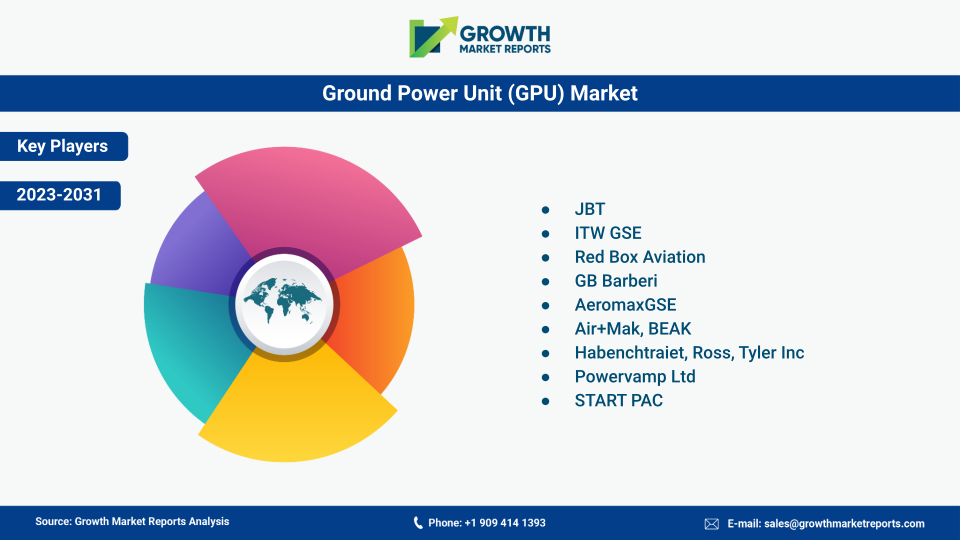
Key players competing in the global ground power unit (GPU) market are JBT; ITW GSE; Red Box Aviation; GB BARBERI; AeromaxGSE; Air+Mak, BEAK; Habenchtraiet, Ross, Tyler Inc; Powervamp Ltd; START PAC.

These companies adopted development strategies including mergers, acquisitions, partnerships, collaboration, product launches, and production expansion to expand their consumer base worldwide.

  • On January 16, 2019, AERO Specialties launched compact and user-friendly JetGo 300 Ground Power Units. The units have a low operational cost and reduce CO2 emissions.
  • On January 22, 2019, JBT signed an agreement to acquire LEKTR, a manufacturing company of electric aviation ground support equipment. The aim of the acquisition was to enhance the business of both companies.

Global Ground Power Unit (GPU) Market Key Players

Frequently Asked Questions

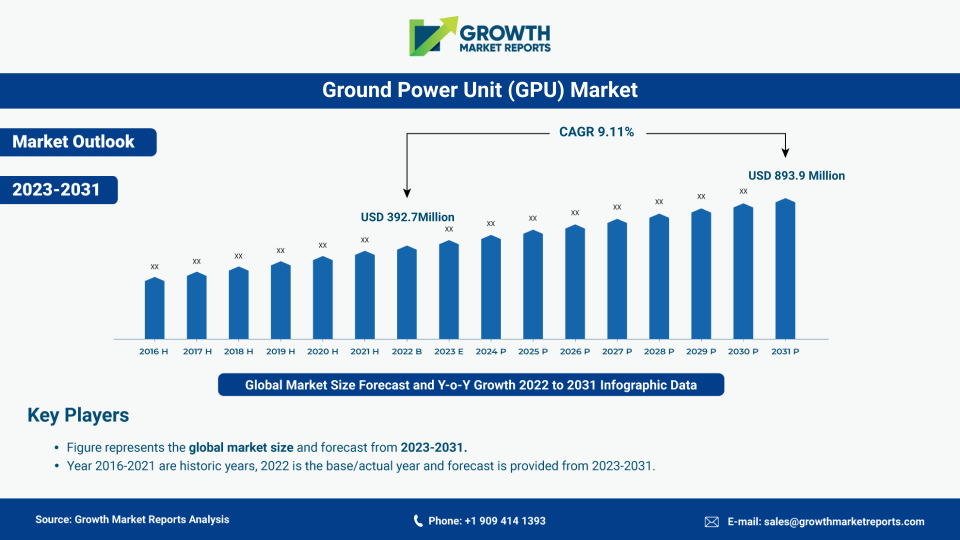
The base year considered for the global Ground Power Unit (GPU) market report is 2022. The complete analysis period is 2020 to 2031, wherein, 2020 to 2021 are the historic years, and the forecast is provided from 2023 to 2031.

In addition to market size (in US$ Million), Company Market Share (in % for the base year 2022), Key Impact of Regulation, and Percentage Breakdown by Major Airport are available in the report.

Major players include JBT, ITW GSE, Red Box Aviation, AeromaxGSE, Air+Mak, BEAK, GB BARBERI Srl, Habenchtraiet, Ross, and others.

Factors such as the Increasing Air Traffic, Proliferation of New Airports, and Growing Investment and Technology and Innovation are analyzed in the final report.

According to this GROWTH MARKET REPORTS report, the Ground Power Unit (GPU) market is expected to register a CAGR of 9.11% during the forecast period, 2023-2031, with an anticipated valuation of USD 893.9 million by the end of 2031.

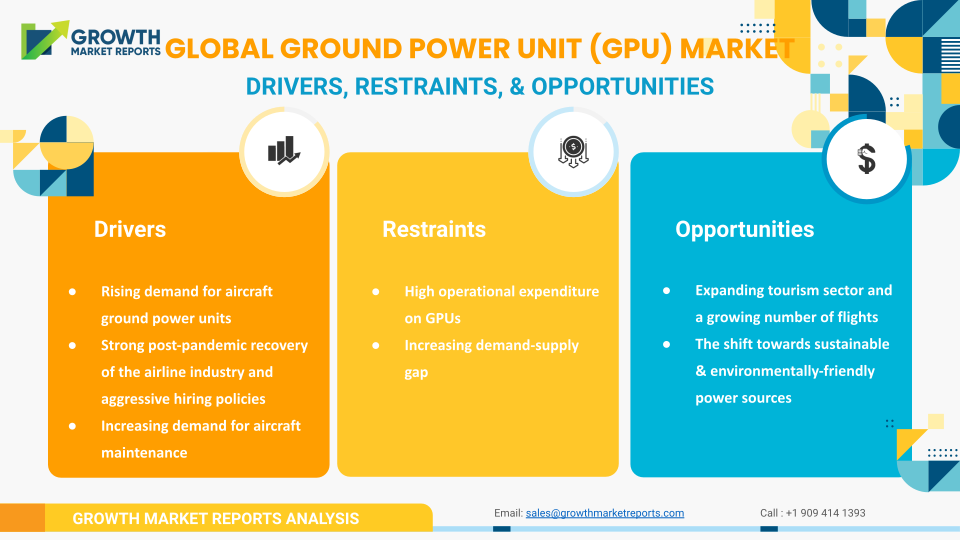
The Ground Power Unit (GPU) market is projected to expand at a rapid pace globally, owing to the Expansion of the Airline Industry, Strong Post-Pandemic Growth, Increasing Demand for Aircraft Maintenance, and an increase in Warehouse Operation at Airports.

Factors such as competitive strength and market positioning are key areas considered while selecting top companies to be profiled.

Additional company profiles are provided on request For a discussion related to above findings, click Speak to Analyst

Table Of Content

Chapter 1 Executive Summary
Chapter 2 Assumptions and Acronyms Used
Chapter 3 Research Methodology
Chapter 4 Ground Power Unit (GPU) Market Overview
   4.1 Introduction
      4.1.1 Market Taxonomy
      4.1.2 Market Definition
      4.1.3 Macro-Economic Factors Impacting the Market Growth
   4.2 Ground Power Unit (GPU) Market Dynamics
      4.2.1 Market Drivers
      4.2.2 Market Restraints
      4.2.3 Market Opportunity
   4.3 Ground Power Unit (GPU) Market - Supply Chain Analysis
      4.3.1 List of Key Suppliers
      4.3.2 List of Key Distributors
      4.3.3 List of Key Consumers
   4.4 Key Forces Shaping the Ground Power Unit (GPU) Market
      4.4.1 Bargaining Power of Suppliers
      4.4.2 Bargaining Power of Buyers
      4.4.3 Threat of Substitution
      4.4.4 Threat of New Entrants
      4.4.5 Competitive Rivalry
   4.5 Global Ground Power Unit (GPU) Market Size & Forecast, 2023-2032
      4.5.1 Ground Power Unit (GPU) Market Size and Y-o-Y Growth
      4.5.2 Ground Power Unit (GPU) Market Absolute $ Opportunity

Chapter 5 Global Ground Power Unit (GPU) Market Analysis and Forecast By Product Type
   5.1 Introduction
      5.1.1 Key Market Trends & Growth Opportunities By Product Type
      5.1.2 Basis Point Share (BPS) Analysis By Product Type
      5.1.3 Absolute $ Opportunity Assessment By Product Type
   5.2 Ground Power Unit (GPU) Market Size Forecast By Product Type
      5.2.1 Mobile GPU
      5.2.2 Fixed GPU
      5.2.3 Towable GPU
   5.3 Market Attractiveness Analysis By Product Type

Chapter 6 Global Ground Power Unit (GPU) Market Analysis and Forecast By Power Rating
   6.1 Introduction
      6.1.1 Key Market Trends & Growth Opportunities By Power Rating
      6.1.2 Basis Point Share (BPS) Analysis By Power Rating
      6.1.3 Absolute $ Opportunity Assessment By Power Rating
   6.2 Ground Power Unit (GPU) Market Size Forecast By Power Rating
      6.2.1 Up to 60 kVA
      6.2.2 60–180 kVA
      6.2.3 Above 180 kVA
   6.3 Market Attractiveness Analysis By Power Rating

Chapter 7 Global Ground Power Unit (GPU) Market Analysis and Forecast By Application
   7.1 Introduction
      7.1.1 Key Market Trends & Growth Opportunities By Application
      7.1.2 Basis Point Share (BPS) Analysis By Application
      7.1.3 Absolute $ Opportunity Assessment By Application
   7.2 Ground Power Unit (GPU) Market Size Forecast By Application
      7.2.1 Civil Airports
      7.2.2 Military Airports
      7.2.3 Business Aviation
      7.2.4 Others
   7.3 Market Attractiveness Analysis By Application

Chapter 8 Global Ground Power Unit (GPU) Market Analysis and Forecast By End-User
   8.1 Introduction
      8.1.1 Key Market Trends & Growth Opportunities By End-User
      8.1.2 Basis Point Share (BPS) Analysis By End-User
      8.1.3 Absolute $ Opportunity Assessment By End-User
   8.2 Ground Power Unit (GPU) Market Size Forecast By End-User
      8.2.1 Commercial
      8.2.2 Military
      8.2.3 General Aviation
   8.3 Market Attractiveness Analysis By End-User

Chapter 9 Global Ground Power Unit (GPU) Market Analysis and Forecast by Region
   9.1 Introduction
      9.1.1 Key Market Trends & Growth Opportunities By Region
      9.1.2 Basis Point Share (BPS) Analysis By Region
      9.1.3 Absolute $ Opportunity Assessment By Region
   9.2 Ground Power Unit (GPU) Market Size Forecast By Region
      9.2.1 North America
      9.2.2 Europe
      9.2.3 Asia Pacific
      9.2.4 Latin America
      9.2.5 Middle East & Africa (MEA)
   9.3 Market Attractiveness Analysis By Region

Chapter 10 Coronavirus Disease (COVID-19) Impact 
   10.1 Introduction 
   10.2 Current & Future Impact Analysis 
   10.3 Economic Impact Analysis 
   10.4 Government Policies 
   10.5 Investment Scenario

Chapter 11 North America Ground Power Unit (GPU) Analysis and Forecast
   11.1 Introduction
   11.2 North America Ground Power Unit (GPU) Market Size Forecast by Country
      11.2.1 U.S.
      11.2.2 Canada
   11.3 Basis Point Share (BPS) Analysis by Country
   11.4 Absolute $ Opportunity Assessment by Country
   11.5 Market Attractiveness Analysis by Country
   11.6 North America Ground Power Unit (GPU) Market Size Forecast By Product Type
      11.6.1 Mobile GPU
      11.6.2 Fixed GPU
      11.6.3 Towable GPU
   11.7 Basis Point Share (BPS) Analysis By Product Type 
   11.8 Absolute $ Opportunity Assessment By Product Type 
   11.9 Market Attractiveness Analysis By Product Type
   11.10 North America Ground Power Unit (GPU) Market Size Forecast By Power Rating
      11.10.1 Up to 60 kVA
      11.10.2 60–180 kVA
      11.10.3 Above 180 kVA
   11.11 Basis Point Share (BPS) Analysis By Power Rating 
   11.12 Absolute $ Opportunity Assessment By Power Rating 
   11.13 Market Attractiveness Analysis By Power Rating
   11.14 North America Ground Power Unit (GPU) Market Size Forecast By Application
      11.14.1 Civil Airports
      11.14.2 Military Airports
      11.14.3 Business Aviation
      11.14.4 Others
   11.15 Basis Point Share (BPS) Analysis By Application 
   11.16 Absolute $ Opportunity Assessment By Application 
   11.17 Market Attractiveness Analysis By Application
   11.18 North America Ground Power Unit (GPU) Market Size Forecast By End-User
      11.18.1 Commercial
      11.18.2 Military
      11.18.3 General Aviation
   11.19 Basis Point Share (BPS) Analysis By End-User 
   11.20 Absolute $ Opportunity Assessment By End-User 
   11.21 Market Attractiveness Analysis By End-User

Chapter 12 Europe Ground Power Unit (GPU) Analysis and Forecast
   12.1 Introduction
   12.2 Europe Ground Power Unit (GPU) Market Size Forecast by Country
      12.2.1 Germany
      12.2.2 France
      12.2.3 Italy
      12.2.4 U.K.
      12.2.5 Spain
      12.2.6 Russia
      12.2.7 Rest of Europe
   12.3 Basis Point Share (BPS) Analysis by Country
   12.4 Absolute $ Opportunity Assessment by Country
   12.5 Market Attractiveness Analysis by Country
   12.6 Europe Ground Power Unit (GPU) Market Size Forecast By Product Type
      12.6.1 Mobile GPU
      12.6.2 Fixed GPU
      12.6.3 Towable GPU
   12.7 Basis Point Share (BPS) Analysis By Product Type 
   12.8 Absolute $ Opportunity Assessment By Product Type 
   12.9 Market Attractiveness Analysis By Product Type
   12.10 Europe Ground Power Unit (GPU) Market Size Forecast By Power Rating
      12.10.1 Up to 60 kVA
      12.10.2 60–180 kVA
      12.10.3 Above 180 kVA
   12.11 Basis Point Share (BPS) Analysis By Power Rating 
   12.12 Absolute $ Opportunity Assessment By Power Rating 
   12.13 Market Attractiveness Analysis By Power Rating
   12.14 Europe Ground Power Unit (GPU) Market Size Forecast By Application
      12.14.1 Civil Airports
      12.14.2 Military Airports
      12.14.3 Business Aviation
      12.14.4 Others
   12.15 Basis Point Share (BPS) Analysis By Application 
   12.16 Absolute $ Opportunity Assessment By Application 
   12.17 Market Attractiveness Analysis By Application
   12.18 Europe Ground Power Unit (GPU) Market Size Forecast By End-User
      12.18.1 Commercial
      12.18.2 Military
      12.18.3 General Aviation
   12.19 Basis Point Share (BPS) Analysis By End-User 
   12.20 Absolute $ Opportunity Assessment By End-User 
   12.21 Market Attractiveness Analysis By End-User

Chapter 13 Asia Pacific Ground Power Unit (GPU) Analysis and Forecast
   13.1 Introduction
   13.2 Asia Pacific Ground Power Unit (GPU) Market Size Forecast by Country
      13.2.1 China
      13.2.2 Japan
      13.2.3 South Korea
      13.2.4 India
      13.2.5 Australia
      13.2.6 South East Asia (SEA)
      13.2.7 Rest of Asia Pacific (APAC)
   13.3 Basis Point Share (BPS) Analysis by Country
   13.4 Absolute $ Opportunity Assessment by Country
   13.5 Market Attractiveness Analysis by Country
   13.6 Asia Pacific Ground Power Unit (GPU) Market Size Forecast By Product Type
      13.6.1 Mobile GPU
      13.6.2 Fixed GPU
      13.6.3 Towable GPU
   13.7 Basis Point Share (BPS) Analysis By Product Type 
   13.8 Absolute $ Opportunity Assessment By Product Type 
   13.9 Market Attractiveness Analysis By Product Type
   13.10 Asia Pacific Ground Power Unit (GPU) Market Size Forecast By Power Rating
      13.10.1 Up to 60 kVA
      13.10.2 60–180 kVA
      13.10.3 Above 180 kVA
   13.11 Basis Point Share (BPS) Analysis By Power Rating 
   13.12 Absolute $ Opportunity Assessment By Power Rating 
   13.13 Market Attractiveness Analysis By Power Rating
   13.14 Asia Pacific Ground Power Unit (GPU) Market Size Forecast By Application
      13.14.1 Civil Airports
      13.14.2 Military Airports
      13.14.3 Business Aviation
      13.14.4 Others
   13.15 Basis Point Share (BPS) Analysis By Application 
   13.16 Absolute $ Opportunity Assessment By Application 
   13.17 Market Attractiveness Analysis By Application
   13.18 Asia Pacific Ground Power Unit (GPU) Market Size Forecast By End-User
      13.18.1 Commercial
      13.18.2 Military
      13.18.3 General Aviation
   13.19 Basis Point Share (BPS) Analysis By End-User 
   13.20 Absolute $ Opportunity Assessment By End-User 
   13.21 Market Attractiveness Analysis By End-User

Chapter 14 Latin America Ground Power Unit (GPU) Analysis and Forecast
   14.1 Introduction
   14.2 Latin America Ground Power Unit (GPU) Market Size Forecast by Country
      14.2.1 Brazil
      14.2.2 Mexico
      14.2.3 Rest of Latin America (LATAM)
   14.3 Basis Point Share (BPS) Analysis by Country
   14.4 Absolute $ Opportunity Assessment by Country
   14.5 Market Attractiveness Analysis by Country
   14.6 Latin America Ground Power Unit (GPU) Market Size Forecast By Product Type
      14.6.1 Mobile GPU
      14.6.2 Fixed GPU
      14.6.3 Towable GPU
   14.7 Basis Point Share (BPS) Analysis By Product Type 
   14.8 Absolute $ Opportunity Assessment By Product Type 
   14.9 Market Attractiveness Analysis By Product Type
   14.10 Latin America Ground Power Unit (GPU) Market Size Forecast By Power Rating
      14.10.1 Up to 60 kVA
      14.10.2 60–180 kVA
      14.10.3 Above 180 kVA
   14.11 Basis Point Share (BPS) Analysis By Power Rating 
   14.12 Absolute $ Opportunity Assessment By Power Rating 
   14.13 Market Attractiveness Analysis By Power Rating
   14.14 Latin America Ground Power Unit (GPU) Market Size Forecast By Application
      14.14.1 Civil Airports
      14.14.2 Military Airports
      14.14.3 Business Aviation
      14.14.4 Others
   14.15 Basis Point Share (BPS) Analysis By Application 
   14.16 Absolute $ Opportunity Assessment By Application 
   14.17 Market Attractiveness Analysis By Application
   14.18 Latin America Ground Power Unit (GPU) Market Size Forecast By End-User
      14.18.1 Commercial
      14.18.2 Military
      14.18.3 General Aviation
   14.19 Basis Point Share (BPS) Analysis By End-User 
   14.20 Absolute $ Opportunity Assessment By End-User 
   14.21 Market Attractiveness Analysis By End-User

Chapter 15 Middle East & Africa (MEA) Ground Power Unit (GPU) Analysis and Forecast
   15.1 Introduction
   15.2 Middle East & Africa (MEA) Ground Power Unit (GPU) Market Size Forecast by Country
      15.2.1 Saudi Arabia
      15.2.2 South Africa
      15.2.3 UAE
      15.2.4 Rest of Middle East & Africa (MEA)
   15.3 Basis Point Share (BPS) Analysis by Country
   15.4 Absolute $ Opportunity Assessment by Country
   15.5 Market Attractiveness Analysis by Country
   15.6 Middle East & Africa (MEA) Ground Power Unit (GPU) Market Size Forecast By Product Type
      15.6.1 Mobile GPU
      15.6.2 Fixed GPU
      15.6.3 Towable GPU
   15.7 Basis Point Share (BPS) Analysis By Product Type 
   15.8 Absolute $ Opportunity Assessment By Product Type 
   15.9 Market Attractiveness Analysis By Product Type
   15.10 Middle East & Africa (MEA) Ground Power Unit (GPU) Market Size Forecast By Power Rating
      15.10.1 Up to 60 kVA
      15.10.2 60–180 kVA
      15.10.3 Above 180 kVA
   15.11 Basis Point Share (BPS) Analysis By Power Rating 
   15.12 Absolute $ Opportunity Assessment By Power Rating 
   15.13 Market Attractiveness Analysis By Power Rating
   15.14 Middle East & Africa (MEA) Ground Power Unit (GPU) Market Size Forecast By Application
      15.14.1 Civil Airports
      15.14.2 Military Airports
      15.14.3 Business Aviation
      15.14.4 Others
   15.15 Basis Point Share (BPS) Analysis By Application 
   15.16 Absolute $ Opportunity Assessment By Application 
   15.17 Market Attractiveness Analysis By Application
   15.18 Middle East & Africa (MEA) Ground Power Unit (GPU) Market Size Forecast By End-User
      15.18.1 Commercial
      15.18.2 Military
      15.18.3 General Aviation
   15.19 Basis Point Share (BPS) Analysis By End-User 
   15.20 Absolute $ Opportunity Assessment By End-User 
   15.21 Market Attractiveness Analysis By End-User

Chapter 16 Competition Landscape 
   16.1 Ground Power Unit (GPU) Market: Competitive Dashboard
   16.2 Global Ground Power Unit (GPU) Market: Market Share Analysis, 2023
   16.3 Company Profiles (Details – Overview, Financials, Developments, Strategy) 
      16.3.1 Textron GSE
Tronair
TLD Group
JBT Corporation
ITW GSE
AERO Specialties
Guinault
Powervamp
Red Box International
Velocity Airport Solutions
Air+Mak Industries
Jetall GPU
Start Pac
Current Power LLC
Dnata
Hobart Ground Power
Schopf Maschinenbau GmbH
Avro GSE
Cavotec SA
SEPHCO Industries Pty Ltd

Methodology

Our Clients

Pfizer
General Mills
FedEx Logistics
Honda Motor Co. Ltd.
Nestle SA
Deloitte
The John Holland Group
Microsoft