Argentina Gluten Free Food and Beverages Market Research Report 2033

Argentina Gluten Free Food and Beverages Market Research Report 2033

Segments - by Product Type (Bakery Products, Dairy/Dairy Alternatives, Snacks, Beverages, Ready Meals, Others), by Distribution Channel (Supermarkets/Hypermarkets, Convenience Stores, Online Retail, Specialty Stores, Others), by And End User (Adults, Children)

https://growthmarketreports.com/Anuradha
Author : Anuradha B. More
https://growthmarketreports.com/Vaibhav
Fact-checked by : Vaibhav Chandola
https://growthmarketreports.com/Shruti
Editor : Shruti Bhat

Upcoming | Report ID :FB-1867 | 4.7 Rating | 97 Reviews | 282 Pages | Format : Docx PDF

Report Description


Argentina Gluten Free Food and Beverages Market Outlook

According to our latest research, the global gluten free food and beverages market size stood at USD 10.7 billion in 2024, with a robust CAGR of 9.8% observed over recent years, driven by rising health awareness and dietary shifts. For Argentina specifically, the market is experiencing strong momentum, reflecting the global trend and is projected to reach USD 1.45 billion by 2033, up from its current value of USD 650 million in 2024, as per CAGR calculations. This expansion is underpinned by increasing celiac disease diagnosis, heightened consumer awareness of gluten intolerance, and a growing demand for healthier, label-transparent foods and beverages. As per the latest research, Argentina’s gluten free food and beverages market is rapidly evolving, with innovation and premiumization shaping the competitive landscape.

The growth of the Argentina gluten free food and beverages market is primarily fueled by a surge in health consciousness among Argentine consumers. There is a notable trend toward preventive healthcare and wellness, with more individuals proactively seeking products that align with specific dietary needs. Gluten free products, once considered niche, have now entered the mainstream, supported by robust marketing campaigns by both multinational and local brands. The proliferation of social media and health-focused influencers has also played a critical role in shaping consumer perceptions, leading to a marked increase in demand for gluten free bakery products, snacks, and ready meals. Furthermore, government initiatives and non-profit organizations advocating for celiac disease awareness have contributed to a more informed population, thereby expanding the consumer base for gluten free foods and beverages.

Another pivotal growth driver is the innovation in gluten free product formulations and the expansion of product portfolios by both established brands and startups. Technological advancements in food processing have enabled manufacturers to create gluten free alternatives that closely mimic the taste, texture, and nutritional profile of conventional products. This has broadened the appeal of gluten free foods beyond those with medical needs, attracting health-conscious consumers who perceive these products as cleaner and safer. The entry of international brands, coupled with a strong local manufacturing base, has led to increased product variety and improved accessibility, particularly in urban centers. Additionally, the rise of e-commerce and online grocery platforms has made it easier for consumers to access a wide range of gluten free options, further bolstering market growth.

The evolving regulatory landscape and growing consumer demand for transparency have also played a significant role in shaping the market. Argentine food authorities have implemented stricter labeling requirements and quality standards for gluten free products, which has improved consumer trust and reduced the risk of cross-contamination. This regulatory rigor has encouraged manufacturers to invest in dedicated gluten free production lines and supply chains, ensuring product safety and compliance. The alignment of local regulations with international standards has also facilitated the entry of imported gluten free products, enriching the market with global flavors and formats. As a result, Argentina is emerging as a key player in the South American gluten free food and beverages market, with significant export potential to neighboring countries.

Regionally, the market exhibits strong growth in urbanized areas such as Buenos Aires and Córdoba, where higher disposable incomes and greater health awareness drive demand. However, there is a growing penetration in secondary cities and rural areas, supported by the expansion of modern retail formats and targeted marketing campaigns. The Northern and Central regions, in particular, are witnessing increased adoption of gluten free products, reflecting broader national trends and signaling untapped potential for market participants. With a supportive regulatory environment, rising consumer sophistication, and ongoing product innovation, Argentina’s gluten free food and beverages market is poised for sustained growth in the coming years.

Global Argentina Gluten Free Food and Beverages Industry Outlook

Product Type Analysis

The Argentina gluten free food and beverages market is segmented by product type into bakery products, dairy/dairy alternatives, snacks, beverages, ready meals, and others. Among these, gluten free bakery products represent the largest and fastest-growing segment, driven by the popularity of bread, cakes, cookies, and pastries among Argentine consumers. The demand for gluten free bakery items is particularly strong in urban centers, where consumers are more likely to seek out healthier and allergen-free alternatives. Manufacturers are responding by introducing a wide variety of options, including artisanal and premium products that cater to diverse taste preferences and dietary needs. The increasing availability of high-quality gluten free flours and baking mixes has also empowered home bakers, further boosting segment growth.

Gluten free dairy and dairy alternatives are another significant segment, reflecting the rising incidence of lactose intolerance and the broader trend toward plant-based diets. This segment includes products such as lactose-free milk, plant-based yogurts, and cheese alternatives, which are gaining traction among both celiac and non-celiac consumers. The convergence of gluten free and dairy free trends has led to the development of innovative, multi-allergen-friendly products that appeal to a wider audience. Local and international brands are investing in research and development to enhance the taste, texture, and nutritional value of these offerings, making them increasingly competitive with conventional dairy products. As consumer awareness grows, this segment is expected to see sustained expansion.

Snacks and ready meals represent a dynamic and rapidly evolving segment within the Argentina gluten free food and beverages market. The fast-paced lifestyle of urban consumers has fueled demand for convenient, on-the-go gluten free options, including chips, bars, crackers, and microwaveable meals. Manufacturers are leveraging advanced processing technologies to create snacks that are not only gluten free but also high in protein, fiber, and other functional ingredients. The introduction of ethnic and gourmet flavors has further enhanced the appeal of gluten free snacks, attracting adventurous eaters and health enthusiasts alike. Ready meals, in particular, are benefiting from the rise of dual-income households and the growing popularity of meal delivery services, which often feature gluten free menu options.

Beverages, including gluten free beers, juices, and functional drinks, are also gaining prominence in the market. The increasing availability of gluten free beer, in particular, has resonated with Argentine consumers who wish to enjoy traditional social occasions without compromising their dietary needs. Functional beverages, fortified with vitamins, minerals, and probiotics, are also being positioned as gluten free, targeting health-conscious consumers seeking added value. The beverage segment is characterized by strong innovation and marketing, with brands emphasizing natural ingredients, clean labels, and unique flavor profiles. The integration of gluten free claims into beverage marketing strategies is expected to drive further growth in this segment.

Other product types, such as sauces, condiments, and breakfast cereals, are steadily gaining market share as consumers seek to eliminate gluten from all aspects of their diet. The broadening scope of gluten free offerings reflects a maturing market, where consumers expect variety, quality, and convenience. Manufacturers are responding by developing new formats and packaging solutions that cater to different consumption occasions, from family meals to individual snacks. The ongoing expansion of product portfolios, coupled with targeted marketing efforts, is expected to drive continued growth across all product type segments in the Argentina gluten free food and beverages market.

Report Scope

Attributes Details
Report Title Argentina Gluten Free Food and Beverages Market Market Research Report 2033
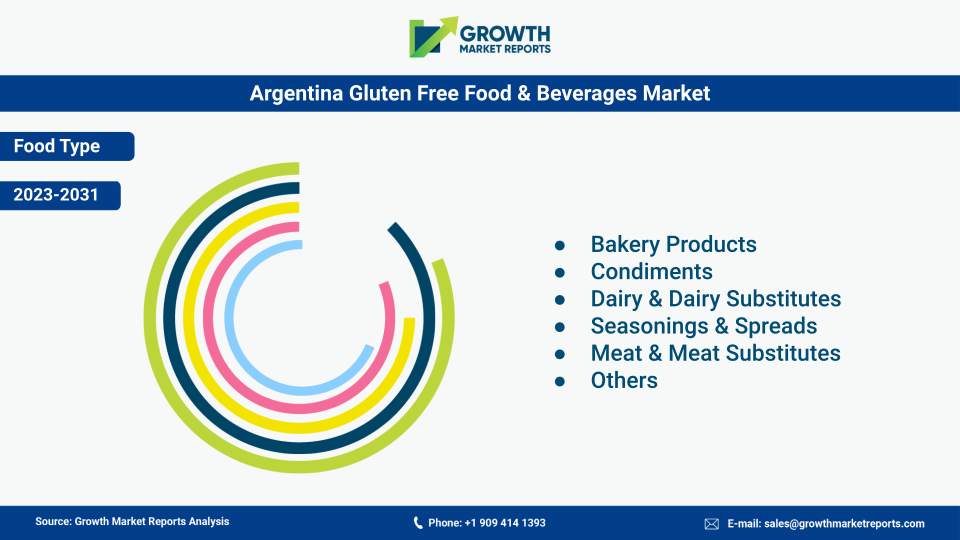
By Product Type Bakery Products, Dairy/Dairy Alternatives, Snacks, Beverages, Ready Meals, Others
By Distribution Channel Supermarkets/Hypermarkets, Convenience Stores, Online Retail, Specialty Stores, Others
By And End User Adults, Children
Regions Covered North America, Europe, APAC, Latin America, MEA
Base Year 2024
Historic Data 2018-2023
Forecast Period 2025-2033
Number of Pages 282
Number of Tables & Figures 369
Customization Available Yes, the report can be customized as per your need.

Distribution Channel Analysis

The distribution channel landscape for gluten free food and beverages in Argentina is characterized by a diverse mix of modern and traditional retail formats. Supermarkets and hypermarkets dominate the market, accounting for the largest share of sales due to their extensive product assortments, convenient locations, and strong brand partnerships. These retail giants have dedicated gluten free sections, making it easier for consumers to find certified products and compare options. The expansion of private label gluten free brands by major retailers has also contributed to increased affordability and accessibility, particularly for price-sensitive consumers. Promotions, in-store sampling, and loyalty programs are commonly employed to drive trial and repeat purchases within this channel.

Convenience stores are gaining importance as distribution points for gluten free snacks, beverages, and ready-to-eat meals, especially in urban and suburban areas. The fast-paced lifestyle of Argentine consumers has led to a growing preference for on-the-go options, which are readily available at convenience outlets. These stores are increasingly stocking gluten free products in response to consumer demand and competitive pressures. The strategic placement of gluten free items near checkout counters and in high-traffic areas is designed to capture impulse purchases, further boosting sales. While the product range in convenience stores may be more limited compared to supermarkets, the focus on convenience and accessibility makes this channel an important growth driver.

Online retail is experiencing rapid growth, driven by the digitalization of shopping habits and the expansion of e-commerce platforms. Consumers are increasingly turning to online channels for the convenience of home delivery, access to a wider range of products, and the ability to read detailed product information and reviews. Online retailers and specialty e-commerce sites often offer exclusive gluten free brands and bundles, catering to niche dietary needs and preferences. The integration of advanced search filters, subscription services, and personalized recommendations enhances the online shopping experience, encouraging higher basket sizes and repeat purchases. The COVID-19 pandemic accelerated the adoption of online grocery shopping, a trend that is expected to persist and evolve in the coming years.

Specialty stores, including health food shops and dedicated gluten free boutiques, play a crucial role in educating consumers and promoting premium gluten free products. These outlets are often staffed by knowledgeable personnel who can provide guidance on product selection and dietary management. Specialty stores are known for their curated assortments, featuring artisanal and imported gluten free items that may not be available in mainstream retail channels. They also serve as hubs for community engagement and brand building, hosting events, tastings, and workshops focused on gluten free living. While specialty stores may command higher price points, they attract a loyal customer base seeking quality, authenticity, and personalized service.

Other distribution channels, such as direct-to-consumer sales, farmers’ markets, and foodservice outlets, are increasingly being leveraged by brands to reach new customer segments. Direct sales through company websites and social media platforms allow for greater control over the customer experience and enable brands to gather valuable feedback. Farmers’ markets offer opportunities for local producers to showcase gluten free products and connect with health-conscious consumers in a community setting. The foodservice sector, including cafes, restaurants, and catering services, is also embracing gluten free menu options, reflecting changing consumer preferences and regulatory requirements. The diversification of distribution channels is expected to enhance market penetration and drive sustained growth in the Argentina gluten free food and beverages market.

End User Analysis

The end user segmentation of the Argentina gluten free food and beverages market encompasses adults and children, each with distinct consumption patterns and preferences. Adults represent the largest end user group, driven by rising health awareness, the increasing prevalence of celiac disease and gluten intolerance, and a growing interest in preventive nutrition. Many adults are adopting gluten free diets as part of broader lifestyle changes, seeking to improve digestive health, manage weight, and reduce the risk of chronic diseases. This demographic is characterized by higher purchasing power and a willingness to experiment with new products and formats. Manufacturers are targeting adult consumers with a wide range of gluten free options, including gourmet bakery items, functional snacks, and premium beverages, supported by sophisticated marketing campaigns that emphasize health benefits and convenience.

Children constitute a significant and growing end user segment, reflecting the rising incidence of gluten sensitivity and celiac disease among younger populations. Parents are increasingly seeking safe, nutritious, and appealing gluten free products for their children, particularly for school lunches and snacks. The demand for child-friendly gluten free foods has led to the development of products with improved taste, texture, and nutritional profiles, as well as attractive packaging and branding. Manufacturers are also focusing on fortification and the inclusion of essential vitamins and minerals to address the unique dietary needs of children. Partnerships with pediatricians, schools, and advocacy groups are being leveraged to raise awareness and promote the adoption of gluten free diets among families.

The intersection of adult and child end user needs has given rise to family-oriented gluten free products that cater to shared consumption occasions. These products are designed to be enjoyed by all family members, regardless of age or dietary restrictions, fostering inclusivity and convenience. Family packs, multipacks, and value-added bundles are increasingly popular, offering cost savings and reducing the complexity of meal planning for households with multiple dietary needs. The emphasis on clean labels, natural ingredients, and allergen transparency resonates with both adult and child consumers, driving broader market adoption.

The evolving end user landscape is also influencing product innovation and marketing strategies. Brands are investing in consumer research to better understand the preferences, motivations, and pain points of different end user segments. This insight is being used to develop targeted messaging, personalized recommendations, and loyalty programs that enhance customer engagement and retention. The integration of digital tools, such as mobile apps and online communities, is facilitating information sharing and peer support among gluten free consumers, further strengthening brand loyalty.

As the market matures, there is a growing emphasis on holistic health and wellness, with consumers seeking gluten free products that deliver additional functional benefits, such as high protein, fiber, probiotics, and low sugar content. This trend is evident across both adult and child end user segments, reflecting a broader shift toward proactive health management. The ongoing expansion of product offerings, coupled with targeted marketing and educational initiatives, is expected to drive sustained growth and diversification in the Argentina gluten free food and beverages market.

Opportunities & Threats

The Argentina gluten free food and beverages market is ripe with opportunities for innovation, expansion, and value creation. One of the most promising opportunities lies in the development of premium and functional gluten free products that cater to evolving consumer preferences for health, wellness, and convenience. Manufacturers can capitalize on the growing demand for clean label, organic, and non-GMO gluten free foods by investing in research and development and leveraging advanced processing technologies. The expansion of e-commerce and direct-to-consumer channels also presents significant opportunities for brands to reach new customer segments, gather real-time feedback, and build stronger relationships with consumers. Strategic partnerships with health professionals, advocacy groups, and culinary influencers can further enhance brand credibility and drive market adoption.

Another key opportunity is the internationalization of Argentine gluten free food and beverages, leveraging the country’s strong agricultural base and culinary heritage. Export-oriented strategies can unlock new revenue streams and position Argentina as a leading supplier of high-quality gluten free products in the Latin American region and beyond. The alignment of local regulations with international standards facilitates market entry and reduces trade barriers, while participation in global food fairs and exhibitions can enhance brand visibility and attract international buyers. Investment in sustainable sourcing, eco-friendly packaging, and corporate social responsibility initiatives can also differentiate brands and appeal to environmentally conscious consumers.

Despite the favorable growth outlook, the market faces several restraining factors that could hinder its expansion. One of the primary challenges is the relatively high cost of gluten free products compared to conventional alternatives, which may limit accessibility for price-sensitive consumers. The complexity of gluten free production, including the need for dedicated facilities and rigorous quality control, contributes to higher manufacturing costs and retail prices. Additionally, the risk of cross-contamination and inconsistent product quality remains a concern, particularly in smaller manufacturing operations. Addressing these challenges will require ongoing investment in supply chain management, quality assurance, and consumer education to build trust and ensure long-term market sustainability.

Regional Outlook

Regionally, the Argentina gluten free food and beverages market is segmented into North, Central, South, and other regions, each exhibiting unique consumption patterns and growth dynamics. The Northern region, encompassing provinces such as Salta, Jujuy, and Tucumán, is experiencing steady growth, supported by rising health awareness and the expansion of modern retail formats. In 2024, the Northern region accounted for approximately USD 110 million in market sales, representing around 17% of the national market. The increasing availability of gluten free products in supermarkets and specialty stores, coupled with targeted educational campaigns, is driving adoption among both urban and rural consumers.

The Central region, which includes Buenos Aires and Córdoba, is the largest and most dynamic market for gluten free foods and beverages in Argentina, with sales reaching USD 340 million in 2024. This region benefits from higher disposable incomes, greater health consciousness, and a well-developed retail infrastructure. The presence of leading manufacturers, importers, and distributors has facilitated the rapid introduction of new products and formats, making gluten free options readily accessible to a broad consumer base. The Central region is also characterized by a vibrant foodservice sector, with many restaurants and cafes offering gluten free menu items to cater to diverse customer needs. The CAGR for this region is projected at 10.2% through 2033, outpacing the national average and reflecting strong underlying demand.

The Southern region, including Patagonia and surrounding provinces, is witnessing gradual but consistent growth in gluten free product consumption, with market sales estimated at USD 80 million in 2024. The expansion of retail and distribution networks, combined with increased consumer education and advocacy, is driving market penetration in this region. While the Southern market is smaller in absolute terms, it represents a significant opportunity for brands seeking to expand their geographic footprint and tap into underserved communities. Other regions, including smaller provinces and rural areas, collectively accounted for USD 120 million in sales, highlighting the potential for further market development as awareness and accessibility continue to improve.

Argentina Gluten Free Food and Beverages Market Statistics

Competitor Outlook

The competitive landscape of the Argentina gluten free food and beverages market is characterized by a mix of multinational corporations, established local players, and innovative startups. Leading companies are leveraging their brand equity, extensive distribution networks, and research and development capabilities to maintain a strong market presence. The entry of international brands has intensified competition, prompting local manufacturers to invest in product innovation, quality assurance, and marketing to differentiate their offerings. The market is also witnessing increased merger and acquisition activity, as companies seek to expand their product portfolios and geographic reach through strategic partnerships and acquisitions.

Product innovation is a key competitive differentiator, with companies focusing on the development of gluten free products that offer superior taste, texture, and nutritional value. The use of alternative grains, such as quinoa, amaranth, and rice, has enabled manufacturers to create unique and appealing products that resonate with Argentine consumers. Packaging innovation, including resealable pouches, single-serve packs, and eco-friendly materials, is also being used to enhance convenience and sustainability. Marketing strategies emphasize health benefits, clean labels, and allergen transparency, with brands leveraging social media, influencer partnerships, and experiential marketing to engage consumers and build loyalty.

The rise of private label gluten free brands by major retailers has introduced new competitive dynamics, offering consumers affordable alternatives without compromising on quality. These private label products are often positioned alongside leading brands, providing direct competition and driving price competitiveness in the market. The proliferation of specialty and artisanal brands has further enriched the competitive landscape, catering to niche consumer segments seeking premium, organic, or locally sourced gluten free products. These brands often emphasize authenticity, craftsmanship, and community engagement, differentiating themselves through storytelling and personalized customer service.

Among the major companies operating in the Argentina gluten free food and beverages market are Molinos Río de la Plata, Arcor, General Mills, Grupo Bimbo, and Schär. Molinos Río de la Plata, a leading Argentine food company, has made significant investments in gluten free product development, offering a wide range of bakery items, snacks, and ready meals. Arcor, another prominent local player, is known for its extensive portfolio of gluten free confectionery and convenience foods, leveraging its strong distribution network to reach consumers nationwide. General Mills and Grupo Bimbo, both multinational giants, have introduced globally recognized gluten free brands to the Argentine market, benefiting from advanced R&D and marketing expertise. Schär, a European leader in gluten free foods, has established a strong presence through partnerships with local distributors and specialty retailers, offering premium imported products to discerning consumers.

These companies are continually expanding their product lines, investing in marketing and consumer education, and exploring new distribution channels to capture market share. Collaborative efforts with celiac associations, healthcare professionals, and advocacy groups are also being used to build trust and drive adoption among target consumers. As the market continues to evolve, competition is expected to intensify, driving further innovation, quality improvements, and value creation for Argentine consumers seeking gluten free food and beverages.

Key Players

  • General Mills, Inc.
  • The Kraft Heinz Company
  • Kellogg Company
  • Hain Celestial Group, Inc.
  • Pinnacle Foods Inc.
  • Boulder Brands, Inc.
  • Dr. Schär AG/SPA
  • Freedom Foods Group Limited
  • Hero Group AG
  • Barilla G. e R. Fratelli S.p.A.
  • Enjoy Life Foods
  • Conagra Brands, Inc.
  • Nestlé S.A.
  • PepsiCo, Inc.
  • Grupo Arcor S.A.
  • Molinos Río de la Plata S.A.
  • Sanissimo
  • Alimentos Santa María S.A.
  • Alimentos Naturales S.A.
  • Schär Argentina S.A.
Argentina Gluten Free Food and Beverages Market Overview

Segments

The Argentina Gluten Free Food and Beverages market has been segmented on the basis of

Product Type

  • Bakery Products
  • Dairy/Dairy Alternatives
  • Snacks
  • Beverages
  • Ready Meals
  • Others

Distribution Channel

  • Supermarkets/Hypermarkets
  • Convenience Stores
  • Online Retail
  • Specialty Stores
  • Others

And End User

  • Adults
  • Children

Competitive Landscape

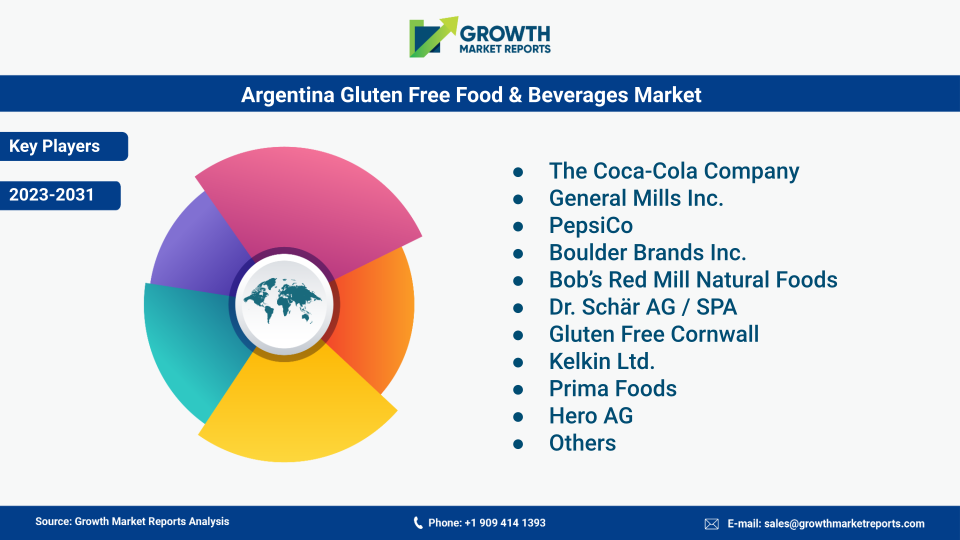
Key players competing in the Argentina gluten free food & beverages market are General Mills Inc.; The Coca-Cola Company; PepsiCo; Boulder Brands Inc.; Bob’s Red Mill Natural Foods; Dr. Schär AG / SPA; Gluten Free Cornwall; Kelkin Ltd.; Prima Foods; Hero AG; Enjoy Life; and Freedom Foods Group Ltd.

These companies adopted development strategies including mergers, acquisitions, partnerships, collaboration, product launches, and production expansion to expand their consumer base worldwide. For instance,

  • In June, 2021, Ulrick & Short Limited launched functional flour named “fazenda nutrigel”. This gluten-free flour helps to improve the viscosity and texture of gluten-free bakery products.

Argentina Gluten Free Food & Beverages Market Key Players

Frequently Asked Questions

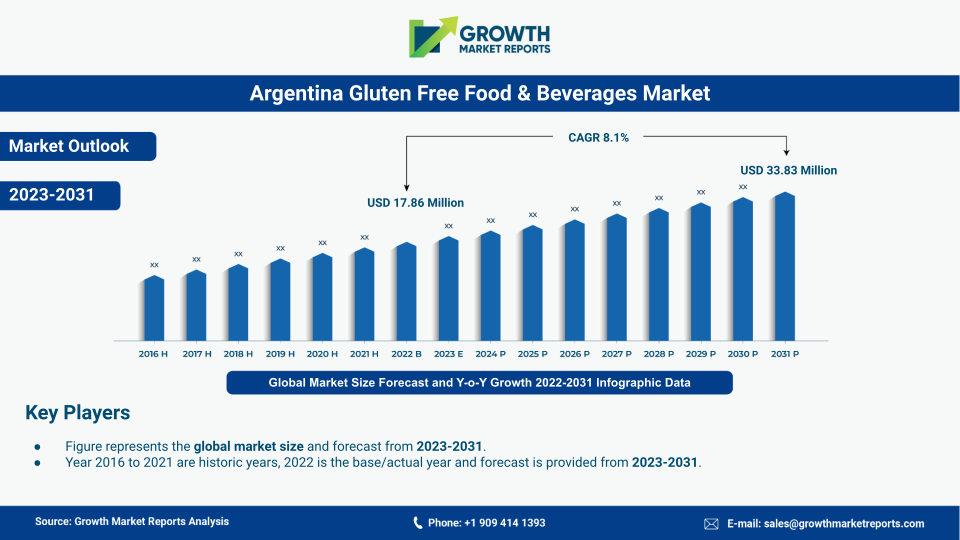
The Argentina gluten free food & beverages market size was around USD 17.86 Mn in 2022 and is likely to reach USD 33.83 Mn by 2031.

The Argentina gluten free food & beverages market is estimated to expand at a compound annual growth rate (CAGR) of 8.1% during 2023–2031.

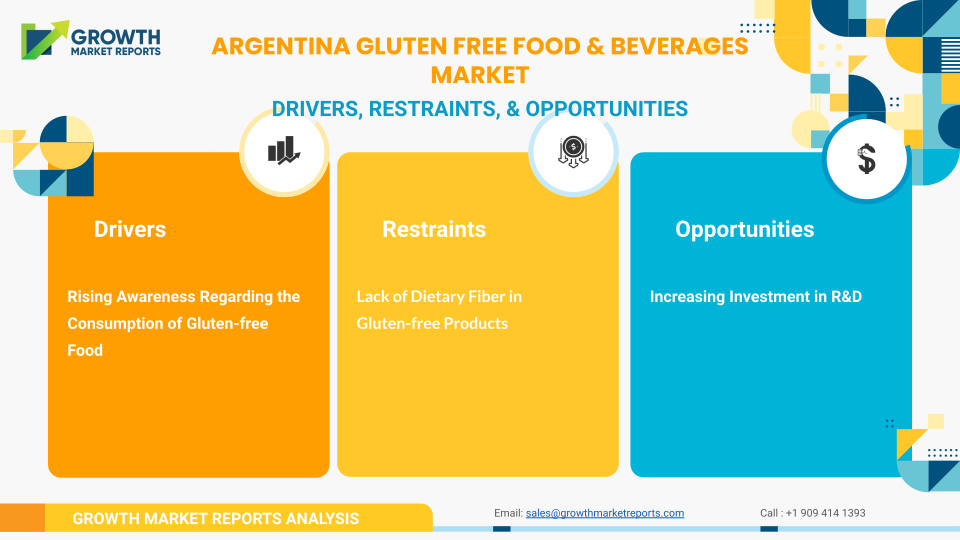
The Argentina gluten free food & beverages market is driven by the rising awareness regarding the consumption of gluten-free food.

General Mills Inc.; The Coca-Cola Company; PepsiCo; Boulder Brands Inc.; Bob’s Red Mill Natural Foods; and Dr. Schär AG / SPA are some major players competing in the Argentina gluten free food & beverages market.

Table Of Content

Chapter 1 Executive Summary
Chapter 2 Assumptions and Acronyms Used
Chapter 3 Research Methodology
Chapter 4 Argentina Gluten Free Food and Beverages Market Overview
   4.1 Introduction
      4.1.1 Market Taxonomy
      4.1.2 Market Definition
      4.1.3 Macro-Economic Factors Impacting the Market Growth
   4.2 Argentina Gluten Free Food and Beverages Market Dynamics
      4.2.1 Market Drivers
      4.2.2 Market Restraints
      4.2.3 Market Opportunity
   4.3 Argentina Gluten Free Food and Beverages Market - Supply Chain Analysis
      4.3.1 List of Key Suppliers
      4.3.2 List of Key Distributors
      4.3.3 List of Key Consumers
   4.4 Key Forces Shaping the Argentina Gluten Free Food and Beverages Market
      4.4.1 Bargaining Power of Suppliers
      4.4.2 Bargaining Power of Buyers
      4.4.3 Threat of Substitution
      4.4.4 Threat of New Entrants
      4.4.5 Competitive Rivalry
   4.5 Global Argentina Gluten Free Food and Beverages Market Size & Forecast, 2023-2032
      4.5.1 Argentina Gluten Free Food and Beverages Market Size and Y-o-Y Growth
      4.5.2 Argentina Gluten Free Food and Beverages Market Absolute $ Opportunity

Chapter 5 Global Argentina Gluten Free Food and Beverages Market Analysis and Forecast By Product Type
   5.1 Introduction
      5.1.1 Key Market Trends & Growth Opportunities By Product Type
      5.1.2 Basis Point Share (BPS) Analysis By Product Type
      5.1.3 Absolute $ Opportunity Assessment By Product Type
   5.2 Argentina Gluten Free Food and Beverages Market Size Forecast By Product Type
      5.2.1 Bakery Products
      5.2.2 Dairy/Dairy Alternatives
      5.2.3 Snacks
      5.2.4 Beverages
      5.2.5 Ready Meals
      5.2.6 Others
   5.3 Market Attractiveness Analysis By Product Type

Chapter 6 Global Argentina Gluten Free Food and Beverages Market Analysis and Forecast By Distribution Channel
   6.1 Introduction
      6.1.1 Key Market Trends & Growth Opportunities By Distribution Channel
      6.1.2 Basis Point Share (BPS) Analysis By Distribution Channel
      6.1.3 Absolute $ Opportunity Assessment By Distribution Channel
   6.2 Argentina Gluten Free Food and Beverages Market Size Forecast By Distribution Channel
      6.2.1 Supermarkets/Hypermarkets
      6.2.2 Convenience Stores
      6.2.3 Online Retail
      6.2.4 Specialty Stores
      6.2.5 Others
   6.3 Market Attractiveness Analysis By Distribution Channel

Chapter 7 Global Argentina Gluten Free Food and Beverages Market Analysis and Forecast By And End User
   7.1 Introduction
      7.1.1 Key Market Trends & Growth Opportunities By And End User
      7.1.2 Basis Point Share (BPS) Analysis By And End User
      7.1.3 Absolute $ Opportunity Assessment By And End User
   7.2 Argentina Gluten Free Food and Beverages Market Size Forecast By And End User
      7.2.1 Adults
      7.2.2 Children
   7.3 Market Attractiveness Analysis By And End User

Chapter 8 Global Argentina Gluten Free Food and Beverages Market Analysis and Forecast by Region
   8.1 Introduction
      8.1.1 Key Market Trends & Growth Opportunities By Region
      8.1.2 Basis Point Share (BPS) Analysis By Region
      8.1.3 Absolute $ Opportunity Assessment By Region
   8.2 Argentina Gluten Free Food and Beverages Market Size Forecast By Region
      8.2.1 North America
      8.2.2 Europe
      8.2.3 Asia Pacific
      8.2.4 Latin America
      8.2.5 Middle East & Africa (MEA)
   8.3 Market Attractiveness Analysis By Region

Chapter 9 Coronavirus Disease (COVID-19) Impact 
   9.1 Introduction 
   9.2 Current & Future Impact Analysis 
   9.3 Economic Impact Analysis 
   9.4 Government Policies 
   9.5 Investment Scenario

Chapter 10 North America Argentina Gluten Free Food and Beverages Analysis and Forecast
   10.1 Introduction
   10.2 North America Argentina Gluten Free Food and Beverages Market Size Forecast by Country
      10.2.1 U.S.
      10.2.2 Canada
   10.3 Basis Point Share (BPS) Analysis by Country
   10.4 Absolute $ Opportunity Assessment by Country
   10.5 Market Attractiveness Analysis by Country
   10.6 North America Argentina Gluten Free Food and Beverages Market Size Forecast By Product Type
      10.6.1 Bakery Products
      10.6.2 Dairy/Dairy Alternatives
      10.6.3 Snacks
      10.6.4 Beverages
      10.6.5 Ready Meals
      10.6.6 Others
   10.7 Basis Point Share (BPS) Analysis By Product Type 
   10.8 Absolute $ Opportunity Assessment By Product Type 
   10.9 Market Attractiveness Analysis By Product Type
   10.10 North America Argentina Gluten Free Food and Beverages Market Size Forecast By Distribution Channel
      10.10.1 Supermarkets/Hypermarkets
      10.10.2 Convenience Stores
      10.10.3 Online Retail
      10.10.4 Specialty Stores
      10.10.5 Others
   10.11 Basis Point Share (BPS) Analysis By Distribution Channel 
   10.12 Absolute $ Opportunity Assessment By Distribution Channel 
   10.13 Market Attractiveness Analysis By Distribution Channel
   10.14 North America Argentina Gluten Free Food and Beverages Market Size Forecast By And End User
      10.14.1 Adults
      10.14.2 Children
   10.15 Basis Point Share (BPS) Analysis By And End User 
   10.16 Absolute $ Opportunity Assessment By And End User 
   10.17 Market Attractiveness Analysis By And End User

Chapter 11 Europe Argentina Gluten Free Food and Beverages Analysis and Forecast
   11.1 Introduction
   11.2 Europe Argentina Gluten Free Food and Beverages Market Size Forecast by Country
      11.2.1 Germany
      11.2.2 France
      11.2.3 Italy
      11.2.4 U.K.
      11.2.5 Spain
      11.2.6 Russia
      11.2.7 Rest of Europe
   11.3 Basis Point Share (BPS) Analysis by Country
   11.4 Absolute $ Opportunity Assessment by Country
   11.5 Market Attractiveness Analysis by Country
   11.6 Europe Argentina Gluten Free Food and Beverages Market Size Forecast By Product Type
      11.6.1 Bakery Products
      11.6.2 Dairy/Dairy Alternatives
      11.6.3 Snacks
      11.6.4 Beverages
      11.6.5 Ready Meals
      11.6.6 Others
   11.7 Basis Point Share (BPS) Analysis By Product Type 
   11.8 Absolute $ Opportunity Assessment By Product Type 
   11.9 Market Attractiveness Analysis By Product Type
   11.10 Europe Argentina Gluten Free Food and Beverages Market Size Forecast By Distribution Channel
      11.10.1 Supermarkets/Hypermarkets
      11.10.2 Convenience Stores
      11.10.3 Online Retail
      11.10.4 Specialty Stores
      11.10.5 Others
   11.11 Basis Point Share (BPS) Analysis By Distribution Channel 
   11.12 Absolute $ Opportunity Assessment By Distribution Channel 
   11.13 Market Attractiveness Analysis By Distribution Channel
   11.14 Europe Argentina Gluten Free Food and Beverages Market Size Forecast By And End User
      11.14.1 Adults
      11.14.2 Children
   11.15 Basis Point Share (BPS) Analysis By And End User 
   11.16 Absolute $ Opportunity Assessment By And End User 
   11.17 Market Attractiveness Analysis By And End User

Chapter 12 Asia Pacific Argentina Gluten Free Food and Beverages Analysis and Forecast
   12.1 Introduction
   12.2 Asia Pacific Argentina Gluten Free Food and Beverages Market Size Forecast by Country
      12.2.1 China
      12.2.2 Japan
      12.2.3 South Korea
      12.2.4 India
      12.2.5 Australia
      12.2.6 South East Asia (SEA)
      12.2.7 Rest of Asia Pacific (APAC)
   12.3 Basis Point Share (BPS) Analysis by Country
   12.4 Absolute $ Opportunity Assessment by Country
   12.5 Market Attractiveness Analysis by Country
   12.6 Asia Pacific Argentina Gluten Free Food and Beverages Market Size Forecast By Product Type
      12.6.1 Bakery Products
      12.6.2 Dairy/Dairy Alternatives
      12.6.3 Snacks
      12.6.4 Beverages
      12.6.5 Ready Meals
      12.6.6 Others
   12.7 Basis Point Share (BPS) Analysis By Product Type 
   12.8 Absolute $ Opportunity Assessment By Product Type 
   12.9 Market Attractiveness Analysis By Product Type
   12.10 Asia Pacific Argentina Gluten Free Food and Beverages Market Size Forecast By Distribution Channel
      12.10.1 Supermarkets/Hypermarkets
      12.10.2 Convenience Stores
      12.10.3 Online Retail
      12.10.4 Specialty Stores
      12.10.5 Others
   12.11 Basis Point Share (BPS) Analysis By Distribution Channel 
   12.12 Absolute $ Opportunity Assessment By Distribution Channel 
   12.13 Market Attractiveness Analysis By Distribution Channel
   12.14 Asia Pacific Argentina Gluten Free Food and Beverages Market Size Forecast By And End User
      12.14.1 Adults
      12.14.2 Children
   12.15 Basis Point Share (BPS) Analysis By And End User 
   12.16 Absolute $ Opportunity Assessment By And End User 
   12.17 Market Attractiveness Analysis By And End User

Chapter 13 Latin America Argentina Gluten Free Food and Beverages Analysis and Forecast
   13.1 Introduction
   13.2 Latin America Argentina Gluten Free Food and Beverages Market Size Forecast by Country
      13.2.1 Brazil
      13.2.2 Mexico
      13.2.3 Rest of Latin America (LATAM)
   13.3 Basis Point Share (BPS) Analysis by Country
   13.4 Absolute $ Opportunity Assessment by Country
   13.5 Market Attractiveness Analysis by Country
   13.6 Latin America Argentina Gluten Free Food and Beverages Market Size Forecast By Product Type
      13.6.1 Bakery Products
      13.6.2 Dairy/Dairy Alternatives
      13.6.3 Snacks
      13.6.4 Beverages
      13.6.5 Ready Meals
      13.6.6 Others
   13.7 Basis Point Share (BPS) Analysis By Product Type 
   13.8 Absolute $ Opportunity Assessment By Product Type 
   13.9 Market Attractiveness Analysis By Product Type
   13.10 Latin America Argentina Gluten Free Food and Beverages Market Size Forecast By Distribution Channel
      13.10.1 Supermarkets/Hypermarkets
      13.10.2 Convenience Stores
      13.10.3 Online Retail
      13.10.4 Specialty Stores
      13.10.5 Others
   13.11 Basis Point Share (BPS) Analysis By Distribution Channel 
   13.12 Absolute $ Opportunity Assessment By Distribution Channel 
   13.13 Market Attractiveness Analysis By Distribution Channel
   13.14 Latin America Argentina Gluten Free Food and Beverages Market Size Forecast By And End User
      13.14.1 Adults
      13.14.2 Children
   13.15 Basis Point Share (BPS) Analysis By And End User 
   13.16 Absolute $ Opportunity Assessment By And End User 
   13.17 Market Attractiveness Analysis By And End User

Chapter 14 Middle East & Africa (MEA) Argentina Gluten Free Food and Beverages Analysis and Forecast
   14.1 Introduction
   14.2 Middle East & Africa (MEA) Argentina Gluten Free Food and Beverages Market Size Forecast by Country
      14.2.1 Saudi Arabia
      14.2.2 South Africa
      14.2.3 UAE
      14.2.4 Rest of Middle East & Africa (MEA)
   14.3 Basis Point Share (BPS) Analysis by Country
   14.4 Absolute $ Opportunity Assessment by Country
   14.5 Market Attractiveness Analysis by Country
   14.6 Middle East & Africa (MEA) Argentina Gluten Free Food and Beverages Market Size Forecast By Product Type
      14.6.1 Bakery Products
      14.6.2 Dairy/Dairy Alternatives
      14.6.3 Snacks
      14.6.4 Beverages
      14.6.5 Ready Meals
      14.6.6 Others
   14.7 Basis Point Share (BPS) Analysis By Product Type 
   14.8 Absolute $ Opportunity Assessment By Product Type 
   14.9 Market Attractiveness Analysis By Product Type
   14.10 Middle East & Africa (MEA) Argentina Gluten Free Food and Beverages Market Size Forecast By Distribution Channel
      14.10.1 Supermarkets/Hypermarkets
      14.10.2 Convenience Stores
      14.10.3 Online Retail
      14.10.4 Specialty Stores
      14.10.5 Others
   14.11 Basis Point Share (BPS) Analysis By Distribution Channel 
   14.12 Absolute $ Opportunity Assessment By Distribution Channel 
   14.13 Market Attractiveness Analysis By Distribution Channel
   14.14 Middle East & Africa (MEA) Argentina Gluten Free Food and Beverages Market Size Forecast By And End User
      14.14.1 Adults
      14.14.2 Children
   14.15 Basis Point Share (BPS) Analysis By And End User 
   14.16 Absolute $ Opportunity Assessment By And End User 
   14.17 Market Attractiveness Analysis By And End User

Chapter 15 Competition Landscape 
   15.1 Argentina Gluten Free Food and Beverages Market: Competitive Dashboard
   15.2 Global Argentina Gluten Free Food and Beverages Market: Market Share Analysis, 2023
   15.3 Company Profiles (Details – Overview, Financials, Developments, Strategy) 
      15.3.1 General Mills, Inc.
The Kraft Heinz Company
Kellogg Company
Hain Celestial Group, Inc.
Pinnacle Foods Inc.
Boulder Brands, Inc.
Dr. Schär AG/SPA
Freedom Foods Group Limited
Hero Group AG
Barilla G. e R. Fratelli S.p.A.
Enjoy Life Foods
Conagra Brands, Inc.
Nestlé S.A.
PepsiCo, Inc.
Grupo Arcor S.A.
Molinos Río de la Plata S.A.
Sanissimo
Alimentos Santa María S.A.
Alimentos Naturales S.A.
Schär Argentina S.A.

Methodology

Our Clients

The John Holland Group
Pfizer
Nestle SA
Deloitte
Siemens Healthcare
FedEx Logistics
sinopec
General Mills