Gluten-free Food and Beverages Market Research Report 2033

Gluten-free Food and Beverages Market Research Report 2033

Segments - by Product Type (Bakery Products, Snacks & RTE Products, Condiments & Dressings, Beverages, Dairy/Dairy Alternatives, Others), by Distribution Channel (Supermarkets/Hypermarkets, Convenience Stores, Online Retail, Specialty Stores, Others), by Source (Cereals & Grains, Legumes, Oilseeds & Pulses, Others)

https://growthmarketreports.com/Anuradha
Author : Anuradha B. More
https://growthmarketreports.com/Vaibhav
Fact-checked by : Vaibhav Chandola
https://growthmarketreports.com/Shruti
Editor : Shruti Bhat

Upcoming | Report ID :FB-1793 | 4.6 Rating | 72 Reviews | 289 Pages | Format : Docx PDF

Report Description


Gluten-free Food and Beverages Market Outlook

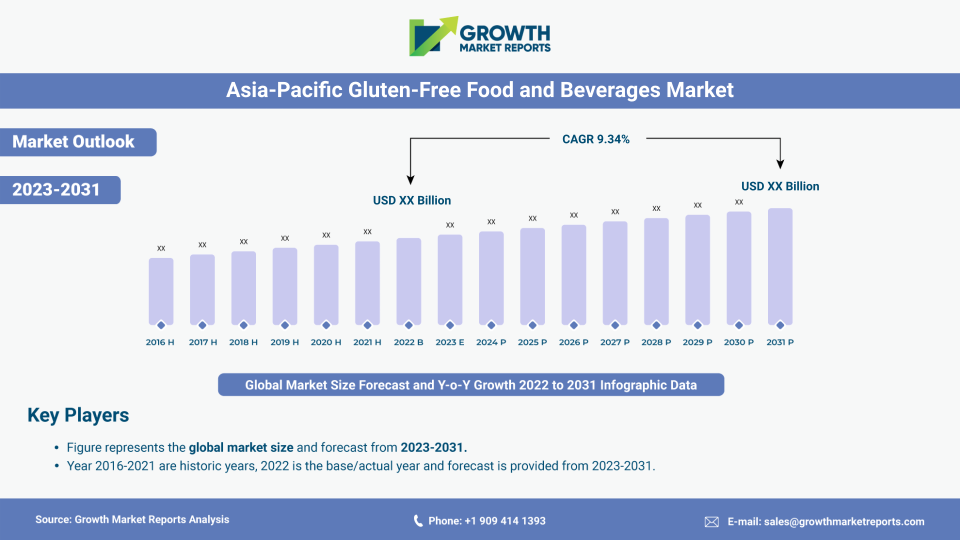
According to our latest research, the global gluten-free food and beverages market size stood at USD 8.1 billion in 2024, reflecting a robust consumer shift toward health-conscious eating. The market is expected to grow at a CAGR of 9.2% from 2025 to 2033, reaching a forecasted value of USD 18.2 billion by 2033. This remarkable growth trajectory is primarily driven by rising awareness of celiac disease and gluten intolerance, coupled with a surge in the adoption of gluten-free diets for lifestyle and wellness reasons. As per our latest research, the market continues to witness dynamic innovation, increased product availability, and expanding distribution networks, all of which are fueling its expansion globally.

The primary growth factor for the gluten-free food and beverages market is the increasing prevalence of gluten-related disorders such as celiac disease, non-celiac gluten sensitivity, and wheat allergies. With an estimated 1% of the global population affected by celiac disease and a growing number of consumers self-diagnosing gluten intolerance, the demand for safe, accessible, and varied gluten-free products has never been higher. Additionally, improved diagnostic techniques and heightened awareness campaigns by health organizations have led to earlier and more frequent detection of these conditions. This has directly translated into a larger consumer base actively seeking gluten-free alternatives, compelling manufacturers to innovate and expand their product portfolios to cater to this burgeoning market segment.

Another significant contributor to market growth is the rising trend of gluten-free diets among health-conscious consumers who do not have diagnosed gluten sensitivities. Many individuals perceive gluten-free products as healthier options, associating them with benefits such as improved digestion, increased energy, and weight management. This perception, often amplified by celebrity endorsements, social media influence, and wellness bloggers, has propelled gluten-free foods and beverages from a niche category to a mainstream lifestyle choice. As a result, product manufacturers are investing heavily in research and development to create gluten-free offerings that mimic the taste, texture, and nutritional profile of conventional foods, further broadening their appeal.

The expansion of retail infrastructure and e-commerce platforms has also played a pivotal role in the growth of the gluten-free food and beverages market. Supermarkets, hypermarkets, specialty stores, and online retailers have significantly increased shelf space and visibility for gluten-free products, making them more accessible to a wider audience. Strategic partnerships between manufacturers and retailers, as well as the introduction of private label gluten-free brands, have contributed to competitive pricing and product diversity. Furthermore, advancements in packaging and logistics ensure the safe delivery of gluten-free products, even in remote regions, thereby extending market reach and supporting sustained growth.

In the realm of gluten-free dining, the importance of a well-curated Gluten-Free Menu Ingredient cannot be overstated. Restaurants and foodservice providers are increasingly recognizing the need to cater to gluten-sensitive patrons by offering diverse and safe menu options. This involves not only sourcing certified gluten-free ingredients but also ensuring strict preparation protocols to prevent cross-contamination. By doing so, they can provide a dining experience that is both enjoyable and safe for individuals with gluten intolerance. This trend is further supported by consumer demand for transparency and assurance in the food they consume, prompting establishments to prominently feature gluten-free options on their menus.

From a regional perspective, North America currently dominates the gluten-free food and beverages market, accounting for the largest share due to high consumer awareness, advanced healthcare infrastructure, and a strong presence of leading market players. Europe follows closely, driven by stringent food safety regulations and rising health consciousness among consumers. Meanwhile, the Asia Pacific region is emerging as a lucrative market, fueled by increasing urbanization, rising disposable incomes, and a growing middle-class population that is becoming more health-aware. Latin America and the Middle East & Africa are also showing promising growth, supported by improved distribution networks and targeted marketing initiatives. This regional diversification underscores the global appeal and growth potential of the gluten-free food and beverages market.

Global Gluten-free Food and Beverages Industry Outlook

Product Type Analysis

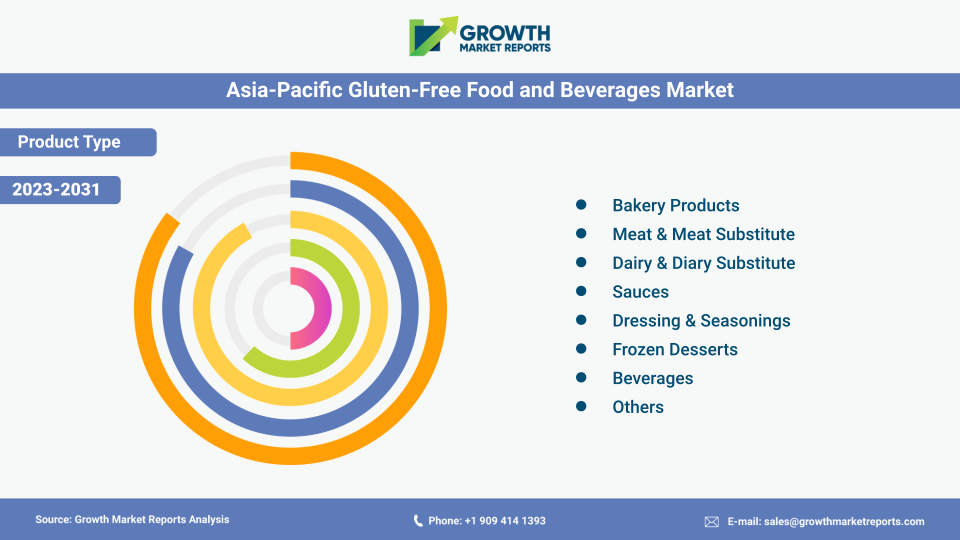
The gluten-free food and beverages market is segmented by product type into bakery products, snacks and ready-to-eat (RTE) products, condiments and dressings, beverages, dairy and dairy alternatives, and others. Among these, bakery products such as bread, cakes, and pastries hold the largest share, propelled by their staple status in many diets and the increasing number of consumers seeking gluten-free alternatives to traditional baked goods. Manufacturers have invested significantly in developing gluten-free bakery products that closely replicate the taste and texture of wheat-based items, utilizing innovative blends of rice flour, almond flour, and other gluten-free grains. This has led to a proliferation of high-quality, palatable gluten-free bakery options, further driving their popularity among both gluten-sensitive and mainstream consumers.

Snacks and RTE products represent another high-growth segment within the gluten-free food and beverages market. The modern consumer's preference for convenience and on-the-go nutrition has led to a surge in demand for gluten-free snack bars, chips, crackers, and other portable food items. These products cater not only to individuals with gluten intolerance but also to busy professionals, students, and fitness enthusiasts seeking quick, healthy, and allergen-free snack options. The segment has witnessed considerable innovation, with manufacturers introducing a diverse range of flavors, ingredients, and functional benefits such as high protein or added vitamins, thereby broadening their appeal and market penetration.

The condiments and dressings segment, though smaller in comparison to bakery and snacks, is experiencing steady growth as consumers become more vigilant about hidden sources of gluten in processed foods. Gluten-free sauces, salad dressings, and seasonings are gaining traction, particularly among home cooks and foodservice establishments aiming to offer inclusive menu options. Manufacturers are now required to clearly label and certify their products as gluten-free, enhancing consumer trust and driving repeat purchases. This segment's growth is further supported by collaborations with restaurants and cafes, which are increasingly incorporating gluten-free condiments to meet diverse dietary needs.

Beverages and dairy/dairy alternatives are also integral to the gluten-free food and beverages market. Gluten-free beverages, including plant-based milks, juices, and functional drinks, cater to consumers seeking allergen-free hydration and nutrition. Dairy alternatives made from almonds, soy, oats, and coconut are particularly popular among lactose-intolerant and vegan consumers, further expanding the market's reach. The "others" category encompasses a wide array of gluten-free products such as pasta, cereals, and frozen foods, all of which contribute to the market's robust growth by offering diverse options to suit varying tastes and dietary requirements.

Report Scope

Attributes Details
Report Title Gluten-free Food and Beverages Market Research Report 2033
By Product Type Bakery Products, Snacks & RTE Products, Condiments & Dressings, Beverages, Dairy/Dairy Alternatives, Others
By Distribution Channel Supermarkets/Hypermarkets, Convenience Stores, Online Retail, Specialty Stores, Others
By Source Cereals & Grains, Legumes, Oilseeds & Pulses, Others
Regions Covered North America, Europe, APAC, Latin America, MEA
Base Year 2024
Historic Data 2018-2023
Forecast Period 2025-2033
Number of Pages 289
Number of Tables & Figures 316
Customization Available Yes, the report can be customized as per your need.

Distribution Channel Analysis

The distribution channel landscape for gluten-free food and beverages is diverse, encompassing supermarkets/hypermarkets, convenience stores, online retail, specialty stores, and others. Supermarkets and hypermarkets dominate the market due to their extensive product assortments, competitive pricing, and widespread accessibility. These retail giants have recognized the growing demand for gluten-free options and have responded by expanding their gluten-free sections, often dedicating entire aisles or displays to these products. Their ability to offer a wide variety of brands and product types under one roof makes them the preferred choice for many consumers, particularly in urban and suburban areas.

Convenience stores play a crucial role in increasing the accessibility of gluten-free products, especially in densely populated urban centers and areas with high foot traffic. While their product range may not be as extensive as that of supermarkets, convenience stores excel in offering quick, grab-and-go gluten-free snacks and beverages. Their strategic locations near workplaces, schools, and public transport hubs make them a vital distribution channel for consumers seeking immediate solutions to their dietary needs. Manufacturers are increasingly partnering with convenience store chains to ensure their gluten-free offerings are readily available to a broader audience.

Online retail is experiencing the fastest growth among all distribution channels, driven by the proliferation of e-commerce platforms and changing consumer shopping habits. The convenience of home delivery, the ability to compare products and prices, and the availability of niche brands have made online shopping an attractive option for gluten-free consumers. E-commerce giants and specialty online retailers have capitalized on this trend by offering curated selections of gluten-free products, subscription boxes, and personalized recommendations. The COVID-19 pandemic further accelerated the shift to online retail, as consumers sought safe and contactless ways to purchase their preferred gluten-free foods and beverages.

Specialty stores, including health food stores and dedicated gluten-free retailers, cater to a discerning customer base seeking high-quality, certified gluten-free products. These stores often provide a more personalized shopping experience, with knowledgeable staff and a focus on product education. Specialty stores are particularly popular among consumers with severe gluten sensitivities or those seeking organic, non-GMO, or allergen-free options. The "others" category includes foodservice channels such as restaurants, cafes, and institutional caterers, all of which are increasingly offering gluten-free menu items to accommodate diverse dietary preferences and expand their customer base.

Source Analysis

The gluten-free food and beverages market is segmented by source into cereals and grains, legumes, oilseeds and pulses, and others. Cereals and grains such as rice, corn, quinoa, millet, and sorghum form the backbone of many gluten-free products, providing essential carbohydrates, fiber, and nutrients. These ingredients are favored by manufacturers for their versatility, availability, and ability to mimic the texture and structure of wheat-based products. The use of ancient grains like amaranth and teff is also gaining popularity, as consumers seek nutrient-dense, minimally processed alternatives that align with clean label trends.

Legumes, including chickpeas, lentils, and peas, are increasingly being incorporated into gluten-free foods for their high protein content, fiber, and functional benefits. Legume-based flours and proteins are used in bakery products, snacks, and pasta, offering improved nutritional profiles and catering to consumers seeking plant-based, allergen-free options. The growing interest in vegetarian and vegan diets has further boosted the demand for legume-based gluten-free products, as they provide a valuable source of plant-based protein and essential amino acids.

Oilseeds and pulses, such as flaxseed, chia, sunflower seeds, and beans, are valued for their healthy fats, protein, and micronutrients. These ingredients are commonly used in gluten-free bread, snack bars, and breakfast cereals to enhance nutritional value and texture. The inclusion of oilseeds and pulses aligns with the trend toward functional foods, as consumers increasingly seek products that offer health benefits beyond basic nutrition. Manufacturers are leveraging these ingredients to differentiate their offerings and appeal to health-conscious consumers looking for gluten-free options that support heart health, digestion, and overall wellness.

The "others" category encompasses a wide range of alternative sources used in gluten-free food production, including tubers (such as potatoes and cassava), nuts, and root vegetables. These ingredients are often used in combination with cereals, legumes, and oilseeds to create unique flavor profiles and textures. The use of diverse sources not only enhances product variety but also addresses the needs of consumers with multiple food allergies or sensitivities. As the gluten-free market continues to evolve, manufacturers are exploring innovative ingredient combinations to deliver superior taste, nutrition, and functionality in their products.

Opportunities & Threats

The gluten-free food and beverages market presents a plethora of opportunities for both existing players and new entrants. One of the most promising opportunities lies in product innovation and diversification. As consumer preferences become increasingly sophisticated, there is a growing demand for gluten-free products that offer enhanced taste, texture, and nutritional value. Manufacturers can capitalize on this trend by investing in research and development, leveraging novel ingredients, and adopting advanced processing technologies. Additionally, the expansion of gluten-free offerings into new categories, such as frozen foods, meal kits, and functional beverages, presents significant growth potential. Collaborations with foodservice providers and restaurants to develop gluten-free menu items can further enhance brand visibility and market reach.

Another major opportunity is the expansion into emerging markets, particularly in Asia Pacific and Latin America, where rising disposable incomes, urbanization, and increasing health awareness are driving demand for gluten-free products. Companies can benefit from localizing their product offerings to suit regional tastes and preferences, as well as investing in targeted marketing campaigns to educate consumers about the benefits of gluten-free diets. The growth of e-commerce and digital marketing channels provides additional avenues for reaching new customers and building brand loyalty. Furthermore, partnerships with healthcare professionals and advocacy groups can help raise awareness of gluten-related disorders and promote the adoption of gluten-free diets among at-risk populations.

Despite the numerous opportunities, the gluten-free food and beverages market faces several restraining factors. One of the most significant challenges is the higher cost of gluten-free ingredients and production processes, which often results in premium pricing for end consumers. This can limit market accessibility, particularly in price-sensitive regions and among lower-income demographics. Additionally, the risk of cross-contamination during manufacturing and transportation poses a threat to product safety and consumer trust. Regulatory compliance and the need for rigorous certification processes add to operational complexities and costs. Addressing these challenges requires ongoing investment in quality control, supply chain management, and consumer education to ensure the safety, affordability, and credibility of gluten-free products.

Regional Outlook

North America leads the global gluten-free food and beverages market, accounting for approximately 38% of the total market value in 2024, with a market size of around USD 3.1 billion. This dominance is attributed to high consumer awareness, advanced diagnostic capabilities for gluten-related disorders, and a well-established retail infrastructure. The presence of major market players and a culture of health and wellness have further fueled the adoption of gluten-free diets in the United States and Canada. The region is expected to maintain its leadership position throughout the forecast period, supported by ongoing product innovation and expanding distribution networks.

Europe holds the second-largest share of the gluten-free food and beverages market, with a market size of approximately USD 2.4 billion in 2024. The region's growth is driven by stringent food safety regulations, increasing prevalence of celiac disease, and a strong emphasis on healthy living. Countries such as the United Kingdom, Germany, Italy, and France are key contributors, with well-developed gluten-free product offerings and widespread availability across retail channels. Europe is projected to grow at a steady CAGR of 8.5% through 2033, as consumer demand for clean label and allergen-free foods continues to rise.

The Asia Pacific region is emerging as a high-growth market for gluten-free food and beverages, with a market size of USD 1.5 billion in 2024 and a projected CAGR of 11.2% over the forecast period. Rapid urbanization, increasing disposable incomes, and growing health consciousness among the middle class are driving demand for gluten-free products in countries such as China, Japan, Australia, and India. The region's diverse culinary traditions and expanding retail infrastructure provide ample opportunities for market expansion. Latin America and the Middle East & Africa, with combined market sizes of USD 1.1 billion in 2024, are also witnessing increased adoption of gluten-free diets, supported by improved distribution networks and targeted marketing efforts.

Gluten-free Food and Beverages Market Statistics

Competitor Outlook

The competitive landscape of the gluten-free food and beverages market is characterized by the presence of both multinational corporations and regional players, each vying for a share of this rapidly expanding sector. Leading companies are investing heavily in research and development to create innovative gluten-free products that cater to evolving consumer preferences. Product differentiation, quality assurance, and brand reputation are key factors influencing competitive dynamics. Market leaders are also leveraging advanced manufacturing technologies, sustainable sourcing practices, and strategic partnerships to strengthen their market positions and enhance operational efficiency.

In addition to established food and beverage giants, the market has witnessed the entry of numerous startups and niche brands specializing in gluten-free offerings. These companies often focus on specific product categories or target segments, such as organic, vegan, or allergen-free foods, to carve out a unique market niche. The proliferation of private label gluten-free products by major retailers has intensified competition, driving down prices and increasing product accessibility. Mergers, acquisitions, and collaborations are common strategies employed by market participants to expand their product portfolios, enter new markets, and achieve economies of scale.

Brand loyalty and consumer trust play a critical role in the gluten-free food and beverages market, given the health implications associated with gluten consumption for sensitive individuals. Companies that prioritize transparency, rigorous certification, and clear labeling are better positioned to build long-term relationships with consumers. Marketing and promotional activities, including influencer partnerships, social media campaigns, and educational initiatives, are increasingly being used to raise brand awareness and drive product adoption. As the market matures, companies are also focusing on sustainability, clean label formulations, and ethical sourcing to align with broader consumer values.

Major players in the gluten-free food and beverages market include General Mills, Inc., The Kraft Heinz Company, Kellogg Company, Hain Celestial Group, Conagra Brands, Inc., Nestlé S.A., Dr. Schär AG, Boulder Brands, Inc., Enjoy Life Foods, and PepsiCo, Inc. These companies have established strong global and regional footprints, offering a wide range of gluten-free products across multiple categories. General Mills, for example, is renowned for its gluten-free cereals and baking mixes, while Dr. Schär specializes in gluten-free bakery and snack products. Nestlé and PepsiCo have leveraged their extensive distribution networks to make gluten-free products widely available in both developed and emerging markets. Boulder Brands and Enjoy Life Foods focus on allergen-free and clean label products, catering to consumers with multiple dietary restrictions. Collectively, these companies are driving innovation, setting industry standards, and shaping the future of the gluten-free food and beverages market.

Key Players

  • General Mills, Inc.
  • The Kraft Heinz Company
  • Kellogg Company
  • Hain Celestial Group, Inc.
  • Conagra Brands, Inc.
  • Nestlé S.A.
  • PepsiCo, Inc.
  • Dr. Schär AG/SPA
  • Boulder Brands, Inc.
  • Freedom Foods Group Limited
  • Hero Group AG
  • Barilla G. e R. Fratelli S.p.A.
  • Enjoy Life Foods
  • BobÂ’s Red Mill Natural Foods
  • Genius Foods Ltd.
  • Warburtons Ltd.
  • AmyÂ’s Kitchen, Inc.
  • Kinnikinnick Foods Inc.
  • Orgran Foods
  • Glutamel
Gluten-free Food and Beverages Market Overview

Segments

The Gluten-free Food and Beverages market has been segmented on the basis of

Product Type

  • Bakery Products
  • Snacks & RTE Products
  • Condiments & Dressings
  • Beverages
  • Dairy/Dairy Alternatives
  • Others

Distribution Channel

  • Supermarkets/Hypermarkets
  • Convenience Stores
  • Online Retail
  • Specialty Stores
  • Others

Source

  • Cereals & Grains
  • Legumes
  • Oilseeds & Pulses
  • Others

Competitive Landscape

Key players competing in the Asia-Pacific gluten-free food and beverages market include PepsiCo Inc., Nestle, Conagra Brands Inc., and General Mills Inc.

Some of these players are using several market strategies such as mergers, acquisitions, partnerships, collaborations, capacity expansion, and product launches to increase their market shares.
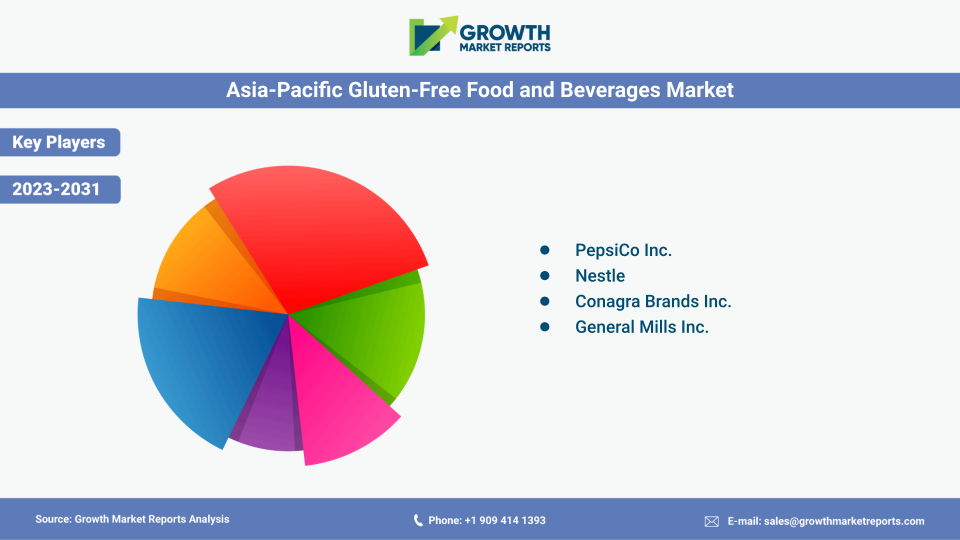

Asia-Pacific Gluten-Free Food and Beverages Market Key Players

Frequently Asked Questions

Opportunities include product innovation, expansion into emerging markets, collaborations with foodservice providers, and leveraging e-commerce and digital marketing channels.

Challenges include higher production costs, premium pricing, risk of cross-contamination, regulatory compliance, and the need for rigorous certification.

Major companies include General Mills, The Kraft Heinz Company, Kellogg Company, Hain Celestial Group, Conagra Brands, Nestlé, PepsiCo, Dr. Schär, Boulder Brands, and Enjoy Life Foods.

Common ingredients include cereals and grains (rice, corn, quinoa), legumes (chickpeas, lentils), oilseeds and pulses (flaxseed, chia), and other sources like tubers and nuts.

The main distribution channels include supermarkets/hypermarkets, convenience stores, online retail, specialty stores, and foodservice outlets.

North America leads the market, followed by Europe. Asia Pacific is emerging as a high-growth region, with Latin America and the Middle East & Africa also showing promising growth.

Bakery products such as bread, cakes, and pastries hold the largest share, followed by snacks, ready-to-eat products, condiments, beverages, and dairy alternatives.

Key growth drivers include rising awareness of celiac disease and gluten intolerance, increased adoption of gluten-free diets for health and lifestyle reasons, product innovation, and expanding distribution networks.

The gluten-free food and beverages market is expected to grow at a CAGR of 9.2% from 2025 to 2033, reaching USD 18.2 billion by 2033.

As of 2024, the global gluten-free food and beverages market is valued at USD 8.1 billion.

Table Of Content

Chapter 1 Executive Summary
Chapter 2 Assumptions and Acronyms Used
Chapter 3 Research Methodology
Chapter 4 Gluten-free Food and Beverages Market Overview
   4.1 Introduction
      4.1.1 Market Taxonomy
      4.1.2 Market Definition
      4.1.3 Macro-Economic Factors Impacting the Market Growth
   4.2 Gluten-free Food and Beverages Market Dynamics
      4.2.1 Market Drivers
      4.2.2 Market Restraints
      4.2.3 Market Opportunity
   4.3 Gluten-free Food and Beverages Market - Supply Chain Analysis
      4.3.1 List of Key Suppliers
      4.3.2 List of Key Distributors
      4.3.3 List of Key Consumers
   4.4 Key Forces Shaping the Gluten-free Food and Beverages Market
      4.4.1 Bargaining Power of Suppliers
      4.4.2 Bargaining Power of Buyers
      4.4.3 Threat of Substitution
      4.4.4 Threat of New Entrants
      4.4.5 Competitive Rivalry
   4.5 Global Gluten-free Food and Beverages Market Size & Forecast, 2023-2032
      4.5.1 Gluten-free Food and Beverages Market Size and Y-o-Y Growth
      4.5.2 Gluten-free Food and Beverages Market Absolute $ Opportunity

Chapter 5 Global Gluten-free Food and Beverages Market Analysis and Forecast By Product Type
   5.1 Introduction
      5.1.1 Key Market Trends & Growth Opportunities By Product Type
      5.1.2 Basis Point Share (BPS) Analysis By Product Type
      5.1.3 Absolute $ Opportunity Assessment By Product Type
   5.2 Gluten-free Food and Beverages Market Size Forecast By Product Type
      5.2.1 Bakery Products
      5.2.2 Snacks & RTE Products
      5.2.3 Condiments & Dressings
      5.2.4 Beverages
      5.2.5 Dairy/Dairy Alternatives
      5.2.6 Others
   5.3 Market Attractiveness Analysis By Product Type

Chapter 6 Global Gluten-free Food and Beverages Market Analysis and Forecast By Distribution Channel
   6.1 Introduction
      6.1.1 Key Market Trends & Growth Opportunities By Distribution Channel
      6.1.2 Basis Point Share (BPS) Analysis By Distribution Channel
      6.1.3 Absolute $ Opportunity Assessment By Distribution Channel
   6.2 Gluten-free Food and Beverages Market Size Forecast By Distribution Channel
      6.2.1 Supermarkets/Hypermarkets
      6.2.2 Convenience Stores
      6.2.3 Online Retail
      6.2.4 Specialty Stores
      6.2.5 Others
   6.3 Market Attractiveness Analysis By Distribution Channel

Chapter 7 Global Gluten-free Food and Beverages Market Analysis and Forecast By Source
   7.1 Introduction
      7.1.1 Key Market Trends & Growth Opportunities By Source
      7.1.2 Basis Point Share (BPS) Analysis By Source
      7.1.3 Absolute $ Opportunity Assessment By Source
   7.2 Gluten-free Food and Beverages Market Size Forecast By Source
      7.2.1 Cereals & Grains
      7.2.2 Legumes
      7.2.3 Oilseeds & Pulses
      7.2.4 Others
   7.3 Market Attractiveness Analysis By Source

Chapter 8 Global Gluten-free Food and Beverages Market Analysis and Forecast by Region
   8.1 Introduction
      8.1.1 Key Market Trends & Growth Opportunities By Region
      8.1.2 Basis Point Share (BPS) Analysis By Region
      8.1.3 Absolute $ Opportunity Assessment By Region
   8.2 Gluten-free Food and Beverages Market Size Forecast By Region
      8.2.1 North America
      8.2.2 Europe
      8.2.3 Asia Pacific
      8.2.4 Latin America
      8.2.5 Middle East & Africa (MEA)
   8.3 Market Attractiveness Analysis By Region

Chapter 9 Coronavirus Disease (COVID-19) Impact 
   9.1 Introduction 
   9.2 Current & Future Impact Analysis 
   9.3 Economic Impact Analysis 
   9.4 Government Policies 
   9.5 Investment Scenario

Chapter 10 North America Gluten-free Food and Beverages Analysis and Forecast
   10.1 Introduction
   10.2 North America Gluten-free Food and Beverages Market Size Forecast by Country
      10.2.1 U.S.
      10.2.2 Canada
   10.3 Basis Point Share (BPS) Analysis by Country
   10.4 Absolute $ Opportunity Assessment by Country
   10.5 Market Attractiveness Analysis by Country
   10.6 North America Gluten-free Food and Beverages Market Size Forecast By Product Type
      10.6.1 Bakery Products
      10.6.2 Snacks & RTE Products
      10.6.3 Condiments & Dressings
      10.6.4 Beverages
      10.6.5 Dairy/Dairy Alternatives
      10.6.6 Others
   10.7 Basis Point Share (BPS) Analysis By Product Type 
   10.8 Absolute $ Opportunity Assessment By Product Type 
   10.9 Market Attractiveness Analysis By Product Type
   10.10 North America Gluten-free Food and Beverages Market Size Forecast By Distribution Channel
      10.10.1 Supermarkets/Hypermarkets
      10.10.2 Convenience Stores
      10.10.3 Online Retail
      10.10.4 Specialty Stores
      10.10.5 Others
   10.11 Basis Point Share (BPS) Analysis By Distribution Channel 
   10.12 Absolute $ Opportunity Assessment By Distribution Channel 
   10.13 Market Attractiveness Analysis By Distribution Channel
   10.14 North America Gluten-free Food and Beverages Market Size Forecast By Source
      10.14.1 Cereals & Grains
      10.14.2 Legumes
      10.14.3 Oilseeds & Pulses
      10.14.4 Others
   10.15 Basis Point Share (BPS) Analysis By Source 
   10.16 Absolute $ Opportunity Assessment By Source 
   10.17 Market Attractiveness Analysis By Source

Chapter 11 Europe Gluten-free Food and Beverages Analysis and Forecast
   11.1 Introduction
   11.2 Europe Gluten-free Food and Beverages Market Size Forecast by Country
      11.2.1 Germany
      11.2.2 France
      11.2.3 Italy
      11.2.4 U.K.
      11.2.5 Spain
      11.2.6 Russia
      11.2.7 Rest of Europe
   11.3 Basis Point Share (BPS) Analysis by Country
   11.4 Absolute $ Opportunity Assessment by Country
   11.5 Market Attractiveness Analysis by Country
   11.6 Europe Gluten-free Food and Beverages Market Size Forecast By Product Type
      11.6.1 Bakery Products
      11.6.2 Snacks & RTE Products
      11.6.3 Condiments & Dressings
      11.6.4 Beverages
      11.6.5 Dairy/Dairy Alternatives
      11.6.6 Others
   11.7 Basis Point Share (BPS) Analysis By Product Type 
   11.8 Absolute $ Opportunity Assessment By Product Type 
   11.9 Market Attractiveness Analysis By Product Type
   11.10 Europe Gluten-free Food and Beverages Market Size Forecast By Distribution Channel
      11.10.1 Supermarkets/Hypermarkets
      11.10.2 Convenience Stores
      11.10.3 Online Retail
      11.10.4 Specialty Stores
      11.10.5 Others
   11.11 Basis Point Share (BPS) Analysis By Distribution Channel 
   11.12 Absolute $ Opportunity Assessment By Distribution Channel 
   11.13 Market Attractiveness Analysis By Distribution Channel
   11.14 Europe Gluten-free Food and Beverages Market Size Forecast By Source
      11.14.1 Cereals & Grains
      11.14.2 Legumes
      11.14.3 Oilseeds & Pulses
      11.14.4 Others
   11.15 Basis Point Share (BPS) Analysis By Source 
   11.16 Absolute $ Opportunity Assessment By Source 
   11.17 Market Attractiveness Analysis By Source

Chapter 12 Asia Pacific Gluten-free Food and Beverages Analysis and Forecast
   12.1 Introduction
   12.2 Asia Pacific Gluten-free Food and Beverages Market Size Forecast by Country
      12.2.1 China
      12.2.2 Japan
      12.2.3 South Korea
      12.2.4 India
      12.2.5 Australia
      12.2.6 South East Asia (SEA)
      12.2.7 Rest of Asia Pacific (APAC)
   12.3 Basis Point Share (BPS) Analysis by Country
   12.4 Absolute $ Opportunity Assessment by Country
   12.5 Market Attractiveness Analysis by Country
   12.6 Asia Pacific Gluten-free Food and Beverages Market Size Forecast By Product Type
      12.6.1 Bakery Products
      12.6.2 Snacks & RTE Products
      12.6.3 Condiments & Dressings
      12.6.4 Beverages
      12.6.5 Dairy/Dairy Alternatives
      12.6.6 Others
   12.7 Basis Point Share (BPS) Analysis By Product Type 
   12.8 Absolute $ Opportunity Assessment By Product Type 
   12.9 Market Attractiveness Analysis By Product Type
   12.10 Asia Pacific Gluten-free Food and Beverages Market Size Forecast By Distribution Channel
      12.10.1 Supermarkets/Hypermarkets
      12.10.2 Convenience Stores
      12.10.3 Online Retail
      12.10.4 Specialty Stores
      12.10.5 Others
   12.11 Basis Point Share (BPS) Analysis By Distribution Channel 
   12.12 Absolute $ Opportunity Assessment By Distribution Channel 
   12.13 Market Attractiveness Analysis By Distribution Channel
   12.14 Asia Pacific Gluten-free Food and Beverages Market Size Forecast By Source
      12.14.1 Cereals & Grains
      12.14.2 Legumes
      12.14.3 Oilseeds & Pulses
      12.14.4 Others
   12.15 Basis Point Share (BPS) Analysis By Source 
   12.16 Absolute $ Opportunity Assessment By Source 
   12.17 Market Attractiveness Analysis By Source

Chapter 13 Latin America Gluten-free Food and Beverages Analysis and Forecast
   13.1 Introduction
   13.2 Latin America Gluten-free Food and Beverages Market Size Forecast by Country
      13.2.1 Brazil
      13.2.2 Mexico
      13.2.3 Rest of Latin America (LATAM)
   13.3 Basis Point Share (BPS) Analysis by Country
   13.4 Absolute $ Opportunity Assessment by Country
   13.5 Market Attractiveness Analysis by Country
   13.6 Latin America Gluten-free Food and Beverages Market Size Forecast By Product Type
      13.6.1 Bakery Products
      13.6.2 Snacks & RTE Products
      13.6.3 Condiments & Dressings
      13.6.4 Beverages
      13.6.5 Dairy/Dairy Alternatives
      13.6.6 Others
   13.7 Basis Point Share (BPS) Analysis By Product Type 
   13.8 Absolute $ Opportunity Assessment By Product Type 
   13.9 Market Attractiveness Analysis By Product Type
   13.10 Latin America Gluten-free Food and Beverages Market Size Forecast By Distribution Channel
      13.10.1 Supermarkets/Hypermarkets
      13.10.2 Convenience Stores
      13.10.3 Online Retail
      13.10.4 Specialty Stores
      13.10.5 Others
   13.11 Basis Point Share (BPS) Analysis By Distribution Channel 
   13.12 Absolute $ Opportunity Assessment By Distribution Channel 
   13.13 Market Attractiveness Analysis By Distribution Channel
   13.14 Latin America Gluten-free Food and Beverages Market Size Forecast By Source
      13.14.1 Cereals & Grains
      13.14.2 Legumes
      13.14.3 Oilseeds & Pulses
      13.14.4 Others
   13.15 Basis Point Share (BPS) Analysis By Source 
   13.16 Absolute $ Opportunity Assessment By Source 
   13.17 Market Attractiveness Analysis By Source

Chapter 14 Middle East & Africa (MEA) Gluten-free Food and Beverages Analysis and Forecast
   14.1 Introduction
   14.2 Middle East & Africa (MEA) Gluten-free Food and Beverages Market Size Forecast by Country
      14.2.1 Saudi Arabia
      14.2.2 South Africa
      14.2.3 UAE
      14.2.4 Rest of Middle East & Africa (MEA)
   14.3 Basis Point Share (BPS) Analysis by Country
   14.4 Absolute $ Opportunity Assessment by Country
   14.5 Market Attractiveness Analysis by Country
   14.6 Middle East & Africa (MEA) Gluten-free Food and Beverages Market Size Forecast By Product Type
      14.6.1 Bakery Products
      14.6.2 Snacks & RTE Products
      14.6.3 Condiments & Dressings
      14.6.4 Beverages
      14.6.5 Dairy/Dairy Alternatives
      14.6.6 Others
   14.7 Basis Point Share (BPS) Analysis By Product Type 
   14.8 Absolute $ Opportunity Assessment By Product Type 
   14.9 Market Attractiveness Analysis By Product Type
   14.10 Middle East & Africa (MEA) Gluten-free Food and Beverages Market Size Forecast By Distribution Channel
      14.10.1 Supermarkets/Hypermarkets
      14.10.2 Convenience Stores
      14.10.3 Online Retail
      14.10.4 Specialty Stores
      14.10.5 Others
   14.11 Basis Point Share (BPS) Analysis By Distribution Channel 
   14.12 Absolute $ Opportunity Assessment By Distribution Channel 
   14.13 Market Attractiveness Analysis By Distribution Channel
   14.14 Middle East & Africa (MEA) Gluten-free Food and Beverages Market Size Forecast By Source
      14.14.1 Cereals & Grains
      14.14.2 Legumes
      14.14.3 Oilseeds & Pulses
      14.14.4 Others
   14.15 Basis Point Share (BPS) Analysis By Source 
   14.16 Absolute $ Opportunity Assessment By Source 
   14.17 Market Attractiveness Analysis By Source

Chapter 15 Competition Landscape 
   15.1 Gluten-free Food and Beverages Market: Competitive Dashboard
   15.2 Global Gluten-free Food and Beverages Market: Market Share Analysis, 2023
   15.3 Company Profiles (Details – Overview, Financials, Developments, Strategy) 
      15.3.1 General Mills, Inc.
The Kraft Heinz Company
Kellogg Company
Hain Celestial Group, Inc.
Conagra Brands, Inc.
Nestlé S.A.
PepsiCo, Inc.
Dr. Schär AG/SPA
Boulder Brands, Inc.
Freedom Foods Group Limited
Hero Group AG
Barilla G. e R. Fratelli S.p.A.
Enjoy Life Foods
Bob’s Red Mill Natural Foods
Genius Foods Ltd.
Warburtons Ltd.
Amy’s Kitchen, Inc.
Kinnikinnick Foods Inc.
Orgran Foods
Glutamel

Methodology

Our Clients

General Mills
Deloitte
Siemens Healthcare
Pfizer
Honda Motor Co. Ltd.
General Electric
Nestle SA
sinopec