Gluten-free Beer Market Research Report 2033

Gluten-free Beer Market Research Report 2033

Segments - by Product Type (Lager, Ale, Stout, Others), by Source (Corn, Millet, Sorghum, Buckwheat, Rice, Others), by Distribution Channel (Supermarkets/Hypermarkets, Specialty Stores, Online Retail, Others), by Packaging (Bottles, Cans, Others)

https://growthmarketreports.com/Anuradha
Author : Anuradha B. More
https://growthmarketreports.com/Vaibhav
Fact-checked by : Vaibhav Chandola
https://growthmarketreports.com/Shruti
Editor : Shruti Bhat

Upcoming | Report ID :FB-1460 | 5.0 Rating | 25 Reviews | 281 Pages | Format : Docx PDF

Report Description


Gluten-free Beer Market Outlook

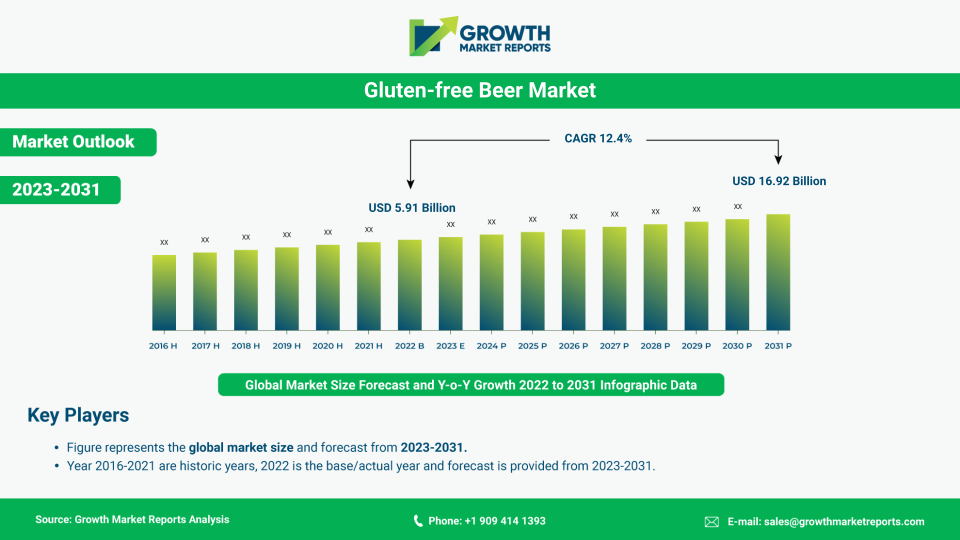
According to our latest research, the global gluten-free beer market size reached USD 11.4 billion in 2024, demonstrating a robust expansion driven by rising health consciousness and increasing prevalence of celiac disease and gluten intolerance. The market is experiencing a strong growth momentum, with a compound annual growth rate (CAGR) of 9.1% projected for the period from 2025 to 2033. By the end of 2033, the gluten-free beer market is anticipated to reach a value of USD 25.2 billion, as per our latest research findings. This growth is underpinned by evolving consumer preferences, innovative product launches, and expanding distribution channels catering to a broader demographic seeking gluten-free alternatives.

One of the primary growth factors for the gluten-free beer market is the increasing prevalence of gluten-related disorders, including celiac disease and non-celiac gluten sensitivity. With a growing number of consumers being diagnosed with these conditions, there is a heightened awareness regarding the adverse effects of gluten consumption, leading to a surge in demand for gluten-free products. Additionally, the trend of adopting gluten-free diets for perceived health benefits, even among non-celiac individuals, is expanding the consumer base for gluten-free beer. This shift is further supported by advocacy and educational campaigns from health organizations, which emphasize the necessity of gluten-free options for those with sensitivities, thus driving consistent market growth.

Another significant driver is the innovation in brewing techniques and ingredient sourcing, enabling manufacturers to produce gluten-free beers that closely mimic the taste and texture of traditional beers. Breweries are increasingly investing in research and development to create lagers, ales, and stouts that use alternative grains such as millet, sorghum, buckwheat, and rice instead of barley or wheat. These innovations not only cater to health-conscious consumers but also attract beer enthusiasts who previously avoided gluten-free options due to taste concerns. The proliferation of craft breweries specializing in gluten-free beer further bolsters the market, as they offer unique flavors and limited-edition brews that appeal to adventurous consumers.

Millet Beer is gaining traction in the gluten-free beer market due to its unique flavor profile and nutritional benefits. Millet, a staple grain in many parts of Africa and Asia, offers a slightly nutty and earthy taste, which appeals to consumers looking for more complex beer flavors. Its use in brewing not only supports the gluten-free trend but also aligns with the growing consumer interest in ancient grains and sustainable agriculture. As breweries continue to innovate, millet beer is becoming a popular choice for those seeking a healthier alternative to traditional beers, providing a rich source of essential nutrients and a distinct taste experience.

Additionally, the expansion of distribution channels has played a pivotal role in boosting the accessibility and visibility of gluten-free beer. Supermarkets, hypermarkets, specialty stores, and online retail platforms are increasingly dedicating shelf space to gluten-free beverages, making it easier for consumers to discover and purchase these products. The rise of e-commerce, in particular, has enabled smaller brands to reach a global audience, while subscription-based delivery services and direct-to-consumer sales models are fostering brand loyalty and repeat purchases. The growing popularity of gluten-free beer festivals and tasting events also contributes to market growth by providing consumers with opportunities to sample a wide range of products and engage with producers directly.

From a regional perspective, North America and Europe continue to dominate the gluten-free beer market, owing to high awareness levels, established gluten-free food industries, and supportive regulatory frameworks. However, the Asia Pacific region is emerging as a lucrative market, driven by a rising middle class, increasing disposable incomes, and a growing awareness of gluten-related health issues. Countries such as Australia, Japan, and China are witnessing a surge in demand for gluten-free products, including beer, as consumers become more health-conscious and open to trying new beverage options. This regional diversification is expected to further accelerate market growth and foster innovation in product offerings tailored to local preferences.

Ultra Low-Gluten Barley is emerging as a significant development in the gluten-free beer industry, providing an option for those who are sensitive to gluten but still wish to enjoy the traditional taste of barley-based beers. This innovative approach involves using specially bred barley strains that contain minimal gluten levels, making them suitable for individuals with mild gluten sensitivities. The introduction of ultra low-gluten barley has the potential to bridge the gap between conventional and gluten-free beers, offering a familiar taste without compromising on health requirements. As research and development in this area progress, it is expected to open new avenues for breweries to expand their product offerings and cater to a broader audience.

Global Gluten-free Beer Industry Outlook

Product Type Analysis

The gluten-free beer market is segmented by product type into lager, ale, stout, and others, each catering to distinct consumer preferences and palates. Lagers, known for their crisp and refreshing profile, have garnered significant popularity among gluten-free beer enthusiasts, particularly in regions where light and easy-drinking beers are favored. The ability of breweries to replicate the traditional lager taste using alternative grains like rice and sorghum has contributed to this segmentÂ’s rapid expansion. Moreover, lagers often appeal to first-time gluten-free beer consumers due to their familiar flavor profile and wide availability in both on-premise and off-premise channels. The segmentÂ’s growth is further supported by the increasing inclusion of gluten-free lagers in mainstream retail outlets and hospitality venues.

Ales represent another substantial segment within the gluten-free beer market, offering a diverse range of styles, from pale ales and IPAs to darker, maltier variants. The craft beer movement has played a pivotal role in elevating the profile of gluten-free ales, as independent breweries experiment with unique flavor combinations and innovative brewing techniques. Gluten-free ales are particularly popular among consumers seeking robust flavors and aromatic complexity, which are often achieved through the use of alternative grains and specialty hops. The rise of limited-edition and seasonal gluten-free ales has also contributed to increased consumer engagement and brand differentiation within this segment.

Gluten-Free Vodka is another product gaining popularity among consumers who are mindful of their gluten intake. Traditionally made from grains like wheat or rye, vodka can now be crafted from gluten-free ingredients such as corn, potatoes, or even grapes, ensuring that those with gluten sensitivities can enjoy this classic spirit without concern. The rise of gluten-free vodka reflects a broader trend in the beverage industry towards inclusivity and health-conscious consumption. As more distilleries embrace this trend, consumers are presented with a wider variety of gluten-free spirits, enhancing their drinking experience and allowing for more diverse cocktail creations.

Stouts, traditionally characterized by their rich, roasted malt flavors and creamy texture, present unique challenges and opportunities in the gluten-free beer market. Breweries have responded to consumer demand by developing gluten-free stouts that replicate the depth and complexity of conventional stouts using grains such as buckwheat and millet. This segment, though smaller compared to lagers and ales, is gaining traction among beer aficionados who appreciate bold, full-bodied brews. The introduction of flavored stouts, such as those infused with coffee or chocolate, has further expanded the appeal of gluten-free stouts and attracted a niche but loyal consumer base.

The “others” category encompasses a range of specialty gluten-free beers, including fruit-infused, spiced, and non-alcoholic variants. This segment is characterized by its focus on innovation and experimentation, as breweries seek to differentiate their offerings in a competitive market. Specialty gluten-free beers often cater to consumers with specific dietary requirements or those seeking novel taste experiences. The segment’s growth is fueled by the increasing popularity of craft beer culture, which encourages consumers to explore unique and unconventional brews. As consumer preferences continue to evolve, the demand for specialty gluten-free beers is expected to rise, driving further diversification and expansion within the product type segment.

Report Scope

Attributes Details
Report Title Gluten-free Beer Market Research Report 2033
By Product Type Lager, Ale, Stout, Others
By Source Corn, Millet, Sorghum, Buckwheat, Rice, Others
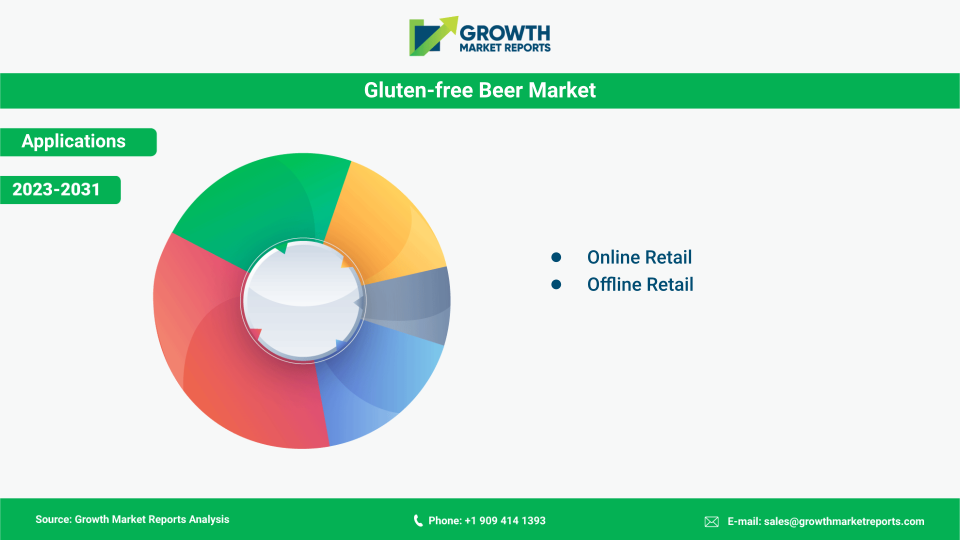
By Distribution Channel Supermarkets/Hypermarkets, Specialty Stores, Online Retail, Others
By Packaging Bottles, Cans, Others
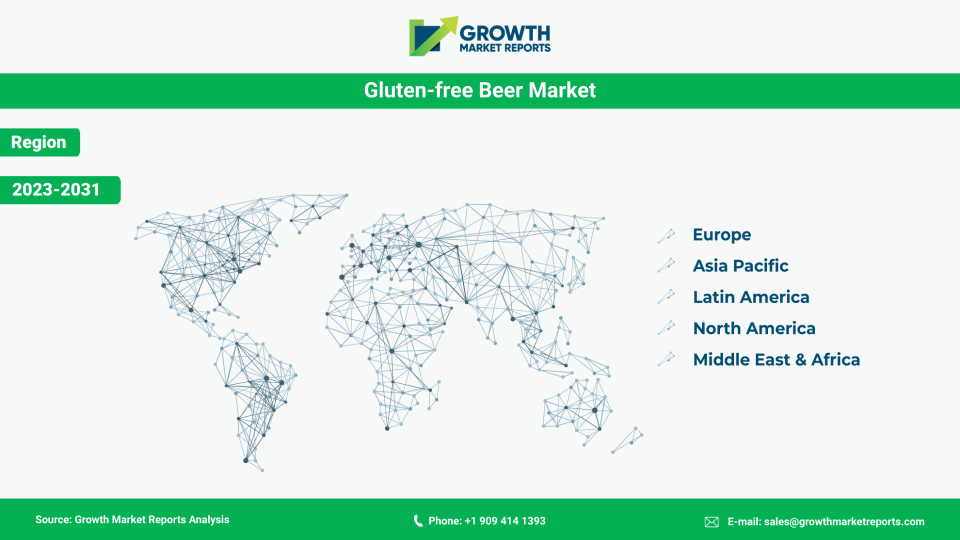
Regions Covered North America, Europe, APAC, Latin America, MEA
Base Year 2024
Historic Data 2018-2023
Forecast Period 2025-2033
Number of Pages 281
Number of Tables & Figures 385
Customization Available Yes, the report can be customized as per your need.

Source Analysis

The source segment of the gluten-free beer market is defined by the primary grains and ingredients used in brewing, with corn, millet, sorghum, buckwheat, and rice being the most prominent. Corn is widely used due to its mild flavor and ability to produce a smooth, clean beer that appeals to mainstream consumers. Its availability and cost-effectiveness make it a popular choice among large-scale breweries, particularly in North America. Corn-based gluten-free beers are often positioned as accessible alternatives to traditional lagers and pilsners, thereby catering to a broad consumer base.

Millet is another key source grain, valued for its versatility and nutritional profile. Beers brewed with millet tend to have a slightly nutty and earthy flavor, which appeals to consumers seeking more complex taste experiences. Millet-based gluten-free beers are particularly popular in regions where millet is a staple crop, such as parts of Africa and Asia. The segmentÂ’s growth is further supported by the increasing focus on sustainability and the use of ancient grains in craft brewing, which resonates with environmentally conscious consumers.

Sorghum has established itself as a cornerstone of the gluten-free beer market, especially in Africa and the United States. Its natural sweetness and fermentability make it an ideal substitute for barley in beer production. Sorghum-based beers are often characterized by their light body and subtle fruity notes, making them suitable for a wide range of beer styles. The segment benefits from ongoing research and development aimed at improving the flavor and mouthfeel of sorghum beers, thereby enhancing their appeal to both gluten-free and mainstream beer drinkers.

Buckwheat and rice are increasingly being incorporated into gluten-free beer recipes, offering unique flavor profiles and nutritional benefits. Buckwheat, despite its name, is not related to wheat and is naturally gluten-free. It imparts a distinctive, slightly bitter taste to beer, which can add depth and character to certain styles. Rice, on the other hand, is prized for its neutral flavor and light texture, making it a popular choice for producing crisp, refreshing beers. The use of these alternative grains is expected to increase as breweries continue to innovate and diversify their product portfolios to meet evolving consumer preferences.

Distribution Channel Analysis

Distribution channels play a critical role in the growth and accessibility of the gluten-free beer market. Supermarkets and hypermarkets represent the largest distribution channel, accounting for a significant share of global sales. These retail outlets offer consumers the convenience of one-stop shopping and the ability to compare a wide range of brands and styles. The strategic placement of gluten-free beer in dedicated health food or specialty aisles further enhances visibility and encourages trial among new consumers. Retailers are increasingly partnering with breweries to offer exclusive products and promotional campaigns, driving incremental sales and brand loyalty.

Specialty stores, including health food shops and boutique liquor outlets, serve as important distribution channels for premium and craft gluten-free beers. These stores often attract health-conscious consumers and individuals with specific dietary requirements who seek expert advice and curated product selections. The personalized shopping experience and knowledgeable staff contribute to higher conversion rates and repeat purchases. Specialty stores also provide a platform for smaller breweries to showcase their offerings and build brand awareness within niche markets.

Online retail is rapidly emerging as a vital distribution channel, particularly in the wake of changing consumer shopping behaviors and the proliferation of e-commerce platforms. Online sales of gluten-free beer have surged due to the convenience of home delivery, wide product selection, and the ability to access detailed product information and reviews. Subscription-based services and direct-to-consumer models are gaining traction, enabling breweries to establish direct relationships with consumers and gather valuable feedback. The online channel also facilitates the introduction of limited-edition and seasonal products, driving excitement and engagement among beer enthusiasts.

Other distribution channels, such as bars, restaurants, and on-premise venues, play a key role in promoting gluten-free beer through experiential marketing and sampling opportunities. Many hospitality establishments are expanding their gluten-free beverage menus to cater to the growing demand from health-conscious patrons. Participation in beer festivals, tasting events, and collaborations with foodservice providers further enhances brand visibility and consumer awareness. As the market continues to evolve, the integration of omni-channel strategies and seamless consumer experiences across all touchpoints will be essential for sustained growth.

Packaging Analysis

Packaging is a crucial aspect of the gluten-free beer market, influencing consumer perceptions, brand differentiation, and shelf appeal. Bottles remain the most traditional and widely used packaging format, favored for their premium image and ability to preserve beer quality. Glass bottles are particularly popular among craft breweries and premium brands, as they convey authenticity and enhance the overall drinking experience. The use of eco-friendly and recyclable materials in bottle production is also gaining traction, reflecting growing consumer concerns about sustainability and environmental impact.

Cans have witnessed a significant surge in popularity in recent years, driven by their convenience, portability, and superior protection against light and oxygen. Canned gluten-free beers are increasingly favored by younger consumers and outdoor enthusiasts, as they are lightweight, easy to transport, and suitable for a variety of occasions. The rise of craft breweries has further accelerated the adoption of cans, as they offer greater design flexibility and branding opportunities. The segment is also benefiting from advancements in canning technology, which ensures product freshness and extends shelf life.

Other packaging formats, such as kegs and growlers, cater to the on-premise and specialty retail segments. Kegs are commonly used in bars, restaurants, and event venues, enabling the efficient serving of draft gluten-free beer to large groups. Growlers, which are refillable glass or stainless steel containers, appeal to environmentally conscious consumers and craft beer enthusiasts who value freshness and customization. The growing popularity of taprooms and brewery tours has contributed to increased demand for these alternative packaging options, providing consumers with unique and memorable experiences.

Innovations in packaging design and materials are expected to play a pivotal role in shaping the future of the gluten-free beer market. Breweries are increasingly experimenting with sustainable packaging solutions, such as biodegradable labels, compostable six-pack rings, and lightweight containers, to minimize their environmental footprint. Interactive packaging, featuring QR codes and augmented reality experiences, is also being explored as a means of engaging consumers and conveying brand stories. As competition intensifies, packaging will remain a key differentiator, influencing purchasing decisions and reinforcing brand loyalty.

Opportunities & Threats

The gluten-free beer market is poised for significant growth opportunities, driven by the increasing prevalence of gluten intolerance and celiac disease worldwide. As more consumers seek gluten-free alternatives for health reasons or lifestyle choices, breweries have the chance to tap into a rapidly expanding demographic. The ongoing innovation in brewing techniques and ingredient sourcing presents a unique opportunity for manufacturers to differentiate their products and capture market share. Collaborations with health organizations and advocacy groups can further enhance brand credibility and consumer trust, while targeted marketing campaigns and educational initiatives can raise awareness and drive trial among new consumers. Additionally, the globalization of craft beer culture and the rise of experiential marketing, such as brewery tours and tasting events, provide avenues for engaging consumers and fostering brand loyalty.

Another key opportunity lies in the expansion of distribution channels and the adoption of omni-channel strategies. The proliferation of e-commerce platforms and direct-to-consumer sales models enables breweries to reach a wider audience and gather valuable consumer insights. The integration of digital marketing, personalized recommendations, and subscription-based services can enhance the customer experience and drive repeat purchases. Partnerships with retailers, hospitality establishments, and foodservice providers can further extend the reach of gluten-free beer and increase brand visibility. As consumer preferences continue to evolve, the ability to offer a diverse range of products tailored to different occasions and dietary needs will be essential for sustained growth and competitive advantage.

Despite the numerous opportunities, the gluten-free beer market faces several restraining factors that could impede its growth. One of the primary challenges is the higher production cost associated with sourcing alternative grains and implementing specialized brewing processes. These costs are often passed on to consumers in the form of premium pricing, which can limit accessibility and deter price-sensitive buyers. Additionally, the taste and texture of gluten-free beers may not always match those of traditional beers, leading to consumer reluctance and lower repeat purchase rates. Regulatory complexities, particularly with regard to labeling and certification standards, can also pose challenges for manufacturers seeking to enter new markets. Addressing these barriers will require ongoing investment in research and development, as well as collaboration with industry stakeholders and regulatory bodies.

Regional Outlook

North America remains the largest regional market for gluten-free beer, accounting for approximately USD 4.1 billion in sales in 2024. The regionÂ’s dominance is attributed to high awareness levels, a well-established gluten-free food industry, and a supportive regulatory environment. The United States, in particular, is a major contributor to regional growth, with a thriving craft beer scene and a large population of health-conscious consumers. Canada is also witnessing increased demand for gluten-free beer, driven by rising diagnoses of celiac disease and the growing popularity of gluten-free diets. The North American market is expected to maintain a strong growth trajectory, supported by ongoing product innovation and expanding distribution networks.

Europe is another key market, with total sales reaching USD 3.2 billion in 2024. The region benefits from a rich brewing tradition, a diverse consumer base, and stringent food safety regulations that ensure product quality and transparency. Countries such as the United Kingdom, Germany, and Italy are leading the adoption of gluten-free beer, supported by a growing number of breweries specializing in gluten-free and low-gluten products. The European market is characterized by a strong emphasis on sustainability and ethical sourcing, with consumers increasingly seeking organic and locally produced gluten-free beers. The region is projected to grow at a CAGR of 8.7% over the forecast period, driven by rising health consciousness and the expansion of retail channels.

The Asia Pacific region is emerging as a high-growth market for gluten-free beer, with sales estimated at USD 2.1 billion in 2024. The regionÂ’s growth is fueled by increasing disposable incomes, a rising middle class, and growing awareness of gluten-related health issues. Australia, Japan, and China are at the forefront of this trend, with a surge in demand for gluten-free products across urban centers. The Asia Pacific market presents significant opportunities for international and local breweries to introduce innovative products tailored to regional tastes and preferences. As the market matures, the adoption of advanced brewing technologies and sustainable practices is expected to further accelerate growth and enhance competitiveness.

Gluten-free Beer Market Statistics

Competitor Outlook

The competitive landscape of the gluten-free beer market is characterized by the presence of both established multinational breweries and emerging craft beer producers. Large players leverage their extensive distribution networks, brand recognition, and research and development capabilities to introduce a wide range of gluten-free beer options. These companies often invest in marketing campaigns and sponsorships to raise awareness and drive consumer engagement. At the same time, craft breweries are gaining traction by offering unique, small-batch gluten-free beers that cater to niche segments and adventurous consumers. The proliferation of local and regional brands has intensified competition, prompting companies to differentiate their offerings through innovative flavors, sustainable practices, and premium positioning.

Strategic partnerships, mergers, and acquisitions are common strategies employed by leading players to expand their product portfolios and geographic reach. Collaborations with health organizations, advocacy groups, and retail partners enable companies to tap into new consumer segments and enhance brand credibility. The focus on product innovation, particularly in terms of taste, texture, and nutritional value, remains a key differentiator in the market. Companies are increasingly investing in research and development to improve brewing techniques, source high-quality ingredients, and develop new packaging solutions that appeal to environmentally conscious consumers.

The rise of e-commerce and direct-to-consumer sales models has also transformed the competitive dynamics of the gluten-free beer market. Companies are leveraging digital platforms to engage with consumers, gather feedback, and tailor their offerings to evolving preferences. The ability to offer personalized recommendations, subscription services, and exclusive online promotions has become a critical success factor for brands seeking to build long-term relationships with their customers. As the market continues to grow and diversify, agility and adaptability will be essential for companies to maintain their competitive edge and capitalize on emerging opportunities.

Major companies operating in the gluten-free beer market include Daura Damm (by S.A. Damm), GreenÂ’s Gluten Free Beers, New Planet Beer Company, Ground Breaker Brewing, Omission Brewing Co., Glutenberg Craft Brewery, BardÂ’s Tale Beer Company, and Holidaily Brewing Company. Daura Damm is renowned for its award-winning gluten-removed beers, leveraging advanced brewing techniques to deliver authentic taste while ensuring safety for gluten-sensitive consumers. GreenÂ’s Gluten Free Beers, based in the United Kingdom, specializes in a wide range of gluten-free styles, including lagers, ales, and stouts, and has a strong presence in European markets. New Planet Beer Company and Ground Breaker Brewing are prominent players in North America, known for their commitment to using 100% gluten-free ingredients and innovative brewing processes.

Omission Brewing Co. stands out for its focus on producing gluten-removed beers that undergo rigorous testing to ensure compliance with international gluten-free standards. Glutenberg Craft Brewery, based in Canada, has gained a loyal following for its diverse portfolio of gluten-free beers, including IPAs, stouts, and specialty brews. BardÂ’s Tale Beer Company is recognized for its pioneering role in the gluten-free beer movement, offering sorghum-based beers that cater to a wide range of consumer preferences. Holidaily Brewing Company, one of the few dedicated gluten-free breweries in the United States, has built a strong brand around quality, innovation, and community engagement. These companies continue to drive market growth through product innovation, strategic partnerships, and a relentless focus on meeting the evolving needs of gluten-free consumers.

Key Players

  • Anheuser-Busch InBev
  • Bard's Tale Beer Company
  • BrewDog
  • Brunehaut Brewery
  • Coors Brewing Company (Molson Coors Beverage Company)
  • Dogfish Head Craft Brewery
  • Daura Damm (Grupo Damm)
  • Green's Gluten Free Beers
  • Ground Breaker Brewing
  • Holidaily Brewing Company
  • Joseph James Brewing Company
  • Lakefront Brewery
  • New Belgium Brewing Company
  • Omission Brewing Co. (Craft Brew Alliance)
  • Redbridge (Anheuser-Busch)
  • Stone Brewing
  • Two Brothers Brewing Company
  • Widmer Brothers Brewing (Craft Brew Alliance)
  • Whistler Brewing Company
  • Wildcraft Brewery
Gluten-free Beer Market Overview

Segments

The Gluten-free Beer market has been segmented on the basis of

Product Type

  • Lager
  • Ale
  • Stout
  • Others

Source

  • Corn
  • Millet
  • Sorghum
  • Buckwheat
  • Rice
  • Others

Distribution Channel

  • Supermarkets/Hypermarkets
  • Specialty Stores
  • Online Retail
  • Others

Packaging

  • Bottles
  • Cans
  • Others

Competitive Landscape

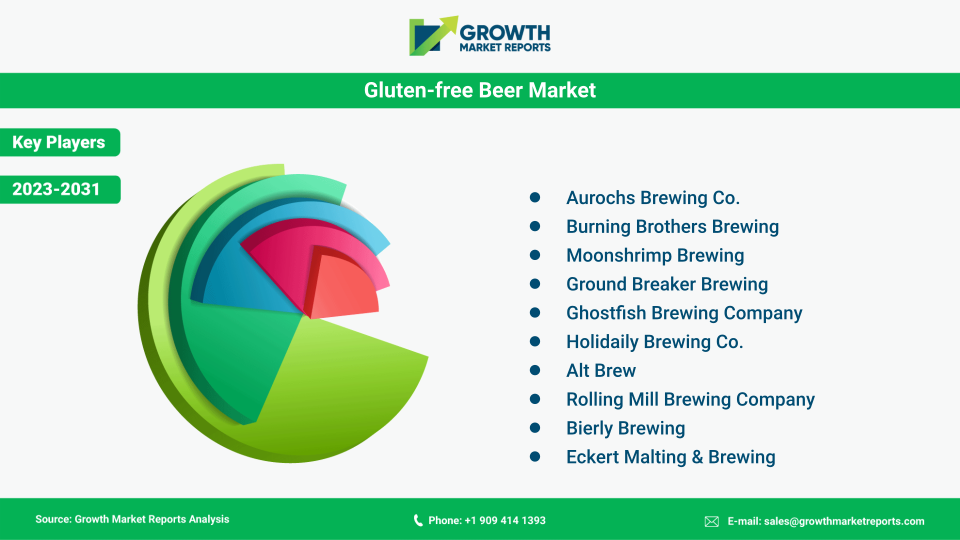
Some of the major companies in the gluten-free beer market are Aurochs Brewing Co., Burning Brothers Brewing, Ground Breaker Brewing, Ghostfish Brewing Company, Moonshrimp Brewing, Holidaily Brewing Co., Alt Brew, Rolling Mill Brewing Company, Bierly Brewing, Eckert Malting & Brewing, New Planet Beer Company, Anaheuser-Busch, Bard's Tale Beer, Brewery Rickoli, Coors, and Epic Brewing Company.

Gluten-free Beer Market Key Players

Frequently Asked Questions

The gluten-free beer market is expected to grow at a compound annual growth rate (CAGR) of 9.1% from 2025 to 2033, reaching an estimated value of USD 25.2 billion by 2033.

Challenges include higher production costs, taste and texture differences compared to traditional beers, premium pricing, and regulatory complexities related to labeling and certification.

Key companies include Daura Damm, Green’s Gluten Free Beers, New Planet Beer Company, Ground Breaker Brewing, Omission Brewing Co., Glutenberg Craft Brewery, Bard’s Tale Beer Company, and Holidaily Brewing Company.

Gluten-free beers are typically packaged in bottles, cans, kegs, and growlers, with increasing emphasis on eco-friendly and innovative packaging solutions.

Gluten-free beer is available in supermarkets, hypermarkets, specialty stores, online retail platforms, and on-premise venues such as bars and restaurants.

Common grains and ingredients include corn, millet, sorghum, buckwheat, and rice, each offering unique flavors and nutritional profiles.

The market offers a variety of gluten-free beers including lagers, ales, stouts, and specialty options such as fruit-infused, spiced, and non-alcoholic variants.

North America and Europe currently dominate the gluten-free beer market due to high awareness and established gluten-free food industries, while Asia Pacific is emerging as a high-growth region.

Key growth drivers include rising health consciousness, increasing prevalence of celiac disease and gluten intolerance, innovative product launches, and expanded distribution channels.

As of 2024, the global gluten-free beer market size reached USD 11.4 billion, with strong growth expected in the coming years.

Table Of Content

Chapter 1 Executive Summary
Chapter 2 Assumptions and Acronyms Used
Chapter 3 Research Methodology
Chapter 4 Gluten-free Beer Market Overview
   4.1 Introduction
      4.1.1 Market Taxonomy
      4.1.2 Market Definition
      4.1.3 Macro-Economic Factors Impacting the Market Growth
   4.2 Gluten-free Beer Market Dynamics
      4.2.1 Market Drivers
      4.2.2 Market Restraints
      4.2.3 Market Opportunity
   4.3 Gluten-free Beer Market - Supply Chain Analysis
      4.3.1 List of Key Suppliers
      4.3.2 List of Key Distributors
      4.3.3 List of Key Consumers
   4.4 Key Forces Shaping the Gluten-free Beer Market
      4.4.1 Bargaining Power of Suppliers
      4.4.2 Bargaining Power of Buyers
      4.4.3 Threat of Substitution
      4.4.4 Threat of New Entrants
      4.4.5 Competitive Rivalry
   4.5 Global Gluten-free Beer Market Size & Forecast, 2023-2032
      4.5.1 Gluten-free Beer Market Size and Y-o-Y Growth
      4.5.2 Gluten-free Beer Market Absolute $ Opportunity

Chapter 5 Global Gluten-free Beer Market Analysis and Forecast By Product Type
   5.1 Introduction
      5.1.1 Key Market Trends & Growth Opportunities By Product Type
      5.1.2 Basis Point Share (BPS) Analysis By Product Type
      5.1.3 Absolute $ Opportunity Assessment By Product Type
   5.2 Gluten-free Beer Market Size Forecast By Product Type
      5.2.1 Lager
      5.2.2 Ale
      5.2.3 Stout
      5.2.4 Others
   5.3 Market Attractiveness Analysis By Product Type

Chapter 6 Global Gluten-free Beer Market Analysis and Forecast By Source
   6.1 Introduction
      6.1.1 Key Market Trends & Growth Opportunities By Source
      6.1.2 Basis Point Share (BPS) Analysis By Source
      6.1.3 Absolute $ Opportunity Assessment By Source
   6.2 Gluten-free Beer Market Size Forecast By Source
      6.2.1 Corn
      6.2.2 Millet
      6.2.3 Sorghum
      6.2.4 Buckwheat
      6.2.5 Rice
      6.2.6 Others
   6.3 Market Attractiveness Analysis By Source

Chapter 7 Global Gluten-free Beer Market Analysis and Forecast By Distribution Channel
   7.1 Introduction
      7.1.1 Key Market Trends & Growth Opportunities By Distribution Channel
      7.1.2 Basis Point Share (BPS) Analysis By Distribution Channel
      7.1.3 Absolute $ Opportunity Assessment By Distribution Channel
   7.2 Gluten-free Beer Market Size Forecast By Distribution Channel
      7.2.1 Supermarkets/Hypermarkets
      7.2.2 Specialty Stores
      7.2.3 Online Retail
      7.2.4 Others
   7.3 Market Attractiveness Analysis By Distribution Channel

Chapter 8 Global Gluten-free Beer Market Analysis and Forecast By Packaging
   8.1 Introduction
      8.1.1 Key Market Trends & Growth Opportunities By Packaging
      8.1.2 Basis Point Share (BPS) Analysis By Packaging
      8.1.3 Absolute $ Opportunity Assessment By Packaging
   8.2 Gluten-free Beer Market Size Forecast By Packaging
      8.2.1 Bottles
      8.2.2 Cans
      8.2.3 Others
   8.3 Market Attractiveness Analysis By Packaging

Chapter 9 Global Gluten-free Beer Market Analysis and Forecast by Region
   9.1 Introduction
      9.1.1 Key Market Trends & Growth Opportunities By Region
      9.1.2 Basis Point Share (BPS) Analysis By Region
      9.1.3 Absolute $ Opportunity Assessment By Region
   9.2 Gluten-free Beer Market Size Forecast By Region
      9.2.1 North America
      9.2.2 Europe
      9.2.3 Asia Pacific
      9.2.4 Latin America
      9.2.5 Middle East & Africa (MEA)
   9.3 Market Attractiveness Analysis By Region

Chapter 10 Coronavirus Disease (COVID-19) Impact 
   10.1 Introduction 
   10.2 Current & Future Impact Analysis 
   10.3 Economic Impact Analysis 
   10.4 Government Policies 
   10.5 Investment Scenario

Chapter 11 North America Gluten-free Beer Analysis and Forecast
   11.1 Introduction
   11.2 North America Gluten-free Beer Market Size Forecast by Country
      11.2.1 U.S.
      11.2.2 Canada
   11.3 Basis Point Share (BPS) Analysis by Country
   11.4 Absolute $ Opportunity Assessment by Country
   11.5 Market Attractiveness Analysis by Country
   11.6 North America Gluten-free Beer Market Size Forecast By Product Type
      11.6.1 Lager
      11.6.2 Ale
      11.6.3 Stout
      11.6.4 Others
   11.7 Basis Point Share (BPS) Analysis By Product Type 
   11.8 Absolute $ Opportunity Assessment By Product Type 
   11.9 Market Attractiveness Analysis By Product Type
   11.10 North America Gluten-free Beer Market Size Forecast By Source
      11.10.1 Corn
      11.10.2 Millet
      11.10.3 Sorghum
      11.10.4 Buckwheat
      11.10.5 Rice
      11.10.6 Others
   11.11 Basis Point Share (BPS) Analysis By Source 
   11.12 Absolute $ Opportunity Assessment By Source 
   11.13 Market Attractiveness Analysis By Source
   11.14 North America Gluten-free Beer Market Size Forecast By Distribution Channel
      11.14.1 Supermarkets/Hypermarkets
      11.14.2 Specialty Stores
      11.14.3 Online Retail
      11.14.4 Others
   11.15 Basis Point Share (BPS) Analysis By Distribution Channel 
   11.16 Absolute $ Opportunity Assessment By Distribution Channel 
   11.17 Market Attractiveness Analysis By Distribution Channel
   11.18 North America Gluten-free Beer Market Size Forecast By Packaging
      11.18.1 Bottles
      11.18.2 Cans
      11.18.3 Others
   11.19 Basis Point Share (BPS) Analysis By Packaging 
   11.20 Absolute $ Opportunity Assessment By Packaging 
   11.21 Market Attractiveness Analysis By Packaging

Chapter 12 Europe Gluten-free Beer Analysis and Forecast
   12.1 Introduction
   12.2 Europe Gluten-free Beer Market Size Forecast by Country
      12.2.1 Germany
      12.2.2 France
      12.2.3 Italy
      12.2.4 U.K.
      12.2.5 Spain
      12.2.6 Russia
      12.2.7 Rest of Europe
   12.3 Basis Point Share (BPS) Analysis by Country
   12.4 Absolute $ Opportunity Assessment by Country
   12.5 Market Attractiveness Analysis by Country
   12.6 Europe Gluten-free Beer Market Size Forecast By Product Type
      12.6.1 Lager
      12.6.2 Ale
      12.6.3 Stout
      12.6.4 Others
   12.7 Basis Point Share (BPS) Analysis By Product Type 
   12.8 Absolute $ Opportunity Assessment By Product Type 
   12.9 Market Attractiveness Analysis By Product Type
   12.10 Europe Gluten-free Beer Market Size Forecast By Source
      12.10.1 Corn
      12.10.2 Millet
      12.10.3 Sorghum
      12.10.4 Buckwheat
      12.10.5 Rice
      12.10.6 Others
   12.11 Basis Point Share (BPS) Analysis By Source 
   12.12 Absolute $ Opportunity Assessment By Source 
   12.13 Market Attractiveness Analysis By Source
   12.14 Europe Gluten-free Beer Market Size Forecast By Distribution Channel
      12.14.1 Supermarkets/Hypermarkets
      12.14.2 Specialty Stores
      12.14.3 Online Retail
      12.14.4 Others
   12.15 Basis Point Share (BPS) Analysis By Distribution Channel 
   12.16 Absolute $ Opportunity Assessment By Distribution Channel 
   12.17 Market Attractiveness Analysis By Distribution Channel
   12.18 Europe Gluten-free Beer Market Size Forecast By Packaging
      12.18.1 Bottles
      12.18.2 Cans
      12.18.3 Others
   12.19 Basis Point Share (BPS) Analysis By Packaging 
   12.20 Absolute $ Opportunity Assessment By Packaging 
   12.21 Market Attractiveness Analysis By Packaging

Chapter 13 Asia Pacific Gluten-free Beer Analysis and Forecast
   13.1 Introduction
   13.2 Asia Pacific Gluten-free Beer Market Size Forecast by Country
      13.2.1 China
      13.2.2 Japan
      13.2.3 South Korea
      13.2.4 India
      13.2.5 Australia
      13.2.6 South East Asia (SEA)
      13.2.7 Rest of Asia Pacific (APAC)
   13.3 Basis Point Share (BPS) Analysis by Country
   13.4 Absolute $ Opportunity Assessment by Country
   13.5 Market Attractiveness Analysis by Country
   13.6 Asia Pacific Gluten-free Beer Market Size Forecast By Product Type
      13.6.1 Lager
      13.6.2 Ale
      13.6.3 Stout
      13.6.4 Others
   13.7 Basis Point Share (BPS) Analysis By Product Type 
   13.8 Absolute $ Opportunity Assessment By Product Type 
   13.9 Market Attractiveness Analysis By Product Type
   13.10 Asia Pacific Gluten-free Beer Market Size Forecast By Source
      13.10.1 Corn
      13.10.2 Millet
      13.10.3 Sorghum
      13.10.4 Buckwheat
      13.10.5 Rice
      13.10.6 Others
   13.11 Basis Point Share (BPS) Analysis By Source 
   13.12 Absolute $ Opportunity Assessment By Source 
   13.13 Market Attractiveness Analysis By Source
   13.14 Asia Pacific Gluten-free Beer Market Size Forecast By Distribution Channel
      13.14.1 Supermarkets/Hypermarkets
      13.14.2 Specialty Stores
      13.14.3 Online Retail
      13.14.4 Others
   13.15 Basis Point Share (BPS) Analysis By Distribution Channel 
   13.16 Absolute $ Opportunity Assessment By Distribution Channel 
   13.17 Market Attractiveness Analysis By Distribution Channel
   13.18 Asia Pacific Gluten-free Beer Market Size Forecast By Packaging
      13.18.1 Bottles
      13.18.2 Cans
      13.18.3 Others
   13.19 Basis Point Share (BPS) Analysis By Packaging 
   13.20 Absolute $ Opportunity Assessment By Packaging 
   13.21 Market Attractiveness Analysis By Packaging

Chapter 14 Latin America Gluten-free Beer Analysis and Forecast
   14.1 Introduction
   14.2 Latin America Gluten-free Beer Market Size Forecast by Country
      14.2.1 Brazil
      14.2.2 Mexico
      14.2.3 Rest of Latin America (LATAM)
   14.3 Basis Point Share (BPS) Analysis by Country
   14.4 Absolute $ Opportunity Assessment by Country
   14.5 Market Attractiveness Analysis by Country
   14.6 Latin America Gluten-free Beer Market Size Forecast By Product Type
      14.6.1 Lager
      14.6.2 Ale
      14.6.3 Stout
      14.6.4 Others
   14.7 Basis Point Share (BPS) Analysis By Product Type 
   14.8 Absolute $ Opportunity Assessment By Product Type 
   14.9 Market Attractiveness Analysis By Product Type
   14.10 Latin America Gluten-free Beer Market Size Forecast By Source
      14.10.1 Corn
      14.10.2 Millet
      14.10.3 Sorghum
      14.10.4 Buckwheat
      14.10.5 Rice
      14.10.6 Others
   14.11 Basis Point Share (BPS) Analysis By Source 
   14.12 Absolute $ Opportunity Assessment By Source 
   14.13 Market Attractiveness Analysis By Source
   14.14 Latin America Gluten-free Beer Market Size Forecast By Distribution Channel
      14.14.1 Supermarkets/Hypermarkets
      14.14.2 Specialty Stores
      14.14.3 Online Retail
      14.14.4 Others
   14.15 Basis Point Share (BPS) Analysis By Distribution Channel 
   14.16 Absolute $ Opportunity Assessment By Distribution Channel 
   14.17 Market Attractiveness Analysis By Distribution Channel
   14.18 Latin America Gluten-free Beer Market Size Forecast By Packaging
      14.18.1 Bottles
      14.18.2 Cans
      14.18.3 Others
   14.19 Basis Point Share (BPS) Analysis By Packaging 
   14.20 Absolute $ Opportunity Assessment By Packaging 
   14.21 Market Attractiveness Analysis By Packaging

Chapter 15 Middle East & Africa (MEA) Gluten-free Beer Analysis and Forecast
   15.1 Introduction
   15.2 Middle East & Africa (MEA) Gluten-free Beer Market Size Forecast by Country
      15.2.1 Saudi Arabia
      15.2.2 South Africa
      15.2.3 UAE
      15.2.4 Rest of Middle East & Africa (MEA)
   15.3 Basis Point Share (BPS) Analysis by Country
   15.4 Absolute $ Opportunity Assessment by Country
   15.5 Market Attractiveness Analysis by Country
   15.6 Middle East & Africa (MEA) Gluten-free Beer Market Size Forecast By Product Type
      15.6.1 Lager
      15.6.2 Ale
      15.6.3 Stout
      15.6.4 Others
   15.7 Basis Point Share (BPS) Analysis By Product Type 
   15.8 Absolute $ Opportunity Assessment By Product Type 
   15.9 Market Attractiveness Analysis By Product Type
   15.10 Middle East & Africa (MEA) Gluten-free Beer Market Size Forecast By Source
      15.10.1 Corn
      15.10.2 Millet
      15.10.3 Sorghum
      15.10.4 Buckwheat
      15.10.5 Rice
      15.10.6 Others
   15.11 Basis Point Share (BPS) Analysis By Source 
   15.12 Absolute $ Opportunity Assessment By Source 
   15.13 Market Attractiveness Analysis By Source
   15.14 Middle East & Africa (MEA) Gluten-free Beer Market Size Forecast By Distribution Channel
      15.14.1 Supermarkets/Hypermarkets
      15.14.2 Specialty Stores
      15.14.3 Online Retail
      15.14.4 Others
   15.15 Basis Point Share (BPS) Analysis By Distribution Channel 
   15.16 Absolute $ Opportunity Assessment By Distribution Channel 
   15.17 Market Attractiveness Analysis By Distribution Channel
   15.18 Middle East & Africa (MEA) Gluten-free Beer Market Size Forecast By Packaging
      15.18.1 Bottles
      15.18.2 Cans
      15.18.3 Others
   15.19 Basis Point Share (BPS) Analysis By Packaging 
   15.20 Absolute $ Opportunity Assessment By Packaging 
   15.21 Market Attractiveness Analysis By Packaging

Chapter 16 Competition Landscape 
   16.1 Gluten-free Beer Market: Competitive Dashboard
   16.2 Global Gluten-free Beer Market: Market Share Analysis, 2023
   16.3 Company Profiles (Details – Overview, Financials, Developments, Strategy) 
      16.3.1 Anheuser-Busch InBev
Bard's Tale Beer Company
BrewDog
Brunehaut Brewery
Coors Brewing Company (Molson Coors Beverage Company)
Dogfish Head Craft Brewery
Daura Damm (Grupo Damm)
Green's Gluten Free Beers
Ground Breaker Brewing
Holidaily Brewing Company
Joseph James Brewing Company
Lakefront Brewery
New Belgium Brewing Company
Omission Brewing Co. (Craft Brew Alliance)
Redbridge (Anheuser-Busch)
Stone Brewing
Two Brothers Brewing Company
Widmer Brothers Brewing (Craft Brew Alliance)
Whistler Brewing Company
Wildcraft Brewery

Methodology

Our Clients

sinopec
General Mills
Pfizer
Dassault Aviation
Honda Motor Co. Ltd.
Deloitte
The John Holland Group
FedEx Logistics