Segments - by Product Type (Glass Lifters, Glass Suction Cups, Glass Trolleys, Glass Cutting Tools, Glass Grippers, Others), by Application (Construction, Automotive, Manufacturing, Others), by End-User (Commercial, Industrial, Residential), by Distribution Channel (Direct Sales, Distributors, Online Retail, Others)
This report is updated with the latest market data and insights as of June 2026. Base year: 2025 | Forecast period: 2026-2034
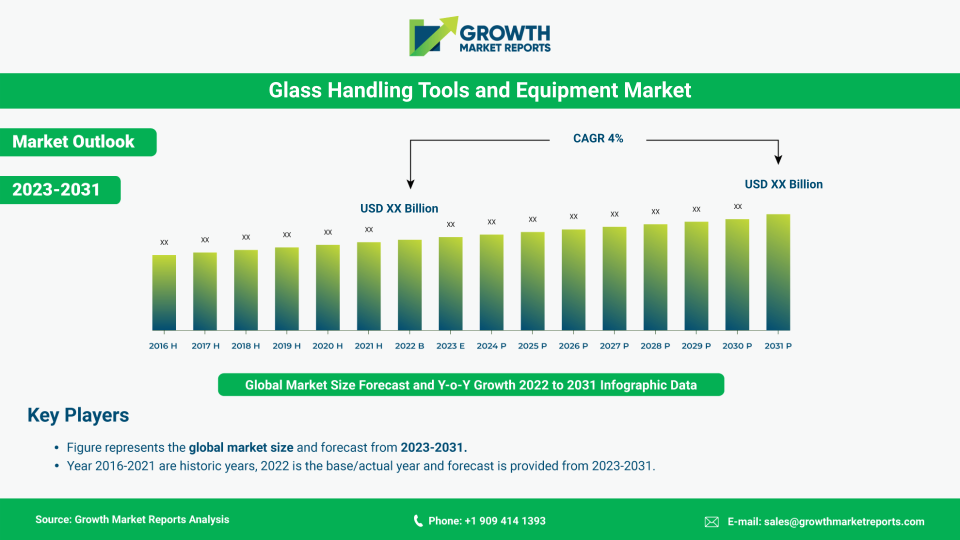
As per our latest research, the global glass handling tools and equipment market size in 2025 stands at USD 2.06 billion, reflecting robust industry momentum across key end-use sectors. The market is expected to achieve a steady growth trajectory, registering a CAGR of 6.1% during the forecast period from 2026 to 2034. By 2034, the market is projected to reach USD 3.49 billion, underscoring the rising demand for advanced glass handling solutions across diverse industries. This growth is primarily driven by technological innovations, increasing investments in infrastructure, and expanding applications in construction and automotive sectors worldwide.
The growth of the glass handling tools and equipment market is significantly influenced by the rapid expansion of the global construction industry. Urbanization and the proliferation of smart cities have intensified the use of glass in modern architecture, necessitating efficient, safe, and ergonomic handling solutions. Specialized glass handling lifters, suction cups, trolleys, and advanced grippers are increasingly being adopted to streamline installation processes and minimize the risk of damage or injury. The surge in high-rise building projects, coupled with stringent safety regulations, is compelling contractors and builders to invest in state-of-the-art glass handling equipment. Additionally, the trend toward energy-efficient glass facades and the integration of larger glass panels in building designs further amplifies the demand for specialized tools that can accommodate these requirements.
Another crucial growth factor is the evolution of the automotive sector. The automotive industry's shift toward lightweight and energy-efficient vehicles has led to increased usage of specialized glass components, such as panoramic sunroofs, advanced windshields, and complex window designs. Automakers are prioritizing precision and safety in glass installation, fueling the adoption of sophisticated handling tools that support automation and high-volume production. The integration of robotics and automation in automotive manufacturing lines has also driven demand for customized glass handling solutions, enabling manufacturers to achieve higher productivity, reduce operational costs, and maintain stringent quality standards.
Technological advancements are deeply shaping the landscape of the glass handling tools and equipment market in 2025. Innovations such as vacuum-based lifters, automated trolleys, and smart grippers equipped with sensors are revolutionizing the way glass is handled, transported, and installed. These advancements not only enhance operational efficiency but also address critical challenges related to worker safety and glass fragility. The emergence of Industry 4.0 and the adoption of IoT-enabled devices are enabling real-time monitoring, predictive maintenance, and remote operation of glass handling equipment. As end-users increasingly seek solutions that offer reliability, versatility, and scalability, manufacturers are responding with products that integrate digital technologies and ergonomic designs, setting new benchmarks for performance and safety.
In the context of the automotive sector's evolution, the role of auto glass setting tools has become increasingly significant. These tools are essential for ensuring precision and safety in the installation of glass components in vehicles. With the automotive industry shifting toward more complex glass designs, including panoramic sunroofs and advanced windshields, the demand for specialized setting tools has surged. They facilitate accurate placement and secure fitting of glass, which is crucial for maintaining structural integrity and safety features of modern vehicles. As manufacturers continue to innovate, these setting tools are evolving to support automation and high-volume production, further enhancing their importance in the industry.
From a regional perspective, Asia Pacific is emerging as the dominant force in the glass handling tools and equipment market, attributed to rapid industrialization, urban infrastructure development, and a burgeoning automotive industry. North America and Europe follow closely, driven by technological adoption, regulatory standards, and investments in modernization. Latin America and the Middle East & Africa are also witnessing steady growth, supported by infrastructure projects and expanding commercial sectors. Each region presents unique opportunities and challenges, with market participants tailoring their strategies to address local demand dynamics, regulatory frameworks, and competitive landscapes.
The product type segment forms the cornerstone of the glass handling tools and equipment market, encompassing a wide array of specialized tools such as glass lifters, suction cups, trolleys, cutting tools, grippers, and other ancillary equipment. Glass lifters command the largest share, approximately 27.5% in 2025, gaining significant traction particularly in large-scale construction and industrial applications due to their ability to handle heavy and oversized glass panels safely and efficiently. The increasing preference for automated and semi-automated lifters is enhancing productivity and reducing labor dependence, especially in high-rise building projects and automotive assembly lines. These products are being continually improved with ergonomic designs, enhanced load capacities, and integrated safety features, making them indispensable in modern glass handling operations.
Glass suction cups represent another critical product category, holding roughly 22.0% of market share in 2025, and are widely used for both manual and automated glass handling. These tools are valued for their versatility, ease of use, and ability to securely grip glass surfaces without causing damage. Technological advancements have led to the development of high-performance glass setting suction cups with enhanced vacuum strength, wear-resistant materials, and quick-release mechanisms, catering to the needs of both small-scale workshops and large manufacturing plants. The market for suction cups is expected to expand further as industries seek reliable solutions for handling delicate or irregularly shaped glass components.
Glass trolleys and glass cutting tools are also witnessing increased demand, accounting for 17.5% and 16.0% of the market respectively in 2025. Glass trolleys equipped with adjustable frames, shock absorbers, and safety locks are becoming standard in warehouses and on construction sites, facilitating the safe movement of glass panels over varying terrains. Meanwhile, advancements in precision glass cutting tool technology, including the integration of laser and waterjet systems, are enabling manufacturers to achieve high accuracy and reduce material wastage. These innovations are particularly relevant in the production of architectural glass and custom automotive components.
The glass transport truck segment has emerged as a vital component in the logistics of glass handling, particularly for large-scale projects and remote locations. These specialized vehicles are designed to transport glass panels safely over long distances, equipped with features that prevent breakage and ensure stability during transit. As demand for glass in construction and automotive industries continues to rise through 2034, efficient transportation of glass becomes increasingly critical for maintaining project timelines and quality standards.
Other products such as glass grippers (approximately 10.5% share) and specialized handling attachments are catering to niche applications where conventional tools may not suffice. These products are designed to accommodate unique glass shapes, sizes, and handling requirements, offering greater flexibility and customization. Ongoing R&D efforts by manufacturers to develop lightweight, durable, and adaptable tools are expected to further expand the product portfolio, ensuring that end-users have access to solutions that match their specific operational needs well into the forecast period.
| Attributes | Details |
| Report Title | Glass Handling Tools and Equipment Market Research Report 2025-2034 |
| By Product Type | Glass Lifters, Glass Suction Cups, Glass Trolleys, Glass Cutting Tools, Glass Grippers, Others |
| By Application | Construction, Automotive, Manufacturing, Others |
| By End-User | Commercial, Industrial, Residential |
| By Distribution Channel | Direct Sales, Distributors, Online Retail, Others |
| Regions Covered | North America, Europe, APAC, Latin America, MEA |
| Base Year | 2025 |
| Historic Data | 2019-2024 |
| Forecast Period | 2026-2034 |
| Number of Pages | 290 |
| Number of Tables & Figures | 344 |
| Customization Available | Yes, the report can be customized as per your need. |
The application segment of the glass handling tools and equipment market is broadly categorized into construction, automotive, manufacturing, and other sectors. The construction sector remains the largest application area, accounting for a substantial share of the global market in 2025. The increasing prevalence of glass facades, curtain walls, and energy-efficient windows in both commercial and residential buildings is driving the adoption of advanced glass handling solutions. Contractors and builders are investing in equipment that enhances installation speed, ensures worker safety, and minimizes the risk of glass breakage. The emphasis on sustainable and aesthetically pleasing architectural designs is contributing to the growing use of glass in construction, further boosting demand for specialized handling tools. The parallel expansion of the glass manufacturing equipment sector is also reinforcing upstream demand for precision handling systems that integrate seamlessly into fabrication workflows.
The automotive industry is another key application segment, benefiting from the trend toward lightweight vehicles and advanced glass technologies. Modern vehicles feature complex glass components such as laminated windshields, panoramic roofs, and adaptive windows, all of which require precise handling during assembly. Automotive manufacturers are increasingly adopting automated glass handling equipment to support high-volume production and maintain stringent quality standards. The integration of robotics and smart sensors in automotive assembly lines is enhancing the efficiency and safety of glass installation processes, making this segment a significant contributor to market growth through 2034.
In the manufacturing sector, glass handling tools and equipment are essential for a wide range of processes, from raw material handling to finished product assembly. Industries such as electronics, solar energy, and consumer goods rely on precision glass handling to produce components like display panels, photovoltaic cells, and decorative glassware. The demand for high-quality, defect-free glass products is driving manufacturers to invest in advanced handling solutions that minimize the risk of contamination, scratches, or breakage. The adoption of automated and semi-automated equipment is also helping manufacturers achieve higher throughput and reduce operational costs.
Other application areas, including logistics, retail, and service sectors, are also contributing to the expansion of the glass handling tools and equipment market. These sectors require reliable and efficient solutions for the storage, transportation, and installation of glass products, particularly in scenarios involving customized or oversized glass items. The growing popularity of glass in interior design, retail displays, and public infrastructure projects is creating new opportunities for market participants to develop innovative tools that address emerging needs and challenges across the 2026-2034 forecast window.
The end-user segment of the glass handling tools and equipment market is segmented into commercial, industrial, and residential users, each with distinct requirements and purchasing behaviors. Commercial end-users, including construction firms, property developers, and architectural design companies, represent a significant portion of market demand in 2025. These entities prioritize equipment that offers high reliability, safety, and efficiency, as their projects often involve large-scale glass installations in office buildings, shopping centers, and public infrastructure. The trend toward green buildings and smart cities is further driving commercial end-users to invest in advanced glass handling solutions that support sustainable construction practices and enhance building aesthetics.
Industrial end-users encompass a wide range of sectors, including automotive manufacturing, electronics, solar energy, and glass processing plants. These industries require specialized equipment capable of handling high volumes of glass with precision and consistency. Automation and digitalization are key trends in the industrial segment, with companies seeking solutions that integrate seamlessly into their production lines and support real-time monitoring and quality control. The adoption of Industry 4.0 technologies is enabling industrial end-users to optimize their operations, reduce downtime, and improve product quality, thereby driving demand for intelligent and connected glass handling equipment throughout the forecast period.
The residential end-user segment, while smaller compared to commercial and industrial counterparts, is witnessing steady growth due to the increasing use of glass in home construction and renovation projects. Homeowners and small contractors are investing in user-friendly and affordable glass handling tools for applications such as window installation, glass doors, and decorative features. The rising popularity of DIY home improvement and the availability of glass handling equipment through online retail channels are making it easier for residential users to access the tools they need. Manufacturers are responding to this trend by offering compact, easy-to-use products tailored to the needs of residential customers.
Across all end-user segments, the demand for equipment that balances performance, safety, and cost-effectiveness is a common theme. Market participants are focusing on developing products that cater to the specific needs of each end-user group, offering a range of solutions from basic manual tools to advanced automated systems. This customer-centric approach is helping companies build long-term relationships and enhance their competitive positioning in the market as it evolves through 2034.
The distribution channel segment in the glass handling tools and equipment market is divided into direct sales, distributors, online retail, and other channels. Direct sales remain a preferred channel for large-scale commercial and industrial buyers who require customized solutions, technical support, and after-sales services. Manufacturers often maintain dedicated sales teams and technical consultants to work closely with key clients, ensuring that their specific requirements are met and fostering long-term business relationships. Direct sales channels also enable manufacturers to gather valuable feedback and insights, which can be used to inform product development and innovation.
Distributors play a vital role in expanding market reach, particularly in regions where manufacturers may not have a direct presence. Distributors offer a wide range of products from multiple brands, providing customers with greater choice and convenience. They also offer value-added services such as inventory management, technical training, and logistics support, making them an essential part of the supply chain. The partnership between manufacturers and distributors is crucial for penetrating new markets and catering to the needs of small and medium-sized enterprises, particularly across Latin America, the Middle East, and Southeast Asia.
Online retail is emerging as a significant and fast-growing distribution channel in 2025, driven by the increasing digitization of procurement processes and the rising preference for e-commerce platforms. Online channels offer customers the convenience of browsing, comparing, and purchasing glass handling tools from the comfort of their offices or homes. The availability of detailed product information, customer reviews, and competitive pricing is making online retail an attractive option for both residential and small business buyers. Manufacturers are leveraging online platforms to reach a broader audience, offer promotional deals, and provide direct-to-customer support.
Other distribution channels, such as rental services and specialized resellers, are also contributing to the growth of the market. Rental services are particularly popular among contractors and small businesses that require glass handling equipment for short-term projects or occasional use. Specialized resellers focus on niche markets or specific product categories, offering expert advice and tailored solutions to customers with unique requirements. The diversity of distribution channels ensures that end-users have access to the products and services they need, regardless of their location or purchasing preferences.
The glass handling tools and equipment market is ripe with opportunities heading through 2034, particularly in emerging economies where rapid urbanization and industrialization are driving demand for modern construction and manufacturing solutions. The increasing adoption of smart technologies, such as IoT-enabled devices and automation, presents significant growth prospects for manufacturers willing to invest in research and development. The trend toward sustainable building practices and energy-efficient glass products is creating new avenues for innovation, with companies developing tools that support the installation of advanced glazing systems and eco-friendly materials. Strategic partnerships, mergers, and acquisitions offer additional opportunities for market expansion and the development of integrated solutions that address the evolving needs of end-users.
Another major opportunity lies in the customization and diversification of product offerings to cater to specific industry requirements. As industries such as automotive, electronics, and solar energy continue to evolve beyond 2025, there is a growing demand for specialized glass handling equipment that can accommodate unique shapes, sizes, and handling challenges. Manufacturers that can develop adaptable and scalable solutions will be well-positioned to capture new market segments and build strong customer loyalty. The expansion of online retail channels and the growing popularity of rental and leasing services also present opportunities for companies to reach new customer bases and generate recurring revenue streams.
Despite these opportunities, the market faces several restraining factors, the most notable being the high initial investment required for advanced glass handling equipment. Small and medium-sized enterprises, in particular, may find it challenging to justify the cost of automation and digitalization, especially in regions with limited access to financing or technical expertise. Additionally, the market is subject to fluctuations in raw material prices and supply chain disruptions, which can impact production costs and profit margins. Regulatory compliance and safety standards also pose challenges, as manufacturers must continually adapt their products to meet evolving requirements and ensure user safety across diverse geographic markets.
The Asia Pacific region dominates the global glass handling tools and equipment market, accounting for approximately 38.0% of the total market share in 2025, which translates to roughly USD 782 million. This dominance is attributed to rapid industrialization, significant investments in infrastructure development, and a thriving automotive sector in countries such as China, India, and Japan. The region is also witnessing a surge in smart city initiatives and sustainable construction projects, further driving demand for advanced glass handling solutions. The market in Asia Pacific is expected to grow at a CAGR of 7.2% through 2034, outpacing other regions and reinforcing its position as a key growth engine for the global industry.
North America holds the second-largest share of the market at approximately 23.5%, valued at roughly USD 484 million in 2025, driven by technological innovation, regulatory standards, and ongoing investments in modernization and urban renewal projects. The United States and Canada are leading adopters of automated and IoT-enabled glass handling equipment, benefiting from a strong manufacturing base and a focus on worker safety and operational efficiency. The region is also characterized by a high level of competition and a well-established distribution network, enabling manufacturers to reach a wide range of end-users across commercial, industrial, and residential segments.
Europe follows closely with approximately 19.5% of global market share, valued at roughly USD 402 million in 2025, supported by robust construction activity, a strong automotive industry, and stringent safety regulations. Countries such as Germany, France, and the United Kingdom are at the forefront of adopting advanced glass handling technologies, driven by commitments to sustainability and energy efficiency. Latin America and the Middle East & Africa, while smaller in terms of market size at approximately 10.5% and 8.5% respectively, are experiencing steady growth due to expanding infrastructure projects and increasing commercial activity. These regions collectively represent meaningful opportunities for market participants seeking to diversify their geographic footprint and capitalize on emerging demand dynamics through 2034.
The competitive landscape of the glass handling tools and equipment market in 2025 is characterized by a mix of global giants and regional players, each striving to enhance their market presence through innovation, strategic partnerships, and customer-centric approaches. Leading companies are investing heavily in research and development to introduce cutting-edge products that address the evolving needs of end-users, such as automated lifters, smart suction cups, and IoT-enabled handling systems. The emphasis on product quality, safety, and reliability is driving manufacturers to adopt advanced materials, precision engineering, and rigorous testing protocols, ensuring that their offerings meet the highest industry standards.
Strategic collaborations and mergers are becoming increasingly common as companies seek to expand their product portfolios, enter new markets, and leverage synergies in technology and distribution. Partnerships with technology providers, construction firms, and automotive manufacturers are enabling market leaders to develop integrated solutions that deliver superior performance and value. The ability to offer end-to-end solutions, including installation, maintenance, and training services, is emerging as a key differentiator in the market, allowing companies to build long-term relationships and secure repeat business.
Regional players are also making significant contributions to the market, particularly in Asia Pacific and Europe, where local expertise, customer proximity, and agile manufacturing capabilities provide a competitive edge. These companies often focus on niche segments or customized solutions, catering to the specific needs of local industries and regulatory environments. The rise of online retail and digital marketing is enabling smaller players to reach a broader audience and compete effectively with larger competitors, fostering a dynamic and competitive market environment through the forecast period.
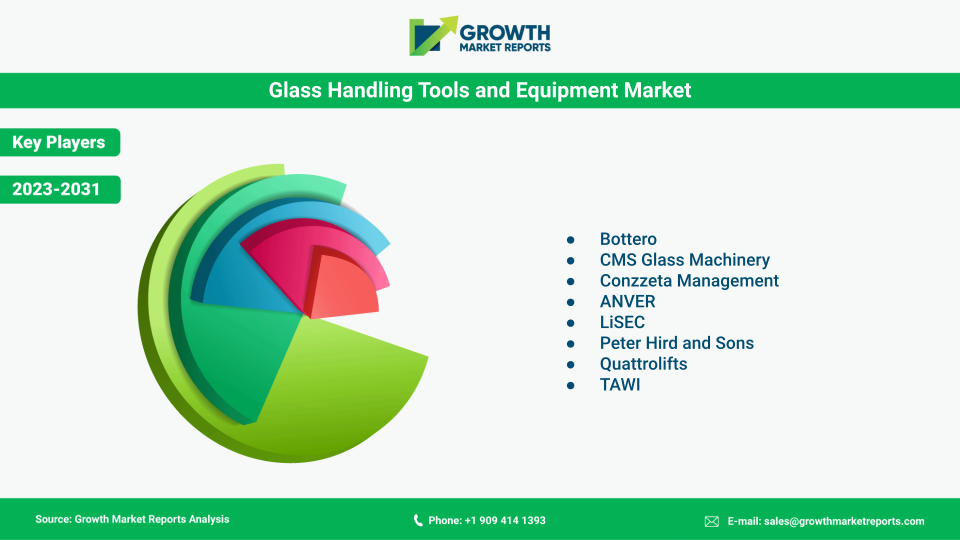
Among the major companies shaping the glass handling tools and equipment market are Bohle AG, Wood's Powr-Grip Co., Inc., Hegla GmbH & Co. KG, CR Laurence Co., Inc., and Schmalz GmbH. Bohle AG is renowned for its comprehensive range of glass handling tools and accessories, with a strong focus on quality and innovation. Wood's Powr-Grip is a global leader in vacuum lifting equipment, offering a wide selection of products for construction, automotive, and industrial applications. Hegla GmbH & Co. KG is known for its advanced glass cutting and handling machinery, while Schmalz GmbH is recognized for its expertise in vacuum automation and ergonomic handling systems serving diverse industries worldwide.
Additional key players including Glaston Corporation, Lisec Group, Grenzebach Maschinenbau GmbH, Bottero S.p.A., GGR Group, LandGlass Technology Co., Ltd., Glassrobots Oy, Turomas, CMS Glass Machinery, and Vitro Glass Machinery are continuously expanding their product offerings, investing in digital technologies, and enhancing their global distribution networks to maintain their competitive edge. These companies are well-positioned to capitalize on emerging market opportunities across all major regions through 2034, particularly as demand for automated and intelligent glass handling systems continues to accelerate.
The Glass Handling Tools and Equipment market has been segmented on the basis of
Leading companies include Bohle AG, Wood's Powr-Grip Co., Hegla GmbH & Co. KG, CR Laurence Co., Schmalz GmbH, Glaston Corporation, Bystronic Glass, Lisec Group, Grenzebach Maschinenbau GmbH, Bottero S.p.A., GGR Group, LandGlass Technology, Glassrobots Oy, Turomas, CMS Glass Machinery, Vitro Glass Machinery, and Jinan Sino Machinery Co., Ltd. These companies compete on product innovation, automation capabilities, global distribution reach, and after-sales service quality.
The market is served through direct sales (preferred for large commercial and industrial buyers needing customized solutions), distributors (critical for expanding geographic reach and supporting SMEs), online retail (a rapidly growing channel for residential and small business buyers), and other channels such as rental services and specialized resellers. Direct sales and distributor channels currently dominate, though online retail is gaining ground driven by e-commerce adoption and digital procurement trends.
Key end-users are categorized as commercial (construction firms, property developers, architectural companies), industrial (automotive manufacturers, electronics producers, solar panel fabricators, glass processing plants), and residential (homeowners, small contractors undertaking renovation projects). Commercial and industrial end-users collectively represent the dominant share of demand, while the residential segment is growing steadily with increased DIY activity and online product availability.
The primary applications span construction (the largest segment), automotive manufacturing, general industrial manufacturing, and other sectors including logistics, retail, and interior design. Construction applications include installation of facades, curtain walls, windows, and structural glass elements. Automotive applications involve precision handling of windshields, panoramic roofs, and specialty glazing components.
Asia Pacific leads the global market with approximately 38.0% share in 2025, valued at around USD 782 million, driven by rapid industrialization and infrastructure development in China, India, and Japan. North America holds the second-largest share at 23.5% (approximately USD 484 million), followed by Europe at 19.5% (approximately USD 402 million). Latin America and the Middle East & Africa account for 10.5% and 8.5% respectively, representing emerging growth frontiers.
Technology is fundamentally reshaping the market. Innovations including vacuum-based automated lifters, IoT-enabled smart grippers, sensor-integrated suction systems, and Industry 4.0-compatible handling platforms are improving operational efficiency, worker safety, and product quality. Robotics integration in automotive and manufacturing assembly lines is accelerating demand for sophisticated, connected handling solutions that support real-time monitoring and predictive maintenance.
The market is segmented into glass lifters (approximately 27.5% share), glass suction cups (22.0%), glass trolleys (17.5%), glass cutting tools (16.0%), glass grippers (10.5%), and other ancillary equipment (6.5%). Glass lifters hold the largest share due to their essential role in large-scale construction and industrial applications.
The construction and automotive industries are the primary demand drivers, together accounting for the majority of global consumption. The construction sector benefits from increasing use of glass facades, curtain walls, and energy-efficient glazing systems, while the automotive industry demands precision handling tools to support complex glass component assembly. Manufacturing industries including electronics, solar energy, and consumer goods are also significant contributors.
The market is projected to grow at a CAGR of 6.1% during the forecast period from 2026 to 2034, reaching an estimated USD 3.49 billion by 2034. This growth is underpinned by rising urbanization, increasing infrastructure spending, and ongoing technological advancements in glass handling equipment.
As of 2025, the global glass handling tools and equipment market is valued at approximately USD 2.06 billion. This figure reflects sustained momentum driven by expanding construction activity, automotive sector investments, and accelerating adoption of automated handling systems across manufacturing industries worldwide.