Generators Sets Market Research Report 2033

Generators Sets Market Research Report 2033

Segments - by Fuel Type (Diesel, Gas, Hybrid, Others), by Power Rating (Below 75 kVA, 75–375 kVA, Above 375 kVA), by Application (Standby, Prime/Continuous, Peak Shaving), by End-User (Residential, Commercial, Industrial, Utilities, Others)

https://growthmarketreports.com/Raksha
Author : Raksha Sharma
https://growthmarketreports.com/Vaibhav
Fact-checked by : V. Chandola
https://growthmarketreports.com/Shruti
Editor : Shruti Bhat

Upcoming | Report ID :EP-1934 | 4.3 Rating | 15 Reviews | 262 Pages | Format : Docx PDF

Report Description


Generator Sets Market Outlook

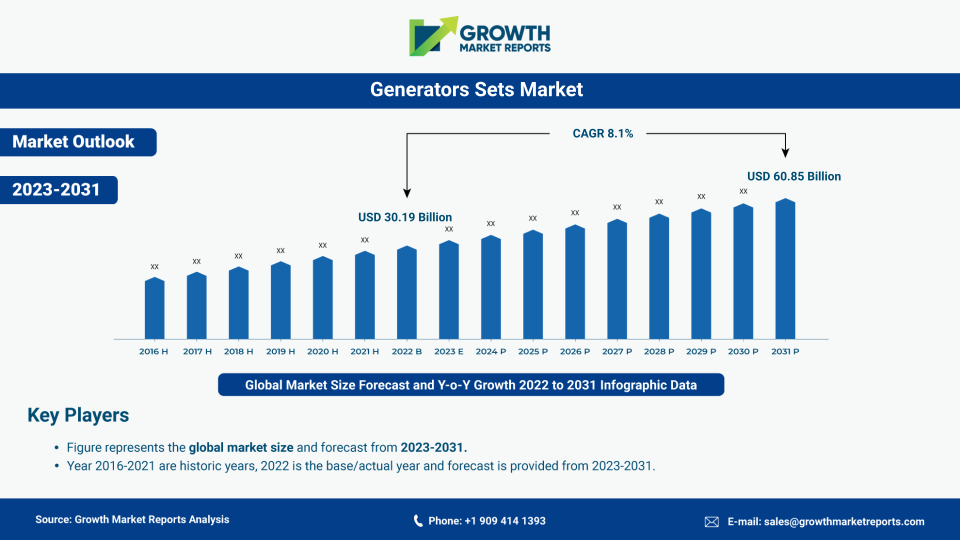
According to our latest research, the global generator sets market size reached USD 28.3 billion in 2024, reflecting robust demand across diverse application segments and end-user industries. The market is poised for steady expansion, with a projected CAGR of 6.2% from 2025 to 2033. By the end of the forecast period, the generator sets market is expected to attain a value of USD 48.7 billion. This growth trajectory is fueled by increasing industrialization, rising frequency of power outages, and the critical need for reliable backup power solutions worldwide.

The generator sets market is experiencing significant momentum due to the escalating demand for uninterrupted power supply, especially in regions plagued by unreliable grid infrastructure. Rapid urbanization and industrial growth in emerging economies are necessitating robust backup power systems to support critical operations in manufacturing, healthcare, data centers, and commercial establishments. Additionally, the proliferation of remote and off-grid locations, particularly in mining, oil & gas, and construction sectors, is further propelling the adoption of generator sets as essential power sources. The integration of advanced digital monitoring and control technologies into generator sets is also enhancing their operational efficiency, reliability, and ease of maintenance, making them an increasingly attractive investment for end-users.

Another major growth factor for the generator sets market is the evolving energy landscape, marked by the increased penetration of renewable energy sources. While renewables are contributing to cleaner grids, their intermittent nature creates a pressing need for backup power solutions to ensure grid stability and continuous operations. Generator sets, especially hybrid models that can integrate with renewable systems, are playing a pivotal role in bridging the gap between supply and demand during peak loads or grid failures. Furthermore, governments and regulatory bodies are implementing stricter emission norms, prompting manufacturers to innovate cleaner and more fuel-efficient generator sets, thereby expanding market opportunities among environmentally conscious consumers and enterprises.

The rising frequency of natural disasters and extreme weather events, such as hurricanes, floods, and wildfires, has underscored the critical importance of emergency power solutions. This has led to an uptick in generator set installations across residential, commercial, and public infrastructure sectors. The healthcare industry, in particular, has prioritized backup power to ensure uninterrupted operations of life-saving equipment during grid failures. Additionally, the growing reliance on digital infrastructure, such as data centers and telecommunications networks, is driving investments in high-capacity generator sets to guarantee operational continuity. These factors, combined with increasing investments in infrastructure development and smart city projects, are expected to sustain the market’s upward trajectory over the coming years.

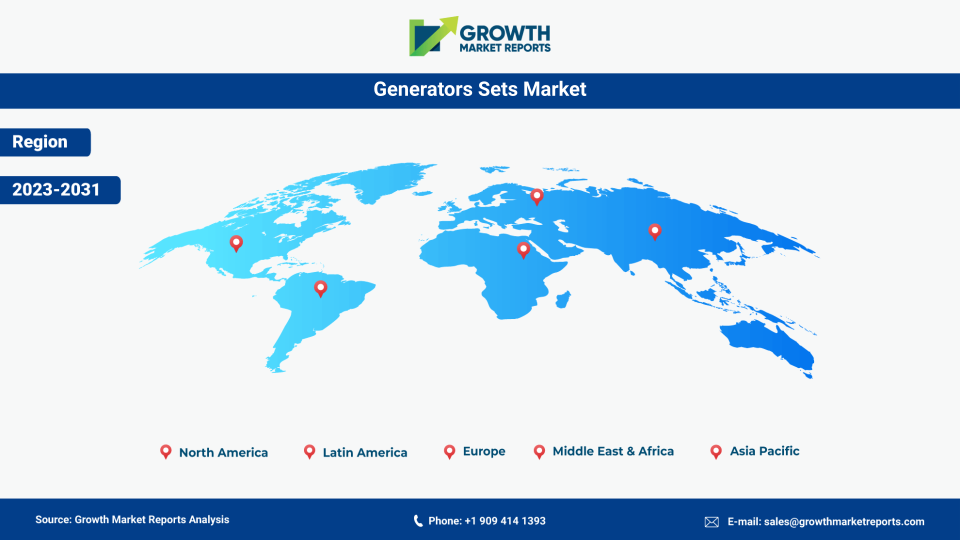
Regionally, Asia Pacific continues to dominate the generator sets market, accounting for the largest share in 2024, driven by rapid industrialization, infrastructure expansion, and frequent power shortages in countries such as China, India, and Southeast Asian nations. North America and Europe are witnessing steady growth, fueled by the need to modernize aging grid infrastructure and comply with stringent emission standards. The Middle East & Africa and Latin America are emerging as high-potential markets, supported by large-scale construction activities, energy projects, and government initiatives to enhance energy security. The regional dynamics reflect the diverse and evolving needs for generator sets across the globe, underscoring the market’s resilience and adaptability.

Global Generators Sets Industry Outlook

Fuel Type Analysis

The fuel type segment of the generator sets market is a critical determinant of operational efficiency, cost-effectiveness, and environmental impact. Diesel generator sets have traditionally dominated the market due to their robustness, reliability, and widespread availability of diesel fuel. In 2024, diesel generator sets accounted for the largest share, particularly in industrial and commercial applications where high power output and durability are paramount. However, the segment is facing increasing scrutiny due to concerns over emissions and regulatory pressures, leading manufacturers to innovate cleaner diesel technologies and incorporate advanced emission control systems. The ongoing transition towards low-sulfur diesel and bio-diesel blends is also contributing to the segment’s sustainability and regulatory compliance.

Gas generator sets are gaining significant traction, propelled by their lower emissions, higher efficiency, and suitability for continuous and prime power applications. The availability of natural gas infrastructure, especially in developed regions, is facilitating the adoption of gas-based generator sets in commercial, residential, and utility sectors. These generator sets are increasingly preferred for applications requiring cleaner and quieter operations, such as hospitals, data centers, and urban installations. The integration of advanced control systems, remote monitoring, and automation is further enhancing the operational flexibility of gas generator sets, making them an attractive alternative to traditional diesel models.

Hybrid generator sets, which combine two or more fuel sources—such as diesel and gas or renewable energy—are emerging as a transformative segment within the market. These systems offer the dual benefits of reliability and sustainability by optimizing fuel consumption, reducing emissions, and enabling seamless integration with renewable energy sources like solar and wind. Hybrid generator sets are particularly well-suited for remote and off-grid applications, where grid connectivity is limited or unreliable. The growing emphasis on decarbonization and energy efficiency is expected to accelerate the adoption of hybrid generator sets, especially in regions with ambitious climate goals and renewable energy mandates.

Other fuel types, including propane, biodiesel, and hydrogen, are gradually making inroads into the generator sets market as end-users seek cleaner and more sustainable power solutions. Technological advancements in fuel cell technology and alternative fuel engines are expanding the market potential for these generator sets, especially in niche applications where low emissions and high efficiency are critical. While these segments currently represent a smaller share of the market, ongoing research and development, coupled with supportive government policies, are likely to drive their growth over the forecast period. The diversification of fuel types reflects the market’s adaptability to evolving energy trends and regulatory environments.

Report Scope

Attributes Details
Report Title Generators Sets Market Research Report 2033
By Fuel Type Diesel, Gas, Hybrid, Others
By Power Rating Below 75 kVA, 75–375 kVA, Above 375 kVA
By Application Standby, Prime/Continuous, Peak Shaving
By End-User Residential, Commercial, Industrial, Utilities, Others
Regions Covered North America, Europe, APAC, Latin America, MEA
Base Year 2024
Historic Data 2018-2023
Forecast Period 2025-2033
Number of Pages 262
Number of Tables & Figures 396
Customization Available Yes, the report can be customized as per your need.

Power Rating Analysis

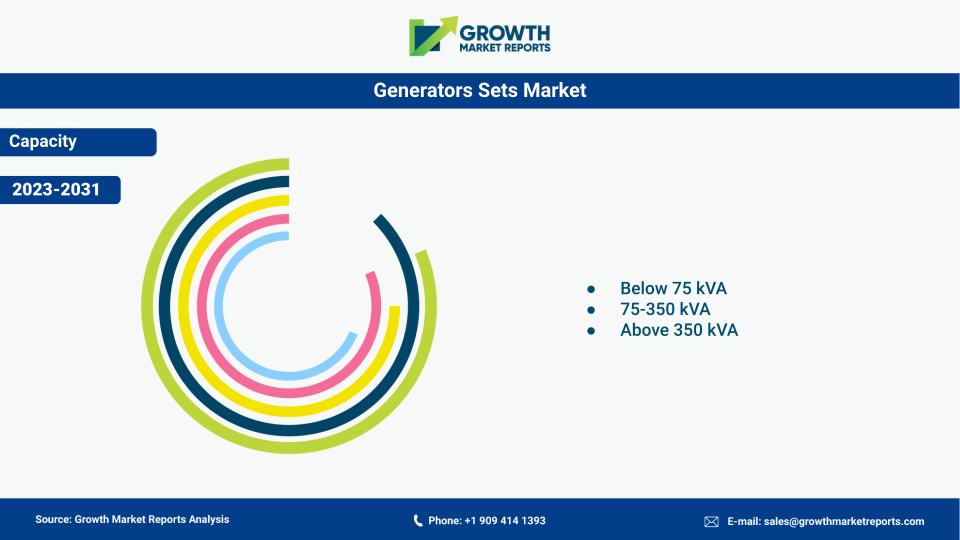
The power rating of generator sets is a key parameter influencing their application scope, cost, and operational capabilities. Generator sets with a power rating below 75 kVA are primarily used in residential, small commercial, and light industrial applications. These systems are favored for their compact size, ease of installation, and cost-effectiveness, making them ideal for backup power in homes, retail outlets, small offices, and construction sites. The segment is witnessing steady growth, particularly in emerging economies where frequent power outages and grid instability necessitate reliable backup solutions. The increasing adoption of portable and inverter generator sets in this category is also driving market expansion.

Generator sets in the 75–375 kVA power rating segment represent a significant share of the market, catering to medium-sized commercial establishments, healthcare facilities, small to mid-sized manufacturing units, and educational institutions. These generator sets offer a balance between power output and operational efficiency, making them suitable for both standby and prime power applications. The segment is experiencing robust demand due to the growing need for reliable power solutions in urban and peri-urban areas, as well as the expansion of critical infrastructure projects. The integration of digital monitoring and control systems is enhancing the performance and reliability of these generator sets, further boosting their adoption.

Generator sets with a power rating above 375 kVA are predominantly deployed in large-scale industrial, utility, and data center applications where high power output and operational continuity are critical. These systems are engineered for heavy-duty performance, offering advanced features such as parallel operation, load sharing, and remote monitoring. The segment is witnessing increased investments from sectors such as oil & gas, mining, large manufacturing plants, and commercial complexes with high energy demands. The rising emphasis on uninterrupted power supply for mission-critical operations is expected to sustain the growth of this segment, especially in regions with frequent grid failures or unstable power supply.

The power rating segmentation highlights the diverse application landscape of the generator sets market, catering to a wide spectrum of end-users with varying power requirements. Manufacturers are focusing on developing modular and scalable generator sets that can be customized to meet specific customer needs. The trend towards integrating renewable energy sources and energy storage solutions with high-capacity generator sets is also gaining traction, particularly in the context of microgrids and distributed energy systems. This evolving landscape underscores the importance of innovation and flexibility in addressing the dynamic power needs of modern industries and communities.

Application Analysis

The application segment of the generator sets market is broadly categorized into standby, prime/continuous, and peak shaving applications, each serving distinct operational needs across industries. Standby generator sets are primarily used as backup power sources during grid outages or emergencies, ensuring uninterrupted operations in critical facilities such as hospitals, data centers, commercial buildings, and residential complexes. This segment commands a significant share of the market, driven by the increasing frequency of power interruptions and the growing reliance on digital infrastructure. The integration of automatic transfer switches and remote monitoring capabilities is enhancing the reliability and responsiveness of standby generator sets.

Prime and continuous generator sets are designed for applications requiring sustained power supply over extended periods, such as in remote locations, construction sites, mining operations, and off-grid communities. These generator sets are engineered for durability, fuel efficiency, and minimal maintenance, making them ideal for environments where grid connectivity is limited or unavailable. The segment is witnessing robust growth in developing regions, where rapid industrialization and infrastructure development are driving the demand for reliable and cost-effective power solutions. The adoption of advanced engine technologies and fuel management systems is further improving the performance and longevity of prime/continuous generator sets.

Peak shaving applications involve the use of generator sets to reduce the load on the main power grid during periods of high demand, thereby optimizing energy costs and enhancing grid stability. This application is gaining traction among commercial and industrial users seeking to manage their energy consumption more efficiently and avoid peak demand charges. The integration of generator sets with energy management systems and demand response programs is enabling end-users to optimize their power usage and reduce operational expenses. The growing emphasis on energy efficiency and cost savings is expected to drive the adoption of generator sets for peak shaving applications, particularly in regions with dynamic electricity pricing structures.

The diverse application landscape of the generator sets market underscores the versatility and adaptability of these systems in meeting the evolving power needs of modern industries and communities. Manufacturers are focusing on developing application-specific solutions, incorporating advanced features such as remote diagnostics, predictive maintenance, and integration with renewable energy sources. The trend towards smart and connected generator sets is enabling end-users to achieve greater operational efficiency, reduce downtime, and optimize total cost of ownership. This application-centric approach is expected to drive innovation and market growth over the forecast period.

End-User Analysis

The end-user segment of the generator sets market encompasses a broad spectrum of industries, each with unique power requirements and operational challenges. The residential segment is witnessing steady growth, driven by the increasing frequency of power outages, rising urbanization, and the growing adoption of home automation and smart appliances. Generator sets are becoming an essential component of modern homes, providing reliable backup power for critical systems such as heating, cooling, security, and communication. The trend towards compact, silent, and fuel-efficient generator sets is catering to the evolving needs of residential users, particularly in urban and suburban settings.

The commercial segment represents a significant share of the generator sets market, encompassing sectors such as retail, hospitality, healthcare, education, and office complexes. These industries rely on uninterrupted power supply to ensure operational continuity, customer satisfaction, and regulatory compliance. Generator sets are increasingly being integrated with building management systems and energy management platforms to optimize performance and reduce operational costs. The growing emphasis on sustainability and energy efficiency is driving the adoption of cleaner and more advanced generator sets in the commercial sector, particularly in regions with stringent environmental regulations.

The industrial segment is a key driver of the generator sets market, accounting for substantial demand from sectors such as manufacturing, mining, oil & gas, construction, and transportation. These industries require high-capacity generator sets for both standby and prime power applications, often operating in challenging environments with demanding power requirements. The adoption of modular and scalable generator sets is enabling industrial users to customize their power solutions and adapt to changing operational needs. The integration of digital monitoring, predictive maintenance, and remote control capabilities is enhancing the reliability and efficiency of generator sets in industrial applications.

The utilities segment is emerging as a high-potential market for generator sets, driven by the need to support grid stability, manage peak demand, and ensure emergency backup during grid failures or maintenance activities. Utilities are increasingly deploying high-capacity generator sets as part of their disaster recovery and resilience strategies, particularly in regions prone to natural disasters or extreme weather events. The adoption of hybrid and renewable-integrated generator sets is also gaining traction among utilities seeking to reduce emissions and enhance sustainability. Other end-user segments, including government, military, and public infrastructure, are contributing to market growth through investments in reliable backup power solutions for critical operations.

Opportunities & Threats

The generator sets market is brimming with opportunities, particularly in the context of technological advancements and the evolving energy landscape. The integration of smart technologies, such as IoT-enabled monitoring, predictive analytics, and remote diagnostics, is transforming the operational efficiency and reliability of generator sets. These innovations are enabling end-users to achieve proactive maintenance, optimize fuel consumption, and reduce downtime, thereby enhancing the total value proposition. The growing emphasis on sustainability and decarbonization is driving the development of cleaner and more fuel-efficient generator sets, including hybrid and renewable-integrated systems. This presents significant growth opportunities for manufacturers and solution providers to cater to the evolving needs of environmentally conscious customers and industries.

Emerging markets in Asia Pacific, Latin America, and Africa offer vast untapped potential for the generator sets market, driven by rapid industrialization, infrastructure development, and the need for reliable power solutions in off-grid and remote areas. Government initiatives to enhance energy security, promote rural electrification, and support disaster resilience are creating a favorable environment for market expansion. The increasing adoption of distributed energy systems and microgrids is further opening new avenues for generator sets, particularly in regions with unreliable grid infrastructure. Partnerships, collaborations, and investments in research and development are expected to accelerate innovation and market penetration, enabling stakeholders to capitalize on the burgeoning opportunities.

Despite the promising outlook, the generator sets market faces certain restraining factors that could impede growth. Stringent emission regulations and environmental concerns associated with traditional diesel and gas generator sets are prompting end-users to seek cleaner and more sustainable alternatives. The volatility of fuel prices, coupled with the rising adoption of renewable energy sources and energy storage solutions, is exerting competitive pressure on conventional generator sets. Additionally, the high initial capital investment and ongoing maintenance costs associated with generator sets may deter price-sensitive customers, particularly in developing regions. Addressing these challenges will require a concerted focus on innovation, cost optimization, and regulatory compliance.

Regional Outlook

The Asia Pacific region continues to lead the global generator sets market, capturing a substantial market share of approximately 39% in 2024, which translates to a value of around USD 11.0 billion. The region’s dominance is underpinned by rapid industrialization, urbanization, and significant investments in infrastructure development across countries such as China, India, Indonesia, and Vietnam. The prevalence of frequent power outages and unreliable grid infrastructure in several parts of Asia Pacific is fueling the demand for reliable backup power solutions in both urban and rural areas. The growing adoption of generator sets in commercial, industrial, and residential sectors is expected to sustain the region’s leadership position over the forecast period.

North America remains a key market for generator sets, accounting for approximately 27% of the global market in 2024, equivalent to USD 7.6 billion. The region’s growth is driven by the need to modernize aging grid infrastructure, enhance disaster resilience, and comply with stringent emission standards. The United States, in particular, is witnessing robust demand from data centers, healthcare facilities, commercial buildings, and critical infrastructure projects. The adoption of advanced, cleaner, and more fuel-efficient generator sets is gaining momentum, supported by government incentives and regulatory support. The North American market is projected to grow at a steady CAGR of 5.8% through 2033, reflecting sustained investments in backup power solutions.

Europe holds a significant share of the generator sets market, with a value of approximately USD 5.1 billion in 2024, representing around 18% of the global market. The region’s growth is anchored by the need to support grid stability, manage peak demand, and ensure compliance with stringent environmental regulations. The adoption of hybrid and renewable-integrated generator sets is gaining traction, particularly in countries with ambitious climate goals and renewable energy mandates. The Middle East & Africa and Latin America collectively account for the remaining market share, driven by investments in energy infrastructure, construction projects, and efforts to enhance energy security. These regions are expected to witness above-average growth rates, supported by favorable government policies and increasing demand for reliable power solutions.

Generators Sets Market Statistics

Competitor Outlook

The generator sets market is characterized by intense competition, with a diverse mix of global and regional players vying for market share through product innovation, strategic partnerships, and geographic expansion. Leading manufacturers are focusing on developing advanced, fuel-efficient, and environmentally friendly generator sets to address the evolving needs of end-users and comply with stringent regulatory standards. The integration of digital technologies, such as IoT-enabled monitoring, predictive maintenance, and remote diagnostics, is emerging as a key differentiator in the market, enabling companies to offer value-added services and enhance customer satisfaction. Mergers, acquisitions, and collaborations are common strategies employed by market players to strengthen their product portfolios, expand their geographic footprint, and access new customer segments.

The competitive landscape is further shaped by the increasing emphasis on sustainability and decarbonization, prompting manufacturers to invest in research and development of hybrid and renewable-integrated generator sets. Companies are also focusing on developing modular and scalable solutions that can be customized to meet specific customer requirements, catering to the diverse application landscape of the market. The trend towards rental and leasing services is gaining traction, particularly among commercial and industrial users seeking flexible and cost-effective power solutions. This has led to the emergence of specialized service providers offering comprehensive solutions, including installation, maintenance, and remote monitoring.

Regional players are leveraging their deep understanding of local market dynamics, regulatory environments, and customer preferences to compete effectively with global giants. They are focusing on developing cost-competitive products, expanding their distribution networks, and providing localized support services to enhance customer loyalty and market penetration. The growing emphasis on after-sales service, technical support, and training is further strengthening the competitive positioning of market players. The ability to innovate, adapt to changing market trends, and deliver superior value to customers will be critical success factors in the highly competitive generator sets market.

Some of the major companies operating in the global generator sets market include Caterpillar Inc., Cummins Inc., Generac Holdings Inc., Kohler Co., Atlas Copco AB, Wartsila Corporation, Mitsubishi Heavy Industries Ltd., Rolls-Royce Holdings plc, MTU Onsite Energy, and Briggs & Stratton Corporation. These companies are at the forefront of technological innovation, offering a wide range of generator sets tailored to diverse applications and end-user needs. Caterpillar Inc. and Cummins Inc. are recognized for their extensive product portfolios, global distribution networks, and strong brand reputation. Generac Holdings Inc. is a leading player in the residential and light commercial segments, known for its focus on innovation and customer-centric solutions.

Kohler Co. and Atlas Copco AB are prominent players in the commercial and industrial segments, offering advanced generator sets with a focus on reliability, efficiency, and environmental performance. Wartsila Corporation and Mitsubishi Heavy Industries Ltd. are renowned for their expertise in high-capacity and hybrid generator sets, catering to large-scale industrial and utility applications. Rolls-Royce Holdings plc and MTU Onsite Energy are leaders in the development of advanced engine technologies and digital solutions, enabling superior performance and operational flexibility. Briggs & Stratton Corporation is a key player in the residential and small commercial segments, known for its cost-effective and user-friendly generator sets.

These companies are investing heavily in research and development to enhance product performance, reduce emissions, and integrate digital technologies. Strategic partnerships with technology providers, energy companies, and government agencies are enabling them to expand their market reach and address emerging opportunities in the generator sets market. The competitive landscape is expected to evolve rapidly over the forecast period, driven by technological advancements, regulatory changes, and shifting customer preferences. Companies that can anticipate market trends, innovate continuously, and deliver superior value to customers will be well-positioned to succeed in the dynamic generator sets market.

Key Players

  • Caterpillar Inc.
  • Cummins Inc.
  • Generac Holdings Inc.
  • Kohler Co.
  • MTU Onsite Energy (Rolls-Royce Power Systems)
  • Atlas Copco AB
  • Mitsubishi Heavy Industries Ltd.
  • Honda Motor Co., Ltd.
  • Briggs & Stratton Corporation
  • Wartsila Corporation
  • FG Wilson (a Caterpillar company)
  • Perkins Engines Company Limited
  • Yanmar Co., Ltd.
  • Doosan Corporation
  • Himoinsa S.L.
  • Kirloskar Oil Engines Limited
  • SDMO Industries (Kohler SDMO)
  • Ashok Leyland Limited
  • John Deere Power Systems
  • Mahindra Powerol (Mahindra & Mahindra Ltd.)
Generators Sets Market Overview

Segments

The Generators Sets market has been segmented on the basis of

Fuel Type

  • Diesel
  • Gas
  • Hybrid
  • Others

Power Rating

  • Below 75 kVA
  • 75–375 kVA
  • Above 375 kVA

Application

  • Standby
  • Prime/Continuous
  • Peak Shaving

End-User

  • Residential
  • Commercial
  • Industrial
  • Utilities
  • Others

Competitive Landscape

Key players competing in the generator set market include Atlas Copco AB, Cummins Inc., Caterpillar Inc., Generac Holding Inc., and Honda Siel Power Products Limited. Some expansion strategies such as new product launches, merger & acquisitions to gain a larger share in the generator market.

In February, 2019 - PR Industrial SRL, a subsidiary of Generac Holdings Inc., acquired Captiva Energy Solutions Private Limited to expand the power generation business in India.

In September, 2018 - Cummins partnered with Moser Energy Systems to design and manufacture generators based on the 19-liter Cummins G Drive natural gas engine named Moser CRC400. This gas engine reduces costs and improves the reliability of emergency and remote power supplies. It is also used in heavy commercial electrical applications in the US.
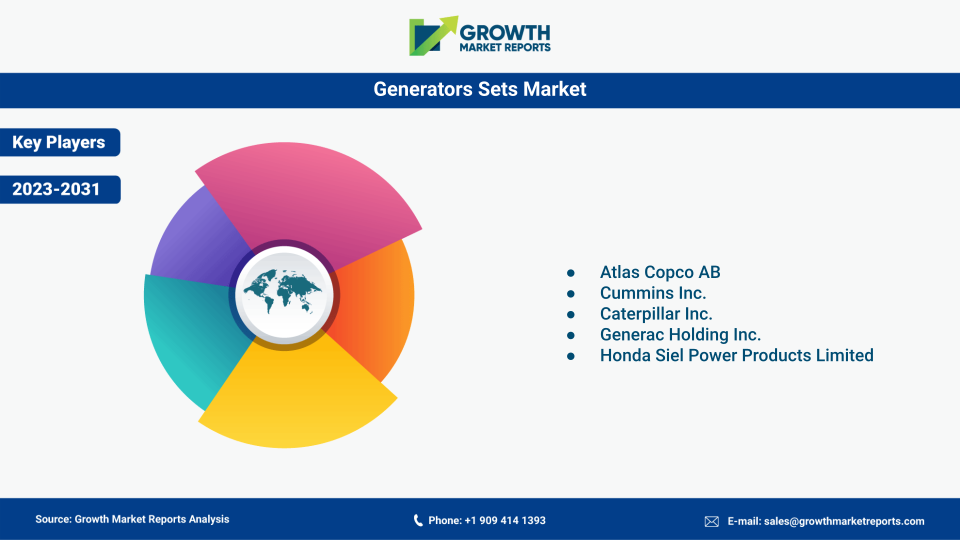

Generators Sets Market key players

Frequently Asked Questions

The market is seeing increased adoption of hybrid generator sets that integrate with renewable sources like solar and wind, offering both reliability and sustainability. Manufacturers are innovating cleaner, more fuel-efficient models to comply with emission norms and support decarbonization.

Generator sets are available in below 75 kVA (residential, small commercial), 75–375 kVA (medium commercial, healthcare, small manufacturing), and above 375 kVA (large industrial, data centers, utilities) segments, each catering to different power needs.

Major companies include Caterpillar Inc., Cummins Inc., Generac Holdings Inc., Kohler Co., MTU Onsite Energy, Atlas Copco AB, Mitsubishi Heavy Industries Ltd., Honda Motor Co., Ltd., Briggs & Stratton Corporation, and Wartsila Corporation.

Challenges include stringent emission regulations, environmental concerns, fuel price volatility, competition from renewable energy and storage solutions, and high initial and maintenance costs.

Technological advancements such as IoT-enabled monitoring, predictive analytics, remote diagnostics, and integration with renewable energy sources are improving operational efficiency, reliability, and sustainability of generator sets.

Asia Pacific leads the market with about 39% share, driven by rapid industrialization and frequent power shortages. North America and Europe follow, with growth fueled by grid modernization and emission regulations. The Middle East & Africa and Latin America are also emerging as high-potential markets.

Generator sets are used for standby power during outages, prime/continuous power in remote or off-grid locations, and peak shaving to manage energy costs and grid stability. Major end-users include residential, commercial, industrial, and utility sectors.

Diesel generator sets dominate the market due to their reliability and availability, but gas and hybrid generator sets are gaining traction for their lower emissions and operational efficiency. There is also growing interest in alternative fuels like propane, biodiesel, and hydrogen.

Key growth drivers include increasing industrialization, rising frequency of power outages, demand for reliable backup power, rapid urbanization, expansion in emerging economies, and the integration of advanced digital monitoring and control technologies.

The global generator sets market reached USD 28.3 billion in 2024 and is projected to grow at a CAGR of 6.2% from 2025 to 2033, reaching an estimated value of USD 48.7 billion by the end of the forecast period.

Table Of Content

Chapter 1 Executive Summary
Chapter 2 Assumptions and Acronyms Used
Chapter 3 Research Methodology
Chapter 4 Generators Sets Market Overview
   4.1 Introduction
      4.1.1 Market Taxonomy
      4.1.2 Market Definition
      4.1.3 Macro-Economic Factors Impacting the Market Growth
   4.2 Generators Sets Market Dynamics
      4.2.1 Market Drivers
      4.2.2 Market Restraints
      4.2.3 Market Opportunity
   4.3 Generators Sets Market - Supply Chain Analysis
      4.3.1 List of Key Suppliers
      4.3.2 List of Key Distributors
      4.3.3 List of Key Consumers
   4.4 Key Forces Shaping the Generators Sets Market
      4.4.1 Bargaining Power of Suppliers
      4.4.2 Bargaining Power of Buyers
      4.4.3 Threat of Substitution
      4.4.4 Threat of New Entrants
      4.4.5 Competitive Rivalry
   4.5 Global Generators Sets Market Size & Forecast, 2023-2032
      4.5.1 Generators Sets Market Size and Y-o-Y Growth
      4.5.2 Generators Sets Market Absolute $ Opportunity

Chapter 5 Global Generators Sets Market Analysis and Forecast By Fuel Type
   5.1 Introduction
      5.1.1 Key Market Trends & Growth Opportunities By Fuel Type
      5.1.2 Basis Point Share (BPS) Analysis By Fuel Type
      5.1.3 Absolute $ Opportunity Assessment By Fuel Type
   5.2 Generators Sets Market Size Forecast By Fuel Type
      5.2.1 Diesel
      5.2.2 Gas
      5.2.3 Hybrid
      5.2.4 Others
   5.3 Market Attractiveness Analysis By Fuel Type

Chapter 6 Global Generators Sets Market Analysis and Forecast By Power Rating
   6.1 Introduction
      6.1.1 Key Market Trends & Growth Opportunities By Power Rating
      6.1.2 Basis Point Share (BPS) Analysis By Power Rating
      6.1.3 Absolute $ Opportunity Assessment By Power Rating
   6.2 Generators Sets Market Size Forecast By Power Rating
      6.2.1 Below 75 kVA
      6.2.2 75–375 kVA
      6.2.3 Above 375 kVA
   6.3 Market Attractiveness Analysis By Power Rating

Chapter 7 Global Generators Sets Market Analysis and Forecast By Application
   7.1 Introduction
      7.1.1 Key Market Trends & Growth Opportunities By Application
      7.1.2 Basis Point Share (BPS) Analysis By Application
      7.1.3 Absolute $ Opportunity Assessment By Application
   7.2 Generators Sets Market Size Forecast By Application
      7.2.1 Standby
      7.2.2 Prime/Continuous
      7.2.3 Peak Shaving
   7.3 Market Attractiveness Analysis By Application

Chapter 8 Global Generators Sets Market Analysis and Forecast By End-User
   8.1 Introduction
      8.1.1 Key Market Trends & Growth Opportunities By End-User
      8.1.2 Basis Point Share (BPS) Analysis By End-User
      8.1.3 Absolute $ Opportunity Assessment By End-User
   8.2 Generators Sets Market Size Forecast By End-User
      8.2.1 Residential
      8.2.2 Commercial
      8.2.3 Industrial
      8.2.4 Utilities
      8.2.5 Others
   8.3 Market Attractiveness Analysis By End-User

Chapter 9 Global Generators Sets Market Analysis and Forecast by Region
   9.1 Introduction
      9.1.1 Key Market Trends & Growth Opportunities By Region
      9.1.2 Basis Point Share (BPS) Analysis By Region
      9.1.3 Absolute $ Opportunity Assessment By Region
   9.2 Generators Sets Market Size Forecast By Region
      9.2.1 North America
      9.2.2 Europe
      9.2.3 Asia Pacific
      9.2.4 Latin America
      9.2.5 Middle East & Africa (MEA)
   9.3 Market Attractiveness Analysis By Region

Chapter 10 Coronavirus Disease (COVID-19) Impact 
   10.1 Introduction 
   10.2 Current & Future Impact Analysis 
   10.3 Economic Impact Analysis 
   10.4 Government Policies 
   10.5 Investment Scenario

Chapter 11 North America Generators Sets Analysis and Forecast
   11.1 Introduction
   11.2 North America Generators Sets Market Size Forecast by Country
      11.2.1 U.S.
      11.2.2 Canada
   11.3 Basis Point Share (BPS) Analysis by Country
   11.4 Absolute $ Opportunity Assessment by Country
   11.5 Market Attractiveness Analysis by Country
   11.6 North America Generators Sets Market Size Forecast By Fuel Type
      11.6.1 Diesel
      11.6.2 Gas
      11.6.3 Hybrid
      11.6.4 Others
   11.7 Basis Point Share (BPS) Analysis By Fuel Type 
   11.8 Absolute $ Opportunity Assessment By Fuel Type 
   11.9 Market Attractiveness Analysis By Fuel Type
   11.10 North America Generators Sets Market Size Forecast By Power Rating
      11.10.1 Below 75 kVA
      11.10.2 75–375 kVA
      11.10.3 Above 375 kVA
   11.11 Basis Point Share (BPS) Analysis By Power Rating 
   11.12 Absolute $ Opportunity Assessment By Power Rating 
   11.13 Market Attractiveness Analysis By Power Rating
   11.14 North America Generators Sets Market Size Forecast By Application
      11.14.1 Standby
      11.14.2 Prime/Continuous
      11.14.3 Peak Shaving
   11.15 Basis Point Share (BPS) Analysis By Application 
   11.16 Absolute $ Opportunity Assessment By Application 
   11.17 Market Attractiveness Analysis By Application
   11.18 North America Generators Sets Market Size Forecast By End-User
      11.18.1 Residential
      11.18.2 Commercial
      11.18.3 Industrial
      11.18.4 Utilities
      11.18.5 Others
   11.19 Basis Point Share (BPS) Analysis By End-User 
   11.20 Absolute $ Opportunity Assessment By End-User 
   11.21 Market Attractiveness Analysis By End-User

Chapter 12 Europe Generators Sets Analysis and Forecast
   12.1 Introduction
   12.2 Europe Generators Sets Market Size Forecast by Country
      12.2.1 Germany
      12.2.2 France
      12.2.3 Italy
      12.2.4 U.K.
      12.2.5 Spain
      12.2.6 Russia
      12.2.7 Rest of Europe
   12.3 Basis Point Share (BPS) Analysis by Country
   12.4 Absolute $ Opportunity Assessment by Country
   12.5 Market Attractiveness Analysis by Country
   12.6 Europe Generators Sets Market Size Forecast By Fuel Type
      12.6.1 Diesel
      12.6.2 Gas
      12.6.3 Hybrid
      12.6.4 Others
   12.7 Basis Point Share (BPS) Analysis By Fuel Type 
   12.8 Absolute $ Opportunity Assessment By Fuel Type 
   12.9 Market Attractiveness Analysis By Fuel Type
   12.10 Europe Generators Sets Market Size Forecast By Power Rating
      12.10.1 Below 75 kVA
      12.10.2 75–375 kVA
      12.10.3 Above 375 kVA
   12.11 Basis Point Share (BPS) Analysis By Power Rating 
   12.12 Absolute $ Opportunity Assessment By Power Rating 
   12.13 Market Attractiveness Analysis By Power Rating
   12.14 Europe Generators Sets Market Size Forecast By Application
      12.14.1 Standby
      12.14.2 Prime/Continuous
      12.14.3 Peak Shaving
   12.15 Basis Point Share (BPS) Analysis By Application 
   12.16 Absolute $ Opportunity Assessment By Application 
   12.17 Market Attractiveness Analysis By Application
   12.18 Europe Generators Sets Market Size Forecast By End-User
      12.18.1 Residential
      12.18.2 Commercial
      12.18.3 Industrial
      12.18.4 Utilities
      12.18.5 Others
   12.19 Basis Point Share (BPS) Analysis By End-User 
   12.20 Absolute $ Opportunity Assessment By End-User 
   12.21 Market Attractiveness Analysis By End-User

Chapter 13 Asia Pacific Generators Sets Analysis and Forecast
   13.1 Introduction
   13.2 Asia Pacific Generators Sets Market Size Forecast by Country
      13.2.1 China
      13.2.2 Japan
      13.2.3 South Korea
      13.2.4 India
      13.2.5 Australia
      13.2.6 South East Asia (SEA)
      13.2.7 Rest of Asia Pacific (APAC)
   13.3 Basis Point Share (BPS) Analysis by Country
   13.4 Absolute $ Opportunity Assessment by Country
   13.5 Market Attractiveness Analysis by Country
   13.6 Asia Pacific Generators Sets Market Size Forecast By Fuel Type
      13.6.1 Diesel
      13.6.2 Gas
      13.6.3 Hybrid
      13.6.4 Others
   13.7 Basis Point Share (BPS) Analysis By Fuel Type 
   13.8 Absolute $ Opportunity Assessment By Fuel Type 
   13.9 Market Attractiveness Analysis By Fuel Type
   13.10 Asia Pacific Generators Sets Market Size Forecast By Power Rating
      13.10.1 Below 75 kVA
      13.10.2 75–375 kVA
      13.10.3 Above 375 kVA
   13.11 Basis Point Share (BPS) Analysis By Power Rating 
   13.12 Absolute $ Opportunity Assessment By Power Rating 
   13.13 Market Attractiveness Analysis By Power Rating
   13.14 Asia Pacific Generators Sets Market Size Forecast By Application
      13.14.1 Standby
      13.14.2 Prime/Continuous
      13.14.3 Peak Shaving
   13.15 Basis Point Share (BPS) Analysis By Application 
   13.16 Absolute $ Opportunity Assessment By Application 
   13.17 Market Attractiveness Analysis By Application
   13.18 Asia Pacific Generators Sets Market Size Forecast By End-User
      13.18.1 Residential
      13.18.2 Commercial
      13.18.3 Industrial
      13.18.4 Utilities
      13.18.5 Others
   13.19 Basis Point Share (BPS) Analysis By End-User 
   13.20 Absolute $ Opportunity Assessment By End-User 
   13.21 Market Attractiveness Analysis By End-User

Chapter 14 Latin America Generators Sets Analysis and Forecast
   14.1 Introduction
   14.2 Latin America Generators Sets Market Size Forecast by Country
      14.2.1 Brazil
      14.2.2 Mexico
      14.2.3 Rest of Latin America (LATAM)
   14.3 Basis Point Share (BPS) Analysis by Country
   14.4 Absolute $ Opportunity Assessment by Country
   14.5 Market Attractiveness Analysis by Country
   14.6 Latin America Generators Sets Market Size Forecast By Fuel Type
      14.6.1 Diesel
      14.6.2 Gas
      14.6.3 Hybrid
      14.6.4 Others
   14.7 Basis Point Share (BPS) Analysis By Fuel Type 
   14.8 Absolute $ Opportunity Assessment By Fuel Type 
   14.9 Market Attractiveness Analysis By Fuel Type
   14.10 Latin America Generators Sets Market Size Forecast By Power Rating
      14.10.1 Below 75 kVA
      14.10.2 75–375 kVA
      14.10.3 Above 375 kVA
   14.11 Basis Point Share (BPS) Analysis By Power Rating 
   14.12 Absolute $ Opportunity Assessment By Power Rating 
   14.13 Market Attractiveness Analysis By Power Rating
   14.14 Latin America Generators Sets Market Size Forecast By Application
      14.14.1 Standby
      14.14.2 Prime/Continuous
      14.14.3 Peak Shaving
   14.15 Basis Point Share (BPS) Analysis By Application 
   14.16 Absolute $ Opportunity Assessment By Application 
   14.17 Market Attractiveness Analysis By Application
   14.18 Latin America Generators Sets Market Size Forecast By End-User
      14.18.1 Residential
      14.18.2 Commercial
      14.18.3 Industrial
      14.18.4 Utilities
      14.18.5 Others
   14.19 Basis Point Share (BPS) Analysis By End-User 
   14.20 Absolute $ Opportunity Assessment By End-User 
   14.21 Market Attractiveness Analysis By End-User

Chapter 15 Middle East & Africa (MEA) Generators Sets Analysis and Forecast
   15.1 Introduction
   15.2 Middle East & Africa (MEA) Generators Sets Market Size Forecast by Country
      15.2.1 Saudi Arabia
      15.2.2 South Africa
      15.2.3 UAE
      15.2.4 Rest of Middle East & Africa (MEA)
   15.3 Basis Point Share (BPS) Analysis by Country
   15.4 Absolute $ Opportunity Assessment by Country
   15.5 Market Attractiveness Analysis by Country
   15.6 Middle East & Africa (MEA) Generators Sets Market Size Forecast By Fuel Type
      15.6.1 Diesel
      15.6.2 Gas
      15.6.3 Hybrid
      15.6.4 Others
   15.7 Basis Point Share (BPS) Analysis By Fuel Type 
   15.8 Absolute $ Opportunity Assessment By Fuel Type 
   15.9 Market Attractiveness Analysis By Fuel Type
   15.10 Middle East & Africa (MEA) Generators Sets Market Size Forecast By Power Rating
      15.10.1 Below 75 kVA
      15.10.2 75–375 kVA
      15.10.3 Above 375 kVA
   15.11 Basis Point Share (BPS) Analysis By Power Rating 
   15.12 Absolute $ Opportunity Assessment By Power Rating 
   15.13 Market Attractiveness Analysis By Power Rating
   15.14 Middle East & Africa (MEA) Generators Sets Market Size Forecast By Application
      15.14.1 Standby
      15.14.2 Prime/Continuous
      15.14.3 Peak Shaving
   15.15 Basis Point Share (BPS) Analysis By Application 
   15.16 Absolute $ Opportunity Assessment By Application 
   15.17 Market Attractiveness Analysis By Application
   15.18 Middle East & Africa (MEA) Generators Sets Market Size Forecast By End-User
      15.18.1 Residential
      15.18.2 Commercial
      15.18.3 Industrial
      15.18.4 Utilities
      15.18.5 Others
   15.19 Basis Point Share (BPS) Analysis By End-User 
   15.20 Absolute $ Opportunity Assessment By End-User 
   15.21 Market Attractiveness Analysis By End-User

Chapter 16 Competition Landscape 
   16.1 Generators Sets Market: Competitive Dashboard
   16.2 Global Generators Sets Market: Market Share Analysis, 2023
   16.3 Company Profiles (Details – Overview, Financials, Developments, Strategy) 
      16.3.1 Caterpillar Inc.
Cummins Inc.
Generac Holdings Inc.
Kohler Co.
MTU Onsite Energy (Rolls-Royce Power Systems)
Atlas Copco AB
Mitsubishi Heavy Industries Ltd.
Honda Motor Co., Ltd.
Briggs & Stratton Corporation
Wartsila Corporation
FG Wilson (a Caterpillar company)
Perkins Engines Company Limited
Yanmar Co., Ltd.
Doosan Corporation
Himoinsa S.L.
Kirloskar Oil Engines Limited
SDMO Industries (Kohler SDMO)
Ashok Leyland Limited
John Deere Power Systems
Mahindra Powerol (Mahindra & Mahindra Ltd.)

Methodology

Our Clients

Honda Motor Co. Ltd.
Microsoft
Pfizer
sinopec
Dassault Aviation
Nestle SA
General Electric
Deloitte