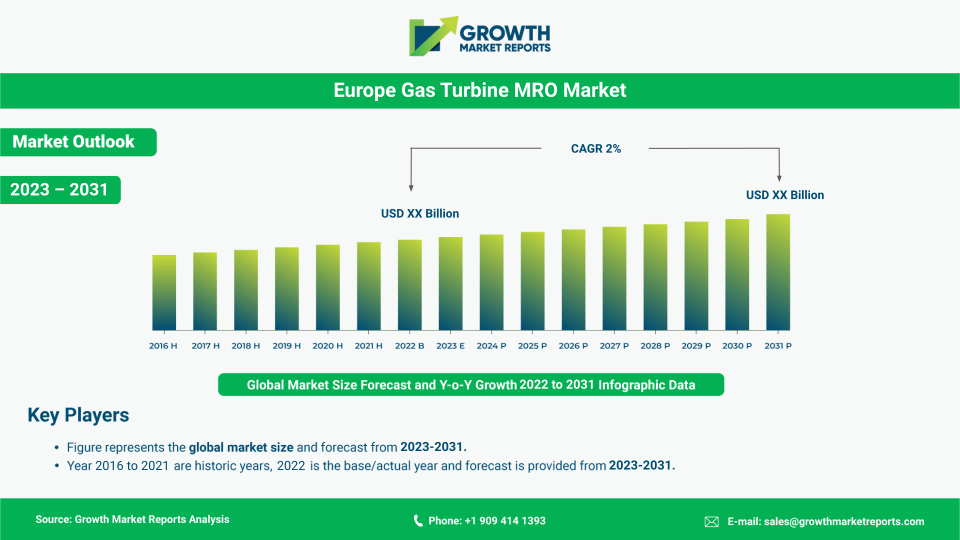
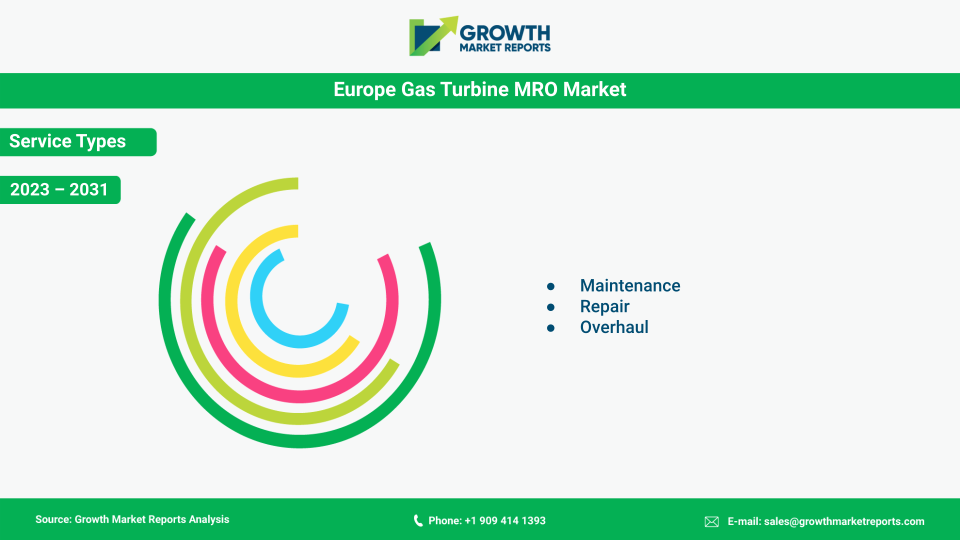
Segments - by Service Type (Maintenance, Repair, Overhaul), by Technology (Heavy Duty, Aeroderivative, Industrial), by Application (Power Generation, Oil & Gas, Marine, Aerospace, Others), by Provider (OEM, Independent Service Provider, In-House), by End-User (Utilities, Industrial, Aviation, Others)
According to our latest research, the global Gas Turbine MRO (Maintenance, Repair, and Overhaul) market size in 2024 is valued at USD 14.7 billion, reflecting the critical role of MRO services in sustaining the performance and reliability of gas turbines across diverse industries worldwide. The market is projected to grow at a robust CAGR of 6.2% during the forecast period, reaching a value of USD 25.1 billion by 2033. This growth is primarily driven by increasing investments in power generation infrastructure, the rising demand for reliable energy supply, and the continuous expansion of industrial and aviation sectors globally. The need for improved operational efficiency and reduced downtime for gas turbine assets is further fueling the market's expansion, as organizations seek to optimize performance and extend equipment lifecycles.
One of the key growth factors propelling the Gas Turbine MRO market is the accelerating transition towards cleaner and more efficient energy sources. As governments worldwide implement stringent emission regulations and promote the adoption of natural gas-based power generation, the deployment of gas turbines is on the rise. Gas turbines, known for their high efficiency and lower emissions compared to conventional coal-based systems, are increasingly being integrated into both new and existing power plants. This surge in installations directly translates to a higher demand for MRO services, as operators prioritize the reliability and longevity of these critical assets. Additionally, advancements in turbine technology are resulting in more complex and sophisticated machinery, further necessitating specialized maintenance and repair expertise to ensure optimal performance and compliance with regulatory standards.
Another significant growth driver is the aging fleet of gas turbines, particularly in developed regions such as North America and Europe. Many of these turbines have been in operation for decades and require regular maintenance, repair, and overhaul to maintain efficiency and prevent unplanned outages. The high cost associated with replacing entire turbine units has led many operators to opt for comprehensive MRO solutions, which offer a cost-effective alternative to new installations. Furthermore, the increasing integration of digital technologies, such as predictive analytics and remote monitoring, is transforming the MRO landscape by enabling proactive maintenance strategies and minimizing downtime. These innovations are not only enhancing the operational reliability of gas turbines but also reducing overall maintenance costs, thereby contributing to the sustained growth of the market.
The expansion of the industrial and aviation sectors is also playing a pivotal role in the growth of the Gas Turbine MRO market. In the aviation industry, gas turbines are the backbone of commercial and military aircraft propulsion systems, necessitating stringent MRO protocols to ensure safety and regulatory compliance. The rising number of air passengers and the subsequent increase in flight operations are driving the demand for timely and efficient MRO services. Similarly, in industrial applications, gas turbines are widely used for mechanical drive and power generation purposes, especially in the oil and gas sector. The need for uninterrupted operations and the high costs associated with equipment failure are prompting industries to invest heavily in preventive and corrective maintenance solutions, further bolstering the market's growth trajectory.
From a regional perspective, Asia Pacific stands out as the fastest-growing market for gas turbine MRO services, driven by rapid industrialization, urbanization, and significant investments in energy infrastructure. Countries such as China, India, and Southeast Asian nations are witnessing a surge in power generation projects and increased adoption of gas turbines, creating substantial opportunities for MRO service providers. North America and Europe, on the other hand, are characterized by mature markets with a large installed base of aging turbines, resulting in steady demand for maintenance and overhaul services. The Middle East and Africa region is also emerging as a key market, fueled by ongoing investments in oil and gas exploration and the development of large-scale power projects. Collectively, these regional dynamics are shaping the global landscape of the Gas Turbine MRO market, underscoring the critical need for reliable and innovative MRO solutions.
The Gas Turbine MRO market is segmented by service type into maintenance, repair, and overhaul, each playing a crucial role in ensuring the seamless operation of gas turbines across various industries. Maintenance services, which include routine inspections, performance assessments, and minor part replacements, are fundamental to preventing unexpected failures and optimizing turbine efficiency. As gas turbines operate under high-stress conditions and are exposed to extreme temperatures, regular maintenance is essential to mitigate wear and tear, extend equipment lifespan, and comply with safety standards. The growing adoption of predictive and condition-based maintenance strategies, powered by digital technologies such as IoT sensors and data analytics, is further enhancing the effectiveness of maintenance services and driving their demand in the market.
Repair services constitute another critical segment within the Gas Turbine MRO market, addressing issues that arise from component failures, material degradation, or operational anomalies. These services typically involve the replacement or refurbishment of parts such as blades, vanes, and combustion liners, which are subject to high levels of stress and thermal fatigue. The increasing complexity of modern gas turbines, coupled with the need for quick turnaround times to minimize downtime, is propelling the demand for specialized repair solutions. Service providers are investing in advanced diagnostic tools and repair technologies to deliver high-quality, reliable repairs that restore turbines to optimal operating conditions. The emphasis on minimizing operational disruptions and maximizing asset availability is expected to sustain the growth of the repair segment in the coming years.
Overhaul services represent the most comprehensive and resource-intensive segment within the Gas Turbine MRO market. Overhauls typically involve the complete disassembly, inspection, and refurbishment of turbine units, often requiring specialized facilities and highly skilled technicians. These services are generally performed at predetermined intervals or in response to significant performance degradation, ensuring that turbines meet stringent operational and safety standards. The high costs associated with overhauls are justified by the substantial improvements in reliability, efficiency, and operational lifespan that they deliver. As gas turbine operators increasingly prioritize long-term performance and regulatory compliance, the demand for overhaul services is expected to remain robust, particularly in regions with a large installed base of aging turbines.
The interplay between maintenance, repair, and overhaul services is critical to the overall effectiveness of gas turbine MRO strategies. Operators are increasingly adopting integrated MRO solutions that combine all three service types, enabling a holistic approach to asset management and performance optimization. This trend is driving service providers to expand their capabilities and offer end-to-end MRO packages tailored to the specific needs of different industries and turbine models. The integration of digital technologies and data-driven insights is further enhancing the value proposition of MRO services, enabling operators to make informed decisions, reduce lifecycle costs, and achieve higher levels of operational excellence.
| Attributes | Details |
| Report Title | Gas Turbine MRO Market Research Report 2033 |
| By Service Type | Maintenance, Repair, Overhaul |
| By Technology | Heavy Duty, Aeroderivative, Industrial |
| By Application | Power Generation, Oil & Gas, Marine, Aerospace, Others |
| By Provider | OEM, Independent Service Provider, In-House |
| By End-User | Utilities, Industrial, Aviation, Others |
| Regions Covered | North America, Europe, APAC, Latin America, MEA |
| Base Year | 2024 |
| Historic Data | 2018-2023 |
| Forecast Period | 2025-2033 |
| Number of Pages | 263 |
| Number of Tables & Figures | 350 |
| Customization Available | Yes, the report can be customized as per your need. |
The Gas Turbine MRO market is segmented by technology into heavy-duty, aeroderivative, and industrial gas turbines, each with distinct operational characteristics and MRO requirements. Heavy-duty gas turbines, widely used in large-scale power generation and utility applications, are characterized by their robust construction, high output, and ability to operate continuously under demanding conditions. These turbines typically require extensive maintenance and overhaul services to address the wear and tear associated with prolonged operation. The increasing deployment of heavy-duty turbines in combined cycle power plants and the growing emphasis on grid reliability are driving the demand for specialized MRO solutions tailored to the unique needs of these machines.
Aeroderivative gas turbines, originally developed for aviation applications, are increasingly being adopted in power generation, oil and gas, and marine sectors due to their lightweight design, high efficiency, and quick start-up capabilities. These turbines are particularly valued for their flexibility and ability to provide rapid response to fluctuating power demands. The MRO requirements for aeroderivative turbines differ significantly from those of heavy-duty units, with a greater emphasis on modular repairs, component swaps, and advanced diagnostics. The growing use of aeroderivative turbines in distributed energy systems, emergency power supply, and offshore platforms is creating new opportunities for MRO service providers with expertise in this technology segment.
Industrial gas turbines, which serve a wide range of applications including mechanical drive, process heating, and small-scale power generation, represent another important segment within the Gas Turbine MRO market. These turbines are typically smaller in size and operate in diverse industrial environments, often under variable load conditions. The maintenance and repair needs of industrial turbines are influenced by factors such as fuel quality, operating hours, and environmental conditions. Service providers are increasingly offering customized MRO solutions that address the specific challenges faced by industrial operators, such as minimizing production downtime, optimizing fuel efficiency, and ensuring compliance with environmental regulations. The integration of remote monitoring and predictive maintenance technologies is further enhancing the reliability and performance of industrial gas turbines.
The evolution of gas turbine technologies is driving continuous innovation in MRO practices, with service providers investing in advanced diagnostic tools, digital twins, and automation solutions to enhance service quality and efficiency. The adoption of additive manufacturing for component repairs, the use of augmented reality for remote support, and the development of predictive maintenance algorithms are transforming the MRO landscape and enabling operators to achieve higher levels of operational excellence. As gas turbine technologies continue to evolve, the demand for specialized MRO services that can address the unique requirements of each technology segment is expected to grow, creating new opportunities for market participants.
The Gas Turbine MRO market serves a diverse range of applications, including power generation, oil and gas, marine, aerospace, and others, each with unique operational demands and MRO requirements. Power generation remains the largest application segment, accounting for a significant share of the market due to the widespread use of gas turbines in both base-load and peaking power plants. The increasing integration of gas turbines into combined cycle and cogeneration plants is driving the demand for comprehensive MRO services that ensure high efficiency, reliability, and regulatory compliance. As utilities and independent power producers seek to maximize asset availability and minimize operational costs, the adoption of predictive and condition-based maintenance strategies is on the rise, further fueling the growth of the MRO market in the power generation sector.
The oil and gas industry represents another major application area for gas turbine MRO services, with turbines playing a critical role in mechanical drive, gas compression, and power generation operations. The harsh operating environments, high reliability requirements, and stringent safety standards in the oil and gas sector necessitate specialized MRO solutions that can address the unique challenges faced by operators. Service providers are increasingly offering tailored maintenance and repair packages that include on-site support, rapid response capabilities, and advanced diagnostics to minimize downtime and ensure uninterrupted operations. The ongoing investments in upstream, midstream, and downstream oil and gas projects, particularly in regions such as the Middle East and North America, are expected to drive sustained demand for MRO services in this segment.
Marine and aerospace applications, while smaller in terms of market share, present unique opportunities and challenges for gas turbine MRO service providers. In the marine sector, gas turbines are used for propulsion and auxiliary power in naval vessels, cruise ships, and offshore platforms. The need for high operational reliability, fuel efficiency, and compliance with maritime regulations drives the demand for specialized MRO services, including corrosion prevention, component refurbishment, and performance optimization. In the aerospace industry, gas turbines form the core of jet engines for commercial and military aircraft, necessitating rigorous MRO protocols to ensure safety, performance, and regulatory compliance. The growing global fleet of aircraft and the increasing frequency of air travel are expected to boost demand for aerospace MRO services in the coming years.
Other applications of gas turbine MRO services include industrial processes, district heating, and combined heat and power (CHP) systems, where turbines are used for both electricity and thermal energy production. The diverse operating conditions and performance requirements in these applications necessitate customized MRO solutions that can address specific operational challenges and regulatory requirements. Service providers are leveraging digital technologies, remote monitoring, and advanced analytics to deliver value-added services that enhance asset performance, reduce lifecycle costs, and ensure compliance with environmental and safety standards. The continued expansion of gas turbine applications across various industries is expected to drive the long-term growth of the MRO market.
The Gas Turbine MRO market is segmented by provider into Original Equipment Manufacturers (OEMs), Independent Service Providers (ISPs), and In-House service teams, each offering distinct value propositions and service capabilities. OEMs, such as General Electric, Siemens Energy, and Mitsubishi Power, have traditionally dominated the MRO market due to their deep technical expertise, access to proprietary technologies, and extensive global service networks. OEMs offer comprehensive MRO solutions, including spare parts, upgrades, and technical support, ensuring high levels of reliability and performance for their installed base of turbines. The increasing adoption of long-term service agreements (LTSAs) and performance-based contracts is further strengthening the position of OEMs in the market, as operators seek to minimize risk and maximize asset value.
Independent Service Providers (ISPs) are emerging as strong competitors in the Gas Turbine MRO market, offering cost-effective and flexible solutions to operators seeking alternatives to OEM services. ISPs leverage their technical expertise, agility, and customer-centric approach to deliver tailored MRO packages that address specific operational needs and budget constraints. The growing availability of third-party spare parts, the increasing standardization of turbine components, and the relaxation of intellectual property restrictions are enabling ISPs to expand their service offerings and capture a larger share of the market. ISPs are particularly attractive to operators of aging turbines or mixed-fleet installations, where cost considerations and service flexibility are paramount.
In-House MRO teams represent another important segment, particularly among large utilities, industrial operators, and aviation companies with significant turbine fleets. These organizations invest in building internal capabilities, including skilled technicians, maintenance facilities, and diagnostic tools, to manage their own MRO activities. The primary advantages of in-house MRO include greater control over maintenance schedules, faster response times, and the ability to customize service protocols to specific operational requirements. However, the high capital and operational costs associated with developing and maintaining in-house capabilities can be a barrier for smaller operators, who may prefer to outsource MRO services to OEMs or ISPs.
The competitive dynamics among OEMs, ISPs, and in-house teams are shaping the evolution of the Gas Turbine MRO market, with operators increasingly adopting hybrid approaches that combine the strengths of multiple providers. Collaborative partnerships, joint ventures, and strategic alliances are becoming more common, as service providers seek to expand their capabilities, access new markets, and deliver integrated MRO solutions. The growing emphasis on digitalization, remote monitoring, and predictive maintenance is further blurring the lines between provider segments, as all players invest in advanced technologies to enhance service quality, efficiency, and customer satisfaction.
The Gas Turbine MRO market serves a diverse array of end-users, including utilities, industrial operators, aviation companies, and others, each with distinct operational requirements and MRO priorities. Utilities represent the largest end-user segment, accounting for a significant share of the market due to the widespread use of gas turbines in power generation. Utilities prioritize reliability, efficiency, and regulatory compliance, driving demand for comprehensive MRO solutions that ensure continuous and cost-effective operation of turbine assets. The increasing adoption of long-term service agreements and performance-based maintenance contracts is enabling utilities to optimize asset performance, reduce lifecycle costs, and achieve higher levels of operational excellence.
Industrial operators, including those in the oil and gas, chemical, manufacturing, and mining sectors, rely on gas turbines for mechanical drive, process heating, and on-site power generation. The operational demands in these industries are characterized by high reliability requirements, variable load conditions, and challenging environmental factors. Industrial end-users prioritize MRO solutions that minimize production downtime, enhance fuel efficiency, and ensure compliance with safety and environmental regulations. Service providers are increasingly offering customized maintenance and repair packages, on-site support, and rapid response capabilities to address the unique needs of industrial operators and maximize the value of their turbine investments.
Aviation companies form another critical end-user segment, with gas turbines serving as the core propulsion systems for commercial and military aircraft. The aviation industry's stringent safety standards, regulatory requirements, and performance expectations necessitate rigorous MRO protocols, including regular inspections, component replacements, and performance optimization. The growing global fleet of aircraft, increasing air travel demand, and advancements in turbine technology are driving sustained demand for specialized MRO services in the aviation sector. Service providers are leveraging advanced diagnostics, digital twins, and predictive analytics to enhance service quality, reduce turnaround times, and ensure the highest levels of safety and reliability for aviation customers.
Other end-users of gas turbine MRO services include marine operators, district energy providers, and combined heat and power (CHP) system operators. These end-users have unique operational requirements, such as high fuel efficiency, compliance with maritime or environmental regulations, and the ability to operate under variable load conditions. Service providers are developing tailored MRO solutions that address the specific challenges faced by these end-users, leveraging digital technologies, remote monitoring, and advanced analytics to deliver value-added services that enhance asset performance and reduce operational risks. The continued expansion of gas turbine applications across diverse end-user segments is expected to drive the long-term growth of the MRO market.
The Gas Turbine MRO market is poised for significant growth, with numerous opportunities emerging from the ongoing digital transformation of the energy and industrial sectors. The integration of advanced digital technologies, such as the Internet of Things (IoT), artificial intelligence (AI), and big data analytics, is revolutionizing MRO practices by enabling predictive maintenance, real-time performance monitoring, and remote diagnostics. These innovations allow operators to detect potential issues before they escalate, optimize maintenance schedules, and reduce unplanned downtime, resulting in substantial cost savings and improved operational efficiency. Service providers that invest in digital capabilities and offer data-driven MRO solutions are well-positioned to capture a larger share of the market and deliver enhanced value to their customers. Additionally, the growing emphasis on sustainability and environmental compliance is creating new opportunities for MRO providers to offer services that improve turbine efficiency, reduce emissions, and support the transition to cleaner energy sources.
Another significant opportunity lies in the expanding adoption of gas turbines in emerging markets, particularly in Asia Pacific, the Middle East, and Africa. Rapid industrialization, urbanization, and investments in energy infrastructure are driving the deployment of gas turbines in power generation, oil and gas, and industrial applications across these regions. The increasing installed base of gas turbines, coupled with the need for reliable and cost-effective MRO services, presents substantial growth opportunities for service providers. Strategic partnerships, local service centers, and capacity-building initiatives can enable MRO providers to establish a strong presence in these high-growth markets and capitalize on the rising demand for maintenance, repair, and overhaul solutions. Furthermore, the development of modular and mobile MRO solutions can address the unique challenges of remote and difficult-to-access installations, further expanding the addressable market for MRO services.
Despite the promising growth prospects, the Gas Turbine MRO market faces several restraining factors that could impact its expansion. One of the primary challenges is the high capital and operational costs associated with advanced MRO technologies and skilled labor. The increasing complexity of modern gas turbines requires specialized expertise, sophisticated diagnostic tools, and state-of-the-art facilities, which can be prohibitively expensive for smaller operators and service providers. Additionally, the market is characterized by intense competition, with OEMs, ISPs, and in-house teams vying for market share and driving down service prices. The ongoing shift towards renewable energy sources and the gradual phase-out of fossil fuel-based power generation in some regions could also limit the long-term growth potential of the gas turbine MRO market. To overcome these challenges, market participants must focus on innovation, cost optimization, and strategic partnerships to deliver high-quality, value-added services that meet the evolving needs of their customers.
The Gas Turbine MRO market exhibits distinct regional dynamics, with Asia Pacific emerging as the fastest-growing region, driven by rapid industrialization, urbanization, and significant investments in energy infrastructure. In 2024, the Asia Pacific market is valued at approximately USD 4.2 billion, accounting for nearly 28.6% of the global market. The region is expected to register a strong CAGR of 7.4% through 2033, outpacing other regions due to the increasing deployment of gas turbines in power generation, oil and gas, and industrial applications. Countries such as China, India, Japan, and South Korea are at the forefront of this growth, with large-scale power projects, expanding industrial sectors, and supportive government policies driving demand for MRO services. The presence of a large installed base of gas turbines and the rising adoption of advanced maintenance technologies are further contributing to the region's strong growth trajectory.
North America and Europe represent mature markets for gas turbine MRO services, with a combined market value of approximately USD 7.1 billion in 2024, accounting for nearly 48.3% of the global market. These regions are characterized by a large installed base of aging turbines, particularly in the power generation and aviation sectors, resulting in steady demand for maintenance, repair, and overhaul services. The focus in these markets is on optimizing the performance and extending the lifespan of existing assets, with operators increasingly adopting digital maintenance strategies and long-term service agreements. The emphasis on sustainability, emission reduction, and regulatory compliance is also driving the adoption of advanced MRO solutions that enhance turbine efficiency and minimize environmental impact. Despite the gradual shift towards renewable energy sources, the continued reliance on gas turbines for grid stability and backup power is expected to sustain demand for MRO services in North America and Europe over the forecast period.
The Middle East & Africa and Latin America regions, with a combined market value of around USD 3.4 billion in 2024, are witnessing growing demand for gas turbine MRO services, fueled by ongoing investments in oil and gas exploration, power generation, and industrial development. The Middle East, in particular, is a key market for MRO services due to its extensive oil and gas operations, large-scale power projects, and the need for reliable and efficient turbine performance. Service providers are expanding their presence in these regions through local partnerships, service centers, and capacity-building initiatives to meet the growing demand for high-quality MRO solutions. The increasing adoption of digital technologies and the focus on operational excellence are expected to drive further growth in these regions, making them important contributors to the overall expansion of the global Gas Turbine MRO market.
The Gas Turbine MRO market is characterized by a highly competitive landscape, with a mix of global OEMs, independent service providers, and specialized in-house teams vying for market share. The market is dominated by a few large OEMs, such as General Electric, Siemens Energy, and Mitsubishi Power, who leverage their extensive technical expertise, proprietary technologies, and global service networks to offer comprehensive MRO solutions. These companies have established long-term relationships with major utilities, industrial operators, and aviation companies, often through long-term service agreements and performance-based contracts that ensure recurring revenue streams and customer loyalty. The ability to offer end-to-end MRO services, from spare parts and upgrades to advanced diagnostics and digital solutions, gives OEMs a significant competitive advantage in the market.
Independent Service Providers (ISPs) are gaining traction in the Gas Turbine MRO market, offering cost-effective, flexible, and customer-centric solutions that cater to the specific needs of operators. ISPs differentiate themselves through their agility, technical expertise, and ability to provide tailored MRO packages for mixed-fleet or aging turbine installations. The increasing standardization of turbine components and the relaxation of intellectual property restrictions have enabled ISPs to expand their service offerings and compete more effectively with OEMs. ISPs are particularly attractive to operators seeking alternatives to OEM services, as they often offer competitive pricing, faster response times, and customized maintenance protocols that align with the operational requirements of different industries and applications.
In-house MRO teams, primarily established by large utilities, industrial operators, and aviation companies, represent another important segment of the competitive landscape. These organizations invest in building internal capabilities, including skilled technicians, specialized facilities, and advanced diagnostic tools, to manage their own MRO activities. The primary advantage of in-house MRO is greater control over maintenance schedules, faster response times, and the ability to customize service protocols to specific operational needs. However, the high capital and operational costs associated with developing and maintaining in-house capabilities can be a barrier for smaller operators, who may prefer to outsource MRO services to OEMs or ISPs.
The competitive dynamics in the Gas Turbine MRO market are further shaped by ongoing investments in digitalization, remote monitoring, and predictive maintenance technologies. All major players are focusing on enhancing their digital capabilities to deliver value-added services, improve operational efficiency, and differentiate themselves in a crowded market. Collaborative partnerships, joint ventures, and strategic alliances are becoming increasingly common, as service providers seek to expand their capabilities, access new markets, and deliver integrated MRO solutions that address the evolving needs of their customers. The emphasis on innovation, customer-centricity, and operational excellence is expected to drive further consolidation and competitive differentiation in the market over the coming years.
Some of the leading companies operating in the Gas Turbine MRO market include General Electric, Siemens Energy, Mitsubishi Power, Ansaldo Energia, Sulzer, MTU Aero Engines, MAN Energy Solutions, Solar Turbines, EthosEnergy, and Rolls-Royce. General Electric is renowned for its extensive portfolio of gas turbine solutions and global service network, offering comprehensive MRO services across power generation, oil and gas, and aviation applications. Siemens Energy is another major player, leveraging its technical expertise, digital solutions, and long-term service agreements to deliver high-quality MRO services to utilities and industrial operators worldwide. Mitsubishi Power is recognized for its advanced turbine technologies and focus on operational excellence, providing tailored MRO solutions that enhance asset performance and reliability.
Ansaldo Energia, Sulzer, and MTU Aero Engines are prominent ISPs, offering a wide range of maintenance, repair, and overhaul services for various turbine models and applications. These companies differentiate themselves through their technical expertise, customer-centric approach, and ability to deliver cost-effective solutions for mixed-fleet or aging turbine installations. MAN Energy Solutions and Solar Turbines are also significant players, providing specialized MRO services for industrial and power generation applications, with a focus on innovation, digitalization, and operational efficiency. EthosEnergy and Rolls-Royce are recognized for their strong presence in the aviation and marine sectors, offering tailored MRO solutions that address the unique requirements of these industries.
The competitive landscape of the Gas Turbine MRO market is expected to evolve rapidly over the forecast period, driven by ongoing technological advancements, changing customer preferences, and the growing emphasis on sustainability and operational excellence. Market participants that invest in digital capabilities, innovation, and customer-centric solutions are well-positioned to capture a larger share of the market and deliver enhanced value to their customers. The continued expansion of gas turbine applications across diverse industries and regions is expected to create new opportunities for growth and competitive differentiation in the global Gas Turbine MRO market.
The Gas Turbine MRO market has been segmented on the basis of
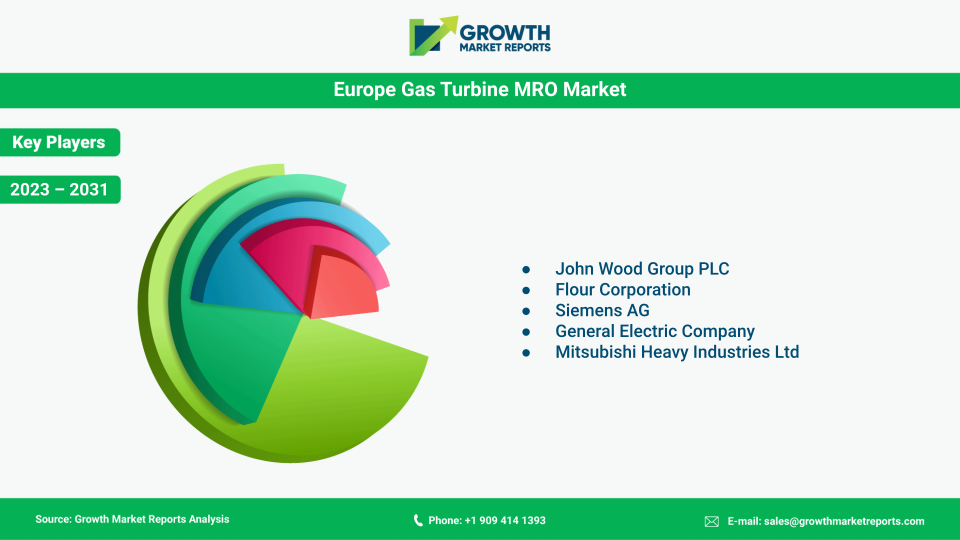
Key players competing in the Europe gas turbine MRO market in the power sector include John Wood Group PLC; Flour Corporation; Siemens AG; General Electric Company; Mitsubishi Heavy Industries Ltd.
Key players are constantly implementing several marketing strategies such as merger & acquisitions, capital investments, partnerships, and new product development to sustain industry position in the market. In 2021, Mitsubishi Power begins operation of 500 MW natural gas-fired gtcc power generation systems in Indonesia. Wood and Aspen technology form partnership to deliver optimized performance in management solutions for global enterprises.
Opportunities include the expansion of gas turbine installations in emerging markets (Asia Pacific, Middle East, Africa), adoption of digital and predictive maintenance solutions, and the development of modular and mobile MRO services for remote locations.
Leading companies include General Electric (GE), Siemens Energy, Mitsubishi Power, Rolls-Royce Holdings, Ansaldo Energia, Solar Turbines, MAN Energy Solutions, MTU Aero Engines, Pratt & Whitney, Sulzer Ltd., and EthosEnergy.
Challenges include high capital and operational costs for advanced MRO technologies, the need for specialized skilled labor, intense competition among providers, and the gradual shift towards renewable energy sources in some regions.
Digital technologies such as IoT, AI, predictive analytics, and remote monitoring are transforming MRO practices by enabling proactive maintenance, reducing downtime, optimizing schedules, and lowering overall maintenance costs.
Providers include Original Equipment Manufacturers (OEMs) like General Electric, Siemens Energy, and Mitsubishi Power; Independent Service Providers (ISPs) such as Ansaldo Energia and Sulzer; and in-house teams maintained by large utilities and aviation companies.
Gas Turbine MRO services are used in power generation, oil and gas, marine, aerospace, and industrial applications. Power generation is the largest segment, followed by oil and gas, with marine and aerospace presenting unique MRO requirements.
Gas Turbine MRO services are segmented into maintenance (routine inspections, minor replacements), repair (component refurbishment, part replacement), and overhaul (complete disassembly and refurbishment), each critical for turbine performance and reliability.
Asia Pacific is the fastest-growing region, driven by rapid industrialization and energy investments. North America and Europe are mature markets with a large installed base of aging turbines, while the Middle East & Africa and Latin America are seeing growth due to investments in oil, gas, and power projects.
Key growth drivers include increasing investments in power generation infrastructure, rising demand for reliable energy supply, expansion of industrial and aviation sectors, a shift towards cleaner energy sources, and the adoption of digital technologies for predictive maintenance.
The global Gas Turbine MRO (Maintenance, Repair, and Overhaul) market is valued at USD 14.7 billion in 2024 and is projected to reach USD 25.1 billion by 2033, growing at a CAGR of 6.2%.