Segments - by Product Type (Handheld Garment Steamers, Upright Garment Steamers, Travel Garment Steamers), by Application (Residential, Commercial), by Distribution Channel (Online Stores, Supermarkets/Hypermarkets, Specialty Stores, Others), by Power Rating (Up to 1000W, 1001-1500W, Above 1500W)
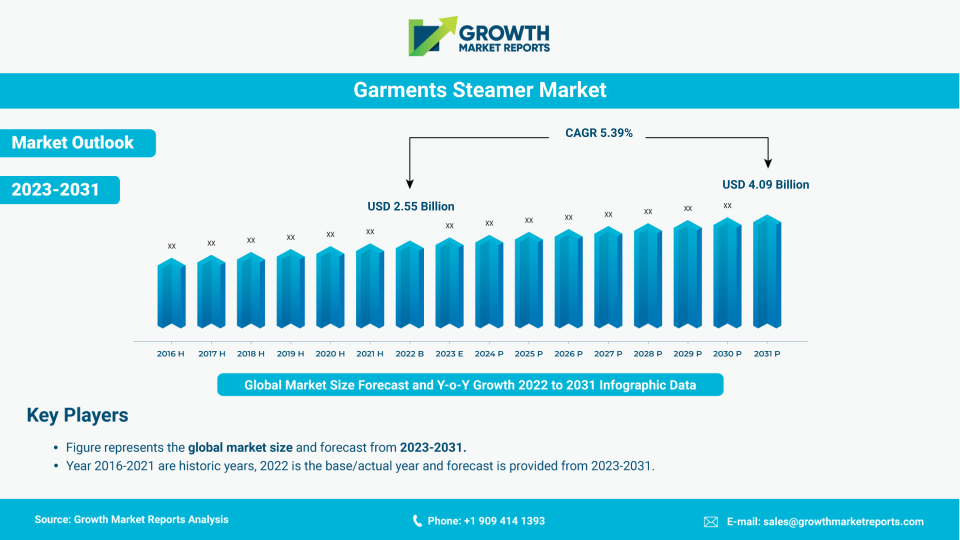
According to our latest research, the global garments steamer market size reached USD 2.1 billion in 2024, driven by a rising demand for convenient and efficient garment care solutions. The market is expected to register a robust CAGR of 6.2% between 2025 and 2033, culminating in a projected market value of USD 3.6 billion by 2033. This growth is underpinned by evolving consumer lifestyles, a surge in professional and home-based garment care needs, and technological advancements that have led to the development of more compact, energy-efficient, and user-friendly garment steamers.
One of the primary growth factors propelling the garments steamer market is the increasing emphasis on personal grooming and appearance, especially in urban populations. As professional and social settings become more competitive, consumers are seeking quick and effective methods to maintain wrinkle-free clothing. Garment steamers, with their ability to deliver fast and efficient results without the need for traditional ironing boards, are gaining traction among working professionals, students, and frequent travelers. The convenience offered by handheld and portable steamers further enhances their appeal, aligning with the fast-paced lifestyles prevalent in metropolitan areas. Additionally, the growing trend of remote work and virtual meetings has further accentuated the need for easy-to-use garment care appliances, thereby boosting market demand.
Another significant growth driver is the continuous innovation in product design and technology. Manufacturers are investing heavily in research and development to introduce garments steamers with advanced features such as rapid heat-up times, automatic shut-off mechanisms, and multi-functional attachments for different fabric types. The integration of smart technology, such as digital controls and app connectivity, is also beginning to make inroads into the market, catering to tech-savvy consumers who value both functionality and aesthetics. The availability of energy-efficient models that minimize water and power consumption is also attracting environmentally conscious buyers, further broadening the customer base for garments steamers.
The commercial sector is also playing a pivotal role in the expansion of the garments steamer market. The hospitality industry, including hotels, resorts, and cruise ships, relies extensively on garment steamers for the quick turnaround of freshly pressed linens and uniforms. Similarly, dry cleaners, fashion retailers, and tailoring shops are adopting professional-grade steamers to enhance operational efficiency and service quality. The increasing number of commercial establishments, particularly in emerging economies, is contributing to the rising adoption of garment steamers, thereby fueling market growth. The expansion of organized retail and e-commerce platforms has also made these products more accessible to both residential and commercial users worldwide.
Travel Steamers have become an essential companion for globetrotters and business travelers alike, offering a convenient solution for maintaining crisp, wrinkle-free clothing on the go. These compact devices are designed to fit easily into luggage, ensuring that travelers can always present themselves with polished attire, regardless of their destination. The demand for travel steamers is driven by the increasing number of people who prioritize appearance while traveling, whether for business meetings or leisure activities. With features like quick heat-up times and dual-voltage compatibility, travel steamers cater to the needs of modern travelers who seek efficiency and ease of use. As the travel industry continues to rebound, the popularity of travel steamers is expected to rise, making them a staple in the luggage of frequent flyers and vacationers.
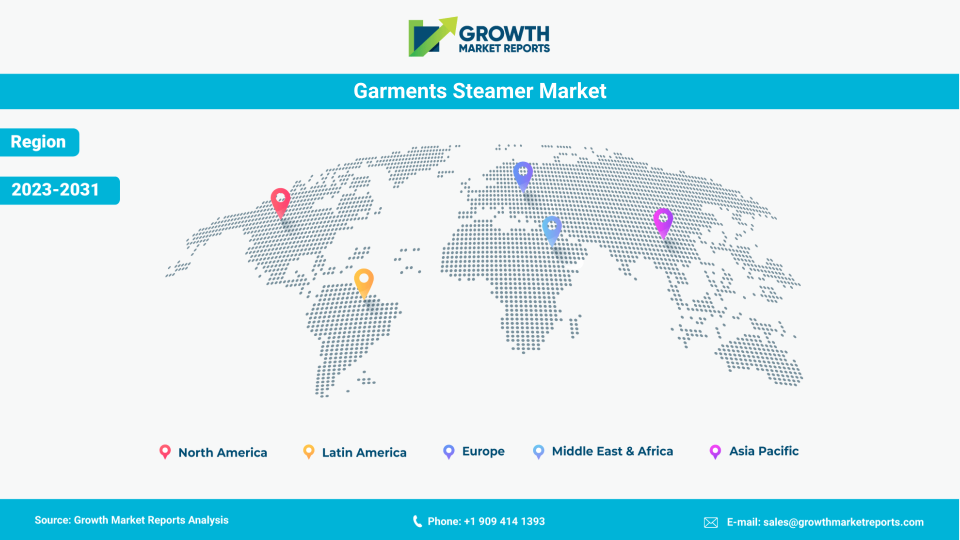
From a regional perspective, the Asia Pacific region continues to dominate the garments steamer market, accounting for the largest share in 2024. This is largely attributed to the regionÂ’s burgeoning middle-class population, rapid urbanization, and growing awareness of personal grooming. North America and Europe are also significant contributors, driven by high disposable incomes and a strong culture of personal care. Meanwhile, the Middle East & Africa and Latin America are witnessing steady growth, supported by improving living standards and increasing penetration of modern retail channels. The global market landscape is thus characterized by a dynamic interplay of demographic, economic, and technological factors that are shaping both demand and supply trends in the garments steamer industry.
The garments steamer market is segmented by product type into handheld garment steamers, upright garment steamers, and travel garment steamers. Handheld garment steamers have emerged as the most popular segment, owing to their portability, ease of use, and affordability. These devices are particularly favored by urban dwellers and professionals who require quick solutions for wrinkle removal. The compact design of handheld steamers makes them ideal for small living spaces and frequent travelers, and technological upgrades such as faster heat-up times and improved steam output have significantly enhanced their performance. The increasing prevalence of nuclear families and single-person households has further fueled demand for these convenient and space-saving appliances.
Upright garment steamers, on the other hand, are preferred for their superior steam output and the ability to handle larger volumes of clothing in a single session. These models are widely adopted in both residential and commercial settings, particularly where garment care needs are more extensive. Upright steamers often come with larger water tanks, adjustable steam settings, and multiple attachments for different fabrics, making them versatile and suitable for a range of applications. Their robust performance and durability make them the go-to choice for hospitality businesses, dry cleaners, and fashion boutiques, where efficiency and quality are paramount.
The Travel Garment Steamer segment is gaining momentum as more consumers recognize the benefits of having a portable garment care solution while on the move. Unlike traditional steamers, travel garment steamers are specifically designed to be lightweight and compact, making them ideal for packing in carry-on luggage or backpacks. These steamers provide a quick and effective way to freshen up clothes, ensuring that travelers can maintain a professional appearance without the hassle of finding ironing facilities. The versatility of travel garment steamers, with features such as foldable designs and detachable water tanks, enhances their appeal to a wide range of users. As global travel continues to recover, the demand for travel garment steamers is set to grow, reflecting the increasing importance of convenience and style in the travel experience.
Travel garment steamers represent a niche but rapidly growing segment within the garments steamer market. As global travel resumes and business trips become more frequent post-pandemic, the demand for lightweight, compact, and easy-to-carry steamers is rising. These devices cater to travelers who prioritize maintaining a polished appearance on the go, and innovations such as dual-voltage compatibility and foldable designs are further enhancing their appeal. The proliferation of online travel accessories stores and the increasing number of travel enthusiasts are expected to drive the growth of this segment in the coming years.
The competitive landscape within each product type segment is marked by continuous product launches and feature enhancements. Leading brands are focusing on differentiating their offerings through ergonomic designs, faster performance, and enhanced safety features. The integration of antimicrobial technologies and eco-friendly materials is also gaining traction, in response to growing consumer awareness about hygiene and sustainability. As consumers become more discerning and demand higher value for money, manufacturers are compelled to innovate and expand their product portfolios, ensuring a dynamic and competitive market environment.
| Attributes | Details |
| Report Title | Garments Steamer Market Research Report 2033 |
| By Product Type | Handheld Garment Steamers, Upright Garment Steamers, Travel Garment Steamers |
| By Application | Residential, Commercial |
| By Distribution Channel | Online Stores, Supermarkets/Hypermarkets, Specialty Stores, Others |
| By Power Rating | Up to 1000W, 1001-1500W, Above 1500W |
| Regions Covered | North America, Europe, APAC, Latin America, MEA |
| Base Year | 2024 |
| Historic Data | 2018-2023 |
| Forecast Period | 2025-2033 |
| Number of Pages | 253 |
| Number of Tables & Figures | 280 |
| Customization Available | Yes, the report can be customized as per your need. |
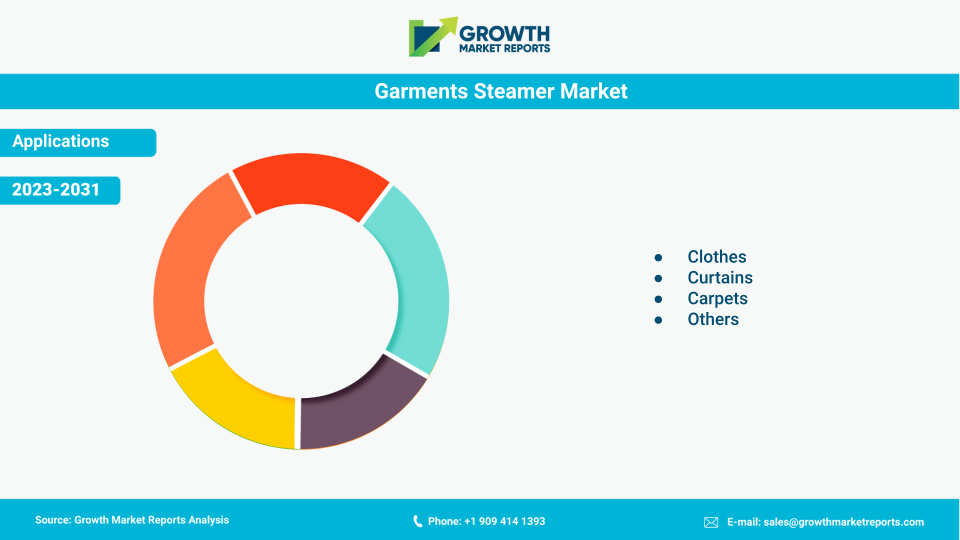
The garments steamer market, based on application, is primarily divided into residential and commercial segments. The residential segment currently holds the largest share, driven by a growing preference for convenient, at-home garment care solutions. As more consumers seek to reduce their reliance on professional laundry and dry-cleaning services, garment steamers are becoming household essentials. The ease of use, time efficiency, and versatility offered by modern steamers make them particularly attractive to busy families, students, and professionals. The trend towards remote work and virtual meetings has further amplified the importance of maintaining a neat appearance from home, thereby boosting demand for residential garment steamers.
In contrast, the commercial segment, encompassing hotels, resorts, laundromats, dry cleaners, and fashion retailers, is witnessing robust growth. Commercial establishments require high-performance garment steamers that can handle large volumes of clothing and deliver consistent results. The hospitality industry, in particular, relies on garment steamers for the rapid turnaround of linens, uniforms, and guest clothing, ensuring a high standard of service. Similarly, fashion boutiques and tailoring shops use steamers to prepare garments for display and fitting, enhancing the overall customer experience. The increasing number of commercial establishments, especially in emerging markets, is expected to drive the adoption of professional-grade garment steamers in the coming years.
The application landscape is also evolving with the advent of multi-functional steamers that cater to both residential and commercial users. Manufacturers are introducing models with interchangeable attachments, adjustable steam settings, and larger water tanks to address the diverse needs of different user segments. The growing trend of home-based businesses, such as online clothing boutiques and tailoring services, is further blurring the lines between residential and commercial applications, creating new opportunities for market expansion.
Furthermore, the adoption of garment steamers in specialized commercial settings, such as costume departments in theaters and film studios, is on the rise. These environments require precise and gentle fabric care to maintain the integrity of delicate costumes and props. The ability of garment steamers to sanitize and deodorize fabrics without the use of harsh chemicals is an added advantage, making them an indispensable tool in these industries. As awareness of the benefits of garment steamers continues to grow, both residential and commercial segments are expected to witness sustained demand.
The distribution channel segment of the garments steamer market is characterized by the presence of online stores, supermarkets/hypermarkets, specialty stores, and other retail formats. Online stores have emerged as the fastest-growing channel, driven by the proliferation of e-commerce platforms and changing consumer shopping behaviors. The convenience of browsing a wide range of products, access to detailed product information, customer reviews, and attractive discounts have made online shopping the preferred choice for many consumers. The COVID-19 pandemic further accelerated this trend, with a significant shift towards online purchases of home appliances, including garment steamers. Leading e-commerce platforms are partnering with manufacturers to offer exclusive models and bundled deals, enhancing the overall value proposition for customers.
Supermarkets and hypermarkets continue to play a vital role in the distribution of garment steamers, particularly in urban and suburban areas. These large-format retail stores provide consumers with the opportunity to physically examine products, compare features, and avail of in-store promotions. The presence of knowledgeable sales staff and after-sales support services further enhances the shopping experience, contributing to steady sales through this channel. Supermarkets and hypermarkets are especially popular among older consumers and those who prefer traditional retail formats.
Specialty stores, including dedicated home appliance outlets and electronics retailers, cater to a niche segment of consumers seeking expert advice and personalized service. These stores often stock a curated selection of high-quality garment steamers, including premium and professional-grade models. The ability to offer product demonstrations and hands-on trials is a key differentiator for specialty stores, attracting discerning buyers who prioritize performance and reliability. The expansion of specialty retail chains in emerging markets is expected to drive further growth in this channel.
Other distribution channels, such as department stores and direct sales, also contribute to the overall market. Department stores offer a blend of product variety and promotional offers, while direct sales channels, including company-owned stores and pop-up events, provide brands with greater control over the customer experience. The integration of omnichannel retail strategies, combining online and offline touchpoints, is becoming increasingly important as consumers seek seamless and flexible shopping experiences. As competition intensifies, retailers are investing in digital marketing, customer engagement, and logistics infrastructure to capture a larger share of the garments steamer market.
The garments steamer market can be segmented by power rating into up to 1000W, 1001-1500W, and above 1500W categories. Steamers with a power rating of up to 1000W are typically compact, lightweight, and designed for light-duty applications. These models are ideal for travel and occasional use, offering sufficient steam output for quick touch-ups and delicate fabrics. Their low power consumption and portability make them popular among students, travelers, and individuals living in small apartments. However, their limited steam generation capacity may not be suitable for heavy or frequent use, restricting their appeal to a specific segment of consumers.
The 1001-1500W power rating segment is the most widely adopted, striking a balance between performance and energy efficiency. Steamers in this category offer faster heat-up times, higher steam output, and the versatility to handle a wide range of fabrics. They are suitable for both residential and light commercial use, making them a popular choice among families and small businesses. Manufacturers are focusing on enhancing the safety and user-friendliness of these models, incorporating features such as automatic shut-off, anti-drip technology, and ergonomic designs. The growing demand for multi-functional and reliable garment care appliances is expected to drive sustained growth in this segment.
Garment steamers with a power rating above 1500W cater to the needs of commercial establishments and users with high garment care requirements. These heavy-duty models deliver powerful steam output, enabling quick and efficient removal of wrinkles from large volumes of clothing, bedding, and upholstery. The hospitality, fashion, and dry-cleaning industries are major adopters of high-power garment steamers, valuing their durability and operational efficiency. Advanced features such as continuous steam flow, large water tanks, and adjustable steam settings enhance their appeal in professional settings. As commercial applications continue to expand, the demand for high-power garment steamers is expected to rise, driving innovation and product development in this segment.
The power rating segment is also witnessing a shift towards energy-efficient technologies, as consumers and businesses become more conscious of their environmental footprint. Manufacturers are introducing models that optimize steam generation while minimizing energy and water consumption. The adoption of eco-friendly materials and sustainable manufacturing practices is also gaining traction, aligning with broader trends in the home appliance industry. As regulatory standards for energy efficiency become more stringent, power rating will remain a key consideration for both consumers and manufacturers in the garments steamer market.
The garments steamer market presents a host of opportunities for manufacturers, retailers, and investors. One of the most promising avenues is the integration of smart technology and connectivity features into garment steamers. As the smart home ecosystem continues to expand, consumers are seeking appliances that can be seamlessly integrated into their connected lifestyles. Features such as app-based controls, voice assistant compatibility, and personalized steam settings are expected to drive the next wave of innovation in the market. Additionally, the growing awareness of health and hygiene is creating opportunities for steamers with antimicrobial and sanitizing capabilities, catering to consumers seeking safer and more effective garment care solutions.
Another significant opportunity lies in the expansion of the garments steamer market into emerging economies. Rapid urbanization, rising disposable incomes, and changing consumer preferences are driving demand for modern home appliances in regions such as Asia Pacific, Latin America, and the Middle East & Africa. Manufacturers and retailers that can effectively tailor their product offerings, pricing strategies, and distribution networks to local market conditions stand to gain a competitive advantage. The increasing penetration of e-commerce and organized retail channels in these regions further enhances market accessibility, creating new growth prospects for both established and emerging players.
Despite these opportunities, the garments steamer market faces certain restraints and threats. Price sensitivity remains a key challenge, particularly in developing markets where consumers may prioritize affordability over advanced features. The availability of low-cost alternatives, such as traditional irons and ironing boards, can limit market penetration, especially among price-conscious buyers. Additionally, concerns about product durability, safety, and after-sales service can impact consumer confidence and brand loyalty. Manufacturers must address these issues through robust quality assurance, customer support, and educational initiatives to sustain long-term growth in the garments steamer market.
The Asia Pacific region continues to lead the global garments steamer market, accounting for approximately 41% of the total market share in 2024, with a market size of USD 860 million. The regionÂ’s dominance is fueled by rapid urbanization, a burgeoning middle-class population, and increasing awareness of personal grooming. Countries such as China, India, Japan, and South Korea are witnessing strong demand for garment steamers, driven by rising disposable incomes and the proliferation of modern retail channels. The growing trend of nuclear families and compact living spaces further accentuates the need for portable and efficient garment care solutions. The Asia Pacific market is expected to maintain a steady CAGR of 7.1% through 2033, outpacing other regions and solidifying its position as the key growth engine for the global industry.
North America represents the second-largest market, with a market size of USD 600 million in 2024, driven by high consumer spending power, a strong culture of personal care, and widespread adoption of innovative home appliances. The United States and Canada are the primary contributors to regional growth, supported by a well-established retail infrastructure and a high degree of product awareness. The increasing trend of remote work and the emphasis on maintaining a professional appearance at home have further boosted the adoption of garment steamers among residential users. The commercial sector, particularly the hospitality and fashion industries, also plays a significant role in driving demand. North America is projected to witness a moderate CAGR of 5.3% over the forecast period.
Europe holds a substantial share of the global garments steamer market, with a market size of USD 420 million in 2024. The region's growth is underpinned by a strong tradition of fashion and textile care, high disposable incomes, and a growing preference for sustainable and energy-efficient appliances. Countries such as Germany, the United Kingdom, France, and Italy are leading adopters of garment steamers, both in residential and commercial settings. The increasing focus on eco-friendly products and stringent regulatory standards for energy efficiency are shaping product development and marketing strategies in the region. Meanwhile, the Middle East & Africa and Latin America are emerging as promising markets, with combined market sizes of USD 220 million in 2024, driven by improving living standards and increasing access to modern retail channels.
The garments steamer market is characterized by intense competition, with a mix of established multinational corporations and emerging regional players vying for market share. The competitive landscape is marked by continuous innovation, aggressive marketing strategies, and a focus on expanding distribution networks. Leading brands are investing heavily in research and development to introduce technologically advanced products that cater to evolving consumer preferences. Product differentiation, in terms of design, functionality, and energy efficiency, is a key strategy adopted by market participants to enhance their competitive positioning. The growing importance of online retail and direct-to-consumer channels is also prompting companies to strengthen their digital presence and customer engagement initiatives.
In addition to product innovation, strategic partnerships and collaborations are playing an increasingly important role in the competitive dynamics of the garments steamer market. Manufacturers are partnering with e-commerce platforms, specialty retailers, and hospitality chains to enhance product visibility and reach a wider customer base. Co-branding initiatives and exclusive product launches are also being used to create buzz and drive sales in key markets. The ability to offer comprehensive after-sales support, including warranties, repair services, and customer education, is emerging as a critical differentiator in building brand loyalty and trust.
The market is also witnessing a wave of consolidation, with larger players acquiring or merging with smaller competitors to expand their product portfolios and geographic footprint. This trend is particularly evident in the Asia Pacific and European markets, where local brands are leveraging their understanding of regional consumer preferences to gain a competitive edge. At the same time, global brands are leveraging their scale, resources, and technological capabilities to introduce premium and innovative products that command higher price points. The competitive intensity is expected to remain high, as new entrants and disruptors continue to challenge established players with novel business models and value propositions.
Major companies operating in the garments steamer market include Philips, Conair Corporation, Rowenta, Panasonic Corporation, Jiffy Steamer Company, Ltd., PurSteam, Electrolux, Tefal, Black+Decker, and Steamfast. Philips and Rowenta are renowned for their extensive range of high-performance garment steamers, offering advanced features such as rapid heat-up, continuous steam output, and ergonomic designs. Conair Corporation is a leading player in the North American market, known for its innovative and affordable handheld steamers. Panasonic and Electrolux have a strong presence in the Asia Pacific and European markets, respectively, with a focus on energy efficiency and user-friendly designs. Jiffy Steamer Company, Ltd. is recognized for its professional-grade steamers, catering to commercial and industrial applications. PurSteam and Steamfast are emerging brands that have gained popularity through online channels, offering a wide range of models at competitive prices. Collectively, these companies are shaping the future of the garments steamer market through relentless innovation, customer-centric strategies, and a commitment to quality and sustainability.
The Garments Steamer market has been segmented on the basis of
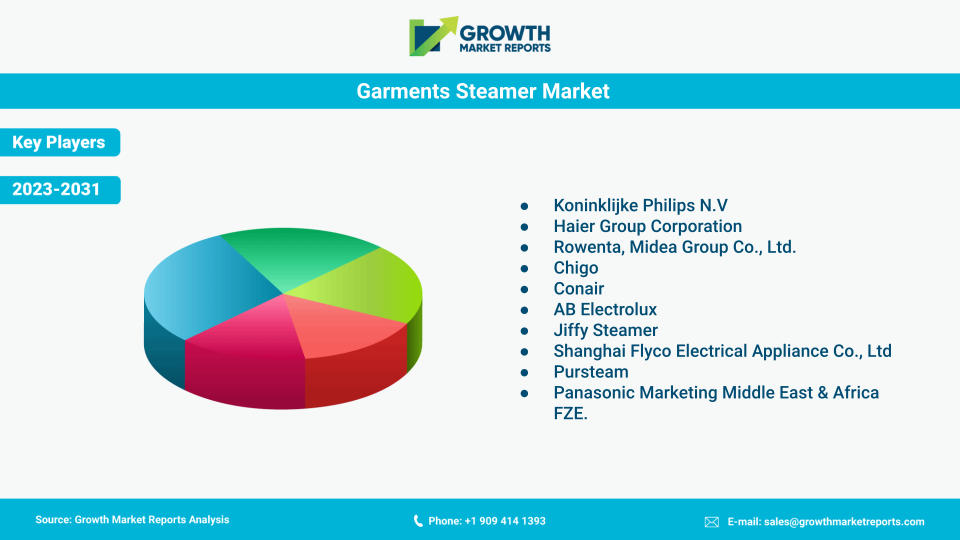
Key players in the garment steamer market include Koninklijke Philips N.V, Haier Group Corporation, Rowenta, Midea Group Co., Ltd., Chigo, Conair, AB Electrolux, Jiffy Steamer, Shanghai Flyco Electrical Appliance Co., Ltd, Pursteam, and Panasonic Marketing Middle East & Africa FZE. Manufacturers focus on strategies such as merger & acquisitions, product innovation, and partnership.
Major trends include the integration of smart technology, growing demand for energy-efficient and eco-friendly models, and expansion into emerging markets. Opportunities exist in product customization, digital retail, and health-focused features like antimicrobial steamers.
Key companies include Philips, Jiffy Steamer, Rowenta, Conair, Panasonic, PurSteam, SALAV, Steamfast, Electrolux, Reliable Corporation, Morphy Richards, Tefal, Black+Decker, Sunbeam Products, Hamilton Beach, Russell Hobbs, Midea Group, Haier Group, LG Electronics, and Breville Group.
Innovations include rapid heat-up times, automatic shut-off, multi-functional attachments, smart technology integration (such as app controls), and energy-efficient models.
Garment steamers are available in up to 1000W (compact/travel), 1001-1500W (most popular for home use), and above 1500W (commercial/heavy-duty) power ratings.
Online stores are the fastest-growing distribution channel due to the rise of e-commerce, while supermarkets/hypermarkets and specialty stores remain important for in-person shopping and product demonstrations.
Garment steamers are used in both residential and commercial settings. Residential use is driven by convenience and at-home garment care, while commercial applications include hotels, laundromats, dry cleaners, and fashion retailers.
The market is segmented into handheld garment steamers, upright garment steamers, and travel garment steamers. Handheld steamers are popular for their portability, while upright models are preferred for commercial and heavy-duty use.
Asia Pacific dominates the garments steamer market, accounting for the largest share in 2024, followed by North America and Europe. Emerging markets in Latin America and the Middle East & Africa are also experiencing steady growth.
The garments steamer market is expected to grow at a CAGR of 6.2% from 2025 to 2033, reaching a projected value of USD 3.6 billion by 2033.
As of 2024, the global garments steamer market size reached USD 2.1 billion, driven by increasing demand for convenient garment care solutions.