Segments - by Component (Solution, Services), by Deployment Mode (On-Premises, Cloud), by Application (Sales and Marketing, Human Resource, Education, Customer Engagement, Product Development, Others), by End-User (Retail, Education, Healthcare, BFSI, IT and Telecommunications, Media and Entertainment, Government, Others)
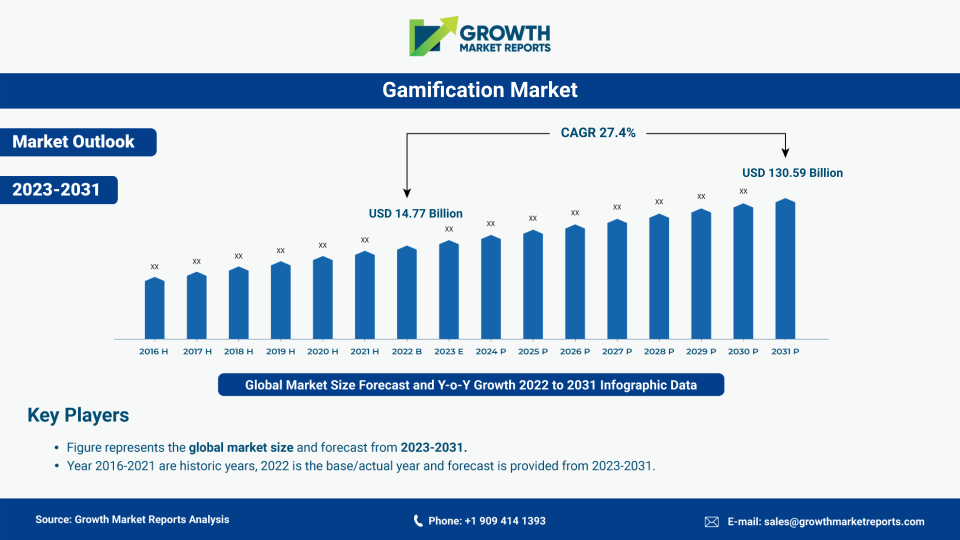
According to our latest research, the global gamification market size in 2024 stands at USD 16.5 billion, demonstrating strong momentum driven by digital transformation initiatives across industries. The market is projected to grow at a robust CAGR of 25.2% from 2025 to 2033, reaching an estimated USD 136.5 billion by 2033. This impressive growth is primarily fueled by the increasing adoption of gamified solutions in enterprise environments to enhance employee engagement, customer loyalty, and learning outcomes.
One of the primary growth factors for the gamification market is the shift towards digitalization and the growing demand for interactive engagement strategies. Organizations across sectors such as retail, BFSI, healthcare, and education are leveraging gamification to transform traditional processes and foster higher participation rates. The proliferation of smartphones and mobile applications has made gamified experiences more accessible, allowing businesses to reach their audiences seamlessly. Furthermore, the integration of advanced analytics and artificial intelligence into gamification platforms is enabling more personalized and adaptive experiences, significantly boosting user motivation and retention.
Another significant driver is the rising emphasis on employee training and development, particularly in the wake of remote and hybrid work models. Companies are increasingly utilizing gamification to make learning and professional development more engaging and effective. By incorporating elements such as leaderboards, badges, and real-time feedback, organizations are able to create a competitive yet collaborative environment that enhances knowledge retention and skill acquisition. This trend is particularly evident in sectors like IT, telecommunications, and healthcare, where continuous upskilling is critical for maintaining operational excellence.
Customer engagement and loyalty programs represent a substantial growth avenue within the gamification market. Businesses are adopting gamified reward systems, challenges, and interactive campaigns to foster deeper connections with their customers. These strategies not only drive repeat purchases and brand advocacy but also provide valuable data on customer preferences and behaviors. The ability to tailor gamified experiences based on user data and feedback is proving to be a game-changer, especially for retail, banking, and media companies aiming to differentiate themselves in competitive markets.
In recent years, the concept of a Digital Gratitude Journal Gamification Platform has gained traction as a novel approach to enhancing personal well-being and productivity. By integrating gamification elements such as points, badges, and leaderboards, these platforms encourage users to regularly reflect on positive experiences and express gratitude. This not only fosters a positive mindset but also enhances user engagement by making the process of journaling more interactive and rewarding. As more individuals and organizations recognize the mental health benefits of gratitude practices, the demand for such gamified platforms is expected to grow, offering new opportunities for developers and mental health professionals alike.
From a regional perspective, North America currently dominates the gamification market, accounting for the largest revenue share in 2024. This leadership is attributed to the high adoption of digital technologies, a mature enterprise landscape, and significant investments in employee engagement and customer experience solutions. However, Asia Pacific is emerging as the fastest-growing region, driven by the rapid expansion of the digital economy, increasing smartphone penetration, and a young, tech-savvy population. Europe also holds a significant share, particularly in the education and healthcare sectors, where gamification is being used to drive learning outcomes and patient engagement. The Middle East & Africa and Latin America are gradually catching up, supported by growing digital infrastructure and government-led initiatives promoting innovation.
The component segment of the gamification market is bifurcated into solutions and services, both of which play critical roles in the ecosystem. Gamification solutions include software platforms and applications that enable organizations to design, deploy, and manage gamified experiences. These solutions are increasingly sophisticated, offering features such as real-time analytics, customizable game mechanics, integration capabilities, and multi-channel support. The demand for standalone and integrated gamification platforms has surged as businesses seek scalable and flexible solutions to address diverse use cases across departments and functions.
On the services front, consulting, implementation, and support services are essential for ensuring the successful adoption and optimization of gamification strategies. Many organizations lack the in-house expertise required to design effective gamified experiences, making professional services indispensable. Vendors are providing end-to-end support, from initial strategy development and platform selection to customization, integration, and ongoing management. This has led to the emergence of specialized service providers who cater to the unique needs of different industries, driving further market expansion.
The interplay between solutions and services is also fostering innovation in the market. Solution providers are increasingly offering bundled packages that combine platform access with consulting and support, enabling clients to realize faster time-to-value. This trend is particularly prominent among large enterprises and public sector organizations, which require comprehensive solutions to address complex engagement challenges. Additionally, the rise of cloud-based gamification solutions is enhancing service delivery, allowing providers to offer remote support, regular updates, and seamless scalability.
As the market matures, there is a growing emphasis on interoperability and integration with existing enterprise systems such as CRM, LMS, and HRM platforms. This has led to the development of APIs and connectors that facilitate seamless data exchange and workflow automation. Vendors are also investing in user-friendly interfaces and advanced analytics capabilities to empower organizations to measure the impact of gamification initiatives and optimize them in real time. These developments are expected to drive sustained growth in both the solutions and services segments over the forecast period.
| Attributes | Details |
| Report Title | Gamification Market Research Report 2033 |
| By Component | Solution, Services |
| By Deployment Mode | On-Premises, Cloud |
| By Application | Sales and Marketing, Human Resource, Education, Customer Engagement, Product Development, Others |
| By End-User | Retail, Education, Healthcare, BFSI, IT and Telecommunications, Media and Entertainment, Government, Others |
| Regions Covered | North America, Europe, APAC, Latin America, MEA |
| Base Year | 2024 |
| Historic Data | 2018-2023 |
| Forecast Period | 2025-2033 |
| Number of Pages | 279 |
| Number of Tables & Figures | 354 |
| Customization Available | Yes, the report can be customized as per your need. |
Deployment mode is a crucial consideration in the gamification market, with organizations choosing between on-premises and cloud-based solutions based on their specific requirements. On-premises deployment remains relevant for enterprises with strict data security, compliance, or customization needs. These organizations prefer to have full control over their gamification platforms, ensuring that sensitive information remains within their own IT infrastructure. Sectors such as BFSI, government, and healthcare often opt for on-premises solutions to align with regulatory mandates and internal policies.
However, the cloud segment has witnessed exponential growth and now dominates the deployment landscape. Cloud-based gamification solutions offer unparalleled scalability, flexibility, and cost-effectiveness, making them the preferred choice for organizations of all sizes. The ability to quickly deploy and update gamified applications without significant upfront investments has democratized access to gamification, enabling even small and medium enterprises to leverage its benefits. Cloud platforms also facilitate remote access and collaboration, which is particularly valuable in the context of distributed workforces and global operations.
The rise of Software-as-a-Service (SaaS) models has further accelerated the adoption of cloud-based gamification solutions. Vendors are offering subscription-based pricing, automatic updates, and multi-tenant architectures that lower the total cost of ownership and simplify management. This has made it easier for organizations to experiment with different gamification strategies, scale their initiatives as needed, and integrate with other cloud-based applications. The cloud deployment mode is also driving innovation, with providers continuously adding new features and enhancements to stay competitive.
Despite the dominance of cloud solutions, hybrid deployment models are gaining traction, particularly among large enterprises with complex IT environments. Hybrid models allow organizations to combine the security and control of on-premises systems with the agility and scalability of the cloud. This approach is especially relevant for multinational companies and those operating in highly regulated industries. As cloud adoption continues to rise, vendors are investing in robust security protocols, compliance certifications, and data residency options to address customer concerns and drive further growth in this segment.
The application segment of the gamification market encompasses a wide range of use cases, with sales and marketing emerging as one of the most prominent. Companies are leveraging gamification to incentivize sales teams, drive healthy competition, and boost productivity. Gamified sales platforms incorporate elements such as leaderboards, badges, and rewards to recognize top performers and encourage continuous improvement. In marketing, gamification is used to engage customers through interactive campaigns, quizzes, and loyalty programs, driving higher conversion rates and brand loyalty.
The emergence of Pick Rate Gamification Software is transforming the way businesses approach inventory management and logistics. By applying game mechanics to the picking process, these software solutions aim to increase efficiency and accuracy in warehouse operations. Employees are motivated through real-time feedback, rewards, and competitive elements, which not only boost productivity but also enhance job satisfaction. As companies strive to optimize their supply chain operations, the adoption of such gamification software is becoming increasingly prevalent. This trend is particularly beneficial for e-commerce and retail sectors, where timely and accurate order fulfillment is critical to customer satisfaction.
Human resource management is another major application area, with organizations using gamification to enhance recruitment, onboarding, training, and performance management processes. By introducing game mechanics into HR workflows, companies are able to create more engaging and motivating experiences for employees. This not only improves knowledge retention and skill development but also fosters a culture of continuous learning and collaboration. Gamification is also being used to promote employee wellness, diversity and inclusion, and leadership development initiatives.
The education sector has been a pioneer in adopting gamification, leveraging it to enhance student engagement, motivation, and learning outcomes. Educational institutions and e-learning providers are integrating game-based elements into curricula, assessments, and learning platforms to make education more interactive and enjoyable. Gamification is particularly effective in addressing issues such as student disengagement and dropout rates, as it provides instant feedback, recognition, and a sense of achievement. The increasing popularity of online and blended learning models is further fueling demand for gamified educational solutions.
Customer engagement is a rapidly growing application area, with businesses across industries deploying gamification to build stronger relationships with their customers. Gamified loyalty programs, referral campaigns, and interactive experiences are being used to drive repeat purchases, increase customer lifetime value, and gather valuable data on customer preferences. Product development is another emerging application, with organizations using gamification to crowdsource ideas, gather user feedback, and test new features in a fun and engaging manner. As the range of applications continues to expand, the gamification market is expected to witness sustained growth and innovation in the coming years.
The end-user segment of the gamification market is highly diverse, reflecting the broad applicability of gamification across industries. The retail sector is a major adopter, utilizing gamification to enhance customer engagement, drive foot traffic, and increase sales. Retailers are deploying gamified loyalty programs, interactive promotions, and personalized recommendations to differentiate themselves in a competitive market. The ability to collect and analyze customer data through gamified interactions is providing retailers with valuable insights to refine their marketing strategies.
The education industry remains at the forefront of gamification adoption, with schools, universities, and e-learning platforms integrating game-based learning into their offerings. Gamification is being used to improve student motivation, participation, and achievement, particularly in subjects that are traditionally considered challenging. The rise of digital classrooms and remote learning has further accelerated the adoption of gamified educational tools, as educators seek innovative ways to maintain student engagement in virtual environments.
Healthcare is another key end-user, leveraging gamification to promote patient engagement, adherence to treatment plans, and healthy behaviors. Hospitals, clinics, and wellness providers are using gamified apps and platforms to encourage patients to track their health metrics, participate in wellness challenges, and complete rehabilitation exercises. Gamification is also being used in medical training and continuing education, providing healthcare professionals with interactive simulations and assessments to enhance their skills and knowledge.
Other significant end-users include BFSI, IT and telecommunications, media and entertainment, and government organizations. In BFSI, gamification is being used to educate customers about financial products, promote savings and investment behaviors, and enhance employee performance. IT and telecommunications companies are deploying gamified solutions to drive innovation, improve customer support, and retain talent. Media and entertainment firms are using gamification to boost audience engagement, while government agencies are leveraging it to promote civic participation and public awareness campaigns. The diverse end-user base underscores the versatility and transformative potential of gamification across sectors.
The gamification market presents numerous opportunities for growth and innovation, particularly as organizations increasingly recognize the value of engaging employees and customers through game-based mechanics. One of the most significant opportunities lies in the integration of gamification with emerging technologies such as artificial intelligence, machine learning, and virtual reality. These technologies can enhance gamified experiences by enabling real-time personalization, adaptive learning, and immersive environments. The rise of the Internet of Things (IoT) also presents new possibilities for gamification, allowing organizations to create context-aware experiences that respond to users' behaviors and environments. As companies continue to invest in digital transformation, the demand for innovative gamification solutions is expected to soar.
Another major opportunity is the expansion of gamification into new verticals and use cases. While sectors such as retail, education, and healthcare have been early adopters, industries such as manufacturing, logistics, and energy are beginning to explore the potential of gamification to drive operational efficiency, safety, and employee engagement. The growing focus on sustainability and corporate social responsibility is also creating opportunities for gamification to promote green behaviors and community involvement. Furthermore, the increasing adoption of remote and hybrid work models is driving demand for gamified collaboration and productivity tools, enabling organizations to maintain high levels of engagement and performance in distributed environments.
Despite the promising outlook, the gamification market faces several restraining factors that could hinder its growth. One of the primary challenges is the risk of user fatigue and disengagement if gamification strategies are not well-designed or aligned with users' intrinsic motivations. Poorly implemented gamification can lead to a lack of sustained interest, diminished returns, and even negative perceptions among employees or customers. Additionally, concerns around data privacy and security, particularly in cloud-based deployments, may deter some organizations from fully embracing gamification. Addressing these challenges will require ongoing investment in user experience design, data protection measures, and continuous feedback mechanisms to ensure that gamification initiatives deliver meaningful and lasting value.
North America remains the largest regional market for gamification, accounting for approximately 38% of the global revenue in 2024, or around USD 6.3 billion. The region's leadership is driven by high digital adoption rates, a mature enterprise landscape, and significant investments in employee and customer engagement solutions. The United States, in particular, is home to many leading gamification vendors and a large base of early adopters across sectors such as retail, BFSI, and healthcare. The presence of a robust technology ecosystem and a culture of innovation further supports the growth of the gamification market in North America.
Asia Pacific is the fastest-growing region, with a projected CAGR of 29.8% from 2025 to 2033. The market size in Asia Pacific reached USD 3.7 billion in 2024 and is expected to witness exponential growth in the coming years. Factors driving this growth include rapid digitalization, increasing smartphone penetration, and a young, tech-savvy population. Countries such as China, India, Japan, and South Korea are at the forefront of gamification adoption, particularly in the education, retail, and IT sectors. Government initiatives promoting digital literacy and innovation are also contributing to the expansion of the gamification market in the region.
Europe is another significant market, with a 2024 market size of USD 4.1 billion and steady growth expected over the forecast period. The region's focus on digital education, employee development, and customer engagement is driving demand for gamified solutions. The United Kingdom, Germany, and France are leading adopters, with strong uptake in the education, healthcare, and BFSI sectors. Meanwhile, Latin America and the Middle East & Africa are gradually increasing their adoption of gamification, supported by improving digital infrastructure, growing internet penetration, and government-led initiatives to foster innovation and workforce development. Together, these regions accounted for just under USD 2.4 billion in 2024, with significant upside potential as market awareness and investment continue to rise.
The gamification market is characterized by intense competition and rapid innovation, with a diverse array of players ranging from established enterprise software vendors to specialized startups. The competitive landscape is shaped by the constant evolution of technology, changing customer expectations, and the need for differentiated solutions. Leading companies are investing heavily in research and development to enhance their product offerings, integrate advanced analytics and artificial intelligence, and improve user experience. Strategic partnerships, mergers and acquisitions, and geographic expansion are common strategies employed by market participants to strengthen their market position and capture new growth opportunities.
One of the defining features of the competitive landscape is the emphasis on customization and industry-specific solutions. Vendors are increasingly tailoring their platforms to address the unique needs of different sectors, such as education, healthcare, retail, and BFSI. This approach enables them to deliver more relevant and impactful gamification experiences, driving higher adoption rates and customer satisfaction. Additionally, the rise of cloud-based and SaaS delivery models has lowered barriers to entry, enabling new entrants to compete effectively with established players by offering flexible, scalable, and cost-effective solutions.
Customer support, integration capabilities, and data security are key differentiators in the market, with organizations placing a premium on vendors that can deliver seamless implementation, robust analytics, and compliance with data protection regulations. As the market matures, there is a growing focus on measuring the ROI of gamification initiatives, with vendors providing advanced reporting and analytics tools to help clients track engagement, performance, and business outcomes. This data-driven approach is enabling organizations to optimize their gamification strategies and demonstrate tangible value to stakeholders.
Some of the major companies operating in the gamification market include Badgeville (CallidusCloud/SAP), Bunchball (BI WORLDWIDE), Microsoft Corporation, SAP SE, Cognizant, Axonify Inc., MPS Interactive Systems, Ambition, Hoopla, and Gametize. Badgeville, now part of SAP, is known for its robust enterprise gamification platform that integrates with various business applications to drive employee and customer engagement. Bunchball, a subsidiary of BI WORLDWIDE, offers a comprehensive gamification solution focused on motivating sales teams, enhancing learning, and driving customer loyalty. Microsoft has integrated gamification features into its suite of productivity and collaboration tools, enabling organizations to boost user engagement and adoption.
SAP SE is a leading provider of enterprise software solutions, including gamification platforms that support employee training, performance management, and customer engagement. Cognizant offers consulting and implementation services for gamification, helping clients design and deploy tailored solutions that align with their business objectives. Axonify specializes in microlearning and gamified training solutions for frontline employees, while MPS Interactive Systems focuses on gamified learning and development programs for corporate clients. Ambition and Hoopla are prominent players in the sales gamification space, offering platforms that drive sales performance through real-time feedback, recognition, and competition. Gametize provides a versatile gamification platform that caters to a wide range of use cases, from employee engagement to customer loyalty programs.
These companies are continuously innovating to stay ahead of the competition, investing in new features, integrations, and delivery models. Partnerships with technology providers, system integrators, and industry associations are helping them expand their reach and deliver more comprehensive solutions. As the gamification market continues to evolve, competition is expected to intensify, with vendors differentiating themselves through innovation, customer-centricity, and measurable business impact.
The Gamification market has been segmented on the basis of
Key players competing in the global gamification market include Badgeville, Comarch, 500Friends, Dopamine, and Gigya. Many of these players are widely engaged in business activities such introducing the concept of gamifying business processes to new organisations or consumers to expand their business operations.
AI is enhancing gamification by enabling real-time personalization, adaptive learning, and advanced analytics, resulting in more engaging and effective user experiences.
Challenges include the risk of user fatigue and disengagement, data privacy and security concerns, and the need for well-designed, user-centric gamification strategies.
Major players include Microsoft Corporation, SAP SE, Salesforce, Badgeville (CallidusCloud), Bunchball (BI WORLDWIDE), Cognizant Technology Solutions, Axonify Inc., GamEffective (Centrical), PUG Interactive, and MPS Interactive Systems.
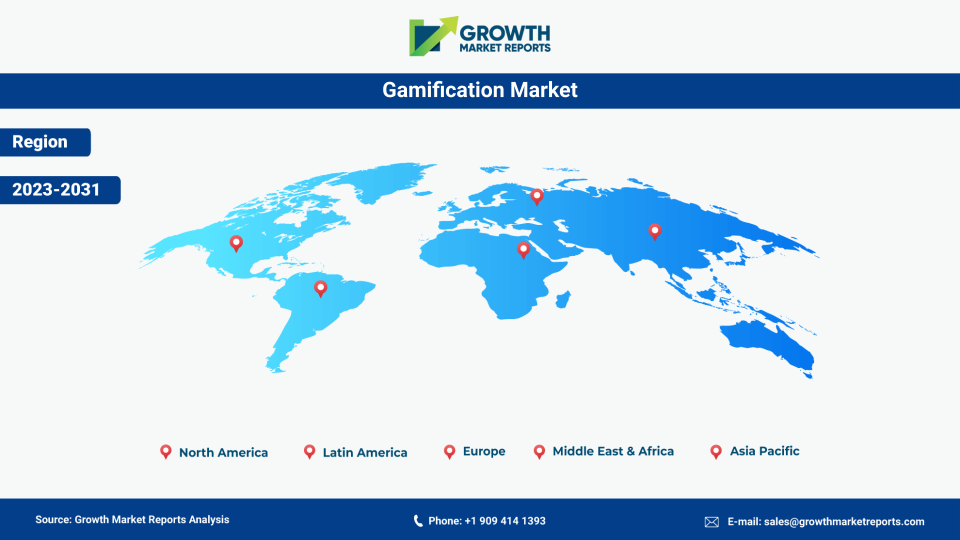
North America leads the market, accounting for about 38% of global revenue in 2024. Asia Pacific is the fastest-growing region, while Europe, Latin America, and the Middle East & Africa are also seeing increased adoption.
Key applications include sales and marketing, human resource management, education, customer engagement, and product development.
Gamification solutions are deployed either on-premises or via the cloud, with cloud-based solutions dominating due to their scalability, flexibility, and cost-effectiveness. Hybrid models are also gaining traction among large enterprises.
Major growth drivers include the shift towards digitalization, demand for interactive engagement strategies, proliferation of smartphones, and integration of advanced analytics and AI in gamification platforms.
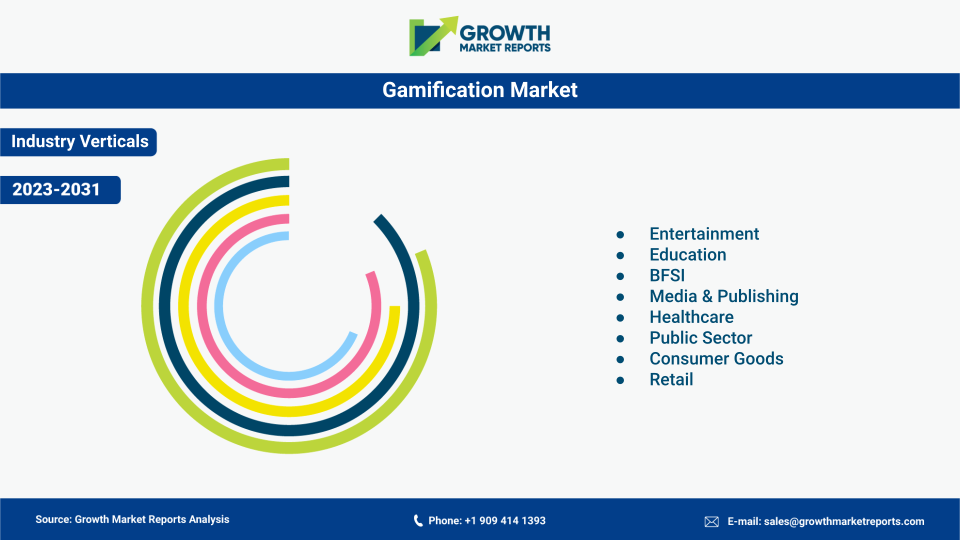
Key industries adopting gamification include retail, BFSI (banking, financial services, and insurance), healthcare, education, IT and telecommunications, and media and entertainment.
The gamification market is expected to grow at a CAGR of 25.2% from 2025 to 2033, reaching an estimated USD 136.5 billion by 2033.
As of 2024, the global gamification market size is valued at USD 16.5 billion, with strong growth driven by digital transformation across industries.