Segments - by Product Type (Flat Panel Detectors, Software, Accessories), by Application (Dental, Orthopedics, Oncology, ENT, Others), by End-User (Hospitals, Diagnostic Imaging Centers, Dental Clinics, Others), by Technology (Indirect Conversion, Direct Conversion)
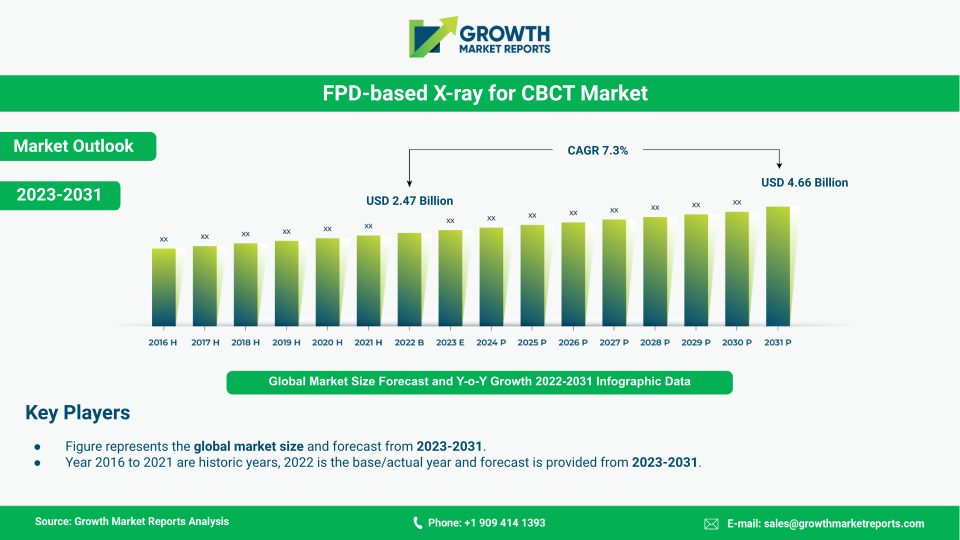
According to our latest research, the global FPD-based X-ray for CBCT market size reached USD 1.62 billion in 2024, reflecting the strong adoption of advanced imaging technologies across healthcare settings. The market is projected to grow at a robust CAGR of 8.7% from 2025 to 2033, resulting in a forecasted market size of USD 3.36 billion by the end of 2033. This remarkable growth is primarily driven by the increasing demand for high-resolution, low-dose imaging solutions in dental, orthopedic, and oncology applications.
One of the most significant growth factors for the FPD-based X-ray for CBCT market is the rapid technological advancement in flat panel detector (FPD) technology. FPDs offer superior image quality, faster image acquisition, and reduced radiation exposure compared to traditional imaging systems. These advantages are especially critical in dental and maxillofacial imaging, where precision and patient safety are paramount. Moreover, the integration of advanced software algorithms for image reconstruction and enhancement further elevates diagnostic accuracy, making FPD-based CBCT systems indispensable in modern clinical practice. The ongoing shift towards minimally invasive diagnostic procedures is also propelling the adoption of these systems in both developed and emerging markets.
Another key driver is the expanding application spectrum of FPD-based X-ray for CBCT systems. While dental imaging remains the primary domain, there is a notable surge in utilization across orthopedics, oncology, and ENT (Ear, Nose, and Throat) segments. CBCT’s ability to provide three-dimensional, volumetric imaging with high spatial resolution is revolutionizing preoperative planning, postoperative assessment, and real-time procedural guidance. The rising prevalence of chronic diseases, such as cancer and musculoskeletal disorders, is further boosting the demand for advanced imaging modalities. In addition, the global increase in geriatric populations, who are more susceptible to conditions requiring precise imaging, supports market expansion.
The proliferation of healthcare infrastructure and the growing number of diagnostic imaging centers globally are also contributing to market growth. Hospitals and specialized diagnostic centers are increasingly investing in state-of-the-art CBCT systems equipped with FPD technology to enhance their diagnostic capabilities and improve patient outcomes. Reimbursement policies in favor of advanced diagnostic procedures and the rising awareness among healthcare professionals regarding the benefits of FPD-based CBCT are further catalyzing market adoption. However, high initial capital investment and operational costs, particularly in low- and middle-income regions, remain challenges that could temper the pace of market penetration.
Regionally, North America continues to dominate the FPD-based X-ray for CBCT market, accounting for the largest revenue share in 2024. This is attributed to the well-established healthcare infrastructure, early adoption of advanced imaging technologies, and favorable reimbursement scenarios in the United States and Canada. Europe follows closely, driven by robust investments in healthcare modernization and a strong focus on research and development. Meanwhile, the Asia Pacific region is expected to witness the fastest CAGR over the forecast period, fueled by rising healthcare expenditure, growing awareness, and increasing adoption of digital imaging solutions in countries such as China, India, and Japan. Latin America and Middle East & Africa are also emerging as promising markets, albeit from a smaller base, as healthcare systems in these regions continue to evolve and invest in modern diagnostic technologies.
The Product Type segment of the FPD-based X-ray for CBCT market is primarily categorized into flat panel detectors, software, and accessories. Flat panel detectors (FPDs) constitute the backbone of CBCT systems, offering high sensitivity, superior image quality, and rapid image acquisition. These detectors have largely supplanted traditional image intensifiers due to their compact design, durability, and ability to deliver consistent image quality across a wide range of applications. The demand for FPDs is further amplified by the growing need for high-resolution, low-dose imaging in dental, orthopedic, and oncological diagnostics, as well as by the increasing trend towards digitalization in medical imaging.
Software solutions play an equally vital role in the FPD-based X-ray for CBCT market. Advanced software platforms enable sophisticated image reconstruction, 3D visualization, and automated diagnostic tools, which significantly enhance clinical workflow and diagnostic accuracy. The integration of artificial intelligence (AI) and machine learning algorithms is transforming the landscape by providing tools for automated anomaly detection, segmentation, and quantitative analysis. These innovations not only improve diagnostic confidence but also contribute to workflow efficiency, reducing interpretation time and supporting better patient management. The software segment is expected to witness sustained growth as vendors continue to invest in R&D to develop next-generation imaging solutions.
Accessories, including positioning aids, calibration tools, and protective equipment, form an essential support segment within the FPD-based X-ray for CBCT market. These products are crucial for optimizing the performance of CBCT systems, ensuring patient safety, and maintaining regulatory compliance. The demand for specialized accessories is rising in tandem with the increasing installation base of CBCT systems, particularly in high-volume dental and orthopedic practices. Furthermore, the trend towards customization and modularity in CBCT systems is driving innovation in accessory design, enabling healthcare providers to tailor imaging solutions to specific clinical requirements.
The interplay between these product types is shaping the competitive dynamics of the market. Manufacturers are increasingly offering integrated solutions that combine state-of-the-art FPDs with advanced software and tailored accessories to provide value-added, end-to-end imaging systems. This approach not only enhances the clinical utility of CBCT systems but also supports long-term customer relationships through comprehensive service and support offerings. As the market matures, the emphasis on interoperability and scalability is expected to drive further innovation in product development and system integration.
| Attributes | Details |
| Report Title | FPD-based X-ray for CBCT Market Research Report 2033 |
| By Product Type | Flat Panel Detectors, Software, Accessories |
| By Application | Dental, Orthopedics, Oncology, ENT, Others |
| By End-User | Hospitals, Diagnostic Imaging Centers, Dental Clinics, Others |
| By Technology | Indirect Conversion, Direct Conversion |
| Regions Covered | North America, Europe, APAC, Latin America, MEA |
| Base Year | 2024 |
| Historic Data | 2018-2023 |
| Forecast Period | 2025-2033 |
| Number of Pages | 255 |
| Number of Tables & Figures | 268 |
| Customization Available | Yes, the report can be customized as per your need. |
The Application segment of the FPD-based X-ray for CBCT market is highly diverse, encompassing dental, orthopedics, oncology, ENT, and other emerging areas. Dental applications remain the largest and most established segment, accounting for a significant share of global revenue. The precision and clarity offered by FPD-based CBCT systems have revolutionized dental diagnostics, treatment planning, and surgical guidance. These systems enable comprehensive assessment of dental structures, jawbones, and sinuses, facilitating procedures such as implant placement, orthodontic planning, and endodontic evaluation. The growing prevalence of dental disorders and the increasing adoption of cosmetic dentistry are further fueling demand for advanced CBCT solutions in dental clinics and hospitals.
Orthopedic applications represent another rapidly expanding segment within the FPD-based X-ray for CBCT market. The ability of CBCT systems to provide high-resolution, three-dimensional imaging of bones and joints is invaluable for diagnosing fractures, assessing bone quality, and planning complex surgical interventions. The rising incidence of musculoskeletal injuries, coupled with the increasing geriatric population, is driving the adoption of CBCT in orthopedic practices. Moreover, the integration of FPD technology enables real-time imaging during minimally invasive procedures, enhancing surgical precision and patient outcomes.
Oncology is emerging as a key application area for FPD-based X-ray for CBCT systems. These systems are increasingly utilized for tumor localization, treatment planning, and monitoring response to therapy. The superior soft tissue contrast and spatial resolution provided by FPD-based CBCT are particularly beneficial in head and neck cancers, where precise delineation of tumor margins is critical. The growing burden of cancer worldwide and the shift towards personalized medicine are expected to drive sustained growth in this segment over the forecast period.
ENT (Ear, Nose, and Throat) imaging is also gaining traction as an important application area for FPD-based X-ray for CBCT. The ability of CBCT systems to visualize complex anatomical structures in the craniofacial region with high accuracy makes them invaluable for diagnosing sinus diseases, planning cochlear implant procedures, and assessing airway obstructions. As awareness of the clinical benefits of CBCT in ENT continues to grow, adoption is expected to increase, particularly in specialized clinics and academic medical centers. Other emerging applications, such as veterinary imaging and forensic analysis, are also contributing to the expanding scope of the market.
The End-User segment of the FPD-based X-ray for CBCT market is segmented into hospitals, diagnostic imaging centers, dental clinics, and others. Hospitals remain the dominant end-user, accounting for the largest share of global revenue in 2024. This is primarily due to their comprehensive service offerings, large patient volumes, and significant investment capacity for advanced imaging technologies. Hospitals are increasingly deploying FPD-based CBCT systems to enhance their diagnostic capabilities, streamline clinical workflows, and improve patient outcomes across a wide range of specialties, including dentistry, orthopedics, oncology, and ENT.
Diagnostic imaging centers represent a rapidly growing end-user segment within the FPD-based X-ray for CBCT market. These centers are often at the forefront of adopting cutting-edge imaging technologies, driven by the need to differentiate their services and cater to a diverse patient population. The ability to offer high-resolution, three-dimensional imaging with reduced radiation dose is a significant competitive advantage, attracting referrals from both primary care providers and specialists. The increasing trend towards outpatient diagnostic services and the proliferation of standalone imaging centers are expected to drive sustained growth in this segment.
Dental clinics constitute a major end-user segment, particularly in markets with a high prevalence of dental disorders and a strong culture of preventive dental care. The adoption of FPD-based CBCT systems in dental clinics is driven by the need for precise diagnostics, efficient treatment planning, and improved patient communication. These systems enable dentists to visualize complex anatomical structures, assess bone quality, and plan surgical procedures with greater accuracy. The rising demand for cosmetic dentistry and dental implants is further fueling investment in advanced CBCT technology among dental practitioners.
Other end-users, including academic institutions, research organizations, and veterinary clinics, are also contributing to the growth of the FPD-based X-ray for CBCT market. Academic and research institutions are leveraging CBCT systems for clinical research, technology development, and training purposes, while veterinary clinics are increasingly adopting these systems for advanced animal diagnostics. The growing recognition of the clinical and research benefits of FPD-based CBCT is expected to drive further adoption across these diverse end-user segments.
The Technology segment of the FPD-based X-ray for CBCT market is divided into indirect conversion and direct conversion technologies. Indirect conversion FPDs use a scintillator material to convert X-rays into visible light, which is then detected by a photodiode array to generate digital images. This technology is widely adopted due to its cost-effectiveness, reliability, and ability to deliver high-quality images with relatively low noise levels. Indirect conversion FPDs are particularly popular in dental and orthopedic applications, where high spatial resolution and rapid image acquisition are essential.
Direct conversion FPDs, on the other hand, utilize a photoconductor material (such as amorphous selenium) to directly convert X-ray photons into electrical charges. This approach eliminates the need for a scintillator, resulting in higher detective quantum efficiency (DQE), improved image sharpness, and reduced signal loss. Direct conversion technology is gaining traction in applications where ultra-high image quality and precise quantification are required, such as oncology and advanced research settings. However, the higher cost and complexity of direct conversion FPDs may limit their widespread adoption, particularly in resource-constrained environments.
The choice between indirect and direct conversion technologies is largely influenced by clinical requirements, budget considerations, and regulatory factors. Manufacturers are continually investing in R&D to enhance the performance characteristics of both technologies, including improvements in spatial resolution, dose efficiency, and system integration. The ongoing trend towards digitalization and automation in medical imaging is expected to drive further innovation in FPD technology, enabling the development of next-generation CBCT systems with enhanced clinical utility and operational efficiency.
Interoperability and compatibility with existing imaging infrastructure are also important considerations in technology adoption. Healthcare providers are increasingly seeking flexible, scalable solutions that can be seamlessly integrated into their clinical workflows and IT systems. As a result, vendors are focusing on developing open-architecture platforms and software interfaces that support interoperability with a wide range of imaging modalities and electronic health record (EHR) systems. This trend is expected to drive sustained growth and innovation in the FPD-based X-ray for CBCT market over the forecast period.
A significant opportunity for the FPD-based X-ray for CBCT market lies in the ongoing digital transformation of healthcare systems worldwide. The increasing adoption of electronic health records, telemedicine, and cloud-based imaging platforms is creating new avenues for the integration and utilization of advanced CBCT systems. Healthcare providers are seeking solutions that not only deliver superior diagnostic performance but also support seamless data sharing, remote consultation, and collaborative care. Vendors that can offer comprehensive, interoperable solutions are well-positioned to capture a larger share of the expanding market. Furthermore, the growing emphasis on personalized medicine and precision diagnostics is expected to drive demand for high-resolution, quantitative imaging solutions, creating new growth opportunities for FPD-based CBCT systems.
Emerging markets represent another major growth opportunity for the FPD-based X-ray for CBCT market. Rapid urbanization, rising healthcare expenditure, and increasing awareness of advanced diagnostic technologies are fueling demand for modern imaging solutions in regions such as Asia Pacific, Latin America, and the Middle East & Africa. Governments and private sector players are investing heavily in healthcare infrastructure development, including the establishment of new hospitals, diagnostic centers, and dental clinics. The expansion of medical tourism and the growing focus on preventive healthcare are further driving the adoption of FPD-based CBCT systems in these markets. Local manufacturing, strategic partnerships, and tailored product offerings are key strategies for vendors seeking to capitalize on these opportunities.
Despite the promising outlook, the FPD-based X-ray for CBCT market faces several restraining factors. High initial capital investment and ongoing maintenance costs can be significant barriers to adoption, particularly for small and medium-sized healthcare providers and clinics. Additionally, the need for skilled personnel to operate and interpret advanced CBCT systems may limit uptake in regions with limited access to specialized training and education. Regulatory challenges, including stringent approval processes and compliance requirements, can also delay product launches and market entry. Addressing these barriers through innovative financing models, training programs, and regulatory support will be critical to sustaining long-term market growth.
In 2024, North America led the FPD-based X-ray for CBCT market with a market size of USD 590 million, driven by robust healthcare infrastructure, early adoption of advanced imaging technologies, and supportive reimbursement policies. The United States remains the largest individual market, accounting for the majority of regional revenue. The region’s strong focus on research and development, coupled with a high prevalence of dental and orthopedic disorders, continues to fuel demand for FPD-based CBCT systems. Leading manufacturers and technology providers are headquartered in North America, further consolidating the region’s dominant position in the global market.
Europe accounted for the second-largest share of the global FPD-based X-ray for CBCT market in 2024, with a market size of USD 410 million. The region benefits from a well-established healthcare system, significant investments in medical technology, and a strong emphasis on quality and safety standards. Germany, the United Kingdom, and France are the leading markets within Europe, driven by high adoption rates of digital imaging solutions and a growing focus on preventive healthcare. The region is expected to witness steady growth over the forecast period, supported by ongoing healthcare modernization initiatives and favorable regulatory frameworks.
The Asia Pacific region is poised for the fastest growth, with a projected CAGR of 11.2% from 2025 to 2033. The market size in Asia Pacific reached USD 330 million in 2024, and is expected to more than double by 2033. Rapid urbanization, rising disposable incomes, and increasing awareness of advanced diagnostic technologies are driving demand in key markets such as China, India, and Japan. Government initiatives to expand healthcare access and improve diagnostic capabilities are further supporting market growth. Latin America and Middle East & Africa are also emerging as important markets, with a combined market size of USD 290 million in 2024. These regions are benefiting from healthcare infrastructure development, growing medical tourism, and increasing investment in modern diagnostic technologies.
The FPD-based X-ray for CBCT market is characterized by intense competition, with a mix of established multinational corporations and innovative emerging players vying for market share. The competitive landscape is shaped by continuous technological innovation, strategic partnerships, and a focus on expanding product portfolios to address diverse clinical needs. Leading companies are investing heavily in research and development to enhance the performance, efficiency, and versatility of their CBCT systems, with a particular emphasis on improving image quality, reducing radiation dose, and integrating artificial intelligence-driven diagnostic tools.
Market players are increasingly adopting strategies such as mergers and acquisitions, collaborations, and joint ventures to strengthen their market position and expand their geographic reach. These strategic initiatives enable companies to leverage complementary strengths, access new customer segments, and accelerate the development and commercialization of next-generation imaging solutions. The trend towards consolidation is particularly evident in North America and Europe, where larger players are acquiring smaller, specialized companies to broaden their technological capabilities and service offerings.
Product differentiation and customization are key competitive strategies in the FPD-based X-ray for CBCT market. Manufacturers are offering modular, scalable systems that can be tailored to specific clinical applications and workflow requirements. The ability to provide comprehensive service and support, including training, maintenance, and software upgrades, is increasingly important for building long-term customer relationships and ensuring customer satisfaction. Price competition remains a significant factor, particularly in price-sensitive markets such as Asia Pacific and Latin America, where cost-effective solutions are in high demand.
Major companies operating in the FPD-based X-ray for CBCT market include Carestream Health, Planmeca Oy, Vatech Co., Ltd., Danaher Corporation (KaVo Dental, DEXIS), J. Morita Corporation, PreXion Corporation, CurveBeam LLC, and NewTom (Cefla Group). These companies are recognized for their strong product portfolios, global distribution networks, and commitment to innovation. Carestream Health and Planmeca Oy are leaders in dental and medical imaging, offering a wide range of FPD-based CBCT systems with advanced imaging and workflow capabilities. Vatech Co., Ltd. and J. Morita Corporation are known for their high-quality dental CBCT systems, while CurveBeam LLC specializes in orthopedic imaging solutions. Danaher Corporation, through its subsidiaries, provides comprehensive imaging solutions for dental and medical applications, leveraging its global presence and strong R&D capabilities.
These leading players are continuously introducing new products and upgrading existing systems to meet evolving clinical and regulatory requirements. They are also investing in digital transformation initiatives, including the integration of AI and cloud-based solutions, to enhance the value proposition of their CBCT systems. Strategic collaborations with healthcare providers, academic institutions, and technology partners are further strengthening their market position and enabling them to address emerging opportunities in personalized medicine, telemedicine, and data-driven healthcare. As competition intensifies, the ability to innovate, deliver value-added solutions, and respond to changing customer needs will be critical determinants of long-term success in the FPD-based X-ray for CBCT market.
The FPD-based X-ray for CBCT market has been segmented on the basis of
Key players competing in the global FPD-based X-ray for CBCT market are VATECH; J. Morita Corp.; Xoran Technologies, LLC; Genoray Co., Ltd.; CurveBeam; Owandy Radiology; ASAHI ROENTGEN IND.CO., LTD.; Carestream Health; i-CAT; Dentsply Sirona; Teledyne DALSA Inc.; Varex Imaging Corp.; Cefla s.c. (NewTom S.C); PLANMECA OY; Danaher (KaVo Kerr, Gendex, PaloDEx Group); Ray Co. Ltd; and PointNix Co., Ltd.
Many of these players have adopted business strategies such as the launch of new products, the advancement of technologies, partnerships, mergers, and production capacity expansion in order to increase their operation expansion, consumer base, and market position globally.
For instance, a new version of Cios Select was introduced by Siemens Healthineers in March 2018, which offered a combination of customary image intensifier and flat panel detector. The technology was mainly designed for the usage of intraoperative imaging of orthopedics, pain management, and others.
Opportunities include the digital transformation of healthcare, integration with telemedicine and cloud-based platforms, expansion in emerging markets, and the growing focus on personalized medicine and precision diagnostics.
Major players include Carestream Health, Planmeca Oy, Vatech Co., Ltd., Danaher Corporation (KaVo Dental, DEXIS), J. Morita Corporation, PreXion Corporation, CurveBeam LLC, and NewTom (Cefla Group).
Challenges include high initial capital and operational costs, need for skilled personnel, and regulatory hurdles, especially in low- and middle-income regions.
The two main technologies are indirect conversion (using scintillators to convert X-rays to visible light) and direct conversion (using photoconductors to directly convert X-rays to electrical charges).
Key end-users include hospitals, diagnostic imaging centers, dental clinics, academic institutions, research organizations, and veterinary clinics.
FPD-based CBCT systems are primarily used in dental, orthopedic, oncology, and ENT imaging, with emerging applications in veterinary and forensic imaging.
The main product types are flat panel detectors (FPDs), software solutions, and accessories such as positioning aids and calibration tools.
North America leads the market, followed by Europe. The Asia Pacific region is expected to witness the fastest growth due to rising healthcare expenditure, increasing adoption of digital imaging, and expanding healthcare infrastructure.
Key growth drivers include rapid technological advancements in flat panel detector (FPD) technology, increasing demand for high-resolution and low-dose imaging, expanding applications in dental, orthopedic, oncology, and ENT fields, and the proliferation of healthcare infrastructure globally.
The global FPD-based X-ray for CBCT market reached USD 1.62 billion in 2024 and is projected to grow at a CAGR of 8.7% from 2025 to 2033, reaching USD 3.36 billion by 2033.