Segments - by Product Type (Legumes, Grasses, Cereals, Others), by Species (Alfalfa, Clover, Ryegrass, Chicory, Others), by Origin (Organic, Conventional), by Livestock (Cattle, Swine, Poultry, Others), by Distribution Channel (Direct Sales, Retail Stores, Online Stores, Others)
As per our latest research, the global forage seed market size reached USD 23.6 billion in 2024, driven by the rising demand for high-quality animal feed and sustainable agricultural practices. The market is expected to grow at a robust CAGR of 7.8% between 2025 and 2033, reaching a projected value of USD 46.3 billion by the end of the forecast period. This impressive growth trajectory is fueled by several factors, including the expansion of livestock farming, increasing awareness of animal nutrition, and the adoption of advanced forage management techniques.
One of the primary growth factors for the forage seed market is the escalating demand for livestock products such as milk, meat, and eggs, particularly in emerging economies. As global populations continue to rise and dietary preferences shift towards higher protein consumption, livestock producers are under pressure to improve productivity and efficiency. High-quality forage seeds play a crucial role in this context, as they ensure the availability of nutrient-rich feed throughout the year, directly impacting animal health and yield. Moreover, the adoption of improved forage varieties has enabled farmers to enhance feed conversion ratios, reduce feed costs, and maintain consistent supply, further stimulating market growth.
Another significant driver is the growing emphasis on sustainable agriculture and environmental conservation. Forage crops, especially legumes, contribute to soil health by fixing atmospheric nitrogen and reducing the need for synthetic fertilizers. This not only lowers input costs for farmers but also minimizes the ecological footprint of livestock farming. Governments and international organizations are increasingly promoting the use of forage seeds as part of integrated crop-livestock systems, offering incentives and technical support to encourage adoption. Additionally, climate change concerns and the need for resilient farming systems have accelerated research and development in drought-tolerant and disease-resistant forage seed varieties, expanding the market's potential.
Technological advancements and innovation in seed processing, genetic engineering, and distribution channels have also played a pivotal role in propelling the forage seed market. The emergence of precision agriculture, coupled with improved seed coating and treatment techniques, has enabled producers to deliver seeds with enhanced germination rates and stress tolerance. Furthermore, the proliferation of e-commerce platforms and digital marketing strategies has made forage seeds more accessible to farmers, even in remote regions. This transformation in the supply chain has not only widened the customer base but also facilitated knowledge dissemination and best practice sharing, further boosting market penetration.
Regionally, North America and Europe have traditionally dominated the forage seed market due to their well-established livestock sectors and advanced agricultural infrastructure. However, the Asia Pacific region is rapidly emerging as a key growth engine, driven by the expansion of dairy and meat industries in countries like China, India, and Australia. Latin America and the Middle East & Africa are also witnessing increased adoption of improved forage seeds, supported by government initiatives and rising awareness of the benefits of quality animal feed. As these regions continue to invest in modernizing their agricultural sectors, the global forage seed market is poised for sustained expansion over the coming years.
Clover Seed is increasingly being recognized for its multifaceted benefits in the forage seed market. Known for its nitrogen-fixing ability, clover enhances soil fertility, reducing the need for chemical fertilizers and promoting sustainable farming practices. Its high protein content makes it an excellent choice for improving the nutritional quality of animal feed, particularly in dairy and beef production. Clover's adaptability to various soil types and climates further underscores its importance, as it can thrive in diverse agricultural settings. As farmers continue to seek cost-effective and environmentally friendly solutions, the demand for clover seed is expected to rise, contributing to the market's growth trajectory.
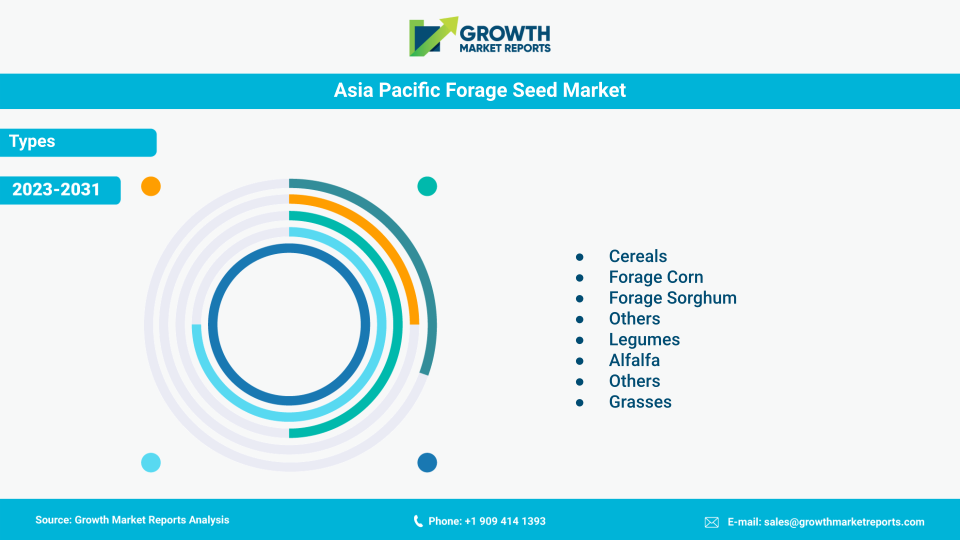
The product type segment of the forage seed market is broadly categorized into legumes, grasses, cereals, and others, with each type playing a distinct role in animal nutrition and farm management. Legumes, such as alfalfa and clover, are highly valued for their protein-rich content and nitrogen-fixing properties, making them an essential component of sustainable livestock systems. Grasses, including ryegrass and fescue, offer high biomass yields and are widely used for grazing and silage. Cereals, such as oats and barley, provide energy-rich forage and are often integrated into mixed cropping systems. The 'others' category encompasses specialty forages and emerging seed types tailored to specific agro-climatic conditions or livestock requirements.
Legumes continue to command a significant share of the forage seed market due to their superior nutritional profile and agronomic benefits. Alfalfa, in particular, is recognized as the 'queen of forages' and is extensively cultivated for dairy and beef cattle feed. The increasing adoption of legume-based forages is attributed to their ability to enhance milk production, improve animal health, and reduce dependency on synthetic protein supplements. Furthermore, ongoing research and breeding programs are focused on developing legume varieties with improved disease resistance, drought tolerance, and higher forage yields, further strengthening their market position.
Grasses represent another core segment, favored for their adaptability, rapid growth, and palatability. Ryegrass, both perennial and annual, is widely utilized in temperate regions for pasture and hay production. The demand for grass seeds is particularly strong in regions with intensive grazing systems, where consistent biomass production is critical for maintaining livestock productivity. Advances in grass seed technology, such as endophyte-enhanced varieties and improved seed coatings, have contributed to higher establishment rates and better persistence under challenging environmental conditions.
Pasture Seeds are pivotal in the development of resilient and productive grazing systems. These seeds, which include a variety of grasses and legumes, are essential for establishing pastures that support sustainable livestock farming. By selecting the right mix of pasture seeds, farmers can optimize forage availability throughout the year, ensuring a steady supply of high-quality feed. This not only enhances animal health and productivity but also contributes to soil conservation and biodiversity. The growing interest in regenerative agriculture and holistic land management practices is driving the demand for diverse pasture seed blends, positioning them as a cornerstone of modern forage systems.
Cereal forages are gaining traction, especially in mixed farming systems where crop rotation and diversification are prioritized. Oats and barley are commonly sown as forage crops to provide quick-growing, high-energy feed during periods of forage scarcity or as part of double-cropping strategies. The integration of cereal forages helps optimize land use, reduce feed costs, and support sustainable farming practices. The 'others' segment, though smaller in market share, includes specialty seeds like chicory and plantain, which offer unique benefits such as improved mineral content and digestive health for livestock. As farmers seek to diversify their forage base and address specific nutritional gaps, the demand for these niche products is expected to rise steadily.
| Attributes | Details |
| Report Title | Forage Seed Market Research Report 2033 |
| By Product Type | Legumes, Grasses, Cereals, Others |
| By Species | Alfalfa, Clover, Ryegrass, Chicory, Others |
| By Origin | Organic, Conventional |
| By Livestock | Cattle, Swine, Poultry, Others |
| By Distribution Channel | Direct Sales, Retail Stores, Online Stores, Others |
| Regions Covered | North America, Europe, APAC, Latin America, MEA |
| Base Year | 2024 |
| Historic Data | 2018-2023 |
| Forecast Period | 2025-2033 |
| Number of Pages | 256 |
| Number of Tables & Figures | 251 |
| Customization Available | Yes, the report can be customized as per your need. |
The species segment of the forage seed market encompasses a wide array of plant types, with alfalfa, clover, ryegrass, chicory, and others being the most prominent. Alfalfa remains the dominant species due to its exceptional protein content, digestibility, and adaptability to diverse soil and climate conditions. Its deep-rooted system allows for efficient water and nutrient uptake, making it a preferred choice in both irrigated and rainfed systems. Alfalfa's role in enhancing milk yield and supporting intensive dairy operations has solidified its status as a staple forage crop worldwide.
Clover, another key species, is valued for its versatility and symbiotic relationship with nitrogen-fixing bacteria. Both red and white clover varieties are widely cultivated across temperate regions, contributing to improved soil fertility and pasture productivity. Clover's resilience to grazing pressure and its ability to thrive in mixed swards with grasses make it an integral component of rotational grazing systems. Ongoing breeding efforts are focused on developing clover varieties with enhanced persistence, disease resistance, and tolerance to abiotic stresses, ensuring their continued relevance in modern livestock systems.
Ryegrass, available in both perennial and annual forms, is a cornerstone species in the forage seed market, particularly in Europe, North America, and Oceania. Its rapid establishment, high palatability, and suitability for both grazing and silage have made ryegrass a preferred option for commercial livestock enterprises. The development of hybrid ryegrasses and improved cultivars with extended growing seasons and better disease resistance has further expanded the market for this species. Additionally, ryegrass is often used in combination with legumes to create balanced pastures that maximize forage quality and animal performance.
Orchardgrass Seed is gaining traction among livestock producers for its exceptional forage quality and adaptability. Known for its palatability and high digestibility, orchardgrass is a preferred choice for grazing and hay production, particularly in temperate regions. Its ability to establish quickly and provide a dense sward makes it ideal for intensive grazing systems. Additionally, orchardgrass's resilience to varying environmental conditions and its compatibility with legumes in mixed pastures enhance its appeal. As farmers strive to improve forage efficiency and animal performance, the strategic use of orchardgrass seed is becoming increasingly important in achieving these goals.
Chicory and other specialty species are gradually gaining popularity, especially among progressive farmers seeking to enhance the nutritional diversity of their pastures. Chicory offers high mineral content, deep rooting, and natural anthelmintic properties, making it suitable for both dairy and sheep systems. The inclusion of such species in forage mixtures helps address specific health challenges, improve animal welfare, and reduce reliance on chemical inputs. As research continues to uncover the agronomic and nutritional benefits of alternative forage species, their adoption is expected to increase, contributing to market diversification.
The origin segment of the forage seed market is bifurcated into organic and conventional seeds, reflecting the growing consumer and regulatory emphasis on sustainable and eco-friendly agricultural practices. Conventional forage seeds continue to dominate the market, owing to their widespread availability, established supply chains, and lower price points. These seeds are often treated with chemical protectants and are bred for high yield, disease resistance, and adaptability to intensive farming systems. The robust performance and reliability of conventional seeds have made them the default choice for large-scale commercial operations.
However, the organic forage seed segment is witnessing rapid growth, driven by the rising demand for organic livestock products and the increasing adoption of organic farming practices. Organic seeds are produced without synthetic chemicals, genetically modified organisms, or artificial treatments, aligning with the principles of organic agriculture. Farmers opting for organic forage seeds benefit from access to premium markets, government incentives, and improved soil health. The transition to organic seeds, however, requires careful management and adherence to stringent certification standards, which can pose challenges for some producers.
The expansion of the organic forage seed market is also supported by growing consumer awareness of food safety, environmental sustainability, and animal welfare. Retailers and food companies are increasingly sourcing ingredients from certified organic supply chains, creating a pull effect that extends to the seed level. As a result, seed companies are investing in organic breeding programs, developing varieties that meet the unique requirements of organic systems, such as resistance to pests and diseases without chemical inputs. The availability of high-performing organic forage seeds is expected to further accelerate the shift towards organic livestock production.
Despite the promising outlook, the organic segment faces several challenges, including limited seed availability, higher production costs, and lower yields compared to conventional counterparts. Addressing these barriers requires concerted efforts from industry stakeholders, including research institutions, seed companies, and policymakers. Collaborative initiatives aimed at expanding the genetic base of organic forage crops, improving seed production techniques, and streamlining certification processes are essential for unlocking the full potential of the organic forage seed market.
The livestock segment of the forage seed market is categorized into cattle, swine, poultry, and others, reflecting the diverse end uses of forage crops in animal husbandry. Cattle, encompassing both dairy and beef, represent the largest consumer of forage seeds, accounting for a significant share of global demand. High-quality forages are essential for optimizing milk production, weight gain, and reproductive performance in cattle, making forage seed selection a critical decision for livestock producers. The intensification of dairy and beef operations, particularly in North America, Europe, and parts of Asia, has driven the adoption of improved forage varieties tailored to specific nutritional and management needs.
Swine and poultry, while traditionally reliant on concentrate feeds, are increasingly being integrated into forage-based systems, particularly in mixed and smallholder farms. The inclusion of forages in swine and poultry diets offers several benefits, including enhanced gut health, reduced feed costs, and improved product quality. Forage crops such as clover, alfalfa, and chicory are being incorporated into pasture-based systems for pigs and free-range poultry, supporting animal welfare and sustainability objectives. This trend is expected to gain momentum as consumers and regulators place greater emphasis on ethical and environmentally friendly livestock production.
The 'others' category encompasses a range of livestock, including sheep, goats, horses, and specialty animals such as rabbits and deer. These animals often require specific forage types and management approaches to meet their unique nutritional and health needs. For example, sheep and goats are well-suited to grazing on diverse pasture mixtures that include legumes and herbs, while horses benefit from high-fiber grass forages. The growing popularity of niche livestock enterprises and the diversification of farm income streams are contributing to increased demand for specialty forage seeds tailored to these segments.
Overall, the livestock segment analysis highlights the central role of forage seeds in supporting animal health, productivity, and sustainability across a wide range of farming systems. As livestock producers seek to optimize feed efficiency, reduce environmental impacts, and meet evolving market demands, the adoption of high-quality forage seeds is set to remain a key priority, driving continued growth in this segment.
The distribution channel segment of the forage seed market includes direct sales, retail stores, online stores, and others, each offering distinct advantages and challenges for market participants. Direct sales, involving transactions between seed producers and large-scale farmers or cooperatives, remain a prominent channel, particularly in regions with well-established agricultural infrastructure. This approach allows for personalized service, technical support, and the establishment of long-term relationships, which are valued by commercial operations seeking customized seed solutions.
Retail stores, including agricultural supply outlets and cooperatives, continue to play a vital role in the forage seed market, especially among small and medium-sized farms. These outlets offer a wide range of seed varieties, along with complementary products such as fertilizers, pesticides, and equipment. The convenience and accessibility of retail stores make them a preferred choice for many farmers, particularly in rural areas where alternative channels may be limited. Retailers also serve as important sources of information and advice, helping farmers make informed decisions about seed selection and management practices.
The rise of online stores and e-commerce platforms has transformed the forage seed distribution landscape, offering unprecedented convenience and reach. Farmers can now access a diverse array of seed products, compare prices, and place orders from the comfort of their homes or farms. Online platforms often provide detailed product information, customer reviews, and technical resources, empowering farmers to make data-driven choices. The digitalization of the supply chain has also facilitated direct-to-consumer sales, enabling seed companies to bypass traditional intermediaries and improve margins.
The 'others' category includes emerging distribution channels such as mobile seed units, contract farming arrangements, and government-supported seed distribution programs. These channels are particularly relevant in developing regions, where infrastructure and market access may be limited. Mobile seed units bring seeds directly to remote farming communities, while contract farming arrangements ensure a steady supply of high-quality seeds to participating producers. Government programs often target smallholder farmers, providing subsidized seeds and technical assistance to promote the adoption of improved forage varieties. As the forage seed market continues to evolve, the integration of traditional and digital distribution channels will be critical for maximizing market reach and customer satisfaction.
The forage seed market presents significant opportunities for both established players and new entrants, driven by the ongoing transformation of global agriculture and the rising demand for sustainable animal feed solutions. One of the most promising opportunities lies in the development and commercialization of high-yielding, stress-tolerant forage seed varieties. Advances in biotechnology, genomics, and precision breeding are enabling the creation of seeds with enhanced nutritional profiles, disease resistance, and adaptability to diverse agro-climatic conditions. Companies that invest in research and development and collaborate with academic and research institutions are well-positioned to capture emerging market segments and differentiate their product offerings.
Another key opportunity is the expansion of the organic forage seed market, fueled by growing consumer demand for organic dairy, meat, and poultry products. As awareness of food safety, environmental sustainability, and animal welfare continues to rise, the adoption of organic farming practices is expected to accelerate. Seed companies that can supply certified organic seeds, offer technical support, and build robust supply chains will be able to tap into this high-growth segment. Additionally, the proliferation of digital platforms and e-commerce channels offers new avenues for market access and customer engagement, enabling seed producers to reach a broader audience and streamline their sales processes.
Despite these opportunities, the forage seed market faces several restraining factors that could impede growth. One of the primary challenges is the prevalence of counterfeit and substandard seeds, particularly in developing regions with weak regulatory oversight. The use of low-quality seeds can lead to poor crop establishment, reduced yields, and financial losses for farmers, undermining confidence in the market. Addressing this issue requires stronger enforcement of seed quality standards, increased investment in certification and testing infrastructure, and greater awareness among farmers about the importance of sourcing seeds from reputable suppliers. Overcoming these barriers is essential for ensuring the long-term sustainability and credibility of the forage seed market.
Regionally, North America leads the forage seed market with a market size of approximately USD 7.9 billion in 2024, supported by its advanced livestock sector, robust research infrastructure, and widespread adoption of high-yielding forage varieties. The United States and Canada are major contributors, benefiting from favorable government policies, well-developed distribution networks, and a strong focus on sustainable agriculture. The region is also a hub for innovation, with leading seed companies and research institutions driving the development of new forage crop varieties and agronomic practices.
Europe follows closely, with a market size of around USD 6.4 billion in 2024, characterized by a strong emphasis on environmental sustainability, animal welfare, and organic farming. Countries such as France, Germany, and the United Kingdom are at the forefront of adopting advanced forage management techniques and implementing stringent quality standards. The European market is expected to grow at a steady CAGR of 6.9% through 2033, driven by ongoing investments in research and development, as well as supportive policy frameworks aimed at promoting sustainable livestock production.
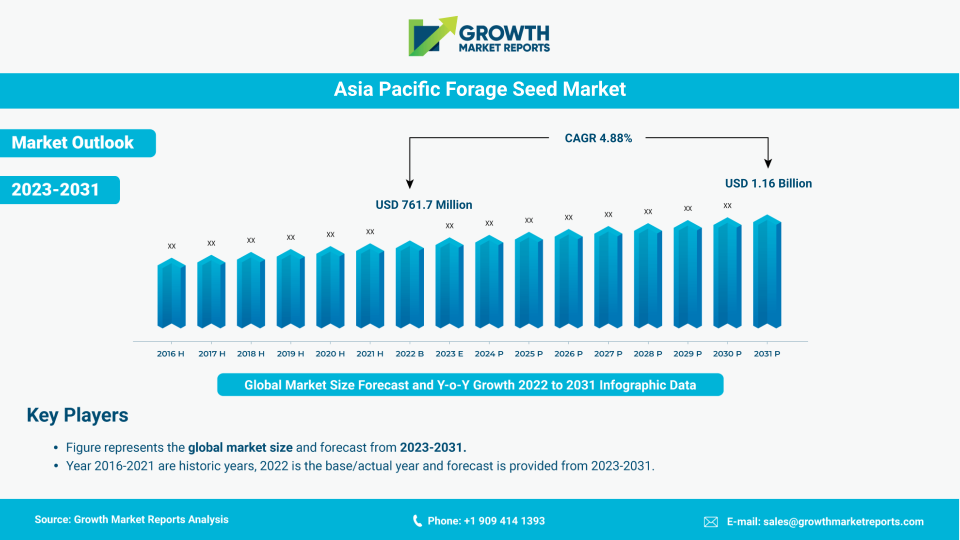
The Asia Pacific region is emerging as a key growth engine for the forage seed market, with a market size of USD 5.3 billion in 2024 and a projected CAGR of 9.2% through 2033. Rapid urbanization, rising incomes, and shifting dietary preferences are fueling the expansion of dairy and meat industries in countries such as China, India, and Australia. Government initiatives to modernize agriculture, improve feed quality, and enhance food security are further boosting demand for high-quality forage seeds. Latin America and the Middle East & Africa, with market sizes of USD 2.2 billion and USD 1.8 billion respectively, are also witnessing increased adoption of improved forage varieties, supported by favorable agro-climatic conditions and growing awareness of sustainable farming practices.
The forage seed market is characterized by intense competition, with a mix of multinational corporations, regional players, and specialized seed companies vying for market share. Leading firms are investing heavily in research and development, focusing on the creation of high-performing, disease-resistant, and climate-resilient forage varieties. Strategic partnerships, mergers and acquisitions, and collaborations with research institutions are common strategies employed to strengthen market position and expand product portfolios. The competitive landscape is further shaped by the increasing importance of digital marketing, customer engagement, and value-added services, as companies seek to differentiate themselves in a crowded marketplace.
Innovation is a key differentiator in the forage seed market, with companies leveraging advanced breeding techniques, biotechnology, and data analytics to develop seeds that meet the evolving needs of livestock producers. The integration of precision agriculture tools, such as remote sensing and soil mapping, enables seed companies to offer tailored solutions that optimize forage production and quality. Additionally, the growing demand for organic and specialty forage seeds has prompted leading players to diversify their offerings and invest in certification and traceability systems, ensuring compliance with stringent regulatory requirements and consumer expectations.
The market is also witnessing the entry of new players, particularly in emerging regions, where local seed companies are capitalizing on rising demand and government support for agricultural modernization. These firms often focus on developing region-specific forage varieties that are adapted to local agro-climatic conditions and farming practices. While the presence of established multinationals provides stability and access to cutting-edge technologies, the agility and local knowledge of regional players enable them to respond quickly to market trends and customer needs.
Major companies operating in the global forage seed market include DLF Seeds, Advanta Seeds, Barenbrug Group, Land O'Lakes, Inc., Royal Barenbrug Group, Allied Seed, LLC, Pennington Seed, Inc., and Germinal Holdings Ltd. DLF Seeds is renowned for its extensive research and breeding programs, offering a wide range of grass and legume seeds tailored to diverse markets. Advanta Seeds specializes in innovative forage solutions, with a strong presence in Asia and the Americas. Barenbrug Group is a global leader in grass seed production, known for its commitment to sustainability and product quality. Land O'Lakes, Inc. leverages its cooperative structure to deliver value-added forage products and services to farmers across North America and beyond.
These companies are continuously expanding their global footprint through strategic acquisitions, joint ventures, and investments in local production facilities. They also place a strong emphasis on customer support, providing technical assistance, training, and agronomic advice to help farmers maximize the benefits of improved forage seeds. As the market continues to evolve, the ability to innovate, adapt to changing customer needs, and navigate complex regulatory environments will be critical for maintaining a competitive edge in the dynamic forage seed industry.
The Forage Seed market has been segmented on the basis of
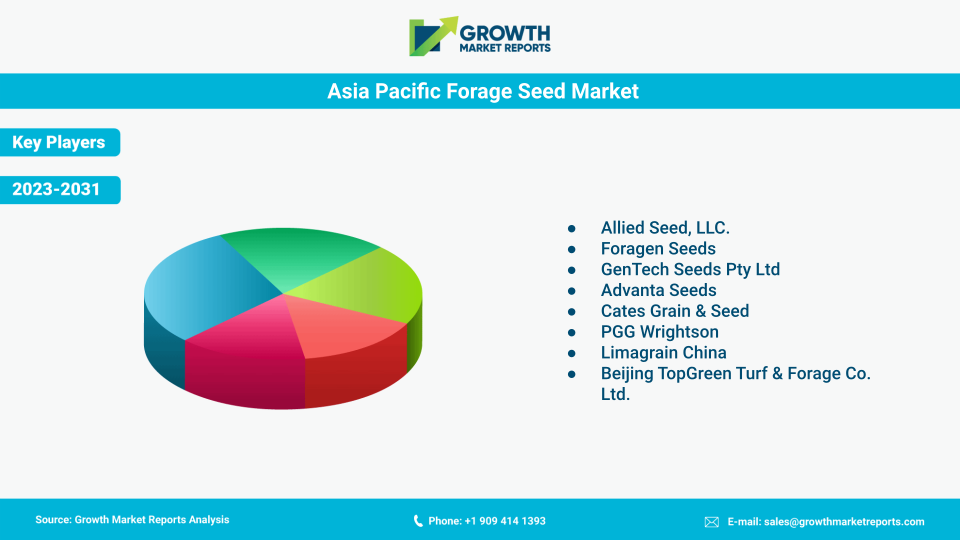
Key players competing in the Asia-Pacific forage seed market includes Allied Seed, LLC.; Foragen Seeds; GenTech Seeds Pty Ltd; Advanta Seeds; Cates Grain & Seed; PGG Wrightson; Limagrain China; and Beijing TopGreen Turf & Forage Co. Ltd.
Some of these players are engaging in business strategies such as mergers, acquisitions, partnerships, collaborations, capacity expansion, and product launches to enhance their market share.
Technological innovations in seed breeding, genetic engineering, precision agriculture, and digital distribution are enhancing seed quality, germination rates, and accessibility, driving market growth and enabling tailored solutions for farmers.
Major companies include DLF Seeds, Advanta Seeds, Barenbrug Group, Land O'Lakes Inc., Allied Seed LLC, Pennington Seed Inc., Germinal Holdings Ltd., Corteva Agriscience, BASF SE, Monsanto Company (Bayer AG), and others.
Opportunities include developing high-yielding, stress-tolerant varieties, expanding organic seed offerings, and leveraging digital platforms. Threats include the prevalence of counterfeit and substandard seeds, regulatory challenges, and higher costs for organic seeds.
Forage seeds are distributed through direct sales, retail stores, online stores, and emerging channels like mobile seed units and government-supported programs. E-commerce is increasingly important for market reach and convenience.
Cattle (dairy and beef) are the largest consumers, followed by swine, poultry, and other animals like sheep, goats, horses, and specialty livestock. Forage seeds are crucial for optimizing animal health, productivity, and sustainability.
Conventional seeds dominate due to availability and lower cost, but organic forage seeds are growing in demand due to consumer preference for organic livestock products, government incentives, and sustainability concerns. Organic seeds are produced without synthetic chemicals or GMOs.
The forage seed market is segmented into legumes (like alfalfa and clover), grasses (such as ryegrass and fescue), cereals (including oats and barley), and specialty or emerging seed types tailored to specific needs.
North America and Europe are traditional leaders due to advanced livestock sectors and infrastructure. The Asia Pacific region is rapidly emerging as a key growth engine, with Latin America and the Middle East & Africa also showing increased adoption of improved forage seeds.
Key growth drivers include rising demand for high-quality animal feed, expansion of livestock farming, increased awareness of animal nutrition, adoption of sustainable agricultural practices, and technological advancements in seed processing and distribution.
The global forage seed market reached USD 23.6 billion in 2024 and is projected to grow at a CAGR of 7.8% from 2025 to 2033, reaching USD 46.3 billion by the end of the forecast period.