Foot and Ankle Devices Market Research Report 2033

Foot and Ankle Devices Market Research Report 2033

Segments - by Product Type (Orthopedic Implants and Devices, Bracing and Support Devices, Prostheses, Others), by Application (Trauma and Fractures, Osteoarthritis, Rheumatoid Arthritis, Hammertoe, Others), by End-User (Hospitals, Ambulatory Surgical Centers, Orthopedic Clinics, Others)

https://growthmarketreports.com/raksha
Author : Raksha Sharma
https://growthmarketreports.com/Vaibhav
Fact-checked by : V. Chandola
https://growthmarketreports.com/Shruti
Editor : Shruti Bhat

Upcoming | Report ID :HC-1560 | 4.7 Rating | 29 Reviews | 265 Pages | Format : Docx PDF

Report Description


Foot and Ankle Devices Market Outlook

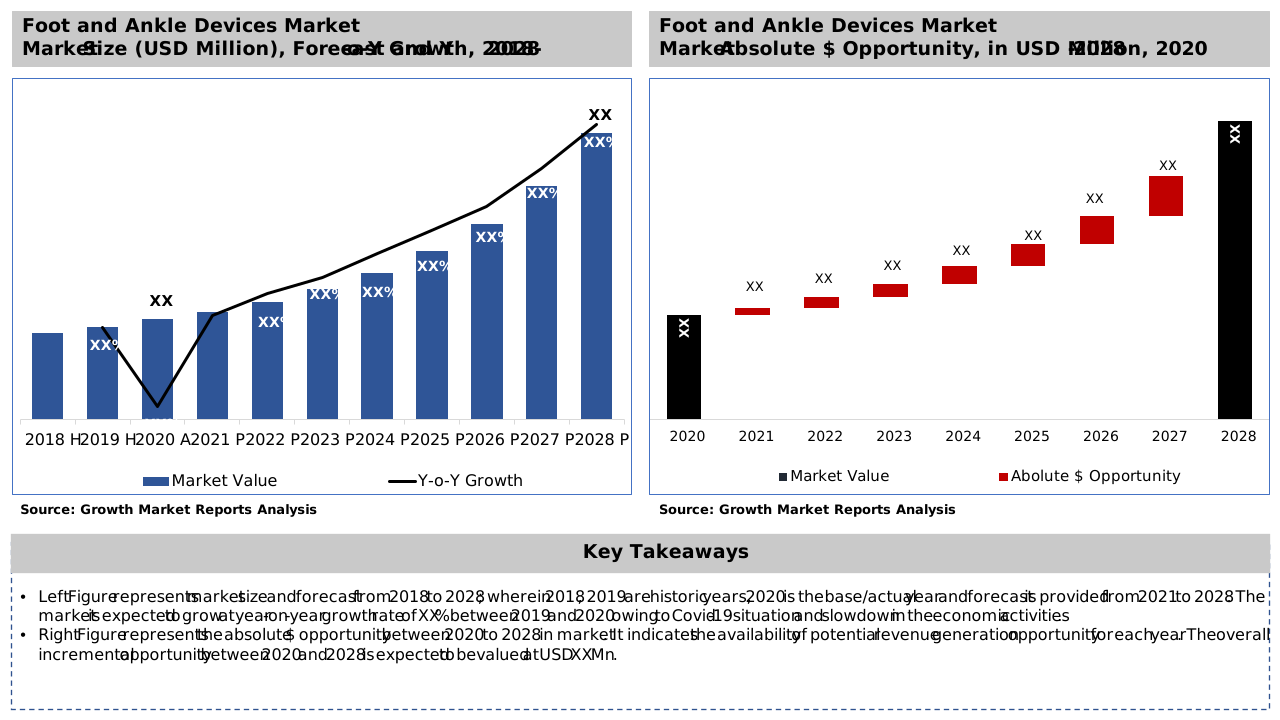
According to our latest research, the global Foot and Ankle Devices market size reached USD 5.8 billion in 2024, demonstrating robust momentum driven by technological advancements and the rising prevalence of musculoskeletal disorders. The market is projected to expand at a CAGR of 7.1% from 2025 to 2033, reaching a forecasted value of USD 10.7 billion by 2033. This growth is primarily fueled by the increasing incidence of sports injuries, the aging population, and the rapid adoption of minimally invasive surgical techniques worldwide. As per the latest research, the market continues to benefit from ongoing product innovations and an expanding patient pool requiring foot and ankle interventions.

The growth of the Foot and Ankle Devices market is strongly influenced by the rising prevalence of chronic conditions such as diabetes and obesity, which are known risk factors for foot and ankle complications. As the global population ages, there is an increase in degenerative bone diseases like osteoarthritis and rheumatoid arthritis, further driving demand for advanced orthopedic implants and bracing devices. In addition, the growing trend of active lifestyles and participation in high-impact sports has led to a notable rise in traumatic injuries and fractures, necessitating effective surgical and non-surgical interventions. This confluence of factors has created a substantial and sustained demand for innovative foot and ankle devices across various healthcare settings.

Another significant driver for the market is the continuous evolution of device technology. Manufacturers are investing heavily in research and development to introduce products that offer improved biocompatibility, enhanced durability, and superior patient outcomes. The integration of smart materials, 3D printing, and customizable implants has revolutionized the treatment landscape, allowing for more personalized and minimally invasive procedures. Furthermore, regulatory approvals for novel devices and the growing acceptance of outpatient surgical procedures have expanded the accessibility of these solutions, supporting the marketÂ’s upward trajectory. The focus on patient-centric care, coupled with increasing reimbursement coverage for advanced devices, is expected to further accelerate market penetration.

Healthcare infrastructure improvements, particularly in emerging economies, have also contributed to the expansion of the Foot and Ankle Devices market. Governments and private players are increasingly investing in modernizing hospitals and ambulatory surgical centers, thus enabling broader adoption of advanced orthopedic solutions. The rise in medical tourism, especially in regions like Asia Pacific and Latin America, is facilitating access to high-quality foot and ankle care at competitive costs. However, the market is not without challenges, including the high cost of advanced implants and the need for skilled surgeons. Nevertheless, ongoing educational initiatives and collaborative efforts between industry stakeholders are helping to address these barriers and enhance market growth.

Ankle Replacement Implants have emerged as a transformative solution in the realm of orthopedic care, particularly for patients suffering from severe ankle arthritis and other degenerative joint conditions. These implants are designed to mimic the natural movement of the ankle, providing patients with improved mobility and reduced pain. The development of advanced materials and design innovations has significantly enhanced the durability and functionality of these implants, making them a viable option for younger, more active patients as well. As the demand for ankle replacement procedures continues to rise, driven by an aging population and increasing awareness of treatment options, manufacturers are focusing on refining implant designs to offer better anatomical fit and longer-lasting results. This focus on innovation is crucial in addressing the diverse needs of patients and ensuring successful surgical outcomes.

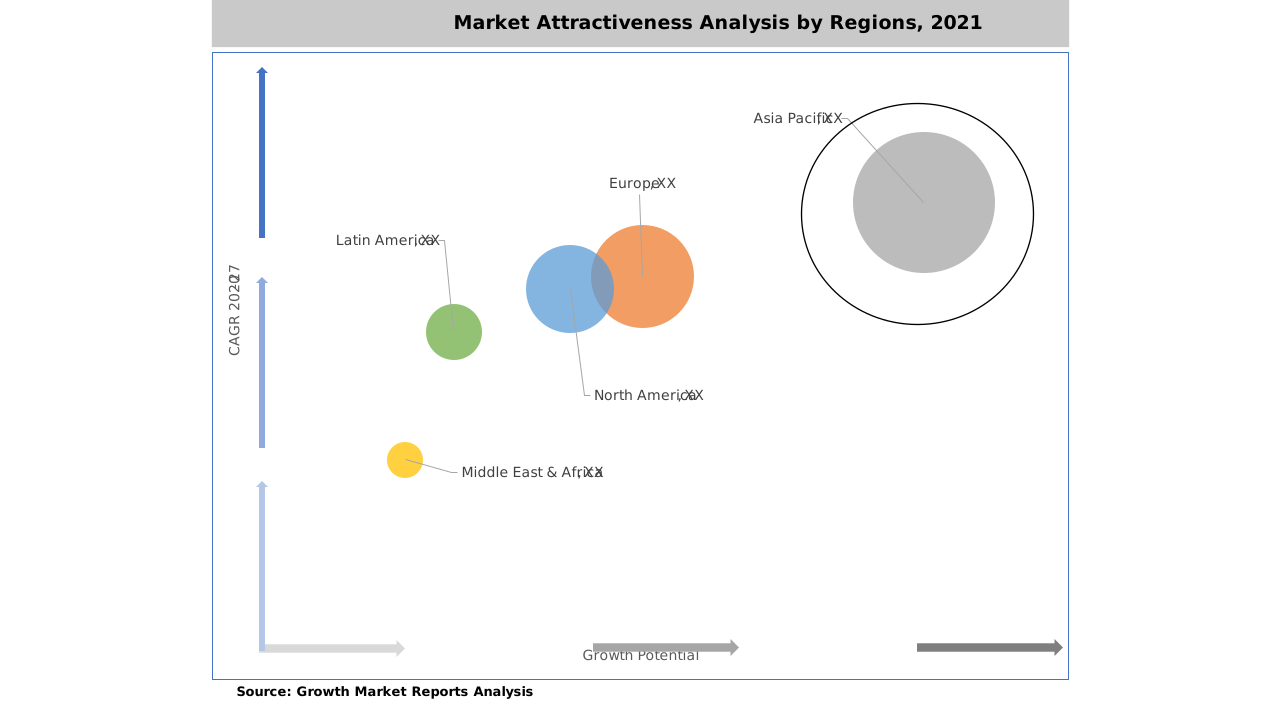
Regionally, North America continues to dominate the global landscape, accounting for the largest share of the Foot and Ankle Devices market in 2024, followed closely by Europe and Asia Pacific. The presence of leading device manufacturers, high healthcare expenditure, and favorable reimbursement policies have cemented North AmericaÂ’s leadership position. Meanwhile, Asia Pacific is witnessing the fastest growth, driven by rising disposable incomes, increased awareness of orthopedic health, and rapid urbanization. Europe maintains a strong foothold due to its well-established healthcare systems and ongoing investments in orthopedic research. As regional dynamics evolve, market participants are increasingly focusing on strategic partnerships and localization efforts to capture emerging opportunities.

Global Foot and Ankle Devices Industry Outlook

Product Type Analysis

The Product Type segment of the Foot and Ankle Devices market encompasses orthopedic implants and devices, bracing and support devices, prostheses, and other specialized products. Orthopedic implants and devices, including plates, screws, and fixation systems, represent the largest sub-segment, driven by their critical role in trauma management and reconstructive surgeries. These devices are integral for stabilizing fractures, correcting deformities, and facilitating bone healing. The increasing adoption of minimally invasive techniques and the development of bioresorbable materials have enhanced the safety and efficacy of these implants, making them the preferred choice among surgeons and patients alike. Furthermore, the growing elderly population and rising incidence of osteoporosis-related fractures continue to propel demand for orthopedic implants globally.

Bracing and support devices constitute another significant sub-segment, addressing the needs of patients with mild to moderate musculoskeletal conditions, post-operative care, and injury prevention. These devices are widely used for conditions like plantar fasciitis, Achilles tendonitis, and ligament injuries. The market for bracing and support devices is characterized by continuous innovation, with manufacturers introducing lightweight, breathable, and ergonomic designs that enhance patient comfort and compliance. The increasing focus on non-surgical management of foot and ankle disorders, coupled with growing awareness about preventive care, has contributed to the steady growth of this sub-segment. Additionally, the shift towards home-based rehabilitation and telemedicine solutions is further boosting the adoption of bracing and support devices.

The prostheses sub-segment addresses the needs of patients requiring partial or total foot and ankle replacements due to trauma, congenital anomalies, or degenerative diseases. Technological advancements in prosthetic design, including the use of advanced polymers and customizable components, have significantly improved functional outcomes and patient satisfaction. The demand for prostheses is rising in tandem with the increasing number of amputations resulting from diabetes-related complications and severe injuries. Manufacturers are focusing on developing lightweight, durable, and anatomically compatible prosthetic solutions to cater to the diverse needs of patients. The growing emphasis on improving quality of life and mobility for amputees is expected to drive continued innovation and market expansion in this segment.

Other specialized products in the Foot and Ankle Devices market include wound care devices, bone graft substitutes, and external fixation systems. These products play a crucial role in supporting complex surgical procedures and enhancing post-operative recovery. The rising incidence of chronic wounds, particularly among diabetic patients, has increased the demand for advanced wound care solutions. Bone graft substitutes, on the other hand, are gaining traction as effective alternatives to autografts and allografts, reducing the risk of complications and improving surgical outcomes. The integration of biologics and regenerative medicine approaches is further expanding the scope of this segment, offering new avenues for market growth.

Report Scope

Attributes Details
Report Title Foot and Ankle Devices Market Research Report 2033
By Product Type Orthopedic Implants and Devices, Bracing and Support Devices, Prostheses, Others
By Application Trauma and Fractures, Osteoarthritis, Rheumatoid Arthritis, Hammertoe, Others
By End-User Hospitals, Ambulatory Surgical Centers, Orthopedic Clinics, Others
Regions Covered North America, Europe, APAC, Latin America, MEA
Base Year 2024
Historic Data 2018-2023
Forecast Period 2025-2033
Number of Pages 265
Number of Tables & Figures 329
Customization Available Yes, the report can be customized as per your need.

Application Analysis

The Application segment of the Foot and Ankle Devices market is broadly categorized into trauma and fractures, osteoarthritis, rheumatoid arthritis, hammertoe, and other conditions. Trauma and fractures represent the largest application area, accounting for a substantial share of device utilization. The rising incidence of road accidents, sports injuries, and occupational hazards has led to an increased demand for surgical and non-surgical interventions to restore mobility and function. Advanced fixation devices and minimally invasive techniques have revolutionized trauma care, enabling faster recovery and reduced hospital stays. The focus on early intervention and comprehensive rehabilitation is further driving the adoption of innovative foot and ankle devices in trauma management.

Osteoarthritis is a major driver of the Foot and Ankle Devices market, particularly among the aging population. The progressive nature of osteoarthritis leads to joint degeneration, pain, and reduced mobility, necessitating the use of implants, bracing devices, and prosthetic solutions. The growing prevalence of obesity and sedentary lifestyles has contributed to the rising incidence of osteoarthritis, increasing the demand for effective treatment options. Manufacturers are responding by developing next-generation implants and supportive devices that offer enhanced durability, biocompatibility, and patient comfort. The emphasis on early diagnosis and personalized treatment plans is expected to further stimulate market growth in this application segment.

Rheumatoid arthritis, an autoimmune disorder affecting the joints, is another significant application area for foot and ankle devices. Patients with rheumatoid arthritis often experience severe pain, deformities, and functional limitations, requiring surgical interventions and long-term management. The availability of advanced implants, joint replacement devices, and supportive orthotics has improved clinical outcomes and quality of life for these patients. The increasing awareness of early intervention strategies and the expanding range of therapeutic options are driving the adoption of foot and ankle devices in rheumatoid arthritis care. Collaborative efforts between rheumatologists, orthopedic surgeons, and device manufacturers are further enhancing the standard of care in this segment.

Hammertoe and other deformities, such as bunions and flatfoot, represent additional application areas with significant growth potential. The rising prevalence of these conditions, particularly among older adults and individuals with diabetes, has created a sustained demand for corrective devices and minimally invasive surgical solutions. The development of customizable implants and patient-specific devices is enabling more precise and effective correction of deformities, reducing the risk of recurrence and improving patient satisfaction. The focus on early intervention, preventive care, and patient education is expected to drive continued innovation and market expansion in this segment.

End-User Analysis

The End-User segment of the Foot and Ankle Devices market is dominated by hospitals, which account for the largest share of device utilization. Hospitals serve as primary centers for trauma care, surgical interventions, and complex reconstructive procedures, necessitating a wide range of advanced foot and ankle devices. The presence of skilled orthopedic surgeons, state-of-the-art infrastructure, and comprehensive rehabilitation services has positioned hospitals as the preferred choice for both patients and healthcare providers. The increasing adoption of minimally invasive techniques and the integration of digital health technologies are further enhancing the efficiency and outcomes of foot and ankle procedures in hospital settings.

Ambulatory surgical centers (ASCs) represent a rapidly growing end-user segment, driven by the shift towards outpatient care and the rising demand for cost-effective surgical solutions. ASCs offer several advantages, including shorter wait times, lower infection rates, and reduced healthcare costs, making them an attractive option for elective foot and ankle procedures. The proliferation of ASCs, particularly in developed markets, is facilitating broader access to advanced orthopedic care and supporting the adoption of innovative devices. Manufacturers are increasingly collaborating with ASCs to provide tailored solutions and training programs, further strengthening their market presence in this segment.

Orthopedic clinics play a pivotal role in the diagnosis, treatment, and long-term management of foot and ankle disorders. These clinics are equipped with specialized expertise and resources to offer personalized care, ranging from conservative management to surgical interventions. The growing focus on preventive care, patient education, and early intervention is driving the demand for advanced diagnostic and therapeutic devices in orthopedic clinics. The integration of telemedicine and remote monitoring technologies is further enhancing the reach and impact of these clinics, enabling timely and effective management of foot and ankle conditions.

Other end-users, including rehabilitation centers, physiotherapy clinics, and home care settings, are also contributing to the growth of the Foot and Ankle Devices market. The increasing emphasis on post-operative rehabilitation, functional restoration, and long-term care is driving the adoption of supportive devices and assistive technologies in these settings. The shift towards patient-centric care models and the growing availability of home-based rehabilitation solutions are expected to further expand the market reach and improve patient outcomes across diverse end-user segments.

Opportunities & Threats

The Foot and Ankle Devices market presents a wealth of opportunities for stakeholders, driven by the continuous evolution of device technology and the expanding patient pool. The integration of digital health solutions, such as wearable sensors and remote monitoring devices, is opening new avenues for personalized care and real-time patient engagement. The adoption of 3D printing and advanced materials is enabling the development of customized implants and prostheses, improving surgical precision and patient outcomes. Additionally, the growing focus on value-based care and outcome-driven reimbursement models is incentivizing the adoption of innovative devices that deliver superior clinical results. Strategic partnerships between device manufacturers, healthcare providers, and research institutions are further accelerating the pace of innovation and market expansion.

Emerging markets offer significant growth potential for the Foot and Ankle Devices market, driven by rising healthcare expenditures, improving infrastructure, and increasing awareness of orthopedic health. Governments and private players are investing in capacity building, training, and technology transfer to enhance the availability and affordability of advanced foot and ankle care. The rise in medical tourism, particularly in Asia Pacific and Latin America, is facilitating access to high-quality devices and specialized expertise at competitive costs. Furthermore, the increasing prevalence of chronic diseases and the growing emphasis on early intervention and preventive care are expected to drive sustained demand for foot and ankle devices in these regions. Market participants that can effectively navigate regulatory challenges and adapt their offerings to local needs are well-positioned to capitalize on these opportunities.

Despite the positive outlook, the Foot and Ankle Devices market faces several restraining factors, including the high cost of advanced implants and the need for skilled surgical expertise. The complex regulatory landscape and lengthy approval processes can delay product launches and increase development costs. Additionally, the risk of post-operative complications, implant failures, and device recalls can impact patient trust and market adoption. Reimbursement challenges and pricing pressures, particularly in cost-sensitive markets, may also limit the uptake of premium devices. Addressing these challenges requires ongoing investment in research and development, robust clinical evidence, and collaborative efforts to enhance patient access and affordability.

Regional Outlook

North America continues to lead the Foot and Ankle Devices market, with a market size of USD 2.3 billion in 2024, accounting for nearly 40% of the global share. The regionÂ’s dominance is attributed to the presence of leading device manufacturers, high healthcare expenditure, and favorable reimbursement policies. The United States, in particular, is a major contributor, driven by a high prevalence of sports injuries, advanced healthcare infrastructure, and strong focus on research and development. Canada also plays a significant role, benefiting from government initiatives to improve orthopedic care and expand access to advanced devices. The North American market is expected to maintain steady growth, supported by ongoing product innovations and increasing adoption of minimally invasive procedures.

Europe holds the second-largest share in the Foot and Ankle Devices market, with a market size of USD 1.6 billion in 2024. The regionÂ’s well-established healthcare systems, robust regulatory frameworks, and strong emphasis on clinical research have fostered the adoption of advanced foot and ankle devices. Key markets such as Germany, France, and the United Kingdom are at the forefront of innovation, with a focus on personalized care and early intervention. The European market is projected to grow at a CAGR of 6.5% through 2033, driven by rising healthcare investments, increasing awareness of musculoskeletal health, and the growing prevalence of chronic conditions. Collaborations between academic institutions, healthcare providers, and industry players are further enhancing the regionÂ’s competitive edge.

Asia Pacific is emerging as the fastest-growing region in the Foot and Ankle Devices market, with a market size of USD 1.1 billion in 2024 and a projected CAGR of 8.4% through 2033. The regionÂ’s growth is fueled by rising disposable incomes, rapid urbanization, and increasing awareness of orthopedic health. Countries such as China, India, and Japan are witnessing significant investments in healthcare infrastructure, expanding access to advanced surgical solutions and specialized expertise. The rise in medical tourism, particularly in Southeast Asia, is further boosting demand for high-quality foot and ankle devices. Market participants are increasingly focusing on localization, strategic partnerships, and capacity building to capture emerging opportunities in the region. Latin America and the Middle East & Africa, though smaller in market size, are also experiencing steady growth, driven by improving healthcare access and rising demand for orthopedic care.

Foot and Ankle Devices Market Statistics

Competitor Outlook

The competitive landscape of the Foot and Ankle Devices market is characterized by the presence of several global and regional players, each striving to enhance their market share through innovation, strategic partnerships, and geographic expansion. Leading companies are investing heavily in research and development to introduce next-generation devices that offer improved performance, safety, and patient outcomes. The market is witnessing a trend towards consolidation, with larger players acquiring smaller firms to strengthen their product portfolios and expand their global footprint. Collaborative efforts between device manufacturers, healthcare providers, and academic institutions are further accelerating the pace of innovation and market penetration.

Product differentiation and technological innovation remain key strategies for market participants. Companies are focusing on developing customizable implants, smart bracing devices, and advanced prosthetic solutions that cater to the diverse needs of patients and healthcare providers. The integration of digital health technologies, such as wearable sensors and remote monitoring systems, is enabling more personalized and data-driven care. Regulatory compliance and robust clinical evidence are critical success factors, as companies seek to gain approval for new devices and expand their indications. The ability to navigate complex regulatory environments and adapt to evolving reimbursement policies is increasingly important for sustaining competitive advantage.

Geographic expansion is another major focus area for leading companies in the Foot and Ankle Devices market. Firms are targeting high-growth regions such as Asia Pacific and Latin America through strategic partnerships, joint ventures, and localization initiatives. The emphasis on capacity building, training, and education is helping to enhance market access and adoption in emerging markets. Additionally, companies are leveraging digital marketing and telemedicine platforms to reach a broader patient population and provide remote support and training to healthcare professionals. The shift towards value-based care and outcome-driven reimbursement models is further shaping competitive strategies, with a focus on delivering superior clinical results and patient satisfaction.

Major players in the Foot and Ankle Devices market include Stryker Corporation, Zimmer Biomet Holdings, Inc., Smith & Nephew plc, DePuy Synthes (Johnson & Johnson), Wright Medical Group N.V. (now part of Stryker), Össur, Arthrex, Inc., and Integra LifeSciences Holdings Corporation. Stryker Corporation is renowned for its extensive portfolio of orthopedic implants and innovative surgical solutions, while Zimmer Biomet is recognized for its focus on personalized care and advanced implant technologies. Smith & Nephew and DePuy Synthes are leaders in trauma and reconstructive devices, offering comprehensive solutions for complex foot and ankle conditions. Wright Medical Group, now integrated into Stryker, has a strong presence in extremities and biologics, while Össur specializes in advanced bracing and prosthetic solutions. Arthrex and Integra LifeSciences are known for their commitment to innovation and education, supporting healthcare professionals with state-of-the-art products and training programs. Collectively, these companies are driving the evolution of the Foot and Ankle Devices market, shaping the future of orthopedic care worldwide.

Key Players

  • Stryker Corporation
  • Zimmer Biomet Holdings, Inc.
  • Smith & Nephew plc
  • DePuy Synthes (Johnson & Johnson)
  • Wright Medical Group N.V. (now part of Stryker)
  • Arthrex, Inc.
  • Integra LifeSciences Holdings Corporation
  • Össur hf.
  • Acumed LLC
  • Orthofix Medical Inc.
  • Paragon 28, Inc.
  • Medtronic plc
  • B. Braun Melsungen AG
  • Globus Medical, Inc.
  • Exactech, Inc.
  • Biomet, Inc. (now part of Zimmer Biomet)
  • Vilex in Tennessee, Inc.
  • Enovis Corporation (formerly DJO Global)
  • BioPro, Inc.
  • Extremity Medical, LLC
Foot and Ankle Devices Market Overview

Segments

The Foot and Ankle Devices market has been segmented on the basis of

Product Type

  • Orthopedic Implants and Devices
  • Bracing and Support Devices
  • Prostheses
  • Others

Application

  • Trauma and Fractures
  • Osteoarthritis
  • Rheumatoid Arthritis
  • Hammertoe
  • Others

End-User

  • Hospitals
  • Ambulatory Surgical Centers
  • Orthopedic Clinics
  • Others

Competitive Landscape

Key players competing in the foot and ankle devices market include Smith & Nephew, Arthrex, Acumed, Depuy Synthes, and Integra Lifesiences Corporation.

Some of these players are using several market strategies such as mergers, acquisitions, partnerships, collaborations, capacity expansion, and product launches to increase their market shares.
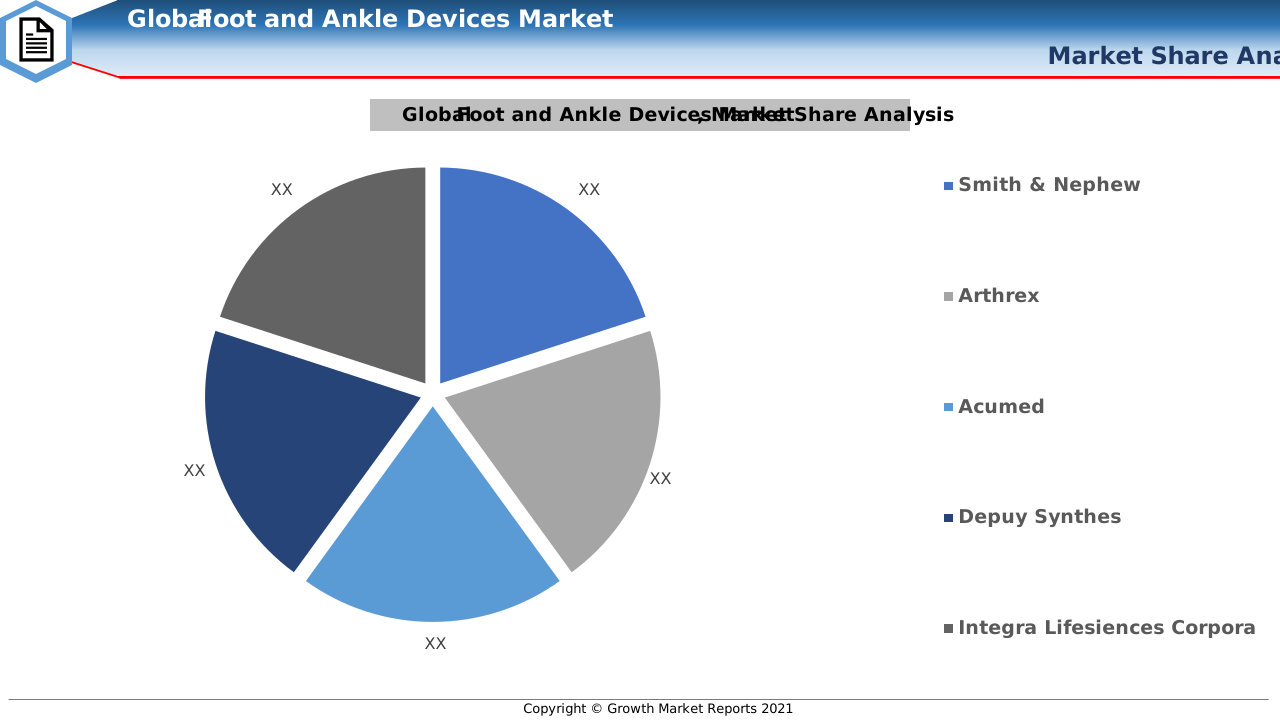

Foot and Ankle Devices Market by key Players

Frequently Asked Questions

The market is developing advanced implants, bracing devices, prostheses, and wound care solutions tailored for patients with diabetes, osteoarthritis, and rheumatoid arthritis, focusing on early intervention, improved outcomes, and enhanced quality of life.

Key players include Stryker Corporation, Zimmer Biomet Holdings, Smith & Nephew, DePuy Synthes (Johnson & Johnson), Wright Medical Group (Stryker), Arthrex, Integra LifeSciences, Össur, Acumed, Orthofix Medical, Paragon 28, Medtronic, B. Braun, Globus Medical, Exactech, and others.

Challenges include high costs of advanced implants, need for skilled surgeons, complex regulatory requirements, reimbursement issues, and risks of post-operative complications or device recalls.

Innovations include the use of smart materials, 3D printing, customizable implants, digital health solutions like wearable sensors, and minimally invasive surgical techniques.

North America holds the largest market share, followed by Europe and Asia Pacific. Asia Pacific is the fastest-growing region due to rising healthcare investments, urbanization, and medical tourism.

Hospitals are the largest end-users, followed by ambulatory surgical centers, orthopedic clinics, rehabilitation centers, physiotherapy clinics, and home care settings.

The main application areas include trauma and fractures, osteoarthritis, rheumatoid arthritis, hammertoe, and other foot and ankle deformities.

Orthopedic implants and devices, such as plates, screws, and fixation systems, represent the largest product segment, followed by bracing and support devices, prostheses, and specialized products like wound care devices and bone graft substitutes.

Key growth drivers include technological advancements, rising prevalence of musculoskeletal disorders, increasing sports injuries, aging population, and the adoption of minimally invasive surgical techniques.

The global Foot and Ankle Devices market reached USD 5.8 billion in 2024 and is projected to grow at a CAGR of 7.1% from 2025 to 2033, reaching USD 10.7 billion by 2033.

Table Of Content

Chapter 1 Executive Summary
Chapter 2 Assumptions and Acronyms Used
Chapter 3 Research Methodology
Chapter 4 Foot and Ankle Devices Market Overview
   4.1 Introduction
      4.1.1 Market Taxonomy
      4.1.2 Market Definition
      4.1.3 Macro-Economic Factors Impacting the Market Growth
   4.2 Foot and Ankle Devices Market Dynamics
      4.2.1 Market Drivers
      4.2.2 Market Restraints
      4.2.3 Market Opportunity
   4.3 Foot and Ankle Devices Market - Supply Chain Analysis
      4.3.1 List of Key Suppliers
      4.3.2 List of Key Distributors
      4.3.3 List of Key Consumers
   4.4 Key Forces Shaping the Foot and Ankle Devices Market
      4.4.1 Bargaining Power of Suppliers
      4.4.2 Bargaining Power of Buyers
      4.4.3 Threat of Substitution
      4.4.4 Threat of New Entrants
      4.4.5 Competitive Rivalry
   4.5 Global Foot and Ankle Devices Market Size & Forecast, 2023-2032
      4.5.1 Foot and Ankle Devices Market Size and Y-o-Y Growth
      4.5.2 Foot and Ankle Devices Market Absolute $ Opportunity

Chapter 5 Global Foot and Ankle Devices Market Analysis and Forecast By Product Type
   5.1 Introduction
      5.1.1 Key Market Trends & Growth Opportunities By Product Type
      5.1.2 Basis Point Share (BPS) Analysis By Product Type
      5.1.3 Absolute $ Opportunity Assessment By Product Type
   5.2 Foot and Ankle Devices Market Size Forecast By Product Type
      5.2.1 Orthopedic Implants and Devices
      5.2.2 Bracing and Support Devices
      5.2.3 Prostheses
      5.2.4 Others
   5.3 Market Attractiveness Analysis By Product Type

Chapter 6 Global Foot and Ankle Devices Market Analysis and Forecast By Application
   6.1 Introduction
      6.1.1 Key Market Trends & Growth Opportunities By Application
      6.1.2 Basis Point Share (BPS) Analysis By Application
      6.1.3 Absolute $ Opportunity Assessment By Application
   6.2 Foot and Ankle Devices Market Size Forecast By Application
      6.2.1 Trauma and Fractures
      6.2.2 Osteoarthritis
      6.2.3 Rheumatoid Arthritis
      6.2.4 Hammertoe
      6.2.5 Others
   6.3 Market Attractiveness Analysis By Application

Chapter 7 Global Foot and Ankle Devices Market Analysis and Forecast By End-User
   7.1 Introduction
      7.1.1 Key Market Trends & Growth Opportunities By End-User
      7.1.2 Basis Point Share (BPS) Analysis By End-User
      7.1.3 Absolute $ Opportunity Assessment By End-User
   7.2 Foot and Ankle Devices Market Size Forecast By End-User
      7.2.1 Hospitals
      7.2.2 Ambulatory Surgical Centers
      7.2.3 Orthopedic Clinics
      7.2.4 Others
   7.3 Market Attractiveness Analysis By End-User

Chapter 8 Global Foot and Ankle Devices Market Analysis and Forecast by Region
   8.1 Introduction
      8.1.1 Key Market Trends & Growth Opportunities By Region
      8.1.2 Basis Point Share (BPS) Analysis By Region
      8.1.3 Absolute $ Opportunity Assessment By Region
   8.2 Foot and Ankle Devices Market Size Forecast By Region
      8.2.1 North America
      8.2.2 Europe
      8.2.3 Asia Pacific
      8.2.4 Latin America
      8.2.5 Middle East & Africa (MEA)
   8.3 Market Attractiveness Analysis By Region

Chapter 9 Coronavirus Disease (COVID-19) Impact 
   9.1 Introduction 
   9.2 Current & Future Impact Analysis 
   9.3 Economic Impact Analysis 
   9.4 Government Policies 
   9.5 Investment Scenario

Chapter 10 North America Foot and Ankle Devices Analysis and Forecast
   10.1 Introduction
   10.2 North America Foot and Ankle Devices Market Size Forecast by Country
      10.2.1 U.S.
      10.2.2 Canada
   10.3 Basis Point Share (BPS) Analysis by Country
   10.4 Absolute $ Opportunity Assessment by Country
   10.5 Market Attractiveness Analysis by Country
   10.6 North America Foot and Ankle Devices Market Size Forecast By Product Type
      10.6.1 Orthopedic Implants and Devices
      10.6.2 Bracing and Support Devices
      10.6.3 Prostheses
      10.6.4 Others
   10.7 Basis Point Share (BPS) Analysis By Product Type 
   10.8 Absolute $ Opportunity Assessment By Product Type 
   10.9 Market Attractiveness Analysis By Product Type
   10.10 North America Foot and Ankle Devices Market Size Forecast By Application
      10.10.1 Trauma and Fractures
      10.10.2 Osteoarthritis
      10.10.3 Rheumatoid Arthritis
      10.10.4 Hammertoe
      10.10.5 Others
   10.11 Basis Point Share (BPS) Analysis By Application 
   10.12 Absolute $ Opportunity Assessment By Application 
   10.13 Market Attractiveness Analysis By Application
   10.14 North America Foot and Ankle Devices Market Size Forecast By End-User
      10.14.1 Hospitals
      10.14.2 Ambulatory Surgical Centers
      10.14.3 Orthopedic Clinics
      10.14.4 Others
   10.15 Basis Point Share (BPS) Analysis By End-User 
   10.16 Absolute $ Opportunity Assessment By End-User 
   10.17 Market Attractiveness Analysis By End-User

Chapter 11 Europe Foot and Ankle Devices Analysis and Forecast
   11.1 Introduction
   11.2 Europe Foot and Ankle Devices Market Size Forecast by Country
      11.2.1 Germany
      11.2.2 France
      11.2.3 Italy
      11.2.4 U.K.
      11.2.5 Spain
      11.2.6 Russia
      11.2.7 Rest of Europe
   11.3 Basis Point Share (BPS) Analysis by Country
   11.4 Absolute $ Opportunity Assessment by Country
   11.5 Market Attractiveness Analysis by Country
   11.6 Europe Foot and Ankle Devices Market Size Forecast By Product Type
      11.6.1 Orthopedic Implants and Devices
      11.6.2 Bracing and Support Devices
      11.6.3 Prostheses
      11.6.4 Others
   11.7 Basis Point Share (BPS) Analysis By Product Type 
   11.8 Absolute $ Opportunity Assessment By Product Type 
   11.9 Market Attractiveness Analysis By Product Type
   11.10 Europe Foot and Ankle Devices Market Size Forecast By Application
      11.10.1 Trauma and Fractures
      11.10.2 Osteoarthritis
      11.10.3 Rheumatoid Arthritis
      11.10.4 Hammertoe
      11.10.5 Others
   11.11 Basis Point Share (BPS) Analysis By Application 
   11.12 Absolute $ Opportunity Assessment By Application 
   11.13 Market Attractiveness Analysis By Application
   11.14 Europe Foot and Ankle Devices Market Size Forecast By End-User
      11.14.1 Hospitals
      11.14.2 Ambulatory Surgical Centers
      11.14.3 Orthopedic Clinics
      11.14.4 Others
   11.15 Basis Point Share (BPS) Analysis By End-User 
   11.16 Absolute $ Opportunity Assessment By End-User 
   11.17 Market Attractiveness Analysis By End-User

Chapter 12 Asia Pacific Foot and Ankle Devices Analysis and Forecast
   12.1 Introduction
   12.2 Asia Pacific Foot and Ankle Devices Market Size Forecast by Country
      12.2.1 China
      12.2.2 Japan
      12.2.3 South Korea
      12.2.4 India
      12.2.5 Australia
      12.2.6 South East Asia (SEA)
      12.2.7 Rest of Asia Pacific (APAC)
   12.3 Basis Point Share (BPS) Analysis by Country
   12.4 Absolute $ Opportunity Assessment by Country
   12.5 Market Attractiveness Analysis by Country
   12.6 Asia Pacific Foot and Ankle Devices Market Size Forecast By Product Type
      12.6.1 Orthopedic Implants and Devices
      12.6.2 Bracing and Support Devices
      12.6.3 Prostheses
      12.6.4 Others
   12.7 Basis Point Share (BPS) Analysis By Product Type 
   12.8 Absolute $ Opportunity Assessment By Product Type 
   12.9 Market Attractiveness Analysis By Product Type
   12.10 Asia Pacific Foot and Ankle Devices Market Size Forecast By Application
      12.10.1 Trauma and Fractures
      12.10.2 Osteoarthritis
      12.10.3 Rheumatoid Arthritis
      12.10.4 Hammertoe
      12.10.5 Others
   12.11 Basis Point Share (BPS) Analysis By Application 
   12.12 Absolute $ Opportunity Assessment By Application 
   12.13 Market Attractiveness Analysis By Application
   12.14 Asia Pacific Foot and Ankle Devices Market Size Forecast By End-User
      12.14.1 Hospitals
      12.14.2 Ambulatory Surgical Centers
      12.14.3 Orthopedic Clinics
      12.14.4 Others
   12.15 Basis Point Share (BPS) Analysis By End-User 
   12.16 Absolute $ Opportunity Assessment By End-User 
   12.17 Market Attractiveness Analysis By End-User

Chapter 13 Latin America Foot and Ankle Devices Analysis and Forecast
   13.1 Introduction
   13.2 Latin America Foot and Ankle Devices Market Size Forecast by Country
      13.2.1 Brazil
      13.2.2 Mexico
      13.2.3 Rest of Latin America (LATAM)
   13.3 Basis Point Share (BPS) Analysis by Country
   13.4 Absolute $ Opportunity Assessment by Country
   13.5 Market Attractiveness Analysis by Country
   13.6 Latin America Foot and Ankle Devices Market Size Forecast By Product Type
      13.6.1 Orthopedic Implants and Devices
      13.6.2 Bracing and Support Devices
      13.6.3 Prostheses
      13.6.4 Others
   13.7 Basis Point Share (BPS) Analysis By Product Type 
   13.8 Absolute $ Opportunity Assessment By Product Type 
   13.9 Market Attractiveness Analysis By Product Type
   13.10 Latin America Foot and Ankle Devices Market Size Forecast By Application
      13.10.1 Trauma and Fractures
      13.10.2 Osteoarthritis
      13.10.3 Rheumatoid Arthritis
      13.10.4 Hammertoe
      13.10.5 Others
   13.11 Basis Point Share (BPS) Analysis By Application 
   13.12 Absolute $ Opportunity Assessment By Application 
   13.13 Market Attractiveness Analysis By Application
   13.14 Latin America Foot and Ankle Devices Market Size Forecast By End-User
      13.14.1 Hospitals
      13.14.2 Ambulatory Surgical Centers
      13.14.3 Orthopedic Clinics
      13.14.4 Others
   13.15 Basis Point Share (BPS) Analysis By End-User 
   13.16 Absolute $ Opportunity Assessment By End-User 
   13.17 Market Attractiveness Analysis By End-User

Chapter 14 Middle East & Africa (MEA) Foot and Ankle Devices Analysis and Forecast
   14.1 Introduction
   14.2 Middle East & Africa (MEA) Foot and Ankle Devices Market Size Forecast by Country
      14.2.1 Saudi Arabia
      14.2.2 South Africa
      14.2.3 UAE
      14.2.4 Rest of Middle East & Africa (MEA)
   14.3 Basis Point Share (BPS) Analysis by Country
   14.4 Absolute $ Opportunity Assessment by Country
   14.5 Market Attractiveness Analysis by Country
   14.6 Middle East & Africa (MEA) Foot and Ankle Devices Market Size Forecast By Product Type
      14.6.1 Orthopedic Implants and Devices
      14.6.2 Bracing and Support Devices
      14.6.3 Prostheses
      14.6.4 Others
   14.7 Basis Point Share (BPS) Analysis By Product Type 
   14.8 Absolute $ Opportunity Assessment By Product Type 
   14.9 Market Attractiveness Analysis By Product Type
   14.10 Middle East & Africa (MEA) Foot and Ankle Devices Market Size Forecast By Application
      14.10.1 Trauma and Fractures
      14.10.2 Osteoarthritis
      14.10.3 Rheumatoid Arthritis
      14.10.4 Hammertoe
      14.10.5 Others
   14.11 Basis Point Share (BPS) Analysis By Application 
   14.12 Absolute $ Opportunity Assessment By Application 
   14.13 Market Attractiveness Analysis By Application
   14.14 Middle East & Africa (MEA) Foot and Ankle Devices Market Size Forecast By End-User
      14.14.1 Hospitals
      14.14.2 Ambulatory Surgical Centers
      14.14.3 Orthopedic Clinics
      14.14.4 Others
   14.15 Basis Point Share (BPS) Analysis By End-User 
   14.16 Absolute $ Opportunity Assessment By End-User 
   14.17 Market Attractiveness Analysis By End-User

Chapter 15 Competition Landscape 
   15.1 Foot and Ankle Devices Market: Competitive Dashboard
   15.2 Global Foot and Ankle Devices Market: Market Share Analysis, 2023
   15.3 Company Profiles (Details – Overview, Financials, Developments, Strategy) 
      15.3.1 Stryker Corporation
Zimmer Biomet Holdings, Inc.
Smith & Nephew plc
DePuy Synthes (Johnson & Johnson)
Wright Medical Group N.V. (now part of Stryker)
Arthrex, Inc.
Integra LifeSciences Holdings Corporation
Össur hf.
Acumed LLC
Orthofix Medical Inc.
Paragon 28, Inc.
Medtronic plc
B. Braun Melsungen AG
Globus Medical, Inc.
Exactech, Inc.
Biomet, Inc. (now part of Zimmer Biomet)
Vilex in Tennessee, Inc.
Enovis Corporation (formerly DJO Global)
BioPro, Inc.
Extremity Medical, LLC

Methodology

Our Clients

sinopec
Deloitte
General Mills
Siemens Healthcare
The John Holland Group
Nestle SA
Honda Motor Co. Ltd.
General Electric