Food Stabilizers Market Research Report 2033

Food Stabilizers Market Research Report 2033

Segments - by Product Type (Gums, Pectin, Gelatin, Agar, Carrageenan, Xanthan Gum, Others), by Function (Texturizing, Stabilizing, Thickening, Gelling, Others), by Application (Bakery & Confectionery, Dairy Products, Beverages, Sauces & Dressings, Meat & Poultry, Others), by Source (Plant, Animal, Microbial, Synthetic)

https://growthmarketreports.com/Anuradha
Author : Anuradha B. More
https://growthmarketreports.com/Vaibhav
Fact-checked by : Vaibhav Chandola
https://growthmarketreports.com/Shruti
Editor : Shruti Bhat

Upcoming | Report ID :FB-1462 | 4.5 Rating | 80 Reviews | 265 Pages | Format : Docx PDF

Report Description


Food Stabilizers Market Outlook

According to our latest research, the global food stabilizers market size reached USD 8.2 billion in 2024, reflecting robust demand across diverse food processing industries. The market is projected to expand at a CAGR of 4.7% from 2025 to 2033, reaching an estimated USD 12.5 billion by 2033. This healthy growth trajectory is primarily fueled by the rising need for enhanced food texture, shelf-life extension, and the surge in processed food consumption globally. As per our analysis, the food stabilizers market is experiencing a transformative phase, driven by innovation in product formulations and a shift in consumer preferences towards clean-label and natural ingredients.

One of the most significant growth factors propelling the food stabilizers market is the escalating demand for convenience and packaged foods worldwide. Urbanization, changing lifestyles, and increasing disposable incomes have led to a shift in dietary habits, with consumers seeking ready-to-eat and processed food products. Food stabilizers play a crucial role in maintaining the desired consistency, texture, and shelf-life of these products, making them indispensable for manufacturers. Additionally, the proliferation of fast-food chains and quick-service restaurants has further boosted the usage of food stabilizers, as these establishments require consistent quality and extended product stability to meet consumer expectations and regulatory standards.

Another key driver is the growing emphasis on food quality and safety among both consumers and regulatory bodies. Food stabilizers not only enhance the sensory attributes of food products but also help in maintaining product integrity during storage and transportation. This is particularly important in the dairy, bakery, and confectionery sectors, where texture and stability are critical to consumer acceptance. Moreover, advancements in food science have led to the development of multifunctional stabilizers that offer synergistic benefits, such as improved emulsification, moisture retention, and prevention of ingredient separation. These innovations are enabling manufacturers to launch new products with improved quality and longer shelf-life, further stimulating market growth.

The increasing consumer preference for natural and clean-label products is also shaping the food stabilizers market. There is a noticeable shift towards plant-based and minimally processed ingredients, driven by health-conscious consumers and stringent food labeling regulations. As a result, manufacturers are investing in research and development to create stabilizers derived from natural sources, such as gums, pectin, and agar, which align with the clean-label trend. This move towards natural ingredients not only addresses consumer concerns about synthetic additives but also opens up new market opportunities, especially in developed regions where clean-label claims strongly influence purchasing decisions.

Regionally, the Asia Pacific market is emerging as a powerhouse in the global food stabilizers landscape. The region's rapid urbanization, burgeoning middle class, and expanding food processing industry are creating significant demand for food stabilizers. Countries like China, India, and Indonesia are witnessing a surge in the consumption of processed foods, dairy products, and beverages, driving the need for effective stabilizing solutions. Furthermore, the presence of a large population, evolving dietary patterns, and increasing investments in food manufacturing infrastructure are likely to sustain the region's dominance and contribute substantially to the overall market growth during the forecast period.

In the context of the food industry, Food Bulking Agents have emerged as essential components, particularly in the development of low-calorie and high-fiber products. These agents are primarily used to increase the volume or weight of food products without significantly altering their nutritional value. This functionality is crucial for manufacturers aiming to cater to the growing demand for healthier food options, as they allow for the creation of products that are both satisfying and aligned with dietary trends. The use of food bulking agents is particularly prevalent in the production of baked goods, snacks, and processed foods, where they help maintain texture and consistency while reducing caloric content.

Global Food Stabilizers Industry Outlook

Product Type Analysis

The food stabilizers market by product type encompasses a wide array of substances, including gums, pectin, gelatin, agar, carrageenan, xanthan gum, and others. Gums, such as guar gum, locust bean gum, and acacia gum, hold a significant share due to their versatility and efficiency in providing texture, viscosity, and stability in various food applications. These hydrocolloids are widely used in bakery, dairy, and beverage segments, where they help in maintaining product consistency and preventing ingredient separation. The growing inclination towards plant-based and allergen-free ingredients has further boosted the demand for natural gums, making them a preferred choice among health-conscious consumers and manufacturers aiming for clean-label formulations.

Pectin, derived primarily from citrus fruits and apples, is another prominent product type in the food stabilizers market. Its gelling and thickening properties make it indispensable in the production of jams, jellies, fruit preparations, and confectionery items. The rising consumption of fruit-based products and the increasing popularity of low-sugar and sugar-free formulations have augmented the use of pectin, especially in developed markets. Manufacturers are also exploring new sources and extraction methods to enhance the functionality and sustainability of pectin, aligning with the broader industry trend towards natural and eco-friendly ingredients.

Gelatin, sourced from animal collagen, remains a staple in the food stabilizers market, particularly in confectionery, dairy desserts, and meat products. Its unique ability to form thermoreversible gels and provide a desirable mouthfeel has cemented its position in the industry. However, the growing demand for vegetarian and vegan alternatives is prompting manufacturers to seek plant-based substitutes such as agar and carrageenan. Agar, extracted from seaweed, and carrageenan, derived from red algae, are gaining traction due to their excellent gelling and stabilizing properties, as well as their compatibility with vegetarian and vegan diets. These plant-based stabilizers are increasingly being used in dairy alternatives, desserts, and specialty foods, reflecting the evolving consumer landscape.

Xanthan gum, produced through microbial fermentation, has witnessed substantial adoption in recent years owing to its superior thickening and stabilizing capabilities. Its ability to function effectively at low concentrations and across a wide pH and temperature range makes it ideal for a variety of food applications, including sauces, dressings, and gluten-free bakery products. The growing prevalence of gluten intolerance and celiac disease has particularly driven the demand for xanthan gum as a key ingredient in gluten-free formulations. Overall, the product type segment is characterized by a dynamic interplay between traditional and emerging stabilizers, with innovation and consumer preferences driving the adoption of new and improved solutions.

Report Scope

Attributes Details
Report Title Food Stabilizers Market Research Report 2033
By Product Type Gums, Pectin, Gelatin, Agar, Carrageenan, Xanthan Gum, Others
By Function Texturizing, Stabilizing, Thickening, Gelling, Others
By Application Bakery & Confectionery, Dairy Products, Beverages, Sauces & Dressings, Meat & Poultry, Others
By Source Plant, Animal, Microbial, Synthetic
Regions Covered North America, Europe, APAC, Latin America, MEA
Base Year 2024
Historic Data 2018-2023
Forecast Period 2025-2033
Number of Pages 265
Number of Tables & Figures 287
Customization Available Yes, the report can be customized as per your need.

Function Analysis

Food stabilizers serve multiple functions in the food industry, with texturizing, stabilizing, thickening, and gelling being the primary roles. Texturizing agents are essential for imparting the desired mouthfeel and consistency to food products, which significantly influences consumer perception and acceptance. In bakery and dairy applications, for instance, texturizing stabilizers help achieve the right crumb structure, creaminess, and smoothness, ensuring a premium sensory experience. The demand for texturizing agents is further amplified by the growing trend towards premium and artisanal food products, where texture and quality are key differentiators in a crowded market.

Stabilizing agents are crucial for maintaining the physical and chemical integrity of food products during storage, transportation, and display. They prevent undesirable changes such as phase separation, sedimentation, and crystallization, thereby extending the shelf-life and ensuring product consistency. This function is particularly important in emulsified products like salad dressings, mayonnaise, and dairy beverages, where stability is a critical quality parameter. The rising consumption of convenience and ready-to-drink products has heightened the need for effective stabilizing solutions, prompting manufacturers to invest in advanced stabilizer blends that offer superior performance under varying conditions.

Thickening agents are widely used to increase the viscosity of food products without altering their other properties. They are indispensable in applications such as soups, sauces, gravies, and desserts, where they contribute to the desired texture and mouthfeel. The growing demand for low-fat and reduced-calorie foods has further driven the adoption of thickening agents, as they help compensate for the loss of texture and body that often accompanies fat reduction. Innovations in thickening technology, including the development of multifunctional and clean-label thickeners, are enabling manufacturers to meet evolving consumer demands while maintaining product quality and appeal.

Gelling agents play a vital role in the production of structured and set products, such as jellies, gummy candies, and certain dairy desserts. They provide the necessary firmness and elasticity, allowing for the creation of a wide variety of textures and product formats. The increasing popularity of functional and fortified foods, which often require the incorporation of bioactive ingredients, has led to the development of advanced gelling agents that can encapsulate and protect sensitive compounds. This has opened up new possibilities for product innovation and differentiation in the highly competitive food industry. Overall, the function segment underscores the diverse and critical roles that food stabilizers play in ensuring the quality, safety, and appeal of modern food products.

Application Analysis

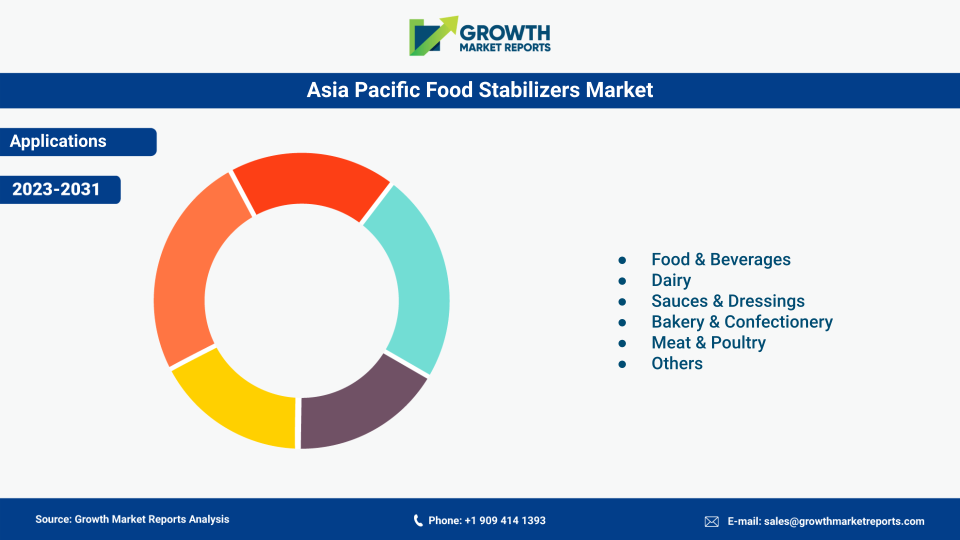
The application landscape of the food stabilizers market is broad and multifaceted, encompassing bakery and confectionery, dairy products, beverages, sauces and dressings, meat and poultry, and others. The bakery and confectionery segment represents a significant share, driven by the need for consistent texture, extended shelf-life, and improved product quality. Food stabilizers are extensively used in bread, cakes, pastries, and candies to enhance crumb structure, prevent staling, and maintain freshness. The growing demand for premium, gluten-free, and clean-label bakery products has further boosted the adoption of innovative stabilizer solutions tailored to specific application requirements.

In the dairy products segment, food stabilizers are indispensable for maintaining the texture, viscosity, and stability of products such as yogurt, cheese, ice cream, and flavored milk. They prevent syneresis (whey separation), improve mouthfeel, and ensure uniform distribution of ingredients, which is critical for consumer satisfaction. The rising consumption of dairy alternatives, such as plant-based yogurts and cheeses, has created new opportunities for stabilizer manufacturers to develop solutions compatible with non-dairy matrices. This trend is particularly pronounced in developed markets, where health and sustainability considerations are driving the shift towards plant-based diets.

The beverages segment is another key application area, with food stabilizers playing a vital role in maintaining the stability and appearance of products such as fruit juices, flavored waters, and functional drinks. They prevent sedimentation, cloudiness, and phase separation, ensuring a visually appealing and consistent product throughout its shelf-life. The increasing popularity of fortified and functional beverages, which often contain added vitamins, minerals, and bioactive compounds, has heightened the demand for advanced stabilizer systems capable of accommodating diverse ingredient profiles. This has led to the development of customized stabilizer blends that address the specific challenges associated with beverage formulation and processing.

Sauces and dressings, as well as meat and poultry products, also rely heavily on food stabilizers to achieve the desired texture, stability, and shelf-life. In sauces and dressings, stabilizers help maintain emulsion stability, prevent phase separation, and enhance pourability, while in meat and poultry products, they improve water retention, texture, and sliceability. The growing consumer demand for convenient, ready-to-use sauces and processed meats has further fueled the adoption of food stabilizers in these segments. Overall, the application segment highlights the versatility and indispensability of food stabilizers across a wide range of food categories, reflecting their critical role in modern food processing and product development.

Source Analysis

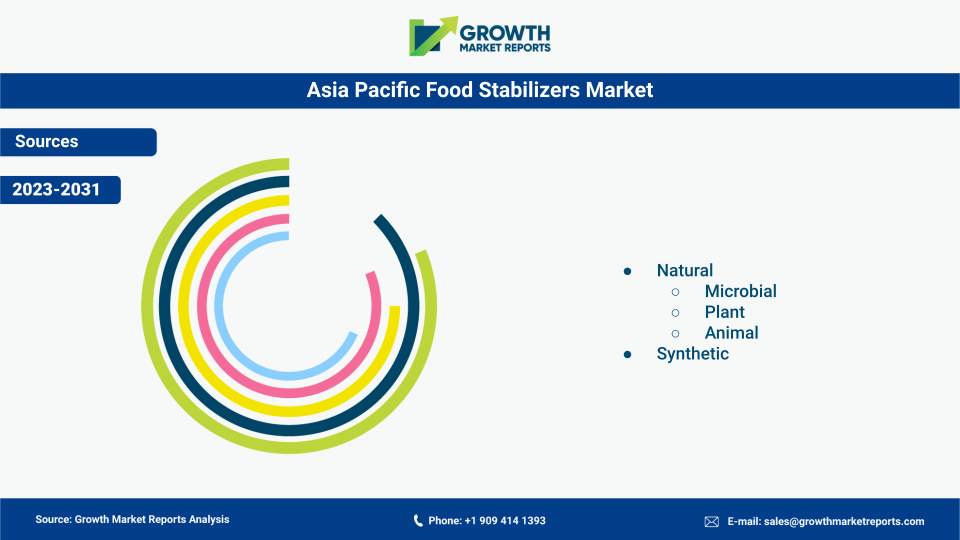
The source segment of the food stabilizers market is categorized into plant, animal, microbial, and synthetic origins. Plant-based stabilizers, such as guar gum, locust bean gum, pectin, and agar, are witnessing robust demand due to their natural origin, clean-label appeal, and compatibility with vegetarian and vegan diets. The shift towards plant-based diets and the increasing scrutiny of synthetic additives have prompted manufacturers to prioritize plant-derived stabilizers in their product formulations. This trend is particularly evident in developed markets, where consumers are increasingly seeking transparency and sustainability in their food choices.

Animal-based stabilizers, primarily gelatin, continue to hold a significant position in the market, especially in confectionery, dairy, and meat applications. Gelatin's unique functional properties, including its ability to form thermoreversible gels and provide a desirable mouthfeel, make it irreplaceable in certain products. However, concerns regarding animal welfare, dietary restrictions, and the rise of vegetarian and vegan lifestyles are gradually shifting the focus towards plant and microbial alternatives. This has spurred research and innovation in the development of animal-free stabilizers that can replicate the functional attributes of gelatin and other animal-derived ingredients.

Microbial-derived stabilizers, such as xanthan gum and gellan gum, are gaining prominence due to their high efficiency, versatility, and consistent quality. Produced through controlled fermentation processes, these stabilizers offer several advantages, including stability across a wide pH and temperature range, and compatibility with a variety of food matrices. The growing demand for gluten-free and specialty food products has further boosted the adoption of microbial stabilizers, as they provide the necessary functionality without compromising on quality or safety. Additionally, advancements in microbial fermentation technology are enabling the production of novel stabilizers with enhanced performance and sustainability profiles.

Synthetic stabilizers, although facing increasing scrutiny, continue to be used in certain food applications where specific functional properties are required. These include modified starches, cellulose derivatives, and other chemically modified compounds that offer precise control over texture, viscosity, and stability. However, the rising demand for natural and clean-label ingredients is gradually phasing out synthetic stabilizers in favor of plant and microbial alternatives. Manufacturers are responding to this shift by reformulating their products and investing in the development of natural stabilizer solutions that meet both regulatory requirements and consumer expectations. Overall, the source segment reflects the evolving landscape of the food stabilizers market, with a clear trend towards sustainability, transparency, and innovation.

Opportunities & Threats

The food stabilizers market presents a plethora of opportunities for growth and innovation. One of the most promising areas is the development of multifunctional and clean-label stabilizers that cater to the evolving needs of health-conscious consumers. As consumers become more discerning about the ingredients in their food, there is a growing demand for stabilizers derived from natural sources, such as plant and microbial origins. This has opened up new avenues for research and development, with manufacturers exploring novel extraction methods, sustainable sourcing, and advanced formulation techniques to create high-performance stabilizers with minimal processing and additive content. The rise of plant-based and functional foods further amplifies this opportunity, as these products often require specialized stabilizers to achieve the desired texture, stability, and sensory attributes.

Another significant opportunity lies in the expansion of the food stabilizers market in emerging economies, particularly in Asia Pacific and Latin America. Rapid urbanization, rising disposable incomes, and the proliferation of modern retail channels are driving the demand for processed and convenience foods in these regions. This, in turn, is creating a substantial market for food stabilizers, as manufacturers seek to enhance product quality, extend shelf-life, and meet the diverse preferences of a growing consumer base. Strategic collaborations, investments in local production facilities, and the introduction of region-specific product variants are key strategies that can help companies capitalize on the untapped potential of these high-growth markets.

Despite the numerous opportunities, the food stabilizers market faces certain restraining factors that could hinder its growth. One of the primary challenges is the stringent regulatory environment governing food additives, particularly in developed regions such as North America and Europe. Regulatory agencies are increasingly scrutinizing the safety, labeling, and permissible usage levels of food stabilizers, which can lead to delays in product approvals, increased compliance costs, and potential reformulation requirements. Additionally, the growing consumer skepticism towards synthetic and chemically modified stabilizers poses a threat to market growth, as manufacturers are compelled to invest in natural alternatives and transparent labeling practices. Navigating these regulatory and consumer challenges requires a proactive approach, continuous innovation, and a strong commitment to quality and safety.

Regional Outlook

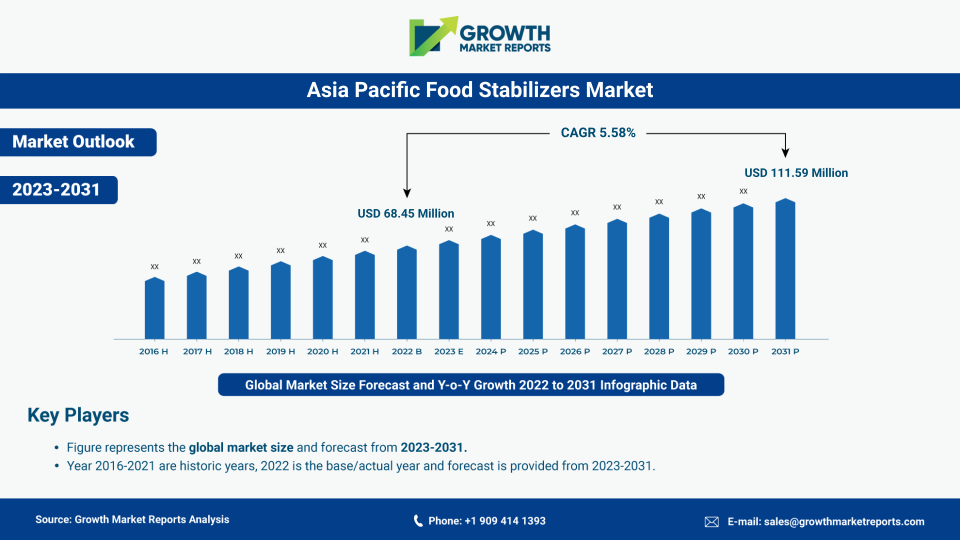
The regional analysis of the food stabilizers market reveals a dynamic and evolving landscape, with Asia Pacific, North America, Europe, Latin America, and the Middle East & Africa each exhibiting distinct growth patterns and opportunities. The Asia Pacific region leads the global market, accounting for approximately USD 2.8 billion in 2024. The region is projected to grow at a CAGR of 5.5% through 2033, driven by rapid urbanization, increasing disposable incomes, and a burgeoning food processing industry. Key markets such as China, India, and Indonesia are witnessing a surge in demand for processed foods, dairy products, and beverages, creating significant opportunities for food stabilizer manufacturers. The expansion of modern retail infrastructure and the growing influence of Western dietary patterns are further fueling market growth in the region.

North America remains a mature yet dynamic market for food stabilizers, with a market size of USD 2.1 billion in 2024. The region's growth is underpinned by the high consumption of processed and convenience foods, stringent food safety regulations, and a strong focus on product innovation. The United States and Canada are at the forefront of adopting clean-label and natural stabilizers, reflecting the growing consumer preference for transparency and health-conscious choices. Manufacturers in North America are investing in research and development to create advanced stabilizer solutions that meet the evolving needs of both consumers and regulatory bodies. The region also benefits from a well-established food processing industry and a robust distribution network, ensuring widespread availability and adoption of food stabilizers.

Europe, with a market value of USD 1.9 billion in 2024, is characterized by a strong emphasis on food quality, safety, and sustainability. The region is witnessing a steady shift towards natural and organic food stabilizers, driven by stringent regulations and increasing consumer awareness. Countries such as Germany, France, and the United Kingdom are leading the adoption of clean-label stabilizers, particularly in bakery, dairy, and beverage applications. The European market is also marked by a high level of innovation, with manufacturers focusing on developing multifunctional and sustainable stabilizer solutions. Latin America and the Middle East & Africa, although smaller in market size, are emerging as promising markets with significant growth potential, supported by rising urbanization, changing dietary habits, and increasing investments in food processing infrastructure.

Food Stabilizers Market Statistics

Competitor Outlook

The food stabilizers market is highly competitive, characterized by the presence of numerous global and regional players vying for market share through product innovation, strategic partnerships, and expansion into emerging markets. The competitive landscape is shaped by the continuous evolution of consumer preferences, regulatory requirements, and technological advancements, compelling companies to invest heavily in research and development. Leading players are focusing on the development of clean-label, multifunctional, and sustainable stabilizer solutions to address the growing demand for natural and health-oriented food products. The ability to offer customized solutions tailored to specific applications and customer requirements is emerging as a key differentiator in this dynamic market.

Consolidation is a notable trend in the food stabilizers market, with major companies pursuing mergers, acquisitions, and strategic alliances to strengthen their product portfolios and expand their geographic presence. These initiatives are aimed at enhancing production capabilities, gaining access to new technologies, and leveraging synergies to drive innovation and operational efficiency. The entry of new players, particularly in emerging markets, is intensifying competition and fostering a culture of continuous improvement and value addition. Companies are also investing in sustainable sourcing, supply chain optimization, and digital transformation to enhance their competitive positioning and meet the evolving expectations of stakeholders.

Innovation remains at the forefront of competitive strategy in the food stabilizers market. Companies are leveraging advanced technologies, such as biotechnology and precision fermentation, to develop novel stabilizers with enhanced functionality, safety, and sustainability profiles. The focus on clean-label and natural ingredients is prompting manufacturers to explore new sources, extraction methods, and formulation techniques, with an emphasis on transparency, traceability, and minimal processing. Collaborations with academic institutions, research organizations, and industry partners are playing a crucial role in accelerating innovation and expanding the knowledge base in this rapidly evolving field.

Several major companies dominate the global food stabilizers market, each bringing unique strengths and capabilities to the table. Cargill, Incorporated is a leading player, known for its extensive portfolio of plant-based and microbial stabilizers, as well as its commitment to sustainability and innovation. DuPont Nutrition & Health (now part of IFF) is renowned for its advanced food ingredient solutions and strong focus on research and development. Kerry Group plc offers a wide range of functional ingredients and solutions tailored to specific food applications, with a strong emphasis on clean-label and natural products. Ingredion Incorporated is recognized for its expertise in specialty starches, gums, and texturizers, catering to diverse customer needs across the food and beverage industry.

Other notable players include Archer Daniels Midland Company (ADM), CP Kelco, Tate & Lyle PLC, and Givaudan. These companies are actively engaged in expanding their product offerings, investing in sustainable sourcing, and strengthening their global distribution networks. Strategic acquisitions, partnerships, and investments in emerging markets are key elements of their growth strategies, enabling them to capture new opportunities and address the evolving needs of the food industry. The collective efforts of these industry leaders are shaping the future of the food stabilizers market, driving innovation, sustainability, and value creation across the global food supply chain.

Key Players

  • Cargill, Incorporated
  • DuPont de Nemours, Inc.
  • Archer Daniels Midland Company
  • Ingredion Incorporated
  • Kerry Group plc
  • Tate & Lyle PLC
  • Ashland Global Holdings Inc.
  • Palsgaard A/S
  • BASF SE
  • CP Kelco U.S., Inc.
  • Royal DSM N.V.
  • Glanbia plc
  • Dow Inc.
  • Hydrosol GmbH & Co. KG
  • Estelle Chemicals Pvt. Ltd.
  • Advanced Food Systems, Inc.
  • Nexira
  • Agro Gums
  • Fuerst Day Lawson Ltd.
  • Lucas Meyer Cosmetics (IFF)
Food Stabilizers Market Overview

Segments

The Food Stabilizers market has been segmented on the basis of

Product Type

  • Gums
  • Pectin
  • Gelatin
  • Agar
  • Carrageenan
  • Xanthan Gum
  • Others

Function

  • Texturizing
  • Stabilizing
  • Thickening
  • Gelling
  • Others

Application

  • Bakery & Confectionery
  • Dairy Products
  • Beverages
  • Sauces & Dressings
  • Meat & Poultry
  • Others

Source

  • Plant
  • Animal
  • Microbial
  • Synthetic

Competitive Landscape

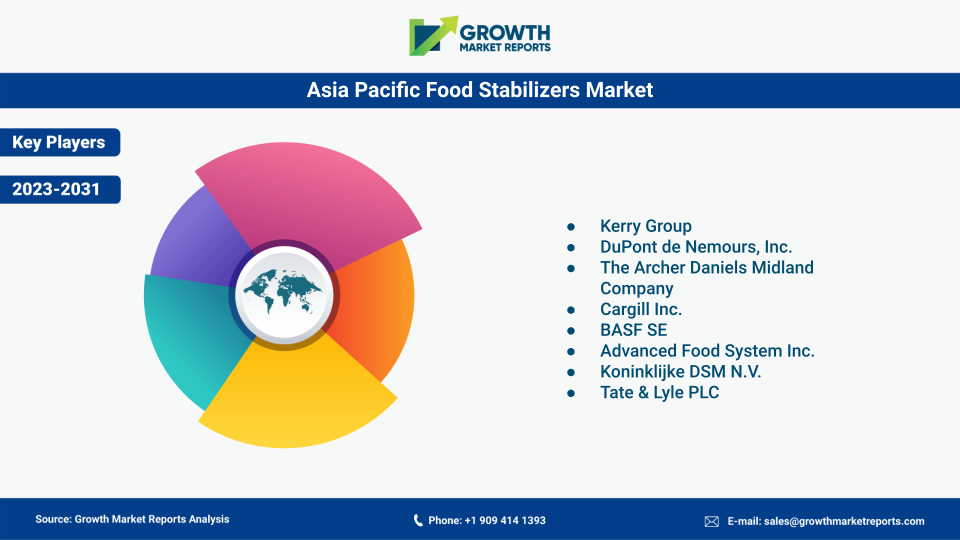
Key players competing in the Asia Pacific food stabilizers market include Kerry Group; DuPont de Nemours, Inc.; The Archer Daniels Midland Company; Cargill Inc.; BASF SE; Advanced Food System Inc.; Koninklijke DSM N.V.; and Tate & Lyle PLC. Some of these players are engaged in several market strategies such as mergers, acquisitions, partnerships, collaborations, capacity expansion, and product launches to enhance their market shares.

Asia Pacific Food Stabilizers Market Key Players

Frequently Asked Questions

Opportunities include the development of multifunctional and clean-label stabilizers, especially in emerging markets. Challenges involve stringent regulations, consumer skepticism towards synthetic additives, and the need for continuous innovation.

Key companies include Cargill, Incorporated, DuPont de Nemours, Inc., Archer Daniels Midland Company, Ingredion Incorporated, Kerry Group plc, Tate & Lyle PLC, CP Kelco, and others.

Food stabilizers are derived from plant, animal, microbial, and synthetic sources. Plant-based and microbial stabilizers are gaining popularity due to their natural origin and compatibility with vegetarian and vegan diets.

Asia Pacific is the fastest-growing region, driven by urbanization and rising processed food consumption. North America and Europe are also significant markets, with a strong focus on clean-label and innovative solutions.

The clean-label trend is driving demand for natural and plant-based stabilizers, encouraging manufacturers to develop products using ingredients like gums, pectin, and agar that appeal to health-conscious consumers.

Major applications include bakery and confectionery, dairy products, beverages, sauces and dressings, and meat and poultry products.

Food stabilizers serve multiple functions such as texturizing, stabilizing, thickening, and gelling, which help maintain product consistency, extend shelf-life, and improve texture and mouthfeel.

Popular food stabilizer types include gums (such as guar gum, locust bean gum, and acacia gum), pectin, gelatin, agar, carrageenan, and xanthan gum.

Key drivers include rising demand for processed and convenience foods, urbanization, changing lifestyles, increased disposable incomes, and a growing preference for clean-label and natural ingredients.

The global food stabilizers market reached USD 8.2 billion in 2024 and is projected to grow at a CAGR of 4.7% from 2025 to 2033, reaching approximately USD 12.5 billion by 2033.

Table Of Content

Chapter 1 Executive Summary
Chapter 2 Assumptions and Acronyms Used
Chapter 3 Research Methodology
Chapter 4 Food Stabilizers Market Overview
   4.1 Introduction
      4.1.1 Market Taxonomy
      4.1.2 Market Definition
      4.1.3 Macro-Economic Factors Impacting the Market Growth
   4.2 Food Stabilizers Market Dynamics
      4.2.1 Market Drivers
      4.2.2 Market Restraints
      4.2.3 Market Opportunity
   4.3 Food Stabilizers Market - Supply Chain Analysis
      4.3.1 List of Key Suppliers
      4.3.2 List of Key Distributors
      4.3.3 List of Key Consumers
   4.4 Key Forces Shaping the Food Stabilizers Market
      4.4.1 Bargaining Power of Suppliers
      4.4.2 Bargaining Power of Buyers
      4.4.3 Threat of Substitution
      4.4.4 Threat of New Entrants
      4.4.5 Competitive Rivalry
   4.5 Global Food Stabilizers Market Size & Forecast, 2023-2032
      4.5.1 Food Stabilizers Market Size and Y-o-Y Growth
      4.5.2 Food Stabilizers Market Absolute $ Opportunity

Chapter 5 Global Food Stabilizers Market Analysis and Forecast By Product Type
   5.1 Introduction
      5.1.1 Key Market Trends & Growth Opportunities By Product Type
      5.1.2 Basis Point Share (BPS) Analysis By Product Type
      5.1.3 Absolute $ Opportunity Assessment By Product Type
   5.2 Food Stabilizers Market Size Forecast By Product Type
      5.2.1 Gums
      5.2.2 Pectin
      5.2.3 Gelatin
      5.2.4 Agar
      5.2.5 Carrageenan
      5.2.6 Xanthan Gum
      5.2.7 Others
   5.3 Market Attractiveness Analysis By Product Type

Chapter 6 Global Food Stabilizers Market Analysis and Forecast By Function
   6.1 Introduction
      6.1.1 Key Market Trends & Growth Opportunities By Function
      6.1.2 Basis Point Share (BPS) Analysis By Function
      6.1.3 Absolute $ Opportunity Assessment By Function
   6.2 Food Stabilizers Market Size Forecast By Function
      6.2.1 Texturizing
      6.2.2 Stabilizing
      6.2.3 Thickening
      6.2.4 Gelling
      6.2.5 Others
   6.3 Market Attractiveness Analysis By Function

Chapter 7 Global Food Stabilizers Market Analysis and Forecast By Application
   7.1 Introduction
      7.1.1 Key Market Trends & Growth Opportunities By Application
      7.1.2 Basis Point Share (BPS) Analysis By Application
      7.1.3 Absolute $ Opportunity Assessment By Application
   7.2 Food Stabilizers Market Size Forecast By Application
      7.2.1 Bakery & Confectionery
      7.2.2 Dairy Products
      7.2.3 Beverages
      7.2.4 Sauces & Dressings
      7.2.5 Meat & Poultry
      7.2.6 Others
   7.3 Market Attractiveness Analysis By Application

Chapter 8 Global Food Stabilizers Market Analysis and Forecast By Source
   8.1 Introduction
      8.1.1 Key Market Trends & Growth Opportunities By Source
      8.1.2 Basis Point Share (BPS) Analysis By Source
      8.1.3 Absolute $ Opportunity Assessment By Source
   8.2 Food Stabilizers Market Size Forecast By Source
      8.2.1 Plant
      8.2.2 Animal
      8.2.3 Microbial
      8.2.4 Synthetic
   8.3 Market Attractiveness Analysis By Source

Chapter 9 Global Food Stabilizers Market Analysis and Forecast by Region
   9.1 Introduction
      9.1.1 Key Market Trends & Growth Opportunities By Region
      9.1.2 Basis Point Share (BPS) Analysis By Region
      9.1.3 Absolute $ Opportunity Assessment By Region
   9.2 Food Stabilizers Market Size Forecast By Region
      9.2.1 North America
      9.2.2 Europe
      9.2.3 Asia Pacific
      9.2.4 Latin America
      9.2.5 Middle East & Africa (MEA)
   9.3 Market Attractiveness Analysis By Region

Chapter 10 Coronavirus Disease (COVID-19) Impact 
   10.1 Introduction 
   10.2 Current & Future Impact Analysis 
   10.3 Economic Impact Analysis 
   10.4 Government Policies 
   10.5 Investment Scenario

Chapter 11 North America Food Stabilizers Analysis and Forecast
   11.1 Introduction
   11.2 North America Food Stabilizers Market Size Forecast by Country
      11.2.1 U.S.
      11.2.2 Canada
   11.3 Basis Point Share (BPS) Analysis by Country
   11.4 Absolute $ Opportunity Assessment by Country
   11.5 Market Attractiveness Analysis by Country
   11.6 North America Food Stabilizers Market Size Forecast By Product Type
      11.6.1 Gums
      11.6.2 Pectin
      11.6.3 Gelatin
      11.6.4 Agar
      11.6.5 Carrageenan
      11.6.6 Xanthan Gum
      11.6.7 Others
   11.7 Basis Point Share (BPS) Analysis By Product Type 
   11.8 Absolute $ Opportunity Assessment By Product Type 
   11.9 Market Attractiveness Analysis By Product Type
   11.10 North America Food Stabilizers Market Size Forecast By Function
      11.10.1 Texturizing
      11.10.2 Stabilizing
      11.10.3 Thickening
      11.10.4 Gelling
      11.10.5 Others
   11.11 Basis Point Share (BPS) Analysis By Function 
   11.12 Absolute $ Opportunity Assessment By Function 
   11.13 Market Attractiveness Analysis By Function
   11.14 North America Food Stabilizers Market Size Forecast By Application
      11.14.1 Bakery & Confectionery
      11.14.2 Dairy Products
      11.14.3 Beverages
      11.14.4 Sauces & Dressings
      11.14.5 Meat & Poultry
      11.14.6 Others
   11.15 Basis Point Share (BPS) Analysis By Application 
   11.16 Absolute $ Opportunity Assessment By Application 
   11.17 Market Attractiveness Analysis By Application
   11.18 North America Food Stabilizers Market Size Forecast By Source
      11.18.1 Plant
      11.18.2 Animal
      11.18.3 Microbial
      11.18.4 Synthetic
   11.19 Basis Point Share (BPS) Analysis By Source 
   11.20 Absolute $ Opportunity Assessment By Source 
   11.21 Market Attractiveness Analysis By Source

Chapter 12 Europe Food Stabilizers Analysis and Forecast
   12.1 Introduction
   12.2 Europe Food Stabilizers Market Size Forecast by Country
      12.2.1 Germany
      12.2.2 France
      12.2.3 Italy
      12.2.4 U.K.
      12.2.5 Spain
      12.2.6 Russia
      12.2.7 Rest of Europe
   12.3 Basis Point Share (BPS) Analysis by Country
   12.4 Absolute $ Opportunity Assessment by Country
   12.5 Market Attractiveness Analysis by Country
   12.6 Europe Food Stabilizers Market Size Forecast By Product Type
      12.6.1 Gums
      12.6.2 Pectin
      12.6.3 Gelatin
      12.6.4 Agar
      12.6.5 Carrageenan
      12.6.6 Xanthan Gum
      12.6.7 Others
   12.7 Basis Point Share (BPS) Analysis By Product Type 
   12.8 Absolute $ Opportunity Assessment By Product Type 
   12.9 Market Attractiveness Analysis By Product Type
   12.10 Europe Food Stabilizers Market Size Forecast By Function
      12.10.1 Texturizing
      12.10.2 Stabilizing
      12.10.3 Thickening
      12.10.4 Gelling
      12.10.5 Others
   12.11 Basis Point Share (BPS) Analysis By Function 
   12.12 Absolute $ Opportunity Assessment By Function 
   12.13 Market Attractiveness Analysis By Function
   12.14 Europe Food Stabilizers Market Size Forecast By Application
      12.14.1 Bakery & Confectionery
      12.14.2 Dairy Products
      12.14.3 Beverages
      12.14.4 Sauces & Dressings
      12.14.5 Meat & Poultry
      12.14.6 Others
   12.15 Basis Point Share (BPS) Analysis By Application 
   12.16 Absolute $ Opportunity Assessment By Application 
   12.17 Market Attractiveness Analysis By Application
   12.18 Europe Food Stabilizers Market Size Forecast By Source
      12.18.1 Plant
      12.18.2 Animal
      12.18.3 Microbial
      12.18.4 Synthetic
   12.19 Basis Point Share (BPS) Analysis By Source 
   12.20 Absolute $ Opportunity Assessment By Source 
   12.21 Market Attractiveness Analysis By Source

Chapter 13 Asia Pacific Food Stabilizers Analysis and Forecast
   13.1 Introduction
   13.2 Asia Pacific Food Stabilizers Market Size Forecast by Country
      13.2.1 China
      13.2.2 Japan
      13.2.3 South Korea
      13.2.4 India
      13.2.5 Australia
      13.2.6 South East Asia (SEA)
      13.2.7 Rest of Asia Pacific (APAC)
   13.3 Basis Point Share (BPS) Analysis by Country
   13.4 Absolute $ Opportunity Assessment by Country
   13.5 Market Attractiveness Analysis by Country
   13.6 Asia Pacific Food Stabilizers Market Size Forecast By Product Type
      13.6.1 Gums
      13.6.2 Pectin
      13.6.3 Gelatin
      13.6.4 Agar
      13.6.5 Carrageenan
      13.6.6 Xanthan Gum
      13.6.7 Others
   13.7 Basis Point Share (BPS) Analysis By Product Type 
   13.8 Absolute $ Opportunity Assessment By Product Type 
   13.9 Market Attractiveness Analysis By Product Type
   13.10 Asia Pacific Food Stabilizers Market Size Forecast By Function
      13.10.1 Texturizing
      13.10.2 Stabilizing
      13.10.3 Thickening
      13.10.4 Gelling
      13.10.5 Others
   13.11 Basis Point Share (BPS) Analysis By Function 
   13.12 Absolute $ Opportunity Assessment By Function 
   13.13 Market Attractiveness Analysis By Function
   13.14 Asia Pacific Food Stabilizers Market Size Forecast By Application
      13.14.1 Bakery & Confectionery
      13.14.2 Dairy Products
      13.14.3 Beverages
      13.14.4 Sauces & Dressings
      13.14.5 Meat & Poultry
      13.14.6 Others
   13.15 Basis Point Share (BPS) Analysis By Application 
   13.16 Absolute $ Opportunity Assessment By Application 
   13.17 Market Attractiveness Analysis By Application
   13.18 Asia Pacific Food Stabilizers Market Size Forecast By Source
      13.18.1 Plant
      13.18.2 Animal
      13.18.3 Microbial
      13.18.4 Synthetic
   13.19 Basis Point Share (BPS) Analysis By Source 
   13.20 Absolute $ Opportunity Assessment By Source 
   13.21 Market Attractiveness Analysis By Source

Chapter 14 Latin America Food Stabilizers Analysis and Forecast
   14.1 Introduction
   14.2 Latin America Food Stabilizers Market Size Forecast by Country
      14.2.1 Brazil
      14.2.2 Mexico
      14.2.3 Rest of Latin America (LATAM)
   14.3 Basis Point Share (BPS) Analysis by Country
   14.4 Absolute $ Opportunity Assessment by Country
   14.5 Market Attractiveness Analysis by Country
   14.6 Latin America Food Stabilizers Market Size Forecast By Product Type
      14.6.1 Gums
      14.6.2 Pectin
      14.6.3 Gelatin
      14.6.4 Agar
      14.6.5 Carrageenan
      14.6.6 Xanthan Gum
      14.6.7 Others
   14.7 Basis Point Share (BPS) Analysis By Product Type 
   14.8 Absolute $ Opportunity Assessment By Product Type 
   14.9 Market Attractiveness Analysis By Product Type
   14.10 Latin America Food Stabilizers Market Size Forecast By Function
      14.10.1 Texturizing
      14.10.2 Stabilizing
      14.10.3 Thickening
      14.10.4 Gelling
      14.10.5 Others
   14.11 Basis Point Share (BPS) Analysis By Function 
   14.12 Absolute $ Opportunity Assessment By Function 
   14.13 Market Attractiveness Analysis By Function
   14.14 Latin America Food Stabilizers Market Size Forecast By Application
      14.14.1 Bakery & Confectionery
      14.14.2 Dairy Products
      14.14.3 Beverages
      14.14.4 Sauces & Dressings
      14.14.5 Meat & Poultry
      14.14.6 Others
   14.15 Basis Point Share (BPS) Analysis By Application 
   14.16 Absolute $ Opportunity Assessment By Application 
   14.17 Market Attractiveness Analysis By Application
   14.18 Latin America Food Stabilizers Market Size Forecast By Source
      14.18.1 Plant
      14.18.2 Animal
      14.18.3 Microbial
      14.18.4 Synthetic
   14.19 Basis Point Share (BPS) Analysis By Source 
   14.20 Absolute $ Opportunity Assessment By Source 
   14.21 Market Attractiveness Analysis By Source

Chapter 15 Middle East & Africa (MEA) Food Stabilizers Analysis and Forecast
   15.1 Introduction
   15.2 Middle East & Africa (MEA) Food Stabilizers Market Size Forecast by Country
      15.2.1 Saudi Arabia
      15.2.2 South Africa
      15.2.3 UAE
      15.2.4 Rest of Middle East & Africa (MEA)
   15.3 Basis Point Share (BPS) Analysis by Country
   15.4 Absolute $ Opportunity Assessment by Country
   15.5 Market Attractiveness Analysis by Country
   15.6 Middle East & Africa (MEA) Food Stabilizers Market Size Forecast By Product Type
      15.6.1 Gums
      15.6.2 Pectin
      15.6.3 Gelatin
      15.6.4 Agar
      15.6.5 Carrageenan
      15.6.6 Xanthan Gum
      15.6.7 Others
   15.7 Basis Point Share (BPS) Analysis By Product Type 
   15.8 Absolute $ Opportunity Assessment By Product Type 
   15.9 Market Attractiveness Analysis By Product Type
   15.10 Middle East & Africa (MEA) Food Stabilizers Market Size Forecast By Function
      15.10.1 Texturizing
      15.10.2 Stabilizing
      15.10.3 Thickening
      15.10.4 Gelling
      15.10.5 Others
   15.11 Basis Point Share (BPS) Analysis By Function 
   15.12 Absolute $ Opportunity Assessment By Function 
   15.13 Market Attractiveness Analysis By Function
   15.14 Middle East & Africa (MEA) Food Stabilizers Market Size Forecast By Application
      15.14.1 Bakery & Confectionery
      15.14.2 Dairy Products
      15.14.3 Beverages
      15.14.4 Sauces & Dressings
      15.14.5 Meat & Poultry
      15.14.6 Others
   15.15 Basis Point Share (BPS) Analysis By Application 
   15.16 Absolute $ Opportunity Assessment By Application 
   15.17 Market Attractiveness Analysis By Application
   15.18 Middle East & Africa (MEA) Food Stabilizers Market Size Forecast By Source
      15.18.1 Plant
      15.18.2 Animal
      15.18.3 Microbial
      15.18.4 Synthetic
   15.19 Basis Point Share (BPS) Analysis By Source 
   15.20 Absolute $ Opportunity Assessment By Source 
   15.21 Market Attractiveness Analysis By Source

Chapter 16 Competition Landscape 
   16.1 Food Stabilizers Market: Competitive Dashboard
   16.2 Global Food Stabilizers Market: Market Share Analysis, 2023
   16.3 Company Profiles (Details – Overview, Financials, Developments, Strategy) 
      16.3.1 Cargill, Incorporated
DuPont de Nemours, Inc.
Archer Daniels Midland Company
Ingredion Incorporated
Kerry Group plc
Tate & Lyle PLC
Ashland Global Holdings Inc.
Palsgaard A/S
BASF SE
CP Kelco U.S., Inc.
Royal DSM N.V.
Glanbia plc
Dow Inc.
Hydrosol GmbH & Co. KG
Estelle Chemicals Pvt. Ltd.
Advanced Food Systems, Inc.
Nexira
Agro Gums
Fuerst Day Lawson Ltd.
Lucas Meyer Cosmetics (IFF)

Methodology

Our Clients

Microsoft
Honda Motor Co. Ltd.
FedEx Logistics
Pfizer
Dassault Aviation
General Mills
The John Holland Group
Nestle SA